




Abstract
Background:
Although substance use is a known public health problem and a pressing issue in Ethiopia, its real extent and magnitude are not yet properly explored. The current study aimed to determine the extent and predictors of substance use among regular undergraduate students in the Institute of Technology, Addis Ababa University.
Methods:
An institution-based cross-sectional study was carried among 794 undergraduate regular students at the Institute of Technology, Addis Ababa University, using a self-administered structured questionnaire filled by study participants. Data entry, cleaning, and coding were performed by EPI-INFO version 3.5.1. Statistical Package for Social Sciences; AOR: Adjusted odds ratio (SPSS) SPSS version 21 software was used to analyze data by performing descriptive statistics, bivar
Results:
73.7% of the study participants used substances at least once. The lifetime use of each substance includes alcohol (68.2%), khat (53.6%), cigarettes (46.1%), and illicit drugs (23.3%). Loss of family (AOR [95%CI], 34.50 [7.569, 157.263]), pocket money between 500 and 999 Ethiopian birr (AOR [95%CI], 9.978 [1.240, 80.280]), and above 1000 Ethiopian birr (AOR [95%CI], 10.831 [1.333, 87.971]) were identified predictors for khat use. The odds of lifetime alcohol use was higher among students coming from a divorced family (AOR [95%CI], 9.346 [3.162, 27.625]), lost one (AOR [95%CI], 37.406 [11.375, 123.008]), or both of their parents (AOR [95%CI], 18.750 [5.798, 60.633]). Students of urban origin (AOR [95%CI], 3.214 [1.950, 5.296]), and students with anxiety symptoms (AOR [95%CI], 2.655 [1.981, 3.557]) have a higher odds of lifetime cigarette smoking. The lifetime exposure to illicit drugs is higher among students in age groups between 20 and 24 years (AOR [95%CI], 5.963 [1.361, 26.135]), students coming from substance user family (AOR [95%CI], 2.172 [1.161, 4.063]), and students of urban origin (AOR [95%CI], 2.661 [1.202, 5.889]).
Conclusion:
A higher prevalence of substance use requiring administrative and educational interventions was observed. Awareness creation interventions on the potential impacts of substance abuse should be performed.
Introduction
The use of substances with pleasurable effects dates back to thousands of years in the history of human beings.1,2 Several controlled substances are used due to their ability to affect the central nervous system causing altered mood, thought, and feeling. 3 Analgesia, loss of anxiety, and/or depressive symptoms, sleep induction, and stimulation are among the most common reasons for substance use. 4 Substance use is one of the common behaviors considered as “negative risk-taking” by the World Health Organization (WHO). 5 Adolescents and young adults are more vulnerable to such risk-taking behaviors with long term undesirable health consequences.6-8 A high frequency of substance use among youth populations is a global problem including developing countries with negative health, economic, and social impacts.9,10 Several factors including intense academic pressure, independence from family/guardian control, peer pressure, and the desire to experiment with new things in their life make college students more vulnerable to substance use. 11 Khat, alcohol, and cigarette are among the commonly used substances among youth in Ethiopia including university students.12-14 There is also evidence indicating the use of illicit drugs such as hashish, cocaine, cannabis, sleeping pills, amphetamine, opioids, and “shisha.”15,16 Khat, Catha edulis, is an indigenous plant with stimulant properties widely cultivated and used by chewing the fresh bud in East African and some Middle East countries. 17 It produces CNS stimulant effect, euphoria & excitement due to its cathine (norpseudoephedrine) and cathinone (a-aminopropiophenone) contents.18,19 Previous studies reported a higher prevalence of khat use among university students in different parts of Ethiopia. Gender, age group, religion, marital status, family use of khat, family occupation, and year of study were identified predictors of khat chewing.12,14,20,21 Conflicting results were observed regarding the impact of khat chewing on the academic achievement of students. 13
Alcohol is another most commonly used substances with multiple impacts on youth worldwide. 20 A higher prevalence of alcohol use, binge drinking, and heavy alcohol use was reported among the US college students. 22 Lipperman-Kreda et al 23 reported the overall prevalence of alcohol use among adult Australians 71.16%. They also reported alcohol and tobacco (12.46%), alcohol and marijuana (9.59%), and alcohol, tobacco, and marijuana (6.79%) simultaneous use. Significantly higher ever and current alcohol consumption was also reported in Sub-Saharan African countries such as Uganda, Zimbabwe.24-26 Studies performed in different parts of Ethiopia also indicate alcohol use prevalence ranging from 22.6% to 59.0%. Alcohol consumption is associated with sex, age group, religion, marital status, year of study, family income, and family use of alcohol.12,14,21 Taremian et al 27 identified alcohol use or illicit drug use by a family member or fellow student, positive parental attitude toward substance use, higher anger and aggression, negative attitude toward the university, higher depression and anxiety, low self-esteem, and low level of religious belief as predictors of alcohol use among Iranian university students.
Higher odds of tobacco (7.23 95%CI [4.25, 12.32]), marijuana (7.11 95%CI [4.13, 12.24]) and (12.86 95%CI [7.13, 23.18]) tobacco and marijuana co-use was observed among 51+ drunk individuals, indicating the role of alcohol in inducing use of other substances. 23 A higher prevalence of simultaneous use of alcohol and marijuana use is the main cause of the increased risk of harm among adult alcohol users.28,29 A similar result was also reported by O’Hara et al 30 indicating higher complementary use of cannabis use in US students taking consuming a higher amount of alcohol for social reasons. The result from Polish undergraduate students indicated higher odds of binge drinking among males, social sciences studying, living in a dorm or apartment, and living in an urban area. 31 The other substance which is a widely used substance among college-age youth is Tobacco. It is used in the form of smoke due to the pleasurable rewarding effect of its active constituent nicotine.32,33 The global projected prevalence of current users of some form of tobacco among people aged 15 years and above is 22.8%. Ethiopia accounts for more than 2.6 million current tobacco smokers based on the population estimates published by the United Nations Population Division. The same report also indicated the age-group 40 to 54 among men and the age-group ⩾70 among women were identified as the highest rate of smoking in 2010. 34 Studies performed in different Ethiopian universities indicated current tobacco use prevalence ranging between 1.8% and 21.33%. Gender, religion, family, or fellow use of cigarettes, family occupation, residence, and year of study were identified predictors of smoking.12-14,21 Taremian et al 27 reported a higher odds of cigarette/hookah smoking among students with a family or friend using alcohol/illicit drugs, parent or peers positive attitude toward substance use, higher anger and aggression, higher depression and anxiety, negative attitude toward university, and use of prescribed medications among Iranian university students. A high global burden of illicit drug use has been reported among university students by different epidemiological studies. 35 7% cannabis use, 14% life-time use, increased alcohol consumption from 21.6 in 2001 to 23.5% and 23.7% in 2004 and 2006, and 8% current use among university students were identified by epidemiological studies conducted in the US, India, Kuwait, Thailand and Iran respectively.8,36,37
It is also an important issue in Ethiopian Higher institutions. Shisha, Cannabis, Cocaine, and Marijuana have commonly used substances among university students in different parts of Ethiopia. The frequency of use also ranges between 2.5% and 4.5% and 7.4% from Debre Berhan and Haromaya Universities respectively.14,15 Reduced academic performance and negative impacts on future productivity were identified by several studies as impacts of illicit drug use in university students.35,38-42 The risk of failing to adapt to academic life and lower GPA increases among alcohol-cannabis co users. 42 Being a male, being in the 21 to 29 age group, self-reported ill health, a poor family of origin and heavy drinking are among the factors independently associated with illicit drug use by several studies.14,15,39 Rogowska 31 reported higher odds of illicit drug use among students of social science faculty and those from an urban origin in Polish undergraduate students. The same study also identified binge drinking as the main predictor of current illicit drug use. A higher odds of illicit drug use was also reported among male, tobacco smoking, and alcohol abuse Spanish university students. 43 The current study aimed to determine the frequency of cigarette smoking, illicit drug use khat chewing, and alcohol consumption among regular undergraduate students in the Institute of Technology, Addis Ababa University (AAU) and identifying the factors associated with their use. We hypothesized that demographic and mental health characteristics can be used to predict khat chewing, alcohol use, cigarette smoking, and use of illicit drugs among university students.
Definition of Terms
Current User: An individual with at least one consumption history of the substance in the past 30 days. 44
Ever Use: those using any of the substances at least once in lifetime. 44
Illicit Drugs: Mood altering substances such as hashish, cocaine, cannabis, heroin, marijuana, and other substance whose production, sales, or use is legally prohibited. 14
Anxiety: Respondents with an overall score of 18 or more based on the Hamilton Anxiety Rating Scale (HAM-A). 45
Insomnia: Respondents with an overall score of 6 or more based on the Athens insomnia scale (AIS). 46
Methods
Participants
The current study was performed at the Institute of Technology, AAU. AAU is the pioneer university of Ethiopia founded in 1950 and with 48, 673 students currently enrolled in all campuses. 6907 students enrolled in the Institute of Technology, which accounts for the largest proportion from other campuses. Regular undergraduate students of the institute coming from all parts of Ethiopia usually reside in the campus dormitories. A total of 794 students participated in the survey, of which 782 respondents completed questionnaires and were considered for analysis making a response rate of 98.5%. Age, sex, place of origin, religion, ethnicity, family occupation, and other Sociodemographic characteristics of the respondents are presented in the table below (Table 1).
Sociodemographic characteristics of undergraduate regular students at the Institute of Technology, Addis Ababa University, May 2018.

Measures
A self-administered questionnaire was developed by reviewing previously published articles extensively for the data collection process. Regarding the sociodemographic information respondents were asked to choose their age group (15-19, 20-24, and 25-30), sex (male and female), religion (Orthodox, Muslim, Protestant, Catholic, and others), marital status (single, married, divorced, and others), family condition (living together, divorced, mother or father died, and both died), year of study (1st, 2nd, 3rd, 4th, and 5th year), residence (rural and urban), family occupation (governmental office, private workers, merchant, farmers, and others), monthly pocket money (<100, 100-300, 300-500, 500-999, and >1000 Ethiopian birr), and family use of the substance (Yes and No).
The lifetime and current use patterns of khat, alcohol, cigarette, and illicit drugs were determined using the “Yes” or “No” questions like “Have you ever used khat?” and “Have you ever used khat in the last 30 days” respectively. Illicit drugs were operationalized in the questionnaire including the list of some commonly used substances. Regarding the presence of health-related effects, the presence of anxiety symptoms among the respondents using at least one of the substances was measured by self-report of the students using the Hamilton Anxiety Rating Scale (HAM-A). HAM-A is a 14-item tool including common symptoms of psychic and somatic anxiety each graded 0 (not present) to 4 (very severe). Respondents with HAM-A scores of 18 or more were considered as anxious in the current study. 45
Insomnia was measured using the Athens insomnia scale (AIS) consisting of 8 items each with a maximum of 3 (0 for “no problem” and 3 for “very serious problem”). The overall score ranges between 0 and 24. Respondents with an overall score of 6 or more were considered as having insomnia. 46
Procedure
An institution-based cross-sectional study design with a quantitative data collection method was conducted from October 2017 to May 2018. All regular undergraduate students attending the Institute of Technology, Addis Ababa University were considered as the study population.
Sample size and sampling method
The single population proportion formula with previously reported 45.9% prevalence from Ethiopian university students was used to determine the sample size. 12 The sample size was 794 after making consideration for the design effect of 2 and a 10% non-response rate. The sample was obtained using a multistage sampling technique. There were 4 schools, 4 centers, and 8 departments where the undergraduate program was given, in the Institute of Technology, Addis Ababa University. From all 8 departments, students were clustered based on their stay in the university (batch), assuming that substance use is different as the number of years of stay in the university influences their behavior. The sampling frame was prepared for each batch based on the information obtained from the institute’s registrar’s office on the number of students. The study samples were proportionally distributed to every batch based on the number of students. Finally, the study participants were selected by using a simple random sampling technique (lottery method) from the sampling frame (Figure 1).
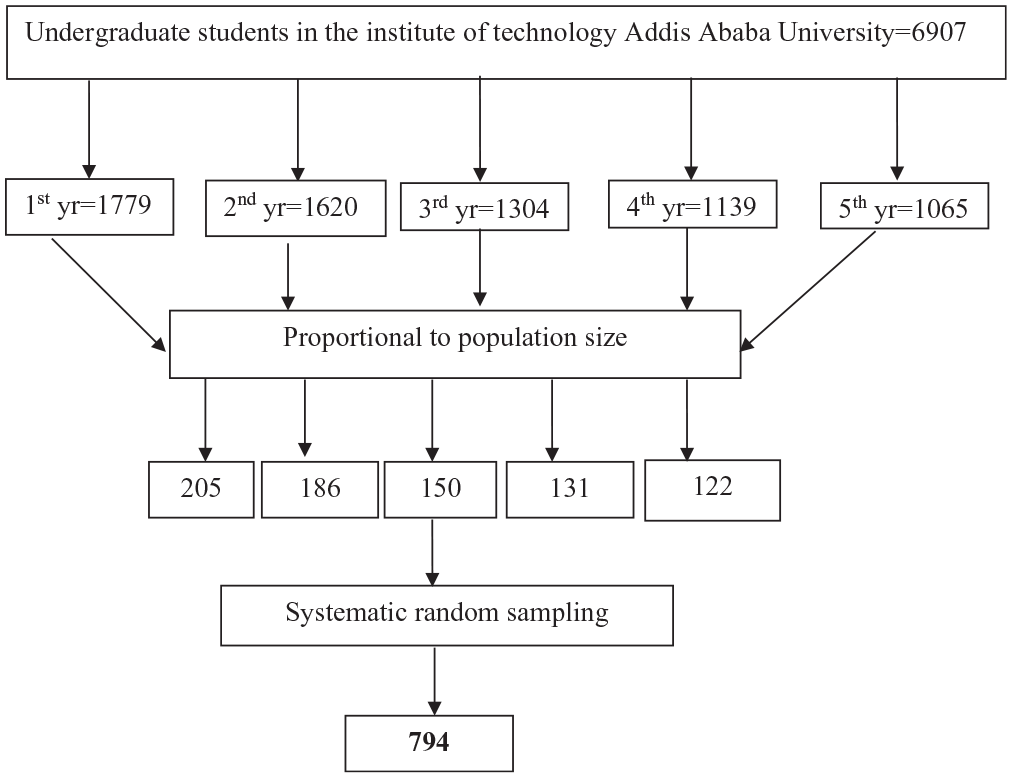
Schematic representation of the sampling procedure employed to select participants among undergraduate regular students in the Institute of Technology, Addis Ababa University, May 2018.
Study variables
The dependent variable of the current study was the use of the substances khat, alcohol, cigarette, and illicit drug. Sociodemographic characteristics (age, sex, religion, marital status), monthly pocket money, year of study, family condition, family use of the substances, residence, family occupation, and were included as independent variables.
Data collection procedure
A self-administered questionnaire was developed by reviewing previously published articles extensively for the data collection process. The questionnaire and the consent form were approved by the Institutional Review Boards (IRB) of Yekatit 12 Hospital Medical College. The hard copy of the English version questionnaire was distributed to the students on the campus during class hours and at the dormitory after classes to be filled by paper and pencil method. Students who agreed to participate in the study by signing the consent form were only included. The participant students were informed about the type of information required in the study and their right to decline from responding to the questions at any point in time. The anonymity of the participants was preserved by avoiding the use of names and other personal identifiers in the data collection tool. The students were allowed to take the questionnaire to their home or dormitories and return the filled forms for the data collectors the following day.
Students who were not on campus due to illness and practical attachment during the data collection period were not included in the current study. Pre-testing was performed on 5% of the sample size, undergraduate extension students, at the Institute of Technology, Addis Ababa University to assure the data collection tool is valid, reliable, and practicable.
Data processing and analysis
Cleaning, coding, and entry of the collected data were performed by EPI-INFO version 3.5.1. Statistical Package for Social Sciences; AOR: Adjusted odds ratio (SPSS) version 21 software was used to analyze data by performing descriptive statistics, bivariate, and multivariate analysis. The results of the analysis including frequencies, crude and adjusted odds ratios with 95% confidence intervals with the corresponding P-values were presented in the table.
Results
Descriptive statistics
794 of the students expected to participate based on the calculated sample size, 782 students sufficiently fill the questionnaire making the response rate of 98.48%. The study participants included 468 (59.8%) male and 314 (40.2%), female students. The mean age of the participants was 22.59 years. The age distribution indicates the majority of 594 (75.9%) of the students are in the age group between 20 and 24 years. The batch distribution of the students indicated 226 (28.9%), 239 (30.6%), 185 (23.7%), 76 (9.7%), and 56 (7.1%) of the respondents were first, second, third, fourth, and fifth-year students respectively. The majority of the participant students were single 704 (90.0%), coming from parents living together 531 (67.9%), and urban origin 687 (87.9%) (Table 1).
Gender differences in life and current use of different substances
The overall current and lifetime prevalence of khat, alcohol, cigarette, and illicit drug use of the respondents of the current study are presented in Table 2. Significant variations were observed between male and female students with regards to ever (χ2 = 340.98, P < .0001) and current (χ2 = 30.45, P < .0001) use of khat, ever (χ2 = 216.74, P < .0001) and current (χ2 = 231.31, P < .0001) alcohol use, ever (χ2 = 68.51, P < .0001) and current (χ2 = 50.05, P < .0001) cigarette smoking, and lifetime (χ2 = 26.96, P < .0001) and current (χ2 = 18.93, P < .0001) use of illicit drugs (Table 2).
Lifetime and current use of different substances by sex among undergraduate regular students in the Institute of Technology, Addis Ababa University, Ethiopia, May 2018.

The pattern of substance use
Of the 576 participants identified to use at least one of the identified substances, 64 (11.1%), 496 (86.1%), and 16 (2.8%) responded to take the substances alone, with their friends, and their parents respectively regarding with whom they used the substance. Regarding the place where the participants used the substance, 306 (53.1%) of the substance users used khat at “Khat bet” (centers for Khat chewing) followed by at dormitory 160 (27.8%) and 98 (17%), rent home for substance use, and 12 (2.1%) respondents used khat in public places.
Time to start substance use
The majority of identified Khat users and cigarette smokers in the current started using substances after joining the university 264 (63%) and 257 (71.4%), respectively. Whereas 358 (67.2%) of alcohol users and 131 (72%) of illicit drug users started to use the substance before joining the university.
Reasons for substance use
Participants in the current study identified peer pressure, getting relief from tension, personal pleasure, to stay awake, to be together with their friends, easy availability of the substance around their campus, to get acceptance by friends, academic dissatisfaction, and parental use as the main reasons for their substance use (Figure 2).

Reasons for substance use of undergraduate regular students at the Institute of Technology, Addis Ababa University, May 2018.
Problem-related with substance use
Among the total respondent’s substance users, 457 (79.3%) reported problems related to substance use. Of these, 279 (61%), 175 (38.3%), 165 (36.1%), 179 (39.2%), 415 (90.8%), and 314 (68.7%) reported cough, depression, palpitation, weight loss, insomnia, and anxiety respectively. Regarding the impact of substance use on their behavior, 107 (27.6%) of the respondents disagreed with parents, 147 (38%) had reported isolation from the social affair, 132 (34.1%) had reported a loss of friendship, 60 (31.8%) had reported absentee from regular classes, 107 (27.6%) reported less academic performance.
Factors associated with substance use
Predictors of a lifetime and current khat use
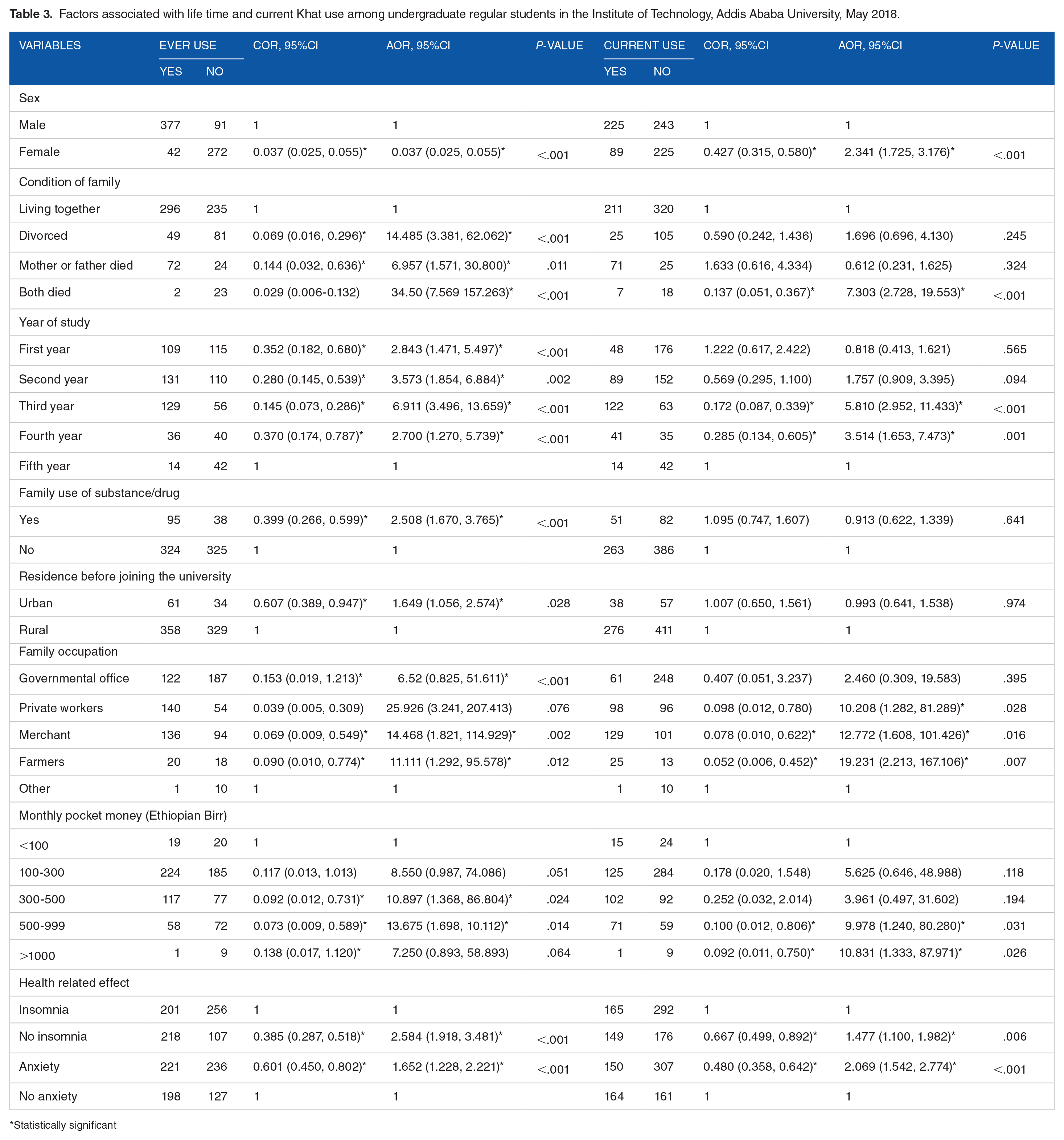
Among the different variables considered for bivariate analysis, sex, family condition, year of study, family use of substance, family occupation excluding private workers, residence before joining the university, insomnia, and anxiety were significantly associated with lifetime and current use of khat. Multivariate logistic regression on these variables identified loss of family (AOR [95%CI], 34.50 [7.569 157.263]), family use of substances (AOR [95%CI], 2.508 [1.670, 3.765]), students from urban origin (AOR [95%CI], 1.649 [1.056, 2.574]), and anxiety (AOR [95%CI], 1.652 [1.228, 2.221]) are associated with lifetime khat use. Higher odds of current khat use was observed for students of female sex (AOR [95%CI], 2.341 [1.725, 3.176]), third (AOR [95%CI], 5.810 [2.952, 11.433]), and fourth year students (AOR [95%CI], 3.514 [1.653, 7.473]), students coming from private worker (AOR [95%CI], 10.208 [1.282, 81.289]), merchant (AOR [95%CI], 12.772 [1.608, 101.426]), and farmer (AOR [95%CI], 19.231 [2.213, 167.106]) families, students with monthly pocket money between 500 and 999 Ethiopian birr (AOR [95%CI], 9.978 [1.240, 80.280]), and above 1000 Ethiopian birr (AOR [95%CI], 10.831 [1.333, 87.971]), and students with anxiety (AOR [95%CI], 2.069 [1.542, 2.774]) (Table 3).
Factors associated with life time and current Khat use among undergraduate regular students in the Institute of Technology, Addis Ababa University, May 2018.
Statistically significant
Predictors of a lifetime and current alcohol use
Female students were less likely to use alcohol compared to male fellows in the current study (AOR [95%CI], 0.082 [0.057, 0.118]). A higher odds of lifetime alcohol use was observed among students coming from divorced family (AOR [95%CI], 9.346 [3.162, 27.625]), lost one of their parents (AOR [95%CI], 37.406 [11.375, 123.008]), and lost both of their parents (AOR [95%CI], 18.750 [5.798, 60.633]), first year (AOR [95%CI], 3.995 [2.088, 7.643]), second year (AOR [95%CI], 13.735 [6.945, 27.162]), third year (AOR [95%CI], 7.586 [3.860, 14.909]), and fourth year (AOR [95%CI], 4.686 [2.207, 9.950]) students. The current use of alcohol is predicted by being a member of divorced family (AOR [95%CI], 15.883 [3.707, 68.062]), loss of either of their parents (AOR [95%CI], 9.857 [2.232, 43.540]), and being an orphan (AOR [95%CI], 38.682 [8.449, 177.087]), being a first year (AOR [95%CI], 2.545 [1.333, 4.860]), a second year (AOR [95%CI], 3.988 [2.093, 7.601]), third year (AOR [95%CI], 6.631 [3.390, 12.971]), and fourth year (AOR [95%CI], 4.430 [2.090, 9.387]) student. In addition, students coming from private worker (AOR [95%CI], 7.796 [1.639, 37.090]), merchant (AOR [95%CI], 7.821 [1.651, 37.054]), and farmer (AOR [95%CI], 6.188 [1.174, 32.607]) families, students with a monthly pocket money between 100 and 299 Ethiopian birr (AOR [95%CI], 5.039 [1.057, 24.020]), and between 300 and 499 Ethiopian birr (AOR [95%CI], 7.582 [1.566, 36.719]), and students with anxiety (AOR [95%CI], 2.465 [1.816, 3.346]). Family occupation was not able to predict ever use of alcohol in the current study due to a very small number of participants with families in the reference category (Table 4).
Factors associated with life time and current Alcohol use among undergraduate regular students in the Institute of Technology, Addis Ababa University, May 2018.

Statistically significant
Predictors of a lifetime and current cigarette use
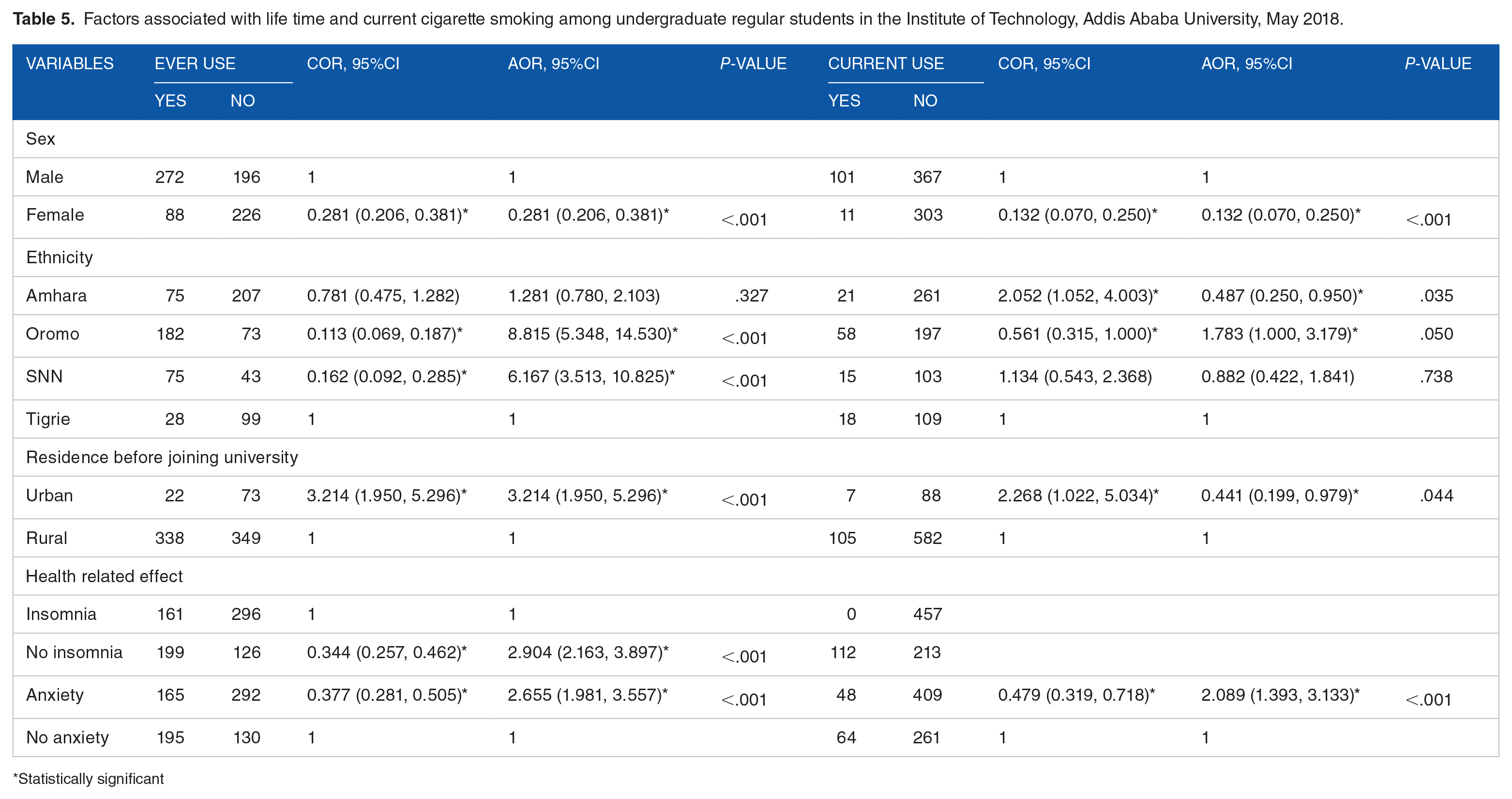
Being a female is associated with reduced risk of lifetime (AOR [95%CI], 0.281 [0.206, 0.381]), and (AOR [95%CI], 0.132 [0.070, 0.250]) current cigarette smoking. A higher odds of ever and current cigarette smoking was also observed among students of Oromo ethnic group (AOR [95%CI], 8.815 [5.348, 14.530]), and (AOR [95%CI], 1.783 [1.000, 3.179]), respectively. Students of urban origin also have a higher odds of lifetime cigarette smoking (AOR [95%CI], 3.214 [1.950, 5.296]). A higher odds ever (AOR [95%CI], 2.655 [1.981, 3.557]) and current (AOR [95%CI], 2.089 [1.393, 3.133]) use of cigarette smoking was observed among students with anxiety. The absence of a participant complaining of insomnia among current cigarette smokers in this study caused the failure of insomnia to predict for being a smoker (Table 5).
Factors associated with life time and current cigarette smoking among undergraduate regular students in the Institute of Technology, Addis Ababa University, May 2018.
Statistically significant
Predictors of a lifetime and current illicit drug use
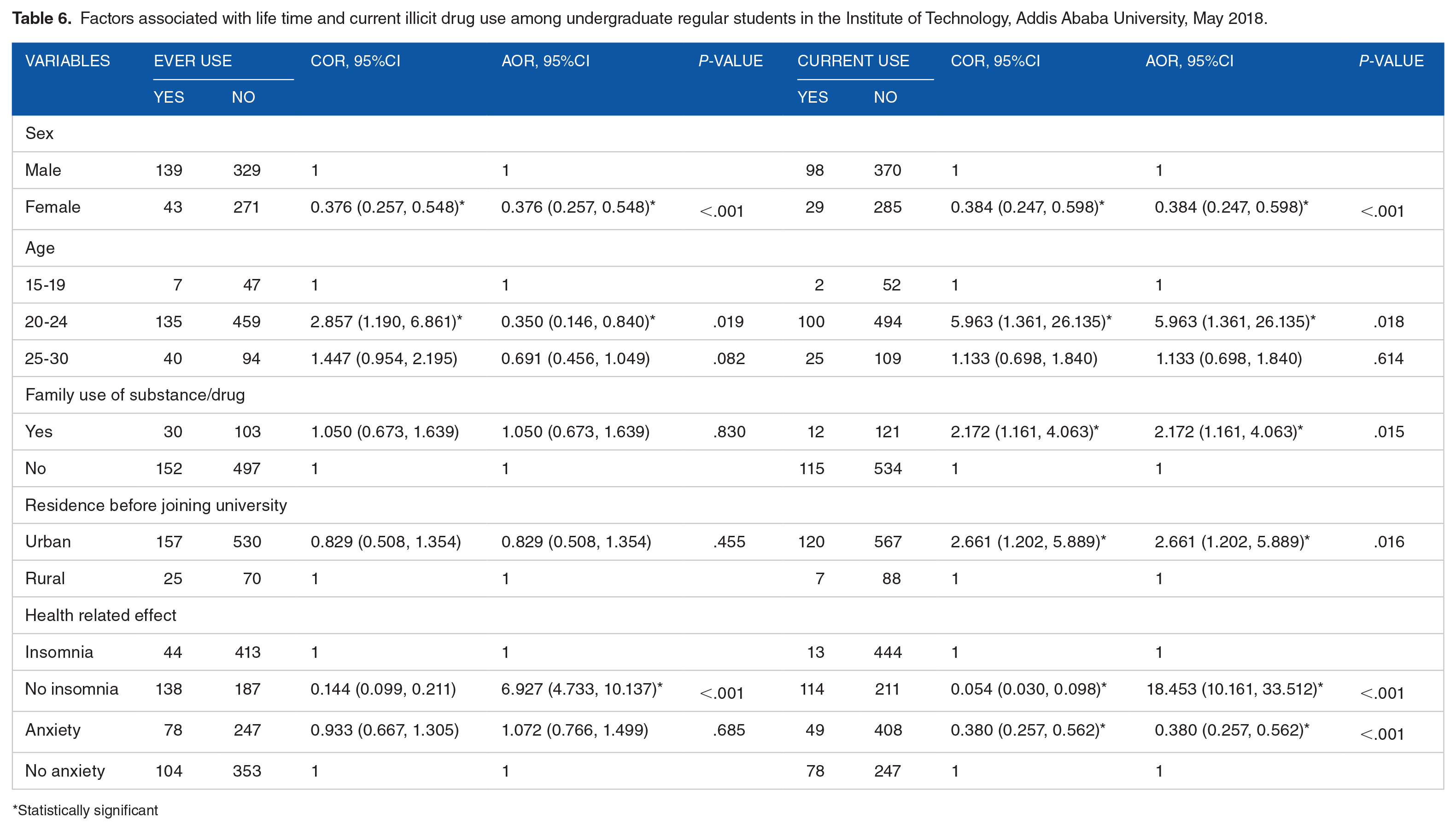
Students with age group between 20 and 24 (AOR [95%CI], 5.963 [1.361, 26.135]), students coming from substance user family (AOR [95%CI], 2.172 [1.161, 4.063]), and students of urban origin (AOR [95%CI], 2.661 [1.202, 5.889]) are more likely to be current illicit drug users. Higher odds of ever (AOR [95%CI], 6.927 [4.733, 10.137]) and current (AOR [95%CI], 18.453 [10.161, 33.512]) illicit drug use was also observed among students without insomnia symptoms (Table 6).
Factors associated with life time and current illicit drug use among undergraduate regular students in the Institute of Technology, Addis Ababa University, May 2018.
Statistically significant
Discussion
The current study identified 73.7% of the participants as users of at least one substance. This is higher than the results from other studies performed at Axum University, Northern Ethiopia (45.9%), 12 Haromaya University, Eastern Ethiopia (62.4%), 14 Woldia University, North Western Ethiopia (36.9%), 20 and Kenyan universities (69.8%). 47 The significant variability in prevalence between the current study and the mentioned studies could be the result of the difference in the study setup affecting the access of the students for the substances.
The frequency of use for each substance in this study indicates alcohol (68.2%), khat (53.6%), cigarettes (46.1%), and other illicit drugs (23.3%). A higher lifetime prevalence of khat chewing was obtained in the current study (53.6%) compared to the prevalence from high school students and Haromaya University in Eastern Ethiopia 24.3% and 41.0%, 14 and the result from Woldia University, North Western Ethiopia 13%, 48 and the result from Woldia University, North Western Ethiopia 13%, 20 college students in North West Ethiopia 26.7%, 18 a pooled prevalence of 23 studies 24.69% in Ethiopia, 16 and a study done in Saudi Arabia 21.4%. 49
The current study agrees with the results from Jimma, Haromaya University, Butajira, and Saudi Arabia in identifying peer pressure, getting personal pressure, to minimize tension, and stimulation as the main reasons for khat chewing.14,36,50,51
Significant variation was obtained among ever and current khat users female students in the current study. Students coming from divorced families, students who lost one or both of their parents are more likely to be khat chewers compared to those coming from families living together (AOR [95%CI], 14.485 [3.381, 62.062]), (AOR [95%CI], 6.957 [1.571, 30.800]), (AOR [95%CI], 34.50 [7.569 157.263]) respectively. This can be explained by the increased emotional instability manifestations secondary to lack of parental support that drives the students to use the substances. 52
Being a member of a substance-using family is another predictor of khat use identified in the current study (AOR [95%CI], 2.508 [1.670, 3.765]). This is also supported by previous studies performed in Debre Berhan University (AOR [95%CI], 3 [1.2-7.6]), the pooled prevalence of 24 studies in Ethiopia (AOR [95%CI], 2.91 [1.06, 7.98]), and Saudi Arabia.15,36,53
Being a third and fourth-year student is associated with increased lifetime khat chewing 6.911 (3.496, 13.659), 2.700 (1.270, 5.739), and current khat use 5.810 (2.952, 11.433), 3.514 (1.653, 7.473) respectively. A similar higher odds of khat use was also reported among Axum University students (AOR [95%CI], 1.26 [0.84, 1.90]) for third and (AOR [95%CI], 3.03 [1.47, 6.26]) for fourth-year students. A higher prevalence of khat use was also reported among third-year students of Jazan, Saudi Arabia (AOR [95%CI], 1.55 [1.23-1.96]).12,36
Students of urban origin have higher odds of khat chewing in the current study (AOR [95%CI], 1.649 [1.056, 2.574]) than students coming from rural areas. A similar pattern was also observed from Axum University. 12 However, the result from Bahir Dar University students failed to show significant variation among rural and urban origin students. The variation may be due to the presence of a third category, students of small-town origin representing a significant number of the participants of the study, which is categorized under the urban category in the current study. 54
The higher odds of a lifetime and current khat chewing in the current study among students with pocket money between 500 and 1000 Ethiopian birr (AOR [95%CI], 13.675 [1.698, 10.112]), and (AOR [95%CI], 9.978 [1.240, 80.280]) respectively, and above 1000 Ethiopian birr (AOR [95%CI], 7.250 [0.893, 58.893]), and (AOR [95%CI], 10.831 [1.333, 87.971]) respectively, are in agreement with the result from Debre Berhan University students (AOR [95%CI], 1.8 [0.7-4.1]), and (AOR [95%CI], 5.1 [1.9-13.9]) and Woldia University, where 250 Ethiopian birrs or higher monthly pocket money increased the risk of khat use. The reason may be due to an increase in the buying capacity of the students whenever they got more money. 15
Students without insomnia have higher odds of ever (AOR [95%CI], 2.584 [1.918, 3.481]), and current (AOR [95%CI], 1.477 [1.100, 1.982]), khat use in the current study compared to those complaining insomnia. Students with insomnia may tend to avoid khat chewing to reduce one risk factor that worsens their compliance. On the other hand, students with anxiety are more likely to use khat (AOR [95%CI], 2.069 [1.542, 2.774]), than those who don’t complain of anxiety symptoms. This is in agreement with the result from Jazan Region, Saudi Arabia (AOR [95%CI], 1.21 [1.03-1.42]). 36
The main reason for such variation may be due to the use of khat by students to get relief from such unpleasant situations. Getting relief from tension was the main reason for khat use identified in the current study.
A higher lifetime alcohol use was also obtained in the current study (68.2%) compared to the result from, Debre Berhan University (36.3%), Axum University (34.5%), Woldia University (33.1%), medical students of Addis Ababa University (22%), the pooled prevalence 28 studies done on Ethiopian students, (46.2% (95%CI 40.3-52.2%)), Kenyan study (51.9%), and Turkish University students (34.7%). The current alcohol use prevalence in this study (22.9%) is higher than the result from Debre Berhan University (17%) but lower from Axum University (32.8%).12,15,21,47,55
A slightly lower odds of lifetime alcohol use among female students observed in the current study (AOR [95%CI], 0.082 [0.057, 0.118]) is in agreement with the result from Axum University (AOR [95%CI], 2.12 [1.35, 3.32]), Woldia university (AOR [95%CI], 2.25 [1.46, 3.45]), (AOR [95%CI], 2.25 [1.46, 3.45]), Addis Ababa University medical students (AOR [95%CI], 2.14 [1.22, 3.76]), and Turkish university students (AOR [95%CI], 1.5 [1.3-1.7]), where male students were more likely to use alcohol.12,15,21,56
The current study identified students coming from divorced family (AOR [95%CI], 15.88 [3.707, 68.062]), lost one of their parents (AOR [95%CI], 9.857 [2.232, 43.540]), and lost both of their parents (AOR [95%CI], 38.682 [8.45, 177.08]) more likely to be current alcohol users. All these factors are among the traumatic life events that force the students to drink alcohol as a punishment or coping option. Graduating students have lower odds of alcohol use compared to non-graduating counterparts in the current study. This contradicts with the result from Axum, Woldia universities, and Medical students of Addis Ababa University, where the lowest risk observed in freshman (preclinical) students.12,20,21
Students with monthly pocket money between 300 and 500 Ethiopian birr and those with monthly pocket money between 501 and 999 Ethiopian birr have higher odds of current alcohol use (AOR [95%CI], 5.039 [1.057, 24.020]) and (AOR [95%CI], 7.582 [1.566, 36.719] respectively. A similar prevalence was also obtained from Woldia University students with 500 Ethiopian birrs and above monthly pocket money (AOR [95%CI], 2.37 [1.42, 3.96]). 20
The higher odds of current alcohol use 2.465 (1.816, 3.346) was observed in the current study among students with anxiety compared to lifetime use 1.373 (1.004, 1.876). This may indicate the use of alcohol as a self-treatment remedy for anxiety symptoms. The result is supported by the result from Buckner and Terlecki 57 who reported increased social anxiety among current solitary dinking individuals. The association between new-onset alcohol dependence and sub-threshold anxiety symptoms was also reported among British individuals (AOR [95%CI], 2.04 [0.84, 4.97]). 58 Krook et al 59 also showed the induction of anxiety-like behaviors due to withdrawal symptoms upon repeated intermittent ethanol administration on Zebrafish (Danio rerio). Chueh et al 60 recommend using cognitive behavior therapy and mental healthcare for anxiety management instead of alcohol as a self-treatment remedy.
A higher life time prevalence of cigarette smoking was also reported in our study (46.1%) compared to results from Haromaya University 22%, 14 Woldia University 33.1%, 20 Axum University 9.3%, 12 and a study at Saudi University students 14.5% 49 but less compared to Kenyan study (42.8%). 47 High prevalence of khat use which is commonly used with cigarette can partially explain such variations between the lifetime smoking in the current and other Ethiopian studies.
Higher odds of cigarette smoking were observed among students coming from Oromia 95%CI], 8.815 [5.348, 14.530]) and Southern Nations and Nationalities (SNN) (AOR [95%CI], 6.167 [3.513, 10.825]) regional states in the current study. A similar higher odds of smoking was also reported among Amhara (AOR [95%CI], 2.00 [1.13, 3.54]), SNN (AOR [95%CI], 1.62 [0.79, 3.32]), and Oromia (AOR [95%CI], 1.26 [0.49, 3.23]), students in Axum University earlier. 12 Such variations can be explained by the cultural and lifestyle differences between people living in the regions. Students coming from urban areas are more likely to be ever cigarette smokers than students of rural background (AOR [95%CI], 3.214 [1.950, 5.296]). This is in agreement with the result from Axum University indicating lower odds of smoking among rural background students (AOR [95%CI], 0.58 [0.34, 0.98]). 12
Higher odds of cigarette smoking was observed in the current study among participants without insomnia symptom (AOR [95%CI], 2.904 [2.163, 3.897]). This contradicts with earlier studies reporting a higher incidence of insomnia among regular cigarette smokers (AOR [95%CI], 1.07 [1.01, 1.13]). 61 Pasman et al 62 reported a bidirectional cause and effects relationship between liability to insomnia and smoking resulting in viscous circle.
The odds of smoking is higher among individuals with anxiety (AOR [95%CI], 2.655 [1.981, 3.557]) in the current study. Soto-Balbuena et al 63 also reported a higher incidence of anxiety among pregnant women smoking cigarette. However, several previous works of the literature failed to report a relationship between smoking and anxiety. 64
The current study also reported a higher frequency of ever use of illicit drugs (23.3%) compared to the results from Haromaya University (17.4%). 14 The variation could have resulted from the ease of getting illicit drugs in Addis Ababa City compared to Haromaya. Higher odds of illicit drug use was observed among students with age group between 20 and 24 (AOR [95%CI], 5.963 [1.361, 26.135]) in the current study. A similarly high prevalence was reported among southeast Asian, 8 African and 3 Caribbean university students aged between 20 and 21 years of age (AOR [95%CI], 1.29 [0.65-2.57]) and (AOR [95%CI], 1.26 [(0.78-2.02]) respectively.39,65 The current study also identified higher odds of illicit drug use among students coming from substance user family (AOR [95%CI], 2.172 [1.161, 4.063]). Students of urban origin (AOR [95%CI], 2.661 [1.202, 5.889]) are more likely to be current illicit drug users in our study. A similar higher prevalence was also reported among male university students in Kuwait (AOR [95%CI], 1.3 [1.0-1.8]). 8 The higher odds of ever (AOR [95%CI], 6.927 [4.733, 10.137]) and current (AOR [95%CI], 18.453 [10.161, 33.512]) illicit drug use observed among students without insomnia in the current study is in agreement with longer sleep latency and shorter sleep duration reported among illicit drug dependent Chinese individuals. 66
The current study may not represent the profile of all university students in Ethiopia since it was Crossectional in nature. It is also difficult to establish a temporal relationship between the use of specific substances and psychological variables such as anxiety and insomnia. The current study was not able to consider all the substances the participants were exposed to.
Conclusions
Higher overall lifetime and current khat, alcohol, cigarette, and illicit drug use were observed among undergraduate regular students at Addis Ababa University, Institute of Technology. Alcohol is the most frequently abused substance. Sex, the marital status, and occupation of the family, the origin of the students, year of study, monthly pocket money, presence of anxiety and insomnia were identified predictors of a lifetime and current use of khat, alcohol, cigarette, and illicit drugs. Therefore, universities should increase awareness of the potential impacts of substance/drug abuse by establishing peer education and counseling programs concerning substance use. Additional studies are also required to understand the impacts of substance use on academic performance.
Footnotes
Acknowledgements
We would like to acknowledge student representatives of Addis Ababa University, Institute of Technology for their cooperation in the collection of the data.
Funding:
The author(s) received no financial support for the research, authorship, and/or publication of this article.
Declaration of conflicting interests:
The author(s) declared no potential conflicts of interest with respect to the research, authorship, and/or publication of this article.
Authors’ Contributions
TS was responsible for performing data analysis, preparing the main text, and manuscript preparation. YW was responsible for designing the study, supervising data collection, performing data analysis, preparing the main text, and manuscript preparation.
Ethics Approval and Consent to Participate
The study was approved by the Institution Research Review Boards of Yekatit 12 Hospital Medical College. Moreover, before the commencement of primary data collection, informed consent was obtained from the students above 18 years of age and parents/guardians of under 18 students. The name and personal identifiers of the study participants were not included in the questionnaire.
Availability of Data and Materials
The authors confirm that all relevant data are included in the manuscript.
