



Abstract
Viral infections and associated illnesses account for approximately 3.5 million global fatalities and public health problems. Medicinal plants, with their wide therapeutic range and minimal side effects, have gained limelight particularly in response to growing concerns about drug resistance and sluggish development of antiviral drugs. This study computationally assessed 11 chemical compounds from Berberis lycium along with two antiviral drugs to inhibit SARS CoV 2 (coronavirus disease 2019 [COVID-19]) RNA-dependent RNA polymerase (RdRP), influenza virus RdRP, and two crucial dengue virus (DENV) enzymes (NS2B/NS3 protease and NS5 polymerase). Berberine and oxyberberine passed all pharmacokinetics analysis filters including Lipinski rule, blood-brain barrier permeant, and cytochrome suppression and demonstrated drug-likeness, bioavailability, and a non-toxic profile. Docking of phytochemicals from B lycium returned promising results with selected viral proteins, ie, DENV NS2BNS3 (punjabine –10.9 kcal/mol), DENV NS5 (punjabine –10.4 kcal/mol), COVID-19 RdRP (oxyacanthine –9.5 kcal/mol), and influenza RdRP (punjabine –10.4 kcal/mol). The optimal pharmacokinetics of berberine exhibited good binding energies with NS2BNS3 (–8.0 kcal/mol), NS5 (–8.3 kcal/mol), COVID RdRP (–7.7 kcal/mol), and influenza RdRP (–8.3 kcal/mol), while molecular dynamics simulation of a 50-ns time scale by GROMACS software package provided insights into the flexibility and stability of the complexes. A hidden treasure trove for antiviral research, berberine, berbamine, berbamunine, oxyberberine, oxyacanthine, baluchistanamine, and sindamine has showed encouraging findings as possible lead compounds. Pharmacological analyses provide credence for the proposed study; nevertheless, as the antiviral mechanisms of action of these phytochemicals are not well understood, additional research and clinical trials are required to demonstrate both their efficacy and toxicity through in vitro and in vivo studies.
Introduction
Throughout history, viral epidemics and pandemic illnesses have posed serious threats to humanity and had far-reaching consequences for civilization. There are more than 220 viral species that may infect people, and 80% of them are tenacious in animals on their own. 1 Viruses are recognized for the dangerous contagious diseases they induce, such as HIV, hepatitis B virus and hepatitis C virus (HCV), coronaviruses such as Middle Eastern respiratory syndrome and severe acute respiratory syndrome coronavirus 2 (SARS-CoV-2), Zika virus, Nipah virus, smallpox, influenza, Ebola virus, Dengue virus (DENV), and Chikungunya virus.2-4 A sizable portion of deaths worldwide and public health issues are caused by viral infections and related disorders. Globally, infectious illnesses claim the lives of 3.5 million individuals every year. The major health risk to people in their lives is the current coronavirus disease 2019 (COVID-19) epidemic. 5 SARS-CoV-2, a member of the Betacoronavirus family of enveloped single-strand RNA viruses in the Coronaviridae, was initially discovered in China in late 2019. Since then, it has spread over the world, causing the COVID-19 epidemic, which as of the beginning of April 2021 had killed over 2.84 million people and afflicted more than 130 million others.6,7 The influenza A virus can cause serious respiratory conditions or other health issues in people and has a high rate of infectiousness and dissemination among many animals. 8 Approximately, one-third of the global population, who reside in tropical and subtropical areas, is seriously at risk of getting dengue fever. Dengue fever infections have also dramatically increased during the past few decades. The World Health Organization estimates that 390 million new dengue fever infections occur each year worldwide. 9
Different antiviral strategies have been employed against these viral pathogens. Favipiravir, also known as T-705, is an antiviral drug that was approved for use in Japan in 2014 to treat illnesses brought on by the pandemic influenza virus. The drug undergoes intracellular transformation into its active, phosphoribosylated state, which the viral RNA-dependent RNA polymerase (RdRP) recognizes as a substrate. It’s amazing to learn that this substance, in addition to having anti-influenza virus behavior, can also prevent the replication of flavi, alpha, filo, bunya, arena, noro, and other RNA viruses, including neglected and (re)emerging viruses for which there is currently no antiviral treatment available.10,11 Remdesivir has demonstrated its efficacy against a number of other viral infections, especially SARS-CoV-2, for which it has recently acquired Food and Drug Administration approval after data demonstrating a shortened time to recovery in patients with hospitalized COVID-19. 12 There has been a significant breakthrough on the subject of herbal antiviral therapy because of rising concerns about the establishment of drug resistance and the sluggish progress in the development of antiviral medications. Medicinal plants have been used widely throughout history in almost all countries for the treatment of diseases and maladies as conventional medical therapies due to its wide therapeutic spectrum and few to no side effects. Every effort has been made to identify innovative pharmaceuticals and complementary/alternative therapies generated from diverse herbal preparations as the majority of viral infections cannot be treated with synthetic antiviral medications. 13
Berberis lycium, a member of the genus Berberry of family Berberidaceae, is a thorny shrub. Berberry grows in many countries across the world and comprises 450 to 500 varieties of deciduous or evergreen bushes that are important both medicinally and economically. The species is found across Himalaya region of India and Pakistan, primarily in hilly areas of Azad Kashmir and Khyber Pakhtunkhwa province.14-16 The plant has historically been used as a diuretic, cough suppressant, and diaphoretic as well as a treatment for fever, scabies, piles, jaundice, internal sores, rheumatism, diabetes, eye infections, respiratory illnesses, backache, and scabies. Anti-diabetic, hepatoprotective, antimicrobial, fungicidal, insecticidal, antimutagenic, and wound-healing characteristics are all present in the plant B lycium.17-19 On this shrub, the blooms are visible from April through June. The British and Indian pharmacopeias both cite this plant’s numerous therapeutic qualities. The berries, roots, and bark are all used to make remedies. Jaundice and wounds are two common conditions treated with this herb. The locals consume the succulent fruits of the plant uncooked or use them to make juices, marmalades, and other tasty treats. These fruits are an excellent source of antioxidants, anthocyanin, and other nutrients.20,21 The natural yellow alkaloid berberine, which is mostly found in the roots of this plant, has a long history of usage in Native American and Chinese traditional medicine. Alkaloids, which are found in many commercially significant plant families, make up one of the biggest classes of secondary metabolites in plants. Alkaloids include neuroactive substances like caffeine and nicotine as well as life-saving medications like the antitumoral vincristine and vinblastine and the medication emetine, which is used to combat oral intoxication. The metabolism and accumulation of alkaloids are studied using several approaches. Monitoring the concentration of the alkaloid, its precursors, and their enzyme activities under controlled assaults by pathogens and herbivores, or while simulating their presence by chemical or physical stimulation, is an effective method. 22 For more than 3000 years, Chinese and Ayurvedic medicine have employed this plant’s extracts and decoctions.23,24 In addition, studies using animal models have demonstrated the anticancer, antioxidant, antitumor, anti-urolithic, and wound-healing properties of fruit extract, stem bark, and root bark. Even if utilization and acceptance of medicinal plants have grown, toxicity evaluations and the scientific evidence for their traditional use continue to be major problems. 25
Pharmaceutical drugs manufactured from local plants are particularly useful in many developing countries for the prevention and treatment of numerous human ailments due to their well-established properties. About 61% of innovative medications created in the late 20th and early 21st centuries for the effective treatment of cancer and infectious diseases were based on natural materials. Steroids, alkaloids, carotenoids, flavonoids, tannins, terpenoids, and glycosides are major bioactive compounds of plants that are used as a foundation for the development of pharmaceuticals. 26 Natural chemicals have a variety of pharmacological characteristics and have been reported to be potent antivirals. The global interest in developing an anti-viral medication from natural chemicals against viruses has intensified. The present effort is focused on direct-acting antivirals, which are medications that inhibit viral replication largely by attacking viral proteases and polymerases.27,28 B lycium has extensively been studied for their antimicrobial,24,29 antioxidant, 30 antidiabetic, 21 and wound-healing properties 31 ; however, their antiviral potentials have remained unexplored till date. The objective of the present investigation was to evaluate the capacity of 11 compounds from B lycium and two pharmaceuticals to inhibit the RdRP of COVID-19, the RdRP of influenza virus, and two key DENV enzymes (NS2B/NS3 protease and NS5 polymerase). Numerous pharmacokinetic analyses showed the phytoligands’ drug-likeness and toxicity potential for the assessment of suitable leads to develop an anti-dengue medication. These tests were used to evaluate the docked structures for ligand-protein complexes for stability. Several publications, including older research and literature concerning its folklore claims, have already emphasized the potential of this herb in medicine. This in turn provided rationale for the ongoing initiatives.
Materials and Methods
Retrieval of ligand and receptor proteins
For the research design, 11 bioactive constituents from B lycium were selected along with two standard antiviral drugs so that their physicochemical and pharmaceutical qualities could be compared to those of the chosen bioactive constituents.18,32,33 The three-dimensional structures of the chosen compounds were retrieved in SDF version from PubChem and converted into PDB format using Biovia Discovery Studio. All ligands, ions, and water molecules were deleted from the PDB files to prepare the protein input file. Polar hydrogens were then included, the partial atomic charge was estimated using the Kollman-united charge, and the resulting file was exported in PDBQT format to be utilized in the subsequent phases. 34
The 3D crystal structures of COVID-19 RdRP (PDB ID: 6M71), influenza RdRP (PDB ID: 6QPF), and two DENV proteins, ie, NS2B/NS3 protease (PDB ID: 2FOM) and NS5 polymerase (PDB ID: 4V0Q), available in Research collaboratory for Structural Bioinformatics (RCSB) database, were downloaded from Protein Data Bank in PDB format. The 3D protein architectures (Figure 1) were improved before being subjected to docking studies. The chosen proteins were refined by removing unimportant ions, ligands (if there are any), and water molecules. In addition, the receptor proteins were given polar hydrogen atoms and Kollman charges before being stored in PDBQT format for docking. 35

Visual representation of selected 3D crystal structures of (A) COVID-19 RdRP (PDB ID: 6M71), (B) influenza RdRP (PDB ID: 6QPF), (C) DENV NS2B/NS3 protease (PDB ID: 2FOM), and (D) DENV NS5 polymerase (PDB ID: 4V0Q) downloaded from PDB.
Pharmacokinetic absorption, distribution, metabolism, and excretion analysis
Swiss-ADME program was used to forecast the absorption, distribution, metabolism, and excretion (ADME) characteristics of all the studied plant metabolites. The program examines crucial pharmacokinetic characteristics of a substance such as blood-brain barrier (BBB), cytochrome P450 viz CYP1A2, CYP2C19, CYP2C9, CYP2D6, CYP3A4 inhibitor, metabolism as a P-glycoprotein (P-gp) substrate, lipophilicity for plasma membrane absorption, and gastrointestinal (GI) absorption.36,37 The Lipinski rule of five, Ghose rule, Veber rule, Egan rule, and Muegge rule offer credible parameters that can be utilized as a rapid guide for evaluating the pharmacological effects and drug-likeness of new compounds that could have potential therapeutic applications. For the pharmaceutical to retain its bioavailability, there shouldn’t be more than one Lipinski violation.38-40 Lipinski rule of five states that hydrogen-bond donors should be less than 5, less than 10 hydrogen-bond acceptors, the molecular weight less than 500 Da (MW ⩽500), lipophilicity (LogP ⩽5) should be less than 5, and total polar surface area (TPSA) not more than 140 Å. 41 Ghose filter suggest 160 ⩽ MW ⩽ 480, −0.4 ⩽ WLogP (lipophilicity) ⩽ 5.6, 40 ⩽ the molar refractivity ⩽ 130, and 20 ⩽ number of atoms ⩽ 70. 42 Veber guidelines state that the active substance has a total hydrogen bond ⩽12, and rotatable bond number ⩽10. Oral bioavailability for polar surface area of ⩽140 tends to be about 20%. 43 Egan rule involves lipophilicity (WLogP) ⩽5.88 and the TPSA ⩽131.6. 44 Muegge rule states 200 ⩽ MW ⩽ 600, −2 ⩽ XLogP3 (lipophilicity) ⩽ 5, the TPSA ⩽150, the number of rings ⩽7, the number of carbons >4, the number of heteroatoms >1, the number of rotatable bonds ⩽15, the hydrogen-bond acceptors ⩽10, and the hydrogen-bond donors ⩽5. 45
A satisfactory bioavailability is expected for molecules whose parameter values do not go above the upper bound. All the bioavailability parameter computations were done using the Molinspiration software v2022.08. The program forecasted how well the phytoconstituents would interact with human receptors (eg, G protein-coupled receptors [GPCRs], kinases, proteases, ion channels, enzymes, and nuclear receptors). If the bioactivity score >0.0, then the compound is active; moderately active if it is in the range between –5.0 and 0.0, and inactive if the bioactivity score is less than –5.0.46,47
Toxicity analysis
The toxicity and drug-likeness of the substances that were filtered by the ADME analysis were assessed by OSIRIS DataWarrior v5.2.1 software. A library of about 5300 substructure elements and the accompanying drug-likeness scores serve as the foundation for the computation. Through toxicity risk assessment, the impacts of drug toxicity, such as mutagenicity, irritation, tumorigenicity, and reproductive consequences, were investigated. Tumorigenesis is the process through which healthy cells turn into cancerous cells, which can subsequently multiply and divide uncontrollably to create a mass or tumor, 48 whereas the capacity of a material, agent, or procedure to cause cancer is referred to as being carcinogenic. This investigation provides preliminary data on possible adverse effects of phytocompounds that may be used in the discovery and development of new drugs.49,50
Docking
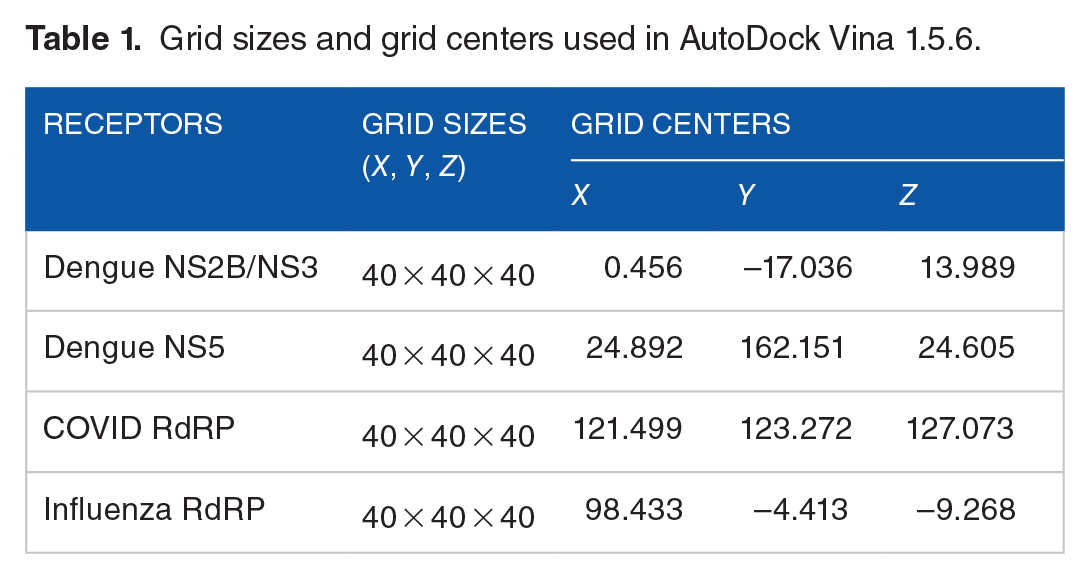
AutoDock Tools 1.5.6 was used for the docking, which has a rapid processing time and accurately anticipates binding places, and determines the grid box dimensions automatically. 51 In the present study, the grid spacing of 0.375 Å was used for all receptor proteins. The grid center and grid box size are given in Table 1. A set of commands were entered into the command prompt to create the output scores and start the docking analysis. The data showed the binding affinity in kilocalories, and the ligand with the lowest value was assumed to have the greatest binding interactions. 52 The docking complexes were visualized in UCSF ChimeraX53,54 and their binding interactions were examined in Discovery Studio. 55
Grid sizes and grid centers used in AutoDock Vina 1.5.6.
Molecular dynamic simulations
In this investigation, we conducted molecular dynamics (MD) simulations on a grapjics processing unit (GPU)-accelerated platform using the GROMACS software package. 56 The system was prepared utilizing the CHARMM-GUI solution builder, 57 and the resulting input files were exported in the Gromacs format. Initialization of particle positions was performed using the Gromacs.gro file, while the interactions between particles were defined using a topology file. Long-range electrostatic interactions were evaluated employing the particle mesh Ewald method, and a cutoff distance of 1.2 nm was implemented for van der Waals interactions. The equilibration of the system was carried out in the isothermal-isobaric ensemble, followed by the final simulation in the canonical ensemble, maintaining a temperature of 300 K for a duration of 50 ns. The simulation was executed using a Langevin integrator with a timestep of 1 fs. For trajectory analysis, we utilized the MD analysis package 58 to compute crucial parameters, including the root mean square fluctuation (RMSF), radius of gyration (Rg), and root mean square deviation (RMSD) of both the protein and protein-ligand complexes. These parameters facilitated the assessment of deviations and stability of the protein and complexes throughout the simulation. 58
Results
Ligand retrieval
From B lycium bioactive constituents, ie, berberine (CID_2353), berbamine (CID_275182), berbamunine (CID_440585), oxyberberine (CID_11066), oxyacanthine (CID_442333), baluchistanamine (CID_102267542), sindamine (CID_102512444), punjabine (CID_101428301), and jhelumine (CID_102148948), were selected. The following investigation additionally incorporated two standard antiviral drugs, ie, remdesivir (CID_121304016) and favipiravir (CID_492405). The physicochemical properties of the selected phytocompounds and the reference drugs are given in Table 2.
Physicochemical properties of the selected phytocompounds and the reference drugs.

Abbreviations: CID, compound identification; FDA, food and drug administration
Pharmacokinetic analysis
Prediction of ADME properties
When assessing the ability of a drug to spread throughout the body, the BBB must be taken into consideration. Berberine and oxyberberine were shown to be able to pass the BBB, according to the ADME study of understudied phytoconstituents (Table 3). However, all the other chosen phytoligands and reference antiviral drugs had negative findings, indicating that they are unable to cross BBB. The results also indicate that maximum phytoconstituents are P-gp substrates, except berbamine, berbamunine, oxyberberine, and antiviral drug favipiravir. The studied substances were predicted to suppress the five classes of cytochromes P450 for continuous plasma concentrations and improved bioavailability. Berberine and oxyberberine were capable of suppressing CYP1A2, CYP2D6, and CYP3A4. CYP2C9 was inhibited by baluchistanamine, sindamine, punjabine, and oxyberberine. Among the antiviral drugs, remdesivir had shown to inhibit CYP3A4 only. Except for the antiviral medication remdesivir which has shown low human intestinal absorption, all remaining phytonutrients and favipiravir showed high GI absorption suggesting more than 95% chance of being absorbed by the human intestine.
Pharmacokinetics of selected phytoligands of B lycium and standard antiviral drugs (ie, remdesivir and favipiravir).
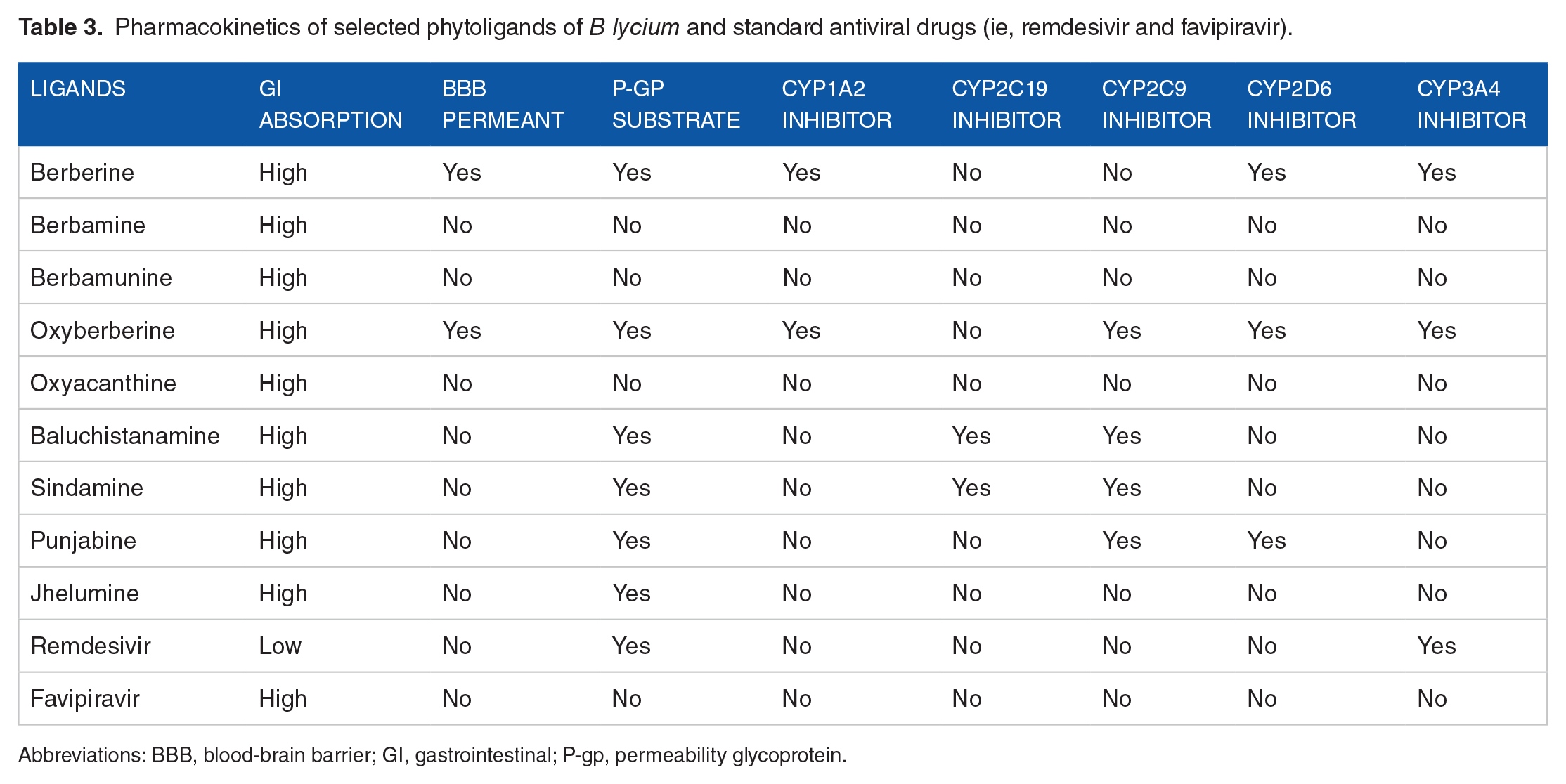
Abbreviations: BBB, blood-brain barrier; GI, gastrointestinal; P-gp, permeability glycoprotein.
Drug-likeness analysis
The most crucial factor in evaluating the bioavailability of the understudy phytochemicals is drug-likeness prediction. Lipinski rule, Ghose rule, Veber rule, Egan rule, and Muegge rule are summed up in Table 4. Only two phytocompounds, ie, berberine and oxyberberine, showed zero Lipinski violation and followed all the parameters set in Ghose, Veber, Egan, and Muegge filter. Berbamine, berbamunine, baluchistanamine, and sindamine have MWs higher than the permissible range (<500 Da) indicating passing the Lipinski rule with one Lipinski violation along with three Ghose violations. While following the Egan rule and Veber rule, berbamine, sindamine, and baluchistanamine showed two Muegge violations whereas berbamunine had one violation. Among antiviral drugs, favipiravir showed no Lipinski violation but four Ghose and one Muegge violations. Remdesivir has surprisingly depicted two Lipinski, three Ghose, two Veber, one Egan, and three Muegge violations by exceeding the permissible limit of hydrogen-bond acceptor and topological surface area.
The drug-likeness properties (Lipinski rule) of the selected phytoligands and standard antiviral drugs (ie, remdesivir and favipiravir).

Abbreviations: MW, molecular weight; nOHNH, number of hydrogen bond donors; nON, number of hydrogen bond acceptors; TPSA, total polar surface area.
The understudy compounds have been subjected for bioactivity score evaluation and their results are summarized in Table 5. Berberine showed promising bioactivity as ion channel modulator and enzyme inhibitor and was moderately active as GPCR ligand, kinase, and protease inhibitor. Oxyberberine was moderately active as ion channel modulator, nuclear receptor ligand, and protease inhibitor while the bioactivity score above 0.0 indicated high activity as GPCR ligand, kinase inhibitor, and enzyme inhibitor. Baluchistanamine and sindamine have shown identical scores, both were moderately active as GPCR ligand and protease inhibitor but inactive as ion channel modulator, kinase inhibitor, nuclear receptor inhibitor, and enzyme inhibitor. Remdesivir was active as GPCR ligand, kinase inhibitor, protease inhibitor, and enzyme inhibitor and moderately active as ion channel modulator and nuclear receptor ligand. Favipiravir was moderately active as ion channel modulator, kinase inhibitor, and enzyme inhibitor but remained inactive as GPCR ligand, nuclear receptor ligand, and protease inhibitor.
Bioactivity scores of selected phytoligands and standard antiviral drugs.

Abbreviation: GPCR, G protein-coupled receptor.
Toxicity analysis
The toxicity risk assessment (Table 6) revealed that berberine, berbamine, berbamunine, oxyacanthine, and sindamine were found to be non-toxic in terms of mutagenicity, tumorigenicity, reproductive toxicity, and irritant. Oxyberberine possesses reproductive toxicity factor whereas punjabine was slightly mutagenic and irritant. Baluchistanamine and jhelumine also occurred to be irritants. Favipiravir was non-mutagenic, non-tumorigenic, and safe for reproductive system but a positive irritant. Remdesivir, on the other hand, was non-mutagenic but highly positive as tumorigenic, reproductive toxin, and irritant. Berbamine, berbamunine, oxyberberine, oxyacanthine, baluchistanamine, sindamine, punjabine, and jhelumine showed drug-likeness score greater than 1, while berberine presented negative value for drug-likeness. For remdesivir drug-likeness, value was recorded to be 2.9436 while the highest negative value was recorded for favipiravir, ie, –21.38.
Toxicity risk analysis of selected phytochemicals and standard antiviral drugs.

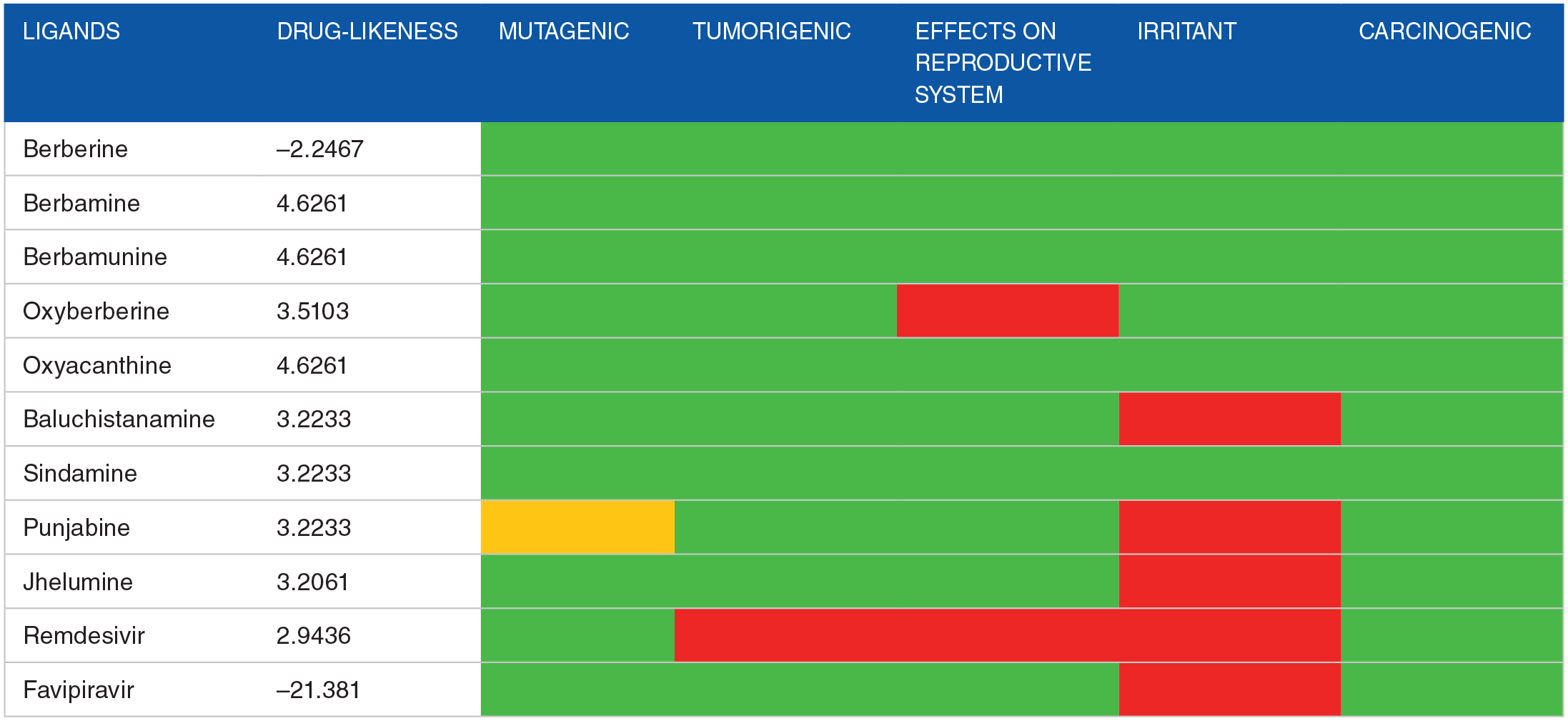
Note. Red: highly toxic; yellow: slightly toxic; green: Non toxic.
Docking analysis
Docking between the receptor proteins and selected phytoligands by AutoDock Vina returned energies in kcal/mol and highest negative value for each pair is shown in Table 7. For Dengue NS2BNS3, highest binding affinity was recorded with punjabine (ie, –10.9 kcal/mol) followed by jhelumine (–9.3 kcal/mol). Binding energy obtained for oxyacanthine and sindamine was –9.1 and –9.0 kcal/mol, respectively. Berberine and berbamine bound with same affinity (–8.0 kcal/mol). Among the antiviral drugs, remdesivir showed binding energy –7.7 kcal/mol and favipiravir showed –5.8 kcal/mol. The binding affinities of the understudy compounds and antiviral drugs with NS2BNS3 can be summarized in following ascending order: favipiravir < remdesivir < berberine = berbamine < oxyberberine < baluchistanamine < berbamunine < sindamine < oxyacanthine < jhelumine < punjabine.
Docking between the receptor proteins and selected phytoligands by AutoDock Vina.

For DENV NS5, the highest binding affinity was recorded for punjabine with energy –10.4 kcal/mol and berbamunine came next in line with energy –9.6 kcal/mol. Oxyberberine (–9.4 kcal/mol), berberine (–8.3 kcal/mol), and berbamine (–8.2 kcal/mol) have also shown very promising results. The lowest binding affinity was exhibited by the antiviral drug favipiravir with energy –6.2 kcal/mol. The binding affinities of the understudy compounds and antiviral drugs with NS5 can be summarized in following ascending order: favipiravir < sindamine < jhelumine < berbamine ⩽ oxyacanthine = baluchistanamine < berberine < remdesivir < oxyberberine < berbamunine < punjabine.
The docking analysis of COVID RdRP with selected phytoligands revealed the highest binding affinity of oxyacanthine and baluchistanamine having the binding energy –9.5 kcal/mol. Punjabine exhibited the binding energy of –9.1 kcal/mol, whereas berbamine and sindamine displayed same binding energy, ie, –8.3 kcal/mol. All selected phytocompounds from B lycium showed stronger binding affinities than the chosen antiviral drugs. The binding energies obtained from berberine (–7.7 kcal/mol), berbamunine (–7.6 kcal/mol), oxyberberine (–7.8 kcal/mol), and jhelumine (–7.4 kcal/mol) were lower than remdesivir (–7.3 kcal/mol) and favipiravir (–5.2 kcal/mol) exhibiting higher binding affinity with COVID RdRP. The ascending order of binding affinities of the understudy phytocompounds and antiviral drugs with COVID RdRP can be summarized as following: favipiravir < remdesivir < jhelumine < berbamunine < berberine < oxyberberine < berbamine = sindamine < punjabine < oxyacanthine = baluchistanamine.
Docking between the influenza RdRP and the selected phytochemicals of B lycium returned promising results as all the compounds showed stronger binding affinity than antiviral drug favipiravir (–5.5 kcal/mol). Berberine (–8.3 kcal/mol) has shown binding energies higher than remdesivir (–8.5 kcal/mol) reflecting the higher affinity of the drug. Berbamine (–9.2 kcal/mol), oxyacanthine (–9.4 kcal/mol), berbamunine (–10.2 kcal/mol), and punjabine (–10.4 kcal/mol) have shown the best results with influenza RdRP. The ascending order of binding affinities of the understudy phytocompounds and antiviral drugs with influenza RdRP can be summed up as: favipiravir < berberine < remdesivir < oxyberberine < sindamine < baluchistanamine < jhelumine < berbamine < oxyacanthine < berbamunine < punjabine. The 3D structures of top three docking complexes of each viral proteins and phytoligands and their respective 2D lines models are given in Figures 2 to 5 and remaining structures are given in Supplemental Figure S1.

The 3D structures (left) and their 2D line models (right) of top three docking complexes of NS2BNS3 and selected phytocompounds from B lycium. (A) NS2BNS3-punjabine, (B) NS2BNS3-jhelumine, and (C) NS2BNS3-oxyacanthine.

The 3D structures (left) and their 2D line models (right) of top three docking complexes of NS5 and selected phytocompounds from B. lycium. (A) NS5-punjabine, (B) NS5-berbamumine, and (C) NS5-oxyberberine.

The 3D structures (left) and their 2D line models (right) of top three docking complexes of COVID RdRP and selected phytocompounds from B. lycium. (A) RdRP-baluchistanamine, (B) RdRP-oxyacanthine, and (C) RdRP-punjabine.
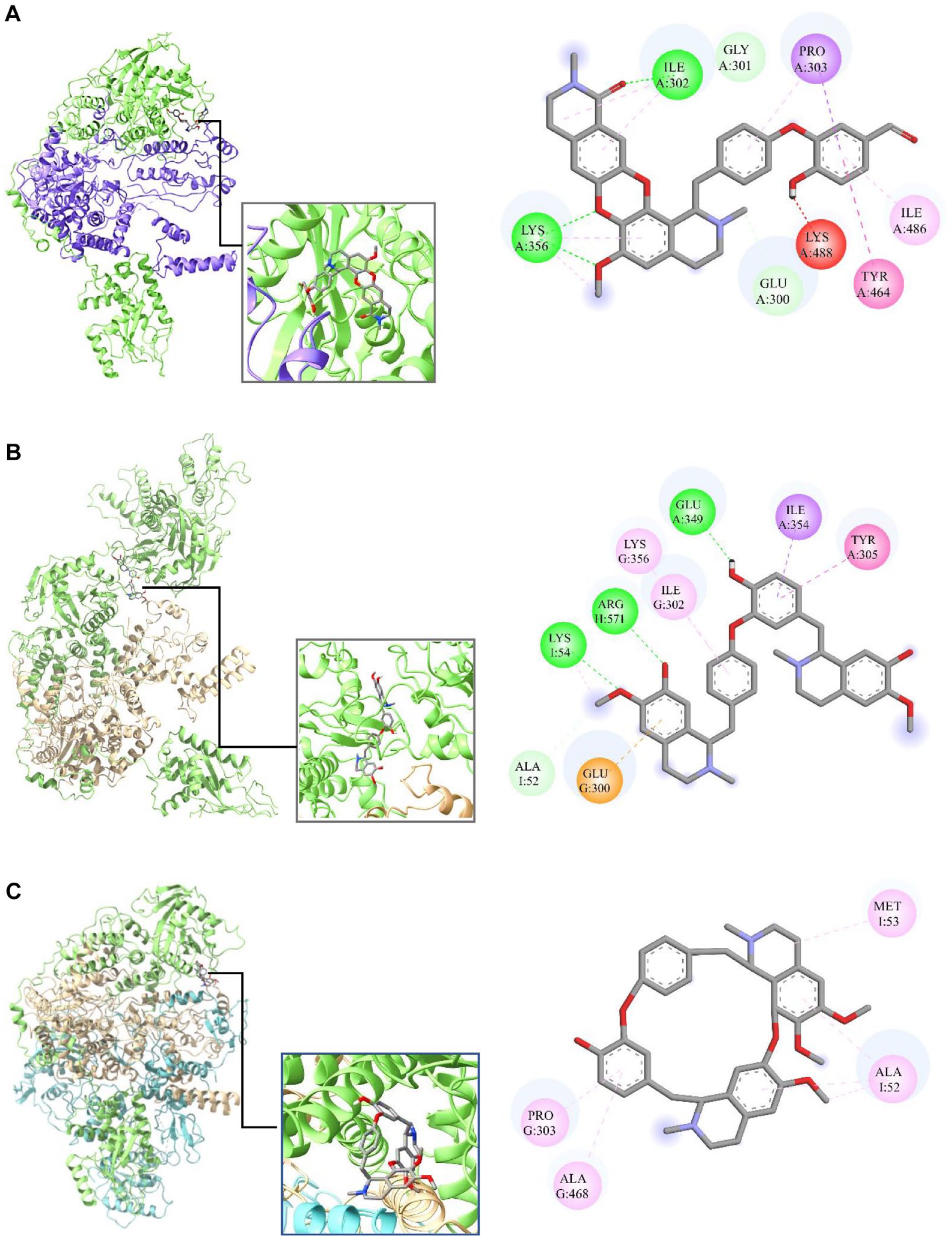
The 3D structures (left) and their 2D line models (right) of top three docking complexes of influenza RdRP and selected phytocompounds from B. lycium. (A) RdRP-punjabine, (B) RdRP-berbamumine, and (C) RdRP-oxyacanthine.
Molecular dynamic simulations
Considering the pharmacokinetic analyses, drug-likeness, Lipinski rule of five followed by bioavailability score, non-toxicity, and promising docking results, berberine ligand in complex with viral proteins (Figure 6) was chosen to perform MD simulations.

Illustration of the berberine ligand in complex with (A) DENV NS2B/NS3 protease, (B) DENV NS5 polymerase, (C) COVID-19 RdRP, and (D) influenza RdRP protein complex.
Figure 7 illustrates the RMSD graphs of the berberine ligand in complex with (A) DENV NS2B/NS3 protease, (B) DENV NS5 polymerase, (C) COVID-19 RdRP, and (D) influenza RdRP protein complex. The RMSD curves were collected based on the MD trajectory after the experiment. The RMSD of the DENV NS2B/NS3 protease complex showed minor fluctuations between 0 and 1000 ps, which is an acceptable range, and remained stable at 1.0 to 1.2 nm up to 20 000 ps (2 ns), followed by minor fluctuations before 5 ns. The influenza RdRP protein complex had the highest fluctuation wavelength of 3.0 nm, while the DENV NS2B/NS3 protease complex had the lowest fluctuation wavelength up to 1.4 nm. All complexes showed an increase in fluctuation reaching a peak value between 4 and 5 ns of the simulation. Figure 7 shows that all complexes had very stable binding site structures. RMSD is a commonly used measure of the differences between the structures sampled during simulation and the reference structure.

RMSD graph of ligand berberine and (A) DENV NS2B/NS3 protease, (B) DENV NS5 polymerase, (C) COVID-19 RdRP, and (D) influenza RdRP protein complex.
Based on the above speculation, the variation of Rg during MD simulation was probably caused by the binding site of the target and ligand (Figure 8). The Rg indicates protein stability during simulation. In other words, the Rg curve of a well-folded protein reaches a plateau during simulation. Rg fluctuation can be used to monitor changes in protein structure. Figure 2 shows the Rg graphs of the berberine ligand in complex with (A) DENV NS2B/NS3 protease, (B) DENV NS5 polymerase, (C) COVID-19 RdRP, and (D) influenza RdRP protein complex. The average Rg values show that the influenza RdRP protein had the highest Rg, followed by COVID-19 RdRP, DENV NS5 polymerase, and DENV NS2B/NS3 protease with the lowest Rg value. The plot of COVID-19 RdRP was similar to that of the DENV NS5 polymerase complex, with fluctuations between 2 and 3 ns. Figure 8 reveals that all complexes had very stable binding site structures.
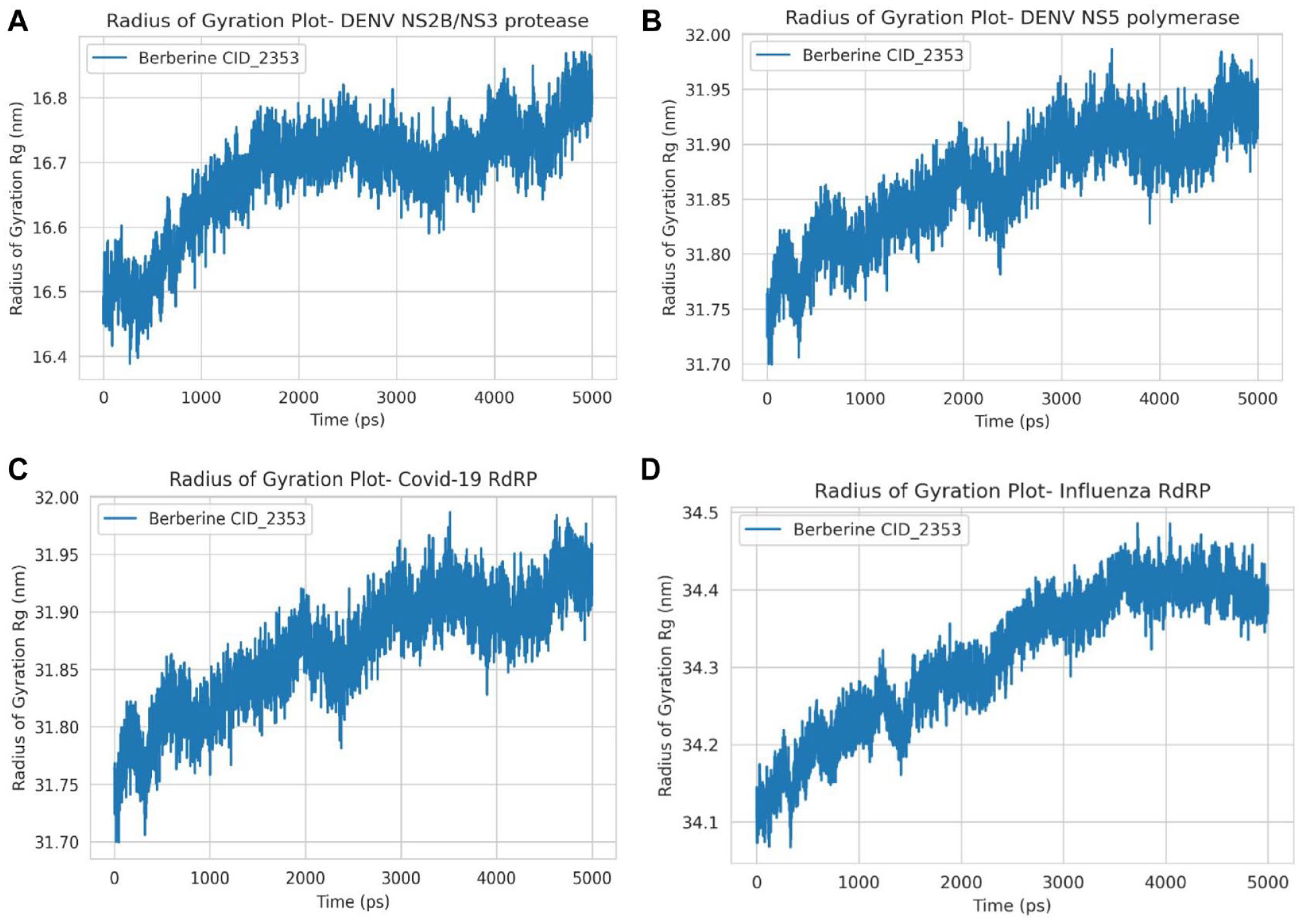
Radius of gyration graph of ligand berberine and (A) DENV NS2B/NS3 protease, (B) DENV NS5 polymerase, (C) COVID-19 RdRP, and (D) influenza RdRP protein complex.
Figure 9 shows the RMSF graphs of the berberine ligand in complex with (A) DENV NS2B/NS3 protease, (B) DENV NS5 polymerase, (C) COVID-19 RdRP, and (D) influenza RdRP protein complex. The RMSF plot of the DENV NS2B/NS3 protease-berberine complex showed little fluctuation compared to other complexes, with no abrupt differences in the plot. The high flexibility values were found at residues 38 and 110 of the DENV NS2B/NS3 protease-berberine complex, between residues 200 and 400 for the COVID-19 RdRP-berberine complex, residue 500 for the DENV NS5 polymerase-berberine complex, and residue 430 for the influenza RdRP protein-berberine complex. RMSF measures the movement of a subset of atoms with respect to the average structure over the entire simulation and indicates the flexibility of different regions of a protein. RMSF can be used to evaluate structural movement and flexibility. The binding site is mainly composed of several key residues in the active pocket, and monitoring the behavior of these residues can contribute to the study of protein-ligand interactions.

RMSF graph of ligand berberine and (A) DENV NS2B/NS3 protease, (B) DENV NS5 polymerase, (C) COVID-19 RdRP, and (D) influenza RdRP protein complex.
Discussion
The influenza virus and the SARS-CoV-2 are two respiratory viruses that have sporadically caused global pandemics. While the influenza virus has been kept under control for a while, seasonal influenza still claims numerous lives every year, and sometimes a pandemic influenza virus appears. 59 Several breakouts of different serotypes of the DENV and its global expansion have led to a significant number of fatalities as well as a medical emergency because no effective treatments for DENV infections have yet been discovered. The COVID-19 issue and dengue illness outbreaks in several regions are difficulties that the entire globe is now battling. The majority of epidemic and pandemic viral illnesses have caused enormous destruction and countless lives during the past several decades. 60 The populace as well as the country’s healthcare system are suffering greatly as a result of the simultaneous load of dengue and COVID-19.9,61 Considering that RNA viruses have high mutation rates, developing vaccines against them is extremely difficult or almost impossible. Novel antiviral medicines generated from plants may be considered as effective alternatives in the fight against this menace to humanity. These are believed to be substances which have been utilized since the dawn of human civilization and are nontoxic, less threatening, and safe.
Historically, medicinal plants have been utilized to treat a range of human illnesses. The majority of Asian countries, including China, Japan, and India, have a long history of using extracts from medicinal plants and mushrooms. Medicinal plants have a significant number of therapeutically useful secondary metabolites that are of pharmacological importance. Many plant components or extracts have been used by locals to avoid several ailments since the very beginning and are still used now.62,63 B lycium Royle, a member of the Berberidaceae family, a potent medicinal plant with a known history of use in ethnomedicine, has produced notable therapeutic effects in indigenous communities all over the world. In several regions of Pakistan, it is still used to cure chest issues, coughs, GI cramps, and diarrhea. Many biologically active substances, including alkaloids, saponins, tannins, berberine, berbamine, and sindamine, are found in B lycium and may be obtained from the plant’s various parts.25,64 The plant includes the isoquinoline alkaloid berberine and the main alkaloid umbellitine. This is often extracted from the roots or root bark of B lycium and other Berberis species that are widely distributed in nearby woodlands. This chemical has a wide range of biological uses, including antioxidant, anti-microbial, anti-inflammatory, anti-cancer, anti-diabetic, anti-hyperlipidemic, and hepatoprotective. For many years, the traditional medical system employed the roots of B lycium Royle to cure a variety of viral illnesses (ie, COVID-19, HCV, influenza, H1N1, enterovirus 71), bone and skin conditions, jaundice, ulcers, gonorrhea, diabetes, and blood pressure.32,65,66 The current study investigated the antiviral potentials of 11 bioactive compounds, ie, berberine, berbamine, berbamunine, oxyberberine, oxyacanthine, baluchistanamine, punjabine, jhelumine and sindamine through pharmacokinetic and molecular dynamic studies.
Physicochemical and biopharmaceutical qualities that are acceptable for pharmaceutical development of a chemical entity should be combined with its potential pharmacological action in order to achieve the necessary pharmacokinetic parameters. 67 The process of absorption is where the supplied phytochemicals are first transferred. All understudied compounds were discovered to have a higher GI tract absorption, indicating a higher degree of water solubility. As a medication is absorbed, it must go through a distribution process that entails the permeability of the molecule and characterizes the compound’s whole bioactivity. In general, only a tiny portion of the molecules provided for dispersion really reach the target in full; the majority disintegrate before they do. The compound’s bioactivity therefore seems to be diminished. 68 Knowledge about whether substances are substrate or non-substrate for the P-gp informs us about its active efflux across biological membranes, such as the GI wall to the lumen or from the brain. It is vital to know how compounds interact with cytochromes P450 since this enzyme is crucial for the metabolic biotransformation that leads to medication clearance. Thus, it is crucial for drug discovery to foresee a molecule’s propensity to inhibit CYPs.69,70 Swiss-ADME prediction in Table 3 revealed that all understudy phytoconstituents except berbamine, berbamunine, and oxyberberine were P-gp substrates and only berberine and oxyberberine were found capable of crossing BBB and suppressing cytochromes (CYP1A2, CYP2D6 and CYP3A4). The Lipinski rule of five, Ghose, Veber, Egan, and Muegge and bioavailability score were used to evaluate the drug-likeness. Only oral drugs are permitted to be evaluated when the lead molecules fulfill Lipinski criterion of five with no violations or a maximum of one violation.71,72 Berberine and oxyberberine met the requirements of Ghose, Veber, Egan, and Muegge rules while not showing any signs of Lipinski violation suggests their potential as ideal lead compounds. Berberine and oxyberberine passed all the filters of pharmacokinetics analysis by exhibiting drug-likeness, excellent bioavailability, and non-toxic profile.
All the understudy compounds have shown strong binding affinity with the receptor DENV NS2BNS3, NS5, COVID RdRP, and influenza RdRP proteins. The top phytochemicals identified by the binding energy values in the AutoDock 1.5.6 program were taken into consideration based on their binding location and probable interactions with the major residues.73,74 The conformations with the lowest connection affinities (less than –7.0 kcal/mol) were chosen as best after the docking procedure to further monitor interacting residues (Figures 2-4). Punjabine has shown the strongest binding affinity with NS2BNS3 (–10.9 kcal/mol), NS5 (–10.3 kcal/mol), and influenza RdRP (–10.4 kcal/mol). For COVID RdRP, the strongest binding affinity was possessed by oxyacanthine and baluchistanamine by having the lowest binding energy (–9.5 kcal/mol). The optimal pharmacokinetics, bioavailability, and safety profile of berberine also included lowered binding energy with –8.0 kcal/mol, NS5 (–8.3 kcal/mol), COVID RdRP (–7.7 kcal/mol), and influenza RdRP (–8.3 kcal/mol). Also, these substances have been contrasted with the common medications remdesivir and favipiravir, indicating more hopeful outcomes for the research substances. The conformational changes of proteins and their interactions with ligands may be studied effectively using MD modeling. The RMSD plot is one of the methods most frequently employed to quantify the structural changes in proteins and to evaluate the stability of the protein-ligand complex during MD simulations. In this graph, the simulation duration is shown against the RMSD of the protein backbone, which is computed for each time step.75,76
The influenza RdRP protein complex exhibited the highest fluctuation wavelength of 3.0 nm, while the DENV NS2B/NS3 protease complex had the lowest fluctuation wavelength up to 1.4 nm. All complexes showed an increase in fluctuation reaching a peak value between 4 and 5 ns of the simulation. The structural variations among all the protein targets can account for this finding. Because of its flexibility, the protein target might adopt many conformations during the simulation, increasing the RMSD values. 77 The variation in RMSD values during the simulation can also be attributed to the specific binding interactions between the protein and ligand. Previous studies have shown that the RMSD of a ligand can be affected by the conformational changes of the protein side chains that form hydrogen bonds or van der Waals interactions with the ligand.78,79 Therefore, differences in the binding interactions of different protein target with berberine may also contribute to the differences in their RMSD values. In summary, the RMSD plot of the MD simulation provides valuable information about the stability and conformational changes of the protein-ligand complex.
The RMSF is a commonly used measure in MD simulations to evaluate the flexibility of different regions of a protein. According to the simulation results, the RMSF values were calculated for berberine in complex with DENV NS2B/NS3 protease, DENV NS5 polymerase, COVID-19 RdRP, and influenza RdRP protein target. The high flexibility values were found at residues 38 and 110 of the DENV NS2B/NS3 protease-berberine complex, between residues 200 and 400 for the COVID-19 RdRP-berberine complex, residue 500 for the DENV NS5 polymerase-berberine complex, and residue 430 for the influenza RdRP protein-berberine complex. As noted by Gowers et al, understanding the flexibility of a protein structure is crucial for predicting protein-ligand interactions and for the rational design of drugs. In addition, several studies have demonstrated the importance of monitoring the behavior of key residues in the active site, which may affect protein function and drug binding. 80 According to the results obtained, the RMSF analysis provided insights into the flexibility of the protein-ligand complexes and the behavior of berberine in the presence of different four protein targets. Although the average RMSF values were similar between the complexes, the high flexibility values found in specific regions of the structure may have implications for protein-ligand interactions and drug binding. Overall, the RMSF plot provides valuable information about the flexibility of the protein structure during the simulation, which may impact protein-ligand interactions and drug design.
The Rg is a measure of the compactness of a protein and is commonly used to assess protein folding and stability during MD simulations. In our study, we analyzed the Rg values for the domains of our target proteins in complex with berberine using MD simulations.81,82 The results indicate slight variations in the Rg values for different protein complexes. The DENV NS2B/NS3 protease exhibited the lowest Rg value, ranging from 16.4 to 16.9 nm. This suggests that the protease complex is relatively compact and tightly packed. The DENV NS5 polymerase and COVID-19 RdRP complexes showed similar Rg values, ranging from 31.7 to 32 nm. Both plot also show similar fluctuations between 2 and 3 ns, suggesting that berberine may have a slightly destabilizing effect on the protein structure and also shows that both complexes have a moderately extended conformation. In contrast, the influenza RdRP protein complex displayed the highest Rg value, ranging from 34.1 to 34.5 nm. This indicates a larger and more expanded conformation compared to the other complexes. The higher Rg value suggests that the influenza RdRP complex may have a more flexible structure with increased intermolecular distances. This observation is consistent with previous studies that have shown that ligand binding can affect protein stability and flexibility. 83 In addition, other factors such as temperature, solvent conditions, and simulation parameters can also influence Rg values and protein stability. 78 These results provide insights into the structural dynamics of the protein targets in a complex with berberine and highlight the potential impact of ligand binding on protein stability and flexibility.
Conclusion
A hidden treasure trove for antiviral research, berberine, berbamine, berbamunine, oxyberberine, oxyacanthine, baluchistanamine, and sindamine has showed encouraging findings as possible lead compounds. B lycium phytocompounds can be used as lead compounds in the synthesis of novel antiviral medications. They are interesting candidates for further drug development procedures due to their proven effectiveness in blocking viral enzymes and advantageous pharmacokinetic characteristics. An encouraging approach to tackling the issue of drug resistance and the sluggish development of novel antiviral medications is the identification of potent phytocompounds. Compared to manufactured medications, natural substances frequently have distinct modes of action, which may assist address resistance problems. However, antiviral mechanisms of action of these phytochemicals are poorly known, and there are further investigations and clinical trials necessary for proving their effectiveness and toxicity in vivo. The therapeutic potential of naturally occurring substances derived from plants as antiviral medicines requires more investigation.
Footnotes
Acknowledgements
The authors acknowledge the support of the Department of Industrial Biotechnology at Atta-ur-Rahman School of Applied Biosciences, NUST, for providing the research facilities and funding.
Correction (September 2024):
Legends of figures 3-5 have been updated.
Author Contributions
M.M. and H.A.K. conceptualized the study. Formal analyses were performed by M.M., T.A.I., and A.I.F. Validation was done by N.S.S.Z. and H.A.K. M.M. wrote the original draft. Original draft was reviewed and edited by N.S.S.Z. and H.A.K. All authors have read and agreed to the published version of the manuscript.
Declaration of conflicting interests:
The author(s) declared no potential conflicts of interest with respect to the research, authorship, and/or publication of this article.
Funding:
The author(s) received no financial support for the research, authorship, and/or publication of this article.
Ethical Approval
Ethical Approval is not applicable for this article.
Statement of Human and Animal Rights
This article does not contain any studies with human or animal subjects.
Statement of Informed Consent
There are no human subjects in this article and informed consent is not applicable.

Supplemental Material
Supplemental material for this article is available online.