




Abstract
The dominant western scientific methodology and standards are being challenged by a global academic push by Indigenous peoples to preference the use of culturally informed and appropriate Indigenous methodologies to produce collective benefits for communities. This article describes a methodology grounded by an Indigenous research paradigm, embodied through an Indigenous standpoint lens, and underpinned by principles of relationality, reciprocity and reflexivity. Collectively, these elements inform an Indigenous yarning methodology, which fostered a deeper connection with the 23 Aboriginal participants’, as they shared their experiences engaging with mental health and higher education services and systems. Inductive thematic analysis practices were utilised to analyse and synthesise the experiences to address the research questions.
Introduction
The attempted cultural eradication and continued denial of Aboriginal and Torres Strait Islander ways of knowing, doing, and being have had a severe impact on the development of western research methodologies (Smith, 2021). As such, research practices often fail to adequately represent or benefit Indigenous communities (Smith, 2021; Zion & Matthews, 2022). The legacy of colonisation and oppression has resulted in many Aboriginal and Torres Strait Islander peoples experiencing research as another form of exploitation rather than a means of empowerment or positive change (Zion & Matthews, 2022). This has created a significant ethical challenge in conducting research that is genuinely respectful, equitable, and beneficial to Indigenous communities (Bessarab, 2014).
Indigenous scholars and allies continue the resistance started by our ancestors, reinforcing the validity of our knowledge systems and building upon these foundations to undertake Indigenous research methods (Rigney, 2001; Smith, 2021). Indigenous governance principles are grounded in traditional knowledge systems and practices that have existed for thousands of years (National Health and Medical Research Council [NHMRC], 2018; Wilson, 2008). These enduring systems can be partially attributed to our survival as the oldest living culture in the world (Nakata, 2007). However, they have more recently gained formal recognition and have been integrated into research processes and practices with Indigenous communities (Chilisa, 2019). Indigenous governance principles prioritise Indigenous perspectives, knowledge, and protocols, empowering communities through meaningful participation and collaborative partnerships between researchers and Indigenous communities, that share decision-making powers throughout the research process to actively shape research questions, methodologies, and outcomes (Burchill et al., 2023; English et al., 2023). The principles are also critical to ensuring ethical and culturally appropriate practices when conducting research involving Aboriginal and Torres Strait Islander peoples.
Indigenous governance also encompasses the development and implementation of ethical guidelines specific to research with Aboriginal and Torres Strait Islander peoples, such as those created by the NHMRC (2018) in Australia. These guidelines highlight core values such as Spirit and Integrity, Cultural Competence, Equity, Reciprocity, Respect, and Responsibility, which are essential for conducting research that genuinely benefits Indigenous communities. The core values also underpin this Indigenous research method (NHMRC, 2018).
Spirit and integrity are the core values that connect the other five values in the framework (NHMRC, 2018). Spirit connects Aboriginal and Torres Strait Islander peoples to past, present, and future (NHMRC, 2018), while integrity honours our cultures (NHMRC, 2018). The value Reciprocity emphasises mutual benefit and fair exchange, recognising kinship structures and shared responsibility within research partnerships, while centring Aboriginal and Torres Strait Islander ways of knowing (NHMRC, 2018). Respect, a core ethical principle, acknowledges the rights, dignity, and cultural practices of Aboriginal and Torres Strait Islander peoples (NHMRC, 2018). It is strengthened by trust, shared power, and the prioritisation of dignity (NHMRC, 2018). Equity ensures fair treatment, rectifying historical injustices and acknowledging Indigenous culture and history (NHMRC, 2018), addressing the historical imbalance of research benefits (NHMRC, 2018). Cultural Continuity emphasises respecting and preserving Indigenous cultural heritage and traditions, thereby strengthening individual and collective identities (NHMRC, 2018). Responsibilities underscore researchers’ duty to conduct ethical, accountable research that involves the community (NHMRC, 2018).
As Aboriginal researchers, we face increased responsibilities and accountability to the community, often held to higher expectations given our deeper understanding and connections (English et al., 2023). This may also be partly due to our deep cultural ties, which create an inherent sense of duty (English et al., 2023) and an increased obligation to ensure that the research accurately represents and serves the community’s interests (Zion & Matthews, 2022). Furthermore, we must redress past harmful research practices, increasing pressure on Indigenous researchers to go above and beyond expectations and set better standards (Zion & Matthews, 2022).
Often, we have to navigate the western academic landscape and remain true to our traditional ways, requiring us to meet both scientific and cultural rigour in a limited number of words to meet publishing guidelines. In a similar light, we have to demonstrate how we meet more ethical guidelines, with our ethics applications requiring more information and often taking longer for the majority white ethics committee at universities to inform us of the best way to engage with our people (Burchill et al., 2023; Zion & Matthews, 2022). This article outlines the additional barriers faced by Aboriginal and Torres Strait Islander academics and scholars due to colonial legacies and encourages resistance to western norms. By presenting this Indigenous methodology we aim to highlight both the efficacy of culturally grounded methodologies and the need for continued colonial resistance in academic practices.
Method
Research design
This study undertook a qualitative research design to explore cultural responsiveness in psychological practice and higher education. This was achieved by privileging Aboriginal and Torres Strait Islander people’s stories as they reflected upon their and their kin’s previous encounters with psychologists and mental health services.
Research framework
A research paradigm should be underpinned by four entities: ontology, epistemology, axiology, and methodology (Wilson, 2008). Wilson (2008) posited that an Indigenous research paradigm comprising the same entities should be considered interconnected and blended, not knowing where one ends and the next begins. He further described the Indigenous research paradigm as relational, arguing that Indigenous epistemology, ontology, and axiology reflect our Indigenous Knowing, Being, and Doing framework, respectively, with all entities being grounded in relationships and relational accountability (Wilson, 2008). This is demonstrated by grounding research methodologies within the community and respecting the relations between participants, topics, and researchers (Wilson, 2008). Rigney (1999) posited that by utilising an Indigenous research paradigm, Indigenous voices can be privileged to further understand the assumptions held about reality.
The critical components of the Indigenous research paradigm inform the choices of research standpoint, which is an important aspect of all research methodologies (Atkinson et al., 2021). Indigenous Standpoint Theory (IST) has been explained by Nakata (2007) as,
A method of inquiry, a process for making more intelligible ‘the corpus of objectified knowledge about us’ as it emerges and organises understanding of our lived realities. I see this as theorising knowledge from a particular and interested position—not to produce the ‘truth’ of the Indigenous position but to better reveal the workings of knowledge. (p. 350)
IST enables Indigenous researchers to apply their worldview, facilitating knowledge sharing (Nakata, 2007) through culturally relevant research designs respecting connections between culture, spirituality, people, and ancestors (Chilisa, 2019). IST aligns with Indigenous research paradigms, particularly yarning, connecting Indigenous people to lands and communities while maintaining an Indigenous standpoint (Atkinson et al., 2021; Dean, 2010).
Relationality is fundamental to yarning, and resists settler colonialism when practised authentically (Barlo et al., 2020). Yarning is purposeful storytelling (Bessarab & Ng’andu, 2010), however it has been criticised for being a blanket term that researchers have used to validate their Indigenous methodology without deep and authentic engagement with yarning protocols and procedures (Atkinson et al., 2021). Barlo et al.’s (2020) seven principles, reciprocity, responsibility, relationship, dignity, equality, integrity, self-determination, and six protocols, gift, control, freedom, space, inclusiveness, and gender specificity guided this methodology. They emphasise trust, relationships, and reciprocity to create safe sharing spaces, enabling the collaborative process where participants and researchers co-construct knowledge and perspectives and the conversation to flow naturally (Barlo et al., 2020). Researchers are encouraged to actively listen and be flexible, adapting to the participant’s needs, within the scope of the topic being explored, without imposing their agenda (Barlo et al., 2020).
Atkinson et al. (2021) emphasised the importance of relationality in yarning, urging further research to explore and define the types of yarning and their relational impacts. In a Literature review, Bessarab and Ng’andu (2010) identified six types of yarning styles. (1) social yarn—builds trust between participants and researchers; (2) family yarn—explores relationships with land, kin, and spirituality; (3) cross-cultural yarn—involves adapting behaviours to western protocols; (4) research topic yarn—gathers data related to research questions; (5) therapeutic yarn—involves sharing personal stories, with the researcher offering support and helping to make meaning; and (6) collaborative yarn—focuses on the research process, identifying topics, priorities, and data analysis (Bessarab & Ng’andu, 2010).
When implementing an Indigenous yarning methodology, diverse recruitment strategies, yarning formats, recording methods, and analysis techniques have been successful (Coombes & Ryder, 2020; Dean, 2010; Gibson et al., 2020; Reilly & Rees, 2018; Rogers, 2017; Vujcich et al., 2018; Walker et al., 2014). Data interpretation often involves collaborative methods and participant feedback (Gibson et al., 2020; Rigney, 1999), reflecting the reflexivity of Indigenous methodologies and community diversity.
Due to the frameworks and paradigms that underpin Aboriginal-led research, it has been suggested that researchers should introduce themselves to foster relational accountability and transparency for the position in which the research team is grounded (Whyman et al., 2024; Wilson, 2008). The first author, Emily Darnett, is a Palawa, registered psychologist and research fellow who works across fields in the pursuit of sovereignty and social justice for Aboriginal and Torres Strait Islander peoples. Andrew Peters is a Yarra Yarra and Yorta Yorta descendant and has an extensive history working and educating within the Indigenous studies unit at Swinburne University. Monica Thielking is a non-Indigenous psychologist, researcher, and leader within higher education, with extensive experience working across a range of areas towards equity.
Indigenous governance
In addition to obtaining Ethics approval from the Swinburne University Human Research Ethics Committee (SUHREC; 20236001-15567), the research team and process were guided by the six core values outlined in the NHMRC (2018) introduction. Despite the ethical principles in place, additional cultural considerations are needed in the context of research and data management, as Indigenous communities have historically been marginalised and our data misused (Walter et al., 2021).
Indigenous Data Sovereignty (IDS) and Indigenous Data Governance (IDG) address Indigenous data control and management. IDS is a global movement reclaiming control over Indigenous information, resisting data colonialism, and asserting self-determination (Kukutai, 2023). IDG operationalises IDS by advocating Indigenous-led data management respecting Indigenous worldviews (Kukutai, 2023). IDG centres Indigenous rights to control data about them and data needed for community rebuilding. A key theme is data sovereignty, emphasising Indigenous communities’ rights to govern data collection, use, sharing, and storage, aligning with cultural values (Kukutai, 2023).
The CARE Principles, Collective Benefit, Authority to Control, Responsibility, and Ethics guide Indigenous data management, prioritising Indigenous sovereignty and wellbeing (Carroll et al., 2020). The CARE Principles complement the FAIR principles, Findable, Accessible, Interoperable, and Reusable, for scientific data management (Carroll et al., 2020; Wang & Savard, 2023), but FAIR requires adaptation for Indigenous data to respect sovereignty and culture (Carroll et al., 2020). Implementing CARE and FAIR Principles presents challenges, for example, existing infrastructures often disregard Indigenous needs, leading to data misuse (Walter et al., 2021). In addition, FAIR implementation in health research is complex (Martínez-García et al., 2023). Further, CARE’s immaturity poses evaluation challenges (Robinson et al., 2021), and secondary data use raises benefit-sharing concerns (Carroll et al., 2020). Therefore, CARE and FAIR require ongoing dialogue and community partnerships to ensure Indigenous data sovereignty (Carroll et al., 2021).
Recruitment
Participants were recruited via email invitation sent through the research team’s networks and local organisations, in line with relationality principles (Wilson, 2008). The invitation included the first author’s email or a Qualtrics registration link. Following the link, participants reviewed the information statement and, if interested, provided details such as name, contact method, and preferred participation. The first author followed up to build trust and social connections (Bessarab & Ng’andu, 2010), scheduling participation and sending a consent form to be returned before participation. If consent was not received, a cross-cultural yarn occurred at the session’s start, discussing consent, and the form was completed and returned, leading to further social and family yarns (Bessarab & Ng’andu, 2010). All participants consented to having their yarns recorded.
Demographics
Twenty-three Aboriginal people, of which 17 were females, 4 were males, and 2 identified as non-binary people, shared their stories with the first author. To enhance anonymity, the participants’ current age decade, rather than age at the time of yarn, was recorded, with participants ranged between 20 years and 60 years old. The participants were provided the opportunity to choose their pseudonym, if they did not reply to the email, one was provided for them. Table 1 displays the participants’ demographics.
Participant demographic information.
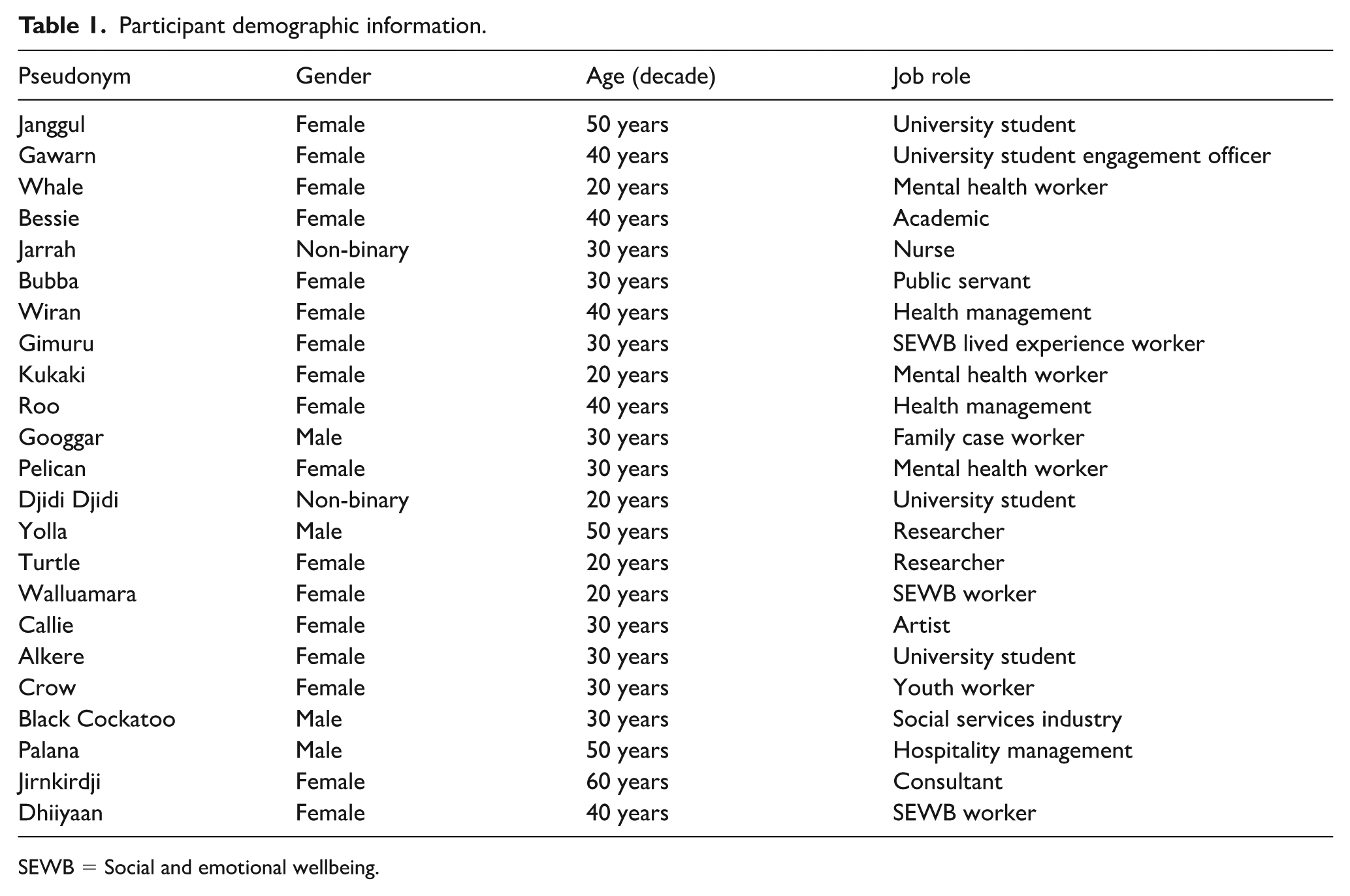
SEWB = Social and emotional wellbeing.
Country and geographical place holds deep significance in Aboriginal cultures, embodying our identity, culture, survival, spirituality, and community, while connecting us to ancestors especially while on our ancestral Countries. Given this significance, participant location representation was carefully considered, balancing accurate depiction of ancestral knowledge and community perspectives with participant confidentiality. Therefore, ancestral lands are vaguely depicted in Figure 1, importantly noting that two participants engaged from their ancestral Country.
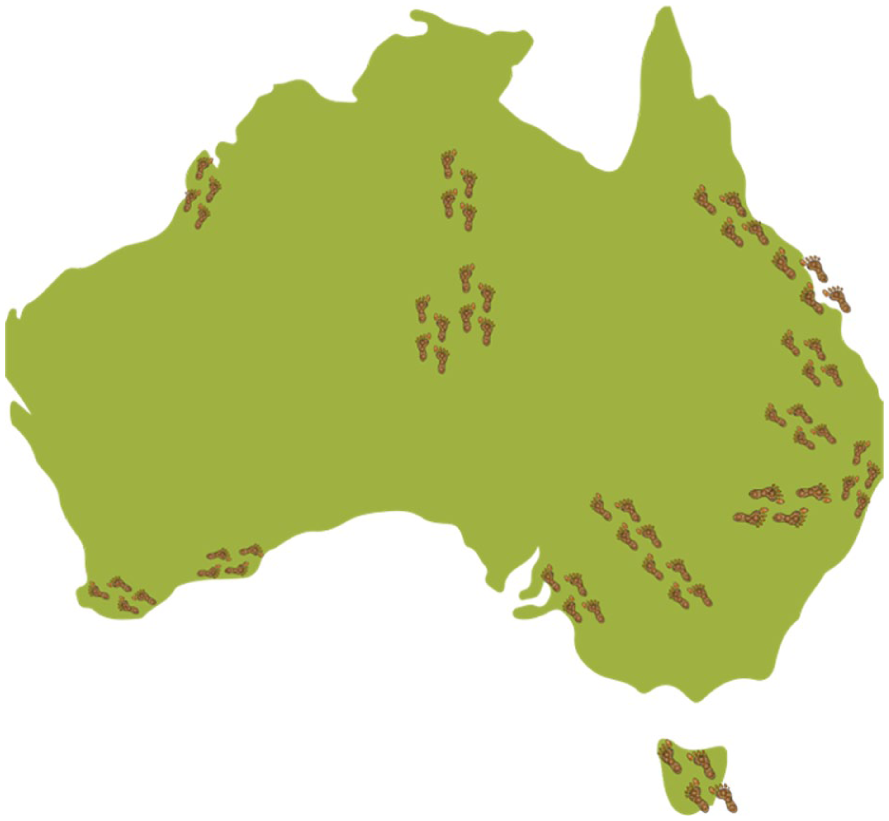
The ancestral lands of participants (created on Canva).
Participants’ ancestral lands spanned across all Australian states and territories except the Australian Capital Territory. New South Wales was represented by 6 participants, followed by Queensland and Northern Territory with 4 each, Tasmania with 3, Western Australia and Victoria had 2 each, and South Australia had 1 participant. In addition, 1 participant was uncertain of their ancestral land due to stolen generations. Ancestral land discussions often initiated yarns, establishing relational connections and exploring kinship. Figure 2 vaguely depicts the communities in which the participants have previously been, or are currently associated.
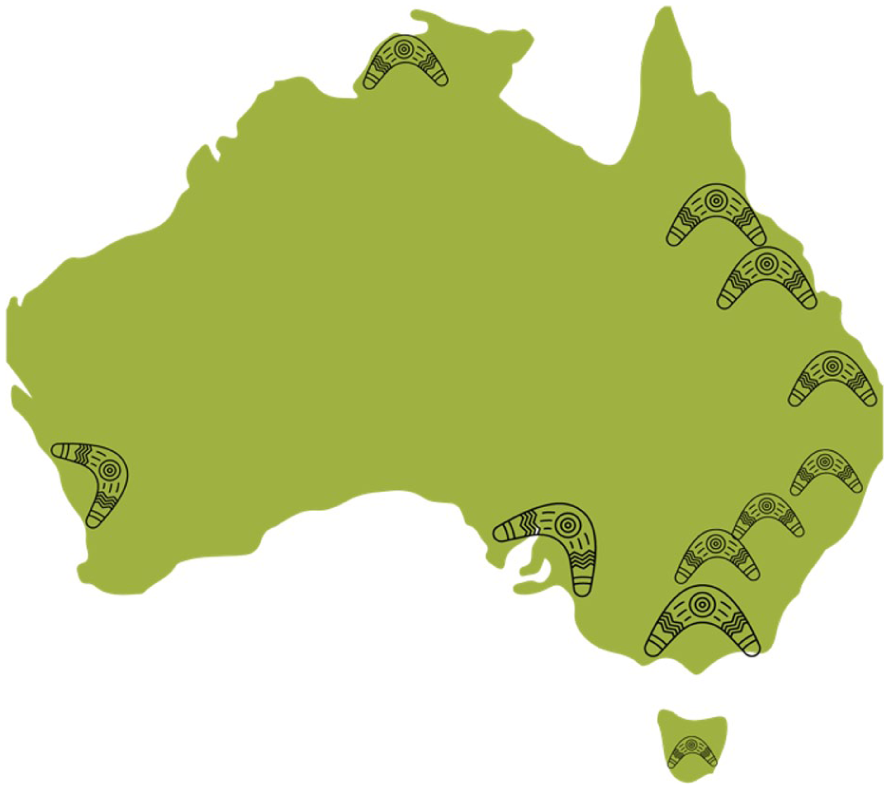
The residential lands of participants (created on Canva).
At the time of participation, 69.5% (n = 16) of people were in urban settings, and 30.5% (n = 7) were in a regional or rural location. Victoria was the most strongly represented state with 9 participants, followed by 5 in Queensland, 3 participants in each state of South Australia and Western Australia and one person each in Northern Territory, New South Wales, and Tasmania.
Yarning methodology
This study used a yarning methodology to engage with Aboriginal and Torres Strait Islander participants’ stories, recognised as a culturally valid approach (Barlo et al., 2020; Bessarab & Ng’andu, 2010). Relationality principles guided the yarning process, connecting the researcher and participants to country, place, and community (Wilson, 2008). Some participants were known to the first author, who offered them the option to yarn with another team member, though none chose to do so. Participants were given several options to align with Indigenous research principles (Barlo et al., 2020), including individual, small (2-4 people), or large (4 or more) yarning circles, and the choice to meet in person or online. Except for one, all participants opted for individual yarns online, preventing the formation of a yarning circle; however, the one participant was comfortable with this after being informed.
Yarns began differently depending on the participant and their relationship with the first author. Most started with a social yarn (Bessarab & Ng’andu, 2010) to build trust, followed by a family yarn (Walker et al., 2014). The order varied, with well-known participants, inquiries about family were more personal, while less familiar participants required more time in the social yarn phase to build trust and explore shared life events. For less well-known participants, the family yarn phase was shorter because the researcher was unfamiliar with the participant’s immediate family, but the broader relational connections were understood. More time was spent in both the social and family yarns to ensure trust and connection with less familiar participants. Figure 3 illustrates the yarning methodology.
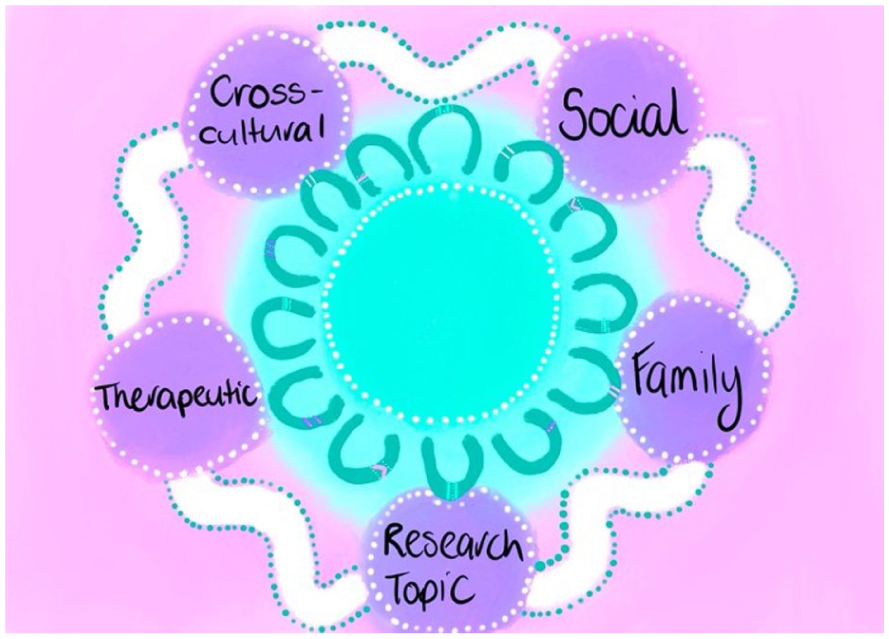
The research yarn cycle.
The first author consciously balanced participants’ time with authentic engagement, following yarning protocols (Atkinson et al., 2021; Barlo et al., 2020). Body language and the flow of conversation signalled when to transition to the research topic yarn (Bessarab & Ng’andu, 2010). This phase focused on sharing stories related to the research question, fostering a deeper connection and meaning-making by exploring commonalities between the participant’s and researcher’s experiences. If emotions were evoked, the focus shifted to a therapeutic yarn, offering support and engaging in meaning-making (Bessarab & Ng’andu, 2010).
Once the yarn naturally paused or ended due to participants’ commitments, cross-cultural yarning began (Walker et al., 2014), with the researcher following western protocols to explain the next steps. Participants were informed about optional reflective practices and collaborative data analysis. Afterwards, participants received an email with a $50 gift voucher as compensation. This reflexive process ensured stories were shared safely, contributing to rich learnings for future analysis and publication.
Yarn analysis
The first author transcribed the yarns, facilitating a deeper engagement and knowledge of the participant’s stories (Coombes & Ryder, 2020). All information collected, including recordings, were stored on the protected One-Drive in line with the ethical requirements. Inductive thematic analysis (ITA; Braun & Clarke, 2006) and yarn summaries (Whyman et al., 2024) were used to further explore the stories.
In total, data from 23 yarns were analysed. The first author summarised each yarn, noting participant connections (Whyman et al., 2024) to track relational impact (Barlo et al., 2020; Wilson, 2008) and inform demographics. Summaries were categorised by overarching research themes related to Practice, Education, or Additional and were extracted from transcripts and placed in a Word document. The Additional category was created to address the rich content shared beyond initial research questions (Barlo et al., 2020), and maintain Aboriginal epistemology during coding (Whyman et al., 2024; Wilson, 2008). Supplementary Material 1 displays the summary framework. We ensured participants’ codes were stored in isolation to provide individualised yarn summaries with participants themes that emerged, enabling them space to provide feedback on their personal stories (Barlo et al., 2020; Carroll et al., 2020).
Methods to enhance rigour were implemented during data collection and analysis phases such as, question evolution, member-checking strategies including reflections and collaborative analysis, as well as participant language use, and cross-coding (Braun & Clarke, 2006). Nvivo 14 facilitated the Inductive Thematic Analysis (ITA; Braun & Clarke, 2006), a method successfully used within Aboriginal research projects (Dudgeon et al., 2022) which enabled the research team to actively engage with the data, including organising and describing it in line with the underpinning theory and frameworks of Indigenous ontology and IST to this method (Nakata, 2007; Wilson, 2008). ITA followed Braun and Clarke’s (2006) six steps, (1) data familiarity, (2) initial theme generation, (3) theme search, (4) theme review, (5) theme definition and naming, and (6) report production. Familiarity occurred during transcription/coding.
Data familiarity occurred during the transcription cleaning and coding phase. During step 2, the Aboriginal first author met with the non-Indigenous last author after independently cross-coding 20% of the stories (Weckesser & Denny, 2022) to ensure alignment of coding practices. Once coding practices were aligned, the first author individually coded the remaining 80% of the data (Weckesser & Denny, 2022). Using an Excel spreadsheet the team met to discuss, organise, and define initial themes that had emerged in line with steps three, four, and five (Braun & Clarke, 2006). Initial theme generation occurred within the context of the overarching themes of this exploration to ensure the stories were presented as accurately and authentically as possible. This also facilitated the structuring of the findings for step six, whereby the entire team collaborated to produce this manuscript. Supplementary Material 2 contains the Excel template used to generate themes. Because of differences in topics and research questions, the template in Supplementary Material 2 varied slightly by topic. However, these differences likely enhanced scientific rigour by creating greater clarity.
Reflective practice
Participants were given the opportunity to opt in to participate in a reflection. This reflection component aimed to further engage with the Indigenous research paradigm and other frameworks that this Indigenous methodology was positioned within and guided by and gather reflections on the scientific and cultural rigour of the employed. An email was sent to participants 7 days after the yarn with three prompts to guide their reflection. Participants were encouraged to use their reflective techniques or templates if these suited their needs better. The email prompts included the following:
Please reflect on the immediate feelings that arose for you during our yarn. What was it like sharing your stories?
Now, how are you feeling a week later? Have you got anything else you wanted to share now that you have had time to process and reflect on the topics?
Reflecting on your participation, is there something that could be improved about the yarn that would have made you feel more comfortable during this experience? In a similar light, what did you like about it?
Each of the three questions above has two parts. To explore these in more depth, the two parts of the above three questions were separated into six columns, one that addressed each of the questions above. The six categories include the following:
Please reflect on the immediate feelings that arose for you during our yarn.
What was it like sharing your stories?
Now, how are you feeling a week later?
Have you got anything else you wanted to share now that you have had time to process and reflect on the topics?
Reflecting on your participation is there something that could be improved about the yarn that would have made you feel more comfortable during this experience?
In a similar light, what did you like about it?
Besides category four, all categories contribute to a small evaluation of the employed yarning methodology. This will form the structure of the findings discussed in this article’s “Results” section. Category four requested any additional information that they wanted to share. The information shared is contextual to the overarching topics of this investigation and, therefore, will be reported in context in the subsequent papers.
Collaborative analysis
The second optional component of this study that participants could contribute to was collaborative analysis. The member-checking process, in which a few participants were requested to review the emerging themes, has been a procedure built into research methodologies to increase scientific rigour (Motulsky, 2021) and self-determination. In addition, Indigenous data sovereignty principles (Kukutai, 2023) and the CARE principles (Carroll et al., 2020) recognise the Indigenous participant as the owner of the knowledge and perspectives derived from the stories shared by Aboriginal participants. These two premises were merged to inform the collaborative analysis process.
After the first author completed the coding procedures (Braun & Clark, 2022), all participants were sent their yarn summaries, including the themes that emerged from the yarns, accompanied by quotes that reinforced these themes. An example of the yarn summary can be found in Supplementary Material 3.
Through email communications, participants were empowered to ground their stories to best reflect their experiences and to provide feedback to guide restructuring or reconsideration, if necessary. During this email exchange, participants were encouraged to select pseudonyms and to confirm or update the demographic information collected during the relational connection component of the yarn summary. This and other measures were taken to ensure confidentiality and scientific rigour (Murrup-Stewart et al., 2020). The participants were informed that a pseudonym would be provided for them if they did not reply. The participants were given two weeks to reply to the email if they wanted to collaborate in this process. However, any replies received after the two-week period and before the article’s publication were considered, discussed, and, where possible, implemented.
Results
Of the 23 participants, all except one agreed to participate in both optional components. The first author reiterated that there was no penalty for not opting in and that, if participants were too busy at the time to follow through with their decision to participate in the follow-ups, this was completely understandable. Of the 22 that were sent, the reflection and collaborative data analysis 16 and 12 participants responded, respectively. No participants indicated that they had any feedback to inform the collaborative analysis and were happy with the elements of their stories that were captured, with only a few making comments about how many times they used particular words, for example, ‘like’, and ‘so’.
The responses to the reflection prompts were more diverse. As the participants reflected on their immediate feelings that arose after our yarn, mixed emotions and thoughts were reported, with some relating to specific contexts. Janggul and Whale reflected on the psychological workforce. Janggul said, “It is daunting, overwhelming and feels insurmountable to find the right person to help support me,” while Whale added, “It raised awareness for me around the lack of Indigenous psychologists we have working in the field. Although being aware of the large gap it was confronting.”
Two participants reflected on their feelings about previous experiences that had been discussed and processed during the yarns. Gawarn said, “frustrated that had not been my true self with non-Aboriginal psychologists.” While Pelican reported,
I was aware that I kept going off “topic”, speaking about my divorce came quite naturally when speaking about my degree because it was so tied to my studies during my Undergrad. Sharing my stories with another Indigenous person navigating the space made me feel as though I could drop my mask and just state how I felt about my time studying. I think I spoke about the loneliness that is felt being an Indigenous student in the University space and then to add on I studied online, and I am also an adult learner, so I definitely felt that in the moment I was reflecting on how difficult my studies were.
Nearly half of the participants who reflected reported feeling comfortable and validated. Jarrah said, “I think it felt good to yarn about it in a supportive way.” Wiran reported a feeling of
“Relief and acceptance, the researcher facilitated as much time and space as was required to bring in all the connections, rather than feel like I had to focus on discrete aspects of the topic. Researchers seemed to share the view that all things are related.”
Gimuru said, “It was comfortable and nice to have a safe space to yarn about everything happening for me”. Kukaki shared, “It felt very comforting and affirming to share space with someone with similar experiences to me”. Roo agreed and said they felt “Comfortable—having spent time together previously I felt immediately comfortable to open up.” In addition, Turtle reflected,
I felt vulnerable, first and foremost. But, with that came validation that I wasn’t alone and that there’s someone out there fighting for equity in the school and uni settings, particularly around assessments that are Eurocentric/whitefella based, and leave us disadvantaged.
Walluamara described, “I felt heard, and we connected over shared experiences.” Finally, Alkere felt “really comfortable sharing my stories and felt validated in what my experience was.”
Participants mostly agreed that sharing their story was a positive experience, Gawarn “provided the chance to reflect,” and Whale said, “I enjoyed sharing my knowledge and story about my own personal journey over the years of seeking psychological help as well as giving psychological help to the wider community.” Kukaki added, “I can often have imposter syndrome or feel like I’m not making a difference, or my voice doesn’t matter or won’t be heard, but being in a safe space to yarn it out was very cathartic.” Googgar shared,
It felt somewhat great to share experiences and stories. I found feeling validated and accepted as sharing experiences I felt were rather negative. Seemingly removing some shame and avoidance from memories and allowing those times to be shared in a safe space.
Pelican said they “Definitely felt safe in the space to share.” Walluamara reflected that “It was great to talk about my experiences and how they related.” Alkere shared, “I felt really comfortable sharing my stories and felt validating in what my experience was.”
While two participants reported sharing their stories to be challenging at times, Janggul acknowledged it was “Hard to share the stories, reminding of vulnerable times” and Jarrah “I did feel a bit sad speaking about my Mums story.” Roo acknowledged the challenges they experienced while sharing their story, followed by the recognition of it being an opportunity for growth:
“I think opening up and sharing stories and feelings can make me feel emotional and tired initially, but then you feel a sense of strength and growth.” Then they added, “I always feel safe to share my story with Aboriginal and Torres Strait Islander people, particularly women when it comes to health and emotional wellbeing. There is an instant connection through our shared cultures that you feel inside you and it is always so natural not forced. Knowing the purpose of this work I felt like I was supporting you also and as well as the wider community.”
Finally, Gimuru felt after yarning that they harnessed that to fuel action in the workplace:
I did feel a sense of anger about everything towards my own workplace having time to reflect on everything we spoke about, but I utilised the anger in highlighting some current themes and issues happening within my role and life and sent that to my manager to request a truth-telling session to be had.
A week after the yarn, the majority of participants reported, “Feeling fine a week later” (Alkere) or sentiments in a similar way, for example, Wiran reported, “Feeling comfortable and settled, nothing further to share.” Janggul reported feeling “heard, validated and hopeful for industry change. The yarn was empowering and beneficial in a lot of ways.” Three participants reported feeling grateful for the study being undertaken and happy to have contributed, “I can reflect on my gratitude for the research that is being conducted and feel assured that these topics are in safe hands” (Kukaki); “Feeling great and I like that I have helped with my contribution” (Roo), and “I feel the same, glad studies are being completed about this topic” (Walluamara). Finally, two participants reflected on the importance of cultural competence for psychologists “Future psychologists will need to be culturally suited” (Gawarn) and “I think I mentioned that I felt bad that cultural competence is not usual for other clinicians” (Jarrah).
Participants were asked to provide suggestions towards improving the methodology, and only two participants provided feedback with Kukaki suggesting “Possibly have some key questions as well throughout the discussion to maybe highlight some common themes faced.” Wiran echoed these sentiments reflecting “Perhaps a lite more structure in questions, I was all over the shop rambling on!”
On the flip side, 13 participants responded with positive feedback when asked what they liked about participating in the research. Many participants reported feeling safe and comfortable during their participation, attributing this to the informal, flexible, and unstructured nature that underpins the yarning methodology. Janggul said, “I felt safe, supported and understood. I didn’t feel like a specimen in a lab, I felt like my knowledge and experiences were helpful and important for research.” Gawarn added, “Easy to speak to, knew what I was talking about, related experiences.” Whale reported, “I liked it was conducted in an easy-going manner and the participant is able to share all ideas relevant to the topic. The informal setting of the yarn was commendable.”
Gimuru added additional elements that they enjoyed, stating, “I liked the lack of pressure coming into the talk and the flexibility for it to be a natural yarn, not something that was dictated by time.” Kukaki also noticed the absence of pressure, reflecting:
The yarn was perfect in my opinion; there was no pressure and no rigid structure, which made it a very comfortable space to tease out thoughts or feelings that would usually be held in. I liked that it was informal but still about meaningful topics and that it was a clear, non-judgmental space.
While Roo and Googgar mentioned the online yarning method worked well for them, Roo added, “I felt very comfortable and safe to open up during our conversation. Online is convenient and works with my busy schedule; however, meeting in person would have been amazing too.” Googgar also added,
I found us chatting online to be safe and comforting. I liked being able to air negative experiences and having perspectives on the experiences. I also loved the fact that potentially what I share may help other Aboriginal and or Torres Strait Islander peoples and their journey within psychology practice and education.
Some participants even reported participation in this research to be helpful. Gawarn noted that yarning “helped articulate emotions,” and Pelican reflected,
I really needed to hear what you said about (university degrees) because I was ready to chuck it in . . . so thank you so much for sharing your story, it meant a lot and it was exactly what I needed. I am a big believer in synchronicity and things happening for a reason, so thanks.
Discussion
This study aimed to articulate an Indigenous research methodology developed by the research team and applied in this article and in subsequent papers reporting the results. The study design implemented a participant reflective piece, with the responses used as a small methodological evaluation. It was important for the research team to implement the most culturally appropriate method possible to create a safe space for participants to share their stories and explore the research topics. The overall satisfaction reported by participants in their reflections aligned with the literature in this area. For example, Barlo and colleagues (2020) seven principles, reciprocity, responsibility, relationship, dignity, equality, integrity, and self-determination, and six protocols, gift, control, freedom, space, inclusiveness, and gender specificity, to guide an Indigenous methodology were incorporated throughout the research project. Participants used the exact wording of the principles and protocols, or close synonyms, in their reflections to describe their feelings and experiences. This demonstrates participants’ strong alignment with Barlo and colleagues’ (2020) framework and provides further support for its incorporation into Indigenous methodologies moving forward.
In a similar light, the incorporation of the different types of yarning suggested by Bessarab and Ng’andu (2010) and Walker et al. (2014) that was synthesised in Atkinson et al. (2021) provided the framework that guided the yarning in a way consistent with Aboriginal values. Underpinned by the principle of relationality (Wilson, 2008), this framework helped participants and the first author deepen trust and create additional relational connections, thereby facilitating the sharing of stories and the yarning process. Most participants reflected that the Indigenous methodology employed in this research project made them feel safe and supported during their participation. While they sometimes acknowledged challenging feelings when discussing sensitive topics, all participants reflected positively on elements of the method that were created and implemented to explore the specific research topics. Only two participants provided suggestions for improving the method, and both were similarly related to providing participants with more structure or key questions during the yarning practices. This supports the complementary nature of Indigenous and non-Indigenous research methods.
This research method intentionally engaged in social and family yarning before moving on to research topic yarning, aligning with the principle of relationality that is central to traditional Aboriginal culture (Atkinson et al., 2021; Barlo et al., 2020; Bessarab & Ng’andu, 2010; Wilson, 2008). However, as colonisation continues to impact Aboriginal peoples, creating a very diverse Aboriginal population in Australia, ‘traditional’ Aboriginal cultural ways of yarning may not be usual practice for all Aboriginal participants or peoples. Therefore, additional considerations are needed in the yarning process employed during research projects such as providing participants with a choice of yarning, or a more structured approach offered by semi-structured interviews. Future research could explore how yarning methodologies can be shaped to suit each Aboriginal participant’s diverse life and cultural preferences in line with self-determination while maintaining scientific rigour contributing to a research project.
Aboriginal Australian culture is profoundly collective, often prioritising community need and responsibilities over individualism. Knowing this, it is not surprising that many participants reported a sense of joy for being able to make a helpful contribution to addressing the research topics. In addition, participants reported feeling safe, validated, accepted, and grateful for the experience. They also reported appreciating the researcher’s flexibility, nonjudgmental and unstructured approach, and lack of pressure during the yarning, which left space for reflexivity regarding topics that naturally arose. These positive emotions only further validate the need to use Indigenous methodologies grounded in Indigenous research theories and frameworks when exploring Aboriginal people’s experiences through research.
Implications
While combining frameworks and theories for Indigenous methodologies might tempt researchers to create a gold standard, this should be approached cautiously. Given the diversity among Aboriginal communities, researchers must prioritise community-specific contextuality when developing methodologies. While the chosen combination proved effective in this study, its broader applicability requires careful consideration. Similarly, while the framework synthesised by Atkinson et al. (2021) guided the yarning phase well, further development of this model requires optional, individualised steps that prioritise cultural reciprocity. Finally, instead of the suggested Collaborative yarn, electronic communication was used to gather participants’ reflections and empower self-determination, reducing participant burden.
Limitations
This research method has two primary limitations. First, although 12 participants engaged in the collaborative analysis, no changes to the themes or stories were suggested. Although cultural and scientific rigour may have minimised the need for revisions, the lack of feedback, potentially due to participant time constraints and the lengthy, potentially overwhelming summary structure, warrants consideration. Future research should explore more concise, targeted summaries to encourage greater participant feedback.
The participant recruitment method aligned with how many Aboriginal people engage and communicate, fostering well-being through trusted connections (Coombes & Ryder, 2020; Wilson, 2008). While it reflects an Indigenous standpoint (Nakata, 2007), from a western rigour perspective the sample may be biased due to the research team’s community ties, limiting demographic diversity. Critical reflection and cultural supervision are needed when applying the findings to Aboriginal clients, as they may not fully represent community diversity.
Conclusion
These findings describe and evaluate the Indigenous methodology used to explore Aboriginal experiences in higher education and psychology services. They suggest designing an Indigenous research methodology grounded in Indigenous frameworks and theories, targeted at a specific subgroup of Aboriginal participants. Conducting research methods in a culturally appropriate way improves participants’ experiences and resists the imposition of colonial methodologies. Using Indigenous methodologies will reduce the historical and ongoing marginalisation that colonial research methodologies introduced and have maintained the inadequate representation of Aboriginal communities across Australia.
Supplemental Material
sj-docx-1-aln-10.1177_11771801251398575 – Supplemental material for Hearing Australian Aboriginal stories to develop recommendations towards improving the psychology discipline: an Indigenous yarning methodological perspective
Supplemental material, sj-docx-1-aln-10.1177_11771801251398575 for Hearing Australian Aboriginal stories to develop recommendations towards improving the psychology discipline: an Indigenous yarning methodological perspective by Emily Darnett (Palawa), Andrew Peters (Yarra Yarra and Yorta Yorta) and Monica Thielking in AlterNative: An International Journal of Indigenous Peoples
Footnotes
Authors’ note

Ethical considerations
Ethics approval was granted from the Swinburne University Human Research Ethics Committee (SUHREC; 20236001-15567).
Author contributions
Study concept and design:
Acquisition of data:
Analysis and interpretation:
Critical revision of the manuscript for important intellectual content:
Study supervision:
Funding
The authors disclosed receipt of the following financial support for the research, authorship and publication of this article: The first author was financially supported by the Swinburne University Post Graduate Research Award (SUPRA).
Declaration of conflicting interests
The authors declared no potential conflicts of interest with respect to the research, authorship and publication of this article.
Supplemental material
Supplemental material for this article is available online.
References
Supplementary Material
Please find the following supplemental material available below.
For Open Access articles published under a Creative Commons License, all supplemental material carries the same license as the article it is associated with.
For non-Open Access articles published, all supplemental material carries a non-exclusive license, and permission requests for re-use of supplemental material or any part of supplemental material shall be sent directly to the copyright owner as specified in the copyright notice associated with the article.
