




Abstract
The main purpose of the article is to provide insights into the prevalence of internal and external organ illnesses in Brokenhead Ojibwa (Indigenous peoples of southern Canada and Midwestern USA) Nation, and their relationship with those cultural variables that the scholarly literature indicates as determinants of Indigenous health. The data were collected through a household survey. Both the descriptive results and correlation analysis indicate that hunting and trapping are negatively correlated with external organ illnesses. Likewise, education and income are negatively correlated with external and internal organ illness prevalence.
Introduction
In this article, the words Aboriginal and Indigenous are used interchangeably and refer to Indians, more commonly referred to as First Nations, Inuit (Indigenous peoples of the Arctic Canada) and Métis (Indigenous people descending from mixed European and Canadian Native population) people. First Nations refers to Indigenous people ruled by the Indian Act 1876 (Government of Canada, 2022). Likewise, physical organs and external and internal organs will be used interchangeably.
This article is about a Canadian Community of Ojibwa (peoples of southern Canada and Midwestern USA). It arises from a research project that responds to concerns expressed by Brokenhead Ojibwa Nation (BON) Band authorities in 2019 regarding the necessity for the community to adapt to climate change conditions. Climate change has undermined traditional food security in BON, as in many other Indigenous communities. This has health implications for Indigenous people (Zavaleta-Cortijo et al., 2020). Traditional foods hold fundamental cultural, spiritual, and economic values for Indigenous people (Batal et al., 2021). Consequently, for an effective government programme to address the negative effects of climate change on BON’s population, it is essential to identify the health condition of the community and its relationship with food and those other variables that influence Indigenous well-being and are affected by climate change.
The principal objective of this article is to provide insights into the BON’s prevalence of illness of external organs such as the skin and nose, and of internal organs such as the heart, lungs, and kidneys and their relationship with those cultural variables that the scholarly literature indicates as determinants of Indigenous health (Kuhnlein et al., 2004; National Collaborating Centre for Aboriginal Health, 2009; Nesdole et al., 2014; Young, 2003). BON is a Treaty 1 Nation located on Highway 59, northeast of Winnipeg, Manitoba (Brokenhead Ojibwa Nation, 2023). A total of 49% of BON’s dwellings were targeted, and their occupants surveyed, in 2020, to collect the relevant data.
Greenwood and Naomi de Leeuw (2012) indicate that the basics of Aboriginal adult health and health inequities start in childhood. The health of Aboriginal children has three interrelated dimensions. The first dimension involves the proximal determinants of health related to income and education. The second dimension comprises the intermediate determinants, among which is cultural continuity. The third dimension encompasses the distal determinants on which the intermediate and proximal determinants are built. These include colonialism, racism, social exclusion, and self-determination. In the survey, we asked questions that involved variables related to the first two dimensions. The survey questions addressed conditions and activities related to income, education, traditional medicine gathering and use, traditional economic activities, access to First Nation cultural sites, and traditional diet consumption. We approach some of the distal determinants in our result discussion section. In addition, the survey asked about the prevalence of illness of internal and external organs within the household (HH).
The remainder of this article is organized into five more sections. The next section presents the research methodology; the third section shows the research results; the fourth section outlines the research discussion; and the last two sections present the policy implications and conclusion.
Methodology
The methodology of this research article follows the guidelines of decolonization theory and the tribal paradigm. As indicated by Kovach (2009), when engaging in Indigenous research, it is necessary that the theoretical positioning does not discard the historical analysis. Tribal methodology documents the historical experience of colonial relationships to minimally articulate decolonizing theory into the methodology. In general, Indigenous research following the tribal paradigms should consider the following ethical aspects:
(a) The research methodology should be in line with Indigenous values.
(b) There is some form of community accountability.
(c) The research benefits the community in some manner.
(d) The research is an ally and will do no harm (Kovach, 2009, p. 48).
To collect the relevant data, an HH survey was conducted. To meet the decolonizing theory guidelines in this research project, we organized a project launch for all interested community members, during which lunch was served, and the research proposal was presented to potential participants and the community authorities. We also asked for feedback from the project launch attendees. Their feedback was incorporated into the final proposal. This gathering involved prayers and a tobacco offering ceremony conducted by a community Elder with the participation of the potential participants. Tobacco is central to the Ojibwa culture and spirituality (Struthers & Hodge, 2004). It was used in this research project as a respectful way to seek permission to conduct the survey.
In this meeting, the author of this article who was also the research principal investigator explained the nature and purpose of the study and informed the participants that the research results would be published. Written informed consent was obtained from each participant during the subsequent survey meetings. The consent form contained the same information verbally conveyed during the project launch. The University of Winnipeg Human Research Ethics Board approved the study. The original research objective derives from a formal request from the BON Band authorities in 2019–2020. Thus, the research project results were delivered to the community authorities to be used for informing future health policies and programmes.
The research team were three people that included a community coordinator, a research assistant, and the principal investigator. The community coordinator and the principal investigator conducted the HH survey for 77 HHs of the community which represent 49% of total dwellings in 2017 (Statistics Canada, 2017). For each HH, just one member older than 15 years of age was requested to participate. The only person who had access to original and complete information collected in the project was the principal investigator. Files were stored in her home, in her password-protected personal computer. The survey transcription and data process were done under the close supervision of this article’s author. The survey materials were shredded or deleted in March 2020. The survey did not ask for personal identifiers such as participant names and addresses.
In the survey the participants were asked if any of their HH members were suffering from illnesses of the external or internal organs. In addition, the survey asked about the presence of mental illnesses within the HH. The survey also inquired about determinants of health such as income, education, and culture, among other variables. This article focuses only on the answers regarding physical organ illnesses, income, education, and some of those cultural variables that have been found by the scholarly literature as determinants for health.
Traditional meals
The Lancet editorial remarks on the negative effects of the transition from traditional to modern lifestyles within the Indigenous communities. These effects are reflected in “diseases, such as obesity, cardiovascular disease, and type 2 diabetes, and physical, social, and mental disorders linked to misuse of alcohol and of other drugs” (The Editors, 2009, p. 1). Kuhnlein et al. (2004) also found that the transition from traditional foods to modern market-purchased foods is a determinant of the high rates of obesity among Arctic Canadian Aboriginals.
Traditional activities such as fishing and hunting
U. King and Furgal (2014) make a critical analysis of the international literature to find evidence, and possible omissions that may exist on the idea that Indigenous participation in land-based practices such as hunting, fishing, and gathering support the well-being and good health of Indigenous people. They found that the literature on the topic suggest contradictory understandings and irregular regional emphasis.
Income and education
Kim (2019) indicates that socioeconomic status has been found to be strongly and positively correlated with health. Many people living on reserve in impoverished conditions also demonstrate poor health. In addition, Korpal and Wong (2015) find that education is a social determinant of health although it has some complexities in the case of Aboriginal people because of assimilation and the colonization legacy.
Traditional medicine gathering and use
Oliver (2013) and Redversa et al. (2019) remark on the role of traditional medicine, and the relevance of facilitating access to it, in the positive health outcomes of Aboriginal people in Australia and Canada.
Access to cultural places
M. King et al. (2009) indicate that the connection to land is integral to Indigenous people’s health. In addition, Cooper et al. (2019) point out that desecration of sacred spaces limits cultural continuity, which is linked to Indigenous health.
Participation in community cultural and social activities
“Family/community, country and place, cultural identity and self-determination were strongly identified across reviews as having a positive impact on the health and well-being outcomes of Aboriginal peoples” (Verbunt et al., 2021, para. 7). The Government of Canada (2021) emphasizes the relevance of government programmes in fostering Aboriginal identity in Indigenous children through their involvement in community cultural events. It creates a sense of belonging which is essential for the healthy development of children.
The survey responses were tabulated, and this was used to conduct a correlation analysis (Hardin et al., 2013) with the purpose of identifying the nature of the association between external and internal organ illnesses and those determinants of health listed above.
Results
Preliminary analysis
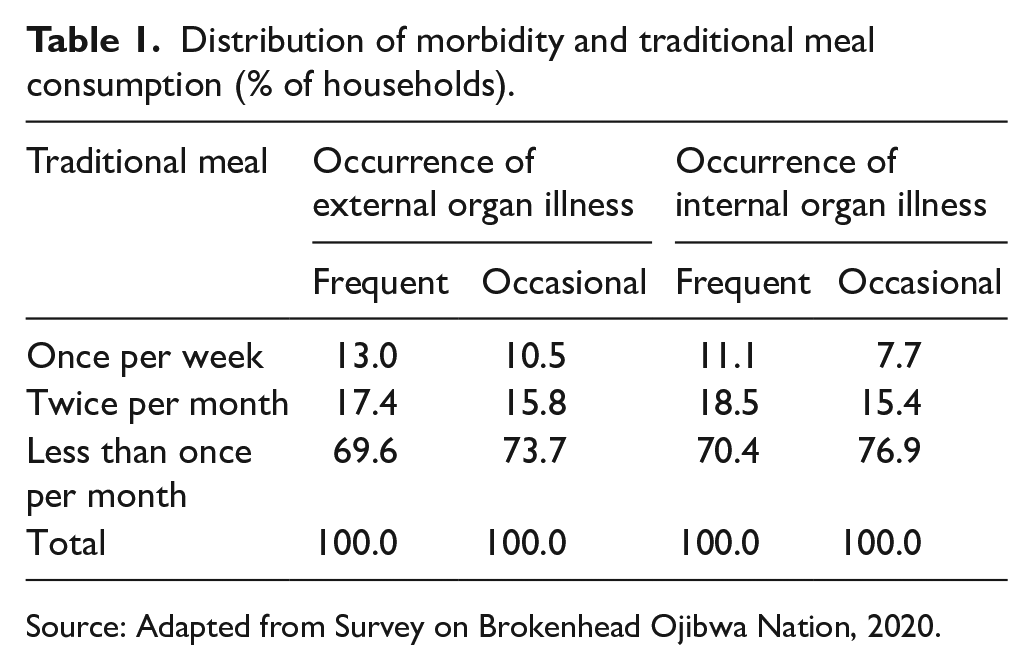
The data in Table 1 originate from the survey question on the frequency of occurrence of external and internal organ illnesses in the HH and on the consumption frequency of typical HH meals that come from First Nation traditional diets, which are obtained from First Nation land use activities such as hunting, fishing, gathering, and so on. The data show that there is a larger prevalence of external and internal organ illnesses in those HHs that consume traditional meals with lower frequency.
Distribution of morbidity and traditional meal consumption (% of households).
Source: Adapted from Survey on Brokenhead Ojibwa Nation, 2020.
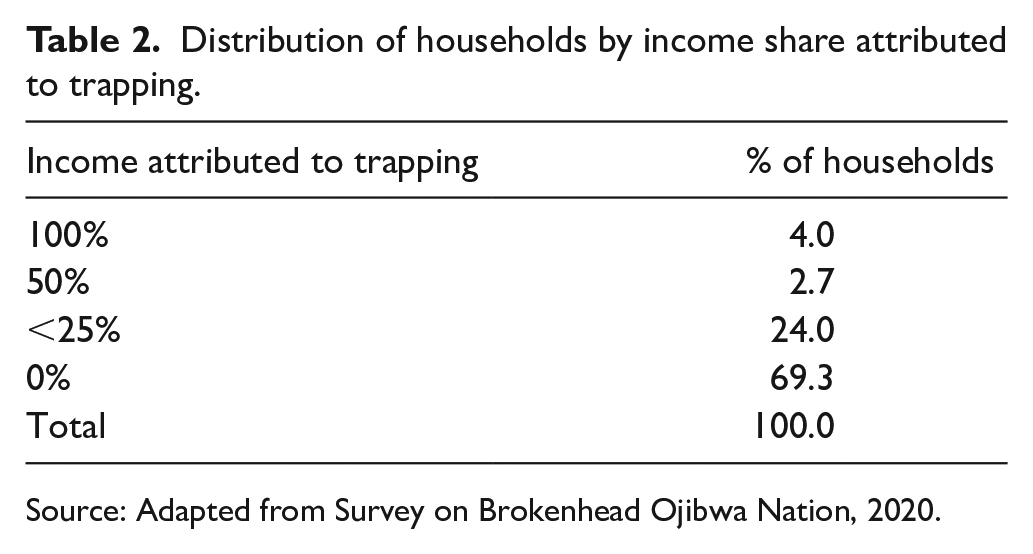
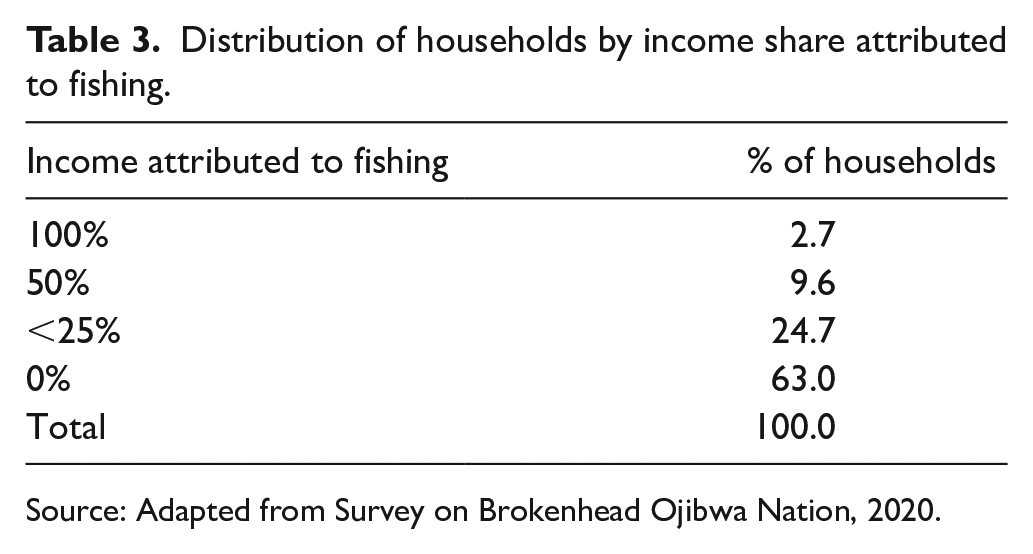
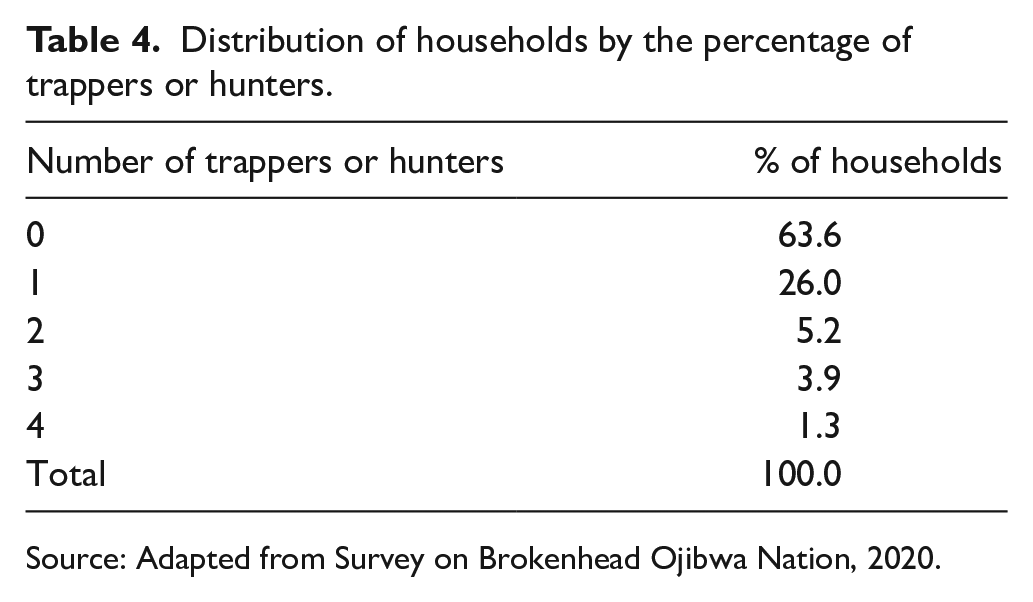
Data in Tables 2 and 3 are a result of the survey questions that asked about the percentage of HH income attributable to trapping and fishing, respectively. It shows that most of the community HHs’ income derived from non-traditional activities. This tallies with the finding that most of the surveyed HHs reported that there were no fishers or trappers among the HH members (Tables 4 and 5).
Distribution of households by income share attributed to trapping.
Source: Adapted from Survey on Brokenhead Ojibwa Nation, 2020.
Distribution of households by income share attributed to fishing.
Source: Adapted from Survey on Brokenhead Ojibwa Nation, 2020.
Distribution of households by the percentage of trappers or hunters.
Source: Adapted from Survey on Brokenhead Ojibwa Nation, 2020.
Distribution of households by the percentage of fishers.
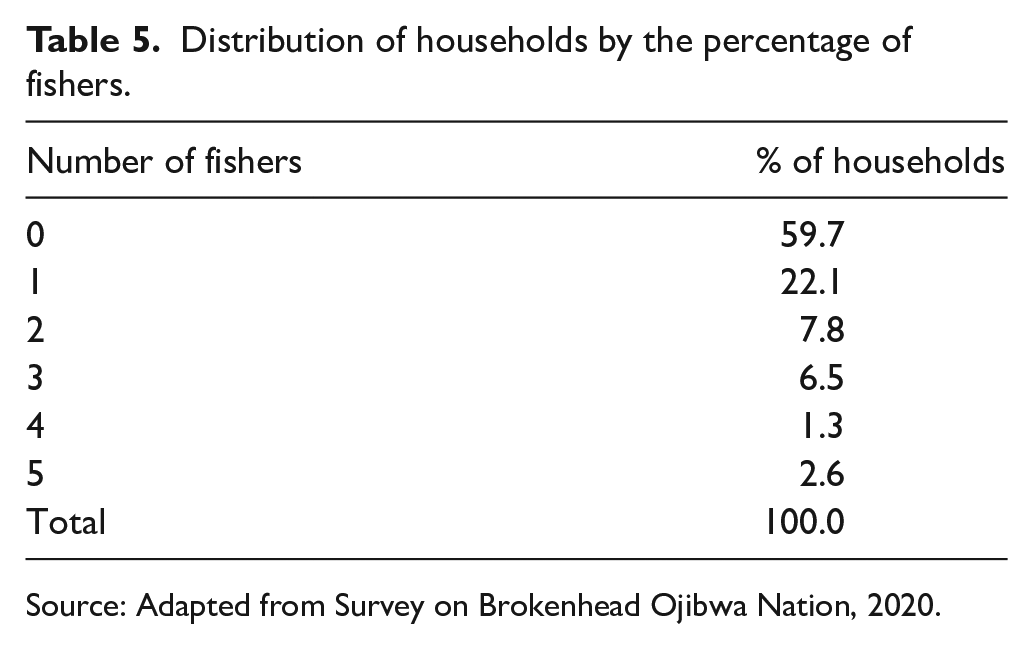
Source: Adapted from Survey on Brokenhead Ojibwa Nation, 2020.
The data in Table 6 indicate that 55.4% of the HHs reporting the consumption of traditional meals once per week also report income of CAN$35,000 and lower.
Distribution of HHs by frequency of traditional meals and income (% of households).
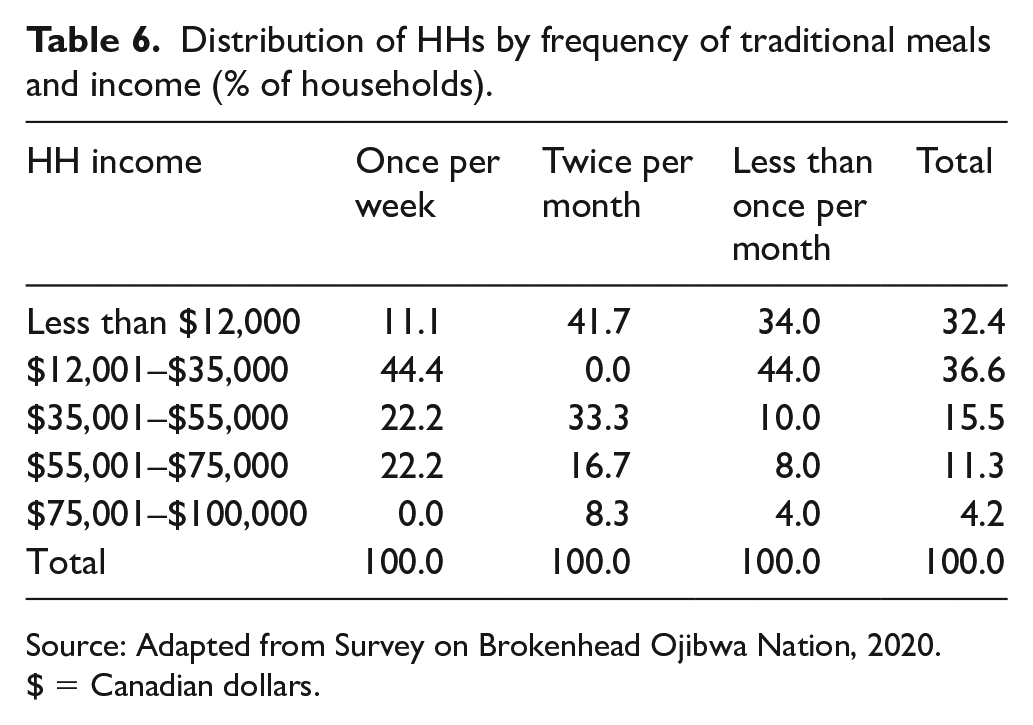
Source: Adapted from Survey on Brokenhead Ojibwa Nation, 2020.
$ = Canadian dollars.
Data in Tables 7 and 8 originate from the survey question on the frequency of HH members accessing First Nation cultural sites which was crossed with the reported physical organ morbidity. The data indicate that most of the HHs that rarely or never access cultural sites reported frequent and occasional external and internal organ illnesses.
External organ morbidity and frequency of accessing First Nation cultural sites.
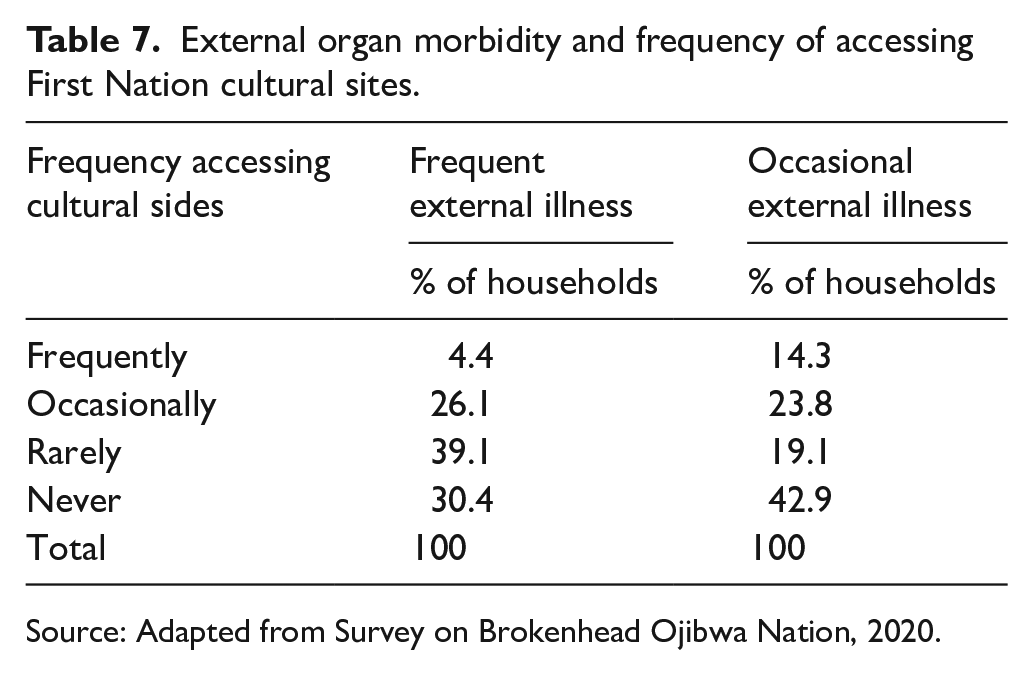
Source: Adapted from Survey on Brokenhead Ojibwa Nation, 2020.
Internal organ morbidity and frequency of accessing First Nation cultural sites.
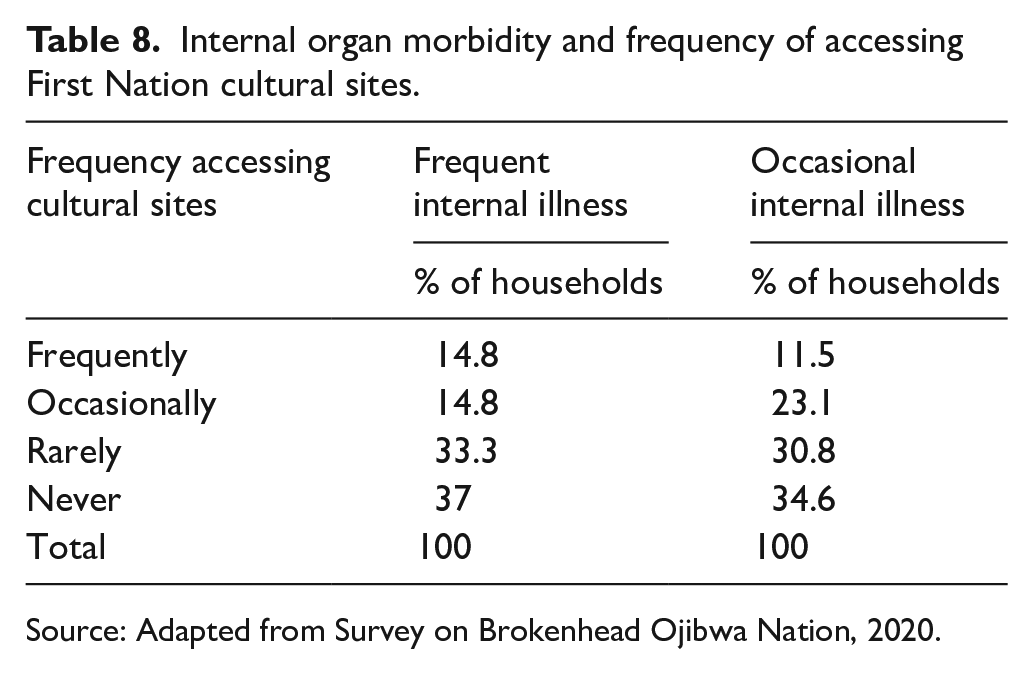
Source: Adapted from Survey on Brokenhead Ojibwa Nation, 2020.
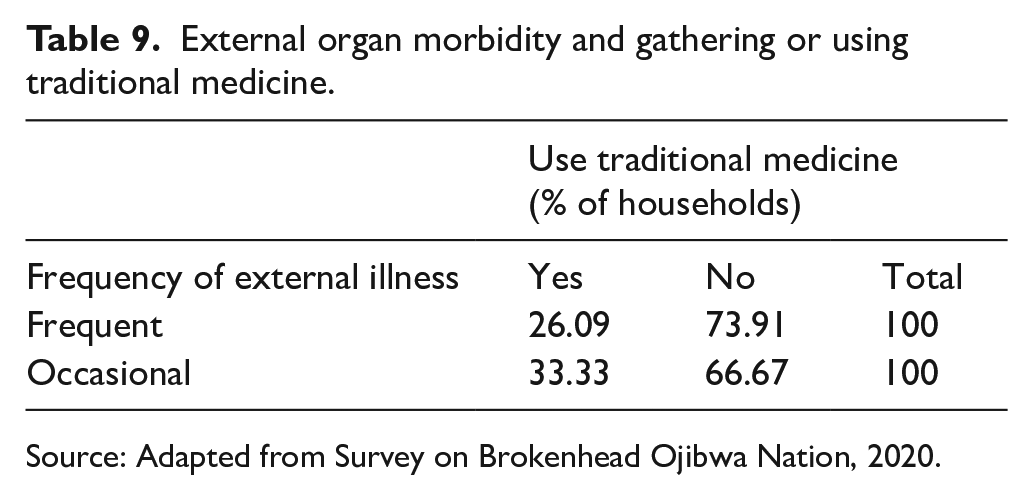
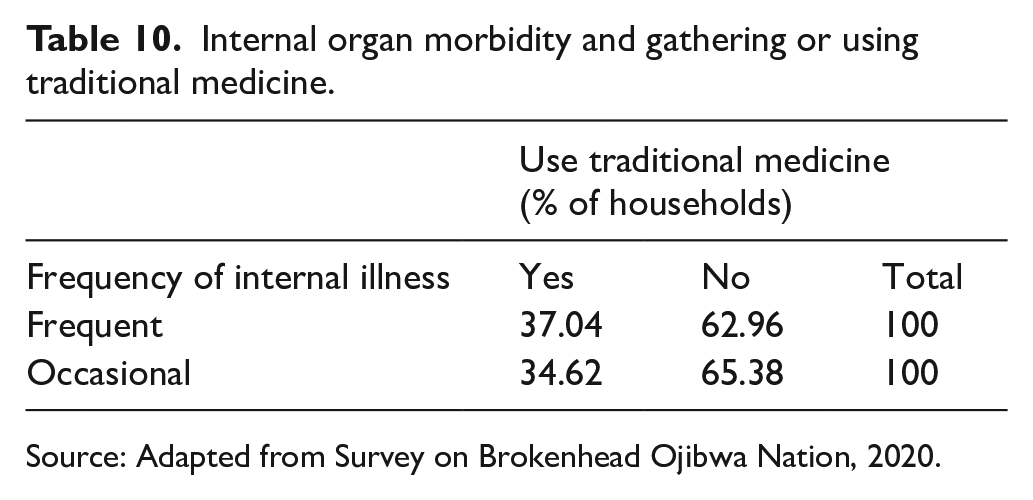
The data in Tables 9 and 10 originate from the survey question on the frequency of HH members gathering and or using traditional medicine from the land or from other sources. This was related to reported physical organ morbidity. In general, the percentage of external and internal organ morbidity is much larger in those HHs reporting little or no engagement in traditional medicine gathering or use compared with those HH reporting that they did.
External organ morbidity and gathering or using traditional medicine.
Source: Adapted from Survey on Brokenhead Ojibwa Nation, 2020.
Internal organ morbidity and gathering or using traditional medicine.
Source: Adapted from Survey on Brokenhead Ojibwa Nation, 2020.
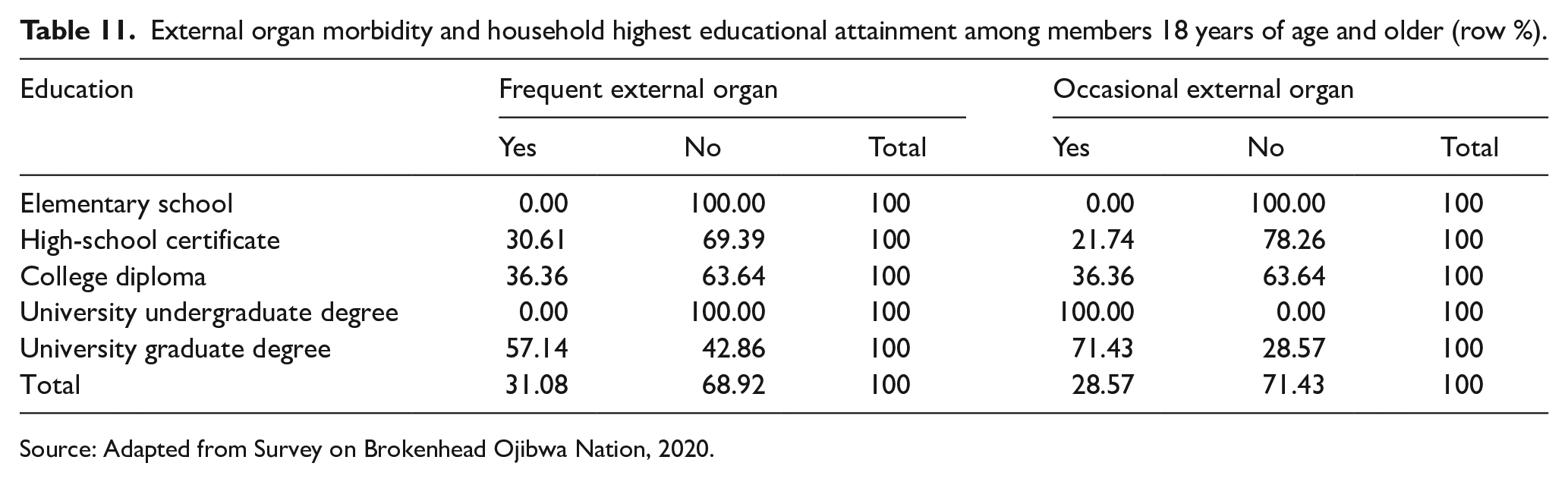
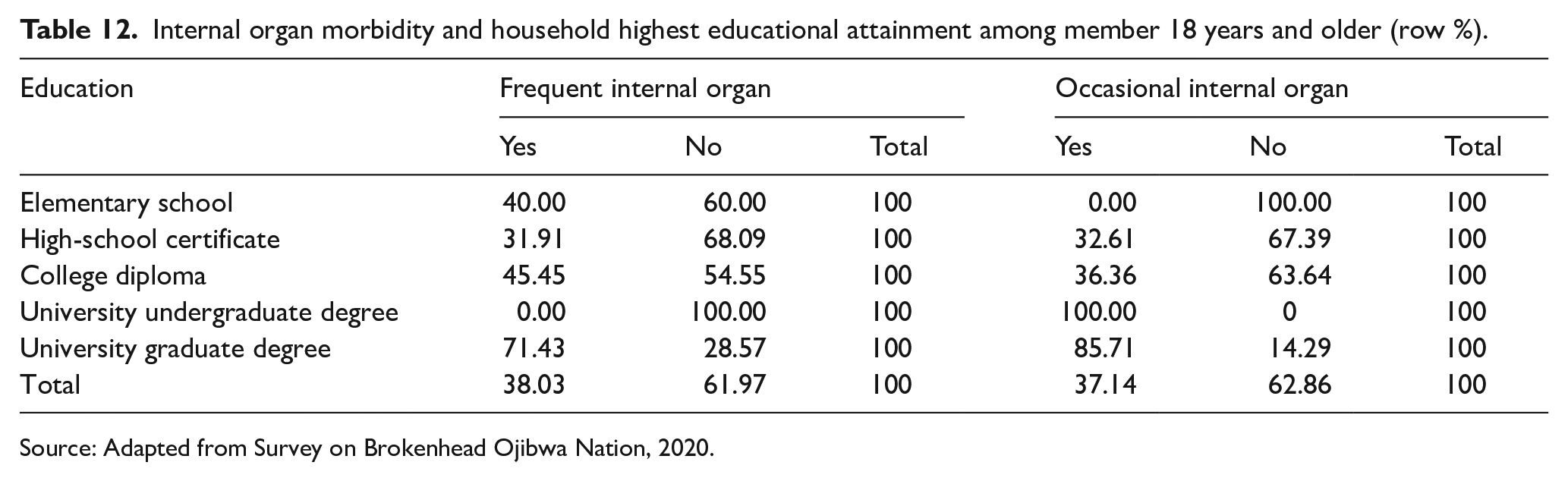
A total of 66% of the surveyed HHs report high-school certificate as the highest level of educational attainment (Figure 1). In general, for all levels of educational attainment most of the HHs reported the prevalence of non-physical illness (Tables 11 and 12).
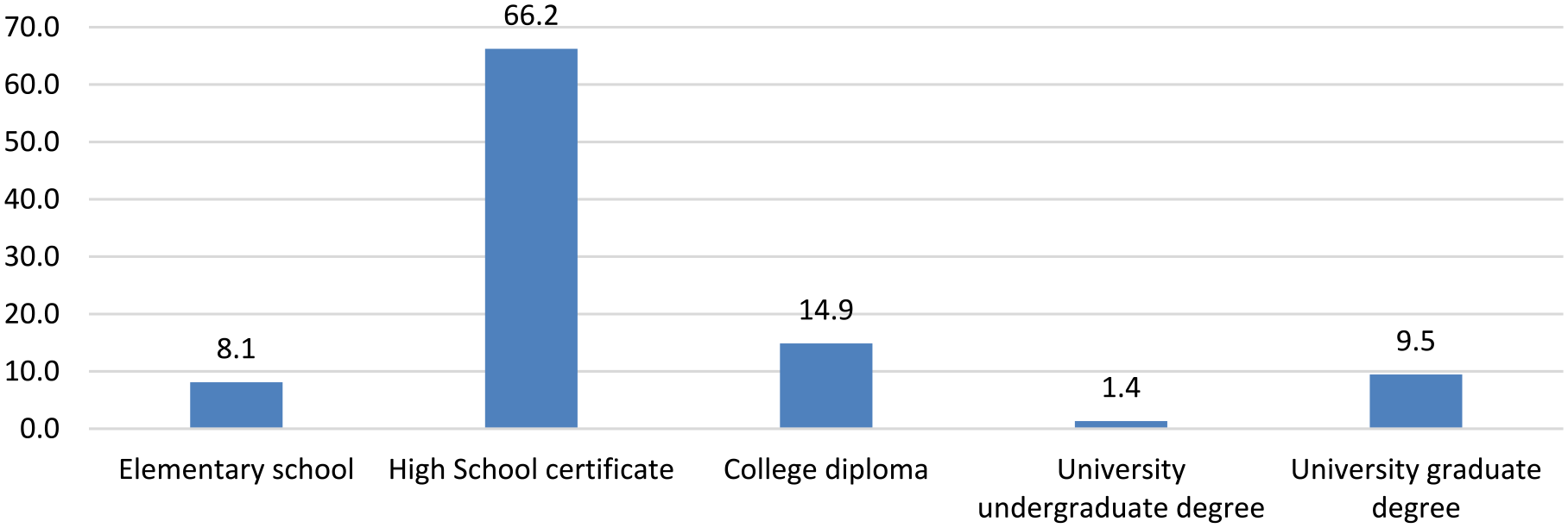
Highest educational attainment among members 18 years and older (%).
External organ morbidity and household highest educational attainment among members 18 years of age and older (row %).
Source: Adapted from Survey on Brokenhead Ojibwa Nation, 2020.
Internal organ morbidity and household highest educational attainment among member 18 years and older (row %).
Source: Adapted from Survey on Brokenhead Ojibwa Nation, 2020.
Correlation analysis
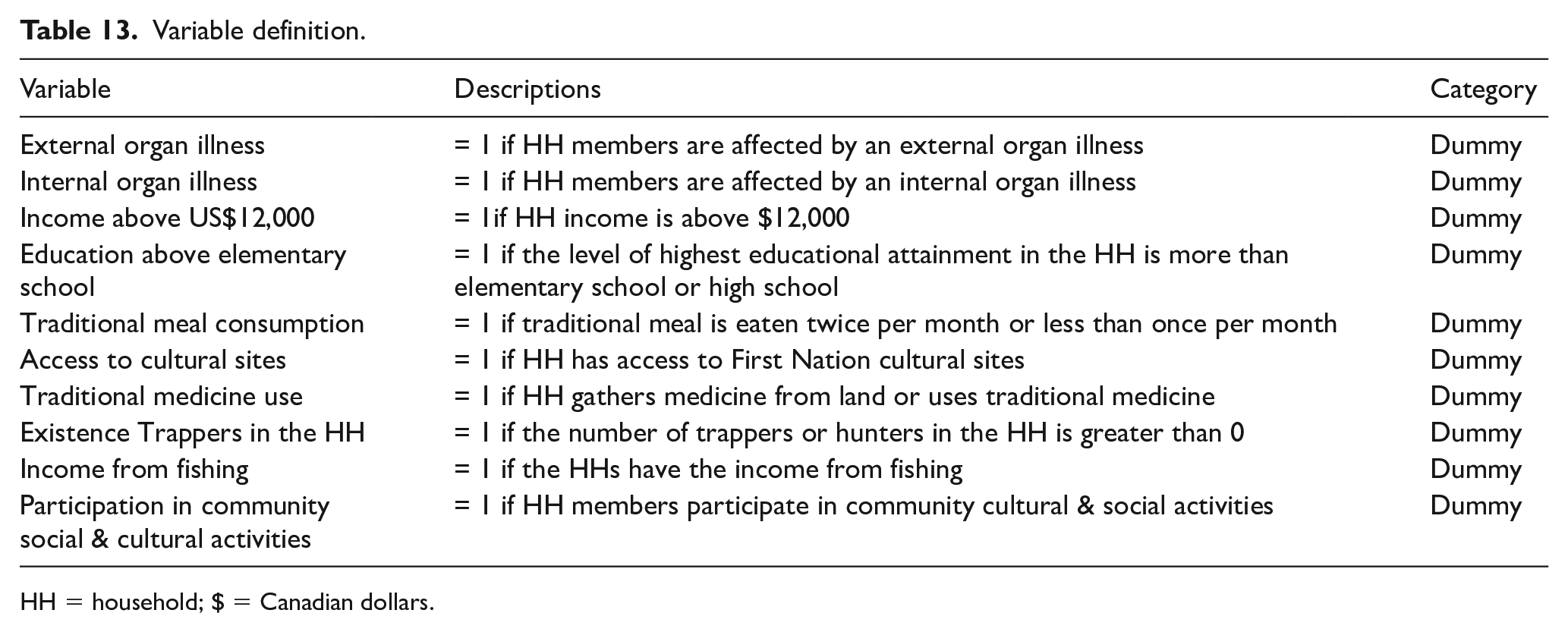
Table 13 shows the definition of the variables to be investigated for correlation with the prevalence of internal and external organ illnesses.
Variable definition.
HH = household; $ = Canadian dollars.
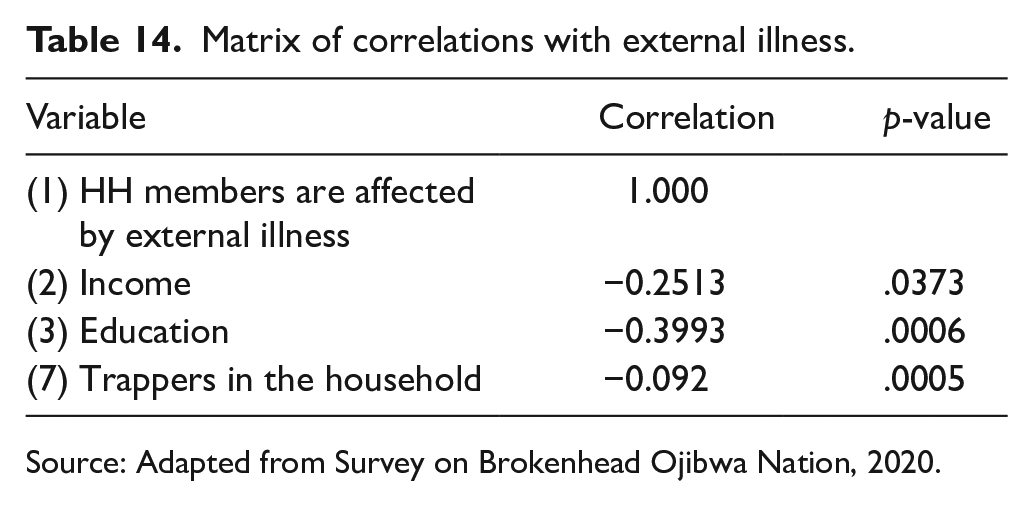
The correlation matrix in Table 14 shows the correlation coefficients for external illnesses with its p-values. Those that appear statistically significant, meaning p < .05, indicate that external organ illnesses are negatively correlated with trapping, education, and income.
Matrix of correlations with external illness.
Source: Adapted from Survey on Brokenhead Ojibwa Nation, 2020.
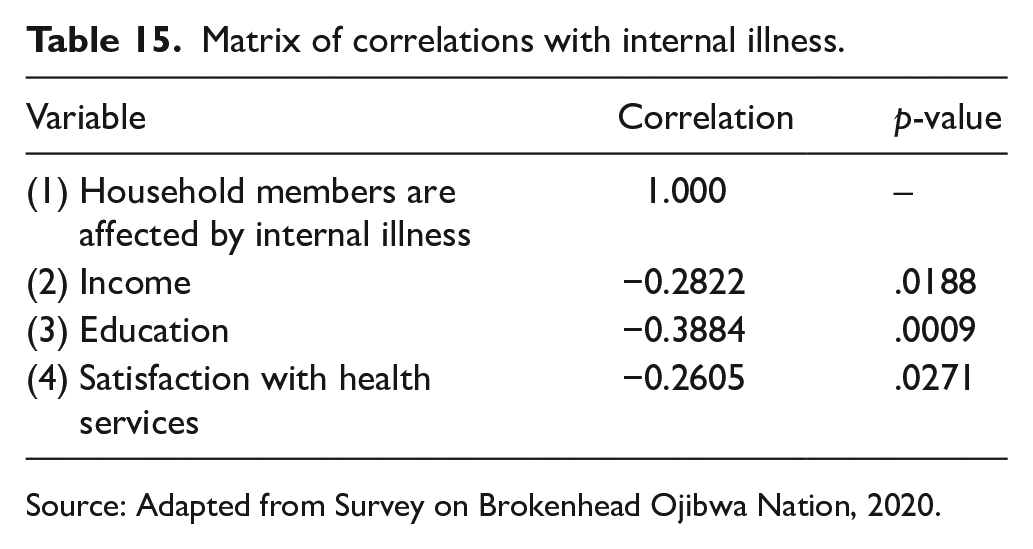
The correlation matrix in Table 15 shows the correlation coefficients for internal illnesses with its p-values. Those that appear statistically significant, meaning p < .05, indicate that internal organ illnesses are negatively correlated with income, education, and satisfaction with health services.
Matrix of correlations with internal illness.
Source: Adapted from Survey on Brokenhead Ojibwa Nation, 2020.
Limitations
Unfortunately, our data sample was not enough to conduct a regression analysis that would show the significance of the independent variables on the internal and external organ illness prevalence of the HH members of BON. Also, to protect confidentiality and increase anonymity of the participants, there is no identifier that would allow us to compare their health outcomes today with those of 2020. These kind of comparisons are very relevant for policymaking and health programmes.
Discussion
Most of the correlation results are in line with those reported in the scholarly literature. Physical illnesses are negatively correlated with HH members who engage in trapping. U. King and Furgal (2014) remark on the importance of traditional activities such as hunting for giving people a sense of connection to their culture, communities, and environment. This connection becomes cultural capital that is linked to human health. Cultural capital is essential in many ways for Indigenous people to experience health. Fishing and hunting are also associated with physical activity which reduces the risk of obesity, diabetes, and cardiovascular diseases. Although, fishing, hunting, and gathering are also activities that increase the risk of accidents when being out on the land (U. King & Furgal, 2014).
Income and education are negatively correlated with the prevalence of internal and external organs. Many scholarly works have connected economic and health disparities to economic inequalities. The National Collaborating Center for Aboriginal Health (2009) indicates that Aboriginal Canadians are trapped in a cycle of poverty–ill-health–poverty. Breaking that link is essential for improving Aboriginal health in Canada. Likewise, Reading and Wien (2013) indicate that education is a determinant of health because low literacy limits the intake of information on good nutrition and proper food preparation, and reduces access to well-paying jobs.
Satisfaction with health services is negatively correlated with internal illnesses. This is reasonable as larger satisfaction with health services should increase the community people use of the health system which reduces their morbidity. Ashworth (2018) remarks on the factors affecting Aboriginal people’s use of health care in Canada. Among these factors are lack of transportation, challenges navigating the health care system, and language differences. In addition, the negative past patient experiences result in the fear to be racialized in health care settings and in internalization of socially constructed prejudices.
There are other variables that although not significantly correlated with internal and external illnesses, deserve to be considered when discussing the determinants of Indigenous people’s health. Traditional meal consumption for Aboriginal people originates from holistic food systems. Culture is intrinsically connected to traditional Aboriginal foods, which is also a determinant of health. However, there has been research that warns about the problems generated by exposure to environmental and industrial contaminants consumed in Canadian traditional Aboriginal foods (U. King & Furgal, 2014) such as mercury (Chan & Receveur, 2000; Manitoba Water Stewardship Water Quality Management Section, n.d.) and heavy metals (Bordeleau et al., 2016). Thus, on one hand, because of the possible contaminants in traditional foods, less frequent consumption is likely to decrease the incidence of internal organ illness. On the other hand, lower frequency of traditional meals implies less traditional activities such as fishing, hunting, and gathering that are beneficial for reducing obesity, which compromise both internal and external organs (Lambert et al., 2019). The data in Table 1 support the hypothesis of a negative correlation between internal organ illness and higher frequency of traditional meals consumption in the surveyed HHs.
Among connections to culture is country and place which mutually reinforce each other, shape cultural identity, and improve Aboriginal health and well-being outcomes (Verbunt et al., 2021). Indigenous culture is inextricably linked to land and place (Liebenberg et al., 2019). Thus, accessing cultural sites brings Indigenous people the health benefits of culture already mentioned above. That is why it makes sense that it decreases the prevalence of internal organ illness. The data in Table 8 support the proposed health benefits for internal organs from accessing cultural sites. However, many of these cultural sites are located out on the land, which increases the risk of external organs injuries. Examples of these Aboriginal cultural and sacred places are ancient pictographs at Pimachiowin Akie, located on the east of Lake Winnipeg, Manitoba (To Do CA, 2023). Also, the rock paintings at Rice River, a stream located by the east of Lake Winnipeg, and Bloodvein River which flows through the boreal forests of the Canadian Shieldside from Ontario to Manitoba (Whelan, 1983). For Canadian Indigenous people, traditional medicine and healing is a way to recover their cultural autonomy (Li, 2017). Also, Article 24 of the United Nations Declaration on the Rights of Indigenous Peoples recognizes “the fundamental rights of indigenous peoples to their traditional medicines and health practices” (United Nations, 2007, as cited in Carrie et al., 2015, p. 1). In, fact Tables 9 and 10 in the descriptive results section show that the occurrence of external and internal organ morbidity is much larger in those surveyed HHs reporting not engaging in traditional medicine gathering nor using it, than for those HHs reporting to do it.
Government laws impacting First Nation land use are also considered as variables impacting Indigenous health. This makes sense if one considers the recent government regulations regarding land use as attempts to ameliorate the previous negative impacts of colonization on Indigenous land and culture (Fiske & George, 2006; McMillan, 1995; Noel & Larocque, 2009). Modern treaties and the granting of self-government status are linked to Aboriginal land and, thus, to health. These agreements set geographical boundaries that provide Aboriginal peoples with some clarity and certainty on the rights to the land to which they feel connected. For example, from the Nunavut Land Claim Settlement Agreement 1993 arose the creation of the territory of Nunavut; Alberta’s Metis Settlements Accord 1989 involves a set of health provisions such as making health bylaws to support the well-being of the settlement residents (National Collaborating Centre of Aboriginal Health, 2009). The Government of Manitoba signed a forestry option licence with four First Nations that includes Brokenhead First Nation, to explore Indigenous-led forestry development. This agreement supports greater involvement of Indigenous people in economic development and sustainable management of the province’s natural resources, promotes the access to healthy and traditional foods, and works with Indigenous people “to sustain long-term furbearer, moose, caribou, polar bear and fisheries populations” (Manitoba Indigenous Reconciliation and Northern Relations, 2022, p. 55).
Policy implications
This article’s findings have policy implications. Basically, government policy supporting Indigenous education will improve health outcomes and general well-being in the ways suggested by these research results. The link between education and higher income for Indigenous people in Canada has been identified by scholarly research (Gerber, 2014; Walters et al., 2004; Wilson & Macdonald, 2010). Then, since both education and income appear statistically significant and negatively correlated with internal and external organ illnesses, public programmes addressed to offer larger education to BON’s people will result in a healthier community. This is the best way to reduce the government’s health expenditures and support Indigenous self-determination. The Federal government spending on First Nations and Inuit health represented about 30% of the total federal health programme spending in 2011–2012. By 2018–2019, it was about 40% of total federal health programme spending (Yan, 2021). “The Government of Canada recognizes Indigenous peoples’ right to self-determination, including the right to freely pursue their economic, political, social, and cultural development” (Department of Justice Canada, 2021, p. 7).
Conclusion
Our results indicate that from the cultural variables that were considered as determinants of health outcomes for BON’s population, only hunting and trapping are significantly correlated. More hunting and trapping decrease external illnesses. However, as per the scholarly literature the nature of the relationship between traditional economic and cultural activities and external and internal organ illness is not always in concordance. For example, fishing, traditional diet consumption, access to cultural places, and gathering and use of traditional medicines have opposing relationships to internal and external organ illnesses. In these cases, a deeper and more critical analysis is needed to find clearer evidence of the relationship between these activities and illness.
Likewise, income, educational attainments, and satisfaction with the health care service are negatively correlated with external and internal organ illnesses affecting BON’s population. These results agree with a large body of the scholarly literature.
The findings of this article suggest that policymakers, in general, should promote the formal education of BON’s population to improve their health outcomes. One of the positive facts of this improvement will be a reduction in the Federal Government health expenditures.
Footnotes
Acknowledgements
The author thanks Ms Lynn Fernandez and Dr John Loxley from the Manitoba Research Alliance, and Dr Shauna Mackinnon from the University of Winnipeg, for their invaluable support facilitating this research ethics approval through the University of Winnipeg’s Ethics Board. She conveys endless gratitude to BON’s Band authorities, particularly to Chief Deborah Smith and Ms Aliesha Desjarlais, BON’s Health Director, for their financial and logistic support to complete this research project. Special thanks are given to all BON’s research participants who patiently took the time to fill up the survey. She is particularly grateful for the very professional and tireless research assistantship of Mr Iqbal Hossain.
Author’s note
Declaration of conflicting interests
The authors declared no potential conflicts of interest with respect to the research, authorship, and publication of this article.
Funding
The authors received no financial support for the research, authorship, and publication of this article.

Glossary
Inuit Indigenous peoples of the Arctic Canada
Métis Indigenous people descending from mixed European and Canadian Native population
Ojibwa Indigenous peoples of southern Canada and Midwestern USA