




Abstract
Today, the Hawaiian community faces high rates of health disparities, as well as loss of land, language, and culture due to colonization. However, Hawaiians continue to keep their culture alive, and cultural reclamation theory argues that Indigenous Peoples are healthier when they have opportunities to engage with their cultural practices. This theory points to culture as a possible intervention. We analyze data from the 2019 Native Hawaiian Survey, which examines Hawaiian identity through a sample of over 1,000 participants across Hawaiʻi who are 18 years or older and have Hawaiian ancestry. Drawing upon what it means to identify as Hawaiian, we expect a positive relationship between activities that increase connection to Hawaiian culture and life satisfaction. We find statistical significance in consideration of sacred spaces, pride in being Hawaiian, and sense of belonging to America and discuss implications for Hawaiian well-being based on these findings.
Introduction
Hawaiians face adversities similar to other Indigenous Peoples who have been impacted by colonization, including high levels of health disparities at disproportionate rates (Andrade et al., 2006; Evans-Campbell, 2008; Hawaiʻi Health Data Warehouse, 2014). However, drawing upon the Hawaiian framework ka wa ʻōiwi wale (pre-contact Hawaiʻi) may provide insight into these current health disparities (Cook, 2018). Ka wa ʻōiwi wale (Young, 2014) describes a process of facing the past and using cultural values, practices, and knowledge to guide the shaping of the future for the Hawaiian community (Cook, 2018). In a study that explored Hawaiian conceptualizations of health (McMullin, 2005), one participant drew upon the past to describe a healthy Hawaiian community as “a time of easy access to the land and ocean from which he or she could obtain healthy food and little disease” (p. 814).
Although contemporary society has shifted away from the image due to the continual impacts of colonization, many Hawaiians continue to draw from their cultural values, practices, and knowledge to support their health and well-being on both individual and communal levels (McCubbin & Marsella, 2009; Mokuau, 2011). A recent comprehensive example of this is the 2019 Thirty Meter Telescope (TMT) protests on Mauna Kea, in which kiaʻi (protectors, protector) fought against the desecration of sacred land. Rooted in kapu aloha (a way of life that is rooted in dignity and humanity for others), these protests made a global impact, resulting in activists, allies, and community members from all over the world joining the movement (Medeiros, 2021). In addition, cultural practitioners, artists, scholars, and community leaders were invited to an open learning space on the Mauna, Puʻuhonua o Puʻuhuluhulu, to speak on a variety of subjects, such as cultural arts, technology, and demilitarization (Manuel-Sagon, 2020). These expressions of cultural values and learning through protest and open accessibility of shared knowledge sparked a conversation surrounding what it means to be Hawaiian in contemporary Hawaiʻi (Medeiros, 2021). Furthermore, this case of the TMT protests poses the question of how culture may counteract the adversities the Hawaiian community faces.
This study explores cultural identity as an intervention for the health disparities within the Hawaiian community, as previous research identifies cultural identity as a protective factor for Indigenous Peoples (Kana’iaupuni, 2006; Mokuau et al., 2012; Ramirez & Hammack, 2014; Wexler, 2014). Aligned with ka wa ʻōiwi wale, this study uses cultural reclamation theory, which argues that Indigenous Peoples are healthier when they have opportunities to draw upon their cultural knowledge and practices (Gone, 2013; Gonzalez et al., 2022; Leonard, 2008; Paglinawan et al., 2020). Due to the limited research on the Hawaiian community, this study draws upon research across different Indigenous communities, and “Indigenous” is used in a broad context to refer to “the original inhabitants of the land” (Schachter & Funk, 2012, p. 400). Hawaiian is used to refer to individuals who identify with having Hawaiian ancestry, although we acknowledge that this term may not represent all individuals of Hawaiian descent. In addition, this study builds upon previous research on Hawaiian resilience (Antonio et al., 2020) to support the healthy society Hawaiians currently work toward and envision for the future (Kana‘iaupuni, 2005). We attempt to measure different themes of cultural reclamation theory using data from the 2019 Native Hawaiian Survey, the largest known survey on Hawaiian identity and community concerns. Specifically, data from the life satisfaction and cultural identity questions are analyzed to explore the relationship between cultural identity and Hawaiian well-being. Moreover, the purpose of this research is to understand identity and its relationship with well-being for Hawaiians. This article outlines previous research on the impacts of colonization on Hawaiian health, Hawaiian conceptualizations of well-being, and the identification process through cultural reclamation, followed by results from multivariate regressions of the survey data and future implications of these findings.
Hawaiian health in the context of colonization
Although Hawaiians currently comprise 23.3% of the population in Hawaiʻi (Hawaiʻi Health Data Warehouse, 2014), research shows that they are disproportionately affected by chronic health conditions, such as heart disease, cancer, and diabetes (Kaholokula, Okamoto, & Yee, 2019; Look et al., 2013), and display high rates of psychological distress (Andrade et al., 2006; Hawaiʻi Health Data Warehouse, 2014). In addition, Hawaiians have one of the lowest life expectancy rates compared to other major ethnic groups in Hawaiʻi (Kaholokula, Okamoto, & Yee, 2019; Look et al., 2013). These statistics pose the question: how are Hawaiians experiencing such high rates of health disparities on their own ancestral land despite once being a healthy, robust population (Beaglehole, 2017)? Insight into these statistics can be found within the context of colonialism in Hawaiʻi.
Upon the first arrival of foreign settlers to Hawaiʻi in the late 1700s, Hawaiians were exposed to several infectious diseases brought by these settlers, such as measles, smallpox, dysentery, and influenza (Bushnell, 1993). Introduction of these diseases resulted in the deaths of over 90% of the Hawaiian population from 1778 to 1876, a period that is often referred to as a cultural genocide or holocaust (Stannard, 1989). Along with a rapid population decline, traditional ways of life were threatened by advancements of Euro-colonial powers, resulting in displacement and marginalization of Hawaiians on their own ancestral lands (Kaholokula, Hermosura, & Antonio, 2019). Eventually, continual attempts to exert foreign political and economic control over Hawaiʻi led to the illegal overthrow of the Hawaiian Kingdom government with the aid of the US Marines in 1893 (Trask, 1999). Although the overthrow occurred over 130 years ago, Hawaiians continue to suffer from the loss of their land, language, culture, similarly to other colonized groups (Pokhrel & Herzog, 2014; Ramirez & Hammack, 2014; Wexler, 2014).
Understanding the health of Indigenous Peoples within the context of colonization is important to prevent overgeneralization and misrepresentation of their communities (Gone, 2013; McKivett et al., 2018). Research on Hawaiian health often operates from a deficits-based approach, which contributes to the false narrative that Indigenous Peoples fail to succeed in Euro-colonial societies (Kana‘iaupuni, 2005). Deficit-based research often overlooks what Hawaiians are currently doing to support their health and well-being, despite the adversities they face, prompting a call toward strengths-based research (Kūkulu Kumuhana Planning Committee, 2017; Pulla, 2012; Zimmerman, 2013). Utilizing a strengths-based approach, or kaʻakālai kū kanaka from a Hawaiian lens (Kana‘iaupuni, 2005), may empower Hawaiians through visibility of their cultural ways of knowing and being (Endo Inouye & Estrella, 2014; Kana‘iaupuni, 2005), as well as the diversity that exists within the community (Kana‘iaupuni, 2005; McKivett et al., 2018). In addition, strengths-based research shifts the blame often put on the individual or overall community and, instead, holds the sources of oppression accountable (Tuck, 2009). Revisiting the ways in which Indigenous Peoples continually draw upon their culture and keep it alive amid adversity may contribute to this shift and disrupt the negative impacts of colonization (Kana‘iaupuni, 2005; Thomas et al., 2016).
Hawaiian framework of well-being
Numerous Hawaiian scholars who have studied Hawaiian health point to culture as an intervention, especially since Indigenous Peoples have always been the experts of their traditional knowledge (Bang et al., 2018; Wendt & Gone, 2012). According to Blaisdell & Mokuau (1991), cultural and ancestral knowledge must be prioritized to establish health equity for Hawaiians. Thus, exploration of how Hawaiians conceptualize well-being is imperative in restoring the health of the Hawaiian community. A Hawaiian conceptualization of health holds a cosmographic holistic view, which accounts for the greater systems of the universe in relation to the individual and extends beyond biological health (Mokuau, 2011). On an individual level, health encompasses the physical, spiritual, mental, emotional, and social domains (Kamaka et al., 2017; Look et al., 2014). In addition, physical health refers to both an individual’s body and connection to ʻāina (land) (McCubbin & Marsella, 2009). On a community level, health is linked to the cultural values, lōkahi (harmony) and pono (equity, balanced in righteousness), and the role of these values in the relationships between kānaka (humankind), ʻāina, and akua (god, gods, spirits) (Kamaka et al., 2017). Moreover, both individual and community well-being are dependent on each other and are considered healthiest when lōkahi and pono between the physical, spiritual, mental, emotional, and social domains, as well relationships between kānaka, ʻāina, and akua are sustained (Mau et al., 2010; McCubbin & Marsella, 2009; Mokuau, 2011).
A foundational pillar for both individual and community health is connection to ‘āina, or connection to place. Not only does ‘āina hold cultural significance as the ancestral homeland for Hawaiians, ʻāina is also the source of all life and is not confined to land identified by geographical markers (Kana’iaupuni, 2006). All other aspects of Hawaiian well-being rely on ʻāina, including connection to ancestors from the past, present, and future through the transmission of cultural knowledge, language, and practices (Kana‘iaupuni, 2006). In one study that interviewed 13 Native Hawaiians from the Waiʻanae coast of Oʻahu about sense of place, participants discussed the positive contributions of their claimed ʻāina on their identity; interactions with others; and physical, mental, and spiritual health (Oneha, 2000). Furthermore, they stated that they could not exist without their ʻāina and vice versa. In another study that interviewed Hawaiians from Maui and Hawaiʻi Island about what it means to be a “healthy Hawaiian,” 69% of Native Hawaiian participants described an image of a Hawaiian who lived in “a time of easy access to the land and ocean from which he or she could obtain healthy food and little disease” (McMullin, 2005, p. 814). ʻĀina also intersects with another foundational value, aloha, which has many different definitions, including love, compassion, kindness, and grace (Mokuau, 2011). According to Meyer (2003), aloha is “a sacred idea that connects us to spiritual traditions” (p. ix). Such traditions include aloha ʻāina or mālama ʻāina (caring for the land), in which kānaka are stewards of the land. These traditions contrast Euro-colonial practices of land ownership that we currently see in Hawaiʻi (Trask, 2010), often creating barriers for relationship to ʻāina.
Along with the relationship to ʻāina, specific emphasis is placed on spiritual and social well-being. These two positively impact overall well-being for Hawaiians, even with the limitations caused by chronic diseases (Kaʻopua, 2008). In one study that examined the differences between White adults and Hawaiian adults with diabetes, results showed that social and emotional support were greater indicators of overall health for the Hawaiians participants versus the White participants (Shahan, 2009). This difference may be linked to the Euro-colonial value of individualism, which often clashes with the Hawaiian value of collectivism (Kana‘iaupuni, 2006). In another study, family support for Hawaiian students reduced the risk for internalized symptoms of family adversity and other major life events (Goebert et al., 2000). Overall, Hawaiian health and well-being is rooted in cultural values of relationships and identity. Further exploration into these identification processes may provide more insight into culture as an intervention for Hawaiians.
Culture as treatment: identification processes in contemporary society
While Indigenous Peoples often experience uncertainty and difficulty in navigating identity in contemporary society due to the loss of land, language, and culture (Gone, 2009), research on “culture as treatment” (Brady, 1995, p. 1495) and cultural identity as a protective factor (Kana‘iaupuni, 2006; Mokuau et al., 2012; Ramirez & Hammack, 2014; Wexler, 2014) poses a remedy to this loss. Cultural or Indigenous resilience is used to describe the ways Indigenous communities have thrived and maintained their cultural identities amid adversity (Kana‘iaupuni, 2005; Thomas et al., 2016). Learning and practicing traditional cultural ways (Gone, 2009, 2010; Leonard, 2012) has been linked to positive self-image and healing for Indigenous Peoples (Paglinawan et al., 2020). Positive relationships between reclamation of cultural identity and health have been linked to pride in one’s identity (Gone, 2009), empowerment (Leonard, 2012) and autonomy over vision for the future (Gone, 2009), sense of belonging, and sense of purpose (Gone, 2013). In addition, culture has been effectively used as an intervention for addiction (Gone, 2010) and mental illness (Gone, 2013). In alignment with a strengths-approach, Leonard (2008) argues that these reclamation processes are acts toward decolonization by allowing Indigenous Peoples to identify and resist Euro-colonial values that subjugate Indigenous knowledge and practices. Moreover, reclaiming cultural identity may counteract the harm imposed by colonization by empowering Indigenous Peoples to reject colonial misrepresentations of self and pursue pathways to relearn who they really are (Kana‘iaupuni, 2005).
However, complete rejection of dominant Euro-colonial values and practices in the pursuit of cultural identity does not always lead to healthy outcomes for Indigenous Peoples. For example, some individuals feel more aligned with dominant Euro-colonial values and practices, in which reclamation of cultural identity would contradict their sense of self (Leonard, 2012). In addition, there may be negative ramifications of reclaiming cultural identity with the barriers posed by colonialism, such as systemic discrimination (Bombay et al., 2010). Identifying as Hawaiian has become politicized through Euro-colonial concepts such as blood quantum, which is a government strategy of tracing and fractionating Hawaiian ancestry, or blood, for the purpose of limiting access to land and resources (Kauanui, 2008). According to Kauanui (2008), blood quantum creates exclusion within the Hawaiian community and makes some Hawaiians feel like they are not Hawaiian enough. Building upon the relationship with land and ‘āina as a foundational pillar for connection to Hawaiian identity, land may be a safe harbor for Hawaiians while also acting as a reminder of historical loss, economic disadvantage, and loss of culture (Whitbeck et al., 2009). Considering the processes of reclaiming identity as nuanced and complex, Bombay et al. (2010) argues identity should be understood as a spectrum, rather than a binary concept.
Cultural reclamation theory
Building upon “culture as treatment” (Brady, 1995, p. 1495), and cultural identity as a multi-dimensional construct (Bombay et al., 2010), we derive the following themes of cultural reclamation theory from previous research on cultural identity and well-being: (1) finding one’s purpose as an Indigenous person (Gone, 2009, 2010, 2013; Paglinawan et al., 2020); (2) sense of belonging (Gone, 2010; Gonzalez et al., 2022); and (3) engagement with cultural learning and practices (Gone, 2013; Gonzalez et al., 2022; Leonard, 2012; Paglinawan et al., 2020). By centering culture at the core of well-being for Indigenous Peoples (Bombay et al., 2010; Paglinawan et al., 2020), cultural reclamation theory aligns with a Hawaiian perspective of self (Mau et al., 2010), while also accounting for the complexities of healing and identification processes in contemporary society (Gonzalez et al., 2022). It also recognizes the impacts of historical trauma for Indigenous Peoples as ongoing (Brave Heart, 1998; Whitbeck et al., 2009). Cultural reclamation has been previously measured through confidence in ability to learn cultural ways, community engagement, social support, opportunities to engage with culture (Gonzalez et al., 2022), and critical engagement of empirical observations within cultural treatment centers (Gone, 2010). This study further contributes to cultural reclamation theory by attempting to measure its themes through analysis of empirical survey data. Furthermore, we test cultural reclamation as a facilitator of connection to cultural identity.
Research design and methodology
Data collection background
We analyze data from the 2019 Native Hawaiian Survey, which has the largest known sample of Hawaiians in Hawaiʻi to date. The use of Native Hawaiian in this study’s name was intended to refer to individuals with Hawaiian ancestry. However, after receiving community feedback, the use of Native Hawaiian was minimized in the survey itself as the term may not represent all individuals of Hawaiian descent and may be inaccurate, controversial, and political. IRB approval was obtained for this study by Hawaiʻi Pacific University on June 9, 2019 prior data collection. During data collection, a total of 1,023 responses—191 paper surveys and 832 online surveys—from individuals who self-identified as having Hawaiian ancestry, were 18+ years old, and resided in Hawaiʻi were collected. Convenience and snowball sampling aided recruitment for this survey, which occurred between August 1, 2019 and December 21, 2019 on Oʻahu, Maui, Kauaʻi, Lānaʻi, and Hawaiʻi islands.
Identities of the participants remained anonymous with encrypted technologies for the online survey and numerical codes for paper surveys. IP addresses for online surveys were not collected, and there were no personal identifiers linked to any responses. Participants were required to read and sign a consent form prior to participation, and participation was voluntary and could be stopped at any point. No compensation was provided to participants. Hawaiʻi Pacific University provided funding through two small grants, totaling US$5,400, and all other costs were paid out of pocket by the survey team. The survey was not attached to any government or civic organizations. This survey utilizes methodology that draws upon cultural values and provides unique insight into what it means to be Hawaiian and the issues that are important within the community.
Principal investigator positionality and participatory methods
The principal investigator of the 2019 Native Hawaiian Survey began this project by exercising her kuleana (responsibility) to learn more about the people on whose lands she is a settler. To this end, she connected with kūpuna (elders) through her home institution and consulted with them to discuss using her survey skills to support Hawaiian sovereignty. This approach offered members of the Lāhui (Hawaiian community) opportunities to provide feedback on survey design, and to propose a broader range of ethno-racial self-identifications in the survey.
Participatory methods were also used in the data collection process. Given the long history of surveys used as tools of Indigenous dispossession, many Hawaiians are rightfully suspicious of surveys. With the vouching of kūpuna and the labor of Hawaiian undergraduate research assistants distributing surveys in selected public spaces, the research team was able to build trust and legitimacy within Hawaiian communities, such that Hawaiians would be willing to participate in the survey. These research assistants were recognized as intellectual partners, with their labor valued through compensation, travel and lodging funding, co-authorship and mentorship opportunities.
Finally, participatory methods were incorporated into the data analysis and dissemination process. Continued transparency and open engagement with kūpuna and undergraduate research assistants were established as ongoing opportunities to provide feedback on the study, and periodic updates on analysis and publications. The tight-knit, grassroots character of the project helped to cultivate a culture of openness and trust within the research team and to ensure that everything was pono within the research team, thereby providing some accountability to the Lāhui.
Measures
We derive our variables from questions from the 2019 Native Hawaiian Survey (Table 1; Supplemental Material 1; nhsurvey.org). This survey was not designed to focus specifically on health or well-being, nor was it created for the purpose of this analysis. However, this survey’s focus on Hawaiian identity, cultural values and practices, and community concerns are relevant to Hawaiian conceptualizations of well-being. In addition, this survey contributes to research that increases distinct visibility of Hawaiian ways of knowing, as Hawaiians are often grouped with other ethnic groups (Endo Inouye & Estrella, 2014; Kaholokula, Hermosura, & Antonio, 2019).
Variable names, questions, and coding from the 2019 Native Hawaiian Survey that we used for our analysis.
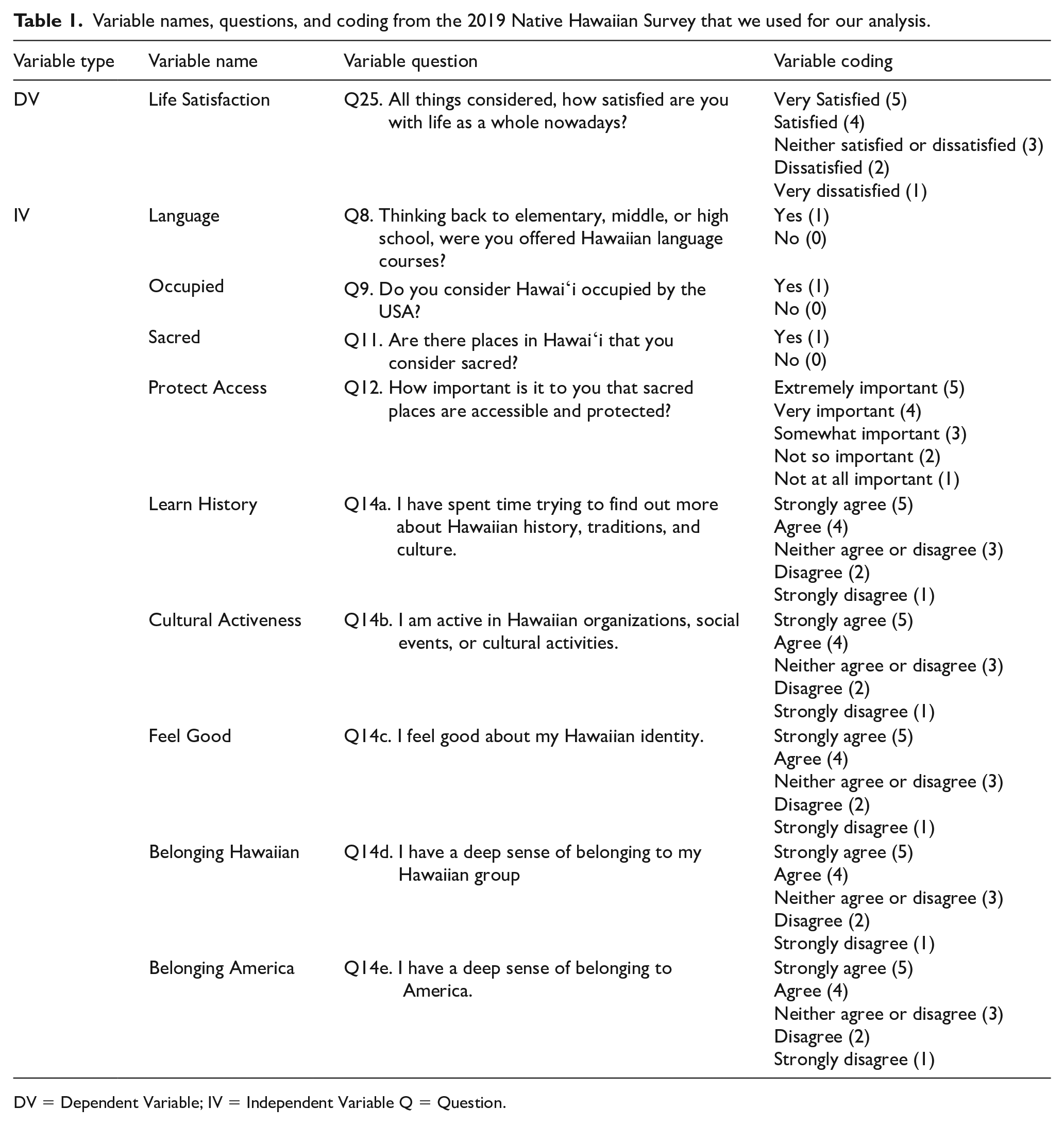
DV = Dependent Variable; IV = Independent Variable Q = Question.
For our analysis, Hawaiian well-being is our dependent variable and cultural identity is our independent variable. The life satisfaction variable is used as a proxy for well-being. This variable aligns with the World Health Organization’s (2001) definition of well-being, which extends beyond the presence of physical or mental ailments to encompass perception of one’s life. Moreover, this study recognizes the excess research on health statistics within the Hawaiian community and is interested in understanding how Hawaiians feel about their overall well-being. Cultural identity variables are used to measure cultural identity. These variables capture cultural values and engagement processes with Hawaiian culture. We use these variables to test the following themes of cultural reclamation theory: (1) finding’s one’s purpose as an Indigenous person (Gone, 2009, 2010, 2013; Paglinawan et al., 2020); (2) sense of belonging (Gone, 2010; Gonzalez et al., 2022); and (3) engagement with Indigenous learning and practices (Gone, 2013; Gonzalez et al., 2022; Leonard, 2012; Paglinawan et al., 2020).
For the first theme of cultural reclamation theory—finding one’s purpose as an Indigenous person—we analyze the following variables: “Occupied,” “Sacred,” “Protect Access,” and “Feel Good.” These variables ask about the cultural significance of ʻāina to Hawaiian well-being and positive emotions associated with Hawaiian identity. In addition, the occupation variable is included to account for identification processes within contemporary context. Furthermore, this variable highlights the nuances of finding one’s purpose as an Indigenous in the specific context of military occupation in Hawaiʻi. For the second theme of cultural reclamation theory—sense of belonging—we analyze the following variables: Hawaiian Belonging & America Belonging. These variables explicitly ask about belonging to the Hawaiian community and America. Neither variable was given a specific classification of government, land, or society, allowing for interpretation of what belonging to either means. In addition, America is used to refer to the USA in this survey, but we acknowledge that it may not be exclusive to other communities in the Americas. For the third theme of cultural reclamation theory—engagement with Indigenous learning and practices—we analyze the following variables: “Language,” “Learn History,” and “Cultural Activeness.” These variables ask about levels of engagement with culture through learning language and cultural history, and activeness in cultural organizations, social events, and cultural activities. We hypothesize that life satisfaction among Hawaiians increases as opportunities to pursue cultural reclamation increase.
Statistical analyses and sample demographics
We analyze our survey data using multivariate regressions and statistical software, STATA™. We chose multivariate regressions as the best statistical test for our data because we have one ordinal dependent variable and multiple interval and normal independent variables (OARC Stats, 2021). Each variable was run as a separate variable since no variables were highly correlated with one another. In addition, demographic controls were constructed from the demographic variables and included in the regression: gender, education, employment status, children, and age. We use these controls since research refers to these demographics as social determinants of health (Kaholokula, 2013), or factors that may impact health outcomes. Any response that did not meet all three inclusion criteria were excluded from analyses. “Missing” and “don’t know” responses were also removed from the final analyses since they made up less than two percent of responses. In addition, these excluded responses made no statistical differences. Observation numbers vary for each variable because not every participant answered every question.
Gender, education, employment, and having children were constructed into binary variables. For the gender control, “Female” was coded as 1 and “Male” was coded as 0. “Transgender,” “Māhū,” and “Gender Queer/Non-Binary” responses were removed from the gender variable since less than five percent of participants indicated these identities. For the education control, responses that indicated the “completion of some higher education” were coded as 1, which included “Some college but no degree,” “Associate Degree,” “Bachelor’s Degree,” and “Graduate Degree.” Responses that indicated “no higher education” were coded as 0, which included “Less than high school” and “High School degree or GED” responses. For the “employment” control, “Yes, part-time” and “Yes, full-time” responses were coded as 1, and “No” and “Retired or Disabled” were coded as 0. For the “children” control, “Yes, all over 18” and “Yes, one or more under 18” responses were coded at 1, and “No” was coded as 0. “Age” was run as is, with “18-24” coded as 1, “25-34” coded as 2, “35-44” coded as 3, “45-54” coded as 4, “55-64” coded as 5, “65-74” coded as 6, and “75+” coded as 7.
The majority of participants identified as female (68%), received some form of higher education (75%), were employed (71%), had children (67%), and were 45 to 54 years old (17%).
Results
We present the descriptive statistics of our variables (Table 2) followed by findings from the regressions (Table 3). For the life satisfaction variable, the majority of participants answered “satisfied” with their lives as a whole (x = 3.79; SD = 0.94). For the cultural identity variables, the majority of participants did not receive language courses in school (x = 0.47; SD = 0.50); consider places in Hawaiʻi sacred (x = 0.99; SD = 0.05); find high importance in protecting and accessing sacred spaces (x = 4.82; SD = 0.51); spend time learning about Hawaiian history, traditions, and culture (x = 4.57; SD = 0.71); are active in Hawaiian organizations, social events, or cultural activities (x = 4.04; SD= 1.00); feel good about their Hawaiian identity (x = 4.62; SD = 0.68); have high levels of belonging to their Hawaiian group (x = 4.44; SD = 0.84); and have low levels of belonging to America (x = 2.31; SD = 1.28).
Rounded descriptive statistics of variables.
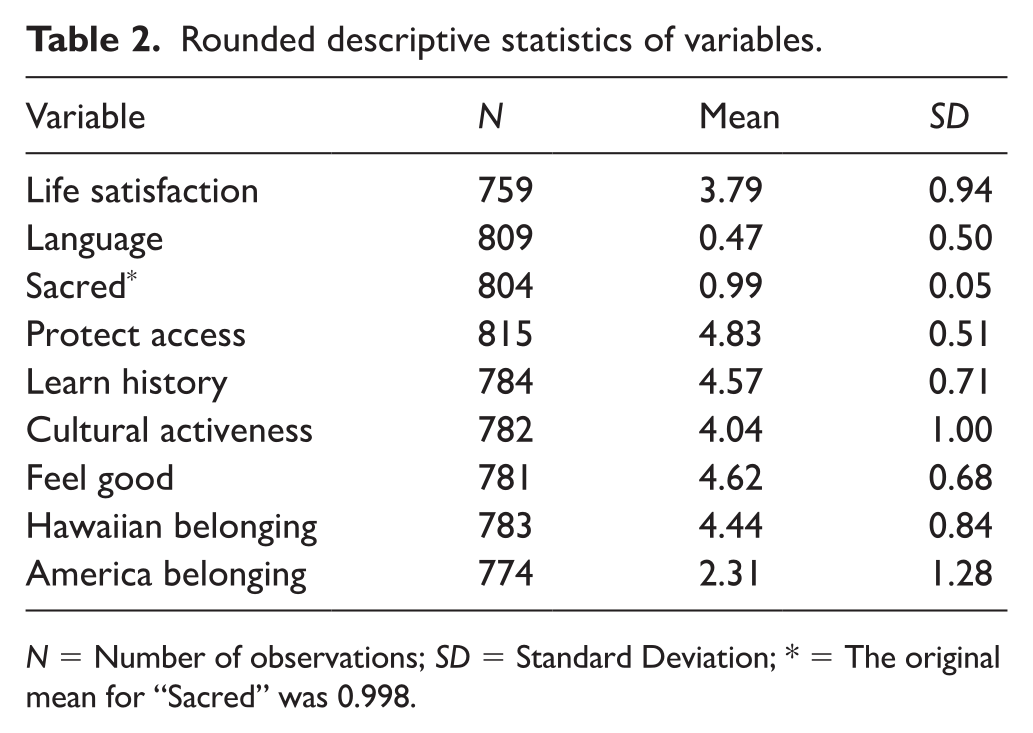
N = Number of observations; SD = Standard Deviation; * = The original mean for “Sacred” was 0.998.
Multivariate logistic regression outcomes between the life satisfaction variable and each cultural identity variable.
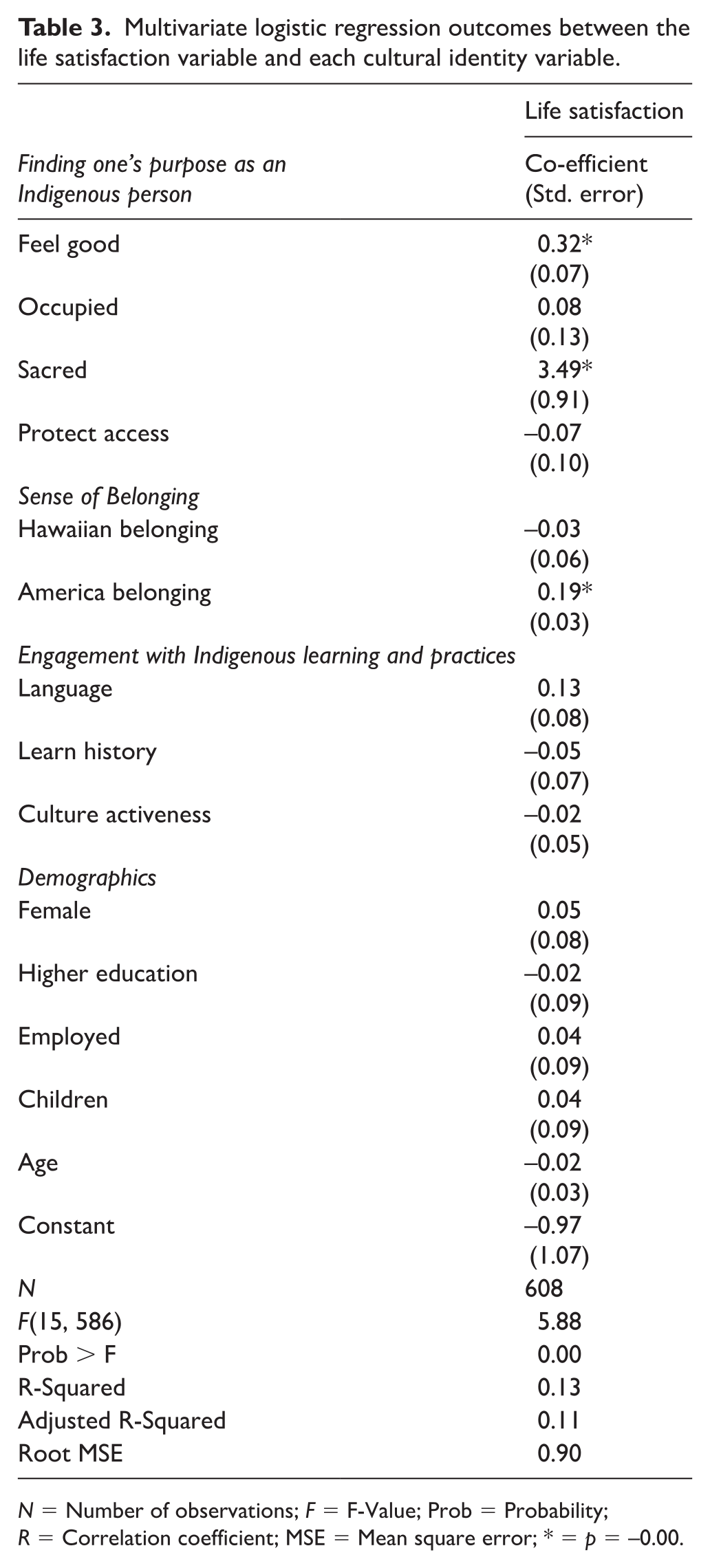
N = Number of observations; F = F-Value; Prob = Probability; R = Correlation coefficient; MSE = Mean square error; * = p = –0.00.
Cultural identity variables are categorized by the themes of cultural reclamation theory. We also ran a Variance Inflation Factor (VIF) and found low correlation between the independent variables in our regression analysis (Supplementary Material 2).
There were statistically significant relationships found between three cultural identity variables and the life satisfaction variable: (1) feeling good about one’s Native Hawaiian identity—“Feel Good”; (2) considering places in Hawaiʻi sacred—“Sacred”; and (3) having a sense of belonging to America—“America Belonging.” These variables have positive relationships with the life satisfaction variable.
No statistical significance was found for importance of protecting and accessing sacred places —“Protect Access”; belonging to the Hawaiian community—“Hawaiian Belonging”; receiving language courses in school—“Language”; learning about Hawaiian history, traditions, and culture—“Learn History”; and activeness in Hawaiian organization, events, and activities—“Cultural Activeness.” In addition, no demographic variable was statistically significant.
Discussion
Life satisfaction variable
Starting with our dependent variable, high levels of life satisfaction supports the argument that strengths already exist within Indigenous communities (Kana‘iaupuni, 2005; McKivett et al., 2018). Variation in responses may be due to this question’s presentation of life satisfaction as a subjective concept. Moreover, there may have been variation in how life satisfaction was interpreted and defined among participants, and exploring these differences or dimensions of life satisfaction may be valuable in adding to existing models of Hawaiian well-being. In addition, exploring factors that contribute to these current levels of life satisfaction may provide more in-depth insight into how participants responded to this question. Furthermore, additional insight may be found in the four cultural identity variables that were statistically significant in relation to life satisfaction.
Cultural identity variables
Feeling good about one’s Hawaiian identity, considering places in Hawaiʻi sacred, and having a sense of belonging to America were positively related to life satisfaction. Moreover, responses that reflected these themes were linked to higher levels of life satisfaction and had the same level of statistical significance. Referring to the themes of cultural reclamation theory as facilitator for connection to cultural identity—finding one’s purpose as an Indigenous person, sense of belonging, and engagement with Indigenous learning and practices—we find two statistically significant variables for the first theme, one statistically significant variable for the second theme, and no statistically significant variables for the third theme.
First, feeling good about one’s Hawaiian identity and considering places in Hawaiʻi sacred were statistically significant variables for finding one’s purpose as an Indigenous person. Along with the high statistical significance of feeling good about one’s Hawaiian identity in relation to high life satisfaction, this cultural identity variable also yielded the highest mean out of all the Likert-type cultural identity variables after perceived importance of accessing and protecting sacred spaces. Moreover, an overwhelming majority of participants indicated that they feel good about their Hawaiian identity. Considering the challenges colonization poses on identification processes in contemporary society (Bombay et al., 2010; Leonard, 2012), further exploration into the factors that contribute to these positive emotions may provide insight into how they may act as a buffer to the health disparities and adversities Hawaiians face. In addition, these factors may provide insight into the possible nuances of what feeling good about being Hawaiian means. Next, considering places in Hawaiʻi sacred was statistically significant to high life satisfaction and yielded a high mean. This variable also yielded the lowest variability in responses out of all the cultural identity variables, meaning the majority of participants said “Yes” to considering places in Hawaiʻi as sacred. Along with statistical significance to life satisfaction, sacrality may also be important to understanding the processes that facilitate finding one’s purpose as a Hawaiian. Moreover, sacred spaces and interaction with these spaces may provide healing for some Hawaiians despite the health disparities and adversities they face (Whitbeck et al., 2009). No statistical significance was found in considering Hawaiʻi occupied by the USA and importance of protecting and accessing sacred spaces. Lack of statistical significance for these variables may be linked to the realities of land loss in contemporary society and negative ramifications of continually fighting against the desecration of sacred land (Trask, 2010; Whitbeck et al., 2009).
Second, having a sense of belonging to America was the statistically significant variable for the sense of belonging theme. Although this variable had high statistical significance in relation to high life satisfaction, there was also high variability in responses. Similarly to the life satisfaction variable, this variability may be related to the presentation of belonging to America as a subjective concept. Further exploration into what belonging to America means may be valuable in understanding its relation to high life satisfaction, especially since the majority of participants indicated high opposition to belonging to America. No statistical significance was found in belonging to one’s Hawaiian group. Explanations for these variables may be linked to complexities of reclaiming identity. Furthermore, those who resist dominant powers in pursuit of one’s Indigenous identity or group may result in difficulty navigating current Euro-colonial systems compared to those who assimilate (Trask, 2010). Findings from both of these variables may pose the need for further exploration into the processes that facilitate belonging within the Hawaiian community through the lens of cultural identity as a multi-dimensional construct (Bombay et al., 2010).
Last, no variables were statistically significant for engagement with Indigenous learning and practices. For receiving language courses in school, the majority of participants said they did not receive language courses in school. However, the majority of participants also indicated high levels of learning Hawaiian history, traditions, and culture and activeness in Hawaiians organizations, events, and activities. Lack of statistical significance for these variables may be linked to barriers to accessibility, as well as the deficits-based narratives informed by colonization. Although language is an important part of Indigenous cultures and reclamation of identity (Leonard, 2008), our results show that the majority of participants did not have the opportunity to learn Hawaiian language in school. In addition, because the Hawaiian community is often overgeneralized in studies that take a deficit-based approach, learning through the lens of this narrative may contribute to a negative sense of self (Kūkulu Kumuhana Planning Committee, 2017). Furthermore, some who speak to the history of US colonization and historical trauma neglect to tell the full story, which includes high levels of resilience among Hawaiians in the midst of multiple adversities (Kana‘iaupuni, 2005; Thomas et al., 2016).
The levels of resilience found in this study further reinforces the need for more strengths-based research that looks at what Hawaiians are already doing to support their health and well-being. When considering engagement with cultural activities, it also may be insightful to explore additional alternative pathways to cultural connection that extend beyond practicing traditions or remaining active in cultural organizations, to take account of the diversity that exists within the Hawaiian community (Kana‘iaupuni, 2005; McKivett et al., 2018). In addition, Gonzalez et al. (2022) argues the importance of looking beyond cultural engagement to cultural efficacy, which is one’s “personal preferences and confidence engaging with Indigenous culture,” (p. 193) as an indicator of Indigenous Peoples. Overall, variables for this theme may capture differences in accessibility to specific cultural practices, such as learning language. Thus, treating “culture as treatment” should consider barriers that may prevent people from engaging with culture in meaningful ways.
Based on these findings, the following implications are important to consider when measuring Hawaiian well-being through cultural reclamation in contemporary society: (1) the constant fight for access, protection, and autonomy with regard to ‘āina, (2) the barriers to sense of belonging within the Hawaiian community due to the politicization of Hawaiian identity, (3) the impact of a deficits-based data approach on sense of self and confidence engaging with cultural practices, and (4) limited recognition of cultural diversity. Further exploration in these four areas may provide a more holistic understanding of Hawaiian well-being and identity that can be used to inform more effective culturally-based interventions.
Limitations
While this study has the largest known sample of people who self-identify with having Hawaiian ancestry across multiple islands, results are not generalizable to the entire Hawaiian community. In addition, this study is limited in its measurement of subjective well-being through self-reported life satisfaction. Because the life satisfaction question was the last question in the survey, life satisfaction results may also have been influenced by the interaction with previous survey questions, resulting in potential bias. Analysis of open-ended survey questions on conceptualizations and expressions of Hawaiian identity may provide a more holistic analysis of well-being. Despite these limitations, this study also contributes unique, extensive insight into Hawaiian identity that may be relevant to future Hawaiian well-being measurements.
Conclusion
This study explores cultural identity as an intervention for the health disparities within the Hawaiian community, as previous research identifies cultural identity as a protective factor for Indigenous Peoples (Kana’iaupuni, 2006; Mokuau et al., 2012; Ramirez & Hammack, 2014; Wexler, 2014). Using cultural reclamation theory, which argues that Indigenous Peoples are healthier when they have opportunities to draw upon their cultural knowledge and practices (Gone, 2013; Gonzalez et al., 2022; Leonard, 2012; Paglinawan et al., 2020), we build upon previous research on Hawaiian resilience (Antonio et al., 2020) and measure following themes of cultural reclamation theory using data from the 2019 Native Hawaiian Survey: finding one’s purpose as an Indigenous person; sense of belonging; and engagement with cultural learning and practices.
Utilizing the life satisfaction question as a proxy for well-being and the cultural identity questions, we find high levels of overall life satisfaction and cultural engagement. Statistical significance is found between high levels of life satisfaction and feeling good about one’s Hawaiian identity; considering places in Hawaiʻi sacred; and a sense of belonging to America. These variables support the first two themes of cultural reclamation theory—finding one’s purpose as an Indigenous person; and having a sense of belonging. Findings from this study prompt further exploration into the dimensions of cultural reclamation as a facilitator for connection to culture, particularly engagement with cultural learning and practices and cultural efficacy. Moreover, barriers to Hawaiians’ ability and confidence to connect the ʻāina, Hawaiian culture, and Hawaiian community should be considered when understanding cultural identity as a multi-dimensional construct and protective factor for health disparities.
Supplemental Material
sj-docx-1-aln-10.1177_11771801241235206 – Supplemental material for An analysis of Hawaiian identity and life satisfaction through cultural reclamation: implications for Hawaiian well-being
Supplemental material, sj-docx-1-aln-10.1177_11771801241235206 for An analysis of Hawaiian identity and life satisfaction through cultural reclamation: implications for Hawaiian well-being by Catherine Jara (Kanaka Maoli) and Ngoc T Phan in AlterNative: An International Journal of Indigenous Peoples
Supplemental Material
sj-docx-2-aln-10.1177_11771801241235206 – Supplemental material for An analysis of Hawaiian identity and life satisfaction through cultural reclamation: implications for Hawaiian well-being
Supplemental material, sj-docx-2-aln-10.1177_11771801241235206 for An analysis of Hawaiian identity and life satisfaction through cultural reclamation: implications for Hawaiian well-being by Catherine Jara (Kanaka Maoli) and Ngoc T Phan in AlterNative: An International Journal of Indigenous Peoples
Footnotes
Acknowledgements
The authors extend their gratitude to all of the participants who trusted the Native Hawaiian Survey team with their knowledge and wisdom. They also thank the various organizations and individuals who extended their support on this project. They specifically thank Emilia Kandagawa, Laʻakea Dedrick, Leilani De Lude, and Lynette Cruz, PhD. They also thank the many others working to build the Lāhui.
Authors’ note
Declaration of conflicting interests
The authors declared no potential conflicts of interest with respect to the research, authorship, and publication of this article.
Funding
The authors disclosed receipt of the following financial support for the research, authorship, and publication of this article: A portion of this project was supported in part by Hawai‘i Pacific University’s: (1) College of Liberal Creative Scholar Endeavor Program (US$2,900); and (2) The National Endowment of the Humanities Faculty Development (US$2,500).

Supplemental material
Supplemental material for this article is available online.
Glossary
ʻāina land
aloha love, compassion, kindness, and grace; a sacred idea that connects us to spiritual traditions
aloha ʻāina caring for the land
akua god, gods, spirits
ka wā ʻōiwi wale pre-contact Hawaiʻi
kaʻakālai kū kanaka Hawaiian conceptualization of strengths-based approach
kānaka humankind
kapu aloha a way of life that is rooted in dignity and humanity for others
kiaʻi protectors, protector
kuleana responsibility
kūpuna elders
Lāhui Hawaiian community
lōkahi harmony
mālama ʻāina caring for the land
pono equity; balanced in righteousness
References
Supplementary Material
Please find the following supplemental material available below.
For Open Access articles published under a Creative Commons License, all supplemental material carries the same license as the article it is associated with.
For non-Open Access articles published, all supplemental material carries a non-exclusive license, and permission requests for re-use of supplemental material or any part of supplemental material shall be sent directly to the copyright owner as specified in the copyright notice associated with the article.
