




Abstract
Collective community education co-designed with the Māori (Indigenous people of Aotearoa (New Zealand) and Pasifika (Pacific Islander peoples living in Australia) communities through participatory community engagement, Indigenous methods and cultural knowledge are vital for development and implementation of diabetes community forums. A community-based participatory action research was co-designed with three Pasifika diabetes community forums in partnership with Māori and Pasifika communities, a university and government health organisations in Southeast Queensland. The forums provided a culturally safe space for the communities to collectively engage in diabetes education, health checks and cultural knowledge sharing. The outcomes of these forums led to co-development of a Pasifika Women’s Diabetes Wellness Program aimed at promoting diabetes prevention and management for the Māori and Pasifika diaspora in Australia and internationally. Co-designed community forums have the potential to address health equity through inclusion of communities and key stakeholders in a collaborative agenda, empowering communities to improve health outcomes.
Keywords
Introduction
Co-designed community-led forums, employing cultural participatory approaches can effectively promote health and wellbeing of people from collectivist cultures (Teteh et al., 2019). Despite the potential benefits, they are relatively under-utilised in health promotion and diabetes education (Wallerstein et al., 2017). Co-design of community-led diabetes through collaborative academic-community partnerships can facilitate the development of community-driven solutions on diabetes prevention and management. This article discusses how co-designed community-led education can provide a shared cultural space to deliver collective education that promotes health and wellbeing of Māori (Indigenous people of Aotearoa (New Zealand) and Pasifika (Pacific Islander peoples living in Australia) communities in Australia. As Enari and Haua (2021) discusses the complexities of Māori and Pasifika label used in Aotearoa and Australia, we acknowledge the use of Māori and Pasifika separately in recognition that many of the Māori and Pasifika peoples have New Zealand citizenship, but Māori are the Indigenous people of Aotearoa.
Queensland is home to the largest Māori and Pasifika diaspora living in Australia and includes communities from diverse cultural and language groups from across Micronesia, Melanesia and Polynesia (Ravulo, 2015). The communities, despite being ethnically, culturally, religiously and linguistically diverse, share a collective Pasifika identity to describe intergenerational diaspora of migrants who belong and identify with Oceania which encompasses all Pacific Island nations (Leaupepe & Sauni, 2014; McGavin, 2014). It acknowledges and celebrates the rich diversity and recognises that there are also sufficient commonalities across beliefs, values and practices (Akbar, Windsor, et al., 2022; Durham et al., 2023).
The 2021 Australian Bureau of Statistics census data estimated 214 635 and 445, 127 people who identified by Pacific Island ancestry in Queensland and Australia, respectively (Australian Bureau of Statistics, 2022). While the exact population data is not known for Māori people living in Australia, over 142, 107 people with Māori ancestry were recorded in the 2016 Australian census (Australian Bureau of Statistics, 2022). The population for Maori and Pasifika population is under-represented in the Australian census as many that have entered Australia via Aotearoa under the Trans-Tasman Mutual Recognition Act 1997 are not identified by ancestry, but as country of birth or citizenship (Queensland Government, 2014). Nonetheless Queensland is reported to have the largest Māori and Pasifika population in Australia (Batley, 2017; Ravulo, 2015). Critically, the Māori and Pasifika communities are often overlooked in health care service delivery and policy development which impact their health and wellbeing (Vaughan et al., 2018). A needs assessment conducted over a decade ago by the Queensland State Government identified a lack of culturally tailored health promotion initiatives for the Māori and Pasifika communities and nothing has been published since 2011 (Queensland Government, 2011) suggesting a dearth of data and a critical need for systematic research and community-based data for the Māori and Pasifika communities in Australia.
Type 2 diabetes is a significant public health challenge for the Māori and Pasifika communities in Queensland with increasing inequalities with hospitalisations, premature mortality and poor health outcomes from diabetes-related conditions compared with the mainstream population (Cho et al., 2018; Hawley & McGarvey, 2015; Win Tin et al., 2015). In Australia, similar patterns are observed where people born in the Pacific Islands have six to seven times higher prevalence of type 2 diabetes compared with those born in Australia with variations across community groups (Colagiuri, 2017). The Māori and Pasifika women face a greater risk of type 2 diabetes and diabetes-related mortality and co-morbidities compared with Australian women (Australian Institute of Health and Welfare, 2015). Critically, there are also limited culturally inclusive programmes addressing diabetes prevention and management for the Māori and Pasifika communities in Australia (Beck et al., 2018; Vaughan et al., 2018).
More generally, a Cochrane review concluded that health education programmes are considerably less successful in communities from ethnic backgrounds who are marginalised (Creamer et al., 2016). Access to diabetes care and support programmes are less likely to be utilised by the Māori and Pasifika peoples with diabetes due to lower levels of health literacy, language barriers and a strong cultural reluctance to seek help (Queensland Government, 2011), which have significant implications for providing accessible, low cost and culturally appropriate diabetes care to the Māori and Pasifika peoples (Gallegos et al., 2020). The lack of cultural context and western models in health education fails to recognise the importance of collective communities such as the Māori and Pasifika diaspora in Australia and where their cultural worldview, oratory traditions such as talanoa (to tell a story or have a conversation) and vā (a relational space) are critical in health promotion and community education (Lilomaiava-Doktor, 2020; Simati-Kumar, 2021). This article argues that cultural pedagogies and Pacific approaches embedded within the constructivist social learning models warrant recognition through the culturally co-designed and collaboration with the Māori and Pasifika communities to promote their health and wellbeing in the Australian context.
The Māori and Pasifika communities are typically collectivist cultures and place greater emphasis on spirituality, family, community, relationships, social networks as the primary source of information and shared resources (Ihara & Vakalahi, 2011). A community led and whānau (family) centred approach informed the co-development and implementation of the community forums, particularly for the Māori and Pasifika peoples (Pulotu-Endemann & Tuʼitahi, 2009). The concept of the collective is fundamental to any community development and engagement processes with the Māori and Pasifika communities and involves mobilisation of community assets, resources and social networks to promote equity and empowerment, thereby eventually strengthening communities (South, 2015). The Māori and Pasifika peoples often express health and wellbeing through cultural practices and traditions underpinned by values that include a strong foundation of the family relationship and a strong religious affiliation and connection to ancestors and land (Meo-Sewabu, 2016). Spoken language including music, songs, performing arts and food shape’s cultural identity and fosters a sense of belonging, often connecting past and future generations in a respectful and safe way (Spark & Brimacombe, 2021). These are maintained by ways of communicating or telling stories through talanoa (Halapua, 2007).
Talanoa is a form of conversations used in many Pacific Island contexts, whereby tala means to inform or relate and noa means to share as an exchange without a rigid framework (Vaioleti, 2013; Prescott & Johansson Fua, 2016). Conceptually, talanoa explains the development of a relational space which creates a culturally responsive forum for conversations, at both group and individual, allowing people to discuss pertinent and build relationships (Vaioleti, 2012). In community forums, talanoa creates a cultural space to share information, learn and co-construct knowledge (Vaioleti, 2012; O’Shea et al., 2015). Cultural space in this article refers to shared respect, shared meaning and shared knowledge through vā (Brascoupé & Waters, 2009; Simati-Kumar, 2021). It draws on the principles of cultural safety, a concept in nursing practice in Aotearoa with respect to health care for Māori people and providing quality care particularly for people from different ethnic and cultural backgrounds and with considerations of cultural values of the community (Wepa, 2015).
The authors discussed the importance of talanoa in creating relational space or vā for people to connect and engage in a critical, open and meaningful dialogue on diabetes self-management (Akbar, Gallegos, et al., 2022; Akbar, Radclyffe, et al., 2022; Akbar, Windsor, et al., 2022). Vā, like talanoa, is a collective construct expressing sacred relationships between people and their environment, ancestors and the heavens (Baice et al., 2021; Simati-Kumar, 2021). To nurture vā is to respect and maintain harmony through a balance within and between relationships (Lilomaiava-Doktor, 2009).
This article describes a series of community-led diabetes forums, co-designed with the community, academia, government and non-government agencies to provide collective diabetes education and argues that cultural considerations such as community engagement and cultural adaptation in programme co-design, co-development and delivery with Māori and Pasifika communities are critical. The article reflects on how to embed cultural approaches to promote health and wellbeing for Māori and Pasifika peoples living with type 2 diabetes. Here, the Pasifika diabetes community forums are referred to as community forums.
Methods
Community engagement and steering committee
Three Pasifika diabetes community forums in 2013, 2014 and 2016, were co-designed and implemented with Māori and Pasifika communities in Southeast Queensland with the aim to raise community awareness through collective community education, health screening and health promotion activities. This project was part of a larger research led by the Pasifika Women’s Alliance Inc. (PWA) members and a Pasifika PhD Researcher, first author, in partnership with the Queensland University of Technology (QUT), Pacific Island Council of Queensland, Diabetes Queensland and the Children’s Health Queensland Good Start Program. Diabetes Queensland is a peak body that provides education programmes, services, support and raises community awareness on diabetes and its impact on individuals and the community through educational campaign advocacy and policy development promoting benefits of healthy lifestyles of people living in Queensland. The Good Start Program works on improving the health and wellbeing of Māori and Pacific Islander children and their families through co-designed culturally tailored programmes (Hardt et al., 2021; Mihrshahi et al., 2017).
A talanoa methodological framework, developed from previous work by the authors, informed the co-design processes and was critical in the co-development of the community forums within a collective context (Akbar, Gallegos, et al., 2022; Akbar, Windsor, et al., 2022). Unlike many western tokenistic engagement strategies, engagement with the Māori and Pasifika communities recognise the importance of cultural protocols to establish meaningful relationships and trust for effective outcomes (Davis et al., 2014). The steering committee, consisting of representatives from the respective Māori and Pasifika communities in Queensland, including church and community elders and leaders and young leaders and health professionals working with the government, non-government, community organisations and the university (Figure 1), was established with co-developed terms of reference designed to facilitate the implementation and evaluation of the community forums. The steering committee was responsible for setting the agenda; co-designing and developing the programme; providing recommendations for keynote speakers; informing culturally appropriate recruitment engagement strategies and promotions; and co-developing strategies for the dissemination of outcomes. Specifically, PWA set the agenda with the academic partners providing evidence-based framework and ethics support, while Diabetes Queensland and Good Start Program provided access to resources and best practice guidelines on diabetes prevention and management. These responsibilities were guided by cultural protocols co-developed with the steering committee. Using these protocols further consolidated a long-term partnership between the communities, stakeholders and universities, as highlighted in Table 1. This has led to the development of a Pasifika Diabetes Wellness programme for women living with type 2 diabetes (Akbar et al., 2021) and is currently trialled as a pilot programme in Southeast Queensland.
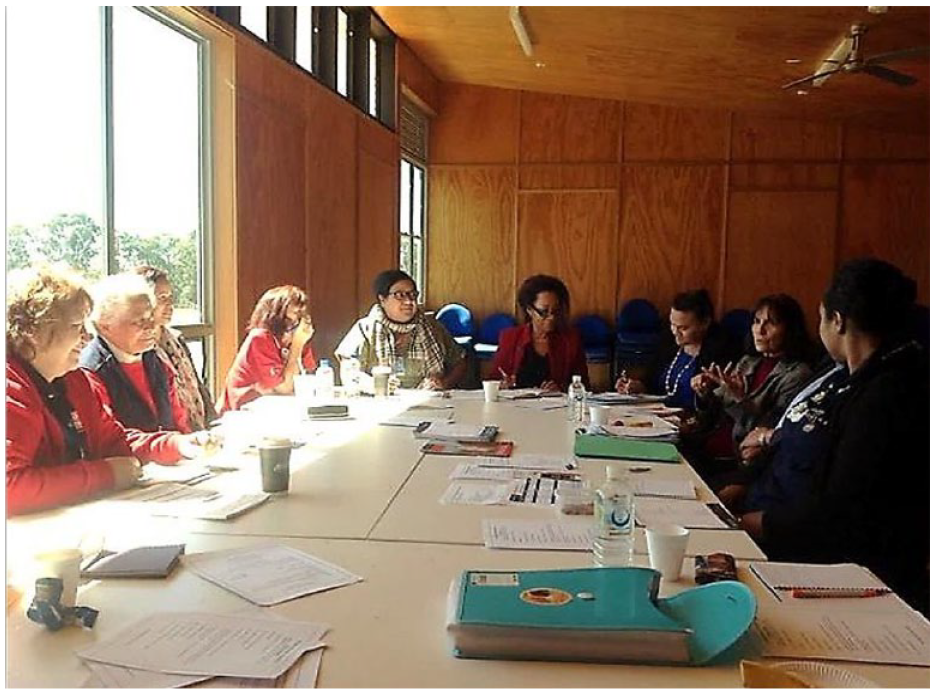
Steering committee meeting 2013: (left-right) Aunty Mary Ngarongo Barlett Johnston, Aunty Terani Lima; Ms Kalisi T Volatabu, Ms Irene Tavutavu; Dr Inez Fainga’a Manu-Sione, Ms Lote Faamausili Scanlan-Savelio, Ms Valami Qoro (Photo by Heena Akbar, used with permission from Pasifika Women’s Alliance Inc. (PWA)).
Culturally safe protocols embedded in the co-development of the forums.
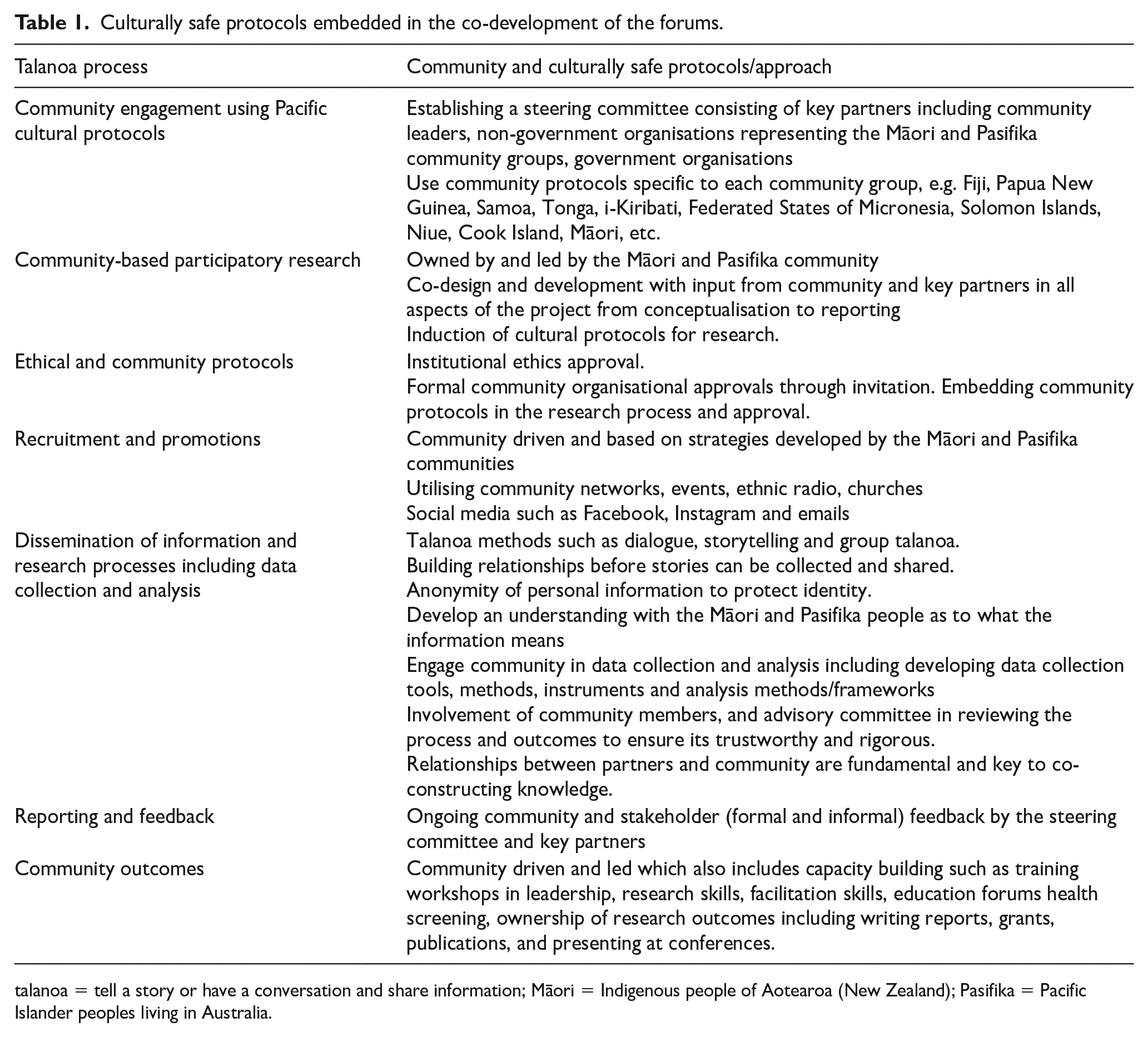
talanoa = tell a story or have a conversation and share information; Māori = Indigenous people of Aotearoa (New Zealand); Pasifika = Pacific Islander peoples living in Australia.
Pasifika Women’s Alliance Inc. (PWA) as cultural connectors
PWA is a not-for-profit incorporated association registered in Queensland. It is a diverse network of women residing in Queensland representing 22 Pacific Island Nations, including Australia, Aotearoa and Papua New Guinea. The PWA seeks to build and strengthen a Queensland sisterhood of the Māori and Pasifika women and to raise the awareness of members as to their rights and responsibilities as citizens and encourages their participation in all aspects of community life. The members of PWA acted as cultural connectors who informed the co-design and development of community education and health screening resources; the cultural induction and training of QUT staff and health students on culturally appropriate engagement with the Māori and Pasifika communities. The appropriate engagement with respective Māori and Pasifika communities was guided by the protocol established with the steering committee (Table 1). These specifically involved initial talanoa with community and religious leaders, attending meetings or events and utilising community networks including community radios to promote the forums. Formal invitations were sent to community, church and young leaders.
Appropriate venues and times to host the forums including decorations of venues with Pacific artefacts such as traditional tapas, tropical plants and flowers were critical in creating a cultural space of belonging and communal identity for community members (Enari & Lemusuifeauaali’i, 2021). This was vitally important in acknowledging the intergenerational Māori and Pasifika diaspora within Australia and keeping with the cultural and collective identity of both younger and older generations (Durham et al., 2023). For the Māori and Pasifika peoples, identity also resonates with space and time and the relationship with vā, which is crucial in communal cultures that value family, community, nurturing and appreciating relationships (Enari & Lemusuifeauaali’i, 2021).
Pasifika diabetes community forums
Table 2 highlights the three diabetes community forums for Māori and Pasifika communities in Southeast Queensland, illustrating the date, location and attendance, aims and objective and outcomes of each forum. The first Pasifika women’s community forum was held at Inala Community Hall on the south side of Brisbane with large Māori and Pasifika community. The second forum was held at Chermside Community Church Hall, aimed for women living in the northern suburbs of Brisbane and the third whole of community forum was held at a university setting, QUT.
Summary of PDHF in Queensland.
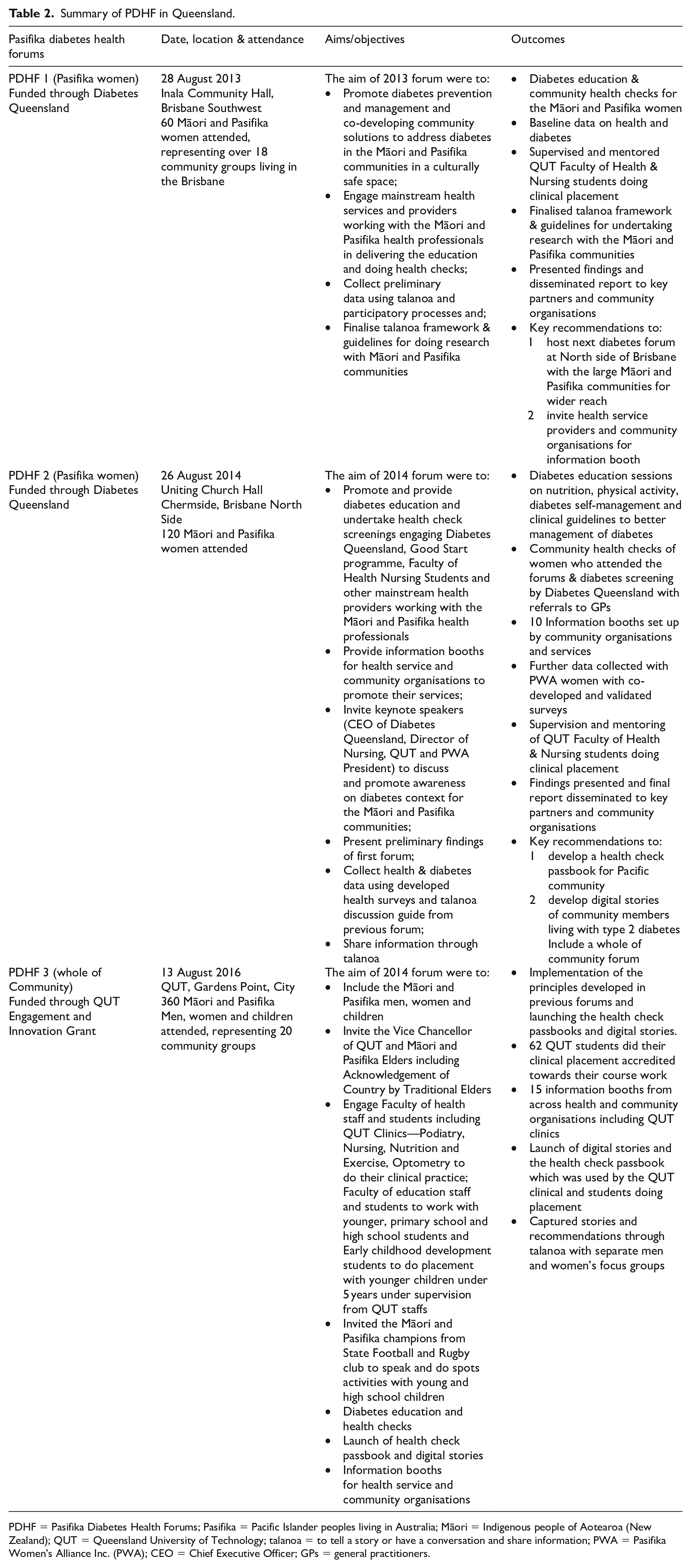
PDHF = Pasifika Diabetes Health Forums; Pasifika = Pacific Islander peoples living in Australia; Māori = Indigenous people of Aotearoa (New Zealand); QUT = Queensland University of Technology; talanoa = to tell a story or have a conversation and share information; PWA = Pasifika Women’s Alliance Inc. (PWA); CEO = Chief Executive Officer; GPs = general practitioners.
The steering committee carefully chose neutral, but familiar, venues for the Māori and Pasifika communities with accessible locations serviced by public transport. The first forum was held at Inala Community Hall, often used for many Māori and Pasifika sports and cultural events and the second forum was held at the Chermside community church hall, being linked to significant spiritual and religious aspects of Māori and Pasifika cultures. The third forum held at QUT with a strong Māori and Pasifika student profile and in a conference style, was designed to demystify the university space with a dual aim to create hope and aspirations for the future. The third forum was advertised in a widescreen open foyer at the University and published on a QUT webpage and promoted through various social media platforms withn the univeristy and community networks.
It was critical that the spaces within the university reflected cultural and spiritual identities of Māori and Pasifika diaspora communities in Australia and created a co-learning adult space for health promotion activities (Reynolds, 2016). The cultural identity, spirituality, and tradition of Aboriginal and Torres Strait Island peoples, as first people of the country, was respected by the inclusion of Aboriginal Elders who were invited to 2013 2014 and 2016 forums. The forums began with a Welcome to Country, which is a protocol to acknowledge the Traditional Custodians and welcome visitors to their country with safe passage and protection of their spiritual being during the journey and is delivered by the Traditional Owners, or Aboriginal and Torres Strait Islander peoples who have been given permission from Traditional Owners. This would follow by a Community Elder offering opening prayer. The decisions around who would be invited speakers were recommended by the steering committee and aligned with a Community, National or International Celebration or Theme such as The International Day of the World’s Indigenous Peoples. The forum offered a collective shared cultural space for community members and therefore was important to acknowledge and show respect with appropriate cultural formalities. Following the Welcome to Country ceremony, an opening prayer and a traditional dance performance was led by the QUT Pasifika Students Association, followed with a keynote address by a Pasifika Elder, launching the forum. As with the opening ceremony, the closing would include koha (gifts) presentations, a prayer and final speech by a Pasifika young leader representative.
Sharing of cultural knowledge in collective community education through the forums creates robust co-learning experiences (Prescott & Johansson Fua, 2016). For Māori and Pasifika peoples, the context of learning is as much about the content as it is about the social context and interaction in which knowledge is shared, applied and practised (Matapo, 2019). Tamasese (2019) emphasises the importance of language, culture, physical and community connections in creating important relational and spiritual learning space which also has cultural significance to community health promotion and education. These forums provided a culturally safe space for diabetes education and health checks led by the Māori and Pasifika health professionals and in partnership with Diabetes Queensland, Good Start Program and the QUT health clinics. The education materials and resources were co-developed with the steering committee and delivered by trained Māori and Pasifika community health workers and non-Pasifika diabetes educator. A successfully funded QUT Innovation and Engagement grant further allowed the project to produce and launch digital stories of community members’ lived experience with type 2 diabetes (Maori and Pasifika Diabetes Health Project, 2016). The engagement of community members through the steering committee and feedback was critical to ensure accountability of the co-design process (Cammock et al., 2021).
Perspectives and lessons learned
Diabetes education
The diabetes education sessions were integral to the forums and, were co-developed with the steering committee members who provided expert knowledge and best practice clinical guidelines. These education sessions used cultural education knowledge and context that included role plays and skits. The content was narrated through storytelling by community elders and students, demonstrating important health messages (Akbar, Gallegos, et al., 2022). Interactive activities were included for children and facilitated collaboratively with the Faculty of Science and Engineering, Education and Health and included prominent community figures such as rugby and netball champions which encouraged participation by the community. The digital stories, produced using oratory and digital media, screened at the forum complemented the story telling and reinforced key messages on diabetes prevention and management. These stories provided a strength-based health promotion message to self-care and wellbeing which is now used as an online tool to raise diabetes awareness, and has important application in health education, health messaging and self-determination (Campbell et al., 2015; Njeru et al., 2015; Wieland et al., 2017). Incorporation of interactive culturally tailored activities further optimised community engagement and contributed to knowledge sharing during the collective education forums (Schleser & Firestone, 2018). As one community elder and also an advisory member who attended the diabetes forums stated: “in a Māori and Pasifika way means being supported by others through the whāriki, a woven mat we sit on together, with our community” (Aunty Mary, Advisory Committee Member, 67 years old).
Health checks and diabetes screening
Many members of Māori and Pasifika communities do not access health screening despite its availability in mainstream health services (Palu et al., 2022). There is also increasing community awareness that preventive screening has not been adequately addressed for Māori and Pasifika peoples in Queensland (Vaughan et al., 2018). To address this concern, the forums incorporated health checks which included biometric data, blood pressure, height and weight to measure body mass, waist circumference and diabetes screening to demonstrate the importance of self-assessing for type 2 diabetes risk (Chen et al., 2010).
Health checks were provided by Māori and Pasifika community health workers and non-Māori and Pasifika health professionals. The QUT Faculty of Health students from podiatry, nutrition and dietetics, optometry, exercise physiology, psychology and nursing undertook clinical placements during the community forums which was accredited towards their degree programmes. The Aboriginal and Torres Strait Islander and Māori and Pasifika students were also part of this placement that provided opportunity for interactive cultural space for Indigenous and non-Indigenous students. The student-led clinic played a pivotal role in the translation of clinical practice through community education forums to promote diabetes prevention. The students were supervised by the Māori and Pasifika health professional who provided cultural clinical advice, essential to their future health practice. Staff members, students and mainstream health professionals were also provided with cultural training prior to the forums. Reflection of Māori and Pasifika health professionals who supervised the students is: Overall the students were helpful, open, resourceful, showed great cultural awareness doing a fantastic job. My fellow Registered Nurse [RN] and I supervised the clinical students and were greatly impressed by their dedication, professionalism and clinical practice at the forum. (Māori and Pasifika community health worker, Female, 55 Years)
On request from the community, health checks were conducted in a culturally safe manner with clear protocols led by a team consisting of a Māori and Pasifika community health worker, a diabetes educator and a student nurse who supervised the students undertaking health checks. It was crucial for the community members, particularly within the context of women and men to have their own space. Thus, the health checks were conducted within enclosed screened booths or workstations, in an indoor space for women only. Men had their separate workstations. Feedback from community members futher reflected the importance of men’s business which was also managed by the male health students taking into consideration the cultural and gender sensitivity of health screening for Māori and Pasifika men (Brascoupé & Waters, 2009). This was highlighted in the following statement: The professionalism, displayed by the QUT Nursing students must certainly be commended. The students were punctual, well presented and displayed a willingness to learn and be pro-active. They were attentive during the cultural brief and were not hesitant to clarify uncertainties. The men’s workstation considered our way of doing and creating a safe space for us to feel comfortable and at ease. (Community member, Male, 69 years old)
Integrating the community-student learning experiences demonstrates an important education model that could be applied across other community and health sectors in working with culturally and linguistically diverse communities in Queensland (Oikarainen et al., 2018; Taylor et al., 2017). Furthermore, PWA members and the steering committee disseminated and promoted information on health checks within their own communities encouraging community members to attend the forum. Taking a community approach proved to be effective as number of Māori and Pasifika participants at each forum (Table 2). The PWA members talked about how their family members and community connections were encouraged to visit their doctors for diabetes screening after attending the forums which they would not have undertaken prior to attending the forum.
Co-development of health passbook
A significant outcome from this community-academia partnership was the co-development of a health check passbook which was piloted during the 2013 community forum and used by the QUT clinical students at the second forum and further revised for implementation at the third forum (Figure 2). The revised passbook is currently used as a community screening tool for Māori and Pasifika peoples living with diabetes and its use is encouraged by health professionals. The passbook is published for Pasifika Wellness Program, specifically for women with type 2 diabetes and is disseminated through community organisation networks and websites. The electronic format was shared across community groups and organisations working with Māori and Pasifika peoples and is currently evaluated in the trial of the Pasifika Women’s Diabetes Wellness Pilot Program (Akbar et al., 2021).
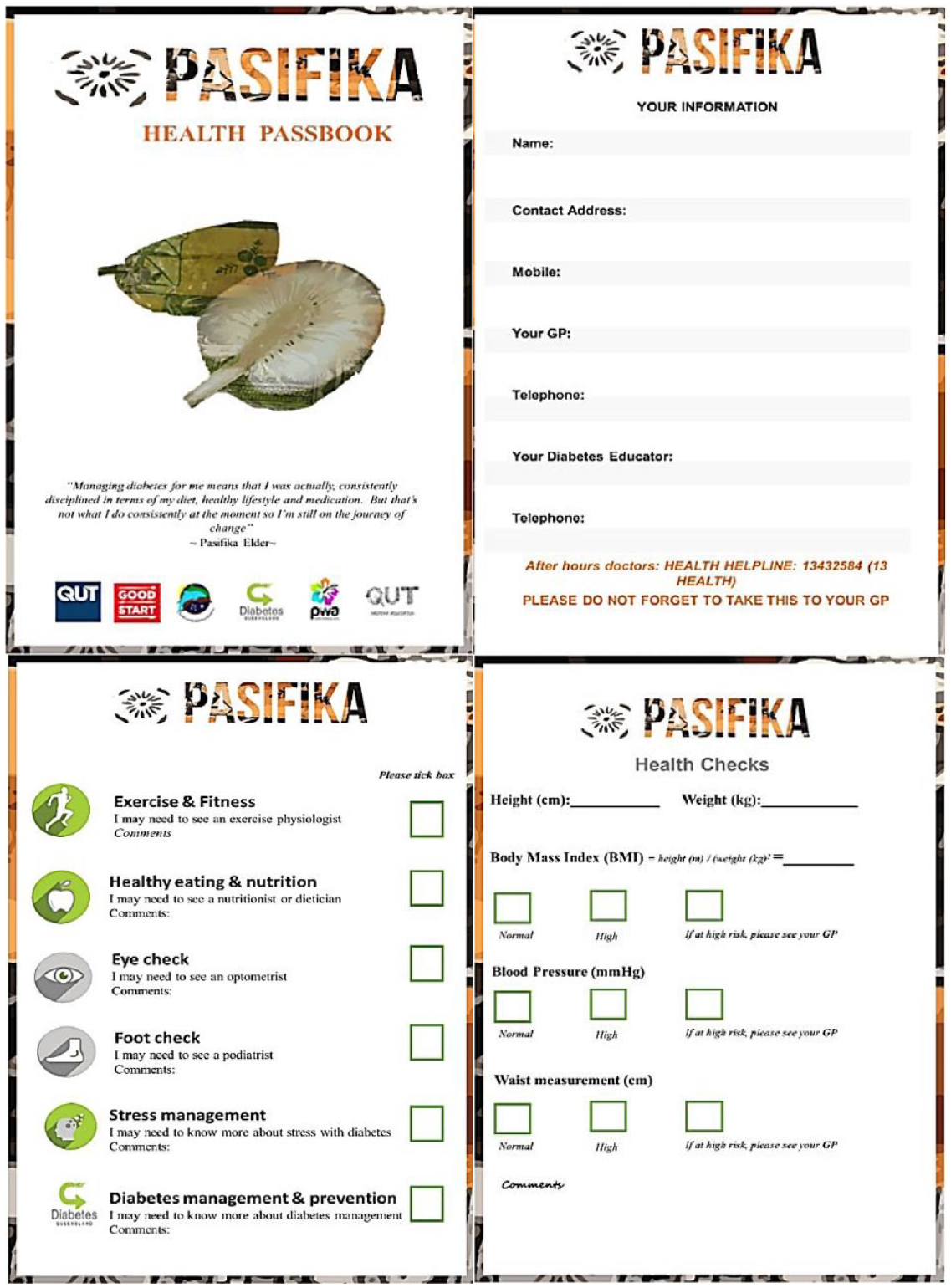
Co-designed health passbook.
Digital stories of community members living with type 2 diabetes
Culturally tailored storytelling is used as a method to target health behaviour among many collectivist communities (Njeru et al., 2015). Women with lived experience with type 2 diabetes shared their stories at the first two forums and these were then used as a platform to initiate discussions while co-developing community-focused strategies and solutions. Storytelling at the third forum in the form of play utilised Māori and Pasifika elders and youth to narrate and explain the biochemistry and physiology of diabetes which could easily be understood within the Māori and Pasifika context. Oral traditions and dancing are heart of Māori and Pasifika cultures and is commonly used in education to encourage Māori and Pasifika ways of knowing and doing (Lilomaiava-Doktor, 2020).
This project engaged Māori and Pasifika communities and students from QUT to produce digital stories with seven community members that documented their lived experience with type 2 diabetes and this was launched at the third forum. These stories were co-constructed experiences of the community members living with type 2 diabetes, documenting the social, cultural, spirituality and community importance of diabetes self-management for long term maintenance of health and wellbeing. The production of the digital stories took an assets and strength-based approach and has shown to empower people living with type 2 diabetes and overcoming obstacles associated with promoting good health and self-management behaviours (Gubrium et al., 2016).
The digital stories continue to serve as an online resource for Māori and Pasifika communities and organisations in Queensland to raise diabetes awareness. Cultural oratory through use of digital media provides a powerful tool in health promotion and can be applied in many other contexts of health education and self-determination (Campbell et al., 2015; Njeru et al., 2015; Wieland et al., 2017). This also has relevance for younger generations where digital creativity and social media can promote cultural identity and wellbeing (Spark & Brimacombe, 2021).
In addition, a directory of community and government organisations and services was created for Māori and Pasifika community members in Southeast Queensland for future community development projects.
Conclusion
Community engagement and co-designed community forums with the Māori and Pasifika communities are vitally important in creating a culturally safe space for knowledge sharing and community education. The relevance of talanoa and vā are vitally important in this co-learning cultural space where it can create a mediating environment to build community capacity, address health equity and advocate for inclusion of Māori and Pasifika communities and key stakeholders in a shared collective agenda. It has the potential to empower individuals and communities in promoting health and wellbeing within a collective forum. As such, these have wider applications in health promotion for diabetes prevention and management for Māori and Pasifika diaspora, both in Australia and internationally.
Footnotes
Acknowledgements
The authors respectfully acknowledge the Traditional Custodians of the land where this work was done and recognise their continued spiritual and cultural connection to the land and water, acknowledging that they never ceded sovereignty. They acknowledge their Pacific ancestors as First Peoples of the Pacific Island Nations. This project was undertaken in partnership with the Pasifika Women’s Alliance Inc. (PWA) and the Māori and Pasifika communities in Queensland. They thank their contribution and for sharing their perspectives and providing a platform to represent the voice of Māori and Pasifika women in Queensland. They also thank the PWA members for contributing to the organisational development and cultural ethical guidance with the implementation of the diabetes research, workshops and forums in creating a safe cultural learning space.
Authors’ note
Declaration of conflicting interests
The authors declared the following potential conflicts of interest with respect to the research, authorship and publication of this article: Heena Akbar and Danielle Gallegos are currently funded by the Woolworths Centre for Childhood Nutrition Research with funding from the Queensland Children’s Hospital Foundation via a philanthropic grant from Woolworths.
Funding
The authors disclosed receipt of the following financial support for the research, authorship and publication of this article: The Australian Postgraduate Awards (APA 2013–2016); Diabetes Queensland Research Grant (2013–2016); Queensland University of Technology Engagement and Innovation Grant (2016).

Glossary
Aotearoa New Zealand
koha gifts
Māori Indigenous people of Aotearoa (New Zealand)
noa to share or exchange without a rigid framework
Pasifika Pacific Islander peoples living in Australia; reconceptualised to represent a symbol of unity and sharing a collective identity
tala to inform or relate
talanoa to tell a story or have a conversation and share information
tangata whenua people of the land
vā a relational space
whānau family
whāriki a woven mat