




Abstract
The Alberta Indigenous Mentorship in Health Innovation (AIM-HI) Network was developed by Indigenous faculty members as an intergenerational mentorship programme for First Nations, Métis and Inuit (FNMI) scholars engaged in health research training programmes. Through activities and funding programmes, the AIM-HI Network provided opportunities for these scholars to strengthen their personal and professional resources and gain resilience along paths to academic success. While generating evidence on wise practices for Indigenous mentorship, we also advocated for systemic change to enable Indigenous scholar promotion and success in academia and in health research more broadly. In this article, we describe the philosophical approach to mentorship and the organizational structure to deliver aligning activities and supports to students. We also reflect on the successes and learnings from our leadership of the Network, including the impact of the coronavirus-19 pandemic on FNMI scholars, and the ways in which the Network adapted to address these challenges.
Introduction
A surging social movement is calling for the dismantling of structural barriers for First Nations, Métis and Inuit (FNMI) persons in Canada to participate in health care and education sectors. The Truth and Reconciliation Commission of Canada (2015) and the Association of Faculties of Medicine of Canada (2019) have called for actions to ensure an increase in diversity of representation in students and faculty in academic institutions supporting health professional formation. This includes a focus on increasing health research capacity to enhance self-determination through policy and service leadership (Cook et al., 2013; Richmond et al., 2013; White et al., 2021). Despite the strategies in place to increase admissions, FNMI health professionals and researchers uniformly encounter deleterious systemic forces enacted by the social, historical and geo-political determinants of health (Currie et al., 2012; St. Denis, 2010; Stout et al., 2021) which threaten their success. Structural challenges impede progression through post-secondary studies shaped by racism, cultural incongruency, pedagogical barriers and financial strain (Currie et al., 2012; Ogilvie & Eggleton, 2011; Shankar et al., 2020). Emerging scholars must work to master their discipline while also negotiating identity, seeking to belong in the academy, retaining their community roles and meeting the expectation to represent “all [Indigenous] Peoples” (Joy-Correll et al., 2022, p. 510). They encounter systemic resistance to change, and they struggle for authentic representation of FNMI voices in the academy (Joy-Correll et al., 2022). Patterns of academic recruitment, retention and promotion that are considered productive, relevant and ethical by post-secondary institutions are often misaligned with the priorities and processes of FNMI communities who value the investment of time and care for relationships and protocols to be upheld (Schnarch, 2004).
Strategic mentorship is a proposed solution for supporting FNMI scholars in academic pursuits. Although the term mentorship may inadequately convey the holism intended for this activity in Indigenous worldviews (Sinclair & Pooyak, 2007), it nevertheless highlights the importance of invested guidance, direction and a supportive environment often lacking in higher education. A strengths-based approach enhances the psychosocial resources of FNMI mentees, where peer-to-peer alliances and intergenerational connections foster their learning performance and success. These immediate priorities must occur alongside the critical activities seeking to decolonize health systems, health professional education and the research establishment.
The Canadian Institutes for Health Research (CIHR) is the national funding agency for health research in Canada. CIHR was cognizant of losing momentum in building FNMI health research capacity when the Network Environments for Aboriginal Health Research programme concluded in 2011. It then launched the Indigenous Mentorship Network Programme (IMNP) funding opportunity in 2016 setting out a 5-year mandate to provide distinctive and culturally relevant cohort learning opportunities and tailored mentoring activities for FNMI graduate students engaged in Indigenous health research. Seven provincial or regional and one national network were awarded grants to work autonomously and to deliver events and funding opportunities as determined by local needs. The Alberta Indigenous Mentorship in Health Innovation (AIM-HI) Network’s philosophical approach to mentorship helped guide our programme development and delivery. Our governance structure allowed for FNMI community involvement in decision making and student support. Furthermore, our evaluation structure informed network development, growth and transitioning for sustainable student support. Our intention is not only to document the beneficial contributions of the AIM-HI Network, but to also serve as a source of knowledge acquisition for others who are also engaged in capacity building in Indigenous health human resources, focused on research.
Methods
Network formation
There was no development grant available and only a short timeframe to organize an Alberta-specific network. The AIM-HI Network came together based upon relationships cultivated among Indigenous health researchers within the University of Calgary. Five of the six principal applicants self-identified as members of the FNMI community and were University of Calgary faculty members: Barnabe, Métis; Crowshoe, Blackfoot; Fellner, Cree and Métis; Henry, Métis; Voyageur, Chipewyan. Currie identified as a settler and a University of Lethbridge faculty member. The original applicants represented several disciplines, including Medicine, Sociology, Public Health and Counselling Psychology/Education, and were of varying rank appointments, including two Assistant Professors, three Associate Professors and one Full Professor.
A large team was assembled to ensure a broad representation of those with leadership positions in the FNMI community as respected Elders, health professionals, educators, researchers and policy developers. Grandmother Doreen Spence, Cree from Saddle Lake First Nation and Aunty Francine Dudoit Tagupa who is a Native Hawaiian committed to supporting the applicants in upholding and embedding Indigenous ways of being and doing in the Network. Co-investigators included faculty members from all Alberta universities who represented the Faculties of Medicine, Nursing, Health Sciences, Science, Arts, Education and Veterinary Medicine. The team also included leadership from First Nations post-secondary institutions; representatives from the Alberta First Nations Information Governance Centre; the Alberta Health Services Population, Public and Indigenous Health Strategic Clinical Network™; and the First Nations and Inuit Health Branch. FNMI scholars at the post-doctoral, doctoral and undergraduate levels were also contributors to the application.
Mentorship philosophy
The AIM-HI Network vision and objectives were set by the principal applicant team and were informed by their experiences as FNMI leaders, researchers and scholars within health and education systems. The AIM-HI vision and objectives were based on four uniting principles:
Principle 1: Mentorship is an intergenerational responsibility. Relationships are forged between peers at various stages of their learning and have a responsibility for knowledge exchange.
Principle 2: Mentorship is a longitudinal commitment. The attention that FNMI leaders have historically paid to the education of younger generations reveals the care given to ensure the resilience of generations to come. As such, the mentor’s role and responsibilities do not end with a semester or a programme of study. Longitudinal relationships and commitments are key to both individual and community wellness and resilience.
Principle 3: Higher education can reaffirm FNMI identity. As FNMI people engage with education as a means for increased self-determination, it also becomes a means for resisting oppression. Therefore, education can be an act of healing, an opportunity to seek, explore and reconnect with FNMI perspectives, community and identity.
Principle 4: Support for the diversity of FNMI mentees. There is no singular vision of Indigenous mentorship and community, and it was anticipated that each mentee would require individual responsive psychosocial supports to foster success.
Thus, the AIM-HI Network was developed to foster a generation of FNMI scholars who are engaged in health research, upholding a mentee-centred approach by embracing Indigenous approaches to mentorship, building of a community of practice and curating experiences built upon wise mentorship practices and serving as advocates for FNMI scholars (Figure 1).
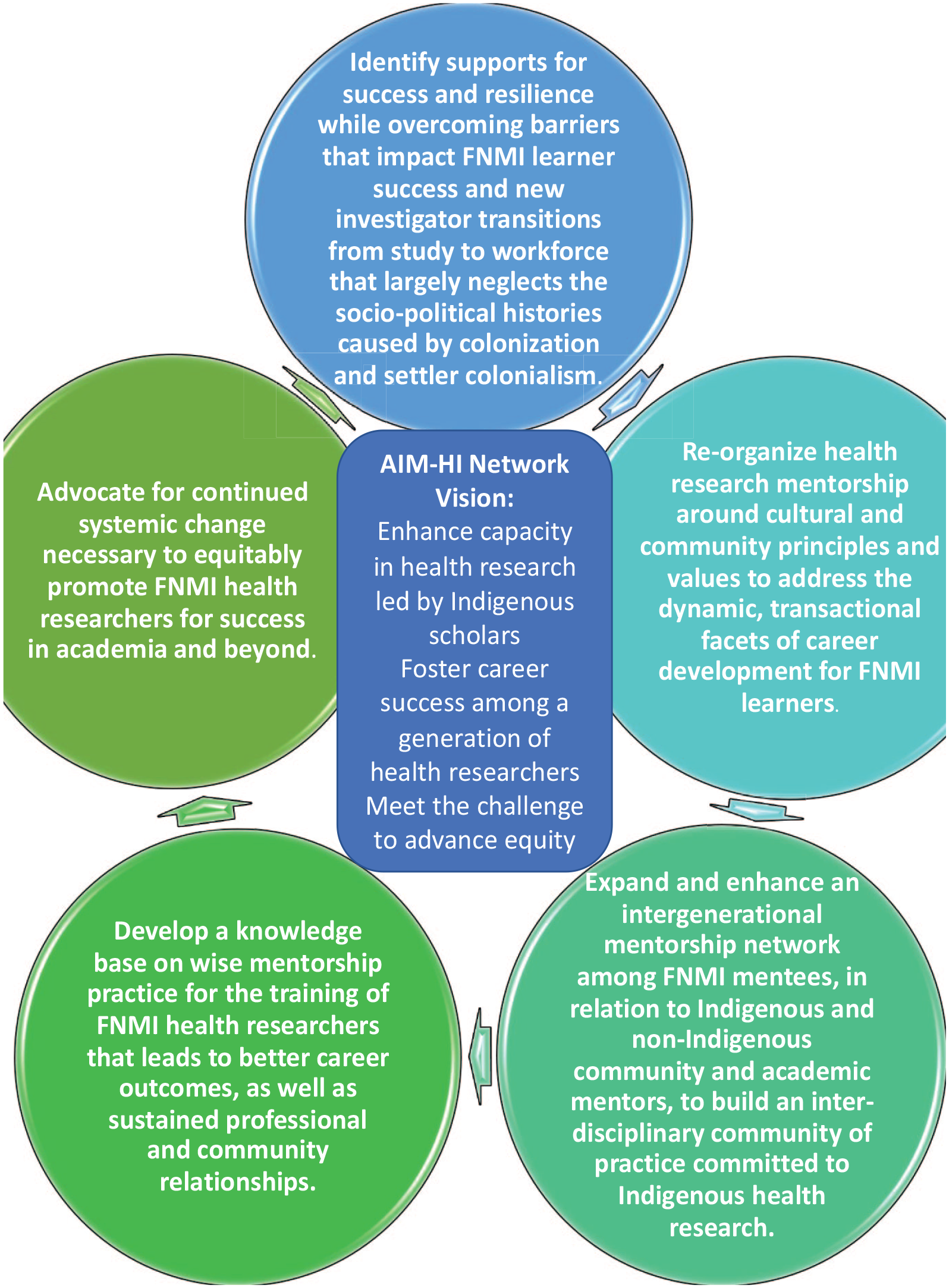
Alberta Indigenous Mentorship in Health Innovation (AIM-HI) Network vision and objectives.
Structure and governance
Core Executive Committee
The Core Executive Committee consisted of all original principal investigators, with additions of four new investigators as they were recruited to their academic positions: Henderson, settler social scientist, models of care scientist in family medicine; Murry, Chiricahua Apache, industrial organizational psychology; Baker, Métis, anthropology; Leason, Anishinaabe, anthropology and public health. Each investigator was tasked with leading or co-leading one of the operational committees, which were the Indigenous Mentorship Gatherings, Annual Retreat, Communications and Collaborations, Mentor Development, Student Stipend, Recruitment and Evaluation Committees. In circumstances where they could not continue these roles due to relocations and personal events, the other core executive committee members took on those leadership responsibilities on their behalf to honour our commitment to the mentees and their communities.
Our Core Executive Committee embedded practices to uphold Indigenous relational ethics and strive for decolonizing approaches. This included beginning our meetings with prayer or reflection and grounding thoughts, a critical act to remind ourselves of our commitment to the next generation and activities for change. This facilitated contributing to and arriving at decisions which prioritized consensus. Activities and logistics were supported by a full-time coordinator position located at the University of Calgary who liaised with Indigenous health units at the other academic institutions in the province.
Community advisory committee
Elders, Indigenous academic leaders, new investigators within 5 years of their first academic appointment, and FNMI trainees at post-doctoral, graduate and undergraduate levels met twice per year with AIM-HI Network principal investigators. At these meetings, updates on Network activities were provided, emerging opportunities were identified and advice on directions to take were provided. This committee additionally served in a supportive role for the Network leadership and re-grounded leads to the intent of the mentorship programme.
Results
Event-based mentorship activities
AIM-HI activities were designed to create a circle of mentorship around FNMI mentees that honoured our cultural approaches to building community and supporting wellness.
Network retreats
The first retreat served as the launch of the AIM-HI Network and included a pipe ceremony to recognize the commitment of the participants to the work. Organized as a conference-style retreat, it featured a keynote speaker and a panel presentation on Indigenous leadership, a workshop on mentorship and research project presentations by mentees. Subsequent retreats had minimal academic components, and instead focused on cultural activities on land including a sweat lodge ceremony and other cultural teachings. The network retreats included public acknowledgement of FNMI mentees who had completed their academic degree requirements and they were honoured with blankets.
Writing retreats
On two occasions, small cohorts of up to 10 students were selected to attend a week-long writing retreat, which permitted them to focus on writing their dissertation, manuscripts, applications, or proposals. Mentors were present to support students in their writing activities. These writing retreats were opportune venues to develop peer-support networks with informal sharing over group meals, outdoor physical activity and debriefing sessions.
Intergenerational mentorship gatherings
A variety of events brought mentors and mentees together over the 5-year mandate of the AIM-HI network. These included informal lunch or dinner gatherings, and in-person sharing circles with Elders and peers who supported mentees through their challenges. More formal events were also organized with prominent Indigenous advocates and with locally recognized Elders. A four-session series using forum, also known as popular, theatre was another source for mentees to increase their ability to advocate for their community. With the onset of the coronavirus-19 pandemic, online activities were offered in lieu of in-person events. Connection Circles were online healing circles offered on a weekly basis by video-based conferencing with two to three Elders and Indigenous academic faculty in attendance. Immediate support was given by the AIM-HI Network Elders who informed us on how to uphold ceremonial protocols during these online circles and how to support mentee emotional needs when physical gathering was prohibited. The greatest advantage of the online medium was the possibility for participation of mentees who were studying at other academic institutions. This allowed for provincial connections that the Network was struggling to achieve before the pandemic. Furthermore, the academic facilitators and Elders nurtured mentees to become Connection Circle facilitators, thus supporting relevant leadership skills development and resulting in a more personal level of peer-support for mentees.
Local to global field school
In collaboration with AIM-HI mentor Dr. Andrea Kennedy and Aunty Francine Dudoit Tagupa from Kailua, Hawaii, five FNMI graduate and undergraduate research students were selected to participate in the field school. The students engaged in online group sessions to strengthen their identity and resilience, to gain knowledge in Native Hawaiian ways of health and knowledge and to prepare for the responsibility and privilege of engaging with our hosts. During the field school on Oahu, students and mentors provided service at an elementary school, a nursing home, a community health service land-base and an Indigenous food sovereignty class at the University of Hawaii. Upon return to Canada, the students prepared digital stories describing their experiences and their growth. They also made commitments to mentor other Indigenous learners in their academic journeys.
Research seminars and presentations
The AIM-HI Network developed opportunities for research skill development and the sharing of research results. These were initially organized as part of a large public research forum co-hosted with the Group for Research with Indigenous Peoples in the O’Brien Institute for Public Health. Pandemic restrictions moved online as part of a summer seminar series which was primarily attended by FNMI summer students, graduate students and their supervisors.
Cross-network events
The nominated principal applicants of each individual IMNP committed to work together to support national cross-network activities. The AIM-HI Network participated in the National Gathering of Graduate Students and the IMNP National Online Gathering and was also represented in other CIHR events including the International Indigenous Mentorship Meeting held in New Zealand in December 2019; the National Gathering of Elders hosted in Edmonton, Canada, in September 2017; and the PEKE Pathways Gathering which occurred in Lethbridge, Canada, in June 2018. These events connected Alberta FNMI mentees to national and international peers, facilitating networking opportunities. We also engaged in cross-network communications and events to learn how other IMNPs were structured and what programming they offered, and to share our own ideas and approaches while identifying opportunities for synergy and collaboration.
Student funding and experiential learning opportunities
Recognizing the financial constraints that FNMI students pursuing health research degrees face, as well as the need for opportunities to apply knowledge and network for future employment possibilities, the AIM-HI Network offered a variety of student funding opportunities. Over the 5-year mandate, a total of 116 individual awards to 65 students were distributed, for a total of CDN$585,000 or 58.5% of the original CIHR award amount.
Mentorship stipends for FNMI graduate students and post-doctoral fellows
Mentees could apply for annual funding to actively engage in their individual development and mentorship needs. The funds could be used to offset travel to mentors, Elders, community celebrations and ceremony, and could also support access to any academic or personal development resources such as courses or workshops. Considering the value of direct research experience with established Indigenous health researchers, the funds awarded to graduate students could also be used for self-funding their time as research associates in existing projects.
Travel bursaries and student-led events funding
FNMI students presenting their research at local, provincial, national and international conferences could apply to receive support for travel-related expenses. When the coronavirus-19 pandemic impacted conference participation, funds were directed to student-led activities with the mentees taking responsibility for proposing and planning events with coordinator assistance. Organized events included outdoor cultural field trips, Indigenous movie viewing evenings and online group crafting.
Studentships
The AIM-HI Network supported undergraduate summer studentships and experiential internships where FNMI mentees could apply their health research skills in supportive environments that were relevant to Indigenous health. This was also an opportunity for gaining referees outside of the mentee’s supervisory team to support future applications for salary awards and employment.
Pandemic supports
Additional funding was provided to FNMI students to support the transition to online learning, and for loss of income from part-time jobs that were lost due to the pandemic’s public health restrictions. We also provided funds to students who incurred unexpected costs to conduct their doctoral research projects.
Mentorship connections and the Indigenous mentorship model
Matching mentees with mentors
While initially conceived as a Strengthening Circle, where the FNMI mentee and their mentors would participate in dialogue to identify supports and strengths required for continuous personal development, it became apparent that the greater need was to first facilitate connections to academic and cultural mentors. We thus designed an intake process to identify individual interests and needs and we would review requests for mentorship with the Core Executive Committee members to nominate mentors who aligned with the mentee’s request. Some of these interactions were limited to a few encounters to provide advice and direction, and others resulted in formal mentorship and supervision through academic programmes. We observed that a broader pool of mentors would be beneficial to provide stronger alignments between the mentee and mentor, while limiting the number of requests directed to particular Elders and investigators. We also recognized the need to support mentor preparation and development for their interactions with Indigenous mentees.
Mentor development and the Indigenous Mentorship Model
Early in the AIM-HI Network’s existence, we identified the need to understand what resources were necessary to support AIM-HI Network Mentors, both Indigenous and non-Indigenous, in ensuring culturally appropriate actions and practices were used in mentorship. A literature review and key informant discussions led to the development of the Indigenous Mentorship Model (Murry et al., 2022). This model was promoted through presentations at research institutes and education conferences and served as the basis for developing a mentorship survey to understand what actions or behaviours mentors of diverse cultural and professional backgrounds were applying in their mentor-mentee relationships and whether these were beneficial for mentee development. Additional dissemination of the model is planned, including the development of a modular course to provide promising approaches and reflective activities to improve the quality of mentorship available to FNMI scholars.
Recruitment of Indigenous learners to academic careers in health research
We recognized that increasing the number and diversity of Indigenous mentees pursuing health research required increased awareness of these careers as an option. One aspect of our activities was promoting health research careers at community venues such as career and health fairs, and in elementary, junior high and high schools. In the spirit of reciprocity, AIM-HI Network mentees were volunteers at these events.
Mini-health professions days
The successful Mini-Med School programme (Henderson et al., 2015) run by the Indigenous Health Program of the Cumming School of Medicine, University of Calgary, provided an excellent opportunity to showcase health research to FNMI junior high and high school students. Health research stations in neuroscience and anthropology were developed specifically for these days complementing and growing the pre-existing mini-med school initiative.
Indigesteam science camp volunteers
AIM-HI Network investigators and students supported this Science, Technology, Engineering, Arts and Mathematics week-long summer camp for FNMI elementary students.
Mural at Stoney Nakoda School
The AIM-HI Network supported a community-based healing project with youth, culminating in the painting of a mural in the school.
Health, career and education forums
Representatives from the Network attended community-based fairs specific to health, career and academic institution recruitment to provide more information about events, funding and supports available to potential FNMI students.
Digital storytelling
AIM-HI mentors and mentees generously shared their experiences throughout their health research careers, with stories of inspiration, support and mentorship. These were edited into digital stories which are available on the AIM-HI Network website (https://www.ucalgary.ca/network/aim-hi).
Advocacy for systemic change in academia
The AIM-HI Network identified and proposed solutions to systemic barriers to FNMI peoples’ participation in academia and engaged academic institution leadership in reconciliatory actions.
Participation in institutional initiatives
AIM-HI Network investigators were actively engaged in activities to support indigenization and decolonization in the institution, including the Indigenous Health Dialogue of the Cumming School of Medicine to implement the Truth and Reconciliation Commission of Canada’s Calls to Action in Health; a Cumming School of Medicine working group tasked with revising criteria for appointment, renewal, transfer, tenure, promotion and merit assessment for academic staff; and the University of Calgary’s ii’ taa’poh’to’p (a place to rejuvenate and re-energize during a journey) Indigenous Strategy. Principles and concepts supporting Indigenous scholars were promoted and supported in these activities.
Student funding advocacy
The AIM-HI Network successfully negotiated with the University of Calgary’s Faculty of Graduate Studies as the faculty developed a new policy on mandatory funding for graduate students. Under the proposed policy, students’ awards would be partially clawed back to offset the supervisor’s contribution to the mandatory funding stipend. We assessed this policy would have negatively impacted FNMI students with financial resource limitations and would have created an inequity in the amount of funding a University of Calgary student could hold from AIM-HI Network funding relative to awardees at other Alberta academic institutions. We secured an exemption for FNMI students for that section of the policy so that all award monies could be retained by the student. We also encountered tensions and debates about the authenticity of Indigenous identity which arose from national high-profile incidents. We provided opportunities to explore differing opinions on the issue while aiming to inclusively support and advocate for all FNMI mentees. When applying for awards, mentees were required to identify their home nation.
Anti-Indigenous racism response
In the summer of 2020, society had heightened awareness of systemic and interpersonal racism after the murder of George Floyd in the USA and the livestreamed death of Joyce Echaquan at a Quebec hospital. These events were traumatic for students already stressed by the pandemic, and propelled the launch of the Learn, Reflect, Envision, Mobilize anti-Indigenous racism response (Supplementary Material 1). Building on a webinar discussion and individual submissions, a series of statements that provided inspiration for actions to make learning institutions a safe place for FNMI applicants, students, post-doctoral fellows and faculty were distributed throughout the province and were also presented to the leadership of western Canadian graduate schools.
Data gathering, analysis and evaluation
We used a variety of sources to confirm we were meeting our mandate, seek ideas from mentees on other activities and supports that the Network could provide, and measure our engagement and reach. An annual online survey was distributed to all mentees, supplemented by periodic focus groups, and participation in events was tracked. The data collection process was approved by the University of Calgary Conjoint Health Research Ethics Board (REB 17-0806) with reciprocal approval at the University of Alberta and Athabasca University, and additional approvals at Mount Royal University (Health Research Ethics Board Application 101480) and the University of Lethbridge (Human Participant Research Committee Protocol Number 2018-057). The domains evaluated and the cumulative evaluation outcomes are described below.
Annual survey—mentee experience and needs assessment
Participant demographics are shown in Table 1. To preserve anonymity in the cohort, we purposely did not request individual identifiers; thus, we were unable to link responses by the same individual over subsequent years. Mentee response rates were 80% in 2018, 48% in 2020 and 25% in 2021. Due to a technical error in survey administration, the mentee response rate in 2019 could not be calculated. Over survey years, 30% of responses came from mentees at the University of Alberta, 28% from University of Calgary and 11% from the University of Lethbridge, with the remainder being from mentees at Mount Royal University or Athabasca University.
Description of annual survey participants.
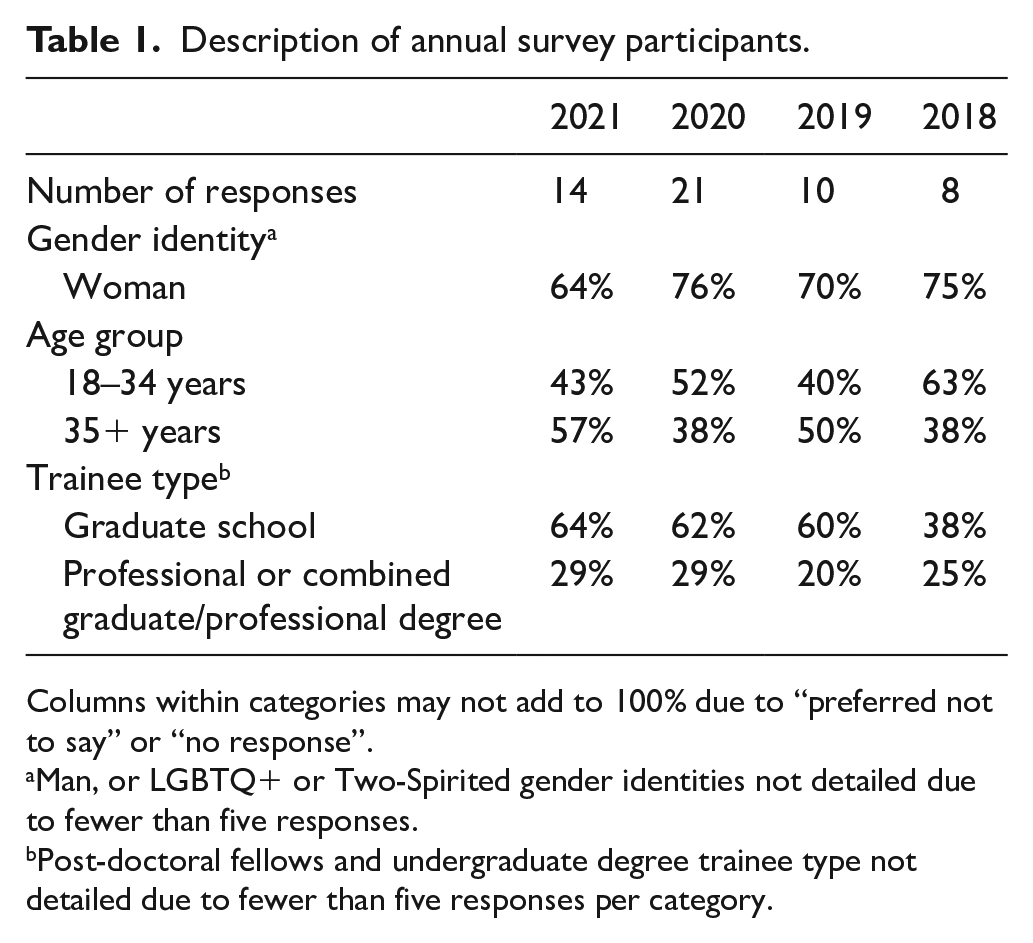
Columns within categories may not add to 100% due to “preferred not to say” or “no response”.
Man, or LGBTQ+ or Two-Spirited gender identities not detailed due to fewer than five responses.
Post-doctoral fellows and undergraduate degree trainee type not detailed due to fewer than five responses per category.
Annual survey—mentee empowerment and development of skills
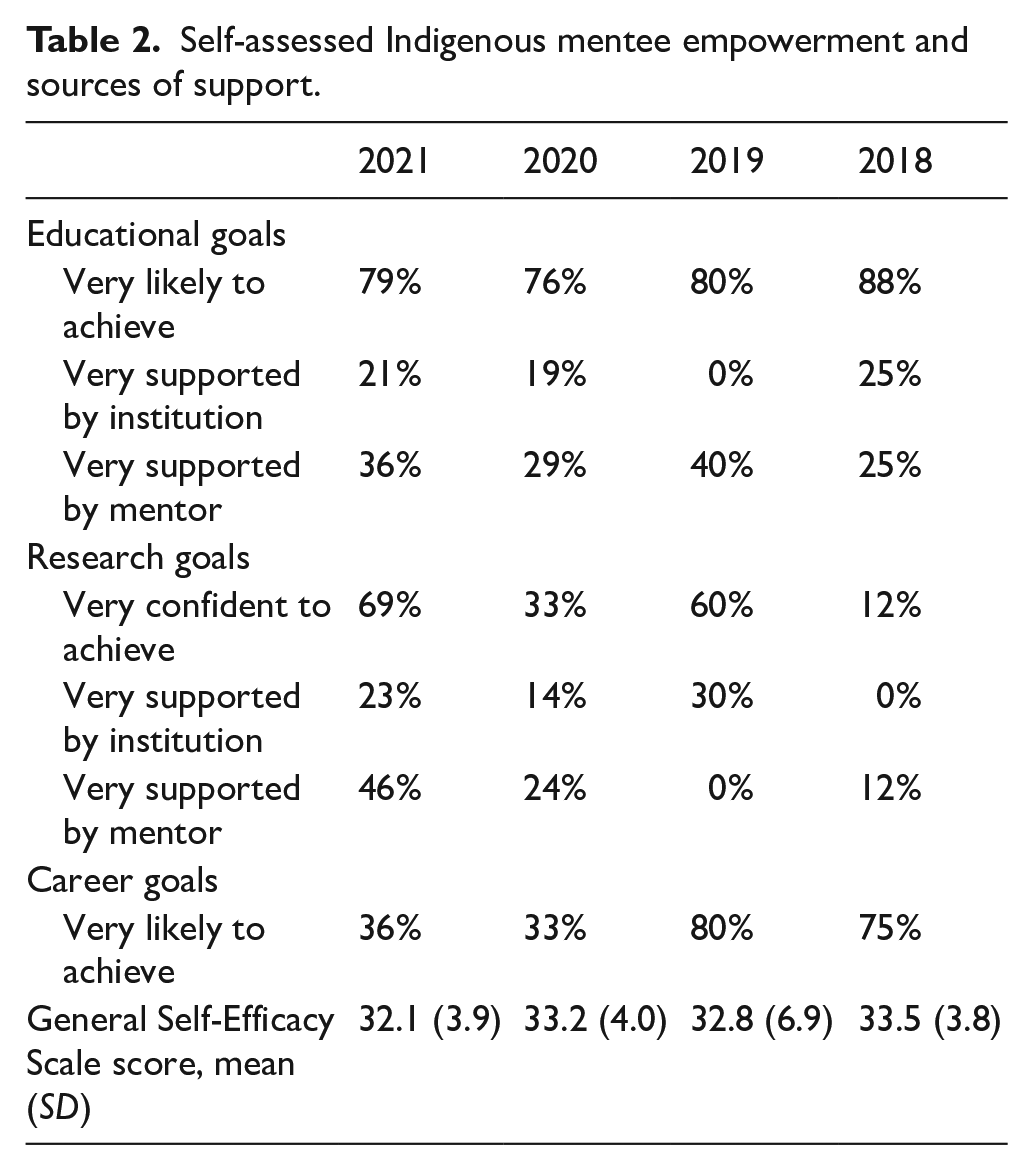
We surveyed mentees to determine their confidence to achieve self-identified educational, research and career goals, and their sense of support from their institution and mentors to achieve these goals. Overall, mentees believed that they were highly likely to achieve their educational goals, but that the pandemic could have potential effects on their ability to achieve their research and career goals (Table 2). Mentees generally perceived better support from their mentors in achieving their goals over their institution. Mentees also completed the General Self-Efficacy Scale (Schwarzer & Jerusalem, 1995) which reflected feelings and thoughts over the past month about their ability to solve problems and cope with unexpected events. The mean score was stable over the 4 years, including the 2 years following the pandemic onset (Table 2).
Self-assessed Indigenous mentee empowerment and sources of support.
Mentees were asked to describe the skills they developed by participating in the Network events by free-text response. Three themes emerged: the development of identity (both self and cultural); networking and collaborations; and research skills. Representative responses are summarized in Table 3.
Skills developed through participation in the AIM-HI Network.
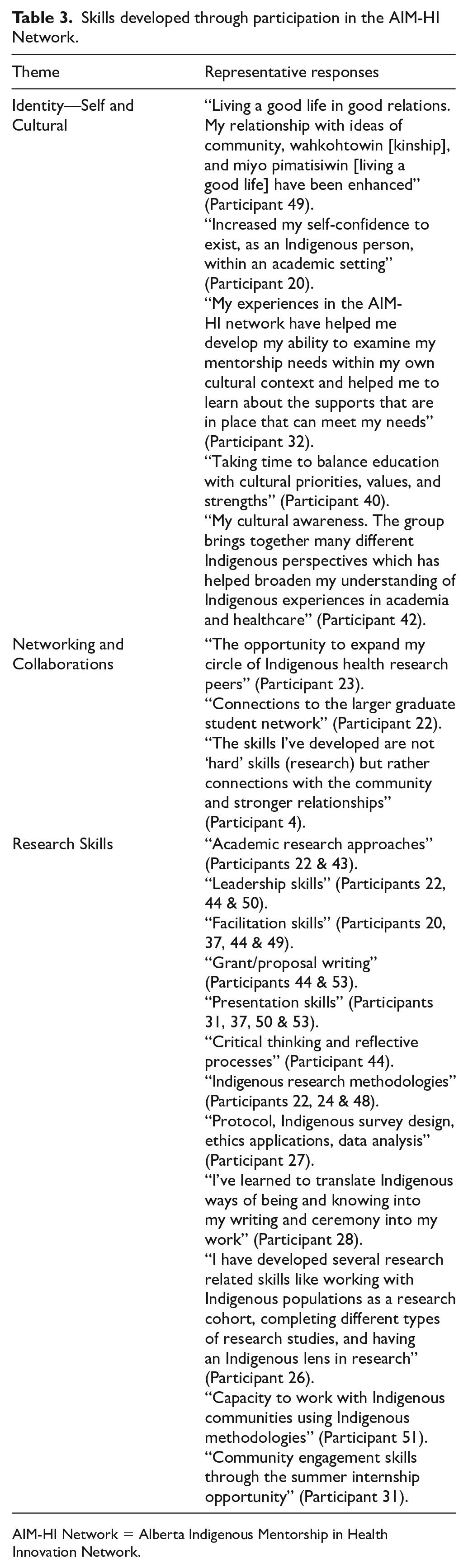
AIM-HI Network = Alberta Indigenous Mentorship in Health Innovation Network.
Annual survey—mentorship and learning experience
The AIM-HI Network sought an overall perception of mentees’ satisfaction with the AIM-HI Network. The proportion of respondents indicating they were very satisfied progressively increased with the maturity of the network, beginning at 25% in the first year of the survey, and reaching 71% by the final year. In each survey, the most frequently listed supports received from the AIM-HI Network included strengthening the mentee’s ability to achieve either education, research, or career goals; developing connections to Indigenous mentors; developing a connection to identity; and providing mentorship support not being received through their degree or programme of study. In general feedback, the following responses were provided: This program has been a highlight of my time as a graduate student. I’ll miss it when I graduate. (Participant 40) I literally love the work that AIMHI does, and how they do it. It is deeply personal and embeds so many Indigenous ways of doing into the processes. The Elders, knowledge keepers, and mentors are amazing. (Participant 28) I feel very fortunate to receive support from this network. At times I have struggled with the stigma of being Metis pursuing a career in medicine (the stigma being that Metis students are just “white” students who self-declare because it offers an advantage over the competition). My link to AIM-HI has been an important factor in helping me become more comfortable with my Indigenous identity. While I haven’t been the best at attending Connection Circle events through Zoom, the support and weekly newsletters have been important linkages that keep me connected with the Indigenous community at the university. (Participant 42) This network continues to make achieving my long-term career goals possible. The safe spaces that are created keep me grounded and focused! The endless support and friendship have impacted my life immensely. (Participant 45)
The mentees encouraged Network leaders to continue to offer connections to Indigenous ceremony and the community. Furthermore, they asked that they continue to advocate for the removal of barriers that impact their abilities to achieve their goals.
Annual survey—mentee psychosocial outcomes
Validated questionnaires examined mentee self-reported sense of social bonding, social support, psychosocial needs, self-esteem and resilience over time. Many proximal and distal factors affect psychosocial outcomes over the life course including personal, community and macro-level events such as the coronavirus-19 pandemic. Our goal in collecting data on these outcomes was to understand mentee psychosocial experiences in their programmes, rather than anticipate that participation in the Network would result in direct changes.
To assess social bonding, we examined sense of connectedness to a mentee’s academic institution and connectedness to the AIM-HI Network using adapted versions of the five-item School Connectedness Scale (Hendrickson Lohmeier & Lee, 2011). Response options ranged from “none of the time” to “all of the time” on a 4-point Likert-type type scale, with higher scores indicating a greater sense of social connectedness (range: 0–20). To assess social support, an eight-item version of the Multidimensional Perceived Social Support questionnaire was used (Zimet et al., 1988). Response options ranged from “none of the time” to “all of the time” on a 4-point Likert-type type scale (range: 0–32). Self-esteem was measured using the 10-item Rosenberg Scale (Rosenberg, 1965) rated along a Likert-type scale from “Strongly Agree” to “Strongly Disagree” (range: 0–30). Mentee mean scores and standard deviations across these constructs by year are reported in Table 4. Resilience was measured using the four-item Brief Resilient Coping Scale (Sinclair & Wallston, 2004) which assesses the mentee’s approach to coping with stress in an adaptive manner. A summary of this information is presented in Figure 2. Over the years, participants increasingly expressed strong agreement for identifying creative ways to alter difficult situations and find ways to replace losses encountered, while believing in their ability to control reactions to events and having a growth mindset.
Connectedness, social support and self-esteem.
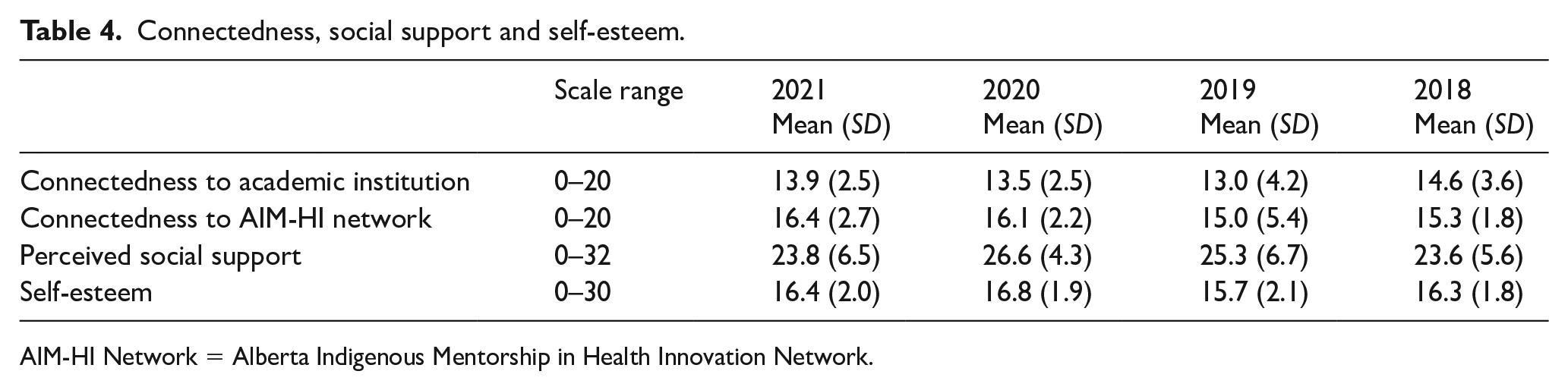
AIM-HI Network = Alberta Indigenous Mentorship in Health Innovation Network.
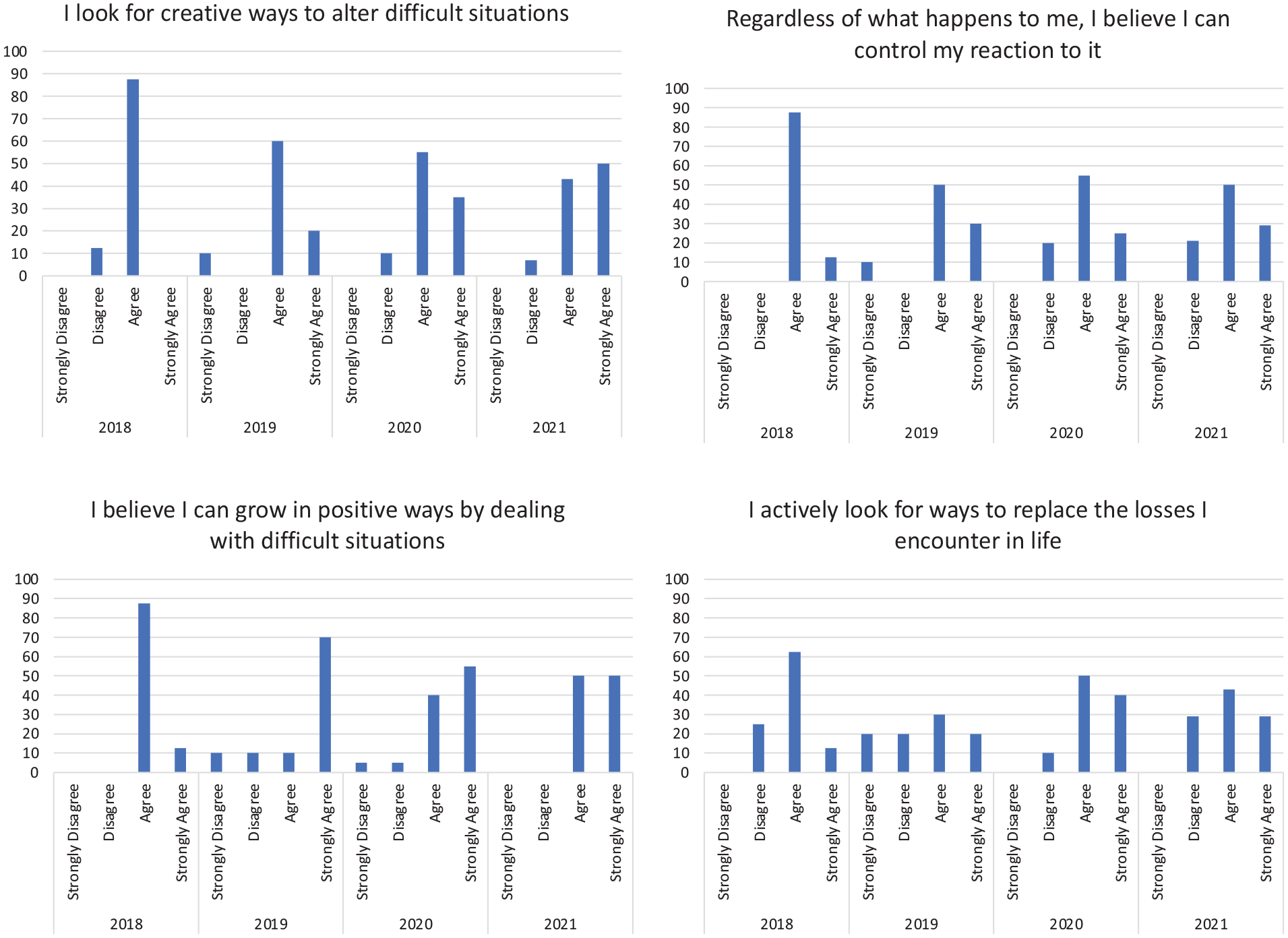
Brief resilient coping scale responses.
Annual survey—assessment of mentee needs
The annual survey additionally provided the opportunity to query the barriers mentees were encountering in their academic programme journey so that supports could be developed through the Network to promote mentee success. Across the survey years, the most cited mentee barriers were family commitments, the need to work while attending school, access to funding, anti-Indigenous university sentiment of feeling alienated at the university, and personal social stressors. The impact of the COVID-19 pandemic was listed as one of the top three barriers for the 2021 survey. Across the survey years, FNMI mentees indicated funding, access and connections to cultural and academic mentors, social gatherings and the development of stress coping skills were most needed as supports.
Engagement and reach
We used activity tracking to highlight participation in activities hosted by the Network, the reach of our weekly newsletters and annual reports, and social media engagement. In total, we had more than 600 followers on social media feeds, almost 300 individual email subscribers, and we distributed 202 weekly two-page newsletters highlighting mentee achievements, events and funding or employment opportunities. The Network also produced four annual reports.
Transition and sustainability
The IMNP mandate was completed in March 2022, with a ceremonial transfer of the responsibility for mentorship of FNMI scholars in health research to the Indigenous Primary Health Care and Policy Research (IPHCPR) Network, which holds the funding for the Alberta Network Environment for Indigenous Health Research (NEIHR) from CIHR. A final event week included the transfer ceremony conducted by all Elders who had supported the AIM-HI Network since its inception, a public webinar on building relationships to provide Indigenous traditional healing in western health systems, and a celebration Connection Circle attended by over 30 mentees to celebrate the achievements of the Network. Over the coming 15 years, FNMI students in health research are anticipated to be eligible for funding, supports and events from the IPHCPR Network.
Concluding reflections on hosting an Indigenous mentorship network programme
This sharing of our approach to mentorship of FNMI mentees has been in the spirit of humility and honesty. We strived to meet our deliverables and commitment to provide FNMI mentees the support they requested, including finding ways to create a sense of belonging for mentees enrolled at multiple institutions and in a variety of academic programmes. We sought to increase awareness of the opportunities in health research careers in the Indigenous community, and advocate for systemic change in academic institutions. Our own mentors, Elders and peers were critical in providing us the support, guidance and connections required to do this work.
The most critical component of the Network was to provide a variety of gathering opportunities for mentees to connect to peers and mentors. These gatherings were intentional in location and activities to support their wellness and reground them to their Indigenous identity. Events were purposeful in providing complementary but expanded knowledge gathering beyond what academic institutions provide. Student funding mechanisms and continuous advocacy for Indigenous learners were required for their inclusion in graduate studies.
Supplemental Material
sj-docx-1-aln-10.1177_11771801231178028 – Supplemental material for The Alberta Indigenous Mentorship in Health Innovation Network: approach, activities and reflections of an Indigenous mentorship network programme
Supplemental material, sj-docx-1-aln-10.1177_11771801231178028 for The Alberta Indigenous Mentorship in Health Innovation Network: approach, activities and reflections of an Indigenous mentorship network programme by Cheryl Barnabe, Rita Henderson, Adam Murry, Janelle Baker, Jennifer Leason, Cheryl Currie, Karlee Fellner, Robert Henry, Cora Voyageur, Lynden Crowshoe in AlterNative: An International Journal of Indigenous Peoples
Footnotes
Acknowledgements
We honour the lands of Treaty 7, 6 and 8, Canada, where the AIM-HI Network was hosted, which are also home to members of the Métis Nation of Alberta. We were blessed to have Grandmother Doreen Spence, Aunty Francine Dudoit Tagupa, Edmee Comstock, Evelyn Goodstriker, Florence Kelly, Roy Bear Chief, Randy Bottle and Lee Crowchild as our AIM-HI Network Elders. We are grateful for the guidance and mentorship of Indigenous academics, Indigenous learning institutions leadership, new investigators and students who served on the Community Advisory Council. We express gratitude to Dr. Andrea Kennedy who was instrumental in the AIM-HI Network application and then through the 5-year mandate, providing us with the Local to Global Field School opportunity and many hours of direct mentorship support.
Authors’ note
Declaration of conflicting interests
The authors declared no potential conflicts of interest with respect to the research, authorship, and publication of this article.
Funding
The authors disclosed receipt of the following financial support for the research, authorship, and publication of this article: The AIM-HI Network was funded by the Indigenous Mentorship Network Program of the Canadian Institutes of Health Research Institute of Indigenous Peoples Health. Other contributions were from the Vice-President Research, University of Calgary; the Faculty of Health Sciences at University of Lethbridge; the Population, Public and Indigenous Health Strategic Clinical Network™ of Alberta Health Services; the O’Brien Institute for Public Health. In-kind support was received from Mount Royal University, the Native Centre at UCalgary (now Writing Symbols Lodge) and the Faculty of Medicine and Dentistry at the University of Alberta. We also worked in partnership with the Undergraduate Medical Education Program at the Cumming School of Medicine, the Faculty of Nursing, the Faculty of Arts, SAGE (Supporting Aboriginal Graduate Enhancement) and ii’ taa’poh’to’p at the University of Calgary.

Glossary
ii’ taa’poh’to’p a place to rejuvenate and re-energize during a journey
miyo pimatisiwin living a good life
wahkohtowin kinship
Supplemental Material
Supplemental material for this article is available online.
References
Supplementary Material
Please find the following supplemental material available below.
For Open Access articles published under a Creative Commons License, all supplemental material carries the same license as the article it is associated with.
For non-Open Access articles published, all supplemental material carries a non-exclusive license, and permission requests for re-use of supplemental material or any part of supplemental material shall be sent directly to the copyright owner as specified in the copyright notice associated with the article.
