




Abstract
The article discusses the role of tutoring as a tool to support primary school pupils with social disadvantages, a student population often trapped in a vicious circle of structural inequalities that prevent them from succeeding educationally and personally. The text presents a qualitative study that focuses on the perception of social disadvantage through the professional preparation of pre-service teachers. We argue that tutoring is an effective inclusive support measure that can help cultivate teachers’ sensitivity to the social aspects of education. The study results show that the pedagogical practice of tutoring in families with social disadvantages influences pre-service teachers’ personal and professional development, helps alleviate social isolation and pupil failure, and prepares teachers for the challenges of diversity in a globalized world.
Inclusive education (IE) has become a major international trend in recent decades (Amor et al., 2019). There are several conceptualizations of inclusion (Messiou, 2017). Some of them focus on individuals with a specific disability and the associated special educational needs (SEN). Others emphasize groups at risk of exclusion (e.g., minority populations, refugees, (McIntyre & Hall, 2020). Several concepts perceive inclusion as a fundamental value of respect and community belonging, which naturally also applies to education. In this article, we focus on groups with social disadvantages (SD). The Roma people are one of the disadvantaged groups internationally. In March 2021, The Council of the European Union (2021) released new recommendations on Roma equality, inclusion and participation. Recently, tutoring has become a Czech nationwide post-COVID two-year strategy of support for pupils at risk (Ministry of Education Youth and Sports [MEYS], 2022). We present pre-service teachers’ (PST) tutoring as a way to develop pupils’ potential and as a measure to compensate for educational gaps through individualized assistance. Furthermore, the study shows the benefits of PSTs’ professional development and their increased awareness of educational inequalities.
Social disadvantage
SD is a term included in the Czech Education Act of 2004, and used for those with ‘(a) a family environment with low sociocultural status and a threat of socio-pathological phenomena, (b) ordered institutional care or imposed protective care (it is a legal term that relates to the institutional care of juvenile convicts), or (c) asylum seeker status’ (Act No. 561/2004 Coll., § 16, paragraphs 1–4). Later, the term SD was omitted from the legislative documents and the characteristics of these pupils were included under the wider umbrella term of SEN. Nevertheless, the term SD is still used (Seifert et al., 2019). The authors will also use it, although it is not widely used in the international context. Related concepts which can be used synonymously are social exclusion (Pierson, 2016), low socioeconomic status (SES; (Duncan et al., 2015), vulnerable learners (Drane et al., 2021) and the far more dated term ‘underclass’ (MacDonald, 1997).
Development through interactions and inequalities in education
Lev Vygotsky is one of many authors who have emphasized the role of the social and cultural context in human development. In his view, ‘all the higher functions originate as actual relations between human individuals’ (Vygotsky, 1978, p. 57). A long series of developmental events transform interpersonal interactions into intrapersonal cognitive functions. Thus, the learning of a child never begins in school. Pre-school experiences are an essential predecessor. Vygotsky (2003) argues that maturation and learning are interdependent and that development is an outcome of their interaction. The learning potential is in relation to the level of development, and learning occurs within the zone of potential development. However, in a class with 25 children, it may not be easy to adapt the instructions to the needs of individual learners with different pre-school experiences and zones of potential development.
Many research studies have confirmed the relationship between SES and school results/educational attainment, but it would be questionable to claim that this is a simple causal relationship (Duncan et al., 2015; Veselý, 2012). Poverty influences school performance, but likely less than some older studies have shown. At the same time, the conditions within low-income households are more important than the factor of low income itself. Conditions that adversely affect the child’s educational path are an unsupportive environment, inadequate facilities for learning, not valuing education within the family, the inability of parents to help with home preparation (e.g., families whose first language is not that of the school instruction) and social, emotional or psychological neglect.
The entire issue is complexified by a society-wide discourse that promotes the values of meritocracy. These are based on presumed equal access to success, which is described as the result of the social actor’s natural abilities, skills and diligence (Batruch et al., 2019). This discourse is also present in education (Pansu et al., 2008), and Czech schools are no exception (Czech School Inspectorate [CSI], 2015). In the discourse of meritocracy, the relationship between SES and school performance is considered legitimate, and other social and institutional phenomena are overlooked. Bourdieu and Passeron (1990) argue that the prevailing social discourses are arbitrary and reflect the ruling class’s ideas. These discourses also implicitly or explicitly legitimize the government of the ruling class and thus reproduce the existing social structures. The environment in which middle-class children grow up adapts them to social norms, forms of cognition and behaviours that later fit well with the educational context. Thus, already at the beginning of schooling, these pupils have an advantage over lower-class children (Manstead, 2018). When educational institutions passively neglect students with different SES, these students often experience lower efficacy and lower expectations (Browman & Destin, 2016). This cultural mismatch is one of the significant variables associated with the social class achievement gap (Stephens et al., 2012). The emphasis on meritocratic discourses further widens the prevailing achievement gap between pupils from disadvantaged environments and other children (Darnon et al., 2018).
Performance, aspirations and confidence in one’s abilities are also influenced by in-group identity (Easterbrook et al., 2019). Pupils with SD are exposed to certain risks associated with their parents’ often substandard educational attainment. The lower the level of education attained by the child’s mother, the higher the probability that the pupil will prematurely drop out of the educational process (Ministry of Education and Vocational Training, 2019). Similarly, there are also higher dropout rates among the students at risk of social exclusion. The negative influence of in-group identity is associated with a history of underperformance, a lack of role models, negative stereotypes, low cultural capital or low perceived value of education (Easterbrook et al., 2019). These elements can lead to the student’s self-perception that they do not belong in education (identity incompatibility) and thus can affect a child’s expectations and performance.
In addition, students with SD can potentially be discriminated against in the evaluation processes, which again often follow discourses of meritocracy. Students’ preconceptions about themselves may have adverse effects through the phenomenon called stereotype threat (Croizet & Millet, 2012). Further, evaluators may evaluate more strictly the work of someone who they believe is a low-SES student (Batruch et al., 2019).
A related topic is the diversity of educational institutions attended by students from different SES populations. In the Czech Republic, the Roma are disproportionately represented in socially excluded localities (Office of the Government of the Czech Republic, 2018). The education of Roma children generally takes place in a highly segregated environment (Miklušáková et al., 2018). It seems that the quality of teaching in these schools is not significantly inferior (CSI, 2015). Still, behavioural disorders, unsupportive family environment and more frequent absences affect graduates’ success. In the environment of segregated schools, these pupils may experience potentially less cultural mismatch. However, due to these differences in conditions and social norms, the transition to higher educational institutions is significantly impeded or even precluded altogether for many Roma students.
These factors suggest that differences in school performance cannot be attributed solely to different abilities and lack of effort (Machin & Vignoles, 2004). The discourse of meritocracy emphasizes the role of ability and diligence, while it understates or even ignores inferior conditions and related social phenomena, which potentially contribute to the inequality (Batruch et al., 2019). Despite pronouncements of ‘equal opportunity for all’, inequalities do persist. Even with the best efforts of all involved, education may be not only a place for learning within the zone of potential development but also a ‘tool for reproducing poverty and inequality’ (Beach, 2017; Prokop et al., 2020, p. 2).
Online/distance education during the COVID pandemic
For many institutions, the COVID-19 pandemic necessitated the transition to what has been called ‘emergency remote teaching’ (Hodges et al., 2020, p. 4). The availability of technology, technological competence, suitable spaces for study outside schools and the overall family situation became even more critical for education during the COVID-19 pandemic (Ahmadon et al., 2020). Not surprisingly, the need for a rapid transition to distance learning also led to an increase in inequalities in education (Chandra et al., 2020; CSI, 2021). One of the reasons is the digital divide in terms of the availability of technology and digital competencies (Drane et al., 2021). Furthermore, the general home environment and overcrowding households have also been associated with various challenges to education (Rice, 2006). The importance of the availability of space for undisturbed studying is even more significant when all education take place at home, often with more than one learner in the household (Brown et al., 2020). Unfortunately, system support for children who did not already possess good conditions for online education at home was not promptly put into practice in the Czech Republic. This widened the already existent gap of structural inequalities in education and, once again, clearly confirmed the vital role of family background in the educational process.
In distance learning, parents become an even more important actor in education, substituting for missed developmental social interactions. However, they may encounter limits of their abilities and resources (Brown et al., 2020; Koskela et al., 2020). A parent may perceive education as essential but lack the time, financial resources, abilities or other means to support the children. Another risk increased during the COVID-19 pandemic is the students’ disengagement (Brown et al., 2020; Drane et al., 2021). Children with SD generally have a more negative relationship with education (CSI, 2015), and the loss of direct contact with school personnel and facilities may deepen this disengagement. The domestic environment of some children is significantly affected by scarcity, violence and substance abuse, and the school may serve as a primary safe environment (Burke & Dempsey, 2020). Due to these and other factors, it is quite understandable that the lack of contact with the school environment in such cases can impact the overall well-being of these children.
Tutoring as a measure for supporting pupils
Tutoring is teaching in a one-to-one or small-group setting. With a long-standing tradition, it has been recognized as a highly effective method (Hoffman et al., 2019). Nevertheless, over the years, tutoring has come to be seen as a type of intervention for pupils that are somehow behind. Mentoring is a related term that also describes a ‘one-on-one relationship between an experienced and less experienced person for the purpose of learning or developing specific competencies’ (Crisp & Cruz, 2009, p. 527). Tutors can provide information, interactions adapted to the person’s zone of potential development, encouragement, role models and other social capital in the form of contacts, which can provide additional resources (McLoyd et al., 2015). An enhanced relationship with a teacher has the potential to have a positive impact on school results. Further, extracurricular activities and other programmes also positively affect self-efficacy, emotional regulation, work habits, school relationships and the prevalence of problem behaviour (Vandell et al., 2015).
Opportunities for one-on-one teaching interactions vary among different SES (Erickson et al., 2009). Children from environments with fewer resources tend to have fewer mentoring opportunities, which holds especially true for those tutors who are financially compensated (shadow education). At the same time, the more formally educated the tutor, the higher the costs associated with the tutor’s work (Ristić Dedić & Jokić, 2013). Thus, if children from socio-economically weaker backgrounds fail to obtain free tutoring, they are disadvantaged also in their ability to get the tutor. These children also tend to benefit more from mentoring (Erickson et al., 2009).
Despite these findings, tutoring sessions provided free of charge by teachers during their regular working hours were not commonly available in primary schools in the Czech Republic (Šťastný, 2016). Impacts of COVID on Czech education, however, led to the nationwide implementations of the national tutoring plan in autumn 2021 (MEYS, 2022). The plan institutionalized, and offered financial support for, tutoring for pupils at risk of school failure. Besides school and teacher involvement, the programme supported cooperation with universities (students were encouraged to participate as tutors) and non-profit organizations (which were in contact with pupils at risk). The programme ran until spring 2023.
Tutoring as a pre-service teacher practice
Professional practice is a crucial part of PSTs’ training (Mayer et al., 2017). In addition to direct experience with the educational environment, an apprenticeship can develop future teachers’ skills, self-efficacy and attitudes (Lancaster & Bain, 2010; Sharma et al., 2023). Even the experience of contact with a pupil with SEN can be associated with the educator’s higher self-efficacy (Peebles & Mendaglio, 2014). Moreover, an essential aspect of teacher education is understanding the social and cultural contexts of education and applying this understanding in one’s pedagogical practice (Mayer et al., 2017).
There is a growing recognition that the process of one-on-one teaching has benefits for both sides (Templeton et al., 2023). Tutoring elementary children is part of many teacher preparation programmes and there is strong evidence of the benefits of tutoring for PSTs (Cid Sabucedo et al., 2011; Hoffman et al., 2019). It offers an opportunity to train pedagogical abilities, develop relationships with children and their families and individualize instructions to the needs of specific children.
Methodology of the study
This research uses a qualitative methodology and attempts to describe and analyse the phenomenon of tutoring both as part of the professional training of PSTs and as a support for pupils with SD. The primary research questions are as follows:
What are the characteristics of social disadvantage perceived through the tutoring practice?
What benefits do pre-service teachers perceive in tutoring for themselves and their pupils?
We also address secondary research questions:
What barriers do the actors in the tutoring process face?
Through an examination of these aspects, we want to investigate whether tutoring can act as an inclusive intervention addressing SD.
Tutoring programme
The tutoring programme for pupils with SD related to this study was first implemented via grants and projects carried out by one of the largest Czech universities. In 2002, an optional course was instituted, and since 2016, tutoring practice with these pupils has become a part of the professional training. Second-year PSTs can choose either tutoring or an internship in a school. Around 400 PSTs take part in tutoring each semester. The tutoring organizers have a long-standing cooperation with state organizations (the institution for the social and legal protection of children), non-profit organizations working with the SD population and schools. These organizations identify candidates for tutoring.
Students can choose a student from a long list of candidates and contact the pupil’s family. The list has basic information about the student (e.g., age, grade and subjects to be tutored). Most of the pupils are interested in tutoring mathematics, Czech and English. For many pupils, tutoring develops general study habits that can also be applied to other subjects. A significant majority of pupils are pupils of primary (years 1 to 5) and lower secondary education (years 6 to 9) aged 6–15 years. Occasionally, high school students are also interested in tutoring (e.g., in preparation for a selection procedure). Pupils in this tutoring programme are primarily children from Roma communities and, in some cases, children of migrants. In the cases of some families, it has been a long-term and reliable collaboration. In other cases, it was impossible to continue tutoring due to family circumstances and external variables (as described below in the results). In such instances, PSTs needed to contact another family. The tutoring is free and takes place at home, school or a non-profit institution (e.g., a low-threshold club).
In tutoring, PSTs are expected to complete 26 hours of direct work with the student per semester and an additional approximately 26 hours of tutoring preparation. They have the opportunity to participate in group supervision with an external psychologist. They can also request individual consultations. PSTs are expected to write a reflective diary (RD) which is submitted at the end of the semester. The purpose of the RDs is to gather comprehensive data about the tutoring (pupil, place, communication, relationship with the family and other institutions), potential barriers and benefits for PSTs’ professional development (e.g., How did the tutoring go? What methods have you found un/successful in working with your pupil? How did the experience help you in your professional preparation as a teacher?). PSTs can also enrol in an additional course of self-experience preparation for tutoring. This course has space to discuss experiences from the tutoring sessions in groups and under professional guidance.
The practicum is set up as a two-semester experience, and PSTs are asked to work with one student for the entire year. However, they also have the option to change pupils if necessary or to enrol in tutoring for one semester only.
Tutors
We used multidimensional data within the framework of situation analysis (SA; Clarke, 2003, 2005; Clarke et al., 2015, 2018). The data were collected using various information sources during the years 2016–21, primarily a collection of written reflective diaries (RD) of PSTs. All these PSTs, 1,489 total, were second-year students (age 20–26) and had direct experience of tutoring children with SD.
In addition to RD, with 15 of these PSTs (seven males, M, eight females, F, ages 20–23), we also assembled four in-depth focus groups (FG; three FG were with four participants, one with three participants). PSTs tutoring in 2020/2021 received an email about the opportunity to participate in the FG in exchange for two hours for their tutoring report sheet. PSTs who voluntarily responded to the offer participated in the FGs. The FGs were conducted in February 2021. Due to COVID-related restrictions, the FQs were held online. The purpose of the FGs was to gain a deeper understanding of the PSTs’ experiences with tutoring and SD.
Other data sources
Throughout the years, we conducted 35 semi-structured interviews with representatives from cooperating organizations (23), representatives of schools (10) and other stakeholders (2). The information from these interviews was used mainly to gain a broad insight into the situation and tutoring (applied mainly in the Figure 1 ordered situational map). Some of the topics of FGs were inspired by the understanding gained from these interviews. All participants (including PSTs) were informed and agreed that their data would be anonymously used in the study. The analysis will focus primarily on the PSTs’ view.
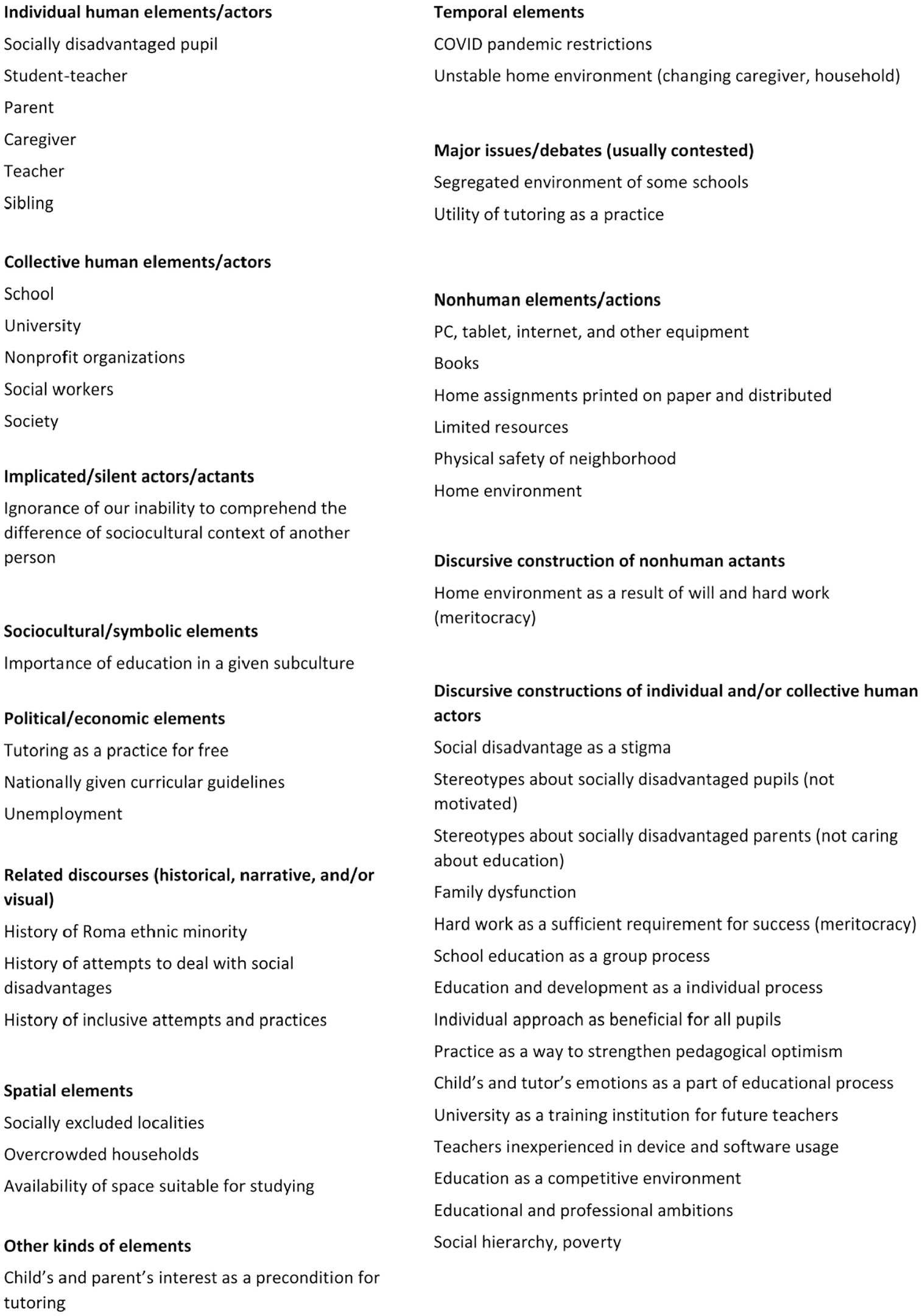
Ordered situational map.
Researchers
All four authors share a long-term interest in the topics related to SD. None of them are members of an ethnic minority. However, they all collaborate on projects and are in contact with people from socially disadvantaged environments. Two of the authors are members of the tutoring administrative team. These two authors conducted interviews with respondents from institutions. FGs were conducted by one member of the tutoring administrative team and one non-member. Most of the data analysis was carried out by the author with no direct relation to the tutoring programme.
Data analysis
SA represents a theoretical-methodological approach rooted in situational epistemology, symbolic interactionism, social constructivism and grounded theory (Clarke, 2003, 2005; Clarke et al., 2018, 2022). The theoretical background of SA can be described as a reaction to the postmodern turn in science. SA follows the principles of grounded theory, but it does not follow the positivist-oriented rigidity of the original concept of grounded theory. The key differences lie in the initial coding phase, note creation and in the way the conditions of actions and situational contexts are viewed. SA attempts to capture the context as part of the situation under investigation. It does not focus on the external conditions of action but the inherent elements in the situation. The main methodological shift can be seen in the focus on the reflexivity of the research process (the researcher is part of the research) and in the interest in complex elements and discourses. Unlike other approaches, SA does not neglect the influence of culture on the social identities present in the situation (Clarke et al., 2022; Kalenda, 2016). This qualitative method of data analysis allowed us to carry out a comprehensive examination of situations involving children with SD, from the perspective of PSTs who are being trained to work in their future pedagogical practice within the diversity of the school environment.
Results
During the research process, we repeatedly worked with the cartographic tools used within the SA. One of the reasons for using them is to access the data deeply and from new perspectives (Clarke, 2005). Following is an ordered situational map (Figure 1) representing all human and nonhuman elements identified as important in the situation (Clarke, 2003). Some of these elements are sensitizing concepts that are elaborated further.
Perception of social disadvantage through the pre-service teachers’ practice experiences
From the PSTs’ point of view, SD is associated with several factors. First of all, the low level of education of parents is apparent. While parents often claim to be interested in the child’s results and well-being at school, their skills and knowledge are in some cases insufficient to help their child meet education demands. ‘I tutored a ninth-grader, and his grandfather came to me and told me that he wanted him to study at high school but that he (the grandfather) can’t help him (the pupil)’ (FG1/10:51/M1). Poverty is also often evident in families with SD. Tutoring generally takes place in one room (usually the kitchen). At the same time, visitors come and go, the mother is cooking, and there is often smoking and loud talking. These distractions create a situation in which the children do not have adequate conditions for home preparation or study, including no regular place where they can concentrate on their schoolwork without interruption.
They also had a second room, but there was no heating. We had no privacy, and other children were there. I tutored two second-year pupils and one third-year. The second-years had no basic skills, couldn’t read and were problematic. But the third-year was a really bright kid… I went in person because they didn’t have internet. I saw that everything was working against the tutoring process. They didn’t have gas for heating, and they didn’t even know if they were (eventually) going to a children’s home. (FG1/6:07/M2)
In their experience with tutoring directly in family residences, the PSTs could sometimes see the problematic relationships among individual family members. There was little support for the child from the family in many cases, often due to the various social pathologies affecting these families. The PSTs indicated that they could not understand the parents’ lack of interest in their children’s education.
The father established his authority by raising his voice and said he would straighten out the children. After the tutoring had begun, I wanted to return to the family and continue, but the father sent me an SMS saying that the children were no longer in the family. (FG1/18:35/M2)
The PSTs further stated that they perceived prejudices, including low expectations of some of these students, often from the family members and the school. These attitudes were evident also during the pandemic, when many schools were not providing sufficient study support for students, either online or through the distribution of quality study materials. Further, at the beginning of their practice, many PSTs struggled with their own preconceptions regarding the situation of families of children with SD. However, they felt mostly welcomed in the end. ‘The mother was very nice, offering me drinks and food, and the girl was also very grateful’ (FG1/17:48/F1).
The benefits (and potential barriers) for pre-service teachers
The PSTs declared that tutoring had altered their preconceptions regarding families with SD. ‘S. changed my view of children from socially disadvantaged backgrounds’ (FG1/17:48/M1). Interns repeatedly indicated that they initially had some concerns about certain features of and stereotypes about these families. These, however, proved to be largely unjustified, and they generally assessed the practice as beneficial.
At first, I had some concerns, but in the end I am actually quite satisfied. Being in their home, spending more time and communicating with them — all this helped me, not only to get to know the pupils better but also their culture. It is definitely beneficial for me because there are a lot of Roma children in our schools. (RD2/F29/P. 62: 3681)
Individual work with a pupil
The PSTs worked mostly with a pupil individually. This aspect of the practice also raised a criticism: that it does not prepare for working with a group of pupils in the classroom. On the other hand, many considered working individually with a learner a beneficial experience and essential competence of a pedagogical worker. Individual work makes it possible to perceive pupils’ reactions and thus provide valuable feedback. The individualized instructions emerged in the analysis as an important factor in IE.
I see the main benefit to be the possibility of trying to explain the subject to the pupil. By working with only one pupil, I was able to see very well how he is responding to my explanation, whether everything is clear to him or whether something needs to be explained in another way. I find this kind of immediate feedback very beneficial. (RD2/F24/P. 52: 811)
The interns realized that pupils come into the classroom at varying developmental, achievement and socioeconomic levels. Therefore, an individualized education is necessary for many learners. Tutoring helped PSTs to get a clearer idea of the environment in which many children live and enhanced their realization of how necessary it is to take this into account in their educational practice. Evident was also the recognition that even competent pupils may need individual attention and tutoring, for example, because not enough attention and time is devoted to them at school or at home.
I realized that tutoring requires strong nerves and an understanding that, just because a child is in fifth grade, it does not necessarily mean that her skills are at this ‘level’. I had to adapt my teaching a lot for K. She is capable and teachable, but it seems to me that a good foundation has not been laid for her in her previous schooling. (RD2/F26/P. 56: 736) I have definitely changed my view; I now think that tutoring is needed for all pupils who have had a problem with evaluations. I have found that the grades themselves are not an adequate measure of the pupil’s knowledge. . . I think that all parents who cannot manage to devote themselves to their children should consider tutoring, so the pupils will develop better study habits. (RD2/F48/P. 98: 1527)
Tutoring strengthens educational optimism
Many PSTs indicated a significant degree of educational optimism and interest in the pupils they had tutored. Despite the difficult living conditions in which many of the pupils grow up, the analysis showed that with the help of their tutor, they were able to further develop their potential.
I see the situation of those families. I can’t count on everyone having everything at home. I could see all the disadvantages. It changed my perspective a lot. It showed me that the kids could really do it — they can learn everything. Those children can handle it. (FG2/92:10/F2)
Many of the interns were interested in supporting pupils in need and recognized actions that would facilitate the children’s development. The experience of tutoring led PSTs to consider their own future professional practice in terms of the meaningfulness of the teaching profession. ‘It is important that all pupils have their own vision, their own ideas about their possibilities and about their own lives’ (FG/10:10/F2). Many PSTs began to appreciate more fully their responsibility as educators to advise and motivate their pupils, to help them develop a sense of their own agency and, thus, help to fulfil the pupils’ potential.
Professional skills development
It is not always easy to approach each student individually. Thanks to the experience of tutoring, the PSTs perceived a clear development of their teaching abilities in this regard.
Although I at first felt a little overwhelmed by the different approach I now had to take to tutoring, compared to working with children who are not socially disadvantaged, I quickly learned to cope with the more difficult situations that occurred during the tutoring sessions. And even though the situations have not always been pleasant, I think they have influenced me a lot in terms of how I should communicate with children if they do not feel at their best (or if their health does not allow them to concentrate fully, they feel frustrated, etc.). (RD1/F2/P. 4: 890)
The PSTs indicated that tutoring helped them realize the importance of building a personal relationship of trust with the student. Some pupils make otherwise avoidable mistakes when they are forced to concentrate for a long time. Therefore, it is important to have knowledge of the individual characteristics of the pupil and to adjust the pace of the work and periodically change activities. Alternating activities, choosing different forms of learning and coming up with inventive and appealing ways of engagement are also crucial for learners’ motivation. In considering motivational strategies, the teacher trainees were made aware of the individuality of the child.
Teaching A. was a challenge for me at first, but we were able to sit down together, and I now know how to explain things to him, how to do exercises and what is a reward/punishment for him. The biggest problem was probably that I didn’t realize that he wouldn’t see it as a reward to read aloud a chapter in a book. (RD2/F13/P. 31: 836)
Patience was a frequently mentioned matter. The PSTs stated that they were repeatedly reminded of the importance of patience, both in their work generally and in the individual educational situations. ‘In addition, I have found that I can be much more patient with children than I previously thought, which is essential for this job’ (RD2/M28/P. 59: 799). PSTs also repeatedly indicated that tutoring was an opportunity to develop the ability to communicate with both parents and children. Communication with the child is essential in interpreting situations, providing instructions, explaining requirements, resolving (potentially) problematic situations and motivating the child. Communication in the teacher’s work is also potentially a source of stress, and the practice has helped to overcome related anxiety. According to the PSTs, tutoring also developed their ability to organize, prepare and structure their teaching plans and short- and long-term scheduling. They gained experience with time management both inside and outside the educational environment.
Tutoring also provided useful inspiration for their career path. Working with different age groups has enabled some interns to clarify which target group they would like to work with in the future. They appreciated that this experience allowed them to meet and work with pupils with SD. Their experience with tutoring led some of the teacher trainees to consider other career tracks.
I’m toying with the idea of not continuing with my master’s studies and instead trying to work as a teaching assistant who works with children individually. I would like to try being a teaching assistant because I became quite interested in individual teaching. (FG1/31:18/F1)
Figure 2 represents some of the aspects encountered by the PSTs. We consider the benefits to be related to the first-hand experience with tutoring and the given sociocultural context.
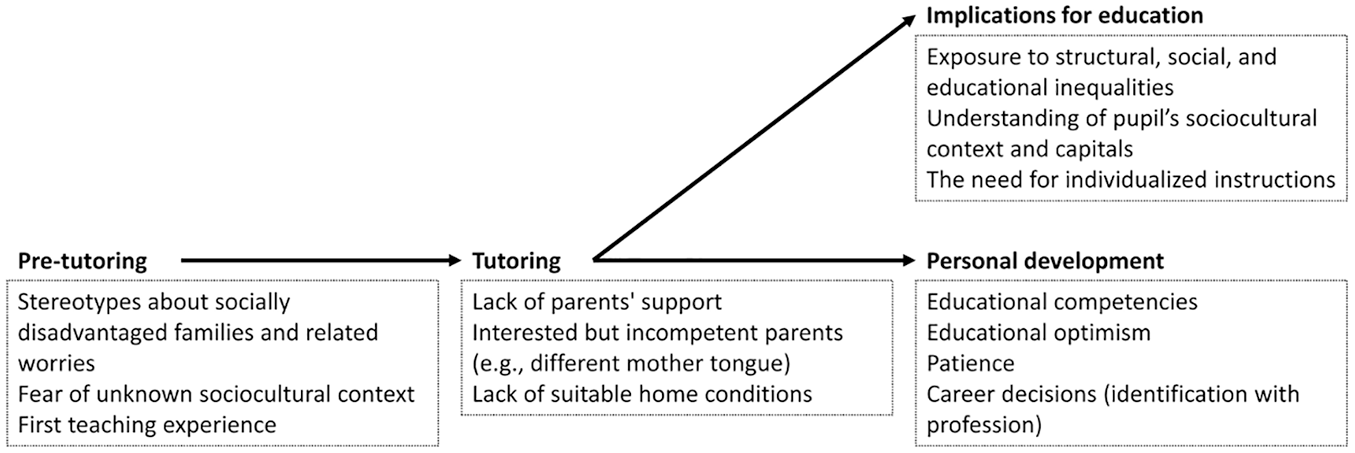
Pre-service teachers’ perceptions of social inequalities from tutoring experiences and implications for their professional and personal development.
Pre-service teachers’ perceptions of benefits (and potential barriers) for pupils
When the university tutoring programme began, the emphasis was primarily on the support for the learners. Through the tutoring initiative, hundreds of pupils with SD have had the opportunity to engage with PSTs. The benefits for the pupils were clear fairly quickly, but only as the programme continued was the importance for the PSTs themselves more widely discussed.
Many of the tutoring relationships between the pupils and PSTs were associated with specific educational achievements. ‘In the end, I gave him a really difficult task, and he handled it extremely well. I really had to praise him, even in front of the social worker. It was clear that he really enjoyed the fact that someone would praise him’ (FG1/35:31/M1). These positive feedback loops are also motivating for the PSTs. ‘Tutoring has always given me motivation to become a teacher because I have seen that, after each lesson, the pupil remembers something, and the pupil’s results at school have improved’ (RD2/F48/P. 97: 1267).
The teacher trainees often expressed that, in addition to the specific educational tasks, they could talk with the children about other topics related to education. ‘They were so enthusiastic and surprised when we discussed that it was possible to do that kind of job and what is required for it’ (FG1/38:21/M2). Through tutoring, the interns were often able to listen to and support the expectations and future ambitions of their pupils, as well as steering them in directions they may not have considered. ‘A nine-year-old told me she wanted to be a doctor, but first she would become a nurse. I told her she could also go to a grammar school or be a teacher’ (FG2/41:10/F1).
A necessary precondition for tutoring is to have at least some level of parental interest and communication skills. Without that, effective tutoring simply cannot take place. Maintaining the child’s interest is in some cases related to the parental support, since it may be very difficult to deal with a child’s lack of interest if the child sees a model of indifference in its parent’s behaviour.
The family of my first pupil did not answer the phone for a long time and did not reply to messages. When I finally reached the caretaker, she did not know about the tutoring. She wasn’t even at home during our first agreed-upon tutoring session, the children didn’t know anything about it, and the whole thing was very confusing. The children did not even show any interest in tutoring; they were playing on their mobile phones. Another contact attempt was unsuccessful. (RD2/F80/P. 162: 2110)
Understandably, situations like these can potentially be frustrating for PSTs. ‘The biggest problem was the child’s lack of interest, so I alternated between playing and learning in order to keep at least a bit of his attention, so he wouldn’t get completely annoyed with the tasks’ (RD2/F74/P. 150: 2431). As mentioned above, pupils with SD often lack a suitable quiet place to learn. In such cases, even when both the family and the pupil are interested, the tutoring process can be disrupted. In some instances, tutoring in cooperation with social workers took place in the facilities of non-profit organizations or schools. Another aspect that can disrupt tutoring is other responsibilities of pupils, which may limit the time they can devote to education and tutoring. Figure 3 represents the relationship between the tutoring, the home environment and some other aspects of the circumstances of pupils with SD.
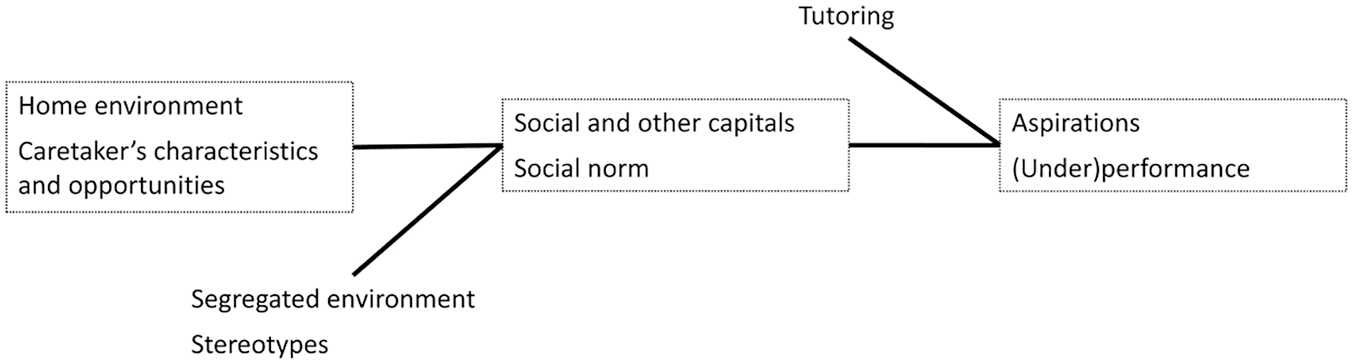
Some aspects of the experience of pupils with social disadvantages in relations to each other.
Concluding discussion
In (1966) Coleman et al. claimed that differences in students’ performance are mostly a product of differences in family background. This finding was later widely discussed, and many studies tried to clarify the role of SES and other factors (Duncan et al., 2015). Even if we do not claim it to be a simple causal relationship, we cannot ignore the cultural and socio-economic background of the pupils. The influence of these aspects was evident in our study and highlighted by the recent COVID restrictions. This study reports PSTs’ insights gained through tutoring for children from socially disadvantaged backgrounds.
Individual interactions with pupils and parents, often in their homes, allowed PSTs to perceive the environment in which some children grow up. They noticed that the situation of some children is influenced by low parental educational attainment, poverty, lack of adequate places to study and parents’ and teachers’ low expectations. A deep understanding of the social and cultural context is an important prerequisite for teaching in classrooms with diverse students (Mayer et al., 2017). We believe that tutoring practice is one of the ways in which such understanding can be developed.
Furthermore, tutoring was an opportunity to work with pupils individually. PSTs reported that one-on-one interactions provided instant feedback about the pupil’s development and thus allowed them to adapt teaching to the individual’s needs. Such differentiation is one of the essential aspects of IE (Tomlinson, 2017). PSTs could observe the interindividual differences in the developed potential. They recognized that development is also influenced by interactions with parents and teachers (as also emphasized by (Vygotsky, 1978) and that not all children are exposed to optimal stimuli. Such a realization strengthened PSTs’ beliefs about the potential of a child’s development. Moreover, the one-on-one teaching interactions developed PSTs’ pedagogical competencies, such as lesson planning, instructional abilities, motivation management, patience and communication. These findings are consistent with other studies showing the benefits of tutoring practice for PSTs (Boote, 2014; Cid Sabucedo et al., 2011; Hoffman et al., 2019).
PSTs recognized that the prerequisite of tutoring is communication and collaboration with parents. If tutoring occurred, they could perceive the improvement in the child’s educational achievements. In this tutoring programme, multiple features of effective tutoring recognized by other researchers were present (McDaniel & Yarbrough, 2016; Wasik, 1998): tutors received training, the tutoring lasts at least a whole semester, and the evaluation is part of the programme. Scholars recognize that one-to-one tutoring may be a very effective form of teaching (Chi et al., 2001; Cohen et al., 1982; Hoffman et al., 2019). Thus, even though we have not collected any data about children’s actual performance, we may presume that the PSTs’ perceptions about pupils’ improvement are at least partly justified. We believe that the support gained through the tutoring programme is a potential inclusive measure addressing SD.
Moreover, we believe that the PSTs’ experiences have additional potential for long-lasting effects on the inequalities in education. Intergroup contact can potentially reduce intergroup prejudice (Pettigrew & Tropp, 2006). In this tutoring programme, PSTs collaborate on the common goal with outgroup members with the support of the authorities (university and school). PSTs reported that their view of children with SD has changed. They had an opportunity to observe that the potential of many children is not fully developed, that the conditions of some children are not optimal and that the starting positions are not equal. We believe that such insights may not just change the attitudes of these PSTs but also raise critical consciousness and relativize the harmful meritocratic discourse (Batruch et al., 2019; Styslinger et al., 2019), and thus influence PSTs’ future teaching. Through the one-on-one interactions, the PSTs also developed their abilities to adapt the instructions to the specific needs of individual pupils with SD. We are aware that this argumentation is an extrapolation of our data. Šíp et al. (2022) reported that there are schools in the Czech Republic where diversity is the norm and where the pedagogical practice strives to maximize the potential of all these different pupils through communication and differentiated instruction. They further argue that pupils’ experiences may further influence their future attitudes towards diversity in society in general. We see possibilities for similar processes also in PSTs. Experiences of tutoring children with SD may affect not just PSTs’ attitudes but also their perception of social norms, their self-efficacy and thus also their future behavioural intentions.
Thus, we argue that the need for tutoring is not limited to the urgent post-COVID situation. We see tutoring as one way to implement the Council recommendations on Roma equality, inclusion and participation (The Council of the European Union, 2021). If we want to succeed in IE, we must discuss SD rather than expel it from educational discourses. Only then can we begin to search for mechanisms to alleviate inequality. The insights from those who have interacted with people with SD — like our respondents — can help us move towards this goal. Direct contact with pupils with SD is an important professional, social and even personal experience for the PSTs, which may help break down the symbolic (and sometimes literal) boundaries of exclusion that accompany disadvantage. We hope that current tutoring initiatives will start a wider systemic change that will both raise awareness of the situation of pupils with SD and, in the long run, make tutoring available for all pupils in need.