



Abstract
Young adults’ life choices and patterns of their permanence in the parental house are extraordinarily heterogeneous across European countries. What is the role of the welfare state in accounting for such diversity and how has it changed over time? This article addresses these questions by relying on regression models covering 31 European countries over the period 2005–2022. Deploying age-sensitive welfare effort measures, the study provides fresh empirical evidence about the ‘welfare matters’ hypothesis, confirming that even when controlling for a large set of economic, social, political and cultural variables, youth welfare effort remains a highly significant factor. Furthermore, our findings show that its role increased in the wake of crisis periods such as the Great Recession and the COVID-19 pandemic, producing additional divergence among countries. From a life-course perspective, these results suggest that targeted social spending may be an effective investment for promoting young people’s paths towards autonomy.
Keywords
Introduction
Leaving the parental home is one of the most significant steps in the transition from youth to adulthood. Despite a general trend towards postponement, common to most advanced societies, the patterns of leaving home have remained extraordinarily heterogeneous among European countries (Billari, 2004; Fernandez Cordón, 1997; van den Berg et al., 2021). In this regard, the literature has long highlighted a divide. On one side are Southern European countries—often described as ‘latest-late’ (Billari et al., 2002)—characterized by delayed patterns of leaving the parental home, union formation and transition to parenthood. On the other side are the Nordic countries, where the opposite pattern is observed. However, empirical evidence reveals considerable differences not only between and within these two clusters but also among Continental and Eastern European countries.
Even among older young adults aged 25–34, figures show that nearly one in three (30.3%) was living with their parents across the EU27. Yet, when examining a sample of 31 European countries (the EU27 plus Norway, Switzerland, Iceland and the UK), we find that while nine countries report rates over 45%, eight are below 15%, with the remaining countries in between, displaying significant heterogeneity. Moreover, as illustrated by the cross-country and longitudinal graphs in the Supplemental Material, disparities have not diminished over time. Instead, they have further widened over the past decade, particularly after the Great Recession. More broadly, this trend reflects a growing perception of an enduring crisis in which young people have emerged as one of the most socially vulnerable groups (European Foundation, 2021).
Since Kiernan’s (1986) pioneering study, these variations have been the topic of a rich scholarly debate, primarily centred on explaining the timing of home-leaving choices on the basis of a broad array of factors. In this respect, sociocultural roots and micro-level determinants of transitions have been carefully investigated, especially in demographic research. It has been shown, for instance, that employment status and income impact less on the decision to leave home by young people in the Nordic countries than for their Southern European peers, for whom co-residence often serves as a strategy to mitigate poverty, particularly among lower-income households (e.g., Micheli & Rosina, 2010). In addition, when cross-national disparities in home-leaving patterns have been analysed, a number of macro-level factors have emerged as pivotal drivers, exhibiting strong correlations with the timing of home-leaving or co-residence rates. These include labour-market institutions, levels of educational attainment, availability of rental accommodation and mortgages, cultural norms regarding family obligations and welfare arrangements (Billari, 2004; Chiuri & Del Boca, 2010; Iacovou, 2002; Lennartz et al., 2015; van den Berg et al., 2021).
Against this backdrop, the study aims to contribute to the literature by assessing the significance of a specific aspect in explaining cross-country differentials in transition patterns, namely welfare provisions, whose specific impact per se in supporting the transition to adulthood has been subject to little empirical examination so far (Guillen & Pavolini, 2012). Remarkably, although social policy is a factor included in most of the studies addressing cross-national variations in transition patterns, this stream of research conducts only a basic discussion of the role of welfare arrangements. Because interest has focused more on the explanatory potential of other factors, social spending data are often used as proxies for general welfare generosity and serve mainly as control variables. By adopting the opposite perspective, we address two main questions. First, if and to what extent welfare effort to support young people, that is, youth welfare provision, matters in explaining transition patterns, complementing an encompassing range of other relevant macro-level factors. Second, whether the role played by youth welfare provision has changed over time, especially in the wake of the multiple crises that have impacted European societies in the last two decades.
More specifically, the analysis covers 31 European countries over a long period (2005–2022), and it concentrates on the older youth age group (25–34), that is, those persons beyond the culturally accepted ‘age deadline’ for leaving the parental home (cf. Aassve et al., 2013). Our findings show that, even when controlling for a large set of economic, social, political and cultural variables, expected to be key factors in constraining young people’s choices, youth welfare effort remains significantly associated with their life choices: for each percentage point increase in spending relative to GDP, we observe almost 1 point decrease in the percentage of young people living in the original family. In addition, the analyses suggest that, over the full period, welfare protection has always been significant, but it increased its role in the wake of the crises, that is, during the Great Recession and especially during the COVID-19 pandemic.
The remainder of this article proceeds as follows. The second section provides a literature review that explains our theoretical background and helps us frame the research hypotheses. The third section presents the data set and the research strategy used to test our hypotheses. The fourth section illustrates the results. The fifth section discusses our main findings and concludes.
Theoretical Background
A large body of research has addressed the macro-level determinants of cross-national differences in transitions out of the parental home in advanced economies. Depending on the emphasis given respectively to sociocultural and structural factors (Bendit et al., 2009; Billari & Liefbroer, 2007), explanations range between two main approaches.
On the one hand, according to sociocultural accounts, the roots of cross-national differences in home leaving and patterns of co-residence of young adults with their parents are deeply rooted in social and cultural aspects. From this standpoint, several factors—including the prevalence of ‘weak’ or ‘strong’ family systems (Holdsworth, 2004; Leitner, 2003; Reher, 1998; Naldini, 2004), as well as differences in religiosity (Corijn & Klijzing, 2001; Iacovou, 2002; van den Berg et al., 2021) or the nature of family ties and traditional values (Iacovou, 2010)—systematically influence the timings and paths that young people follow towards autonomy and intergenerational cohabitation rates across European countries. Beliefs about the appropriateness of, for instance, age and sequencing (Aassve et al., 2013), as well as family obligations encouraging mutual support between kin and intergenerational solidarity, are significant factors framing young people’s choices (Luetzelberger, 2014; Moreno, 2012). In this regard, Iacovou (2002) and Seiffge-Krenke (2010) both showed that cultural factors, such as beliefs about family responsibility and proximity, are perceived to be more consequential than structural factors related to the housing market, education and labour-market institutions. Van de Velde (2008) stressed the cultural impact of familism behind late transitions in Spain, as compared to countries such as France, Denmark and the United Kingdom. Similarly, as regards religiosity, Iacovou (2002) found a positive correlation between Catholicism and late home-leaving patterns.
On the other hand, structural explanations prioritize the contextual and institutional conditions that shape young people’s transition to adulthood, such as labour-market dynamics, housing constraints and—to a lesser extent—political participation and welfare provisions. In this vein, Becker et al. (2005) revealed a link between co-residence and job insecurity, whereas Fogli (2004) argued that co-residing with parents serves as an optimal solution for young individuals facing unfavourable economic or employment circumstances. Findings about the impact of unemployment on home-leaving patterns are less clear-cut. While Lennartz et al. (2015) found no significant influence of changes in the unemployment rate, Chiuri and Del Boca (2010) demonstrated a negative correlation between unemployment and home leaving. With regard to housing, Mulder (2006) highlighted that the age at which people leave home varies also depending on the housing regime in which they live. Not surprisingly, in ‘difficult’ homeownership regimes, characterized by high rates of homeownership and limited mortgage availability, home departure occurs later.
As regards political participation by young people, despite growing interest in the topic (Kitanova, 2020), relatively little scholarly attention has been paid to differences in the levels and modes of such participation among countries and their linkage with macro-level factors and, more specifically, with patterns of transition to adulthood. Remarkably, Soler-i-Martí and Ferrer-Fons (2015) focused on the effect the other way round, considering how different youth transition regimes impact on the patterns of political participation by young people across Europe. Assuming that youth transition regimes play a crucial role in defining the position that young people as a group occupy in the system, hence shaping their practices, they found that positions of greater or lesser centrality in the social space are important factors in defining young people’s strategies of political participation. More specifically, societies where transition regimes grant young people positions of greater centrality tend to favour political participation (either institutional participation or protest), whereas in societies where transition regimes place young people in more peripheral positions, passivity is more dominant, although politically involvement is more likely to take the form of protest, combined with feelings of grievance.
Turning to welfare institutions, within the broader debate about the state–market–family nexus central to welfare regime theories (Esping-Andersen, 1990), the notion of de- familialization (cf. Zagel & Lohmann, 2021) has gained prominence, offering relevant insights into how countries shape intergenerational solidarity and the degree to which welfare provisions promote individual independence. Remarkably, Saraceno and Keck (2010) proposed a threefold conceptualization along the familialization/de-familialization continuum to capture how national social policies allocate intergenerational responsibilities between families and the state in the areas of child and elderly care and support. While they found only limited overlap with classical welfare regime types, the study demonstrated that policy approaches are highly heterogeneous even within single countries. Despite this diversity, the authors identified two main poles: on one end, Scandinavian countries and France display a high degree of de-familialization, as the individualization of social rights (e.g., minimum income, access to higher education and care entitlements) alleviates family responsibilities and dependencies. On the opposite end, Poland, Italy, Spain, Greece and Bulgaria form a group defined by strong familialism by default, marked by a lack of welfare alternatives to family care, resulting in high dependence on family solidarity and kinship networks.
Similarly, yet with a focus on young people’s transitions to adulthood, research has explored how early transitions in Northern Europe and later transitions in the South are partially explained by differences in welfare state support. Since policies contribute to shaping the constraints and opportunities that young people face in different countries (Bynner, 2005; Walther, 2006), the set of youth and social policies may either increase ‘subjective risk’ or, instead, provide ‘cushioning mechanisms [which] can serve to increase space for subjectively meaningful transitions’ (Walther, 2006, p. 136). This happens, for instance, in transitions from school to work, in deciding to live alone or with a partner, by encouraging some choices rather than others (Billari & Liefbroer, 2007). Although a geographical distinction in home-leaving patterns does not fit all countries, comparative research indicates that—among other factors—early home leaving correlates with welfare provisions in terms of social spending (Iacovou, 2002), housing allowances (Lennartz et al., 2015), pensions and unemployment benefits (Billari, 2004) and more specifically youth social expenditure (Chiuri & Del Boca, 2010). The evaluation of the effects of welfare provision on transitions, however, is not undisputed. For example, van den Berg et al. (2021) recently showed that when accounting for a rich set of economic and institutional characteristics, including welfare provisions, cultural variables are of key importance in explaining cross-national differences in home leaving. Most importantly, although home-leaving rates are higher in countries with higher net replacement rates of income for the long-term unemployed, the effect of the amount of social spending is weak and not significant.
Drawing on the scholarly debate and findings mentioned above, we argue that, apart from a few exceptions (Chiuri & Del Boca, 2010; Moreno, 2012), although comparative studies exploring cross-national variations in home-leaving patterns frequently incorporate macro-level explanatory variables related to social provision, they largely rely on poorly focused measures of welfare spending. More precisely, as also recently argued by Youn and Kang (2023) in a comparative study on NEETs, we claim that such operationalization and measurement choices risk being both theoretically and empirically misleading, also in the case of home leaving. Comparative social policy research has in fact long documented that the age orientation of the welfare state is overlooked in total social spending data (e.g., Comelli, 2021; Lynch, 2006). These studies therefore suggest that a distinction should be drawn at least between elderly-focused spending and non-elderly-focused spending—where the former includes pensions and other benefits for the elderly, the disabled and survivors, while the latter includes support for families, active labour-market programmes, unemployment protection, housing and other social policy areas.
A second promising way to control for the age orientation of welfare arrangements is to rely on classifications of youth welfare regimes based on a set of institutional variables and socioeconomic outcomes. Although there is still little overall grasp of youth policies in Europe when compared to other social policy fields—such as family, pensions or the labour market—some studies have attempted to produce descriptive typologies that classify youth policies along different dimensions and thus capture the similarities and differences among European countries in shaping the contextual constraints and opportunities that young adults face. In this strand of research, Wallace and Bendit (2009) showed that youth policies are highly variable because they are embedded in different welfare regimes, different traditions and different concepts of youth. Most notably, Chevalier (2016, 2019) applied the welfare regime approach to youth on the basis of a notion of youth welfare citizenship regime meant to capture the multidimensionality of labour and welfare state arrangements with regard to young people. More precisely, the notion refers to the possibility of young adults to support themselves and participate in society by means of a range of opportunities and resources. Four youth welfare citizenship regimes—second class, enabling, monitored and denied—result from the intersection of two main dimensions: the social dimension, related to welfare institutions and income support measures, and the economic dimension, resting on labour-market and education policies. Along the same lines, Broka and Toots (2022) complemented the existing knowledge on youth welfare regime clusters by applying Chevalier’s (2016, 2019) approach to 11 CEE countries, showing that those countries could also be rather well explained by the youth welfare citizenship typology.
Against this backdrop, our study examines if, and to what extent, welfare provision matters in explaining transition patterns and whether this impact has changed over time. To this end, in our analyses we test two intertwined, yet separate, hypotheses.
First, we expect to find that welfare effort towards young people is per se a significant driver of transition patterns, even controlling for a wide range of variables meant to control for other macro-level factors and their interactions. More precisely we contend that the higher the welfare effort is, the easier the transition out of parents’ home is (Hypothesis 1).
Second, we hypothesize that welfare efforts targeted on young people, meeting their needs and extending their specific protection, become more relevant during crisis periods, since without the safety net provided by such programmes, the decision to leave the family of origin becomes riskier and entirely on their shoulders, something that is obviously further exacerbated by exogenous factors and shared perception of insecurity in troublesome periods like the Great Recession or the COVID-19 pandemic (Hypothesis 2).
Our contribution to the literature is twofold. First, we provide a necessary update of previous empirical analyses. The 2005–2022 time span allows us, on the one hand, to capture recent developments occurring in the post–Great Recession phase and the COVID-19 pandemic period and, on the other hand, to assess variations over time—an issue that to the best of our knowledge has not yet been addressed. Second, in order to test the ‘welfare matters’ hypotheses, we focus on two different measures of welfare effort with regard to young people and deploy a large set of potentially confounding macro-level factors. More specifically, we centre our analysis on youth-oriented social expenditure data, measured respectively as the percentage of the GDP and of the overall social expenditures, while controlling, among others, for the different types of youth welfare regimes following Chevalier (2016, 2019) and Broka and Toots (2022). In this way, the study fruitfully intersects findings on the determinants of cross-country variations in home-leaving patterns with two other streams of research that so far have proceeded on separate tracks, namely the one dealing with classifications of youth welfare regimes and the debate on the age orientation of the welfare state.
Disentangling the ‘Welfare Matters’ Hypothesis: Data and Methods
To test the macro-level ‘welfare matters’ hypothesis, we collected yearly aggregated data regarding 31 Western democracies across the period from 2005, a few years before the onset of the Great Recession, to 2022. The country sample comprised all the 27 current member states of the European Union, plus its former member, the United Kingdom, together with three countries belonging to the European Free Trade Area, namely Norway, Iceland and Switzerland. On the one hand, the selection is sufficiently homogeneous, at least in broad geographical and cultural terms, while on the other hand, it is sufficiently variegated in terms of economic development and welfare choices to lend itself to a reliable quantitative comparative analysis. The panel data set, with 31 countries analysed for 18 years, presents a limited number of missing values in a few variables for some countries, but its longitudinal and cross-country coverage is very extensive and, to our knowledge, has no equal in the preceding empirical literature on the subject. 1
We chose as dependent variable the percentage of young adults—between 25 and 34 years old—living with their parents, a measure provided by Eurostat also for some countries not belonging to the European Union. 2 Descriptive statistics and graphs regarding this variable are provided in the Supplemental Material, confirming the large cross-country and longitudinal variation. A potentially alternative measure could have been the average age of leaving the parental house, also provided by Eurostat.
The reasons for preferring the percentage of young adults living in the parental house over the average age of exit are both methodological and substantial. First of all, for consistency. The first quantity is available for all 31 countries in our sample, with only a few scattered gaps for some countries, while the second index is not as complete: data covering EFTA countries are almost absent, and some more countries present a few yearly missing values. Second, at a more substantial level, the share of young adults living with their original family better and more intuitively conveys the magnitude of the problem while identifying the actual target of potential social policies supporting their independence. A younger or slightly older age of exit is certainly informative but does not necessarily represent a problematic issue like the share of young adults incapable of fulfilling their quest for autonomy. Nonetheless, the Supplemental Material provides some replication of our main analyses using the alternative dependent variable that confirm the relevance of youth welfare spending also on this different aspect.
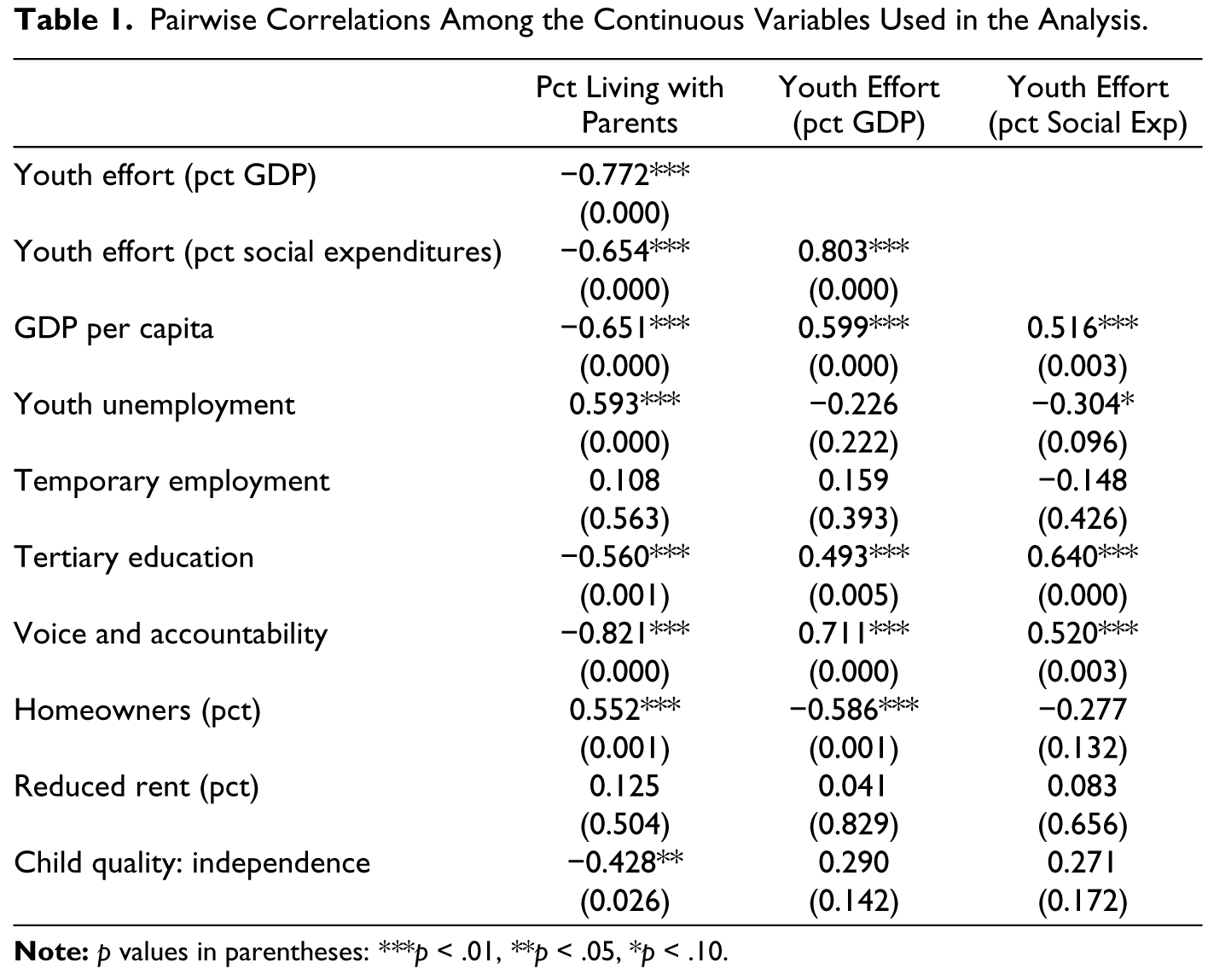
Our main covariate of interest is an index of welfare effort in favour of young people. Following previous works adopting a similar approach (Chiuri & Del Boca, 2010; Moreno, 2012), and consistent with the prescriptions of welfare research on the age divide in welfare orientation (Comelli, 2021; Lynch, 2006), ‘Youth effort’ is an additive index composed of the share of government expenditures on GDP supporting youngsters relative to family, housing, unemployment and social exclusion policies. The same index is also provided as a share of overall welfare spending instead of GDP, testing the relative salience of these measures within the overall welfare effort of each country. The two indices are highly associated, showing a correlation coefficient between their country averages equal to 0.8 (see Table 1). Focusing on targeted expenditures relative to the size of the economy, as well as relative to the overall generosity of the welfare system, should thus provide a comprehensive perspective on the role of youth welfare efforts on the life choices of younger generations.
Pairwise Correlations Among the Continuous Variables Used in the Analysis.
As mentioned above, the aim of this article is to assess whether welfare plays a significant role even when discounting factors previously identified by the relevant literature on young people’s transition patterns. To achieve this, building on the major explanations reviewed in the ‘Theoretical Background’ section, we have developed an extensive set of control variables that allows us to account for a wide range of elements—encompassing both sociocultural accounts and structural macro-level determinants.
Starting with structural macro-level factors that are expected to affect young people’s transition choices, we deploy a set of four socioeconomic variables. The first one is the wealth of the country, operationalized as gross domestic product per capita. Other chosen economic variables concern young people’s labour market performance; more specifically, we include the youth unemployment rate and the share of young people in temporary employment, expected to exert a negative impact on young people’s paths towards autonomy. On the social front, we have comprised the percentage of young people between 25 and 34 years old with a tertiary education. Further, in order to capture the potential impact of different housing regimes (cf. Mulder, 2006), we have added in the right-hand side of the equation two variables to weigh the constraints and chances offered by the housing market. The first variable measures the share of population owning their own house, a measure that is supposed to limit the autonomy opportunities for the younger generations, whereas the second index is the share of population living as tenants in houses with reduced rent or free, which, on the contrary, is supposed to increment those same opportunities.
Finally, in the list of structural macro-level factors, we also covered the political dimension. Although relatively little scholarly attention has focused on government responsiveness in connection to patterns of transition to adulthood, we expect this to be potentially relevant. As a political factor, we have entered one of the worldwide governance indicators provided by the World Bank, the Index of Voice and Accountability. The rationale for its inclusion is that the more the voice opportunities and the more accountable the government, the easier it is for young people to find a public answer to their needs.
Turning to the cultural dimension, it has been more difficult to find adequate measures to be added in our list of control variables. To our knowledge, there are no suitable cultural proxies with the required yearly variation that can be used consistently within the pooled data set. However, since it has been argued that this aspect can supersede the effect of other macro-structural factors on the life choices of citizens (Iacovou, 2002; van den Berg et al., 2021), and young people in particular, we decided to also run a model that includes a time-invariant cultural proxy. 3 Following Moreno (2012), we have decided to use an index constructed on survey data and, more specifically, on a question included in the joint 2017–2022 wave of the European Values Study and World Value Survey covering 27 of our 31 countries. The variable yields the percentage of respondents who consider independence to be an important quality that children should be encouraged to learn.
Lastly, we have also tested the effect of different types of youth welfare regimes, following some recent classification proposals based on a two-dimensional typology of youth social and economic citizenship (Broka & Toots, 2022; Chevalier, 2016). The categorical variable distinguishes among ‘enabling youth citizenship’, which represents our reference category in the regression models, ‘second-class youth citizenship’, ‘denied youth citizenship’ and ‘monitored youth citizenship’. The original classification by Chevalier (2016) was applied to Western European countries, and it has been recently refined and adapted to include some Eastern European democracies also by Broka and Toots (2022), so that it applies to 21 of the 31 countries in our sample. We use this categorical variable additively to our preferred covariate of interest—the index of youth effort—so that it defines the effect of the type of welfare regime within which some spending choices are actually implemented. Nothing precludes considering this latter classification as the main theoretical covariate of interest. However, we can anticipate that the effects of the different welfare regimes did not substantially change the impact of youth effort, indirectly confirming the additive utility of both variables.
The detailed illustration of each variable used in our analyses, together with its measurement and the list of sources, is presented in the Supplemental Material complemented by the relevant descriptive statistics, separated by country. As an empirical confirmation of the necessity to include our long list of confounders in the analysis, Table 1 shows their bivariate association of their country averages with our dependent variables and with the main covariates of interest.
To begin with, the pairwise correlations between the percentage of young people living with their parents and the proposed youth effort indices are strong, negative and highly significant. As expected, greater support, with more government resources invested in policies helping young people in their life choices, or providing them with a solid public safety net, is associated with smaller shares of young people living with their parents. These associations need to be at least put to the test of potential spurious relationships if they are to be regarded as potential causal factors (Angrist & Pischke, 2009). But in order to do this, our potential confounders also need to be associated with the explananda.
Most of our control variables show significant correlations with our dependent variables, in line with our expectations. Higher income countries, with higher educational attainment, accountable governments and a culture of independence, are the ones with fewer young people remaining and aging in the parental household, whereas the opposite happens where there are higher youth unemployment rates and larger shares of homeowners. However, there are two partial exceptions to this consistent framework. The instability connected to temporary labour contracts is not directly associated with youngsters’ life choices, and the same applies to the presence of some favourable rent opportunities in the housing market. In both circumstances, the multivariate setting could better prove the actual contribution of these two variables to the dynamics of our dependent variable, especially considering that control variables are also associated with our two indices of youth effort, as demonstrated by the second and third columns of Table 1.
Regarding the model specification of the analyses reported in the next section, we opted for panel regressions with random effects. Having a time-series cross-section data set, and being mostly interested in structural cross-country comparisons, employing fixed effects would have meant excluding all time-invariant controls and the loss of relevant between-country information (Neumeyer & Plümper, 2017). As we show in the robustness section of the Supplemental Material, using this alternative specification, as well as employing pooled linear regressions with country-clustered standard errors, or simple cross-country OLS models using the averages across the whole period does not modify our substantive results.
Empirical Results
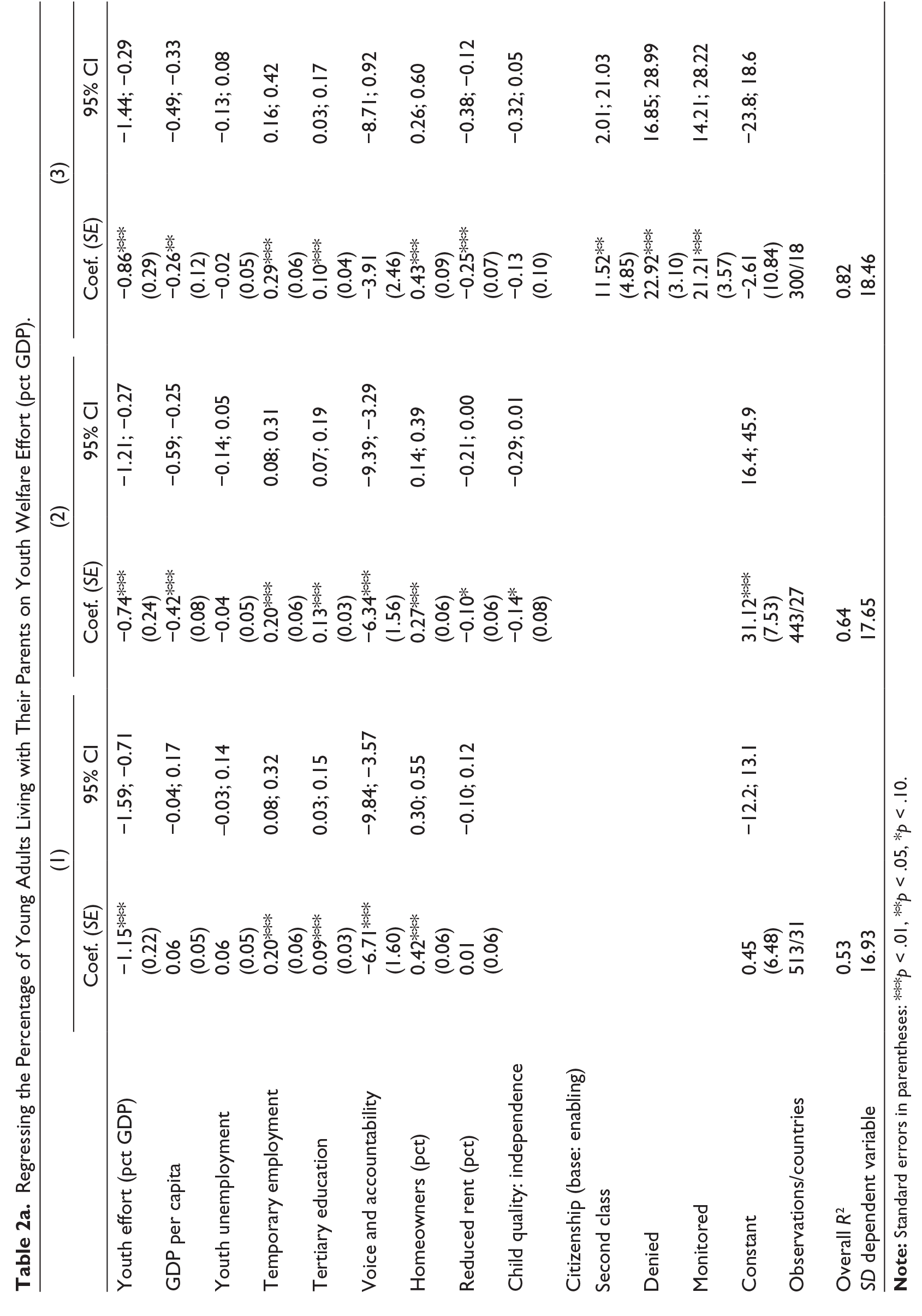
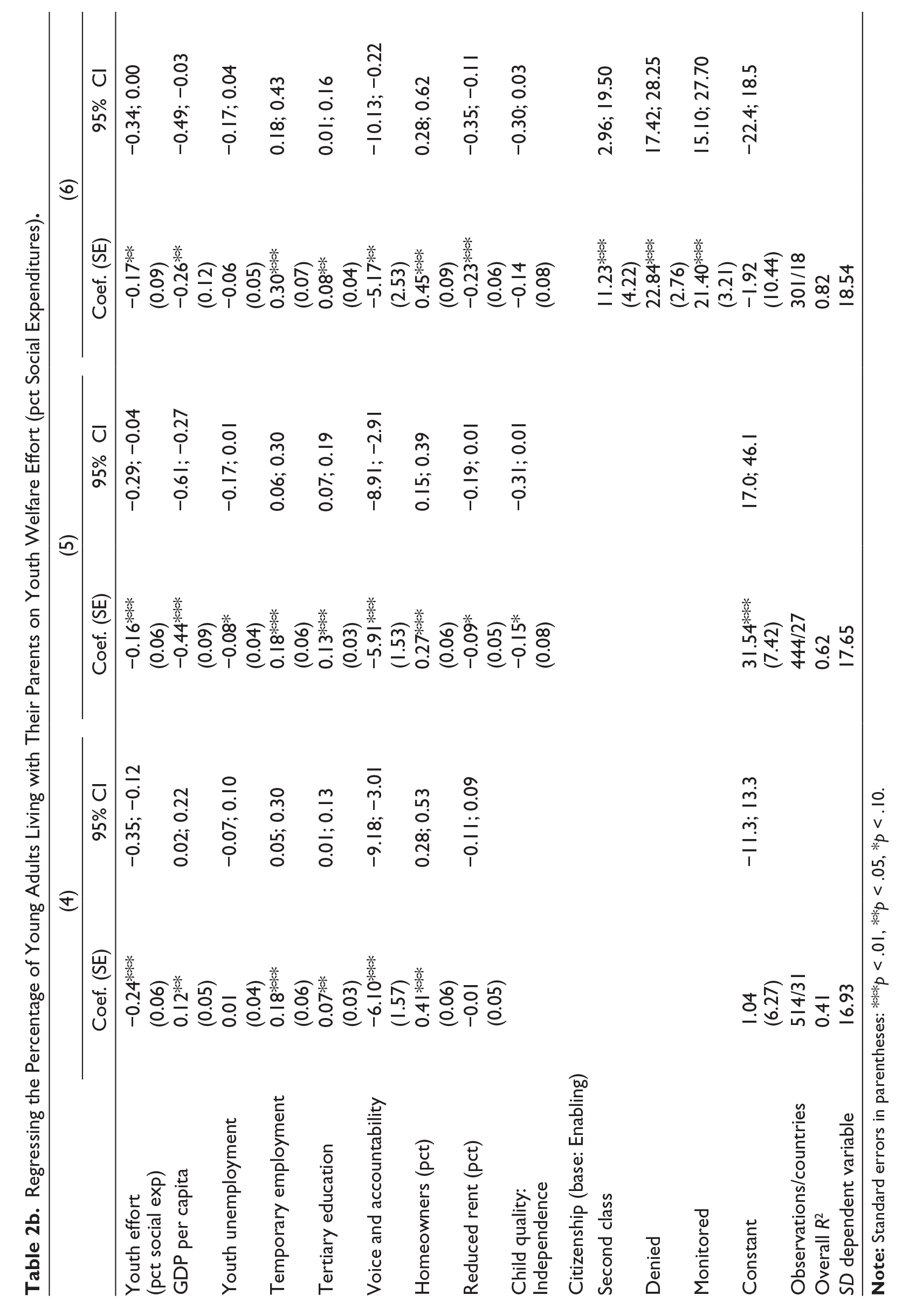
Table 2a and Table 2b present the results of our preferred regression equations. As anticipated in the previous section, for each covariate of interest, we first ran a model including all our time-varying control variables; then we added the cultural proxy for the value given to the independence of children; and finally, we also added the categorical variable related to youth welfare regimes.
To begin with Model 1, we immediately observe the highly significant effect associated with youth effort computed as percentage of GDP. For each percentage point of youth spending, there is a decrease of more than 1% in the percentage of young people aged between 25 and 34 living with their original family. The systematic relationship (p < .01) is also confirmed in the successive Models 2 and 3, only slightly reduced in terms of magnitude, with a single percentage point increase in spending corresponding to a decrease in the number of young adults living in their parents’ home ranging between 0.74% and 0.86%.
In the first model, we also observe the significant association of three control variables, which mostly confirm their relationship with the permanence of young adults in the parental home throughout all the different specifications in Tables 2a and 2b. The diffusion of temporary employment, which incidentally had no direct association with the dependent variable in the bivariate analysis, significantly increases the share of young adults remaining in the family household, together with the percentage of youngsters with tertiary education. On the contrary, a more responsive political system, open to the requests voiced by its population, systematically reduces the permanence of younger generations in their original family, something that is inhibited by a house market limited by a large number of homeowners. Data cover all 31 countries in the sample, and the variables explain 53% of the overall variance. 4
Regressing the Percentage of Young Adults Living with Their Parents on Youth Welfare Effort (pct GDP).
Regressing the Percentage of Young Adults Living with Their Parents on Youth Welfare Effort (pct Social Expenditures).
Model 2 has the same dependent variable, but it adds the cultural proxy available only for 27 countries in the right-hand side of the equation. As expected, the perception of independence as an important quality to transmit to young people is negatively related to their remaining in the parental home after the age of 25, although the coefficient is only weakly significant. As anticipated, most of the previous control variables are unaffected by this addition, although the prosperity of a country, which previously was unrelated to the outcome, is now significantly associated with a larger share of young adults already living on their own. The same applies to the diffusion of reduced rents, which represents an evident opportunity to gain autonomy for the younger generations.
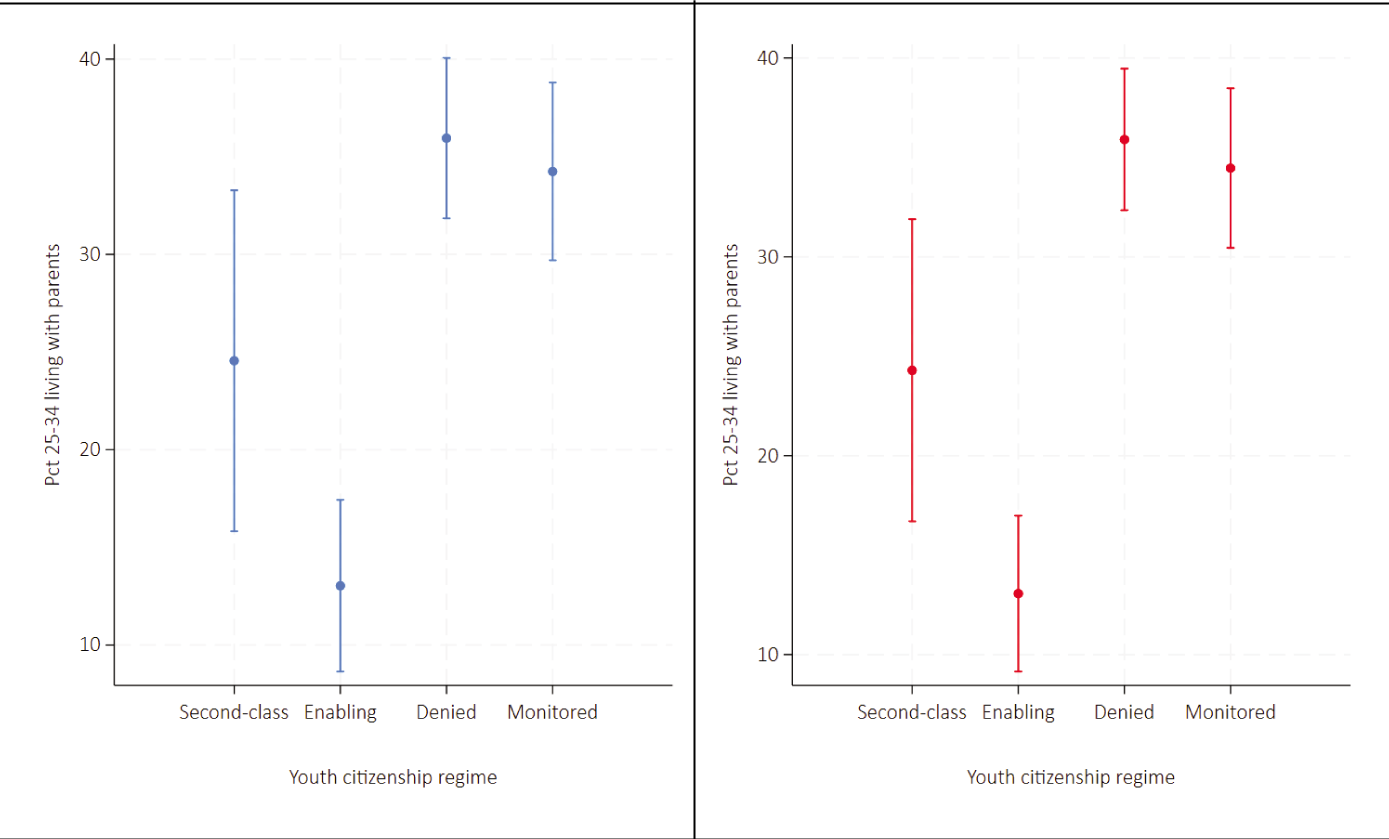
Model 3 adds to the previous results the categorical variable reflecting youth welfare regimes. Overall, the only partial overlap of the last two variables decreases the coverage of the analysis to just 18 countries, although the overall explained variance increases to 82%. Apart from the governance indicators reflecting voice and accountability, whose coefficient confirms the expected negative sign but loses its original statistical significance, all the other variables keep their systematic association. Regarding the new citizenship variable, there seems to be a qualitative watershed between youth enabling and second-class youth citizenship, on the one hand, and monitored and denied youth citizenship, on the other. As can also be seen in the left panel of Figure 1, which predicts the effect with all other variables at their means, countries characterized by the latter two welfare regimes have systematically larger percentages of young people that choose not to live on their own. By contrast, second-class citizenship countries behave in a manner not dramatically different from those with enabling youth citizenship, also thanks to the larger confidence intervals due to their relatively small numbers.
Predicted Percentage of Young People Living with Parents for Different Youth Welfare Regimes (with 95% Confidence Intervals; Models 3 and 6 in Tables 2a and 2b).
Models 4, 5 and 6 in Table 2b follow the same pattern as seen with the previous three models, but this time the covariate of interest is the youth welfare effort measured as a percentage of the overall social expenditures, highlighting the relative salience of spending on younger generations vis-à-vis other policy-takers. This index always remains significant and negatively related to the outcome also in this second group of models. For each percentage point of youth spending on social expenditures, there is a decrease ranging from 0.16 to 0.24 points of the percentage of young people aged between 25 and 34 remaining with the original family.
As in the previous models, most control variables are also related to that outcome, with GDP per capita, voice and accountability, and discounted rent opportunities easing the exit from the original family, and temporary employment, tertiary education and percentage of homeowners hindering it. In the final Model 6, youth unemployment and cultural proxy do not exhibit a systematic relationship with the percentage of young people living in the parental house, while, as confirmed by the right panel of Figure 1, the typology of youth citizenship presents the same pattern previously shown in Model 3. With reference to its original dimensions (Broka & Toots, 2022; Chevalier, 2016), in countries characterized by stronger social citizenship—especially in enabling welfare models—people leave the parental home more than in the other types of youth regimes. At the same time, the economic citizenship dimension does not play any systematic role between those two clusters of countries.
The results obtained running the six models therefore confirm our first hypothesis (Hypothesis 1): even when controlling for an extensive and demanding set of variables that cover key structural macro-level factors identified in the literature as relevant for explaining transition patterns, welfare does matter. Having confirmed the systematic association between youth welfare effort and the individual life choices of young people, we wanted to explore the potential changes of these effects through time. We speculated that instead of changing linearly over the years, those welfare policies become more important during crisis periods because they help reduce the risks associated with those troublesome circumstances.
One of the advantages of our data set is exactly that it covers a relatively long number of years, between 2005 and 2022, which include both phases of normalcy and exceptionally complex periods such as the Great Recession and the COVID-19 pandemic. For our purposes, the former event was assumed to last from 2008 to 2010, after which the level of GDP produced by the countries included in the sample returned to pre-crisis levels. The pandemic instead covered the years of the sample after 2020. In the Supplemental Material, we present some sensitivity analyses in which we experimented with a slightly different periodization, obtaining substantially similar results.
To test how the effect of youth welfare effort changed over the different time periods, we interacted our two measures with the proposed periodization, still controlling for all the variables included in the most complete models in Tables 2a and 2b (i.e., Models 3 and 6). We then plotted the varying marginal effects of the two covariates on the percentage of young people living with their parents in the left panel. The graphs are reported in Figure 2, with the impact of youth effort computed as a percentage of GDP in the left panel, and the impact of the same variable computed as a percentage of overall social spending in the right panel.
Marginal Effects of Youth Effort on the Percentage of Young Adults Living with Their Parents in Different Time Periods (with 95% Confidence Intervals).
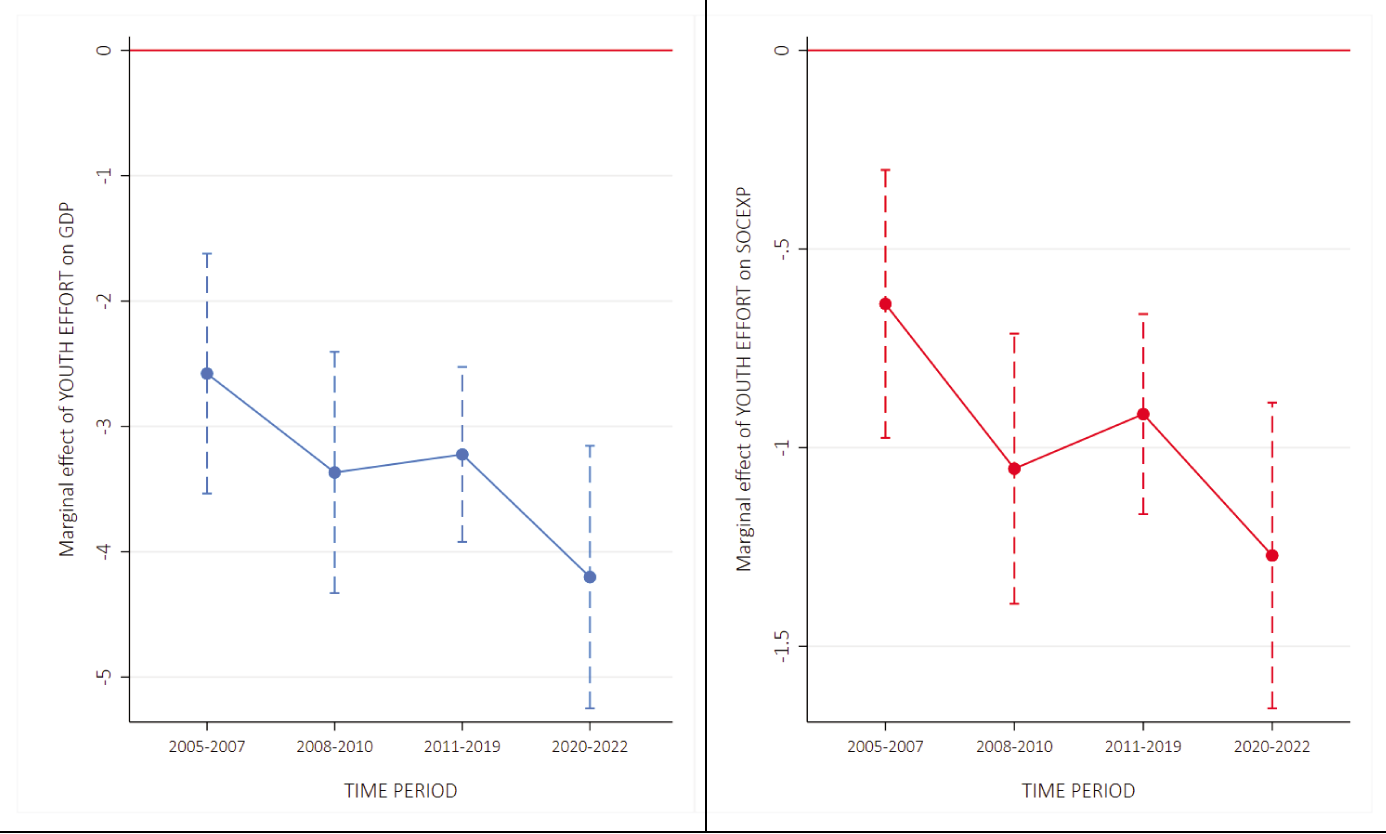
The systematic association between both measures of youth effort and the autonomy life choices of young people is confirmed for the whole time period, as is evidenced by the fact that the confidence intervals of our estimates remain in the area of negative values and never overlap with the zero-horizontal line of null effect. Those confidence intervals are inevitably large, due to the relatively small number of cases that do not allow greater statistical precision, but the temporal variation of the coefficients for the two covariates of interest can nevertheless be appreciated.
The trend of the point estimates in both panels matches exactly our expectations: welfare protection is more important in crisis periods, such as the Great Recession and especially during the COVID-19 pandemic, whereas its role is less pronounced in more routine situations. We can thus conclude that the second ‘welfare-matters hypothesis’ (Hypothesis 2) is also supported by our analyses. Examining the temporal dimension reveals that social provisions gain significance during periods of crisis, as their impact on young people’s choices becomes more pronounced, therefore exacerbating existing disparities across countries. It is important to remember that these effects do not represent only the poor state of the economy and of the labour market, since those two factors are already discounted in the model by the many control variables included, such as growth, unemployment, temporary jobs, etc. The periodization indeed reflects a more general sense of insecurity that the youth welfare effort helps to remedy. In fact, the reason why the negative marginal effect of the Great Recession is slightly less than that of the pandemic could be the fact that the first crisis was entirely economic and thus is already captured partially by the quoted control variables, whereas the pandemic impacted on the overall well-being and expectations of young people in a way that extended beyond their economic and employment opportunities (European Foundation, 2021).
The trends for the marginal effect of youth welfare are independent of the specific measure employed. However, probably due to the different ranges of the two variables, the ups and downs are more accentuated in the right panel compared to the left panel. The difference is especially pronounced for the phase of normalcy between the two crises covered by our analysis, where youth effort is only slightly less important than during the Great Recession when measured relative to the GDP (left panel), compared to the larger difference when it is computed relative to overall social spending (right panel). It would be interesting to deepen this longitudinal perspective using measures of the intensity of the crises in different national contexts—for example, using growth or unemployment measures for the Great Recession and COVID infections or deaths relative to the population for the pandemic—but that would require a different approach and the topic clearly goes beyond this first exploration.
Conclusion
This article has assessed the importance of the welfare state in easing young adults’ pathways towards autonomy. Focusing on young adult cohorts, the analyses showed how youth welfare effort is a key variable with which to explain disparities among European countries—disparities which have been widening over time. Deploying multivariate panel regression analyses covering 31 countries for the period 2005–2022, the analyses reported in this study not only confirmed that welfare matters but also revealed its specific significance when controlling for an encompassing set of factors pertaining to the social, economic, cultural and political dimensions. Moreover, our research corroborated that, as hypothesized, the crises acted as multipliers, amplifying the importance of welfare efforts, during both the Great Recession and especially the COVID-19 pandemic.
Against this backdrop, the study contributes to previous research on macro-level determinants of home-leaving patterns in two main ways. First, by systematically examining the specific role played by welfare efforts relative to a comprehensive array of other macro-level structural factors, it provides up-to-date evidence deepening our understanding of the potential drivers shaping young people’s transition patterns. Furthermore, by disentangling the net effect of welfare effort targeted at younger cohorts—while also affirming the importance of other macro-level structural factors—our findings offer deeper insights into a debate where the impact of social policy has often been downplayed in favour of explanations emphasizing economic conditions and cultural determinants. Second, by assessing variations over time, our results demonstrate that the role of welfare institutions in supporting individuals’ life-course choices becomes especially critical during periods of crisis.
These results suggest the critical role of welfare institutions in counterbalancing economic fluctuations through their anticyclical function. More specifically, while overall welfare spending, along with its key components analysed in our study, contributes to making younger cohorts’ life chances more stable and secure against social and economic risks, well-targeted measures—such as income support policies addressing job instability and low incomes, housing and family policies—could significantly ease young people’s transition to autonomy, both during periods of economic growth and, even more importantly, during economic downturns. Although welfare effort is only one of the factors contributing to the disparities observed across countries and is therefore not to be overestimated, our findings suggest that a decisive investment in welfare policies targeted at younger cohorts—aimed at counteracting the age bias of mature welfare states in several European countries, particularly those with the most negative performances—could have beneficial effects.
While we believe this study offers important insights, it is not without limitations, which, however, may prove fruitful in pointing to promising avenues for future research. Notably, the analysis does not explore the distributive implications of welfare effort for different sub-groups of young people, but it is reasonable to expect that a generous social safety net might be especially crucial for young adults from disadvantaged backgrounds. A comparative analysis of the welfare state’s impact on home-leaving patterns across different socioeconomic sub-groups could likely enrich our understanding further.
Second, our periodization assumes an equal intensity of the two crisis periods across the country sample for which the interaction with youth effort has been tested. In fact, the Great Recession struck South European countries more than others, in terms of both severity and duration of the critical period. The same applies for the pandemic, with COVID imposing a differentiated toll to the different populations across Europe. While the sense of insecurity could be shared beyond the immediately experienced difficulties, slowing down the quest for autonomy of the younger generations, investigating the potentially differentiated reactions could represent an interesting new research avenue for future investigation.
Furthermore, and interestingly, our results show that, for comparable levels of youth effort, two of the four welfare citizenship regimes, namely monitored and denied youth citizenship, systematically reveal larger percentages of young adults living in their parents’ homes. This puzzling finding calls for an in-depth exploration of how the institutional design of policies in these countries prompts such relationships, given that sticking to welfare generosity does not allow a full understanding of the causal mechanisms at work.
To conclude, from a general standpoint, our findings suggest that welfare arrangements prompt inequality among young Europeans, which are growing unequal especially under adverse conditions, as happened during the Great Recession and the COVID-19 pandemic. Strengthening the social safety net by expanding public social spending targeted at young people, especially in laggard countries, may hence be an effective structural reform. Such a reform would not only enhance the life chances of young people, who are struggling with extraordinarily challenging circumstances, but also benefit society as a whole, grappling with concerningly high shares of young NEETs and the effects of population ageing.
Supplemental Material
Supplemental material for this article is available online.
Footnotes
Data Availability Statement
The data set and code are available on Harvard Dataverse at
Declaration of Conflicting Interests
The author declared no potential conflicts of interest with respect to the research, authorship and/or publication of this article.
Funding
The authors disclosed receipt of the following financial support for the research, authorship, and/or publication of this article: The authors acknowledge financial support for the publication of this article from the Università degli studi di Milano, under the 2023 Research Support Plan (Piano di sostegno alla ricerca 2023).
Notes
References
Supplementary Material
Please find the following supplemental material available below.
For Open Access articles published under a Creative Commons License, all supplemental material carries the same license as the article it is associated with.
For non-Open Access articles published, all supplemental material carries a non-exclusive license, and permission requests for re-use of supplemental material or any part of supplemental material shall be sent directly to the copyright owner as specified in the copyright notice associated with the article.
