



Abstract
The article presents the results of research on the factors that determine how certain Czech millennials are about their housing and some other life aspirations. We did not primarily look at the content of life aspirations and instead, we examined how certain, confident and concrete young people are about their plans. Using qualitative interviews and an attitude survey we found that intergenerational housing-related within-family resource transfers had a significant impact on how certain young Czechs are about their housing and (some) work and family aspirations. Therefore, whatever the aspirations of young people are, the ability to form them with certainty and confidence is significantly influenced by a factor that is largely out of their control.
Introduction
The transitions of young people to adulthood have been extended and diversified in many developed countries in recent decades (see, e.g. Antonucci et al., 2014; Furlong & Cartmel, 2006). Studies in both Western (e.g. Aeby & Heath, 2020; Brückner & Mayer, 2005; Furlong & Cartmel, 2006; McKee, 2012; Mulder & Billari, 2010) and post-socialist European countries (e.g. Kajta et al., 2023; Sobotka et al., 2008) have confirmed that the events that occur on the road to adulthood have become de-synchronized, de-standardized, differentiated and reversible in the past few decades, though there is much heterogeneity between countries in the timing and forms of these changes. Arundel and Ronald (2016) and Xian and Forrest (2020) point out that still relatively little attention is paid in youth studies literature to how housing affects these changes.
In this study, we surveyed selected life aspirations on the way to adulthood of recent young Czechs (18–35 years old) living in four large Czech cities. However, in our inquiry, we were interested not so much in the content of the aspirations as in how certain these young millennials were about them. Using qualitative interviews and especially an attitude survey, we then attempted to explain the differences in the degree of this certainty. In order to take into account the impact of housing specifically, we included within-family intergenerational resource transfers to young adults intended for the acquisition of housing (gifts and grants from parents and grandparents to their descendants) among the possible explanatory factors. In the Czech context (where homeownership is the dominant tenure, tenure choice is constrained by a lack of alternatives, markets are relatively young and the welfare state is weak), housing-related intergenerational resource transfers are very common (Lux et al., 2021). Consequently, our main research question was the following: Is the certainty about housing and (some) work and family aspirations of young Czechs significantly influenced by the fact of whether they received (or are going to receive) the within-family resource transfer intended for housing acquisition from their parents/grandparents or not?
Our findings show that the receipt of large housing-related resource transfers has a significant impact on how certain are young Czechs about their life aspirations. Therefore, whatever their life aspirations, the real ability to plan them with certainty and confidence is in a specific super-homeownership environment significantly influenced by a factor that is out of their control—a finding that is informative for youth, housing, demographic, labour and transition studies.
However, we admit that we could not include other countries in our analysis (due to missing data), and our conclusions are thus limited by the policy and cultural context of the Czech Republic. Similarly, we did not fully exploit the potential of qualitative research for obtaining a deeper understanding of how resource transfers affect the future plans of Czech young adults. The qualitative study had primarily a different goal (it aimed to study the strategies of Czech millennials for coping with the recent housing affordability crisis) and for the focus of this article, we used it to more precisely design the subsequent questionnaire survey (identifying the main explanatory variables and formulating the survey questions) rather than to interpret the results. Future qualitative research will thus be able to provide more multifaceted results. We primarily studied housing aspirations, while family and work aspirations and the interactions between them were not as thoroughly explored as they would deserve to be. Housing careers are interconnected with family, educational and labour pathways, forming a complex process of individual identity formation (Opit et al., 2020; Oinonen, 2008), and this complexity represents another challenge for future research.
The next section provides a review of the relevant literature on changes in youth transition and life aspirations in the housing domain that represents the main focus of our research, which is followed by a section on the context of the research. The next section includes details on data and describes the mixed-methods design of the research. The penultimate section presents the main results, first from the qualitative study and then from the regression models run on data from a questionnaire survey in four large Czech cities. The final section summarizes the main findings and discusses their implications.
‘Generation Rent’—New Housing Aspiration?
Housing aspirations are poorly defined in the empirical literature (Preece et al., 2020). In this study, we will follow the definition used by Kintrea et al. (2015) and Preece et al. (2020), where they are understood as ‘desires to achieve housing-related ambitions in the future, encapsulating optimistic assessments of what can be realized’ (Preece et al., 2020: 90). Aspirations are thus achievable preferences under favourable real conditions. Consequently, ‘the choices’ would refer to individual decisions, ‘expectations’ to likely outcomes (regardless of the desire) and ‘preferences’ to the desires (regardless of their feasibility). While housing pathways or careers are then concepts that relate to realized choices (Clapham et al., 2014), housing aspirations represent the connection between the reality of today and a vision of the future—the hopes people have that give meaning to their recent undertakings and provide their actions with a motivation. On the continuum between the ideal and likely future, aspirations lie closer to the ideal than expectations do but are farther away from it than preferences. They are formed on realistic ground but are based on trust in a benign future, distant enough to justify an optimistic outlook. While expectations are often short-term, aspirations are long-term milestones in an individual life project. In this article, we understand aspirations as synonymous to plans, though plans could also be conceptualized differently.
Concerning recent changes in housing pathways, research in the United Kingdom, the Netherlands, Australia, the United States, Ireland, Italy, Spain and Japan has confirmed that an increasing share of young households are delaying the entry into homeownership (for an overview, see McKee, 2012). The term ‘generation rent’ refers to the decreasing homeownership rate among young cohorts and the increasing share of young adults in private renting; the United States, Ireland, the United Kingdom and New Zealand are cited as typical examples (see, e.g. McKee et al., 2020, Bourassa & Shi, 2017). Studies have associated the ’generation rent’ phenomenon with changing consumer patterns (Bruce & Kelly, 2013), delayed family formation (Mulder & Billari, 2010), rising youth unemployment (McKee, 2012), decreasing housing affordability (Wetzstein, 2017), the financialization of housing (Aalbers et al., 2020) and other factors. The literature is not clear about what relative role is played by the structural and individual factors that have caused this change (beyond the simple fact that all these factors ‘matter’). Sissons and Houston (2019) did not find a definite answer either as to whether this reflects a real shift in aspirations or whether this is part of a short-term waiting strategy in response to the housing affordability crisis. It is likely that there are differences between countries (and within countries between social strata) in the determinants, strengths and forms of this change. Nevertheless, this heterogeneity and the inconclusive findings justify our attempt to shift the research perspective and focus our analysis on the certainty of young people’s life aspirations rather than on their content.
Moreover, ‘generation rent’ is hardly a universal phenomenon among developed countries—for example, in Canada young people remain in the parental home longer instead of moving to private renting. Maroto and Severson (2020) describe this with the term ‘generation coresidence’ instead of ‘generation rent’. Lian (2020) and Xian and Forrest (2020) use the term ‘generation stay-at-home’ for young people in Beijing and Hong Kong who remain in their parents’ homes longer in order to save money. Australian studies write about a ‘boomerang generation’, which refers to young adults irregularly returning to live with their parents after already having moved out (for an overview, see Tomaszewski et al., 2017). Winogrodzka and Grabowska (2022) use the term ‘generation on the move’ in order to highlight the international labour migration of young people from Central and Eastern Europe (Poland specifically). This diversity provides further support for our decision to shift the focus from the content of aspirations (that largely varies) to the certainty and firmness with which they are expressed (which can be measured on a standard scale).
According to Pitkänen et al.’s (2021) overview, parental socioeconomic disadvantage, parental disinterest in education and poor parenting styles are all associated with a higher risk of offspring becoming NEET (‘not in education, employment or training’). It is also widely recognized that housing circumstances influence the timing and desirability of cohabitation, marriage and parenthood (e.g. Mulder & Billari, 2010). However, existing empirical studies on parental background have touched only vaguely on the specific issue of within-family housing-related transfers—possibly due to the lack of appropriate quantitative survey data. While there have been qualitative studies of what forms intergenerational transfers take, quantitative research on their impact is only just taking off (see the review of studies on intergenerational transfers in Lux & Sunega, 2023). Our article aims to advance these findings by employing quantitative data along with a qualitative study.
The Research Context
During socialism in the Czech Republic (1948–1989), a large part of the urban population lived in tenancy but Czech tenancy rights equalled or exceeded those associated with homeownership in Western countries (Marcuse, 1996). After the collapse of socialism, this high tenure security was reconfirmed by the widespread giveaway privatization process and owning one’s home became a powerful social norm (Cirman, 2008). Transformation-era governments adopted a neoliberal doctrine that advanced homeownership as the ideal housing tenure, leading to the preferential sale of public housing into the hands of sitting tenants: the share of public housing decreased from 39% in 1991 to 4% of the housing stock in 2021. Conversely, the share of owner-occupied housing grew from 38% in 1991 to 78% in 2021 (Eurostat, 2022). The homeownership preference gained strength in part because of the decreasing public welfare (Mandic, 2012). Owning one’s home has become a source of welfare (Stephens et al., 2015) and a guarantee of family security (Lux et al., 2018); and home value (housing wealth) has begun to co-determine the position of a household in social hierarchy (Lux et al., 2013).
In a questionnaire survey, we fielded in four Czech cities (see details below) young people were asked about the housing tenure in which they are planning to live permanently and start their own family one day. Their responses indicate that if their aspirations were fulfilled the homeownership rate in this sample would reach 79%; if we were to calculate this based on respondents’ preferences, that is, what do they consider the ‘ideal’ form of housing, if they had no financial limitations, then the homeownership rate would actually be as high as 95%.
Schwartz and Seabrooke (2008) argue that housing regimes can be categorized according to how exposed they are to global financial markets—by the homeownership rate and mortgage debt to GDP. Post-socialist countries, including the Czech Republic, belong to the category of countries with a high rate of ownership and low mortgage debt—named as the ‘familial’ regime. It means that familial sources play much more prominent role in financing the housing acquisition than market-based (mortgage) finance. Such housing regime has also been called ‘housing welfare regime by default’ (Stephens et al., 2015), which refers to a kind of state-legacy welfare (through giveaway privatization) in the form of debt-free homeownership attained through intergenerational assistance and self-build projects.
The significance of intergenerational assistance is historically rooted in Czech culture. It helped, for example, to meet family needs under socialism, when there were general shortages of goods and services. The current level of intergenerational assistance in the housing domain can be demonstrated on data from the Housing Attitudes 2013 survey conducted on a national sample of adult respondents: 30% of homeowners indicated that they had inherited their housing or received it as a gift, and among those who had bought their home at market price or built it themselves, 42% had received financial assistance from their parents (usually in the form of a gift they did not have to repay). As expected, the highest rate of intergenerational assistance has been observed among the youngest cohorts. 1 Mulder and Smits (2013) mention ‘indirect reciprocity’ as one of the reasons why parents help their children: parents feel a personal obligation based on the fact that they also received help from a previous generation. This motive plays an especially significant role in transfer-giving in the Czech Republic, even after controlling for other characteristics of the parents and their adult children (Lux et al., 2021). This traditional pattern of transfer-giving thus created resource transfer chains that structure and determine transfer-giving in Czech culture today and will likely determine it even in the future.
Data and Methodology
Our research used (a) semi-structured qualitative interviews and (b) a questionnaire survey, both fielded in four large Czech cities (Prague, Brno, Pardubice and Olomouc). These cities were the ones most affected by the decrease in the affordability of homeownership in the last decade.
First, in the autumn of 2019, we conducted 31 semi-structured face-to-face interviews with young adults (18–35 years old). The interviews were carried out at universities, in restaurants or cafés, or in the respondents’ homes; they were all audio-recorded and later transcribed. The informants were recruited from Facebook and adverts and using the snowball method. We used purposive sampling in order to survey young people of different ages (18–25, 26–35), genders, housing statuses (homeowners, tenants and living with parents) and education levels. Table 1 shows the main characteristics of the informants. All informants gave us their written consent, and the ethics of the research met the internal rules of the Czech Academy of Sciences.
Characteristics of the Respondents Who Participated in the Qualitative Study.
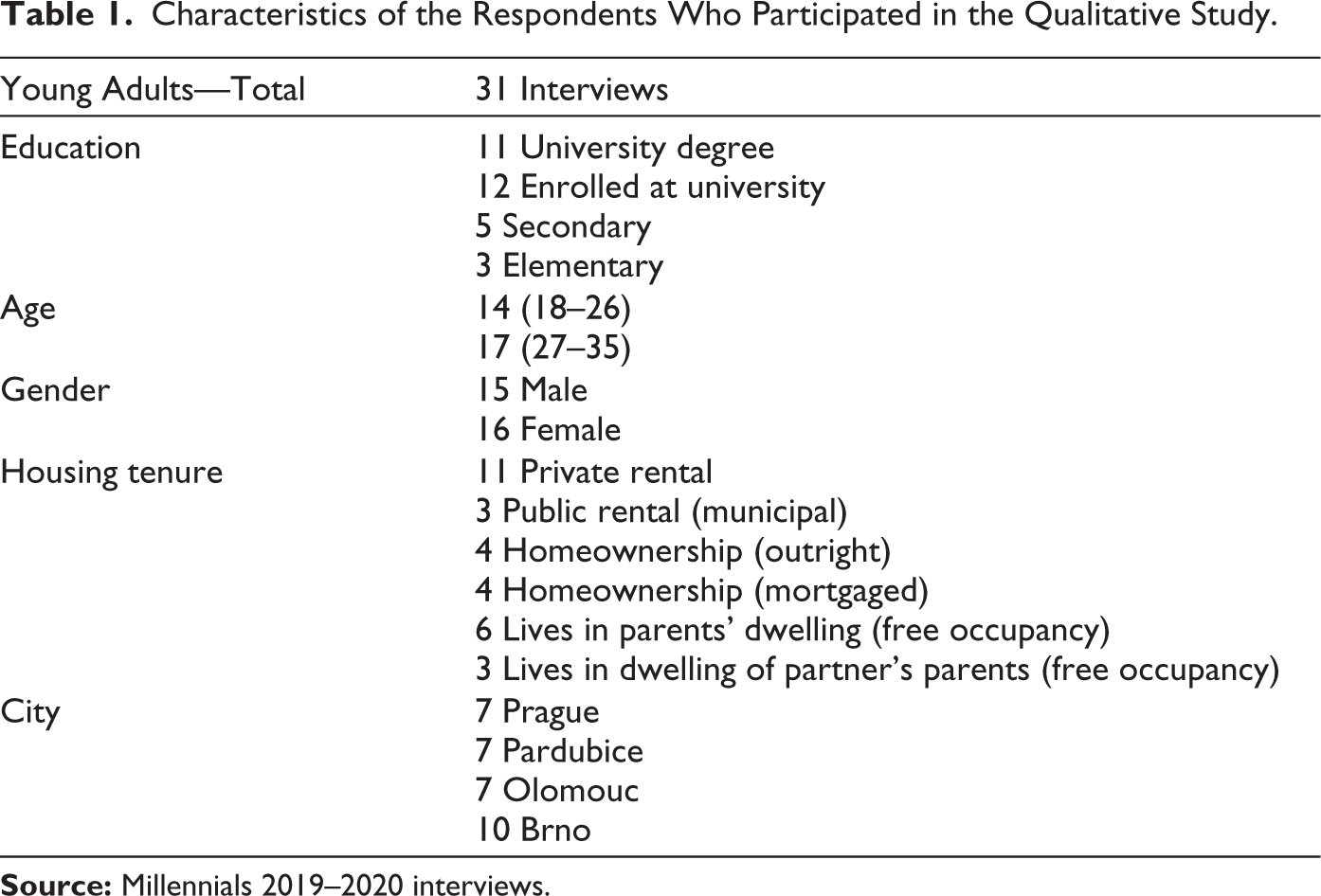
The qualitative research aimed primarily to study strategies that millennials employ in order to cope with the recent housing affordability crisis, and the number of interviews was set in order to attain a sufficiently diverse sample. As the qualitative study was not primarily concerned with certainty of life aspirations, we used its data to formulate our questions for the main stage of our research—the quantitative survey—rather than for the final interpretation of results. This secondary exploitation of data proved to be very fruitful, but only more focused qualitative research in the future can provide broader and multifaceted results. Similarly, we employed data coding that would allow us to generate hypotheses/questions for the quantitative survey (see below in the section on main findings) rather than it being used to interpret the findings.
Second, at the end of 2020, we conducted a questionnaire quota survey to examine the aspirations of young adults living in the same Czech cities on a sample of 649 respondents surveyed face-to-face. This survey and the quantitative data analysis represented the core methodology we used to answer our research question. The quotas included gender, age, education and economic activity (students, workers and non-workers) and were set in reference to population (economic, educational, and census, respectively) statistics in order to guarantee the generalizability of the results. The anonymized dataset is publicly available for download from the Data Archive of the Institute of Sociology CAS.
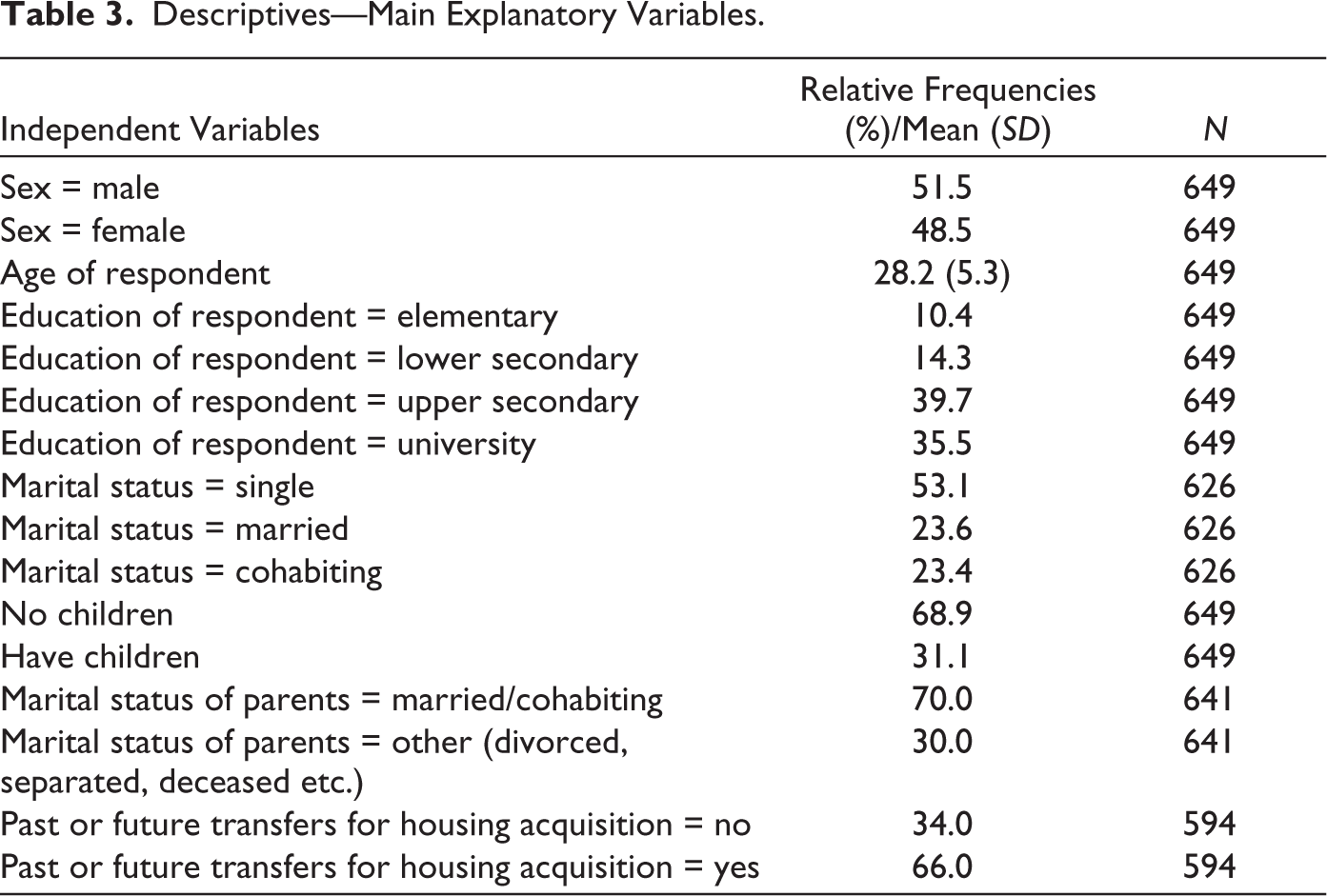
Linear (OLS) and binary logit regressions were run in STATA 17 to analyse the influence of different factors on the certainty of housing and (some) family and work aspirations. Tables 2 and 3 present the main descriptives for the dependent and explanatory variables used in the modelling. They show that the majority of respondents (66%) have already received or expect they will receive financial or in-kind resources for the purpose of acquiring housing and that the majority of them were also relatively certain about their life aspirations (especially in housing domain). Originally, we also included the political orientation and income of respondents among the explanatory variables, but we dropped them because of their statistical insignificance and the large number of missing values. 2
Descriptives—Dependent Variables.

Descriptives—Main Explanatory Variables.
Main Findings
The informants in the semi-structured interviews were allowed to talk freely about their life careers and aspirations in different fields (education, work, partnership and housing). However, the interviewer was instructed to raise additional questions in order to get more details, including the means the informants used/plan to use for to fulfil their plans, such as obtaining a resource transfer from their family. Despite the fact that this was not the main goal of the qualitative study, we tried to uncover the possible factors behind certainty of aspirations in the data analysis. We coded the expressed life aspirations on a scale of 1 (the most uncertain) to 5 (the most certain) according to how certain, confident and resolute the informants were about their statements. In doing so, we did not distinguish between aspirations in different domains (housing, work and family) but rather assessed them altogether—because these domains were interrelated in the respondents’ narratives and the informants differed in their focus and detail when they talked about their plans. Jane, a young university student in the second-largest city in the country, offers an example of life aspirations that we coded as ‘1’ (the least certain):
Jane (24, female, tenant): We haven’t made a firm decision [concerning permanent housing] yet. I’m in favour of the city, but he would more prefer a village. (…) Now I’m more seriously thinking about whether to have children at all. (…) I guess I’d like to have children, but I have no idea when. This is something I’m not planning right now.
Mary (who is also a university student) offers an example of life aspirations that we coded as ‘5’ (the most certain):
Mary (20, female, living with parents): So, I’d like to live in a little house near Pardubice. Ideally in some village in the area around Pardubice, within reach by public transport, so that in the future, when I have kids, they’ll be able to get to school without my help. (…) And, of course, I’d like to live with a partner and have about two kids. And I’d like to work in a laboratory.
The qualitative data indicated that the age of the informants influenced how certain and clear they are about their aspirations. As expected, the (older) informants who had fulfilled (some of) their aspirations stated them with greater certainty and more concretely than those (younger) who were still in the planning phase. However, the interviews also informed us about other factors that seem to have an effect on certainty of aspirations: the number of siblings the informants had, their partnership and educational status, and the marital status of their parents—informants from divorced families, for example, seem to be less certain about their future plans than those from families where the parents still live together.
Most informants also mentioned whether they had received (or expect to receive) a resource transfer and the size and form of the transfer. Based on these details, we were able to distinguish five levels of transfer size: (a) none, (b) small loan or guarantee for a mortgage loan, (c) the provision of a plot of land to build a detached house or a moderate financial grant, (d) a substantial financial or in-kind gift and (e) full coverage of the cost of housing, either through a gift providing all the finance required or (more often) a gift in the form of housing itself (an apartment, a house). We attempted to compare the codes that were assigned to life aspirations with the codes that were assigned to intergenerational support and found strong support for the hypothesis of an association between the two. The following are excerpts from the narratives of two typical cases. Doris represents the first type, where significant transfers are accompanied by a high level of certainty about life aspirations. Doris and her partner are the typical offspring of middle-class parents who are the outright homeowners and thus do not necessarily need an additional inherited property for themselves. It is common in such a situation for parents to transfer an inheritance directly to their children.
Doris (31, female, homeowner): I got together with my husband, and his grandmother was from Brno. She had a house, and she had died around six months before we got together. And, he was living alone in the house, so I went to join him, and that is the house we are currently renovating. He got it from his mom. But since we started the renovations and demolitions we are now living in the apartment of my uncle, who moved out.
So, we are not taking precautions against a baby anymore, so family life definitely, for sure. I can already see myself in the house. Right now, I’m really, absolutely aiming at a family, so now that’s our plan for the future. The way I see it, we’ll have the kids, we’ll travel somewhere, skiing, an ordinary life. (…) I’m really counting on it now that [name of partner] and I are going to be together always because I can’t imagine it being any other way.
In order to avoid the effect of age, we also offer the example of Kate who is younger and whose aspirations are yet to be fulfilled. Kate’s parents are members of the upper class (they are lawyers) and live in a mid-sized regional capital; they invested their savings and inheritance into buying an apartment building on the periphery of the city:
Kate (25, female, free occupancy): And then I got the keys from my parents to the flat back here in Olomouc again, so I’d have things easier, in terms of commuting to school (…) They own the entire building the flat is in.
And my plan is that when I finish my master’s, I’d like to get my PhD here in biology and teach the pedagogy of biology or natural science, so that I can build my career somehow (…) And then, I found a university in Sweden where I’d like to go study marine ecology (…) I’d definitely like to have a family. Even though I don’t have a partner right now, I’d definitely like to have at least two children, because I think that my parents provided me with everything I needed, and it would a terrible shame if I couldn’t pass that on.
Alice, conversely, represents the second typical (‘ideal’) case, where the absence of any resource transfer is accompanied by uncertain life aspirations. Her parents became heavily indebted as a result of a failed business and thus have no sources to transfer to their children:
Alice (27, female, tenant): (…) that’s how around 6 million crowns [of parent debt] they had to pay the contractors was put together. My parents had to sell both cars, mortgage the flat (…)
(…) where I’d like to put down roots, me and Adam, we probably haven’t decided that. I’m definitely drawn to eastern Bohemia. But if we find something somewhere in the Jeseníky area. I don’t think we’ll go looking in the Šumava area but I’m thinking about the Orlické mountains, Krkonoše, Liberec, it’s hard to say where.
However, the results by no means paint a black-and-white picture, as the example of Annie shows. She comes from a relatively low-income family, but her boyfriend has the chance of getting a detached house from his grandfather in the future:
Annie (27, female, free occupancy): (…) If I stay with my boyfriend, we will live in his grandfather’s house, it will be his own because they’ll put his name on the deed. So we’re already doing repairs—we just had the windows and the façade done.
I don’t like making fixed plans for my life, because I know things don’t completely work like that. I have some ideas, or I had some. They often don’t work out, and then suddenly there’s nothing (…) Everyone’s already asking me, are you going to have a baby soon, because lots of my friends are already starting a family. I always say it’ll happen or it won’t. But that we’re planning this, no (…) I don’t like making plans because they don’t work out.
The example of Annie shows that there are psychological and behavioural factors (as well as specific life experiences) that can influence the certainty with which people plan their life aspirations. Additionally, it might indicate that the source and timing of resource transfers may play a role—whether a resource transfer has already been provided or only might (hopefully) be provided in the future and whether the transfer comes from the family of the informant or his/her partner.
We used these indicative findings to formulate our questions for the questionnaire survey conducted on the sample of 649 young adults living in the same cities. When analysing these data, we first conducted simple tests in the form of contingency tables and chi-square tests. The findings seem to indicate that housing-related transfers have no or only a weak impact on the life aspirations of Czech young adults. However, when we started to take into account the size and timing of transfers, inspired by findings from our qualitative study, the results significantly changed. 3
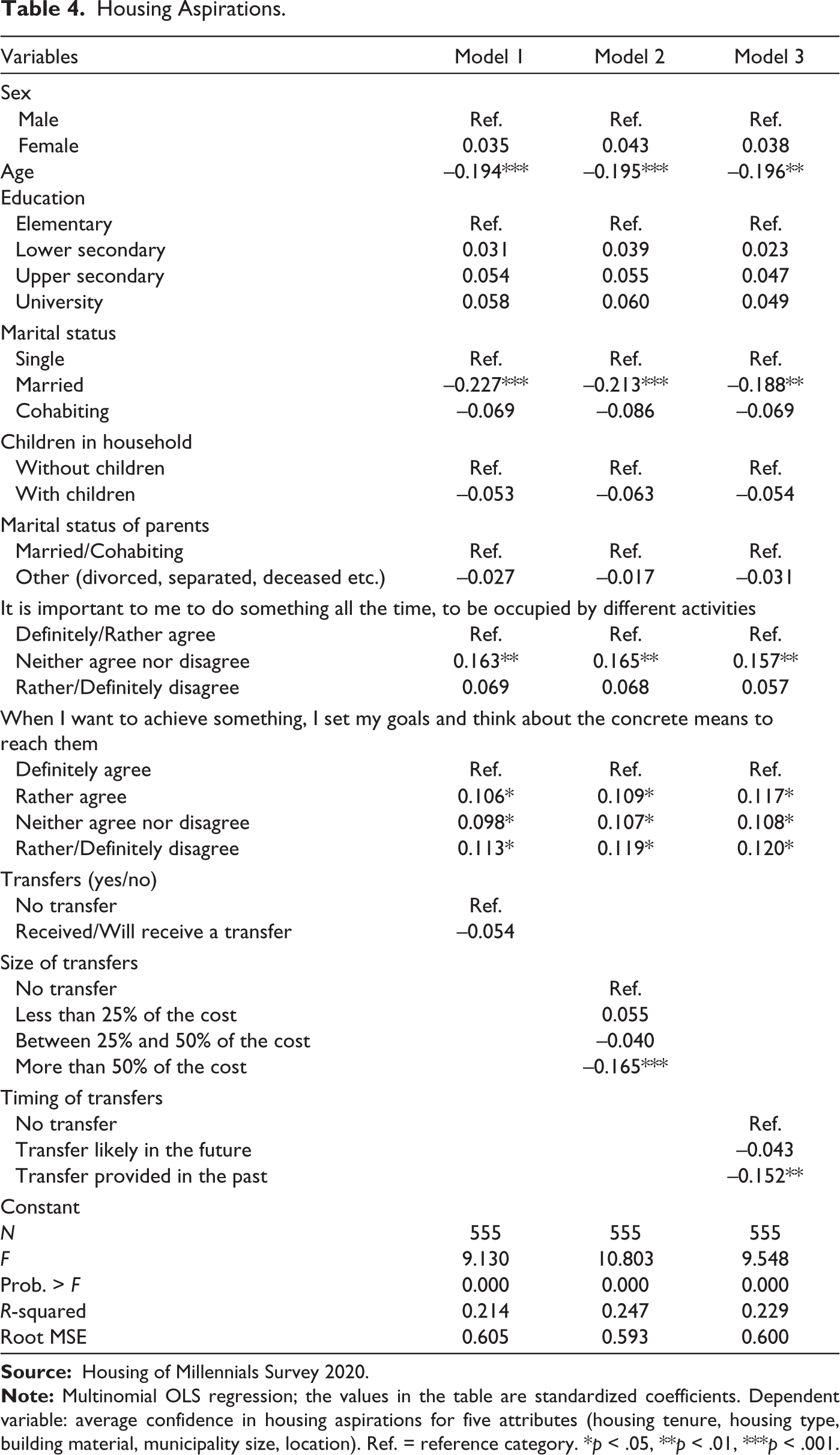
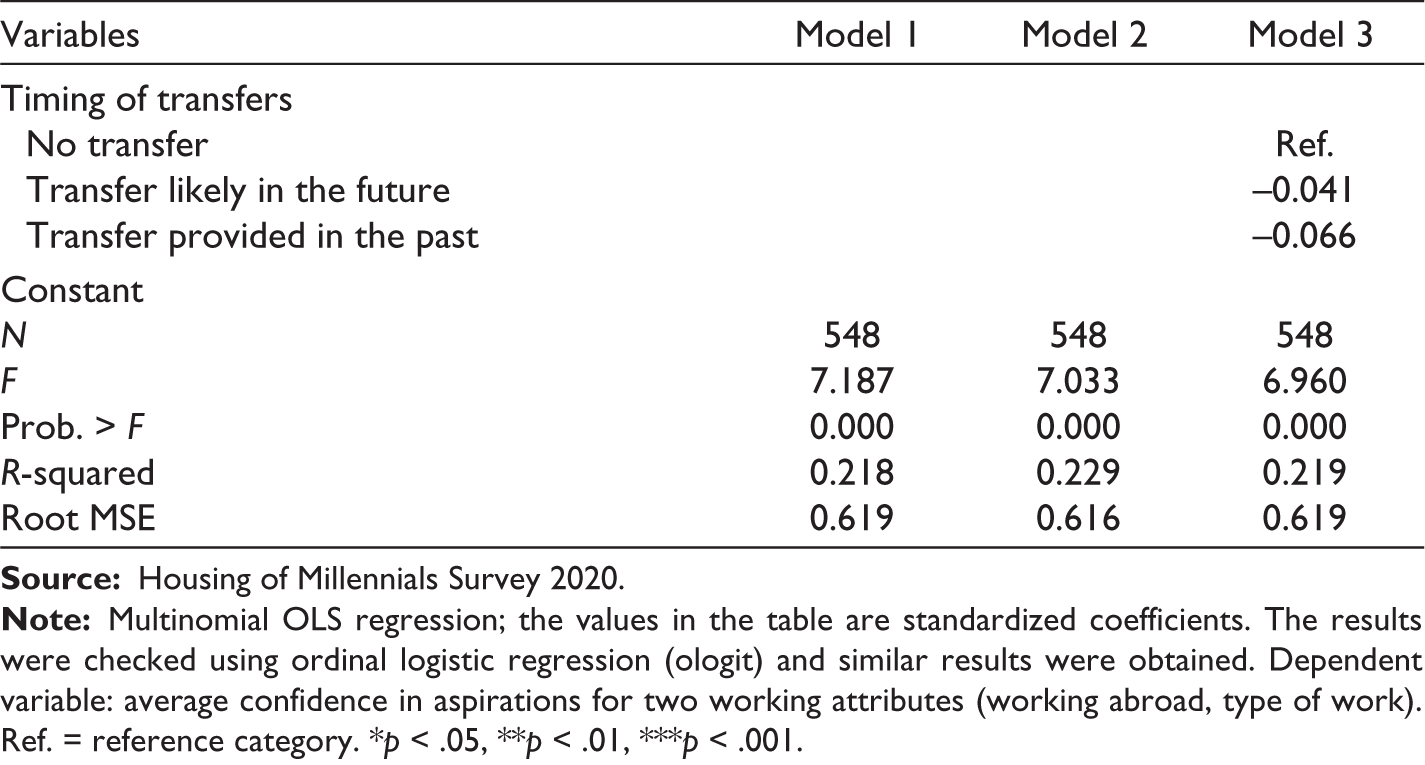
In order to present the results in condensed form, we created aggregate dependent variables for two domains (housing and work): their values were calculated as the (non-weighted) average of the response values for all the questions in each individual domain (see Table 2 with the list of questions used for aggregation in each domain). As the descriptives in Table 2 indicate, the lower the value, the higher the respondent’s confidence in his/her aspirations. Two variables measuring family aspirations could not be as easily aggregated: while all the respondents were asked how certain they were about how many children they want and about their housing and work aspirations (i.e. both those who may have already realized their plans and those who may not yet have done so), only the respondents who were not yet married were asked about the certainty of their plan to get married. Moreover, the dependent variable would have insufficient variation. Therefore, we analysed each family aspiration separately. We employed OLS regression in order to explain the variation of the aggregate variables in the housing and work domains and binary logit regression in order to explain the variation of two distinct family aspirations. In the end, we estimated the parameters for three models: Model 1 contained a simple dichotomous variable measuring whether any or no transfer had been/would be provided to the respondent; in Model 2, we substituted it with the relative size of the transfer; and in Model 3, we substituted it with the timing (past vs. future) of the transfer.
The results of the modelling for the housing aspirations are presented in Table 4. They show that certainty in housing aspirations is determined mainly by the age of the respondent and his/her marital status. The older the respondents, the more certain they were about their housing aspirations; similarly, married respondents were significantly more confident about their housing aspirations than singles were. Based on our results from the qualitative study, we also included behavioural questions in the survey: the respondents who employ a systematic rational approach when thinking about how to get what they want are significantly more certain in their housing aspirations. The existence of a resource transfer also plays a significant role, but only when differentiated by its size (and timing). Those respondents who had received a bigger transfer were to a statistically significant degree more certain about their housing aspirations than those who had not yet received and would not be receiving any resource transfer from their family. Surprisingly, education, the number of children, the marital status of the parents (as well as the respondent’s political orientation and income) had no statistically significant impact on the certainty of housing aspirations.
Housing Aspirations.
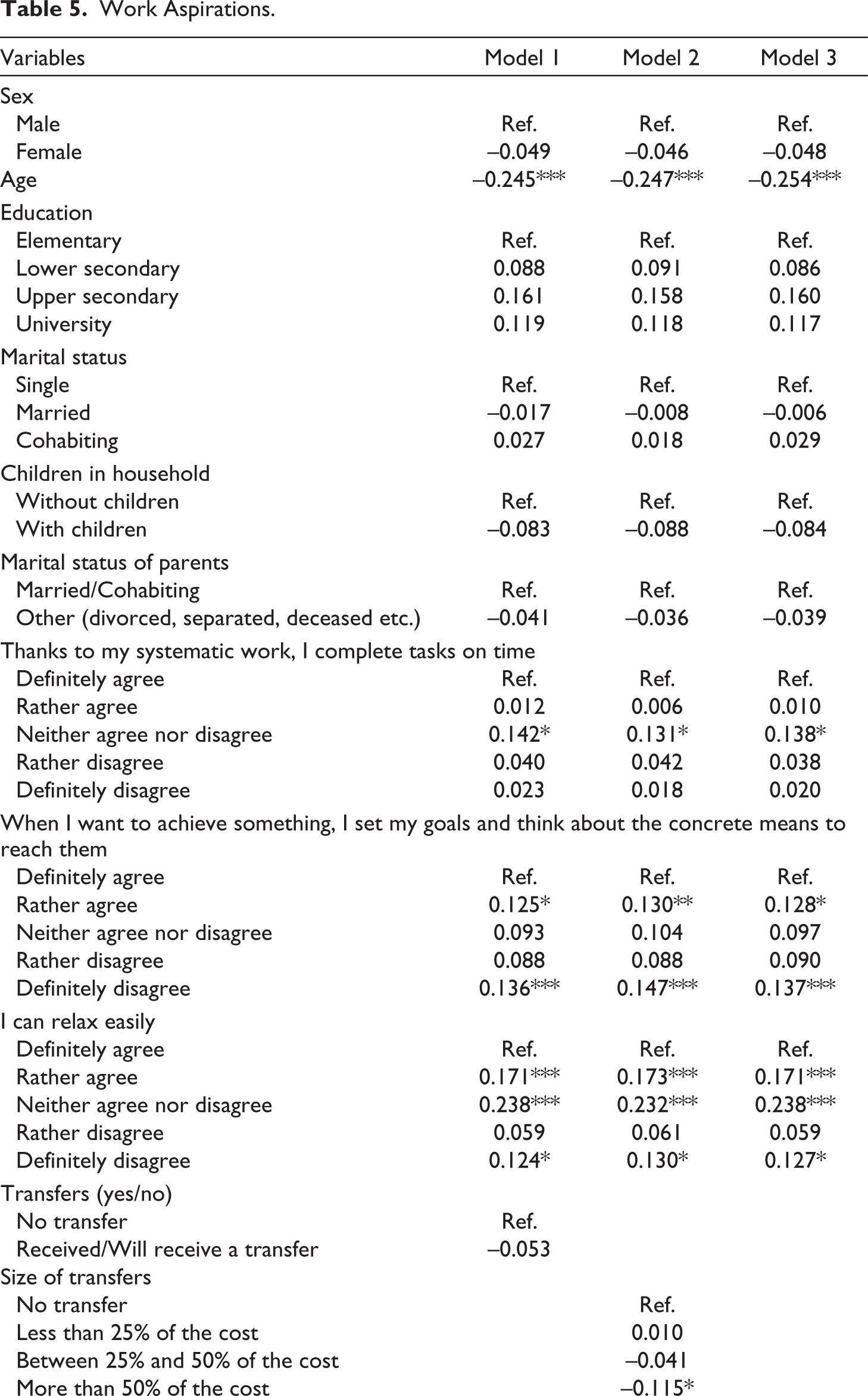
The results for the work domain are presented in Table 5. The respondent’s age is the main factor—the higher the age, the higher the certainty of work aspirations. Those respondents who employ a systematic rational approach when thinking about how to get what they want and those respondents who can relax easily are significantly more certain about their work aspirations. Certainty is also influenced by general clarity of respondent’s answers: ambivalence in the choice—that is, choosing centred option for behavioural questions (‘neither agree nor disagree’)—is significantly associated with less certainty about life aspirations (for the model on housing aspirations, we selected a question on participation in different activities; for the model on work aspirations, it was a question on fulfilling work tasks). The overall explained variance of the dependent variable was relatively high—while the R-squared was as high as 0.21–0.25 for the housing domain, it was 0.22–0.23 for the work domain. The respondent’s marital status, education, and number of children, as well as the marital status of the respondent’s parents surprisingly had no statistically significant impact on the certainty of their work aspirations. However, resource transfers were found to have a statistically significant effect but again depending on their size: those who had received or had been promised a bigger transfer were to a statistically significant degree more certain about their work aspirations than those who had not received and were never going to receive a transfer.
Work Aspirations.
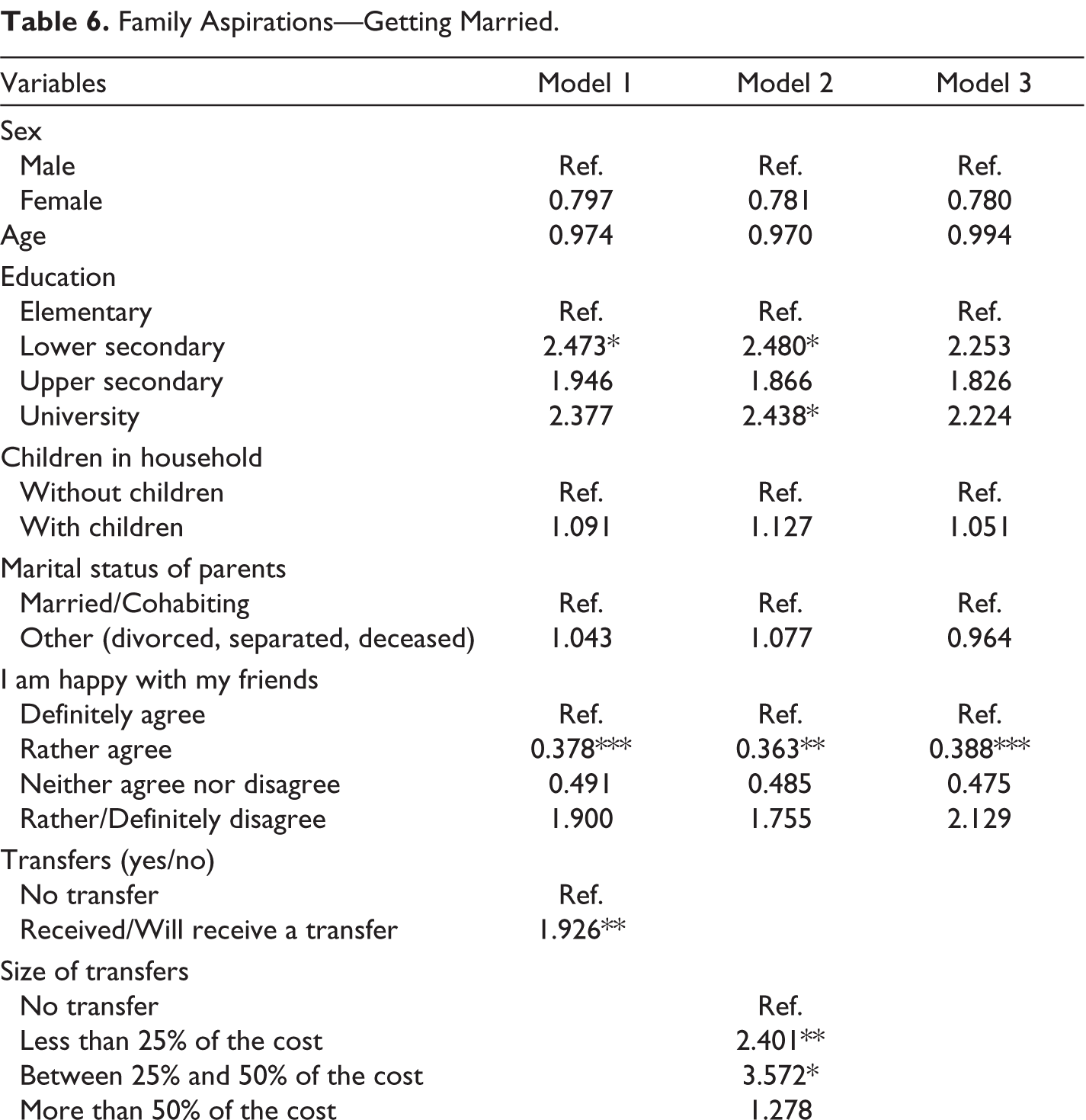
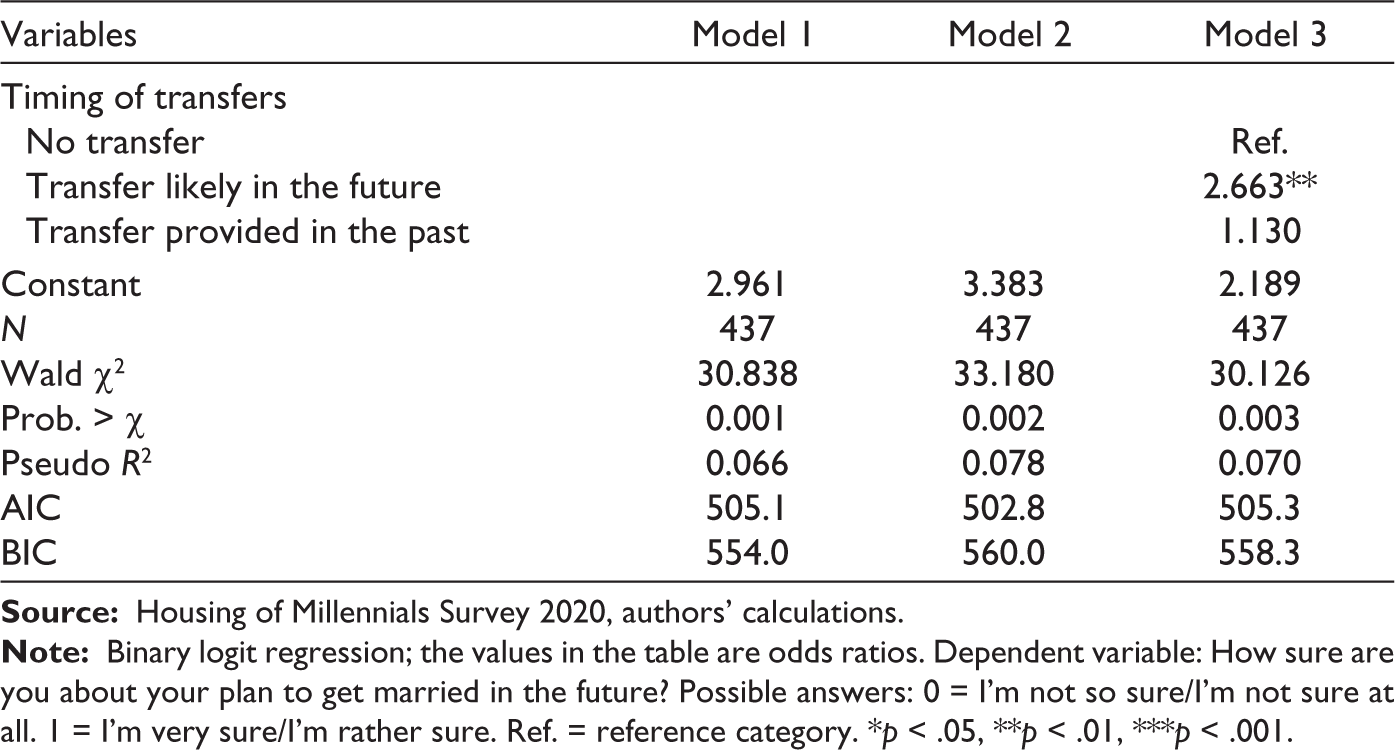
Finally, the results of the logit models for the family domain are presented in Tables 6 and 7. Certainty about marriage aspirations is determined most by educational attainment (greater certainty is observed among respondents with university education) and again by the existence (or not) of a housing-related resource transfer. The simple fact of whether a respondent had received or would in the future receive a transfer alone had a statistically significant effect on certainty about marriage aspirations, but this effect is even stronger for transfers that are likely to be provided in the future (when it concerns their timing). The higher impact that a future rather than a past transfer has on certainty is caused by the fact that most of the unmarried respondents had not yet received their transfer. A centred answer (ambivalence) to the behavioural question (here, sociability) again significantly decreased the level of certainty.
Family Aspirations—Getting Married.
Family Aspirations—Having (More) Children in the Future.
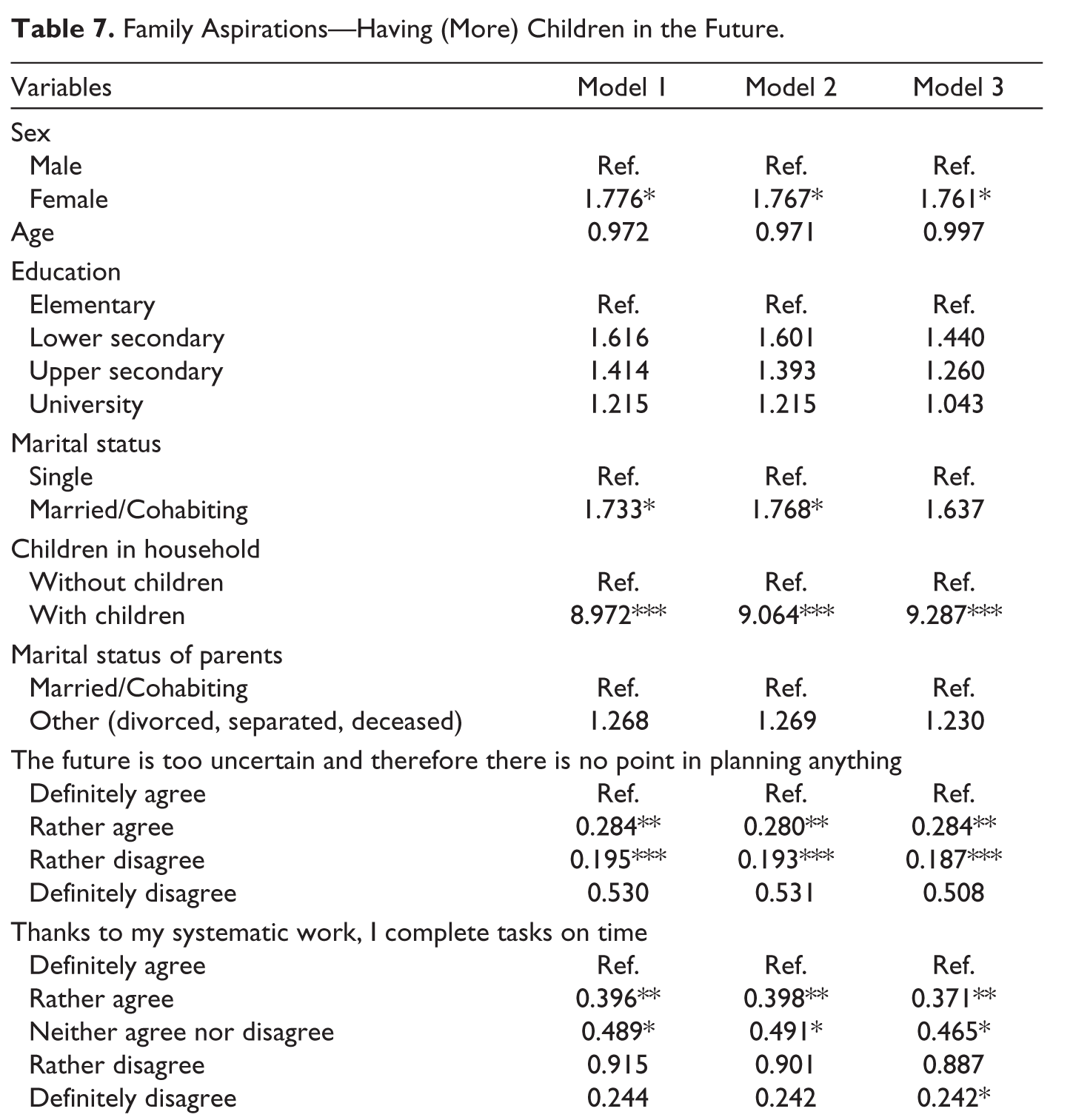
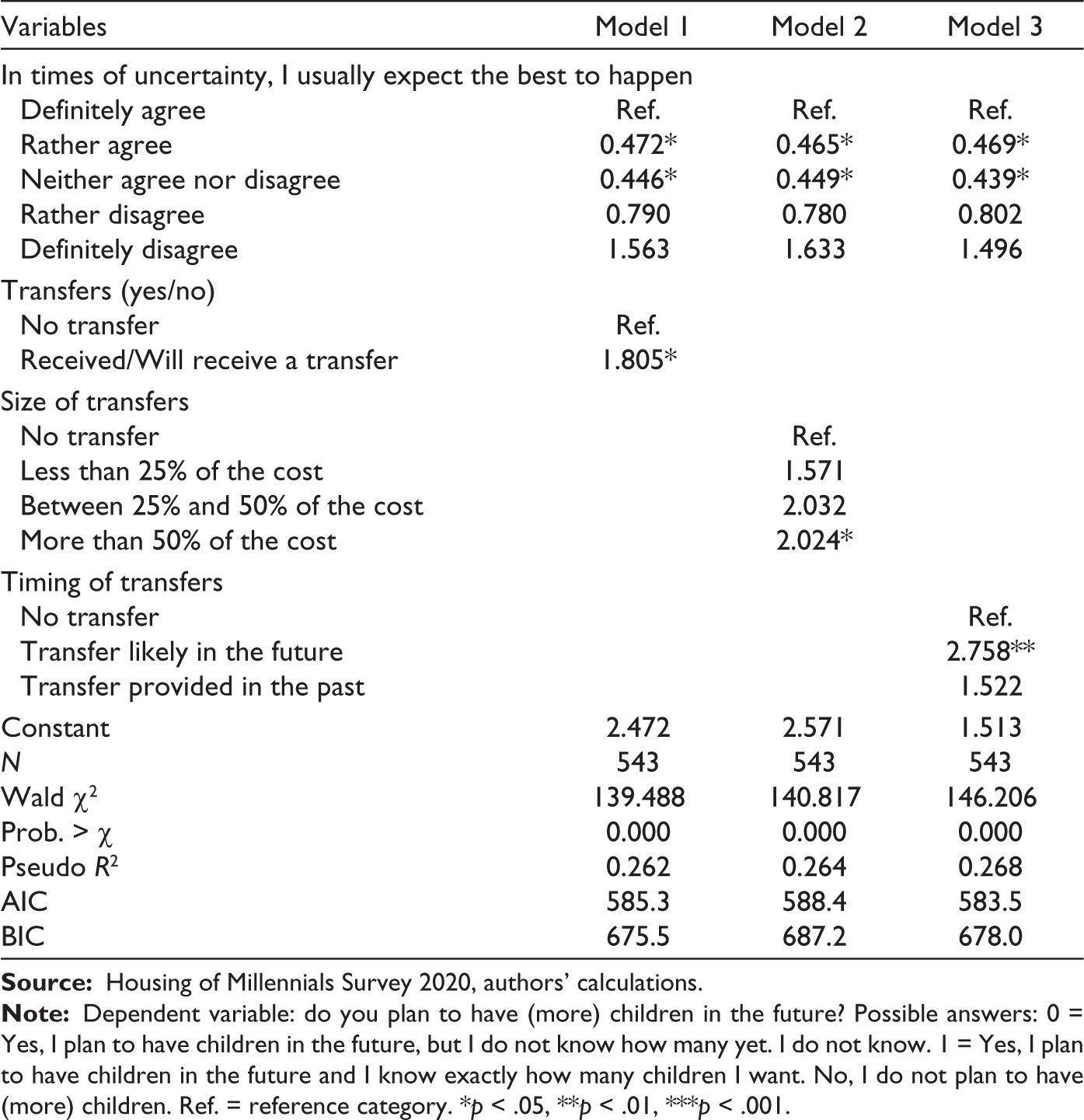
Respondents’ certainty about their aspirations concerning the number of children they wanted was mainly determined by the respondents’ gender, marital status, whether they had any children (married females with children were more certain about this aspiration) and the size of the transfer—the bigger (future) transfers significantly increased the certainty about this aspiration. This effect was controlled for psychological factors, that is, expressed ambivalence concerning life planning, work performance and expectations under uncertainty.
In sum, resource transfers were found to increase the level of certainty about housing and several other life aspirations studied here, after controlling for other factors. Large housing-related resource transfers have the effect of significantly increasing young Czechs’ certainty about their housing, work and family aspirations. While the models could certainly be expanded by adding other explanatory factors that were not examined in our survey, we think that our results confirm that housing-related within-family resource transfers play an important role in the formation of the life aspirations of young people in the context of the post-socialist super-homeownership society.
Discussion and Conclusion
We demonstrated that especially large intergenerational housing-related transfers work as catalysts for increasing the certainty and confidence with which Czech millennials form some of their housing, work and family aspirations. Where these resource transfers are small or where there is no transfer at all, the aspirations are found to be vaguer, more uncertain or unknown. The absence of transfers causes the signposts in the garden where paths branch off to vanish and the life aspirations of young adults are becoming more open.
The Second Demographic Revolution has been driven, according to some studies at least, by the desire of the young generation in industrial countries to increase the freedom they have to form their own life aspirations and obtain more individual control over their future (while being aware of new risks). The change in living and family arrangements is attributed to the value given to autonomy and independence as an expression of self-fulfilment and resistance to institutional controls (Mínguez, 2016). However, we found that young people without housing-related financial assistance from the family have less power to plan their future with certainty and confidence. Without transfers, their future is open, and while this openness may be a sign of their greater freedom, it by no means signifies that they also have greater control over their future.
Summing up, we can conclude that housing-related resource transfers, an example of a structural factor (that is outside an agent’s control), divide young people into two distinct groups, each of which, however, is constrained in its freedom of choice: the first group includes those who get a large transfer and who may effectively and confidently plan their life but are dependent on their parents’ help and thus their choices are at least partially shaped by the traditions, ideas and norms of the previous generation; and the second group includes those who are less dependent on parental values and society’s norms but the absence or small amount of family assistance makes their life aspirations vague, unclear, uncertain or unknown. A freedom in forming life aspirations in a super-homeownership post-socialist Czech context, and especially amid the decreasing housing affordability, is in any case only virtual.
However, as previous research in the Czech Republic has demonstrated, the increasing involvement of parents in the formation of the life aspirations of their adult children, facilitated by within-family housing-related resource transfers, usually takes the form of subtle, implicit, gradual and long-term socialization rather than explicit enforcement and control (Lux et al., 2018). Therefore, the constraints on the freedom to formulate individual aspirations among those Czechs who are able to participate in within-family resource transfer chains are more implicit and often unconscious rather than consciously enforced from the outside. Despite this, the certainty that these young people express may artificially conceal the fact that a significant component of what they desire actually originates in the family, that is to say, it has been passed on from previous generations.
In Czech society, resource transfers for housing acquisition are not just provided in wealthy families. However, household income is a significant determinant of transfer-giving and the size of a transfer (Lux et al., 2021). Therefore, we will probably see stronger class (wealth) determination of transfers in the near future and thus a clearer role for housing-related transfers as a mediator of the association between class (wealth) inequality and young adults’ certainty about their life aspirations. Our article aimed to show the consequences of familialism and increasing intergenerational housing-related assistance, consequences that have long remained unnoticed. This study also demonstrates the merits of a research approach that focuses on the strength of a phenomenon rather than its content, as it can provide new insight into the debate over structure versus agency in youth and housing studies.
Footnotes
Acknowledgements
The research for this article was sponsored by the Czech Science Foundation (Grantová Agentura České Republiky, Pragmatic socioeconomics: A new bridge between sociology and economics in housing studies).
Declaration of Conflicting Interests
The authors declared no potential conflicts of interest with respect to the research, authorship and/or publication of this article.
Funding
The research for this article was sponsored by the Czech Science Foundation (Grantová Agentura České Republiky, Pragmatic socioeconomics: A new bridge between sociology and economics in housing studies) with grant number 23-07371S.