



Abstract
Collectivism is consistently correlated with a positive attitude toward COVID-19 vaccination. Nevertheless, qualitative evidence on how collectivism benefits vaccination is scarce. Serbia has been transitioning from a socialist to a neoliberal country for decades now, and its unique ideological context provokes different forms of collectivism. Young adults are usually the ones who represent radical political, non-neoliberal opposition, embracing collectivistic ideas. We selected a group of self-declared collectivists from Serbia and encouraged them to express their attitude toward vaccination. The final sample consisted of 16 narratives (four female), written by 13 vaccinated and three unvaccinated participants. We conducted two types of thematic analyses, resulting in 12 semantic (five collectivistic and seven individualistic) and two latent themes. The results unambiguously showed the presence of individualism in the argumentation of self-declared collectivists, especially those unvaccinated. We proposed the term Neoliberal collectivism to reach a better understanding of young people’s perspectives in the specific socio-political context.
Introduction
The last two years will be remembered by the pandemic of SARS-COV-19, which officially infected over 600 million, and resulted in lethal outcomes in 6.5 million of individuals worldwide (Our World in Data, 2022). In the beginning, vaccine development and administration brought hope that the pandemic would come to an end and humankind would ‘go back to normal’ once herd immunity was reached. However, vaccination soon became a controversial public topic, introducing a new challenge for decision-makers: vaccine hesitancy, defined as delay in acceptance or refusal of vaccines, despite their availability (MacDonald, 2015). In Western countries, vaccine uptake has been lower than expected (e.g., USA: 68% fully vaccinated; Our World in Data, 2022), particularly among youth who are generally less likely to adhere to preventive measures, while at the same time having the highest cumulative COVID-19 infection incidence (Centers for Disease Control and Prevention, 2022).
Serbia was one of the first European countries to obtain vaccines against COVID-19 in early 2021, offering a variety of choices to its citizens (Sinopharm, Sputnik, Pfizer-BioNTech and Oxford-AstraZeneca) (Delauney, 2021). At the same time, the government had innovative strategies to ‘get more people jabbed’, being the first in the world to pay cash to its vaccinated citizens (Holt, 2021). However, despite these efforts, Serbia’s vaccine uptake is still relatively low: only 47.5% of the general population is fully vaccinated against COVID-19; 15% in the 18–24 age group (somewhat higher among university students) and 33.6% of 25–49 years old. 1
Young Adults and Factors Influencing Vaccination
Previous research has shown that the decision to get vaccinated against COVID-19 is dependent on a myriad of demographic and personal factors such as: gender, socioeconomic status, beliefs of vaccine’s ineffectiveness or harmfulness, low risk of infection complication etc. (Baeza-Rivera et al., 2021; Butter et al., 2022; Gerretsen et al., 2021; McBride et al., 2021; Murphy et al., 2021; Sherman et al., 2021; Williams et al., 2020). Among demographic variables, younger age is consistently associated with lower likelihood of receiving the COVID-19 vaccine (Freeman et al., 2020). Nevertheless, evidence on causes of lower vaccination rates among young adults is scarce. There are consistent findings that they perceive lower probability of dying from COVID-19 infection (Bruine de Bruin, 2021), which is expected considering they typically enjoy excellent health and take it for granted (Medley, 1980). Additionally, they report avoiding vaccination because they do not perceive COVID-19 as a serious illness (Adams et al., 2021). Studies in Serbia have shown that the main arguments for vaccine hesitancy among students and young adults were distrust in the quality, effectiveness and safety of the COVID-19 vaccine, not believing they needed the vaccine (e.g., already having had the virus, zealously wearing a mask, others needing the vaccine more) (Mojašević et al., 2022). Another study shows that young Serbians who are against COVID-19 vaccines also trust the scientific authority less, incline toward conspiratorial beliefs, and use the ‘appeal to nature’ argument (i.e., trusting natural immunity to fight the pandemic) (Žeželj et al., 2021). Young Serbians who placed more trust in traditional media were more likely to vaccinate (Šiđanin et al., 2021). At the same time, students generally reported being confused about conflicting information on whether to vaccinate and lacking expert-led programs on TV (Mladenović, 2021). Considering younger adults spend more time on social media, largely relying on it for health information, they are expected to be vulnerable to misinformation about the COVID-19 vaccines (Basch et al., 2021). In Serbia, the often false, pseudoscientific data on the adverse reactions of certain vaccines (especially Pfizer-BioNTech and Oxford-AstraZeneca) were readily shared online, possibly instilling or reinforcing a sense of panic.
Aside from the aforementioned factors, some studies indicate that social and cultural variables play an important role in vaccination-related decision-making for young adults. One study showed that social norms in peer groups of young adults significantly predict their intentions on getting the COVID-19 vaccine (Abdallah & Lee, 2021). Another study found that students’ collective responsibility (i.e., readiness to protect others from infection by taking the vaccine) has been the strongest antecedent of intention to vaccinate against COVID-19 (Wismans et al., 2021); it seems that collectivism may be particularly important in this context.
Collectivism, Vaccination, and Preventive Measures
Cultural orientations are proven to fundamentally shape reactions to the COVID-19 pandemic (Lu et al., 2021). Individualism and collectivism 2 are considered the most researched and widely used cultural orientation variables, especially in quantitative empirical studies (Hofstede, 2011). In the case of the COVID-19 pandemic, stronger collectivism on a country level correlates negatively with the number of confirmed cases of infection, as well as the COVID-19-related mortality rate (Rajkumar, 2021; Webster et al., 2021). Throughout studies, collectivism has been consistently related to greater compliance with preventative COVID-19 measures, such as mask- wearing, hand-washing, reducing social interactions, physical distancing, staying at home and social bubbling (Card, 2022; Xiao, 2021). Besides individual collectivism, country-level collectivism has an impact on compliance with preventive measures as well (Biddlestone et al., 2020; Germani et al., 2020; Kim et al., 2016).
In terms of vaccination, Leonhardt and Pezzuti (2022) found a connection between collectivist orientation of individuals and their decision to get vaccinated against COVID-19, explaining this finding through empathy towards one’s compatriots. Henceforth, when it comes to cultural orientations and pandemics, it is expected that collectivists feel more threatened when the virus occurs, are conscientious towards the community, worried about infecting others, adhere to measures, as well as trust that their community and country will protect them (Germani et al., 2020).
When it comes to empirically measuring collectivism-individualism, and by that dependence and attachment to others, four scales that combine two comprehensive continuous variables (horizontal-vertical, collectivism-individualism) are mostly used (Xiao, 2021): horizontal collectivism (seeing oneself as similar to others, emphasizing common goals, sociability and interdependence), vertical collectivism (inclination to one’s own group and adherence to hierarchical relationships within), horizontal individualism (tendency to be unique and different from groups, while seeing individuals in the light of equality), vertical individualism (tendency to become special, gain status through competition and self-promotion). In the context of the COVID-19 pandemic, Germani et al. (2020) hypothesized that individualists face troubles fulfilling their needs for uniqueness and competitiveness in uncontrollable external situations, when they are the ones that need to change. Unlike them, collectivists are more adaptable, and by respecting measures, they believe that they are realizing values within their orientation. Meanwhile, Xiao (2021) found that horizontal individualism predicts compliance with the restrictive measures, due to personal responsibility that is based on egalitarian norms.
Serbian Ideological Background
In a certain sense, collectivism is rooted in Serbia’s recent past. Serbia was a socialist country, embracing collectivistic ideas and practices, as part of the Socialist Federative Republic of Yugoslavia up until 1991, when the breakup of Yugoslavia occurred due to political upheavals. Nevertheless, the transition of Serbian society from socialist to neoliberal ideology 3 has its roots in the reforms adopted several years before the breakup of Yugoslavia occurred (Nešić, 2021). Even though Serbia has been going through radical social and economic transition for more than three decades now, it is still considered a society in transition, moving from socialist to neoliberal ideas, in the process of adaptation to the dominant political reality of the West (Vasiljević, 2021). The progressive liberalization of Serbian society implies an ever-growing acceptance of neoliberal ideas and values regarding individualism, individual responsibilities, freedom of choice, consumerism, competition etc. (Harvey, 2007). Simultaneously, transitional, postsocialist status leaves space for some groups to remain influenced by more traditional or alternative ideas. Some forms of retraditionalization are expected as a result of the ideological transition, and collectivism could be considered, in this specific context, as retraditionalization (Bougarel, 1998). Collectivistic ideas are also typically embraced by radical leftists or extreme right-oriented groups, through different forms of communism, as well as nationalism. Additionally, young adults are more often members of alternative social and political movements and radical political organizations, compared to older generations (Norris, 2004; Schils & Verhage, 2014). Taking into account the relationship between collectivism/individualism and vaccination, it is important to explore the potential influence this cultural dimension has on attitudes toward vaccination in Serbia, especially among the subgroup of young adults who represent collectivistic, non-neoliberal political opposition.
Current Study
Studies consistently show that younger age is related to a lower likelihood of getting a COVID-19 vaccine. However, young adults are under-researched in this context. Considered a low-risk group, their decision might be more strongly motivated by factors other than fears of infection or severe symptomatology, such as collectivistic/individualistic orientation. Applying qualitative methodology could help obtain a deeper understanding of the role of collectivism/individualism in vaccine uptake for this age group.
The objective of this study was to explore the attitudes of young Serbian adults towards COVID-19 vaccination in the context of their self-declared collectivistic orientation. Additionally, we aimed to understand which specific aspects of collectivism or individualism benefit or hinder their decision to get vaccinated.
Method
Sample
The sample consisted of 16 written narratives about attitudes towards COVID-19 vaccination, its meaning to participants, and arguments behind their decision to (not) take the vaccine. All participants were self-declared collectivists, with some of them being members of an anarchist group. They are considered young adults residing in Belgrade. They were aged 20–34 (M = 27.71, SD = 3.50). As for gender, male participants made up the majority of the sample (75%). Out of five participants who were not students at the moment, two had no university degree. The sample structure in detail is presented in Table 1.
Sample Structure.
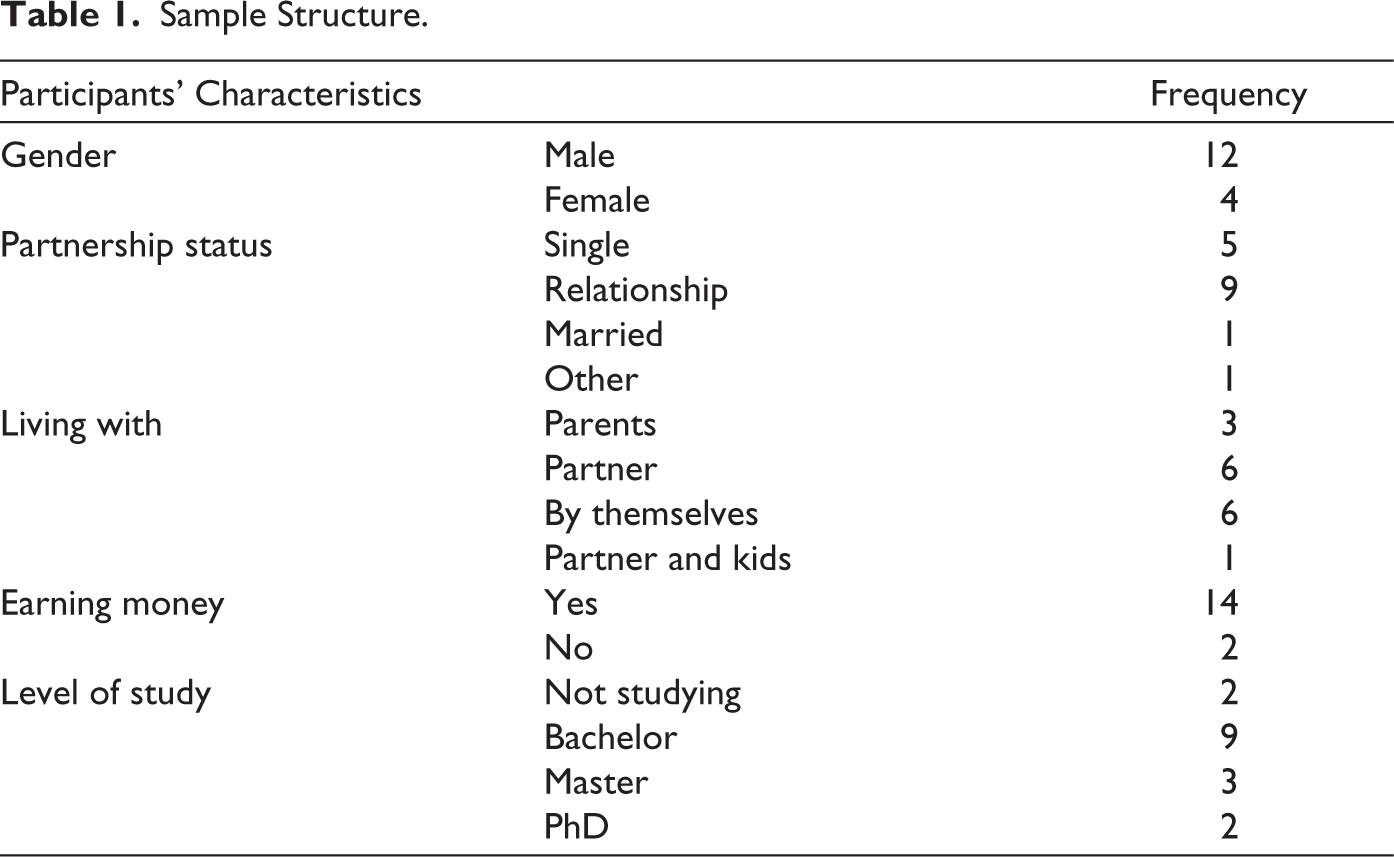
It is important to note that only three unvaccinated participants were included in the sample, so we had a significantly more comprehensive insight into the attitudes of vaccinated participants. Furthermore, female participants were underrepresented in our sample. Gender differences should be explored in the future, especially given the fact that women show stronger hesitation toward vaccination (Freeman et al., 2020).
Data Collection
Purposive sampling was applied in order to gather collectivistic-oriented participants. Prior to filling out the questionnaire, the research invitation called for individuals declaring themselves as collectivists. Data was collected via an online survey, by sending a link directly to participants.
1) Measures
Before starting the survey, participants were asked to categorize themselves as either collectivists or individualists (i.e., confirm their collectivistic orientation) and provide additional information on whether they are members of any specific ideological group, on an open-ended question. Subsequently, they were encouraged to fill out the three-section questionnaire. The first section included questions about participants’ demographics (see Table 1). The second one consisted of an open-ended question (with a minimum character limit of 800, including spaces) about vaccination attitudes. In the third section, participants responded on the Likert-type (1–9) Individualism-Collectivism Scale (Culture Orientation Scale, COS), created by Triandis and Gelfand (1998), translated in Serbian and validated in an intercultural study (Bago et al., 2022).
Data Analysis
The main analysis conducted in this study was thematic analysis, relying on the work of Braun and Clarke (2006). Three researchers engaged separately in the iterative process of coding participants’ answers to the open question about vaccination. With no pre-existing coding frame, patterns were identified in an inductive (‘bottom-up’) way. Through discussion, a consensus was reached on one unified hierarchical coding scheme. Namely, initial codes were re-grouped into higher-order codes, based on their similarity in meaning. The material was again coded from the beginning, using the new comprehensive coding scheme. At this point, the researchers occupied the essentialist epistemological position (i.e., realist method relying on gathered data, reporting on experiences, meanings and the reality of participants, Braun & Clarke, 2006; Willig, 2012), so the analysis remained semantic with a slight progression from description to interpretation. The identified themes (Figure 1) were interpreted in accordance with the work of Triandis and Gelfand (1998) and categorized into two sets, those related to individualism and collectivism.
Thematic Map: Overview of the (Semantic and Latent) Themes.
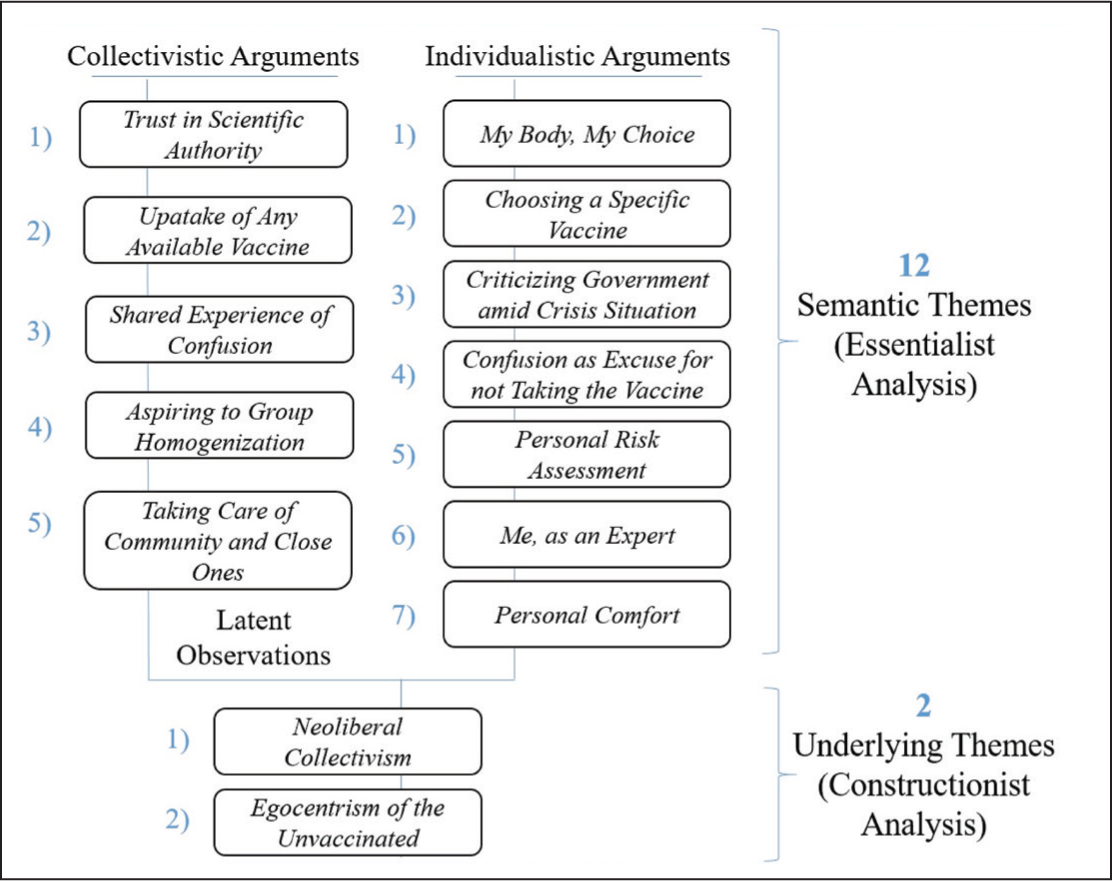
In the second part of the data analysis, we conducted the constructionist thematic analysis (i.e., considering broader assumptions and meanings related to a range of social discourses which underpin the content articulated in the data, Braun & Clarke, 2006; Willig, 2012), by taking into account participants’ self-reported and scale-measured cultural orientation in the context of their dominant political reality. This resulted in two major latent themes (also in Figure 1).
Findings
The results are organized into three major sections. The first two sections represent the outcome of the thematic analysis relying on essentialist principles. This resulted in 12 major themes that could be divided into two groups of collectivism (five themes) and individualism (seven themes) related arguments. The third section contains interpretations and observations that underlie these varying types of argumentations, based on the constructivist approach to analysis. There are two major themes in this section. For more details, see Figure 1.
Themes Related to Collectivism
The themes are illustrated with quotations, marked by the name given to participants (to preserve their anonymity), followed by their age and gender (f-female, m-male).
1) Trust in Scientific Authority
Participants used trust in medical experts and science as one of the main arguments in their decision to get vaccinated, in line with previous research (e.g., Žeželj et al., 2021). They perceived themselves as laymen, less qualified for evaluating vaccines safety and efficiency than doctors and researchers, thus demonstrating adherence to authority ranking characteristic for vertical collectivism. Consequently, conspiracy theories were adamantly rejected.
I am not a doctor and I know nothing about medications and chemical composition of the vaccines, but I trust science and medical workers as the only people who can help us get out of the pandemic darkness, so I never had doubts about taking the vaccine if it became available. (Vlada, 31, m)
Vaccine was often seen as one of the greatest achievements of modern civilization, initially thought of as being capable of ceasing the pandemic. This brought on hope and encouraged them to get vaccinated. However, the vaccination was followed by disillusion once they realized the vaccines were not almighty.
I believe it has proven to be much less effective than it was initially presented as, and as much as we had hoped it would be. (Milan, 29, m)
2) Uptake of Any Available Vaccine
Some of the vaccinated participants emphasized they took any vaccine that was available at the time. Protection of others was a priority compared to spending time choosing and waiting for a specific company’s vaccine.
I was in a hurry to take the vaccine the first week it was available […] I took the Sinopharm vaccine because that one was available at the moment. I’ve waited for six hours in line for vaccination […] Later that day, I was thinking how I did something important and beneficial for myself, others, and for the whole society. (Vlada, 31, m)
3) Shared Experience of Confusion
Confusion was seen as one of the defining elements of participants’ experience. Similarly to previous research (e.g., Melki et al., 2020), cognitive and emotional disorientation was seen as a result of scarce information or inconsistent reports by media, decision makers or even one’s close contacts, which was evaluated as detrimental. Such chaos intensified the perception of the pandemic as a shared experience, with all of us going through the uncertainties together. Such an emphasis on similarity and interdependence could be understood as an indicator of horizontal collectivism.
I understand the concern and distrust of citizens, because they are surrounded by misinformation or incomplete information. Similarly, I think that the distrust in the political and health system in our country contributed to a lot of people having a negative attitude toward this matter. (Lazar, 27, m)
4) Aspiring to Group Homogenization
Some participants demonstrated a strong desire for society members to act and think in the same manner regarding vaccination. They asserted low freedom in individual choice, sometimes even supporting mandatory vaccination.
I would love for vaccination in Serbia to be mandated by law. (Vlada, 31, m)
They believed those with differing opinions should be convinced to vaccinate through further education. Moreover, they sometimes took it upon themselves to impose the ‘right’ attitudes and decisions on others.
All of the people, with whom I talked about vaccination, I strived to convince to get vaccinated. (Boris, 30, m)
I made my father and mother get the vaccine, because they were at risk. (Ivan, 29, m)
Narratives mostly reflected judgment of those who thought differently (e.g., vaccine-hesitant individuals), which was at times followed by intense anger or even hatred.
Maybe at the beginning I was stricter toward anti-vaxxers (thinking that they should all be arrested and publicly vaccinated at Central Square with live streaming on all televisions) believing that they are the stoppers of solution to the pandemic problem. (Stefan, 34, m)
My attitude toward those who didn’t want to vaccinate did change and I progressively thought worse and worse about them, from the initial that they were egotistical, selfish people who were uninformed, to believing that they are in fact human waste, the worst scum, deep in their malice and selfishness, feeling important by selling that story to others, that they ‘think with their own head’ and ‘don’t let someone deceive them’ and that’s why they don’t want to take the vaccine when it’s actually the most basic, individualistic malice. (Vlada, 31, m)
One participant directed his resentment at state representatives for dividing the community. They were accused of shifting their responsibility to those who did not vaccinate by painting them as enemies, thus further asserting the ‘Us versus Them’ discourse.
A lot of frustration about other measures and pandemic victims was blamed on people who didn’t want to vaccinate and who were construed as enemies. I believe it served to avoid talking about the flaws of the health capacities and the system which shifts responsibility on the individual. (Milan, 29, m)
Striving toward group homogenization at the expense of an individual’s right to make his/her own decision reflects valuing sameness, equality, and cohesion as integral parts of horizontal collectivism.
5) Taking Care of Community and Close Ones
Vaccinated participants explained their decision as the responsibility to protect their loved ones and community as a whole from potential COVID-19 infection. They believed vaccination ‘works’ 4 and that they were able to affect the course of the pandemic at the societal level by vaccinating, similar to other findings which accentuated the role of self-efficacy in vaccination intention (Jørgensen & Petersen, 2021). Our participants thought of taking the vaccine against COVID-19 as completing their civic duty, contributing to herd immunity and public health in general.
I consider vaccination to a certain extent (not 100%) provides protection and I believe it is important to do anything to lower the percentage of infection even by 1% … I believe that by vaccinating I fulfilled my civic duty to protect myself and others to a certain extent. (Lazar, 27, m)
It [the vaccination] was a significant topic both because of public health and preserving my own, and by that the collective immunity. (Darko, 29, m)
Others focus more on protecting their closer group - themselves and their immediate contacts, such as friends and family.
I decided to vaccinate after nine months of it [the vaccine] becoming available here in Serbia because I thought it was the only reasonable and correct thing to do to protect myself and those around me. (Emilija, 27, f)
This theme is collectivistic in the sense of prioritizing the most beneficial solution for the community, regarded either as society as a whole (horizontal collectivism) or as one’s immediate in-group, including family, friends, and acquaintances (vertical collectivism). Pandemic is understood as ‘we are in this together’ experience, with each individual having a role in overcoming it. Vaccinated participants saw their actions as stepping up to this global challenge.
It is important to notice that all of the participants who used collectivistic arguments were vaccinated except for one who used this discourse to explain her decision not to vaccinate.
[…] the motto-I don’t do it for myself, but for others-was so insidiously manipulated. I also don’t take the vaccine for [the sake of] others (by my act I am giving an example to others of what I think is better and safer). So, my argument is absolutely identical to those who are vaccinated, it’s just that my opinion is different. (Nina, 28, f)
Themes Related to Individualism
1) My Body, My Choice
The topics of bodily autonomy and freedom of personal choice were closely interrelated and represent typical individualistic, neoliberal values (Harvey, 2007). Freedom of choice was related to participants’ importance of having the opportunity to choose whether they want, for any reason, to receive or avoid the vaccine. Body autonomy is the most common argument standing behind the need for freedom of choice, and it was conceptualized by our participants as the right of individuals to decide what they want to do with their own bodies, what they want to ‘put’ in their bodies, as well as whether they want to risk any side effect by taking the vaccine.
Vaccination is a very important topic for me because it is associated with my own body and my main principles and attitudes regarding society, which are freedom to decide what I want to do with my body and choose medical treatments (Nina, 28, f).
Freedom of choice was highlighted as an imperative for some vaccinated, as well as unvaccinated participants but in different ways. Unvaccinated participants used freedom of choice and importance of respecting one’s bodily autonomy as an argument for not taking the vaccine, that is, in a more vertical individualism manner, whereas vaccinated individuals used these themes as an expression of understanding those who have opposite attitudes toward vaccination, which is more in line with horizontal individualism.
Any sort of forcing the citizens to any acts which could potentially violate their body autonomy is absolutely unacceptable. (Jovan, 32, m)
2) Choosing a Specific Vaccine
Researchers interpreted indecisiveness about the choice or favouring a specific vaccine as an individualistic practice since it was usually followed by prioritization of knowledge gathering and advice seeking regarding ‘the best vaccine for them’ rather than timely immunization. This resulted in a delay in vaccination. As mentioned before, reporting on ‘taking any available vaccine as soon as possible’ in order to contribute to herd immunity was considered collectivistic.
However, when Serbia came into a situation to be one of the first European countries that got the vaccines, every possible kind, first of all Chinese and Russian, I was a bit indecisive […] I wasn’t fully sure of my decision to take the Russian vaccine […] Long story short, after a while, I took the Pfizer vaccine. (Jelena, 26, ž)
3) Criticizing Government Amid Crisis Situation
Some participants were critical or suspicious toward the real motives of governmental institutions and authorities, their potential manipulation or intent of deception regarding vaccines and advice on vaccination.
Another problem arose when the authorities in France decided to oblige only workers in the medical sector (and not the entire public sector) to be vaccinated under threat of suspension from work. Double standards of this type cannot be justified by any logic. If vaccines are safe, why not oblige everyone to get vaccinated? Why make a selection? (Stefan, 34, m)
And finally, I have no blind faith in organizations and institutions, especially pharmaceutical ones. (Nina, 28, f)
Although critical questioning of authority generally relates to politically opposed individuals, often collectivistic oriented (Brack & Weinblum, 2008; Guerin, 1970), in this specific context this act seems more individualistic. We hypothesize that collectivism in this crisis implies putting the health of the community above all else and making (every possible) effort to ensure immunity, and therefore safety of the collective. Act of distrusting the institutions seems to put the individuals and their dignity before the acute interests of the whole society.
4) Confusion as Excuse for Not Taking the Vaccine
Unlike those who found confusion a shared pandemic experience, there is an argument that individualistically points to the confusion around vaccines as one of the excuses for not taking them. In the case of this participant, the confusion is mixed up with fear and resembles the personal attitude rather than confining to a communal norm.
It’s an understatement to say that I felt confused, I didn’t know what to believe. […] I have not been vaccinated. I was in a dilemma, but the fear still prevailed. (Sara, 26, ž)
5) Personal Risk Assessment
Both unvaccinated and vaccinated participants provided some individualistic arguments, which unambiguously showed that their decision has (also) been based on risk assessment on a personal level. For example, both absence and presence of fear from the consequences of the vaccine concern their own health, with no regard to (or despite of) the health of others.
My opinion is that, in general, vaccination contributes to herd immunity, but this vaccine has not been studied enough for me to take a risk. (Sara, 26, ž)
Even if it is a two percent protection, I would rather take it because it is still some minimal protection, and there is no evidence of any harmful consequences of vaccination. (Vlada, 31, m)
The individualistic arguments also concern the presence of fear of getting COVID-19. The absence of fear, in this case, is characteristic for those who are not vaccinated, making them refuse the vaccine on a personal level, because they do not need it (‘young and healthy’). On the other hand, some vaccinated participants actually took the vaccine in order to protect their own health, prior to the health of others.
I couldn’t wait to get vaccinated. I was afraid of getting infected during the exams, so I wanted to reduce that possibility to a minimum. […] Since I got infected even though I was vaccinated, I’m certainly glad that I got vaccinated because I didn’t have a single symptom and I got through it ‘on my own two feet’. (Nenad, 20, m)
In both these situations, vertical individualism goals are put in front of the in-group goals.
6) Me, as an Expert
Some participants felt competent to choose experts and sources of information to withdraw arguments pro/against vaccination from. They decided to take a sceptic and investigative position, trusting themselves as their own authorities, rather than simply following ‘the superior authority’ of knowledge (such as science) or communal welfare.
I watched YouTube videos about how different vaccines work, reviewed scientific papers, read newspaper articles, consulted with friends who were also motivated and interested to inform themselves about vaccination, as well as one friend who graduated from the Faculty of Medicine and worked in a covid clinic. (Jelena, 26, ž)
And finally, I have no blind faith in organizations and institutions, especially pharmaceutical ones. I have confidence in people, by their name, who in this situation either tell me not to get vaccinated or don’t have good enough reasons why I should get vaccinated, and above all they don’t have proof that it’s safe. (Nina, 28, ž)
This also includes participants’ belief that they are in a position to evaluate the quality of the vaccines and whether they have been tested long enough.
Unlike some other vaccines, this vaccine is untested. […] It can be said that the testing was done symbolically, like scientific practice in high school. Just as experience cannot be gained by studying but by doing, so the time that must pass in testing [the vaccines] can’t be shortened or skipped. (Nina, 28, ž)
This expert-sceptic position of those who were unvaccinated was additionally strengthened by learning of others getting sick after receiving it.
My friends, although vaccinated, got the corona, but I didn’t and that strengthened my attitude. (Petar, 26, m)
Suspicion, manifested by the need to choose the ‘right’ narratives themselves, and in order to avoid manipulation by those in power, also resembles the position of an expert. This individualistic argument could be connected to conspiracy beliefs and widespread distrust.
The third reason (why I received the Sinopharm vaccine) is the prejudice against the Western capitalist way of doing things, because of which, although I am aware that vaccines are not some kind of poison, I was afraid that those companies made lower quality vaccines for the sake of saving money and making profit. (Filip, 23, m)
[…] the problem arose when the authorities in France decided to oblige only workers in the medical sector (and not the entire public sector) to vaccinate under the threat of suspension from work. Double standards of this type cannot be justified by any logic. If vaccines are safe, why not oblige everyone to get vaccinated? (Jovan, 32, m)
I believe that corona and the whole fame surrounding it was used for other things. (Petar, 26, m)
7) Personal Comfort
Some participants chose arguments for vaccination that do not concern other people at all and are purely individualistic. Taking the vaccine, in this case, enabled participants with a more comfortable life, getting monetary compensation and not being restricted in movement. The most frequently mentioned reasons were entering catering facilities and travelling.
When they offered those 3000 (dinars), I got vaccinated to get that money. (Ivan, 29, m)
The reason why I decided to take the vaccine - so that I would not be a second-class citizen whose life freedom in the country is taken away due to non-compliance with the imposed rules. (Jovan, 32, m)
It was completely unimportant to me which vaccine I would receive, let alone whether there would be any consequences. It was important for me to be able to enter the catering facility. (Stefan, 34, m)
Honestly, I was worried about how difficult it would be for me to enter other countries if I received the Russian or Chinese vaccine. (Jelena, 26, ž)
The Underlying Themes
1) Neoliberal Collectivism
All of the participants declared themselves as collectivists, with some being members of a left-wing organization, meaning our sample was constituted of individuals representing political opposition. The results of the scale-measured collectivism show consistently high scores on horizontal collectivism among all participants, which partially validates their self-perception. However, most of our study subjects show high scores on horizontal individualism as well. This finding is in accordance with the thematic analysis results, since the same collectivists scoring high on horizontal individualism and horizontal collectivism demonstrate this fusion of collectivism and individualism in their narratives. These findings are not fully congruent with participants’ self-perceived collectivistic orientation. Therefore, we named the first latent theme, Neoliberal collectivism, in an attempt to understand this finding.
2) Egocentrism of the Unvaccinated
Another prominent finding when considering scale-measured individualism/collectivism was the presence of consistently high scores on vertical individualism among those who were hesitant toward vaccination. This result was confirmed by the thematic analysis of their narratives. Most frequently identified themes were Personal risk assessment, Criticizing government amid crisis situation, as well as My body, my choice. We named this latent theme Egocentrism of the unvaccinated since they perceived and justified their attitude toward vaccination by taking up an exclusively self-oriented perspective.
Discussion and Conclusion
Young adults represent one of the most hesitant population groups in terms of COVID-19 vaccination, especially in Serbia. Additional information on possible causes could be useful in overcoming their reluctance, by implementing strategies which benefit the vaccine uptake. Since young adults often perceive COVID infection as relatively benign, we suggest that the decision to (not) vaccinate is more strongly motivated by social and cultural variables than by fears of infection-related health complications or death. One of the most researched cultural factors in the pandemic context is individual or country-level collectivistic orientation. Findings decisively show that collectivistic countries, as well as collectivistic-oriented individuals, adhere more readily to protective measures, including vaccination. Does that mean that individualistic societies are doomed in the context of this, or any similar, health crisis? Our results indicate that that is certainly not the case.
Throughout this study, we explored in-depth how collectivistic-oriented individuals in a dominantly individualistic country perceive vaccination. Additionally, we examined whether collectivism in individualistic countries indeed represents conventional collectivism. As a result of these considerations, critical reevaluation of the relationship between individualism and vaccination was offered. We conducted two thematic analyses on 16 vaccination-related narratives of collectivistic-oriented individuals. Five collectivistic and seven individualistic themes emerged as a result of the first thematic analysis. The distribution of defined themes indicates that most of the collectivistic themes were found in the narratives of vaccinated participants. Only one participant used collectivistic themes to justify her vaccine hesitancy. These results are in accordance with previous findings on the correlation between the collectivistic orientation of individuals and a positive attitude toward COVID vaccination. On the other hand, unvaccinated participants predominantly utilized a variety of individualistic arguments. These findings show that the decision to vaccinate depends on how the individual relates to the society he/she is a part of. In other words, collectivistic orientation does indeed represent an important variable to consider in the context of vaccination. Vaccinated individuals in our sample often mentioned others’ safety, herd immunity, the importance of group homogenization, group/community shared experiences and emotions, seeming truly group-centred. They usually delegated their trust to health experts and science. Conversely, unvaccinated individuals rarely related to the group, rather focusing on their own rights, bodily integrity, personal safety, and protection of dignity. They displayed more self-centeredness in this context, considering their own attitudes reliable enough to make the final decision on vaccination.
Another important finding is that individualistic themes were also frequently present among the narratives of vaccinated participants, in addition to aforementioned collectivistic themes. However, there is an important difference in the use of individualistic themes: while those who are not vaccinated justified their decision through various self-centred themes (in line with vertical individualism), vaccinated participants often used individualistic themes such as My body, my choice in the context of discussing and understanding the vaccination-attitudes different from their own. These individualistic themes coincide more with horizontal individualism.
Latent thematic analysis, which combined themes defined above, participants’ self-perception of their collectivistic orientation, as well as scale-measured social orientation, was congruent with the results of the first thematic analysis. It provided data valuable for a deeper understanding of participants’ attitudes toward vaccination, collectivistic values, and their interrelation. All of our first-step thematic analysis findings were validated through latent analysis. Most of the vaccinated participants showed a high horizontal collectivism score, paired with a high horizontal individualism score. Only unvaccinated individuals had high vertical individualism scores.
We named the first latent theme Neoliberal collectivism in an attempt to underscore the intertwined individualism and collectivism among those who had a positive attitude toward vaccination and declared themselves as collectivists. We propose the hypothesis that our participants are inevitably subjects to their dominant, neoliberal ideology, which intensely promotes individualistic values and practices. Simultaneously, their tendency to oppose the dominant political reality through different ideologies (various forms of communism or nationalism) certainly influences the selection of values internalized from the neoliberal society they are a part of. We assume that horizontal individualism is more congruent with collectivistic values because of the major emphasis on egalitarianism, implying some degree of empathy, care, and responsibility toward society. This could explain why these collectivistic-oriented individuals adopt ideas and values related specifically to horizontal individualism more readily. Through these processes, a unique form of collectivism arises, as we called it – Neoliberal collectivism, representing a synthesis of congruent collectivistic and individualistic ideas.
Our results seem even more compelling when we take into account that some of the study participants are members of a radical leftist organization, whose collectivistic ideas, values, and practices represent an even more central part of their identity. Based on the findings, it seems that not being influenced by the dominant political reality is impossible even for those who most strongly identify with collectivism. The question remains whether this fusion of collectivism and individualism among our participants is culturally specific to Serbia, whose transitional status leaves more space for politically and culturally alternative ideas. It would be interesting to explore this finding in different contexts. Does collectivistic orientation in purely neoliberal countries differ from our construction of Neoliberal collectivism? Could there possibly be even less collectivism in the collectivistic orientation of those living in more neoliberal societies?
The second latent theme was constructed as a result of high scores on vertical individualism combined with frequent presence of individualistic themes in unvaccinated participants’ narratives. Since vertical individualism indicates preferences toward autonomy combined with low equality and their narratives were mostly self-centred, we named this theme Egocentrism of the unvaccinated. It is interesting that these participants perceived themselves as collectivists when asked to declare as individualists or collectivists. One possible explanation could be that they simply confuse collectivism with individualism because of the egalitarian elements in horizontal individualism (confirmed by scoring relatively high on the horizontal individualism scale), possibly not comprehending the concept of collectivism properly. Another reason could be their unique understanding of collectivism, especially in the context of vaccination - considering the COVID vaccination itself a threat to the collective, as one participant did.
It could seem that individualism is less preferable in the context of vaccination, especially in the light of available quantitative research findings. However, a careful exploration of our results indicates a different perspective. Although this study validates the positive influence of collectivistic orientation on vaccine attitudes and decisions, individualism has its contribution. Namely, we indicate that horizontal individualism, which emphasizes the equal status of all individuals in society, is compatible with collectivism. It seems that, among our participants, horizontal individualistic values equally contributed to a positive attitude toward vaccination as collectivistic values. In future research, it would be interesting to compare these results with vaccination narratives of participants who declare themselves individualists and assess how much individualism/collectivism is present in their individualistic argumentation.
Our findings indicate that, besides collectivism, horizontal individualism has a positive influence on attitudes toward vaccination. Additionally, we assume that collectivists and individualists share values related to horizontal individualism, at least in the cultural contexts similar to Serbian. Therefore, it could be helpful to utilize appropriate individualistic argumentation in public communication strategies, aiming to promote mass vaccination among individualistic societies. Argumentation should focus on discourses of equality, for example, equal rights of individuals to safety and health. Calling attention to collectivists’ and individualists’ overlapping values could be beneficial for the whole society, with respect to its dominant as well as more marginal ideologies.
Supplementary Material
The supplemental material for this article is available online.
Footnotes
Ethical Approval
The research (Protocol #2022-63) has been assessed as a low risk by the Institutional Review Board (IRB) of the Department of Psychology, Faculty of Philosophy, University of Belgrade.
Declaration of Conflicting Interests
The authors declared no potential conflicts of interest with respect to the research, authorship and/or publication of this article.
Funding
This research was funded by the Ministry of Education, Science and Technological development of the Republic of Serbia (Contract Number: 451-03-9/2021-14/ 200163) and the University of Belgrade, Faculty of Philosophy (research project ‘Humans and Society in Times of Crisis’ [Čovek i društvo u vreme krize]).