



Abstract
Scientific evidence on the incident-specific characteristics of sexual assault during youth is limited. Using latent class analysis, this article contributes to this research agenda by (1) developing a typology of sexual assaults by both peers and adults and (2) examining how assault types are associated with adverse life outcomes. The analysis is based on 1,402 cases of sexual assault reported in two population-based surveys among 18–19-year-olds in Norway. Six latent classes of assault were identified: (1) peer sexual contact while intoxicated (33.3%), (2) peer sexual penetration while intoxicated (25.5%), (3) severe violent assault by peer (15.1%), (4) assault in romantic relationship (13.0%), (5) severe pressure by younger adult (7.4%) and (6) assault by older adult (5.7%). All assault types were related to adverse outcomes in the realms of mental and physical health, social relationships and substance use, with the most adverse outcomes in the class containing severe violent assaults.
Keywords
Distinguishing Types of Sexual Assault Among Young People: A Latent Class Analysis Approach
Research on the scope of sexual violence among young people has developed in recent years. Studies have been conducted on both the general youth population (Gewirtz-Meydan & Finkelhor, 2020; Stefansen et al., 2021) and on more selected populations, such as students pursuing higher education (Fedina et al., 2018). Overall, these studies have identified sexual violence as a widespread phenomenon among young people, despite the increasing efforts in many countries to prevent it. Other studies have emphasized the ways in which experiencing sexual violence leads to adverse outcomes for young victims across a wide range of life domains (Dworkin et al., 2017, Fletcher, 2021; Hailes et al., 2019, Irish et al., 2010; Lorenz & Ullman, 2016; Vitek et al., 2021).
How to describe the ‘landscape of sexual victimization patterns’ (Pedersen et al., 2023) in youth, that is, the constellation of types of assault young people experience, is a key question in this research. Despite numerous attempts to map subgroups (e.g., French et al., 2014; Littleton et al., 2021; Walsh et al., 2021), scientific evidence on the incident-specific characteristics of sexual assault situations among young people is still limited. This article contributes to the discussion on how these types can be identified, labelled, and linked to potential outcomes. Such analyses provide vital insight in terms of developing targeted prevention policies, as they address the question of ‘who is more at risk of experiencing what patterns’ (Théorêt et al., 2022) of sexual violence. Our article goes beyond previous attempts at mapping and conceptualizing types of sexual assault in youth in three main ways: by using a national and population-based sample, by mapping assaults over a longer period of youth and by including the age of the assailant in the analysis.
For this purpose, we used data from the YouthViolence study, which comprises two large-scale surveys of students aged 18–19 in their final year of Norwegian upper secondary school in 2007 (n = 7,033) and 2015 (n = 4,530). Pooled together, the surveys contain detailed information on 1,402 instances of sexual assaults that occurred during the participants’ teenage years, which was used for identifying latent subgroups of assault. Guided by previous studies on the adverse outcomes of sexual assault (Dworkin et al., 2017, Fletcher, 2021; Hailes et al., 2019, Irish et al., 2010; Lorenz & Ullman, 2016; Vitek et al., 2021), we also investigated how the latent subgroups of assault differed in terms of their association with adverse outcomes in the realms of mental and physical health, social relationships and substance use.
Categorizations of Sexual Assault
Sexual violence is a broad concept that goes beyond situations containing physical contact, which is our focus here. However, we take an encompassing approach to physical sexual assault by mapping experiences ranging from unwanted sexual touching to assaults involving different forms of penetration. Drawing on a normative perspective of sexual violence, we see all of these acts as constituting intrusions upon the victim’s sexual autonomy (Cahill, 2016; Hirsch & Khan, 2020).
Researchers have taken different approaches to identifying subgroups of sexual assaults among young people, using either a ‘variable-oriented’ or a ‘person-oriented’ approach (Bogat et al., 2005). While the former relies on predefined categorizations, the latter applies to latent class analysis (LCA), thus producing holistic categories of experiences generated from empirical data with the potential to identify axes of difference outside of those inherent to pre-defined categorizations. As such, the person-oriented approach can offer new insight into different types of sexual assault experienced by young people and the variations in their associations with adverse outcomes.
While the variable- and person-oriented approaches constitute different inroads to assault categorization there are also clear linkages between the two approaches. The selection of latent class indicators in person-oriented analyses is generally informed by research within the variable-oriented approach; examples include research on how sexual assaults vary according to the victim-perpetrator relationship (Friis-Rødel et al., 2021; Tarzia, 2021), the type and degree of force used (Fedina et al., 2018), and whether alcohol or drugs were involved (O’Callaghan & Ullman, 2022). However, the use of person-oriented analyses to categorize sexual assault in youth is relatively novel; so far, no consensus has been reached regarding what empirical data should be included in the analyses. Rather, the research field is characterized by explorative analyses with different inputs that produce different sets of sexual assault types, although some types remain constant across studies.
Studies using a person-oriented approach to sexual assault categorization commonly include information on the sexual acts perpetrated (French et al., 2014; Masters et al., 2015; Walsh et al., 2021), the tactics used (French et al., 2014; Littleton et al., 2021; Masters et al., 2015; Walsh et al., 2021), the characteristics of the assailant and their relationship to the victim (Littleton et al., 2021; Macy et al., 2007; Walsh et al., 2021), alcohol consumption (Littleton et al., 2021; Macy et al., 2007; Walsh et al., 2021), and the situational context and victims’ understandings of the situations (Littleton et al., 2021; Macy et al., 2007; Walsh et al., 2021), most often producing between three and five latent classes of sexual assault.
One commonality in the research to date on latent classes of sexual assault among youth is the identification of latent classes that include heavy substance use, either by the victim, the assailant or both (French et al., 2014; Littleton et al., 2021; Macy et al., 2007; Walsh et al., 2021). Several studies have also identified some form of forceful assault (Littleton et al., 2021; Masters et al., 2015; Walsh et al., 2021), while studies that examine other forms of assault than rape also identify latent subgroups of attempted assaults and unwanted sexual contact (French et al., 2014; Masters et al., 2015; Walsh et al., 2021) as well as assaults that stem from incapacitation due to substance use (Masters et al., 2015; Walsh et al., 2021). An additional commonality is the identification of assaults conducted by someone either known or trusted by the victim (Macy et al., 2007; Walsh et al., 2021), though studies have also identified assaults conducted by strangers (Walsh et al., 2021) and intimate partners (Littleton et al., 2021). Studies that include prior victimization as a latent class indicator have also identified a revictimization type (French et al., 2014; Macy et al., 2007).
Sexual Assault and Adverse Outcomes
Some LCA studies on sexual assaults in youth include both information on assault experiences of various kinds and information on possible adverse outcomes in different life domains in the empirical model (e.g., Davis et al., 2020; Nelon et al., 2019; Théorêt et al., 2022). An alternative approach, which we use here, is to link situational types of sexual assault to possible outcomes. By not including the outcomes in the formation of the latent classes, we acknowledge the victims’ interpretation of their experience as a sexual assault without necessarily presupposing that it must also be associated with ill-being.
In deciding what outcomes to include, we are informed by previous studies on the association between either childhood or youth sexual assault and adverse outcomes in different life domains. We take a broad approach to possible adverse outcomes, which is consistent with the literature. Sexual assault has been associated with psychological dysfunction (Dworkin et al., 2017), physical health problems (Irish et al., 2010), alcohol and drug abuse (Fletcher, 2021; Lorenz & Ullman, 2016) and difficulties with romantic and social relationships (Vitek & Yeater, 2021). An umbrella review of meta-analyses on associations between sexual abuse and assaults before the age of 18 and adverse long-term outcomes highlighted studies on PTSD, schizophrenia and substance misuse as being of particularly high quality (Hailes et al., 2019). However, the study also referred to the underlying research that associates sexual assault with unfavourable outcomes as being limited by small study effects, excess significance and high heterogeneity between studies.
Based on the general finding that sexual assault may hamper well-being and functioning across different realms of life, this study spans many potential adverse outcomes related to mental health (depressive symptoms, suicidal ideation and eating disorders), physical health, social relationships (friendships and romantic relations) and alcohol and other substance use. Unfortunately, due to the use of secondary data, information on PTSD could not be included. In terms of policy development, it is important to address the question of whether different types of sexual assaults are associated with specific adverse outcomes or contribute to ill-being across multiple areas of life. The first would indicate a need for targeted work on a given outcome, as well as the prevention of sexual assault in itself, while the latter would indicate a need for the development of broad interventions and relief measures for victims of sexual assault.
Several indicators known to be associated with both sexual assault (Butler, 2013) and adverse life outcomes (Sheldon et al., 2021) were included in the analyses as potential confounders of the associations between the latent classes of sexual assault and the outcome variables; examples include family socioeconomic background, having divorced parents, migration background, childhood sexual abuse and academic performance. By controlling for these factors, we estimated a conditional association between the different types of sexual assault and the included outcomes.
This Study
In this study, we follow Walsh et al. (2021) in identifying situational types of sexual assaults in youth by only including incident-specific characteristics in the analyses. As our analyses are based on data from students in their final year of upper secondary school and include experiences from throughout the teenage years, we expect that the analysis will yield a finer-grained typology of sexual assaults in youth than what Walsh et al. (2021) were able to identify using experiences of sexual assaults after enrolment in higher education as the empirical input. An additional novelty in our approach is the inclusion of the age of the assailant in the analyses with the possibility of identifying assaults from both adults and peers, thus generating a more comprehensive picture of the landscape of sexual assaults in youth.
We also investigate how different assault situations relate to adverse outcomes identified in previous research as linked to sexual assault in the realms of mental and physical health, social relationships and substance use (Hailes et al., 2019). Previous studies have found that the presence of physical force (Littleton et al., 2021; Masters et al., 2015) and completed penetration (Masters et al., 2015; Walsh et al., 2021) in sexual assault situations increased the risk of adverse outcomes, and we expect a similar pattern in our data. Additionally, the effect of the age of the assailant on the relationship between sexual assaults and potential adverse outcomes has not yet been examined.
Data and Methods
Procedures and Participants
The data were obtained from the YouthViolence study conducted by Norwegian Social Research, Oslo Metropolitan University. The study comprises two population-based surveys of students in their final year of upper secondary school in Norway in 2007 (n = 7,033; response rate 77.3%) and 2015 (n = 4,530; response rate 66.2%). The study was designed to map experiences with violence and abuse during childhood and adolescence among adolescents in Norway. Before the 2007 survey, a school sample was drawn by Statistics Norway from a pool of all upper secondary schools in the country to obtain a nationally representative sample of schools. The schools were stratified according to geographical region to ensure participation from all parts of the country. Each school’s sampling probability was proportional to the number of enrolled students. If a sampled school declined to participate, it was replaced by a new school from the same stratum; the same schools were asked to participate in the 2015 survey. All students at the sampled schools were invited to participate in the surveys, which were administered during two consecutive school hours with a teacher present in the room.
To prevent the answers to sensitive questions being visible to the other participants, the schools were instructed to treat the administration of the survey as if it was an exam. An information pamphlet on the content of the survey, as well as contact information for a psychologist in case of emotional reactions from the participants, was provided to each school’s health service and counsellor. All participants were also provided with contact information for the school health service, public health services, and an anonymous helpline for young people. All survey procedures were approved by the Regional committees for medical and health research ethics (REK) (2007) and Norwegian Centre for Research Data (NSD) (2007 and 2015).
The main analyses in this article were restricted to respondents following an expected trajectory throughout school (18–19 years old in the final year of upper secondary school) who had experienced some form of sexual assault after turning 13 (n = 1,014). Older respondents were excluded from the analyses. Sexual assault was measured using a behaviourally specific questionnaire inspired by the Sexual Experiences Survey (Koss et al., 2007). The respondents were asked to report any unwanted sexual experiences after turning 13, followed by a list of 10 sexual acts ranging from unwanted sexual touching to completed oral, vaginal or anal penetration.
These questions were followed by an ‘incident report’ relating to the first and last incidents of sexual assault, which yielded detailed information on the situational characteristics of the experience. The incident reports contained information on the characteristics of both the victim and the assailant, their relationship and how the victim interpreted the situation in hindsight; these categories were used as latent class indicators. Only respondents who answered in the affirmative to at least one of the items on sexual assault completed the incident reports. The latent class analyses were based on both the first and last reported incidences of sexual assault, thereby counting instances of sexual assault as opposed to individuals. The data from the surveys were pooled together to obtain the necessary statistical power for the proposed analyses, generating a total of 1,402 incident reports. The final analyses in the article consisted of comparisons between the latent classes of sexual assault and the non-victimized participants in the YouthViolence surveys (n = 9,633) on all the included outcomes.
Measures
The latent classes were identified based on 14 different indicators from the incident reports describing the sexual assaults. First, the analyses included a continuous measure where the victims were asked their assailant’s approximate age (1.6% of the participants did not report the assailant’s age). Second, the analyses included a dichotomous variable on the assailant’s gender (male = 1). Third, a six-item instrument assessed the victims’ relationship to the assailant (friend, boyfriend/girlfriend, acquaintance, stranger, trainer/teacher and family member) and was included as a nominal variable in the analyses. Fourth, a dichotomous item assessed whether either of the involved parties had consumed alcohol prior to the assault (victim, assailant or both were drunk when it happened). Fifth, a questionnaire developed for the YouthViolence survey contained nine statements on how the victim interpreted what had happened in hindsight (e.g., ‘I was too young to understand’, ‘I was persuaded’ and ‘I was threatened with violence’), with response options ranging from very true (1) to not true at all (4). The items were included as dichotomous measures separating those answering very true (1) and somewhat true (2) from the remaining respondents. Finally, a single dichotomous item assessed whether the assault had resulted in completed vaginal, anal or oral penetration by either a penis, objects or fingers.
One group of outcome variables assessed the participants’ mental and physical health. Depressive symptoms during the previous week were measured using the mean score of 25 items from the Hopkins Symptom Checklist (Derogatis et al., 1974), with response options ranging from not bothered at all (1) to extremely bothered (4). The mean score of eight items from the Eating Attitude Test (Garner & Garfinkel, 1979), with response options of always (1) to never (4), was used for assessing eating problems. The instrument was reverse coded; higher scores indicated more problems. An instrument on self-harm was constructed from three items examining whether respondents had ever hurt themselves on purpose; those who answered in the affirmative to at least one item were separated from the remainder of the respondents. Physical health was assessed by a single item on the participant’s subjective assessment of their health ranging from 1 to 5, with higher scores indicating better health. Two instruments mapped the participants’ social relations. The first was number of close friends, which was measured by a single item, ‘How many friends do you have who you can trust and who you can tell your secrets to?’, with response options ranging from none (1) to more than five (5). The second, romantic partner, measured whether the respondents had ever had either a girl- or boyfriend. A final group of outcome variables included instruments on substance use, all of which were developed for the YouthViolence survey. The first instrument covered alcohol-related problems during the previous year. The instrument was generated using the mean score from eight items inspired by the Rutgers Alcohol Problem Index (White & Labouvie, 1989) with response options none (1) to more than 10 times (5), where higher scores indicated a higher occurrence of such problems. A second instrument measured alcohol debut age while a third assessed other substance use based on three items on the frequency of use during the previous year of either cannabis or other narcotics as well as intentional intoxication via prescription drugs. The instrument was dummy coded into use versus no use.
Finally, the analyses on associations between sexual assault and adverse outcomes contained a range of control variables. The year of the survey (either 2007 or 2015) was included to account for potential changes in the associations between the two surveys. Three single items assessed whether at least one of the respondents’ parents had higher education, whether the respondents’ parents were divorced, and whether both of the respondents’ parents were born outside of Norway. Sexual abuse before the age of 13 was included as a dichotomous variable. Finally, the mean of the respondents’ school grades in Norwegian, written English and maths was included as a continuous instrument (1–6); higher scores indicated better grades.
Statistical Analyses
The analyses consist of three main phases. First, a range of LCA was conducted. The 14 indicators describing the situational characteristics of the assaults were included in the formation of the latent classes. The models were then compared using a wide range of fit statistics and diagnostic criteria as recommended in the literature (Nylund-Gibson et al., 2023). Second, the properties of the selected model were evaluated using statistical measures and the distribution of latent class indicators in each of the identified classes. This post hoc evaluation was used to label the latent classes of sexual assault. Finally, associations between the latent classes of assault and adverse outcomes in the realms of mental and physical health, social relationships and substance use were analysed using the two-step estimation method (BCH) proposed by Bakk and Kuha (2018), which simulation studies have identified as the preferred approach when including auxiliary variables in LCA (Asparouhov & Muthén, 2021). To account for assaults being nested in victims, the analyses were conducted using the TYPE=COMPLEX option in Mplus, thereby providing corrections to the standard errors due to non-independence of the observations. The scores for the outcomes in the latent classes of sexual assault were also compared with the scores from the remaining non-victimized YouthViolence sample. The non-victimized sample was weighted by gender to account for the assault sample being primarily girls (88.9%). Descriptive statistics were derived from R 4.1 (R Core Team, 2020) while all LCA were conducted using R 4.1, Mplus v. 8.7 (Muthén & Muthén, 1998–2017) and the MplusAutomation package in R (Hallquist & Wiley, 2018).
Missing data in the analyses were handled using the full information maximum likelihood (FIML) procedure, ensuring state-of-the-art missing data routines (Enders, 2022). BCH has not been developed for handling analyses with missing data on confounders, so listwise deletion was used in the analyses on associations between the latent classes of sexual assault and the included outcomes (n = 1,328). BCH analyses without confounders using FIML are included in the Supplementary material and did not alter the findings. The statistical coding, as well as some of the tables, were inspired by previous work by Garber (2021) and Nylund-Gibson et al. (2023). The necessary data and code for reproducing all analyses and tables are available at
Results
The included surveys contain incident reports from 1,402 sexual assaults experienced by 18–19-year-olds in Norway from the age of 13 years on. Descriptive statistics in Table 1 show that sexual assaults during youth predominantly involved a male assailant and a female victim, with over 90% of the assailants being male and close to 90% of the victims being female. The overall mean age of the assailants was 22 years while the mean age of the victims was 16 years. Acquaintances were the most common assailants, being responsible for one out of three incidents of sexual assault, while strangers were the assailants in 27% of the situations, friends in 21% and romantic partners 15%. The reported sexual assault experiences seldom involved either family members or other adults. The victims most often reported being either tricked, persuaded, coerced or restrained; attacks involving physical force were less common.
Descriptive Statistics.
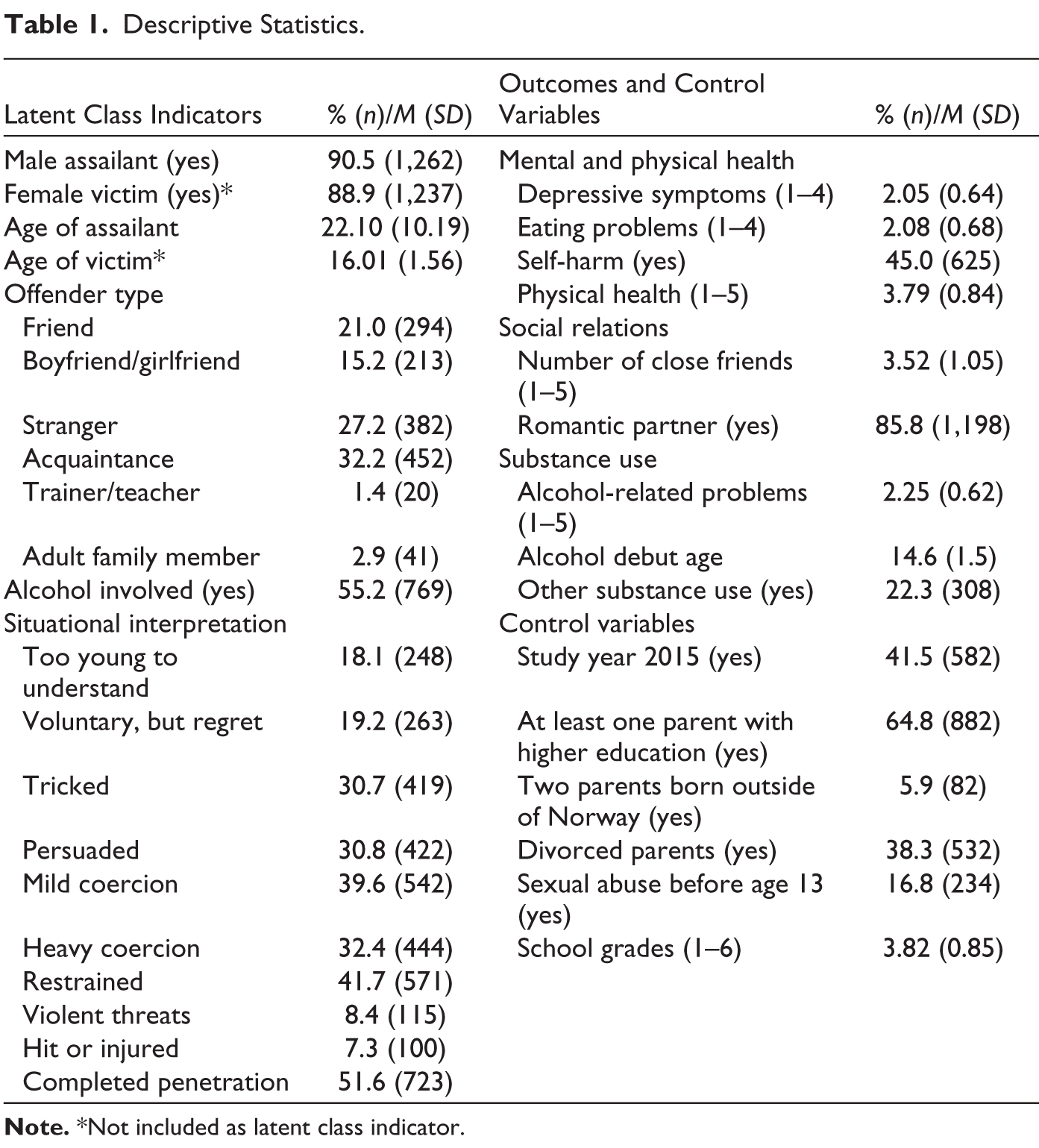
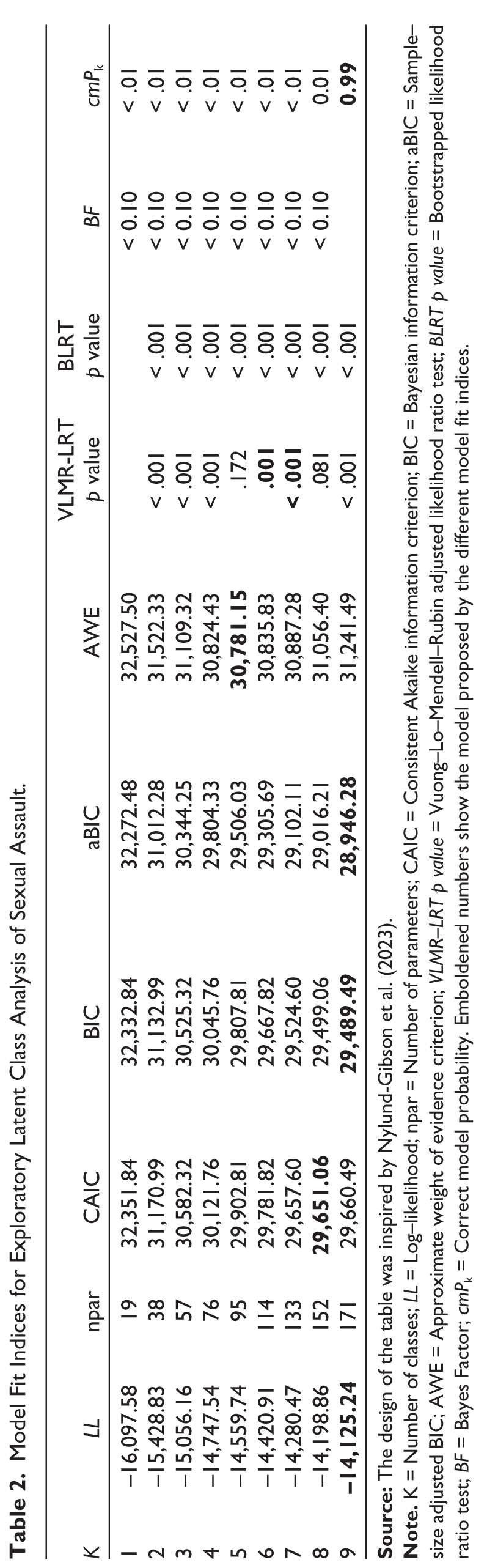
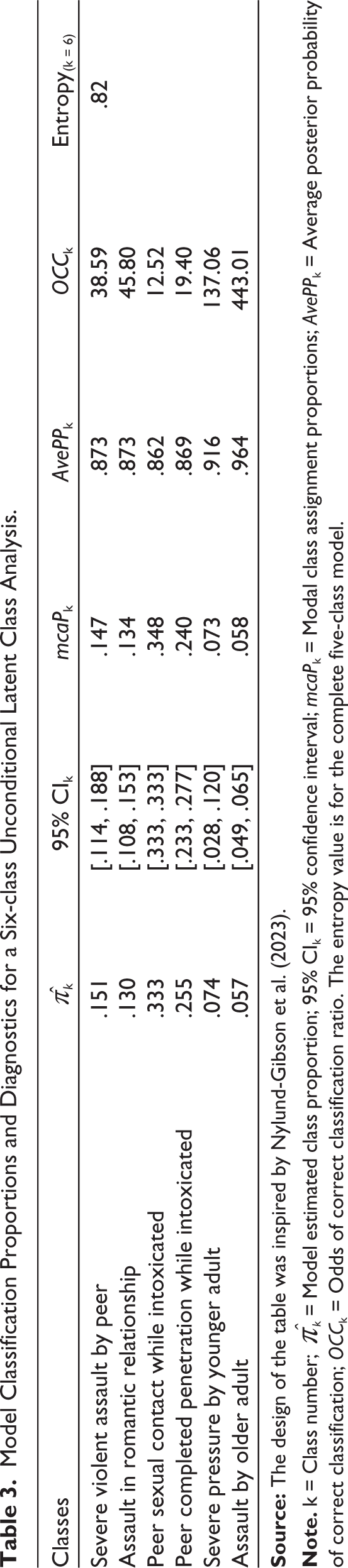
Table 2 presents the results of the LCAs. The six-class LCA model was retained based on theoretical reasoning and a principle of diminishing returns in the fit statistics CAIC, BIC and aBIC of adding more classes. The VLMR likelihood ratio test also recommended the six-class model. The seven-class model was also considered, but a closer inspection of the models with more than six classes showed that subsequent models only consisted of the identification of small classes (<1%) that provided no substantial or theoretical meaning. Next, the selected six-class model was evaluated based on a wide range of statistical measures (Table 3). The entropy value of the selected model was 0.82, which indicates that the selected model adequately assigned sexual assault situations to latent classes. This was also validated by mcaP values falling within the 95% confidence interval (CI) of π ̂ k for all classes, and all AvePP values being above the desired cut-off of 0.8. The odds of correct classification ratio (OCC) for all classes were also well above the desired threshold criterion of 5.
Model Fit Indices for Exploratory Latent Class Analysis of Sexual Assault.
Model Classification Proportions and Diagnostics for a Six-class Unconditional Latent Class Analysis.
The latent classes were labelled based on the distribution of the latent class indicators in each of the identified classes (Table 4). The largest class (33.3%) was labelled ‘peer sexual contact while intoxicated’ and comprised situations where the victims reported being assaulted by either an acquaintance, a friend or a stranger who was approximately their age. Alcohol consumption was common in these situations, but none of the suggested situational descriptions fit well and completed penetration was rare. The second largest class (25.5%) was labelled ‘peer sexual penetration while intoxicated’ and consisted of situations where the victims reported assaults by someone they knew who was approximately their age. These situations most often included alcohol, and the victims felt either tricked, persuaded or coerced, with some reporting being restrained. Some victims also participated voluntarily in the sexual encounter, but later regretted it, and these assaults most often contained completed penetration. The third largest class (15.1%) was labelled ‘severe violent assault by peer’ and involved situations with somewhat older assailants and a significant use of force and violence; this class consisted of exclusively male assailants and alcohol was involved in approximately half of the situations. Eighty-six per cent of the assaults contained penetration. The fourth largest class (13.0%) was labelled ‘assault in romantic relationship’ and comprised assaults committed by either a romantic partner or, in some cases, a friend. The assaults consisted mostly of severe persuasion and coercion, seldom included alcohol, and most often contained completed penetration. The final two classes consisted of experiences in which the victim was significantly younger than the assailant. The fifth class (7.4%) was labelled ‘severe pressure by younger adult’, and the mean age of these assailants was around 35. Most often, the assailant was a stranger, and the victims reported being restrained and some degree of coercion. Alcohol was involved in 40% of the situations, which seldom included completed penetration. Finally, a latent class (5.7%) labelled ‘assault by older adult’ comprised sexual assaults conducted by adults, with a mean assailant age of 56. These assailants were most often strangers but were also sometimes family members or acquaintances, and victims either interpreted the situations as involving some degree of persuasion, coercion or restraint, or indicated that they had been too young to understand.
Item Probabilities in Latent Classes of Sexual Assault.
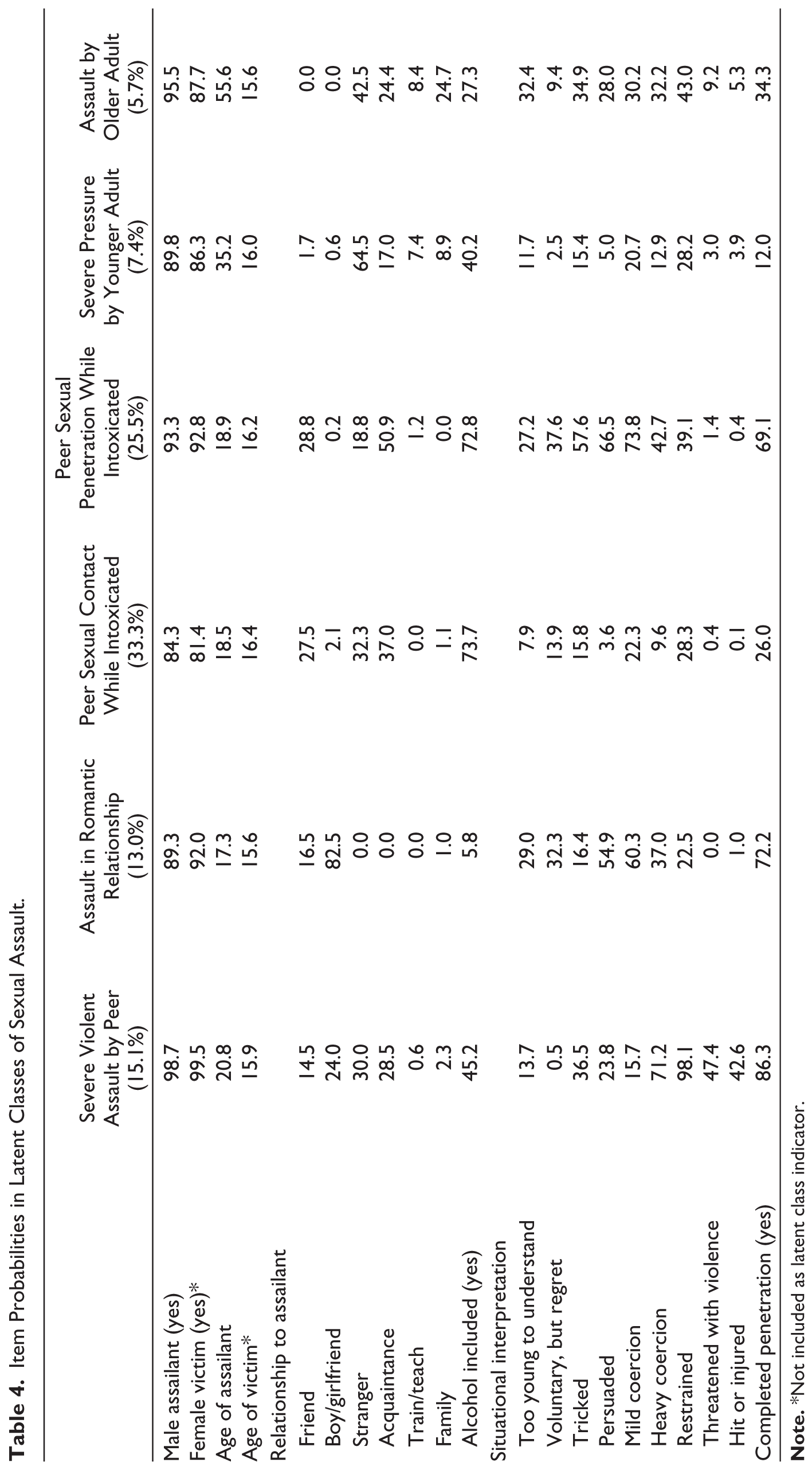
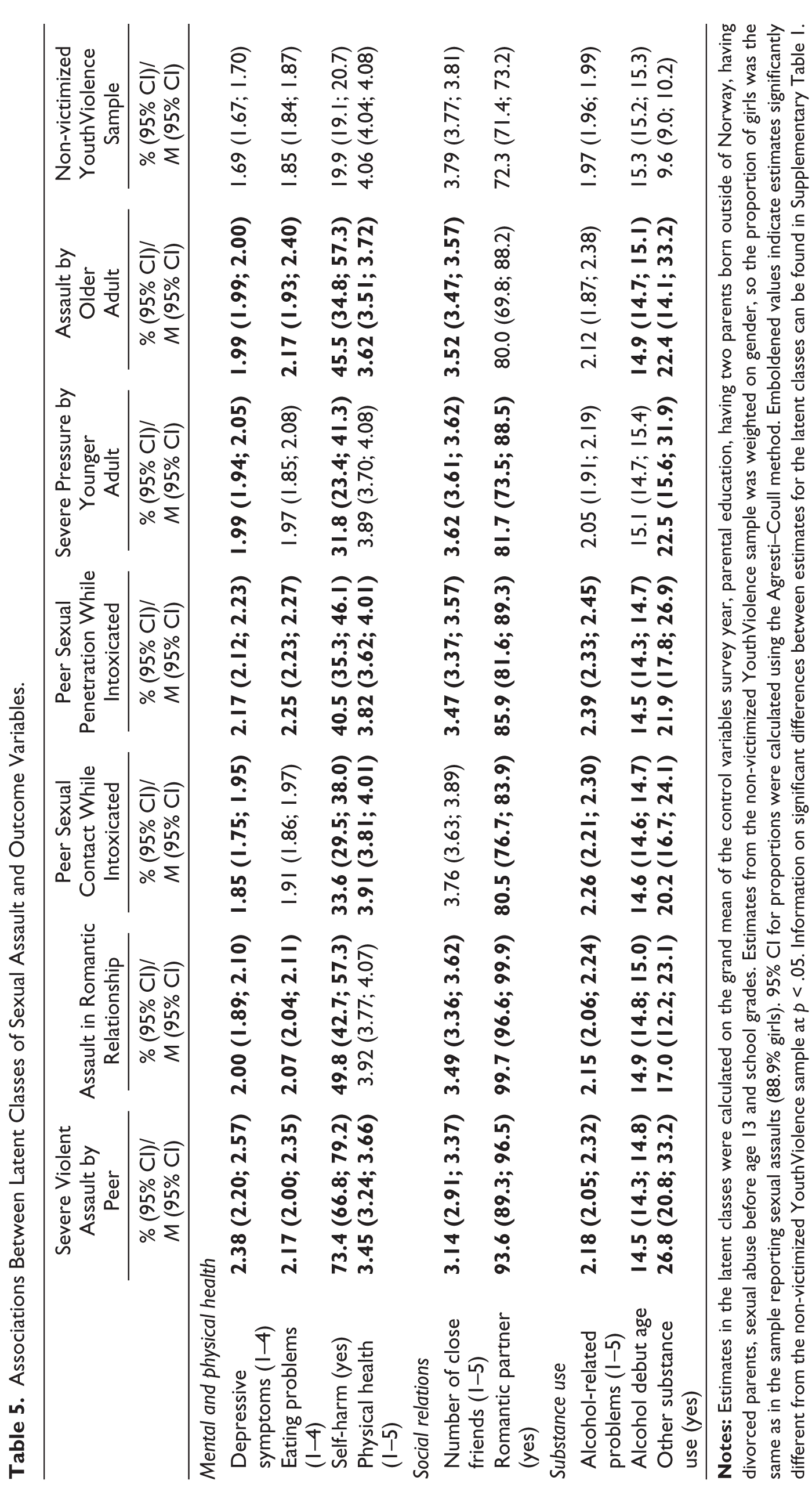
Table 5 shows how the identified latent classes of sexual assault vary on a wide range of potential outcomes related to mental and physical health, social relationships and substance use. All of the latent classes of assault scored poorer on all included instruments than the non-victimized YouthViolence sample, though some of the differences were not statistically significant (p < .05). When comparing the latent classes of assault, the largest group (‘peer sexual contact while intoxicated’) systematically scored better than the other latent classes on all included outcomes, except alcohol-related problems; members of the latent class ‘assault in romantic relationship’ also scored better on many outcomes. Members of the latent class ‘severe violent assault by peer’ reported the most adverse outcomes on mental and physical health, social relationships and substance use. The latent classes ‘peer sexual penetration while intoxicated’, ‘assault by younger adult’ and ‘assault by known or trusted adult’ scored inbetween the latent classes reporting the poorest scores and the complete YouthViolence sample on most outcomes, with somewhat more problems in the latent class ‘peer sexual penetration while intoxicated’.
Associations Between Latent Classes of Sexual Assault and Outcome Variables.
Discussion
Our analysis of incident reports of sexual assault in two population-based surveys suggests that physical sexual assaults in youth may be sorted into six latent classes of varying size: (1) peer sexual contact while intoxicated (33.3%), (2) peer sexual penetration while intoxicated (25.5%), (3) severe violent assault by peer (15.1%), (4) assault in romantic relationship (13.0%), (5) severe pressure by younger adult (7.4%) and (6) assault by older adult (5.7%).
Our model contains a broader set of classes than most previous studies on latent classes of sexual assault among youth (e.g., French et al., 2014; Macy et al., 2007; Walsh et al., 2021). The inclusion of sexual assaults throughout the teenage years in the formation of the latent classes, instead of just experiences after enrolment in higher education, as well as the use of samples from the general population of students in upper secondary school and the inclusion of assailant age in the model, are the most likely explanations for our broader set of classes. One type of assault that seems to be missing from our typology is the ‘unwanted touching from a stranger in a public setting’, as identified by Walsh et al. (2021); in our sample, such incidents are probably included in both ‘peer sexual contact while intoxicated’ and ‘severe pressure by younger adult’, both of which contain instances of non-penetrative assaults with a stranger as the assailant. As in previous research, the latent classes we identified are distinguished by actions, interpretations, level of alcohol involvement and assailant–victim relationships in a complex pattern that we comment on below.
The composition of sexual assault types we identified highlights how young people are at risk of assault from both peers and adults of varying ages, although assaults from peers are more common. We further identified different types of assaults from adults, with one latent class involving younger adults (mean age of assailant 35) and one involving older adults (mean age of assailant 56). The assaults from younger adults are similar to the latent classes of peer assault in that they involve alcohol but are distinguished from them by the assailant being a stranger. Thus, they are not likely linked to partying, which is the context for most sexual assaults among young people (Lorenz & Ullman, 2016; Stefansen et al., 2021), though this requires further exploration. The assaults by older adults share characteristics of child sexual abuse, where the assailant grooms or takes advantage of the child’s trust (Whittle et al., 2013). The victims were also somewhat younger in this latent class of assaults.
Four of the latent classes are distinctly youth-related and involve assailants of either the same age as the victim or slightly older. The distinct features of these classes also point to varied experiences within the subcategory ‘peer sexual assaults’. The latent class ‘assault in romantic relationship’ differs from the other youth-related classes by seldom involving alcohol. The identification of latent classes of assault not characterized by the excessive use of alcohol is consistent with findings from previous studies. Walsh et al. (2021) identified a latent class of assault consisting of verbal coercion from a partner or friend in a private setting with minimal use of alcohol, while Littleton et al. (2021) showed that rapes by romantic partners were more common in the latent class labelled ‘low force/resistance’. The assaults we identified in the context of romantic relationships do, however, contain some degree of coercion or force. The various dynamics that result in sexual assault in young peoples’ romantic relationships is an important area for further research. Knowledge from studies on how sexual consent is understood in abusive relationships (Tarzia, 2021) and young people’s interpretations of sexual consent in differing contexts (Hirsch & Khan, 2020) can provide useful guidance on how to proceed.
The remaining youth-related latent classes of sexual assault are more connected to young peoples’ social lives. Alcohol is often involved, suggesting that they are linked to social drinking settings, although this is less common in the most violent type. Assaults involving intoxication have also been identified in other studies. Two of the three latent classes of assault identified by Walsh et al. (2021) included substantial amounts of alcohol use by either the victim or the assailant, as did three of the five latent classes in the study by Littleton et al. (2021). Latent classes involving alcohol use have also been identified in the remaining LCA studies this article is inspired by (French et al., 2014; Macy et al., 2007; Masters et al., 2015), which is consistent with the general finding that a majority of sexual assaults are linked to intoxication (Lorenz & Ullman, 2016).
While empirically driven categorizations of sexual assault may not exactly correspond with victims’ interpretation of what happened, we believe it makes sense to separate the three classes of intoxicated peer assaults in terms of severity based on the previously identified patterns of situational characteristics. Assaults in the latent class ‘peer sexual contact’ typically do not contain penetration; this is more common in both the ‘peer sexual penetration’ class and the ‘severe violent peer assault’ class. Additionally, none of the descriptions available to the participants fit well in the ‘peer sexual contact’ latent class, suggesting that these experiences may be minor transgressions within the realm of peer interaction. A similar category has been identified in other studies; examples include the ‘forced fondling’ class in the work of French et al. (2014) and the ‘contact or attempted’ assault class identified by Masters et al. (2015). In qualitative research, similar incidents have been labelled ‘explorative touching’ (Stefansen, 2019, p. 55), suggesting that they represent a form of ‘scorned sexual advance’ (Kavanaugh, 2013) that follows from the assailant’s misinterpretation of the victim’s behaviour as signalling openness to sexual contact. The two other identified intoxication-related classes among peers are more easily described by the victims. Both contain more coercion as compared to the ‘peer sexual contact’ class, but also differ from each other. Specifically, the use of physical force is more prevalent in the ‘severe violent assault’ class than in the ‘peer sexual penetration’ class, as indicated by their labels. The former is also characterized by somewhat older assailants, which speaks to a larger difference in power between the victim and assailant in this type of assault as older youths often hold a higher social position in the peer group compared to younger. Qualitative research on sexual assault has shown that status differences between the victim and the assailant complicate the victim’s assessment of what happened to them; assailants of high social positions among peers, for instance representatives of admired social groups, are more easily excused for transgressive behaviours (Hirsch & Khan, 2020). Further research on sexual assault typologies in youth using LCA should therefore consider including indicators both on age and other status differences between the victim and the assailant in the empirical models.
As expected, the latent classes of sexual assault were related differently to problematic outcomes. At one end of the continuum is the ‘peer sexual contact while intoxicated’ class. The members of this class reported somewhat higher levels of self-harm, alcohol-related problems and substance use as compared to the non-victimized YouthViolence sample, but the differences between the two groups were small. The latent class containing ‘assaults in romantic relationships’ is also at this end of the spectrum, indicating that the personal relationship between the assailant and the victim may be important in the aftermath of the experience. At the other end of the continuum are victims of ‘severe violent assaults by peers’. Among them, we see the highest levels of depressive symptoms, self-harm and substance use. Three latent classes fall between these extremes: the two adult categories and the ‘peer sexual penetration while intoxicated’ class. It may be surprising that the two adult categories are not linked to a higher level of adverse outcomes, given the exploitation of power and trust involved in these assaults and the well-established finding that childhood sexual abuse is linked to adverse outcomes (Dworkin et al., 2017; Fletcher, 2021; Hailes et al., 2019; Irish et al., 2010; Vitek & Yeater, 2021). The fact that these assaults seldom involve penetration may be part of the explanation. Assaults from persons outside of one’s social circle may also be easier to both label and talk about with friends and family as they do not carry the same social risks as assaults from people in one’s social circle (Khan et al., 2018). For the peer-related latent classes, the degree of severity we commented on above based on situational characteristics is mirrored in the proportions of victims reporting adverse outcomes: ‘sexual contact’ is associated with lower scores on the outcome measures than ‘sexual penetration’ and ‘severe violent assault’.
Readers should be aware of some limitations in this study. First, there is a degree of selection in our data, as students who opted for vocational education, had dropped out of school or were not present at school upon data collection did not participate. Second, we did not control for social, psychological or behavioural problems that occurred before victimization as well as other potentially relevant confounders, such as out-of-home care or other adverse childhood experiences; this could influence the observed associations between the latent classes of assault and the included outcomes. Third, although we have attempted to include outcomes that occurred after the victimization experience based on the time frames of the survey questions, we cannot identify the causal direction. Fourth, the study lacked information on important mental health outcomes that have been associated with sexual assault in previous research, the most significant being PTSD (Dworkin et al., 2017). Fifth, the study did not include either genders outside the binary or information on sexual minority groups. Sixth, several of the instruments included in the study have not been validated in previous research. Seventh, the latent class model did not properly converge on a fixed solution, even though the statistical measures included properly supported the chosen model. Previous research has highlighted the fact that this is not uncommon in LCA (Nylund-Gibson et al., 2023), making theoretical reasoning and substantive consideration an important part of model selection in such analyses. Finally, one of the latent classes (‘peer sexual contact while intoxicated’) was poorly described by the situational descriptions of assault filled out by the victims, indicating that the study lacked information that could be used to better describe this latent class.
Our study has clear implications for further research. Walsh et al. (2021) found location to be an important dimension of sexual assault, while our study highlights the importance of assailant age in differentiating youth sexual assault experiences. Future research should incorporate both dimensions in common analyses to generate a fuller picture of the types of assault that occur in youth and how they vary in different youth populations. We have also suggested other potential status differences between the victim and the assailant to be an important input in future typologies on youth sexual assault. As the latent classes of sexual assault contain parameters that may differentially impact the aftermath of the assault, such as the use of physical force and whether the assaults included completed penetration, future studies should also apply alternative designs to examine how post-victimization experiences vary according to these parameters. Here, and following LCAs of victimization, one should preferably apply longitudinal research designs to maintain control over the causal direction of the observed associations. To better understand how victimization experiences have consequences for health, social relationships and substance use, scholars should also use qualitative studies with retrospective designs to explore victims’ accounts of the association between victimization and potential outcomes.
Some implications can also be drawn for policy formation and intervention efforts. Referring to campus rape, Walsh et al. (2021, p. 8) argued that ‘policy-makers and providers should be aware that each type of assault may require different prevention approaches’; we more than agree. In our study, we see clear evidence that adult- and youth-related assaults represent different experiences. General efforts to prevent assaults among youth are likely to miss either one or both types of assault, depending on their focus. The differences in how sexual assaults during the teenage years happen suggest a need to apply fine-grained concepts when communicating with young people about assaults. Knowledge on the broad array of situations that constitute sexual assault could make it easier for young people to acknowledge an assault even if it differs from the classical story containing a ‘creepy guy lurking in or near a bar’ (Hirsch & Khan, 2020, p. 3). Understanding what happened could lead to earlier disclosure, which research identifies as beneficial for utilizing appropriate help services and medical care (Ahrens et al., 2010), thereby potentially mitigating negative consequences in the aftermath of an assault. A more fine-grained vocabulary of assault could also increase bystander awareness (McMahon & Banyard, 2012), thus empowering youth to intervene when one person risks violating another, as well as reduce the risk of negative social reactions from peers when the victim discloses a sexual assault which is not uncommon and a known barrier to recovery (Salim et al., 2022).
Our results confirm that many young people who are sexually assaulted could benefit from support services. Nevertheless, the varied patterns we have described regarding outcomes suggest that caution should be utilized when talking to young people about sexual assaults and their potential consequences: It is important to communicate that being victimized is a risk factor for adverse outcomes in the realms of mental and physical health, social relationships and substance use, but not necessarily something that every victim will experience.
Supplemental Material
Supplemental material for this article is available online.
Footnotes
Declaration of Conflicting Interests
The author declared no potential conflicts of interest with respect to the research, authorship and/or publication of this article.
Funding
The research leading to these results was supported by grants from the Norwegian Ministry of Justice and Public Security.
References
Supplementary Material
Please find the following supplemental material available below.
For Open Access articles published under a Creative Commons License, all supplemental material carries the same license as the article it is associated with.
For non-Open Access articles published, all supplemental material carries a non-exclusive license, and permission requests for re-use of supplemental material or any part of supplemental material shall be sent directly to the copyright owner as specified in the copyright notice associated with the article.
