



Abstract
This article aims to discuss how diasporic Hmong youth express nostalgia and resistance through rap music, transmit collective memory, encourage young people to question social and political structures, and engage in public life. Based on fieldwork in France, this article explores how French Hmong rap artists convert their nostalgia, experience and in-betweenness into the sound space. This article also demonstrates how French Hmong rap artists construct an alternative discourse in which young people are able to show solidarity. As a result, this article provides some insights into navigating the popular culture of an underrepresented community and its belonging, nostalgia and resistance.
Introduction
A global understanding of studies about hip-hop emphasizes that rap music, as one of the essential components of hip-hop culture, has provided a sonic space for young citizens in various societies to express themselves and form a sense of belonging and identity (Keyes, 2004; Krims, 2000; Martinez, 1997; Nielson, 2010). Authors have also observed that youth have created localized rap music in Europe (Miszczynski & Helbig, 2017; Nitzsche & Gruzweig, 2013). According to Androutsopoulos and Scholz’s (2003) analysis, hip hop in Europe established a new cultural territory through a process of reterritorialization during the 1990s. Localization or integration into popular local music culture, such as rap music with Greek lyrics and Greek instrumentation in Greece (Elafros, 2013), was a key process in the widespread commercial success of hip-hop music in Europe. The dynamics and tensions in the process of indigenization of rap outside of the U.S.A. constantly draw attention to local specificities (Mitchell, 2001). Rap music’s locale characteristics and its voice of ‘self-pride, self-help, and self-improvement’ (Laidlaw, 2011, p. 72) have attracted young groups of various ethnic origins (Bennett, 1999; Clarke & Hiscock, 2009; Drissel, 2011).
This article aims to discuss how diasporic Hmong youth express their identity, transmit collective memory, mobilize young people to question social inequality and engage in public life through rap music. In the 1960s, the secret war in Laos, part of the Vietnam War (Lee, 2016; Robinson, 1998, pp. 12–13) plunged the Hmong people of Laos into homelessness. Hmong refugees have resettled in a third country under the coordination of the UNHCR. Currently, there are approximately 12,000–15,000 1 Hmong in France (Hassoun, 1997), more than 70 in Germany (Nibbs, 2014; Yang, 2003), and more than 40 in the Netherlands 2 . In this article, I ask a related and significant set of questions: How do French Hmong rappers use nostalgia and resistance to (re)imagine/define the Hmong community in the French context? How do they address the struggles of marginalized groups with ethnic backgrounds in their artistic creations? How do they mobilize audiences to resist social injustice?
Hammou (2020) summarized the evolution and progress of rap music in France over 40 years, from Americanized French rap music to commercialized victory to the voice of the suburbs and white-preferred tastes. This increase in quantity leads to diverse rap music for racial and religious minorities (Orlando, 2003; Swedenburg, 2015). As Molinero (2011, p. 107) observed, some rappers aim to represent the brutal aspect of social situations, while others try to explore the musical nature of rap, in addition to the category of ‘cool’ and ‘hardcore’ rap that emerged in the mid-1990s. For some rappers, the importance of rap music is that it mobilizes audiences by resonating with the social experiences, values and concerns of French minority youth (Drissel, 2009, p. 123). Thus, a local perspective needs to be adopted to understand the diversity of rap music. The production and consumption of rap music in French Hmong youth were chosen for the investigation in this article due to its popularity and significance. Using digital media, rap music is produced, distributed and consumed in the French Hmong community, while artists labelled as ‘grassroots’ or underground create Hmong rap music to mobilize the younger generation. These motives in the context of the diaspora are interwoven into the lyrics and rhythm of the music. Thus, using French Hmong rap music, this article explores how French Hmong youth alternatively engage in nostalgic recollections and calls for resistance.
This article emphasizes the voice and identity of an underrepresented community. In doing so, this study contributes to the literature of global hip hop studies by offering a discourse analysis of rap music in an underrepresented minority group. In particular, it seeks to understand how rap music creates a new cultural territory through the process of deterritorialization and reterritorialization (Androutsopoulos & Scholz, 2002; Lull, 1995) in specific ethnic groups in Europe.
This article begins with a literature review of rap music and then how it inspires marginalized youth across the world. Second, the methods of data collection and analysis will be presented. Then, the messages, as well as representative cultural figures, included in French Hmong rap music will be discussed in detail. The article will conclude with a summary of the main points and further research directions. Additionally, the names mentioned in this article are pseudonyms, except for those of well-known artists.
Literature Review: Rap as Resistance in Europe
The bulk of the existing literature states that the development and prosperity of rap music in Europe are rooted in each location. Four waves of immigration at separate periods of the 20th century—colonial migrants after World War II, labour migrants in the 1960s, family migrants and refugees —presented Western Europe with integration problems (Sassen, 2000; Scholten & Holzhacker, 2009). The descendants of immigrants, including the Turkish German, Southeast Asian Londoner, French Algerian communities and countless others negotiate identities, express aspirations and demonstrate visibility through rap music (Bennett, 1999; Drissel, 2011; Jouili, 2013; Nitzsche & Gruzweig, 2013). Androutsopoulos and Scholz (2003) traced the process of the formation of rap in Europe with the emergence of a new territory. Imported from the USA, African–American rap music has interacted with various local cultures and then developed through transculturation, hybridization and indigenization. In their analysis, the genre of ‘Spaghetti funk’ in Italy could be an example of a multimodal construction of a hybrid identity in the cultural territory of rap in Europe. They also demonstrated that the indigenization of rap music in Europe includes native language lyrics and national poetic traditions. The latter was translated into beat patterns to select specific lyrics and rhythms.
Previous studies have recognized the power of the use of rap music by youth for resisting an unfair social system (Bennett, 1999; Grossberg, 1992; Martinez, 1997; Moussa, 2019). For the juvenile population, listening to rap music means rejecting the mass media, gaining a feeling of power and pleasure, and generating self-esteem (Kuwahara, 1992). Youth of various ethnic origins creatively use rap to express themselves emotionally and criticize the white supremacy. Ethnic minority hip-hop artists in Berlin, London and Paris, according to Rollefson’s (2017) analysis, would like to reveal their identity to mainstream society by employing the African American musical protest strategies of hip hop, challenging racialized discourses and criticizing the national conflations of race, citizenship and peoplehood. Bennett (1999) observed that youth from ethnic minority groups in Germany remade rap music into the medium to express their concerns about racism and identity issues in their local context. Similarly, South Asian young men in the U.K. have embraced hip-hop music as a medium to negotiate and construct their ‘masculine’ and ‘empowered’ identities (Drissel, 2011). Even in Eastern Europe, hip hop has been developed to indicate youth experiences and aspirations of alternatives in a post-socialist society where violence, police corruption, poverty, and instability are embedded in social structures (Miszczynski & Helbig, 2017).
French hip-hop artists narrate their own experiences as part of the second generation of immigrants to question social inequality, racism and other societal issues in France (Durand, 2002; Huq, 2001; Marquet, 2016). Previous studies asserted that second-generation youth from immigrant backgrounds embraced rap music to escape the reality of the banlieue, a result of multiple intertwined factors, such as postcolonial history, African migration and public housing projects (Dotson-Renta, 2015), contest the legacy of colonialism and social immobility, and express their identity (Bensignor, 1994; Miliani, 1995; Orlando, 2003). Moreover, Shuman (2018) analysed the ‘corporeal’ strategy used by Abd al Malik to address the problems faced by those who are black in a ‘colour-blind’ French society. In France, the republican ideology, whose purpose is to assimilate immigrants into French society, eliminated spaces for discussing race, ethnicity and minority issues until demands for the equality of ‘visible minorities’ began increasing over the last two decades (Amiraux & Simon, 2006; Duprez, 2009; Montague, 2013). Amiraux and Simon (2006) highlighted that the focus on integration and social cohesion is an attempt to overcome ethnic and racial questions.
Historically, scholars have studied French rap music from largely socioeconomic and political perspectives (Hammou, 2015). André Prévos (2002) has examined MC Solaar’s poetic authenticity and commercial success at the crossroads of aesthetic appetites of the mainstream media and as the witness of injustice and violence. A few rappers, such as La Rumeur, Fabe or Yazid, criticized the heinous crimes of the slave trade, colonialism, and the continuities of domestic violence against racial minorities in the 1990s (Tevanian, 2009). Indeed, the combination of postcolonial memory and current experiences of social repression stimulates immigration-descent youth to seek channels of expression in the growing rap scene (Béru, 2008; Rollefson, 2017). However, not all rap songs relate to political protests. Swedenburg (2015) examined the nostalgic recollections in beur rap Ya l’babour (O Steamboat) that express the bittersweet emotions of the migration experience and the feeling of in-betweenness.
Recently, these questions of musical nature have been addressed by researchers in many fields (Kayali, 2005; Rubin, 2004). Jacono (2004) examined the key role of the general structure in the success of IAM’s Je danse le Mia. Regarding lyrics, Paine (2012) identified the symbolic meaning behind the complicated mixture of languages. His research shows that the different kinds of linguistic utterances in French rap music express the hybridization of emotions, nostalgia, survival guilt, and memories. However, rap artists of Asian origin deliver articulate different messages and aspirations, as I illuminate in the following sections.
Few studies have focused on hip hop artists of the Hmong community. American rappers are more concerned ‘economics, racial and ethnic circumstances, and even family’ (Vue, 2012, pp. 29–30). Poss (2013) has examined Hmong hip-hop artists Tou Saiko and Vong’s rap creation that their lyrics reflect cultural rupture and continuity as well as the dialogues between generations. Meanwhile, according to Vue’s (2012) observation, American Hmong hip-hop artists encourage heritage students to express emotions in hip-hop lyrics.
As for the Hmong in France, previous research has discussed challenges resettled families have encountered. Carré (2002) examined the process of storytelling in focused Hmong groups by looking at tales and how the way of speaking has evolved in the process of intercultural exchange and in-betweenness. Existing studies still pay little attention to French Hmong youth and even less to rap music.
Methodology
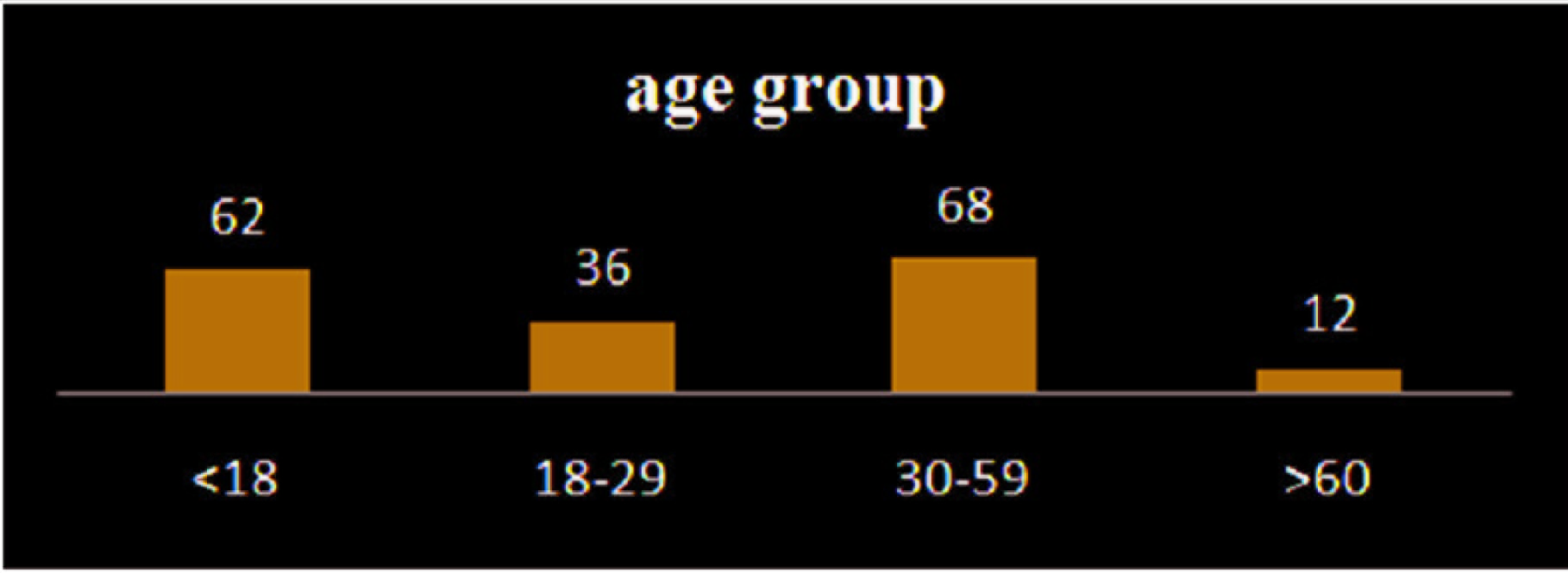
The French refugee policy led to the scattering of Hmong refugees in villages and towns across the country (Ajchenbaum & Hassoun, 1980; Gauthier, 2001; Hassoun, 1996). Thus, the research method used in this article is multi-sited ethnography (Marcus, 1995), which compares Hmong communities in large cities such as Paris and Lyon with small cities such as Avignon and Nîmes. I contacted potential interlocutors through Facebook, using the snowball sampling method (Goodman, 1961; Noy, 2008) in my fieldwork from 2017 to 2019 (five months in total). In total, the ethnographic study involved 26 extended Hmong families in France (71 female and 58 male), six German Hmong families (21 female and 20 male) and eight persons (3 female and 5 male) in the Netherlands (information of age group, see Figure 1). The project investigates the Hmong identity in the European context, but only a small portion of the ethnographic data has been analysed in this article. Furthermore, this article only focuses on rap music in the French Hmong community because the French Hmong community has both rap artists and audiences; young Hmong consumers in Germany and the Netherlands only listen to rap music.
Participant observation (Spradley, 1980) required me to observe the daily activities at the field site. I stayed with my interlocutors and participated in their daily activities of cooking, doing housework, hanging out and shopping. We shared music, opinions and reactions, sometimes making recommendations based on each other’s preferences. In this scenario, I wanted to know why they listen to Hmong rap music and their comments.
Age Group Information
The music of two French Hmong rappers was included in this article. These rappers are the most famous rappers in the community that they are invited to play at large festivals such as Hmong New Year’s celebrations and at small parties. Thus, their articulation of nostalgia and diasporic experience might be more resonated and accepted and due to their popularity, they are able to deliver messages to larger audiences. I witnessed the popularity of Hmong rappers at the summer festival in Aubigny in 2017 and Hmong New Year’s celebrations in Lyon (fieldwork conducted in 2017) and Nîmes (fieldwork conducted in 2019). At these high-energy events, young people cheered and sang along with the music, demonstrating their familiarity with and preference for these songs. In such scenarios, I observed the interchangeable scene between the audience and performers, what messages the performers deliver and how the audience reacts to them. Furthermore, it is also possible to have more local underground rappers that are less known; however, I have not been able to contact them and include their experiences.
Regarding the artists, Louchia has released at least six French rap songs —Thérapie musicale, Comme on peut, Tel un peintre, Comme à l’ancienne, Aziatik Mc, and Resent l’émotion; two collaborative songs, Liberté sans terre (with Sembat) and Mekong Cypher 2 (with Mekong Soul); and four Hmong rap songs, Txav los mloog (Close to Listen), Npawg (Cousins), Kuv Yog Hmoob (I’m Hmong) and Kom Meej (Elucidate). He has also collaborated with American Hmong singers and artists, such as in Sib Cuag 1975 (with Lilo Saint, Lia Lo and Thinky Vang). JinLee has released at least two Hmong rap songs, Hmong Rap France and Qheb Qhov Muaj (with Tchen Ko, Liacie). However, it is possible to have more collaborative pieces that are less known.
For the purpose of this study, three Hmong rap songs were selected due to the popularity of these rappers having performed on several cultural occasions. I have also watched their freestyle performances at live shows, although acoustic interference did not allow me to record these performances. Two French rap songs collaborated on by Louchia with other Asian-descent artists were also examined in this article.
In this article, I switch the usage of hip-hop/rap artists/rappers and hip-hop/rap music due to the self-tagging by French Hmong artists. For example, Louchia labelled himself as a designer, artist, rapper and hip-hop artist on various occasions. Moreover, he switched ‘hip hop’ and ‘rap’ in his songs. Except for producing music and performing in cultural events, Louchia has a small design business and sells his branded products, including t-shirts, sweaters, and caps. JinLee has labelled himself as a ‘multidisciplinary artist’ to navigate various forms of art expression such as ‘light painting, singing, rap, theatre and Thai box art’, although he is a sand drawing professional. JinLee has won several awards since his first public rap performance in 2010. Another well-known hip hop artist, Fonsija Yang, has a job in a martial arts club while he continues producing ‘Hmong pop - Hmong rap’ music on YouTube (in his tag). Thus, I see the usage of the words ‘hip-hop artists’, ‘rap artists’ and ‘rappers’ as the same due to their actual usage in practice, although scholars might differentiate between hip hop culture and rap music (see Turner, 2017, p. 12, note 2).
Additionally, I participated in daily communications on Facebook with my interlocutors. Netnography, as Kozinets (2009) has defended it, is ethnography on the Internet that follows common ethnographic procedures. In my fieldwork, interlocutors sometimes pointed something out and searched for it on Facebook to share it with me. Meanwhile, Facebook employs the recommender system 3 to shape people’s encounters (Rader & Gray, 2015; Seaver, 2019). Some strangers approached me because of the recommender system. In each of these situations, I introduced my research and obtained permission to include their experiences in my work. The main body of my data consists of offline observations and extended online communication.
My ethnicity, gender and age gave me access to conversations with young people (Burawoy, 2003; Davies, 2008; Meijl, 2000), despite the fact that some teens were not interested in such topics. I explained my research and purpose during every visit, but they almost always approached me from a non-academic perspective: there was a Chinese Hmong visiting them. As a Chinese Miao/Hmong 4 in the European Hmong community, I am both an ‘insider’ and an ‘outsider’, being ‘ethnic’ native to the community but not sufficiently native in the European context. This position granted me access to contact the Hmong community.
I used English, French and Hmong to conduct my fieldwork. In the field, I spoke a mixture of the White Hmong dialect and French vocabulary. However, the dialect I use depends on the person to whom I am talking. With some families, I only spoke Hmong with my interlocutors. If the person did not speak Hmong, I used French for casual conversation.
Because the European Hmong communities are quite small and intimate, one of my interlocutors even commented, ‘tell me which city s/he lives in and her/his family name [means the clan], and I can tell you who s/he is’. To avoid unnecessary disclosures, I mention one feature at a time and introduce people’s experiences concisely. Additionally, I use pseudonymous names for interlocutors. This strategy makes the empirical description both sketchy and succinct but has the advantage of maximum anonymity.
A twofold scheme of analysis has been inductively developed in this article. Critical discourse analysis (Fairclough, 2003) was used to focus on song topics, genre-typical verbal actions and cultural references. This approach is particularly useful in studying the ‘dialectal relationship’ between the situations of discursive events and the social structure because it sees discourse as ‘a form of social practice’ (Fairclough & Wodak, 1997, p. 258). Themes, genre, verbal actions and cultural references are all social practices that are shaped by the context and re-enact social status. The approach is also useful in examining the crucial issues of unequal power relations between the mainstream and underrepresented groups. By using this approach, the sociocultural frame in this article focuses on the cultural base of hip-hop culture, market and media infrastructure.
Findings
In the in-depth analysis of the significance of Hmong rap music, language, theme, and lyrics have been examined. What follows is a discussion of the cultural base and social context with examples from three rap songs, in particular, Npawg, Ntuj Hmoob and Mekong Cypher II that show what alternatives exist in rap songs and the understanding of such music practice.
The Sonic Space of Nostalgia
Most rap songs created and performed publicly by French Hmong rappers are written in Hmong, but a few are written in French. These code-switching lyrics reveal the songs’ specific targeted audience—French Hmong youth. Switching between the French and Hmong languages in rapping marks a specific linguistic representation and localized cultural experience, which echoes previous research on the crucial role of language in rap delivery in regional English (Clarke & Hiscock, 2009) and non-English cultures (Bennett, 1999; Mitchell, 2000). The European rap lyrics, as Androutsopoulos and Scholz (2002) examined, are a variety of area, social and ethnic dialects in each country rather than a single language variety. Thus, code-switching or even rapping in the native language is an effort of localization but also represents the gesture of protest.
French Hmong rappers use rap music primarily to express two themes, namely, nostalgia and resistance. Nostalgia, connected with the golden years of the past (Angé & Berliner, 2015; Davis, 1979), is usually embedded through descriptions of rural space either before the social transformation (Hann, 2015, pp. 103–106) or the diaspora 5 , such as the Jewish experience (Lévy & Olazabal, 2015). Similarly, French Hmong rap artists continually reconfigure the cultural and spatial image of the ‘old past’—villages, mountains, forests, farmlands, rivers—combining the bittersweet moods and hard beats. For example, in his song Npawg (cousins, Hmong transcript by Shengli Lor), Louchia asked his ‘cousins’: ‘Do you miss me, do you miss the time when we were together?’
(in Hmong) cousin, do you miss me
When we were kids, we haven’t knew anything
We went out to play the whole day
…….
We didn’t have things to worry
We just go to play and make friends
….. At our village
Climbed trees picking mangoes to eat with chili
Went to swim and catch fishes
Eat meat at the big river
All kids
Numerous studies validate that music-evoked nostalgia (Barrett et al., 2010) associated with multi-layered emotions, positive and negative, reconnects ‘the wildness of youth’ and is an escape from the current non-ideal reality via being transported to the past (Baker & Azzari, 2020, p. 170). So, Louchia expressed his ‘nostalgia’ in this song by reconnecting his childhood that he has such a desire of ‘return’, distancing from the nostalgic recollection in Beur rap that relates to the migration experience without ‘a desire of return’ (Swedenburg, 2015).
The lyrics depict an imagined space of ‘the gold past’. Louchia recalled the childhood in French Guyana when he was a kid, going out to play in the river, hike the mountains, and eat fish and chicken—all of which evokes nostalgia. The memory of playing around, riding bicycle, climbing trees, swimming and catching fish, and so on, serve as a retrieval cue to solidify the bond between the artist and audience and between group members. The last verse of this rap song explains his motivation:
(in Hmong) Born as a Hmong brother only once If we departed earth to go to heaven Will there ever be another chance Always remembered the story of our brotherhood Cousin, do you still remember When we lived together as a group Being human we can’t return back So let’s write these words into a story
In this verse, Louchia reminds his audience of the bonds between members and to ‘live together as a group’. He translates nostalgia into a kind of action, encourages Hmong youth to become empowered by the diasporic experience and connects their future with the idealized past. In doing so, French Hmong rap artists focus on the ideology of the ‘lostopia’ to connect their in-betweenness with the Hmong diaspora. For example, in the song Ntuj (in Hmong), the rapper connects the memory of the diaspora to the present:
(verse) What can do, what do we know what we want to do? We take time to see, to think, so that our future will be more peaceful? (hook) Don’t know how to search, don’t know how to think, don’t know how to live a life as others, what to do?
In this song, the flow is softer in order to fit the melody and the sad tone throughout the entire song. However, he directly addresses the current situation of Hmong in France. Due to the diaspora, ‘we’ lost ‘our’ home and ‘we’ do not know where ‘we’ should/can go or what to do about the future. He expresses his anxiety and uncertainty through a specific reference to the diaspora, which sets the tone for the youth.
The constant calling of nostalgia in Hmong rap songs evidences its cultural base. The diasporic Hmong community in France has suffered the consequences of displacement such as loneliness, language barrier, unemployment, and assimilation. Most first-generation interlocutors expressed their dream of ‘returning’, but they also add that ‘it’s impossible to go back to Laos’. Some of the 1.5 generation have the memory of refugee camps and early year resettlement. Some Hmong youth, who were born and grew up in France, express curiosity about their ethnic ‘homeland’ and think about travelling to Southeast Asian countries in the future.
Svetlana Boym (2002, p. 18) defined ‘restorative nostalgia’ as ‘a transhistorical reconstruction of the lost home’. In the case of Hmong populations, drawing on memories of the ‘golden years of the past’ provides a ‘transhistorical reconstruction of the lost home’ to escape reality and gain affective support through ‘being together’.
A Sensorial Act of Resistance
The second theme of Hmong rap music in France is resistance. But Hmong rap artists construct an alternative discourse in which youngsters are mobilized to show solidarity and be together. In JinLee’s rap song, he encourages the listener/audience to come together with others wherever they are:
(in Hmong) Hmoob live in Laos, Thailand, America and China; do you know who am I; if you come to France, come to see us; The elders said we don’t have a country…
He recalls the traumatic experience of the Hmong diaspora, which has scattered the Hmong across the world. However, the important message is that Hmong people should be strong and show solidarity as a unified community.
Motivated by togetherness and resistance, Hmong rap artists have collaborated with other artists of Southeast Asian descent to stand as a voice of alienated and frustrated French Asian youth. With varying ethnic origins (Khmer, Laotian, Vietnamese, Thai and Hmong), artists of the rap group Mekong Soul come together and create rap music to express their vulnerability and marginality as well as their resistance. In their collaborated rap song Mekong Cypher II (French transcript by Lin Lin), Louchia’s verse made a complaint against the ‘colour-blind’ reality and acknowledged the powerful support from Southeast Asian rappers:
(in French) Don’t pretend you don’t hear the noise in the silence I practice My flow comes from my grouchy self all natural and it raps dry while remaining poetic With the Asian brothers, it will move the head even the quadriplegics Here the rap is sincere like the tears of the old ones while thinking of the war, a little warmth to our fathers and mothers Some light to our sisters and brothers, It is in the hard times that we have learnt to strengthen our personality.
In his verse, Louchia criticizes the absent conversation participant, namely, the mainstream who ‘pretend they don’t hear the noise’ and ignore the voice that arose from the ‘noise’. Indeed, ‘noise’ holds significance in the global history of rap music (see Mitchell, 2001), as the phrase ‘make some noise’ proposed. Louchia addresses the mainstream that ‘you should listen to our opinion, know our history (the war), and resonate with our emotions (tears)’. Moreover, he articulates his position through three sets of adversarial words: ‘noise’ vs. ‘silence’, ‘hard’ vs. ‘poetic’ and ‘move’ vs. ‘quadriplegics’. These almost-reversed words make the explicit boundary between the mainstream and the marginalized. The evolution of personal pronouns in Louchia’s verse, in particular from ‘I/my’ to ‘our’ and ‘we’, reveals the representativeness of his rap as well as the motivation of solidarity. After all, the phrase ‘with the Asian brothers’ demonstrates the capability to commensurate divergence and mobilizes ethnic minority audiences. With this goal, Louchia has also collaborated with French Khmer artist Sambath to make the voice of Southeast Asians heard, as he wrote in the song Liberté sans terre that ‘it is for all children from Southeast Asia’.
If we now turn to examine the cultural base of such ‘ethnic boundary-crossing’ mobilization, it is clear that this call for togetherness both involves the admission of their French citizenship and places their ethnic identity within the local context. Emphasizing the ‘local’ context as a highly contested space makes rap music more relevant and attractive to its audience in Europe (Androutsopoulos & Scholz, 2002; Lull, 1995). For example, German-Turkish youth appropriately use rap music to raise awareness of racial issues and resist the forces of domination in German society (Bennett, 1999). For African-descent French artists, the priority is to create ‘a sensorial experience of the visibility of epidermalized blackness’ in a ‘colour-blind’ French society (Shuman, 2018). For Hmong rap artists, however, the goal is to raise awareness about their invisibility, arguing that their sacrifices have not been fully acknowledged by the mainstream. Hmong artists ethnicize rap music to place the trauma that the French Hmong community has borne within the political context of Republican universalism.
Over the past 40 years, social mobility among the French Hmong community has slowly decreased due to educational barriers in the French academic system and, later, in profession domains (Yang, 1995). Asian minorities, especially second-generation citizens of Southeast Asian descent, suffer the dual violence of immobility and invisibility. According to Billion’s (2001) observations, refugees from Southeast Asia were absent in the political discourse of balieues in the 1990s. Thus, Laotian-origin Hmong youth use rap music as an alternative way to call for solidarity and resistance. The lyrics that call for ‘being together’ and ‘helping each other’ are the first steps against social injustice, such as educational, economic and social immobility. Similar phenomena have been observed among other minority groups in dominant societies where these groups work together to resist the forces of domination, as in the case of African, Antillean, Portuguese and Asian French populations during the beur movement in the 1980s (Montague, 2013). However, rap songs produced by French Hmong rappers reveal the starting point from which the second generation can access and use popular means to question social and political structures.
Orlando (2003) criticized the umbrella concept of beur hip-hop culture as a ‘melting pot or salad bowl’, considering the multi-ethnic origin of rap artists to combine their traditional music with hip hop and express their aspirations. By echoing the call for solidarity in Hmong rap music, French artists of Southeast Asian descent can honour their similar diasporic experiences but use their traumatic memories to fuel their resistance, break their silence, stand up and resist social injustice. According to scholars’ observations, the politics of French rap have shifted from critique and protest to possible co-optation by political establishments in recent years (Jouili, 2013). Louchia and other artists of Southeast Asian descent are outspoken about their suffering, memory and experiences within the larger framework of ‘possible inclusiveness’.
Conclusion
In this article, I demonstrated that how French Hmong rappers resonate with the Hmong diaspora by creating lyrics in Hmong and criticize the ‘colour-blind’ situation by collaborating with Southeast Asian rappers. The second-generation artists, as evidenced by the analysis presented in this article, engage in the diasporic experience and collective memory as well as deliver calls for resistance. Rap helps them address their concern that social invisibility and immobility have profound effects on marginalized groups and shows that they seek to address this imbalance in the French context.
Rap artists in the French Hmong community create rap music to serve the functions of reterritorialization and deterritorialization. Unlike in Androutsopoulos and Scholz’s (2003) analysis, deterritorialization as the starting point and reterritorialization as the endpoint of rap in Europe, Hmong rappers reterritorialize the ethnic boundary by creating the sonic space of nostalgia and the diasporic experience in Hmong rap while deterritorializing it by collaborating with rap artists of Southeast Asian descent, creating French rap and encouraging youth to be resilient against a voiceless and ‘colour-blind’ situation.
The contribution of this study has been to confirm previous studies that hip-hop culture gained its unique style through localization or indigenization. The language of rap lyrics serves as a means by which delivers specific messages to target audiences. Moreover, this article provides some insights into navigating the popular culture of an underrepresented community, their belonging, nostalgia and resistance. This study also contributes to the literature that explores the agency and creativity of unrepresented minority artists in a global society.
These rap songs are embraced by young Hmong audiences, but further research is required to examine the actions taken by of listeners/audiences after hearing the music. Additionally, if all the facets of the rap music of French Hmong youth examined in this article could be compared to those of other types of popular music in the Hmong community, then this could be a more complete study to understand the motivations and inspirations of this community.
Footnotes
Acknowledgements
I would like to thank Professor Ching Lin Pang and Professor Jie Wang for their invaluable advice. I further thank Lin Lin, Yannick Gody, Louis Le Guillou and Shengli Lor for their help with the transcript of rap lyrics and proofeading, thank Bancha for his help on proofreading, and Professor Yunxing Ruan for his advice on the analyses. I am grateful for the comments and suggestions of the anonymous reviewers on earlier drafts of this article. I would like to thank the European Hmong community and all those who have made this research possible.
Declaration of Conflicting Interests
The author declared no potential conflicts of interest with respect to the research, authorship and/or publication of this article.
Funding
The authors disclosed receipt of the following financial support for the research, authorship, and/or publication of this article: This research was financed by the CSC scholarship (Grant No. 201606230152).