



Abstract
The COVID-19 pandemic is an unprecedented global event. Physical distancing and other restrictions imposed by national and local governments all over the world to contain the spread of the virus almost certainly have had a significant impact on young people, who are more sensitive to peer interaction and social stimuli than adults.
This article sets out to investigate the lifestyles of young Italians during the first lockdown, with the aim of exploring how leisure becomes the object of a negotiation between social needs, regulatory requirements, and a situation of crisis. To investigate these aspects, we present the results of a quantitative study conducted on a large group of individuals in Italy, focusing on young Italians’ lifestyles and leisure activities, together with an overview of prevailing moods. Our findings indicate that young people activated various adaptation strategies in response to the crisis with possible significant effects on lifestyles and well-being.
Introduction
The global health crisis caused by the spread of COVID-19 has led to measures being taken to contain the transmission of the new Coronavirus, such as the closure of non-essential workplaces, the suspension of face-to-face teaching in schools and universities, and various restrictions on social interaction. The timing and nature of these restrictions have varied from country to country (Darmody et al., 2020).
Italy, the first European state to face the COVID-19 emergency, adopted early and stringent measures to contain transmission. On 30 January 2020, the national government declared a state of emergency; on 20 February, 11 municipalities were placed under quarantine, and by the beginning of March, the quarantine was extended to the whole national territory, restricting the movement of people, suspending all public events, and closing schools, universities, and all non-essential businesses and industries. A gradual reopening of various commercial and public activities—except for schools and universities—started from 18 May 2020. After a suspension of the main government restrictions during the summer, new limitations, geographically differentiated according to the level of the spread of the virus, were established from October 2020 to May 2021.
Measures such as school closures and physical distancing have probably had a significant impact on young people (Reimers & Sleicher, 2020), especially adolescents (Orben et al., 2020), directly, because of the lack of face-to-face interaction with peers, and indirectly because of increased stress for many families. Although digital technologies have partly compensated for the limitations on social relations, physical distancing might have had a disproportionate effect on an age group for whom peer interaction is a vital means of development (Orben et al., 2020). Moreover, the lockdown has changed habits and routines, with a possible medium and long-term impact on young people’s lifestyle and well-being (Beiu et al., 2020; Gao et al., 2020; Garfin et al., 2020). Indeed, ‘youth lifestyles do play an important role in young people’s lives, precisely because […] young people use their lifestyles to navigate the structural-cultural dilemmas of social change’ (Miles, 2000, p. 159). As an important part of young people’s lifestyle, leisure activities can have a major impact on identity formation (Hendry et al., 1993), interaction with peers (Caldwell & Darling, 1999), development (Larson, 2000; Mahoney et al., 2009), and well-being (Vazsonyi et al., 2002).
Although it may seem frivolous in times of crisis to explore the experiences of leisure, leisure choices made in stressful circumstances can reveal much about coping strategies and ways of reacting to a radical change (Vazsonyi et al., 2002; Kleiber et al., 2011; van Leeuwen et al., 2020) and self-actualization (Walker et al., 2019). Moreover, the pandemic produces a paradox for youth leisure: outdoor and face-to-face leisure opportunities were restricted, notwithstanding the attempt to adapt many extra-curricular programmes to the digital environment, yet the restrictions may have presented youth with more free time than ever before.
Such enforced leisure, an oxymoronic concept referring to those situations in which free time is gained due to the absence of job opportunities rather than choice (Beales & Lambert, 1934; Ellis, 1936; Mais, 1933; Pigou, 1933), might help us understand the role of free-time activities in both containing stressful situations (Iso-Ahola & Park, 1996; Kleiber et al., 2011) and adding meaning and purpose during periods of social deprivation and anxiety (Gammon & Ramshaw, 2020; Watkins, 2000). Indeed, the lockdown and social distancing have created a paradoxical situation that, on the one hand, has imposed limits on freedom, and on the other hand has offered more time to engage in activities normally associated with individuals’ leisure. In particular, during lockdown, freedom of choice has been limited in the extent of its physical and spatial parameters, while self-determination has led to the possibility of more creative uses of leisure. Thus, leisure time was no longer reserved for those places that offer meaningful interaction ‘outside the home and beyond the work lots’ of modern economic production (Oldenburg & Brissett, 1982, p. 269) but became the site of all forms of leisure and non-leisure activities (Gammon & Ramshaw, 2020).
Moreover, during the pandemic, the time spent on unstructured leisure increased, which according to developmental science least facilitates the development of young people, in comparison to structured leisure (e.g., out-of-school time programs), more effective to promote positive youth development, as it can increase challenge, independence, and initiative (Larson, 2000).
Against this background, this article sets out to investigate the structuring of leisure and daily activities of young Italians during the first national lockdown. The general aim is to explore how lifestyle becomes the object of a negotiation between social needs, regulatory requirements, and a situation of crisis. The specific objective is to identify a possible relationship between the way young people adapted their leisure time during the lockdown, their moods, and previous social, economic, and cultural differences.
Thus, being aware that the impact of the pandemic could vary, depending on the particular position of young people in their life course (Elder, 2018), their age, previous experiences of key life events, family composition, and housing context, the following research questions hinge on this negotiation process (Belot et al., 2021): to what extent have characteristics such as age, gender, and family composition affected young people’s lifestyles in times of emergency? Which leisure profiles emerged during the initial phase of the pandemic in Italy, one of the first European countries to be affected by severe restrictions on physical distancing, work, schools, and leisure activities? Are young people and adults experiencing the effects of the COVID-19 crisis in different ways? To what extent do youth profiles differ from adult profiles in terms of activism, type of leisure activities (structured/unstructured) and moods?
To answer these questions, we explore the results of a quantitative research conducted on a large group of individuals in Italy, focusing on young Italians’ lifestyles and leisure activities during lockdown.
Literature Review
In emergency situations, daily routine—consisting of work/school, free time, eating habits, relational life, consumption styles—undergoes a sudden and drastic revision, putting people in a condition of (temporary) reorientation of their world views. In such a situation, lifestyles are an indicator of resilience or resistance.
Despite the relevance of lifestyles in emergency situations, there are few classical social studies (Crosby, 1989) on the transformations of daily routines and leisure in conditions of forced confinement similar to the COVID-19 emergency, and different from earthquakes, hurricanes, famines, or diasporas. A comparable situation was the so-called Spanish flu of 1918, which was characterised by the closure of all public spaces (schools, churches, cafes, taverns, theatres), a reduction in shop opening hours, a drastic cut in services, and job retention in factories (Tognotti, 2002), but occurred in an era where social sciences were still in their infancy.
In general, research on young people’s experience of traumatic events, such as natural disasters, have shown the long-lasting effects on psychological well-being (Abramson et al., 2010; Banks & Weems, 2014; Fujiwara et al., 2017; Hoven et al., 2005) and greater consequences for families with a lower socio-economic status (Pfefferbaum et al., 2015).
Classical and more recent studies on enforced leisure can partially contribute to the analysis of the renegotiation of one’s own leisure, in a context of increased free time not based on personal choices or preferences, but due to an emergency situation. Those studies found that enforced leisure (due to unemployment or underemployment) deepens both the income divide and the well-being divide between those for whom leisure represents an opportunity for physical and emotional enrichment and those who would exchange it for additional hours of work and better integration into the society (Zuzanek & Hilbrecht, 2016). Analyses of the relationships between time use and well-being (Zuzanek, 2009) show that a balance of work and leisure, rather than an exponential growth of either of these two ‘couplets’, best serves the interests of personal well-being (Zuzanek & Hilbrecht, 2016).
Recent or ongoing studies on the impact of restrictions of the COVID-19 emergency on individuals and families offer some empirical evidence on well-being and moods, variations in physical activity and eating habits, learning, work conditions, leisure and the use of the media. Their aim is to detect inequalities of conditions that may affect the outcomes of the lockdown on individuals in the medium to long term. Few studies focus their attention on young people.
With respect to well-being and moods, analyses based on convenience samples in China, Iran, Poland, Spain, Switzerland and the UK have shown increased levels of depression and anxiety as a result of the pandemic, with greater difficulties among younger people and women (Ahmed et al., 2020; de Quervain et al., 2020; Elmer et al., 2020; Liang et al., 2020; Limcaoco et al., 2020; Moghanibashi-Mansourieh, 2020; Niedzwiedz et al., 2020; Okruszek et al., 2020; Rajkumar, 2020; Wang et al., 2020; Zhou et al., 2020). Women, young adults and those with lower levels of income or education were also more likely to report feelings of loneliness during the restrictions (Bu et al., 2020; Liang et al., 2020; Shevlin et al., 2020).
In Italy and Spain, the vast majority of a convenience sample of parents (86%) reported changes in the behaviour of their children (aged 3–18), difficulty in concentrating (77%), boredom (52%), restlessness (39%), irritability (39%), anxiety (38%), feelings of loneliness (31%), uneasiness (30%) and worries (30%) (Orgilés et al., 2020) during lockdown. A small study in one Chinese province showed a variation in the nature of children’s difficulties by age group (Jiao et al., 2020): younger children (aged 3–6) were more worried that family members would become ill; older age groups (6–18 years) were more likely to display inattention and irritability. A small-scale study of parents found increased irritability, mood swings and sleep problems among children aged 4 to 10 (Pisano et al., 2020). Two researches from Italy (Spinelli et al., 2020) and Poland (Markowska-Manista & Zakrezewska-Oledzka, 2020) reported stressful interaction between parents and children, due to the need to combine work with childcare.
Moreover, a study based on a convenience sample of 1,681 adults in the UK reported an age variation regarding satisfaction with living arrangements: those aged over 65 felt more positive about their circumstances compared to young people between 18 and 24 (YouGov, 2020).
Focusing on leisure actives, a web survey in Spain found a large increase in legacy media and social media consumption, except for watching TV and listening to the radio. In particular, evidence reported a significant growth in video calls or exchange of messages with friends and relatives, the use of platforms such as Netflix and social media text-based groups such as WhatsApp (Aymerich-Franch, 2020). In general, the activities more often carried out during lockdown were working, studying, cooking, watching movies/streamed TV, social media/video calling, reading, physical exercise and house cleaning and tidying (Aymerich-Franch, 2020).
Overall, there is little doubt that global lockdown due to the spread of COVID-19 has profoundly affected leisure choices, activities and companions. How this has changed among young people, however, is a partially unexplored topic; to what extent different socio-economic conditions have fostered different levels of adaptation to restrictions is an issue little investigated in relation to youth leisure. Given the centrality of leisure in young people’s lives and its vital role in the definition of identities and the development of relationships, it is certainly worthy of analysis.
Method
To study Italians’ lifestyles at the time of the Coronavirus, an open web survey (Couper, 2011) was launched through social network sites, mailing lists and the website of the University Department where the study was conducted. 1 Some schools, the Italian Ministry of Health and the Italian Civil Protection helped spread the link to the survey.
Given lockdown limitations, the web survey seemed the best tool to carry out a ‘remote’ questionnaire among the Italian population. The survey used a virtual snowball nonprobability sampling technique utilized in similar studies (Wang et al., 2020) and was anonymous. Participants gave their consent online, were not financially remunerated for participating and were free to leave at any time. The survey was available for 28 days (7 April 2020–3 May 2020), corresponding to days 28 to 56 of lockdown in Italy.
The research had the general aim of detecting the prevailing opinions, the most widespread representations, the experiences and transformations of daily lifestyles during the initial COVID-19 emergency phase. In particular, the online questionnaire aimed at gathering information on the following interconnected thematic areas:
Apprehension and perception of risk. Changes in lifestyles and family relationships. Effects on professional activity. Home schooling. Use of digital technologies. Channels of information and trust in institutions. Evaluation of measures aimed at fighting the spread of the virus and future prospects regarding the effects of the pandemic. Moods prevailing during lockdown.
These thematic areas were investigated in the light of numerous individual and contextual variables such as gender, age, level of education, employment and work status, family composition, geographic location, and risk level of the area.
The survey reached a total of 13,473 individuals.
In this article, we present the results of an analysis by age group, focusing on changes in family relationships, lifestyles, and the feelings of young people aged between 12 and 24 years, who amounted to 2,021 individuals (equal to 15% of the overall sample). In addition, we provide some insights into the responses of young adults aged 25–34 (equal to 2,156 individuals), with the aim of offering a wider overview of the impact of the COVID-19 pandemic on young people’s lives and behaviour in challenging times. In particular, the analysis was conducted according to five age groups (i.e., under 25, 25–34, 35–54, 55–64, 65 or above, following an age-related segmentation commonly used in statistical datasets) in order to identify the distinctive behaviours of young people relative to other age groups.
The self-selective nature of responses prevents any generalization about outcomes for Italian Web users. To mitigate the over-representation of some categories (women, respondents with high educational qualifications and young people), for purely descriptive purposes, we standardized the distributions of three key variables (gender, age, and education level) of the sample to those of the same variables in the reference population (the Italian Internet users). For this purpose, an iterative weighting algorithm for marginals, known as ra-king (Kolenikov, 2014), was used.
Although not probabilistic, due to its scope, the weighted sample allows us to outline a rich, complex, and structured picture of young people’s life in the time of the Coronavirus in Italy.
Specifically, the data related to the overall sample were processed through analysis at monovariate, bivariate and trivariate levels, carried out with the support of the SPSS (Statistical Package for the Social Sciences) software. The group of interviewees aged under 25 consisted mainly of males (56.9%, compared to 43.1% females), those with a low educational qualification (57.7%, compared to 39.3% with a high school diploma and 3% first level graduates), students (82.4%)—especially, high-school students (63.6% compared to 36% of university students, and a very residual share—0.4%—of middle school students), and those living in the southern regions and islands (44.1% compared to 37.7% from northern regions and 18.2% from central regions).
In addition, in order to reduce the many survey questions about changes in lifestyles and to identify some distinctive profiles, we used a combination of multiple correspondence analysis (MCA) followed by cluster analysis (CA), performed on the first two factors produced by MCA (package SPAD 5.6). With the aim to focus our attention on sociability and alternative ways to cope with social isolation through online practices—due to the fact that young people have a higher familiarity with digital tools and are more sensitive to peer interaction and social stimuli than adults (Orben et al., 2020)—, we selected as active variables 19 activities related to the use of digital technologies 2 and 3 variables connected to lockdown rules in terms of frequency of the following activities: going out with friends, relatives or partners; visiting friends, relatives or partners; hosting friends, relatives or partners at home. Socio-demographic characteristics (such as gender, age, educational qualification, occupational position, geographic location, degree of urbanization), prevailing moods during lockdown, and family context had been chosen as supplementary variables.
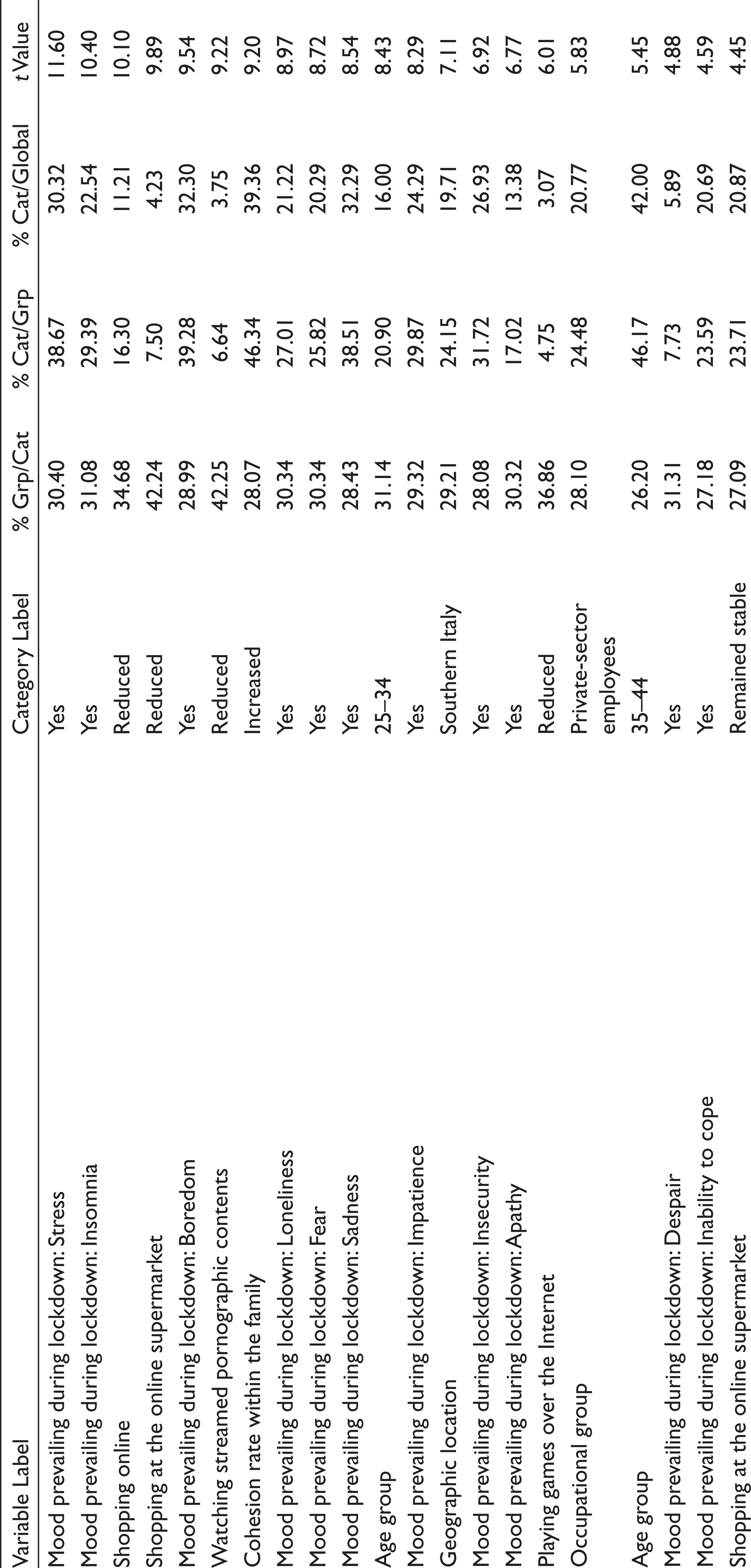
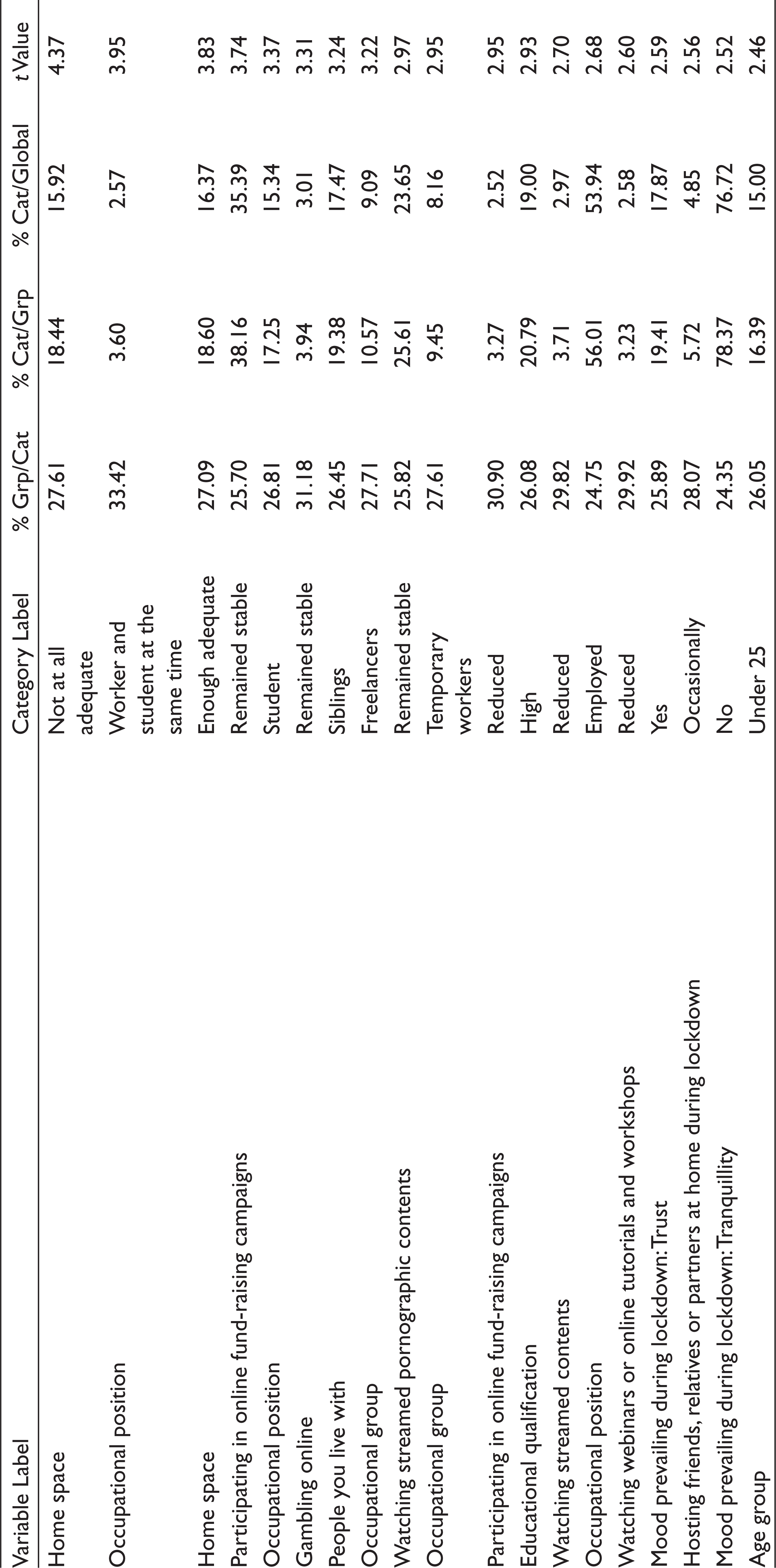
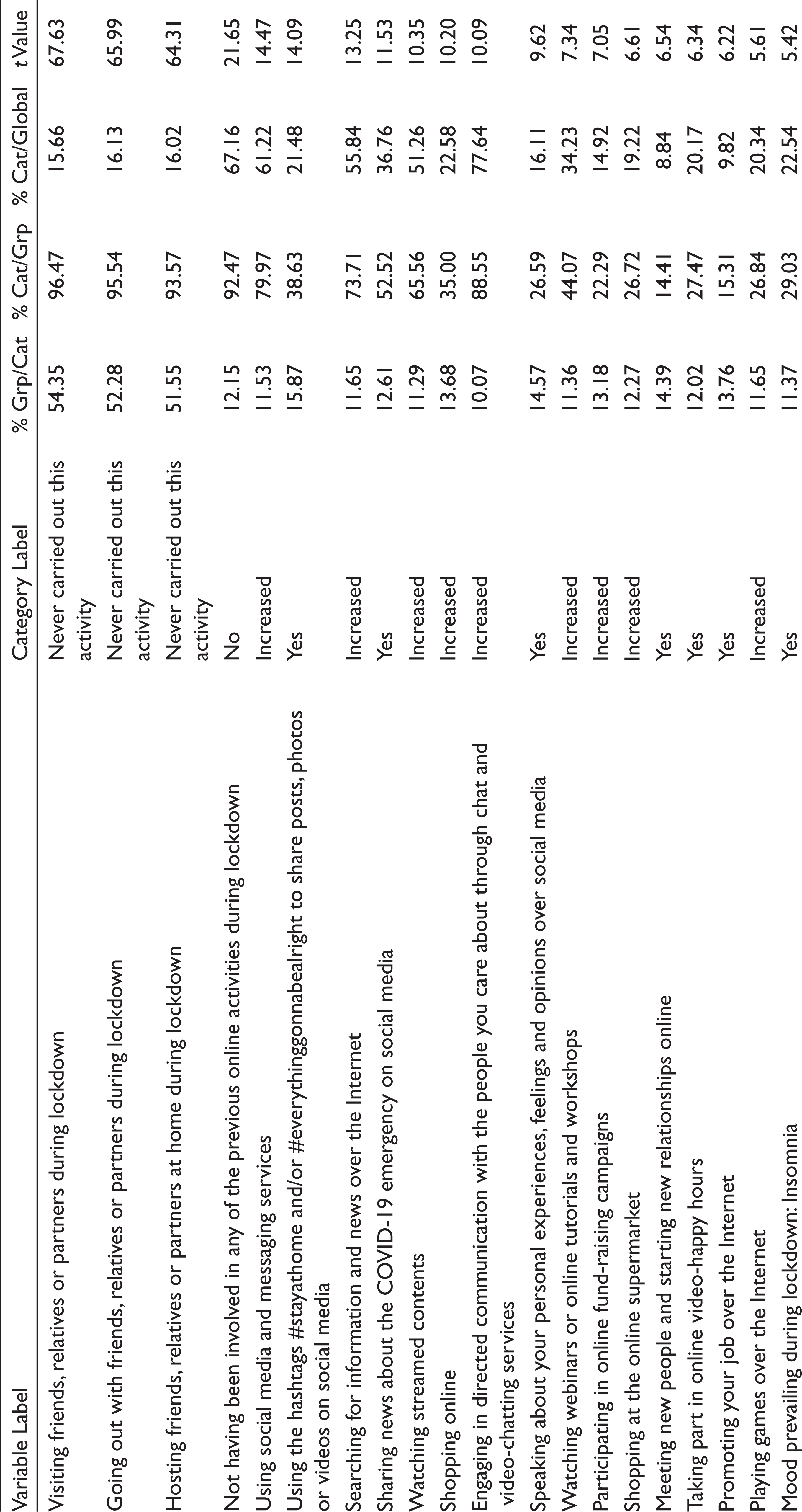
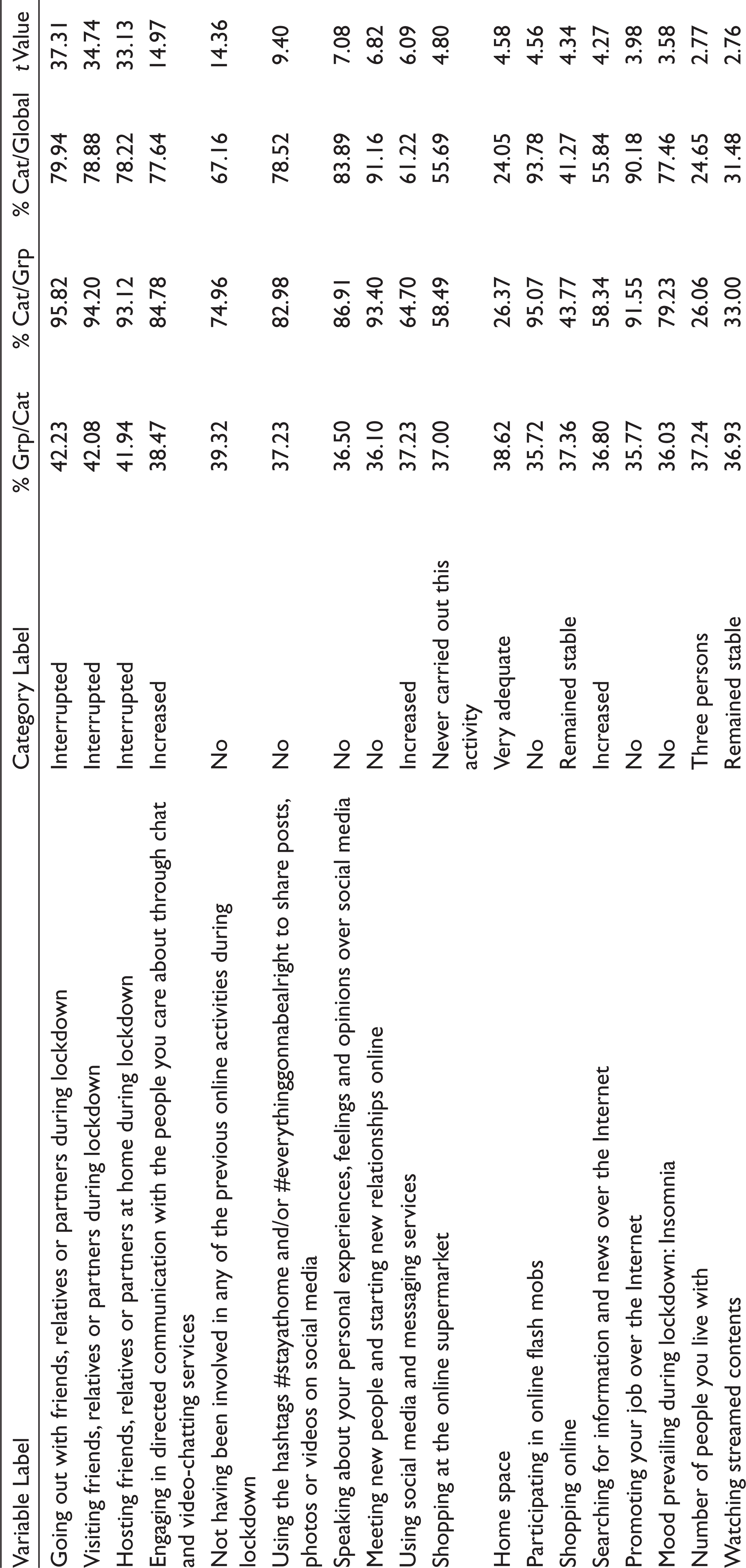
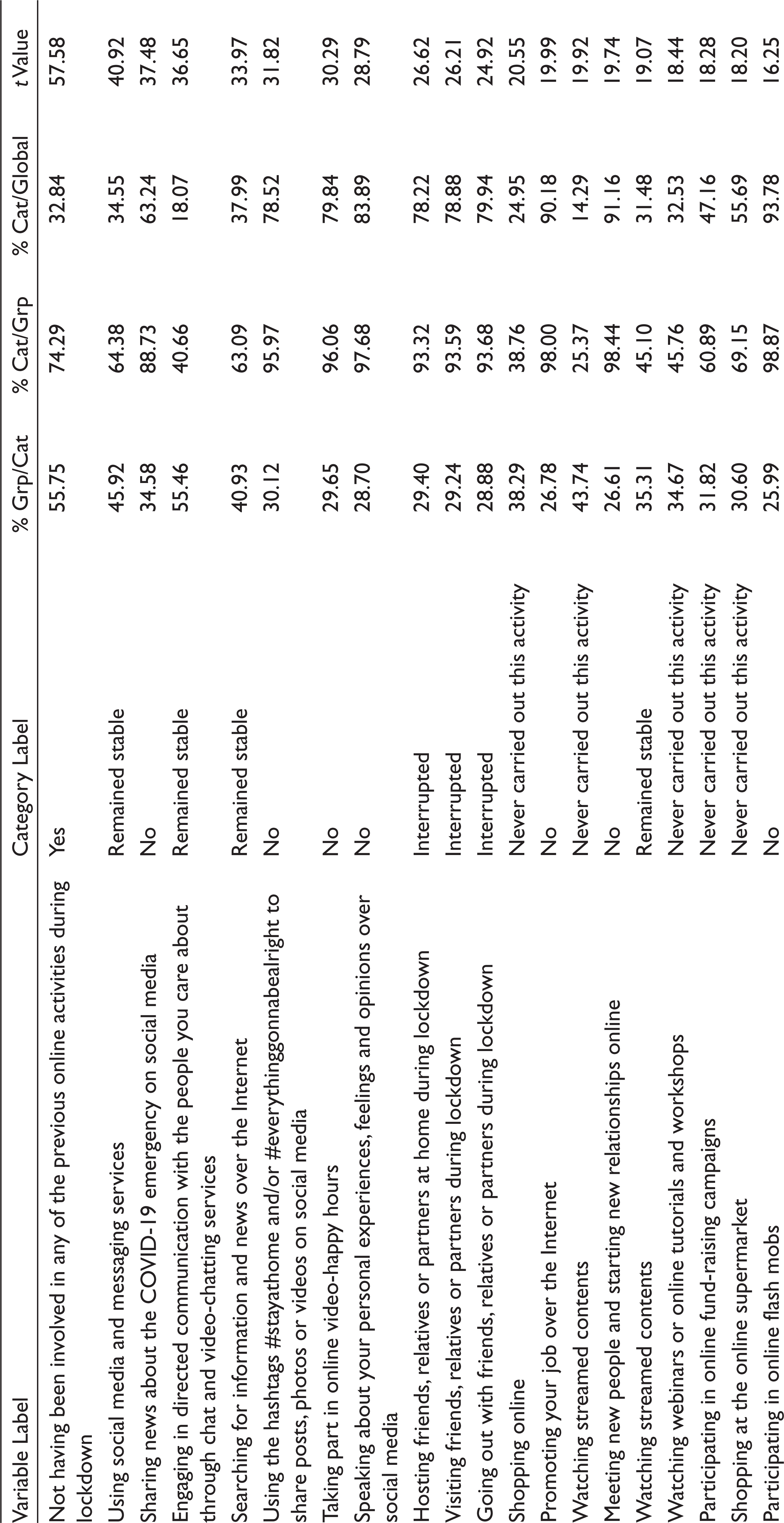
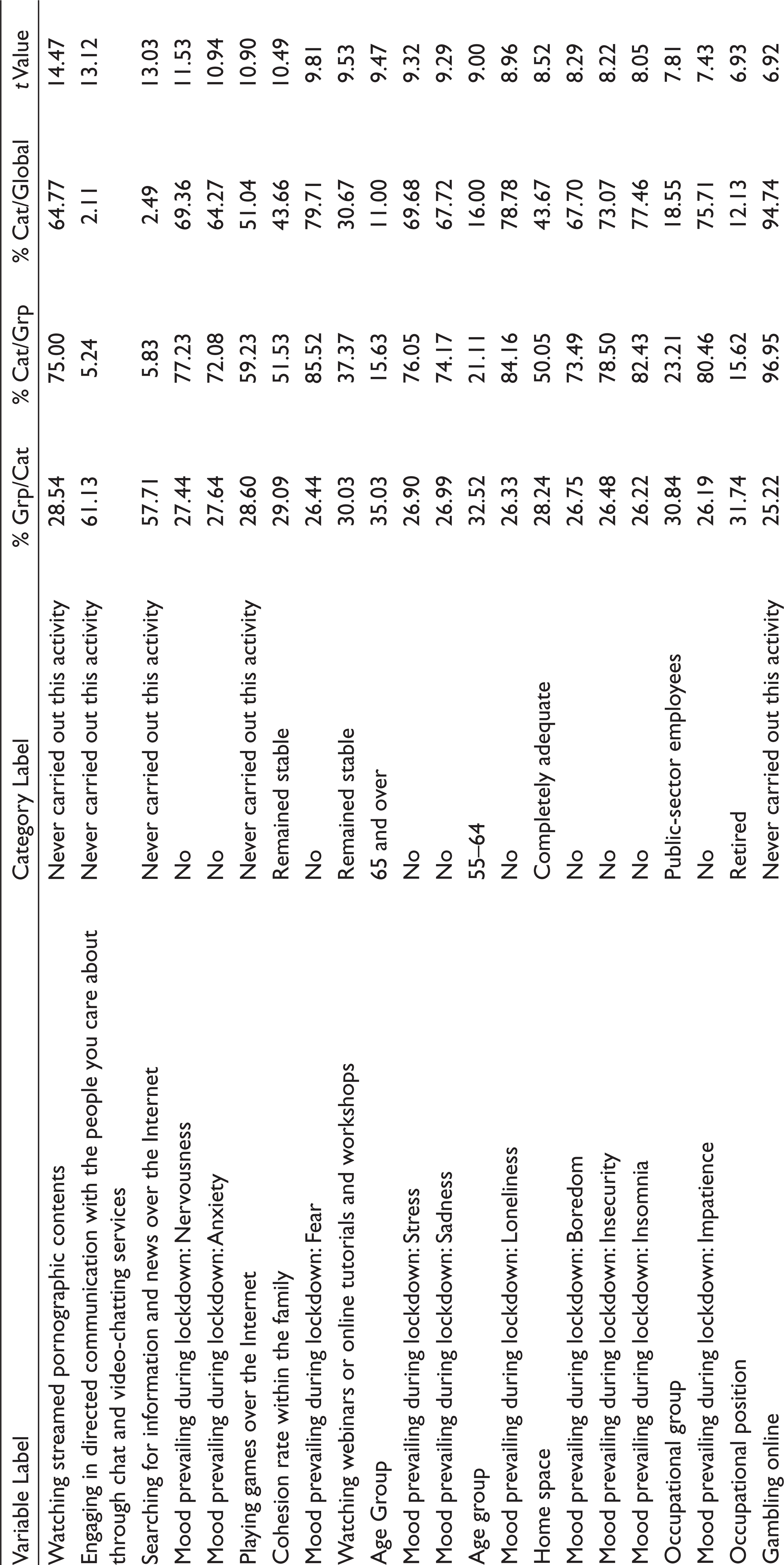
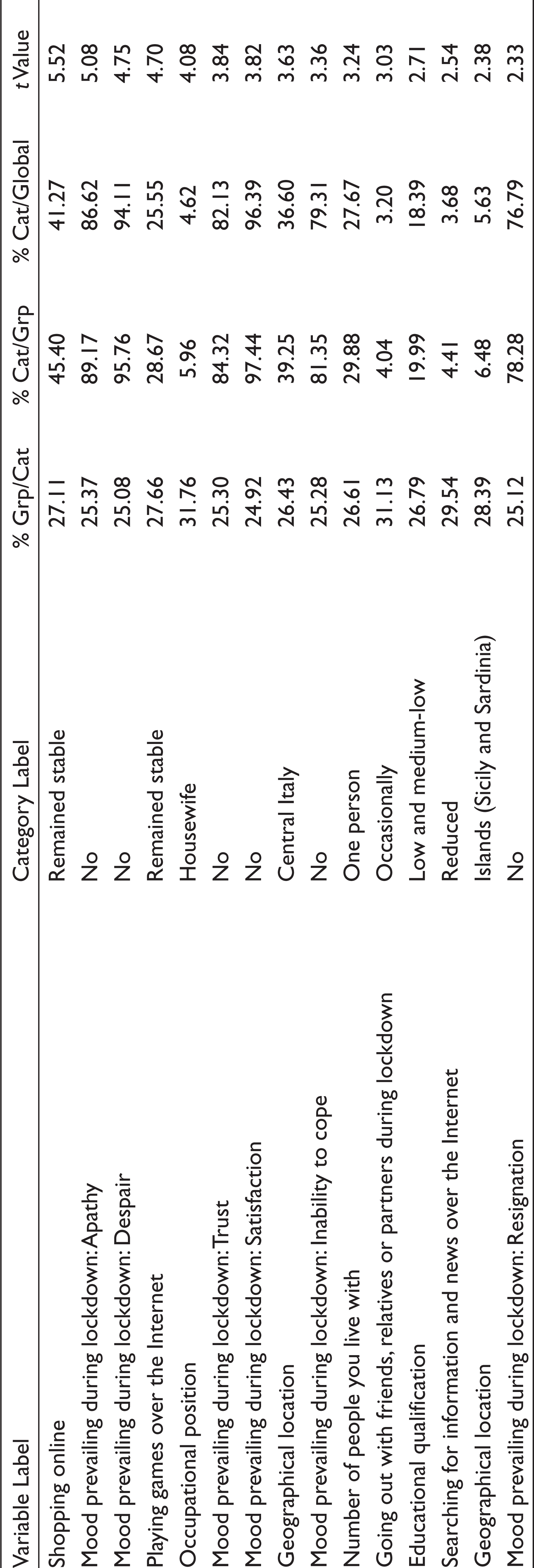
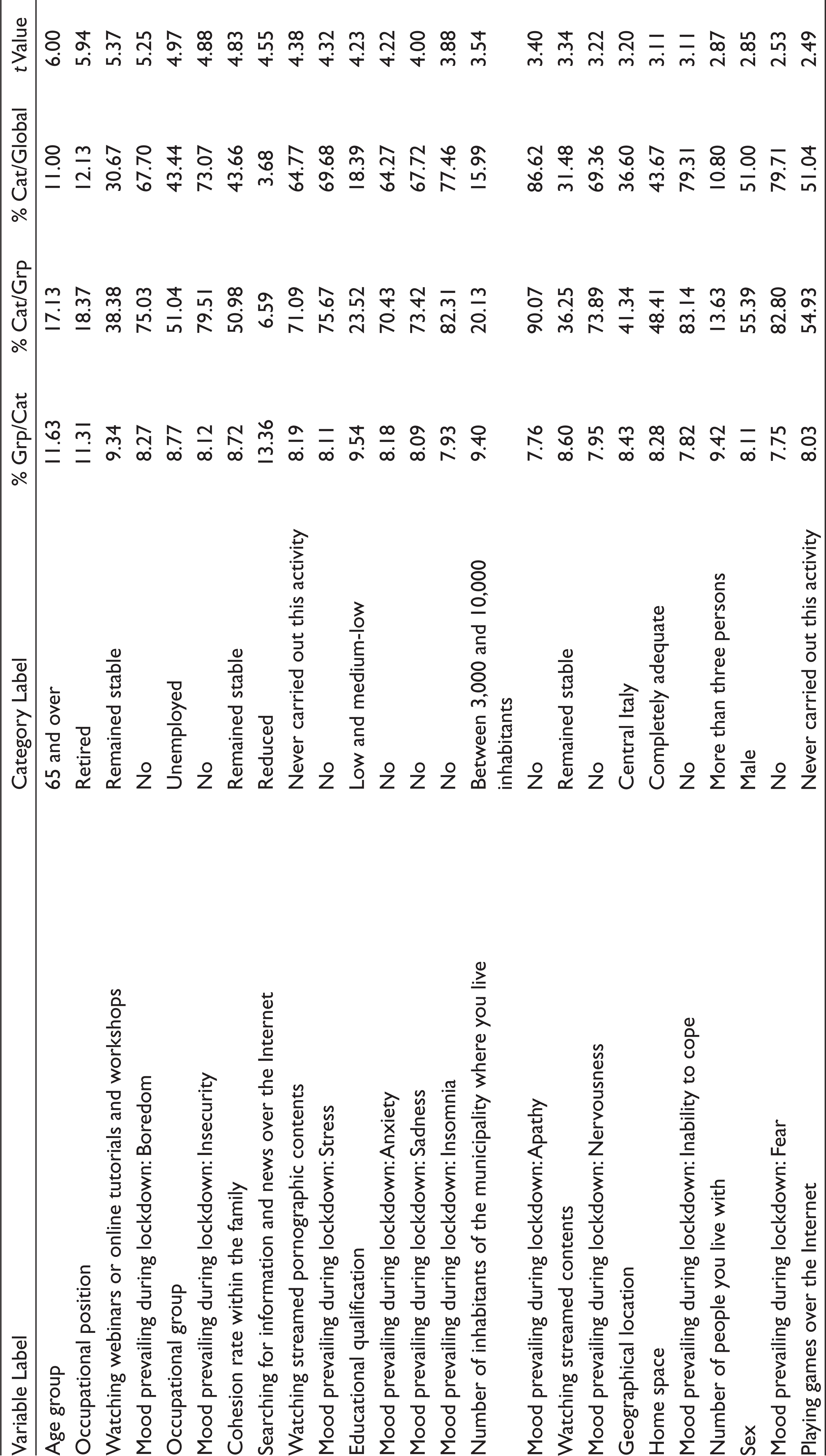
We carried out a mixed classification (CA) on the first two factorial axes, which account for 69.15% of the total cumulative variance. 3 After the comparison of the outcomes of different analyses, we settled on a five-cluster solution that produces the clearest distinguishable groups. The characterization of each group had been conducted considering the significant characteristic categories (i.e., those that have a t-value greater than two in absolute value, corresponding to P < 0.05). For brevity, only those categories that positively characterize each cluster had been considered (see Tables 3–7).
Results
Our research highlights different behavioural and emotional responses to the Coronavirus crisis between young people and adults in the Italian context.
In general, it is interesting to note that almost all respondents aged under 25 (93.4%) and 54.4% of young adults aged 25–34 were living at home with their parents throughout lockdown.
Forced cohabitation, combined with social deprivation, seems to have had a certain impact on family life. Despite 56.2% of young interviewees (aged under 25) saying that the cohesion rate within the family remained stable during lockdown and 37.5% experiencing enhanced family union, they were more likely than average to say that ‘personal privacy has decreased’ (29.8% vs 19.6%), and ‘tensions within the home’ (26.5% vs 16.8%) as well as ‘interference and chances of mutual disturbance have increased’ (24.9% vs 14.3%), especially within families with two or more children. In addition, only one-third (30.6%) of respondents aged under 25 said that the home space was completely adequate, compared to 55.8% of respondents aged 55–64, and 64.4% of those aged 65 and over.
Considering the national restrictions imposed by the Italian government, our survey shows that young people had a high sense of responsibility, respecting lockdown rules and acting in the common interest based on inter-generational solidarity. The rare ‘transgressive derogation’ (7%) was more common among those living in regions characterized by a lower level of the contagion rate and among males rather than females (8.2% vs 5.4%).
Focusing on home entertainment activities, an analysis by age group indicates that younger interviewees (aged under 25) increased significantly the frequency with which they watched TV shows (72.5% compared to 46% of respondents aged 55–64 years); took part in indoor physical activity (58.4% compared to 29.2% of respondents aged 55–64 years); just lazed around (54% compared to 34.4% of respondents aged 55–64 years); listened to music (53.1% compared to 34% of respondents aged 55–64 years) or were engaged in artistic activities and hobbies (48% compared to 31.5% of respondents aged 55–64 years) (see Table 1).
Since the Government Restrictions Came into Effect, has the Frequency with which You do the Following Activities Changed? Answer Category: ‘It has Increased’ (by age group)
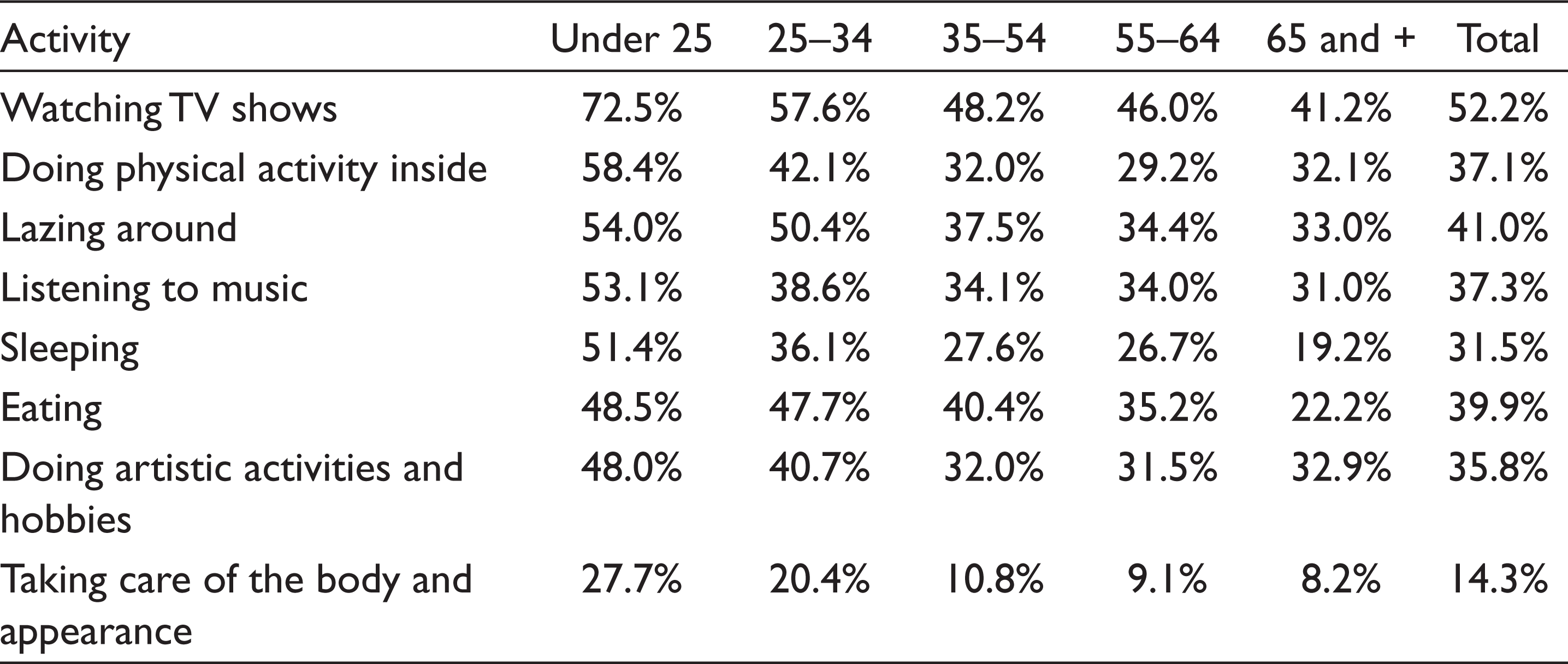
A similar pattern emerges when analysing the increase of physiological activities such as sleeping and eating. These were considerably higher for young people aged under 25 than the corresponding shares registered for adults aged 55–64 or 65 and over. In particular, 51.4% of young people said that they slept more (compared to 26.7% of respondents aged 55–64 years, or 19.2% of respondents aged 65 or above) and 48.5% said that they ate more during lockdown (compared to 35.2% of respondents aged 55–64 years, or 22.2% of respondents aged 65 or above), with a small difference between females and males in the latter case (52.4% vs 45.6%). In addition, almost one-third (27.7%) of younger respondents reported increased beauty and personal care activities, compared to 9.1% of adults aged 55–64, with a significant difference between females and males (34.9% vs 22.2%).
Overall, in most cases—and in line with the general trend recorded for the entire sample—members of the youngest age group also showed an increased need to keep informed and intensified their involvement in some typical domestic activities such as cooking (most likely together with other family members) and taking care of the house or family throughout lockdown.
As pointed out by Orben et al. (2020), our research reveals a significant increase in online participation in a variety of activities by the youngest age group (see Table 2).
Since the Introduction of Government Restrictions, has the Frequency with which You Use Digital Technologies to Carry Out the Following Activities Changed? Answer Category: ‘It has Increased’ (by age group)
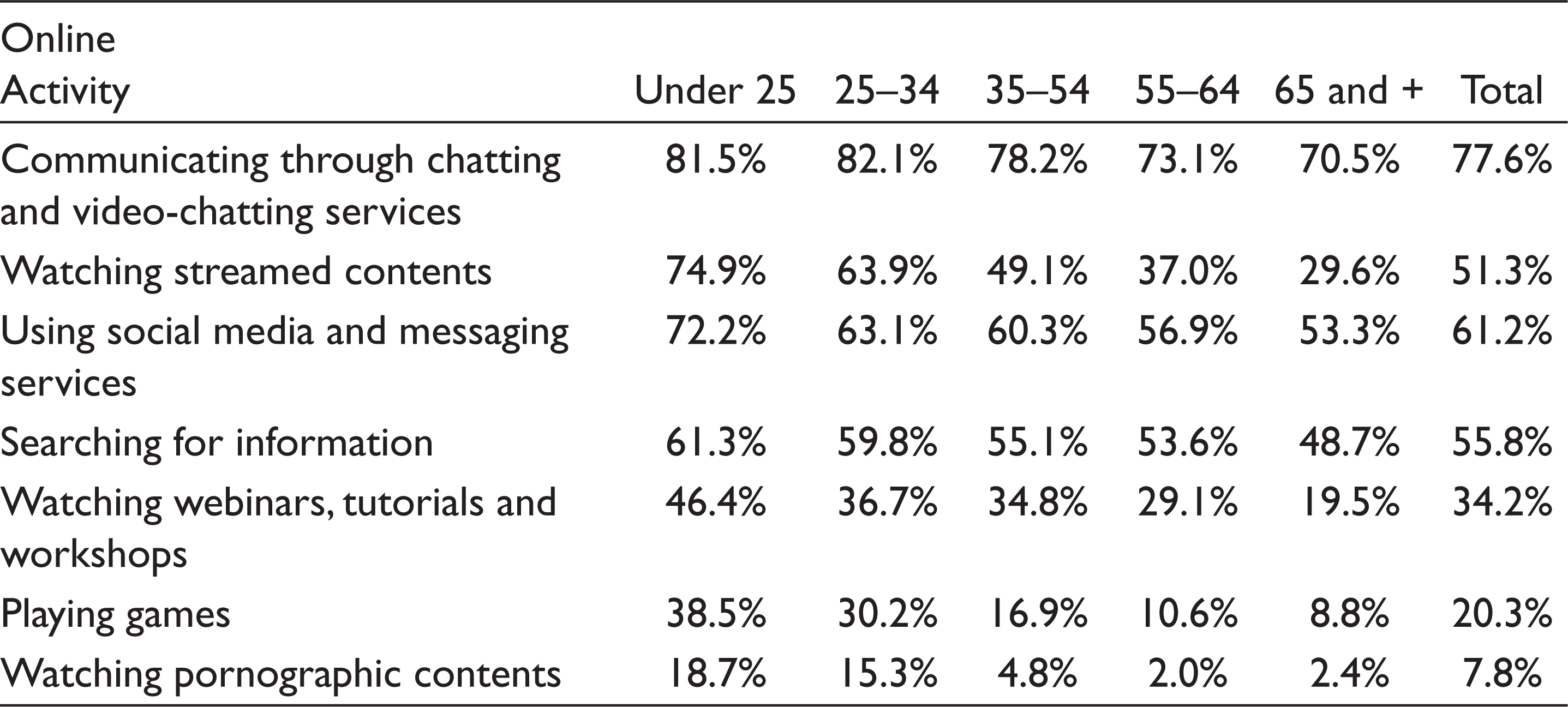
An analysis by gender indicates that there is a clear ‘gender gap’ in terms of online engagement among young people, confirming that some online activities seem to be less attractive for females, and vice versa. Indeed, the increase both in playing games over the Internet and watching streamed pornographic contents can be considered predominantly male, with the largest differences recorded (53.5% vs 18.7% and 27.9% vs 6.7%, respectively). At the same time, females were more likely than males to report having increased the frequency with which they participated in webinars or online tutorials (50.7% vs 43.3%), used social media and messaging services (77.7% vs 68%), and communicated through chat and video-chatting services (84.8% vs 78.9%).
In addition, smaller numbers of interviewees aged under 25 said they used the hashtags #stayathome and/or #everythinggonnabealright to share posts, photos or videos on social media (23%); shared news about the COVID-19 emergency on social media (20.4%); took part in online video-happy hours (19.6%); met new people and started new relationships online (16%); spoke about their personal experiences, feelings and opinions over social media (15%); participated in online flash mobs (9%); or promoted their job over the Internet (7.5%).
Further investigation using MCA combined with CA gave some additional insights into both the responses of young people to the pandemic in terms of leisure time activities, and the dynamics and aspects that influence them in terms of socio-demographic characteristics, prevailing moods, and the family and territorial contexts (see Figure 1).
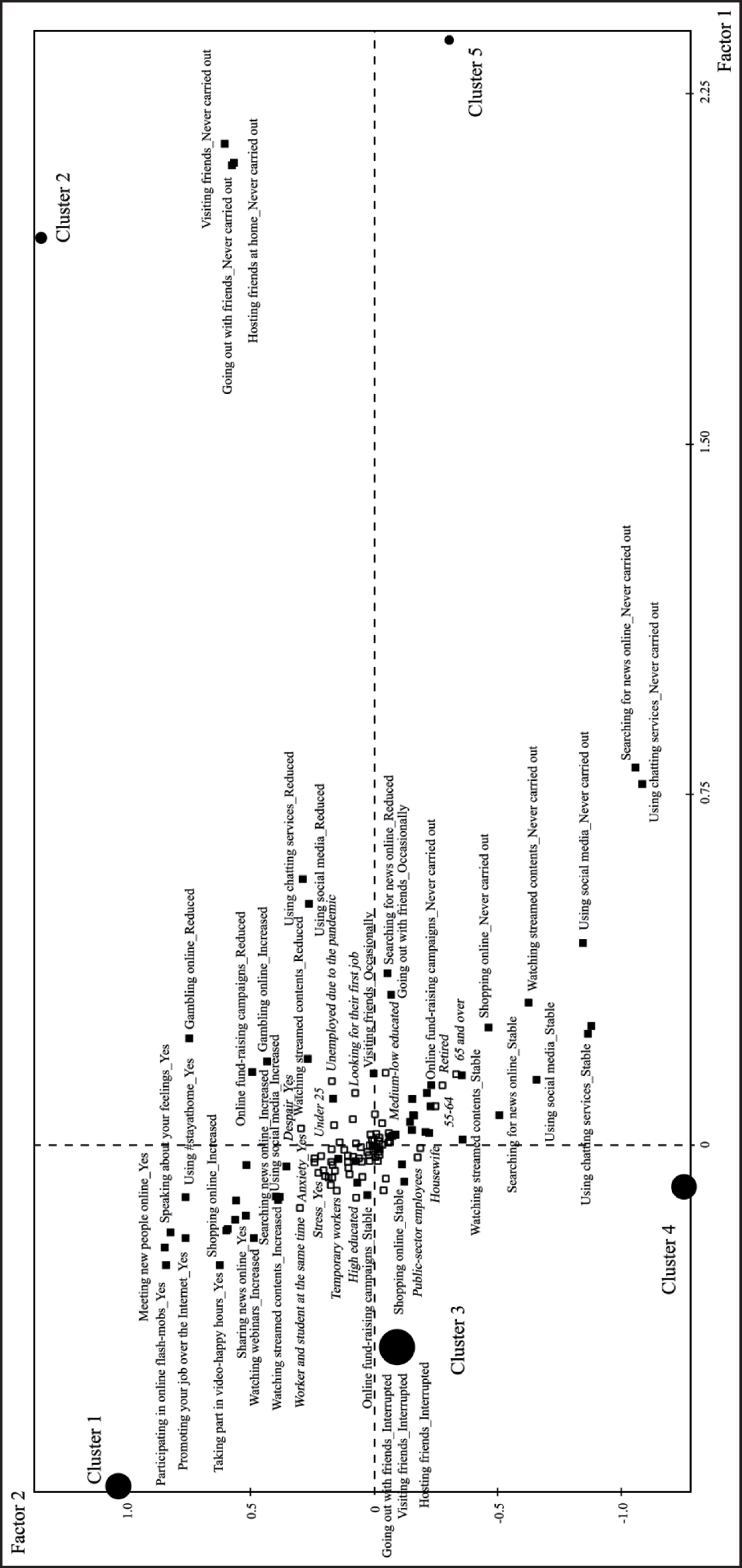
Tables 3–7 show five different groups; their characteristics indicate that individual circumstances, such as housing quality or socio-economic conditions, play a relevant role in the changes occurring in the habits and leisure activities of young people, especially when compared with older adults. To this extent, the first cluster—that gathers 23.8% of the interviewees—is mostly composed of people aged under 45, with high shares of both young adults (20.9%) and young respondents aged under 25 (16.4%). Individuals who belong to this group have considerably increased their participation in several online leisure activities during lockdown, probably because of greater access to free time and suspension of face-to-face interactions with peers. At the same time, this cluster is characterized by a negative emotional connotation, with respondents who experienced feelings such as nervousness, anxiety, stress, insomnia, boredom, loneliness, fear, sadness, impatience, insecurity and apathy in much larger portions than the total sample, highlighting that they missed their friends and had some concerns about their present and future life. Although almost half of the individuals of this group said that the cohesion rate within the family increased, there are also those who reported that the home space was inadequate or sufficiently adequate. Considering socio-demographic characteristics, this cluster is characterized by private-sector employees, freelancers, interim workers, people working and studying at the same time, students, individuals with a high educational qualification, those who live with siblings, and people living in the southern regions of Italy.
Characterization of the First Cluster (23.84%)
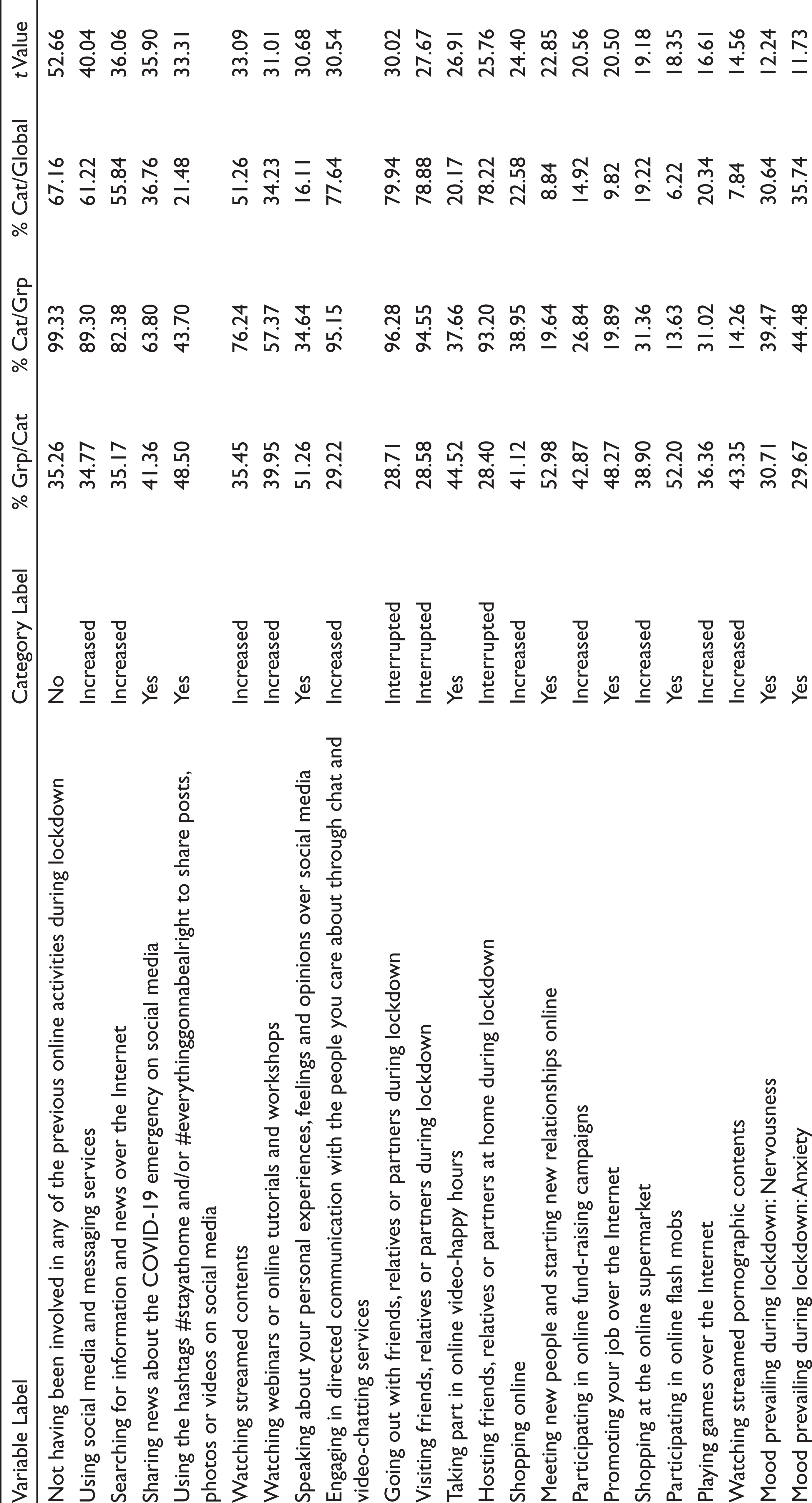
Characterization of the Second Cluster (8.83%)
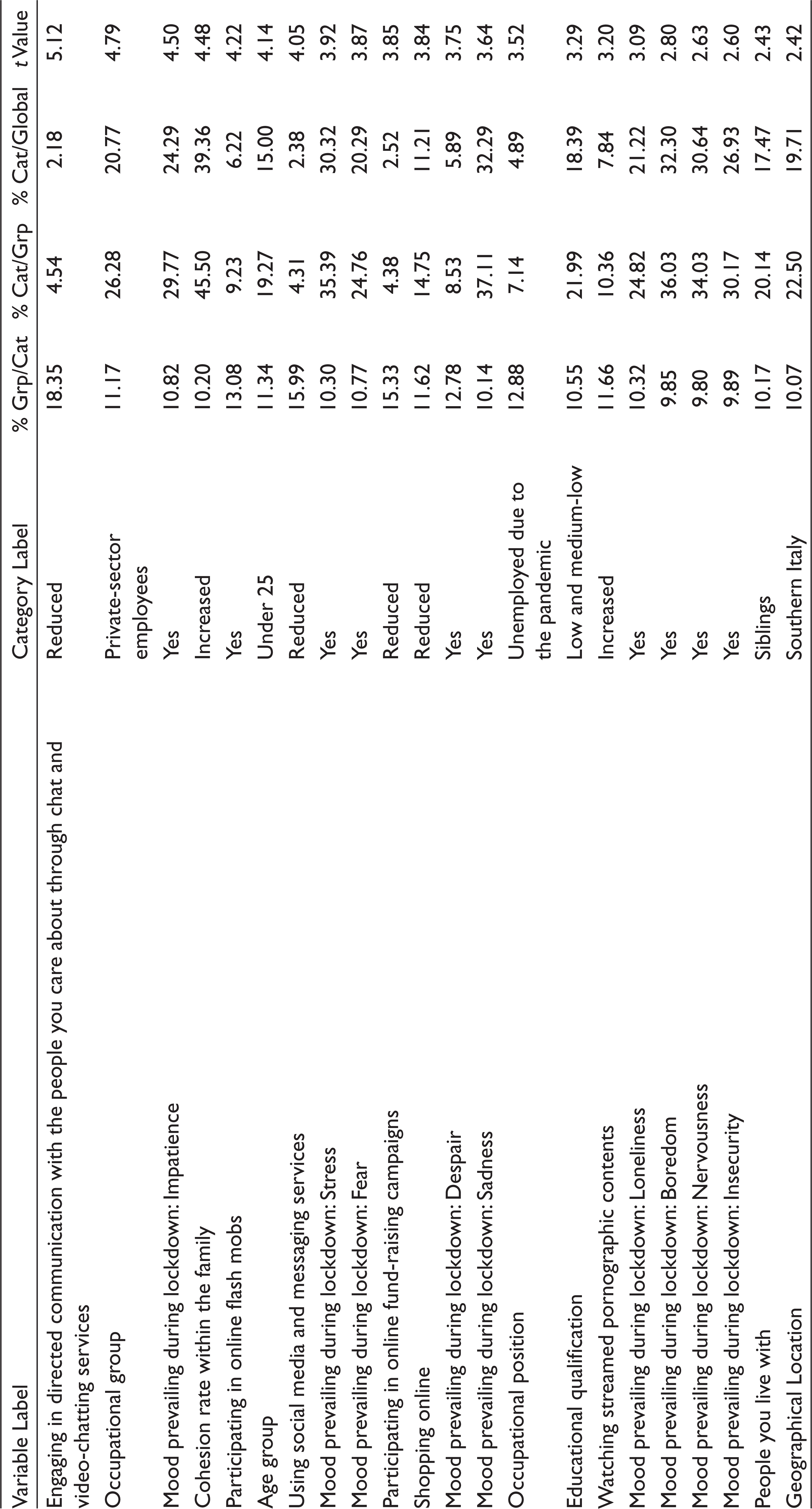
Characterization of the Third Cluster (35.23%)

Characterization of the Fourth Cluster (24.65%)
Characterization of the Fifth Cluster (7.46%)
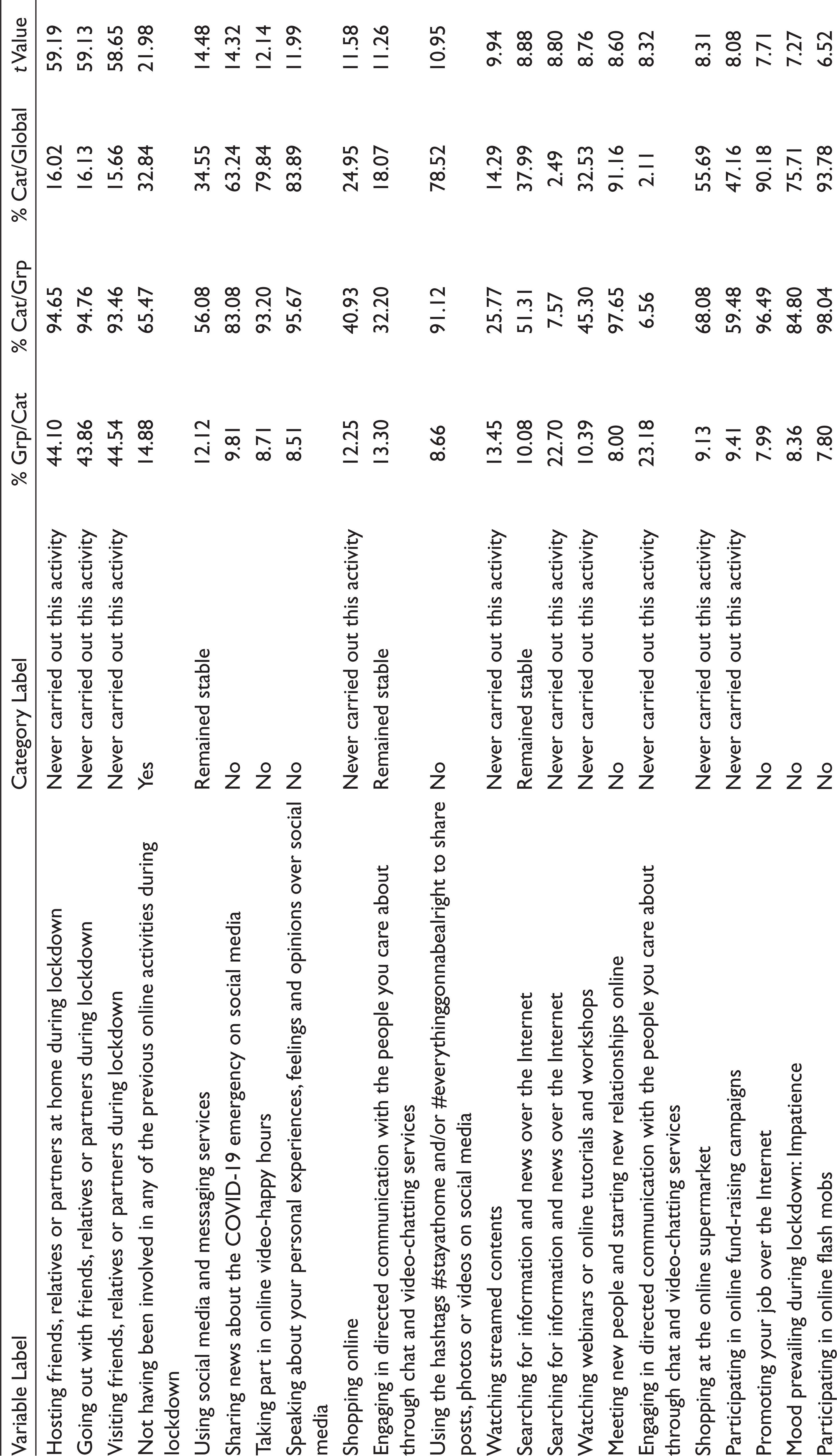
The characterizing age group of the second cluster—which accounts for 8.8% of the interviewees—is mainly young. It includes mostly individuals who stated that they never carried out activities such as visiting friends, going out with peers and hosting friends, relatives or partners at home, revealing a certain degree of reluctance to speak about their interpersonal habits. Despite this apparent sense of privacy and introversion, they increased their involvement in different online social activities during the pandemic (such as using social media and messaging services for communicating with others) and took part in very engaging online practices like speaking about personal experiences, feelings and opinions over social media, meeting new people and starting new relationships over the Internet, or participating in online video-happy hours and flash mobs. Insomnia, impatience, stress, fear, despair, sadness, loneliness, boredom, nervousness and insecurity are the prevailing emotions that characterize this cluster, together with a higher level of cohesion rate within the family. Individuals of this group are predominantly private-sector employees, persons who lost their job due to the pandemic, people with a low educational qualification, those who share their home with siblings, and people living in the South of Italy.
The third cluster—that gathers 35.2% of the interviewees—does not present a characterization by age group. It consists mainly of individuals that have interrupted face-to-face interpersonal relationships, respecting the lockdown rules. As far as online activities are concerned, it is interesting to note that whilst there has been an increase in the use of social media, chat and video-chatting services for engaging with others and being informed, other leisure activities like watching streamed contents or shopping online have remained stable. This group seems to be characterized by individuals who live in a comfortable environment with little changes in their habits, for whom the home space is very adequate despite living with three persons. In addition, they reported that they did not feel desperate or unable to sleep during lockdown. Finally, respondents who belong to this cluster are mainly temporary workers, females, people with a high level of education, and individuals living in North-Western Italy.
The last two clusters, which account for 24.7% and 7.5% of interviewees, respectively, are characterized by adults and elder people. When compared with the first two clusters, these groups present profiles that are quite opposite to those characterized by the presence of young people. To be more specific, the fourth cluster includes mostly individuals that reported not being involved in the more interactive online leisure activities (like taking part in flash mobs or video-happy hours), with a level of online participation that remained stable during the lockdown and limited to more common practices such as using social media and messaging services. Among the prevailing moods that are distinctive of this cluster, there are not the negative ones. For individuals who belong to this cluster, the space inside the home is completely adequate and there is no variation in the cohesion rate within the family. Considering socio-demographic features, this group consists mainly of people aged 55 and over, public-sector employees, retired persons, housewives, individuals with a low level of education, couples, and those who live in Central Italy or islands.
Finally, the fifth cluster is mostly composed of people who reported to be very isolated, with no face-to face interactions even before the pandemic. As for the previous group, also in this case, the online engagement in leisure activities includes very few practices, the frequency of which remained stable during lockdown, and the emotional connotation tends to be positive, with no negative moods and a good housing quality. Regarding socio-demographic characteristics, this cluster consists mainly of the elderly (65 and over), retired persons, people without a job, males, individuals with a low level of education, large families, inhabitants of small towns, and those who live in Central Italy.
Conclusions
The COVID-19 pandemic represents an unprecedented global event, and its social and economic implications are affecting different age groups in distinct ways (OECD, 2020). In particular, physical distancing measures and other restrictions imposed by national and local governments all over the world to contain the spread of the virus might have a significant negative impact on the psycho-social well-being of young people.
An important space of stress compensation (also) in crisis situations is the experience of leisure (Kleiber et al., 2011; van Leeuwen et al., 2020; Walker et al., 2019), a relevant part of youth’s lifestyle, useful to develop identity formation (Hendry et al., 1993), interaction with peers (Caldwell & Darling, 1999) and well-being (Vazsonyi et al., 2002).
The leisure of young people during the COVID-19 lockdown seemed to be characterized by a paradox: The time freed up by structured extracurricular or extra-work activities increased substantially, while outdoor and face-to-face leisure opportunities were cancelled. This has resulted in an enforced leisure, the detailed analysis of which can help to understand the practices of adaptation to the pandemic emergency situation and the role of free time activities in both containing stressful situations (Iso-Ahola & Park, 1996; Kleiber et al., 2011) and adding meaning during periods of social deprivation (Gammon & Ramshaw, 2020; Watkins, 2000).
In this respect, our research reveals that the respondents differ in their spirit of adaptation: Some have significantly changed their daily habits, while others have maintained or changed them to a lesser extent. Young people in particular have significantly re-negotiated their lifestyles and have resorted to a greater articulation of their enforced leisure, especially in unstructured activities, through social media. Despite the frustration of being unable to be active as young people, which led to an increase in time for lazing around and sleeping, young people seem to be more resilient than adults, probably thanks to their confidence with digital tools, which created opportunities for staying in contact with friends and being engaged in entertainment activities.
Nevertheless, young respondents were more likely than adults to say that they were bored, lonely, impatient, nervous or stressed, as in previous research (Ahmed et al., 2020; de Quervain et al., 2020; Liang et al., 2020; Limcaoco et al., 2020; Moghanibashi-Mansourieh, 2020; Niedzwiedz et al., 2020; Okruszek et al., 2020; Rajkumar, 2020; Wang et al., 2020). They were also more concerned than adults about the economic implications of the COVID-19 pandemic, especially when they have temporary contracts and are over-represented in the sectors worst affected by the crisis, such as retail and hospitality (Grotti et al., 2019; O’Reilly et al., 2019) and in insecure employment (ILO, 2020).
Our MCA, in particular, shows that the youngest clusters, the first and the second ones, are counterbalanced by mature and older clusters, the fourth and the fifth ones, which have not radically changed their domestic habits, probably because they are resistant to changes or because their family and personal circumstances have not required them to do so. Indeed, the fourth and the fifth clusters were mainly composed by public-sector employees, housewives and retired people, probably less affected than young people by restrictions to movements and social interactions. Thus, they continued to maintain their daily routines, surrounded by a stable cohesion rate within the family, and animated by less negative moods than those experienced by young people.
On the other hand, the first two clusters, characterized by the presence of young people, made up of very active individuals engaged in a variety of online social practices, seem to be more affected by the emergency in terms of both lifestyles and moods, highlighting that ‘within moments of deep change, the time structures that contribute to forming identity become particularly evident’ (Levrini et al., 2021, p. 26).
Therefore, for the majority of the subjects interviewed, the experience of lockdown activated different adaptation strategies, attributable both to individual characteristics and to their family and living contexts.
In particular, the number of members in the household and the adequacy of the accommodation seems to be reflected in youth discomfort: Only a third of the respondents considered the size of their accommodation adequate and young people were more dissatisfied with living arrangements than adults. This confirms the possibility that the experience of lockdown has different effects according to the different socio-economic conditions of the respondents (Doyle, 2020; Lancker, 2020; YouGov, 2020), revealing that for young people the family seemed at the same time to be a place of resilience and a stressful environment.
Also, gender and occupational condition affects the experience of lockdown. Thus, our analysis confirms that if it is true that the majority of young people have activated various adaptation strategies in response to the experience of lockdown, it is also true that social distancing and quarantine measures have caused stress, irritability and a feeling of loneliness, especially among those aged under 25, young women and temporary workers (OECD, 2020).
Thus, our research corroborates some of the findings of past studies, partly innovates them or at least presents a new set of issues to address. The analysis confirms the greater activism of young people—witnessed by their engagement in a variety of leisure activities—, their stronger ability to adapt to change during lockdown (Aymerich-Franch, 2020)—which represents the main impact of social distancing on young people well-being (Ahmed et al., 2020; Bu et al., 2020; de Quervain et al., 2020; Elmer et al., 2020; Liang et al., 2020; Limcaoco et al., 2020; Markowska-Manista & Zakrezewska-Oledzka, 2020; Moghanibashi-Mansourieh, 2020; Niedzwiedz et al., 2020; Okruszek et al., 2020; Pisano et al., 2020; Rajkumar, 2020; Shevlin et al., 2020; Spinelli et al., 2020; Wang et al., 2020; Zhou et al., 2020)—, and a lower satisfaction with living arrangements in comparison to adults (YouGov, 2020). In addition, the weight of gender and social capital on the effects on psycho-social well-being is also confirmed (Doyle, 2020; Lancker, 2020; Pfefferbaum et al., 2015).
Furthermore, as in the case of enforced leisure due to unemployment or underemployment, also the enforced leisure imposed by the COVID-19 pandemic deepens the well-being divide between those for whom leisure represents an enriching opportunity and those who would exchange it for additional hours of structured activities and social interactions (Zuzanek & Hilbrecht, 2016). To this extent, the relevant presence of feelings such as insomnia, impatience, stress, sadness, loneliness and boredom confirms that a balance of work/study and leisure, rather than an exponential growth of either of these two ‘couplets’, best serves the interests of personal well-being (Zuzanek & Hilbrecht, 2016).
Nevertheless, in contrast to Orben et al. (2020), the use of social media and digital technologies in leisure time only partly mitigated the negative effects of social distancing. Indeed, the high online activity of young people, recorded by our survey, can be read as a response to an exceptional situation, in which they tried to continue doing ‘normal things’ in the digital environment, such as learning, socialising, seeing friends or family members, and being involved in some of their favourite activities. However, the significant increase in activities such as searching for information or contents related to the pandemic, together with prevailing negative moods, accounts for a high level of attention to the changes brought about by the Coronavirus at personal and social levels, and for a widespread emotional instability.
Despite some limitations, such as the consideration of short-term changes in young people’s lifestyles and the analysis of a non-representative sample of the population, the research has the merits of focusing attention on young people adaption to lifestyles change in times of emergency and offering some insights about new issues to address.
In respect of leisure activities, habits and routines, it is important to consider that the impact of the crisis also depends on the household young people live in and individual circumstances, such as housing quality, parental support, and disadvantaged background (OECD, 2020). This raises questions about how the pandemic is giving young people the opportunity to reassess their lives and identify what is important to them, as well as how the current crisis is amplifying existing vulnerabilities and inequalities.
Young people’s feelings and moods are another important aspect to analyse in the medium to long term, in order to find out to what extent the emotional changes caused by this challenging situation can be considered temporary or long-lasting (YST Research, 2020).
For all these reasons, investigating the effects of the COVID-19 pandemic on young people’s habits, routines and leisure time may be useful also from a social and political planning perspective, since the health emergency is not yet over, and there are no certainties about the timeframe and ways of overcoming and recovering from it.
Footnotes
Declaration of Conflicting Interests
The authors declared no potential conflicts of interest with respect to the research, authorship and/or publication of this article.
Funding
The authors received no financial support for the research, authorship and/or publication of this article.