




Abstract
Water-blown polyurethane foams, produced using water as a sustainable blowing agent, exhibit complex, density-dependent mechanical behavior that is pivotal for energy absorption in impact-resistant structures. Compared to traditional chemical blowing agents, the water-blowing technique offers improved environmental compatibility, avoiding harmful effects associated with conventional methods. This study comprehensively investigates the mechanical performance and perforation energy absorption of these foams under high-velocity impact loading, employing both experimental testing and advanced numerical simulation techniques. Foam specimens, with densities ranging from 60 to 200 kg/m3, were subjected to compression tests to accurately determine their elastic modulus, plateau stress, and densification strain. High-velocity impact tests were conducted using a gas-gun apparatus to launch spherical impactors at an initial velocity of 147 m/s, thereby providing critical insights into the foam’s dynamic energy dissipation and perforation behavior. A detailed numerical model was developed in ABAQUS utilizing a custom VUMAT subroutine for foam material that integrates an energy-based damage criterion, wherein the critical energy parameter W was meticulously calibrated against the experimental impact test data. Predictive models were established through systematic curve fitting of the experimental results, enabling reliable interpolation of key mechanical properties across the specific density range. The simulation results reveal distinctly nonlinear trends in both the residual velocity of the impactor and the specific perforation energy as foam density varies. Notably, although increasing foam density generally enhances energy absorption capabilities, the improvements become marginal within the density range of 100–150 kg/m3, exhibiting minimal changes in specific perforation energy. In contrast, density increments below and above this range yield more pronounced changes, highlighting critical density intervals for optimized energy absorption. This eco-friendly approach, combined with optimized mechanical performance, provides a robust framework for designing advanced, impact-resistant, and sustainable energy-absorbing systems made of polyurethane foams.
Keywords
Introduction
Polyurethane foams play a crucial role in resisting impact loadings due to their superior energy-absorbing capabilities, which stem primarily from their cellular microstructure. This structure allows for progressive cell collapse under compression, enabling efficient dissipation of kinetic energy. Additionally, their lightweight nature and tunable mechanical properties (such as elastic modulus and plateau stress, which can be tailored by adjusting foam density) further enhance their effectiveness in impact mitigation. Polyurethane foams are used extensively in the automotive, aerospace, and protection sectors, where controlling impact forces is essential. The fact that the foam density can be easily modified makes them highly versatile to a wide range of energy-absorbing applications, influencing mechanical behavior under dynamic loading conditions.1,2 The water-blown polyurethane foams mainly are an eco-compatible alternative to the conventional foams that balance mechanical stiffness and structural flexibility. However, to effectively take advantage of them in practical uses, there is a need to explore how they perform under various forms of impact, particularly addressing their perforation resistance and dissipated energy behavior. 3
Numerous research has explored the application of polyurethane foams to impact-resistant structures.4–6 Foam-filled thin-walled tubes showed greater crushing resistance and more effective energy absorption than empty structures, underlining the contribution of foam core density to ensure maximum mechanical performance. 7 Functionally graded polyurethane foams, where the density varies through the structure, have shown enhanced energy dissipation under lateral and axial impact loading. 8 This improved performance is mainly attributed to the sequential crushing of foam layers, where low-density regions absorb initial impact energy and higher-density layers engage progressively, thereby extending the energy absorption duration and delaying densification. Recent studies have confirmed this behavior under high-velocity impact loading, particularly in multilayer composite sandwich panels with FG polyurethane foam cores. 9 The combination of polyurethane foams with composite sandwich structures has also ensured greater structural robustness and impact resistance due to the contribution of foam cores to manage deformation and dissipate energy. 10 Also, the use of complex foam architectures such as auxetic foams has exhibited significantly higher impact absorption due to the negative Poisson’s ratio that enhances the adaptability of the structures under large strains. 11 Also, research on foam-filled aluminum honeycomb structures has indicated that the use of polyurethane foam improves mechanical behavior under reinforcement using micro balloons to ensure higher crushing resistance. 12
The mechanical properties of polyurethane foams are primarily dependent on their density, which can be controlled through the amount of water used as a blowing agent during the manufacturing process. The use of higher water content decreases foam density, which has a corresponding relationship to compressive strength, energy absorption, and deformation behavior. Seo et al. 13 and Thirumal et al. 14 indicated that lower-density foams will consist of larger cell sizes along with reduced mechanical strength but also affect thermal stability and water absorption.
Various research has studied the connection between foam density and mechanical performance. Linul et al. 15 and Saint-Michel et al. 16 indicated that yield stress and elastic modulus are enhanced through an increase in density, which enhances the structural integrity. Also, Liu et al. 17 showed that the higher-density foams fail in a brittle behavior, but the lower-density ones exhibit elastoplastic behavior. Furthermore, Saha et al. 18 studied the sensitivity to the strain rate and showed that the maximum stress and the absorbed energy are enhanced through an increase in both the density and the loading rate. Shivakumar and Deb 19 also verified that important mechanical parameters like mean load and densification strain increase monotonically through an increase in density.
The structural characteristics of water-blown polyurethane foams, particularly their cell morphology and mechanical response, are strongly influenced by variations in density, which can be tailored by adjusting the water content during the foaming process. Armistead & Wilkes 20 and Moreland & Wilkes 21 demonstrated that increasing the water content reduces the foam density by enhancing gas expansion, leading to larger cell sizes and thinner cell walls, which subsequently affect the mechanical integrity. Chang et al. 22 and Yan et al. 23 indicated that lower-density foams tend to exhibit greater deformability and reduced stiffness due to weaker hard segment domains and a less interconnected cellular network, affecting their energy absorption behavior. Conversely, Mondel & Khabhar 24 and Niyogi et al. 25 showed that higher-density foams present a more compact structure with enhanced load-bearing capabilities, as demonstrated by increased compressive strength and impact resistance. Zharinova et al. 26 studied the shape-memory characteristics of water-blown polyurethane foams. They highlighted that their reversible shape-memory effect could enhance structural resilience under deformation, offering additional energy dissipation potential. Li et al. 27 and Esmaeilnezhad et al. 28 verified that failure mechanisms in polyurethane foams are density-dependent, with lower-density foams undergoing progressive collapse. In contrast, higher-density ones tend to fail through brittle fracture under high stresses.
Despite extensive research on the mechanical behavior of polyurethane foams under different loading conditions, a comprehensive evaluation of their response under high-velocity impact and perforation loading at different densities remains limited. Given the direct correlation between foam density, achieved by modifying water content, and mechanical performance, further investigations are necessary to optimize their structural properties for energy-absorbing applications. This study aims to investigate the mechanical response and perforation energy absorption characteristics of water-blown polyurethane foams at varying densities, providing a deeper understanding of their effectiveness in impact-resistant applications.
Materials and methods
Foam specimens
This study aimed to evaluate the effect of added water in isocyanate and polyol components on polyurethane foam with regard to the changes produced in the density of the foam. Since the mechanical behavior and perforation energy absorption of the foam panels under compression and high-velocity impact tests were the main objectives, studies in foam density were focused on the sample sizes of tests.
Commercially available polyurethane foams usually have a limited number of density options. Therefore, to obtain foams with various densities suitable for different engineering applications, we must rely on controlled variations of influencing factors during the manufacturing process. In this study, two types of commercially available polyurethane foams were used as the base materials for fabricating specimens of different densities. When the polyol and isocyanate are mixed at equal volumetric ratios under standard conditions, the resulting foams exhibit approximate baseline densities of ∼100 kg/m3 (low-density type) and ∼180 kg/m3 (high-density type). These two baseline foams were therefore considered the starting materials for all subsequent sample fabrication. The most important parameters that affect the density of the foam are temperature, mixing ratio of the isocyanate and polyol, mold’s size and type, and the addition of water as a third component. The water addition effect is separated by keeping all other parameters such as environmental conditions, mold’s type and size constant. For fabricating the samples for compression and high-velocity impact tests, two self-locking multilayered wooden molds were designed.
Polyurethane foam formation is an exothermic reaction that occurs due to the chemical reaction between isocyanate and polyol, generating significant amounts of heat. When water droplets are added during the mixing process, this reaction-generated heat causes the water to evaporate rapidly into steam, creating additional gas bubbles within the foam structure. These additional bubbles effectively increase the foam volume and reduce its final density. Specifically, increasing the amount of water results in more steam production, larger bubble formation, and consequently, a greater reduction in foam density. On the other hand, variations in the proportions of isocyanate and polyol directly affect the reaction rate and viscosity of the mixture; higher isocyanate proportions typically accelerate curing, reducing bubble expansion time and resulting in higher-density foams, while increased polyol content slows the curing process, allowing more bubbles to form and thus decreasing the density. To achieve uniform density distribution throughout the foam, complete and homogeneous mixing of isocyanate, polyol, and water is essential, as inadequate mixing may lead to uneven bubble formation and inconsistent density across the foam samples. Figure 1 illustrate mixtures with different volumes of added water droplets but the same volumes of initial components poured into disposable cups. The differences in the volume and density of the foam can be obtained. Volume expansion of foam due to the addition of water droplets.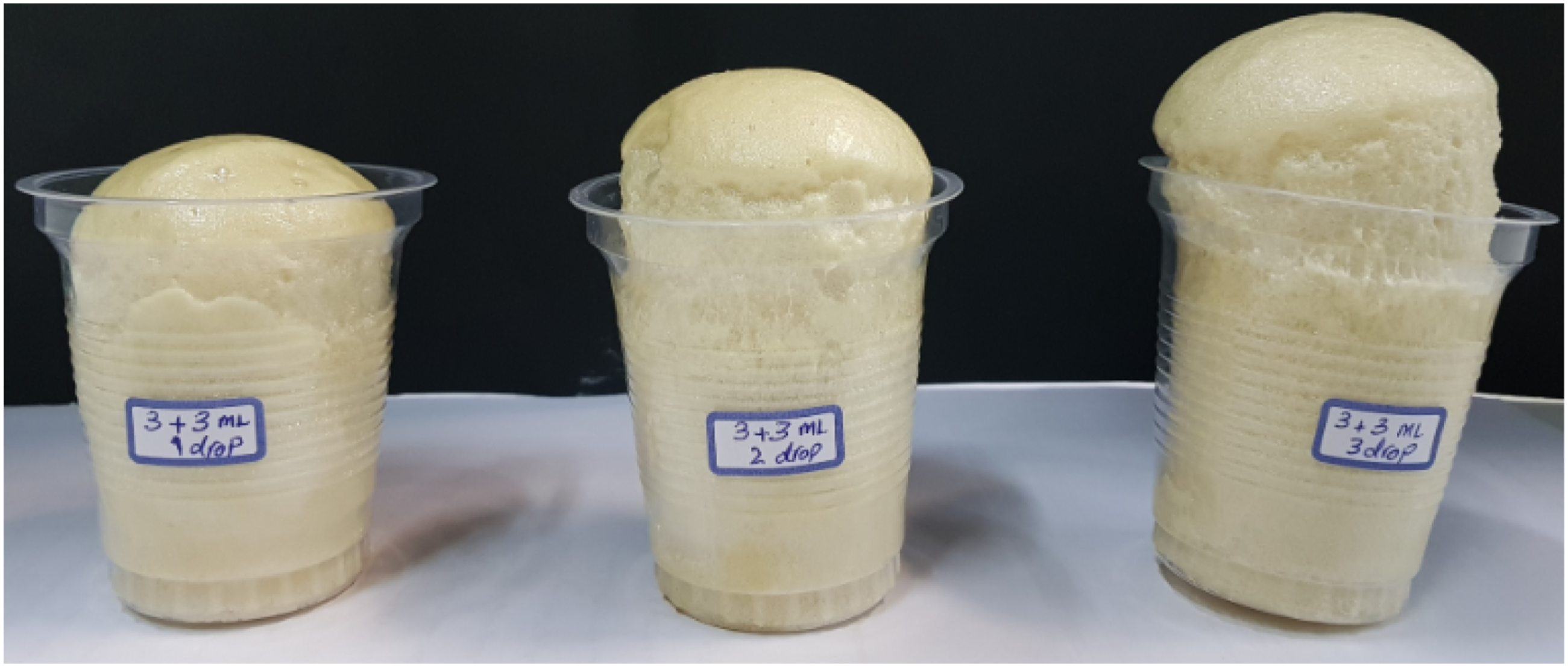
However, adding too much water results in severe dimensional deformation in the foam. The optimum amount of added water depends upon the volumetric ratio of isocyanate and polyol, which may be different for different fabrication processes.
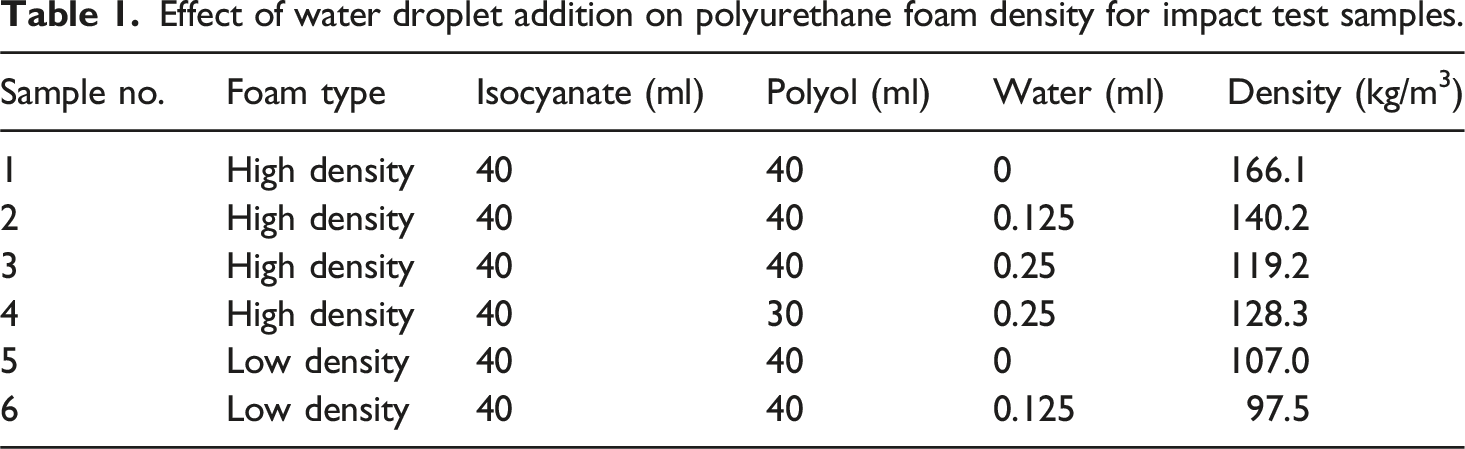
Effect of water droplet addition on polyurethane foam density for impact test samples.
Effect of water droplet addition on polyurethane foam density for compression test samples.
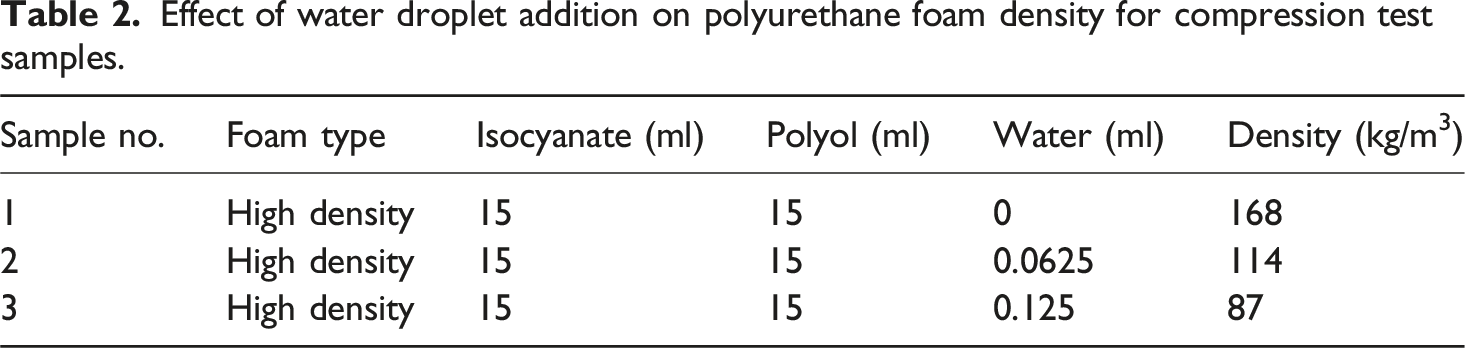
The data indicate that as the water content increases, the density of the foam decreases on a regular basis. In high density foams, the addition of water shows a more pronounced fall in density compared to low density foams. For example, the addition of two droplets of water to a 40 mL isocyanate and polyol mixture reduced the density by 25.9 kg/m3 for high density foam but only by 9.5 kg/m3 for low density foam.
The adjustment of the polyol-to-isocyanate ratio also had an effect on the final density, as can be seen in samples number three and four prepared for impact tests. By reducing the proportion of polyol, the density of the foam increased slightly. For continuous mechanical behavior modeling, additional intermediate densities were generated by varying foam components as input data for the VUMAT subroutine in the ABAQUS simulation. Since a much wider range of foam densities was required for both impact and compression tests than those explicitly listed in Tables 1 and 2, we systematically combined the effects of water addition with adjustments in volumetric ratios of isocyanate and polyol to achieve these densities.
Density variations of polyurethane foam based on isocyanate and polyol ratios.
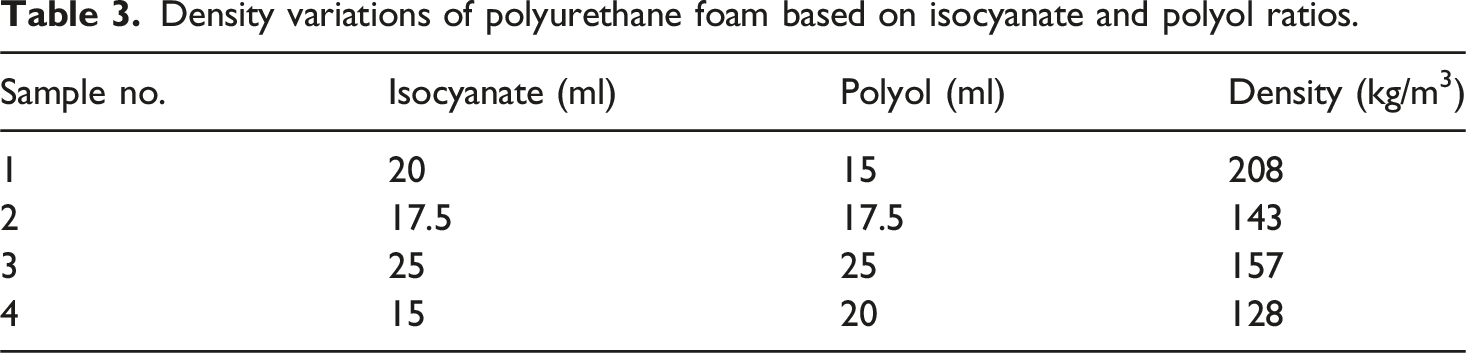
Isocyanate accelerates foam curing and thus reduces the time available for bubble formation, resulting in higher foam density. On the other hand, an increase in polyol content slows down the curing and permits more bubbles to form, thus reducing the final density. These variations are effective only within a specific limit. The experimental observations indicate that an increase of more than 60% of either component in the total mixture disrupts the structure of the foam and leads to failure in meeting the desired specifications. Accordingly, great control of the foaming parameters in a broad range of foam density may be used by employing mechanical performance and testing for energy absorption studies to present comprehensive input data in view of modeling and simulation.
Experimental procedure
Compression test
The material investigated in this research work is crushable polyurethane foam. Since one of the main goals of the research is to conduct finite element simulations, there is a need to identify the mechanical properties of different densities of foam for its correct modeling by using ABAQUS software. The compression test was recognized as one of the most important tests to characterize the mechanical behavior and plastic region of polymeric foams.
For this purpose, the compression test was performed according to the ASTM D3574 standard,
29
which specifies the method for testing the properties of cellular materials. In the present work, cubic polyurethane foam specimens of size 5 × 5 × 5 cm3 were prepared and tested (Figure 2). Each test was repeated five times with the same samples to make sure that the results were reproducible and statistically reliable. Tests were made with six different types of foam density for complete testing of the performance of the material. Foam specimen positioned in the universal testing machine for compression testing.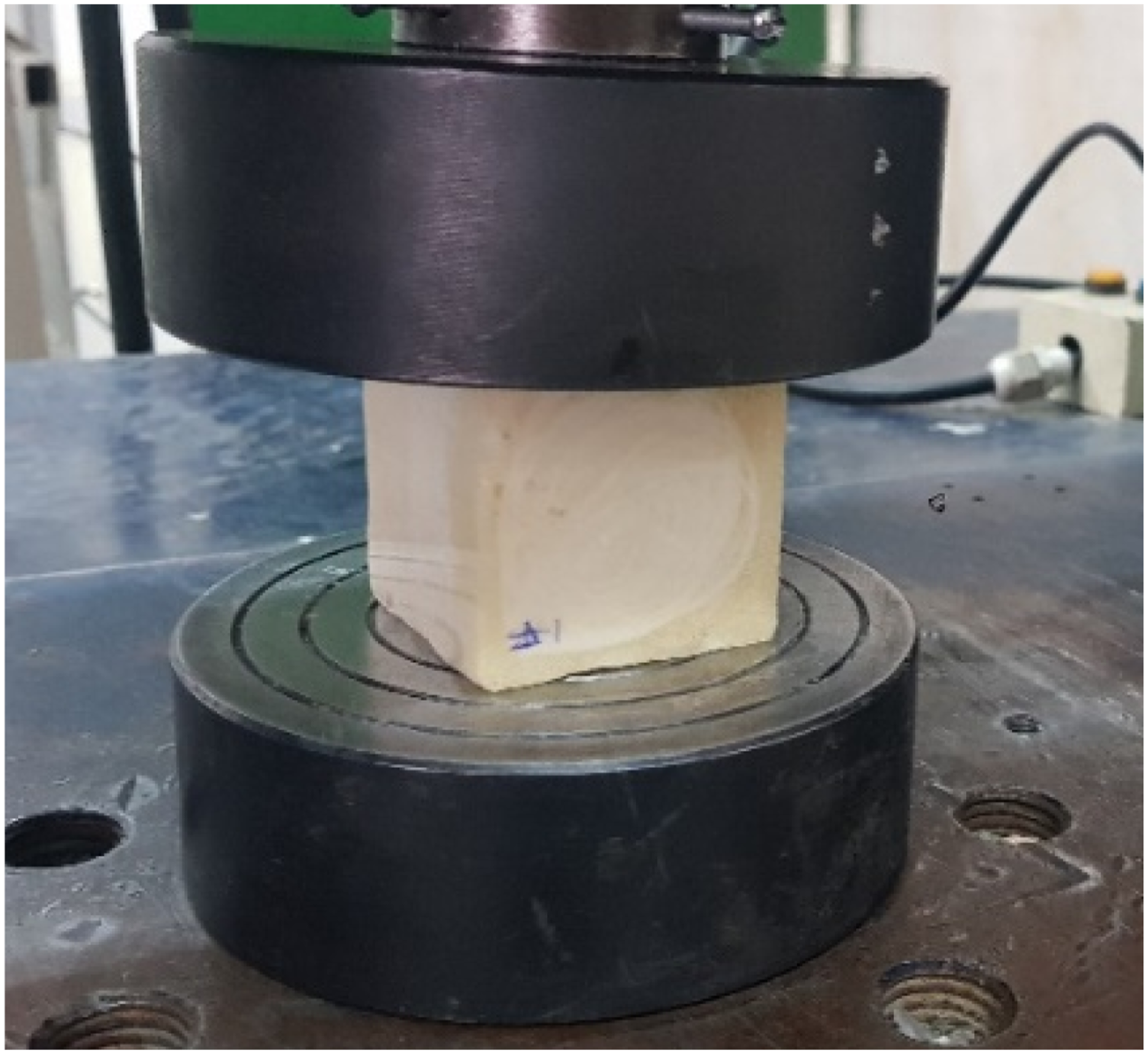
The foam densities used in the tests were varied by adjusting the parameters during the manufacturing process, as described previously. These variations allowed for a detailed assessment of the influence of density on the compressive behavior of polyurethane foams. The results from these tests serve as critical input for material modeling in finite element simulations and provide insights into the structural behavior of water-blown polyurethane foams under compressive loads.
Impact test
High-velocity impact tests on the foam panels were conducted using a gas gun apparatus, as represented in Figure 3. The gas gun uses a compressed air cylinder to provide the required force for launching the impactor. The impactor is guided through a barrel toward the foam specimen, which is securely fixed in a custom-designed holder. The high-speed camera measures the velocity of the impactor after passing through the specimen. Gas gun apparatus used for high-velocity impact testing.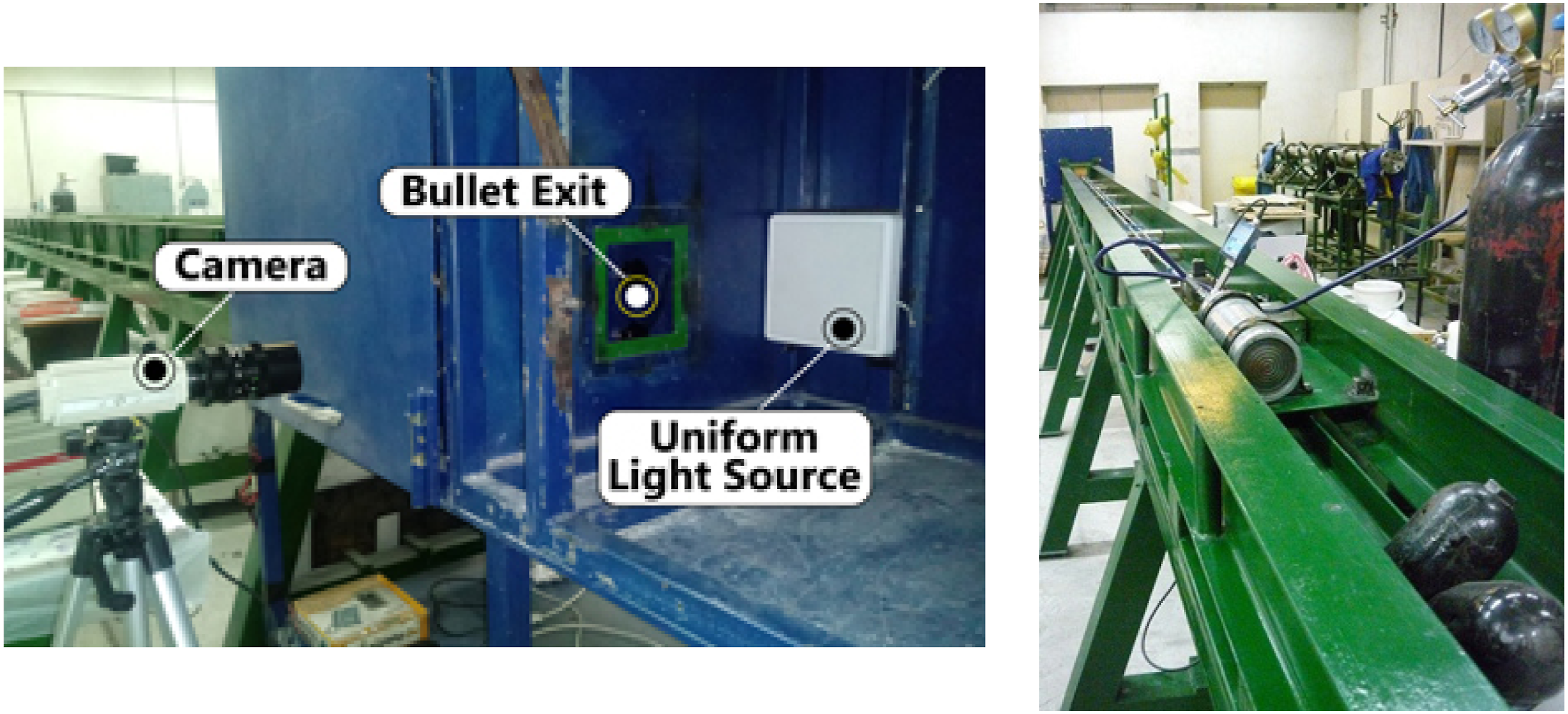
Since the main focus is not on the geometry of the impactor, a spherical nose-shaped one was used for this set of tests. The weight of the impactor is 5 g with 10 mm diameter. The air pressure was adjusted to control the initial impact velocity of the impactor, whereas the residual velocity was computed by using the high-speed camera data.
As shown in Figure 3, the high-speed camera was set to capture the motion of the impactor exiting the specimen. The residual velocity was calculated from a minimum of three consecutive frames captured by the camera. The velocity calculation was made through a program specifically developed, using the displacement of the impactor across the frames and the corresponding time intervals. This ensured that the impact and residual velocities were measured accurately, which was necessary for assessing of the perforation absorbed energy by the foam panels.
Numerical simulation
Numerical simulations can provide greater results with reduced experimental tests. In the current study, finite element analysis was done using ABAQUS in order to have an extended, comprehensive investigation of the performance of water-blown polyurethane foam panels for perforation under high-velocity impact loading. The versatility of this software in modeling various types of materials, solving complex problems, and users’ own subroutines such as VUMAT enabled the model to generate more accurate and reliable results.
Model description
Due to the negligible deformation in comparison with the foam panels, the impactor was simulated as a rigid shell. The foam panel was modeled as a square with a cross-sectional area of 10 × 10 cm2 according to the fixture dimensions of the gas gun apparatus. The panel thickness was 30 mm. In this analysis, one quarter of the model was analyzed because of the geometric symmetry of the samples in order to reduce the computational time required. Initial velocity was given to the impactor to model the impact loading.
The generation of the mesh is one of the most important steps for accurate simulation results. A refined and structured mesh was used, with a particular focus on the region near the impact zone (Figure 4). The foam panel was partitioned into smaller subregions to allow localized mesh refinement at the impact area. Hexahedral reduced-integration elements (C3D8R) were employed for the foam core. (a) Partitioning of the foam panel and (b) finite element mesh.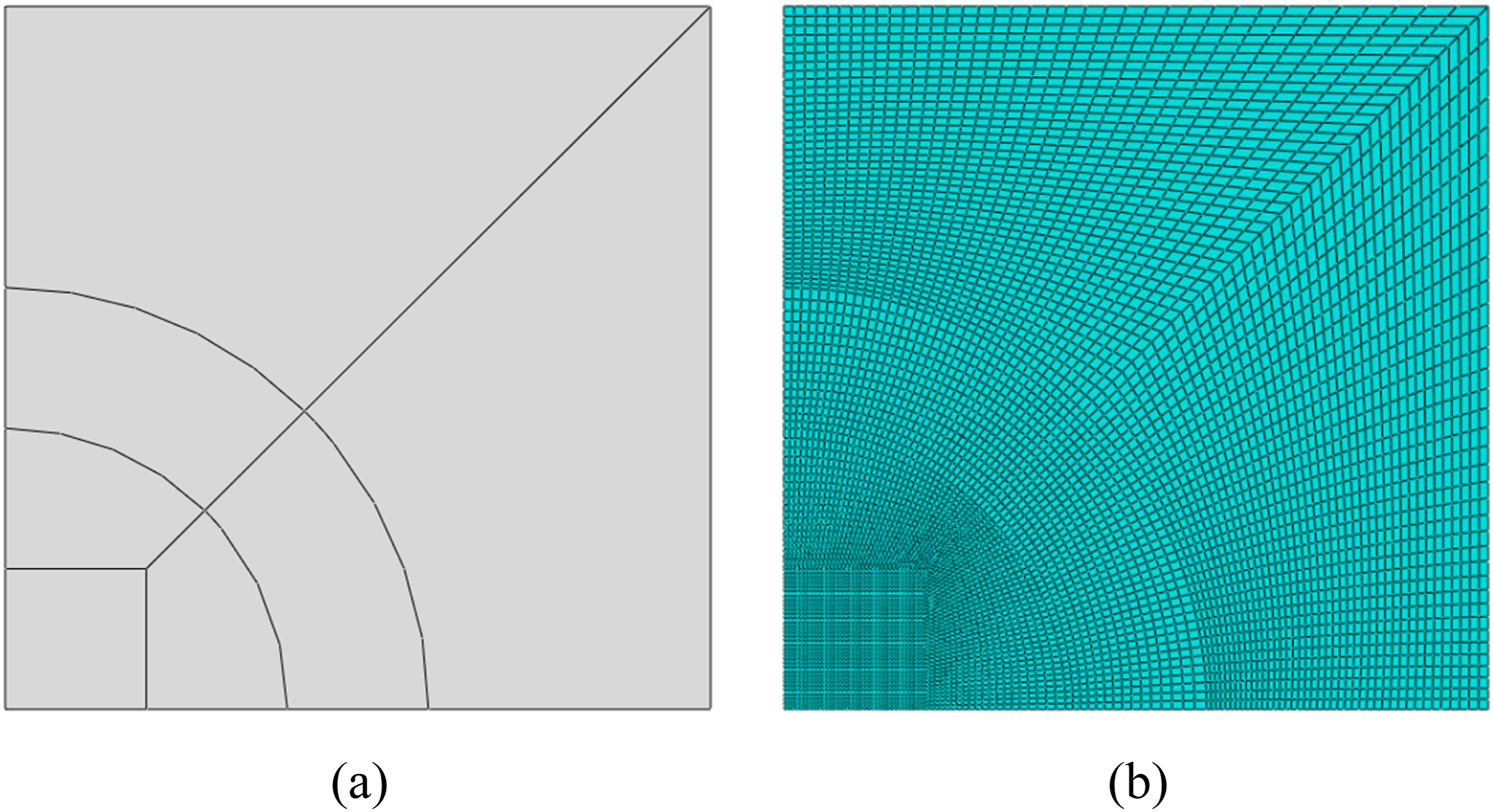
The mesh density was progressively refined toward the impact zone. After a parametric study about residual velocity to determine the optimal mesh size, the mesh in the central square impact area was set to 0.3 mm. Away from this region, mesh sizes were gradually increased to reduce the computational cost without sacrificing accuracy in the critical area of interest.
Mesh refinement study and convergence results for residual velocity in impact simulation.
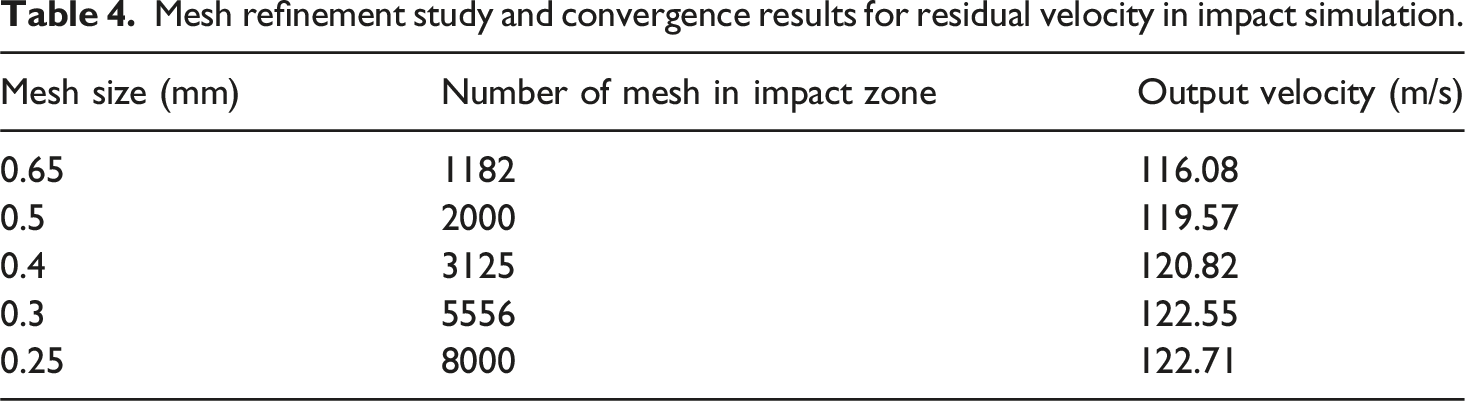
Given that the only critical output in high-velocity impact tests is the residual velocity of the impactor, we selected this as the primary criterion for mesh convergence. Furthermore, the residual velocity is closely related to the energy dissipated and energy stored in the system, making it a reliable metric for evaluating mesh convergence. Given that residual velocity directly reflects the energy exchange in the system, it is the most relevant and practical measure of convergence in this case.
Material modeling of foam
Polymeric foam behavior significantly influences energy absorption and failure mechanisms in foam used structures subjected to impact loading, thus requiring accurate constitutive and damage models in numerical simulations. Previous studies have frequently employed foam plasticity models, particularly the Deshpande-Fleck formulation, 30 within commercial finite-element software such as LS-DYNA and ABAQUS.27–30 Due to the limited availability of specific damage criteria for polymeric foams, this study utilizes a custom-developed VUMAT subroutine implemented in ABAQUS, based on the Deshpande-Fleck plasticity model, 30 supplemented by specific foam damage criteria. The model assumes that the foam exhibits elastic–plastic behavior, where the elastic response follows standard linear elasticity, and the plastic response is governed by a yield criterion, subsequent damage evolution and eventual element deletion.31–34
In the elastic regime, the stress tensor 
Where
Once the stress state reaches the yield surface, plastic flow initiates according to the Deshpande–Fleck criterion:
Where 
Here, 
The yield stress 
Where
Once these plastic strain components were determined, the corrected stress was updated according to equation (6)
Where
In the computational model used in this study, the mechanical behavior of the material is simulated using the VUMAT subroutine in ABAQUS. At each increment, the strain matrix for each element is provided as input to the VUMAT subroutine. Using the defined stress-strain relationship, the corresponding stress matrix is then returned to ABAQUS. Specifically, the plastic strains are computed and updated according to the material model. The model primarily captures the energy-based failure criterion (element deletion) and plasticity in foam materials, without explicitly modeling crack growth. This approach focuses on simulating the material behavior under impact and perforation conditions, where plastic strains are computed and updated according to the material model. ABAQUS automatically handles the weak form, discretization, and numerical integration using its finite element method (FEM) solver. The system of equations is solved iteratively using ABAQUS, which computes the stress update based on the energy-based failure criterion (element deletion) and plasticity in foam materials. This approach is well-suited for the compaction-driven failure typical in foam perforation, where cell collapse and densification occur.
Foam damage is influenced by the distinct behavior of the material under tensile and compressive loads. Under tension, the foam often fails in a brittle manner shortly after exceeding the elastic limit, whereas under compression, a two-phase response (plastic deformation followed by densification) can occur. Two primary damage criteria have been discussed in the literature: one based on volumetric plastic strain (positive in tension and negative in compression) and another one based on principal stresses. To mitigate premature element deletion in numerical simulations, an energy-based damage criterion is employed:
Where
In order to account for the strain-rate sensitivity of polymeric foams, particularly under high-velocity impact conditions, the critical energy parameter for element deletion (
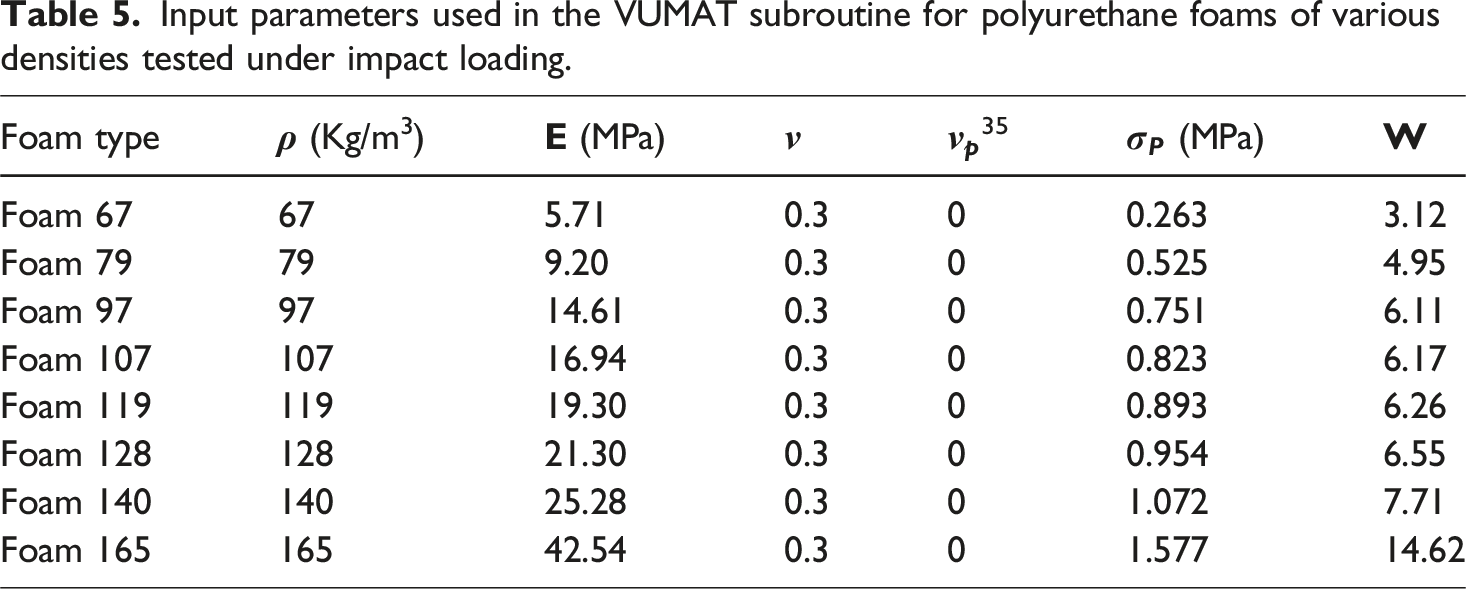
Input parameters used in the VUMAT subroutine for polyurethane foams of various densities tested under impact loading.
Assumptions and limitations
In this study, perforation of water-blown polyurethane foam panels is modeled as crushing-dominated failure using a homogenized continuum plasticity framework with an energy-based deletion criterion: elements are removed when the accumulated plastic work reaches a density-dependent threshold Wcr calibrated against our impact tests. The impactor is treated as rigid, quarter-symmetry is exploited, and a structured hexahedral mesh with local refinement near the impact zone is used; the foam is assumed isotropic and rate effects are captured implicitly via the calibration of Wcr to high-velocity tests.
These choices are well-suited to crushing and through-thickness perforation, where cell collapse and densification lead to loss of load-carrying capacity that is naturally represented by work-to-failure–driven element removal. We note limitations: the homogenized model does not resolve the cellular micro-topology; element deletion can perturb global energy accounting; and mesh sensitivity is mitigated (but not eliminated) by local refinement. As a competitive alternative, the Cracking-Particle Method (CPM) in its 2D formulation 36 and subsequent 3D extensions with enrichment 37 and without enrichment via particle splitting 38 can track discrete crack surfaces without element deletion, reducing mesh-orientation bias and avoiding deletion-induced energy errors, features that are advantageous for brittle, crack-dominated fracture. It is important to emphasize that the CPM family of methods was developed primarily for crack propagation problems with discrete fracture surfaces. In contrast, the perforation of foams investigated here is governed by progressive cell crushing and densification rather than crack growth. For such compaction-driven failure, an energy-based element deletion approach is more appropriate to represent complete loss of load-carrying capacity, whereas CPM would not directly capture the distributed crushing mechanisms typical of cellular solids.
Result and discussion
Compression behavior of polyurethane foam
Polyurethane foams exhibit a complex compressive response characterized by three distinct regions: an initial elastic region, a plateau region (associated with cellular collapse), and a densification region. The plateau region, which reflects the material’s capacity for energy absorption, is primarily defined by the plateau stress, the resistance to irreversible deformation. Compression tests were performed on foam specimens at densities of 66, 72, 87, 114, 168, and 185 kg/m3, with five replicates conducted at each density level (Outlier experimental data points were excluded from the curves for clarity).
Experimental data (Figure 5) indicate that both the elastic modulus and plateau stress increase significantly with foam density. This density-dependent increase in elastic modulus and plateau stress has been previously observed in rigid polyurethane foams.
39
Compressive stress–strain curves of polyurethane foams at different densities.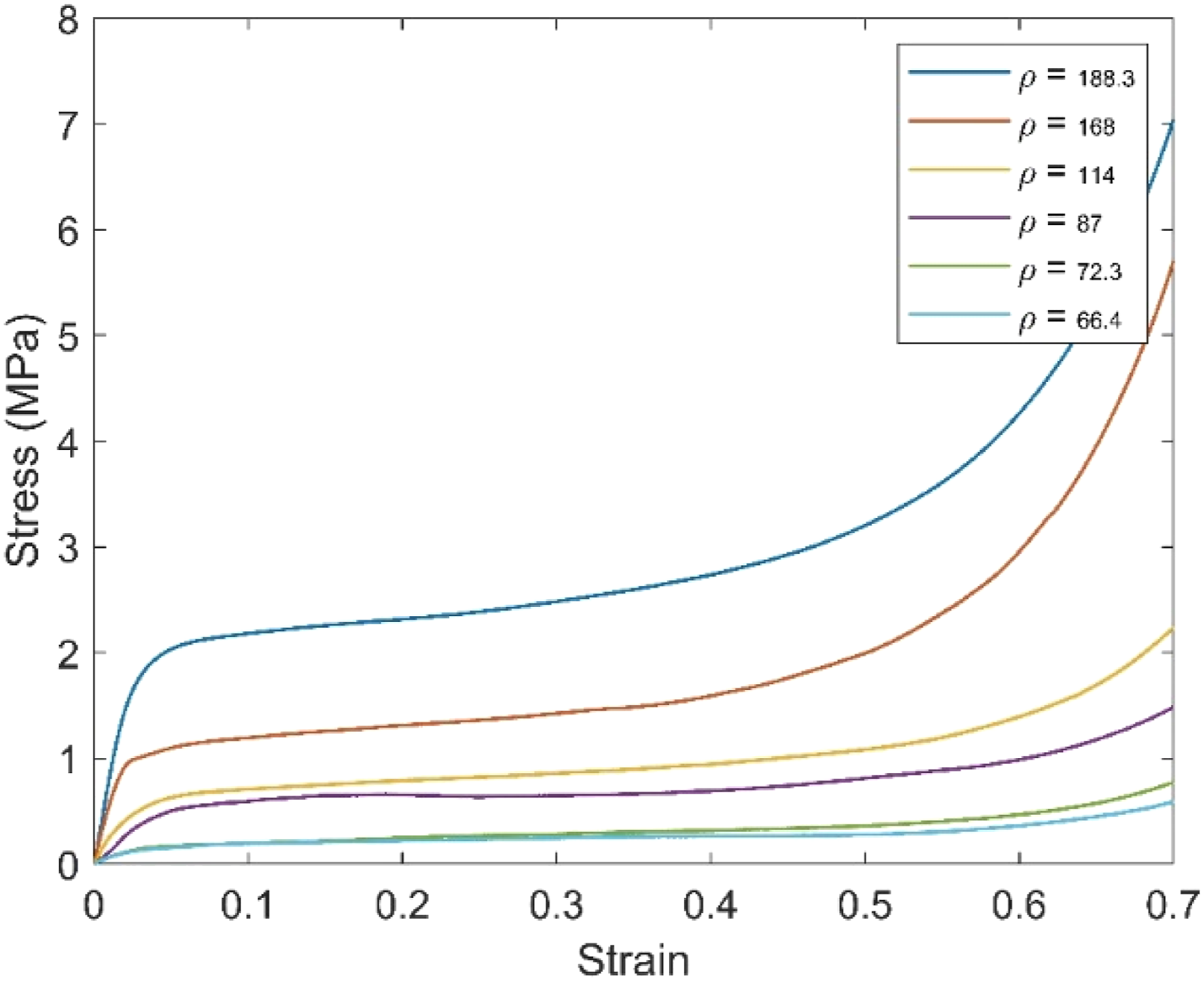
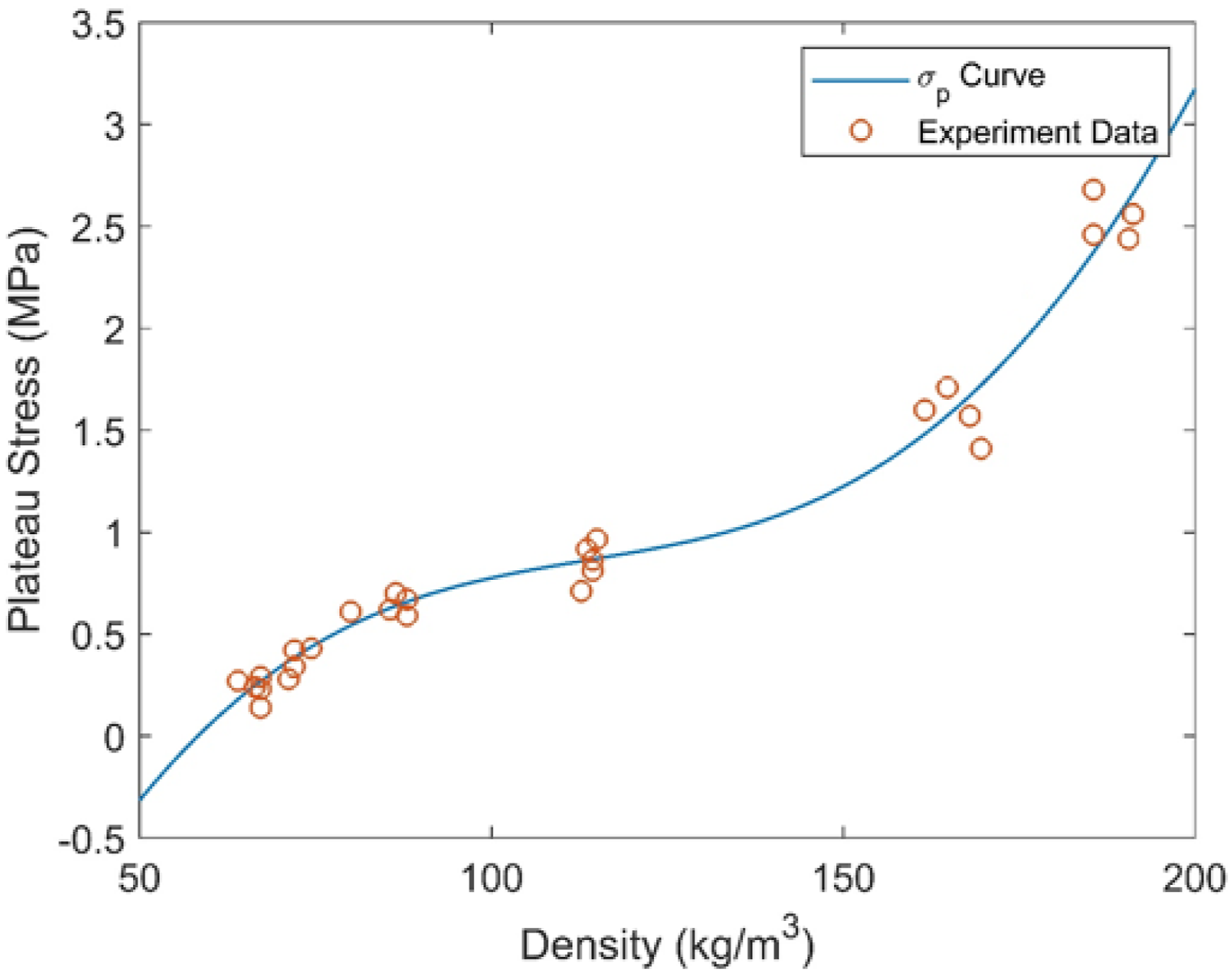
Due to the practical limitation of conducting experimental tests at discrete density values, predictive models were established by curve-fitting experimental data from the six tested densities to define continuous relationships for the elastic modulus and plateau stress as functions of foam density. The trend lines were not constrained to pass through the origin, since zero-density foams are non-physical and lie outside the studied range of 60–200 kg/m3. Establishing these fitted curves enables the interpolation of mechanical properties within the tested density range, thus facilitating accurate numerical simulations for densities not explicitly tested. The resulting predictive relationships, illustrated in Figures 6 and 7, serve as essential input parameters in the VUMAT subroutine, providing a reliable and precise representation of the foam’s constitutive behavior across the considered density spectrum. Outlier data points were excluded based on objective criteria: tests showing statistical deviation larger than ±2 standard deviations from the mean of five repetitions. Fitted elastic modulus as a function of foam density. Fitted plateau stress as a function of foam density.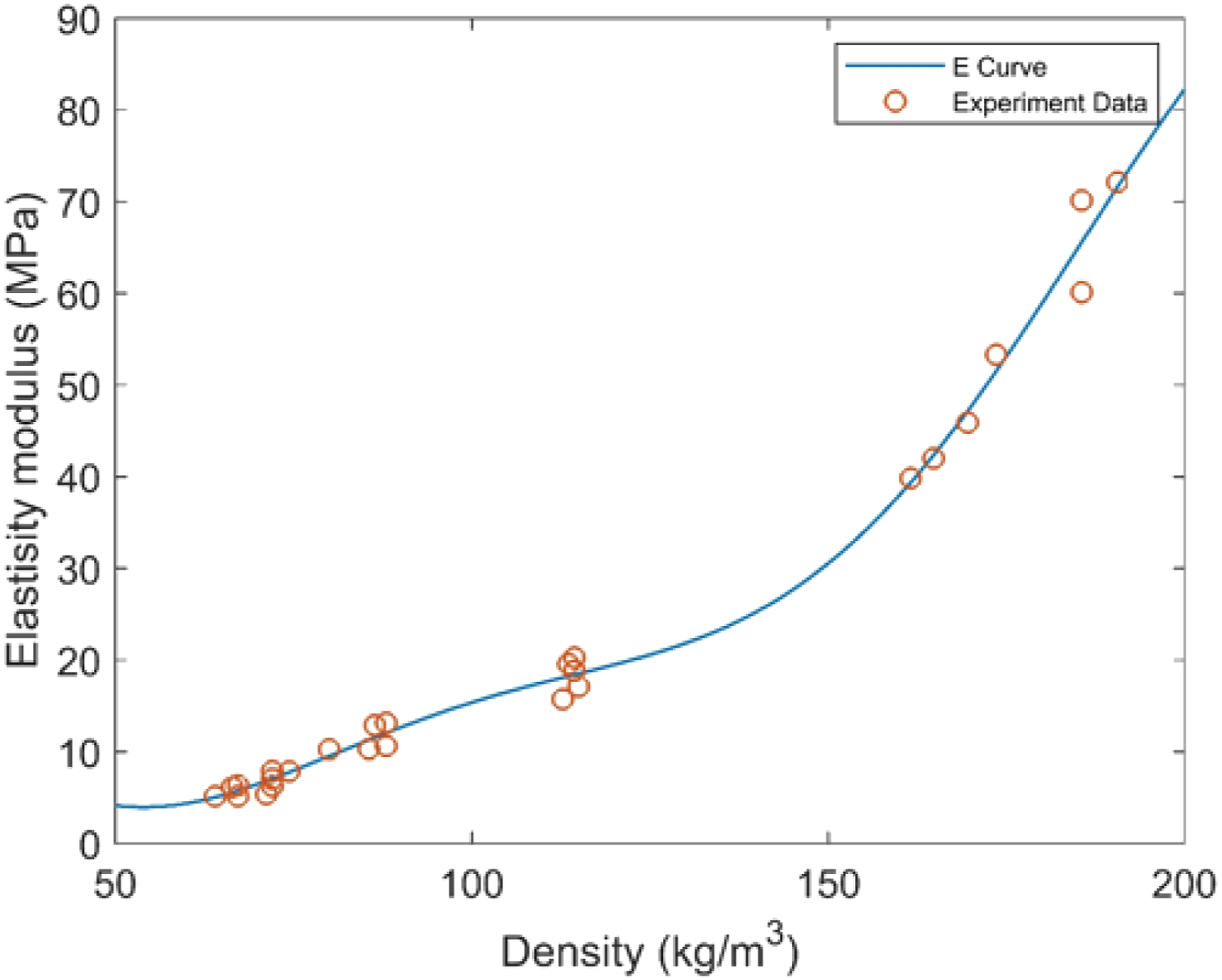
Specific absorbed energy across foam densities
The variation of specific absorbed energy (SAE) with foam density, as shown in Figure 8, shows a distinctly nonlinear trend. Similar nonlinear trends in specific energy absorption with foam density have been reported in previous studies on closed-cell polyurethane foams.
40
At lower densities, increases in density often lead to significant gains in SAE due to the transition from an open cellular network to a denser configuration. However, once the foam reaches an intermediate-to-high density range, further increases yield only moderate improvements in SAE, thereby offering diminishing returns relative to the added weight. This behavior closely parallels the plateau stress–density relationship in polyurethane foams, given that the primary mechanism of energy dissipation is governed by the plateau (cell collapse) region, where the foam’s plateau stress dictates its resistance to permanent deformation. Fitted specific absorb energy as a function of foam density.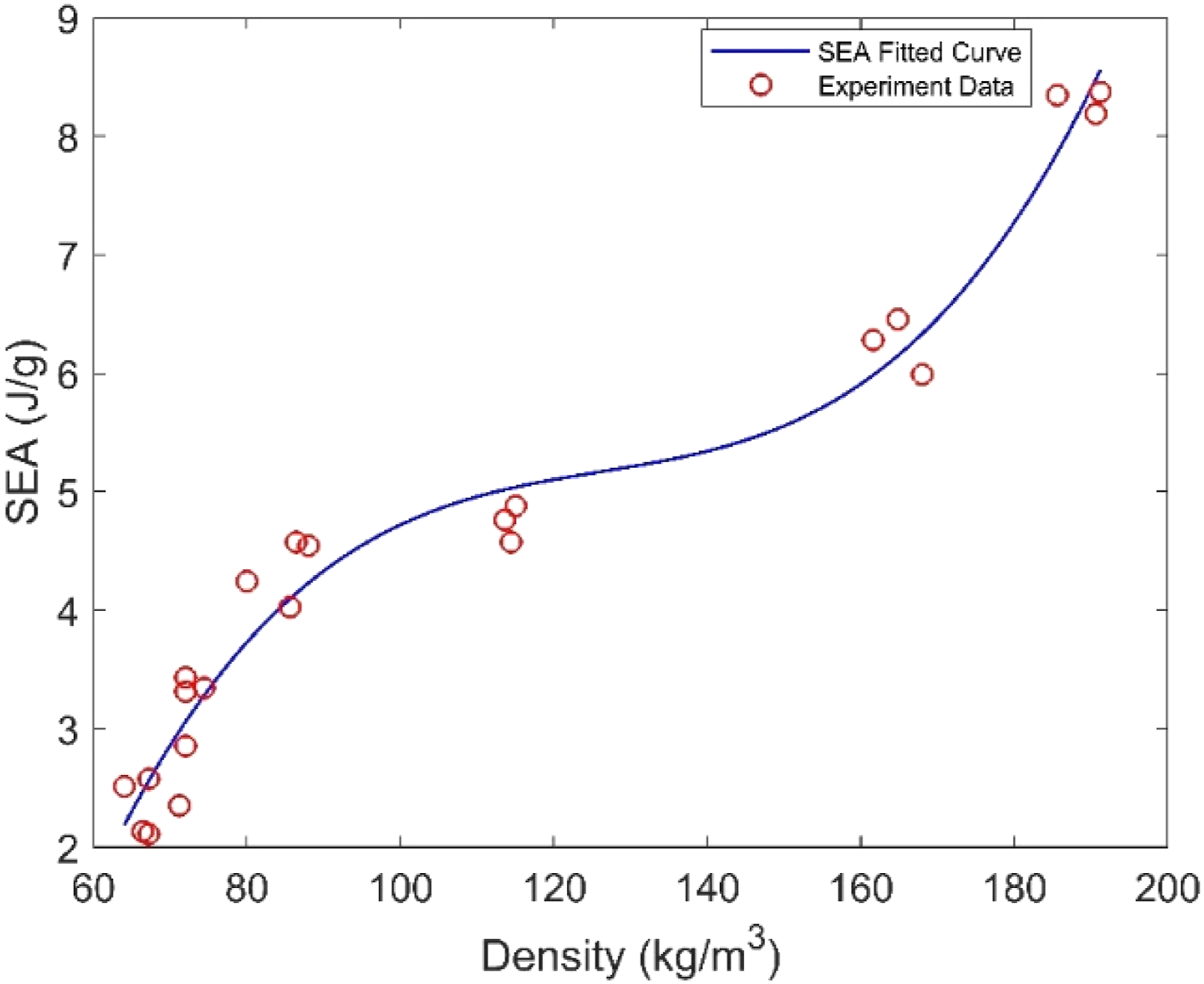
From a design perspective, identification of this nonlinearity is crucial. Density increase in certain intervals provides important advantages for energy absorption, and consequently, higher-density foams are preferable where maximum impact protection is required. For other intervals, however, a density increase may not significantly enhance SAE but adds weight and cost overall. It is thus essential to identify the most appropriate density or density range compatible with performance requirements, weight constraints, and cost. With consideration of these density-dependent SAE changes, the engineer can design polyurethane foams with optimized properties for different demands for energy absorption without the weight penalty.
High-velocity impact response and critical energy parameter
A series of high-velocity impact tests was conducted on 30-mm-thick foam panels (130 × 130 mm2) to determine the critical energy parameter
Similar to how the elastic modulus and plateau stress must be characterized for each foam density, the parameter Fitted critical energy parameter W as a function of foam density.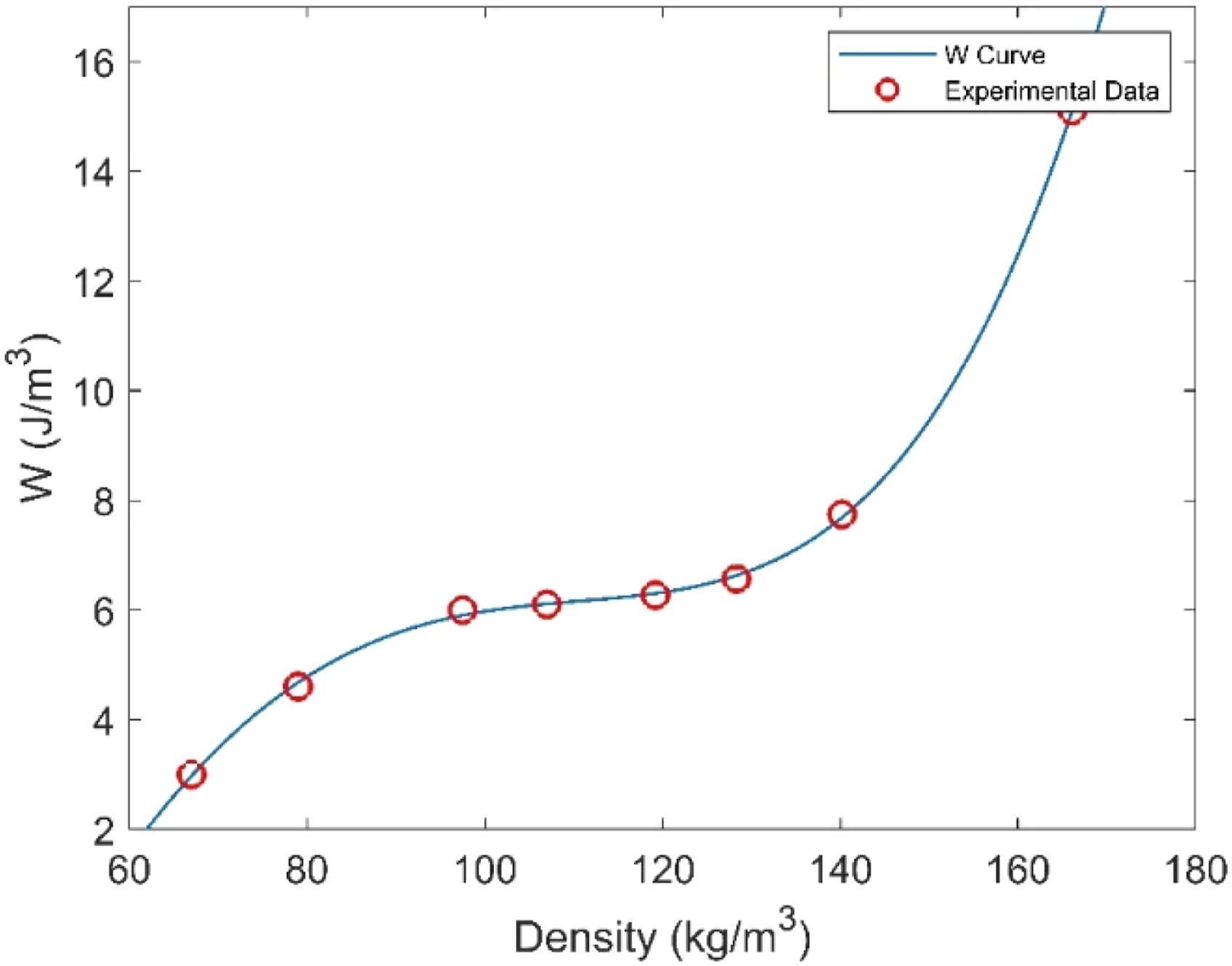
An important observation is that
Validation of numerical model using a hemispherical-nosed impactor
The implemented VUMAT subroutine was initially verified through numerical simulations of static compression tests. Since element deletion is controlled by the critical energy parameter (
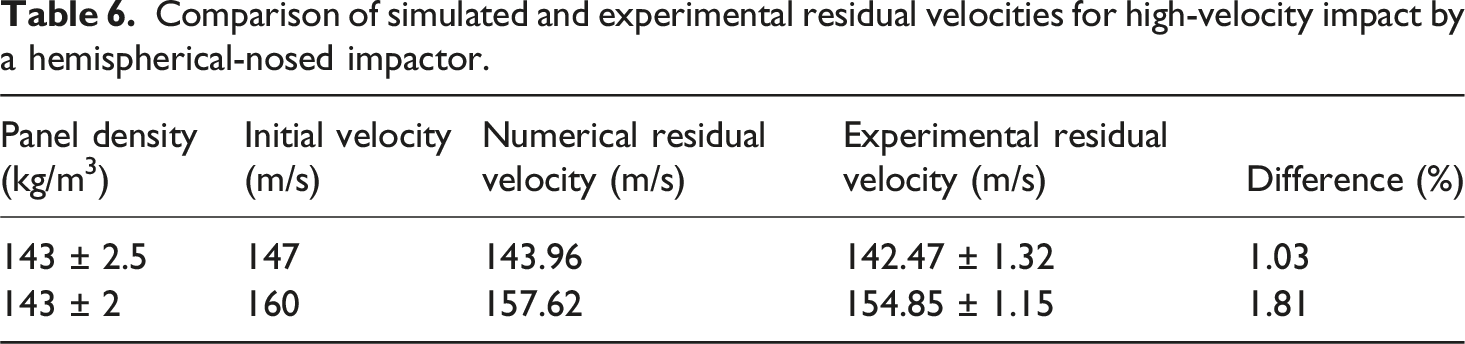
Comparison of simulated and experimental residual velocities for high-velocity impact by a hemispherical-nosed impactor.
The simulated penetration profile by a hemispherical-nosed impactor, illustrated in Figure 10(a), demonstrates the progressive crushing of the cellular structure, which is a critical factor in the energy absorption mechanism of the foam. High-velocity impact simulation on a polyurethane foam panel (a) hemispherical-nosed impactor (Density: 143 kg/m3) (b) spherical impactor (Density: 130 kg/m3).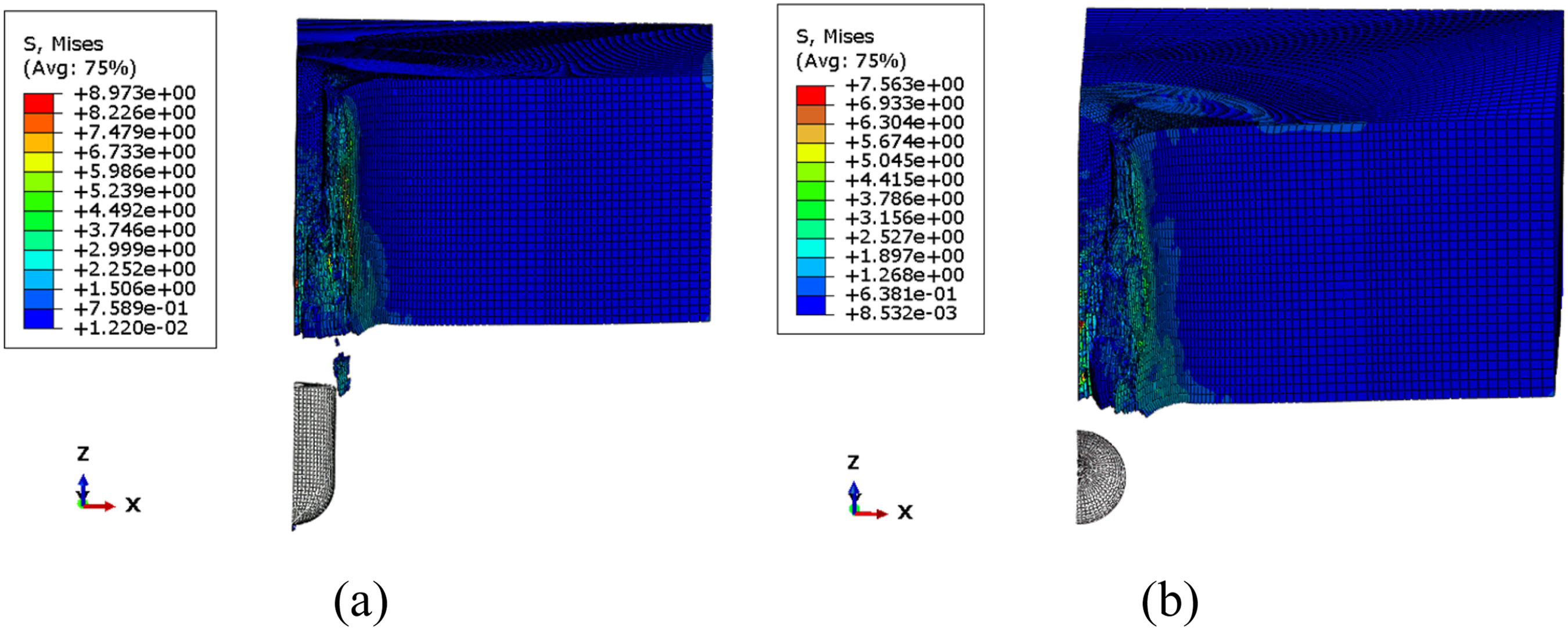
To further examine the robustness of the validation, we conducted an additional impact test at an initial velocity of 160 m/s. The same values of
Numerical analysis of high-velocity impact on foam panels
Based on the simulation model developed by a user-defined VUMAT subroutine for polyurethane foam material and the experimentally calibrated constitutive parameters (the elastic modulus, plateau stress, and the critical energy parameter W) in the density range of 60 to 200 kg/m3, high-velocity impact simulations were conducted at density increments of 10 kg/m3 for foam panels. Figure 10(b) illustrates the simulated penetration of the spherical impactor into the foam panel, providing insights into the progressive crushing and failure mechanisms under dynamic loading conditions.
Figure 11 shows the variation of the residual velocity of the impactor as a function of foam density. The analysis indicates a nonlinear decrease in residual velocity with increasing density, which suggests that higher-density foams are more effective at dissipating impact energy and reducing the residual kinetic energy of the impactor. However, in some density ranges, further increases in density yield only marginal reductions in residual velocity. This observation implies that beyond a certain density threshold, additional increases in density may not significantly enhance energy absorption but rather lead to unnecessary weight gains, which is a critical consideration in structural design. Fitted impactor residual velocity of foam panels as a function of foam density.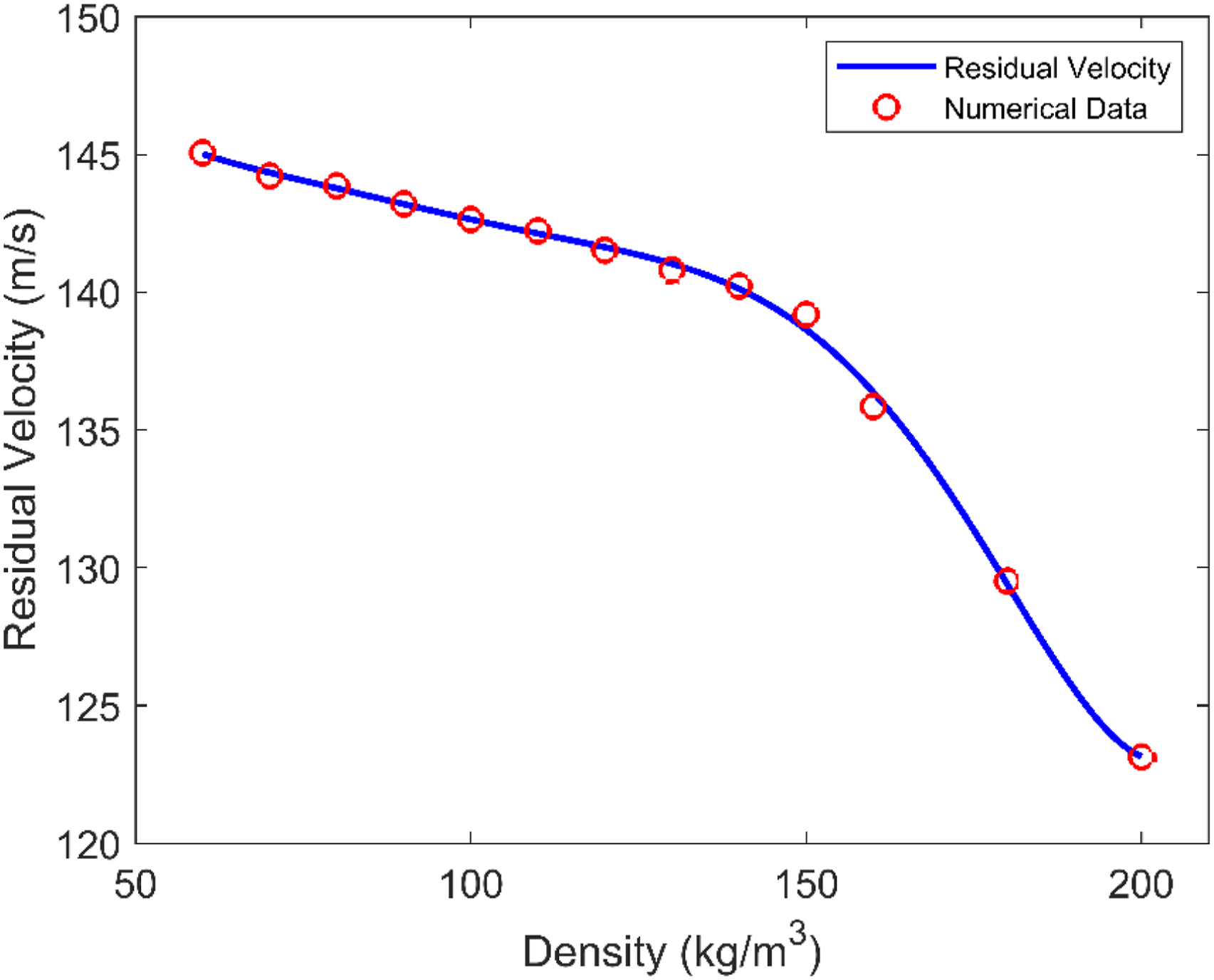
From a microstructural standpoint, this behavior can be explained by the transition in deformation mechanisms of the cellular network. At low densities, the thin cell walls collapse and buckle easily, leading to limited energy dissipation. As density increases, cell walls become thicker and more numerous, providing additional load-bearing paths and enhancing the ability to absorb impact energy. However, once a sufficient network connectivity is reached, further increases in density primarily stiffen the structure without proportionally improving the collapse mechanisms, resulting in the observed saturation in energy absorption efficiency.
Similarly, Figure 12 presents the specific perforation energy (SPE) as a function of foam density. The SPE, representing the energy absorbed per unit volume during perforation, also exhibits a nonlinear relationship with density. The shape of the SPE-density curve closely resembles the plateau stress–density relationship, which is expected because the primary energy dissipation mechanism in these foams occurs in the cell collapse (plateau) region. This similarity reinforces the concept that the cellular crushing process, governed by the plateau stress, is the dominant factor in energy absorption, and therefore, accurate characterization of this behavior is essential for optimizing foam performance. Fitted impactor SPE of foam panels as a function of foam density.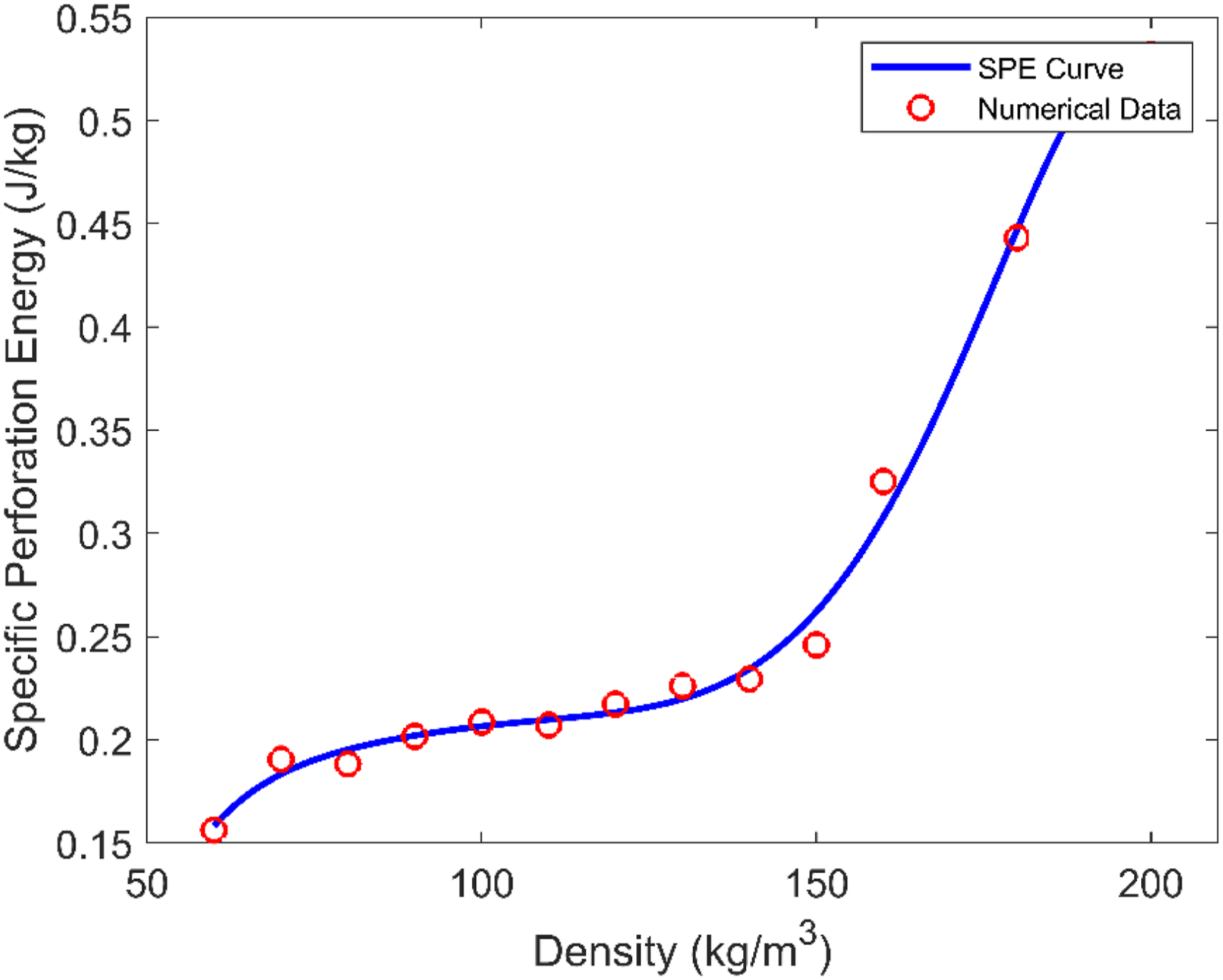
At the microstructural level, the plateau regime corresponds to progressive collapse of cell walls and struts, where local buckling, plastic yielding, and densification of the cellular structure occur sequentially. In lower-density foams, cell collapse initiates at relatively low stresses but leads to large localized deformations, while in higher-density foams the more robust cell architecture sustains higher stresses before collapse. This explains the similarity between the SPE–density curve and the plateau stress–density curve, as both are fundamentally controlled by the mechanics of cell wall collapse.
Furthermore, to ensure practical applicability of the numerical model, the simulation data obtained at 10 kg/m3 increments were curve-fitted to develop continuous predictive models for both the residual velocity and SPE across the entire density range in Figures 11 and 12. These fitted curves enable reliable interpolation of the foam’s mechanical behavior at intermediate densities, facilitating the selection of an optimal foam density that balances energy absorption with weight constraints for impact-resistant structural applications.
Uncertainty quantification
In practical applications, uncertainties in both experimental and numerical parameters play a critical role in the accuracy and reliability of predictions. For the present work, the main sources of uncertainties can be categorized as follows: • Material-related parameters: foam density, elastic modulus, and plateau stress, which may vary due to fabrication tolerances and cell-size heterogeneity. • Damage parameter: the critical energy threshold ( • Loading conditions: initial velocity of the impactor, measured by high-speed camera with ±2 m/s tolerance. • Numerical parameters: mesh size and boundary conditions, which were already verified through mesh convergence analysis (Section 2.3.1).
The following ranges of uncertainty were considered based on experimental tolerances:
Uncertainty quantification demonstrated that foam density and plateau stress are the most influential parameters affecting residual velocity and perforation energy, whereas uncertainties in the critical energy parameter and initial velocity are of secondary importance. This confirms the robustness of the nonlinear density-dependent energy absorption trends reported in this work.
Conclusion
The combined experimental and numerical investigations conducted in this study demonstrate that the mechanical performance and perforation energy of water-blown polyurethane foams are highly sensitive to density variations. Compression tests confirmed that increasing foam density from approximately 66.4 kg/m3 to 188.3 kg/m3 significantly enhances the elastic modulus and plateau stress. Specifically, the plateau stress increased from around 0.35 MPa at 66.4 kg/m3 density to approximately 2.5 MPa at 188.3 kg/m3 density, indicating more than an eight-fold increase. This enhancement is attributed to a denser and more uniform cellular structure with reduced porosity.
High-velocity impact tests, supported by numerical simulations using ABAQUS, reveal that the specific perforation energy and impactor residual velocity exhibit distinct nonlinear dependencies on foam density. Quantitatively, although increasing foam density generally enhances energy absorption capabilities, the improvements become marginal within the density range of 100–150 kg/m3, exhibiting minimal changes in specific perforation energy (less than 5% variation). In contrast, density increments below and above this range result in more significant improvements, highlighting critical density intervals for optimized energy absorption.
The calibration of the critical energy parameter (
Footnotes

Funding
The authors received no financial support for the research, authorship, and/or publication of this article.
Declaration of conflicting interests
The authors declared no potential conflicts of interest with respect to the research, authorship, and/or publication of this article.