




Abstract
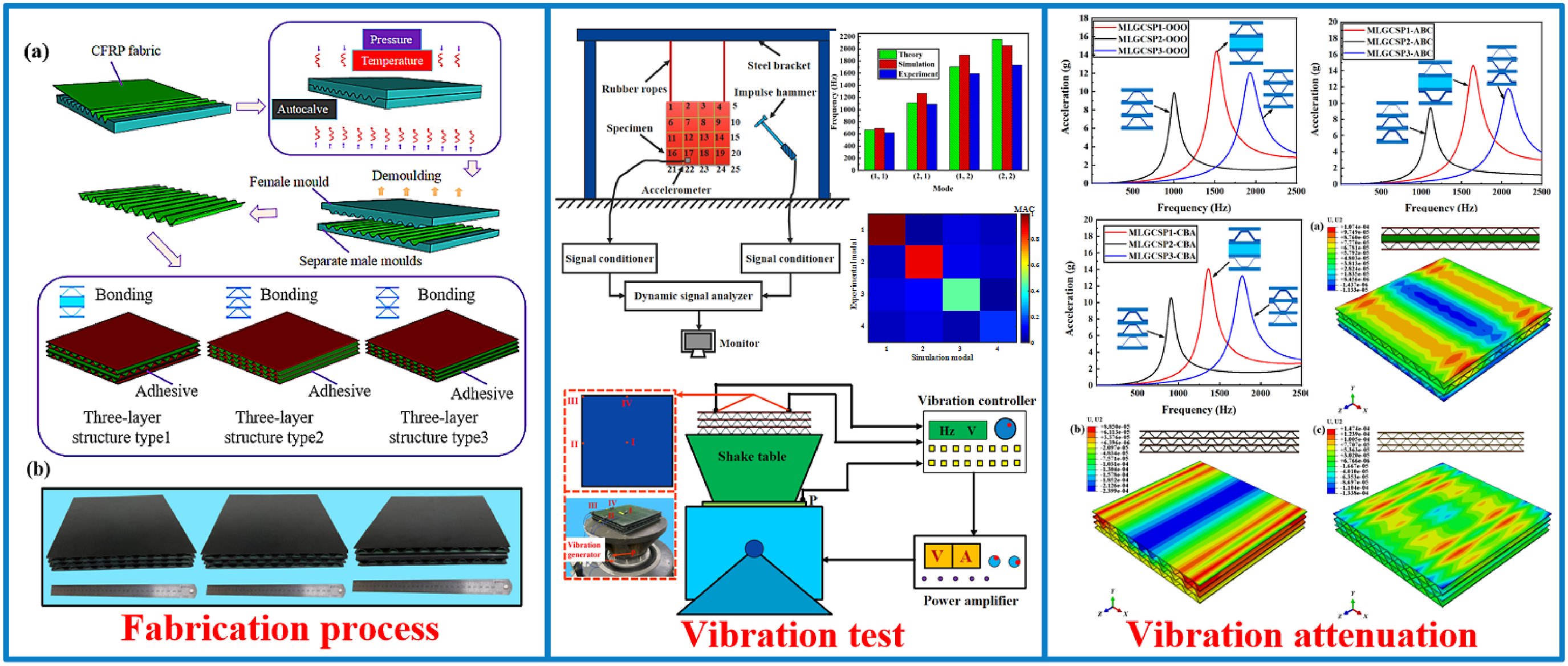
With the rapid development of space technology, there is an increasing demand for multi-functional structures that are lightweight yet have high load-bearing capacity and superior vibration reduction capabilities. The multi-layer corrugated sandwich structure not only meets the lightweight design requirements, but also improves the vibration reduction performance. In this paper, the natural frequency of a three-layer corrugated sandwich structure is derived using the energy method, and its vibration characteristics are assessed through modal testing and vibration table sweep tests. The frequency response of the system is simulated using the modal superposition method and corroborated with experimental results. In addition, the effects of layer arrangement and interlayer gradient on vibration performance are examined, revealing that these factors significantly influence energy dissipation and vibration attenuation. This study successfully identifies factors like arrangement mode and gradient configuration that influence vibration performance. Moreover, it deepened the understanding of the dynamic behavior of carbon fiber composite corrugated sandwich structures and provides robust theoretical and practical guidance for their application in aerospace and related fields.
Keywords
Get full access to this article
View all access options for this article.