



Abstract
Back in the early 2000s, International Cat Care (then called the Feline Advisory Bureau) held one of its regular meetings with vets the charity had funded through residencies and lectureships in feline medicine over many years. Holders of the posts undertook research, treated feline cases on referral, highlighted and shared issues that came to light, lectured and wrote articles, and generally raised the profile of and knowledge within feline medicine in the UK. The funded vets were, and still are, passionate about cats.
At the meeting, a question was posed: ‘What could we do to most improve the veterinary care of cats?’ Expecting a clinical answer such as ‘educate about vaccination’ or ‘focus on renal disease’, the group was surprisingly unanimous in its response. With a vast experience of seeing complex referral cases, requiring frequent handling for testing and treatment while hospitalised, the vets had developed many ways of working sympathetically with cats. They felt that a better understanding of cats’ needs, reducing stress, and gentle and compassionate handling, were fundamental areas for improvement. Reducing stress would improve welfare and minimise potential confounding effects on clinical measurements. If cats were less stressed they would also eat better and recover sooner. The group felt that overcoming reluctance among owners to bring their cats into veterinary practices, by making it less stressful, would also improve preventive care and could result in earlier diagnosis and treatment.
Andrea Harvey and Suzanne Rudd out on the road in the early days judging the competition to generate cat friendly suggestions and tips

The words ‘cat friendly practice’ and 10 bullet points were jotted down on a piece of paper. This was the birth of the ISFM’s Cat Friendly Practice scheme, later to become the AAFP’s Cat Friendly Practice (CFP) Program in North and South America and ISFM’s Cat Friendly Clinic (CFC) scheme in the rest of the world.
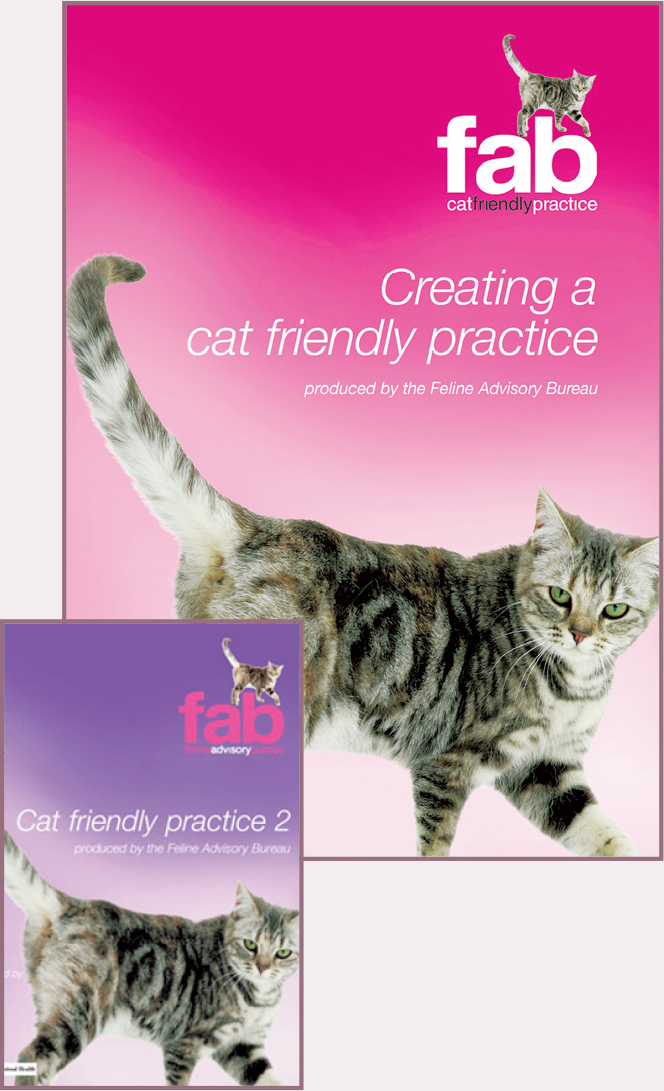
From the outset it was clear that there were many cat friendly ideas and tips, both from feline experts and the competition entrants – enough to fill two booklets!
A competition to share ideas
How could these concepts be shared and what other good approaches to cats were out there in practice? iCatCare connected with feline experts worldwide and developed the initial list of ideas into a small booklet outlining the ethos and adding cat friendly suggestions and tips. A competition was developed in the UK to raise awareness and bring the ideas to life.
Championing the cat friendly approach: the Oxford Cat Clinic in the UK celebrates gold status at an awards ceremony in London in 2006

Over 2 years, the competition attracted numerous applications and many vets, nurses and practices sent in their ideas – winners were celebrated at events in London and received award certificates and logos that could be displayed in their practices.
Accreditation scheme to take things forward
Competitions cannot go on forever and other veterinary professionals started to ask how they could show that their practices were also cat friendly. The ISFM CFC accreditation scheme, supported by Purina, was developed, aligning with RCVS Practice Standards and bringing together the ideas into gold and silver level accreditation.
But the ambition was always greater
– to roll out the programme worldwide
– and a partnership with the AAFP, likewise a veterinary organisation focused on improving the standard of care for cats, was the obvious way forward. The two organisations had already been partnering on other initiatives, such as JFMS. The AAFP licensed the programme in the Americas as CFP, which was originally supported by Ceva, Hill’s Pet Nutrition and Pfizer (now Zoetis). Both programmes officially launched in 2012.
Indeed, when the AAFP and ISFM met to discuss the potential for rolling out the Cat Friendly programme worldwide, the AAFP had already been collaborating on the Bayer Veterinary Care Usage Study to help stop the decline in veterinary visits, understand the obstacles to feline veterinary care and to develop innovative solutions to overcome these barriers. For the AAFP, the CFP Program offered in North and South America was a solution to these barriers and a committee was formed to slightly adapt the language to ensure all content was applicable in the Americas and help with the roll out.
A growing movement
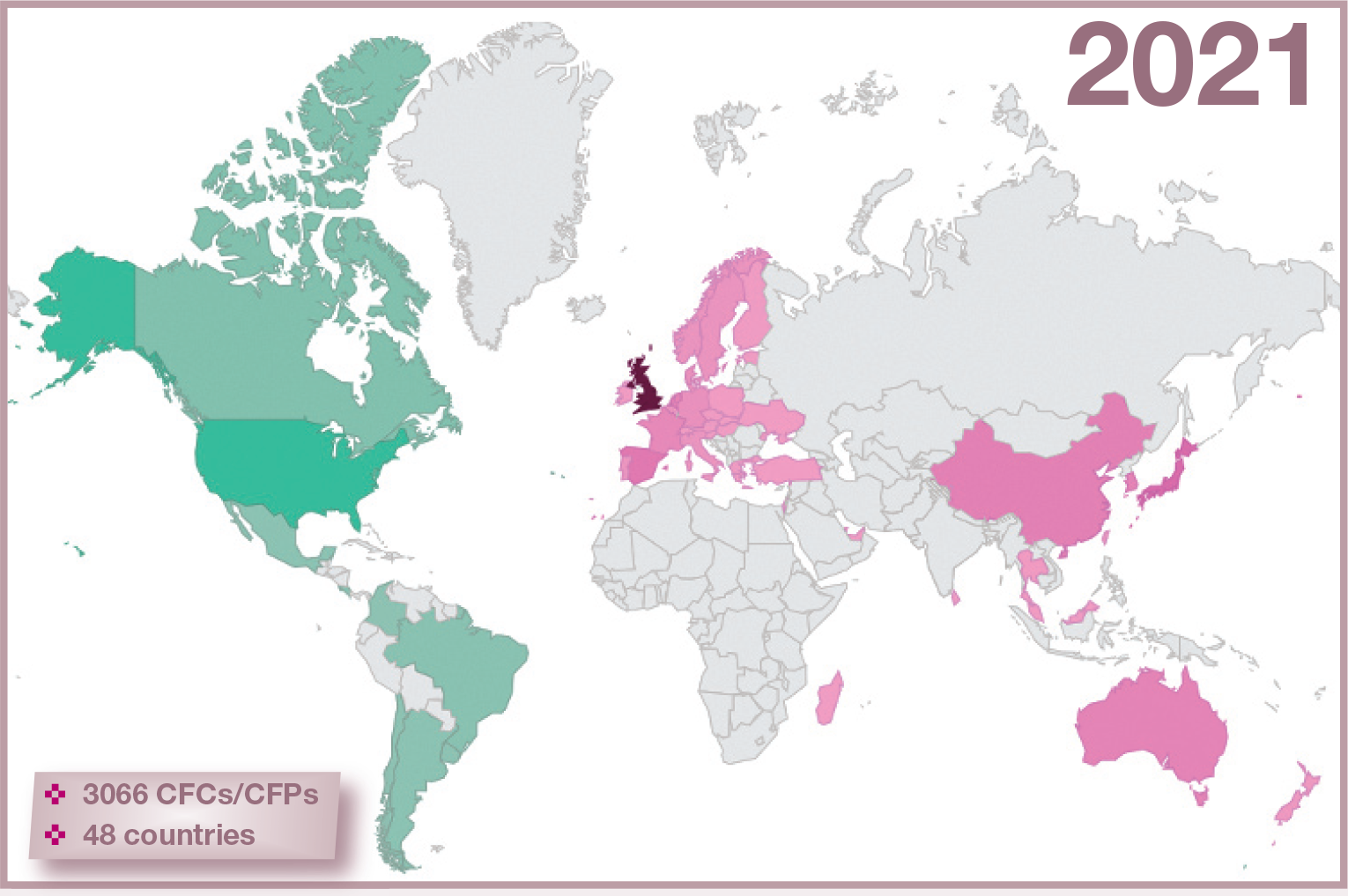
So, 2022 brings the 10-year anniversary of CFC and CFP, and both organisations are celebrating what has become a strong movement within the veterinary industry. There has been extraordinary uptake of the programme over the decade, and, at the time of going to press, there were 3066 active CFCs and CFPs in 48 countries; the impressive growth is illustrated in the maps below and on page 55. Even in clinics that have not formally entered the programme, ‘cat friendly’ has become a common term, and many vets and veterinary professionals are now much more aware of the needs of cats.
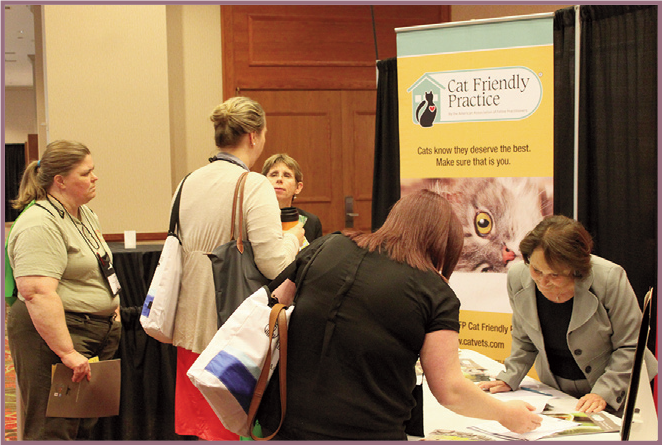
Ilona Rodan and Susan Little answer questions in the Cat Friendly Practice (CFP) Exhibit Booth at an AAFP Conference and encourage veterinary professionals to initiate the CFP Program
Elizabeth Colleran has a packed house for her presentation on the new Cat Friendly Practice Program at an AAFP Conference

Many courses, lectures and conferences cover cat friendly topics. However, as the cat continues to be a popular pet in some countries and grows in popularity in others, there is still a need for increased education and understanding of feline medicine (and affiliated subjects) in veterinary schools to enable new vets and nurses to be ready for treating this clinically and behaviourally complex species. Being able to treat cats in a cat friendly manner brings greater clinical success, improved and safer feline handling and interactions, greater job satisfaction for the practice team, and happier clients and cats.
Both organisations realised that more training was needed across the veterinary clinic team to develop people’s feline skills – in 2019 ISFM launched its Cat Friendly Veterinary Professional and Veterinary Receptionist short courses and, in 2020, the AAFP launched a Cat Friendly Certificate Program.

The latter offers three levels for veterinarians, veterinary professionals and advocates, and is dedicated to allowing the veterinary community to gain the knowledge to enhance their understanding of cats, fulfill patient needs and build confidence in working with cats. CFPs are also using the Certificate Program as a way to train and onboard new staff, and other clinics use it as a first step in the process of becoming a CFP in order to start to integrate new knowledge and techniques.
Support for ongoing growth and success
Behind the programme have been individuals, advocates, veterinary groups and corporate partners who have provided their time, expertise and financial support, as well as helped spread information to veterinary professionals, promoted translations, brought new ideas and created opportunities to increase awareness. They enabled the organisations to bring the programme to life, and continue to support in many different ways – their contribution is vital to ongoing growth and success. This is a chance to say thank you to all those companies who have supported the programme all over the world.


Both ISFM and AAFP have integrated CFC and CFP into the hearts of their organisations, viewing them as absolutely fundamental to improving the care of cats. Speakers at conferences or presenting webinars are now routinely asked to ensure they include a cat friendly approach to treatment and a holistic approach to the cat. Meantime, feedback from CFCs/CFPs is positive and evidence of the benefits of being Cat Friendly is growing.
The 10-year anniversary campaigns will include many offerings launched throughout 2022. Central will be developing the understanding and skills of veterinary teams, from vets to nurses/technicians and receptionists, with some training already in place and more being developed. This will be complemented by the creation of specific owner information and educational opportunities. Resources to help clinics to promote their Cat Friendly status are also planned, as is the development of evidence on the value and importance of being Cat Friendly.
It is the vision of ISFM and AAFP that over the coming 10 years the CFC and CFP programmes experience tremendous growth, cat owners strive to choose a CFC/CFP and the foundation of the programme, including reduced stress for cats, regular veterinary care and an increased standard of care, is provided to all cats.