



Abstract

In October 2019, with feline behavior selected as the focus for the next Mark L Morris Jr Investigator Award, a roundtable discussion was convened between five experts in the field of feline behavior to help craft the specific language for the award. This special award provides for a large investment into an area of companion animal research for which there is a pressing need and the potential for rapid progress. The topic that emerged is ‘Environmental, social and emotional risk factors for health and welfare in cats’. This article summarizes themes and potential research questions related to this topic, and provides further details on the call for proposals, which is open until August 5, 2020. An overarching theme is to enrich and optimize the physical and psychological environment for pet cats.

Blue ribbon panel members

Intercat conflict
Signs of conflict may be subtle and difficult to differentiate from play. In one study of 2492 multi-cat households (6431 cats), signs ranging from most to least frequent were staring, chasing, stalking, fleeing, tail twitching, hissing, wailing or screaming. More subtle signs were displayed frequently, with staring occurring up to 13 times a day. In most cases (73%) these behaviors began when introducing new cats; few owners (12.3%) indicated that they never saw any of these signs in multi-cat households. 1
Training owners to recognize signs of conflict and identify the aggressor could allow early intervention and correction. Many owners inadvertently promote conflict by providing insufficient resources (including shared food dishes and litter boxes) or space for those resources, even when not shared.
Research in this area could have a significant impact, both in reducing adoption failure and increasing the potential for successfully adding further cats to good homes including blending existing ‘feline families’. Even cats that appear to tolerate each other may suffer health-wise, particularly if avoidance and ‘timesharing’ around resources and space become the norm.
Potential research questions:
Factors related to ‘successful’ multi-cat households, such as how resources are set up, when cats were introduced, how quickly those introductions occurred, whether the home was neutral or a territory already occupied by one or more of the cats, and sibling relationships.
Olfaction and cat introductions: the efficacy of ‘scent swapping’ or use of nasal oxytocin, and stress and behavioral responses to the scents of familiar and unfamiliar cats.
Action and efficacy of pheromones.
Predicting which cats might be able to accept each other based on ‘personality types’ and experiences.
Determining whether owners’ interpretations of intercat behavior in their own or other videos are correct.
Impact of the environment
Environment is a key factor influencing behavior, and cats with easy access to sufficient resources dispersed throughout the home are more likely to exhibit reduced stress. This may result in cats having a higher tolerance of other cats and humans, and fewer behavioral problems.
In general, ‘litter box etiquette’ is poor in cat-owning households, with problems including shallow litter, insufficient cleaning, insufficient litter boxes and inappropriate siting of boxes. Most commercial litter boxes are too small. Cats can be very particular in their litter preferences and tolerance, so simple factors such as changing to an appropriate litter substrate and daily scooping can reduce house-soiling and prevent cats being surrendered to shelters.
Cats need to be able to perch, scratch and have outdoor access, all of which can be problematic for the owner who wants their cat(s) to stay off the furniture or out of certain areas of the house. Inexpensive solutions include the provision of multiple cardboard boxes, vertical spaces and scratching posts in places where cats will use them. A number of programs, including the American Association of Feline Practitioners’s Cat Friendly Homes and Fear Free Happy Homes, provide relevant guidance but, frustratingly, there has been less than optimal uptake from owners or veterinarians. Providing behavioral data to support the use of these proposed solutions may improve compliance with these ‘catfriendly’ environmental efforts.
Confinement in the home is a significant stressor for many cats, as it could be argued that this species is not completely domesticated. 2 Indoor-only housing has been associated with increased risk for conditions including resorptive dental lesions, obesity, type 2 diabetes mellitus and hyperthyroidism, as well as behavioral disorders.3,4 However, these conditions are not unique to indoor-housed cats and may reflect the quality of the housing environment.
Olfaction is an important component of a healthy feline environment. It is difficult to understand or appreciate the olfactory abilities of another species, and it is likely that scents often give information but are not necessarily aversive. On the other hand, products humans use frequently include alcohol-based cleaners, plug-ins, incense, essential oil diffusers and citrus scents, all of which can be very unpleasant for cats.
Potential research questions:
Impacts of litter box parameters on house-soiling behavior; the latter inclusive of multiple cats needing to set up micro-territories.
Validating measures of urinary retention (eg, urine specific gravity) to know if cats are using the box sufficiently for optimal health.
Looking at households where there are not problems, to assist in providing practical information to owners and veterinarians.
Using technology to determine how cats are using the space and resources within different households.
More detailed studies on play, including its effects on measures of stress (although there are issues of stress (although there are issues around easily sampled biomarkers).
Effects of interventions to provide outdoor access (harness-walking, supervision in the yard, access to a three-season porch or use of a ‘catio’) on behavioral problems including intercat conflict, accounting for sensitivity around bird-hunting activities.
Which scents might provide environmental enrichment vs which scents are, at best, not aversive.
Positive or negative aspects of washing bedding or removing scent marks; for example, those left on doorways and furniture.
Kitten socialization
There is a lack of awareness around the need for ‘behavioral vaccination’; that is, socializing kittens for later life (Figure 1). The majority of cats are ‘street-bred’, with owners largely unaware of their cat’s previous life history including nutritional stress and trauma. Placing shelter kittens in foster homes to be hand-raised is thought to be helpful, but there is no prospective information on later outcomes. Early behavioral interventions may improve outcomes later in life and could be particularly useful for kitten owners, as they tend to be engaged at that stage of ownership. Currently there are no genetic tests that predict socialization potential and/or whether more intervention might be needed.
Potential research questions:
Positive or negative long-term impacts of being raised by the mother vs not; and with or without siblings.
Early-life socialization, including singleton kittens, relative to subsequent reactions to other cats and interactions with the owner(s).
Long-term behavioral effects of weaning and adoption of kittens at different ages.
Genetic predisposition to anxiety.
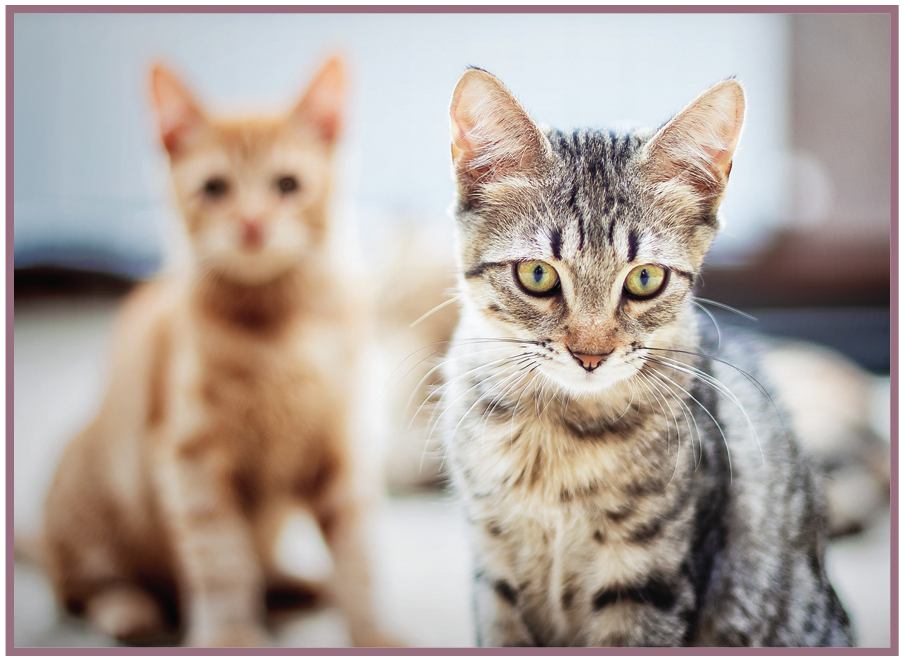
Early behavioral interventions may improve outcomes later in life. Currently, there is a lack of awareness around the need for kitten socialization for later life (‘behavioral vaccination’)
Cat-human interactions and owner awareness
Behavioral problems and owner reaction to them are among the number 1 ‘killers of cats’. Often thought of as ‘easier than dogs’ and ‘low maintenance’, many people seem reluctant to invest time in their cats. For example, owners accept that kittens need to play but may not realize that adult (including senior) cats do too. Human-directed aggression (or behavior interpreted as such) may simply be the byproduct of a poor environment and/or lack of play (ie, boredom). There may also be a misunderstanding of how to play with a cat, such that behavior turns from playful to defensive or predatory.
Data from a study being conducted at the University of Pennsylvania, USA, using the Feline Behavioral Assessment and Research Questionnaire (FeBARQ; vetapps.vet.upenn.edu/febarq/) indicate that around 20% of cats show aggression toward their owners more than ‘rarely’ – aggression is a very common reason for surrender to shelters. 5 A lack of purring is also perceived as problematic, even though purring may indicate a wide range of states including pain. Purring might be used as a ‘quick and dirty’ metric for quality of life; 53% of cats in the FeBARQ study almost always purred when petted or stroked by their owners; 5 as yet, however, no associations with environmental quality have been identified.
Owners often misinterpret cat behavior; for example, believing that a cat has acted out of ‘spite’ when house-soiling occurs or that frequent hiding is normal rather than indicating chronic anxiety. Some owners directly contribute to behavioral issues by failing to understand when or how their cat likes to be petted. Many cats prefer a short interaction or just want to be next to the owner. Some owners attempt to coerce or correct behavior with punishment, which is inappropriate. Stressed cats may ultimately be surrendered to shelters, so education and solutions are needed. Prevention might include efforts to optimize the fit between the cat and its prospective owner.
On the general issue of owner awareness, there is a lot of information available, not all of which is accurate. Information can be more difficult to get to owners in rural and some other areas, particularly if high-speed internet provision is patchy. A simple, consistent message on basic needs for cats could be effective, as a few combined, easy measures could solve or avert many problems; for example, sufficient feeding and litter box stations, vertical and safe spaces in the house, and appropriate play and social interactions. That said, there are many owners who are unresponsive despite having access to the information – in general there is an attitude that cats are not trainable.
Potential research questions:
Cat–owner bond-based training.
Effects of sex, neuter status, age of neutering, previous pregnancies, and other aspects such as coat color (which people tend to focus on in their adoption choices) relative to behavior (eg, greater social interaction or tendency to one-person bonding) and health issues.
Information dissemination: text messaging, involvement of breeder groups, conference calls with veterinarians, private sector partnerships with physical and online pet stores (brochures attached to pet food or litter bags), and taking lessons from communications used in the human public health field. Accessing the large percentage of owners who do not take their cat(s) to a veterinarian.
* Epidemiological information to characterize what the misunderstandings are and what groups/types of owners this involves (Figure 2).

Some owners directly contribute to behavioral issues by not understanding when or how their cat likes to be petted. A potential area of research might be to characterize what the misunderstandings are and the groups/types of owners this involves
Veterinarian awareness
Veterinary involvement is often limited to short appointments, and realistic strategies need to take that into account; however, it is important for behavioral assessment not to be separated from physical problems. Veterinarians need to ask questions about behavior and the home environment routinely, and not just when problems arise.
A lack of veterinary care is a huge issue for cat health generally. While feline owners are very loyal to those practices where they see their cat being appropriately handled, many veterinarians and veterinary students hesitate to interact with cats, and this potentially contributes to owners not seeking advice. Furthermore, while the effects of carrier training on reducing transit stress to the veterinarian and during the examination are known, 6 and many client resources are available, carrier training remains uncommon.
Potential research questions:
Differences in the clientele of cat-only and mixed practices.
Existing variation in cats’ responses to veterinary visits and how this relates to cat personalities and history.
Interactions between veterinarians, cats and owners, and effects on owner adherence and accessibility of veterinary care.
How to educate owners, and which measures are correlated with improvements in feline health.
Use of technology (mobile apps, gamification) to get a quick profile of a cat’s behavior from the owner.
Aging
The percentage of older cats in the feline population is increasing. Obesity is also increasing in incidence and is now seen as early as 2 years (with some reports even earlier, at 6 months), with the highest risk in middle age (8–12 years). 7 This is a complex issue and relationships between obesity and behavioral risk factors, including anxiety, remain to be explored in detail. In the geriatric population, weight loss becomes a major issue.
Feline cognitive dysfunction syndrome might occur in more than 50% of cats over 15 years of age and is a diagnosis of careful exclusion. As yet, there is little to nothing evidence-based to offer therapeutically. 8
The frequent occurrence of comorbidities in senior cats can create difficulties in getting a firm diagnosis, and there is a dearth of basic research. Frailty is another important and poorly understood age-related issue. Also deafness, polypharmacy, husbandry training and the fact that some owners might opt for euthanasia rather than medical treatments are relevant to this population of cats.
Potential research questions:
Environmental, social and behavioral risk factors for obesity in cats.
Environments of cats that do or do not show cognitive dysfunction later in life and whether chronic stress contributes to this condition (Figure 3).
Basic research on comorbidities in senior cats.
Age-related cachexia and tools for assessing linked to clinical outcomes.
Deafness in older cats and associated behavior issues; responses to different sound frequencies and appropriate hearing testing.
Pain management, appropriate food types and environmental modification, and how and whether quality of life is improved.
Polypharmacy, administration of pills and/or liquids and quality of life for treated animals.
* Medication training to address difficulty in administering medication, applying techniques used for training zoo animals to the ‘semi-domesticated’ cat.

Feline cognitive dysfunction syndrome may occur in more than 50% of cats over 15 years of age. A potential area of research might be to investigate the environments of cats that do or do not show cognitive function later in life and whether chronic stress plays a role
