



Abstract
In the third of a series of special features celebrating JFMS’s 20th anniversary, three of our Editorial Board members reflect on what makes JFMS special. We also delve back into the journal archive to pick up the story at the point where the popular Clinical Practice editions were introduced.
What makes JFMS so special
What makes JFMS special?
It is rare to have a veterinary journal devoted to one species, and its mixture of Clinical Practice and Classic editions also makes JFMS unique. I confess to preferring the Clinical Practice issues, with great reviews by multinational authors credible in their areas, and the regular appearance of state-of-the-art reviews and consensus documents to keep up to date.
How has JFMS impacted feline medicine generally?
If you read JFMS cover to cover you will span the whole domain because of the excellent reviews that collate disparate material from many areas. I love that the journal covers medicine, surgery, dermatology, behaviour and welfare – no other journal tries for that!
Tell us about an important cat that has featured in your career, research or personal life
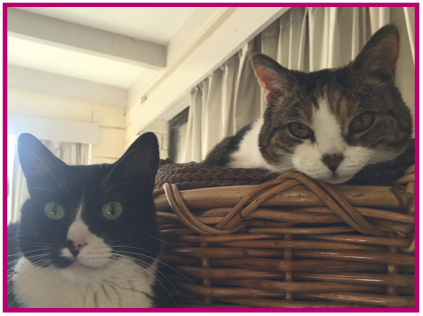
There have been so many! Kiwi was my first cat and got me focused on feline medicine. Lucky and Baron, who followed, were two cats that grew up together and helped me determine the best way to house and feed cats. Binks (pictured above on the right) who followed was a rescue cat and my first female cat. Obi (pictured above on the left) is my current surviving cat and has benefited from what I have learnt from the others. All of my cats have reinforced the idea that every cat is different; and that even though pedigree breeds can be cute, the best cats are domestic crossbreeds!
What makes JFMS special?
The cat is the small animal species that has increased the most in veterinary practices but one that we have not yet spent as much time researching and teaching about in veterinary schools – being a cat-specific journal, this therefore makes JFMS very important!
How has JFMS impacted feline medicine generally and your own area of expertise specifically?
JFMS has played a pivotal role in the recognition of feline medicine as a standalone field of veterinary medicine, rather than it being bolted on to canine medicine. For my own area, I use JFMS for producing questions for residents within oncology and internal medicine, and last year’s AAFP Feline Anesthesia Guidelines have been recommended for implementation at our university hospital.
Tell us about an important cat that has featured in your career, research or personal life
One of my Birmans, Mimmi (pictured here with me), who I saved through a C-section and was later given to me by the owner of the queen, has meant so much to me and my children.

What makes JFMS special?
As well as JFMS being the only peer-reviewed, high impact factor journal solely focused on cats, the careful consideration of relevant and topical articles make it unique. The Clinical Practice issues also allow the application of knowledge to clinical cases.
How has JFMS impacted your own expertise specifically?
I was a Feline Advisory Bureau Resident at Bristol University, in the UK, and JFMS has been my ‘bible’ since then. Not only has it allowed me to keep up to date on feline topics, but I have been lucky enough to publish several articles – a great honour.
Tell us about an important cat that has featured in your career, research or personal life
I was fortunate to adopt a cat named Bruno (pictured), who had been a blood donor and teaching cat at Bristol University, and had saved the lives of many cats. He was pictured on the old-style version of the JFMS cover (see image on page 453) and has appeared in the journal many times. He was the friendliest cat ever and many times had to be chased out of the canteen as he was rather fond of crisps!

