Abstract

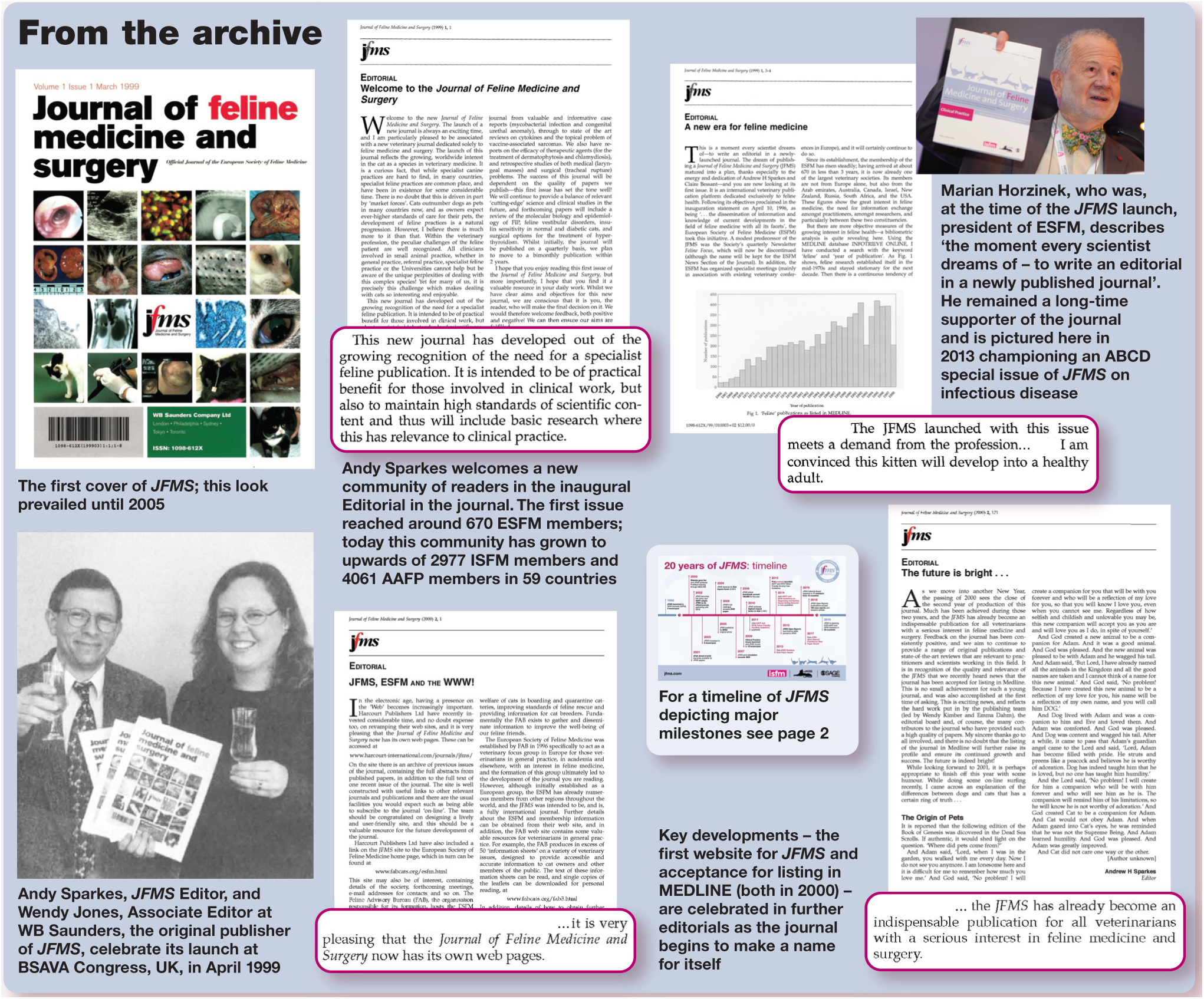
In the first of a series of special features that we will be running throughout 2019 in celebration of JFMS’s 20th anniversary, three Editorial Board members reflect on what makes JFMS special and what its impact has been. We also hear from the societies, delve into the journal archive and invite readers to have their input.
Why JFMS is so special
Allison German, UK; Editorial Board member since 2009
What makes JFMS special?
It is the first port of call to find out the latest research, interesting cases, practical tips and updates on knowledge for everything feline. It is a welcoming, supportive platform for authors and enables practitioners to readily advance their feline knowledge in a friendly and accessible environment.
How has JFMS impacted feline medicine generally and your own area of expertise specifically?
JFMS has had a massive impact on feline medicine. It provides a concentrated resource to gain feline facts quickly, and compares and contrasts feline health, welfare and approaches across the world. My area is feline internal medicine and infectious disease. I always find JFMS papers to be among the core pieces of literature to guide my advancement in techniques and enable me to explore research ideas.
Tell us about an important cat that has featured in your career, research or personal life
Clarence was rehomed in our household following a nutrition study. He was the most gregarious cat and knew more of the neighbours than we did! He pioneered the Weight Management Clinic at Liverpool Small Animal Teaching Hospital, was a patient and cooperative volunteer for multiple student cat handling sessions and donated blood. With his sunny, happy disposition, a big purr and a love of licking yoghurt lids, Clarence was a cat that shared all of our big life events for over 13 years.
Margarethe Hoenig, USA; Editorial Board member since 2008
How has JFMS impacted feline medicine generally and your own area of expertise specifically?
JFMS has published many groundbreaking research papers that have shaped and changed feline clinical practice. It has evolved as the specialty of feline medicine has developed, and now is the journal of choice for many researchers wanting to reach feline practitioners worldwide, to impact clinical practice. The series of ABCD infectious disease reviews and vaccination matrixes are the articles I have referred to most frequently, providing a fantastic overview of individual feline infectious disease.
Tell us about an important cat that has featured in your career, research or personal life
Fizz was the first cat of my own, brought in with a broken leg during my first year working as a vet. As he aged I learnt about many feline diseases first-hand and experienced typical cat–owner challenges. He was the most gentle and happy cat I ever met; our next cat has big ‘shoes’ to fill.
Richard Jerram, New Zealand; Editorial Board member since 2014
What makes JFMS special?
Its special focus on cats, with the broad and professional nature of the papers.
How has JFMS impacted feline medicine generally and your own area of expertise specifically?
I believe this journal has raised the interest and understanding that cats are not small dogs and gives the species its own veterinary voice.
Tell us about an important cat that has featured in your career, research or personal life
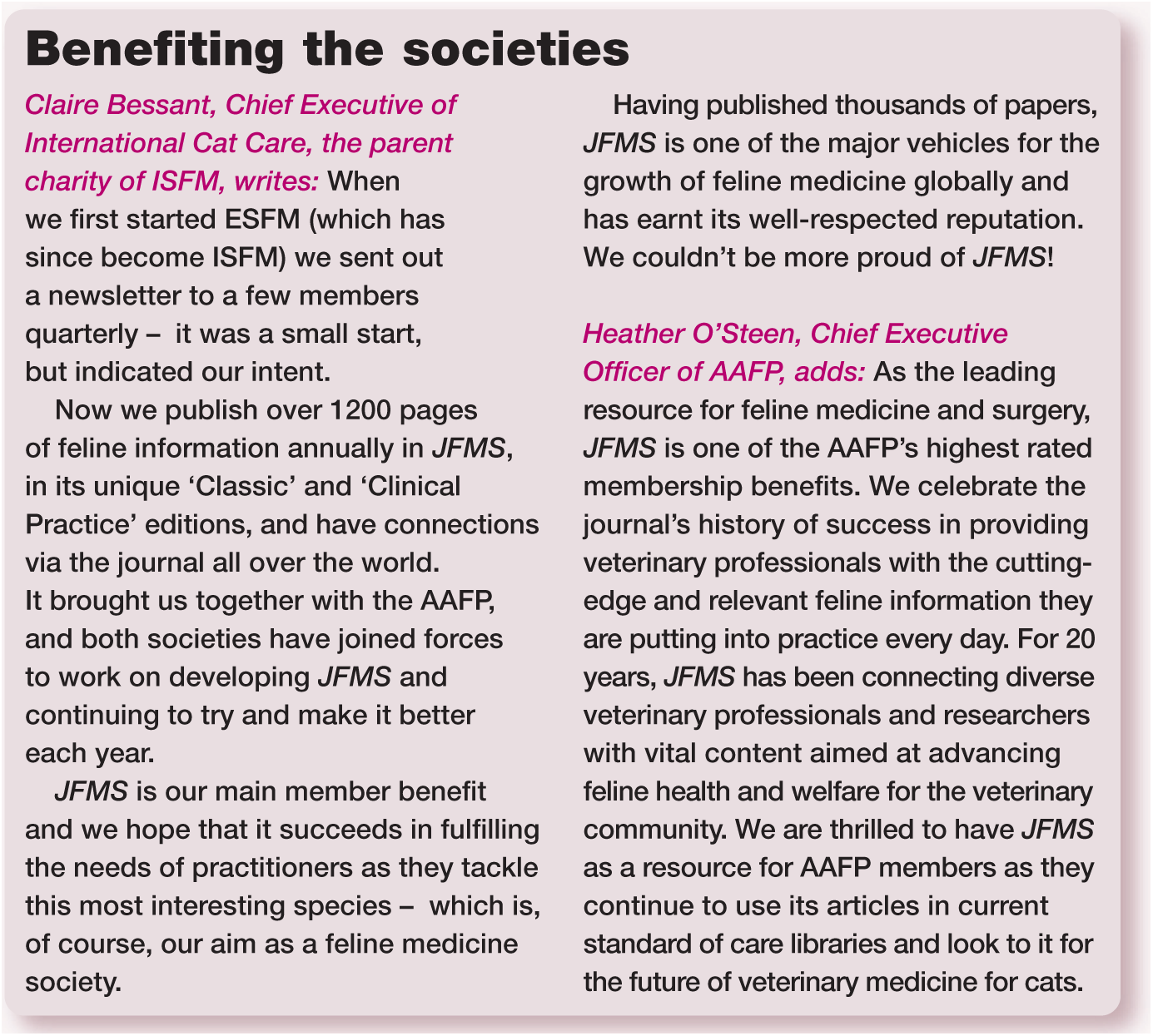
I am a Burmese cat nut and have had seven so far! Each one has been a special character. My all-time favourite, Tusken (pictured), has made it to 12 years of age without a day of ill health and by avoiding traffic, and he has also donated blood on three occasions.