



Abstract

AAFP Position Statement
Impact of lifestyle choice on the companion cat: indoor vs outdoor
There are both risks and benefits to pet cats living exclusively indoors or spending some time outdoors. This lifestyle decision may be based on culture, perceived behavior and health requirements of the cat, or recommendations of regional veterinary and humane associations.
Animal welfare addresses how an animal copes with the conditions in which it lives. Feline welfare includes the ability to express innate behaviors. As a relatively young species, Felis catus has retained the behaviors of its wild ancestor, Feline silvestris lybica. 1 The cat’s physical and emotional needs are unique. 2 The behaviors that go with detecting, stalking and catching prey are normal and essential behaviors (Figure 1).3,4 Both cats that live as a single household cat and those living in multi-cat households can have distress, which can consist of boredom, fear and anxiety. As territorial animals, each cat needs safe and enriched spaces to cope in their environment (Figure 2). Outdoor cats can more readily maintain their territory, reducing potential fights and dispersing or avoiding cats that are unfamiliar or threatening, as compared with indoor cats. 5

The challenge of meeting the needs of the indoor cat requires multiple means of enrichment, including simulation of stalking and catching prey every day. This is essential for cats of all ages. (a) Courtesy of Ilona Rodan; (b) © iStockphoto.com/Tatyana Aleksandrova

Outdoor enclosures facilitate meeting the cat’s needs and performance of its normal behaviors. Courtesy of Martine van Boeijen
The innate needs of the cat are difficult or impossible to replicate in the indoor environment, and meeting those needs requires extensive veterinary and client education. There is an increased incidence of behavior problems if indoor cats are unable to express normal behaviors.5–7 Behavior problems have been associated with an increase in relinquishment or euthanasia. 8

Until approximately 1950, cats were outdoor only or indoor/outdoor cats. The development of cat litter in 1947 9 and the desire to keep cats safe led to the recommendations by many veterinary organizations that cats be kept exclusively indoors. However, there was little to no knowledge or education about what is needed to maintain feline welfare. Most cat owners and many veterinary professionals are still unaware of the cat’s emotional, social and environmental needs. Although it is easier to measure the incidence of injury, recognition and measurement of emotional wellbeing or pleasure is more difficult, but at least as important.10,11 Consideration for longevity often underlies the decision to keep cats indoors. However, a lifestyle choice made with the sole intention of increasing longevity – but in an impoverished or inadequate environment for each cat in the household – is not in the cat’s best interest.


Windows with perches can provide a way for a cat to watch outdoors from the safety of indoors. Courtesy of Debra Givin
Understanding the risks and benefits of the different lifestyle options provides veterinarians with the tools necessary to counsel clients on how to minimize health risks to their cat regardless of their choice of indoor-only or indoor/outdoor lifestyle.
Minimizing the risks
The AAFP Welfare Committee has developed this ‘Impact of lifestyle choice on the companion cat: indoor vs outdoor’ statement to replace the 2007 ‘Confinement of Owned Indoor Cats’ statement. Whether the cat is indoor-only or spends time outdoors, it is essential to provide an environment that meets all the environmental needs of the cat. For more information, see the AAFP and ISFM Feline Environmental Needs Guidelines listed in ‘Useful resources’ on page 754.
This AAFP Position Statement emphasizes that indoor/outdoor living for cats in an environment that is safe is the best option for pet cats. Safe outdoor living keeps the cat away from most dangers and yet provides a more stimulating environment with potential for more normal feline behavior. Examples include walking the cat on harness and leash (Figure 4), an outdoor enclosure (Figure 5), and a fenced-in or invisible fence around the property. Clients should be educated about these options.

Walking on a leash provides opportunity for a cat to explore and forage outdoors. Courtesy of Joelle Derrick
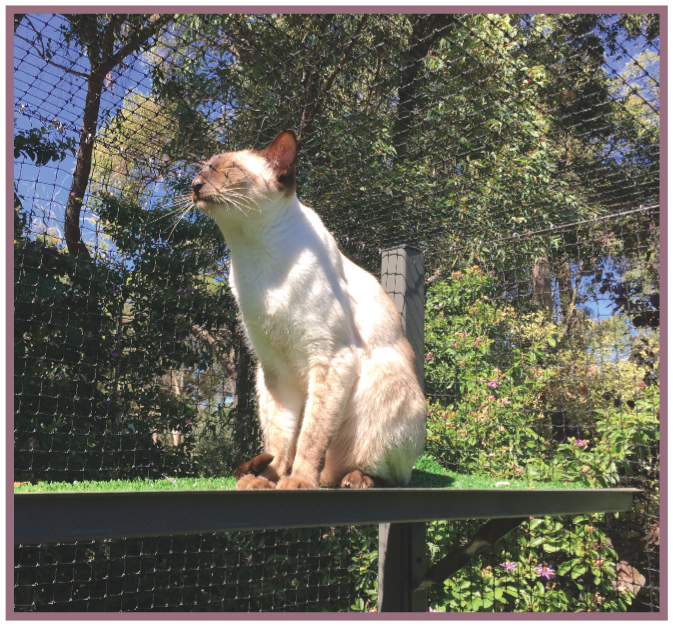
Another example of an outdoor enclosure that can provide a stimulating outdoor living environment while keeping the cat away from most dangers. Courtesy of Martine van Boeijen
Indoor-only living is an option, but each and every cat’s needs must be addressed so that each has good welfare to include: simulation of hunting and foraging; play; safe territory with vertical space (Figure 6); and appropriate and clean toileting areas as described in the Environmental Needs Guidelines, and the AAFP and ISFM Guidelines for Diagnosing and Solving House-Soiling Behavior in Cats (see ‘Useful resources’ on page 754). In addition to vertical space and appropriate litter boxes, emulating foraging and hunting is essential. 4 It is the responsibility of the veterinary profession to address feline welfare that meets these cats’ needs.

(a,b) Veterinary teams can help educate cat owners on creating an enriched indoor environment where cats can express normal feline behaviors that provides mental and physical stimulation as well as exercise. Courtesy of (a) Heather O’Steen and (b) Kate Hurley
There are some cats with welfare needs that can never be met indoors. Often these are cats that have previously been outdoor-only, have conflict with other animals and/or have particular physical or emotional needs that are not met in the indoor environment. Whenever possible, an outdoor enclosure is preferred (Figure 5). If safe outdoor access is not possible, other considerations must be taken for the welfare of the cat.
Welfare of wildlife is addressed elsewhere, whereas this statement addresses the cat’s welfare. To improve safety from their predators, it is recommended that cats be allowed outdoor access only during the day and kept indoors or in an outdoor enclosure with indoor access at night. Young cats and male cats are more likely to engage in activities that increase risk of injury28,29 and should be monitored more closely.

