




Abstract
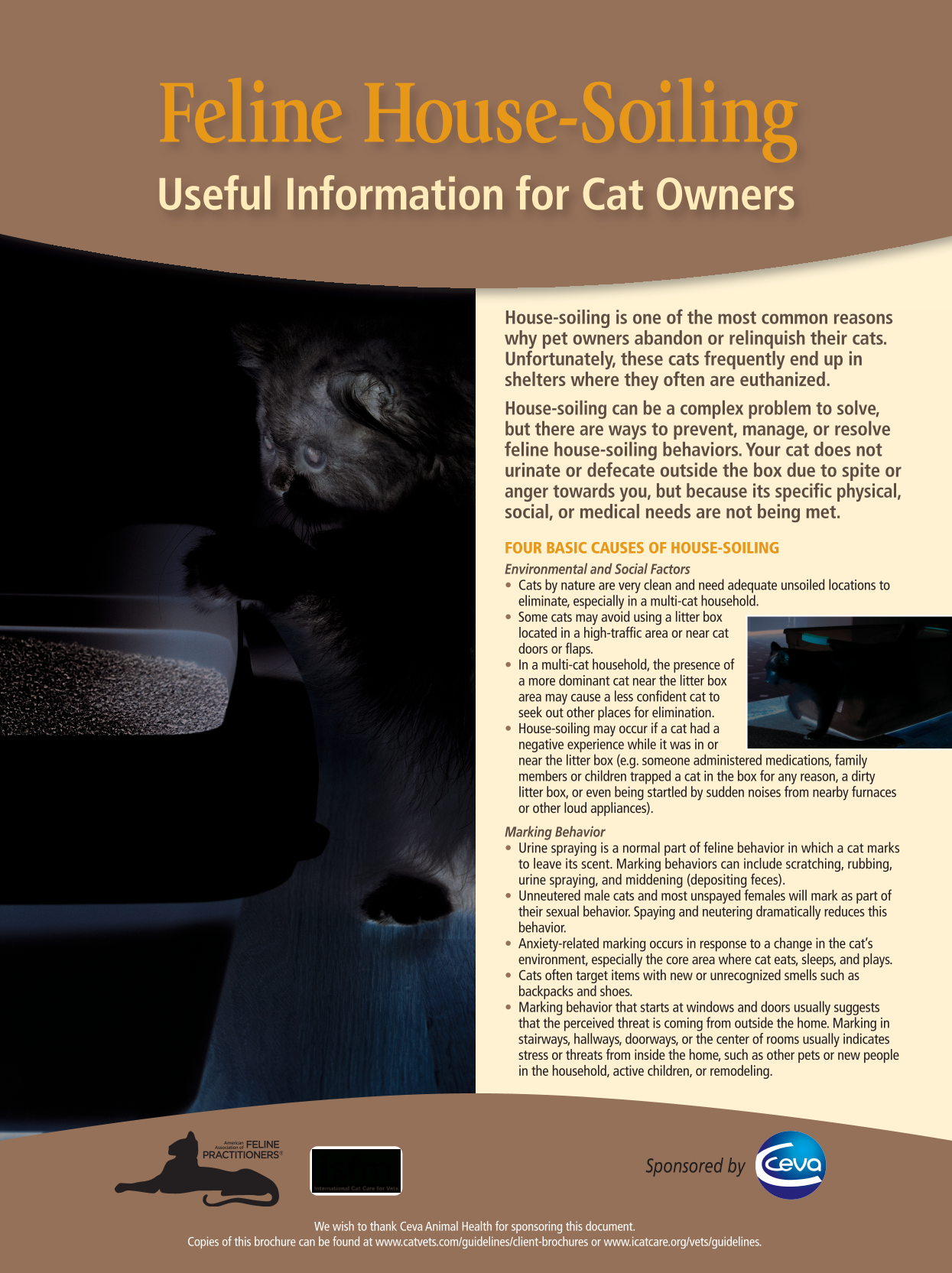
House-soiling is one of the most common reasons why pet owners abandon or relinquish their cats. Unfortunately, these cats frequently end up in shelters where they often are euthanized.
House-soiling can be a complex problem to solve, but there are ways to prevent, manage, or resolve feline house-soiling behaviors. Your cat does not urinate or defecate outside the box due to spite or anger towards you, but because its specific physical, social, or medical needs are not being met.
Four Basic Causes of House-Soiling
Environmental and Social Factors
Cats by nature are very clean and need adequate unsoiled locations to eliminate, especially in a multi-cat household.
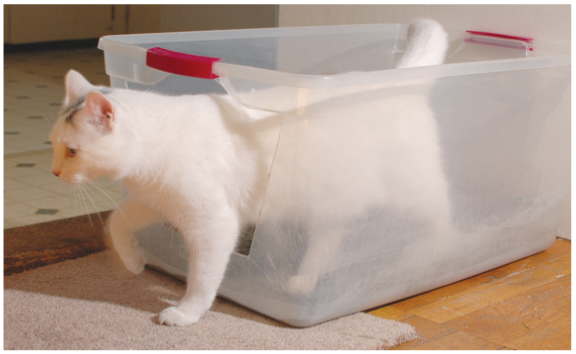
Some cats may avoid using a litter box located in a high-traffic area or near cat doors or flaps.
In a multi-cat household, the presence of a more dominant cat near the litter box area may cause a less confident cat to seek out other places for elimination.
House-soiling may occur if a cat had a negative experience while it was in or near the litter box (e.g. someone administered medications, family members or children trapped a cat in the box for any reason, a dirty litter box, or even being startled by sudden noises from nearby furnaces or other loud appliances).
Marking Behavior
Urine spraying is a normal part of feline behavior in which a cat marks to leave its scent. Marking behaviors can include scratching, rubbing, urine spraying, and middening (depositing feces).
Unneutered male cats and most unspayed females will mark as part of their sexual behavior. Spaying and neutering dramatically reduces this behavior.
Anxiety-related marking occurs in response to a change in the cat’s environment, especially the core area where cat eats, sleeps, and plays.
Cats often target items with new or unrecognized smells such as backpacks and shoes.
Marking behavior that starts at windows and doors usually suggests that the perceived threat is coming from outside the home. Marking in stairways, hallways, doorways, or the center of rooms usually indicates stress or threats from inside the home, such as other pets or new people in the household, active children, or remodeling.
Four Basic Causes of House-Soiling Continued
Medical Causes and Problems
Medical issues can cause a cat to exhibit behavior changes such as house-soiling. Your veterinarian will be able to diagnose or rule out any medical conditions that could be a factor in the house-soiling behavior.
Every cat that starts to house-soil requires a thorough physical examination and urinalysis to check for medical problems such as infections, cystitis, arthritis, kidney problems, diabetes, and other medical issues.
If your veterinarian believes the house-soiling behavior is caused by a medical reason, he or she may perform additional tests such as a urine culture, abdominal radiographs, abdominal ultrasound, complete blood count, and biochemical profile. Digital rectal exams or fecal testing may be needed for for cases of house-soiling with feces.
Feline Idiopathic Cystitis
Feline idiopathic cystitis (FIC) is a frequent medical cause of house-soiling. Cats suffering from FIC have increased frequency of urination, difficulty and pain when urinating, and can have blood in their urine. This inflammatory condition can increase and decrease in severity over time and is aggravated by stress, changes in diet, and other issues.
Treatment and Management of House-Soiling
The design and management of the litter box are critical for encouraging acceptable toileting habits. When house-soiling occurs always evaluate the litter box.
Designing the Optimal Litter Box
Avoid placing food and water close to the litter box.
Cats usually prefer quiet, private places. Avoid busy areas of the home and locations where a cat could be cornered in, blocked off, or unable to flee. Cats can be cornered in the litter box so they are unable to flee (e.g. if the box is in a closet or small room where another cat can block the exit). If one cat prevents another cat’s access to the litter box (e.g. the box is down a hallway or in a room where another cat can block entry), it can be very stressful and cause the cat to house-soil because the victim is avoiding or cannot get to that location.
Keep the litter boxes apart in different locations because your cat considers boxes close to each other one large litter box.
If a cat is toileting away from its box, try placing an additional litter box at the new site (temporarily or permanently) to get the cat using a box again.
In a multi-level home, place a litter box on each level. If you have an older cat, place a litter box on the level where the cat spends the most time, as it may not be easy for the cat to go up and down stairs each time it needs to use the box.

Remove Marking Triggers
Neuter or spay your cat to physiologically eliminate sexually-related marking behavior.
Restrict the potential threat of other cats; outdoor roaming cats encroaching on the household can act as triggers.
Remove or block cat doors that allow roaming cats to enter the household.
Cleaning urine-marked areas frequently will reduce a cat’s habit of refreshing its scent on the marking site. Use a black light (UV) to find soiled areas. Clean affected areas with a good quality urine odor and stain remover according to the type of surface that the cat has soiled. Test products on an inconspicuous area first and clean a sufficiently large area to remove the odor, which may be up to three times the size of the soiled area. Avoid using ammonia-based cleaners, which smell like urine to a cat.
Additional Considerations
Ensure that all your cat’s environmental needs are being met. For more information, visit: www.catvets.com/cat-owners/brochures or www.icatcare.org/vets/guidelines.
Never punish your cat for house-soiling. Punishment can lead to fear-related aggression, reduces the bond between cat and human, and encourages urine marking in less obvious areas.
Consider use of comforting synthetic pheromones. Spray Feliway® on affected areas after cleaning to reduce the likelihood of re-marking. After individualizing toileting areas for the cat’s preferences, adding a Feliway® diffuser in the room most frequented by the cat reinforces the cat’s feeling of security.
Feline house-soiling can be a frustrating problem. Resolution requires patience, as it can take some time to determine what is causing these behaviors and may involve making changes to several aspects of a cat’s home environment and care.
If you are experiencing house-soiling with your cat, please contact your veterinary practice immediately. The sooner these issues are addressed, the happier everyone will be, including your cat. Working with your veterinarian to identify the causative factors for the house-soiling behavior, and effectively addressing those factors, will dramatically increase the chance of resolving the house-soiling issues.
By understanding and providing for your cat’s environmental and medical needs, you can help your cat to live a long and happy life.