




Abstract
Rationale:
These Guidelines have been developed by the American Association of Feline Practitioners (AAFP) and the International Society of Feline Medicine (ISFM) as a resource for veterinary practitioners who want to better understand and manage the important clinical condition of house-soiling in their feline patients. The Guidelines offer straightforward, practical solutions that, in most cases, will help veterinarians and cat owners prevent, manage or entirely remediate feline house-soiling behavior.
Evidence base:
The Guidelines include scientifically documented information when it is available. However, because research is often lacking, some recommendations reflect the accumulated clinical experience of the authors.
Purpose of the Guidelines
We often hear the statistics: house-soiling is one of the most common feline behavior problems reported by cat owners and a major reason why owners relinquish cats to animal shelters. 1 According to the National Council on Pet Population Study and Policy, shelters in the US euthanize 72% of relinquished cats, 2 many because of house-soiling behavior. If 4–9 million cats are euthanized every year, this could be more than 10,000 cats each day. Veterinarians can decrease this number by helping to correct this commonplace problem. With this goal in mind, we have developed the AAFP and ISFM Guidelines for Diagnosing and Solving House-Soiling Behavior in Cats (hereafter referred to as the Guidelines).
The Guidelines provide clinicians with basic tools for educating cat owners about the prevention of house-soiling behavior. The Guidelines also apply the principles of the previously published AAFP and ISFM Feline Environmental Needs Guidelines, 3 which describe the physical setting where a cat can thrive. Importantly, these current Guidelines elaborate on elimination behavior, describe and illustrate the cat’s ideal litter box (also known as a litter tray), and discuss how it should be managed.

While prevention of house-soiling is ideal, practitioners see many cats with pre-existing house-soiling behavior. The Guidelines explain that, even though the pathophysiology and behavioral etiology of house-soiling is often multifactorial, a thorough chronological history and a systematic diagnostic approach to this problem can be the key to developing an effective treatment plan.

The Guidelines offer straightforward, practical solutions for practitioners and cat owners to implement, but are not intended to be a comprehensive treatise on feline behavior. The Guidelines’ authors recognize that feline house-soiling can be a complex problem. Although many cases are straightforward, individual cases can be challenging, sometimes frustrating, and occasionally beyond the expertise or experience of the general, primary care practitioner. In cases where an acceptable response does not occur within a time-frame mutually agreed upon by the veterinarian and client, consultation with a qualified behaviorist or internist is advisable.
In most cases, the Guidelines will help veterinarians and cat owners prevent, manage or entirely remediate feline house-soiling behavior. Effectively managing this common behavioral problem can reinforce veterinarian-client-patient relationships, improve the welfare of cats, and enhance the human-feline bond. These outcomes will ultimately help reduce the number of cats that owners abandon, relinquish or euthanize because of this challenging and emotionally charged issue.
Assessing the Cat that Displays House-Soiling Behavior
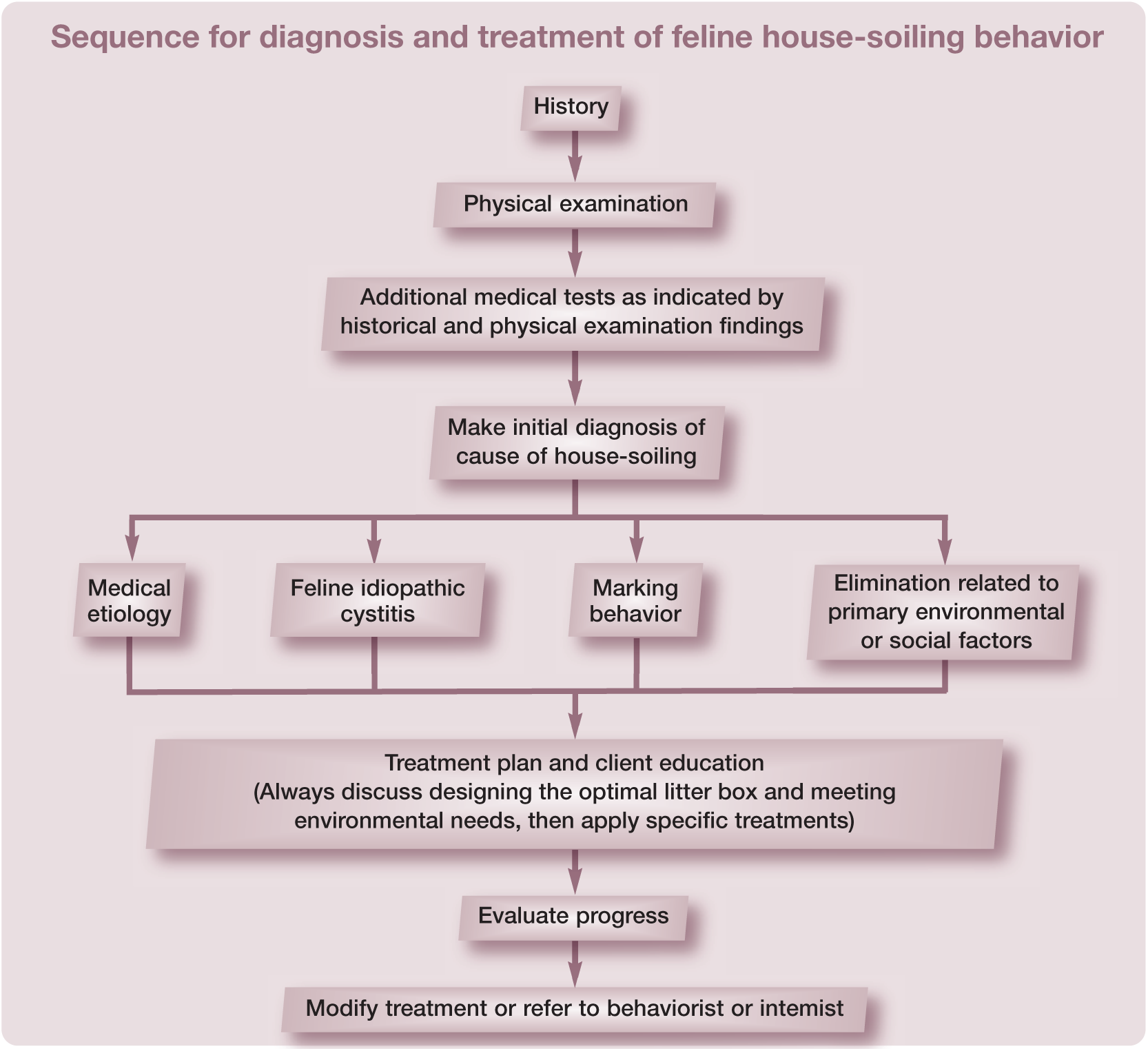
1 Use the patient’s history, determine that a house-soiling problem is present and consider possible causes
A house-soiling questionnaire will capture relevant information for the patient’s medical record (see Appendix 1, pages 595–596; and Supplementary Material listed on page 592). For clients who schedule an appointment for a house-soiling complaint, offer to send the questionnaire in advance or ask them to arrive early to complete the form. Some clients may not be aware that a problem exists and others may be embarrassed to discuss it, so ask every client specific questions at every examination in order to identify unap-parent house-soiling cases. The most important question to ask is, ‘Has your cat urinated or defecated somewhere in the house other than in the litter box?’ If the answer is ‘yes’ then obtain a more detailed history in the examination room or send the questionnaire home with the client and schedule a follow-up appointment.
When reviewing the history, pay particular attention to the timeline of the problem’s onset and how it progressed. Use the owner’s house floor plan diagram (requested as part of the questionnaire) to evaluate the extent and location of the feces or urine deposition. Also note whether the majority of incidents involve litter box management or are associated with issues regarding interactions among cats or between cats and people.
2 Perform a thorough physical examination (including a basic orthopedic and neurologic assessment) on every house-soiling cat
Basic findings such as a mild hair loss in the prepubic area may suggest bladder pain, while inflexible joints may limit a cat’s ability to access its litter box.
3 Perform additional tests or procedures as needed based on history and physical examination findings
For specific recommendations, see discussion on medial etiologies within the ‘Diagnosis of the four basic causes of house-soiling’ section (page 582).
4 Make a diagnosis
For the purposes of simplifying the diagnostic categorization of house-soiling cases, we recommend the following designations:
Medical etiologies (including urolithiasis, chronic kidney disease, urinary tract infections, diabetes mellitus, hyperthyroidism, arthritis, orthopedic etiologies and neoplasia).
Feline idiopathic cystitis (FIC).
Marking behavior.
Elimination related to primary environmental or social factors.
5 Formulate a treatment plan
First discuss the importance of an optimal litter box and fulfilling the five pillars of a healthy feline environment (see pages 585–587), even if the cat has a contributing or concurrent medical condition. Next formulate specific therapies as discussed in later sections.
6 Follow-up
Contact the owner on a routine basis to answer any questions that emerge. A phone call or e-mail within 2 weeks of the initial diagnosis can encourage an owner to work with the cat and the veterinarian to solve the house-soiling problem.
7 Evaluate progress, fine-tune your treatment plan, and refer the case for further management if necessary
In many cases, there may be more than one of the four house-soiling diagnostic categories (listed above under step 4) involved. Treating underlying medical conditions may not completely resolve house-soiling if it occurs as a result of adverse behavioral conditioning. The limitations of medical treatment in correcting house-soiling underscore the importance of non-medical interventions, especially maintaining optimal litter box facilities and addressing environmental and social factors that affect both marking and elimination behaviors. In select cases, rehoming to a more suitable environment should also be considered if environmental or social stressors cannot be removed or reduced sufficiently.
Diagnosis of the Four Basic Causes of House-Soiling
This section discusses diagnostic recognition of what are considered the four basic causes of feline house-soiling: medical etiologies, FIC, aberrant marking behavior, and elimination related to primary environmental or social factors. Because these causative factors sometimes coexist, they should all be considered in managing a house-soiling cat.
Medical etiologies
Any cat that is ill may exhibit behavioral changes, including house-soiling. If senior or geriatric cats present for house-soiling and have no history of this behavior, testing beyond the basics listed below, such as with chest radiographs or gastrointestinal profiles, may be of benefit.
Medical evaluation of urinary house-soiling
The following tests are components of an optimum diagnostic approach for cats that present for house-soiling with urine:
The above diagnostic baseline usually eliminates or confirms the presence of the following conditions:
Bacterial cystitis.
Urinary incontinence.
Radiopaque uroliths (struvite and calcium oxalate). Approximately 20% of cats with feline lower urinary tract disease (FLUTD) will have cystic calculi. 6
Polyuria or polydipsia.
Radiolucent uroliths and neoplasia. 7
If all diagnostic data are within normal limits, medical causes of house-soiling are unlikely. However, the patient could still have FIC because no diagnostic test is currently available for this condition.
Medical evaluation of fecal house-soiling
For cats presenting with a history of defecation outside a designated location, diagnostic testing will consider lifestyle factors, physical examination findings, and the duration and severity of clinical signs. The clinician should also determine whether the cat has chronic or acute constipation or diarrhea.
The following diagnostic tests are appropriate for cats that exhibit house-soiling by defecation:
The above diagnostic baseline may help to confirm or exclude the following diagnoses:
Intestinal parasites.
Arthritis, spondylosis.
Impacted anal glands.
Rectal strictures.
Organic causes of small- and large-bowel disease.
Some causes of fecal incontinence.
Additional blood work and imaging studies may be warranted in cases of constipation or diarrhea to evaluate the cat for underlying conditions such as kidney disease, hyperthyroidism and conformational abnormalities of the pelvis.
As with house-soiling involving urination, if all diagnostic values are within normal limits, aberrant marking behavior or elimination related to primary environmental or social factors are the most likely causes of house-soiling with stool.
Feline idiopathic cystitis
Pain or discomfort associated with FIC may cause a cat to exhibit house-soiling behavior (Figure 1). Cats are diagnosed with FIC when they have one or several episodes of FLUTD and a thorough diagnostic work-up finds no single etiology (ie, no stones, urinary tract infection, tumor or other physiologic causation). 9 Researchers are now looking beyond the bladder and considering the whole individual when evaluating these cases. 10 Currently, no single specific diagnostic test or marker will confirm FIC. 11

Blood-tinged urine deposited by a cat with FIC in a urine-marking incident. Courtesy of Hazel Carney
FIC can be obstructive or non-obstructive in its presentation. It can also occur as a chronic disease. Urethral obstruction is more common in younger, overweight cats and in male cats, with no difference in prevalence for intact versus castrated males. 12 Excessive bodyweight, decreased activity, multiple cat households and indoor housing may increase the risk for FIC.13,14
Various forms of FIC exist. The disease may be self-limiting, wax and wane, or be chronic and persistent in some cats. 15 Problems associated with the bladder,16–18 nervous system, 19 endocrine system 20 and various other co-morbid disorders may occur concurrently. 21 Behavioral abnormalities such as increased startle responses, nervousness and excessive over- or under-attachment to owners may also be present. 22 It is hypothesized that some cats with FIC may have had adverse experiences early in life, sometimes in utero. 23
Treatment options for FIC are discussed on pages 586–589.
Marking behavior
A diagnosis of marking as the cause of house-soiling requires exclusion of medical etiologies, FIC, and elimination related to primary environmental and social factors. It also requires an understanding of why the cat marks. A house floor plan diagram that identifies doors and windows, resources, cat-to-cat interaction locations and areas of marking can be very useful in identifying sites where the house-soiling cat feels the need to leave evidence of its presence.
Cats in general avoid confrontation, so they communicate with other cats about when they were last at a given location by using olfactory and visual clues. A stressful environment often exacerbates marking behavior as well as FIC. 21 Reducing fear and anxiety decreases urine marking behavior and inter-cat aggression, as well as other negative results of chronic stress. 24 Cats mark in a variety of ways which owners may find objectionable (see box below).
Feline urine marking behavior
Urine spraying is a normal part of feline behavior. Typical characteristics of urine marking behavior include:
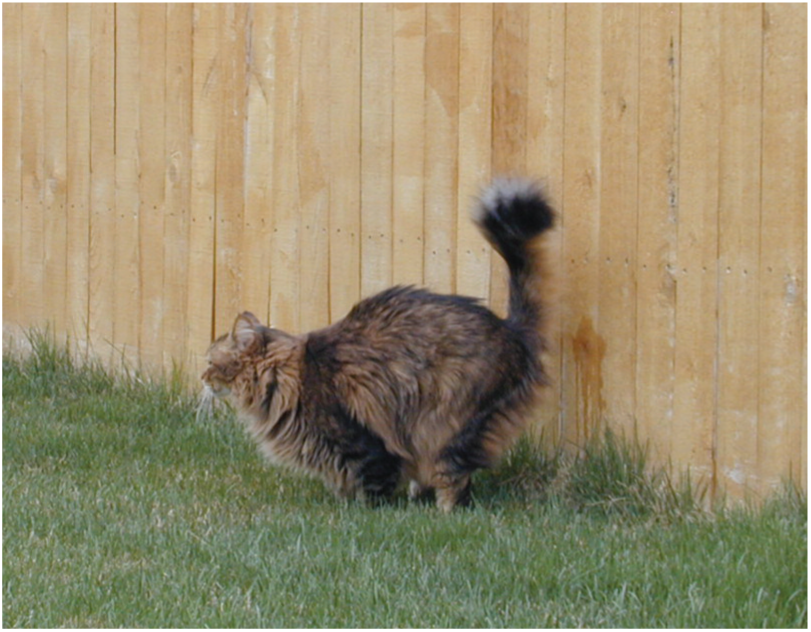
The cat displays urine marking behavior by depositing a small amount of urine on a vertical surface while standing with a raised tail. Courtesy of Hazel Carney

Urine spraying is either a sexual (associated with reproductive function) or a reactional behavior. 25 Intact male and female cats both exhibit sexual marking to advertise their presence and availability. Vocalization often accompanies sexual marking. Neutering intact animals dramatically reduces sexually related marking. However, approximately 10% of neutered male cats without lower urinary tract disease will persist in marking behavior, 26 and 4% of female neutered cats may continue to mark as well. 27
Reactional or anxiety-related marking occurs in response to a change in the cat’s environment, especially its core area where it eats, sleeps and plays. The cat marks to leave its own scent. Confident and anxious cats alike will exhibit marking behavior. Anxious cats mark to reduce their anxiety by making the affected area smell like themselves, which helps increase their confidence. Cats with FIC may urine mark, sometimes with bloody urine (Figure 1).28,29
Confident cats mark as a ‘calling card’ to denote their presence, but there is no evidence that the mark is intended to be threatening to other cats. Cats do not normally mark to cover another cat’s scent and will sniff the other cat’s mark without becoming agitated or fearful. They may then show a flehmen response. Within feline social groups, including human households, cats detect and identify a collective odor. 30 The collective odor is made up of all the scents, including those expressed by feline and human individuals, and by inanimate objects such as furniture and carpeting. Introduction of another pet, person, or new furniture or other objects into this environment changes the collective odor to some degree and can stress some cats enough to induce urine marking behavior.
Cats will frequently mark the same areas repeatedly. The urine odor changes with time and frequent marking keeps the odor more consistent. Frequently marked areas involve travel routes throughout the core home environment. Items that change in temperature, such as stoves, toasters and electronic equipment, are frequent marking targets. Articles accompanied by new scents, such as suitcases, backpacks and shoes, may also be marked. Marking behavior that starts at windows and doors usually suggests the perceived threat is coming from outside the home. Initial marking in stairways, hallways, doorways leading into rooms and the centers of rooms usually indicates stressors originating from within the household. Cat doors or flaps can sometimes trigger urine marking at those sites due to the perceived or actual threat of other cats entering into the household cat’s core environment.

Elimination related to primary environmental or social factors
A diagnosis of elimination related to primary environmental or social factors as the cause of house-soiling requires exclusion of medical etiologies, FIC and marking behavior. It also requires an understanding of normal feline elimination behavior (see box above). A house floor plan diagram that identifies litter box locations as well as house-soiling sites in relation to potential areas of cat-to-cat conflict, high traffic or noise can be very useful in diagnosing elimination due to environmental or social factors.
Overcrowding, social competition and adverse human interventions
In a multi-cat household, overcrowding or the presence of a ‘despot’ cat that monopolizes litter box resources may cause less confident cats to seek out inappropriate places for elimination.24,34 Some cats may avoid using a litter box that is placed in proximity to high traffic areas or near cat doors or flaps that are accessed by other cats. In general, cats need to be able to reach litter boxes without having to encounter other cats. Most cats prefer private places to eliminate rather than busy locations, and may need different locations for urinating and defecating. In some households, an insecure cat feels safest on the owner’s bed and may eliminate there instead of going to the litter box.
Litter box aversion can also be caused by counterproductive or inattentive human behavior. Examples include using the litter box as a site for administering medications, locating toileting areas near noisy appliances, and allowing children to trap a cat in the litter box for any reason. A cat may avoid the litter box if it associates toileting with any adverse stimuli or experiences. A soiled litter box may cause litter box aversion.
Treatment and Management Considerations for All House-Soiling Cases
Optimizing the litter boxes and fulfilling the five pillars of a healthy feline environment (see pages 586 and 587) will improve the interaction of cats within their environment, decrease potential sources of stress and, as a result, should prevent or decrease the frequency of house-soiling.
Designing the optimal litter box
The average cat eliminates approximately three to five times a day. 1 The design and management of the litter box are critical for encouraging acceptable toileting habits. When house-soiling occurs, always evaluate the litter box.
Litter box number and location
Households with a single cat should have two litter boxes in two separate locations. In multi-cat households, the historical rule of thumb is to have at least one more litter box than the total number of cats, although this is not an absolute requirement. Socially affiliated cats may be more willing to share litter boxes. Cats which are not socially affiliated should have separate litter stations. More litter boxes may be needed depending on the number of social groups and unaffiliated cats. At least one litter box should be placed at each level of a multilevel home. Consequently the guiding principle is to provide a sufficient number of litter boxes in multiple locations around the house so that each social group has an adequate number of toileting sites in different places.
Avoid placing food and water close to the litter box, as this discourages elimination in that location. Cats perceive litter boxes located adjacent to each other as one large box. Openings of adjacent litter boxes should not be facing each other, but should be positioned at right angles or around the corner from each other. This arrangement allows cats to exit the box and avoid an approaching cat.
If a litter box goes unused, the owner can remove it if other boxes are available and being used. If a cat is toileting away from its litter box, try placing the litter box at a new site until the situation is remedied. After the cat begins using its litter box, leave it in the same place for at least 2 weeks, even if the location is inconvenient for the client. After litter box utilization has become consistent, it may be possible to gradually move the box (several inches a day) to a location preferred by the human occupants of the house.
Litter box size
Research suggests that size of the litter box is as important as the number of boxes. In general, bigger is better. Unless the owner is able to inspect and remove soiled litter on a regular basis (at least once every 2 h to avoid odor build up), many commercial litter boxes prove to be too small. We recommend a rectangular litter box that is 1.5 times the length of the cat from nose to base of tail; in one study, adult cats preferred a box that was 34 x 15 inches (86 x 39 cm) over a smaller one. 35 If a large enough litter box is not available at the pet store, a home improvement store or department store can provide suitable alternatives. Examples include concrete mixing trays, sweater boxes and under-bed storage containers (Figures 3–5). The lids from the containers can be placed upright behind the litter box to protect the wall.

This litter box is of adequate size and depth for an adult cat. The high back helps protect the wall. Courtesy of Vicky Halls
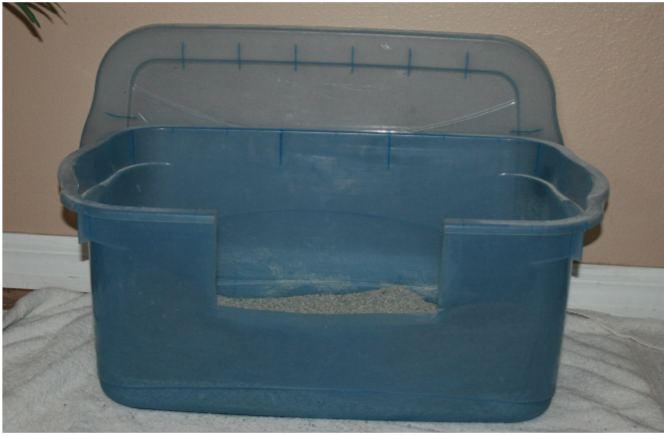
A storage container with the side cut down for easy entry makes a good litter box. The low entry will facilitate use by an older cat or one with degenerative joint disease. Note placement of the lid behind the box to protect the wall. Courtesy of Kari Mundschenk
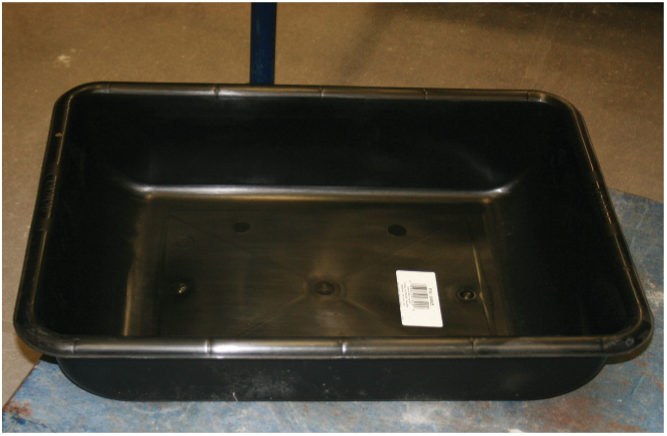
A concrete mixing tray available at a local hardware store makes a good litter box. This one is made of heavy plastic, with a smooth surface and adequate depth and size (24 × 36 × 8 inches). Courtesy of Kari Mundschenk
Covered versus open litter boxes
Research has shown that cats are equally divided in their preference for large, covered litter boxes versus uncovered boxes. 36 The cat’s preference may be influenced more by regular cleaning than by whether the litter box is covered. Consequently, open boxes are recommended whenever possible to facilitate owner monitoring and frequent scooping. Small covered boxes may make it difficult for larger cats to posture normally for the purposes of elimination. Cats may avoid a covered box when it contains a scent or odor, but resume use once it is cleaned and has a neutral odor. An open box avoids trapping odors inside. A high-sided box provides some security and is effective at collecting urine for those cats that stand while urinating.
Regardless of design, the litter box opening should allow easy access. In multi-cat households, despot cats may prevent timid cats from accessing or exiting the litter box.
Litter
Cat litter is marketed to people, not to cats. Marketers appeal to cat owners by using product descriptions such as ‘less tracking’, ‘multi-cat’, ‘scented’, ‘organic’ and ‘natural’. Consequently, litter may have descriptions or attributes that appeal to humans but not to their feline companions. For example, cats often find aromatic litter and litter deodorizers offensive. No product reduces or removes the need to regularly clean and maintain litter boxes. Balancing on the edges of litter boxes with only one or two feet inside the box may indicate an aversion to the litter substrate or soiled litter. Cats without house-soiling problems tend to dig in the litter box before eliminating to a greater extent than house-soiling cats. 37 Cats vary in their preferences for litter depth. In most cases, the litter should consist of a fine, sand-like, non-scented, clumping material to a depth of at least 1.25 inches (3 cm). Avoid liners, slotted grills or deodorizing powders. For preference evaluation, provide multiple boxes with different litters and variable litter depths (Figure 6).
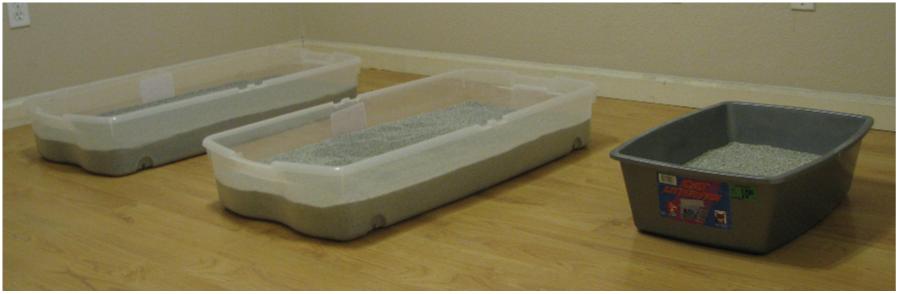
A litter box test can determine which type the cat prefers. Variable litters, depths of litter and sizes of boxes are available for selection by the cat. Courtesy of Kari Mundschenk
Cats may prefer to use the same toileting substrate indoors that they use outdoors, namely soil or sand. You can gradually add the litter substrate of choice to the indoor litter box.
A cat that experiences discomfort in its paws due to a surgical procedure or other causes may develop a preference for certain types of litter. Try different litters until the cat indicates its preference.
Managing the litter box
Remove waste a minimum of once a day and add litter as needed. Wash the litter box every 1–4 weeks. Some behaviorists feel that weekly washing and replacing the litter is optimal. Others find that every 2–4 weeks does not compromise the cat’s response and is more readily accepted by owners. Rarely, because of a particularly difficult to control urinary tract infection, daily washing of the litter box may be recommended. Use soap and hot water only; avoid strong chemicals or any ammonia-based products.
Fulfilling the five pillars of a healthy feline environment
The AAFP and ISFM Feline Environmental Needs Guidelines describe in detail the ‘five pillars’ of a healthy feline environment that support the cat’s physical health, emotional wellbeing, and interaction with its human companions and with other animals. 3 Fulfilling all five feline environmental pillars is a fundamental strategy for preventing or correcting house-soiling behavior. The key elements of each of the environmental pillars, and how they can affect feline elimination behavior, are described on page 587.
Treatments for Specific Causes of House-Soiling
Medical etiologies
Address any medical condition you diagnose. Optimize the cat’s litter boxes and fulfill its environmental needs, which may change in response to its disease. For example, cats with degenerative joint disease may require a litter box with a very shallow opening (Figure 4). Because pain or weakness in convalescent cats may limit access to their favorite litter box, provide an alternative box closer to their recovery area. Debilitating conditions such as arthritis, muscle weakness and impaired vision can impede the ability of elderly cats to reach litter boxes that are located in basements or far from the cat’s core territory. In such cases, owners should be instructed to place litter boxes in more easily accessed areas. Placement of night lights and additional litter boxes close to sleeping areas will help minimize anxiety in older cats.
Feline idiopathic cystitis
The following modalities are commonly used to treat FIC:

FIC is a complex disease process that is not fully understood at this time. Careful disease management involving the owner can result in beneficial effects for the cat and improve veterinarian-client relationships. Because FIC can be a chronic, frustrating disease, excellent client communication in conjunction with MEMO therapy, including the environmental management recommendations discussed elsewhere in the Guidelines, analgesics, and other pharmacologic agents may be of benefit in treating acute and chronic cases. Some cats with an underlying predisposition for FIC may develop recurring clinical signs when exposed to a significant stressor.
Table 1 provides a comprehensive list of drugs that have been used for treatment of house-soiling, including dosage and administration recommendations. Many of these agents are not approved for feline use but have been used off-label in cats. Appropriate precautions should be observed for any off-label drug use. These agents have variable degrees of anecdotal success but little scientific evidence as to their efficacy. Do not use tricyclic antidepressants (TCAs) or selective serotonin reuptake inhibitors (SSRIs) for treatment of acute FIC because they have little or no benefit for short-term resolution of clinical signs. Consider using TCAs and SSRIs only for recurrent, severe cases. Also, use these drugs only after environmental strategies, dietary changes and behavior modification have failed. Amitriptyline, a TCA, has been investigated in a non-placebo clinical trial, and may decrease clinical signs of severe, recurrent FIC when given long term; short-term usage may worsen the condition and is not recommended. 39 Anecdotal improvement has been reported in some cats treated with clomipramine, another TCA, in recurrent cases of FIC. Fluoxetine, a SSRI, has some efficacy in managing house-soiling. 27
Drugs that have been used for the treatment of house-soiling in cats

Many of these agents are not approved for feline use but have been used off-label in cats (see text)
Start at low end of dosage range and increase as needed; use lowest effective dose
Some clinicians avoid use of diazepam because it has been reported rarely to cause fatal hepatopathy; other benzodiazepines may pose a similar risk
No one recommends this drug as a first-line treatment. Some behaviorists never use the drug because of its potentially very serious side effects. Other behaviorists offer it as a final alternative to euthanasia or rehoming because they have used it successfully based on experience and prior research data
Urinary acidifiers should only be used (1) in cats with a disease where this might benefit them such as struvite urolithiasis and (2) when diet alone under ad libitum feeding conditions does not produce the desired pH; (3) the cat should be monitored to ensure acidosis does not occur
TCA = tricyclic antidepressant, SSRI = selective serotonin reuptake inhibitor, NE = norepinephrine, MAOI = monoamine oxidase inhibitor, 5-HT2 = 5-hydroxytryptamine, GABA = gamma-aminobutyric acid

Studies have shown that glycosaminoglycans (GAG) replacers such as pentosan polysulfate provide no significant benefits over placebo in treating FIC.19,40 However, GAG-treated and placebo cats that responded to treatment possibly did so by decreasing stress and increasing owner-cat interaction (‘placebo effect’).
Urine marking
A multifaceted approach using environmental modification, a cleaning regimen and, in some cases, psychopharmacology has the greatest chance of reducing urine marking. 41 The basic treatment plan for a urine marking cat includes four components:
Determine the most likely stimuli for this cat’s marking behavior.
Remove the cat’s need to mark, including elimination of marking ‘triggers’, cleaning urine-soiled areas that can stimulate marking, and gradually reintroducing cats to the home environment after an absence.
Modify the cat’s behavior by using positive reinforcement.
Use pharmacologic therapy, pheromone therapy and nutraceuticals, as appropriate.
Always use each of the first three components of the plan. Understand and explain to the owner that because urine marking is a normal behavior, modifying or eliminating it can be challenging – and sometimes impossible. This is especially true in cases where the owner cannot reduce the stress in a cat’s environment or if the cat’s temperament limits the success of behavior management techniques. In such cases, pharmacologic therapy may significantly decrease or eliminate urine marking.
Determine the most likely stimuli for marking behavior
Several resources are available that enable the veterinarian and pet owner to jointly determine what motivates the cat to urine mark. These indicators include the clinical presentation timeline on the patient’s history form, the house floor plan diagram that the owner provides, and information about the cat’s litter box location and design, physical environment, family interactions and cat-to-cat relationships.
Remove the need to mark
Optimizing litter box management decreases urine marking in some cats, especially females. 42 Improving the cat’s perceived core territory security and addressing its social needs will decrease the cat’s need to mark. 43 (See ‘Tips for improving a cat’s territorial security’, page 590.)
Remove marking ‘triggers’
Examples of ways in which marking triggers can be removed include:
Spaying or neutering to physiologically eliminate sexually related marking behavior.
Restricting the potential threat from other cats (roaming cats encroaching on the household can act as triggers). If the resident cat resides indoors only, using motion-activated water sprinklers will make the yard an unattractive space for unwanted feline visitors. Laying plastic carpet protectors upside down in front of sliding outside doors creates an uncomfortable surface for cats to contact and may help to dissuade other cats from sitting close to the house and intimidating residents.
Removing or blocking cat doors that allow roaming cats to enter the household, or using microchip- or magnet-operated devices to allow access only for designated individuals.
optimizing relationships with people and other cats within the home, and ensuring that the physical environment meets the cat’s natural behavioral needs, to minimize stress within the home.

Clean urine-marked areas frequently
Frequent cleaning will reduce a cat’s habit of refreshing its scent at a marking site. Many urine removal products are available, but they vary widely in efficacy. 46 Avoid using ammonia-based cleaners, which smell like urine to a cat. Chlorine-based products will remove odors from concrete and vinyl floors. Scrubbing the affected area with a 10% solution of biological washing powder (enzyme-based laundry detergent) to remove the protein content of urine, allowing the area to dry, and then spraying with isopropyl alcohol to remove the fat component is also effective. 47 Some experts recommend deterrents such as placing food bowls or noise makers, mouse traps or electronic pet training mats at urine-marked areas. These methods may be effective at stopping marking at those areas, but may result in urine marking at other locations and can induce other stress-related behaviors. Some experts avoid these approaches because deterrent strategies may create fear that can increase stress, stimulate marking at other locations, or trigger overgrooming, aggression or other unwanted behaviors.
Allow returning cats to regain the ‘group scent’
In a multi-cat household, allow cats returning to the home after an absence to regain the ‘group scent’ before encountering other cats. Place the returning cat in a separate room and rub it with clothing the owner has recently worn or with a hand cloth that has been in contact with an affiliate cat’s cheek scent gland area.
Modify the cat’s behavior by using positive reinforcement
Behavior modification efforts should focus on positive reinforcement of desired behaviors. Physically punishing the cat during or after spraying only creates stress and increases the motivation to spray. Punishment can lead to fear-related aggression and will almost always reduce the bond between the cat and owner. Punishment also tends to encourage urine marking in less obvious areas.
Use pheromones, drugs or nutraceuticals as adjunctive therapy


Elimination related to primary environmental or social factors
Cats are individuals. Thus individualizing the litter box is an important aspect of the management of elimination related to environmental and social factors. By offering the cat choices in litter box design, location and maintenance, the pet owner can observe what the cat prefers and adjust the approach to litter box management accordingly. When a cat has access to a well-designed and maintained litter box in a location it prefers, elimination-related house-soiling should improve. More details about designing the optimal litter box are given on pages 585-586.
Additional Considerations for Management of House-Soiling Behavior
The concepts of behavior modification discussed in these Guidelines may influence your clinical recommendations for the management of individual cases of house-soiling. Expert opinions differ on the use of treats or attention as a reward for litter box usage because both the cat’s temperament and timing of the reward influence its effect. Similarly, the use of temporary confinement of a cat in a small room or cage with its preferred litter box and litter substrate is debated because various factors influence the cat’s view of this situation. To determine if reward-based training or confinement will benefit a house-soiling cat, primary care practitioners should consult with an experienced behaviorist who utilizes these techniques.
If possible, the house-soiling cat should have restricted access to sites that it has soiled. Methods for restricting access include using aluminum foil, plastic sheeting, double-sided sticky tape, carpet protectors turned upside down so that the rough nubs would contact the cat’s feet, or similar products. Placing catnip or pet toys in previously soiled areas may create positive associations that redefine soiling sites as places for play or enjoyment.
Client Education and Follow-Up
Regardless of its etiology (medical, FIC, marking behavior, or elimination related to environmental and social factors), correcting feline house-soiling is strongly dependent on providing the cat owner with guidance and support. The ‘Take-Home Instructions For Cat Owners’ (Appendix 2, pages 596–598; and Supplementary Material, see right for details) provides practical guidance that will enable clients to comply with the veterinarian’s instructions for corrective action. A critical aspect of correcting house-soiling behavior is the design of the litter box as the cat’s primary toileting site. The section on ‘Designing the optimal litter box’ on pages 585–586 of the Guidelines can also be used for client education to help cat owners maintain an accessible and appealing site for proper elimination. Follow-up by telephone or e-mail will help monitor progress and ensure timely intervention if problems arise.


Summary Points
The AAFP and ISFM have long recognized that feline house-soiling behavior is not a trivial condition. house-soiling can directly affect the human–cat bond, the veterinarian–client–patient relationship and the overall welfare of cats.
Feline house-soiling is emotionally taxing for the cat owner. It is important to offer the client encouragement and to manage expectations by explaining that resolution of house-soiling may take time.
This unwanted behavior is not due to spite or anger towards the owner, but because the cat’s physical, social or medical needs are not being met. If you help your client identify these causative factors and effectively address them, house-soiling behavior will cease or markedly decrease.
House-soiling can be a clinically challenging case for the practitioner. If the veterinarian cannot resolve the problem or offer referral to a specialist, the owner may abandon, relinquish or euthanize the cat.
For the general practitioner the Guidelines will help eliminate much of the confusion and ambiguity about house-soiling. They offer practical recommendations for the prevention, diagnosis and management of this commonplace problem in cat ownership.
Ultimately, the Guidelines can make the difference between whether a cat is kept in a home environment or loses its life.
Supplemental Material
Click here for Supplementary File
Cat Owner Questionnaire in Spanish
Supplemental Material
Click here for Supplementary File
Cat Owner Questionnaire in Italian
Supplemental Material
Click here for Supplementary File
Cat Owner Questionnaire
Supplemental Material
Click here for Supplementary File
Take-Home Instructions for Cat Owners
Footnotes
Appendix
Acknowledgements
The authors gratefully acknowledge the preview reading conducted by Dr Brent Varialle, a mixed animal practitioner, and Dr Alyson Coppens, a feline practitioner, who gave much needed encouragement by saying the Guidelines were practical for regular, if not daily, use. The authors also thank Mark Dana of the Kanara Consulting Group, LLC, for his technical contributions, Dr Donna Stephens Manley of the AAFP Guidelines Committee for her guidance, and Dr Ed Kanara for his cat-herding abilities. The title photograph on page 579 was kindly loaned by Dr Deb Givin.
Funding
The authors received no specific grant from any funding agency in the public, commercial or not-for-profit sectors for the preparation of these Guidelines.
Conflict of interest
Dr Terry Curtis is a key opinion leader for Elanco and Ceva. The other authors do not have any potential conflicts of interest to declare.
References
Supplementary Material
Please find the following supplemental material available below.
For Open Access articles published under a Creative Commons License, all supplemental material carries the same license as the article it is associated with.
For non-Open Access articles published, all supplemental material carries a non-exclusive license, and permission requests for re-use of supplemental material or any part of supplemental material shall be sent directly to the copyright owner as specified in the copyright notice associated with the article.
