Abstract

Owners of house-soiling cats frequently abandon or relinquish these pets to shelters where many are euthanized as unadoptable. Veterinarians can significantly decrease this number by preventing house-soiling or effectively treating it. On pages 579–598 of this issue we introduce to the veterinary profession the AAFP and ISFM Guidelines for Diagnosing and Solving House-Soiling Behavior in Cats. It is a straightforward, practical document for use by primary care clinicians.
The Guidelines contain scientifically documented information when available; however, because research is often lacking, some suggestions reflect the accumulated clinical experiences of the authors. The document emphasizes that this unwanted behavior is not due to spite or anger toward the owner but because the cat’s physical, social or medical needs are not being met. It replaces the term ‘inappropriate urination’ with the term ‘house-soiling’, because ‘house-soiling’ implies no misconduct by the cat and thus may encourage owners to better follow veterinary recommendations.

These Guidelines give clinicians tools to help identify the causative factors, including a cat owner questionnaire which is customizable for clinic use. Within the document is an algorithm for the diagnosis and treatment of the four basic categories of house-soiling. The Guidelines propose and explain two universal suggestions for the management of all cases of house-soiling: (1) optimizing the litter box/tray and (2) meeting the ‘five pillars’ of feline environmental needs. They also include specific treatment suggestions for each diagnostic category. Take-home instructions for cat owners are provided, which clinics can personalize for each patient. The Guidelines also offer suggestions for when to refer and what to do if the frustrated client is considering euthanasia.
Our Advisory Panel included veterinarians and non-veterinarian behaviorists from both sides of the Atlantic. The combined practical knowledge represented several hundred years of clinical experience with these cats! This produced many lively discussions, given the preference of veterinarians from the USA to house cats mainly indoors versus that of panelists from the United Kingdom who advocate outdoor access. In the process we learned much from each other, and have combined ideas and knowledge into what we feel is a globally applicable document. We sincerely appreciate the time, knowledge, enthusiasm and patience that these authors shared with this project.
In addition, many other individuals contributed to these Guidelines, all of whom are listed on page 593, and we greatly appreciate their work and guidance. We especially want to acknowledge the role of Dr Donna Stephens Manley who provided moral support, historical perspective and a constant reminder that our overriding goal was to think collectively so that we could help as many cats as possible.
Our hope is that by using these Guidelines veterinarians will be able to more effectively and confidently address most cases of feline house-soiling. Success with these cases will improve veterinary–client–patient relationships and overall feline welfare, while keeping cats in their homes with a good quality of life.
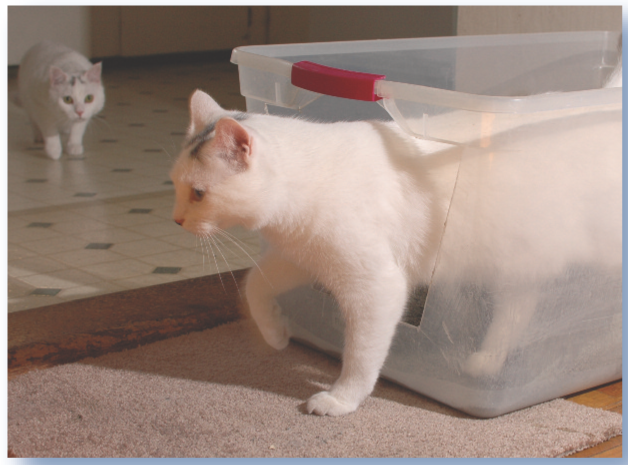
Optimal litter box facilities encourage the cat to always use the litter box for elimination. Courtesy of Deb Givin