



Abstract
Guidelines rationale:
A cat’s level of comfort with its environment is intrinsically linked to its physical health, emotional wellbeing and behavior. Having a basic understanding of the cat’s species-specific environmental needs and how cats interact with their environment will provide a foundation for addressing these fundamental requirements.
Environmental needs:
Addressing environmental needs is essential (not optional) for optimum wellbeing of the cat. Environmental needs include those relating not only to the cat’s physical surroundings (indoors or outdoors; in the home environment or at the veterinary practice) but also those affecting social interaction, including responses to human contact.
Five ‘pillars’ framework:
The authorship panel has organized the Guidelines around five primary concepts (‘pillars’) that provide the framework for a healthy feline environment. Understanding these principles and the unique environmental needs of the cat will help veterinarians, cat owners and care-givers to reduce stress, the incidence of stress-related disorders, and unwanted behavior in their feline patients and pets. The recommendations in the Guidelines apply to all pet cats, regardless of lifestyle.

Why environmental needs?
Veterinarians have the privilege and responsibility to improve the health and wellbeing of cats. Along with other health care team members, veterinarians must advise clients not only on medical issues and preventive health care, but also about the importance of meeting the environmental needs of the cat. Several diseases as well as unwanted feline behaviors have been associated with stressful environmental situations.1–3 Providing an appropriate environment for feline patients in their home and at the veterinary practice can prevent, improve or resolve these problems.4,5
The terms environmental enrichment and environmental modifications have been used extensively in the literature to refer to environmental changes for the benefit of the cat. These terms are not used in these Guidelines because it is more accurate to focus on the cat’s environmental needs.
Environmental needs include those relating not only to the cat’s physical surroundings (indoors or outdoors) but also those affecting social interaction, including responses to human contact. Most veterinarians have not received education in veterinary school about understanding cats and their needs since this is a relatively new area. Recognizing the importance and benefit also may not be intuitive for some clinicians. 6 Cats often do not express overt signs of stress and anxiety. Studies have suggested that even stoic cats can have elevated levels of catecholamines and other stress hormones.1,5

Environmental needs are often not addressed until the cat exhibits signs that attract the care-giver’s attention. Often these overt signals consist of negative behaviors that are labeled as bad, inappropriate or aggressive. Only then do most owners and veterinarians recognize that remedies are needed. Proactively anticipating environmental needs early in a cat’s life and consistently responding when issues occur can help to avoid environmental stressors that could trigger unwanted behavioral and medical consequences.7,8 Veterinarians can add an extra value to their services by assessing their patients’ environmental needs and helping owners develop strategies to accommodate them. By utilizing the strategies discussed in these Guidelines, it is possible to have happier cats, more satisfied owners and a stronger veterinarian–client–patient relationship.
Understanding the cat’s needs and behavior
Understanding the behavior associated with a cat’s environmental needs allows veterinarians to enhance the health and quality of life of their feline patients. Conversely, failing to understand these needs can create an environment where cats cannot express their natural behaviors. In some cats this can result in stress, undesirable behaviors and illness that affect the owner–cat relationship. Adverse behaviors are especially problematic because they are a leading cause of pet abandonment and euthanasia. 9
Pet cats retain many behaviors of their wild ancestor, Felis lybica, the African wildcat. The association between cats and people began about 10,000 years ago as a mutually beneficial relationship. 10 Cats were attracted to the rodents that would eat harvested grain, giving the cats a food supply while preserving the grain stores for human use. This mutually beneficial relationship required no modification or genetic selection of the cat’s innate behavior.11,12
The solitary hunter
Most feline behavior and interaction is designed to enable the cat to hunt safely and to protect itself. As solitary hunters, cats may eat 10–20 small prey per day. It has been suggested that up to half of a cat’s hunting cycles are unsuccessful. 13 Avoidance and evasion of threat are critical to the survival of solitary hunters. Cats prefer a familiar territory in which they have an awareness of their physical and social environment. 14 This sense of control makes the cat feel comfortable and reduces stress. 15 Predictability, familiarity and routine enhance the cat’s coping ability. 16
Cats display a heightened fight-or-flight response as a protective mechanism in response to fear. 17 If cats are forced to leave a familiar territory (eg, for a veterinary visit or as a result of a household move), or if a suspected threat such as a new cat enters their territory, they respond by avoidance or hiding. Fighting usually occurs only as a last resort when escape is not possible. 18 Hiding is a coping behavior that cats display in response to stressful situations and when they want to avoid interactions with other cats, animals or people. 5 By recognizing and respecting the more subtle fear responses, we can often prevent escalation of stress behaviors and potential injury to the cat.
Another feline protective mechanism is to avoid showing outward signs of weakness, pain or illness. Unfortunately, this important survival behavior often delays recognition of illness by humans, and has led to the mistaken impression that cats are independent and do not need regular medical care. Educating clients about the importance of preventive care, early treatment intervention, and how to recognize early, behavior-related signs of illness will provide improved feline health and welfare.
Feline social structure
Cats as a species have a flexible social system. They can either live alone or in groups if there are sufficient resources.19,20 When there are sufficient food sources, females, which are usually related, may live in colonies and collaboratively nurse and rear their kittens. Males generally have a larger home range or territory, providing sufficient resources that enable them to survive alone.
Cats select their preferred affiliates, which are usually related cats. Affiliates show mutual affection by allogrooming (grooming each other) and allorubbing (rubbing against each other). They will rest and sleep together (Figure 1) and sometimes play together. Cats prefer petting of the head, cheek and chin in favor of petting the abdomen or other areas of the body, which can lead to aggressive behavior. These facial regions are used in both scent and tactile affiliative communication between cats and have been shown to be the areas that produce the most positive responses to human contact. Generally, cats will rub against their care-givers or other humans to mark their scent and as a sign of familiarity. 21

For those cats who enjoy the company of their own species, it is often with related individuals or, if unrelated, those they have been together with since kittenhood. Courtesy of Ilona Rodan
Many cats do not get along well in multi-cat households if their environmental needs are not being met. However, this often goes unnoticed unless they fight, exhibit behavior problems or develop stress-related illness. People often assume cats like each other if they congregate to eat or sleep. However, this intermingling may occur simply because food or other resources are in a single location. Many cats in multiple cat households learn to ‘time share’ their access to community resting or eating places, visiting them at different times from each other. Providing multiple environmental resources that are out of view of other resource locations allows cats easy access and gives them a sense of control. Environmental resources include food, water, toileting areas (litterboxes or trays), rest and sleep areas, and elevated areas (perches) (Figure 2). (The following sections, describing the five pillars for a healthy feline environment, provide a more detailed discussion of environmental resources.) Access to an elevated area increases the cat’s vertical space and allows it to monitor its environment. If all resources are placed in different locations, individual cats can avoid seeing other cats, minimizing competition for resources, bullying and stress. 20

Access to an elevated area allows a cat to monitor its environment. Courtesy of Patricia K Putnam
Cats do not welcome unfamiliar cats into their territory, and usually show aggression towards these strangers. If unfamiliar cats continue to approach and become familiar, they may be integrated into the group over time. A gradual process of increasing familiarity should occur when a new cat is introduced into a household with existing cats. Unless resident cats feel secure and have a sense of control, stress and conflict will occur with the arrival of newcomers. Giving cats in multi-cat households choices through provision of multiple locations for hiding, perching, toileting, and food and water access will reduce fear and convey a sense of control. It is generally easier for adult cats to accept kittens rather than other adult cats. 22 Cats are more likely to allogroom a related cat than one that is unrelated.23,24 Adopting a socially bonded pair such as siblings is preferable to adopting cats from different social groups.
The most critical age for kittens to socialize with and adapt to humans is between 2 and 7 weeks, a period that potentially has long-term developmental effects. 12 Kittens that have positive handling experiences during this formative period cope with stress better, display less fear and learn tasks more quickly than kittens that do not receive positive handling at the same age. 24
Feline senses and communication
Cats’ keen senses allow them to be successful hunters, to readily identify familiar animals and territory, and to protect themselves from unfamiliar threats. For example, cats can hear the ultrasonic chatter of rodents to help locate their prey and this aural acuity helps to identify sounds of potential danger.12,13 Loud and unfamiliar sounds, either at home or in a veterinary practice, can arouse fear in the cat. Their excellent sense of smell helps cats detect chemical and olfactory signals (eg, rub markings) left by another cat. Visits to the veterinary practice can be less stressful for a cat if its owner brings along an object with the cat’s own scent, such as its bedding. Applying a synthetic feline facial pheromone analog mimics natural pheromones that are deposited when a cat rubs its face on objects, and can provide a calming effect in unfamiliar or stressful environments or situations.25,26
Much of the communication among cats is designed to prevent altercations over food and territory and to avoid the risks of active fighting. 20 Cats communicate through marking and posturing. Marking is normal behavior and includes scratching, rubbing the face or body on objects, spraying and middening (fecal marking), especially in a multi-cat household. 27 Indoor spraying by neutered cats can be the result of increased environmental stress. Cats posture with their body, tail and face. Facial posturing, especially involving the ears, eyes and whiskers, is a more immediate response than body postures. 28 By recognizing feline posturing and vocalization, veterinary personnel can educate clients to be alert for early signs of altercation, and can avoid conflict among feline patients during an examination or other encounters in the practice.

Pillar 1 – Provide a safe place
Description
For a cat, a safe place is a private and secure area, often in a raised location. These features give the cat a sense of enclosure, isolation or seclusion. A safe place is one that a cat can retreat to so that it feels protected. If the cat cannot see a potential threat, it feels safer, even if its whole body is not fully concealed. When a cat is relaxed, a safe place can also function as a resting or sleeping area.

Methods
Provide individual hiding places for the cat.
Cardboard boxes, cat carrier
A cardboard box placed on its side, to allow easy access and a roof, provides a safe place from a perceived threat.
A perch on the roof of the box will enable the cat to feel safe and secure (Figure 3).
A cat carrier is a transportable, safe place that smells familiar to the cat (Figure 4); avoid carriers that do not allow concealment (eg, open wire cages), or place a blanket over part of the carrier to aid hiding.
To provide a familiar scent for the cat, use the cat’s own bedding or an article of clothing with the scent of a familiar person.
A cat can be examined in the bottom of a disassembled cat carrier.

This box has several features of a ‘safe place’ for a cat. The cat can conceal itself inside while still being able to see its outside environment, and it has a perch where it can maintain vigilance and a sense of isolation. Courtesy of Sarah Ellis

A carrier is a transportable safe place where a cat has the option of concealing itself. Courtesy of Sarah Ellis
Perches and shelves
Perches should be wide enough and long enough to allow the cat to fully stretch.
A hammock-style dip in the middle of the perch or shelf will aid the cat’s sense of feeling hidden (Figure 5).

An ideal perch for a cat is elevated, with a padded cover and a hammock-style depression to provide a sense of concealment. Courtesy of Deb Givin
Other considerations
The decision to keep a cat always indoors, provide them free access to the outdoors, or a combination thereof, lies with the individual, and is impacted by beliefs in that country, local ordinances and safety of location.
If possible, pet cats should have free access to safe places outdoors, which is their natural environment. An outdoor enclosure protects the cat from injury and from contact with predators and with free-roaming cats, which may increase the risk of infectious disease exposure (Figure 6a). Leash-walking is another safe option, as long as the cat has been positively trained to leash and halter, and leash-walking is loose, allowing the cat choice as to where it wants to walk (Figure 6b).
In multi-cat households, a safe place should have more than one entry so that access cannot be easily blocked by another cat.
There should be at least as many safe places, sized to hold a single cat, as there are cats in a household.
Multiple safe places should be in areas separated from each other.
For kittens and older cats that have limited mobility, boxes, perches and shelves should be placed at a relatively low height or at levels that can be reached via ramps to ensure easy access.
A cat carrier that is always left out in an area that is easily accessible to the cat is a portable safe place that minimizes stress associated with transportation or a change in environment.
Cats in the veterinary practice should be caged in a separate room from dogs to reduce fear and stress.
A safe place in the veterinary practice needs to be easily cleaned and disinfected by virtue of its construction (eg, plastic cat carriers, laminate shelves or perches), or it should be disposable, such as a cardboard box.
A safe place in the veterinary practice should still allow the cat to be monitored – for example, by providing a towel to cover a portion of a cage door. This is especially important for newly arrived or convalescent cats.

Examples of how to create a safe outdoor environment for a cat: (a) a fenced enclosure with various objects that enable the cat to hide, exercise and play; and (b) a leash for outdoor exercise or walking. Images courtesy of Ilona Rodan
Pillar 2 – Provide multiple and separated key environmental resources
Description
Key environmental resources include the feeding, drinking, toileting, claw scratching, play and resting/sleeping areas. These key resources should be available in multiple locations, either to provide separate access in multi-cat households or several choices for individual cats. Each key resource should be placed in its own location, separate from other resources.8,23
Methods
Each environmental resource – toileting area, food and water bowls, play area, resting or sleeping area, scratching area (Figure 7) – should be in a separate location, enlarging the area of the cat’s environment and physically separating the resources. A cat should have a choice for each resource; for example, a minimum of two resting areas, two feeding areas and two toileting areas. Food and water resources should be separated from each other. Providing individual eating locations allows for the privacy needed to prevent the stress associated with feeding competition. Expanding the habitat prevents cats in a multi-cat household from eating and drinking in close proximity to one another.

Two types of scratching areas are shown: (a) a sisal-covered surface on an elevated perch; and (b) a scratching pad. Courtesy of Sarah Ellis (a) and Deb Givin (b)
Other considerations
Multiple outdoor locations for key resources should be available whenever possible.
Outdoor access to fresh drinking water may include water fountains or a rain-collection dish.
Suitable outdoor toileting areas include rakeable surfaces such as sand or soil that cats can dig in; these should be situated in a quiet, private area.
Outdoor scratching areas should be available, such as a tree trunk or a wooden upright post covered with sisal rope (Figure 7a).
To minimize risk of disease transmission and threats to the cat’s security, food should not be placed outdoors if other animals have access to it.
Indoor resting areas, such as a perch or secluded surface, should include a location that allows the cat visibility of the outdoors.
Ample physical separation should be maintained between toileting areas and other environmental resources.
In a multi-cat household, a cat may be part of a social group (see box on page 224) or behave as a solitary cat. Several social groups can live within the same household. In either circumstance, there should be sufficient separation of resources to support all cats and social groups.
Every cat within a household should have its own separate feeding stations.
Each group in the same household should have physically separate resources so that they do not have to share access with other social groups.
Veterinary hospital cages should be large enough to allow intra-cage resources to be spread out, including resting and hiding areas separate from food and water. Toileting areas should always be located away from food and water dishes.
Double cages and dog-size cages can be used to enlarge the space between resources.
Cats in the veterinary practice should be caged in a separate room from dogs to reduce fear and stress.
Ideally, cages should not face other cats’ cages. If this is difficult to arrange, other options include covering the front of occupied cages and maximizing the distance between cages.
Place cages in elevated banks if possible.


Body rubbing and tail wrapping (a), and allogrooming (b) are behaviors that indicate cats are in the same social group and should have environmental resources separate from other cats or social groups. Images courtesy of Anne Marie Dossche (a) and Sarah Ellis (b)
Pillar 3 – Provide opportunity for play and predatory behavior
Description
Cats should be able to engage in pseudo-predatory play and feeding behaviors. This can be achieved by providing toys, opportunities for play-based interaction with the cat owner and with other socially compatible cats, and feeding devices and practices that require the cat to actively acquire food.

Methods
Allow the cat to express as many aspects of the predatory sequence as possible by providing play and feeding activities.
Using food to mimic predatory behavior
Hide food in multiple locations.
Scatter-feed dry food or kibble, or toss kibbles for cats to chase.
Provide puzzle feeders, handmade or store-bought timed feeders to promote small and frequent meals (Figure 9).

(a) This homemade feeding device made from empty toilet paper tubes combines access to food with an element of play. (b) Plastic food containers or an egg carton are good alternatives. (c) A store-bought feeding ball allows the cat to mimic predatory behavior. Images courtesy of Adrian Bovey (a and b) and Sarah Ellis (c)
Using play to provide exercise and mimic predatory behavior
Move a rod or wand with a fur or feather toy on the end in a way that mimics flying prey (swooping through the air) or ground prey (moving in straight lines swiftly away from the cat).
Let the cat catch the toy on the end of the rod or wand to simulate a capture (Figure 10).
Reward the cat with a treat following play or interaction with the owner.
Use toys that cats can manipulate with their paws or mouth and those that can contain food.
Use feather and fur toys that can be pounced on and tossed into the air to mimic flying or ground prey.
Use large, soft toys that can be raked and bitten.
Hide toys in puzzle boxes or other locations that require searching, locating and capturing.
Use the cat’s toys on a rotating basis to prevent habituation and boredom. 35
Avoid using hands and feet in any type of play to prevent injury to the cat or handler.
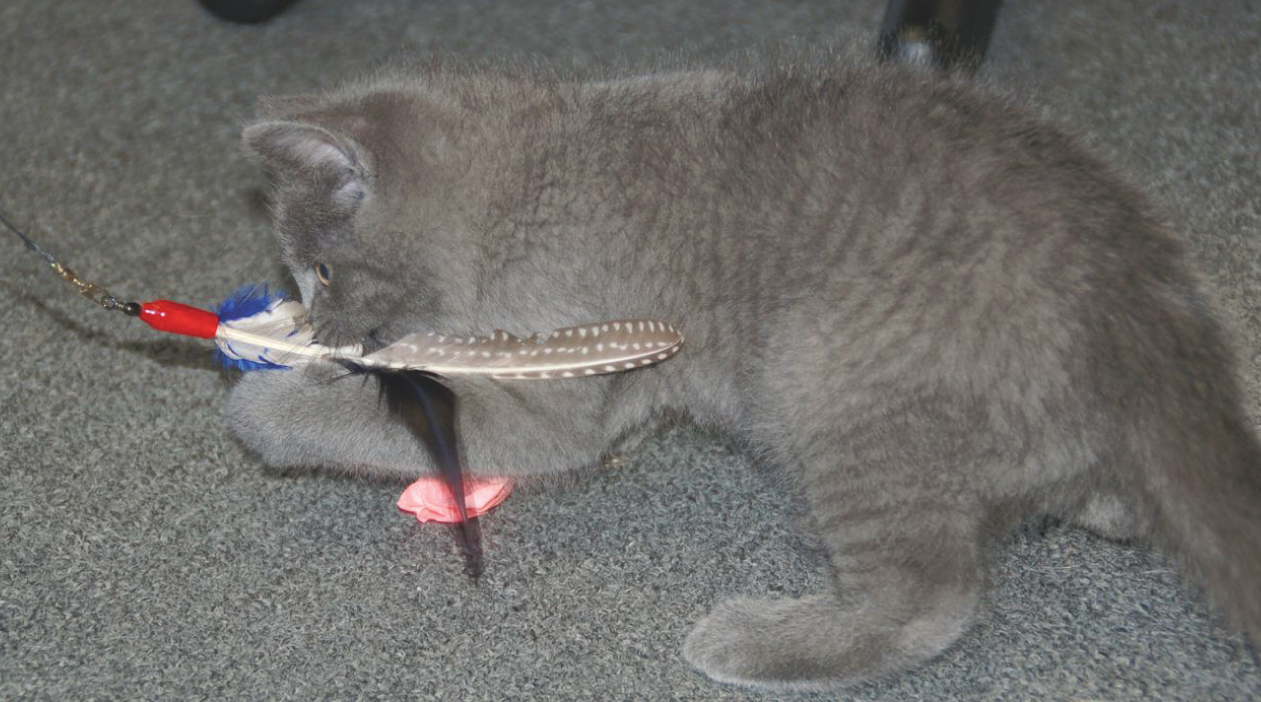
A feather toy can be used for exercise and to mimic a cat’s prey. Courtesy of Ilona Rodan
Other considerations
The outdoor environment can provide greater space for interactive play and to stimulate behaviors such as chasing, leaping and pouncing.
In multi-cat households, ensure that there are toys in separate locations to prevent competition and social tension.
In multi-cat households, owners should play with individual cats at separate times and locations.
Older cats still need to play, but the type and intensity of play may need to be modified.
Kittens generally have a greater need for inter-cat play and for greater intensity and duration of play.
To prevent injury, kittens should have size-appropriate toys and puzzle feeders.
All toys with string or other parts that can potentially be ingested by the cat should be put away after play.
Avoid purchasing toys with small, ingestible parts and bells, or remove these components prior to allowing free access or unsupervised play.
Caged cats should not have access to plastic puzzle balls or other hard toys that could make loud noises by striking the cage.
Convalescent cats should have interactive play opportunities outside their cage if possible and in ways that are appropriate for their physical limitations.
Consistency in care-givers and timing of play helps create familiarity and reduce stress during convalescence.
Pillar 4 – Provide positive, consistent and predictable human–cat social interaction
Description
Cats are companion animals that benefit from regular, friendly and predictable social interaction with humans. Consistent and positive handling of the cat from a young age leads to positive behaviors such as reduced fear and stress and a strong human–cat bond. Social preferences among cats vary widely, and are influenced by factors such as genetics, early rearing conditions, and life experiences. 35 Many cats prefer a high frequency, low intensity level of social contact with humans, a scenario that gives them a good deal of control. In this setting, cats are able to initiate, moderate and end their interaction with humans.
Methods
Do not force interaction with a cat. Let the cat initiate, choose and control the type of human contact. People should lower themselves to the cat’s level, avoid fixed eye contact, and give the cat time to approach and make physical contact. Handlers should give the cat time to sniff their hands and get acquainted. If the cat appears relaxed and wants to interact (see box below), gentle stroking on the head and around the cheeks is the most appropriate way to make contact. 21 Talking gently to the cat can help to put it at ease. When a cat ends an interaction by moving away, do not force further contact. Cats’ individual preferences determine how much they like human interactions such as petting, grooming, being played with or talked to, being picked up, and sitting or laying on a person’s lap. Cat owners should learn each cat’s individual preferences to develop a strong bond with their feline pets.
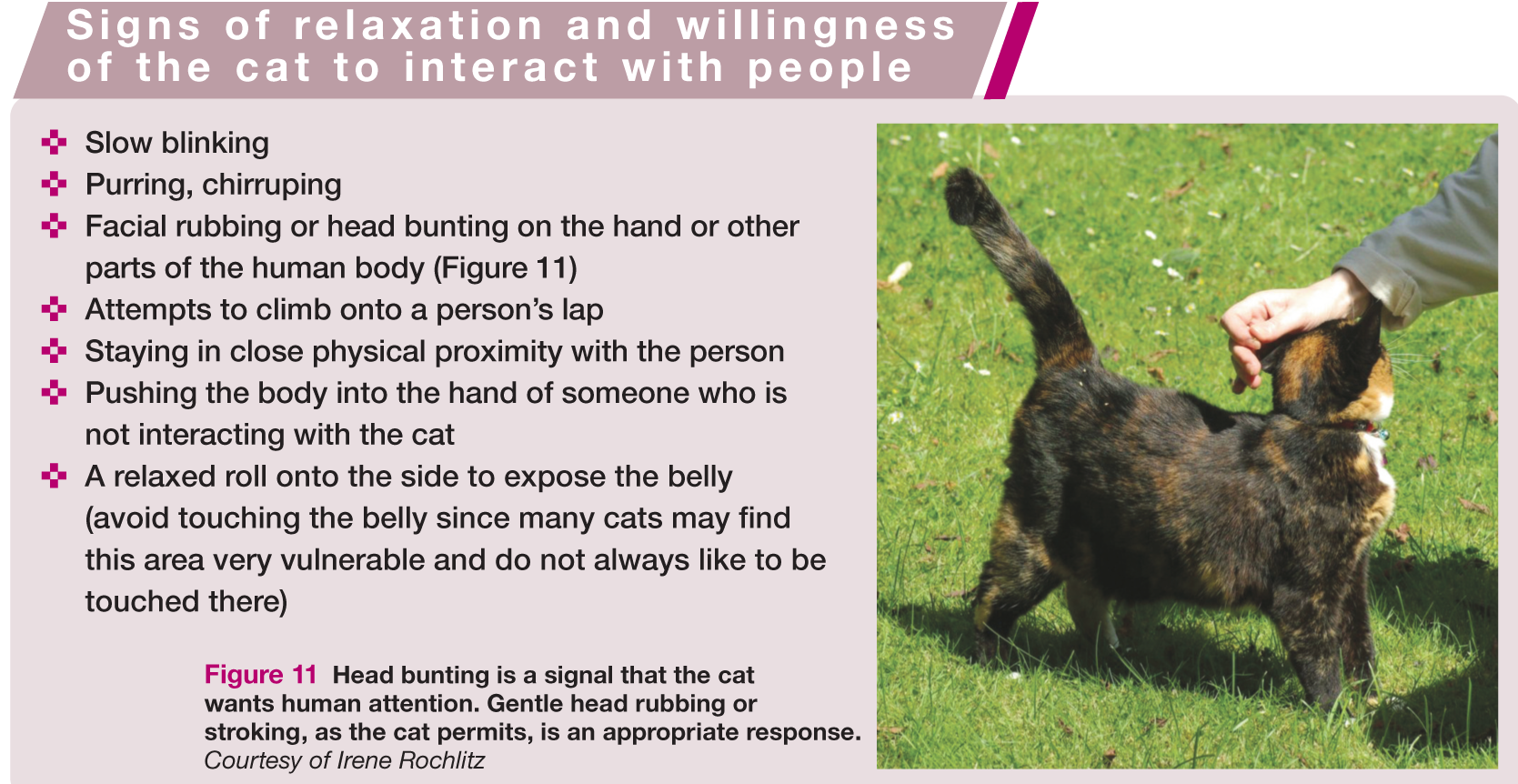
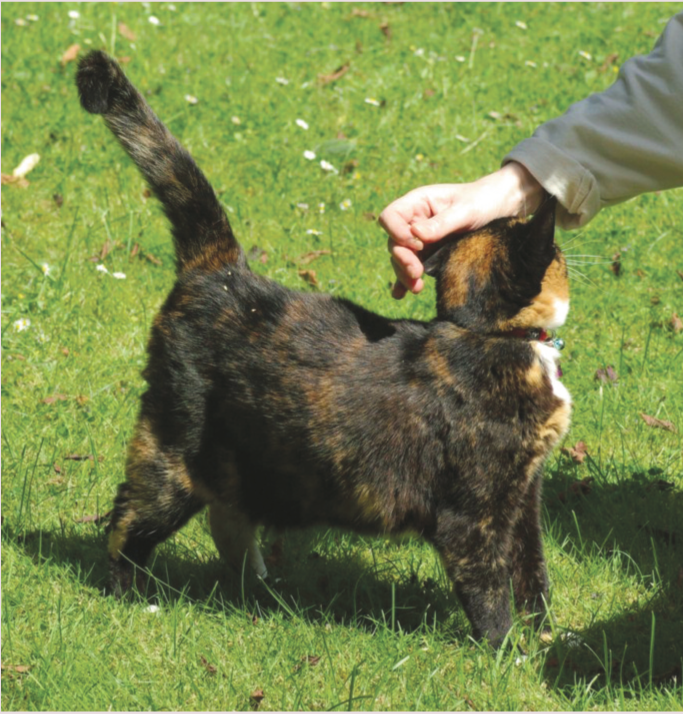
Head bunting is a signal that the cat wants human attention. Gentle head rubbing or stroking, as the cat permits, is an appropriate response. Courtesy of Irene Rochlitz
Other considerations
To prevent tension in a multi-cat household, every cat should receive individual attention without intervention by other cats.
Kittens should be introduced to human handling during their formative socialization period, which occurs between 2 and 7 weeks of age. 36 Gentle handling by humans during this period has a positive and lasting effect on the cat’s relationships with humans, and results in a more adaptable, less easily distressed cat. Negative experiences during this period can result in long-term fear. 37
Kittens may enjoy longer, more interactive play with humans than adult cats.
Ideally, a minimum of four people should handle kittens during their formative socialization period to instill a perception that people are not to be feared. 36 Short handling sessions totaling an hour a day have been shown to lead to friendly adult cats. 38
After a cat reaches social maturity, usually at 2–3 years of age, the style and expectations of interaction with humans may need to be adjusted to accommodate less frequent and shorter periods of play.
A cat’s preferences for human interaction may change as it ages and experiences sensory decline and restricted mobility. A cat that used to enjoy being picked up or laying on a person’s lap may grow to prefer petting at a resting site. It is important to remember, however, that changes in behavior or interactions may also be associated with an underlying medical problem and, where appropriate, patients should be assessed by a veterinarian.
Consistent, predictable, friendly human contact is important for the welfare of a caged cat, such as in a rescue shelter or veterinary practice. However, the degree of contact that a cat will allow will be influenced by its level of socialization. 39
Pillar 5 – Provide an environment that respects the importance of the cat’s sense of smell
Description
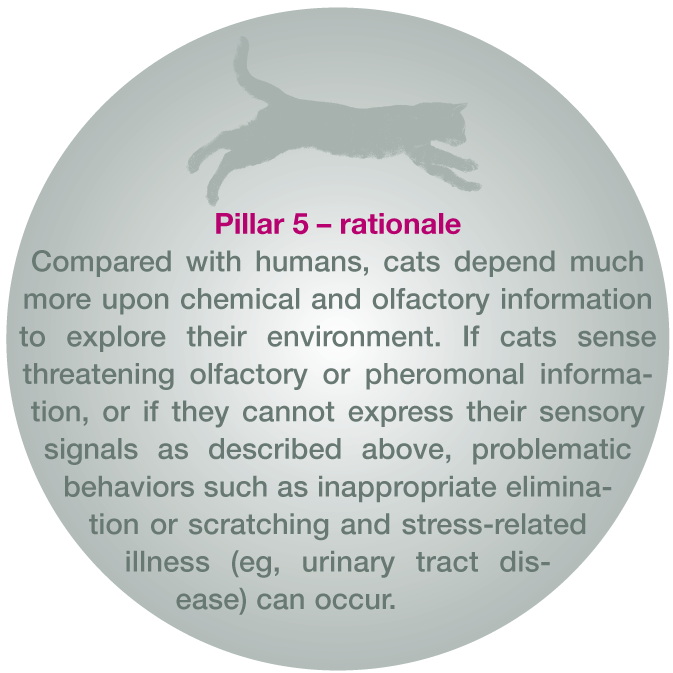
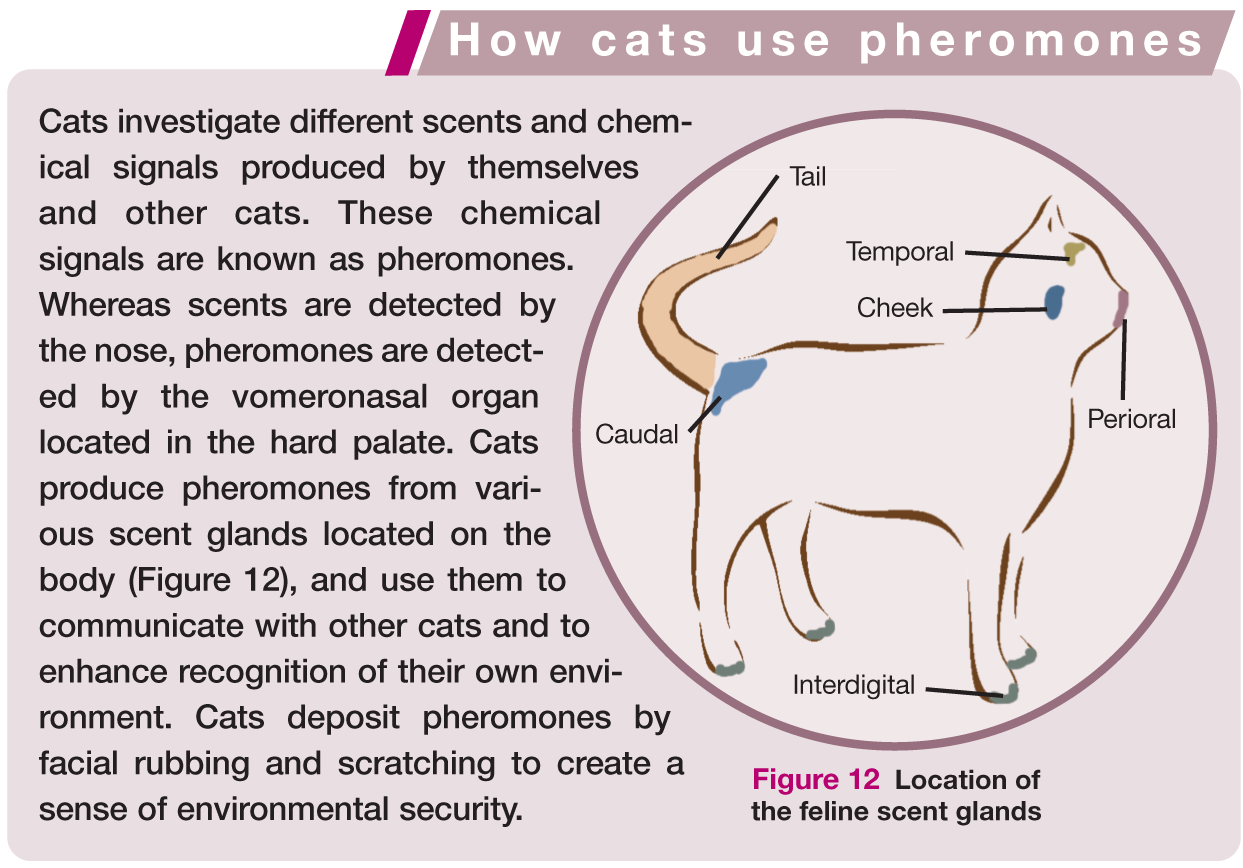
Unlike humans, cats use olfactory and chemical information to evaluate their surroundings and maximize their sense of security and comfort. Olfactory information involves many different smells detected by the nose. Chemical information is detected by the vomeronasal organ. This is an auxiliary olfactory apparatus that detects pheromones, which are chemicals that convey information between individuals of the same species (see box). Cats use olfactory and pheromonal signals through the use of scent marking by facial and body rubbing (Figure 13). This establishes the boundaries of their core living area in which they feel secure and safe. Wherever possible, humans should be careful not to interfere with a cat’s olfactory and chemical signals and scent profile.

Location of the feline scent glands
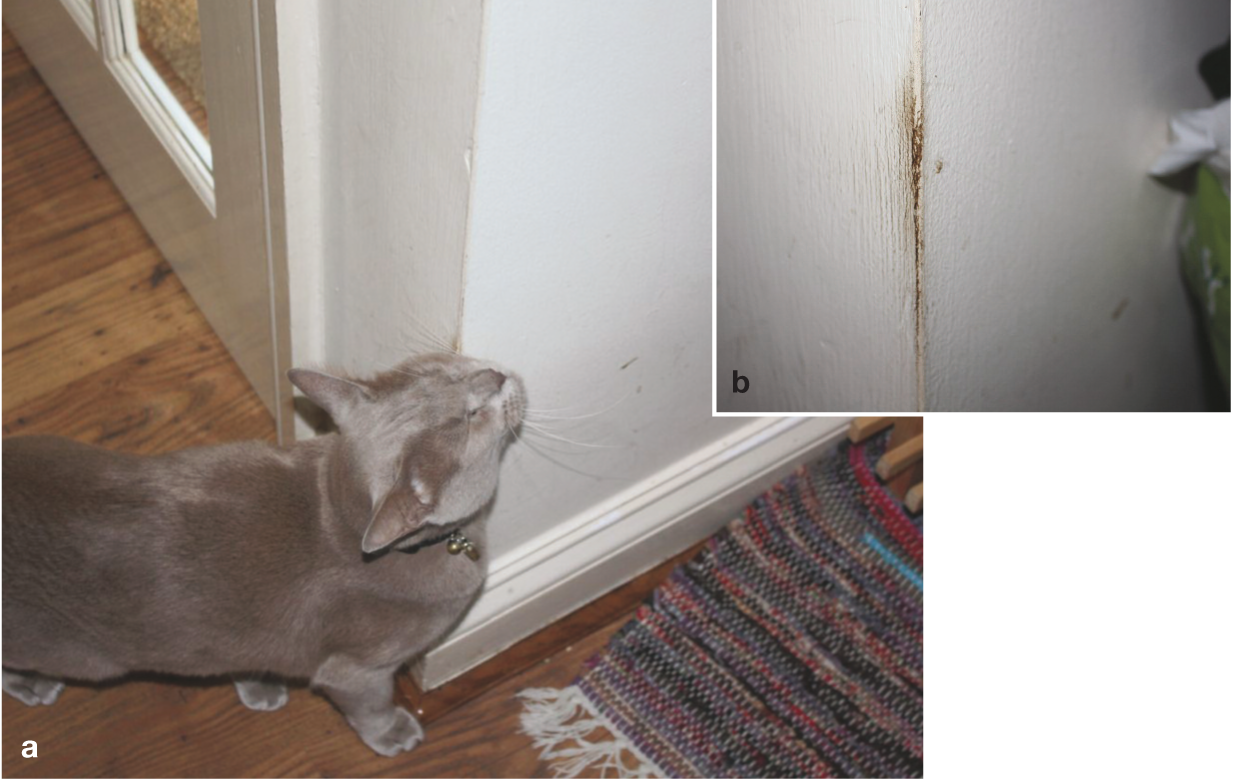
Facial rubbing (a) allows a cat to deposit its scent throughout its environment. In order to maintain scent continuity, avoid cleaning facially marked areas (b). Images courtesy of Sarah Ellis
Methods
Avoid using products or substances (cleaners, detergents, scented litter or other cat paraphernalia) that may disrupt the cat’s sensory perception or the scent profile it associates with its customary surroundings.
Place footwear or shopping bags at the home entrance to avoid introducing external smells into the home environment.
Use synthetic pheromones to reduce anxiety, and increase grooming, interest in food and appropriate use of the litterbox. 26
Expose new items to the cat’s scent profile by rubbing them with a cloth that has been in contact with the cat’s scent glands during positive interactions with humans, or spray new items with a synthetic feline pheromone.
Provide scratching areas that allow a cat to deposit its scent through glands in the pads of its feet.
Avoid cleaning areas that have been facially marked by the cat (Figure 13b), except in the veterinary practice after patients have been discharged.
Wash a cat’s bedding on a rotation basis so that some items will retain the cat’s scent (‘olfactory continuity’).
Other considerations
Homes with outdoor-access flaps in doors may be at greater risk of other cats or animals introducing external scents or gaining access into the home. Vigilance combined with a door flap designed to be operated by the cat’s implanted identification microchip are ways of avoiding encroachment of unfamiliar scents. Avoid magnet-operated door flaps since the magnets can attract foreign materials.
Scratching areas should also be available outdoors for scent deposition.
Scent marking as well as inappropriate elimination should never be punished. 34
Ensure that each group of cats within the home has an opportunity to scent mark areas (by scratching and facial rubbing) that contain their environmental resources.
A cat returning to a multi-cat home from a visit away may smell different, disrupting the home environment’s communal scent profile consisting of scents from all feline occupants. This is most likely to occur after a visit to the veterinarian, where smells of medications, antiseptics, cleaners and even, postoperatively, anesthesia gases can be detected by other cats. In such cases, cats that previously got along well can display aggressive behavior towards one another. To avoid this, try to arrange routine veterinary visits for all cats at once.
If only one cat has been away from a multi-cat household (eg, for hospitalization), place a synthetic feline pheromone diffuser in the home to help maintain the existing scent profile and aid reintegration with other cats in the household.
When a cat returns home, keep it in a separate room until cats are calm before reintroducing it to other cats.
Minimize human involvement in reintroducing a cat to a multi-cat household.
Negative interactions between cats should be disrupted in a neutral fashion, whereby the handler does not display more favorable treatment to one cat versus another.
Kittens learn to adapt to scents they experience for the first time. Exposing kittens in a positive and gradual way to new scents that they may encounter later in life will help them become more tolerant of new smells and scent changes later on.
Cleaning a veterinary cage by spot cleaning will help maintain its scent profile. This entails cleaning only parts of the cage at any one time to ensure some of the cat’s scent remains.
Introducing synthetic feline pheromones can help reduce distress in a caged environment where novel scents are more likely and there is less opportunity for an incoming cat to scent mark. 26
If the cat is placed in a cage, even if only for a short stay, it should be accompanied by its bedding from its previous environment.

Supplemental Material
Supplementary Material
Practical Tips for Pet Owners
Supplemental Material
Supplementary Material
German version of the Guidelines
Supplemental Material
Supplementary Material
Portuguese version of the Guidelines
Supplemental Material
Supplementary Material
Spanish version of the Guidelines
Supplemental Material
Supplementary Material
Turkish version of the Guidelines
Supplemental Material
Supplementary Material
Russian version of the Guidelines
Footnotes
Summary Points
Acknowledgements
The authors gratefully acknowledge the contributions of Mark Dana of Kanara Consulting Group, LLC in the preparation of these Guidelines.
References
Supplementary Material
Please find the following supplemental material available below.
For Open Access articles published under a Creative Commons License, all supplemental material carries the same license as the article it is associated with.
For non-Open Access articles published, all supplemental material carries a non-exclusive license, and permission requests for re-use of supplemental material or any part of supplemental material shall be sent directly to the copyright owner as specified in the copyright notice associated with the article.
