




Abstract
Practical relevance:
There is an increasing demand for effective postoperative and post-injury rehabilitation for any cat with compromised physical function due to injury, surgery or disease.
Clinical challenges:
The design of a suitable rehabilitation programme that will assist the recovery process, as well as ensure the return of neuromusculoskeletal control to the highest levels of function possible, requires a good understanding of feline behaviour, accurate assessment of the cat’s condition and the correct implementation of a range of physiotherapeutic modalities.
Audience:
This two-part review article is directed at the primary care veterinary team. The clinical application of a variety of physiotherapeutic modalities in the rehabilitation of cats is examined in this second part.
Evidence base:
Although evidence supporting the benefits of physiotherapy and rehabilitation with cats is sparse, many techniques, treatments and rehabilitation regimens successfully used on human patients are being readily adapted for animal use. Treatment recommendations described in this review are primarily based on the author’s experience, and that of colleagues, except where specific reference is made to published evidence.

Goals of a rehabilitation programme
Rehabilitation is an integral component of physiotherapy, and is the process of helping an animal that has had an illness or injury to achieve the highest level of function, independence and quality of life as possible. A good surgical outcome does not always equate to a good functional recovery or adequate return of neuromusculoskeletal control, and inadequate rehabilitation, especially during the early stages of recovery, can lead to excessive discomfort for the animal, muscle atrophy, joint stiffness and a slow or incomplete return to function.1,2
Effective rehabilitation demands the ability to fully assess the animal, devise an appropriate programme to achieve the desired goals, and regularly monitor the animal’s progress so that modifications/adjustments can be made as necessary. The programme may involve various physiotherapy modalities (see Part 1), including land-based exercise and/or hydrotherapy.
There is a multitude of feline conditions that can potentially benefit from physiotherapeutic and/or rehabilitative intervention. This article adopts a problem-based approach to designing effective programmes.
Orthopaedic conditions
In comparison with the dog, developmental orthopaedic diseases are rarely encountered in the cat, and many of the common canine conditions such as elbow dysplasia or aseptic necrosis of the femoral head have not been reported in the cat. Some developmental disorders, such as hip dysplasia and patellar luxation, are recognised but their clinical significance is less. 3 By contrast, traumatic injury is common and accounts for a large proportion of the orthopaedic disorders seen in the cat.
Fractures
The major cause of fracture injury is vehicular trauma; other causes include falls from heights, animal fights and gunshot wounds. Multiple orthopaedic injuries are common, and there are frequently injuries to multiple body systems. 4 Thoracic injuries are often seen in cats with fractures (38.7%) and these include lung contusions and pneumothorax, which are a common cause of death in these cases.5,6 Forelimb fractures are less common, with hind limb, pelvic and sacral fractures accounting for 73% of all limb fractures. 7
Postoperative rehabilitation following surgical stabilisation of fractures helps encourage early limb function and prevent muscle contracture, 8 excessive muscle wasting and loss of joint range; it also stimulates balance and proprioceptive mechanisms (see Table 1). Rehabilitation can be difficult with some cats so sufficient pain relief is essential to increase tolerance to the various physiotherapy techniques that may be required.
Problem-based physiotherapy plan for orthopaedic patients

Note that therapeutic interventions must be selected based on the specific requirements of the individual patient
Physiotherapy should be introduced if possible from the first postoperative day and carried out three or four times daily. For the first few days physiotherapy aims to control inflammation and swelling, and helps to reduce pain and maintain range of motion (ROM). The use of cold compresses for 10–15 mins, passive movements (Figure 1) to all relevant joints above and below the fracture site (10–20 repetitions), and massage (Figure 2) for 2–3 mins is beneficial in most cases. Limited controlled exercise can be introduced with assistance as required, which may consist of manual facilitation or the use of slings or harnesses (Figure 3) depending on the compliance of the cat.

Passive movements in this case flexion of the right shoulder, elbow and carpal joints help to maintain joint and muscle range of motion (ROM)

Effleurage massage is effective at reducing swelling from limbs

Slings or harnesses can be useful to allow early mobilisation
After the first 3–5 days, once active swelling has subsided, gentle massage of the limb muscles (2–3 mins) and the application of heat to the affected site (10–20 mins) can aid healing, and relieve pain and muscle spasm. Land-based exercise can be steadily increased as the cat shows more willingness to mobilise, and water-based exercise may also be possible with some cats once wounds have sealed. Simple exercises to improve balance and proprioception can be introduced at an early stage and then progressed throughout the rehabilitation programme (Figure 4). Activity must be restricted while the fracture is healing, and cage (or small room) rest is essential until bony union is complete; flooring must be non-slip and there should be no available opportunities for running or jumping. Owners must be made aware of exercise restrictions once the cat is discharged home.

Three-legged standing is a useful balance exercise that can be introduced as the cat’s condition and weightbearing status improve
Soft tissue trauma
Trauma to soft tissue structures such as muscle may be confined to a limited area or may consist of extensive bruising, swelling and pain. Initial treatment should consist of immobilisation, cold therapy for 10–15 mins every 4 h, and the provision of comfortable bedding. If open wounds are evident, protective bandaging should be applied. If recumbent, animals should be repositioned at least every 2–4 h to prevent lung atelectasis and dependent oedema forming in the limbs. If the extremities are injured, the involved limbs should be elevated if possible above the level of the heart to promote drainage and reduce oedema; if the location of wounds allows, gentle effleurage massage should also be carried out every 4 h. Bandaging the limb can prevent or reduce oedema by compressing lymphatics and blood vessels to limit fluid accumulation. Bandages may need to be changed several times daily to allow inspection of the area and for physiotherapy to be performed. This may include treatment by therapeutic laser to aid wound healing, if no contraindications exist.
After acute inflammation has resolved (normally between days 3 and 5), heat may be used for pain relief and to aid healing. Laser therapy or therapeutic ultrasound may also be used to reinforce the healing process, although the requirement for coupling agents may mitigate against the use of ultrasound in some cases. However, a recent review of wound dressings identified several that permitted good transmission of ultrasound, allowing its use without compromising the wound environment or risking the introduction of infection. 9
If the animal is capable, restricted exercise is encouraged from 48 h post-injury. If spinal cord or orthopaedic injuries prevent ambulation, but limb movement is still possible, gentle passive movements should be initiated. All joints of the limb should be moved through their full ROM 10–20 times, and this process repeated four times daily; likewise for the other limbs if the animal is recumbent. Passive movements may be performed in conjunction with gentle massage.
Muscle contracture
Muscle contracture can readily develop following soft tissue trauma or fracture, and in cats most commonly occurs in the quadriceps femoris, semitendinosus and biceps brachii muscles. 10 Prevention is always the preferred course of action and physiotherapy techniques that can help prevent contracture formation include early ambulation, active and passive ROM exercises, and stretching of affected joints and muscles. These interventions should be started immediately when shortening or tightness of muscles becomes apparent or is anticipated due to the animal’s condition. Massage may be used concurrently to break down adhesions, reduce muscle spasm and limit oedema (Figure 5).

Deep massage can be effective in the prevention of quadriceps contracture by breaking down adhesions and maintaining muscle pliability
Moderate contractures may be treated by splinting the area for 20–30 mins four times daily, in conjunction with ROM exercises and massage. However, once the condition is advanced and fibrosis is established, the prognosis for restoring limb function without surgery is poor.11–13 It has been reported that surgery itself may not be beneficial for all contractures; but, when it is performed, postoperative rehabilitation is particularly necessary to reduce the risk of recurrence due to scarring of transected tissues.13–15
Degenerative joint disease
In general, less is known about degenerative joint disease (DJD) in cats compared with dogs, even though there is radiographic evidence to suggest an incidence as high as 90% in geriatric cats, with the elbows predominantly being affected. 16 Clinical signs include reduced ROM, strength, functional ability and proprioception, and increased joint pain. However, because of their lightness and natural agility cats can often ‘hide’ joint problems more effectively than dogs. They are likely to show other signs such as constipation or urinary accidents in response to chronic pain (due to difficulties getting in and out of litter trays or squatting), and they may become grumpy, stiff and unable to groom themselves. 17
Therapy is primarily aimed at improving function, and physiotherapy can play a major role in this process. 18 Clinical studies in humans have highlighted the effectiveness of physiotherapy within a multidisciplinary chronic pain management programme for improving pain, depression and function, while limiting disability. Chronic pain is now becoming more commonly recognised and addressed within veterinary medicine, 19 and physiotherapy can be usefully employed. A variety of interventions can be beneficial including cold/heat therapy, massage, passive movements, joint mobilisations (Figure 6) and electrophysical therapies (muscle stimulation, TENS, laser therapy and therapeutic ultrasound), especially when used in conjunction with management advice regarding controlled exercise (land- and water-based).

Mobilisations being performed on the thoracic spine to improve joint mobility
Neurological conditions
There is a wide range of feline spinal cord and peripheral nerve conditions, 20 and the effective treatment of the neurological patient often represents one of the greatest challenges to the veterinary team. Disturbances to the neural system can affect an animal’s mobility, pain, proprioception, balance, strength, coordination and function, all of which need to be addressed to achieve a good outcome. In particular, dysfunctions in muscle tone demand appropriate interventions that can promote a satisfactory recovery (see Table 2); if interventions are inappropriate, outcomes can be poor.
Problem-based physiotherapy plan for neurological patients

Note that therapeutic interventions must be selected based on the specific requirements of the individual patient
Hypotonia
Hypotonia (decreased muscle tone) is one of the signs of a lower motor neuron lesion. The resulting flaccidity requires an aggressive interventional approach to facilitate muscular activity. In the author’s experience, therapy is most beneficial if it is mostly carried out initially with the cat in a standing position. This keeps the natural muscle tone high and additionally provides training-specific motor learning in the spinal cord for this specific task. An important aspect of this process is the sensory feedback received from the muscles and paws, which has been shown to improve standing ability.21–24 Support should be provided as required (eg, with the use of a ‘physio-roll’) to allow standing and movement to occur (Figure 7).

A physio-roll provides a useful means to support a cat comfortably in the standing position
There are many manual techniques that can be used in conjunction with this to facilitate muscle activity, such as vigorous massage, muscle tapping/pinching, 21 reflexes, quick stretches,25–27 joint compression and traction, bone vibrations and gait patterning movements (bicycling). Electrophysical therapy (NMES) and early hydrotherapy can also stimulate muscle activity and influence its recovery.
Hypertonia
Hypertonia (increased muscle tone) is one of the signs of an upper motor neuron lesion, with limb movement occurring in extensor (most commonly) or flexor spastic patterns. In these cases the muscles of the extensor or flexor muscle groups react synchronously, resulting in a stiff limb. Spasticity is exacerbated by effort, stress, pain and poor positioning. By treating the animal in a calm manner, moving spastic limbs slowly and carefully, and positioning the animal in neutral positions, muscle spindles are stimulated less and hypertonicity is prevented from worsening. This is important to prevent muscle stiffness/joint contracture from becoming established, 28 to lessen the pain of permanent muscle contraction, and to encourage tone to normalise.
In the author’s experience, treatment is best carried out initially with the patient in lateral recumbency to keep the natural muscle tone low and thereby facilitate passive and patterning movements performed by the therapist and owner, which can often be difficult to achieve with the cat in a standing position. Manual techniques that can be used include slow gentle massage, application of heat or cold to relax muscles and reduce tone, slow passive movements and stretches. Standing and walking movements also need to be incorporated into a rehabilitation programme so that appropriate sensory and motor pathways are stimulated to improve motor recovery. 21
Intervertebral disc disease
Intervertebral disc disease is encountered much more rarely in cats compared with dogs,35,36 although both Hansen type I (disc extrusion) and type II (disc protrusion) herniations have been observed. Type II cases are the more common in cats, though still rarely found clinically,37,38 probably due to the slowly progressive nature of the condition and the lack of obvious clinical signs in this species.

Non-surgical treatment is generally indicated following the first episode of back pain without neurological deficits, and this primarily consists of cage confinement for a minimum of 4 weeks (to allow healing of the ruptured annulus) with only limited harness walking.20,37 Recovery rates for cats managed conservatively are not yet available but have been reported in dogs, in which they are as high as 90% (grade I–III lesions) and 50% (grade IV lesions). 37 Grade V lesions in dogs do not respond well to conservative treatment. 37 In the author’s experience physiotherapy offers these animals the best opportunity for recovery as it helps to provide relief from pain, prevent physical deterioration, and improve recovery, addressing three factors that have been identified as disadvantages of non-surgical treatment. 20

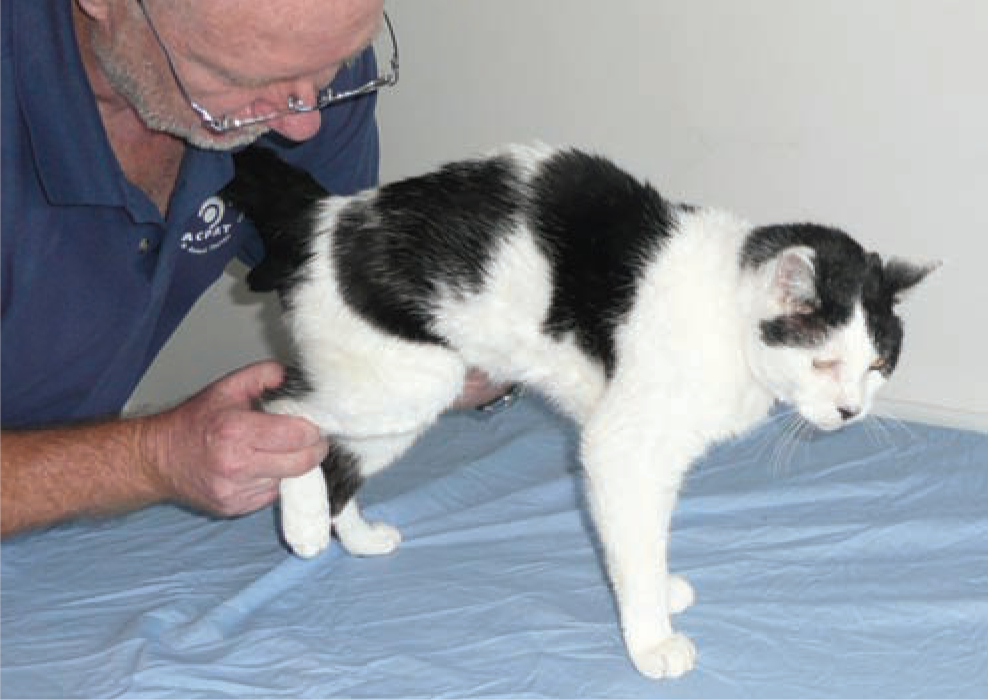
‘Bicycling’ exercises performed on the limbs can help with gait re-education through the repetitive activation of specific neural pathways. In addition to motor relearning, bicycling is also useful for balance retraining
Decompressive surgery is generally the treatment of choice for recurrent back pain and/or neurological deficits (grade II and above). In dogs, long-term outcomes have been shown to be improved if deep pain perception is present, although timescales for recovery are quite variable, often extending to several months. 39 Similar results have been found in cats, 35 with outcomes improved and recovery hastened with the inclusion of appropriate postoperative physiotherapy.33,34,40
Many of the therapeutic strategies being regularly performed on people today with spinal cord injuries were developed through research on cats.29,30,41 How appropriate that cats themselves can now benefit from this knowledge.
Fibrocartilaginous embolism
In dogs, recovery from fibrocartilaginous embolism (FCE) is not dependent on surgical intervention and physiotherapy unquestionably provides the best option for recovery. 42 FCE is rare in cats,43,44 and as in dogs is associated with variable clinical signs and prognosis. A full physiotherapy assessment is essential to identify the specific functional problems of the individual animal and allow the selection of appropriate physiotherapy interventions to treat those problems (Table 2).
Brachial plexus avulsion
This type of traumatic neuropathy is common in cats, with clinical signs including muscle weakness (dropped elbow), proprioceptive deficits (dragging of the foot), and absence of spinal reflexes and deep pain perception. 45 The prognosis is often poor for these animals, but the provision of physiotherapy can help to reduce oedema, maintain circulation to the affected area, prevent contractures and maintain activity in muscles. Appropriate techniques (see Table 2) can aid muscle and sensory re-education and return of function to the limb when selected specifically according to the needs of the individual cat.
Respiratory conditions
There are many respiratory complications that can result from primary injuries and these can be catastrophic to critically injured patients. Injuries to the head, chest and abdomen can compromise respiratory function, producing restrictive breathing patterns, atelectasis, accumulation of respiratory secretions and pneumonia. Respiratory diseases such as bronchitis often result in the production of excessive mucus and poor alveolar ventilation. 46
Chest physiotherapy, incorporating the use of techniques such as postural drainage (see ‘Chest care’, page 641), percussion, vibrations, positioning and exercise, helps to maintain bronchial hygiene, eliminate secretions from airways, re-expand atelectatic lung segments, improve oxygenation and reduce the incidence of pneumonia. To achieve optimum results, the patient should be placed in the appropriate postural drainage position for 10–20 mins. During this time, percussion (coupage) should be performed (for 1–2 mins), followed by vibrations (for four to six expirations), and a rest period of 1 min. This cycle should be repeated two or three times, with the whole process performed three or four times daily until secretions have been removed. 47
Obesity
A number of risk factors have been identified for obesity in domestic cats, including physical inactivity, urban dwelling and increased humanisation. Indoor cats are less active than their counterparts with outdoor access and, unlike their ancestors, modern domestic cats no longer have to hunt for food. The resulting obesity predisposes to a number of medical conditions including type 2 diabetes mellitus, 48 as well as an increased risk of orthopaedic disease. 49
The management of obesity is based on the dual approach of reducing caloric intake and increasing physical activity, which can comprise a combination of land-based and water-based exercise. Activity through play is most effective with these cats (see box on page 642) as, in addition to burning calories, it increases muscle mass and resting metabolic rate, improves mobility and mental stimulation, and often improves the cat–owner bond. 50 For a fuller discussion, the reader is referred to a recent review article in this journal on feline weight loss programmes. 51
ICU patients
Cats admitted to the intensive care unit (ICU) following, say, traumatic injury and subsequent surgery are at risk of a range of physical problems associated with enforced recumbency that can be ameliorated or even prevented with appropriate rehabilitation and supportive care (Table 3). In people, a spell of bed rest of even a week can lead to marked muscle atrophy, loss of ROM, exercise intolerance, risk of pressure sores, pulmonary complications and deep vein thrombosis, and a deterioration in balance and proprioception mechanisms. 52
Problem-based physiotherapy plan for ICU patients

Note that therapeutic interventions must be selected based on the specific requirements of the individual patient
As soon as the animal is stable, rehabilitative procedures should be started to prevent the onset of these changes (Figure 9). 53 A proactive approach to rehabilitation is preferable to a reactive approach to a worsening situation, and even simple physiotherapy techniques (such as cold therapy, massage, passive movements, postural drainage [see below], low intensity therapeutic exercise, and electrical stimulation), coupled with good general nursing care, can reduce the risk of complications associated with recumbency and improve the eventual functional outcome of the patient. 52

Correct positioning of the ICU patient, with the use of pillows or foam wedges for support, is important to prevent respiratory and physical problems associated with recumbency. Courtesy of Sophie Adamantos
The key physiotherapeutic approaches and considerations for patients in ICU are outlined below.
Positioning
Body positioning can be used as a specific treatment technique. In the ICU, correct patient positioning is important to improve respiratory function by enhancing ventilation/perfusion (V/Q) ratios and optimising oxygen transport, increasing lung volumes, enhancing mucociliary clearance, and reducing the work of breathing.54–56 Correct positioning also helps to reduce dependent limb oedema, avoid pressure sores and prevent the development of spastic patterns in the hypertonic animal. The most common positioning protocol for recumbent animals involves alternating between right, left and sternal recumbency every 2–4 h using the support of pillows and foam wedges as required. 52
Chest care
The benefits of physiotherapy in respect of chest care have been outlined above. Techniques such as positioning and exercise can be usefully employed preventively, whereas postural drainage coupled with manual techniques such as percussion and vibrations should only be used when secretions are known to be present.
Postural drainage is a form of positioning specifically used to aid the removal of tracheobronchial secretions from specific lung segments by preventing pooling of secretions in the lungs, enhancing drainage of the peripheral areas of the lung, accelerating mucus clearance and increasing the functional residual capacity of the lungs. Seven positions have been identified to drain different lung segments of the canine patient. 53 This technique is generally more effective when used in conjunction with manual percussion and vibrations.
Percussion and vibrations are usually applied manually to the chest wall over the affected area, and have their effect by transmitting energy waves to the lungs to loosen secretions. Indications, contraindications and practical advice on the use of these chest procedures are well documented.52,53,57 Although both postural drainage and percussion have been associated with transient decreases in oxygen saturation of arterial blood in human patients, 58 the use of supplemental oxygen before and during treatment ensures a quick return to baseline levels. 59
Range of motion maintenance
The use of passive movements and massage to maintain joint and muscle range should form an integral part of the care of every recumbent cat, and will help protect the integrity of joints, tendons, ligaments, articular cartilage and muscle. Passive movements may be combined with stretches to lengthen shortened tissue and to decrease muscle stiffness.
All joints of the appendicular skeleton should be placed through a series of gentle, slow, pain-free cycles of flexion and extension (10–20 repetitions). If a joint is found to be developing a contracture, passive movements (and stretches) should be performed more frequently. 60
Control of swelling
Swelling is predominantly addressed through a combination of cold therapy, effleurage and elevation of the affected body part.
Pain relief
Physiotherapy can be useful as an adjunct to prescribed medication. Pain relief can be achieved through massage, passive movements, and the application of heat and cold. TENS 61 and laser therapy62–64 may also provide effective pain relief when used either as an adjunct, or an alternative, to other forms of analgesia.
Therapeutic exercise
Exercise helps to prevent many of the effects of immobilisation on the musculoskeletal system. In addition to limiting loss of strength, range, balance and function, exercise can also be valuable in mobilising chest secretions, preventing atelectasis, stimulating deep breathing and promoting coughing, if these benefits are required.65,66 Cats that are ambulatory can be stood and walked for 5–10 mins, and this can be repeated four to six times daily. Non-ambulatory cats can be assisted to stand for a few minutes at a time, with brief periods of facilitated walking. Attaining this normal upright posture can provide confidence, comfort and motivation to the animal, as well as being of benefit to the other body systems. Active exercise can additionally stimulate circulation, reduce pain and swelling, and improve strength, ROM and balance. 67
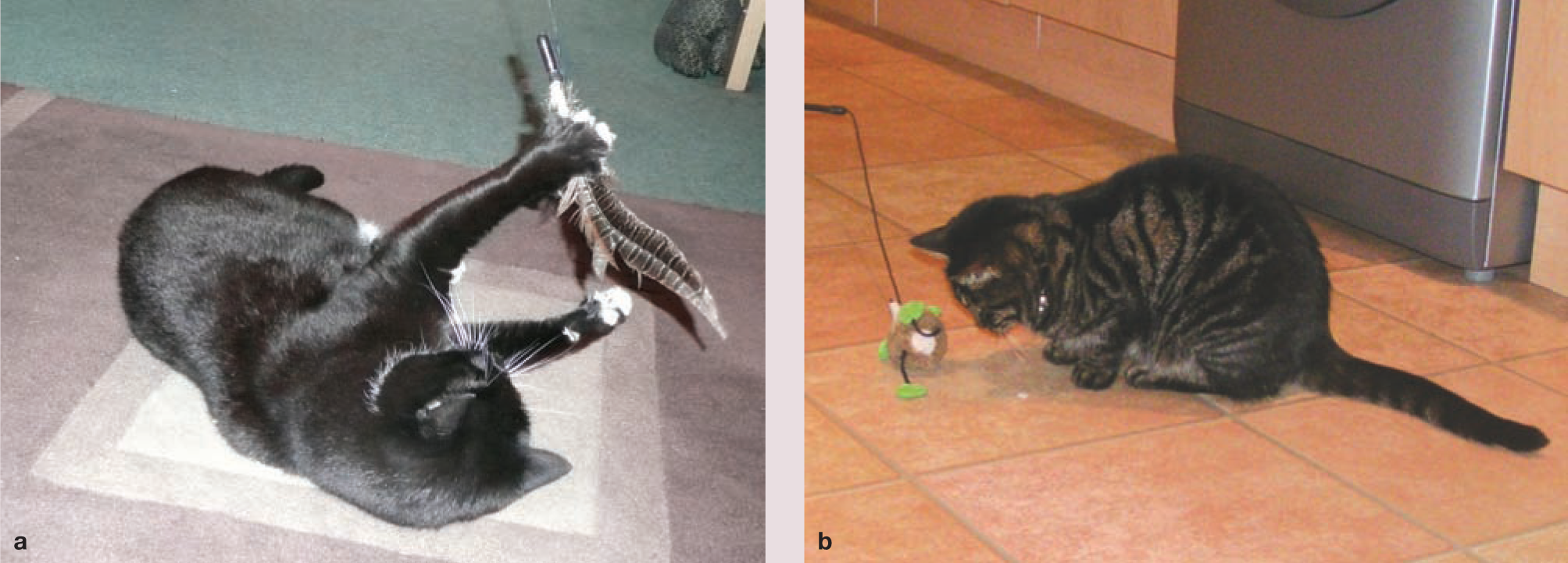
Toys can provide the therapist with opportunities for ‘hands-off’ rehabilitation. Feathers attached to string (a) or toy mice (b) encourage the cat to display its natural predatory behaviours of swatting, grasping, stalking and pouncing
Conclusion
Physiotherapy and rehabilitation can be of great benefit for cats with a variety of acute and chronic conditions. Although some cats will be intolerant of the handling required to perform some physiotherapy techniques, there are many ways to achieve successful and effective rehabilitation by modifying the approach to be more ‘hands off’. Every animal requires an individualised rehabilitation programme specific to its needs, but by utilising the cat’s natural love of play and hunting instincts a safe and effective rehabilitation programme can be readily planned and implemented for the feline patient.
Footnotes
Key Points
Funding
The author received no specific grant from any funding agency in the public, commercial or not-for-profit sectors for the preparation of this review.
Conflict of interest
The author does not have any potential conflicts of interest to declare.