



Abstract
This research explores changes in the prevalence and nature of sexual harassment and the potential impact of the MeToo movement on police officers. Drawing on a whole population survey data from the Icelandic police in 2013 and 2022, we find self-labeling as victims of sexual harassment has increased, but no significant changes in exposure to sexually harassing behaviors. Consistent with previous research, the prevalence and manifestations of sexual harassment are gendered. However, our findings indicate that many police officers, especially women, have altered their behavior or shared their experiences of harassment or violence since the start of MeToo. We argue that the rise in self-labeled sexual harassment can be attributed to increased awareness brought by the MeToo movement. However, the absence of changes in exposure to sexually harassing behaviors indicates that it remains a gendered problem, entrenched in the masculinity contest culture of the police.
Sexual harassment within the police force is a serious workplace issue that threatens employees’ health and well-being. The police are a male-dominated workplace, where the masculine workplace culture and gendered power dynamics give rise to several concerns, such as sexual harassment (Davis et al., 2023; Sands et al., 2023; Brown et al., 2018; Lonsway et al., 2013, de Haas et al., 2010) and stereotyping and prejudice towards women police (Silvestri & Tong, 2022; Steinþórsdóttir & Pétursdóttir, 2022; Taylor et al., 2022). Research has shown that both experiences and understandings of sexual harassment vary not only between women and men but also between different societal and professional groups within the police organization (Maher, 2003, 2008, 2010; Yu & Lee, 2020). Additionally, marginalized groups within the police are disproportionally affected by sexual harassment (Bye & Bjørkelo, 2024; Hassell & Brandl, 2009; Loftus, 2008; Mennicke et al., 2018; Silvestri, 2017).
The MeToo movement, originally envisioned by US activist Tarana Burke to counter systems of violence by sharing experiences and thus promoting empathy (Rodino-Colocino, 2018), has drawn significant attention to the issue of sexual harassment within organizations. Against this contemporary cultural context, this study explores sexual harassment and the potential impact of the MeToo movement on Icelandic police officers by comparing whole population survey data from 2013 and 2022. We put forward the following research questions: Have there been changes in how men and women identify their experiences of sexual harassment in the past decade? How has the contemporary cultural context influenced gendered workplace relations, particularly in terms of sexual harassment, within the police force? This study is particularly relevant as Iceland is a country that is viewed as a global leader in gender equality (Einarsdóttir, 2020), had a strong national MeToo movement (Pétursdóttir & Rúdólfsdóttir, 2022; Rúdólfsdóttir & Pétursdóttir, 2024), and has legal frameworks requiring the implementation of special measures to protect employees from sexual harassment (Art. 14, Act on Equal Status and Equal Rights Irrespective of Gender, 2020). In recent years, the representation of women in the Icelandic police force has increased, rising from 13% in 2013 to 24% in 2022. Women now hold the position of the National Commissioner and Police Commissioners in one-third of the police districts. The issue of sexual harassment in policing was brought to the fore in 2013 (Steinþórsdóttir, 2013) and since then, several measures have been introduced in the Commissioner’s equality action plans (Þorsteinsdóttir, 2021) and an external professional council was established in 2014 to receive and process cases on gender-related and sexual harassment and violence, gender-based discrimination and bullying within the police (Fagráð ríkislögreglustjóra, 2017). Additionally, organizational changes have been implemented, including revisions to police training that were expected to positively affect the masculine police culture (Pétursdóttir & Hjálmarsdóttir, 2019).
Before presenting the study’s findings, we will discuss the literature that informed this research, focusing on sexual harassment in police organizations, the police organizational culture, and the contemporary cultural context, specifically concerning the MeToo movement. Following this literature review, we outline our research design, including data collection methods, measures, and analysis. We conclude by highlighting the practical implications of our findings and proposing directions for future research. We argue that these findings and recommendations have broader applicability, as entrenched gender inequalities and sexual harassment against women within the policing are widely recognized as global issues (see e.g. Burke & Mikkelsen, 2005; de Haas et al., 2010; Rostami et al., 2022; Taylor et al., 2022).
Sexual Harassment in Police Organizations
Sexual harassment in the workplace has been defined “as unwanted sex-related behaviors at work that are appraised by the recipient as offensive and that exceed one’s coping resources or threaten one’s well-being. This includes unwelcome verbal and nonverbal sexual behaviors, as well as undesired physical behaviors that the target finds difficult to cope with or to handle” (Nielsen et al., 2010, pp. 253–254). Within the police, research finds that sexual harassment is a pervasive problem (Brown et al., 2018; Rostami et al., 2022). In a nationally representative cross-sectional survey among law enforcement officers in the U.S., Taylor et al. (2022) find that 62% of women and 35% of men have experienced non-physical sexual harassment and 7% of women and 2% of men have sexually assaulted during their career in law enforcement. Brown et al. (2018), drawing on their survey among police staff in England, Wales and Scotland, found that sexual ‘banter’ is the most common manifestation of sexual harassment in the police. They find that sexual banter has negative personal outcomes for many police staff members and that it increases the likelihood of more serious types of harassment occurring within the workplace. Little is known about sexual assaults on women police officers by their male colleagues (Sands et al., 2023).
Women are more likely to face sexual harassment than men irrespective of the organizational contexts (Nielsen et al., 2010; Otterbach et al., 2021), including within police organizations (Burke & Mikkelsen, 2005; Bye & Bjørkelo, 2024; de Haas et al., 2010; Lonsway et al., 2013). Moreover, research finds that belonging to a minority group increases the likelihood of women being exposed to sexual harassment (Berdahl & Moore, 2006). This is in line with recent findings from the Norwegian Police Service that indicate that overall sexual minorities are more likely to be exposed to sexual harassment than sexual majority employees. Among these groups, sexual minority women face the highest risk, illustrating “the double jeopardy facing minority women” (Bye & Bjørkelo, 2024, p. 9).
Research examining the experiences of women in policing offers valuable insights into the prevalence of sexual harassment within police forces across various national contexts, suggesting that it is a widespread global issue (see e.g. Colvin, 2017; Huang & Cao, 2008). Cunningham and Ramshaw’s (2020) qualitative study of policewomen in England and Wales indicates that there have been positive changes within the police in the past decades. Still, sexual harassment within the force is a lasting problem. These findings are echoed by Brown et al. (2019) findings from a survey with 169 senior women in policing in England and Wales, that associate harassment and other discriminatory experiences to negative aspects of police occupational culture.
Hulin et al. (1996) argue that sexual harassment is more prevalent in male-dominated and masculine-typed organizations, as well as in environments where the organizational culture either tolerates or is indifferent to such behaviors. Organizational tolerance is shaped by employees’ shared perceptions of the expected formal and informal consequences of sexual harassment. Consequently, this tolerance not only enables harassment but also deters victims and bystanders from reporting incidents. This is particularly evident in policing, where studies indicate that sexual violence frequently goes unreported due to fears of retaliation and career repercussions (Brown et al., 2019; Davis et al., 2023; Lonsway et al., 2013). Sands et al. (2023) qualitative study across three states in the U.S. reveal that police officers often refrain from reporting sexual violence due to concerns about negative reactions from colleagues and potential negative impacts on their career trajectories. The concept of masculinity contest culture, discussed in the following section, provides further insight into how certain values and expectations within policing contribute to this organizational tolerance.
Police Organizational Culture
Organizations characterized by a masculinity contest culture are competitive and prioritize hegemonic masculinity and masculine norms. This culture is particularly prevalent in male-dominated settings, especially those with high competition for resources in a broad sense and rigid hierarchical structures. Berdahl et al. (2018) identify four defining features of masculinity contest culture: showing no weakness, emphasizing strength and stamina, putting work first, and engaging in dog-eat-dog competition. In organizations with a masculinity contest culture, these norms become pervasive not only for the majority of men but also extend to other employees, including women and individuals who do not conform to the culture are frequently ostracized (Berdahl et al., 2018; Rawski & Workman Stark, 2018).
The police are particularly likely to foster a masculinity contest culture (Rawski & Workman-Stark, 2018). As a male-dominated organization characterized by a well-defined and rigid hierarchy (Davis et al., 2023; Sanders et al., 2022), the police has patriarchal dispositions; an organization made up of a pattern of gender relations that values the hegemony of a certain type of masculinity - sometimes referred to as hyper-masculine or even toxic - resulting in the subordination of femininity and other masculinities (Atkinson, 2017). Patriarchal dispositions have been documented since police culture was first studied in the 1960s (Rawski & Workman-Stark, 2018). However, there are reasons to be somewhat optimistic, as recent findings from Wales and England suggest a potential shift in police organizational culture. Brown et al. (2019) illustrate how their participants described police organizational culture both in the orthodox traditional sense (i.e. masculinity contest culture) and in a reformist progressive way.
In the masculinity contest culture male interests are served (Rawski & Workman Stark, 2018; Steinþórsdóttir & Pétursdóttir, 2022; Workman-Stark, 2024), with masculine dominance often being reinforced through behaviors such as bullying of men who are considered to show weakness according to the dominant ideas of masculinity in the workplace (Guðjónsdóttir & Pétursdóttir, 2017) and sexual harassment of women co-workers and subordinates (Steinþórsdóttir & Pétursdóttir, 2018). Sexual harassing behaviors are often framed as light banter and/or black humor which is important in processing work-related stress (Brown et al., 2018; Guðjónsdóttir & Pétursdóttir, 2017; Lonsway et al., 2013; Valland et al., 2024). This framing contributes to a normalization of such behaviors, which is important for understanding policewomen’s reactions to sexual harassment. Rostami et al. (2022) found no correlation between sexual harassment and job satisfaction among women police officers in Sweden, they conclude that policewomen ‘might appraise harassment as a normal part and characteristic of their job, something they must endure and cope with, or might regard sexual jokes as inevitable parts of the police jargon’ (9).
Rawski and Workman-Stark (2018) content that ‘training interventions designed to reduce and prevent harassment are likely to be ineffective’ (616) as they intend to erase cultural components that are ‘sensegiving’–elements that help individuals process work-related stress–and replace them with ‘sensebreaking’ components (terms they use throughout their analysis): They explain that for police officers: ‘for those whose job and identity is about going after those who break the law, the message that they too are lawbreakers will likely be met with fierce resistance – even cognitive dissonance – making it difficult for them to accept that they are in the wrong and that their behavior needs to change’ (618). To promote change, Rawski and Workman-Stark (2018) propose reframing sexual harassment as unprofessional rather than unlawful in the context of workplace relations within the police. This shift could encourage both perpetrators and bystanders to see themselves and act as professionals and supporters of a professional work environment, appealing positively to their sense of masculinity within the police. Such a shift could decrease the rates of sexual harassment within the police, ultimately advancing the goal of creating an equitable organization.
MeToo as a Reflection on the Contemporary Cultural Context
The MeToo movement has called into question men´s entitlement to women´s bodies (Rodino-Colocino, 2018) and left a mark on Icelandic society. The aim of the Icelandic MeToo movement was not to denounce individual men but to challenge a culture immersed in gendered power relations, where the focus was specifically on workplace relations. In Iceland, 604 anonymous MeToo testimonies were published in the mainstream media from 13 groups of women identified in terms of organizations, and among those were women in the field of administration of justice (women in policing included) (Pétursdóttir & Rúdólfsdóttir, 2022; Rúdólfsdóttir & Pétursdóttir, 2024). Survey findings from Iceland indicate that most people view the influence of MeToo as beneficial, with 81% of women and 63% of men reporting that the MeToo movement has had a positive effect on Icelandic society (Snorradóttir et al., 2020). Furthermore, since the movement gained prominence, 17% of women and 4% of men have disclosed experiences of harassment or violence. Another notable finding is that 17% of men and 19% of women, regardless of cohort and age, reported changing their behavior following the MeToo movement (Snorradóttir et al., 2020). This last finding is of special interest, particularly since research highlights that policemen are the majority of harassers within the police (see e.g. Lonsway et al., 2013). Thus, one might anticipate a more pronounced behavioral shift among policemen than among their female counterparts, an issue we will revisit in our discussion.
To understand the societal impact of the MeToo movement it is helpful to look at the demographic literature. Blackstone et al. (2014) qualitatively interviewed men and women in their late twenties about their teenage work experiences. Their “findings suggest that the changing social, legal, and institutional landscape led individuals to become more aware of harassment and to label some of their past experiences as harassment” (331). This they contextualize with Ryder's (1965) cohort effect theory. Ryder (1965, cited in Blackstone et al. (2014) furthermore theorized about the period effect, defined as “affecting all workers equally regardless of cohort or age” (330). For our analytical purposes, MeToo can be seen to have had a period effect as the shifting sociocultural environment shaped perceptions of sexual harassment. Pétursdóttir & Rúdólfsdóttir (2022) in their analysis of the Icelandic MeToo testimonies found that women have learned to normalize the harassment and take it as an inevitable part of their work, it´s their “everyday obstacle course” (270). However, the MeToo movement supposedly altered women’s, and men’s, perceptions of what constitutes sexual harassment and thus increased self-labeling through the period effect (Ryder, 1965; cited in Blackstone et al., 2014).
The MeToo movement may have altered the responses to sexual harassment. Otterbach et al. (2021) research on workplace harassment highlights how the discrepancy between organizational practices and values can “accentuate the perception of harassment” (403). A gap between official policy and organizational practice can lead to heightened awareness of harassing behaviors, positioning harassment as more of a norm-breaking behavior than not. This increased awareness, as noted by Maricourt and Burrell (2022), may be especially relevant for the police, who are tasked with upholding the law (Rawski & Workman-Stark, 2018), including the law on sexual harassment.
Although the MeToo movement has generally been received with positivity (Maricourt & Burrell, 2022), resistance towards the movement has also been documented. Recent research finds that some men (PettyJohn et al., 2019), and conservative men and women (Lisnek et al., 2022), perceive MeToo as a threat to the gender hierarchy and status quo. The movement’s focus on men as perpetrators and it´s challenge to normative constructions of masculinity have inadvertently provoked anti-feminist sentiments (Maricourt & Burrell, 2022). This backlash has contributed to the perception that women´s increased voice was harmful to men who were as a result falsely accused of sexual violations (Lisnek et al., 2022). This might explain why men are reluctant to change their behavior as it would suggest that the behavior was inappropriate, at best, and even unlawful.
Data and Methods
The Population of Trained Police Officers Working at the Icelandic Police and the Survey Participants in 2022 and 2013 by Gender and Age.
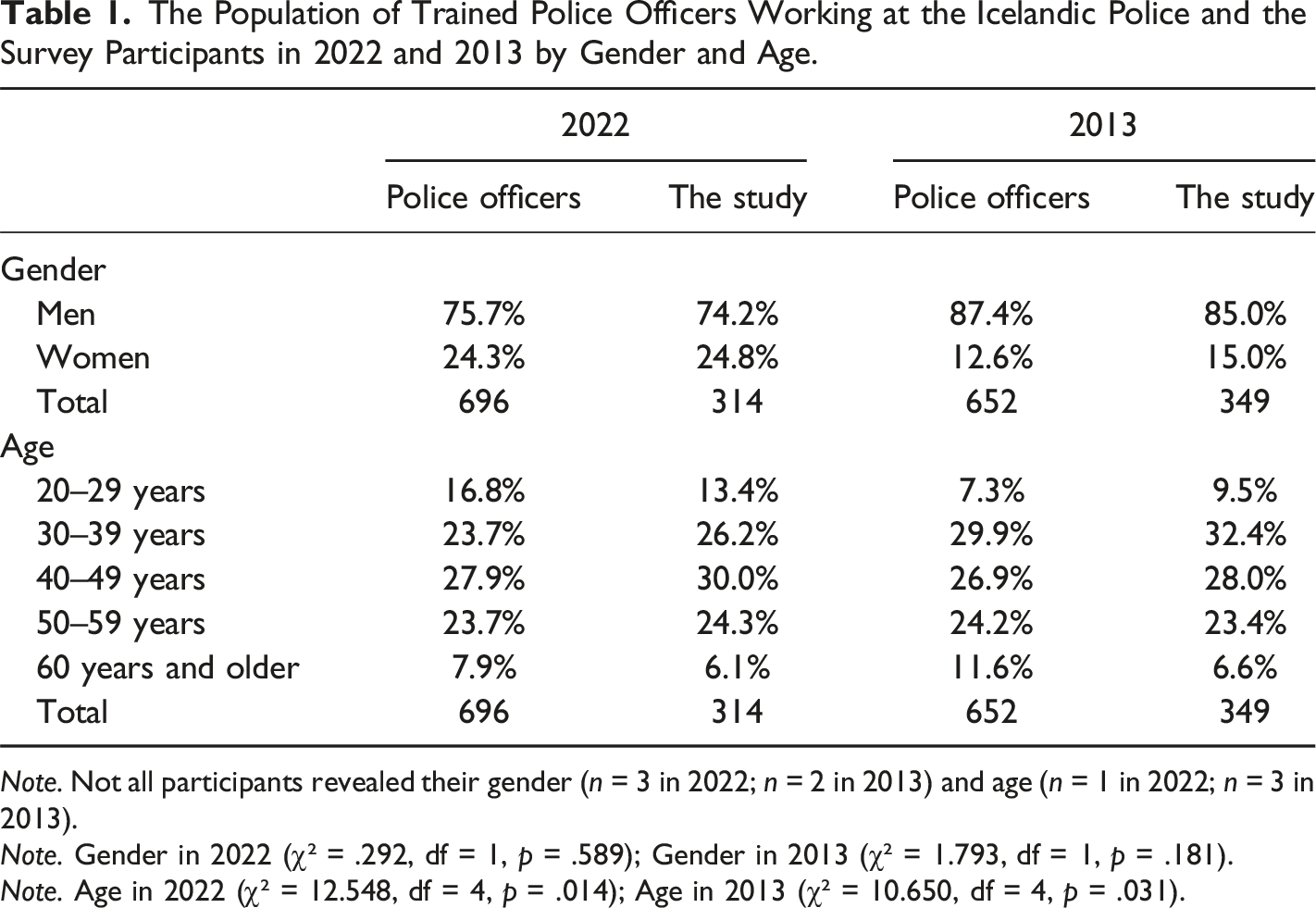
Note. Not all participants revealed their gender (n = 3 in 2022; n = 2 in 2013) and age (n = 1 in 2022; n = 3 in 2013).
Note. Gender in 2022 (χ² = .292, df = 1, p = .589); Gender in 2013 (χ² = 1.793, df = 1, p = .181).
Note. Age in 2022 (χ² = 12.548, df = 4, p = .014); Age in 2013 (χ² = 10.650, df = 4, p = .031).
Measures and Analysis
Self-labeling as a victim of sexual harassment was assessed with a one-question measure. Participants were provided with the legal definition of sexual harassment and then asked if they consider themselves to be victims of sexual harassment at or related to their work, without specifying any time frame in the question. The response categories were ‘yes’ and ‘no’. Sexual harassment, in the Icelandic legal context, is defined as any kind of sexual behavior having the purpose or effect of offending the dignity of the person affected by it, especially when this behavior creates circumstances that are threatening, hostile, degrading, humiliating, or insulting for the person in question. The behavior can be verbal, symbolic and/or physical (Act on Equal Status and Equal Rights Irrespective of Gender, 2020). In the previous legislation, that was in force in 2013, the definition also included “that is continued despite a clear indication that the behavior is undesired” (Act on Equal Status and Equal Rights of Women and Men, 2008). Following this question, the participants who self-labeled as victims of sexual harassment were asked about the position of the perpetrator or perpetrators.
‘Exposure to sexually harassing behaviors’ was assessed with the negative acts questionnaire on sexual harassment, which consists of 11 items that assess sexually harassing behaviors (Einarsen & Sørum, 1996; Nielsen et al., 2010). All survey participants were asked how often they had been exposed to certain acts or remarks during the last six months. The four response categories were ‘never’, ‘once’, ‘two to five times’, and ‘more than five times.’ A binary outcome was created ‘Once or more often’. A scale was formed with nine out of the 11 items. Two items (‘pressure for unwanted sex or sexual acts, followed by the threat of punishment or some kind of restrictions if you said no’ and ‘sexual coercion, attempted rape or rape’) were excluded as none of the participants had experienced those behaviors in the previous six months in both surveys. The internal consistency for the scale was satisfactory in both data sets, with Cronbach’s alpha being 0.761 (n = 314) in 2022 and 0.729 (n = 319) in 2013. Following the inventory in the 2022 survey, the participants were asked about the position of the perpetrator or perpetrators of the sexually harassing behaviors.
In the 2022 survey police officers are asked about their beliefs on how the MeToo movement has influenced their behavior. To do so we make use of two questions from the Icelandic ‘workplace violence’ survey, that was conducted in 2019 (Snorradóttir et al., 2020): ‘Have you told about harassment or violence since the MeToo discussion became prominent in society?’ and ‘Have you changed anything in your behavior since the MeToo discussion became prominent in society?’ The response categories were ‘yes’ and ‘no’.
The primary independent variable was ‘year’ (0 = 2013, 1 = 2022), that is the year the survey was conducted. Two background variables were available for both surveys, that is gender and age. Concerning the gender variable, a woman was given the value 1, and a man was given the value 0. For the age variable, the possible answers were ‘20–29 years old’, ‘30–39 years old’, ‘40–49 years old’, ‘50–59 years old’, or ‘60 years old and older’. The respondents aged 39 years and younger were given the values 1, and zero referred to older police officers. Due to the small size and homogeneity of the police force, other background and organizational variables (such as the respondent’s districts and rank) were not collected to guarantee that the responses could not be traced to the survey respondents. All the research data were imported into and analyzed in the IBM SPSS 29.0.1.1 software.
Findings
Descriptive Statistics.
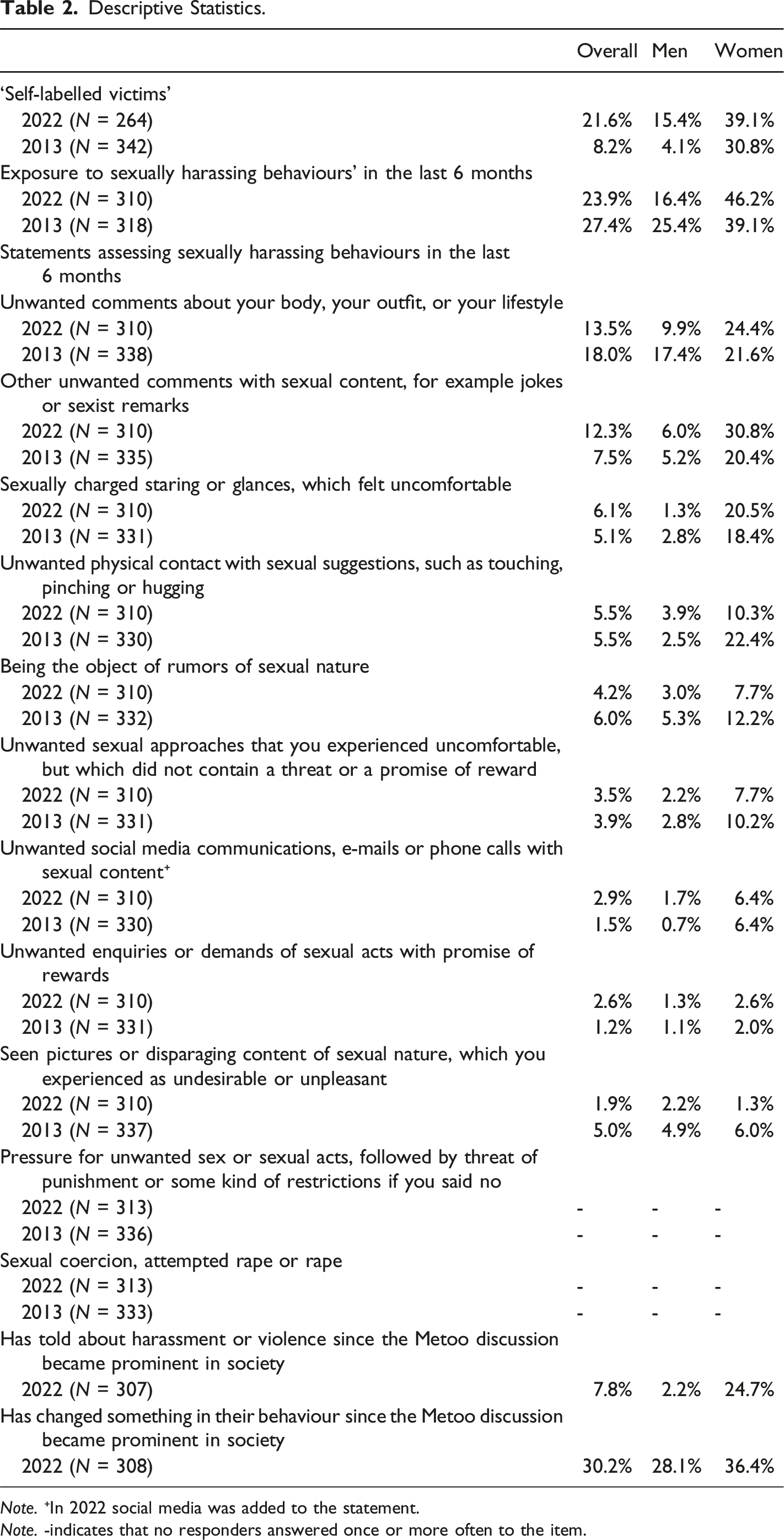
Note. ⁺In 2022 social media was added to the statement.
Note. -indicates that no responders answered once or more often to the item.
Binary Logistic Regression Analysis Predicting Experiences of Sexual Harassment.
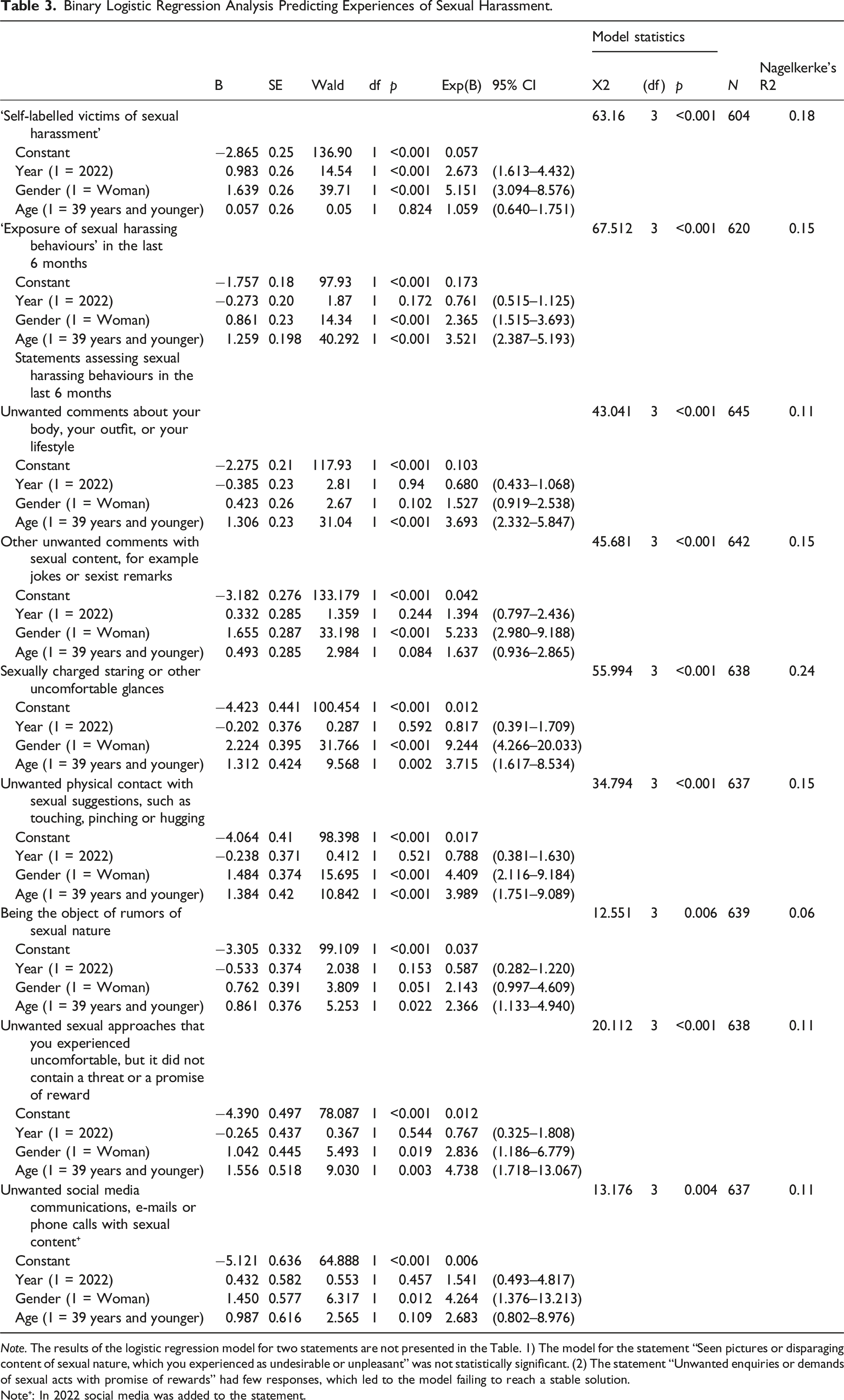
Note. The results of the logistic regression model for two statements are not presented in the Table. 1) The model for the statement “Seen pictures or disparaging content of sexual nature, which you experienced as undesirable or unpleasant” was not statistically significant. (2) The statement “Unwanted enquiries or demands of sexual acts with promise of rewards” had few responses, which led to the model failing to reach a stable solution.
Note⁺: In 2022 social media was added to the statement.
About one-fourth of respondents (23.9%), 46.2% of women and 16.4% of men, were exposed to sexually harassing behaviors in the past six months in 2022. Overall, the exposure was a little higher in 2013 (27.4%). Compared to the responses in 2013, the exposure to sexually harassing behavior has decreased for men (25.4%) but increased for women (39.1%). The results from the binary logistic regression analyses in Table 3 show that the likelihood of being exposed to sexually harassing behaviors did not significantly differ between the years 2022 and 2013 (p > .05). However, we find that women are two times more likely to have experienced sexually harassing behaviors than men (OR: 2.365, 95% CI 1.515–3.693), and police officers 39 years old and younger are almost four times more likely than older police officers to have those experiences (OR: 3.521, 95% CI 2.387–5.193). In 2022, the most common perpetrators of women are male colleagues (68.8%) and male supervisors (31.3%). Whereas male colleagues (43.8%), female colleagues (43.8%) and male supervisors (34.4%) are the most common perpetrators of men.
The changes in respondents’ reporting of the different sexually harassing behaviors imply that the nature of sexual harassment has changed over time, but the outcomes of the binary logistic regression analysis of each item did not significantly differ between the years 2022 and 2013 (p > .05). Gender is a significant predictor on most items (p > .05). Women are nine times more likely than men to have experienced sexually charged staring or other uncomfortable glances (OR: 9.244, 95% CI 4.266–20.033). Moreover, women are two to five times more likely than men to have experienced unwanted comments with sexual content, such as jokes or sexist remarks (OR: 5.233, 95% CI 2.980–9.188); unwanted physical context with sexual suggestions, such as touching, pinching or hugging (OR: 4.409, 95% CI 2.116–9.184); unwanted sexual approaches that they experienced as uncomfortable, but did not contain a threat or a promise of reward (OR: 2.836, 95% CI 1.186–6.779) and unwanted communications (OR: 4.264, 95% CI 1.376–13.213).
As shown in Table 3, age is also a significant predictor as the younger half of respondents (39 years and younger) are more likely to be exposed to certain items than the older half of respondents. Police officers aged 39 years or younger are two to five times more likely than police officers 40 years and older to have experienced unwanted comments about their body, outfit or lifestyle (OR: 3.693, 95% CI 2.332–5.847); sexually charged staring (OR: 3.715, 95% CI 1.617–8.534); unwanted physical contact with sexual suggestions (OR: 3.989, 95% CI 1.751–9.089); being objects of rumors of sexual nature (2.366, 95% CI 1.133–4.940); and experienced unwanted sexual approaches that they experienced uncomfortable, but did not contain a threat or a promise of reward (OR: 4.738, 95% CI 1.718–13.067).
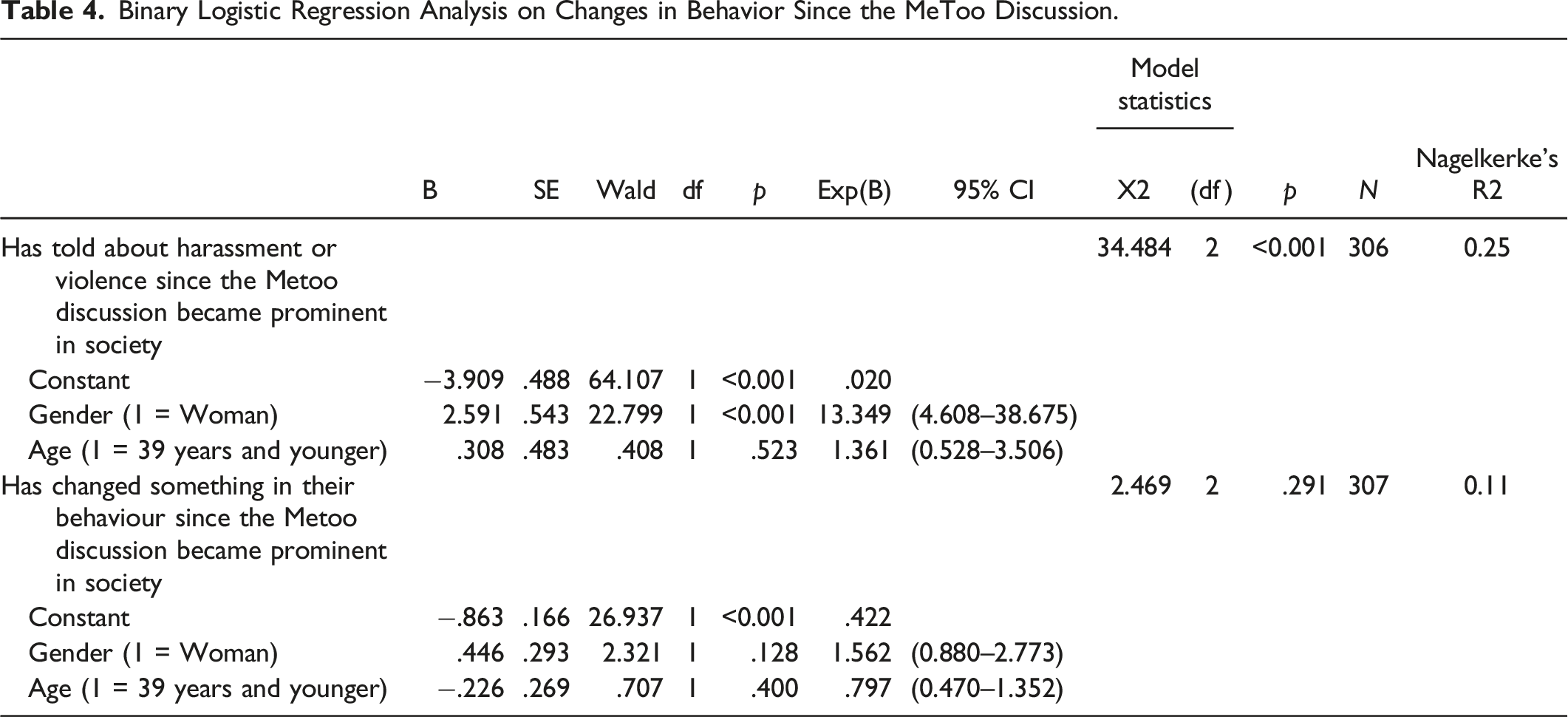
Binary Logistic Regression Analysis on Changes in Behavior Since the MeToo Discussion.
Discussion and Conclusion
The most noteworthy finding from our research is that there is a heightened awareness among police officers of what constitutes sexual harassment at work, but the problem persists within the police. Police officers, both women and men, are more likely to label their past experiences as sexual harassment in 2022 than in 2013 when asked directly whether they consider themselves to be victims of sexual harassment. Drawing on Ryder,'s (1965, cited in Blackstone et al., 2014) theory on the periodic effect we argue that changes in the contemporary cultural context, such as the MeToo movement (Maricourt & Burrell, 2022), which was prominent and longstanding in Icelandic society (Pétursdóttir & Rúdólfsdóttir, 2022), has altered policewomen´s and policemen´s perception of what constitutes sexual harassment and thus increased self-labeling through period effect (Ryder, 1965; cited in Blackstone et al., 2014). However, it is important to note that there have also been organizational changes and several efforts to counteract inequalities within the police in the past decade (Fagráð ríkislögreglustjóra, 2017; Þorsteinsdóttir, 2021), which may have contributed to the increased awareness. This heightened awareness does not appear to have impacted the organizational behavior and deterred perpetrators of sexual harassment. The indirect measurement indicates that police officers’ exposure to sexually harassing behaviors over the previous 6 months remains high, especially among women. There weren’t significant changes between 2022 and 2013, underscoring that sexual harassment continues to be a problem within the police.
Gender differences in police officers’ experiences of sexual harassment are in line with previous research in work organizations (Otterbach et al., 2021) and within the police (Burke & Mikkelsen, 2005; Bye & Bjørkelo, 2024; de Haas et al., 2010; Lonsway et al., 2013; Taylor et al., 2022). Policewomen are more likely than policemen to self-label as victims of sexual harassment and to be exposed to sexually harassing behavior in the past six months. Age is not a significant factor in the direct measurement, but 39 years and younger are more likely to be exposed to sexually harassing behaviors than those who are older. It suggests that there is a cohort effect (Ryder, 1965; cited in Blackstone et al., 2014) within the police, leading “younger” individuals to be more aware of negative behaviors than those that are older. We cannot draw strong conclusions about that from our data and believe this needs to be further researched.
The findings indicate that policemen are more willing to label their past experiences as sexual harassment, although they report lower exposure to sexually harassing behaviors than before. Men’s most frequently identified perpetrators are female members of the general public (in the self-labeling measurement) and male and female colleagues (in the measurement of the exposure to sexually harassing behavior). Our data does not provide a clear explanation for the reduced exposure to sexually harassing behaviors among men. However, one possible hypothesis is that their women colleagues have recognized their role in sustaining a culture of sexual harassment within the organization and have changed their behavior accordingly. Our findings suggest that women are more likely than men to have changed their behaviors following the rise of MeToo; however, this difference is not statistically significant, highlighting the need for further research on the issue.
Despite an increase in self-identification as victims of sexual harassment among men, we find that men are far less likely than women to tell someone about those experiences. In the context of the patriarchal character of the police (Atkinson, 2017) and its masculinity contest culture (Berdahl et al., 2018; Rawski & Workman-Stark, 2018) this does not come as a surprise. The cultural norms, including strength, show no weakness, and ruthless competition (Rawski & Workman-Stark, 2018), might nourish the idea that only women, as supposedly weaker than men, are harassed and not men, leaving little leeway for men to disclose their experiences even if they self-label as victims of sexual harassment. Women on the other hand face different expectations because of their gender and the subordinate status of femininity in the police. Future research could explore the impact of masculinity contest culture on men’s openness to discuss their experiences of harassment.
While there are positive signs of increased awareness around sexual harassment, our findings suggest that this awareness within the police has limitations, as sexual harassment remains deeply ingrained in the police organizational culture (Davis et al., 2023; Sands et al., 2023; Brown et al., 2019; Lonsway et al. 213). This is evident in the fact that nearly half of policewomen report exposure to sexually harassing behaviors within the past 6 months in 2022. Notably, more women experience sexually harassing behaviors than self-identify as victims of sexual harassment, whereas self-labeling and exposure are similar among men. This discrepancy suggests that some women may not perceive such behaviors as harassment, aligning with Rostami et al. (2022), who found that sexual harassment is often normalized and considered as part of the job for women in policing. Dismissing sexually harassing behavior as light banter (Brown et al., 2018; Guðjónsdóttir & Pétursdóttir, 2017; Lonsway et al., 2013; Valland et al., 2024) likely plays a role here, especially as the most common sexual harassing behavior is “unwanted comments with sexual content, for example jokes or sexist remarks”, which women are five times more likely than men to encounter. Given that male supervisors and male colleagues are the most frequent perpetrators (in both direct and indirect measures), it seems that while awareness efforts have helped men recognize their own experiences as victims, they have not fully addressed men’s role in perpetuating sexual harassment within the organization.
Police officers are less likely than the general public in Iceland (Snorradóttir et al., 2020) to report having changed their behavior since the MeToo movement gained prominence. Given that sexual harassment is a well-documented issue within the police (Pétursdóttir & Hjálmarsdóttir, 2019; Steinþórsdóttir, 2013; Steinþórsdóttir & Pétursdóttir, 2018), we might have expected to see more substantial changes among men, who are more often identified as perpetrators of sexual harassment in both previous research (e.g. Lonsway et al., 2013) and our findings. However, this limited change is perhaps unsurprising, as those in positions of privilege–in this case policemen–often “avoid recognition of how their own actions contribute to problematic social dynamics” (PettyJohn et al., 2019, p. 619). This lack of self-reported change may also signal resistances to the influences of the MeToo movement. To contextualize those resistances, Rawski and Workman-Stark (2018) concepts of sensegiving and sensebreaking are useful. MeToo sought to challenge and ultimately eliminate behavior that were sensegiving for some police officers, such as sexual harassment which, within the police is often dismissed as ‘light’ banter or black humor that serves the purpose of processing work-related stress (Brown et al., 2018; Guðjónsdóttir & Pétursdóttir, 2017; Lonsway et al., 2013; Valland et al., 2024) and replace it with a new understanding that such behaviors are unlawful (hence, sensebreaking). Rawski and Workman-Stark (2018) argue that this approach can be counterproductive and suggest that appealing to police officers as professionals and upstanders might be a more effective path to change.
As with most research, our study was not without limitations. While both surveys achieved a relatively good response rate, there remains a risk of nonresponse bias, which may limit the generalizability of our findings (Groves et al., 2004). The respondents in both surveys were broadly representative of the population in terms of gender and age; however, due to confidentiality reasons, we could not test comparability on other factors, such as the district of employment or rank within the police. The decision not to collect such data was essential to ensuring anonymity, a necessary step to foster trust with potential participants, especially given the study’s collaboration with the National Commissioner of the Icelandic Police. Although this partnership may have influenced participation and responses, it also served as a strength by facilitating access to participants and possibly, for some of them, enhancing the research’s credibility. A further strength of the study lies in its dual approach to measuring sexual harassment. By capturing both those who self-identify as victims and those exposed to specific sexually harassing behaviors–regardless of whether they label it as sexual harassment (Nielsen et al., 2010)–the study provides a comprehensive view of sexually harassing experiences. However, this study did not explore the impact of sexual harassment on respondents, such as whether it caused them fear or restricted their actions in some way. We suggest that future research should investigate the organizational dynamics that perpetuate sexual harassment within the police and examine its effect on those who experience it.
Countering sexual harassment against women in police work organizations is a shared global problem (see e.g. Burke & Mikkelsen, 2005; Colvin, 2017; de Haas et al., 2010; Huang & Cao, 2008; Rawski & Workman Stark, 2018; Rostami et al., 2022) and there are pressures to create work cultures that are favorable for people of all genders, sexual orientations, and identities. The organizational tolerance for sexual harassment (Hulin et al., 1996) within the police needs to be eliminated both formally and informally. Police organizations must actively encourage reporting by all potential victims and witnesses while ensuring tangible consequences for those who engage in sexual harassment. It is crucial to ensure that individuals who come forward–whether as victims or bystanders–do so without fear of a negative impact on their position or career opportunities. Additionally, it is essential to reframe and de-normalize sexually harassing behaviors that are often dismissed as banter and black humor (Valland et al., 2024; Brown et al., 2018; Lonsway et al., 2013) and perceived as a normal part of police work (Rostami et al., 2022). Steps must be taken to establish sexual harassment as a norm-breaking behavior (Otterbach et al., 2021). In this effort, it is important to frame such behaviors as unprofessional rather than unlawful, highlighting their harmful impact on all members of the organization (Rawski & Workman Stark, 2018). It is vital to appeal to police officers’ role as professional, honorable colleagues with a shared responsibility to maintain a good, healthy and collegial work environment for all.
In Iceland, the findings give reason for actions to counter the normalization of sexually harassing behaviors. To move forward on the issues, the authors in collaboration with the National Commissioner’s Centre of Police Training and Professional Development are developing training initiatives as part of the UISH project funded by Nordforsk (n. d.). The objective is to challenge the masculinity contest culture and appeal to the role of the police officers as professional and honorable, to minimize resistance, and to empower participants of all genders to work collaboratively to change the work culture. We are confident that such an approach can play a role in counteracting sexual harassment within the police. However, training alone will never result in a transformation of police culture. Comprehensive reforms that have the objective of dismantling the hierarchical and masculinized organizational culture that permeates the police are needed, including dismantling patriarchal dispositions (Atkinson, 2017) and mitigating the masculinity contest culture (Berdahl et al., 2018; Rawski & Workman Stark, 2018) if we want to create equitable police work organizations for all.
Footnotes
Acknowledgements
We thank the National Commissioner of the Icelandic police for the cooperation, and our colleague Anna Soffía Víkingsdóttir for the research assistance. We thank the reviewers for their valuable feedback. The paper relates to an ongoing project on interventions against sexual harassment at work (UISH) funded by Nordforsk (project code no. 137287).
Declaration of Conflicting Interests
The author(s) declared no potential conflicts of interest with respect to the research, authorship, and/or publication of this article.
Funding
The author(s) disclosed receipt of the following financial support for the research, authorship, and/or publication of this article: This work was supported by the Iceland Student Innovation Fund and the Icelandic Ministry of Judicial Affairs.
