




Abstract
Recently, there has been an increase in media attention and public interest in the use of de-escalation by police officers; however, concerns have been raised regarding potential risks to officer safety. The literature examining the relationship between officer safety and de-escalation is sparse. Drawing on performance assessments of 122 active-duty police officers during a realistic scenario with a person in crisis, the relationship between de-escalation techniques and officer safety was examined using multiple regression analysis and multiple correspondence analysis; a positive (but imperfect) relationship between de-escalation and officer safety was found. The association between relational de-escalation strategies (e.g., active listening, displaying empathy) and officer safety appeared to be strong; less so for tactical de-escalation strategies (e.g., pre-planning, self-control). However, it is unclear whether relational strategies increase officer safety, or whether greater officer safety allows relational strategies to be used. Future research is needed to understand this relationship and determine whether similar results are found in more naturalistic settings.
Introduction
In 2018, Alek Minassian targeted pedestrians in Toronto, Ontario, Canada in a van attack that left ten dead. Immediately following the attack, Minassian threatened one of the responding officers, Constable Ken Lam, stating that he was armed. Rather than using force against Minassian, Constable Lam de-escalated the situation and successfully apprehended the suspect after a few minutes. Immediate reactions from the public and the media, in both Canada and abroad, were positive, and Constable Lam’s actions were cited as a prime example of how police officers do not need to rely on force to resolve tense situations (Joseph & Abedi, 2018). However, while the officer’s actions resulted in a successful outcome in this case, some individuals pointed out that the Constable’s actions may have put himself and the nearby public at further risk. Considering that Minassian stated he had a gun and had just killed multiple people, some believe the officer should have responded differently to ensure the safety of those in the surrounding area (Toronto Van Attack: Calm Actions of Police Stun US, 2018). Did Constable Lam determine that Minassian was unarmed and take appropriate action, or did the officer make a judgement error? The answer is unclear, but the case has raised important questions surrounding risks to officer and public safety when officers rely on de-escalation tactics.
Literature Review
The story mentioned above is one of many examples of increased media attention and public interest in the use of de-escalation by police officers in recent years; however, concerns have been raised regarding officer safety while engaging in these techniques (Engel et al., 2020). Given these concerns, the current study aims to investigate the relationship between the use of de-escalation strategies by police officers and officer safety, something that has not yet been empirically studied by researchers as far as we are aware. Before discussing the current study’s methodological approach, there are key definitional issues surrounding de-escalation that need to be discussed. More specifically, we will dedicate our literature review to identifying the types of strategies that are often used to describe de-escalation and explore their potential relationship to officer safety.
De-escalation
While calls for de-escalation (and de-escalation training) within policing have been steadily increasing, there still does not seem to be a commonly accepted definition of de-escalation within the policing field (Engel et al., 2020; Iacobucci, 2014; Todak & James, 2018). For example, drawing on research from the healthcare field, Engel et al. (2020) defined de-escalation as “a process or tactics used to prevent, reduce, or manage behaviors associated with conflict, including verbal or physical agitation, aggression, violence, or similar behaviors, during an interaction between two or more individuals” (p. 724). In contrast, the National Consensus Policy and Discussion Paper on Use of Force (2020), which emerged out of a collaboration between major police leadership and police labour organizations in the United States (US), defines de-escalation as: Taking action or communicating verbally or non-verbally during a potential force encounter in an attempt to stabilize the situation and reduce the immediacy of the threat so that more time, options, and resources can be called upon to resolve the situation without the use of force or with a reduction in the force necessary. De-escalation may include the use of such techniques as command presence, advisements, warnings, verbal persuasion, and tactical repositioning. (p. 2)
As one can see from these two examples, different aspects of de-escalation are often highlighted depending on the definition one adopts, perhaps reflecting important differences in the fields from which the definitions emerged (i.e., healthcare vs. policing). However, Landers (2017a) states that while there does not appear to be a consistent definition of de-escalation within policing, there seem to be two main goals of de-escalation regardless of which definition is adopted – the first being an attempt to calm the situation, and the second being an attempt to avoid force to accomplish this objective, or to use the lowest level of force possible if it must be used.
There also appears to be some consensus around the sorts of de-escalation techniques available for officers to use during their interactions with the public. We propose that these techniques may be considered as either relational or tactical. Relational techniques focus on things like effective communication strategies, rapport building, and showing empathy towards the individual one is interacting with; these techniques appear to have the common goal of establishing a meaningful relationship between the responding officer and the person in crisis so that the situation can be returned to a state of calm. Tactical techniques, on the other hand, might consist of an officer maintaining self-control to make better decisions, taking decisive actions, and perhaps even using less lethal intervention options (e.g., conducted energy weapons [CEW]; Ho et al., 2011) to resolve the situation; here, the primary goal appears to be resolving the situation as quickly as possible to minimize the risk of harm to all parties involved. Of course, both sets of techniques could be used together, or individual officers may have preferred styles of de-escalation and exhibit one strategy more than the other. Both sets of de-escalation techniques will now be discussed in greater detail.
Relational De-escalation Techniques
Oliva et al. (2010) state that active listening is one of the most important skills for de-escalating a crisis. This technique can include restating statements, mirroring/reflecting statements, and summarizing/paraphrasing statements to show a desire to understand the situation. More recently, Todak (2017) emphasized the importance of listening to the person in crisis when attempts are being made to de-escalate potentially volatile encounters. Specifically, Todak argued that a listen tactic should be used by officers to actively listen to the individual’s story so that they feel heard. When Todak and James (2018) observed 29 officers in the field to determine what de-escalation techniques they used to calm situations, the listen tactic was one of the techniques used most often (observed in 47% of 131 encounters). This appears to align with the general importance placed on this tactic by other professionals who may deal with individuals in crisis (e.g., Spielfogel & McMillen, 2017).
Price and Baker (2012) also found that the use of tactful language was central to de-escalation in a mental health services context, as were techniques that fostered trust, promoted a sense of equality in the interaction, and supported the individual’s humanity. These are very similar to the sorts of relational techniques Todak (2017) and Todak and James (2018) identified in the policing context as being useful for de-escalating potentially volatile situations, specifically their respect (i.e., speaking to the citizen with a respectful tone), shoes (i.e., attempting to put oneself in the citizen’s shoes), and human (i.e., avoiding “cop talk” and instead, talking to the citizen as a person) tactics. In Todak and James’ (2018) study, where they observed officers in the field to examine how often these sorts of tactics were used during interactions with citizens, these techniques were used frequently, especially the respect and human tactics (being exhibited in 78% and 79% of interactions, respectively).
Reducing unnecessary stimulation is also often encouraged as a de-escalation method. For example, in a mental health services context, Price and Baker (2012) suggest that the individual in crisis should be moved to a separate environment, which is quiet and away from bystanders; this is also recommended for officers attempting to de-escalate situations involving people in crises (Klugiewicz et al., 2018).
Tactical De-escalation Techniques
In their review of de-escalation strategies in a mental health services context, Price and Baker (2012) stated that another common theme (beyond relationship building) in de-escalation involves maintaining control during an interaction, which can include pre-planning and ensuring adequate support is available before and during a de-escalation attempt. The same techniques are also central to de-escalation in the policing context (Todak & White, 2019). It is also crucial for de-escalators, including police officers, to manage their stress and emotions so that they can think clearly and quickly (Bennell et al., 2022; Todak, 2017). This can involve a range of techniques that are shown to be effective when attempting to de-escalate situations (e.g., controlled breathing or taking a reset breath; Andersen & Gustafsberg, 2016).
Another tactical de-escalation technique that may be used to de-escalate situations draws on the various intervention options that police officers can access, including less lethal interventions. For example, Ho et al. (2011) discussed the use of CEWs within a hospital setting. He and his colleagues spoke of a phenomenon known as “red dot compliance,” which refers to changes in patient behaviour observed when a CEW was activated and the laser sighting beam was directed at the patient. Presumably, behaviour was de-escalated because the patient wished to avoid experiencing the effects of the CEW. In fact, in their study, Ho and his colleagues found that most interactions did not need to go further than the red dot compliance stage (i.e., aggressive behaviour was prevented without deploying the CEW).
Officer Safety
Those within law enforcement who advocate for de-escalation training often support the idea that de-escalation techniques will help officers resolve encounters with lower amounts of force, while also increasing officer and public safety (White et al., 2021). When arriving at an incident, the officer’s primary job is to ensure that everyone on scene is safe; this includes not only the individual of interest but also other members of the public and any attending officers, including the responding officer. When an incident involves a person in crisis, the situation may be unpredictable; thus, safety has to be continually re-evaluated throughout the situation as more information becomes available (Oliva et al., 2010). There are many factors that an officer must consider when it comes to their safety, and the safety of others, during interactions with the public.
One key officer safety consideration relates to the distance between the officer and the individual(s) they are interacting with. An analysis by the FBI’s Law Enforcement Officers Killed and Assaulted (LEOKA) Program found the risk of an officer being fatally wounded with a firearm increased as the distance between them and the subject decreased (Young, 2016). Distance can also give officers more time to respond appropriately to an individual’s actions. Examining the so-called “21-foot rule,” Sandel et al. (2021) sought to determine if this is a safe distance. Their results showed that individuals (N = 76) could run 21 feet in an average of 1.5 seconds. At this distance, when being charged at by an individual with a knife, only 50 out of 57 (88%) officers examined by these researchers could draw and fire their weapon before the individual reached them (average reaction time was 1.43 seconds); of these 50 officers, 38 (76%) successfully hit the charging individual. In addition, the authors found that a subject could reach the officer and make contact with the knife in one-third of the trials. The authors concluded that a greater distance (32 feet) or lateral and backward movement would improve officer safety when encountering a subject with a weapon.
Another safety factor officers must consider is the ability to use cover and concealment. Cover refers to something an officer can use for protection against injury or death (e.g., a concrete wall); cover is situation-specific (e.g., a window can be cover against a subject armed with a knife but does not provide cover against a firearm). Conversely, concealment is considered anything an officer can use to remain undetected but will not necessarily protect them from a threat (e.g., bushes offer no protection from a firearm); concealment is about visibility, not the ability to stop a threat. Appropriate cover and concealment can protect the officer in a potentially dangerous situation. The use of cover and concealment may also allow the officer more time to make decisions, including how to effectively de-escalate a volatile situation.
An additional safety factor involves officers being aware of potential threat cues (both auditory and visual) a subject may display, which might indicate that a situation is escalating. The ability of an officer to perceive these cues is critical to their ongoing risk assessment and will help maintain officer safety (Harris-Thompson et al., 2006). Therefore, importance is placed on observing the subject, with specific emphasis placed on their hands, waist, or other areas where weapons may be concealed. This may allow the officer to quickly detect potential threats within the unfolding situation (Harris-Thompson et al., 2006; Heusler & Sutter, 2019; Vickers & Lewinski, 2012).
Officer Safety and De-escalation Techniques
Todak (2017) argued that when police officers use de-escalation techniques, there is a potential that less force will be necessary; thus, citizen perceptions of the police will improve (i.e., citizens will view police interactions in a more positive light). This may increase a citizen’s willingness to interact positively with officers, making the situation safer for everyone involved. Many police organizations also argue that increasing an officer’s skill set through de-escalation training will increase officer safety by providing them with more tools to calm tense situations and decrease the chance that situations will turn violent. This sentiment is commonly voiced by researchers as well (e.g., Giacomantonio et al., 2019; Hanafi et al., 2008; Zaiser & Staller, 2015) and by reporters in the media (e.g., Jackman, 2016; Jackman & Morse, 2020).
However, others have raised concerns that the use of de-escalation techniques can increase the risk to officer safety, depending on the situation. For example, in some situations, officers may overestimate the likelihood that de-escalation can be used and how likely it is to be effective (Landers, 2017b). Due to public pressure, officers may also rely too heavily on de-escalation – inappropriately so in some situations – and second guess the application of appropriate use of force (Todak, 2017). Concerns have also been raised that some de-escalation strategies may put officers in harm’s way (Blake, 2017; Landers, 2017a, 2017b). For example, some techniques, such as rapport building, may encourage the officer to get physically close to a subject, reducing time and distance when it is unsafe to do so.
The relationship between de-escalation and officer safety is certainly a topic that is on the minds of police officers. For example, White et al. (2019) conducted a study that aimed to evaluate a de-escalation training program. The study asked officers to rate the most important de-escalation techniques, and many rated maintaining officer safety as a top priority. The study also found that those who completed the de-escalation training reported a greater focus on maintaining officer safety. These results suggest that officers are not only concerned about officer safety and see it as critical to their de-escalation efforts, but that de-escalation training which integrates officer safety techniques, might also improve overall outcomes when police officers interact with the public.
While research is lacking in this area, it may be that the types of de-escalation techniques used by police officers have a differential impact on officer safety. For example, techniques such as mirroring have been suggested to be effective when attempting to build rapport. These techniques involve the officer maintaining eye contact, matching the subject’s body language, and using non-verbal means of communication, such as nodding (Novotny, 2015). Given the nature of these types of strategies, they are likely to be more effective when an officer is closer to the individual they are interacting with, which may put them at a disadvantage when it comes to officer safety (Sandel et al., 2021). In contrast, some research suggests that de-escalation techniques like these might enhance officer safety. For instance, it has been found that healthcare staff’s ability to show respect toward a patient (e.g., through mirroring) can influence the patient’s dignity in the interaction, which may decrease a patient’s desire to display further aggression (Delaney & Johnson, 2006).
Concerning de-escalation techniques that focus on more tactical approaches, we are not aware of any research that looks at how these strategies are potentially related to officer safety; however, there are some potential considerations worth discussing. While certainly more controversial than the relational techniques discussed above, officers who use more tactical approaches may be safer. As argued above, officers who rely on tactical de-escalation techniques might emphasize quickly controlling volatile situations, and research suggests that these techniques, especially intervention options such as CEWs, are likely to be quite effective for this purpose (Baldwin et al., 2017; Ho et al., 2011). In addition, unlike some other techniques described above, such as mirroring, these de-escalation strategies can be effective from a greater distance, which is also likely to increase officer safety. The use of cover/concealment, which will likely increase officer safety, may also be more accessible when using these techniques.
Officer Characteristics, De-escalation, and Officer Safety
One might expect that an officer’s characteristics or training influences the sort of de-escalation techniques they use (e.g., Schuck & Rabe-Hemp, 2005), which may impact officer safety. For example, White et al. (2019) found that, compared to their male counterparts, female officers reported more frequent use of de-escalation tactics such as giving people personal space, maintaining eye contact, and showing empathy. Todak and James (2018) also observed that female officers were more prone than male officers to involve subjects in the decision-making process. As argued above, these de-escalation strategies are more likely to be more effective when an officer is closer to the individual they are interacting with, which may put female officers who use this approach at a disadvantage when it comes to officer safety.
Another factor that might be expected to impact specific de-escalation strategies is the training officers receive. For example, tactical training may lead to a greater reliance on tactical de-escalation strategies, such as combat breathing to remain calm and the use of less-lethal weapons (Delehanty et al., 2017; Quinton et al., 2020). Again, as argued above, these strategies may result in greater levels of officer safety given that they can be used while maintaining a greater distance from the subject.
An officer’s level of education may also impact their use of de-escalation and their safety. For example, Krimmel (1996) found that when officers were asked to complete a self-report performance survey, officers who possessed a bachelor’s degree or above were more likely to rate themselves higher on many performance indicators, including oral communication skills and problem-solving abilities; key competencies that might allow an officer to de-escalate potentially violent situations (Bennell et al., 2022). Other studies have also found that education seems to increase an officer’s communication skills and problem-solving abilities (e.g., Carter & Sapp, 1990; Smith & Aamodt, 1997).
The Current Study
The current study explores the relationship between de-escalation and officer safety by examining officer performance in a realistic domestic disturbance scenario involving a person in crisis, which ended in a shooting. Specifically, the following research questions (RQ) were explored:
How does the use of de-escalation relate to officer safety?
Are certain de-escalation strategies (e.g., relational vs. tactical techniques) related to higher levels of officer safety more than others?
1
Are officer characteristics, such as officer sex
2
and previous training, associated with different levels of officer safety?
Methods
Participants
Participant Demographics.
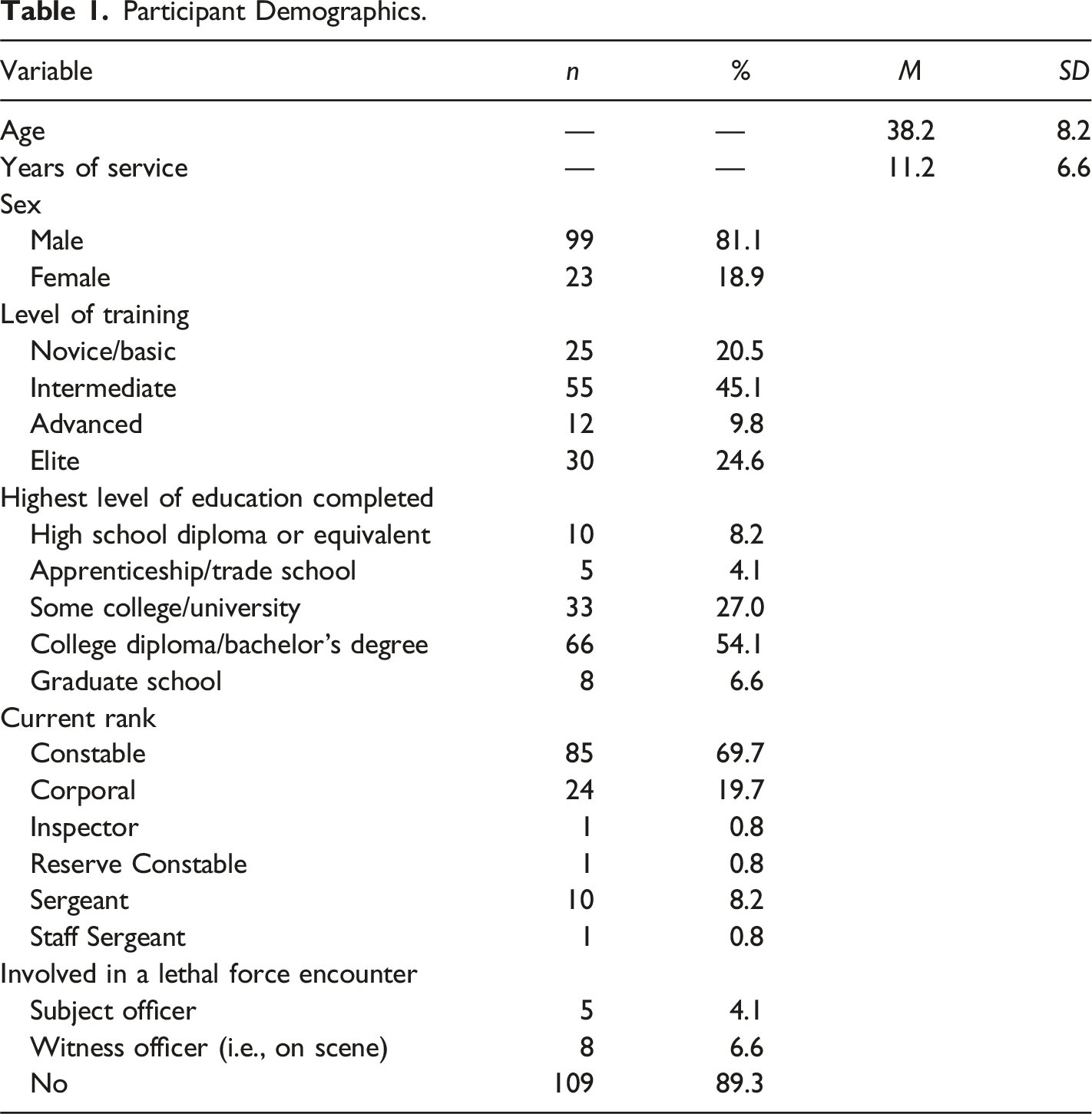
Materials and Measures
Demographic Questionnaire
Each participant completed a questionnaire that asked them to provide certain demographic information (see Supplementary Material A at https://osf.io/fwhc4).
Training
Participants’ training records and the training information captured in the demographics form were used to identify and assess their level of in-service operational skills training. Four levels of training, from basic to elite, were established based on the type, recency, and frequency, of training experiences participants received. The type of training considered included 12 equally weighted operational skills courses: (1) crisis intervention and de-escalation, (2) first aid and/or CPR instructor, (3) basic trauma equipment instructor, (4) conducted energy weapon, (5) extended range impact weapon, (6) VIP close protection, (7) tactical support group (i.e., crowd control), (8–9) advanced firearms, and (10–12) active threat training (three separate courses). 4 To account for the recency and frequency of training experiences, courses were only included if they were completed within the 5 years leading up to the study or were completed more than once; except courses (2) and (3), which were based on whether participants were ever instructors. Those in the novice/basic category had 2–3 operational skills training courses, those in the intermediate category had 4 or more courses, those in the advanced category had specialized training courses (e.g., air marshal) or were instructors (e.g., firearms), and those in the elite category were/had been members of the tactical team or were use of force instructors.
De-escalation and Officer Safety Coding
To assess the use of various de-escalation and safety strategies by officers, each scenario was recorded from multiple camera angles. Relevant variables from pre-existing, validated scales were then used to code officer behaviours by reviewing the footage. These scales included the Deadly Force Judgment and Decision-Making (DFJDM), Tactical Social Interaction (TSI), and Crisis Intervention Team (CIT) scales (James & James, 2017; Vila et al., 2012, 2014, 2018). These scales have now been successfully used in various studies to code officer performance in incidents that are similar in many ways to the scenario examined in this study (Elkins-Brown et al., 2023; James et al., 2019, 2020, 2023).
As described by Baldwin et al. (2022) the scoring was completed as follows: The DFJDM metric was developed to assess performance in situations requiring the [use of force] UoF, whereas the TSI and CIT metrics were developed for measuring performance during police-public interactions and encounters with people suffering from mental illness or who are in crisis, respectively. The DFJDM includes 105 performance indicators weighted from −6 (extremely negative impact on performance) to +6 (extremely positive impact on performance). The TSI has 78 performance indicators weighted from 1 (no impact on performance) to 7 (extremely positive impact on performance) and the CIT is comprised of 112 performance indicators ranging from −4 (strong negative impact on performance) to +4 (strong positive impact on performance). (pp. 6–7)
Scale Items Used in the Current Study.
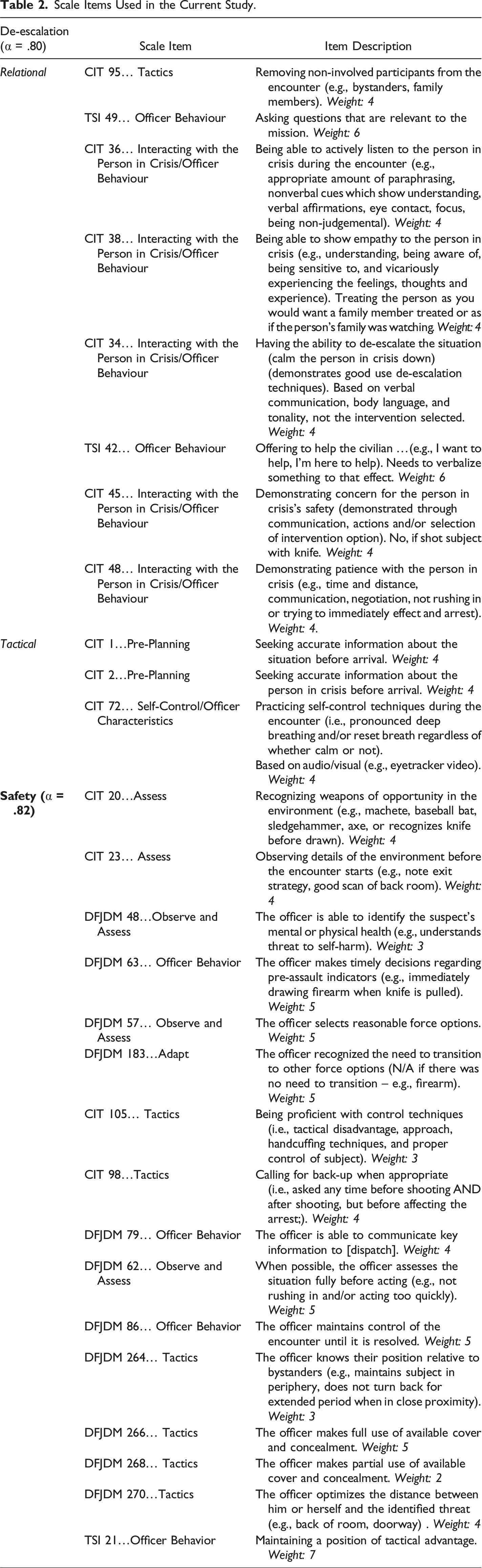
The coding procedure outlined by Baldwin et al. (2022) was used in this study: When rating performance, indicators were assessed as to whether they were applicable (1 – Yes; 0 – No) for each officer in the scenario. If applicable, each indicator was rated as achieved or not (1 – Yes; 0 – No; Vila et al., 2018). Weighted performance scores were then expressed as a percentage of the total potential weighted score for each officer. Where a performance indicator was not applicable, it was removed from the potential score to avoid penalizing an officer for something they could not have done. (p. 7)
The coding was completed by a team of eight coders (seven police officers and one civilian). Each of these individuals was an experienced police professional working within the agency where the participants were employed and had extensive experience evaluating officer performance in encounters involving the use of force and de-escalation/crisis intervention. 5 After receiving 4 hours of training on the assessment metrics for this study and completing four training assessments to confirm consistency and clarify metrics, each coder was assigned to a quarter of the videos. This allowed each video to be independently double-coded to establish inter-rater reliability (IRR). Baldwin et al. (2022) assessed the IRR for all variables. He found that the DFJDM, TSI, and CIT metrics had ICCs that were in the good-excellent (Cicchetti, 1994) or moderate-good range (Koo & Li, 2016). To resolve discrepancies and achieve a single “most correct” assessment, independent third-party resolution was completed by another member of the coding team (i.e., neither of the original two coders; Bakeman & Goodman, 2020; Syed & Nelson, 2015). Once the independent third-party resolution was completed, the overall performance measure was calculated.
Procedure
Before being exposed to the scenario, participants reviewed and signed an informed consent form. After this, officers completed the demographics questionnaire (see Supplementary Material A; https://osf.io/fwhc4). Officers were then asked to remove all live intervention options and were equipped with all the inert training tools they carry in the field (i.e., OC spray, baton, CEW, and pistol) and other equipment related to projects beyond the current one (e.g., heart rate monitors, mobile eye-tracker, inertia sensors). Each officer then completed the scenario, which was facilitated by an expert police trainer who remained with them throughout the entirety of the scenario to act as radio dispatch and ensure their safety and that of the role players. The scenario was filmed using multiple cameras. See Supplementary Material B (https://osf.io/h2g7w) for a detailed design and description of the scenario.
The scenario occurred in a building that had been designed to appear as an apartment complex. All participants were dispatched to a second-floor apartment for a call from a female complainant indicating that a male subject in the home had been drinking heavily and was in breach of his probation conditions. At that point, the facilitator said, “scenario on” and participants had the opportunity to ask dispatch for additional information, if they chose to do so. Upon arriving “on scene” and knocking on the door of the residence, the participant was greeted by a bystander (a white male in his mid-twenties), who indicated that the subject (another white male in his early thirties) had committed an assault. The bystander remained in the scenario room and demanded the participant remove the subject from the apartment, who was seated at the dining room table at the other end of the room. Various potential weapons were present throughout the apartment (e.g., a baseball bat) and an unoccupied bedroom (with its door open) was located at the back of the apartment.
A partially obscured knife was on the dining room table and the subject eventually drew it and put it to his throat, threatening to die by suicide. After some time passed, and regardless of how much the officer attempted to verbally de-escalate or intervene, the subject ultimately complied with the officer’s requests and threw the knife on the ground toward the participant. The scenario was allowed to naturally unfold a little longer until the subject spontaneously pulled a firearm, stood up, and started to shoot at the participant. This resulted in a lethal force response from the participant. Once shot at by the participant, the subject feigned a gunshot wound to the chest while the bystander simultaneously produced and pointed a cell phone at the officer, verbally indicating that they were video recording the situation. Participants were then provided with the opportunity to prioritize and perform whatever actions they deemed necessary (e.g., request resources, secure weapons, physically restrain subject and/or bystander, search subject, administer first aid). The scenario was allowed to come to a natural conclusion and was ended by the facilitator when the participant failed to demonstrate any new actions or strategies. 6
After the scenario, the participants were de-equipped and debriefed by the facilitator and the researchers. Some participants then completed tasks relevant to other research projects that used this data (e.g., a post-event interview). Each participant received a $50 gift card for their participation in the study. Coding of officer performance (including the performance measures used for the de-escalation and safety scales) was conducted using the video footage of the scenario at a later date. The coding method described above was used for this purpose.
Data Analyses
Two sets of analytical methods were used to explore the research questions. Multiple regression analyses were used to examine the relationships between de-escalation scores (including scores from the relational and tactical sub-scales), officer characteristics (i.e., officer sex, age, years of police service, education, and training level), and officer safety scores, with all categorical officer characteristics being dummy coded. Before carrying out these analyses, statistical assumptions were assessed and were found to be met in all cases.
To further explore the significant relationships found through the regression analyses, and to visualize those relationships more clearly, multiple correspondence analysis (MCA) was used (Abdi & Valentin, 2007). MCA allows the associations between categorical variables to be displayed as points in a low n-dimensional Euclidean space. On an MCA plot, levels of various categorical variables (e.g., the presence or absence of a de-escalation strategy or officer safety variable) are positioned such that the strength of their association is reflected in the proximities between the points on the plot (i.e., the closer two points are in the plot, the more highly associated they are). One can then examine the overall plot to look for clusters of points. In some cases, it is also possible to assign meaning to these clusters (e.g., relational vs. tactical de-escalation techniques) by interpreting the dimensions underlying the plot.
Results
Predicting Officer Safety from De-escalation Scores and Officer Characteristics
Overall De-escalation Rating, and Various Officer Characteristics, Predicting Safety.
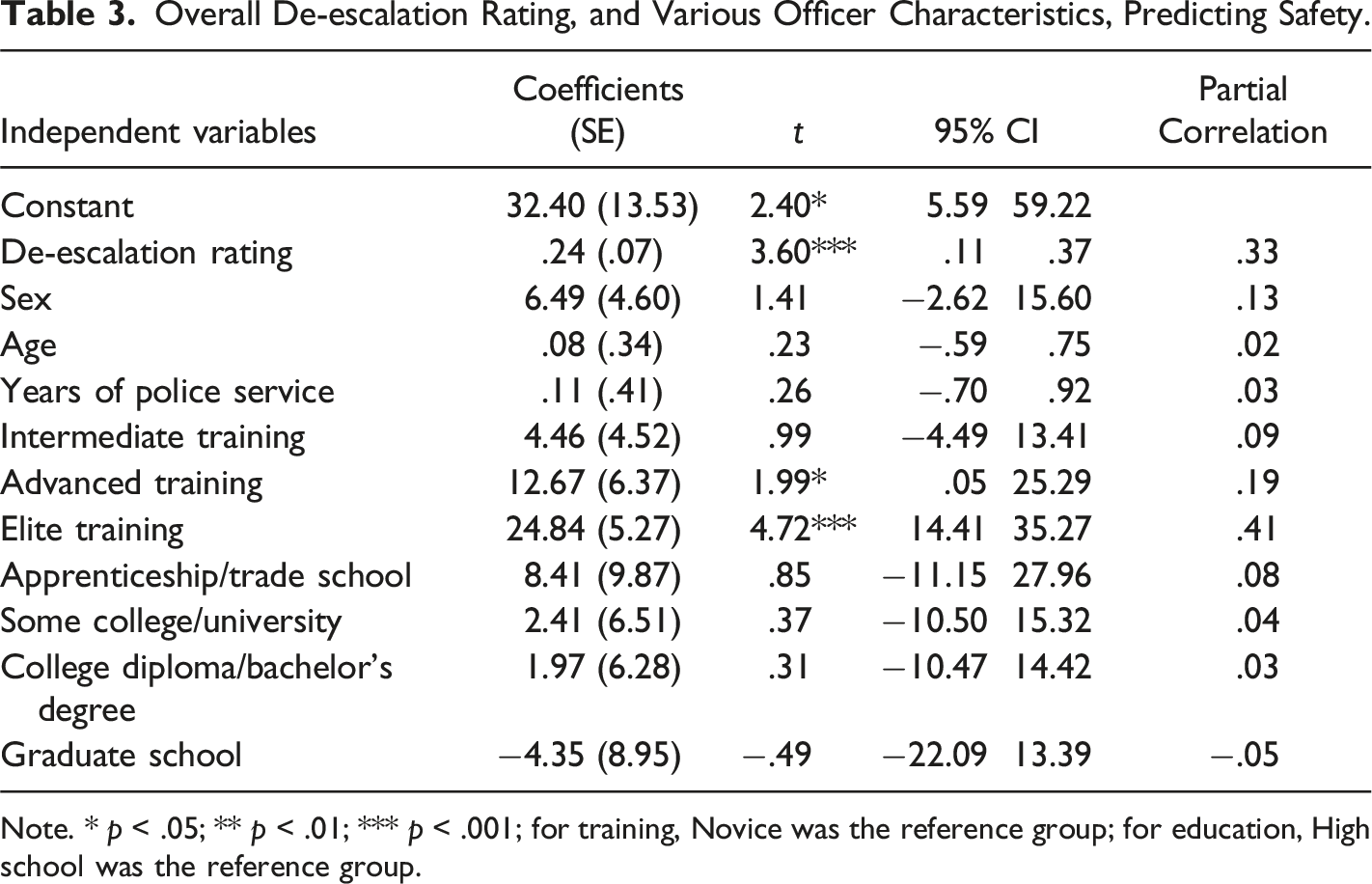
Note. * p < .05; ** p < .01; *** p < .001; for training, Novice was the reference group; for education, High school was the reference group.
De-escalation Sub-scale Ratings, and Various Officer Characteristics, Predicting Safety.
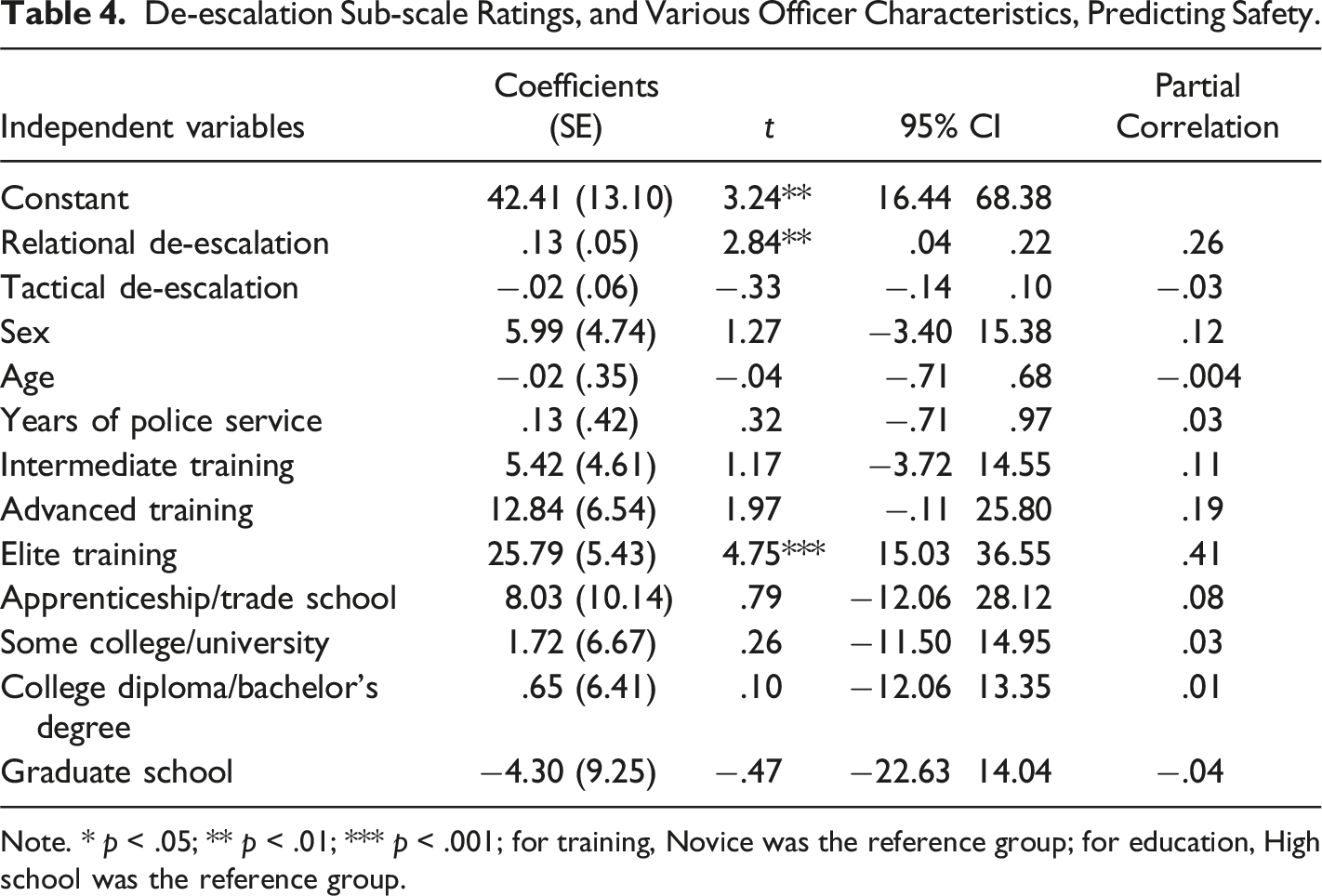
Note. * p < .05; ** p < .01; *** p < .001; for training, Novice was the reference group; for education, High school was the reference group.
Multiple Correspondence Analysis of De-escalation, Training, and Officer Safety
MCA was used to further explore the significant relationships found in the previous analyses, which examined de-escalation, officer characteristics, and officer safety. Figure 1 represents the relationships between each of the de-escalation techniques we coded for and officer safety quartiles, with Safety 1 representing the lowest quarter of safety scores and Safety 4 indicating the highest quarter of safety scores. In this case, the analysis supports the existence of two different and distinct de-escalation styles. Dimension 1 relates to the absence/presence of relational de-escalation techniques (e.g., active listening, demonstrating concern, demonstrating patience), whereas Dimension 2 relates to the absence/presence of tactical de-escalation techniques (e.g., pre-planning before encountering the situation, pre-planning by seeking information about the person in crisis [PIC] before arrival on scene, self-control). Based on the relationship between these techniques and officer safety quartiles, this figure also supports the results from our regression analyses, which emphasized the association between relational de-escalation techniques and officer safety. The absence of relational de-escalation techniques is associated with the lowest safety scores (Safe_1), whereas the presence of these techniques is associated with the highest safety scores (Safe_4). The absence of tactical de-escalation techniques is also associated with relatively low safety scores (Safe_2), whereas their presence is associated with slightly higher safety scores (Safe_3). Multiple Correspondence Analysis of De-escalation Techniques and Officer Safety Quartiles.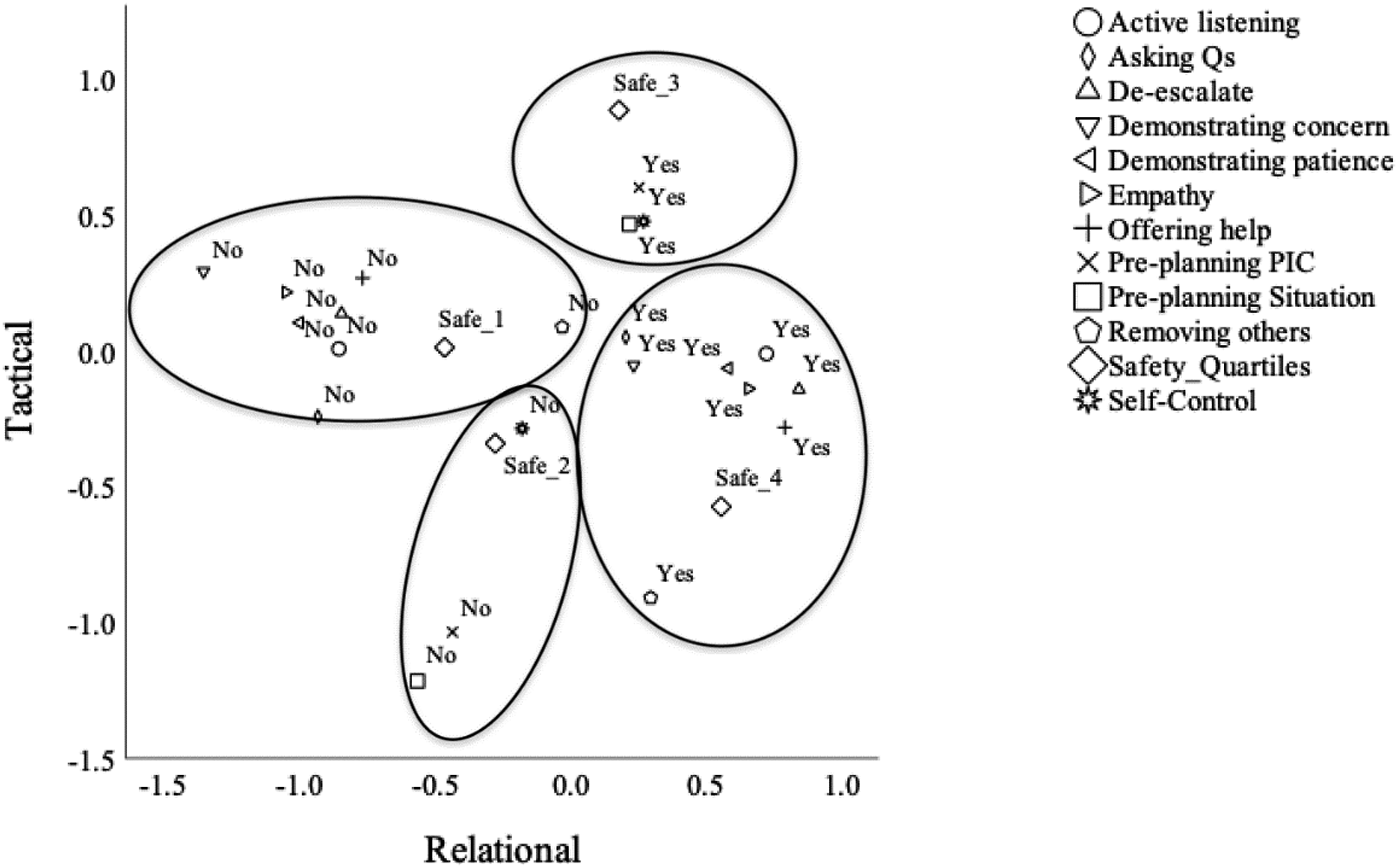
Figure 2 also aligns nicely with our regression analyses, which consistently revealed that one’s training is associated with one’s level of safety in the scenario we examined. While it was difficult to interpret the underlying dimensions of the plot in this case, the MCA does reveal four clear clusters, which suggest that level of training and officer safety are related to one another in a linear fashion; that is, officer safety scores increase as the level of officer training increases, from novice/basic to elite. Multiple Correspondence Analysis of Training Level and Officer Safety Quartiles.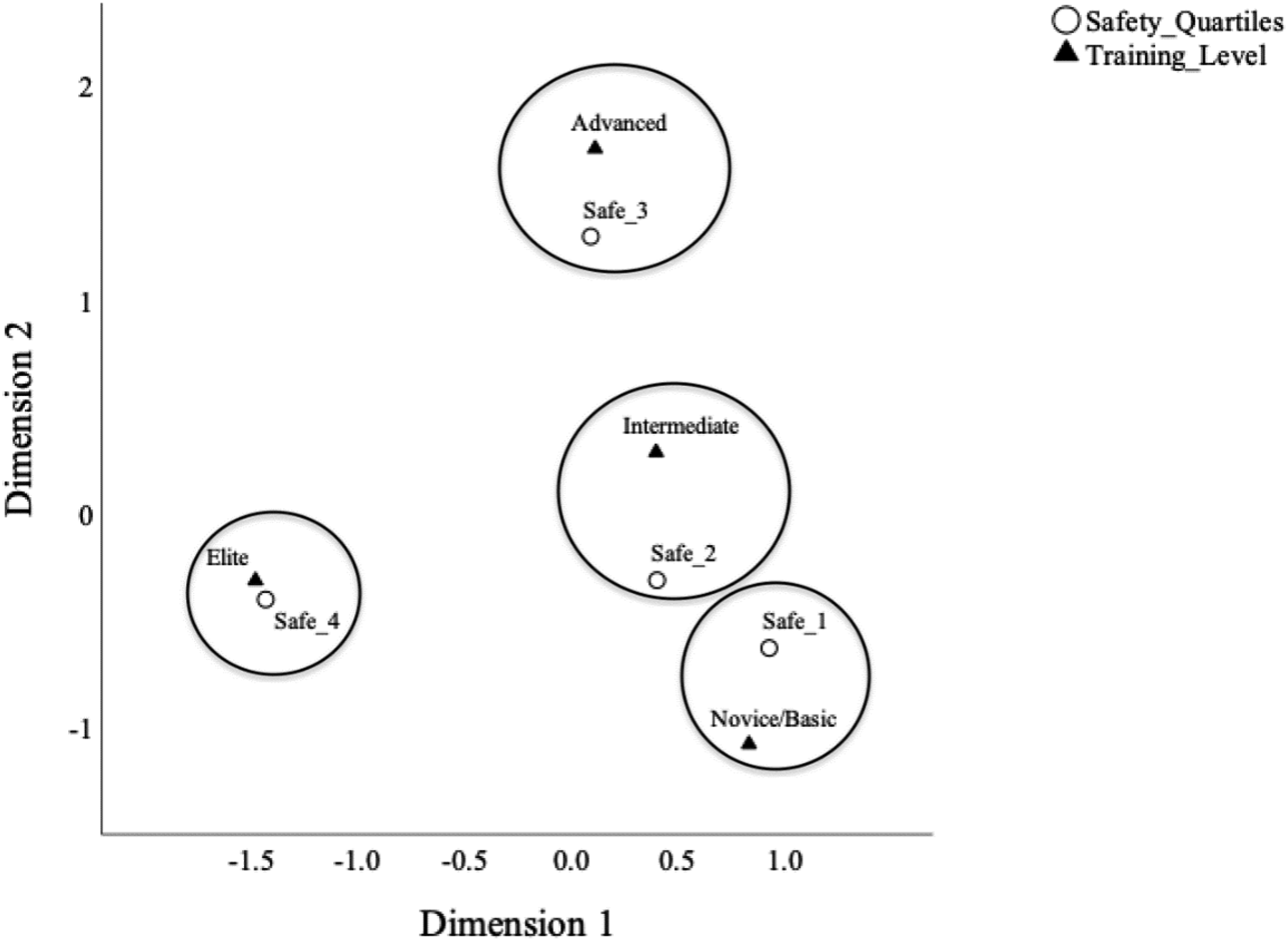
Discussion
There is a lack of empirical research that examines the relationship between de-escalation and officer safety within the policing field. The current research was conducted to start filling this gap.
Relationship Between De-escalation and Safety
The first two research questions focused on the relationship between de-escalation and officer safety, including whether certain de-escalation techniques are associated with safety more than others. While some researchers have raised concerns that an officer’s use of de-escalation may lead to officer safety risks (e.g., Blake, 2017; Landers, 2017a, 2017b), other research has highlighted the potential for a positive relationship (e.g., White et al., 2019). The results from the current study tend to support the latter position. Indeed, our analyses suggest that a positive (but imperfect) relationship exists between de-escalation and officer safety. That is, when scores on the de-escalation scale increased, indicating greater use of de-escalation techniques, scores on the officer safety scale also increased, indicating higher levels of safety.
Although we were not able to determine causality, certain de-escalation strategies appear to be particularly important from an officer safety perspective. For example, the regression analysis that focused on relational and tactical de-escalation strategies found that the use of relational techniques was significantly related to officer safety scores, but not the use of tactical techniques. This was supported by the MCA. Not only was the MCA important because it confirmed that relational de-escalation strategies are especially relevant for officer safety, but it supported the existence of two distinct de-escalation styles, which have sometimes been discussed in the literature, albeit using different labels (e.g., Price & Baker, 2012; Todak, 2017; Todak & James, 2018), but have never been empirically determined.
Given arguments that have been made in the literature, this finding related to relational de-escalation was somewhat surprising to us. Physical closeness is often encouraged, and sometimes necessary, when using strategies typical of relational de-escalation (e.g., active listening), which might put officers in harm’s way. Indeed, positioning oneself in close proximity to a subject is often seen as a disadvantage when it comes to officer safety, with officers often being encouraged to maintain adequate distance (Sandel et al., 2021). Contrary to this view, the results from the current study indicate that the use of these types of de-escalation strategies is associated with higher officer safety ratings, not lower. This suggests that these techniques may still be effective at a distance (indeed, many officers in our study demonstrated sound de-escalation skills while posted at the apartment door). This may have implications for how officers decide to engage with subjects in the field when attempting to de-escalate volatile encounters if the results reported here can be replicated in naturalistic settings (e.g., officers may want to prioritize the sorts of relational techniques examined in this study).
Officer Characteristics and Safety
The third research question asked whether certain types of officers are able to maintain high levels of officer safety more than others. Of the variables that were examined using regression analysis, only the officer’s level of training significantly predicted officer safety scores. These results were consistent with the MCA. Based on this analysis, the lowest scoring participants on officer safety were those that had received only novice/basic training, whereas the highest scorers on officer safety were those that had received elite training. This suggests that it might be valuable to closely examine the type of elite training that participants in this study received to determine what exactly is allowing these officers to maintain higher levels of officer safety during the observed scenario; it may be possible to leverage this knowledge to better prepare more novice officers in the future by making modifications to the training they receive.
While we could find no other research that has directly examined how an officer’s level of training impacts officer safety in potentially volatile police-public interactions, this finding is consistent with other research, such as studies that have examined officer perceptions of training and safety. For example, Brimo (2012) interviewed 15 law enforcement officers who were a part of tactical teams. He found that officers often believed that using military tactics and equipment made their jobs safer. Jenkins et al. (2020) also interviewed active-duty police officers regarding their perceptions of tactical units. Similar to Brimo’s findings, these interviews revealed that almost all participants believed that the additional training provided to tactical units increases officer safety. Given these findings, it is perhaps not surprising that officers who received advanced or elite levels of training also scored higher on the officer safety scale.
The findings in the current study are also consistent with research that has shown how officers with varying levels of training perform in highly stressful scenarios (given that superior performance may have important safety implications). Indeed, numerous studies have shown that officers with elite training perform better in high stress scenarios, and safety is likely to be improved as a result. For example, Vickers and Lewinski (2012) examined the performance of elite officers (i.e., Emergency Response Team members; n = 11) and cadets at the end of their training (n = 13). The authors found that during a high stress scenario the elite officers had much higher shot accuracy (75% vs. 54%) and made fewer decision errors (19% vs. 62%) than the cadets. Likewise, more experienced officers in this study had better attentional and gaze control. Landman et al. (2016) reported similar results in their study of regular officers and officers from a specialized arrest unit. They found it was the relevant experience (i.e., violent encounters, military experience, years of service) of officers in the arrest units that allowed them to maintain physiological control (i.e., reduced anxiety) and exhibit heightened performance (i.e., increased shot accuracy) during a high stress scenario (although there was no between-group significant differences in decision errors, movement speed, or gaze behaviour).
Perhaps more surprising than the significant findings related to officer training and safety were some of the non-significant findings reported above. Intuitively, one might expect officers with higher educational credentials to exhibit greater levels of officer safety, but this was not found to be the case in the current study. For example, Krimmel (1996) found that officers with a bachelor’s degree or higher rated themselves as having better communication and problem-solving abilities, which should enhance officer safety during police-public interactions (Bennell et al., 2022). Other studies have also found that education seems to increase an officer’s communication skills and problem-solving abilities (e.g., Carter & Sapp, 1990; Smith & Aamodt, 1997).
Implications of the Research
Beyond the practical implications of our results, which we have discussed above, the findings from our study also have two noteworthy implications for future research on de-escalation and officer safety. First, the results have implications for how we define de-escalation. The most common definitions of de-escalation present it as a general construct without making any distinctions between the types of de-escalation strategies that can be used, or the importance that should be attached to these strategies (e.g., Engel et al., 2020; National Consensus Policy and Discussion Paper on Use of Force, 2020). The results from the current study suggest there may be different styles of de-escalation, and that some styles (relational) may be more important than other styles (tactical), at least from an officer safety perspective. In the future, it may be important to consider how these distinctions can be better captured in operational definitions of de-escalation.
Second, the results from this study may have implications for how future de-escalation research is conducted. For example, from a coding perspective, the results of this study suggest that researchers will want to pay attention to the full range of de-escalation techniques that officers can use, covering both relational and tactical strategies (and potentially other styles that emerge from future studies) rather than focusing only on a small subset of techniques. An officer’s style of de-escalation seems to matter, so it will be necessary for data to adequately capture these styles. It will also be important for researchers to use analytical approaches that allow the potential value of these distinctions to be realized.
Study Limitations and Future Directions
Several limitations are notable to consider when reviewing our findings. First, our sample size was relatively small, especially when analyzing certain sub-samples of participants (e.g., female officers). In the future, studies should attempt to collect data from a larger, more diverse sample.
Second, our sample of officers was from a single police organization, and while the experience and duty type of police officers was diverse, we cannot be sure that the results will generalize to other police organizations. The fact that only one scenario was used also limits our ability to generalize to other situations. Future research should try to examine the issues explored in this research within various police organizations, using a range of scenarios, in an attempt to demonstrate generalizability. In the same vein, all the coders were also from the same police organization as the participants. While the size of the police organization makes it unlikely that the coders personally knew the participants, using coders from the same organization as the participants may have certain drawbacks. For example, the coders may share common parochial perspectives on officers’ performance, which reflect their organization’s behavioural norms and expectations, which may introduce coding biases. 7 Future research should consider using coders from outside agencies or other relevant professions to be able to determine if the results of this research are generalizable.
Third, the items making up the de-escalation scale are not exhaustive and do not cover all de-escalation techniques referenced in the literature (e.g., shoes [i.e., officers attempting to put themselves in the citizen’s shoes]; human [i.e., avoiding “cop talk” and instead, talking to the citizen as a person]). As a result, our findings may not fully reveal how de-escalation relates to officer safety. Also, the coding of various de-escalation techniques (e.g., empathy) is very subjective, and therefore, the analysis of these techniques must be viewed with caution (although we observed reasonable levels of inter-rater reliability). In the future, researchers may want to code for a broader range of de-escalation techniques and attempt to create schemes that allow for more objective coding.
Fourth, given the way data were collected, this study was not able to determine causality. For example, it is unclear based on the way we coded the data whether the use of relational de-escalation techniques results in higher levels of officer safety, or whether higher levels of officer safety allow relational de-escalation techniques to be used. This was because the de-escalation and safety variables in this study were both treated as “officer performance variables” when completing the coding, rather than treating de-escalation as a performance issue and safety as an outcome of the scenario. By examining the temporal ordering of the de-escalation and officer safety variables in future research, following the work of others (e.g., Piza et al., 2023), it may be possible to establish the temporal order of these variables and speak to causality more directly and to the potential for certain patterns or sequences of de-escalation strategies to result in better outcomes.
Finally, and perhaps most importantly, the scenario that officers participated in lacks some of the realism that would be found in naturalistic settings. For example, the scenario also followed a script that may have changed how officers used de-escalation, and while the scenario was stressful for officers (Baldwin et al., 2022), participants still knew it was a scenario without all the inherent risks they could encounter while on duty. In the future, researchers may want to consider ways to leverage real-world data, such as coding from body camera footage or relying on systematic social observation of genuine interactions, to study the issues we examined in this research.
Conclusion
This study contributes to discussions about de-escalation, officer safety, and the relationship between the two. While suggestions have been made that the use of de-escalation may compromise officer safety, the current research found the opposite. This is promising and provides support for recommendations currently being made that police officers should use de-escalation strategies whenever possible during their interactions with the public. Relational de-escalation strategies appeared to be particularly important and were associated with higher levels of officer safety. Future research is needed to confirm that these results generalize to other services and settings, particularly real-world encounters with the public, but this study represents a good first step in developing a better understanding of de-escalation and officer safety.
Footnotes
Declaration of Conflicting Interests
The author(s) declared no potential conflicts of interest with respect to the research, authorship, and/or publication of this article.
Funding
The author(s) received no financial support for the research, authorship, and/or publication of this article.
