



Abstract
Using open-source (i.e., social media) data collection complemented by in-depth case studies, we present a typology of police responses to homelessness across the United States. We identified eight categories of discretionary police responses to homelessness. For several of our categories, we identified subcategories. We present and define each category in the typology and provide open-source examples for each discretionary response. The majority of responses are steeped in discretion and must be tailored to the local context. This work demonstrates that many police departments are innovative in their responses to people experiencing homelessness. While novel, this research can be used as a foundational resource to help guide law enforcement agencies in responding to people experiencing homelessness. It also lays the groundwork for future evaluation efforts that are needed to determine which police responses to homelessness produce positive outcomes or meet specified goals and which do not.
Chronically unsheltered individuals have come to symbolize the “face” of homelessness, especially in urban environments, despite the fact that they are not the largest segment of the homeless population (Lee & Farrell, 2005). It is rare for an urban city not to have a visible presence of unsheltered individuals in its downtown public areas. Unfortunately, this presence regularly elicits negative reactions from both community members and visitors (Donley & Wright, 2008).
Although not inherently illegal—namely, the act of experiencing homelessness is not against the law—homelessness has evolved into a public safety concern, prompting business proprietors, tourists, commuters, and local residents to turn to the police for assistance in managing the unhoused community. That is, the police are routinely called to respond to issues involving people experiencing homelessness. Similarly, many local governments have enacted ordinances that pose challenges to the daily living of people experiencing homelessness. These regulations often involve criminalizing aspects of homelessness by deeming certain routine human activities, such as sleeping, going to the bathroom, and bathing, as unlawful depending on the location of the activity. As a result of these ordinances, police officers are regularly forced to respond to situations involving chronically unsheltered individuals that would otherwise not call for such involvement (Chamard, 2010). Without any set of national guidelines to inform police responses to persons experiencing homelessness, 1 police agencies, as well as their local governments and community partners, are left to trial and error. Consequently, many communities have experienced a rise in the frequency of arrests and incarcerations of the unhoused (see, for example, Donley & Wright, 2008; Fang, 2009; Greenberg & Rosenheck, 2008; Kushel et al., 2005; McNiel et al., 2005) while police officers and law enforcement agencies find themselves often being criticized for their responses to people experiencing homelessness (see, e.g., Beckett et al., 2018; Berk & MacDonald, 2010; Herring et al., 2020).
This exploratory research helps fill the current void in knowledge about police responses to people experiencing homelessness. Using a thematic analysis of open-source data complemented by in-depth case studies, we present a typology of police responses to homelessness across the United States. While novel, this research can be used as a resource to help guide law enforcement agencies in responding to people experiencing homelessness. It also lays the groundwork for future evaluation efforts that are needed to determine which police responses to homelessness produce positive outcomes or meet specified goals (i.e., what “works”) and which do not.
Literature Review
The lived experience of being homeless exists on a continuum and is predominantly influenced by wealth or lack thereof. At one end, a family becomes homeless due to a structure fire. However, their affluence means the family’s status as homeless is temporary. In the middle of the continuum are people whose living situations can be described as precarious or marginal. “One paycheck away from being on the streets” is a common phrase used to describe the financial insecurity tied to these individuals’ housing status. Also somewhere in the middle are those people who are episodically homeless—these individuals cycle between maintaining unstable housing and not having housing. At the other end of the continuum are those who are chronically homeless (Lee et al., 2010). According to the U.S. Department of Housing and Urban Development, Persons are said to be chronically homeless if they have a disability and have been continuously homeless for one year or more, or have experienced at least four episodes of homelessness in the last three years where the combined length of time being homeless in those occasions was at least 12 months (Henry et al., 2021, p. 2).
In 2022, an estimated 192,000 people experienced unsheltered homelessness on a single night in the United States—one-third of all the estimated people experiencing homelessness (de Sousa et al., 2022).
Given the magnitude of the issue and its ubiquitousness, it makes sense that there is considerable scholarship around homelessness and people experiencing homelessness from a variety of disciplines. There are even academic journals dedicated solely to the broad topic of homelessness. 2 A Campbell Systematic Review (Munthe-Kaas et al., 2018) examining interventions aimed at reducing homelessness (i.e., securing housing and preventing eviction) found that a range of housing programs 3 and case-management interventions seem to effectively mitigate homelessness and enhance housing stability when compared to “usual services,” such as drop-in centers, after-care services, outpatient clinics, and brokered case management. Similarly, these programs do not lead to worse outcomes when compared to usual services. Surprisingly, police contact with an unhoused individual is not a response in this review (Munthe-Kaas et al., 2018).
Research indicates that the number of municipal laws aimed at restricting or prohibiting the actions or movements of unhoused individuals in public spaces continues to increase. The growth in laws against sleeping, sitting, lying down, and living in vehicles within public spaces is correlated with the increase in people experiencing homelessness across the United States (National Law Center on Homelessness & Poverty, 2019). This increase in laws has also pushed the police (and other law enforcement agencies) to the forefront of responding to any such violation—that is, responding to people experiencing homelessness (Cooper, 2017). In essence, by nature of their role, the police have come to “own” homelessness as an issue in many cities across the country (e.g., see Police Executive Research Forum, 2018). However, the body of empirical work that addresses police responses to homelessness is small.
The police engage with unhoused individuals proactively every day and are called upon regularly by community members to respond reactively to a wide variety of issues involving unhoused individuals. Historically, the police have relied on traditional policing techniques when addressing homelessness issues with an arrest as a common endpoint of an interaction. For example, enforcing criminal trespassing laws—created to protect property owners from unwelcome intrusions—are one approach law enforcement uses to force unhoused individuals and other marginalized groups to “move along” from public spaces (Diamond et al., 2021). If an individual does not comply, the police can arrest them. Some officials claim that enforcing these laws is one way to encourage unhoused individuals to seek services and ultimately permanent housing and thus improve their lives (Westbrook & Robinson, 2021). This kind of enforcement of low-level nonviolent crimes and/or nuisance ordinances can threaten police legitimacy and increase mistrust of the police by people experiencing homelessness (Townley et al., 2022) and perhaps other community members as well. There is also evidence that such treatment actually negatively impacts the health and well-being of those it claims to support (Chang et al., 2022; Westbrook & Robinson, 2021).
However, police leaders commonly acknowledge that they “cannot arrest their way out of a problem.” Arresting individuals as a response to homelessness strains the criminal justice system as well as relationships with community members. This sentiment is particularly relevant when the issue at hand is not necessarily a police problem—like homelessness. As a result, police agencies are being forced to become more creative in their problem-solving efforts to address myriad issues, including responding to people experiencing homelessness. There is evidence that cross-sector partnerships can be successful in addressing crime and other criminal justice issues (see McGarrell et al., 2010; Mock, 2010; Roehl et al., 2008). These problem-solving collaborations acknowledge the power of multiagency responses and expanded skillsets as well as the advantages of pooling resources—partnerships are crucial in a space where financial resources are chronically scarce and the problems are widespread and long lasting (Batko et al., 2020; Hipple, 2017; Hipple et al., 2016; Police Executive Research Forum, 2018). However, these relationships can be difficult to create and maintain, and the topic of relationship building is not routinely taught to police recruits.
As law enforcement agencies continue to grapple with how to respond to homelessness, the unsheltered homeless population slowly continues to increase, especially since the global pandemic (de Sousa et al., 2022). Poverty and the lack of affordable housing are widely thought to be the key contributors to the population of people experiencing homelessness across the country, yet how and why individuals experience homelessness in the United States depends heavily on the geographic location. Numerous law enforcement agencies across the United States now consider outreach to their local population of people experiencing homelessness to be critical to their overall policing strategies (Goodison et al., 2020). Indeed, responses to people experiencing homelessness must be tailored to the local context. However, there is no set of national standards informing police responses to people experiencing homelessness from which police can draw and customize. Therefore, police agencies and their government and community partners are left to experiment with responses strategies that may or may not work in their local context.
Related to the lack of national standards informing police responses to people experiencing homelessness is the fact that the evidence base of what strategies and tactics are most successful is underdeveloped. Therefore, this study is guided by a broad research question: what are the practices and strategies used by the police to respond to people experiencing homelessness? In this exploratory study, we conducted a thematic analysis to answer this question by creating an inventory of police responses to homelessness. From there, we developed a typology of responses that can be used by law enforcement agencies across the country and can help guide further research. A typology is simply an organized system of types and is a well-established analytic tool in the social sciences (Croft, 2002). Typologies make crucial contributions to diverse analytic tasks: forming and refining concepts, drawing out underlying dimensions, creating categories for classification and measurement, and sorting cases. In this context, law enforcement agencies can use the typology to create, revise, or reform their practices, strategies, and responses related to people experiencing homelessness. Importantly, this work can also inform an evaluation framework to provide a jumping-off point for developing an evidence base.
Data and Methods
The data for this study come from a larger project that examines police responses to homelessness. We used open-source data collection along with in-depth case studies to develop a typology of police responses to homelessness. We used a modified grounded theory approach to determine the police response categories for our typology—that is, the categories were not determined a priori (Glaser & Strauss, 2009). We began with a list of police activities identified through a thematic analysis (Braun & Clarke, 2006) of various publicly available resources, including extant research (see, for example, Stuart, 2016), government documents, policy reports, information provided by the Council of State Governments, and created an initial set of police response categories. This process was time-intensive, ultimately resulting in a lengthy list of police activities that extended well beyond just those used to respond to issues related to homelessness. From that list of police activities that we began to build out a typology by aggregating activities into broader categories. We then enhanced the typology by adding categories identified from common activities mentioned in social media posts and from site visits (detailed below). We continually refined our typology categories through an iterative process and recoded the data as we refined. Once we felt we reached saturation in terms of identifying categories (in other words, we were longer identifying any new categories or activities that fell outside of our defined categories), we trained multiple research assistants to code the entire sample of social media posts using the typology categories (Cohen’s Kappa = .85). In total, we identified eight broad categories of police responses to people experiencing homelessness that included 11 specific activities. This study focuses specifically on the discretionary responses to homelessness by the police.
Open-Source Data
Open-source research is a novel approach increasingly used in the social sciences. Open-source information includes any type of lawfully and ethically obtainable information (e.g., by request, purchase, or observation) that describes persons, locations, groups, events, or trends (Office of the Director of National Intelligence, 2006). The sources for this information include all types of media that can be accessed online, including traditional scientific research articles and government reports, as well as all types of other materials, such as social media posts, directories, discussion forums, and indexed web pages. Open-source information also includes information collected from offline sources although our data were all obtained electronically.
As the starting point for our open-source data collection, we used the 2016 Law Enforcement Management and Administrative Statistics (LEMAS) survey. We elected to start with respondents to the LEMAS survey because it collects data from a nationally representative sample of nonfederal law enforcement agencies, including local and county police departments, sheriff’s offices, and primary state police agencies. The Law Enforcement Agency Roster, a national roster of publicly funded law enforcement agencies, serves as the universe for LEMAS (United States Department of Justice, 2017). The LEMAS survey is sent to all agencies employing 100 or more full-time sworn officers and a stratified random sample of agencies employing fewer than 100 sworn officers. The final sample size for the 2016 LEMAS survey was 2,784 agencies (United States Department of Justice, Office of Justice Programs, Bureau of Justice Statistics, 2020). 4
We narrowed down the LEMAS sample to include only police agencies (i.e., eliminating sheriff’s offices and primary state or highway patrol departments), resulting in a final sample of 2,135 police departments. We next used internet search engines to find the website for each police department. We used these websites to determine if the departments had Twitter 5 handles and/or Facebook pages. 6 It was common, especially for larger departments, to find multiple handles for different precincts or units in addition to a “main” handle for the department. In such cases, we used the handle or page for the department itself (i.e., the main handle or page). There were 54 departments that only had a Twitter account, 711 departments that only had a Facebook page, and 984 that had both Twitter and Facebook accounts. There were also 386 departments that did not have either account at the time we completed the search in late 2021 and early 2022. Therefore, our search resulted in 1,038 Twitter accounts and 1,695 Facebook accounts, equaling approximately 2,733 social media accounts across 1,749 police agencies available for web scraping.
We partnered with a web scraper to obtain social media posts for every agency that had a Twitter and/or Facebook handle. Our web scraper provided every available post from the date of the search going backward. We narrowed our timeframe to a five-year period—January 1, 2017, through December 31, 2021—for several reasons. First, social media posts for this five-year timeframe were available for all departments in the sample with Twitter and/or Facebook accounts. While not always the case, police departments now regularly use social media accounts as a means to engage with their communities (Dai et al., 2017). The recent five-year timeframe allowed for the inclusion of departments who were late adopters of social media. Second, social media platforms are increasingly being used as a forum for discussing contentious subjects, such as homelessness, which, again, makes the recent timeframe appropriate. While not new, issues surrounding homelessness have amplified in recent years, especially during the global COVID-19 pandemic and are reflected in increased news stories and social media posts on the topic. Third, our decision was pragmatic based on the grant project timeline and available resources given the volume of social media posts retrieved. Our timeframe resulted in the capture of 1,270,898 Facebook posts and 1,224,606 tweets.
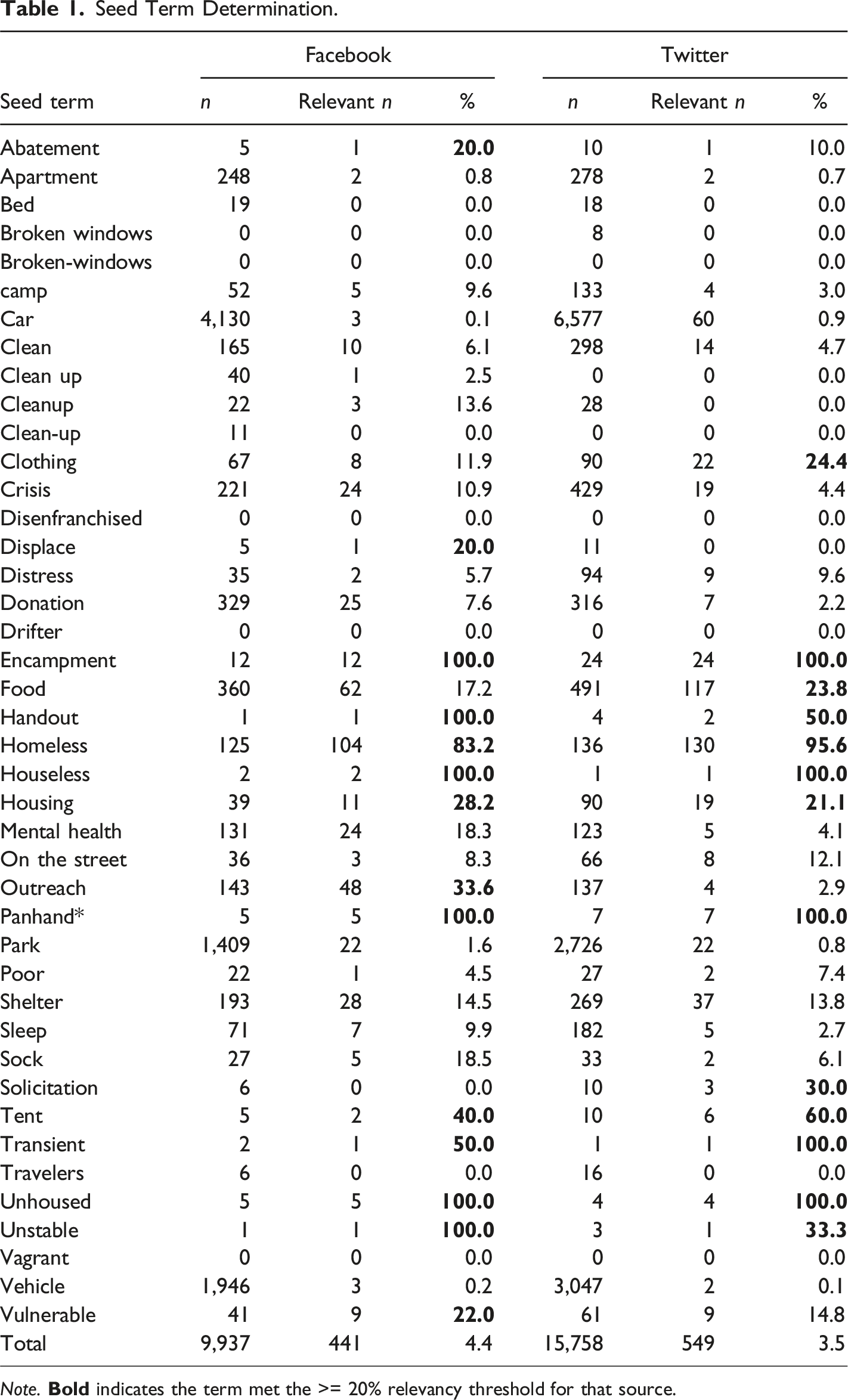
Figure 1 displays the open source data collection and coding process. To start, we identified seed terms to assist us in distinguishing posts related to police responses to homelessness. We started with 17–19 of the largest police departments according to LEMAS, including agencies that committed to a site visit at the time of our grant application, and examined their social media posts from Facebook (n = 19 departments) and Twitter (n = 17) for the years 2017 through 2021. Our beta file contained 37,960 total posts. We searched for posts that contained one of 42 potentially relevant seed terms identified in the literature or by experience or common sense (see Table 1). Research assistants then read each post (n = 25,965) to determine if it included a police response to homelessness. We narrowed the seed-term list to those words that were included in posts related to police responses to homelessness 20% or more of the time. That is, to remain a seed term, at least one in five posts that included the term had to be relevant to our study in that it described a police response to homelessness. While there was considerable overlap between the key seed terms, interestingly, there were some differences in the lists used for Twitter versus Facebook. For example, the word “tent” met our relevancy threshold in Twitter posts only, while the word “vulnerable” met the relevancy threshold only in Facebook posts. Once we narrowed down the entire sample of scraped posts
7
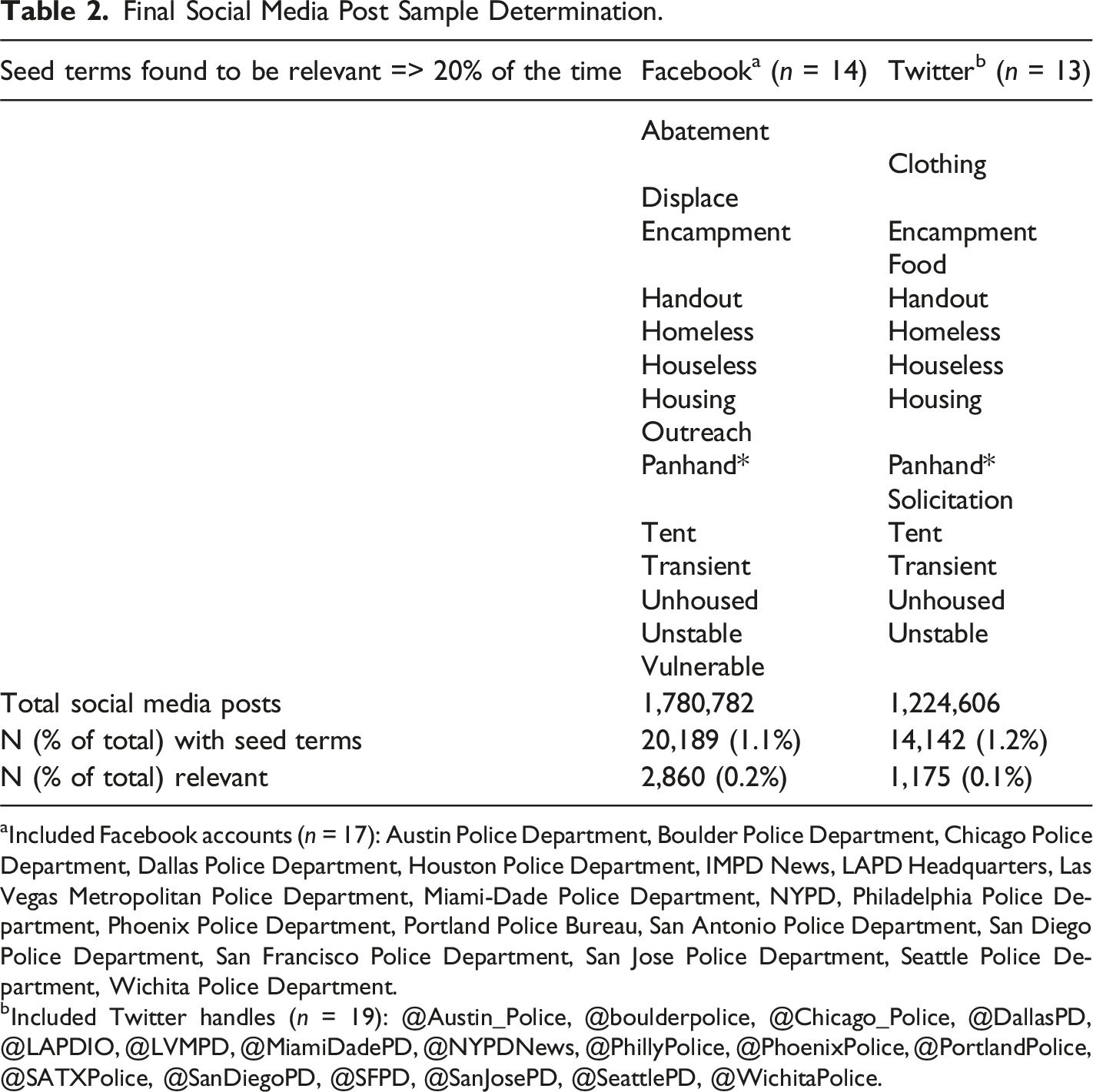
to only posts including our seed terms, our team of research assistants then read each post individually and indicated whether the post was a police response to homelessness. We based relevancy on what was in the actual post and did not rely on external links. After removing tweets and posts from the chosen time period that did not meet these criteria, our sample included 2,860 tweets and 1,175 Facebook posts (See Table 2). Open-source data-coding process. Seed Term Determination. Note. Final Social Media Post Sample Determination. aIncluded Facebook accounts (n = 17): Austin Police Department, Boulder Police Department, Chicago Police Department, Dallas Police Department, Houston Police Department, IMPD News, LAPD Headquarters, Las Vegas Metropolitan Police Department, Miami-Dade Police Department, NYPD, Philadelphia Police Department, Phoenix Police Department, Portland Police Bureau, San Antonio Police Department, San Diego Police Department, San Francisco Police Department, San Jose Police Department, Seattle Police Department, Wichita Police Department. bIncluded Twitter handles (n = 19): @Austin_Police, @boulderpolice, @Chicago_Police, @DallasPD, @LAPDIO, @LVMPD, @MiamiDadePD, @NYPDNews, @PhillyPolice, @PhoenixPolice, @PortlandPolice, @SATXPolice, @SanDiegoPD, @SFPD, @SanJosePD, @SeattlePD, @WichitaPolice.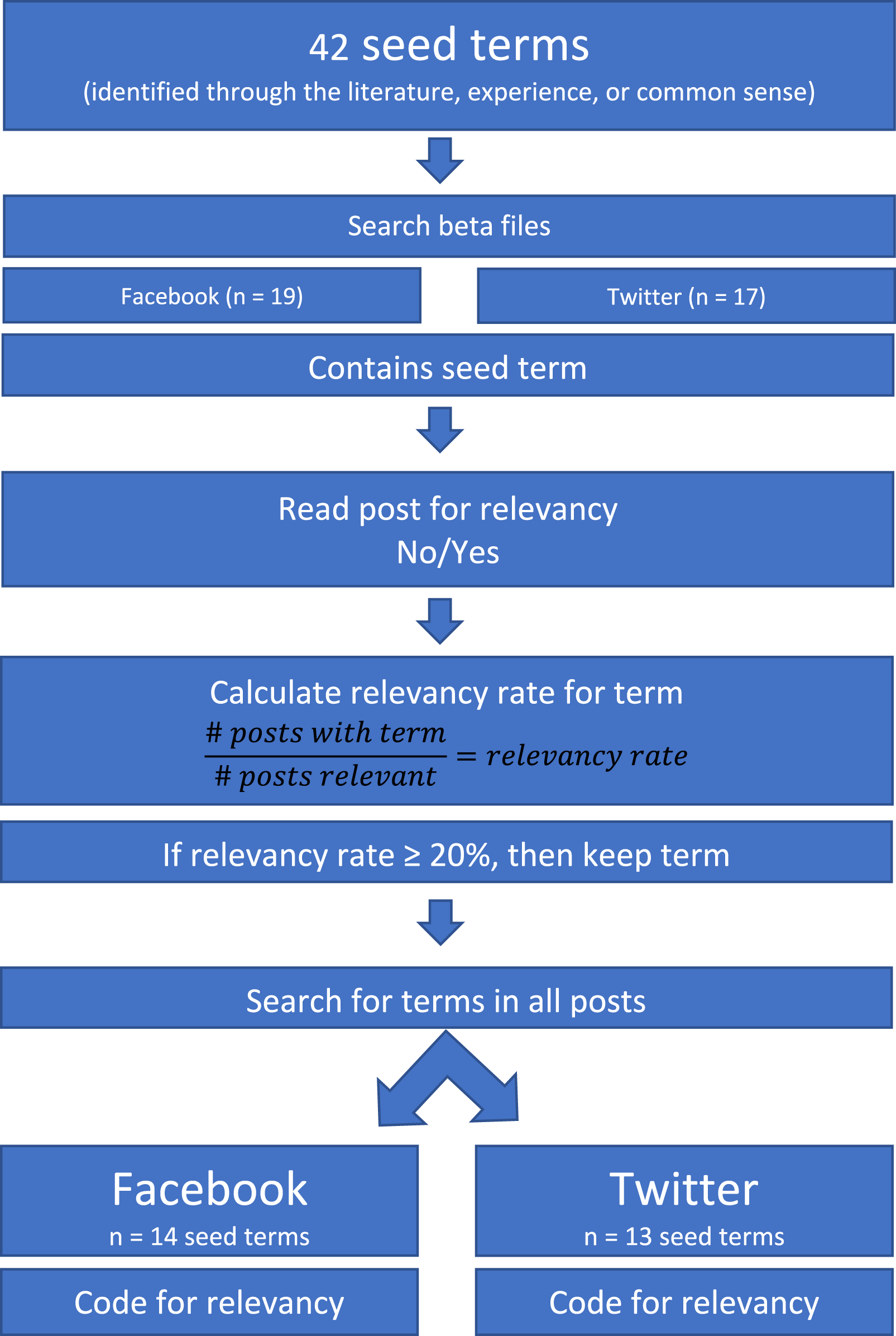
As described above, we relied on social media posts to enhance the typology by adding categories identified from common activities mentioned in them. While the current paper’s focus is on presenting a “menu” of police responses to people experiencing homelessness, we do not attempt to quantify or compare categories. Below, we describe site visits to police departments and how information obtained through those visits also helped in strengthening our typology.
Site Visits
Our project also included in depth site visits to six police departments that had a specialty unit dedicated to responding to homelessness. These specialty units are similar to units focused on homicide, domestic violence, and child abuse and are engaged in a similar fashion. Unit members have additional training and knowledge related to their subject area, however other officers outside the unit may be involved in any given incident. We conducted group interviews with the specialty units using a semi-structured interview guide. The interviews lasted roughly 3 hours each and included questions about the unit’s history and the context within the department. We asked questions about the issues surrounding homelessness in their community, what their day-to-day routine entailed, the types of training they received, common issues they have encountered, and the types of partnerships they have in the community. Officers also provided specific examples of various responses they have employed while on the job and reviewed drafts of our typology to see if we had omitted any responses. The site visits are an important supplement to our open-source data collection because social media posts present a constructed reality of police responses to homelessness that is curated by police departments and, more specifically, the people charged with managing these accounts. It is important to document responses not contained in these posts, a few of which some audiences may consider negative, in order to understand the true nature of police responses to homelessness. Indeed, we discovered police responses to homelessness during our site visits that were not found in the social media data. Our discussions with law enforcement reflect that such responses are common.
These departments were selected purposefully in an attempt to be geographically diverse and to capture a variety of jurisdictional sizes. Two departments were located in the Midwest, one was in the Northeast, one was in the South, and two were in the West. They ranged in size from 82 to 2,086 officers, and the populations they serve ranged from 46,665 to 890,672 people (United States Department of Justice, 2017, 2023).
Results
Informed by open-source data collection and in-depth case studies, we present our typology of police responses to people experiencing homelessness. Police activity, in general, can be divided into two broad categories: proactive and reactive (Cordner, 2019). Reactive policing requires some action by a community member, usually a phone call or request for service (i.e., a call for service). A community member calls the police using 911 or some other request mechanism, and police officers are dispatched to respond to the scene to problem-solve. On the other hand, proactive policing does not stem from a call for service or dispatch and includes common activities like vehicle stops, property checks, and directed or generalized place-based patrols (Koper et al., 2020). Inherent in both proactive and reactive responses is officer discretion (Goldstein, 1977; Stuart, 2014). There are also instances when responding officers do not have much discretion. State and local laws and ordinances are at the heart of nondiscretionary responses and, as mentioned earlier, in this context often involve limiting the actions or movements of unhoused individuals in public spaces (Beckett & Herbert, 2009; National Law Center on Homelessness & Poverty, 2019). These laws can also vary widely from jurisdiction to jurisdiction, so they were not a topic of interest during our site visits. Therefore, we present our entire typology (Figure 2) but limit our discussion in this manuscript to discretionary responses to homelessness. Police responses to homelessness typology.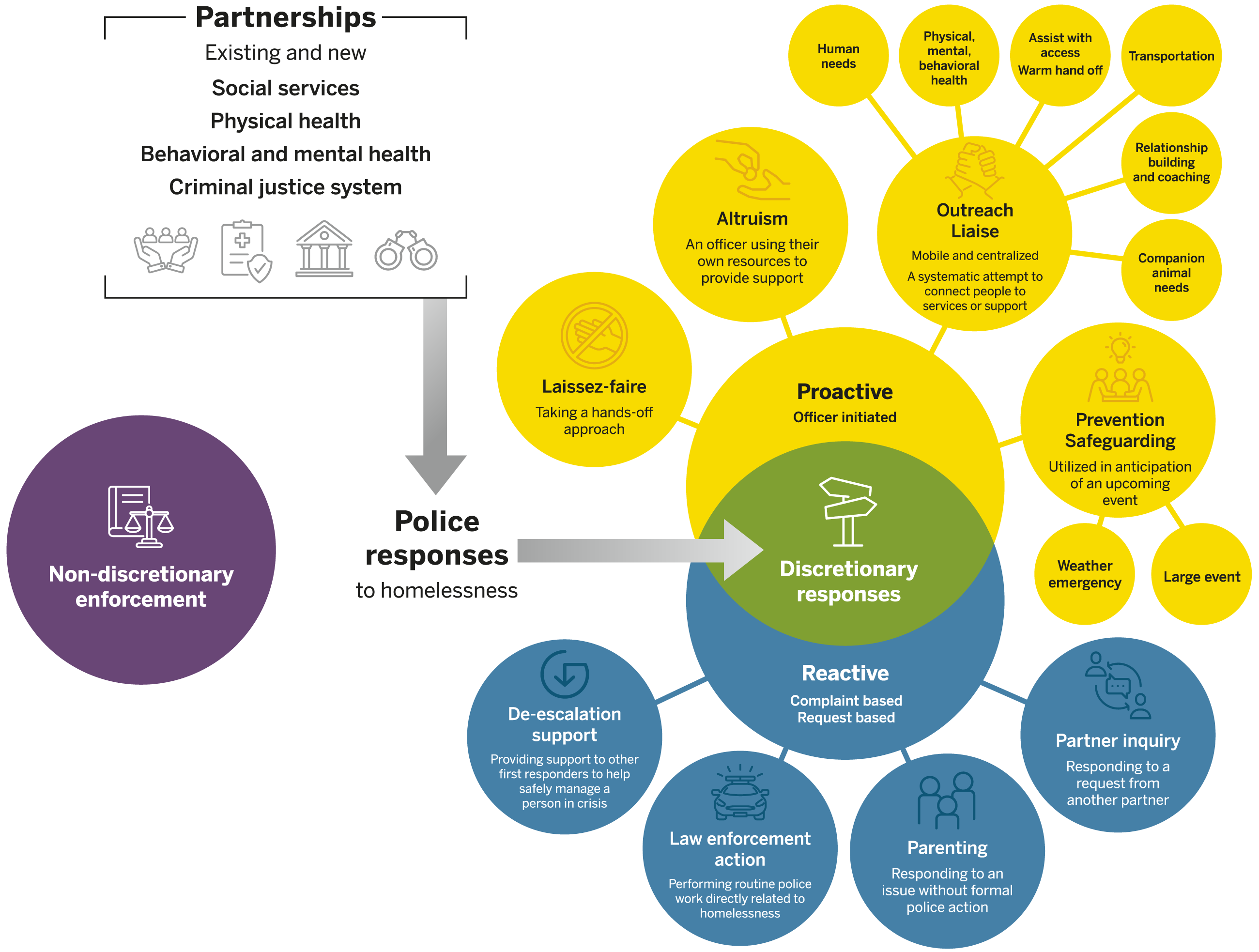
It is important to note that the typology is not linear, nor does it reflect a process. It should be thought of as a menu of possible responses. Given the nature of policing, the need to tailor responses to the local context, and the varying time officers spend engaged with unhoused individuals, a single engagement could involve multiple or changing responses. Police departments may or may not engage in a response that is presented for various reasons. Finally, the typology is also not an endorsement, positive or negative, of any particular police response as it is not the goal of this paper to quantify or compare categories. It is a presentation of our findings. 8 Importantly, there is a large, cross-disciplinary body of research that examines the consequences of existing as an unhoused person in the US. However, those consequences as they relate to police responses to homelessness are outside the scope of this project.
We identified eight categories of discretionary police responses to homelessness. For several of our categories, we identified subcategories. It is important to note that social media posts about police responses to homelessness could fall into more than one category. Below, we present and define each category in the typology and provide examples from open-source data, as well as interviews, when possible, for each discretionary response.
Proactive Discretionary Responses
This broad category involves police responses that are driven by the proactive actions of the police. There are four categories of proactive discretionary responses: outreach and liaise, prevention and safeguarding, laissez-faire, and altruism. Outreach and prevention have six and two subcategories, respectively.
Outreach and Liaise
Outreach and Liaise (“outreach”)—a proactive and discretionary police response— is a systematic attempt to connect people to services or support. While it was not our goal to quantify these categories, outreach was by far the most common police response to homelessness that we noted in our open-source research. Our site visits also supported this finding. Outreach is also the broadest category in the typology, encompassing the most activities. Beckett et al. (2018, p. 1492) categorize similar actions as “officer-involved harm reduction.” Outreach can be mobile, with the police going to the places where the unhoused stay during the day or night to engage in outreach. Outreach can also be centralized such that the outreach is set up at a stationary location and unhoused people are expected to come to the location to obtain outreach services. We identified six different types of outreach: human needs, physical, mental, and behavioral health, assistance with access or a warm handoff, transportation, relationship building and coaching, and companion animal needs.
Outreach: Human Needs
This response involves the police providing basic human need items to individuals experiencing homelessness, such as socks, food, water, feminine hygiene products, blankets, haircuts—basically any items that an unhoused individual may need and/or could use for day-to-day survival. The following is a Twitter example of human needs outreach from the Hillsboro Police Department (2020) in Hillsboro, Oregon: Yesterday, several HPD officers from our patrol division handed out blankets to some of our homeless population. During this wintery time of year we give extra attention to our homeless population and what services we can offer them.
Most, if not all, of the units we spoke with during our site visits did some kind of human needs outreach. In fact, during our interview at one site, officers were briefly pulled away to assist a woman who had been directed to their unit for help receiving basic human need items.
Outreach: Physical, Mental, and Behavioral Health
This response involves the police providing and/or facilitating physical, mental, and/or behavioral medical services and/or equipment to individuals experiencing homelessness. This response also includes screenings and assessments to identify the needs of individuals experiencing homelessness. Examples from social media posts and interviews include the police partnering with providers to offer street medical care, emergency medical care (sometimes in partnership with fire/emergency medical services), and other harm-reduction outreach/distribution (e.g., Narcan). A Twitter post example from the San Diego Police Department (2020) in San Diego, California, demonstrates this outreach: We believe that all residents are individuals of great worth & importance. Homeless Outreach Team works alongside the Psychiatric Emergency Response Team, the Alpha Project & a nurse practitioner. They go to homeless areas to provide assistance. See details: https://youtu.be/3y5vavvkSpM.
Outreach: Assistance With Access or a Warm Handoff
This response includes a variety of actions whereby the police assist with access to benefits; services; and connections to emergency, short-term, and/or long-term housing. A “warm handoff” could include using a police vehicle to assist an individual experiencing homelessness in getting to housing or a treatment/resource facility. These kinds of handoffs are often part of efforts to divert unhoused individuals away from traditional punitive justice avenues and into treatment/community resource avenues. While case management is not part of regular police duties, this response can include helping individuals experiencing homelessness navigate situations related to legal, housing, substance use issues, etc., with the long-term goal of establishing health and more permanent housing. Examples from social media posts and site visits include providing copies of needed documents, offering transportation to appointments, assisting in the process of accessing Medicaid and Social Security Disability Insurance (and other government programs), facilitating meetings with social workers, and connecting unhoused individuals with resources and housing. A Twitter post by the Las Vegas Metropolitan Police Department (2021) in Las Vegas, Nevada, demonstrates this police response: Earlier today, our Homeless Outreach Team joined forces with different agencies to offer a variety of assistance and services to one of our most vulnerable populations. From job placement to housing and even haircuts, it was a one-stop-shop at the Peason Community Center!
Outreach: Transportation
Transportation is often a barrier to services for the unhoused. This response involves the use of a police vehicle to transport unhoused individuals to various places related to the outreach function and was quite common among the units we visited. For example, officers described using their police vehicle to transport an unhoused individual to or from a medical appointment, a shelter or other similar agency for services, or to court for a required hearing. Transportation that is part of an arrest or other law enforcement action is not included in this response category. A Twitter post example by the Kansas City Police Department (2018) in Kansas City, Kansas describes, Officers helped a homeless woman load up her belongings & transported her to Rainbow Services Inc. for treatment.
Outreach: Relationship Building and Coaching
This response involves relationship building and coaching between police officers, community partners, and unhoused individuals with the aim of developing and maintaining personal relationships as well as gaining knowledge about individuals and their needs. With this approach, the police engage in activities designed to establish trust with unhoused individuals with the hope of connecting them to the services and care they need. Coaching is often employed by police officers in interactions with persons experiencing homelessness as a way to develop a shared understanding of their needs and the steps required to address those needs. For example, the Chicago Police Department (2021) in Chicago, Illinois, posted the following on Twitter: While on patrol in the [sic] community he serves, Commander Gilberto Calderon of @ChicagoCAPS10 met a teen experiencing homelessness. Commander Calderon sat down with the young man, purchased him food, and engaged with the teen, attempting to get him any resources he may need.
During our site visits, officers within the units described how learning the names of and building relationships with people experiencing homelessness was often one of the first steps these units take in addressing issues related to homelessness. Moreover, by developing these relationships with the unhoused community, these units are better equipped to understand the community’s needs and can assist in locating individuals when services become available to them.
Outreach: Companion Animal Needs
This response involves the police providing support specific to individuals experiencing homelessness who keep animals as pets. Some types of support mentioned in social media posts and during interviews include providing items, such as pet food and bedding, as well as accompanying veterinary care practitioners who provide services and medications. In this Twitter example, the San Diego Police Department (2020) in San Diego, California, focused on unhoused individuals’ companion canine needs: As we give resources to homeless individuals our four legged friends also need a little TLC. Sergeant Belz has prepared dog bags containing a water bowl, treats, and dog food for a [sic] fury [sic] little friends. 
Prevention and Safeguarding
The next category of discretionary police responses to homelessness is prevention and safeguarding (“prevention”), which includes two subcategories: weather emergencies and large events. The police utilize a prevention or safeguarding response in anticipation of a known upcoming event. This response can be somewhat routinized or involve a specific order of activities, especially in jurisdictions that routinely experience adverse weather events or large gatherings like sporting events, conventions, or concerts.
Prevention: Weather Emergency
A weather event or large gathering spurs law enforcement into action. They work to notify unhoused individuals about conditions or upcoming changes and to direct them toward appropriate resources (e.g., temporary housing) that can mitigate any potential negative effects the weather event may have on them. For example, the Denver Police Department (2019) in Denver, Colorado, provided transportation to individuals experiencing homelessness during a blizzard, as indicated in this Twitter post: REMINDER: Please keep an eye out for transients or individuals who are experiencing homelessness & may need help getting our [sic] of the #blizzard. Call 720-913-2000 and officers will be dispatched to transport them to shelter. #Denver #cowx #BombCyclone #Snowmaggedon2019.
Prevention: Large Event
We did not find any social media examples of large event responses in our open-source data. However, our site visits revealed that the police often work to reduce the potential for negative interactions between the public and the unhoused community during large conventions, sporting events, and concerts. This response involves informing the unhoused community of the upcoming event so they can choose to remove themselves from the area if they want to do so. Officers noted that in many instances, people experiencing homelessness do not want to be caught up in the crowds and other things that accompany these events.
Laissez-Faire
The third category of discretionary police responses to homelessness is the laissez-faire response. Laissez-faire is a French phrase that is interpreted as letting people do as they choose or taking a hands-off approach. This police response is one that involves little interference. This response may not be talked about openly among law enforcement agencies and is hard to quantify. A good example is an unhoused individual who is living off the beaten path, not interested in services, and does not generate complaints from community members. A laissez-faire police response might involve officers checking in on this individual regularly to establish or maintain a relationship and continuing to offer services but otherwise doing nothing. This response was rarely documented in our open-source data but was discussed as a relatively common strategy among many police officers we interviewed. However, some officers indicated they did not consider this approach a responsible response, but rather enabling. When police departments did post on social media about this police response, it mostly involved checking on the welfare of individuals experiencing homelessness, as demonstrated in this Facebook post from the Duluth Police Department (2017) in Duluth, Minnesota: Deb Holman who works at the C.H.U.M. as a homeless outreach worker sent this message and photos to share with our Facebook friends: Thanks to Officers Jones and Fredrickson for helping me on a welfare check today. The people sleeping outside mentioned numerous times how nice the cops in Duluth were. They also have a shout out to Officer Roe who has assisted them in the past. I couldn’t have done this today without them. Thanks Deb for taking the time to send this into our Facebook page! Ofc. Jones and Ofc. Fredrickson assisting Deb checking the welfare of a homeless person.
Altruism
The next category—altruism—is not an official police response to homelessness. However, we would feel remiss if we did not include it in the typology. If it were an official response, it would fall under outreach, but we feel it is unique and deserves its own category. This response is exemplified by officers who use their own personal resources or money to provide support to an unhoused individual. Maynard-Moody and Musheno (2003) describe similar actions by other line-level public servants like teachers and counselors who go out of their way (and often outside of policy or norms) to help their students or clients. In this context, the support is most commonly in the form of outreach—that is, helping to fulfill basic human needs by buying food, providing clothing, and providing or moving furniture once housing is obtained. Based on our site visits, we feel confident that these instances are underrepresented in the open-source data. However, a Twitter post from the Boynton Beach Police Department (2019) in Boynton Beach, Florida, demonstrates this response: Ofcs. Amanda Corum & Carolo Borrero paid for a 78-year-old homeless woman’s 2-night hotel stay. Officers contacted DCF & our victim advocate is working to identify resources for her. We know the officers didn’t do this for recognition, but we believe their #KindnessMatters.
An officer revealed another example during one of our site visits. The officer told us they were storing furniture for an unhoused individual who was finally going to move into supportive housing but faced a delay and needed to store their newly donated items.
Reactive Discretionary Responses
This broader category involves police responses that are based on complaints—formal or informal—and specific requests made to a department’s homelessness specialty unit or lead officer. There are four categories of responses that fall under reactive discretionary: de-escalation support, parenting, law enforcement action, and partner inquiry.
De-Escalation Support
This police response involves the police resorting to de-escalation techniques to safely manage an unhoused person in crisis. Officers are called to the scene either by a community member via a 911 call to dispatch or by another officer to help de-escalate a situation in which a person experiencing homelessness is in crisis (e.g., mental health). Here is an example from a Facebook post made by the Hayward Police Department (2020) in Hayward, California: Last week, our patrol officers responded to a call for service at a local park in which a homeless man brandished a weapon at a HARD Park Ranger. The Park Ranger requested police assistance when the 45-year-old, Filipino male became aggressive towards the Park Ranger and pointed a knife at him and took a fighting stance. The Ranger was not injured since he removed himself from the situation to call the police. Our patrol officers, including a crisis negotiator on that patrol team responded to the call for service and were able to de-escalate the situation. They talked to the man and he walked out from his tent. The knife was recovered at the scene. The man was taken into custody and was taken to the hospital to be further evaluated. This is what we train for: to safely de-escalate a dangerous situation. This will not make the news – but it is a story with a perfect ending.
Parenting
This response was not documented in the open-source data very often but was discussed frequently by officers during our site visits. In these situations, officers take on a parent role. For example, the police might be aware of illegal activity taking place at an encampment, so they warn the residents about potential consequences. This type of strategy is usually undocumented and is often a response to a complaint made by an unhoused person about another unhoused person. The following tweet from the Columbus Division of Police (2018) in Columbus, Ohio, exemplifies this response: “NEW BOOKING PHOTO**UPDATE 1/11/18: 30yo Shain Barrett was arrested by patrol officers yesterday after some homeless people pointed out his tent he was staying in. Madison & Union counties also have been looking for him.”
Law Enforcement Action
This police response captures routine police work that is related to issues of homelessness. For instance, the police might receive a complaint or a call for service, and the individual involved also happens to be experiencing homelessness. This police response was found in our open-source data as the police departments in our sample frequently posted about routine police actions, such as looking for a suspect or describing a victim of a crime, while also mentioning that the individual is unhoused. For example, the Los Angeles Police Department (2021) in Los Angeles, California, posted the following on Twitter about a homicide involving a suspect who was experiencing homelessness: On March 9 LAPD ofcrs arrested Obie Thompson, a person experiencing homelessness, for the Murder of 76 yr old John Decindis. The victim was beaten to death in the Venice area of Abbot Kinney/Milwood. Any info call West Bureau Homicide 213-382-9470.
This response also includes encampment cleanups and closings. For example, the New York Police Department (2018) in New York, New York, posted the following on Twitter: These @NYPD33Pct officers worked with our partner agencies to address community complaints about an encampment in High Bridge Park. Together, they were able to clean up the encampment and connect residents with the services they need! #NYPDconnecting.
Partner Inquiry
This police response rarely showed up in the open-source data but was discussed as a frequent response during interviews with officers, highlighting the importance of partnerships and collaborations in dealing with issues related to homelessness. Specifically, this police response involves responding to a request from local partners (e.g., criminal justice or service outreach) for information regarding certain unhoused individuals, such as verifying an individual’s identity for a coroner or other law enforcement partner or trying to pinpoint the location of a specific unhoused individual to get them access to services. This police response is somewhat atypical in that the police play a supporting role. That is, rather than the police reaching out to their partners for a specific type of assistance or information, the reverse occurs. During one of our site visits, the entire unit we were meeting with received a picture of a deceased person who was thought to be unhoused. A partner agency was attempting to identify this person, and the police were able to help. They mentioned that this type of request is common. Officers at other sites confirmed this action occurs rather frequently.
Finally, we note a category of social media posts that, at first glance, seemed to be relevant to police responses to homelessness, but upon closer examination, we determined they were not actual police responses. These posts are intended to educate the public—a core reason law enforcement agencies maintain social media accounts (Dai et al., 2017)—and include announcements about events related to the unhoused population, such as clothing drives; ways to help; and other such educational information. An example from our open-source data comes from the Anchorage Police Department (2018) in Anchorage, Alaska: People often drop off tents, beds, couches, and other supplies for homeless people on the streets. This, however, is littering. There are many effective ways to offer your support and help the homeless community get connected with the resources they need.
Importantly, it was noted during several of our site visits that educating the public on issues surrounding homelessness as well as the ways to help those experiencing homelessness is one of the specialty unit’s most difficult jobs. Community members are often unaware of what law enforcement can do to respond to homelessness issues, as well as the many constraints faced by law enforcement. Additionally, it is common for well-intentioned community members to take it upon themselves to donate food or drop off furniture to those belonging to the unhoused community without considering possible health or environmental ramifications for those they seek to help.
Discussion
Performing a thematic analysis of qualitative data, we identified a distinct set of police responses to homelessness. The majority of responses are steeped in discretion and must be tailored to the local context. Similarly, the police do not respond alone—partnerships are an extremely important component of their responses. Given there are no set of national standards for law enforcement agencies to refer to when responding to homelessness, this study makes an important foundational contribution to the field and lays the groundwork for several next steps.
In the following, we note what our data did show and how these gaps can be tied to next steps.
First, the open-source data used to identify the police responses and the data presented here were social media posts. Law enforcement agencies use social media to engage with the public (Dai et al., 2017). The social media examples presented here fit within the nuanced goals of social media use by law enforcement, which can include trust building, information dissemination, and reputation management (Burger, 2013). Our work demonstrates that law enforcement agencies rarely post about police responses to homelessness that do not reflect the respective department positively. For example, in this context, an omitted social media post could include a nondiscretionary response whereby an unhoused person was arrested for trespassing or some other offense that could be seen as criminalizing homelessness. Other omitted posts could include instances when a response may not be popular among the social media audience, for example, shutting down an encampment. We simply did not find these examples in our data.
Relatedly, this work demonstrates that many police departments are innovative in their responses to people experiencing homelessness. However, it does not show that there are, in fact, interactions that have led to bad outcomes, including alleged civil rights violations. The resulting lawsuits are commonly led by the American Civil Liberties Union on behalf of unhoused clients and can be costly and counterproductive to jurisdictions. Moreover, news stories may illuminate some of the negative outcomes associated with interactions between the police and people experiencing homelessness. However, we consider it is equally important to deeply understand the civil rights issues involved in order to provide guidance for developing responses and policies as well as to help protect individuals experiencing homelessness. This work on the negative outcomes of police responses to homelessness is an important next step.
Third, the police responses to people experiencing homelessness presented here are offered without any context—that is, as a standalone typology. This typology of police responses to homelessness is a valuable tool for police agencies in that it will help researchers and practitioners refine concepts and draw out underlying dimensions of police responses to homelessness. It also creates categories for classification and measurement (Croft, 2002). However, a standalone typology is insufficient for developing an overarching strategy to build an evidence base around police responses to people experiencing homelessness.
Currently, there is no evaluation framework for understanding how to measure the success of any police response to people experiencing homelessness and, therefore, no way for policymakers and stakeholders to know “what works.” An evaluation framework will help define the types of outcomes that can and should be expected from the various police responses, some of which will undoubtedly be very resource intensive without certainty regarding whether they will lead to a positive return on investment. An evaluation framework will also allow researchers to compare and contrast programs and evaluate their relative impacts in later evaluations. Understanding how the various police responses outlined in the typology should work and how they can be evaluated is a necessary first step for building such an evidence base. However, before we work toward evaluation, the police need to lead a discussion around the goals of police responses to homelessness. As stated, this typology of police responses to homelessness is presented without context. The implementation and evaluation of police responses to homelessness require context to develop appropriate outcome measures and help avoid implementation failure (Saunders et al., 2020).
Finally, this study, especially our site visits, revealed that strong interagency partnerships are important in the overall police response to people experiencing homelessness. These relationships should be further explored to understand the complexity and breadth of police partners involved in responding to people experiencing homelessness. Despite a lack of rigorous evidence, many researchers and practitioners believe the quality of partnerships strongly influences program implementation and outcome success (see McGarrell et al., 2010; Mock, 2010; Roehl et al., 2008). One approach to explore this topic empirically would be to employ qualitative egocentric social network analysis to identify the nature and extent of the relationships involved in police responses to people experiencing homelessness in each community (Perry et al., 2018). Relying on a network approach can help us understand how police units dedicated to responding to homelessness operate, including how knowledge is transferred between the police and their partners, what the absorptive capacity of the police is when it comes to learning new techniques for responding to people experiencing homelessness, and how central the unit responsible for responding to homelessness is within the police agency as a whole. Answers to these questions and others will not only demonstrate the importance of police-community partnerships in responding to issues of homelessness but will also provide a more holistic understanding of what it is exactly about these partnerships that contribute to responses’ successes and challenges.
The role of a police officer is one of a “street-level bureaucrat.” This role is dichotomized in that police officers must follow a “rigid” script that emphasizes organizational policies and goals, but they are also expected to be compassionate and respond to each interaction on a case-by-case basis (Lipsky, 1980). The police are frequently the first point of contact for many unhoused individuals, but they should not be solely responsible for solutions. Partnerships and collaborations are really the best way to address these criminal justice issues in the future (Council of State Governments, 2002; Klofas et al., 2010; Lamb et al., 2002; Normore et al., 2015).
Footnotes
Declaration of Conflicting Interests
The author(s) declared no potential conflicts of interest with respect to the research, authorship, and/or publication of this article.
Funding
The author(s) disclosed receipt of the following financial support for the research, authorship, and/or publication of this article: This project was supported by Award No. 15PNIJ-21-GG-02709-RESS, awarded by the National Institute of Justice, Office of Justice Programs, U.S. Department of Justice. The opinions, findings, and conclusions or recommendations expressed in this publication/program/exhibition are those of the author(s) and do not necessarily reflect those of the Department of Justice.
