



Abstract
Interagency cooperation may increase efficiency and cost-effectiveness in an era of resource austerity and increased workload for both the police and their partners. Yet the effect of a strategic police-security collaboration on routine operations across multiple sites is unknown. In a controlled experiment, we introduced an interagency collaboration between state and non-state guardianships to train stations across England. A mixed-methods approach, with multiple crime indicators and a survey administered with police officers and security partners, was applied through a series of before-and-after comparisons with staggered start dates to control for confounding variables. Crime recording, police proactivity and crisis intervention increased compared to controls. Security staff and officers valued collaboration and saw it as beneficial and efficient. The findings support police-private-security collaboration on crime and disorder, but more research with larger and more diverse samples and stricter control over rival explanations is needed.
Keywords
Introduction
It has long been acknowledged that the police cannot deal with the crime problem by working alone. Interagency collaborations are a common feature in policing, whether with the legal system prosecuting offenders, treatment providers for victims or offenders, technology companies that provide services and products to law enforcement, subject matter experts, or other stakeholders who spend time with the police “in the trenches,” responding to and attempting to prevent crime incidents. What are the consequences of interagency collaboration between the police and its partner agencies?
There is a relatively robust body of literature on interagency collaborations in policing scholarship, with the bulk of the evidence looking at multi-agency teams in specific areas of policing. However, less is known about the effectiveness of interagency collaboration between the police and security partners—guards, peace officers, and other private or semi-private security apparatuses—during routine, day-to-day operations, especially when many functions of security partners mirror the job of the everyday cop: visibility, deterrence through presence, active engagement with members of the citizenry in the public domain, as well as acting as first responders where security personnel are accountable for maintaining order. This is not to suggest substitutability between police and security, per se (see Ariel, 2023), as the role of the state-sponsored officer of the law is not replaceable by a privately sponsored security guard; however, there are parallels in the job description, and security partners can often achieve similar results, at least in terms of some types of police patrols (Ariel et al., 2017). In an age of austerity for police resources and an ever-growing list of responsibilities, the police cannot ignore the potential for working collaboratively. However, the evidence base for routine police-security teamwork is presently insufficient.
One area where police-security collaboration is likely to occur more regularly is in ecological settings where the stakeholders share a similar space and, to a degree, an equivalent level of accountability over maintaining peace and order. For example, it is common for the police and private security agents to work together—even if the work is conducted in silos—at mass transit systems such as the rail system. The police are often tasked with dealing with crime and disorder at train stations, but so are security firms hired by the train operating companies, as well as community protection officers, estate managers, ticket enforcers, peace officers, security teams at large chain stores located at station complexes, and land sheriffs, to name a few. We can speculate that interagency collaborations take place on the local level. However, we are unaware of an approach of systematic collaboration across multiple stations with a similar strategy, let alone any rigorous evaluation thereof.
We contribute to the literature through a controlled experiment on interagency partnerships in British train stations. First, we laid out the rationale for working collaboratively in mass transit systems. Next, we described the methods to evaluate what we believe is the first police-security interagency trial, in which police officers and their partner agencies share intelligence about offenders and crime patterns, plan daily routine activities, and implement a collaborative strategy to deal with crime and disorder. For 51 weeks, the British Transport Police and stakeholders in five of the largest stations across Great Britain routinised an interagency approach to policing. Using repeated measures of analysis with seven robust indicators, as well as a survey of both police officers and security partners, we estimated the effectiveness of this approach relative to business-as-usual conditions. Below, we report the results of this initiative.
Literature Review
Defining Interagency Collaborations
Collaborations between the police and its partners can take many shapes and forms. We endorse the definition by Warmington et al. (2004, p. 6), which is based on a review of the literature on interagency collaboration (and is distinct from other forms of collaborative efforts between more than one entity): “[M]ore than one agency working together in a planned and formal way, rather than simply through informal networking (although the latter may support and develop the former). This can be at strategic or operational level.”
In policing, interagency collaboration pertains to synchronised endeavours and alliances across diverse agencies, organisations, or departments to attain shared objectives and efficiently tackle crime and disorder. Examples are plentiful, with manifestations in the context of mental ill health (Parker et al., 2018; Yang et al., 2024), in counterterrorism and homeland security (Hasisi et al., 2023; Sedgwick & Hawdon, 2019); dealing with drug addiction (Rajaee et al., 2013); and information sharing between health services and the police (Ariel et al., 2015; Boyle et al., 2013; Simmonds et al., 2023). These collaborative efforts entail exchanging information and allocating resources, aiming to collectively enhance the provision of services and resolve complex challenges beyond the capacity of any individual agency to address in isolation (Joyal, 2012; Zaghloul & Partridge, 2022).
The (Unknown) Utility of Interagency Collaborations
The evidence indicates that police officers are not the only effective “capable guardians” in preventing crime (see Felson, 1995; Reynold & Leclerc, 2017). Guardianship encompasses the roles of security guards, place administrators, and non-police sentinels, representing a significant transition in the global security landscape. Those employed as security are now typically private individuals contracted by for-profit companies whose primary accountability is to their shareholders. The rise in private guardianship also illuminates a crucial shift in our understanding of social control theory: the monopoly on policing has been decentralised, and many new actors have assumed the role of state police (Shearing & Stenning, 1983; Tobin, 2021).
The evidence base, nevertheless, could be more substantial. Public-private partnerships often yield desirable consequences, as reported in other fields like urban development and planning (see Lee et al., 2017; Pfeiffer & Cloutier, 2016). From what we know, collaborations are often short-lived or focus on specific tasks—and examples exist where police explore new avenues of collaboration. These have included public health, enhanced training, community programmes, mental health (Parker et al., 2018) or health more broadly (Ariel et al., 2015; Rees, 2020), child abuse (Herbert & Bromfield, 2018, 2019, 2020), integrated interventions and service responses to violence against women (Dalton et al., 2022), addressing the opioid epidemic (Yatsco et al., 2020), crime reduction (Ariel et al., 2016), violence and gang prevention, youth services, diversion programmes, homelessness, policing the pandemic (Laufs & Waseem, 2020) and other bespoke interventions. On the other hand, evidence of standard interagency policing operations is less common.
Some evidence exists on the issue of ongoing interdepartmental collaboration between different police departments in the United States (Schnobrich‐Davis & Terrill, 2010). There are also continuous partnerships between the police and other state-sponsored agencies such as probation (see Murphy & Lutze, 2009), social workers (Harris-Jones, 2017), prosecutors (Gaines & Wells, 2017), health services (see Boyle et al., 2013), and others. Regarding private or semi-private sector collaborations, recent research shows routine collaborations in cyber security, where the police and IT industry partners collaborate daily (Avina, 2011; Macdonald et al., 2023). Criminologists have also been looking at the role of place managers (Buerger & Mazerolle, 1998; Eck, 2015; Eck & Wartell, 1998; Mazerolle & Ransley, 2006). However, we note that rigorous randomised controlled trials are lacking in this space (but cf. Ariel et al., 2017; Hayes et al., 2019; Johnson, 2022; see also Scheerlinck et al., 2020), and we are thus left without solid evidence on the utility or cost-effectiveness of interagency cooperation between the police and private partner agencies, especially in the context of routine (rather than extraordinary or specialised) police operations.
The Case of Transport Security and Policing
Policing a mass transit system requires a particular set of unique skills. While train systems experience incredible footfall, they are generally safer environments relative to other public spaces like streets or night-time economy venues (Ariel, 2011; Jessah, 2023; Ng et al., 2023). Usually, crime in public transport entails a diverse array of unlawful activities, including the system as a whole (e.g., fare evasion), personnel (e.g., assaults on ticket collectors), or passengers (e.g., pickpocketing, unwanted sexual behaviours, and rude and antisocial behaviour). Therefore, police officers and security staff members routinely stationed in these settings are confronted by less harmful crimes than crimes committed elsewhere (Ariel et al., 2017, 2020).
An informative systematic review of five decades of research on transit safety concluded that “the quality of the social environment, both in the transit nodes and surrounding areas[…], have an impact together on levels of crime and fear of crime experienced by PT [public transport] users” (Ceccato et al., 2022, , p. 129). In part, the challenge of securing train stations is their built environment. For example, as noted by Felson and Boba (2010, p. 70), “[l]ong subway platforms, built to handle the worst crowds, also assisted offenders by making surveillance difficult. Old systems [have] many nooks, blind stairwells, and shadowy places, making the offender’s task easy.” as Felson (1988) further argued, crime is often a “touch-and-go” activity, which makes mass transit systems challenging to police, at least for these crime types.
Thus, given the footfall, the unique ecological features of mass transit systems and the types of crimes that police and security face, a joint effort between public and private police apparatuses is required. At least conceptually, the two complement each other (Ariel, 2023). First, the collaboration between police and private security can significantly augment law enforcement personnel’s visibility (Ceccato et al., 2013). While the primary responsibility of law enforcement officials is to confront criminal behaviour, private security teams can function as force multipliers by aiding in the prevention of crime and facilitating prompt responses to occurrences (Ariel et al., 2017). The increased presence of security measures can contribute to establishing a more secure atmosphere for passengers, thereby deterring potential wrongdoers from participating in illicit behaviours (see review in Sundling & Ceccato, 2022).
Furthermore, the police possess significant intelligence and resources to conduct threat assessments and implement crime prevention measures. Through collaboration with private security organisations, intelligence, as mentioned earlier, can be effectively incorporated into the knowledge and skills that private security experts possess, as well as a deep understanding of the unique susceptibilities of the transportation system (see Uittenbogaard, 2015). Subsequently, integrating various security measures should enable a more comprehensive approach encompassing security considerations and dangers unique to transit systems.
“Make or Buy Decisions”
With the ever-increasing intricacy, enhanced mobility, financial constraints, and growing public expectations about law enforcement, the conventional business model of relying solely on law enforcement authorities to deliver all services is becoming progressively unviable (see arguments by Spitzer & Scull, 1977 and more recently in Bove et al., 2023). It is crucial to acknowledge the necessity for a systematic reassessment of resource allocation and responsibility distribution within law enforcement.
At the heart of this discourse lies the determination of the fundamental obligations that define the purview of law enforcement organisations. Precisely delineating these fundamental tasks is a crucial phase in the decision-making process of “make or buy.” Indeed, there are core responsibilities and aspects of police that are difficult to privatise. In contrast, peripheral operations that do not immediately fit within core police functions may be deemed suitable for outsourcing to other entities. However, it is not clear where the line should or can be drawn when determining which functions can be outsourced in a manner that ensures safety (Gormley, 1991). This evaluation should encompass the economic viability and the factors of public confidence, transparency, and safeguarding law enforcement’s distinct position within the community. Achieving an optimal equilibrium between delegating non-essential tasks to external entities and upholding the integrity and efficacy of law enforcement organisations is a multifaceted yet vital undertaking (Forst & Manning, 1999; Hanke, 1985; Pastor, 2015).
The Perceived Utility of Interagency Collaborations
While impact evaluations of routine interagency collaborations between state and non-state guardianships are lacking, there is an established line of inquiry into the views of officers and their partners on a collaborative approach’s concept, delivery, and potential. Based on survey and interview methodologies, informative studies about interagency alliances suggest that while, in principle, the police are pro-collaboration, there is a general reluctance to materialise a collaborative approach with other agencies beyond offloading. First, studies have unearthed a natural tendency of the police not to share information with partner agencies. For example, Busuioc (2016) reports on a “certain cultural resistance in the police community to sharing their information with partners” (p. 48) and that in lieu of formal structures of collaboration, “police officers have preferred, when necessary, to cooperate bilaterally in an informal manner…It comes at the cost of being perceived as infringing on national authorities’ turf—solving their cases with their data—summoning or reinforcing turf-protective tendencies on their part” (ibid, p. 49).
Second, cultural conditions prevent effective interagency collaboration. In this context, knowledge sharing suffers from a missing “feedback system culture, where agencies give each other feedback for strictly bureaucratic purposes rather than creating an ongoing learning mechanism that develops over time” (De Sisto & Handmer, 2020, p. 9; see also de Brito & Ariel, 2017). Procedurally, while regular and often daily meetings are a routine activity within policing, it is not a standard practice in partner agencies (De Sisto & Handmer, 2020), which may struggle to keep pace with the organisational framework of the intra-agency collaborative approach that characterises law enforcement but not private security firms. Using interviews with 45 law enforcement officers and command personnel from 18 different local, state, and federal law enforcement agencies in a large metropolitan area in Texas, Cohen (2018) reached similar conclusions (see also Curnin et al., 2015).
Third, interpersonal disengagement and distrust are core inhibitors of successful interagency collaborations. Joyal (2012) concluded, based on data collected from 49 interviews with employees of four state fusion centres and the federal government following the events of 9/11, that while there have been many positive strides concerning information sharing and interagency collaboration, interpersonal relationships and trust lie at the heart of genuine change. Similarly, based on 178 interviews with professionals engaged in antihuman-trafficking interagency collaboration in a Midwest state in the United States, having a shared view of a common cause is often cited as the prominent reason for agents collaborating (Jones, 2023). A comparable inference was reached by Gill and Thompson (2017) in the context of multinational operations and data sharing within the military: the lack of trust needed to advance commonly shared goals was a prominent feature of participants’ unwillingness to cooperate.
Fourth, capacity, or the set of attributes that enable organisations to attain stated goals (see Christensen & Gazley, 2008), is also essential, as the perception of the ability to achieve the organisation’s goals predetermines the inclination to work collaboratively. Interestingly, however, this issue is often cited as an inhibitor from the private company side. Chadderton and Norton (2019) used semi-structured interviews and a focus group with analysts, managers, and senior managers of Australia’s Fintel Alliance, which brings together 22 public and private sector organisations to combat money laundering and terrorism financing-related crimes. Interviewees expressed their support for developing “greater awareness of financial crime risks and collaborating on projects that could benefit them, industry, and the community” but also raised “concerns about potential exposure to regulatory non-compliance action or the possibility that their commercial competitiveness could be reduced through participation in this collaboration” (Chadderton & Norton, 2019, p. 1). By working with the police, the perceived capacity of private security may be hindered, thus preventing them from working more closely with law enforcement agencies.
The Impetus for the Collaboration between the British Transport Police and its Partners
Frequently, there exists an imbalance in police collaboration with other entities due to the distinct authority wielded by the police (such as the power to arrest and use lethal force) and the devoted resources allocated by government institutions, which are often lacking for private organisations and security agencies. The literature review highlights the significance of “turf protection” (Bach & Wegrich, 2019; Busuioc, 2016). Partnerships often have a catalyst, which may explain not only the rationale for interagency collaboration – a specific criminal event, political and economic pressures, ambiguous jurisdictional boundaries, or the presence of prominent leaders within the organisations involved – but also the likelihood that the collaborative effort would succeed.
In the present study, the contextual impetus for the collaborative approach between UK police and security partners was a public inquiry (Manchester Arena Inquiry, 2021) 1 conducted to investigate the circumstances surrounding the terrorist attack at Manchester Arena on May 22, 2017, in which 22 people were killed, and many others were injured. The report contained several conclusions and recommendations regarding security and police cooperation. It was determined that there were multiple missed opportunities to prevent or mitigate the attack and that the arena’s security measures were inadequate. The report recommended that the police take measures to improve communication and collaboration between different agencies engaged in counter-terrorism efforts and enhance the police and security services’ abilities to identify and respond to potential threats. In particular, the report suggested that the police and security services improve their utilisation of data and intelligence sharing, as well as their response planning and training. It was also indicated that security provisions at crowded locations be reviewed and bolstered, and venues such as the Manchester Arena must implement more stringent security measures. Subsequently, our experiment addresses this contemporary call through an evidence-based approach.
The Gaps in the Literature and the Present Study’s Hypotheses
The majority of experiments in policing are aimed at reducing crime and disorder. Whether involving specific policing tactics such as hotspot policing (Sherman & Weisburd, 1995; see also Braga et al. 2019a), focused deterrence (Ariel et al., 2019; see also Braga et al. 2019b), or other proactive interventions (see review Weisburd et al., 2019; cf. Weisburd, Petersen, and Fay 2023), “successful outcomes” often refer to a reduction in crime figures. However, while the outcome remains increased safety and reduced crime figures in society, other outputs are essential and generally understudied—specifically, increases in solvability, collection of intelligence, the implementation of interventions, trust and confidence, and, as significantly, increases in reportage of crime to the police (see Coupe et al., 2019; Hargreaves et al., 2023; Lay et al., 2023; Tankebe & Ariel, 2016). While these may be considered necessary conditions in crime management, studies that focus on increases in productivity or improvements in the efficiency with which crime management is delivered remain scarce.
One possible concern with studies that do not focus on crime reduction is the inherent difficulty in interpreting their results. We tend to evaluate interventions that are presupposed to reduce crime figures relative to the counterfactual conditions; when study outcomes support these hypotheses, we explain the results as favourable for crime policy. However, our intuition that a reduction in emergency calls for service to the police is a sign of “success” is not always correct, as police crime figures are only a proxy for actual crime figures. For example, in underreported crimes such as violence against women and girls or domestic abuse, a reduction in reporting may be a symptom of a lack of confidence in the police. Crime levels in these crime categories may remain unchanged or, at worst, intensified (see the review in Maxfield et al., 2000). In similar ways, levels of reporting are a signal of the degree to which the authority is held as trustworthy by members of the public. When the gap between actual crime rates and reported crime is minor, it is often assumed that victims and witnesses find the police to be legitimate, as one of the defining features of police legitimacy is the willingness of the public to cooperate with the police (see Tankebe, 2008).
Similarly, increased visibility of law enforcement may reduce police-recorded crimes (Ariel et al., 2016; Dau et al., 2021), but visibility can also increase police-recorded crimes. Economist Steven Levitt (1998, p. 61) professed that each additional officer is associated with an increase of roughly five crimes that previously would have gone unreported. This and other studies suggest that increased visibility may lead to more notifiable offences, which should be interpreted as a “success.” We contend that a similar stipulation can be made with crime solvability: dealing with mental health crisis events, arrests of wanted offenders, police-generated incidents (i.e., proactive policing), and other police interventions may lead to an increase rather than a decrease in police-recorded figures. Still, these results can be considered favourable outcomes (see discussion in Ariel & Bland, 2019).
In the specific context of a collaborative approach between the police and non-police security, reducing actual crime rates is a favourable outcome. Still, such a theory of change makes it less likely that more immediate effects such as increased proactivity, more crime reporting and crime recording, or greater crime solvability, will occur. If a collaborative approach is operationalised as increased patrols – as in Ariel et al. (2022) – then we should expect a reduction in crime relative to counterfactual conditions. However, if the working definition of an integrated security and policing approach is much broader (e.g., sharing of intelligence, seconding some of the workload from the police to the partner agencies and vice versa, or improving the flow of information between the parties), then a crime suppression effect is less likely to materialise while an increase in recorded events will emerge.
In addition, a missing puzzle is identifying “what works” in long-lasting, routine collaborations rather than in specialised or unique circumstances. The evidence reviewed above offers insight into ad hoc or bespoke interagency partnerships. However, the extent to which they work collaboratively on the day-to-day management of crime and disorder is largely unclear. Moreover, we know little about strategic partnerships across multiple sites rather than localised initiatives. We hypothesise that such a collaboration would increase productivity and efficiency.
Finally, we hypothesise specific perceptual or attitudinal changes from the various stakeholders who take part in a new initiative, such as improved satisfaction and confidence, enhanced perceptions of value, and a sense of purpose in the work environment through an interagency approach. As reviewed earlier, the evidence on views on “multi-agency centres” and collaborating with other organisations more broadly suggests improved processes, better well-being, and generally a more positive working environment (e.g., Powell & Wright, 2012). We can speculate that a similar trend would emerge in the case of a train system’s police-security collaboration framework.
Methods
Research Design
We collaborated with the British Transport Police and its security partners for a prospective controlled experiment in five large train stations that served as treatment sites. We compared the results of an interagency collaborative approach to five business-as-usual train stations. We applied a series of five pretest-post-test comparisons with a matched group, utilising staggered start dates in each treatment site to mitigate seasonality and history effects (see Ariel et al., 2022). We observed multiple outcomes in the treatment and control sites for 51 weeks pre-treatment and 51 weeks post-treatment, conducting repeated measures of analysis on rates per 1 million passengers. We also administered surveys to police officers and security partners at the treatment sites to gauge their views on working collaboratively.
Independent Variables
As noted earlier, collaborations between police and security partners will likely occur locally. In contrast, this experiment attempted to strategically manipulate the integrative approach through a systematic and consistently applied strategy over a relatively long period. The strategic difference and the hypothesised effects of the initiative are illustrated in Figure 1. Illustrating the causal mechanism and the expected results.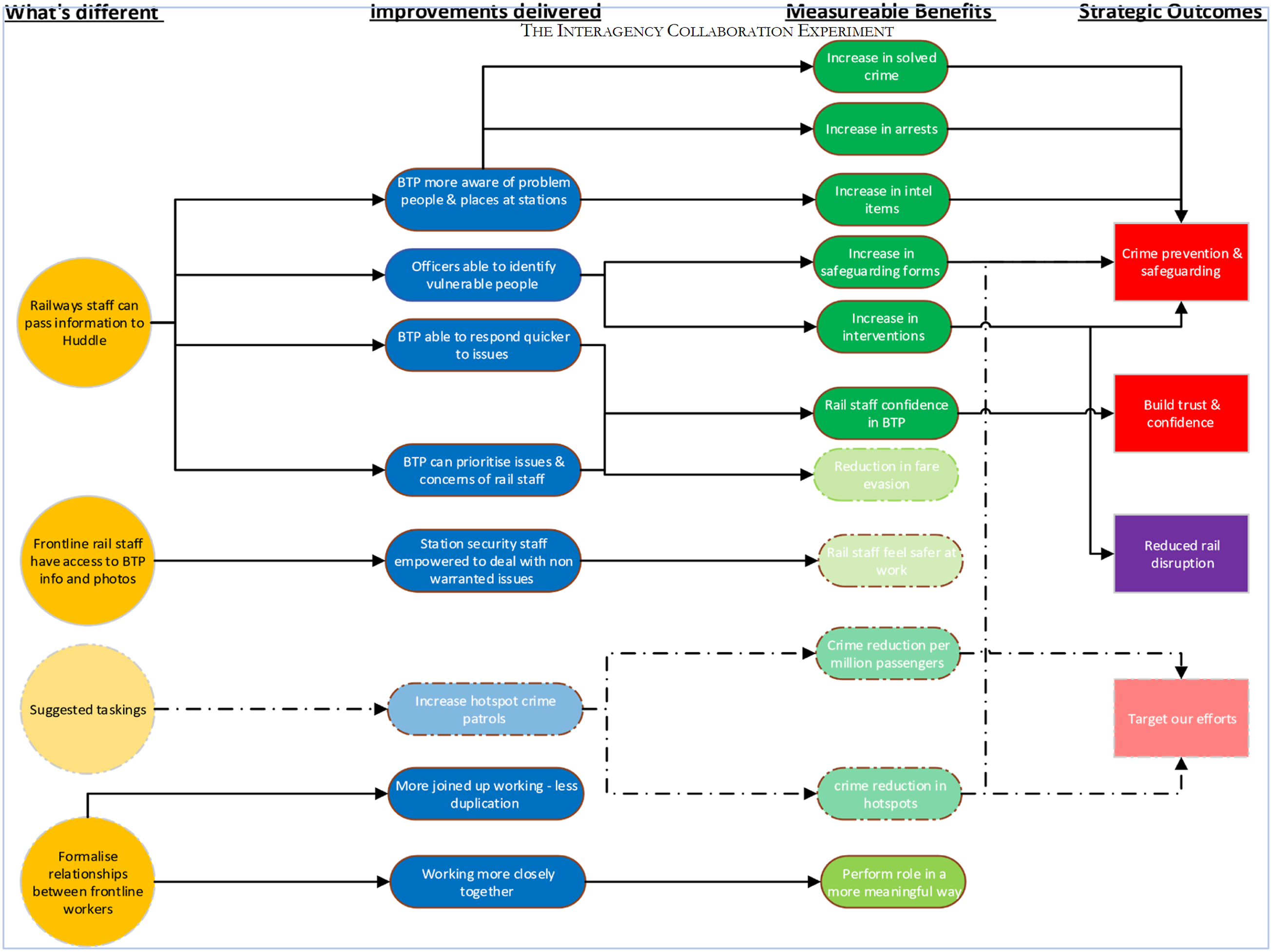
As shown, the initiative has four main components: 1. Railway staff could pass information to what the British Transport Police colloquially refer to as the “huddle”, a forum in which the police, security partners, and other stakeholders at the station level convene daily to exchange information and mutually attend to crime and disorder problems based on intelligence. 2. The parties were granted access to an online platform for intelligence and tasking sharing known as “Egress”, which gave partner agencies, for the first time, systematic access to specific sensitive police data on offenders, victims, and crime problems. In particular, Egress provided frontline staff with access to police information and images of individuals wanted or deemed vulnerable so that they may notify the police of these individuals’ whereabouts or interact with them as needed. 3. The collaboration was meant to ensure that all partners were better briefed to work together to deliver suggested tasking—for example, to increase hotspot policing. 4. The integrated policing and security approach was intended to formalise the relationship between the frontline workers, thus enabling them to collaborate strategically and maintain a shared situational awareness. This was operationalised as a mechanism for working closely on daily routines and plans for joint operations based on the available capacity of each arm.
Participating Stations
The British Transport Police has responsibility for policing the rail network throughout Great Britain, which makes it one of the only police forces with national jurisdiction. However, the police do not routinely patrol all stations at all times, given low crime rates and a relatively small police force of over 3600 officers responsible for over 2576 railway stations on the rail network (although most stations are located in London). Instead, police officers respond to calls for service, conduct proactive engagements based on need and demand, and coordinate security within the rail network. On the other hand, a continuous presence of officers in train stations can be found in “hub stations”, large station complexes with multiple train lines and platforms, usually with a substantial commercial element that makes the stations indistinguishable from busy shopping centres in metropolises. There are about 30 hub stations across Great Britain, and these stations experience most passengers’ footfall and disproportionate levels of crime and disorder.
In most hub stations, a stronghold of security and partner agencies simultaneously provides additional layers of security and public-facing services. We are unaware of precise personnel sizes, as the contractual agreements between the train operating companies, station facilities, and large chain stores that employ their own security are not publicly available. Nevertheless, security, guards, ticket enforcers, and place managers are integral to the formal control mechanism of the public space within the station. It can be assumed that in a typical hub station, at the very least, there are no fewer than a dozen individuals who provide security and visibility services for the benefit of public order and safety.
These security partners do not have the same legal powers as police constables. In the UK, none are armed with lethal weapons, and they do not have the power to arrest beyond standard civil arrest powers. Their role is to “see and be seen” and assist members of the public and other stakeholders. On the other hand, security partners are highly visible, often equipped with yellow or blue vests, carrying body-worn cameras and handheld devices, and, notably, marked with clearly designated insignia notifying the public of their presence.
It is assumed that British Transport Police officers and the security partners do collaborate at the local level. For example, when ticket enforcement officers engage with non-complying passengers, they will likely alert the police and ask for assistance. Similarly, during events with large crowds, such as football matches, demonstrations, and protests, police and security are likely to work in tandem. It may also be the case that some station managers (both police and security) have healthy working relationships with a degree of synergy in the shared responsibilities over safety and crime management at the station; however, we also assume that the degree of collaborative work is dependent on the management regimes within hub stations during some periods (see Cohen, 2018). These localised initiatives are not synonymous with this project’s strategic and premeditated approach.
Matching
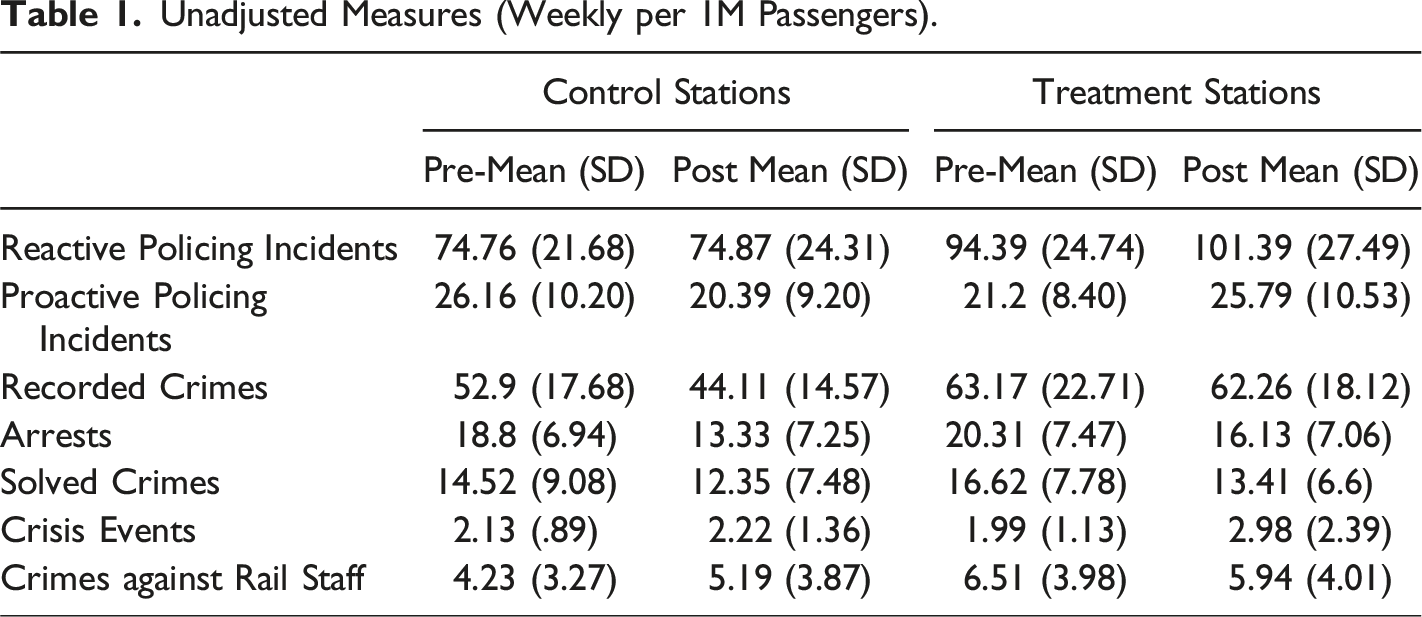
Unadjusted Measures (Weekly per 1M Passengers).
We attempted to control for baseline covariance in both the overall design of the experiment and statistically. First, we staggered the introduction of the intervention at the treatment sites. We then matched the five participating stations with five control stations based on location and crime levels. Within each geographic sector of the British Transport Police, we chose hub stations with the most crime recorded in 2019. We then included 51 weeks of observations in the pre-treatment period, paralleling the 51-week post-treatment period, making each site its own statistical control. Each treatment site had several weeks to prepare for the new regime before officially launching the programme.
Dependent Variables
Police Data
We obtained data from the British Transport Police for the ten participating stations during the 51 weeks of the experimental period and the 51 parallel pre-COVID baseline weeks of 2019–2020 for both treatment and control groups (i.e., 204 units of analysis). The earliest week of the baseline period was April 8–23, 2019, ending on March 23, 2020, while the earliest week of the experimental period commenced on April 4–20, 2022 and ended on March 20, 2023. Attention to the COVID-19 period was necessary, especially for the mass transit system, as we sought periods where ridership returned to as “normal” levels as possible before the lockdown periods. 2
Public-Generated Incidents
These are emergency and routine calls for service that come to the police’s attention from members of the public (e.g., 999 emergency calls for service).
Proactive Incidents
Police-generated incidents refer to stops and searches, drug searches, ticket enforcement, and any activity in which the police “generated” the event, often through their discretion.
Recorded Crimes
These are events that are reported to, detected by, or otherwise drawn to the attention of the police beyond the initial public-generated incident.
Solved Crimes
This refers to crimes with positive post-investigation outcomes, including identifying a suspect, charging that individual, or issuing one of the numerous out-of-court dispositions available to the police.
Arrests
Events in which an offender (or offender(s)) is brought into custody due to suspicion of committing a crime.
Crimes Against Railway Staff
These include assaults (both physical and verbal), threats to life, and the like affecting the security and well-being of staff members who work in the rail network—a primary concern of the British Transport Police.
Crises Management Events
Incidents involving at-risk persons, including suicidal passengers, children at risk, and non-crime incidents involving other vulnerable populations.
We adjusted for inter-station variance by converting the crime counts into rates of events per million passengers within the train stations (whereas a ‘passenger’ is a rider entering the train station), thus providing a more meaningful comparability between the participating and comparison stations using the incidence density rate. Some stations were busier, and ridership data allowed us to normalise the data relative to the population size at each of the ten participating stations. We obtained data on the number of passengers from the Department for Transport (2023), which captures these figures from the train operating companies and makes the data available for the study.
Survey Data
We used an anonymous online survey with both police officers (n = 55) and security partners (n = 59) who work at the participating treatment stations to gauge their perceptions of working collaboratively. Participants were given sufficient time to complete the survey, though during this period we repeatedly nudged the officers and security partners to participate in the study. In order to reduce the likelihood of contamination, we did not contact control participants; control stations were not notified that they were part of an experiment in order to reduce the likelihood of intentional or unintentional spillover. As a result, we excluded non-participating officers and security partners from participating in the survey.
The survey instruments included primarily Likert scale items (ranging from 1 (“strongly disagree”) to 7 (“strongly agree”), some binary responses (“Yes” or “No”), ranking statements from 1–10, and open-ended questions to allow participants to voice their views on different aspects of the initiative. We contacted the police officers and the partner agencies separately, using discrete URLs for each cohort, with minor changes to fit the audience (e.g., “If you had the option, would you continue working collaboratively with the police?” for security partners vs. “If you had the option, would you continue working collaboratively with the partner agencies?” for police officers) (see Supplementary Materials A & B, respectively).
The survey included three primary sections: First, we asked participants about their views on collaborating. Seven items were used to ask about the degree to which they agreed the new initiative was beneficial, meaningful, and added value to how they perform their duties. We also asked how the collaboration has made them more confident in performing their duties, whether working collaboratively has increased their responsibilities, and whether they would prefer to “go back” to working in silos.
Second, we asked questions about the tactical aspects of collaborative policing. Here, we looked specifically at how the security partners viewed the intelligence debriefs the police began to share with them. We also inquired about the participants’ perceptions of their relationship with the public. Finally, we asked questions about the participants’ demographics (age, gender, years of service, etc.) to identify better the two cohorts who took part in the survey.
Analytical Approach
Crime Data
We applied a generalised linear modelling repeated measures technique, which is appropriate when the exact measurement is made multiple times on each subject or unit (see McCullagh & Nelder, 1989). This approach allowed us to test hypotheses about the effects of both the between-subjects factors (and in this experiment, interagency collaboration vs. business-as-usual conditions) and the within-subject change (change over time, and specifically the interaction between experimental conditions and change between sequential measurements, operationalised in this experiment as crime changes between the baseline period and the experimental period).
As explained in Welsh et al. (2007, pp. 607–608), the mixed-model repeated measures approach used here considers a series of dependent variables (e.g., crime) as responses to the levels of within-subject factors (time). This method assumes that the measurements at a station are “a sample from a multivariate normal distribution, and the variance–covariance matrices should be the same across the cells formed by the between-participants effects”. The F-statistic is valid if the variance–covariance matrix is circular, in which case Mauchly’s test of sphericity can be used to test this assumption. This statistic “performs a test of sphericity on the variance–covariance matrix of an orthonormalised transformed dependent variable. When the significance value is greater than 0.05”, as was the case for all our measures (Mauchly’s W = 1.0), the assumption of sphericity holds.
We used partial eta squared (η2) to convert the results into meaningful effect sizes for analyses of variance results. As per Miles and Shevlin (2001), partial η2 = .01 is understood as a small effect size; η2 = 0.06 is a medium effect size, and η2 = .14 or above is considered a strong effect size, signifying a clinically substantial variation between the study groups.
Survey Data
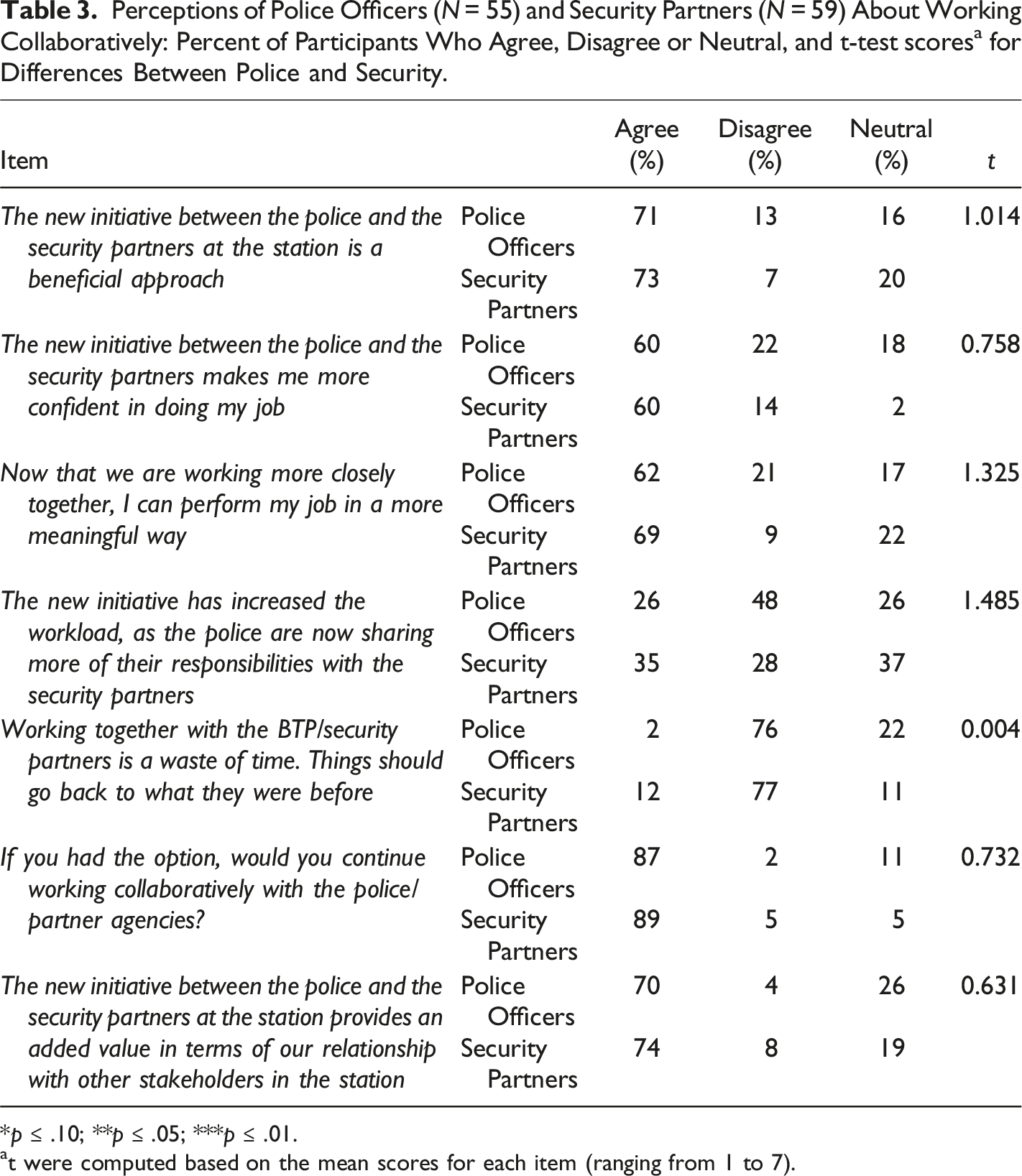
We applied robust descriptive statistics to summarise the survey data. Measures of central tendency appear in the form of percentages of participants who agreed (mean responses 5–7 on the Likert scale), disagreed (mean responses 1–3), or were neutral (response 4) about the statements to which they were asked to respond, as well as measures of dispersion in the form of range or standard deviation, as the case may be.
Finally, as we contacted police officers and security partners independently, a series of independent sample t-tests were used to compare the responses and estimate the degree to which the differences in perceptions are statistically significant.
Results
Incidence Density Rates
General Linear Modelling Repeated Measures Results for Seven Measures (Weekly Events per One Million Passengers).
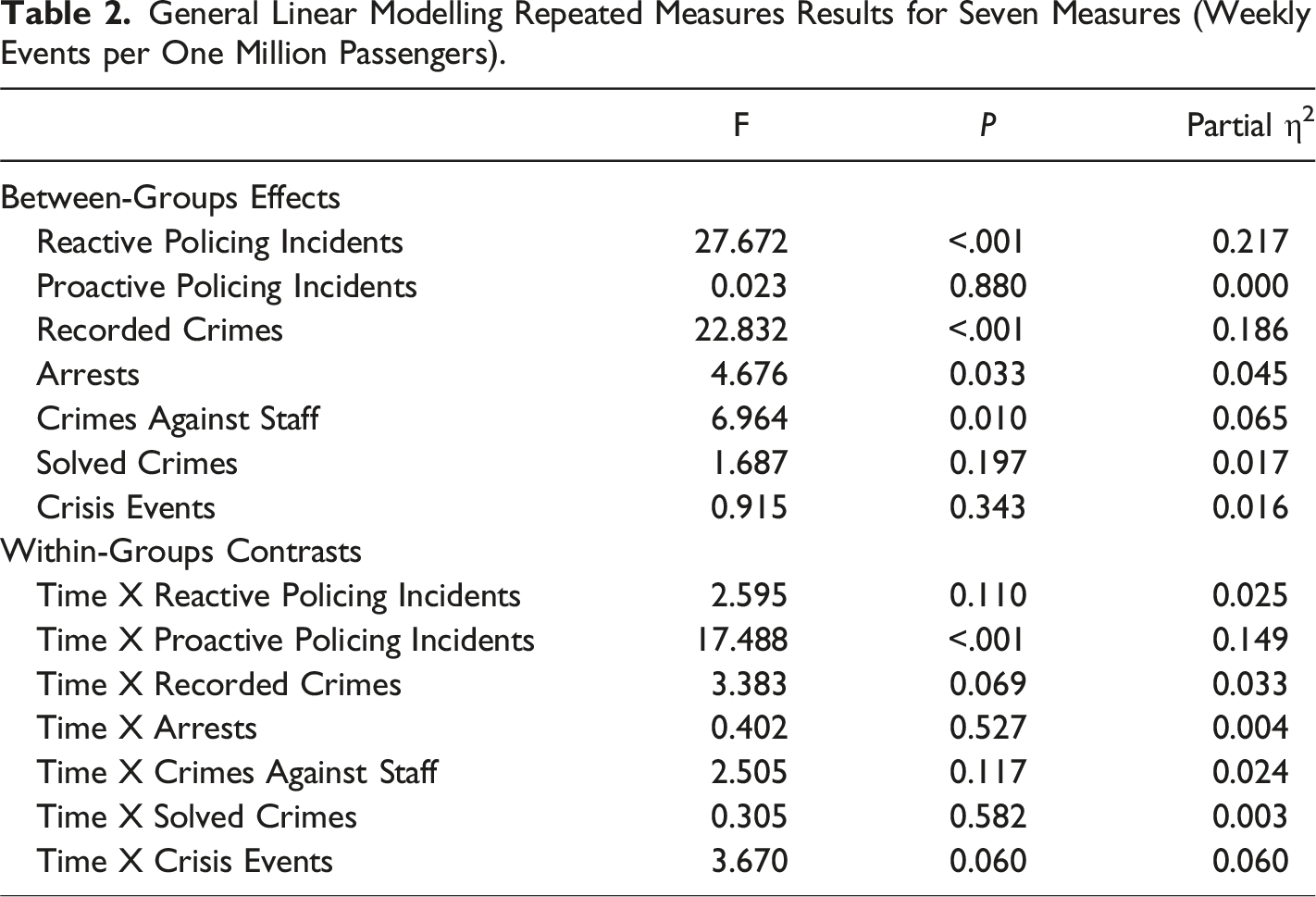
We observed significant between-subjects predictors for some but not all measures. The largest significant effects were observed for between-subjects differences for the number of reported incidents (F = 27.672; p ≤ .001; η2 = .217), followed by recorded crimes (F = .832; p ≤ .001; η2 = .186), crimes against staff (F = 6.964; p ≤ .01; η2 = .065), and finally, arrests (F = 4.676; p ≤ .05; η2 = .045) – all per 1 million passengers. As the unadjusted scores (Table 1) suggested, the post-treatment scores were higher in the control than in the treatment group.
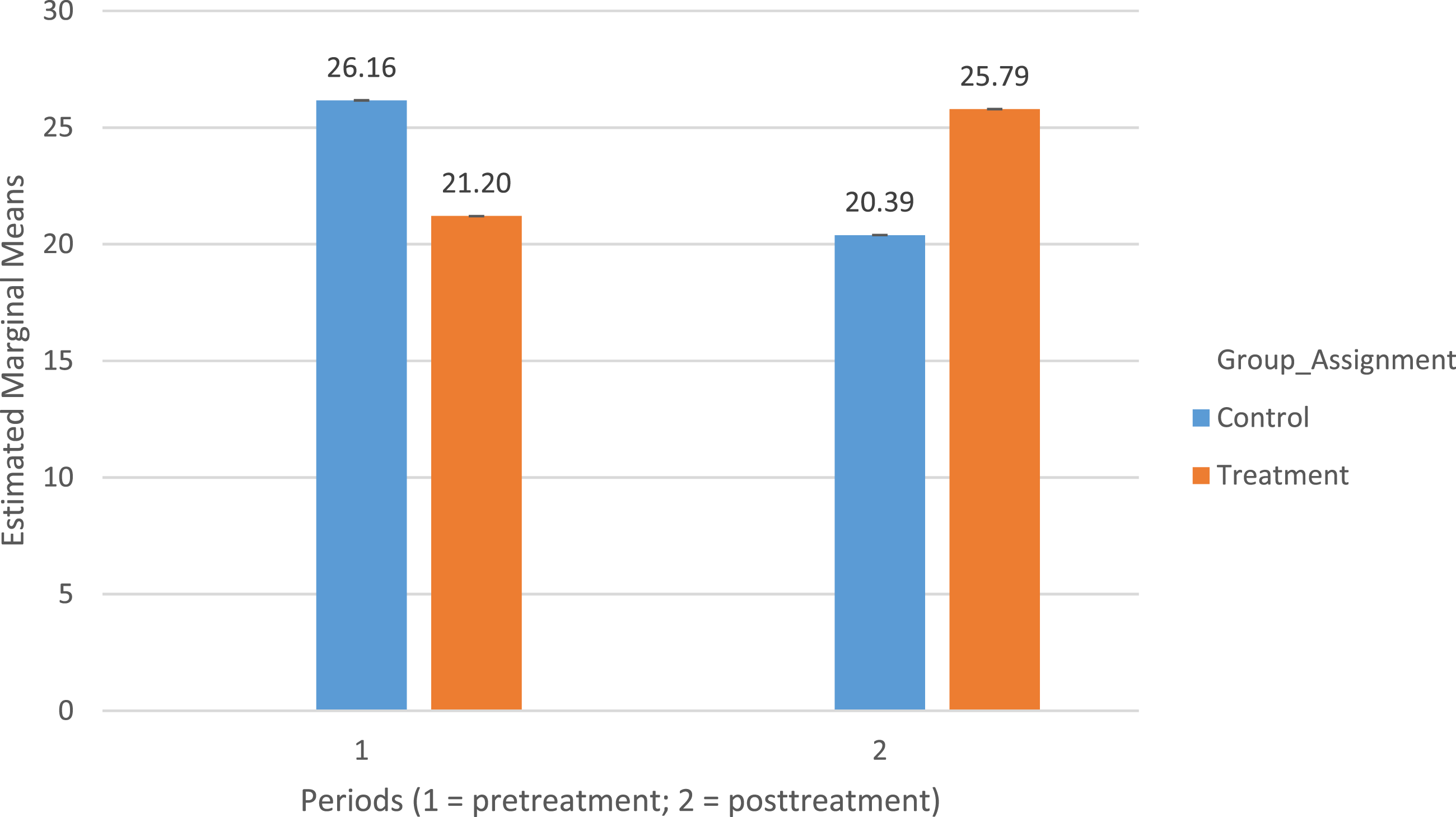
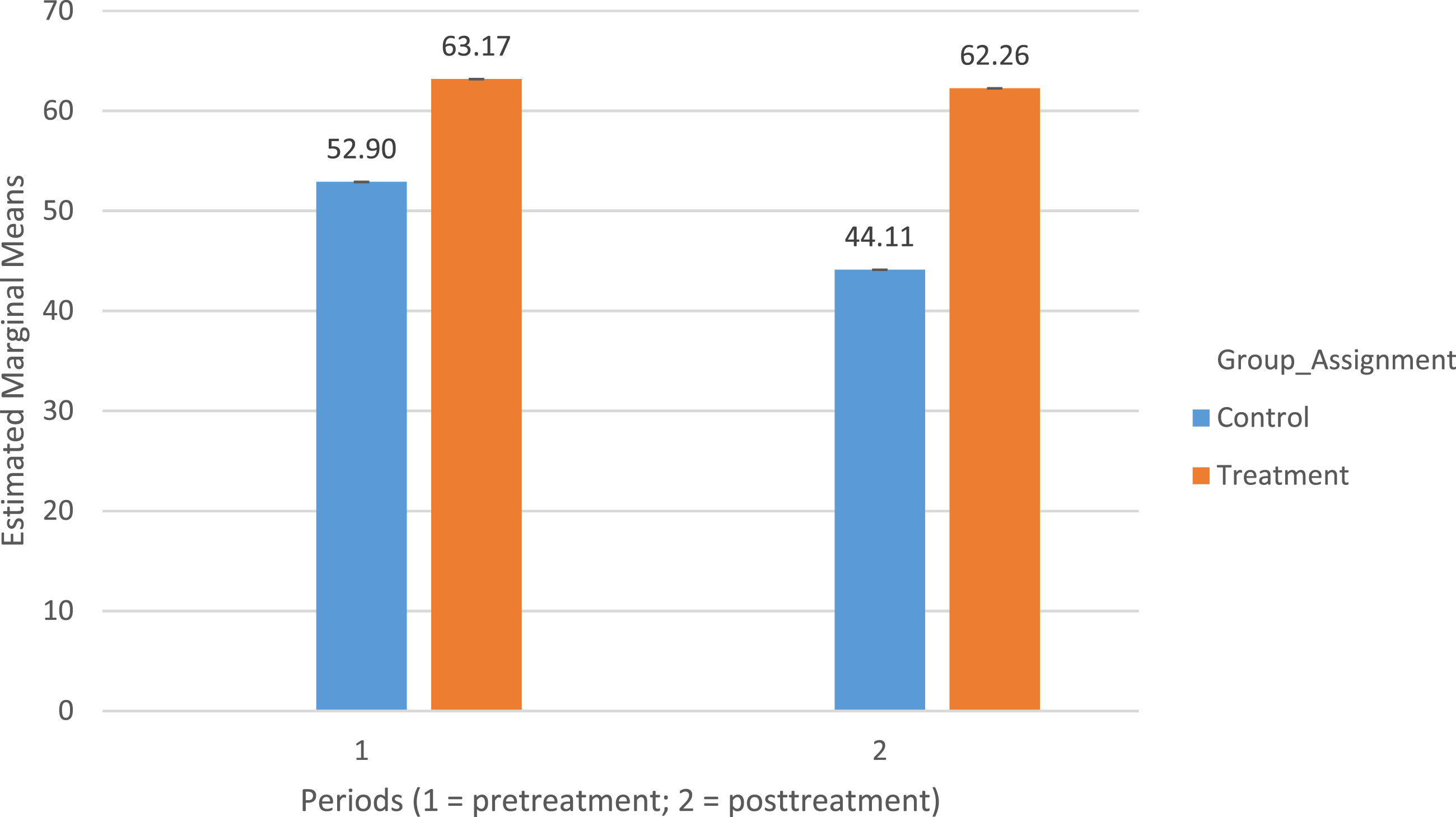
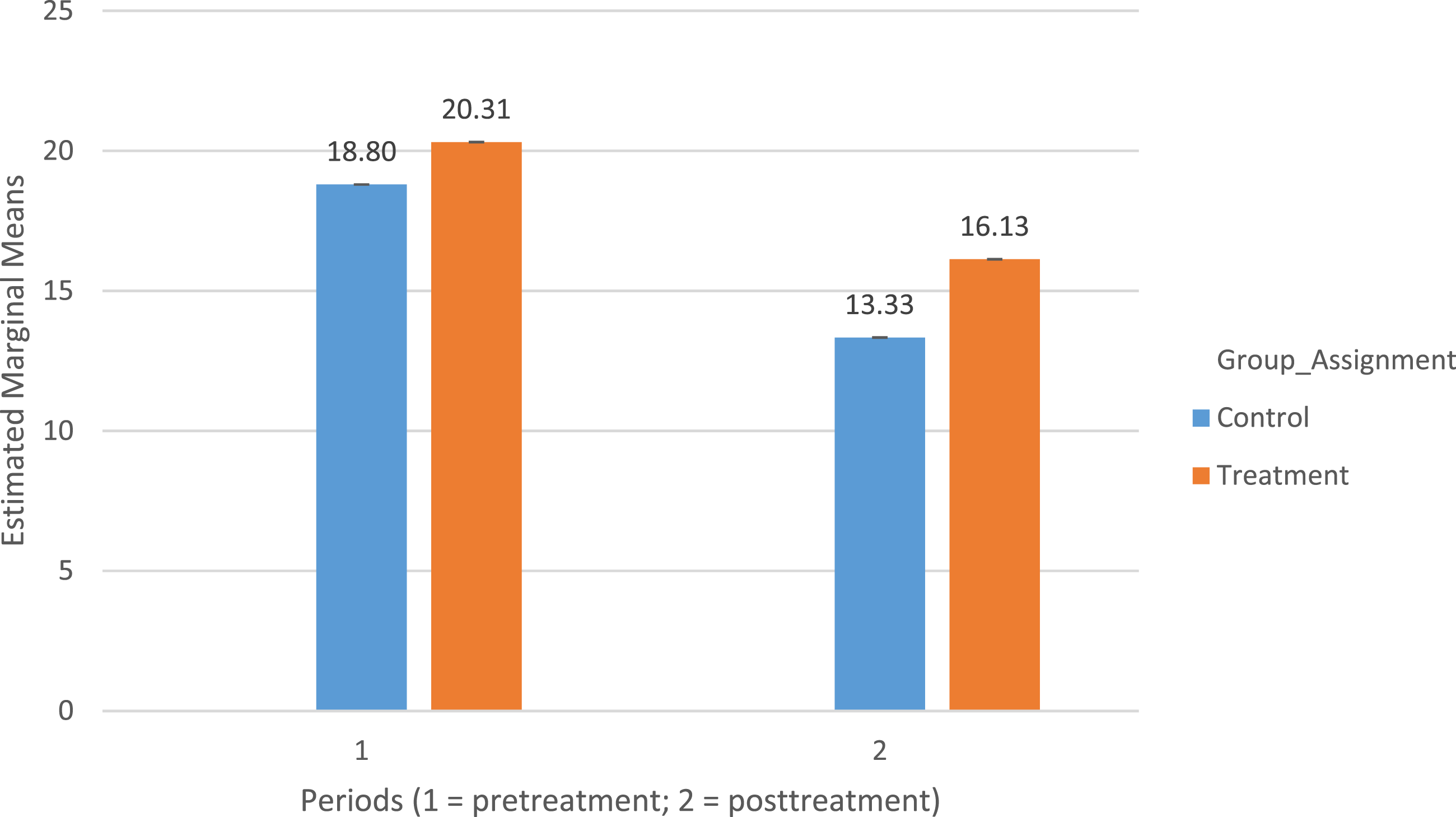
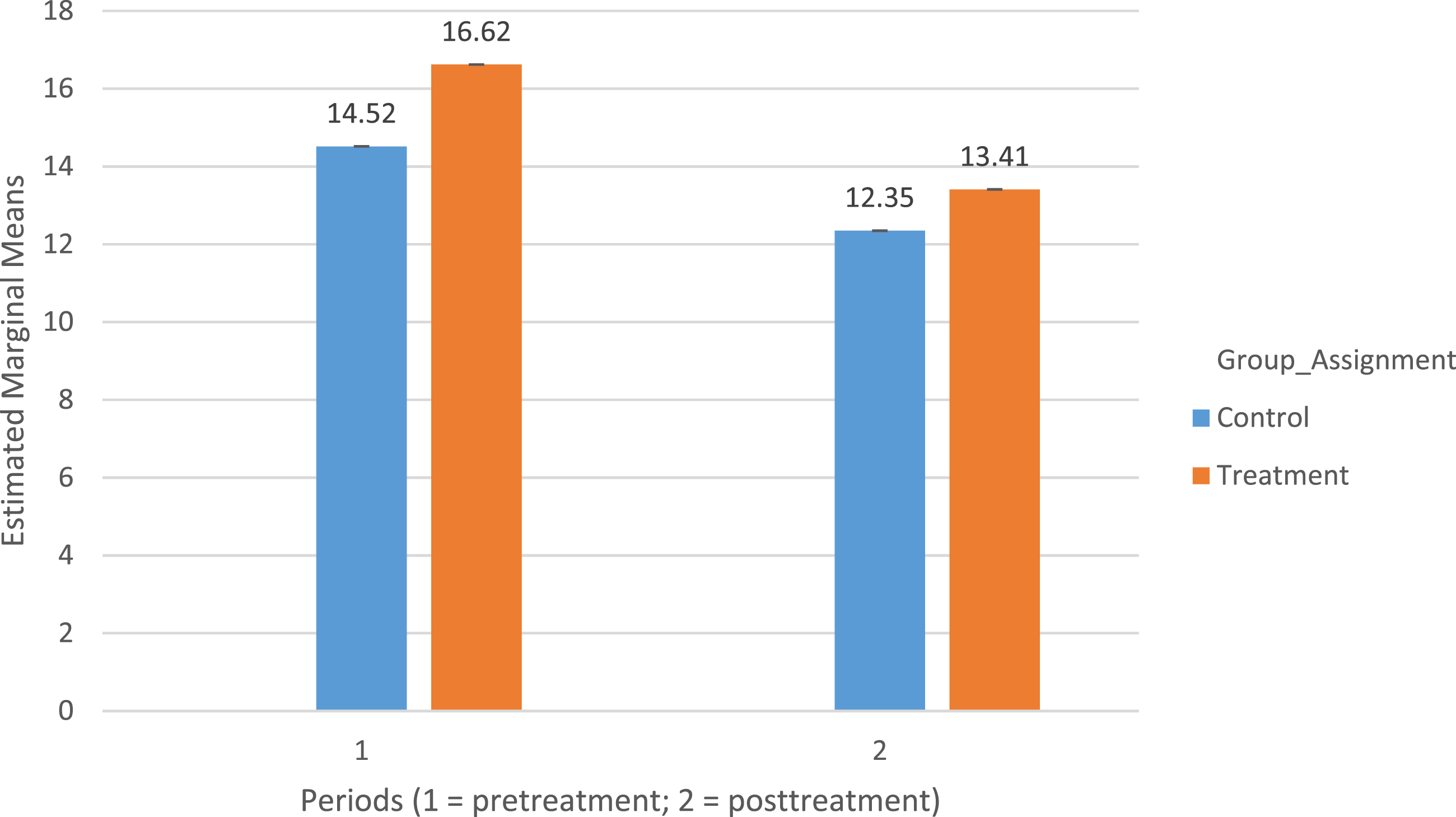
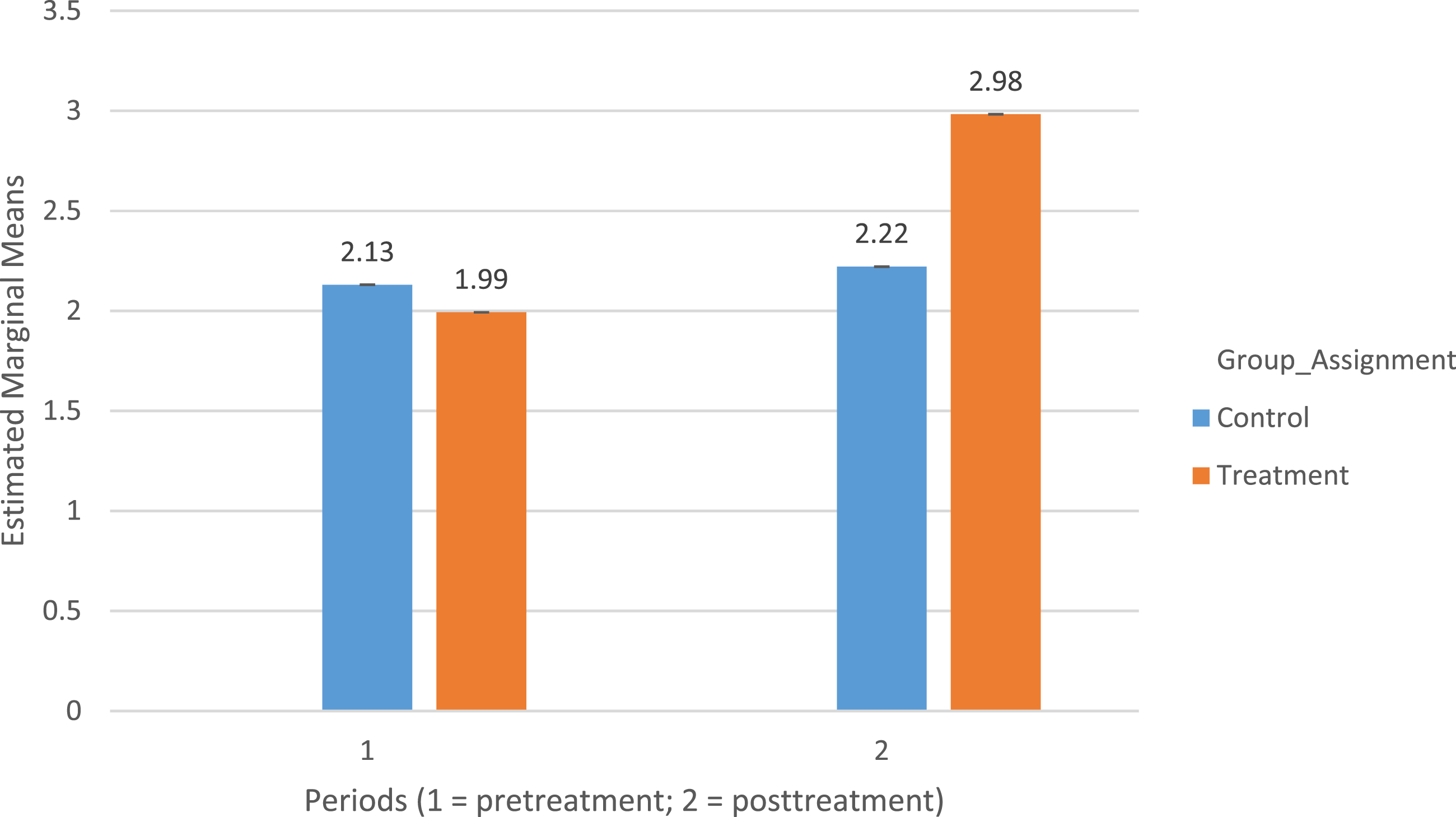
Regarding the repeated measures effect (time) interacting with the outcome measures, we observed one statistically significant term and two that approached statistical significance at normal thresholds. First, we observed (Table 2) that time X proactive policing was significant, where treatment stations experienced a large increase in police-generated incidents over time relative to comparison stations (F = 17.488; p ≤ .001; η2 = .149). We also encountered an increase over time compared to control stations regarding recorded crime and crisis interventions per 1M passengers – crisis events (recorded as suicides, the exploitation of children, and other harm to vulnerable groups) [(F = 3.383; p = .069; η2 = .033) and (F = 3.670; p = .060; η2 = .06), respectively]. Note that the three factors are linked to productivity within the stations.
All other interaction terms were not found to be statistically meaningful. A visual depiction of the estimated marginal means is provided in Figures 2–7 below. Public generated incidents per 1 M passengers: Treatment versus control conditions, pretreatment and posttreatment estimated marginal means. Note: Crises events include suicides, the exploitation of children, and other harm to vulnerable groups. Police generated incidents per 1 M passengers: Treatment versus control conditions, pretreatment and posttreatment estimated marginal means. Note: Crises events include suicides, the exploitation of children, and other harm to vulnerable groups. Recorded crimes per 1 M passengers: Treatment versus control conditions, pretreatment and posttreatment estimated marginal means. Note: Crises events include suicides, the exploitation of children, and other harm to vulnerable groups. Arrests per 1 M passengers: Treatment versus control conditions, pretreatment and posttreatment estimated marginal means. Note: Crises events include suicides, the exploitation of children, and other harm to vulnerable groups. Solved crimes per 1 M passengers: Treatment versus control conditions, pretreatment and posttreatment estimated marginal means. Note: Crises events include suicides, the exploitation of children, and other harm to vulnerable groups. Crisis events per 1 M passengers: Treatment versus control conditions, pretreatment and posttreatment estimated marginal means. Note: Crises events include suicides, the exploitation of children, and other harm to vulnerable groups.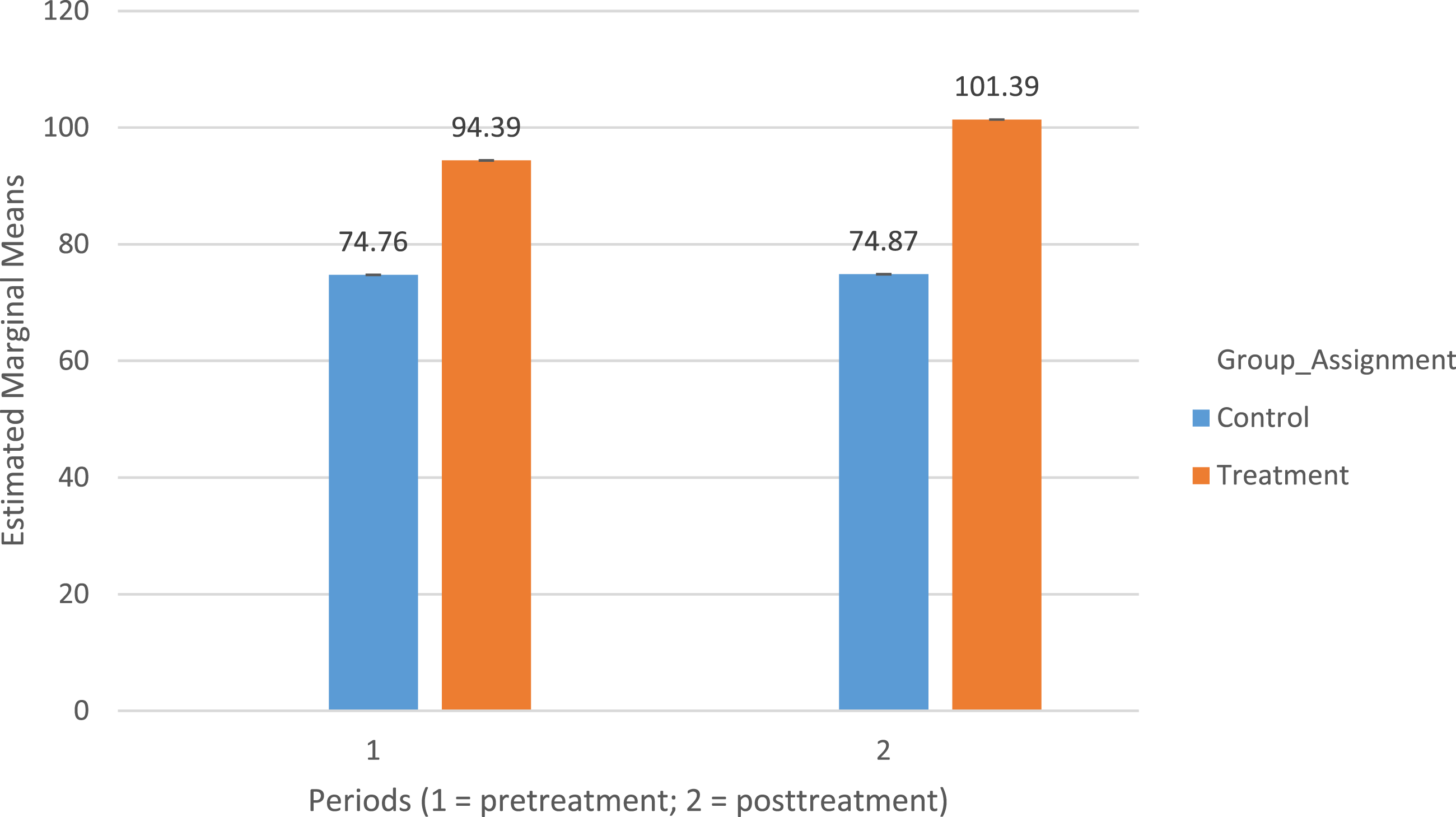
Survey Outcomes
Overall, 55 British Transport Police and 59 security personnel took part in the survey. Nearly 80.0% of the police officers and 77.0% of the security team identified themselves as male. The officers were somewhat less experienced in terms of years working as an officer or in a security-related position (M years of service: 14.18 (SD = 10.10) versus 7.86 (SD = 6.57)), as well as experience within the participating station [M = 3.75, SD = 3.20) relative to M = 6.98, SD = 6.49]. The latter were also older, with 28.9% of the security personnel and 23.8% of police officers being between the ages of 40 and 49, and 25.5% of security and 42.3% of the British Transport Police being between 30–39.
Perceptions of Police Officers (N = 55) and Security Partners (N = 59) About Working Collaboratively: Percent of Participants Who Agree, Disagree or Neutral, and t-test scores a for Differences Between Police and Security.
*p ≤ .10; **p ≤ .05; ***p ≤ .01.
at were computed based on the mean scores for each item (ranging from 1 to 7).
We did not identify any statistically significant variations between officers and security partners regarding any items (Table 3). Even though the surveys were conducted independently, the trend in the data remains the same across the two samples: an overwhelming supportive cohort for the new initiative.
In terms of willingness to engage with the tactical interventions that underpin the collaborative approach—concentrating on hotspots and implementing tactics that are based on intelligence shared between the partners at the station—we have asked participants to score the likelihood that they would participate in these activities more now that they have taken part in the collaborative approach on a scale of 1–10, with 10 being the highest likelihood. We have found that officers and security staff scored highly similarly for both measures [7.30 (SD = 2.44) and 6.98 (SD = 2.74), respectively; t(111) = 0.8559; p ≤ .05] and [8.31 (SD = 2.07) and 7.57 (SD = 2.87), respectively; t(112) = 1.5612; p ≤ .05].
Finally, we asked officers and security staff alike about their perceptions of the public’s satisfaction since the new initiative between the police and the security partners at the station commenced. Curiously, both groups responded similarly, with 70.37% and 66.04% of participants arguing they “do not know” how to answer this question. Given our initial hypotheses for the experiment that the collaborative approach would affect internal processes rather than necessarily affecting audience legitimacy or offenders’ risk perceptions, we find this response informative. Still, 1 out of 5 police officers and 1 out of 4 security staff believed this statement was true, as opposed to 1 out of 10 who did not.
Discussion
Both the public police and the private security provided by train operating companies are involved in combating crime. A more cohesive and interagency collaborative approach will likely increase efficiency, even though each partner has unique strengths and limitations (Ceccato et al., 2022). For example, although the police have the authority to arrest, they lack the resources to secure specific areas of a transit station for extended periods because they must attend to other duty-related responsibilities and respond to calls for emergency service. In contrast, security companies are uniquely positioned to secure such locations, such as by stationing a guard or a Travel Safe Officer (The Railway Safety Accreditation Scheme; RSAS) at the entrance of a store or railway station, although they lack the arrest powers of police officers. Working collaboratively, at least in the settings of train stations, may lead to greater efficiencies.
Summary of Findings
In the present experiment, we measured a unique collaborative approach where the police and its security partners systematically removed some barriers to working in tandem. While previous experiments targeted explicit crime problems or bespoke policing interventions (e.g., Ariel et al., 2017), this project aimed to go beyond specific tactics and strategically collaborate between police and security at mass transit train stations. Through intelligence sharing, daily huddles, and habitual and jointly established operations, police and security attempted to fully integrate some of their shared responsibilities within major train stations. Note that an average British hub station is a massive complex that experiences the footfall of millions of people every week. While low-crime environments relative to other ecological settings, train stations remain hotbeds for crime, drug traffickers (i.e., “county lines”; see Harding, 2020), and vulnerable persons. Thus, the lessons learned from interagency collaboration in these massive complexes where millions of passengers travel daily may also be generalisable to other similar settings with heavy footfall.
In line with our prediction, the new policy did not lead to a reduction in crime. In fact, the opposite emerged: overall, we identified significant increases in productivity, particularly in terms of proactive policing, recording of crime, and crisis interventions. Perhaps unsurprisingly, emergency calls for services were not affected, nor were the number of arrests, crimes solved, or crimes against staff members. These seem exogenous to the intervention and are unlikely to be immediately affected through improved intelligence sharing, daily huddle meetings, or jointly conceived patrol plans.
On the other hand, productivity in the form of proactive policing is directly linked to the intervention. We can speculate that the collaborative approach caused the police to document actions more fully or, alternatively, allowed them to free up some time to take greater initiative through more proactive policing tactics. Future research should explore this further. What can be concluded is that routinely implementing an interagency approach has led to improvements in crime recording and a substantial increase in police-public engagement relative to business-as-usual conditions. We also highlight the observed increase in recorded crisis events due to the collaborative approach, which would otherwise result in completed suicides, the exploitation of children, and other harm to vulnerable groups.
Policy Implications
Interagency work is a mutually advantageous enterprise where all parties collaborate to provide an improved or more efficient service instead of working in isolation. The shared benefits appear crucial to the success of the collaboration (as opposed to when police transfer a portion of their responsibilities to another agency); without them, the alliance is unlikely to endure over time.
Chinwokwu (2018) demonstrates how the police and its partner agencies view their relationship as cordial and complementary, albeit unequal and occasionally competitive. To successfully implement an interagency collaboration, it is necessary to strengthen teamwork between the parties, for instance, by sharing technical resources. Better communication, greater efficiency, and a more strategic use of resources are potential outcomes of increased cooperation between these entities. We believe these elements have materialised in the present experiment, as seen in the survey results.
However, coordination between law enforcement and other entities may sometimes be challenging. Cultural differences between organisations, competing agendas, and a dearth of resources can exacerbate these challenges. Successful collaboration necessitates the establishment of dependable communication channels and the development of mutual trust. However, the parties in this experiment overcame these barriers, translating into significant variations in some key outcomes. It is likely that routine huddles served as what Sherman et al. (2014, p. 95) refer to as “Copstat” meetings: low-rank engagement meetings (in this case between officers and members of security staff) in which concerns and issues are raised at the tactical and operational level, as opposed to high-level interactions between senior command teams and their security director counterparts. Ultimately, trust and capacity should be engendered between the planned collaboration actors. Fixsen et al. (2009) and others suggest that a “feedback loop,” where outputs are constantly measured, fed back to the delivering party, and then corrected as needed, could serve as an optimal mechanism for implementation. The huddles may have materialised this approach, translating into an improved working environment (as the survey data tell us) and improved proactivity and crime recording capabilities.
From a practical perspective, the huddles also signify precisely the complementary role of private security in this environment (see discussion in Ariel, 2023). Police could direct competent guardians to patrol specific locations based on police intelligence and informed of the identities of targeted offenders, allowing them to monitor the whereabouts of repeat offenders and interact as necessary. Furthermore, the “additional eyes” of the police’s partner agencies can reinforce the message of deterrence by increasing the perception of the arrest risk. For instance, security officers in train stations could inform offenders that they are under close surveillance and, as a result, any new offences will be detected and punished. At least for offenders who already have legal orders banning them from the British Transport Police’s jurisdiction (e.g., Criminal Behaviour Orders), security guards, ticket enforcement officers, and place managers could assist in enforcing these orders, adding an extra layer of protection. Such a policy can only be materialised when the security partners are constantly updated with intelligence briefs. As in the present experiment, the police would provide security officers with a dossier containing a list of mutually agreed-upon duties; these tasking sheets resemble those used in previous experiments with police community support officers (Ariel et al., 2016), who were briefed by neighbourhood police officers on local crime problems and specific individuals the police wished to inform were under community surveillance due to their criminal history and propensity to re-offend. Future research should consider observing such trends.
Answering the “Make or Buy” Decision Question
Ordinarily, outsourcing or internally handling services is a significant decision in law enforcement that requires careful consideration. When making judgements, police departments must consider cost, control, expertise, capacity, quality, speed, flexibility, and security. The relative significance of each component is contingent upon the particular environment and operational needs of the law enforcement agency, but ultimately, outsourcing must be cost-effective.
As this paper shows, the police can “share the load” of crime control without paying for these services out of the police budget. This means that the British Transport Police and its partner agencies have circumvented the question of the cost of privatisation, as they did not offload tasks but, instead, worked collaboratively with their partners. Admittedly, while the results suggest that the collaboration has led to desirable consequences, we do not know whether this partnership is cost-efficient; there may have been duplications of outputs, overdosing in certain areas, or repetitions of specific tasks. We call for more economic analyses of this approach in future studies on interagency collaborations.
One area which deserves careful attention is that the enhancement of collaborations between private security entities and law enforcement agencies can be significantly facilitated using technology. Private security corporations potentially possess access to innovative technical solutions, thereby enabling the police to capitalise on these tools through collaboration, alleviating the burden of financing the entire process of creation and deployment. This is especially advantageous for smaller law enforcement organisations that may lack the necessary means to invest in such technologies independently (Ariel, 2023). In this experiment, we utilised a secured platform to share intelligence and tasks between the police and its partners, facilitating effective communications between the parties. We call for a more significant investment, not least through research on its use of technology that can assist parties to collaborate seamlessly. In this regard, Wain and Ariel (2014) underscored the importance of demonstrating the role of technology in enabling successful partnerships between private security and law enforcement. Technological advancements, such as tracking systems, reporting platforms and a place where parties can share photos, intelligence or taskings, offer the capability to observe and record the activities of officers and employees within a train station. Additionally, crime analytics enables the evaluation of criminal behavioural patterns, facilitating predicting and preventing potential incidents (Ariel, 2019). Software development can provide the opportunity to create personalised solutions that address the specific challenges associated with ensuring the security of a train station environment.
Finally, scalability implies that the technologies and tactics devised for a particular train station can be modified and implemented in other stations, regardless of their dimensions. The deployment of consistent security measures across several locations guarantees uniformity and enhances cost-effectiveness. This is due to the ability to distribute the initial investment in technology development across multiple implementations, resulting in amortisation (see review in Ridgeway, 2018, pp. 411–412).
Law Enforcement is Much More than Bringing Crime Rates Down
In mass transit systems like train stations, police officers and their partners provide public services beyond the specific task of reducing crime and victimisation. While these settings may be more extreme for transport police, contemporary policing has expanded so much that bringing offenders to justice is only a small part of police routines. Recent studies show that what officers do on a day-to-day basis spans a wide variety of ‘jobs’, which only some of would be deemed as immediate ‘crime-fighting’ tasks (see Dau, 2023; Egbert & Leese, 2021; Sausdal, 2021). For example, arrests figures are shrinking (26.1 per 1000 in 2006 to 23.3 per 1000 in 2018; Home Office, 2022); “non-crime related incidents account for 83% of all Command-and-Control calls” (College of Policing, 2015, p. 9); and “on average, only 14% of calls and 24% of incidents resulted in a crime report (UK Parliament, 2018). These figures do not include the countless police-public, non-crime encounters that do not get recorded but make up a great deal of the constable’s daily routines. We suspect that similar trends take place in the life of a security officer, though data are scant (Berndtsson & Stern, 2015).
We highlight the fact that officers and security staff are involved in non-crime or “lesser crimes” to a great degree because it seems that most policing scholars pay considerable attention to the rarer, more harmful crime, while police demand lies in less harmful incidents (cf. Ariel et al., 2023). Since the bulk of police work deals with theft rather than robbery, antisocial behaviour rather than gang violence, or high visibility rather than covert operations against organised crime, our focus on where police-security collaborations would lead to the most desirable and cost-efficient consequences must start with the tasks that take up the most resources rather than those that cause the most harm to victims.
Collaborations Can Increase Official Crime Rates, and That is Not Necessarily Bad
Finally, we note that the routinising of a proactive police security policing strategy, which prioritises stakeholders’ participation and prevention, could potentially lead to an initial increase in documented crime rates. It is essential to use caution when interpreting such results. An increase in reporting behaviour should be construed within the appropriate sociocultural and criminogenic contexts: a rise in reported unwanted sexual behaviours, domestic abuse, modern slavery, or hate crime is likely to be a “good” thing because it signals an improvement in reportage rather than an indication of increased crime rates (on the “dark figures of crime” and ways to overcome this problem through triangulation with alternative sources of data, see Ariel & Bland, 2019).
That an increase in reported crime is a preferred outcome has two immediate implications: First, scholars should not immediately interpret a rise in reported crime figures as a backfiring effect, so a more nuanced approach to crime analysis is needed for specific crime types, especially in impact evaluation studies. Second, the more the police will collaborate with partner agencies, the more incidents will come to police attention, as this study illustrated. For example, private security agents might act as citizens’ first point of contact and may reduce potential hesitation to report crimes, disorderly behaviour, or suspicious activity. Similarly, sharing intelligence focuses partner agencies on these tasks and, in turn, increases reporting more events to the police. This increased proactivity increases the official statistics, which should be a preferred consequence of the collaboration.
Overall, this viewpoint calls for a reassessment of the conceptualisation and measurement of effectiveness in law enforcement beyond basic crime rate indicators. It is important to examine additional gauges such as community trust, response times, and citizen satisfaction in conjunction with crime rates when assessing the effectiveness of policing techniques. These indicators offer a more comprehensive perspective on the success of interagency collaborations and policing efforts more broadly.
Additional Limitations and Future Research
More Research is Needed
Parker et al. (2018: 9) recently concluded that “more research is required to examine the effectiveness, cost-effectiveness, barriers, and benefits of interagency collaboration models. The latter is important for designing ‘effective’ models that might have significant benefit [for both police and its partner agencies].” We fully concur with this observation and urge more studies to be conducted with more diverse and larger sample sizes.
More Valid Causal Estimates are Needed
We encourage scholars to implement randomised controlled trials rather than prospective quasi-experimental designs. Randomised experiments are better equipped to rule out rival explanations for the observed variations between the treatment and comparison groups (Farrington & Welsh, 2005). Our design was optimal given the settings in which we operated, as we were not in a position to randomly assign a sufficiently large pool of train stations across Great Britain. We applied design and statistical controls while implementing a mixed-methods approach with as many outcome measures as possible. However, these are asymptotic to the controls offered through the randomisation of units into treatment and control conditions. Thus, more research, with preferably more rigorous experimental designs, would increase the validity of our causal inferences.
One methodological manifestation of this limitation is that the observed fluctuations in the control groups within statistical analyses might be attributed to various potential factors, warranting a speculative exploration that we cannot rule out. For instance, when contemplating the decrease in police-generated incidents in the control group between the pre- and post-periods, in contrast to an increase in the treatment group, it remains possible that intrinsic differences between these stations played a role. This raises further questions about the dynamics at play in the control group. Although the multivariate analyses undertaken in this study account for these differences, the unique phenomena observed in the comparison group of stations signal that there might be more factors at play that we cannot remove entirely. It underscores the necessity of more rigorous controlled tests to rule out rival explanations (Ariel et al., 2022).
Improved Tracking of Outputs
Monitoring the implementation of the interventions should be a focus of future replications. One of the most significant obstacles to applied criminal justice research is determining which resources are utilised, when, where, and in what quantities. The issue of dosage, a significant concern in other evidence-based professions such as medicine, engineering, and psychology, is largely absent from the academic literature on law enforcement (Wain & Ariel, 2014). Improving our understanding of law enforcement requires meticulous and expeditious recordkeeping. With the aid of technology, this objective would be attained by creating a customised instrument to assess the intervention(s) (however, cf. Wain et al., 2017). Police and security personnel would require unbiased measurement of the application of treatments. Egress is a good start but insufficient due to its reliance on self-reporting activities and outputs. Given the enormous policy ramifications, recordkeeping is required concerning the delivery of the collaborative approach. At a minimum, we should improve the measurement of the following variables: (a) the number of meetings between the parties, including time, date, meeting length, place, names of all attendees, and meeting outcomes using quantifiable measures; and (b) the number of tactical operations delivered, including patrols, interventions, public-facing engagements, intelligence gathering, and support for vulnerable persons. A breakdown of delivery by stakeholders of similar interventions, as well as dosage, would be of particular interest to a research project examining the effectiveness of a collaborative approach; (c) any communications with offenders, victims, or vulnerable persons, and for how long; (d) any arrests, summonses, or cautions, both formal and informal, and by whom. Collectively, these are essential for determining the generalisability of the results and elucidating the mechanisms underlying the causal relationship between the treatment(s) and outcome(s).
Additional Sources of Data From Non-Police Sources
Ariel et al. (2022) note that many rail network incidents are reported to train operating company personnel yet do not appear in crime records. These are the categories of incidents that the caller or report-taker has designated as “low-level” or “harmless” or that do not exceed a threshold that would require police notification. This study did not capture such data, representing a limitation that future research should address.
Moreover, our study lacks implementation data from partner agencies as well. We cannot ascertain the degree to which the assigned interventions were applied, the degree to which security staff administered tactics according to the shared information, or the dosage of additional patrols meant to deal with problems in participating stations – both pre- and post-randomisation. This is a standard limitation in many policing studies (see systematic review by Hinkle et al., 2020) and studies that deal with security at train stations more specifically (Ariel et al., 2017). Therefore, our study suffers from what scholars have referred to as the “black box” phenomenon (Famega et al., 2017; Haberman, 2016): We know what interventions were assigned, and we can measure the outcomes linked to these interventions, but our output measures are suboptimal. We call for future experiments to improve the collection and reportage of these figures.
Longer Follow-up Periods
This study measured the effects of interagency collaboration over a relatively extended period, and this should become standard practice. The studies reviewed above often observed a treatment effect lasting no longer than six months (see also Sutherland et al., 2017). However, we urge future evaluations to apply a longer longitudinal approach, measuring changes over more extensive periods with more observations throughout rather than two measures only. Such a study should track variations in the implementation of different components of the policy over time.
Conclusion
In summary, this research offers evidence of the utility of a strategic collaboration between police and security personnel in routine operations conducted at train stations. The findings indicate enhanced operational efficiency, improved criminal response, and a favourable perception of collaboration among the parties involved. The study emphasises the capacity for improving public safety and operational efficiency within limited resources. Although additional research is required, preferably with randomised controlled trials with larger and more diverse samples, routinising police-security collaborations should be preferred over working in silos.
Supplemental Material
Supplemental Material - Routinising Police-Security Collaborations: A Prospective, Mixed-Methods Experiment in British Train Stations
Supplemental Material for Routinising Police-Security Collaborations: A Prospective, Mixed-Methods Experiment in British Train Stations by Barak Ariel, Allan Gregory, Luke Cronin, Benjamin Ebbs, Melanie Wiffin, and Nicholas Michel in Police Quarterly
Supplemental Material
Supplemental Material - Routinising Police-Security Collaborations: A Prospective, Mixed-Methods Experiment in British Train Stations
Supplemental Material for Routinising Police-Security Collaborations: A Prospective, Mixed-Methods Experiment in British Train Stations by Barak Ariel, Allan Gregory, Luke Cronin, Benjamin Ebbs, Melanie Wiffin, and Nicholas Michel in Police Quarterly
Footnotes
Declaration of Conflicting Interests
The author(s) declared no potential conflicts of interest with respect to the research, authorship, and/or publication of this article.
Funding
The author(s) received no financial support for the research, authorship, and/or publication of this article.

Supplemental Material
Supplemental material for this article is available online.
Notes
Author Biographies
References
Supplementary Material
Please find the following supplemental material available below.
For Open Access articles published under a Creative Commons License, all supplemental material carries the same license as the article it is associated with.
For non-Open Access articles published, all supplemental material carries a non-exclusive license, and permission requests for re-use of supplemental material or any part of supplemental material shall be sent directly to the copyright owner as specified in the copyright notice associated with the article.
