




Abstract
The transfer and adoption of the school-wide positive behavior support (SWPBS) framework in different contexts worldwide is receiving increased interest. Identified challenges in implementing relevant systems and practices with fidelity at local schools can lead to adaptations improving the contextual fit of SWPBS, which eventually contributes to enhanced outcomes. The present study documents a 2-year systematic implementation of SWPBS in 31 elementary schools in Cyprus. Cultural and situational barriers were identified using a mixed-methods design. Data were obtained from three fidelity assessments across time, through which we examined the schools’ efforts to integrate SWPBS elements into their setting. School size and location were also used to predict implementation fidelity. External coaches’ experiences working with schools for 2 years were summarized to provide insight into the main impediments to effective implementation. Recommendations for forthcoming applications of SWPBS in contexts with similar characteristics are drawn.
School-wide positive behavior support (SWPBS) systems and practices have demonstrated their positive contribution to schools at different levels (Charlton et al., 2020; Gage et al., 2018; Kincaid et al., 2002; Sørlie & Ogden, 2015). However, their suitability in different contexts around the world remains a current concern (Fallon et al., 2012; Singer & Wang, 2009). Transfer and adoption of SWPBS are not straightforward processes, and specific adaptations for numerous educational systems are un discovered. Adaptations (Horner et al., 2014) might be relevant to the roles and responsibilities of people involved (e.g., training by local leaders rather than external coaches), integration of practices based on the curriculum (e.g., the instruction of expected behaviors during lessons covering relevant subjects), or aligning the procedures with the formal operation of the school (e.g., an extracurricular activity as a classroom reward to increase expected behavior). These adaptations, relevant to the concept of contextual fit, are important to facilitate the implementation process, increase the usefulness and relevance of efforts, and maximize the benefits for the targeted populations (Horner et al., 2014; McIntosh et al., 2013a; Simonsen et al., 2011). The present study addresses the international need to expand positive behavior support in educational systems around the world (McIntosh et al., 2009; Nelen et al., 2019). Specifically, our goal was to identify contextual challenges and propose recommendations for improving the fit of the SWPBS framework in Cyprus. This study documents the first large-scale systematic implementation of SWPBS in the country. The implementation was part of a policy-experiment funded project run by 11 organizations in Cyprus and three additional countries (Greece, Finland, and Romania).
The School-Wide Positive Behavior Support Framework
SWPBS is a comprehensive framework that directs schools to establish a positive social climate based on evidence-based practices and to ensure a safe and effective learning environment for all students (Sugai & Horner, 2009). It allows for certain flexibility for researchers and practitioners with respect to the scientific practices, or even core features, depending on the characteristics of the implementation context (Carr et al., 2002). For this reason, we designate the adopted definition of SWPBS and the core features that guided the local intervention, considering this research article documents the first systematic attempt to implement SWPBS in Cyprus.
SWPBS is a school-wide, multitiered system that focuses on the development of support systems to improve students’ understanding of behavior expectations at school within the first universal tier of implementation. It is a systems-change approach that redefines school discipline philosophy through the systematic and formal implementation of behavioral management practices at the school level (Sugai & Horner, 2009). As explained in the SWPBS operational framework, we relied on four core elements: (a) accountable student outcomes that form the school’s expected prosocial behavior, (b) data collection mechanisms to provide evaluation information and inform decision-making, (c) evidence-based practices and strategies to support students’ social and behavioral development, and (d) external and internal systems to support and sustain practices (Sugai et al., 2008; Sugai & Horner, 2002).
From the continuum of three-tiered SWPBIS, the present study discusses the primary prevention (Tier 1) implementation in Cyprus, which refers to the development of universal support systems for all students in a school setting. The SWPBS approach requires at least 1–3 years of investment in efficiently grounding the universal Tier 1 practices at each school before proceeding to implement more intensive supports (i.e., Tiers 2 and 3). The local participating schools were early in their implementation of SWPBIS; thus, we focused on the implementation of Tier 1 for the first two school years.
The following principles guided the local research and coaching teams throughout the SWPBS implementation in Cyprus. First, schools introduced the Tier 1 framework to establish systems discouraging the occurrence or intensification of problem behavior at school. Second, SWPBS team members established an instructional approach for the development of students’ social and behavioral skills with attention to universal design of learning to ensure access for students with varying cognitive abilities. Third, we encouraged schools to perceive and manage problem behavior as teaching and learning opportunities to support student demonstration of expected behavior, rather than as problematic students unresponsive to the framework. The fourth concept dealt with the use of research based practices to teach, prompt, and reinforce expected behaviors and discourage problem behaviors. Fifth, it was emphasized that SWPBS would follow a holistic, school-wide approach requiring the involvement of all school staff, students, parents, and the wider community. Finally, schools were asked to develop data collection mechanisms to provide insights about intervention fidelity and effectiveness, which will consequently inform decision-making on discipline management.
According to the PBIS Center Implementer’s Blueprint (OSEP Technical Assistance Center on PBIS, 2010), eight main components were adopted to guide the Tier 1 intervention implementation in Cyprus: (1) common vision, philosophy, and goals; (2) leadership; (3) clarifying expected behavior; (4) teaching expected behavior; (5) encouraging expected behavior; (6) discouraging unexpected behavior; (7) ongoing monitoring and assessment; and (8) effective professional learning. The participating schools progressively implemented the above steps with the guidance of their dedicated external coach who facilitated training, meetings, regular communication, and exchange of materials. Each school produced activities and educational aids to facilitate the integration of the SWPBS philosophy in their school. The research and coaching teams guided schools throughout the entire process and ensured that procedures followed the research protocol.
Transfer and Contextual Fit
Previous studies emphasized contextual and cultural factors during the design and delivery of SWPBS (Fallon et al., 2012; Singer & Wang, 2009; Sugai et al., 2011). Successful implementation is closely related to the capacity of implementing systems to be formally integrated into the educational system or a school’s context. When reasonable compatibility is achieved between the context (i.e., operating conditions) and the transferred evidence-based practices, implementation is more likely to sustain. Additionally, introduced systems and procedures become more meaningful, and desired outcomes are more likely to be achieved (Fixsen et al., 2005). The SWPBS framework requires adaptations during its implementation in each context that cannot always be anticipated during the design process (Horner et al., 2014). For this reason, it is important to document and report the challenges that arise during implementation and report them for future use. However, even though SWPBS has been transferred to several countries and educational systems around the world, and the contextual fit is considered a distinctive feature of the framework, the transfer process is rarely straightforward. The contextual adaptations and recommendations documented in the current study, taking the Cyprus educational system as an example, might be useful to researchers and practitioners adaptating SWPBS in similar contexts.
The contextual and cultural characteristics contemplated by previous researchers during the transfer of SWPBS in non–United States contexts can be classified as one of three categories. The first category deals with the conditions of the educational system, including organizational structures, legislation, state or authority support, funding, school resources, school size, teacher working models, and other system-level-specific characteristics. The second category deals with people, such as researchers, who introduce SWPBS to teachers, school staff, students, parents, and other related groups. Their background characteristics (e.g., ethnicity, socioeconomic status, age, geographic area, religion), cultural values and concepts, skills, perceptions, learning histories, motives, needs, expectations, and readiness as providers or recipients of the intervention are important for the acceptability and implementation quality of SWPBS in practice (Horner et al., 2010; Sugai et al., 2011). The last category includes the pre-existing school systems and practices, considering that the framework might introduce new approaches to behavior management in the school and classroom. It is assumed that teachers view existing behavior and classroom management practices a as effective (Fallon et al., 2012; Horner et al., 2010). Thus, SWPBS should consider relevant adaptations and adjustments to achieve an appropriate contextual fit.
Contextual fit refers to modifications made to achieve congruency between the interventions and the application context (e.g., school, region, country), with a particular emphasis on identifying the aforementioned needs and characteristics (McIntosh et al., 2009). For SWPBS, an effective host environment adopts policies and structures that facilitate the implementation and evaluation of evidence-based practices transferred from other settings (Sugai et al., 2000). Contextual fit is essential for establishing local capacity and infrastructure and gives equal consideration to contextual characteristics and the core elements of SWPBS (i.e., outcomes, data, practices, and systems) to increase the relevance of strategies and practices, while improving intervention effectiveness, and maximizing positive impact (Horner et al., 2005, 2014; Sailor et al., 2009). However, due to the adaptations required to make the intervention suitable for the context, implementation fidelity, and thus intervention effectiveness can be negatively altered (Albin et al., 1996; Castro et al., 2004). For this reason, contextual adaptations should report implementation fidelity, as adaptations can influence the reliability and occurrence of targeted outcomes (Durlak & DuPre, 2008; Gage et al., 2020; Scott et al., 2019).
Implementation Fidelity
SWPBS was initially developed in the United States, although many other countries to date have implemented Tier 1 with fidelity (Horner et al., 2010). Schools seeking positive outcomes from evidence-based practices should ensure high-fidelity implementation (Sugai et al., 2011) as high implementation fidelity has been related to improved outcomes. For example, two large-scale longitudinal studies in the United States found that schools with higher scores in fidelity had fewer office discipline referrals and suspensions (Childs et al., 2015; Kim et al., 2018). Evidence also demonstrates associations between measures of fidelity and students’ social outcomes and academic performance in mathematics (Kim et al., 2018; Simonsen et al., 2011). Information on which aspects of the intervention implementors deliver with sufficiently high fidelity support analysis of variables associated with attainment of expected outcomes (Horner et al., 2009). Valid measures of fidelity support summative evaluations about the success of the SWPBS implementation but also inform schools’ decisions on improving specific areas and practices during and after its application. Fidelity measures can provide evidence of responsiveness, adherence, and differentiation of implementation—concepts closely relevant to contextual fit, (Gage et al., 2020).
Fidelity is the extent to which the intervention implementation adheres to the original theoretical model, research protocol, and practical guidelines developed and agreed upon during the design process. However, fidelity is not a binary concept, and cutoff points for high and low fidelity are often debated (Bradshaw et al., 2008). Existing instruments to assess Tier 1 implementation fidelity vary in terms of type (internal self-assessment versus external evaluation), response process (completed by one person versus by multiple staff members), intended frequency of use (multiple times per year for progress monitoring versus annual use), and recommended cut scores for adequate implementation with fidelity. Thus, one might observe inconsistency in fidelity across measures because of their own criteria for adequate implementation (Mercer et al., 2017). Fidelity measures should reflect the SWPBS implementation guidelines in the given context as much as possible. Other researchers call for a science of fidelity in which measurement approaches, psychometric evaluations, and relationships with outcomes are investigated (Gage et al., 2018; Gresham, 2017).
The Tiered Fidelity Inventory (TFI; Algozzine et al., 2014) is one of the most widely used instruments to assess the extent to which SWPBS is implemented with fidelity. It is considered a valid, reliable, and efficient measure to capture the extent to which SWPBS Tiers 1, 2, and 3 core features are applied at the school (McIntosh et al., 2016a). The TFI Tier 1 includes assessment in 15 areas and the areas comprise three subscales: Team, Implementation, and Evaluation (Algozzine et al., 2014). It is also used to capture features and items from other existing fidelity measures, such as the school-wide evaluation tool (SET; Sugai et al., 2001). The SET (Sugai et al., 2001) is used to assess the implementation of positive behavior support practices in schools throughout each school year. In this study, we used an adapted version of SET to facilitate completion of the TFI. 1 The adapted SET was organized into subsections that represent key features of the SWPBS framework: expectations defined, expectations taught, reward system, violation system, monitoring and evaluation, and management and district support (Horner et al., 2004). We excluded specific items that do not apply to the local context (e.g., “What is the procedure for dealing with a stranger with a gun?”). Using the adapted SET, we collected information from multiple sources, including observations, staff and student short questions to staff and students, and a longer interview with the school principal.
Previous studies have identified several factors favoring fidelity, as well as barriers that hinder the successful adoption of transferred systems and practices (e.g., Horner et al., 2004; McIntosh et al., 2013b). Supporting tools to identify and effectively manage such barriers have been developed, such as the assessment of barriers to implementation and sustainability in schools (ABISS). A constant assessment of barriers can support fidelity of implementation. Implementing SWPBS with fidelity can decrease perceived barriers in the school context (Turri et al., 2016). Although distinct factors might exist in each context, researchers have reported some common barriers.
A common barrier reported in the literature that can hinder the introduction of new policies and procedures deals with schools’ existing strategies that oppose the philosophy and approach of SWPBS (Swain-Bradway et al., 2018). For example, schools that impose expulsions for problem behaviors might find it difficult to integrate core features of the framework, such as reward systems and corrective feedback. For example, in Cyprus, schools expel students after serious incidents of misconduct, a practice more common to secondary schools.
Other studies have referred to the skepticism of school staff regarding whether SWPBS can produce the expected positive results on students’ behavior (Losinski et al., 2014; Sørlie, 2021). For example, teachers’ previous learning experiences might have led to counter perceptions on how student expected behavior is taught. Another common factor is a lack of background knowledge to fully understand the SWPBS approach, contributing to the hesitancy of some teachers to engage (Lohrmann et al., 2008). This contributes to a lack of support from certain members of the school, which weakens the functioning of the team and explains the inconsistency of implemented practices (Lohrmann et al., 2013). On the contrary, strong leadership promoting collaboration and team coherence within school staff establishes transparent procedures supporting higher implementation fidelity (McIntosh et al., 2016b). Mechanisms for data collection can be valuable to convince, improve, assess, and make reliable decisions. Last, insufficient resources—time and funding in particular—can challenge the overall implementation (McIntosh et al., 2016b; Pinkelman et al., 2015).
Adoption of School-Wide Positive Behavior Support in Cyprus
The present study reports the first large-scale systematic implementation of the framework in Cyprus. The whole attempt was part of a European funded project aiming to establish inclusive, nondiscriminatory learning environments through universal socio-emotional and behavioral support in schools across four EU countries (Cyprus, Finland, Greece, and Romania). The local team was composed of researchers and external coaches responsible for introducing the SWPBS framework to the participating schools. 2 External coaches worked at the front line with schools, conducting continuous training and frequent meetings, provided ongoing support, and implemented strategies to motivate teacher engagement with the framework practices. From the initial stages of implementation, the SWPBS framework was subjected to slight adjustments to adapt to contextual characteristics. For this reason, reporting the challenges and barriers identified during the implementation is a valuable contribution for teachers, researchers, and policymakers who intend to study and apply the framework in the future.
Research Aims
The present study comprehensively reports contextual adaptations and recommendations for forthcoming SWPBS applications, as they emerged from the two-year experience of implementing the framework in elementary schools in Cyprus. Specifically, we posed the following research questions:
To what extent were the core features and procedures of SWPBS implemented with fidelity in elementary schools in Cyprus, as assessed by the TFI?
What challenges were identified as barriers to the effective implementation of SWPBS in Cyprus?
To address the study’s aims, a mixed methods design was adopted. First, we examined whether local schools implemented the framework with fidelity by retrieving data from fidelity assessments at three different time points. Second, external coaches’ views provided further insights into the challenges that schools had faced for the effective implementation of SWPBS over two years. Identification of barriers led to contextual adaptations and recommendations for the improvement of SWPBS’ contextual fit in Cyprus. The resolutions of this study are expected to assist local researchers and practitioners to adopt and apply the framework in similar settings. Second, the recommendations are expected to influence forthcoming SWPBS implementations in the country or educational systems with similar characteristics. It is worthwhile to mention that no previous studies were found to report a systematic implementation of the framework in Cyprus.
Method
The Cyprus Context
In Cyprus, there are 332 public and 29 private elementary schools across five regional districts, with students in Grades 1 to 6 (ages 6–12). The Cyprus educational system is highly centralized, with the Ministry of Education, Sports, and Youth (MESY) being the main authority for educational policy-making, administration, and enforcement of educational laws, including decisions related to school finances, staff hiring, curriculum, and time schedule. Therefore, public schools are supervised and mainly financed by the government, with limited and optional support from regional offices, school boards, or parent associations (Pashiardis, 2004).
As part of the recent national educational reforms, schools are required to establish and execute their yearly school improvement plan, which must include a professional development action plan (PDAP) as a learning support program for teachers. The Cyprus Pedagogical Institute (CPI), as the responsible authority for the training and professional development of all teachers in the country, offers the opportunity to a small number of schools each year for more systematic support. Regarding behavior management support systems, schools traditionally follow a reactive approach to school discipline, with the Committee of Direct Intervention operating ad hoc upon schools’ request. In addition, the Cyprus Observatory on School Violence aims to promote policies and strategies for violence prevention. Socio-emotional support and the development of students’ social and behavioral skills remain a major challenge for teachers (Damianidou & Phtiaka, 2018; Pashiardis et al., 2018). Theoretically grounded, evidence-based whole-school approaches have a more enduring impact on reducing problem behavior than other approaches (Baldry & Farrington, 2007; Michael et al., 2023; Smith et al., 2004).
Participants
We introduced the SWPBS framework in 31 elementary schools in Cyprus. The recruitment process was initiated with an official circular sent by the local authority, in which schools were invited to express their interest in participating in SWPBS. Then, coaches delivered informative group presentations to interested schools to provide an overview of the framework and clarify the long-term commitment required on behalf of schools. All schools signed a written agreement after internal voting of at least 80% of their teaching staff to implement the SWPBS framework each school year. School size varied, ranging from schools with 13 to 389 students in year 1 (2019–2020) and schools with 11 to 354 students in year 2 (2020–2021). With respect to geographic location, 16 urban schools and 15 rural schools. Due to the experimental nature of the project, schools were randomly divided into the intervention and wait-list control groups. Experimental schools (n = 16) implemented the framework for two years, whereas the latter group (n = 15) began the implementation only in the second year. More details about the participating schools’ demographics can be found in Table 1.
Participating Schools’ Demographics.

Note. Seven schools from the experimental (n = 7) and 10 schools from the control group (n = 10) are located in rural areas.
A qualitative approach was adopted for the second phase of the study. Narrative data were collected from local external coaches through a focus group in which they were asked about the barriers to implementing the SWPBS framework in local schools. Therefore, their participation was based on purposive selection (Maxwell, 2013). In total, four individuals formed the focus group discussion, which took place after two years of experience working alongside schools. External coaches were recruited based on certain criteria concerning their educational and professional background, as well as their field experience working at or with schools. All were females with studies in educational and developmental psychology, school psychology, positive education, and educational leadership and evaluation. Their field experience working with schools ranged from 4 to 11 years. Each coach had specific schools to support during the project. They were generally responsible for trainings, meetings, monitoring, and any additional support required for the implementation of the SWPBS components in these schools. During the preparation phase, local coaches attended extensive training sessions provided by more experienced researchers and coaches from other countries. Afterward, local coaches had ongoing meetings with their colleagues from the partner countries as a means of acquiring expertise and capacity building. Within-country communication and support were also regular and essential for skills development and exchange of ideas.
Intervention
The SWPBS framework was implemented as a two-year intervention during the school years 2019–2020 and 2020–2021 in the form of a quasi-experimental study. During the implementation in Year 1 (2019–2020), external coaches guided schools in the experimental group to implement the core features and procedures of SWPBS. In brief, coaches delivered five training sessions to school leadership teams (SLT) and four to the whole school staff (WSS) throughout the year as part of the intervention. In addition, coaches had monthly meetings with schools to monitor their progress and guide them to the next steps. An overview of the number of trainings and support is given in Table 2. The SLT also had monthly meetings for internal coordination regarding SWPBS progress. Ongoing support by each coach was also provided via calls, chats, and online meetings upon request. Last, schools were supported by the provision of educational materials and aids that would facilitate the implementation of the framework at their school. For instance, schools were provided with videos demonstrating the exemplar and unexpected behavior for use during the instruction of social skills, posters with the specific steps for showing the social skills to the students, and PowerPoint presentations for their internal school training and meetings.
Training and Support Provided to the Participating Schools by External Coaches.
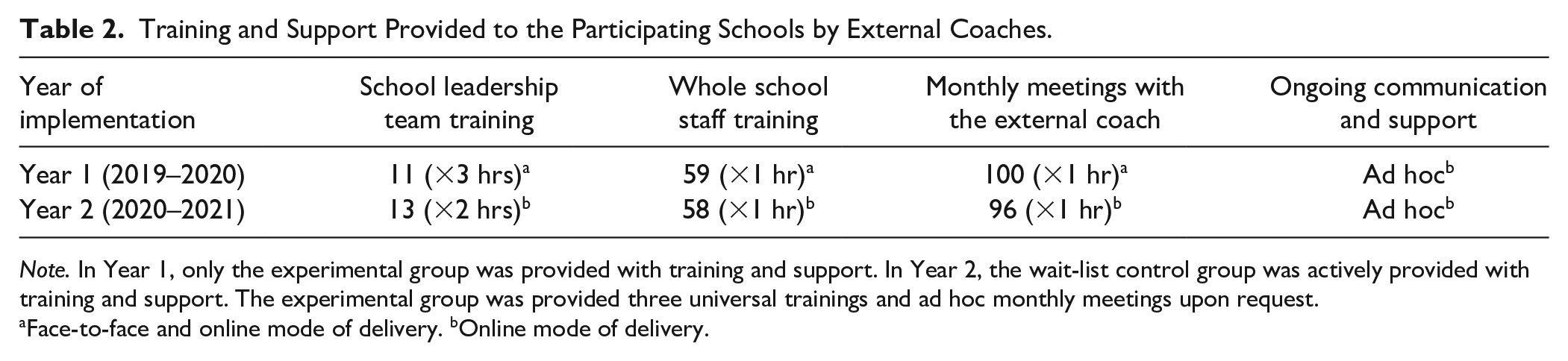
Note. In Year 1, only the experimental group was provided with training and support. In Year 2, the wait-list control group was actively provided with training and support. The experimental group was provided three universal trainings and ad hoc monthly meetings upon request.
Face-to-face and online mode of delivery. bOnline mode of delivery.
The implementation was guided by the eight basic components of the SWPBS Tier 1 framework. These components consisted of the main steps taken by schools to implement the framework, with the guidance of their coaches, including: (1) common vision, philosophy, and goals, (2) leadership, (3) clarifying expected behavior, (4) teaching expected behavior, (5) encouraging expected behavior, (6) discouraging unexpected behavior, (7) ongoing monitoring and assessment, and (8) effective professional learning. Experimental schools applied the same process; however, certain flexibility was allowed for adjustments at each school based on their needs. Schools in the control group attended only one presentation that covered the main features of the framework. In the second year of implementation (2020–2021), the wait-list control group implemented SWPBS following the same process as the experimental schools did in Year 1. The latter group of schools was provided with a simpler form of support, consisting of three universal trainings and ad hoc monthly meetings upon request.
Adaptations
Even though the design of the intervention included training, meetings, and teaching of social skills at schools, several adjustments were made due to the COVID-19 lockdown from March to May 2020. The pandemic forced schools to close and move the delivery of classes online via the platform “MS Teams.” Therefore, the training for the SLT and WSS, as well as the arrangement of monthly meetings between coaches and schools (SLT), were conducted via online platforms. The coordination and cooperation between SLTs and school staff were mainly done through digital means as well. The following school year (2020–2021), certain schools or classes had to interrupt their operations for shorter periods due to identified cases of COVID-19 in their populations. In addition, all schools remained closed during January 2021, extending the Christmas holidays based on the governmental guidelines. Consequently, modifications were made to the timeline and focus of teaching social skills, encouraging expected behavior, and discouraging unexpected behavior at each school. During the lockdowns, teachers’ interactions with students, especially those in Grades 1–3, focused mostly on providing emotional support rather than teaching academic subjects. The instructional time had been significantly reduced, while the remaining period was not enough to cover the curriculum. Therefore, COVID-19 certainly impacted the research study in general, considering the delays and alterations to the process’s implementation.
The reward systems had been modified to be in line with the instructions of the Ministry of Health related to physical contact restrictions. For instance, teachers had replaced reinforcers such as stickers, card stamps, plastic coins, or bon-bons with electronic reward systems such as Class Dojo (www.classdojo.com) in an attempt to avoid physical interaction with the children. Reward menus were also adjusted. For example, teachers excluded certain social awards such as group games, indoor activities, or collective crafts making. Instead, they allowed for the selection of other awards that involve less physical contact among students, such as watching a preferred documentary in the classroom or presenting their favorite book to their peers.
Regarding procedures for discouraging unexpected behavior, schools have adapted their discipline referral forms based on their definitions of minor and major behavior incidents. Some schools attempted to integrate this process with the existing recording system for bullying and racist behaviors, which is promoted by the local Ministry of Education. This log is a standard form limited to a specific range of offensive incidents that involve a victim and a perpetrator. It mainly serves for referrals to the responsible authority, which is the Cyprus Observatory on School Violence, and for developing their annual report at the end of the school year.
Modifications to the reward system were also required based on students’ needs and motivations. Considering that primary schools in Cyprus include six grades, teaching methods for social skills and routines were adapted to students’ ages, both in terms of what and how they were taught. Teachers soon identified that students of different ages learn the new social curriculum (i.e., social skills and routines) at a different pace. Similarly, reward systems in higher grades included more social, instead of material rewards, which were relevant and meaningful to them. Group (classroom) reward systems were useful for promoting collaborative behavioral functioning among students as a team.
Another debated process dealt with the involvement of parents/guardians and community members in the implementation of the SWPBS framework. Even though their involvement is considered crucial in such interventions, participating schools did not embrace this step systematically. Instead, they were limited to sending an informative leaflet to the families with relevant information about the SWPBS implementation, as well as the school’s new vision, philosophy for discipline, and values. In addition, coaches delivered a common webinar to parents/guardians explaining the SWPBS approach and principles. The aim of the webinar was to facilitate the transfer of the new philosophy and practices in homes and develop common lines of understanding for the positive behavior support system.
Measures and Procedures
Fidelity Measures
The extent to which SWPBS core features and procedures were implemented with fidelity in the 31 participating schools is observed based on three fidelity assessments. Areas with systematically low scores are further investigated to distinguish possible explanations that might function as contextual barriers. In the current study, the TFI (Algozzine et al., 2014) along with SET (Sugai et al., 2001) were used to measure Tier 1 fidelity of implementation in the 31 schools. All 15 features of TFI Tier 1 were used; however, certain amendments were made to the instrument to fit the Cyprus context, as described above. For instance, area 1.1. Team Composition requires the Tier 1 school team to include family members or student representatives. However, SLTs consisted of four to six members of the school’s management and teaching staff only, with specific roles allocated to each member (i.e., coordinator, minute-taker, trainer, timekeeper, and communicator with parents). Only a few schools involved a parents’ representative in their SLT, whereas the majority were limited to sending informative letters and announcements. Parental involvement in decision-making and school management in Cyprus is not adequately applied as in other countries (Savva & Symeou, 2019; Symeou, 2001). Therefore, parental representation in SLTs was not imposed by the coaching team for the purposes of the SWPBS framework implementation. Another usual example concerns area 1.3. Behavioral Expectations. According to the TFI, schools should have five or fewer behavioral expectations for each setting/location, which will eventually form the school matrix. However, during the first year of implementation, schools were guided by external coaches to set behavioral expectations and develop examples only for the classroom. This was a decision of the coaches considering the limited time teachers have for the instruction of expected behaviors. They advocated for the development of shorter and more manageable school behavioral matrices instead of overstressing schools’ workload, at least during the first year. The following year, schools added social skills for other settings as well such as toilets, yards, canteen, corridors, and stairs. Accordingly, specific amendments were also made to the SET. For example, the question “What is the procedure for dealing with a stranger with a gun?” was omitted from the interview and observation form because gun possession is an extremely unlike scenario for elementary schools in Cyprus. Both tools were translated into Greek and then back-translated into English by two independent translators.
External coaches conducted fidelity assessments in schools during planned visits, collecting and recording information with the help of the SET interview and observation form. The process included brief interviews with 30% of the teaching staff (including members of the auxiliary staff where possible) and 10% of the student population (Grades 1 to 6), a short interview with the school principal, and a walk-through observation of school areas such as classrooms, hallways, toilets, canteen, or main yard. The above percentages were predefined by the research team based on PBIS manuals (Algozzine et al., 2014; Missouri Schoolwide Positive Behavior Support, 2019) as a method to maximize the representation of results at the school level. Teachers’ participation was ensured through the school agreement signed by the school management team at the beginning of each school year. Coaches randomly selected teachers (not fewer than five in smaller schools) during their visit to each school. For students’ participation, consent forms were obtained from their parents prior to school visits. The first four children who appeared in the classroom catalog were selected to ensure random selection.
The obtained data were used by coaches to complete the TFI scoring forms, which consisted of 15 SWPBS core features. Items were scored from 0 to 2 (0 = not implemented; 1 = partially implemented; 2 = fully implemented). A school’s TFI Tier 1 total score is the sum of the 15 items (i.e., ranging from 0 to 30). Generally, implementation fidelity is accepted as sufficient when a school reaches or exceeds a total score of 70% (Algozzine et al., 2014; Kittelman et al., 2018; Mercer et al., 2017). It is noted that to ensure unbiased evaluations external coaches visited and assessed schools other than those they were responsible for. School visits lasted approximately from 1 to 3 hours, mostly depending on the size of the school.
The fidelity assessments were planned to be carried out in four phases (i.e., at the beginning and end of each school year). Though the second planned assessment at the end of the school year 2019–2020 (May–June 2020) was canceled due to the COVID-19 pandemic and the strict measures applied in schools to limit the spread of the virus. For this reason, visits to schools from external members were outlawed. Therefore, three fidelity assessments were completed: at the beginning of year 1 (T1: October-November 2019), at the beginning of year 2 (T2: October-November 2020), and at the end of year 2 (T3: May-June 2021). The Cronbach’s alpha of the TFI was satisfactory and estimated at .70, .90, and .86 at measurements T1, T2, and T3 respectively.
Focus Group
Local external coaches’ in-depth views were examined after the two-year implementation during a structured focus group (Roulston, 2010). As mentioned above, coaches were in constant communication with schools, guiding the step-by-step implementation of the framework’s core elements. Therefore, their experience working with the participating elementary schools was a valuable source of information for the purpose of the current study.
The research protocol was developed considering a broader aim and included four theme categories: (a) best practices, (b) challenges, (c) Tier 1 adaptations, and (d) support. The areas of challenges (“What challenges did you face during the intervention implementation in schools and how did you address them?”) and adaptations (“What amendments do you propose for forthcoming implementations of SWPBS in Cyprus? What other aspects/issues related to the specific contextual needs need to be considered?”) were particularly relevant to the aims of the current study. All coaches signed a consent form for their confidential and anonymous participation. The discussion was attended by two researchers to ensure sufficient information obtainment. The conversations were tape-recorded and subsequently transcribed into Word Documents in their entirety for analysis.
Data Analysis
Descriptive statistics of the TFI results were used to identify the extent to which SWPBS’ core features were implemented with fidelity in the 31 elementary schools in Cyprus. Lower mean scores, especially during the last fidelity assessment, are perceived as indications of challenging areas for schools to develop internal procedures. Friedman’s test and Wilcoxon signed-rank tests were employed to report the overall progress of participating schools over time. In this case, groups (experimental and control) were analyzed separately because they were expected to elicit different progress across measurements. This is because the experimental schools implemented SWPBS for two school years, while the control group schools began the implementation only in the second year. In addition, schools’ size and location were regressed on the latest TFI score (T3) to examine whether these characteristics predict implementation fidelity. Quantitative analyses were conducted using SPSS v.20.0.0.
Coaches’ in-depth views, as derived from the focus group, were used to interpret and complement the quantitative results. The discussion transcription was analyzed using NVivo v.1.7. Following the research questions, the data referring to the challenges of implementation were analyzed deductively. Thematic analysis techniques were employed to identify the nuanced areas of barriers as reported more frequently and intensively by the participants (Braun & Clarke, 2006).
Results
Quantitative Results: School-Wide Positive Behavior Support Implementation Fidelity
The descriptive results of the fidelity assessments, as reported on the TFI scoring forms, indicate that both school groups managed to reach a satisfactory fidelity level in most of SWPBS’ core features after one or two years of implementation (see Table 3). The total mean scores for the experimental group (M = 23.56, SD = 5.03) and control group (M = 23.80, SD = 4.48) based on the final fidelity assessment (T3) at the end of Year 2 were above the satisfactory 70% threshold (Algozzine et al., 2014; Mercer et al., 2017). Two areas mainly appear to be challenging for schools to implement, which are 1.12. Discipline data and 1.13. Data-based decision making. According to the TFI, the first area refers to the availability and instant access to discipline data and graphed reports, which could enhance the SLT’s understanding of the frequency and occurrence of unexpected behavior incidents at school (by behavior, location, time of day, and student). As appeared from the TFI evaluations, participating schools lacked such systems and procedures. Subsequently, the other area (1.13. Data-based decision-making) refers to the use of this data to make informed decisions based on evidence. Therefore, these features are closely related and interdependent, with local schools having low scores in both.
Mean Scores and Standard Deviations for Each TFI Feature Based on the Three Fidelity Assessments at 31 Elementary Schools in Cyprus.
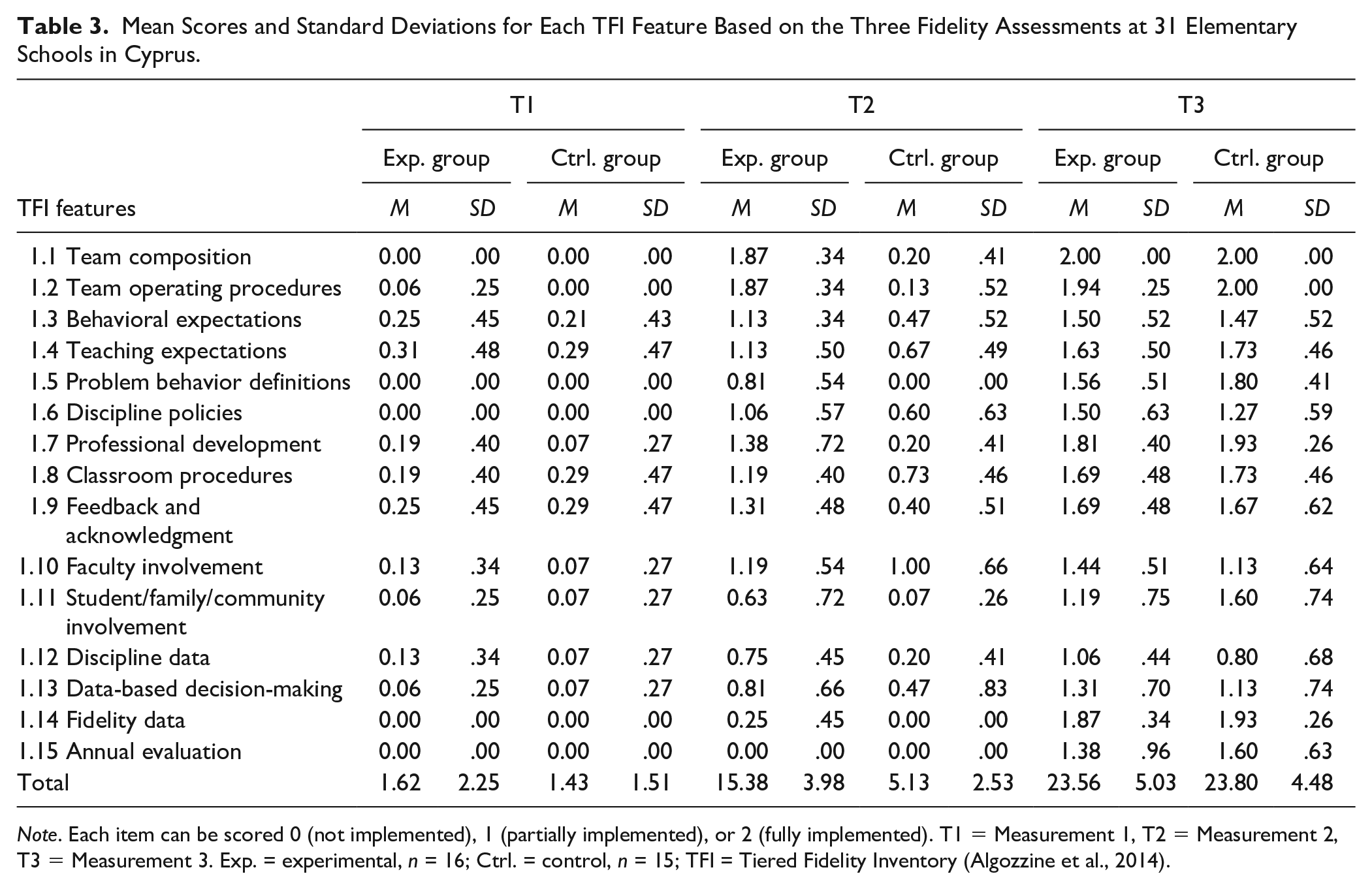
Note. Each item can be scored 0 (not implemented), 1 (partially implemented), or 2 (fully implemented). T1 = Measurement 1, T2 = Measurement 2, T3 = Measurement 3. Exp. = experimental, n = 16; Ctrl. = control, n = 15; TFI = Tiered Fidelity Inventory (Algozzine et al., 2014).
Schools’ progression on the SWPBS implementation, as reported from the three fidelity assessments, was examined using the Friedman’s test. The analysis indicated that there is a statistically significant difference among the mean scores for both groups across the three measurements, experimental group: χ²(2) = 32.00, p < .001; control group: χ²(2) = 28.00, p < .001. Post hoc analysis with Wilcoxon signed-rank tests and a Bonferroni correction applied at a new significance level (p = .05/3 = .017) and showed that statistically significant changes exist between all measurements for both school groups. The results from the above tests are presented in Table 4. The progression of the control group from measurement T1 to T2 was not expected, since no intervention was implemented during that period. However, as seen from the mean scores in Table 3, this progression was minimal (T1: M = 1.43, SD = 1.51 and T2: M = 5.13, SD = 2.53) compared to the satisfactory TFI score range that indicates fidelity (i.e., 70% and above, implying a score around 21–30). A visual representation of schools’ overall progress can be found in Figure 1.
Results From Friedman’s and Wilcoxon Signed Rank Tests to Identify Statistically Significant Differences in TFI Scores Across Measurements.
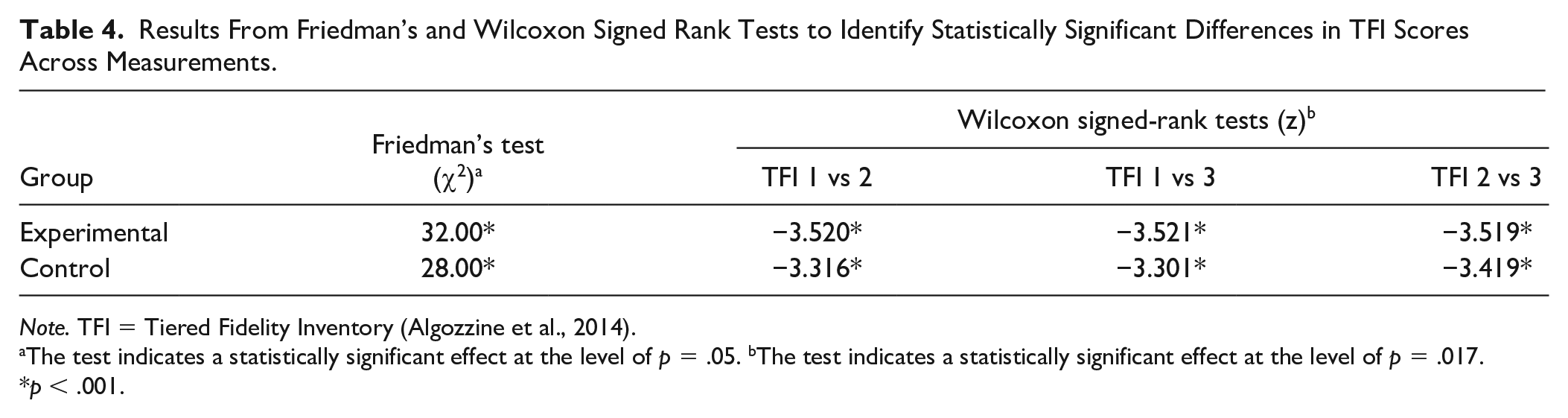
Note. TFI = Tiered Fidelity Inventory (Algozzine et al., 2014).
The test indicates a statistically significant effect at the level of p = .05. bThe test indicates a statistically significant effect at the level of p = .017.
p < .001.
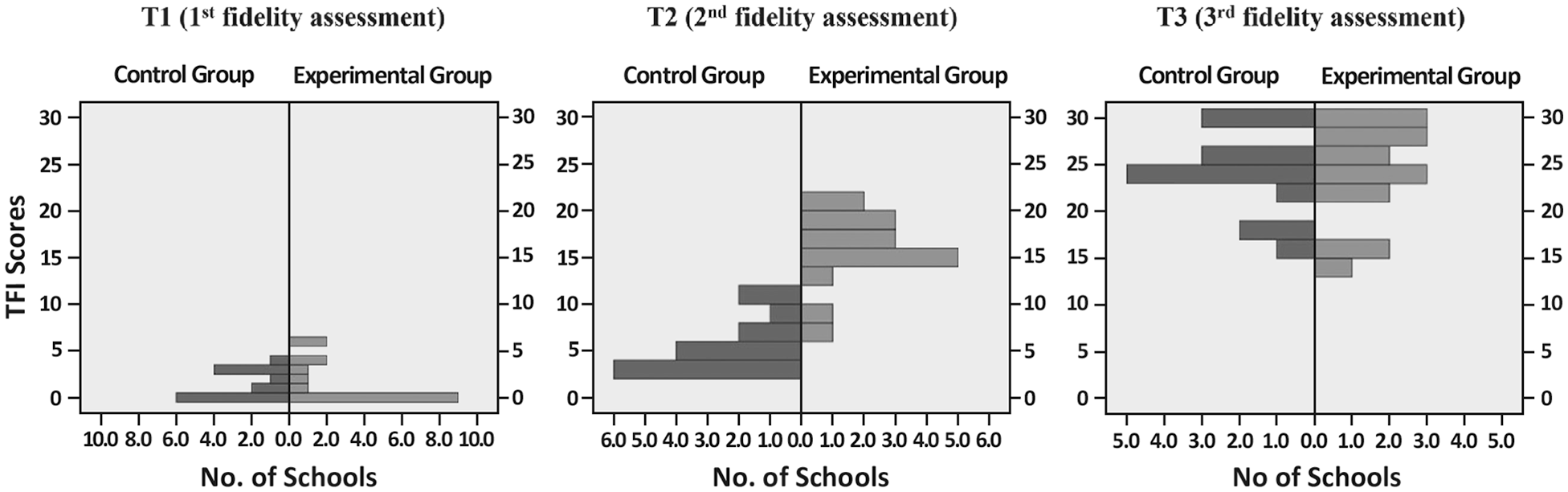
Schools’ Progression on SWPBS Implementation Fidelity Based on TFI Scores.
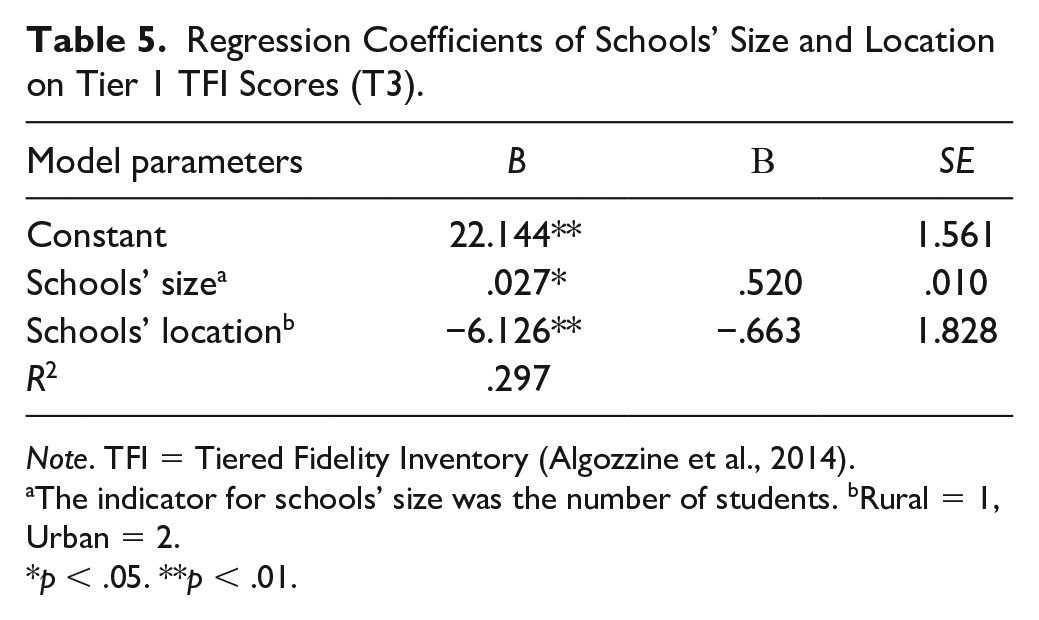
Multiple regression analysis was employed to examine if schools’ size (no. of students) and location (urban or rural) predict the TFI scores in the latest assessment (T3). These variables predicted the TFI with a significant level at p < .05, F (2, 28) = 5.912, p = .007, R2 = .297. However, their contribution to the model was minimal. Specifically, schools’ size and location standardized coefficients were estimated at .520 and −.663, respectively, meaning that larger and rural schools are expected to have better TFI scores only by a half unit out of 30, which is the overall TFI score. It is noted that the size and location of schools were correlated (Spearman rho = .585, p = .001). However, no multicollinearity issues emerged during the regression analysis. These results demonstrate that all schools in Cyprus, irrespective of their size and location, might be able to implement SWPBS with fidelity. The results of the regression are presented in Table 5.
Regression Coefficients of Schools’ Size and Location on Tier 1 TFI Scores (T3).
Note. TFI = Tiered Fidelity Inventory (Algozzine et al., 2014).
The indicator for schools’ size was the number of students. bRural = 1, Urban = 2.
p < .05. **p < .01.
Qualitative Results: Barriers to Implementation
The systematic analysis of the focus group revealed five main areas of challenges. According to external coaches, these challenges functioned as barriers for the implementation of SWPBS with fidelity during the two school years.
Situational Challenges
The most impactful but inevitable challenge for the effective SWPBS implementation, especially during the first school year, was the COVID-19 pandemic. All schools were imposed a national lockdown for three consecutive months, which interrupted the typical operations of the intervention. Coaches mentioned that not only social distancing but also relevant consequences (e.g., limited time for teaching, limited collaboration among students, disorientation from the SWPBS project in the school) had a great negative impact on implementation fidelity. Generally, they emphasized that teachers had to come up with innovative solutions and show high levels of reflexes to maintain running the intervention procedures.
Resistance to Change
A common barrier reported by most coaches was the resistance of some teachers to adopt the new state-of-play at school. Three main reasons were mentioned explaining this resistance by teachers. First, there were cases of teachers who were skeptical about the effectiveness of the intervention and often hopeless that student behavior could be improved. Second, philosophical differences arose related to the behaviorism and applied behavior analysis (ABA) approach of the SWPBS framework. Third, other teachers were reluctant to replace their existing practices with new ones. As a coach mentioned, “(. . .) teachers had to be convinced of the benefits of the framework before they implement it. So I [the coach] had to work hard toward this direction especially at the beginning of the program.” Therefore, schools needed substantial time and effort to make a collective shift from “problematic students” to “unexpected behaviors,” from “extinguishing problem behaviors” to “preventively promoting positive behaviors,” from “reaction” to “prevention,” or from “punitive practices” to “discouraging strategies.”
Teachers’ Appointments and Transfers
Coaches reported that compulsory transfers for teachers within public schools each school year as imposed by the local policy was the most prominent systemic challenge for the long-term sustained implementation of the SWPBS framework. They specifically stated that much of the knowledge gained during the first year evidently faded out in some schools in the second year. A coach particularly pointed out that “(. . .) a large percentage of schools’ staff, including the principal and members of the school leadership team, might change each year. There are even cases of smaller schools where all teaching staff might change.” Also, newly appointed teachers appeared unwilling to implement SWPBS in some cases. At best, they had to educate themselves and engage with the new state-of-play at school.
Added Workload
Another common challenge reported by the coaches was the increased workload teachers had to undertake for the SWPBS implementation. Coaches clarified that the official working schedule in Cyprus does not recognize the extra time teachers need to devote to additional tasks such as lesson planning, students’ feedback, professional development, or other administrative activities. They confessed to receive several complaints from teachers feeling overwhelmed by the essential administrative time and preparations required to implement the framework with fidelity. This work was not adequately planned from the beginning of the school year.
Collection of Data
The features related to the collecting and using of discipline data to make informed decisions seem challenging for schools. Coaches explained that schools often lack the necessary expertise and know-how to develop such systems. Additionally, their internal procedures may be outdated and fragmented, which can prevent instant access to the data. The digital infrastructure and competence of schools were inadequate for implementing digital solutions, so they resorted to using paper discipline referral forms instead. This was also described as an attitudinal challenge, meaning that teachers were not always willing to take on this responsibility. The collection and analysis of data were seen as tasks beyond their regular duties, making them less eager to adopt systems for systematically recording discipline incidents. As a coach stated, “It was difficult for them [schools] to apply a common system for systematically recording students’ unexpected behaviors.”
Discussion and Recommendations
The present study reports critical information regarding SWPBS Tier 1 implementation in 31 elementary schools in Cyprus during the course of two school years. Particular attention is given to the contextual adaptations and challenges faced by schools and external coaches for the implementation of the framework with fidelity. Based on these findings, we present recommendations with the aim of enhancing the framework’s contextual fit in Cyprus and countries with similar characteristics. We aim to contribute to the international discussion on transferring and adopting SWPBS in educational systems around the world (Fallon et al., 2012; Sugai et al., 2011), increase the local capacity for forthcoming implementations (Fixsen et al., 2005), and maximize their impact on targeted outcomes (Horner et al., 2014; Sailor et al., 2009).
The quantitative phase of the study showed that participating schools managed to reach a satisfactory fidelity level (i.e., over 70%) in most of SWPBS’ core features after one or two years of implementation (Algozzine et al., 2014; Kittelman et al., 2018). Also, schools’ progression on the SWPBS implementation as reported from the three fidelity assessments supported our hypothesis about improving fidelity throughout time (T1, T2, and T3). Specifically, the fidelity measurements showed that all standard procedures were partially or fully implemented. The most challenging areas were the establishment of data collection mechanisms to systematically record discipline incidents and consequently, the use of this information by the SLT to make informed and targeted decisions to improve their implementation. School size and location did not impact SWPBS implementation with fidelity, indicating the applicability of the framework in all local schools.
The views of external coaches obtained during the structured focus group revealed five main challenges hindering SWPBS implementation with fidelity across the sample schools. Resistance to change was a common challenge as observed by coaches, mainly related to teachers’ skepticism, conceptual differences to the framework approach, or simply teacher unwillingness to adapt to new practices. Lohrmann and colleagues (2008) explicitly referred to this challenge and suggested strategies to alleviate it. Second, school staff transfers and new appointments each year disrupted the collective capacity building and long-lasting development of the support system in the school. Another frequent concern was the added workload required for SWPBS implementation in practice and the intensified time constraints due to the COVID-19 pandemic. The situational challenge of lockdowns hindered ordinary operations of schools. Finally, as demonstrated by the fidelity assessments, schools found it difficult to establish data collection mechanisms to record discipline data. Coaches explained this challenge arose from schools’ lack of skills and their inadequate digital infrastructures.
The following recommendations emerged from the two-year SWPBS implementation in local elementary schools, as ways to enhance the contextual fit and implementation fidelity in local schools. The SWPBS framework offers a certain degree of flexibility to facilitate the integration of systems and practices based on schools’ needs (Horner et al., 2014). Upper-level administrations can collaborate with school management teams and local researchers to analyze their context and identify potential barriers to integrating the SWPBS practices into their school improvement plans (Fallon et al., 2012; Swain-Bradway et al., 2018). The role of external coaches is essential during this process in proposing context-specific solutions to overcome imminent and current challenges.
Local schools willing to implement the SWPBS framework are recommended by the national official guidelines to incorporate it as part of their yearly school improvement plan and PDAP. This might assist inaddressing teachers’ increased duties and time restrictions, which was a major challenge. In addition, schools can profit from the summer months for preparatory activities, which might save valuable time during the school year. If conditions allow, schools might also consider the integration of a preparatory year to better recognize the needs and set the groundwork for the next year. Preparatory time is generally offered for the development of lesson plans for the instruction of social skills, educational material (such as posters, PowerPoint presentations, videos, and role-play activity aids), and rewards systems including printed or digital reinforcers and individual and classroom reward menus.
In view of teachers’ yearly appointments and transfers, we recommend schools reach a formal agreement at the beginning of every school year to ensure that at least 80% of the staff are still willing to implement the SWPBS approach. When an internal agreement is achieved, the previous school management should ensure a comprehensive handover to the new teachers. New teachers should review all the material produced the year before (e.g., school vision, philosophy, behavioral matrix, teacher manual). External coaches can support meetings and trainings, especially at the beginning of the new year, to realign the efforts of new and existing staff at the school. Meanwhile, peer learning and collaboration are encouraged through regular meetings, routine talks, mentorships, co-teaching lessons on social skills and routines, and lesson observations. Schools are encouraged to find creative ways to communicate their new vision, philosophy for the discipline, and SWPBS procedures among staff, students, and parents.
School management teams should facilitate the integration of technology into existing administration systems and incorporate data collection mechanisms using digital means. This will eventually assist the efficient and systematic logging of discipline data by teachers, which combats the enduring challenge of developing comprehensive support systems to reduce problem behaviors (Kapardis, 2013). Administrative staff might be involved in attending relevant training in data management and visualization of results to inform decision-making. Schools can also align the SWPBS features for logging discipline data (i.e., recording major and chronic unexpected behaviors) with relevant existing official processes such as the Logs for bullying and racist behaviors.
When teachers appear unconvinced about the effectiveness of the SWPBS framework or doubtful whether students’ misbehavior can be improved, schools may find additional actions helpful to support adoption and implementation. It should be noted that SWPBS is a systems-change framework that requires collective, endured, and consistent effort by all school staff as well as parents (Losinski et al., 2014; Sørlie, 2021). Immediate effects are less likely to occur because the transmission of the new culture, philosophy for discipline, and behavioral expectations in a school usually takes time. For this reason, the SLTs should initiate frequent formal and informal discussions among the school staff, including administrative and auxiliary personnel. Setting up a reward system for the school staff might also support staff engagement. Similar strategies proposed for other contexts can be adopted in Cyprus, such as identifying the specific needs and priorities of the school and connecting them with certain elements of SWPBS (Lohrmann et al., 2008). In addition, implementation may progress at a different pace in each school, in respect to their receptiveness and capacity.
SWPBS Tier 1 refers to universal prevention in which behavioral expectations are the same for all students. It is expected that some students will require more intensive support, such as Tiers 2 and 3 (Lohrmann et al., 2008). For schools newly adopting SWPBS, continued need for additional interventions for some students can fuel teacher hesitency. SLTs should emphasize that long-term changes require patience and persistent efforts (Baldry & Farrington, 2007; Smith et al., 2004). Schools are also recommended to seek support and advice from local experts and other schools that have previously implemented SWPBS. Local demonstration data, testimonials, success stories, and good practices are beneficial to support adoption. Another common practice to increase local capacity is the development of networking channels between schools and teachers for exchanging knowledge and ideas. Nevertheless, research teams and coaches are responsible for disseminating the available evidence at a regional, local, and international level regarding the abiding effects and outcomes of SWPBS implementation.
Limitations and Future Research
The findings of this study have to be seen in light of some limitations. First, only 31 elementary schools were included in the study; thus decreasing the generalizability of findings. Future studies might explore applying SWPBS in a larger number of schools in Cyprus and examine implementation capacity. Follow-up studies could investigate the long-term sustainability of SWPBS after the intervention completion and when implementing the framework with no or less support from external coaches. Second, the investigation of implementation fidelity should expand beyond the capacity of schools to apply the framework and investigate its effect on school, teacher, and student outcomes. Third, the present study focused only on Tier 1. Future studies in the local context might explore the Tiers 2 and 3 implementation fidelity and its effect on the targeted outcomes. Fourth, the findings of the current study are culture-specific and predominantly describe individuals of Cyprus. Further research is needed to examine whether the same results can be found at schools with similar or different cultural backgrounds. For this reason, adopting the suggested recommendations might not directly lead to high implementation fidelity. Finally, the outcomes should be interpreted with caution since they might be affected by the COVID-19 pandemic school closures and necessary adjustments. School closures and adjustments on the intervention as described before might have affected the outcomes. Further research in the local or similar contexts is suggested to apply the framework in schools during typical periods.
Conclusion
The experience of implementing the SWPBS framework in Cyprus showed that it can be implemented with fidelity along with contextual adaptations to fit the local context. The proposed list of recommendations for adaptations is not comprehensive, and we recognize that integrating positive behavior support systems in schools is an ongoing learning process. The present study encourages the initiation of similar efforts to build national capacity, influence forthcoming SWPBS implementations in Cyprus schools, and contribute to the international dialogue on the framework’s transfer and contextual fit in educational systems around the world. In this respect, the adaptations described above can be beneficial to kick-start this process and prepare conditions for the development of successful whole-school positive behavior supports for students’ socio-emotional development.
Footnotes
Data Availability Statement
The data that support the findings of this study are available on request from the corresponding author. The data are not publicly available due to privacy or ethical restrictions.
Declaration of Conflicting Interests
The authors declared no potential conflicts of interest with respect to the research, authorship, and/or publication of this article.
Funding
The study presented in this article is part of the European Commission funded project “Building School-Wide Inclusive, Positive and Equitable Learning Environments Through a Systems-Change Approach (SWPBS) (Project number: 606687-EPP-1-2018-2-CY-EPPKA3-PI-POLICY),” under the Erasmus+ Key Action 3 support to policy development and cooperation. This publication reflects the views only of the authors, and the Commission cannot be held responsible for any use of the information contained therein ( ).
).