



Abstract
School-wide positive behavior interventions and supports (SWPBIS) is a tiered framework that supports the academic, social, and behavioral needs of students. In this study, we conducted a conceptual replication of Grasley-Boy et al. (2022a) and used a series of two-level linear multilevel analyses to examine the impact of SWPBIS fidelity on 10 exclusionary discipline outcomes for students with disabilities (SWD). Specifically, we compared schools that implemented multiple SWPBIS tiers with fidelity to schools that only implemented Tier 1 with fidelity from a sample of 558 schools in 113 districts in California. Findings indicate a statistically significant decrease in multiple out-of-school suspension categories as well as referrals to law enforcement for SWD in schools that implemented all tiers with fidelity. We provide recommendations for using findings to inform school efforts to reduce exclusionary discipline for SWD.
Schools often respond to challenging behavior by removing students from the educational environment in an attempt to reduce inappropriate behavior (Massar et al., 2015; Zinsser et al., 2022). Students with disabilities (SWD) are suspended and expelled at more than twice the rate of peers without disabilities (Hurwitz et al., 2021; Zeng et al., 2021), and students who exhibit externalizing behavior challenges, such as students with emotional behavioral disorders, are particularly impacted by exclusionary discipline (Sullivan et al., 2014). For SWD, exclusionary discipline can exacerbate academic, behavioral, and social difficulties by removing opportunities to receive academic and social skills instruction, receive feedback from teachers and peers, and practice appropriate behavior (Gregory et al., 2010; Losen & Martinez, 2020). Exclusionary discipline such as suspensions and expulsions can also contribute to lower academic achievement, increased dropout rates, and the school-to-prison pipeline (Cholewa et al., 2018; Skiba et al., 2014).
One approach addressing challenging behavior, while also reducing the use of exclusionary discipline, is school-wide positive behavior interventions and supports (SWPBIS). School-wide positive behavior interventions and supports is a three-tiered framework for delivering evidence-based practices to support behavioral, social, and academic outcomes for all students, especially those who require different or more intensive support (Sugai & Horner, 2020). Multiple studies have highlighted the positive effects of Tier 1, but research is needed to better understand how implementing successive SWPBIS tiers with fidelity impacts exclusionary discipline outcomes for SWD (Gage et al., 2018; A. Lee & Gage, 2020; Sugai & Horner, 2020). In this study, we aimed to conceptually replicate and extend the work of Grasley-Boy et al. (2022a) by comparing the impact of schools implementing multiple SWPBIS tiers with fidelity to schools only implementing Tier 1 of SWPBIS with fidelity on exclusionary discipline outcomes for SWD.
Replication
Replication research involves reproducing one or more elements of a previous study with the goal of examining the validity or robustness of the original findings (Travers et al., 2016). Replication studies are often categorized as direct or conceptual. In direct replication, researchers use the same methods and procedures as in the original study with the goal of assessing the validity of or confirming findings. In conceptual replication, researchers purposefully vary one or more elements from the original study to assess the robustness or generalizability of findings across changes in the study (e.g., examining whether an intervention is similarly effective for a different population of students or for a different outcome; Travers et al., 2016).
Despite the importance of replication research, multiple literature reviews indicate few special education researchers conduct explicit replications (Lemons et al., 2016; Makel et al., 2016). In an applied field such as special education, where the primary goal of research is to inform practice and policy, replication research plays a critical role in assessing the effectiveness and generalizability of practices and interventions (Lemons et al., 2016). As schools attempt to find solutions to exclusionary and discriminatory discipline, conceptual replications can play an important role in assessing the robustness of school-wide programs.
Exclusionary Discipline
In-school suspensions (ISS), out-of-school suspensions (OSS), and expulsions are three commonly evaluated types of exclusionary discipline (Skiba et al., 2014). Students can also be excluded from instruction by being transferred to an alternative school for disciplinary reasons (i.e., expulsion with educational services), being referred to law enforcement, or receiving a school-related arrest resulting in the removal of a student from a classroom or school (Grasley-Boy et al., 2022a; U.S. Department of Education, 2022b). Although not defined in the Individuals with Disabilities Education Act, the U.S. Department of Education (DOE) defines exclusionary discipline as the short- or long-term removal of a child from a class, school, or other education program for violating a school rule or other code of conduct. These removals include detentions, ISS, OSS, expulsions, disciplinary transfers to alternative schools, and referrals to law enforcement, including referrals resulting in a school-related arrest (U.S. Department of Education, 2022b).
When students are removed from the classroom, there are both short-term and long-term ramifications. One of the immediate consequences of exclusionary discipline is lost instruction. Students who miss more days of instruction will often learn less and are more likely to repeat a grade or drop out (Marchbanks et al., 2015). Lost instructional time from exclusionary discipline also impacts math and reading achievement, which are necessary for academic and post-secondary success (Whisman & Hammer, 2014). Additionally, exclusionary discipline may perpetuate stereotypes and biases and is associated with increased antisocial behavior and depressive symptoms (Carter et al., 2017; Eyllon et al., 2022; Hemphill et al., 2006). Long-term consequences include a higher risk of receiving additional discipline, dropping out of school, and involvement with the juvenile justice system (Losen & Martinez, 2020).
Students with disabilities are disproportionately affected by punishment in schools. For example, Losen and Martinez (2020) found that secondary SWD lost about twice as many days of instruction as their peers without disabilities. Not only do SWD have more discipline encounters than their peers without disabilities but they are also given more severe punishment (Blake et al., 2020). Exclusionary discipline may be even more consequential for SWD as they lose access to important supports such as counselors, therapists, and special or individualized instruction, and making up missed instructional time becomes more difficult (Losen & Martinez, 2020). Despite federal protections for SWD, such as manifest determination, the use of discriminatory discipline practices is an ongoing concern across districts and schools (Fisher et al., 2021). In response to these concerns, the federal government released new guidance in July 2022 for schools to support SWD and avoid discriminatory use of discipline (U.S. Department of Education, 2022a). A key component of the guidance from the U.S. DOE was the implementation of SWPBIS (U.S. Department of Education, Office of Civil Rights, 2022; Department of Education, Office of Special Education and Rehabilitative Services, 2022).
School-Wide Positive Behavior Interventions and Supports
School-wide positive behavior interventions and supports uses a three-tiered prevention model to support positive behavior. In Tier 1, schools establish school-wide social and behavioral expectations, reinforcers for expected behaviors, a system to correct and redirect inappropriate behavior, and data collection methods and routines. Tier 1 interventions address the needs of most students and typical problem behaviors. Tier 2 supports address the needs of a smaller number of students who require additional instruction or support. Together with Tier 1 interventions, these students may require increased opportunities for positive reinforcement, social skills instruction, or precorrections. Tier 3 supports students with the most intensive needs who have not responded to Tier 1 and Tier 2 interventions. Tier 3 supports are developed and implemented by a team of experts and include interventions such as functional-behavioral assessments and person-centered planning (Horner & Sugai, 2015).
Numerous studies have evaluated the effects of SWPBIS implementation and researchers posit several positive student outcomes such as fewer suspensions and expulsions (Bradshaw et al., 2010), improved mental health (Cook et al., 2015), lower rates of bullying and peer rejection (Waasdorp et al., 2012), and higher academic achievement (Horner et al., 2009). Multiple meta-analyses corroborate these findings and highlight a SWPBIS is an effective tool to reduce disciplinary problems and limit the use of exclusionary discipline (Gage et al., 2018; A. Lee & Gage, 2020).
School-Wide Positive Behavior Interventions and Supports Implementation Fidelity
Implementation fidelity is defined as the degree to which an intervention is implemented as prescribed but also includes important elements such as the level of adherence to intervention procedures and the amount or dosage of the intervention delivered (Odom et al., 2010). Implementation fidelity is an important consideration within intervention research and allows researchers to determine if relations exist between the intervention and outcome variables of interest (Gresham, 2009).
To date, multiple studies have assessed the relation between SWPBIS fidelity and student discipline outcomes. Childs and colleagues (2016) assessed the relation between Tier 1 fidelity, measured with the Benchmarks of Quality (BoQ; Kincaid et al., 2010), and office discipline referrals (ODR), ISS, and OSS. Greater Tier 1 fidelity was associated with a significant decrease in ODR and OSS. Additionally, Gage et al. (2017) assessed the impact of Tier 1 fidelity (measured by BoQ) on academic outcomes of elementary students and found a significant and positive association between Tier 1 fidelity and reading and mathematics scores. Similarly, Grasley-Boy et al. (2019) assessed the impact of Tier 1 fidelity on 10 exclusionary discipline outcomes for students with and without disabilities. The authors found a statistically significant decrease in OSS and days missed due to OSS for all students when schools implemented universal SWPBIS with fidelity, and SWD in schools using SWPBIS with fidelity were significantly less likely to be sent to alternative schools for behavior problems. Other studies have found implementing Tier 1 with fidelity is associated with positive student outcomes (Kim et al., 2018; Simonsen et al., 2012, 2021), but few studies have assessed the impact of Tier 2 and Tier 3 SWPBIS fidelity on student outcomes (Grasley-Boy et al., 2022a).
Tier 2 and Tier 3 SWPBIS Implementation Fidelity
Fewer schools report fidelity at Tier 2 and Tier 3 of the SWPBIS framework (Sugai & Horner, 2020) and few studies have explored the relation between collectively implementing two or more tiers with fidelity and exclusionary discipline outcomes for students (Grasley-Boy et al., 2022a). Gage and colleagues (2019) assessed the impact of Tier 1 fidelity on suspensions and expulsions using a quasi-experimental study design and found a significant and negative relation between fidelity and suspensions. The researchers also conducted an exploratory analysis of how higher-tier fidelity impacts suspensions and found a significant decrease in student suspensions for schools implementing all three tiers with fidelity. In this study, however, the researchers did not account for the potential impact of clustered data and higher-level predictors. Furthermore, the researchers did not assess the impact of fidelity on additional measures of exclusionary discipline such as referrals to law enforcement and school-related arrests.
Grasley-Boy et al. (2022a) assessed the additive effects of implementing higher tiers of SWPBIS with fidelity on exclusionary discipline. The authors found implementation of all three tiers of SWPBIS with fidelity had a significant impact on reducing multiple disciplinary outcomes compared to only implementing Tier 1 with fidelity. However, these researchers did not assess how implementing advanced tiers of SWPBIS may impact exclusionary discipline outcomes specifically for SWD. Given disparate discipline outcomes for SWD are well established in the literature, additional research is warranted to better understand how fidelity across SWPBIS tiers may impact exclusionary discipline outcomes for SWD. The purpose of this study was to conduct a conceptual replication of Grasley-Boy et al. Conceptual replications allow researchers to explore the robustness of interventions under new conditions or with different groups (Travers et al., 2016). In the current study, we use the same measures, procedures, and analyses from Grasley-Boy and colleagues to assess the additive effects of SWPBIS Tier 2 and Tier 3 fidelity on exclusionary discipline outcomes for SWD. We sought to answer the following research questions:
RQ1. Is there a statistically significant difference in exclusionary discipline outcomes for SWD in schools implementing only Tier 1 with fidelity compared with schools implementing Tier 1 and Tier 2, Tier 1 and Tier 3, or all three tiers with fidelity?
RQ2. Do the findings from Grasley-Boy et al. (2022a) on the relation between SWPBIS fidelity and exclusionary discipline outcomes replicate for SWD?
Method
Sample
Replicating Grasley-Boy et al. (2022a), the sample for the current study was obtained from California PBIS (CA PBIS) and represents SWPBIS implementation fidelity data from the 2015 to 2016 school year. California PBIS supports local schools and districts through regional assistance centers that provide training, coaching, and professional development to schools and districts to promote fidelity and data-based decision-making. The CA PBIS data set included 1,384 schools with reported fidelity based on the Tiered Fidelity Inventory (TFI). We identified 558 Grades K–12 schools from 113 districts meeting fidelity for Tier 1, Tier 1 and 2, Tier 1 and 3, or all three tiers. No schools were removed from the sample for missing data as only those reporting SWPBIS were included in the study. As recommended by the TFI developers (Algozzine et al., 2019) and consistent with previous studies (Grasley-Boy et al., 2022a), we defined fidelity as 70% for each tier of the TFI.
In addition to the CA PBIS data, we collected discipline data from the 2015 to 2016 U.S. DOE’s Civil Rights Data Collection (CRDC) survey (https://ocrdata.ed.gov) and demographic data from the National Center for Education Statistics Common Core of Data (CCD) for the included schools (https://necs.ed.gov/ccd/). Data from the three sources were merged using schools’ state and national ID numbers. School-level characteristics and summary data for each of the three tiers can be found in Table 1.
Descriptive Statistics for Schools.
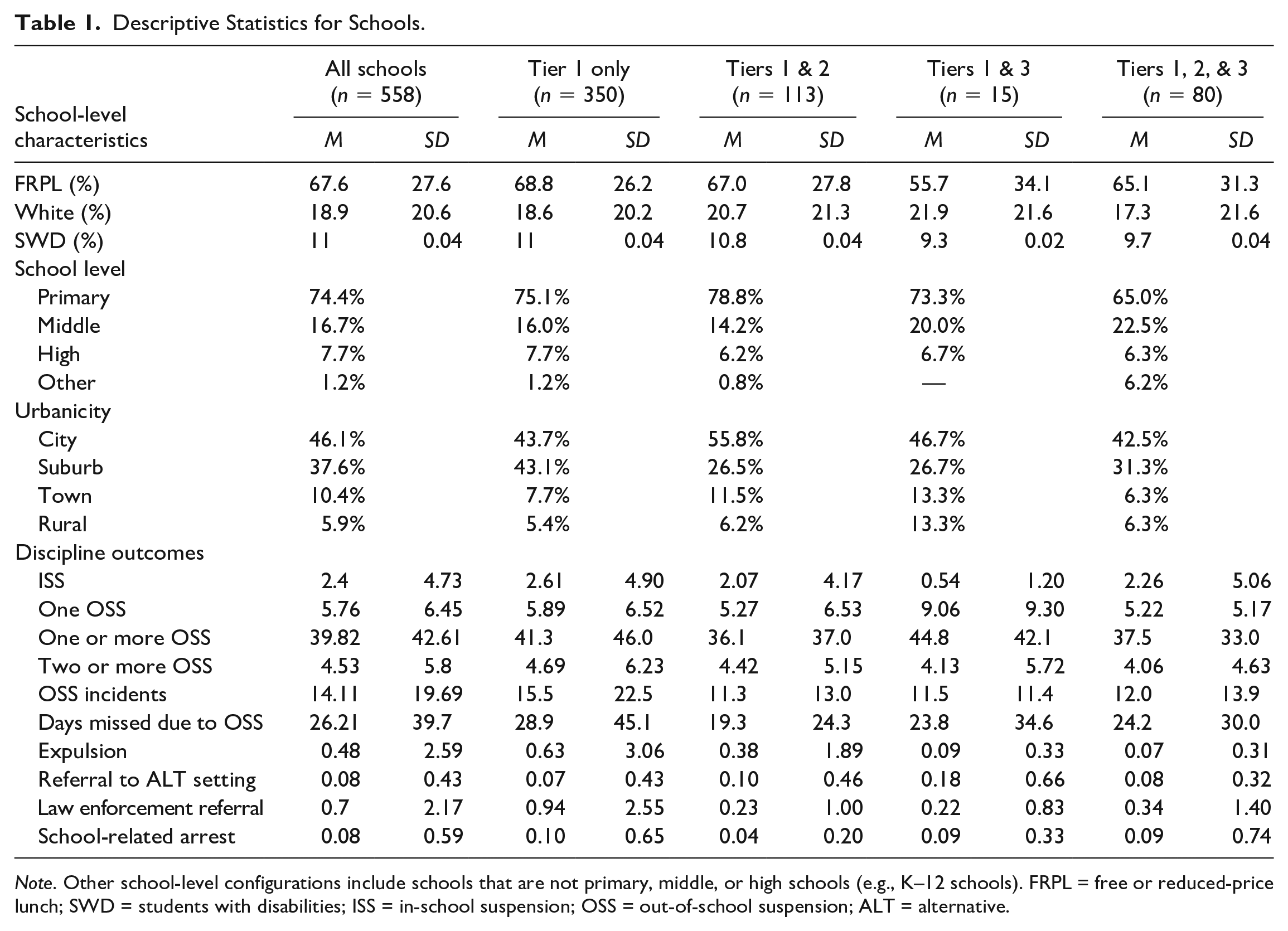
Note. Other school-level configurations include schools that are not primary, middle, or high schools (e.g., K–12 schools). FRPL = free or reduced-price lunch; SWD = students with disabilities; ISS = in-school suspension; OSS = out-of-school suspension; ALT = alternative.
Measures
Tiered Fidelity Inventory
The purpose of the TFI is to measure the extent to which school personnel are correctly applying the core elements of SWPBIS. The TFI is often used an initial assessment or as a guide for the implementation of practices at each of the SWPBIS tiers and can be completed multiple times throughout the school year. The measure contains 45 questions divided across Tier 1 (15 items), Tier 2 (13 items), and Tier 3 (17 items). The school PBIS team completes the TFI with an external evaluator and each item is assessed on a three-point scale (i.e., 0 = no implementation, 1 = partial implementation, 2 = full implementation). The TFI has strong evidence of reliability and validity in prior studies (Grasley-Boy et al., 2022b; McIntosh et al., 2017). In a recent evaluation of the TFI using data from California schools from 2018 to 2019, Grasley-Boy et al. (2022b) found an internal consistency of α = 0.94 for Tier 1, α = 0.95 for Tier 2, and α = 0.97 for Tier 3. In this study, fidelity is coded as a categorical variable with fidelity at Tier 1, Tier 1 and Tier 2, Tier 1 and Tier 3, and all three tiers as the categorical levels. Fidelity was used as a Level 1 predictor of exclusionary discipline outcomes.
School Demographics
We gathered school-level covariates from the CCD website. The CCD is collected annually by the DOE and includes information on school, student, and staff characteristics. Replicating Grasley-Boy et al. (2022a), we controlled for four school-level covariates by including them in our models: (a) a categorical variable for urbanicity (i.e., city, suburb, town, and rural), (b) a categorical variable for school level (i.e., primary, middle, high, and other), (c) a continuous variable for the percentage of students receiving free or reduced-price lunch, and (d) a continuous variable for the percentage of White students at the school. The percentages for free or reduced-price lunch and White students were calculated by dividing the respective student count variable by the total enrollment at each school. Because of the nature of this study (secondary data analysis), we were limited in the number and type of school-level covariates available to us in the extant data sets to include in our models. The omission of covariates relating to school setting, staff, and demographics as well as the non-equivalent nature of schools in the sample represent potential confounds in the current study.
Discipline Outcomes
We accessed the 2015 to 2016 CRDC for data on the 10 exclusionary discipline outcome variables used in the analyses. Replicating the outcome variables from Grasley-Boy et al. (2022a), we included the following school-level discipline outcomes in our analyses: (a) SWD with any ISS, (b) SWD with one OSS, (c) SWD with one or more OSS, (d) SWD with two or more OSS, (e) OSS incidents for SWD, (f) days of school missed due to OSS for SWD, (g) SWD expelled, (h) SWD referred to alternative schools for discipline issues, (i) SWD referred to law enforcement, and (j) SWD with school-related arrests. All outcome variables from the CRDC are reported as counts, so we transformed all variables to be the rate of incidents per 100 SWD. This was achieved by dividing the total count for each outcome variable by the total school enrollment of SWD and multiplying this by 100.
Data Analysis
First, we estimated both univariate and bivariate descriptive statistics. Next, a series of two-level linear multilevel analyses were conducted to account for the clustered nature of the data (i.e., schools clustered in districts) and to examine the effect of SWPBIS fidelity on the 10 exclusionary discipline outcomes for SWD. Although no Level 2 (district) predictors were included in the models, a multilevel analysis is appropriate when iteratively building and assessing models for clustered data. We first estimated the unconditional model, which does not include predictors, using the following equation:
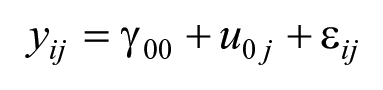
This first model evaluated how much of the variance in exclusionary discipline outcomes is accounted for by district-level variation. The district-level variance in exclusionary discipline outcomes is quantified through the intraclass correlation (ICC), which is computed with the following equation:
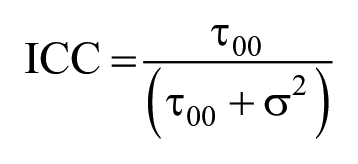
In this equation,
To assess the additive effects of higher-tier fidelity on exclusionary discipline outcomes (Research Question 1), we included the categorical school-level predictor for SWPBIS tiers of fidelity (Fidelity Tiers) and controlled for the four school-level covariates (i.e., urbanicity, school level, percentage of free and reduced-price lunch, and percentage of White students). Schools that only implemented Tier 1 with fidelity served as the reference group. In this random intercept model (i.e., Model 2), we allowed for the intercept of the Level 1 predictor to vary across Level 2 units (i.e., districts), but the slope did not vary. The equation for the random intercept model is as follows:

For Model 3, we allowed both the intercepts and slopes to vary across Level 2 units in a random slope model. In other words, we allowed for SWPBIS fidelity to have a different effect for each district. We used the following question for Model 3:

To determine the best-fitting fixed effects model, we compared the unconditional model (i.e., Model 1), random intercept model (i.e., Model 2), and random slope model (i.e., Model 3) using maximum likelihood (ML) estimation. To determine if changes in model fit were significant, we examined changes in the deviance values (minus two times the log-likelihood) and applied the chi-square likelihood ratio test to evaluate the likelihood that a set of parameters produces the observed data for each model. In addition to the likelihood ratio test, Akaike Information Criterion (AIC) and pseudo-R2 were calculated for each model. Lastly, we assessed the variance structure to determine if both variances and covariances would be included in the model. This process revealed best-fitting models for each of the 10 outcome variables, which are discussed in greater detail in the Results and Discussion sections. Finally, we used the same procedures as Grasley-Boy et al. (2022a) to calculate adjusted group mean difference effect sizes (Hedges’ g) for outcomes with significant results to facilitate comparisons between studies. We conducted all analyses in R 4.1.3 (R Core Team, 2017) using the lme4 package (Bates et al., 2015) for multilevel modeling.
Results
The sample for the current study includes 558 schools in 113 districts. Descriptive statistics and demographic characteristics of all schools are provided in Table 1. The majority of participating schools served elementary students in city or suburban settings and reported fidelity in Tier 1 only. Schools with fidelity for Tier 1 and Tier 3 contained the highest percentage of White students and schools with fidelity in Tier 1 only contained the highest percentage of SWD and students receiving free or reduced-price lunch.
Assumptions
Statistical assumptions of independence, homogeneity of variance, and normality were tested for the main effect models. We also assessed the effects of unusual data points. Skew and kurtosis levels were found to not be within appropriate ranges for disciplinary outcomes. Replicating the procedures done by Grasley-Boy et al. (2022a), we applied square root transformations to the 10 exclusionary discipline outcome variables to normalize their distributions. See Supplemental Table S1 for the raw and squared values of skew and kurtosis for the outcome variables.
Model Fit
We calculated ICC and iteratively developed best-fitting models for all 10 exclusionary discipline outcomes. Tables are presented for outcomes in which the random intercept or random slope models fit better than the unconditional model (i.e., Model 1). We report model development and estimated effects for the following outcomes in online Supplemental Tables S2–S7: rate of SWD with ISS, rate of SWD with one OSS, rate of SWD with one or more OSS, total instances of OSS for SWD, number of days missed due to OSS for SWD, and rate of referrals to law enforcement for SWD. See Table 2 for a summary of parameter estimates across exclusionary discipline outcomes.
Summary of Parameter Estimates for Six Exclusionary Discipline Outcomes.
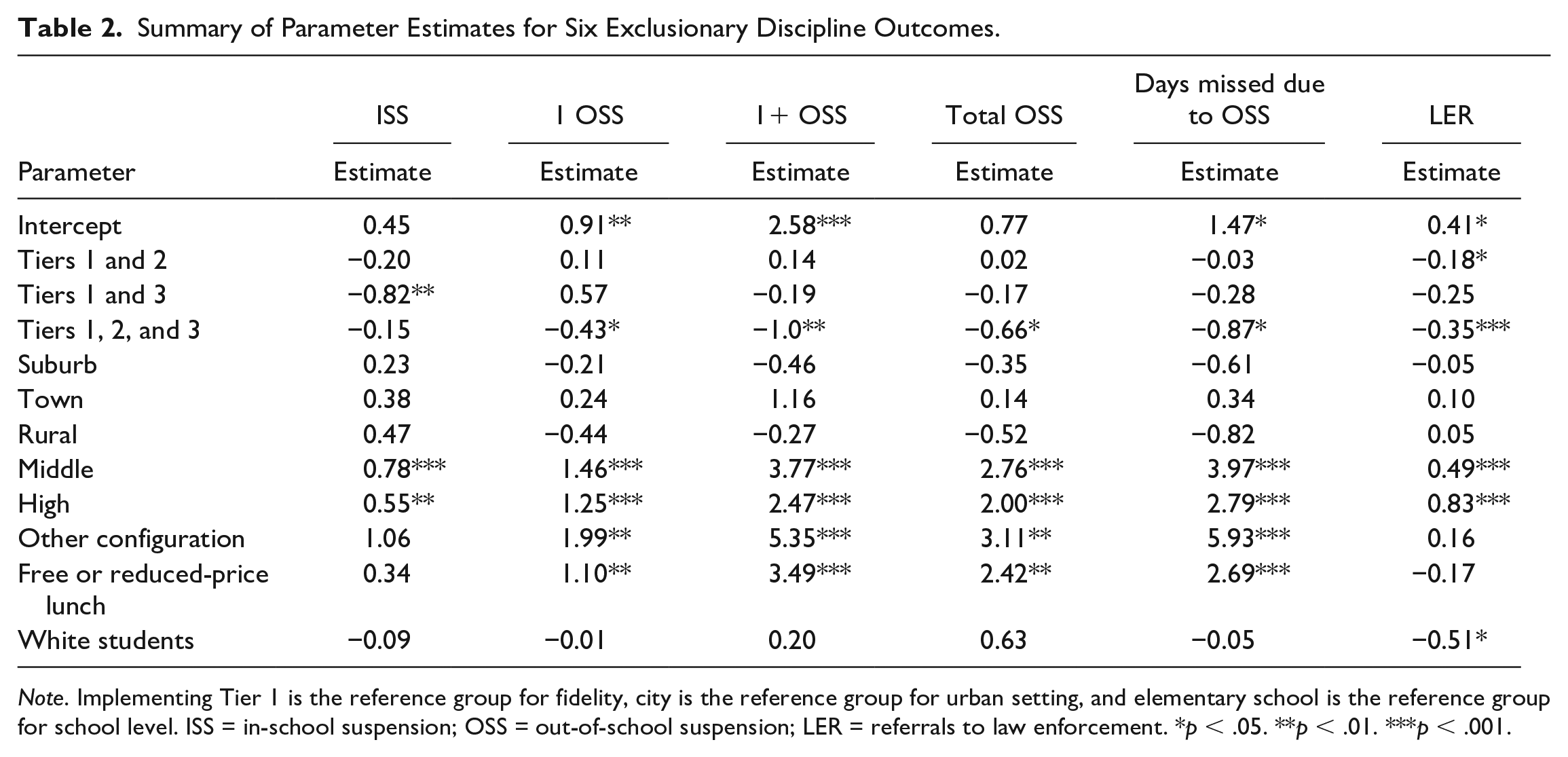
Note. Implementing Tier 1 is the reference group for fidelity, city is the reference group for urban setting, and elementary school is the reference group for school level. ISS = in-school suspension; OSS = out-of-school suspension; LER = referrals to law enforcement.
p < .05. **p < .01. ***p < .001.
Intraclass Correlation
We calculated the ICC for each of the 10 exclusionary discipline outcomes and report the ICC for the six outcomes in which the random intercept or random slope models fit better than the unconditional model. The ICC is the amount of variance in the outcome variables explained or accounted for by district-level variation. The ICC for each variable is reported at the bottom of online Supplemental Tables S2–S7. Intraclass correlation ranged from 0.18 (rate of law enforcement referrals) to 0.52 (rate of one or more instances of OSS). In other words, 52% and 18% of the variability in disciplinary outcomes are accounted for at the district level in this sample.
Model Selection
Model fit statistics are displayed in online Supplemental Tables S2–S7 for the reported exclusionary discipline outcome variables. We used the chi-square likelihood ratio test, AIC, and pseudo-R2 to compare model fit between the unconditional, random intercept, and random slope models. A significant chi-square LR test indicated the best model fit. For rate of ISS, rate of one OSS, rate of one or more OSS, total instances of OSS, number of days missed due to OSS, and rate of referrals to law enforcement variables, we selected the random intercept model.
Primary Findings
Schools implementing two or three tiers with fidelity had statistically significantly lower rates of discipline for SWD for the six included models. Specifically, schools implementing all three tiers with fidelity had lower rates of SWD with one OSS, SWD with one or more OSS, total OSS for SWD, days missed due to OSS for SWD, and referrals to law enforcement for SWD. Schools implementing two tiers with fidelity had lower rates of ISS (Tiers 1 and 3) and referrals to law enforcement (Tiers 1 and 2) for SWD. Parameter estimates for the six models are presented in Table 2 as well as online Supplemental Tables S2–S7.
Comparing schools implementing all tiers with fidelity to those only implementing Tier 1 with fidelity, Hedges’ g was −0.29 for the rate of SWD receiving one OSS, −0.68 for the rate of SWD receiving one or more OSS, −0.27 for the rate of OSS incidents among SWD, −0.24 for the rate of days missed due to OSS for SWD, and −0.42 for the rate of law enforcement referrals for SWD. For schools implementing Tier 1 and Tier 2 with fidelity compared to those only implementing Tier 1, Hedges’ g was −0.24 for the rate of law enforcement referrals for SWD. For schools implementing Tier 1 and Tier 3 with fidelity compared to those only implementing Tier 1, Hedges’ g was −0.63 for the rate of SWD receiving one ISS.
Although not the main focus of this article, an examination of covariates revealed important patterns. First, middle and high schools engaged in exclusionary discipline at higher rates than elementary schools when controlling for school-level covariates. Second, schools with a higher percentage of students receiving free and reduced-price lunch had higher rates of OSS (across all four OSS categories) when controlling for urbanicity, racial diversity, and school level. See Table 2 for additional information on included covariates.
Discussion
In this analysis, we estimated 10 two-level linear models to assess the effect of SWPBIS fidelity on exclusionary discipline outcomes for SWD. This study extends the work of Grasley-Boy et al. (2022a) and provides evidence fidelity in advanced tiers of SWPBIS, in addition to Tier 1, may further decrease the use of exclusionary discipline practices for SWD.
Research Question 1
We compared schools implementing Tier 1 with fidelity to schools implementing Tier 1 and Tier 2, Tier 1 and Tier 3, and all three tiers with fidelity while controlling for urbanicity, school level, percentage of students receiving free/reduced-price lunch, and the percentage of White students. Model estimates indicated statistically significant decreases in the number of days missed due to OSS, rate of OSS incidents, rate of students with one instance of OSS, rate of students with one or more instances of OSS, and rate of referrals to law enforcement for SWD for schools implementing all three tiers with fidelity. The model predicting one or more ISS per 100 SWD was significant only for schools implementing Tier 1 and Tier 3 with fidelity. For the remaining variables (i.e., two or more OSS, expulsions, transfers to alternative settings, arrests per 100 SWD), there was not a statistically significant decrease in these outcomes for SWD.
These results suggest implementing all three SWPBIS tiers with fidelity is associated with lower exclusionary discipline outcomes for SWD compared to schools only implementing Tier 1 with fidelity. One explanation for these findings is although SWPBIS can support the needs of all students, the framework is particularly effective when supporting the behavioral needs of SWD (A. Lee & Gage, 2020; Simonsen et al., 2021). Indeed, providing behavioral support for SWD is mandated by federal law (U.S. Department of Education, 2022a) but also often most effective when delivered in a school-wide multi-tiered behavioral framework such as SWPBIS (U.S. Department of Education, Office of Special Education and Rehabilitative Services, 2022). Further, the findings from the current study suggest frameworks such as SWPBIS are more effective at reducing exclusionary discipline for SWD when all three tiers are implemented with fidelity. Although fidelity can be measured independently across tiers, the SWPBIS framework is most effective when procedures and practices are aligned across tiers and students have access to a continuum of evidence-based practices meeting their needs (Algozzine et al., 2019).
As is reflected in the sample used for the current study, as well as national data (Sugai & Horner, 2020), schools are more likely to implement Tier 1 with fidelity than Tier 2 or Tier 3. Schools often report that Tier 2 and Tier 3 are more challenging to implement as interventions become more complex and individualized (Sugai & Horner, 2020). However, findings from the current study should encourage schools to implement all three tiers with fidelity to limit the disproportionate use of exclusionary discipline for SWD (Losen & Martinez, 2020). Exclusionary discipline often results in fewer opportunities to learn and interact with peers as well as the removal of or limited access to individualized services and supports (Losen & Martinez, 2020). Considering the negative impact of the COVID-19 pandemic on exclusionary discipline, mental health outcomes for SWD, and the widening discipline gap between students with and without disabilities (Asbury et al., 2021; U.S. Department of Education, 2022a), schools and districts should prioritize SWPBIS fidelity across tiers.
Finally, findings from this study also have important implications for disrupting the school-to-prison pipeline. Results indicated a statistically significant decrease in the relation between referrals to law enforcement for SWD and schools implementing all three SWPBIS tiers with fidelity. This finding is especially relevant for secondary schools as fewer schools implement SWPBIS with fidelity, yet refer students to law enforcement more than elementary schools (Grasley-Boy et al., 2022a; Sugai & Horner, 2020).
Research Question 2
Our results indicate the three statistically significant outcomes from Grasley-Boy et al. (2022a) were replicated for SWD in the current study. For all students attending schools implementing all three tiers of SWPBIS with fidelity, Grasley-Boy and colleagues also found a statistically significant decrease in the rates of OSS incidents, students with one instance of OSS, and referrals to law enforcement. Additional exploration revealed SWPBIS fidelity affected outcomes at a higher rate for SWD, and the effect size for SWD was larger for referrals to law enforcement and smaller for the rate of one OSS and OSS incidents. Interestingly, the models for SWD from the current study also indicate a statistically significant decrease in the number of days missed because of OSS and the rate of students with one or more instances of OSS. Our replication reinforces the claim that SWPBIS is an effective framework to support students both with and without disabilities (Sugai & Horner, 2020), and fidelity of intervention at all three tiers can lead to improved disciplinary outcomes for SWD.
Implications for Research and Practice
The findings from the current study suggest multiple implications for future research and practice. As suggested by the 2022 guidance from the DOE (U.S. Department of Education, Office of Civil Rights, 2022; U.S. Department of Education, Office of Special Education and Rehabilitative Services, 2022), schools and districts should ensure school staff are trained in best practices (e.g., SWPBIS) to support the educational and behavioral needs of all students. Ideally, this training should emphasize implementation fidelity across all three tiers (Sugai & Horner, 2020). Support for higher-tiered fidelity may be especially important in secondary settings where lower SWPBIS fidelity was reported yet exclusionary disciplines were used more frequently (Grasley-Boy et al., 2022a; Sugai & Horner, 2020). Given the unique challenges of implementing SWPBIS in secondary schools highlighted in extant literature (e.g., size, organization, age appropriateness of materials; Flannery & Kato, 2017), future research should continue to examine SWPBIS effectiveness at the secondary level as well as potential adaptations to tiered frameworks to address the barriers to implementation fidelity at Tier 2 and Tier 3 (Sugai & Horner, 2020; Swain-Bradway et al., 2015).
Direction or training from a state or district may also support SWPBIS implementation (McIntosh et al., 2016). For example, in the current study, the nested nature of schools in districts allowed us to account for the variability in exclusionary discipline outcomes at the district level. Given a considerable amount of variance in the outcome variables was explained at the district level, future research should continue to explore the impact of state-level or district-level support and training on school-level fidelity.
Finally, future researchers should continue to conduct replication studies related to outcomes associated with SWPBIS. Replication research in special education is important to the development of evidence-based and high-leverage practices for SWD. Replications also help researchers and practitioners better understand the limitations of an intervention. Conceptual replication aids researchers in understanding how, for whom, and under what conditions a practice or intervention is effective (Travers et al., 2016). Despite this need, replication research is uncommon in the field and future research should continue to replicate and refine findings to better support students, practitioners, and schools (Makel et al., 2016).
Limitations
Several limitations should be considered when interpreting the findings from the current study. First, because this was a secondary data analysis, we were limited to analyzing variables in the data set and could not control for all variables of interest. For example, we were unable to control for the number of years implementing SWPBIS with fidelity, quantify the types of support that schools received from the regional offices when implementing SWPBIS, or include important information on teachers or school settings. These differences between schools, unaccounted for in our models, may confound our findings.
Second, because of the correlational nature of our research, we cannot infer implementing all three tiers with fidelity causes decreased exclusionary discipline for SWD. Other variables, such as low levels of behavioral issues, could affect the relation between fidelity at Tier 2 and Tier 3 and low levels of exclusionary discipline. Finally, this study did not account for how intersectional identities or other individual factors may impact exclusionary discipline for SWD (Fisher et al., 2021; Morgan et al., 2019). Previous studies have indicated SWD, who are also members of culturally or linguistically diverse populations, may be more likely to receive exclusionary discipline (Losen, 2018; Losen et al., 2014). Future research should consider how SWPBIS fidelity and the intersection of identities for these students impact exclusionary discipline outcomes.
Conclusion
Students with disabilities receive exclusionary discipline at a higher rate than their peers without disabilities. As recommended by the DOE, SWPBIS may help to combat the discipline gap for SWD as it is an evidence-based framework supporting the academic and behavioral needs of all students. Results from the current study indicate lower levels of exclusionary discipline outcomes for SWD, such as OSS and referrals to law enforcement, are associated with schools implementing all three tiers of SWPBIS, and not just Tier 1, with fidelity. As schools and districts continue to search for effective and equitable practices to reduce exclusionary discipline and disrupt the school-to-prison pipeline for SWD, increased efforts to implement each tier of SWPBIS with fidelity may equip teachers and schools with the tools necessary to reach this goal.
Supplemental Material
sj-docx-1-pbi-10.1177_10983007231193173 – Supplemental material for Effects of Tiered SWPBIS Fidelity on Exclusionary Discipline Outcomes for Students With Disabilities: A Conceptual Replication
Supplemental material, sj-docx-1-pbi-10.1177_10983007231193173 for Effects of Tiered SWPBIS Fidelity on Exclusionary Discipline Outcomes for Students With Disabilities: A Conceptual Replication by Jesse I. Fleming, Nicolette M. Grasley-Boy, Nicholas A. Gage, Michael Lombardo and Lucas Anderson in Journal of Positive Behavior Interventions
Footnotes
Declaration of Conflicting Interests
The author(s) declared no potential conflicts of interest with respect to the research, authorship, and/or publication of this article.
Funding
The author(s) received no financial support for the research, authorship, and/or publication of this article.

Supplemental Material
Supplemental material for this article is available on the Journal of Positive Behavior Interventions website with the online version of this article.
References
Supplementary Material
Please find the following supplemental material available below.
For Open Access articles published under a Creative Commons License, all supplemental material carries the same license as the article it is associated with.
For non-Open Access articles published, all supplemental material carries a non-exclusive license, and permission requests for re-use of supplemental material or any part of supplemental material shall be sent directly to the copyright owner as specified in the copyright notice associated with the article.
