




Abstract
Empowerment is a concept that has become increasingly used over recent years. However, little research has been undertaken into how empowerment can be evaluated, particularly in the case of young people. The aim of this article is to present an inventory of dimensions and indicators of youth empowerment. The article describes the various phases in the construction and validation of the inventory. These phases were (1) a contrast of the inventory of dimensions and indicators against specialized published writings on youth empowerment; (2) the validation of the resulting inventory by experts; and (3) a contrast with young people through four participatory evaluation processes and six life stories. The tool is scientifically and practically useful and enables the impact of youth empowerment programmes to be evaluated; it also serves to plan and implement socio-educational processes aimed at influencing the empowerment of young people.
Introduction
The concept of empowerment emerged in the social sciences in the 1970s, and since then has become increasingly adopted by scientists and professionals. Nonetheless, it remains a complex one. Ambiguous and not clearly defined, the concept can be applied in numerous ways and in numerous contexts and processes (Christens & Peterson, 2012; Morton & Montgomery, 2012; Mohajer & Earnest, 2009). While it has mainly focused on adults (Gong & Wright, 2007), the past 20 years have seen its use in work with young people and in particular those in situations of social risk or vulnerability (Bulanda & Johnson, 2016; Chinman & Linney, 1998, as cited in Russell et al., 2009, p. 901; Funes Rivas & Robles, 2016; Muturi et al., 2018; Travis & Bowman, 2011, 2012).
One of the main problems researching empowerment, which stems largely from this imprecision, is how to evaluate it; indeed, prior studies have focused on very specific fields, making it difficult to transfer results between them. This is probably, as Wagaman (2011) stated, because few studies offer definitions of youth empowerment that provide a clear and logical interpretation of results. As the same author also noted, most studies are limited to recognizing youth empowerment on only one of the individual, inter-relational, or community levels and so rarely address all. Another limitation to have a whole perspective is that youth empowerment can be conceptualized as either a process or an outcome (Luttrell et al., 2009).
Our research team has produced knowledge on youth empowerment over the course of three consecutive national research projects (2010–2021) funded by the Spanish Ministry of Education and Professional Training. In the first, (“Participatory evaluation as a learning methodology for personal and community empowerment” EDU2010-15122), among other products we constructed an inventory of indicators for personal and community empowerment (Soler et al., 2014).
In the second, (HEBE project. Youth empowerment: analysis of the moments, spaces and processes that contribute to youth empowerment. EDU2013-42979-R), we designed a range of products. Firstly, we conducted a systematic analysis of the literature published on youth empowerment since 2000 (Úcar et al., 2017) and then, on the basis of this, produced a pedagogical model of youth empowerment (Soler et al., 2017).
Within the framework of this project, the initial inventory of general personal and community empowerment indicators was adapted to the sphere of youth empowerment (Cevallos Trujillo & Paladines, 2016; Planas et al., 2016a; Planas et al., 2016b). Our aim here was to determine how valid this inventory of indicators was in analyzing and evaluating youth empowerment once said adaptation has been made. And this is the aim of the current research: to present the results of the academic and professional validation of this inventory of youth empowerment dimensions and indicators on the basis of the aforementioned theoretical framework. The inventory constitutes a qualitative tool that can be used to develop different instruments, whether quantitative or qualitative. The proposal will allow researchers to design evaluation questionnaires and other instruments to evaluate empowerment projects with regard to improvements and impacts. We are currently working on the third project (HEBE II project. Identification of potentiating and limiting factors of youth empowerment: Analysis of discourses and practices of educators. EDU2017-83249-R) which will be completed by the end of 2021. The work done by our research group can be consulted at https://www.projectehebe.com/en/. The project aims to use the validated inventory of indicators to produce a rubric for evaluating youth empowerment.
The article is structured in five parts. The first outlines a brief theoretical approach to youth empowerment. This is followed by a review of some of the most important research identifying dimensions and indicators of youth empowerment. The third section examines the methodological process followed to produce and validate the dimensions and indicators inventory presented here. The fourth section presents the main results obtained, and the final section outlines the resulting inventory of dimensions and indicators along with some conclusions arising from the research process.
An Approach to Empowerment and Youth Empowerment
Despite the rapid popularization of the term in scientific, social, and political fields (Peterson, 2014; Pick et al., 2007; Somerville, 1998), research shows that the precise concept of empowerment is unclear, and that coming to a homogeneous, accepted definition is a complex task (Mohajer & Earnest, 2009; Pick et al., 2007; Wagaman, 2011). This is due, firstly, to the wide range of perspectives used when analyzing empowerment, and the fact that it can be applied in a number of very different fields (psychology, education, politics, economics, health, the social and cultural fields, etc.) (Luttrell et al., 2009). Research programs tend to connect empowerment with their particular field of knowledge. Luttrell et al. (2009) make reference to economic factors (skills, capabilities, resources, and access to secure and sustainable incomes and livelihoods); to politics (capacity to analyze, organize, and mobilize); to culture (the redefining of rules and norms and the recreating of cultural and symbolic practices); and to human and social aspects (a multidimensional social process that helps people gain control over their own lives). A second contributor to the ambiguity of the concept concerns the difficulties arising from translation into other languages (Luttrell et al., 2009; Richez et al., 2012).
Úcar et al. (2017) conducted a systematic analysis of research carried out on how empowerment has been conceptualized over the past 15 years and has been applied to young people. They concluded that empowerment refers to the change and transformation of people, groups, and communities; it is also the process by means of which a context where there is a lack of power changes to one where people gain control over their own lives and situations. Furthermore, they noted that the analyzed research revealed the three concepts most frequently used when referring to empowerment: power (Fortunati, 2014; Ricaurte et al. 2013; Travis & Bowman, 2012), participation (Boluijt & de Graaf, 2010; Checkoway, 2011; Martínez, 2010), and education (Bacqué & Biewener, 2013; Mackinnon & Stephens, 2010; Özmete, 2011). In addition, in recent years, a significant increase in research on youth empowerment has also been highlighted in fields such as health and social networks, and also in the development and implementation of programs aimed at youth empowerment (Buccieri & Molleson, 2015; Law et al., 2019; Muturi et al., 2018; Zimmerman et al., 2018).
As a theoretical starting point, the vast majority of the academic literature analyzed on empowerment continues to cite the founding definition by Zimmerman (1995, 2000; Perkins & Zimmerman, 1995), which states that experiences that empower are those that allow the objectives themselves to be connected to the actions necessary to achieve them, so that greater access to and control over resources are gained and the decisions that affect one’s life can be influenced. Zimmerman also distinguished between empowerment as an outcome and as a process. However, Silva and Martínez (2004) pointed out that said author did not clarify this distinction sufficiently, while noting that the way in which Zimmerman exemplified the distinction is also unclear. They justified their argument by saying that process and outcome are not “intrinsically or essentially different” (p. 31). According to this idea, a process is understood to be nothing but a sequence of microresults (Úcar, 2012, p. 54) or partial results. Process and outcome are two different views or perspectives on the same object, in this case, empowerment. Empowerment as a process seeks the continuities and sequences of actions, while as a result it focuses on finished acts or actions. These two perspectives can be, depending on the characteristics of the research, exclusive or complementary.
Our work is situated within the framework of studies that have connected empowerment and education. In relation to research on empowerment, education is organized around five axes (Úcar et al., 2017): (1) education and learning; (2) the acquisition of knowledge and skills; (3) the acquisition of capabilities; (4) the acquisition of some kinds of resources; and, finally, (5) awareness, which is often associated with the ideas posited by Freire.
Given the social and educational perspective of all of our investigations, we have taken Bauman’s more detailed and updated version of said definition as a basis for this work. This definition is clearly based on the perspective of the capability approach proposed by Sen (1999) and Nussbaum (2011). To be empowered “means to be able to choose and act effectively according to what is chosen,” something that entails “the ability to influence the set of alternative options available and the social scenarios in which those options are chosen and materialized” (Bauman, 2010, p. 270).
As can be deduced from this definition, empowerment is always the result of a negotiation that, to a greater or lesser degree, is deliberately instigated between a person’s abilities and the possibilities the context in which they live offer them to develop them or put them into practice.
As for youth empowerment in particular, some authors have stated that, although the term is used in youth development programs, adults have been the main focus of the research done to date (Rojas, 2014; Russell et al., 2009; Úcar et al., 2017). Kaplan, Skolnik, and Turnbull (2009) consider the concept of youth empowerment to have been constructed out of the literature on empowerment, positive youth development, resilience, and community-based prevention programs, which is why Batista, Johnson, and Baach (2018) note that there are many definitions and alternative names for youth empowerment. They specifically cite: “positive youth development, youth power, youth voice, youth participation, youth engagement, youth agency, youth governance, and youth organizing” (2018, p. 533). That said, however, Christens and Peterson (2012) pointed out that very little is yet known about the role empowerment plays in the youth development process.
According to Russell et al. (2009), studies on youth empowerment tend to use the concept when discussing “youth leadership,” “civic involvement,” “self-efficiency,” or “youth activism.” They also note that studies have mainly focused on oppressed groups, or those at risk, ignoring the multidimensional nature of the social contexts where youth empowerment may take place.
Despite this, there is a general consensus in the academic literature in seeing youth empowerment as referring to the effective growth of a young person through acquiring competences and abilities that enable them to overcome specific situations (Úcar et al., 2017). As has been noted, however, these elements will be influenced or conditioned by the policies deployed in the environment (Jennings et al., 2006; Úcar et al., 2017).
The main dimensions that shape, or are associated with, the concept of youth empowerment are: (1) those related to growth and well-being; (2) the relational; (3) the enabling; (4) the political; (5) the transforming; and, finally, (4) the emancipating dimension (Úcar et al., 2017).
As a result of the above, and in accordance with that posited by various authors (Augsberger et al., 2019; Brickle & Evans-Agnew, 2017; Huscroft-D’Angelo et al., 2017; Law et al., 2019; Mohajer & Earnest, 2009; Muturi et al., 2018; Özmete, 2011; Speer et al., 2019; Wagaman, 2011), we view youth empowerment as a process and a result that increases the possibilities young people have to decide and act consistently on everything that affects their own life.
Furthermore, it enables them to take part in decision-making processes and intervene responsibly in issues that affect the community they form part of.
Research on Youth Empowerment Indicators
As noted in the previous section, much has been theorized about the concept of empowerment in recent decades. However, empowerment continues to be treated as a reflective construct without paying the necessary attention to the relationships between measures, dimensions, and the higher order construct (Rodrigues et al., 2018, p. 2). Given the importance of context in empowerment processes, a universal measure for empowerment may not be entirely desirable (Zimmerman, 1995), but that does not mean that its measurement cannot be improved in concrete contexts. Peterson (2014) pointed out that to advance both theoretically and practically, more research is needed that links different levels of empowerment analysis. This means research should address models that include the dimensions and indicators that define it and facilitate its measurement.
Interesting contributions have come from the field of the psychological empowerment in this respect (Christens et al., 2011; Peterson et al., 2008; Rodrigues et al., 2018; Wilke & Speer, 2011). Many of these have been based on the theoretical model posited by Zimmerman (1995), which includes three components in its theoretical construction of empowerment: the intrapersonal (belief in individual abilities and competences and level of control, as well as motivation to influence personal situations), the interactional (relationship of individuals with their environments—ability to mobilize resources, and skills for handling the resources they have obtained) and the behavioral (involvement in the community, social participation, and constructive behavior in new situations). Subsequently Christens (2012) added a fourth component: relational or interpersonal empowerment (interpersonal transactions and processes to the effective exercise of transformative power in the sociopolitical domain), also incorporated in later research (such as Rodrigues et al., 2018). These same authors point out that empirical studies based on Zimmerman’s conceptualization have focused on one or two components. Some have developed scales for measuring specific dimensions of empowerment, including: the Sociopolitical Control Scale (Zimmerman & Zahniser, 1991) (intrapersonal component); the Youth Cognitive Empowerment Scale (Y-CES) (Speer et al., 2019) (cognitive component according to three dimensions: source of social power, the nature of social power, and the instruments of social power); the Collective Action and Interpersonal Relationship Scale (Speer, 2000) (interactional component); and, finally, the Behavioral Empowerment Scale (Speer & Peterson, 2000) (behavioral component).
We also find proposals aiming to measure empowerment from a more holistic perspective, such as those devised by van Dop, Depauw, and Driessens (2016) and Rodrigues et al. (2018). The Service User Psychological Empowerment Scale (SUPES) (van Dop et al., 2016) is a 28-item scale that can be used to measure the intrapersonal, interactional, and behavioral dimensions of psychological empowerment among service users, while Rodrigues et al. (2018) compiled a 52-item index for measuring psychological empowerment that assesses cognitive, emotional, behavioral, and relational components. Their proposal contains items from the Sociopolitical Control Scale (Peterson et al., 2011), the Cognitive Empowerment Scale (Speer & Peterson, 2000), the Sense of Community in Adolescents Scale (Chiessi et al., 2010), and, lastly, the Civic and Political Action Scale (Rodrigues et al., 2018).
That being said, the studies that have been carried out focus on assessing the outcomes of interventions in specific contexts or groups. Some concrete examples of these are: Damen et al. (2017), who focused their study on measuring parental empowerment in raising children; Rodrigues et al. (2018), who focused on the youth community-organizing context; Huscroft-D’Angelo et al. (2017), who focused on youth empowerment in mental health; Travis and Bowman (2015), who researched individual and community empowerment from rap music engagement; and finally, Speer and Peterson (2000), who investigated community organizing.
At another level, research into the impact of youth empowerment programs may also provide information on the characteristics of empowerment processes and the indicators on which they are based. Programs aimed at youth empowerment focus on developing youth capacity, participation, and agency at the individual and community level, and include young people in some or several parts of the program process (design, implementation, and/or evaluation). These programs or projects are based on various different paradigms, including positive youth development (Maloney, 2015), the Youth Development and Empowerment Program Model (Batista et al., 2018; Bulanda & Johnson, 2016), the Transactional Partnering Model (Kim et al., 1998), Critical Youth Empowerment (Jennings et al., 2006) and Empowerment Education Model (Mohajer & Earnest, 2009) based on Freire, among others. Such diversity poses a challenge for evaluation (Bulanda & Johnson, 2016). To this end, the study carried out by Morton and Montgomery (2012), which reviewed evidence of the impact of youth empowerment programs on adolescents, is relevant. The study detected that the most important outcomes of such programs are self-esteem and self-efficiency. And the same results are to be found in Wagaman (2011), who added social capital, the ability to solve problems, and feeling safe.
Holte-McKenzie, Forde, and Theobald (2006) also detected these indicators in their study, proposing 13 empowerment indicators grouped into five life abilities (teamwork, leadership, organization, trust, and self-esteem). Further results from studies on empowerment are related to youth participatory behavior, such as the ability to work and participate in a team; critical ability; self-management; and acquiring responsibility (Batista et al., 2018; Claret, 2013; Ricaurte et al., 2013; Whiteside et al., 2006).
The study by Jennings et al. (2006) is worthy of special attention. It analyzed four youth empowerment programs. Among the results, the authors noted six points that any youth empowerment program should take into account: (1) safe, comfortable surroundings; (2) significant participation and involvement; (3) equal power-sharing between adults and young people; (4) involvement in critical reflection on interpersonal and sociopolitical processes; (5) participation in socio-political processes that lead to change; and (6) the integration of empowerment at the individual and community levels. The inclusion of these points results in great benefits: increased self-esteem, safety, competences, abilities, cooperativism, and appreciation of and respect for others.
To give one more example, the study conducted by Batista et al. (2018) into the effects of a Youth Empowerment Program on young people in the foster care system evidenced an improvement in psychological empowerment. This study was based on the use of survey methods and a comparison group and revealed how the young participants on the program increased their levels of perceived control, motivation to influence, socio-political skills, and participatory behavior.
The bibliography consulted indicates that a large part of the contributions in relation to research on indicators of youth empowerment is carried out from a psychological perspective. Even so, from the social sciences and education, interesting contributions can also be glimpsed when analyzing the impacts and outcomes of youth empowerment projects.
Methodology for Developing an Inventory of Youth Empowerment Dimensions and Indicators
The youth empowerment dimensions and indicators were constructed using qualitative methods that included expert opinions, participatory assessment, life stories, and a review of the literature. The process gave us access to the different perspectives of researchers, young people, and professionals. Five versions of the youth empowerment dimensions and indicators inventory were produced during this process. Figure 1 depicts the methodological process followed.
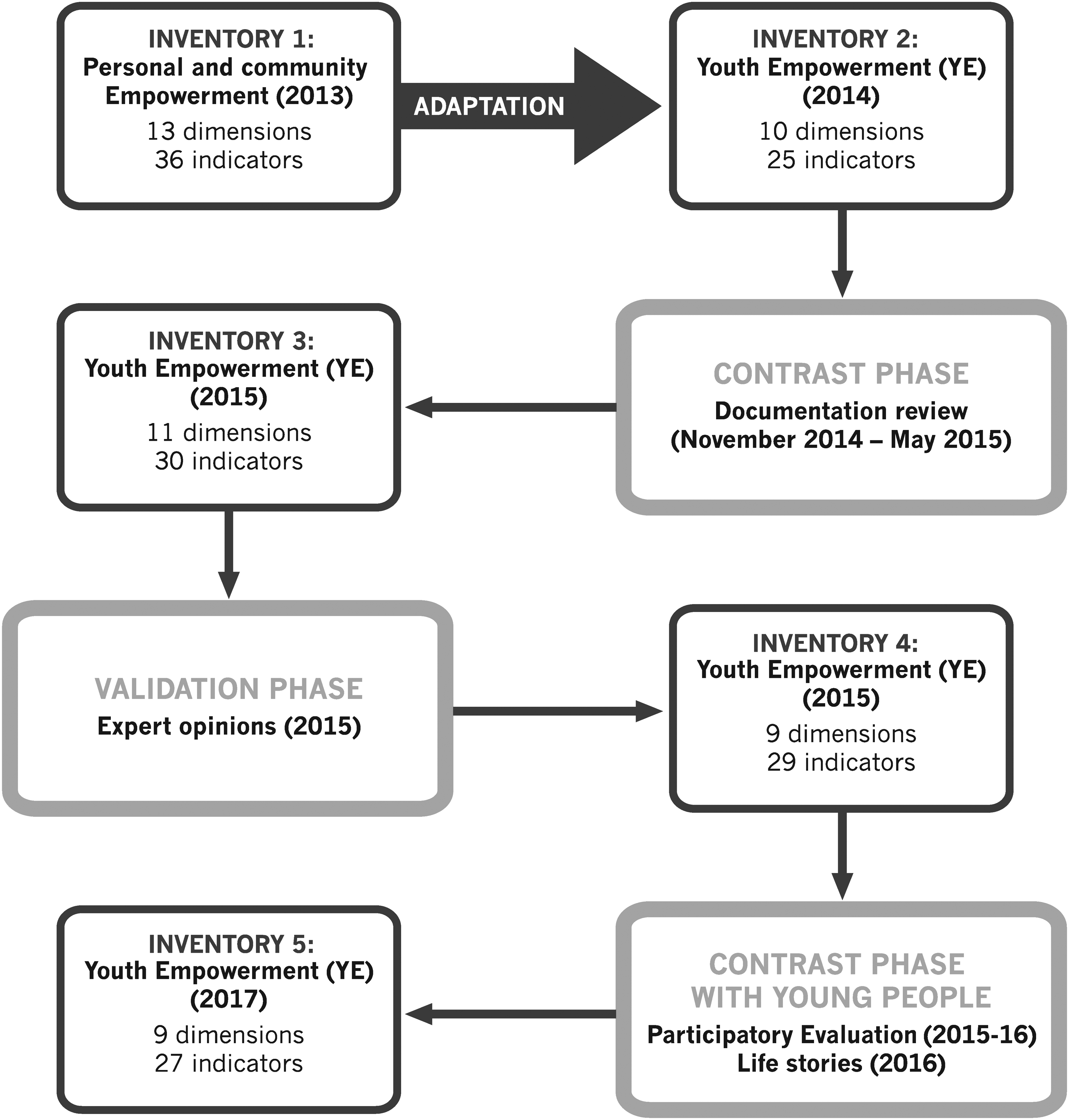
Methodological process for constructing a youth empowerment indicators’ inventory.
As a starting point, we compiled an inventory of community empowerment indicators. This formed part of the first Spanish national research project we carried out (EDU2010-15122) and was based on community actions, participatory evaluation, and personal and community empowerment. The community empowerment inventory was built through a literature analysis and discussion with researchers, public policy managers, and community workers. In addition, it was tested on three case studies, which allowed us to verify its effectiveness. Each case study involved the use of questionnaires, a content analysis of the minutes and transcriptions from community sessions and semistructured interviews with members of participatory evaluation groups. The inventory contains 13 empowerment dimensions and 36 indicators, most with both an individual and community component, resulting in a final proposal of 58 indicators (see Table 1). The same concept (responsibility, for example) can be applied at both personal (assuming tasks) and community levels (collective will and action, being aware of shared responsibility for implemented actions) (Soler et al., 2014).
Inventory of Community Empowerment Indicators. Source: (Soler et al., 2014).
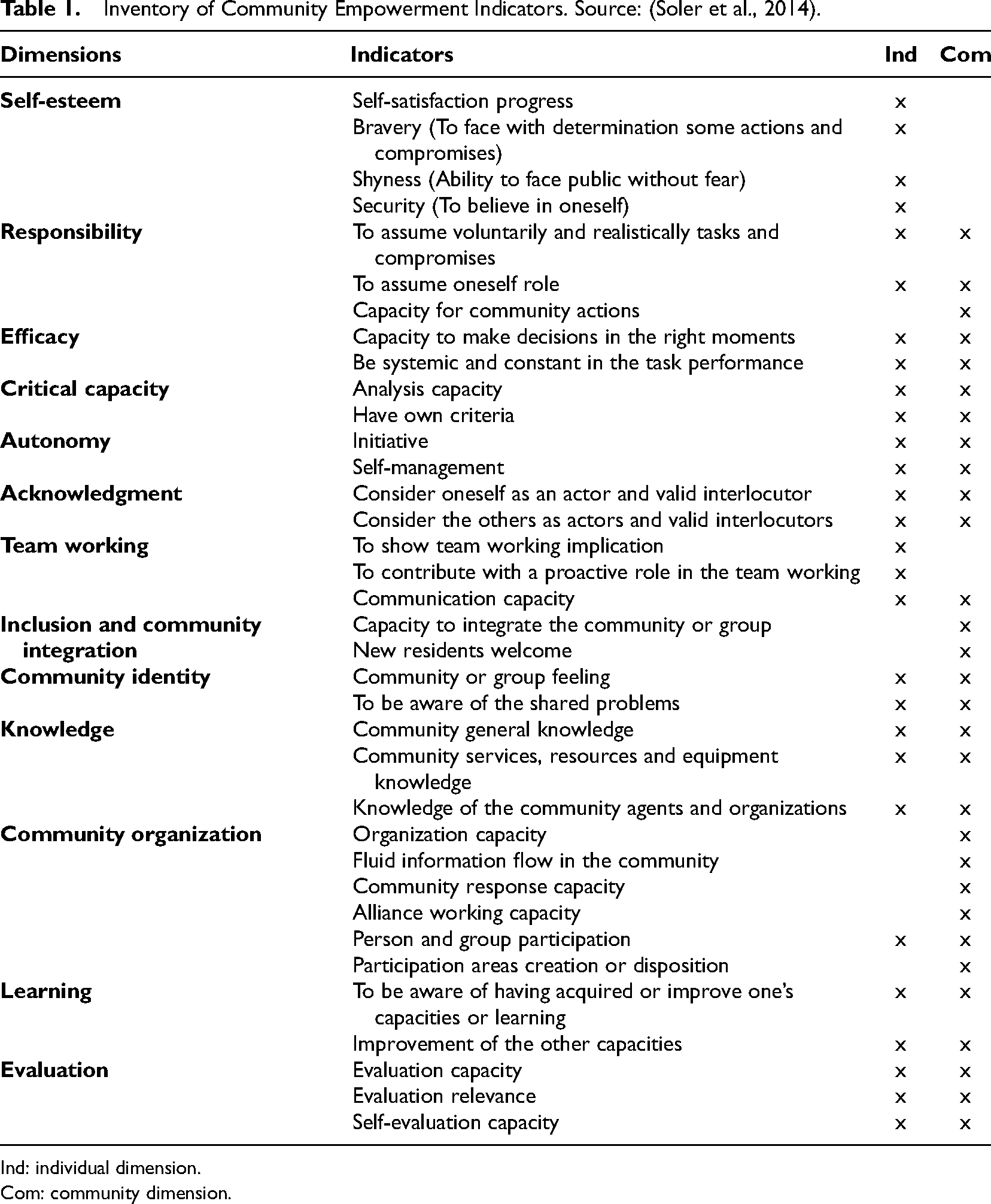
Ind: individual dimension.
Com: community dimension.
A group of five project researchers reviewed the inventory and eliminated three of the dimensions (“inclusion and community integration, community identity and community organization”) with their respective indicators, and two other indicators that were deemed inadequate for the analysis of youth empowerment (“improvement of other capacities” and “evaluation relevance”). The eliminated dimensions and indicators were mainly related to the community dimension of empowerment and the participatory evaluation process. The review took place in October 2014. The resulting inventory included 10 dimensions and 25 indicators.
A number of phases were involved in the methodological process for reformulating the inventory, listed below.
Phase 1: Contrast Phase
The dimensions and indicators we had formulated were compared with scientific publications on youth empowerment. As many as 23 project researchers analyzed a total of 297 bibliographical references published between 2000 and 2014 (scientific articles, books, book chapters, doctoral theses, websites, and other documents). Three instruments were created to help researchers identify the presence of indicators in the analyzed works:
a table providing an overview of empowerment dimensions and indicators; a table with definitions for each dimension and indicator; a file with information for each reference, specifying the identified dimensions or indicators.
The presence of indicators in the articles was identified on two levels. On the one hand, researchers analyzed what the articles said in literal terms, and on the other they used their own interpretation of the content. By way of examples, Tremblay and Gutberlet (2010) used the label “agency” for what in our proposal appears as the indicator “to voluntarily and realistically assume tasks and compromises,” and the dimension “self-esteem” is considered by Holte-McKenzie et al. (2006) to be a “life skill.” Furthermore, indicators can often appear as the result of empowerment processes, rather than as indicators themselves. For example, the indicator “to be aware of having acquired or improved ones’ capacities or learning” appears as an outcome in the work by Shrestha (2003). The researchers were also told to take note of new dimensions or indicators, should they appear. The process was carried out between November 2014 and May 2015 and can be consulted in Planas et al., 2016b.
Phase 2: Validation Phase
The aim here was to use expert opinion to validate the dimensions and indicators resulting from the previous phase. The consulted experts were asked to assess the following attributes of each dimension and indicator: comprehensibility, clarity, measurability, and relevance.
The expert validation document included:
an explanation of the validation process, the definition of the attributes to be assessed, and a form that included the dimensions and indicators that were to be assessed on the X-axis, and the attributes on the Y-axis.
The experts were asked to mark those attributes they felt the indicator possessed as follows: comprehensibility (“It has a clear and intelligible definition that allows for easy interpretation. It is understandable for anyone to use. It is comprehensible”); clarity (“Everyone interprets the indicator in the same way”); and measurability (“It generates data that can be treated quantitatively or qualitatively”). Relevance (“It has the capacity to represent or capture aspects of what we aim to study. It is important”) was assessed on a Likert scale (where 1 was not at all relevant, and 5 highly relevant).
Each indicator also had a space for comments and observations: at the end of the list of indicators for each dimension, there was a space for general comments that could be used to refer to the whole dimension.
The criteria used to choose experts were as follows:
professionals involved in developing youth policies and programmes, and; scholars involved in youth research and teaching young people; youth empowerment; and empowerment and assessment.
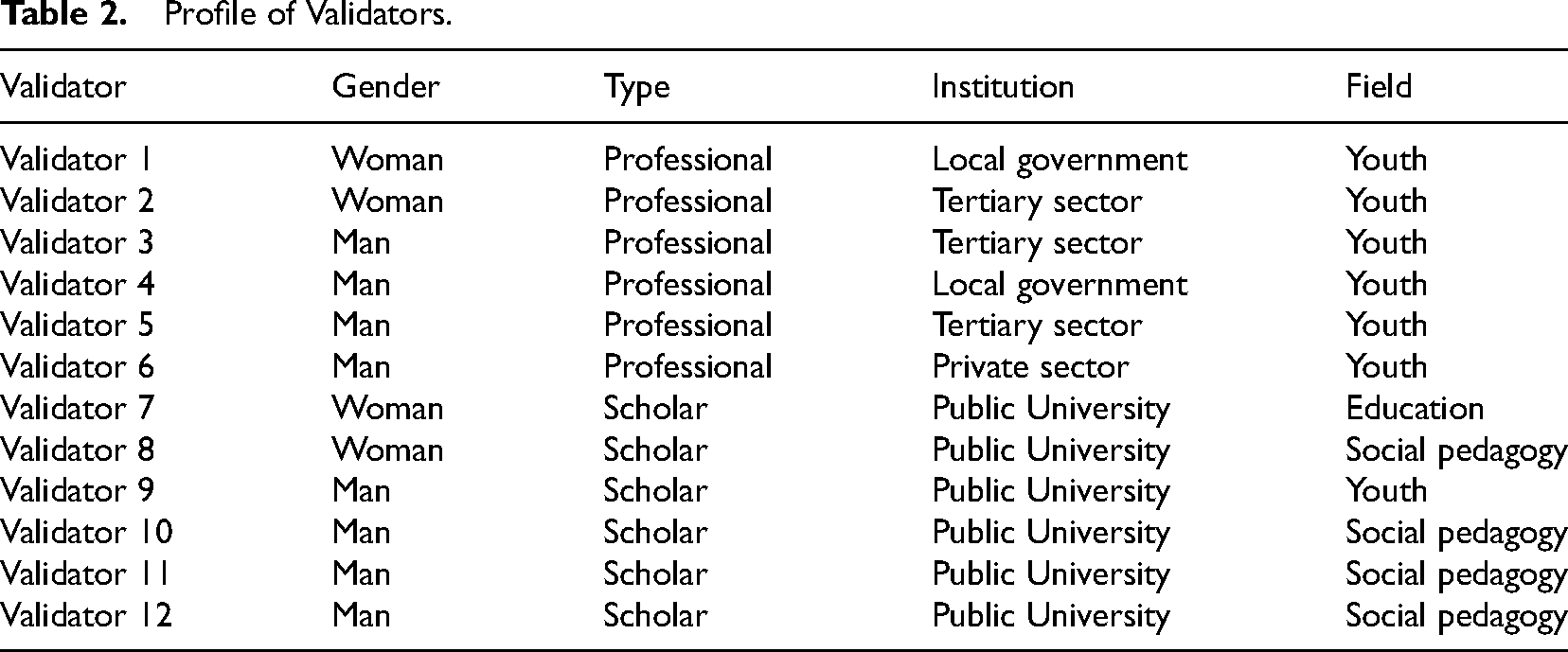
The first group comprised six professionals and the second six researchers from six different Spanish universities (see Table 2). Experts were selected according to the relevance of the work they undertake in their respective fields. This process took place between May and October 2015.
Profile of Validators.
Phase 3: Contrast Phase, Involving Participatory Evaluation with Young People
Participatory evaluation (Cousins, 2003; Cousins & Whitmore, 1998) was used to obtain groups of young people’s validation of the dimensions and indicators identified through the expert review process. Carrying out the first national research project mentioned above between 2010 and 2014, which was based on the relationships between participatory evaluation and empowerment, allowed us to verify the practical utility of this methodology (Soler et al., 2014). In that project, participatory evaluation was linked to empowerment and the participants’ learning processes (Núñez & Úcar, 2020). Participatory evaluation is included within so-called Collaborative Approaches to Evaluation (CAE) (Cousins et al., 2020). Among other functions of evaluation, these same authors base CAE on the functions of learning and transformation. Applying participatory evaluation within the framework of our project made it possible not only to validate the inventory but also to generate learning and empowerment processes among the groups of young participants. These latter objectives were essential given the social and educational orientation of our work. This process took from September 2015 to May 2016.
The participants comprised four groups of young people, 22 females and 20 males, with ages ranging from 14 to 25. The concept of youth is a social construct linked to the characteristics of each social and cultural context, which is why we decided to take a broad perspective when recruiting participants. It was not so much about delimiting rigid selection criteria for each group, but about all four groups containing young people with the most common profiles in our context (emancipated/not emancipated; with/without work; studying/not studying; native/foreign, etc.). The selection of young people was intentional, given that a central criterion of participatory evaluation processes is that participants who are not experts in evaluation, in our case, the young people, want to participate voluntarily in this process together with expert evaluators (Cousins, 2003).
The participatory evaluation processes involved between four and six work sessions, lasting about 2 hours. One of the aims of this process, among others, was to analyze and validate the inventory of youth empowerment indicators produced by the research team. Depending on the group, one or two of the participatory evaluation sessions focused on this specific objective. The methodology used was developed around theatrical techniques for representing concepts, role-playing, and discussion dynamics in small groups aimed at prioritizing dimensions and indicators. This process and results can be seen in (Úcar et al., 2017).
Ethical confidentiality criteria were followed. Informed consent was gained for participation and the recording, transcription, and publication of the sessions; all the participatory sessions were transcribed and encoded to ensure anonymity.
Phase 4: Contrast Phase with Young People Through Life Stories
The aim of the final phase was to contrast the inventory with the life stories of six young people (see Llena-Berñe et al., 2017). This involved creating a purposive sample of young people aged between 25 and 29 who felt that they had become empowered in their lives and were willing to tell their stories. Other variables taken into account were gender, place of residence (rural/urban), and origin, with a range of educational and professional backgrounds being sought. This diversity helped ensure that the narrations provided variety in terms of experiences and places.
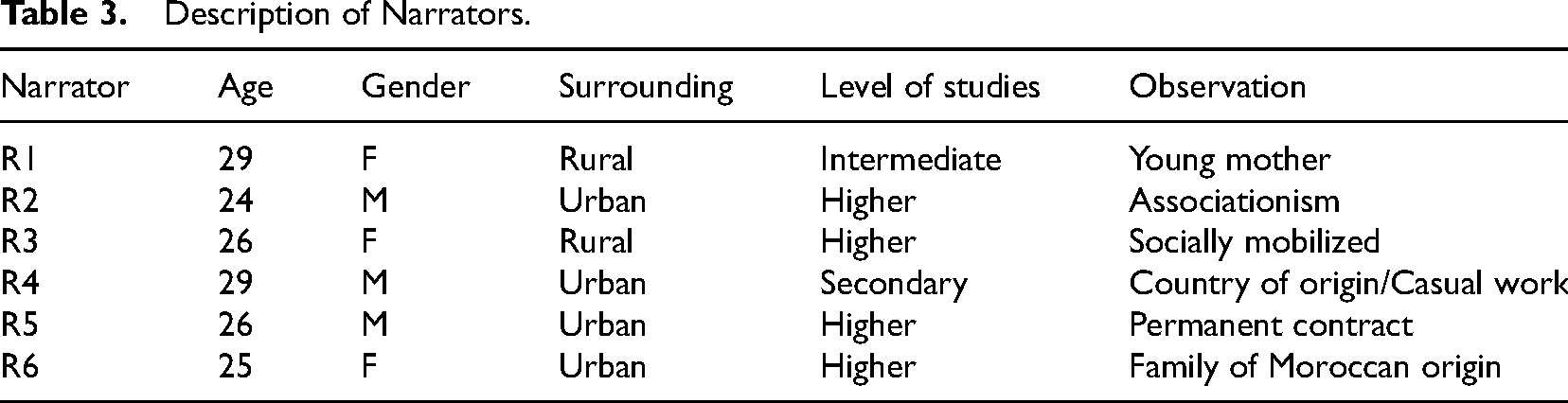
A number of youth bodies and associations were asked to recommend young people who, from their point of view, were empowered. Preliminary interviews were carried out with 11 young people, and those who had the profiles we were looking for, were willing to participate, had better narrative ability and claimed to have memory were selected. From these 11 young people, six profiles were selected (Table 3).
Description of Narrators.
Each of the six young people told their life stories over the course of two in-depth interviews, which each lasted around 90 min. They were asked to explain those situations, moments, and processes that had in some way facilitated or contributed to the development of certain abilities, attitudes, and competences that had helped increase their decision-making possibilities, and thus act in consequence in their life and in the group they formed part of.
As with the previous phase, ethical confidentiality criteria were followed. Informed consent was gained for their participation, and the recording, transcription and publication of the stories; all the interviews were transcribed and encoded to ensure anonymity. The life stories were treated using a categorical–thematic analysis. A triangulation of researchers was used to guarantee the reliability and validity of the analysis.
Firstly, the researcher who had interviewed the young person carried out an intra-story analysis, identifying the empowering situations. These were systemized in a file, which recorded: (1) the people involved; (2) the time; (3) the place; (4) the processes; and (5) the dimensions and indicators of empowerment. Those aspects that appeared in more than one story were highlighted using inter-story analysis. Seven categories were proposed for analysis of the dimensions and indicators: (1) the time/situation of empowerment; (2) education; (3) membership of an association and community life; (4) family; (5) partner; (6) work; and (7) friendships and how others see them. Three researchers selected, cataloged, and counted the appearance of indicators in each of the stories and for each of the times/situations of empowerment encountered.
Results
The results are presented following the same four methodological phases.
Results of Document Review and Formulation of First Youth Empowerment Indicators Proposal
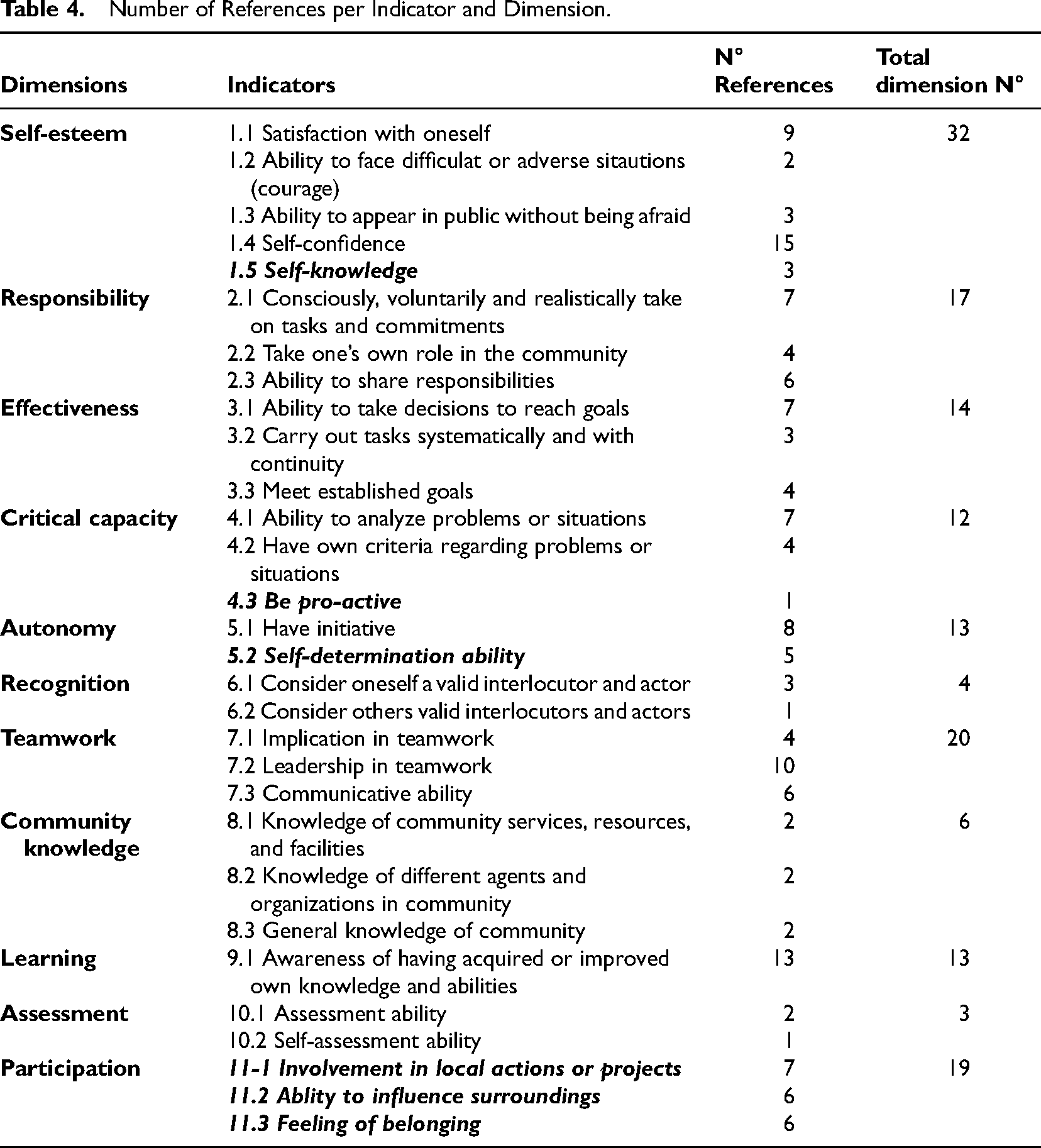
Empowerment indicators were detected in 57 of the 297 bibliographical references consulted. The results showed that all indicators in our inventory were confirmed by published works. The most frequent dimension was “self-esteem,” followed by “teamwork” and “responsibility.” A new dimension (“participation”) was detected, as were six indicators (one each in “self-esteem,” “critical ability,” and autonomy”; and three in the new dimension, i.e., “participation”). These are highlighted in italics and bold in Table 4, which shows the frequency of dimensions and indicators identified in the bibliographical review. The result is an inventory of 11 dimensions and 30 indicators.
Number of References per Indicator and Dimension.
Results of Expert Validation
Once all assessments had been received, the SPSS Statistics 20 program was used to analyze the data. Kendell’s co-efficient of concordance (W) was applied to measure the degree of agreement between experts. This shows the concordance between their opinions depending on the consulted criteria (comprehensibility, clarity, measurability, and relevance) for all of the system’s indicators (see Table 5). Kendall’s W is usually used for ordered categories. In our case, with the binary categories of comprehensibility, clarity, and measurability, new ordinal variables were created by adding together all of the scores for the indicators in each dimension (in the case of the dimension “self-esteem,” for example, the five indicators that comprise it). These new variables were the ones used to calculate Kendall’s W.
Kendell’s co-Efficient of Concordance (W) for Assessment of Comprehensibility, Clarity, Measurability, and Relevance by Judge Groups.
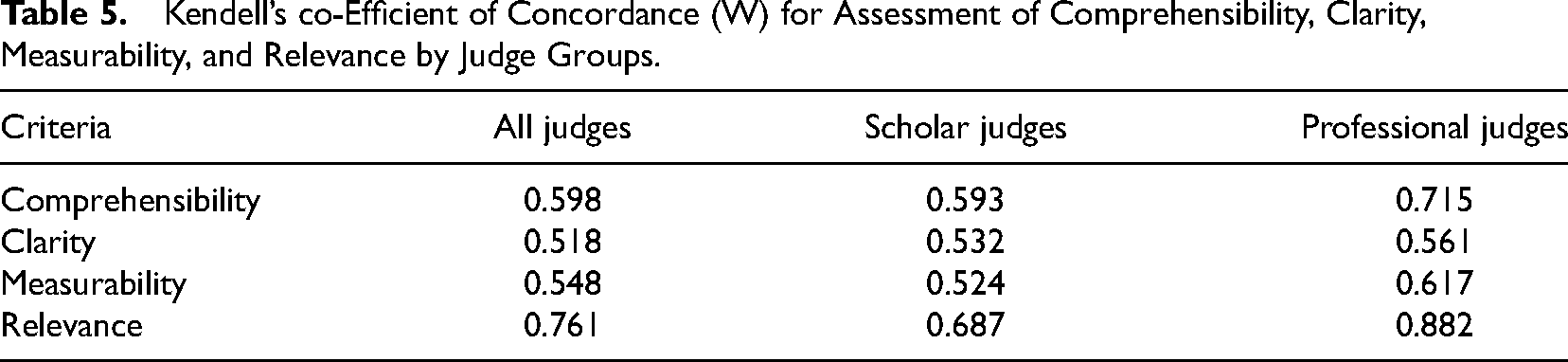
The result of the Kendall’s W for all criteria showed significant concordance between the experts (The Kendall’s coefficient of concordance can vary from 0 to 1. The higher the Kendall value, the stronger the concordance). There was a moderate degree of concordance for comprehensibility, clarity, and measurability, while there was a larger concordance for relevance. An analysis of the group co-efficient by type of expert showed that there was greater concordance among the professionals than among the scholars (see Table 5).
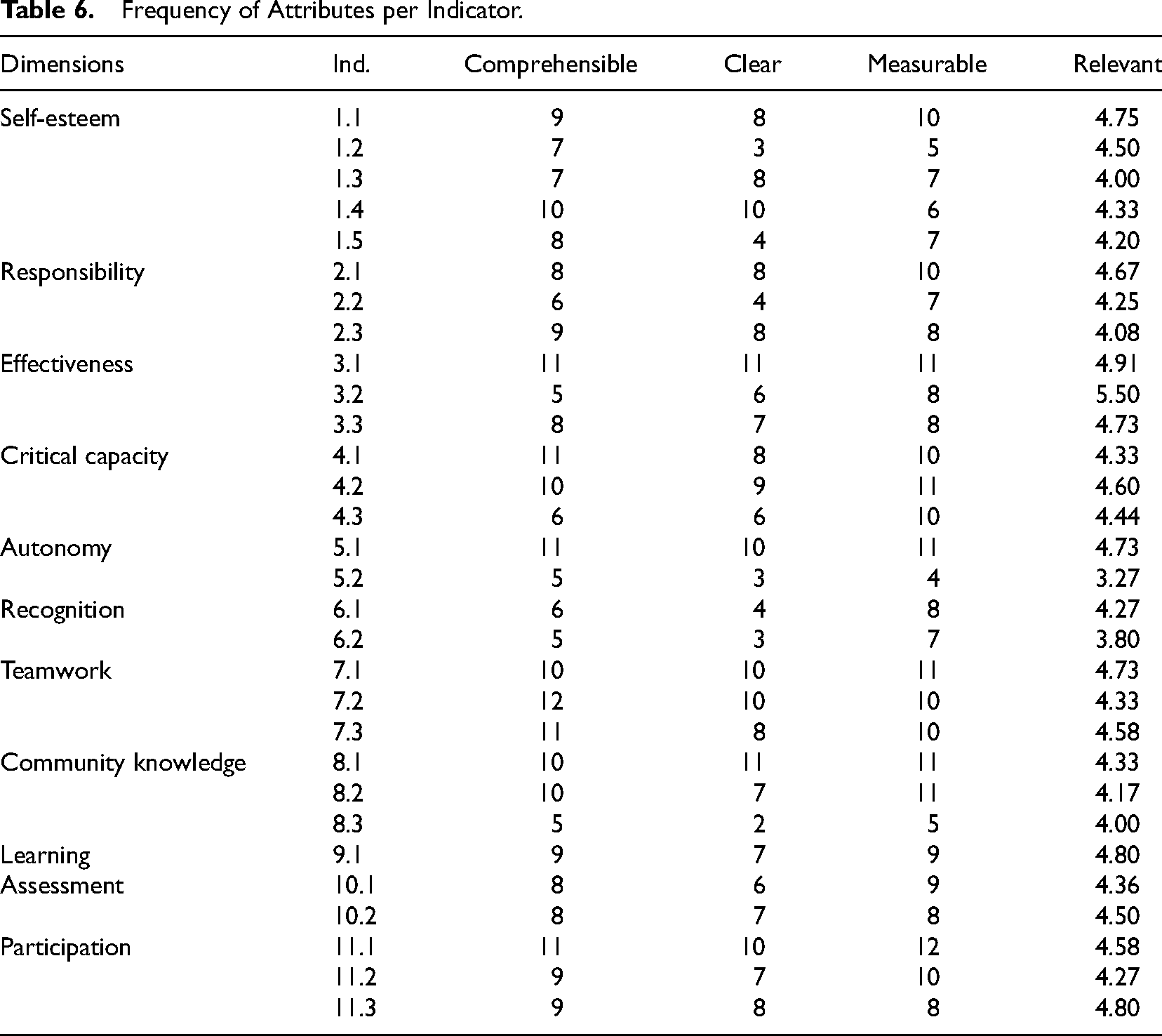
Once all the data and expert comments had been analyzed, we established the process for reformulating the indicator inventory. Broadly speaking, some 30% of the indicators required changes to improve their comprehensibility; 50% of the indicators presented problems regarding their clarity or interpretation; and 26% regarding measurability. All but two of the indicators were deemed highly relevant (above 4 on the 1–5 Likert scale) (see Table 6).
Frequency of Attributes per Indicator.
The assessors’ contributions were analyzed in a meeting attended by seven researchers (six members of the research team, and an international expert youth researcher). This analysis resulted in a new inventory of indicators in which:
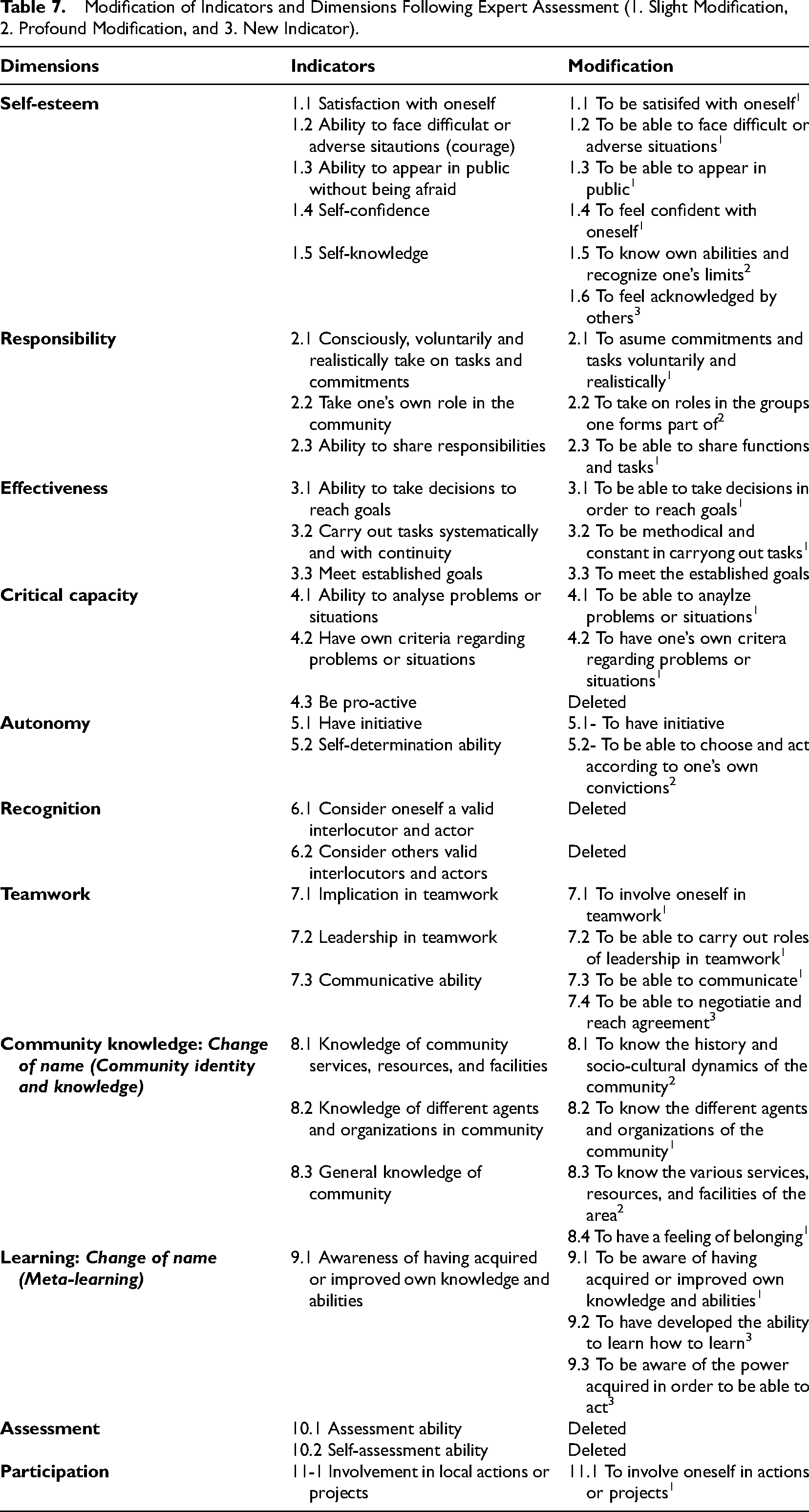
a total of 18 indicators presented slight modifications (the indicator became an infinitive and/or odd words were deleted to simplify it); five indicators were substantially changed (the indicators were reconsidered, above all to improve clarity); two dimensions and their five indicators were deleted; two dimensions were renamed (“community knowledge” became “community identity” and “knowledge,” while “learning” became “meta-learning”); four new indicators were introduced.
This produced an inventory with nine dimensions and 29 indicators (see Table 7).
Modification of Indicators and Dimensions Following Expert Assessment (1. Slight Modification, 2. Profound Modification, and 3. New Indicator).
Results of Participatory Evaluation
The revised dimensions and indicators inventory were validated in practice by undertaking four participatory assessment processes with the young people.
Given the large number of indicators and the complexity of working with such a large quantity of data, the groups of young people worked solely on the dimensions rather than trying to evaluate specific indicators. All groups required a definition of some or all of the dimensions of empowerment. However, some groups had a greater understanding of the dimensions than others; the higher their instructional level, the greater their understanding. All groups found the “meta-learning” dimension the hardest to understand.
All groups validated the inventory of empowerment dimensions and ranked them according to their importance.
The “autonomy” and “self-esteem” dimensions were deemed by all groups to be the most important. There was less agreement regarding the other dimensions, as a wide range of answers was given. Most of the young people felt that “effectiveness” was not very relevant. “Community identity and knowledge” led to some debate, the young people feeling that it did not allow them to distinguish between the individual and the communal. One group suggested separating personal identity from community knowledge.
Most groups suggested new dimensions, that “autonomy” be added to the idea of leadership, for example. Some groups suggested adding “confidence,” “trust,” “self-knowledge,” “strength,” “motivation” and “energy” to the “self-esteem” dimension; and “values” and “responsibility” to that of “identity”. However, it should be noted that most of these are already present as indicators in their relevant dimensions.
Results of the Life Stories
The analysis highlighted the fact that all of the dimensions in the inventory were identified in the young peoples’ life stories. “Self-esteem,” “critical ability,” “autonomy,” “meta-learning,” and “responsibility” were those that appeared most frequently. Nonetheless, the methodology itself may have led to some dimensions and indicators appearing more than others. Table 8 shows the frequency of indicators and dimensions in the life stories.
Frequency of Dimensions and Indicators in Life Stories.
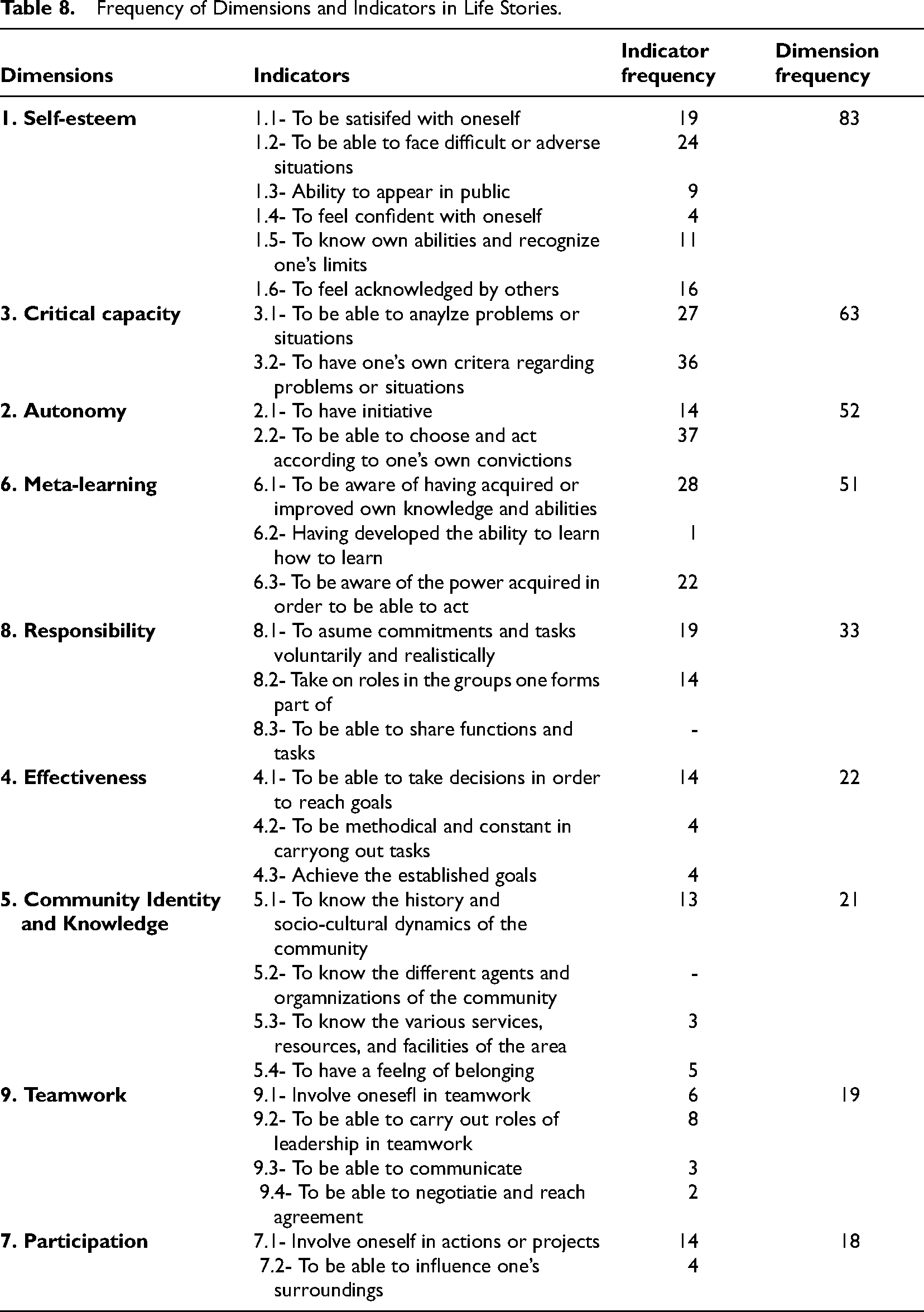
The results obtained led to a name change for one dimension, the elimination of two indicators, and modification of the indicators in two dimensions.
Specifically, from the “community identity and knowledge dimension,” one indicator did not appear in any of the stories (“To know the different agents and organizations of the community”), and another appeared very infrequently (“Knowing the services, resources, and facilities of the area”). This led the team to reflect on and reformulate the dimension and its indicators. The name of the dimension was changed, becoming “Community Identity,” and the indicators were changed so that the four original ones became the following three:
To share the area’s linguistic and cultural heritage
To actively identify with the civic and associative processes that occur in the area
To identify and make use of public space as one’s own
As has already been mentioned, the methodology hindered the emergence of further indicators, such as “having developed the ability to learn how to learn” in the meta-learning dimension. The “teamwork” dimension indicators were not frequently referred to in the stories. Despite this infrequency, the research team decided that the importance of these indicators to socio-educational actions warranted their inclusion as they stood.
Final Inventory
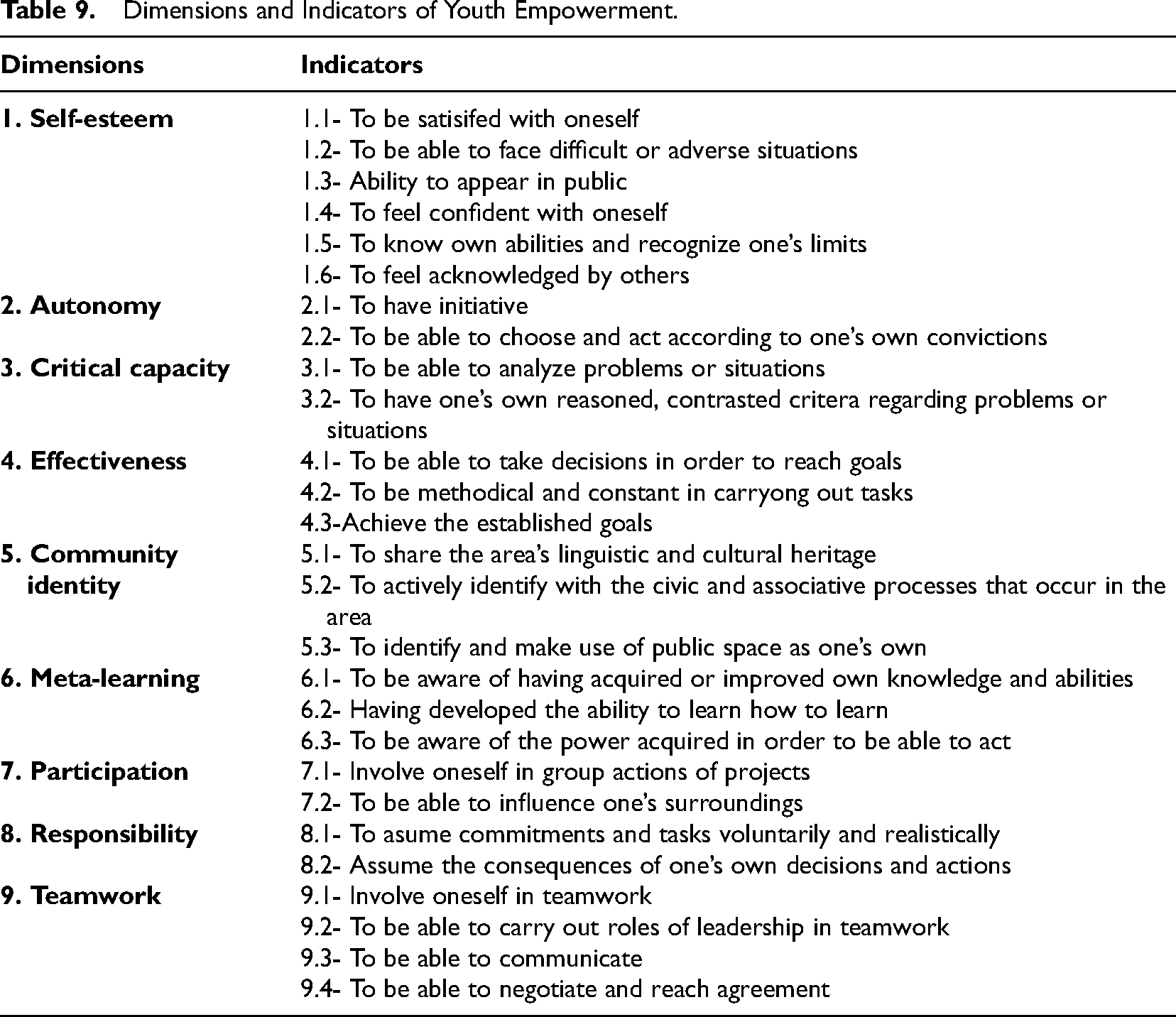
The result of the validation process within the HEBE II project framework (EDU2017-83249-R) was an inventory of nine dimensions and 27 indicators related to empowerment (see Table 9).
Dimensions and Indicators of Youth Empowerment.
Conclusions and Discussion
We can state that this century has seen a significant increase in both research and programs addressing youth empowerment in very diverse fields (politics, education, health, social networks, culture, etc.). The same is not true, however, of youth empowerment evaluation specifically. The confluence of four possible reasons may explain why there has not been much progress in this field of evaluative research. Firstly, because it is a relatively new concept, which became popular very quickly and began to be used in many fields without being conceptually and practically constructed in a consistent manner. Secondly, the complexity of the “youth empowerment” construct, which, as we have seen, is linked not only to many fields of action, but also to numerous, and very heterogeneous, psychological, political, social, and cultural dimensions (intra-/inter-; personal/community; process/result, etc.). Thirdly, the associated problem of identifying, separating, including, distinguishing or equating the concept of “youth empowerment” with other specific concepts in the field of youth work that have a longer tradition (such as positive youth development, youth power, youth participation, youth engagement, etc.). Fourthly, and finally, the importance of diversity and the heterogeneity of social and cultural contexts in which the empowerment of young people occurs. Perhaps it is these problems, among others, that led Zimmerman (1995) to point out that a universal measure of empowerment may not be desirable.
We have noted that although numerous studies provide valuable theoretical contributions, very little high-quality research provides evidence regarding the results of youth empowerment interventions. Another element that has received little attention in the literature is the long-term impact of youth engagement in empowering processes on individuals (Speer et al., 2019). Further research is therefore needed to understand how, and in which contexts, youth empowerment programs lead to improvements in the socio-emotional welfare of young people.
Even so, we feel that it is necessary to work to provide evidence-based programs in both the political and social spheres. Consequently, it is important to improve the evaluation processes of social and educational interventions and build evaluation instruments. These should serve not only to render accounts, but above all to guide and improve the educator’s practices and new projects.
This work presents an inventory of youth empowerment dimensions and indicators. In contrast with other proposals for indicators or measuring instruments based on psychology, a discipline that has seen the most proposals developed for measuring empowerment (for example, Christens et al., 2011; Peterson et al., 2008; Rodrigues et al., 2018; Wilke & Speer, 2011), our proposal is based on a socio-educational approach and aims to include those dimensions of empowerment that can be worked on with a young person or with a group of young people via socio-educational intervention. In this article, we have described the methodological process used to produce these dimensions and presented the results obtained in the various phases aimed at validating and contrasting them.
The methodological process displays the difficulties that can arise in the categorization process in the social sciences. Despite having set out a methodical, rigorous process with the triangulation of data for both different methods and different researchers, the categories can never be conclusive.
Our proposal for an inventory of dimensions and indicators of youth empowerment is a first step toward the definition, specification of, and research into, the characteristics and traits that shape, affect, and demonstrate the empowerment of young people. Nonetheless, we present the resulting product as an open inventory of empowerment dimensions and indicators, part of an on-going process of reformulation that results from analysis and implementation. As part of this process, we will continue reaching out to other groups that are developing related inventories so that we might all better understand and learn from the different approaches. The inventory is flexible, allowing researchers and practitioners to adapt it to the specific characteristics of the context and reality in which it is applied.
Each implementation of the inventory in the evaluation of youth empowerment projects can provide new data that, if systematically collected and treated, may contribute to improving, strengthening, or expanding it. However, it should be highlighted that one of the attributes that we deem to be positive is precisely the manageability of the inventory, given its reduced number of dimensions and indicators.
Among the limitations of the proposal we present here, on the one hand we would emphasize that a further stage would be useful, with a methodological process that can detect the relevance of each indicator. And on the other, that it requires different applications at the practical level. To this end, specific instruments can be developed that specify the indicators and become practical tools for their use in socio-educational intervention, either for the evaluation of programs and projects, or for the design of didactic proposals. This would undoubtedly facilitate its use in socio-educational interventions, training and research processes.
As an example of possible applications, over the past year our research group has developed a rubric for each indicator to use the inventory as an assessment tool for youth projects. The aim here is for the tool to be applicable in projects that have been designed as part of the work carried out by pedagogical teams, educators, or social workers working with young people. So far, it has been applied in 20 youth empowerment projects, which have been well received by the youth workers who have implemented it. Our ultimate aim is to develop the instrument as an electronic platform. The rubric can be found at the following web address https://rubrica.projectehebe.com/es.
The deployment of empowerment tools may thus respond to the challenges facing youth empowerment programs according to Wagaman (2011): (1) the development of opportunities; (2) the measurability of results; and (3) obtaining practical parameters for a range of groups of young people.
Our proposal is also in line with the European guidelines on youth and working with young people set out by the European Commission in “An EU Strategy for Youth—Investing and Empowering” (European Commission, 2009). This strategy emphasizes the importance of youth work and the need for cross-departmental work and to provide evidence that can aid in assessing policy. The inventory of dimensions and indicators of youth empowerment may furnish evidence regarding the value of work done with young people, and how this contributes to their personal and social development.
We are convinced that having an inventory of youth empowerment indicators will prove useful in guiding and understanding the transformative potential of many socio-educational programs and actions addressed at young people.
Footnotes
Declaration of Conflicting Interests
The authors declared no potential conflicts of interest with respect to the research, authorship, and/or publication of this article.
Funding
The authors received no financial support for the research, authorship, and/or publication of this article.
