




Abstract
A small body of work has examined the intersection of masculinity and disability. Key early studies focused attention on the ways in which men with acquired physical disabilities negotiated this dilemma, and the extent to which their strategies contested or reproduced gender norms. Recent work has called for greater attention to the diversity of men’s experiences across disabilities, as well as the dynamic and shifting configurations of gender and disability. In this paper, we engage with recent disability studies scholarship to consider how gender relations and masculinity intersect with ableism as a system of oppression. We draw on qualitative arts-informed research to present a comparative analysis of three men’s embodied experiences of chronic physical illness, intellectual disability, and psychiatric disability. The analysis highlights how complex relations between disability, (re)habilitation, breadwinning and heteronormative domesticity shape the lives and identities of all three men, albeit in quite different ways. As such, the paper provides an important illustration of the varied, dynamic, and often contradictory ways in which men negotiate gendered experiences of illness and disablement.
Introduction
Over the past two decades, a small body of work has examined the intersection of masculinity and disability. From the early work of Gerschick and Miller (1997) to more recent interventions (e.g., Abbott et al. 2019; Paccaud and Marcellini 2022; Robertson et al. 2019), a key focus has been understanding the ways in which men confront cultural norms of masculinity that rest on the able-body and mind as a “corporeal standard” (Campbell 2001, 44). In this context, disability is seen as being at odds with culturally valued norms of masculinity. This creates what Shuttleworth et al. (2012) characterize as an embodied dilemma for men as they negotiate competing cultural representations of gender and disability. Early studies (Gerschick 2000; Gerschick and Miller 1997) focused attention on the ways in which men with acquired physical disabilities negotiated this dilemma. Recent work has called for greater attention to the diversity of men’s experiences across disabilities and the dynamic configurations of gender and disability across the life course. Responding to these calls will help to address the broader lack of attention to disability in critical masculinity scholarship (see Cserni and Essig 2019).
In this paper, our aim is to advance scholarship on the intersection of masculinity and disability by making two contributions. Conceptually, we engage recent disability studies scholarship to consider how gender norms and relations shape, and are shaped by, ableism as an interlocking system of oppression in which ‘the able body/mind’ is positioned as a site of privilege (Campbell 2001). Empirically, we present a comparative analysis of experiences of disablement, drawing on qualitative research with men living with chronic physical illness, intellectual disabilities, and psychiatric disabilities. In so doing, we shed light on key questions concerning ‘how men’s experiences of varied impairments differ in their relationship to the gender order’ (Robertson et al. 2019, 162).
In this paper, we approach “disability” as something that emerges out of the dynamic interaction between the diverse embodied experiences of impairment and socio-cultural settings that operate on the basis of the able body/mind as a corporeal standard (Campbell 2001). This recognizes “ableism” as an enduring system of oppression but understands that different settings may be experienced in more or less disabling ways. In part, this reflects the fact that people with impairments can—but do not always—find creative ways to negotiate and contest ableist social arrangements.
Understanding Disabled Masculinities
In Western contexts, disabled men have often been portrayed in opposition to normative or hegemonic forms of masculinity (Connell and Messerschmidt 2005), with disability coming to signify “everything that real men must repudiate in their quest to approximate culturally legitimate modes of manhood” (Barrett 2014, 40). The strength and persistence of these portrayals has produced an embodied dilemma for disabled men in which their doing of gender is often at odds with culturally valued traits associated with “able-bodied” masculinity (Shuttleworth et al. 2012). In the 1990s and early 2000s, researchers began to examine how disabled men negotiate this dilemma (e.g., Gerschick and Miller 1997; Smith and Sparkes 2005).
While valuable, this scholarship produced rather homogenous accounts of disabled masculinity (Barrett 2014; Shuttleworth et al. 2012). In part, this was because the work focused on men’s experiences of acquired physical disabilities, particularly spinal cord injuries, and the ways in which the acquisition of disability by adult men demanded a reworking of existing non-disabled masculinities (Barrett 2014). As Shuttleworth et al. (2012, 188) noted, this encouraged a focus on how masculinity “intersects with disability as an almost generic category, rather than on how masculinity (or masculinities) intersect(s) differently with various types of impairment.”
In response, scholars highlighted several priorities for future work. Chief among these was greater attention to the diversity of disabled masculinities, recognizing multiple forms of physical, mental, sensory, and intellectual impairments that may be congenital or acquired in nature. Second, there was a need to focus more attention on the dynamic nature of disabled masculinities (Staples 2011). This entails recognition of the shifting impacts of different impairments and awareness that meanings of disability might shift over the life course. Third, Barrett (2014) called for attention to the “interactional generativity” of disability, challenging the assumption that disability always detracts from a valued masculine identity. Finally, both Barrett and Shuttleworth et al. called for greater attention to structural forces impacting disabled (and non-disabled) masculinities. These include labour market change, shifting cultural norms, and changing household formation.
The last decade has seen growing attention to the diverse and dynamic intersection of disability and masculinity (Robertson et al. 2019). For example, research on the experiences of men living with Duchenne Muscular Dystrophy (DMD) highlights the differentiated experiences of men across social fields (Abbott et al. 2019; Gibson et al. 2014). It also sheds light on the ways in which experiences of disability impact gendered norms in relation to the life course. Abbott et al. (2019) show that the overarching sense that men with DMD will not live very long means their social needs to transition into adulthood have been neglected in favour of more immediate medical needs. Elsewhere, Wilton and Fudge Schormans (2020) explore the experiences of men with intellectual disabilities. They show that a range of constraints, including exclusion from paid work and oppressive group home rules often frustrate efforts to enact an adult masculinity in both domestic and public settings. Paccaud and Marcellini (2022) examine the experiences of one man who acquired speech and mobility impairments at birth. They suggest this positioned him in a subordinated position relative to hegemonic masculinity from infancy, but they also highlight important contextual changes over time that impact his “masculine repertoire” with respect to gender performance.
Recent work has highlighted the importance of an intersectional perspective to capture the impacts of men’s actions. Authors show that men’s efforts to challenge disabling conditions do not necessarily contest masculine norms and unequal gender relations (and may actively reproduce them). As Paccaud and Marcellini (2022, 594) note, while their participant’s efforts to develop a relationship with a non-disabled woman might “subvert social representations of people with dis/abilities as asexual and non-gendered” it relied simultaneously on “heterosexual men’s entitlement to women’s bodies and labour.” Foregrounding a critical intersectional perspective on gendered power facilitates recognition of “the multiple layers of advantage and disadvantage experienced by men with various impairments” (Robertson et al. 2019, 161).
While research has begun to address omissions identified by Barrett and Shuttleworth, authors highlight the need for additional work. Robertson et al. (2019, 162) call for attention to “empirical questions around how men’s experiences of varied impairments differ in their relationship to the gender order,” recognizing that this requires attention to intersecting relations of class, sexuality, race, and age. Paccaud and Marcellini (2022) note that much work remains to understand the experiences of a diverse population of men with disabilities, including those with congenital impairments.
We aim to contribute to understandings of the diverse and dynamic nature of disabled masculinities through a comparative analysis of three groups of disabled men. Comparative work remains rare among existing scholarship (Barrett 2014) and provides an opportunity to compare “how men’s experiences of varied impairments differ in their relationship to the gender order” (Robertson et al. 2019, 162).
Theoretical Framework
We draw from two theoretical frameworks to make sense of disabled masculinities. The first is Connell’s relational model of gender (Connell 1995; Connell and Messerschmidt 2005). In this model, masculinity and femininity emerge as configurations of practice within structured gender relations that constitute a given gender order. For Connell, multiple types of masculinity co-exist within a given gender order. The concept of hegemonic masculinity captures configurations of practice generated in specific contexts that offer “the currently accepted answer to the problem of legitimacy of patriarchy, which guarantees (or is taken to guarantee) the dominant position of men and the subordination of women” (1995, 77). Most men do not embody the hegemonic norm, but they benefit from and are complicit with its dominance.
Other masculinities exist in hierarchical relation to a given hegemonic form. First, relations of dominance and subordination operate internal to the gender order. For example, gay men and homosexuality have historically been positioned as “the repository of whatever is symbolically expelled from hegemonic masculinity” (1995, 78). Second, recognizing that gender intersects with class, race, and other differences directs us to consider how certain groups of men are marginalized in relation to hegemonic masculinity. Connell notes that marginalization can simultaneously operate to legitimate hegemonic masculinity. In an ableist society, disabled veterans may be celebrated as exemplars of hegemonic masculinity, yet this does not yield social authority to disabled men more generally.
Connell’s work has been subject to constructive critique. A key issue is the extent to which the hegemonic masculinity concept risks producing a static understanding of dominant and non-dominant gender practices. In response, Demetriou (2001) proposed a conception of a “hegemonic masculine bloc,” understood to be always in process, transforming itself in part by incorporating elements of subordinate masculinities and femininities (also Bridges and Pascoe 2018). Reflecting these developments, we adopt a process-centered analysis to consider how disability can weaken but also strengthen men’s gender privilege (Christensen and Jensen 2014).
A second theoretical source is recent writing on ableism. Scholars in disability studies have challenged dominant medicalized understandings of disability and provided new ways to understand social processes of disablement. The initial focus of this scholarship was on the forms of oppression that disabled people confront, but more recent work has interrogated ableism as a broader system through which “the able body/mind” is positioned as a site of privilege (Kafer 2013; Shildrick 2019).
While scholarship on ableism is diverse, an important thread has focused on how the neoliberal political economy works to debilitate or “wear down” populations – including both those who would and would not be recognized as disabled (Bates et al. 2017; Shildrick 2019). Concurrently, neoliberalism signals an individual responsibility to strive for health and wellbeing. Both disabled and non-disabled people are enjoined to (re)habilitate themselves in pursuit of what is always an unattainable fantasy of full capacity.
In this context, experiences of disability vary markedly. For some disabled people, successful efforts at (re)habilitation hold out the prospect of social inclusion and normative citizenship. Mitchell and Snyder (2015) refer to this as the attainment of “able-disabled” status. For others, “failure” to pursue (re)habilitation can produce varied forms of social exclusion and marginalization. As Shildrick (2019) notes, such failure sometimes arises from overt refusals to comply with ableist norms. In these instances, embracing vulnerability can be understand as a political challenge to normative understandings of a successful life. At other times, failure reflects the cumulative impacts of injury and illness set within broader structures of oppression.
Drawing these frameworks together, we begin from the position that gender relations and disability/ableism are inextricably linked. Gender norms are replete with assumptions about ability. For example, valued masculine traits such as strength, sexual virility, and independence rest on assumptions about what gendered bodies can and should do. Concomitantly, ableist norms are deeply inflected by gender and sexuality. Mohamed and Shefer (2015, 5) note that disabled women are “treated as asexual and are expected to forego motherhood as they are seen as transmitters of faulty genes or as incapable of raising a child.” By contrast, masculine conceptions of ability are centrally concerned with the capacity for paid work and breadwinning (Pini and Conway 2017). We understand experiences of disabled masculinity as dynamic relational configurations of practice. These configurations are subject to constraint, but they also reflect the creative agency of participants, producing embodied performances that both challenge and reproduce gendered and ableist norms.
Methodology
Study Design
We used a comparative case study methodology to examine the intersection of disability and masculinity in men’s lives. Case study methodology is focused on deriving an in-depth understanding of a single or small number of cases (Creswell 2013). Moreover, case study methodology emphasizes the importance of context and the interrelated conditions that shape social phenomena (Yin 2013). Our case selection was informed by the theoretical framing of the research and by calls within recent literature to pay greater attention to the diverse and dynamic nature of disability. We focused on experiences of intellectual disabilities, mental health disabilities, and chronic physical illness as these give rise to a diverse range of embodied experiences across different stages of the life course.
Intellectual disabilities are classified as developmental in nature, and many of the most common (e.g., Down syndrome, fragile X syndrome) are experienced from birth. In this sense, they shape identity and experience across the life course. Adults with intellectual disabilities are frequently subject to infantilization, viewed as incapable of assuming normative adult gender roles (Gill, 2015). As Robertson et al. (2019) note, men with intellectual disabilities have received little attention in existing work on masculinities.
Mental health disabilities are often first experienced in teens or early twenties, and in this sense can shape the life course of previously non-disabled young adults with respect to education and employment. The stigma of mental ill health can impact disclosure and help-seeking. In gender terms, mental health disabilities have been variously understood as embodying violence and unpredictability in the case of Schizophrenia (Owen 2012), and “soft,” feminized gender identities in the case of depression (O’Brien et al. 2007).
Chronic physical illness: We focused on experiences of Multiple Sclerosis and Fibromyalgia. Both are typically experienced and diagnosed in mid-life, potentially disrupting previously non-disabled identities and life courses. In this sense, they are similar to acquired physical disabilities (Gerschick and Miller 1997). However, unlike spinal cord injuries, the (sometimes) non-visible nature of chronic illness leaves open possibilities of passing, while new symptoms may require ongoing (re)negotiations of embodied identity.
Recruitment and Data Collection
Participant Characteristics.
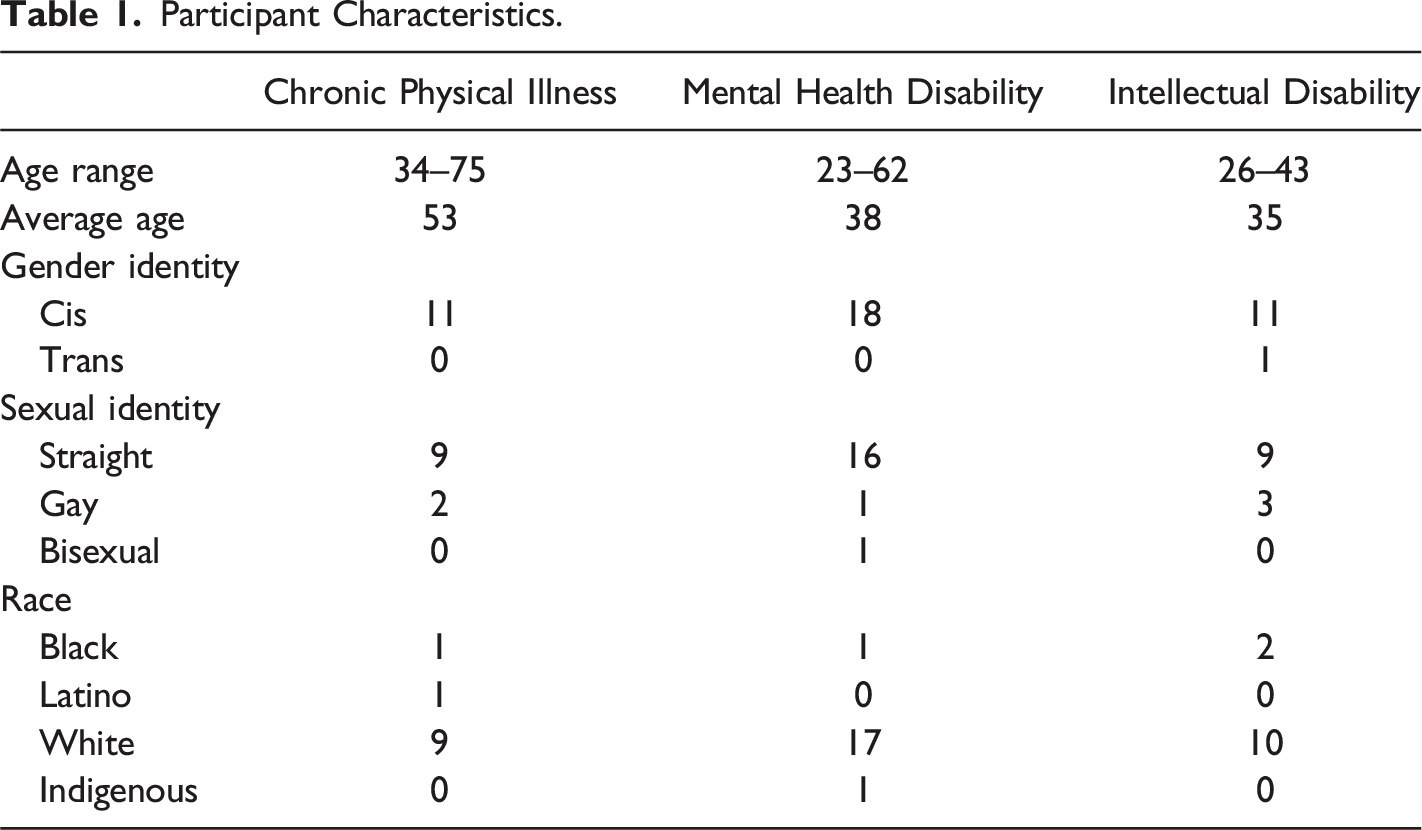
We then invited participants to take part in a visual arts activity. We used this approach as a way for participants to “articulate aspects of their personal circumstances that they may not previously have considered in any depth” (Guillemin and Drew 2010, 178). From a disability perspective, visual arts offer one way to move beyond a reliance on “authentic” narratives of subjective experience (Macpherson 2009). The method also facilitates inclusion of people (e.g., some men with intellectual disabilities) who have difficulty communicating experiences in words. We asked participants to “make a picture that shows what it means to be a man based on your experience.” Thirty-two participants took part in this activity. Some attended in-person group workshops, but COVID restrictions meant others had to complete art activities at home. The involvement of an experienced arts facilitator was critical to this stage of the work, fostering a supportive atmosphere (Figure 1) and providing advice and assistance as needed. Participants used a variety of different media to create art (e.g., pencil and paper, water colours, pastels, collage, and digital techniques). We then invited people to talk about their art; this occurred as a group discussion during in-person workshops (22 participants), or as telephone interviews for those working at home (10 participants). Art rules used by the arts facilitator. Alt-text: A sheet of white paper with black text taped to the wall. The text reads: ‘art rules, there is no such things as bad art; we are not perfect so neither is our art; everyone is an artist; you migh think you art is not as good as someone else’s. I bet someone thinks the same as you. Stop comparing. It’s okay to have a tough time. Keep trying and ask for help. And above all have fun!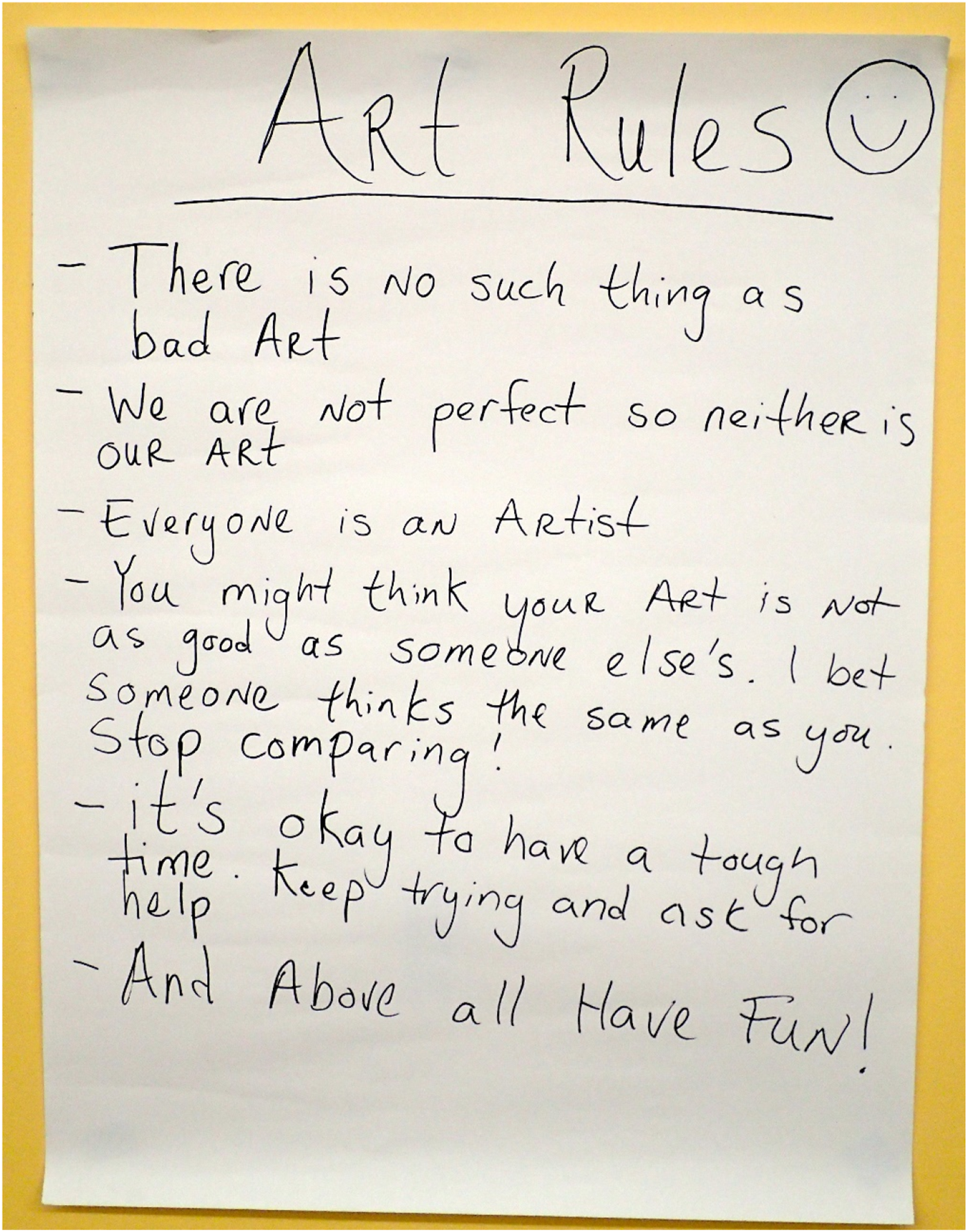
Analysis
For this comparative analysis, we analyze three life histories. As Connell (1995, 89) notes, life histories offer rich documentation of personal experience set within varied structural and institutional constraints. In this sense, they capture the shifting relations between “the social conditions that determine practice and the future social world that practice brings into being.” We selected life history exemplars that highlight common experiences within each group, while capturing key differences and similarities between groups. We chose exemplars with similar ages to facilitate comparison in relation to the life course. We focus on how men employ “active and tactical patterns of identity construction that implicate a variety of social norms, resources, relationships and contexts” (Barrett 2014, 44). With respect to participants’ art, we understand their works as inextricably linked to the men’s interpretations of the drawings, requiring “simultaneous and not separate analysis” (Guillemin and Drew 2010, 184). We focus attention on the content and composition of the drawing, as well as the meaning and significance of the piece for the participant and researcher.
Reflexivity offers a means to examine the impact of researchers’ positioning on knowledge production (Rinaldi 2013). Both authors identify as non-disabled, but we have extensive experience working collaboratively with disabled communities over the past two decades. This engagement has helped us with what Mohler and Rudman call “unlearning”: a strategy for countering assumptions that challenge the acquisition of new knowledge (Mohler and Rudman, 2022). This is critical for combating ableist norms, which signal that a “good life” cannot be lived in the absence of an able body/mind (Kafer 2013). Unlearning also pushes us to recognize a diversity of perspectives and experiences within communities of disabled people. Methodologically, we used member checking as one technique of staying true to individual participants’ experiences (Candela, 2019). Holding multiple interviews also provided opportunities to reflect on and clarify topics that had arisen in earlier conversations. The visual arts activity helped foreground the co-construction of knowledge; participants spoke about their own interpretations, but they were keen to learn what the researchers took from the images.
Reflexivity is also important in relation to issues of reciprocity and control over research (Rinaldi 2013). We provided a form of immediate reciprocity through the provision of research stipends to recognize participants’ work. 2 With respect to control, participants were involved in decision-making about the dissemination of research findings. This involved ongoing discussions about how to display artwork in online and in-person exhibits.
Findings
“I do Find the Precarity of it Really Unnerving”: Masculinity and Chronic Physical Illness
Jack is in his late thirties.
3
He is married with young children. Jack grew up in a working-class family but did well in school and university, earning a law degree. By his mid-twenties, he was working at a large law firm and earning “a six-figure salary” but he was also finding it hard to keep up with the 60-80-hour work weeks demanded by the position. Concurrently, he was starting to experience a range of symptoms that impacted his physical health, and which would later lead to a diagnosis of Fibromyalgia. The impacts of the illness led to a leave of absence from his job, and a series of lifestyle changes focused on maintaining better health. Once he started to recover, he wanted to go back to work but felt he could no longer work as a litigator given the unpredictability of symptoms. I knew that I couldn’t litigate anymore. Um, just because the symptoms were so variable and when you’re dealing with, you know people’s most important issue; they’ve been fired, they’re fighting for a lot of money… You don’t want to go in there with a migraine and not be able to put together an intelligible sentence.
He and his wife moved back to the smaller city where they grew up. The move gave them access to family support and more affordable housing. Jack found a job as a lawyer for a professional association. While the job provided steady income, he struggled with a loss of status. I spent the last couple of years really grappling with the loss of capacity and this loss of ego …I’m still a practicing lawyer [but] the, the work is pretty monotonous …it’s very simple compared to the work I used to do in private practice.
Faced with what he saw as his diminished role at work, Jack tried find other ways to foster a sense of self-worth. Fewer demands at work meant that he could take on a more active role parenting his young children. While he enjoyed this role, he also found it tiring but he pushed himself through the exhaustion because he felt guilty about not doing his part of the parenting. He also emphasized the importance of physical play to his role as a father. As he explained: “I push myself so that I not being derelict. I play with them a lot …we are always going to parks.”
Jack’s changing role as a parent connected to broader changes in family relations. One of the biggest changes was the sense that he was increasingly dependent on others, especially his wife. With the change in job, he was no longer the sole breadwinner: For me the financial independence was really important, but then once that became precarious, I needed to rely on my spouse a lot more. When we bought a house, we bought it with money from her family which for me was a totally odd experience.
Jack drew parallels between his own sense of financial dependence and the position of a woman homemaker who relies on the income of a man breadwinner. When you have a chronic illness… um, I mean in many ways it mirrors the experience that, you know an unremunerated housewife would experience where your precariousness, how you pay the bills, hinges on this other person, right. I do find the precarity of it really unnerving.
Jack captures this sense of precarity in his artwork, entitled “Walking on a wire” (Figure 2). At the same time, he felt the changing nature of their relationship had brought his wife and himself closer together.
While changing work-life balance and shifting family relations were important elements of Jack’s narrative, he also talked about the fact that he had focused on “becoming athletic again”, notwithstanding the impacts of Fibromyalgia. He started playing competitive tennis. In the interview, he reflected on his decision: I mean it’s a curious thing the thing I do is take up a highly competitive sport… I’m still trying to demonstrate some measure of dominance, a measure of mastery and stuff, right, and it’s sort of pathological, I think (laughs).
Jack linked his involvement in sport to a broader attempt to approximate normative masculine performance, something he characterized as a defense against the vulnerability of chronic illness. What’s weird is I’m becoming manlier… the way I dress, I’ve become more conformist. Like, most people when they met me ten years ago thought this individual is gay. I was kind of effeminate, and there was a certain purposefulness to it too… I really enjoyed that, but I think there’s an insecurity now. This staying under the radar, being as normal as possible, informs it.
Jack is a white, heterosexual, cisgendered man. Although originally from a working-class family, he experienced upward class mobility through university and law school and was in a position of significant economic power by his mid-twenties. In gender terms, prior to the onset of chronic illness, Jack can be located within Demetriou’s “hegemonic masculine bloc.” The appearance of Fibromyalgia precipitated a series of related changes that hold implications for Jack’s masculinity. At the level of embodied practice, the diverse and unpredictable symptoms of the illness make it difficult to continue as a litigator. Given his human capital, Jack is able to find another position that offers stable income and flexible working arrangement, but the mundane work of in-house counsel does not offer the same kind of gendered occupational status as the more masculine adversarial work of litigation (Macerollo 2008).
Moreover, the new job does not pay enough to sustain Jack’s role as sole breadwinner. The move back home, coupled with the financial support provided by his spouse and her family, signal a growing economic reliance on others. Jack’s comment about the position of an “unremunerated housewife” suggests that he experiences disablement as feminization.
The loss of sole breadwinner status, coupled with a less demanding employment schedule, weakens the gender division of labour. Jack has less economic power and more time – changes that remove any reason for him not to engage in unpaid tasks like childcare (Connell and Messerschmidt 2005, 106). While fathering offers the basis for a valued identity, Jack might be understood as a reluctant father (Latshaw 2015). At the same time, fatigue caused by the chronic illness makes it hard to father in an ableist way (Pini and Conway 2017). Jack is also worried that the impacts of chronic illness mean he cannot do his share of the parenting. A sense of mutual dependence has brought Jack and his wife closer together, but he is uneasy with the prospect that he might become more dependent on her.
Finally, changes to his style of dress and comportment provide an illustration of the way disability can disrupt the practice of “strategic borrowing” (Bridges and Pascoe 2018, 264)—e.g., the incorporation of gay culture by straight-identified men. For Jack, the decision to engage in a more stereotypically manly performance (to “play it straight”) offers a way to embody normalcy without drawing too much attention. This option is available because the Fibromyalgia is, for the most part, non-visible.
“Asking for Help was Really Helpful but Definitely Hard to Say”: Masculinity and Mental Health Disability
Daniel is in his early thirties. He and his mother arrived in Canada as refugees from Southern Africa when he was thirteen. He works part-time for a community organization providing mental health supports to young people, and lives alone in a studio apartment. He has been dealing with anxiety and depression for more than a decade. While he is not sure of the causes of his mental ill health, he feels they are linked to the trauma he experienced in his home country and the struggles of being a new immigrant. Daniel did not have access to formal mental health supports while in high school because of his status as a refugee claimant. His relationship with his mum deteriorated during this period, and at seventeen, he left home. He spent the next 2 years couch surfing. While he knew something was wrong, it was difficult to accept that he needed help: During that time, it was kind of like, I didn’t really end up going to like a shelter, but I did think about it as a last case scenario, but um, yeah, just thinking that I had to figure out things on my own; I had to pull myself up by the bootstraps kind of mentality
By nineteen, Daniel said he was still “not wanting to accept that I need help,” but he recognized that his situation was “not going to dramatically change without supports.” He began to access formal mental health supports, which he found helpful in managing his anxiety and depression. Like when I’m feeling anxious, just to recognize that, so that I can prevent things getting worse… like in high school like I didn’t go to school for almost a month and a half, just feeling depressed and anxious. So, things like that, where I disengage from activities, um, I’m trying to prevent myself from getting to that point… In the last few years, things have been improving.
During this same period, Daniel got involved in youth mental health work. This began as a volunteer position. He then applied for a part-time paid position running a youth program. Daniel enjoys the work, and it has encouraged him to be more open about his own mental health challenges.
Reflecting on the process of dealing with mental ill health, Daniel said one of the biggest challenges had been learning how to ask for help. He commented: “asking for help was really helpful but definitely hard to um say, ‘I need help,’ feeling that sense of weakness.” Getting to this point required him to try “to unlearn a lot of behaviours that may have been like encouraged… kind of like having a tough guy kind of vibe, you know.” Daniel’s approach involved taking care of his own physical and mental health, as well as building healthy relationships with other men as friends: I try to be healthy, um, try to go to the gym for positive things, you know, invite some of my guy friends to the gym when I can… but in a healthy way where we’re trying to support each other being healthy.
Although Daniel felt he was getting better at asking for help, he struggled with the fact that he had not yet “fully recovered” from his mental ill health. He linked this to normative expectations in relation to the life course: I feel like there’s a difference in me being in my twenties having mental illness, as opposed to being in my thirties… it’s more as you’re getting older, ’you need to have dealt with your mental illness’. I guess, there’s more expectation as you get older as a man, like if you’re going to be starting a family and like more expectation of um, ‘what kind of education do you have?’
A sense of “failing” to get over mental illness was tied to a broader conception of how men were valued in society. Daniel felt men were judged based on the amount of power they possessed, particularly in the labour market. In his artwork (Figure 3), Daniel depicts the pressure men face to live up to certain social standards and the pain that this can cause. I drew players in some sort of agony, anger, very emotional faces, and just like a lot of pain, I guess… Sometimes a lot of men feel like they’re stuck, like myself, I’ve felt that way, trapped in a situation, and trapped in circumstances, um… even like societal pressures and feeling as if, you now, ‘there’s nowhere I can go here.’ Jack’s artwork ‘Walking on a wire’. Alt-text: A pen and ink drawing that depicts a male figure walking on a tightrope above a pit of flames. On either side of the flames a series of stick figures seem to look up at the man on the tightrope. On the left and right sides of the drawing, there are a series of statements that describe aspects of life with Fibromyalgia. These include: “The medicine is eating into the budget, we need to rein in other stuff” and “Buddy, daddy can’t wrestle with you. It hurts my legs too much. Got to save it for grandpa”.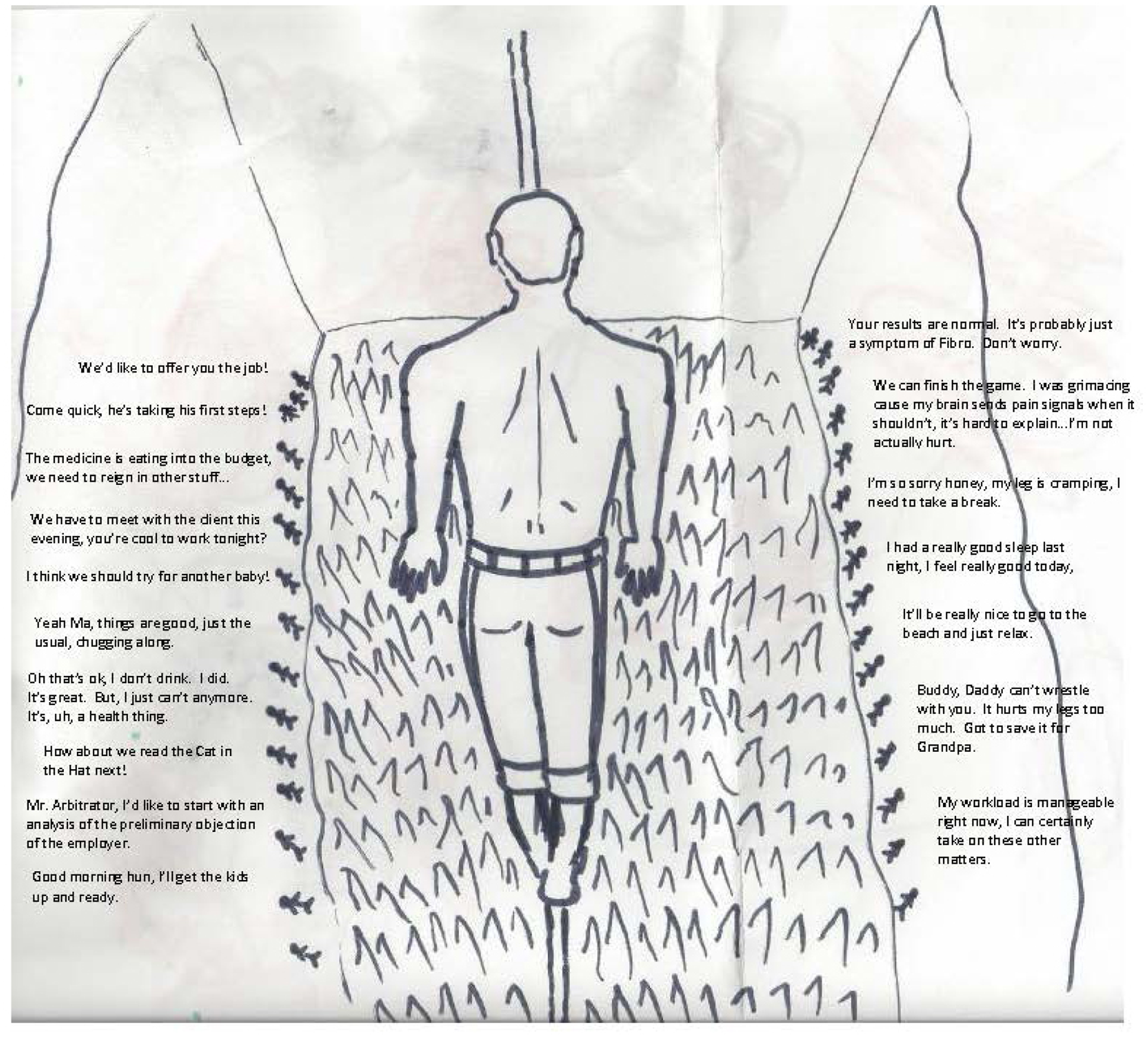
The sense of competition in relation to economic power, coupled with Daniel’s feeling that he was taking too long to “deal with” his mental illness, shaped his thinking about the future. Daniel wants to start a family, but he felt that his ongoing mental health issues and lack of secure income meant he was not ready.
Like Jack, Daniel is a cis-gendered, heterosexual man, but unlike Jack, he is a racialized refugee claimant, and this marginalizes him relative to an “unmarked” white, hegemonic masculinity (Christensen and Jensen 2014). Race/citizenship and disablement intersect in important ways in his narrative. Everyday experiences of social exclusion worsened Daniel’s experience of anxiety and depression in late adolescence, while structural racism in the health care system limited access to formal mental health services. These structural barriers are overlain by his internalization of a masculine prohibition against help-seeking (Seidler et al. 2016).
Over the past decade, Daniel has engaged in what he characterizes as the “hard work” of learning how to ask for help. This works hinges on trying to “unlearn a lot of behaviours” that stem from normative masculine ideologies – the “tough guy kind of vibe.” At the same time, Daniel is purposely cultivating what he characterizes as “healthy” relations of care and support with other men who have mental health disabilities. This is true in his work as a youth counsellor and in his focus on the gym and physical exercise. With the respect to the latter, there is an important difference from Jack, for whom sport provides a means to demonstrate dominance. For Daniel, exercise is an activity in which relations of care and support can be cultivated. This might be understood as an example of what Hammarén and Johansson (2014) characterize as “horizontal homosociality” – relations based on emotional closeness, which do not necessarily reproduce gendered relations of dominance. Daniel’s artwork also signals a desire to question the “rules of the game” with respect to masculine norms. Talking about the art, he wanted to convey that: “it’s okay to be yourself, to see the progress that you’ve made on your own terms, the rules you make up for yourself.”
While his art offers a critique of societal pressures, Daniel expresses mounting frustration that he has not “overcome” his mental health disability. This sentiment resonates with both disability and gender scholarship. Neoliberal ableism holds out the prospect of social inclusion for those who are “seen to overcome their nominal debility to the extent of conforming to or even exceeding mainstream norms” (Shildrick 2019, 598). At the same time, Daniel’s sense of frustration is linked to expectations about a heteronormative masculine life course, in which marriage and fatherhood can only be realized in the absence of disability. This resonates with Wool’s (2021, 290) contention that “conjugal couplehood” is both a means for, and a sign of, rehabilitative success.
“The Only Thing that Men Love to do is Build Their Muscles”: Masculinity and Intellectual Disability
Mankind is in his late thirties.
4
He has spent most of his adult life in group homes and has been in his current group home for about 10 years. He says he has an intellectual disability that is “partially due to genetics,” but he does not think too much about it. He attended a regular high school, but his experience was marred by persistent bullying. Asked about what it means to be a man, Mankind was clear that “bad men” were those who engaged in bullying: The difference between a good man and a bad man um, I think I’ll simply say bad men can be sometimes a bully cause I’ve been there and it’s so bad in my high school years.
Mankind works part-time as a courier for a disability service organization, for which he receives a stipend. He also participates in a weekly volunteer craft studio. Mankind said he does not think there is any difference between paid and unpaid work. For him, the main issue is having something meaningful to do. Without these activities, he said, “I would probably have cabin fever.”
A number of significant themes arose in Mankind’s interview. One of these concerned the issue of sex and sexual desire. Mankind explained he had no desire for sex because of an operation on his testicles. I’m not able to have sex because um, because I got a chromosome that developed in my testicles. It wasn’t a very, it was a very easy surgery um, I had one taken out and I still have one unhealthy one. [Int: So, do you have any desire for sex?] No.
This development had a significant impact on his masculine embodiment and his aspirations for the future. He explained he had no interest in a romantic relationship with a partner or the prospect of marriage. This also shaped his thinking about his ideal living arrangement: Anybody can choose their own long-term commitment. Marriage is one of them just not to me. I chose a different long-term commitment to be um, here, not necessarily at home but living with a community of other people.
Mankind rejects a future based on a heteronormative domestic ideal. Although he was clear that the communal model of living was his preferred alternative, he talked about a distinctly gendered use of domestic space. Asked about life at the group home, he explained he was the only man resident of the home and he liked to spend time in the basement away from women residents: This is a common basement room, but I also like to call it the Man Cave… because technically I’m the only man who lives here. [Int: So, you spend a lot of time down here in the basement?] I do, yah, I kind of like being ah, like having my own time down here and I also like being with others upstairs too.
Mankind explained that he did not have men as friends outside the group home, but he had opportunities to build relationships with men who staffed and volunteered at the group home. One of the men volunteers at the home had recently asked him to be the best man at his wedding. Mankind was excited about this opportunity and the fact that the volunteer “wanted me to be part of his life.” He feels a sense of attraction to the man volunteer, but the attraction is of a non-romantic nature. It’s like a relationship between men and men but just simply put like, like an adequate relationship ‘cause we’re the same sex… [Int: so you have an attraction to him in a way that’s not romantic because he’s your friend?] Yeah.
Finally, Mankind talked at length during the interview about his love for professional wrestling. This was also the subject of his artwork (Figure 4). Asked what he loved about wrestling, he said: The action, the drama, the entertainment. I think my all-time favourite guy is Stone-Cold Steve Austin. He’s the baddest SOB on the planet [Int: what makes him bad?] They just give themselves angry names. I don’t know how they do it. Um, I think that’s just one of the things, that’s what it means to be male…I mean it can be any male, whether they have an intellectual disability or not they just tend to build their stamina and ego. Daniel’s artwork ‘Mascs’. Alt-text: A collage of cut printed paper and oil pastel featuring eight pictures of men playing sports including football, rugby, soccer, hockey, rodeo, and mixed martial arts. The pictures are grouped together and surrounded by a purple border. The men’s facial expressions show exertion and pain.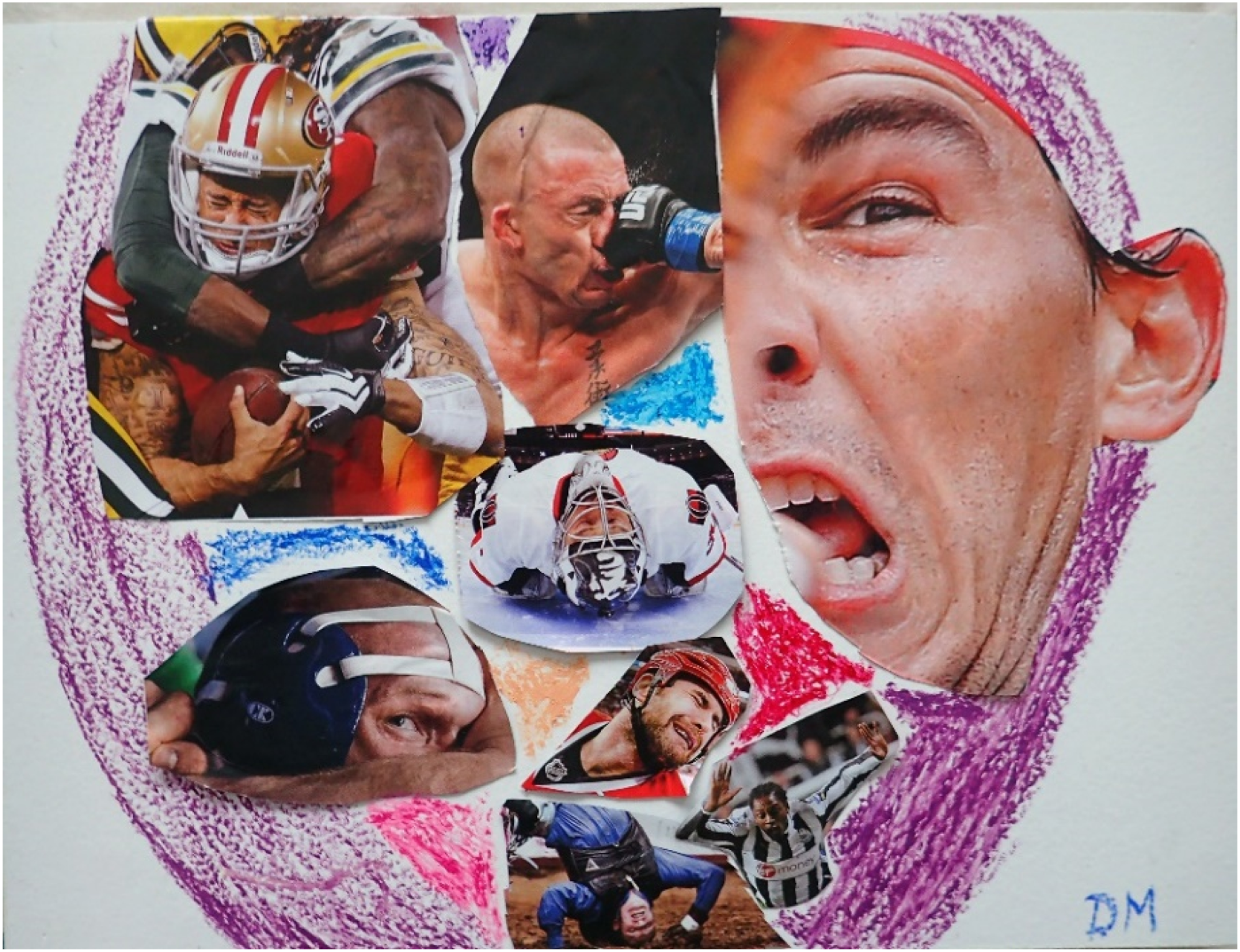
For Mankind, building “stamina and ego” in WWE carried over into a broader discussion about the importance of muscles and physique to being a man, something influenced by his exposure to men’s fitness magazines: “I always come across ah, like magazines like Men’s Health or Muscle and Fitness. The only thing that men love to do is build their muscles, no matter how long it takes.” While building muscle was part of what it meant to be a man, Mankind was ambivalent about whether he wanted to look like the men in these magazines. His ambivalence stemmed from concerns about steroid use, something he saw as “stealing away your muscles”. Mankind’s artwork ‘Untitled’. Alt-text: A collage of cut printed paper and colour marker, featuring a picture of male professional wrester, and the capital letters, ‘WWE’.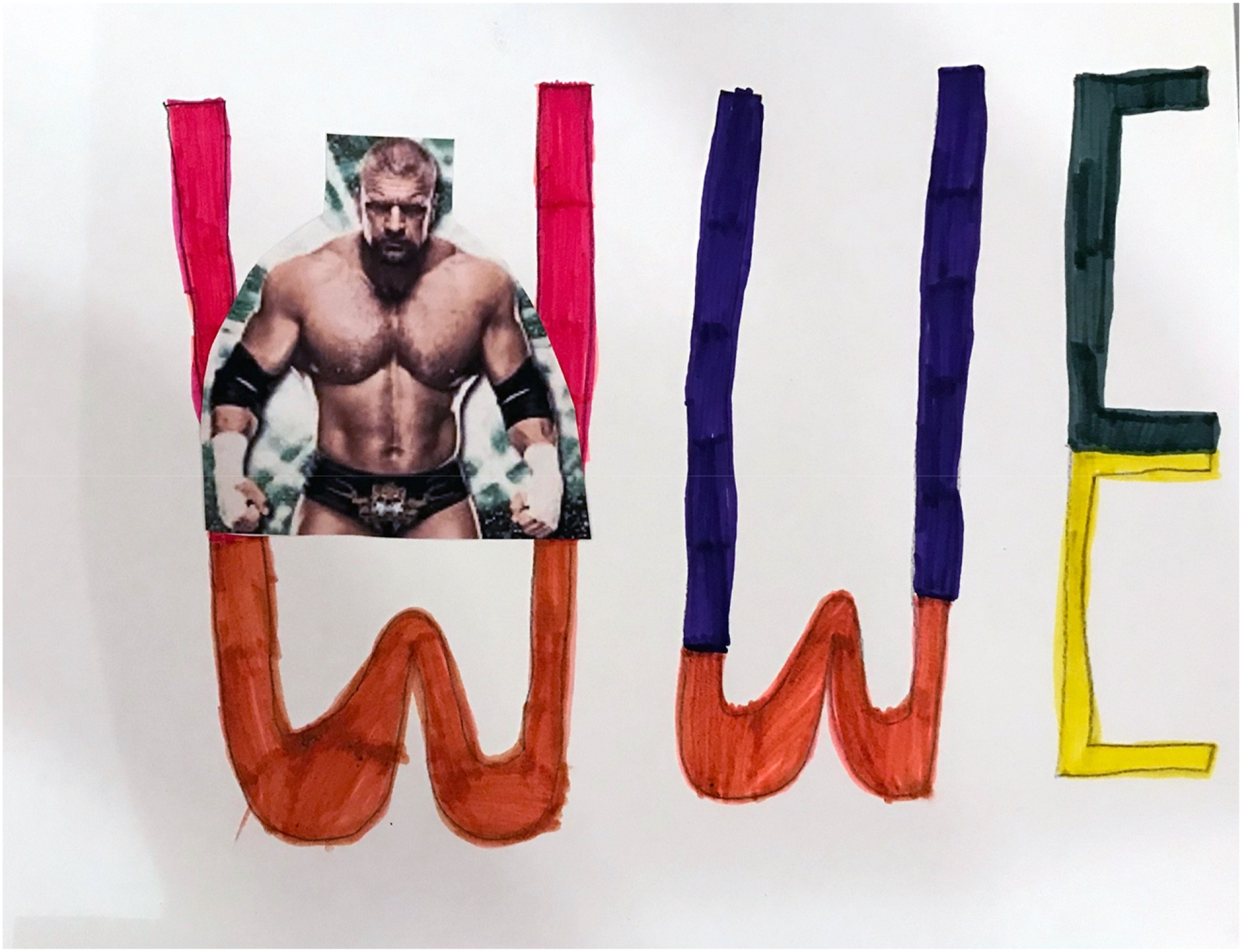
Mankind is a white, cisgendered man living with intellectual disability. He has limited economic means and relies on a disability support program as a main source of income. Much of his daily life is spent in “separate spaces” for people with intellectual disabilities (Hall, 2010). He exercises limited control over a daily routine in his group home. Such routines reproduce stereotypically gendered roles with little opportunities for people to develop their own gender identities. Elsewhere, Bjornsdottir et al. (2017) found that many group homes offered bowling to men and trips to the shopping mall for women regardless of whether individuals want to participate.
Like Jack and Daniel, Mankind navigates tensions “between lived experiences of… difference and normative [ableist and gendered] imperatives of how a good life ought to unfold” (Wool 2021, 290). On the one hand, there is a demonstrated willingness to push back against these norms. For example, his testicular surgery foreclosed on sexual activity as a significant part of hegemonic masculinity (Duckworth and Trautner, 2019). Yet Mankind does not frame this issue in terms of masculine “failure” (Allan 2018). Instead, he argues that intimate relationships and sexual activity are important “to some men” but not to him. The same is true with respect to adult living arrangements. In place of a domestic arrangement grounded in “conjugal couplehood” (Wool 2021), Mankind chooses communal living. In this sense, he rejects the heteronormative masculine life course that remains frustratingly out of reach for Daniel.
Like Daniel, Mankind emphasizes the importance of cultivating positive relationships with other men at his group home. While these relationships are constrained by the rules of the group home setting, they constitute an important affective dimension of Mankind’s life and might be understood as another example of “horizontal homosociality” (Hammarén and Johansson 2014). Mankind is keen to emphasize the attraction he feels towards one man volunteer. Following Chen (2012, 259), we might suggest that a relationship of this nature creates a “space for men to experience intimacy outside of heterosexual pairings.”
At the same time, elements of hegemonic masculinity inform Mankind’s configuration of practice. While he rejects a normative model of heterosexual domestic living arrangement, Mankind is keen to emphasize his access to the man cave in the basement of the group home. As several scholars have suggested, the man cave constitutes one response to “the perceived aggrieved status of masculine identity” (Hoops 2019) in which a segregated space works to reify gender essentialism and distinct domestic/work roles.
Finally, Mankind’s statement that Stone Cold Steve Austin is his favourite character because he is the “baddest” sits uneasily with his statements about bad men as bullies. Yet professional wrestling and fandom are characterized by complexity and contradiction with respect to masculinity. In one sense, WWE offers a “narrow range of acceptable behaviors for its male characters—behaviors which characterize masculinity through physical dominance, bullying behavior [and] violent struggle” (Ford 2017, 176). Yet as a form of entertainment, wrestling adopts “a traditionally feminine storytelling format of the soap opera” in which bad men face retribution for their actions. Mankind is deeply vested in the action and drama of WWE, but he is critical of the health costs of producing hyper-masculine bodies.
Discussion and Conclusion
In this final section of the paper, we draw out the significance of the analyses for scholarship on disability and masculinity and highlight opportunities for future research. One of our objectives was to provide an explicitly comparative analysis, drawing on the experiences of men living with chronic physical illness, intellectual disability, and mental health disability. This approach responds to calls to engage in more comparative work to demonstrate the diverse and dynamic intersections of disability and gender that characterize different men’s lives. As the preceding sections make clear, part of the challenge of comparative work is making sense of these diverse experiences in a single analysis. Disability serves as an umbrella term for a diverse array of body/mind differences. Add to this the intersecting layers of dis/advantage produced by, for example, class, race, sexuality and age, and the range of experiences in relation to the gender order is incredibly diverse. This variation is visible in the experiences recounted by Jack, Daniel, and Mankind. All are straight identified, cisgendered, disabled men in their thirties, yet their gendered experiences of disability—and here we mean both the oppression imposed by ableist social norms and environments, and the lived experience of impairment—vary significantly. As a result, the nature and extent of the dilemma that each man confronts in relation to the normative expectations of ableist masculinity is distinct, as are the tactics and resources available to negotiate these dilemmas.
A second objective was to consider how a more sustained engagement with scholarship on ableism might advance our understandings of disabled masculinities. This directs our attention to the multiple ways in which the gender order, norms and relations shape, and are shaped by an interlocking system of oppression that simultaneously debilitates and mandates efforts to re/habilitate in pursuit of the “able body/mind” (Campbell 2001). From this perspective, we can see different ways in which structural conditions debilitate participants in gendered ways. For example, stress, including occupational stress, can trigger Fibromyalgia (Kivimaki et al. 2004). In this sense, Jack’s 60-80-hour workweek, while providing the basis for a valued masculine identity, may also underlie the onset of his chronic illness. For Daniel, lack of access to mental health services as a refugee claimant actively contributed to his debilitation but this structural constraint is exacerbated by a gendered sanction against help seeking.
Concurrently, we can see how gendered ableist norms shape the men’s negotiation of everyday life. For example, complex relations between disability, (re)habilitation, breadwinning and heteronormative domesticity shape the lives and identities of all three men, albeit in different ways. These differences emerge from the complex intersections of race, class, and citizenship, as well as the nature and timing of the men’s experience of disability. For Jack, earlier gains in the labour market and family formation mean that the experience of disablement weakens but does not completely remove masculine privilege. At the same time, precarity motivates Jack to cleave to a more traditional conception of able-bodied masculinity than had been the case in the past. For Daniel, there is a sense that the onset of mental health disability in adolescence derailed a normative masculine life course; economic power and family formation are not yet within reach, but these experiences cannot be separated from processes of racialization that marginalize him in relation to both state services and the labour market (see Banks 2018). For Mankind, exclusion from mainstream work and limited choice in living arrangements position him in opposition to norms of masculine breadwinning and heteronormative domesticity. Yet he is clear that while those things may be important to other men, he is building a valued life based on communal living and close ties with other men.
While our analysis provides useful attention to the diverse lived experiences of men with disabilities (Cserni and Essig 2019), it also highlights opportunities for future research. First, more work is needed to understand the manifold intersections that shape the gendered experiences of disability. While a strength of this paper is its in-depth analysis, all three participants are cis-gendered and heterosexual. 5 Future research can usefully focus on experiences of gay and queer men, exploring how disability and gender intersect with homonormativity and hegemonic gay masculinity (Rosenberg, 2023). Additional work is needed to document the experiences of trans men, given the pathologization of gender dysphoria and what Riggs and Bartholomaeus (2018) term the disabling effects of cis-genderism. Similarly, the contrasting experiences of Jack, Daniel and Mankind shed light on the ways in which race intersects with gender and disability, but more work is needed to examine how gender shapes what Valentine (2022) terms “racialized disablement.”
Second, the analysis highlights the centrality of the body and conceptions of an idealized body to the enactment of masculinity but in complex and contradictory ways. For Jack, sport offers a way to demonstrate masculine dominance, but he acknowledges the “pathological” nature of this drive. For Daniel, working out provides a pathway to improved physical and mental health, but his art uses the bodies of male athletes to convey the “pain” of trying to conform to masculine norms. Mankind admires the idealized body of the professional wrestler but worries that its achievement is tainted by steroids. Further exploration of tensions of this kind will help to elucidate “the complex ways in which the masculinity/ disability dilemma is lived and negotiated across different disabled embodiments” (Wedgwood 2014, 196).
Third, the use of visual arts methods enriched our research findings. As Guillemin and Drew (2010) note, participant-generated visual methodologies are valuable for their ability to move beyond the spoken word and unpack taken-for-granted aspects of daily life. In addition, the arts activity and the discussion that ensued offered a space in which participants and researchers could reflect together on the meanings that arose from the artwork in relation to gender and disability. Last, arts-based methodologies can foster a sense of participation in research and many participants valued the opportunity to be creative and to share their experiences through the medium of visual art, despite some initial reservations about being “artistic.” While there are important issues to consider in the use of these methods, they may offer valuable tools for future work on the lived experience of disabled masculinities.
Footnotes
Declaration of Conflicting Interests
The author(s) declared no potential conflicts of interest with respect to the research, authorship, and/or publication of this article.
Funding
The author(s) disclosed receipt of the following financial support for the research, authorship, and/or publication of this article: This project was funded by the Social Science and Humanities Research Council of Canada (435-2017-0873).
