




Abstract
The current article is part of a unique comparative study of the experiences and adjustment of 190 incarcerated young men in both Scotland and Canada. In collecting data on the participants’ lives, the authors learned of the multiple traumas and losses many of them had suffered. Many participants however seemed to adhere to a prison masculinity that may constrain help-seeking behavior. Ultimately, this article analyses the levels of trauma that exists in a population of incarcerated young men within the context and alongside of the masculine ideals they appeared to adhere to. This article advocates for gender-responsive trauma-informed care for incarcerated young men that incorporates an exploration and understanding of masculine identity and how it interacts with help-seeking and trauma recovery.
Introduction
Violence is highly gendered (Walsh 2019). Empirical and criminal justice data suggest that young men are more likely to be both the perpetrator and the victim of serious interpersonal crime (Walsh 2019). Research has historically tended to exclude the complex role of young men as both perpetrator and victim (Walsh 2019). However, the social context of trauma and how the social construction of masculinity shapes cis men’s 1 experience of trauma has recently received increased attention (Foster and Kelly 2012).
Chan (2014, 242) suggests that, to “maintain an identity that matches the predominant masculine ideology, men are less likely to reveal their traumatic experiences or express frailties that might threaten or destroy such an identity.” Men may believe that they should be able to recover from trauma without assistance (Connell 2002; Pettus-Davis et al. 2019). Our study is the first to analyze the ways in which experiences of trauma co-exist with performances of masculinity amongst incarcerated cis young men in Canada and Scotland.
Trauma and Incarcerated Young Men
Trauma can be described as incidents that are experienced by an individual as physically or emotionally harmful or life threatening (Walsh 2019). Broad analysis within masculinity studies or penology have been somewhat limited in considering the implications of childhood trauma in the later lives of men in conflict with the law. The few available studies indicate that between 62% and 98% of incarcerated young men report at least one lifetime experience of trauma prior to incarceration, with rates varying by country based on study methods such as probability and random sampling (Listenbee et al. 2013; Pettus-Davis et al. 2019). These include experiencing childhood physical and/or sexual abuse, experiencing serious life threats and/or injuries, witnessing severe injury or death of another, and being involved in gang violence (Listenbee et al. 2013; Pettus-Davis et al. 2019).
Studies indicate that 25%–30% of individuals exposed to trauma develop posttraumatic stress disorder (PTSD). Posttraumatic stress disorder is an anxiety disorder characterized by flashbacks, avoidance of reminders, emotional numbing, and increased arousal and activity such as hypervigilance, anger, and risky behavior (American Psychiatric Association 2013). Severe or chronic trauma during childhood can create additional complexities and symptoms (Cloitre et al. 2009). Research suggests that while PTSD occurs in approximately 4% of the general population, it is present in 48% of prison populations (Briere, Agee, and Dietrich 2016).
A focus on trauma is crucial when working with incarcerated populations as untreated trauma can increase the rate of anxiety, depression, suicide, self-injurious behaviors, substance abuse, mental illness, interpersonal difficulties, law-breaking, arrest, and recidivism (Briere, Agee, and Dietrich 2016; Pettus-Davis et al. 2019). Cis men suffering from untreated PTSD may therefore be at greater risk of violence, to themselves or others (Foster and Kelly 2012; Tolin and Foa 2006). Though trauma-informed care initiatives have recently received more attention within the prison estate, there appears to have been a greater emphasis on women’s establishments (see, for example, Petrillo 2021; Jewkes et al. 2019). Trauma remains relatively unaddressed in the trauma histories of incarcerated men (Miller and Najavits 2012; Welfare and Hollin 2015).
Prison Masculinities
Masculinities are often constructed, maintained, and restructured according to particular social networks and institutions (Connell 2002; Connell and Messerschmidt 2005; Messerschmidt 2019; Messerschmidt and Messner 2018). The behaviours in which men engage or that they exhibit may depend on the type of masculinities that exist in a given environment or local social setting (de Viggiani 2018; Lutze and Murphy 1999; Lusher and Robins 2009). Correctional scholars have proposed that one of the most influential factors shaping the experience of prison cultures is gender, specifically masculinity (Maguire 2021a; Ricciardelli 2015).
Hegemonic masculinity theory is the predominant theory used in masculinity studies and refers to the idealized and valorized cis man, the most honored way of being a man (Connell and Messerschmidt 2005). It typically accentuates men’s dominance, whiteness, violence, and competition and is always constructed in relation to various subordinated masculinities and femininities. Hegemonic masculinity theory provides an account for hierarchical social relations within transient cultural contexts where social and institutional environments orientate “actors” towards normative, yet relational, hegemonic organizing principles (de Viaggini 2018). It also highlights the harmful and restrictive role masculinities play in men’s emotional lives (Schwab et al. 2016).
According to de Viggiani (2018), in the social context of prisons, power may be exercised through identity, specifically through signifiers of gender. de Viggiani (2018) argues that close social proximity in prison may mean normative discourses become acute and magnified, oriented around narrow values associated with heterosexist masculine ideology, compelling individuals to present a tough front even if this means concealing their emotions. Karp (2010) suggested that men in prison are forced to reconstitute their status and identity without the resources normally available for the enactment of manhood. More recent masculinity research has begun to explore the existence of more subtle, nurturing, and engaged performances of masculinity in prison (Buston 2018; Maycock 2018), along with vulnerability (Maguire 2021b), although, these studies have tended to focus on adult men’
Since many incarcerated young men are developing their masculine identities, the messages they receive from the prison setting regarding masculinity can be particularly influential (Morse and Wright 2019). Gooch (2019) argues that for young men transitioning between adolescence and young adulthood, violence has important implications for the negotiation of ‘adulthood’ and ‘manhood.’ Gooch (2019) suggests that violence is a ‘manly’ means by which incarcerated young men can cast off their ‘childish’ identity, and all that it implies, including vulnerability, dependence, immaturity, and inexperience (Gooch 2019).
Some of the first research on masculinity and trauma was conducted amongst military personnel (Fox and Pease 2012). Arguably less research has been done on masculinities and trauma in other settings. As noted previously, trauma is present in the lives of many incarcerated cis men—yet the prison code can often be an exaggeration of the unspoken masculine code in the community where a ‘real man' does not display any weakness, does not display emotions, does not depend on anyone, is not vulnerable, and suffers pain in silence (Kupers 2005). The widespread acceptance of forms of hegemonic masculinity by men who experience trauma has significant implications for the experience of trauma and intervention (Pettus-Davis et al. 2019).
Fear, powerlessness, and vulnerability are at the heart of trauma experiences and can be overwhelming for all trauma survivors
Masculinity may limit the range of responses available to those who have experienced trauma (Chan 2014), in the same way that prison settings may constrain the possible masculinities that can be attained in those spaces (Curtis 2014). Thus, an understanding of incarcerated cis men who have experienced trauma should include an examination of the healthy and unhealthy codes of masculinity that are available in prison (Foster and Kelly 2012). The harshness, abuse, and neglect that young men encounter in prison reflects the damaging experiences they have already been exposed to on the outside and the pain of incarceration represents a form of re-traumatization (Haney 2011). The significance of this should be acknowledged in trauma informed care for incarcerated young men because masculinities may foster treatment resistance and inhibit help-seeking behaviors in prison (Kupers 2005).
The current article is part of a unique comparative study of the experiences and adjustment of 190 incarcerated young cis men in both Scotland and Canada. In collecting data on the participants’ lives, we learned of the multiple traumas and losses many of them had suffered. We were struck by how many participants adhered to a prison masculinity that may constrain help-seeking behavior. Ultimately, this article analyses the levels of trauma that exists in this population of incarcerated young cis men within the context and alongside the masculine ideals to which they appeared to adhere.
Method
Sample
This study is based on a cross-national sample of young Canadian and Scottish men from six prisons in Canada and Scotland. The aim of the initial main study was to explore the adjustment and experiences of young men (18–24 years old) in two different systems for young adults: Canada, where young adults are housed in adult institutions with no specific young-adult regime and Scotland where a specific facility and regime for young adults are present. The analysis and results in this article arose from findings that were not the focus of the main research project but subsequently became an area of interest. The study was given ethical approval by the Research Ethics Board of Ontario Tech University.
The sample was comprised of 190, 18- to 24-year-old young adults (M = 19.66 years Scottish sample, M = 21.61 years Canadian sample), 100 young men in Scotland and 90 in Canada. Participants in the Scottish sample were not ethnically diverse, with 96% identifying as White and the remainder identifying as Black (2%), South East Asian (1%), or Asian (1%). Within the Canadian sample, 37% identified as Black, with the remainder identifying as White (26%), Other (17%), Indigenous (13%), Middle Eastern (4%), South East Asian (2%), and Asian (1%). There were three young men who refused to be interviewed in Scotland, representing a response rate of 97% and 15 who refused to be interviewed in Canada, representing a response rate of 87%.
Procedure
Young men between the ages of 18 and 24 years, who had been incarcerated for at least three or more nights, were eligible for inclusion in the study. Program managers and frontline staff acted as liaisons between the interviewers and young men at each prison. A formal consent protocol was read to each participant outlining the purpose of the study, the interview’s risks and benefits to the participant, and the limits of confidentiality. The first author and a graduate student research assistant conducted all the individual interviews in Scotland. In Canada, a second graduate student joined the interview team. Interviews generally lasted an hour but varied in length from 45 min to 2 h. Given the nature and subject matter of some parts of the interview, a debriefing was conducted with each of the participants upon completion of the interview to ensure that they had not been negatively impacted by the conversations that had ensued. Though none of the participants indicated they were upset or disturbed in any way, the first author set up protocols with clinical staff to respond immediately if required.
Measures
The interview protocol was mixed methods and was comprised of several measures, described in detail below. Two thirds of the questions were quantitative in nature and were based on the protocol that the first author developed successfully and has used in previous studies with adolescent offenders (Cesaroni and Peterson-Badali 2005; Cesaroni and Peterson-Badali 2010; Cesaroni and Peterson-Badali 2013; Cesaroni and Peterson-Badali 2016). Quantitative questions were used to understand and probe the influence of a young person’s life before incarceration and, the prison environment itself, in predicting adjustment to life in prison. This was the study’s main research question. It was revised to reflect the lives of young adults more accurately including sections related to work, relationships, and child rearing. We also consulted an interview schedule that was developed previously and successfully used with a sample of incarcerated young adults in Scotland (Loucks et al. 2000).
Trauma and Pre-Existing Vulnerabilities
The interview included several items probing emotional and adjustment problems previously used in the developmental psychopathology literature (Burt, Resnick and Novick 1998; Garmezy 1983; Gore and Eckenrode 1994; Loeber and Farrington 1998; Rutter 1983) and the Juvenile Survey Instrument: National Evaluation of Juvenile Correctional Facilities (Evaluation Research Group 1997). These include instability in living, school-related problems, drug and alcohol use, employment, criminal justice contact, and criminal friendships. Items common to trauma scales were included in the interview protocol, such as sexual and/or physical abuse, being threatened with a weapon, being the victim of violence, witnessing violence, witnessing someone die, and serious physical injury (see for example Crimmins et al. 2000; Dixon, Howie and Franzcp 2005).
Prison Masculinities
One of the key open-ended qualitative sections of the research protocol focused on prison masculinities and ‘doing time.' This included exploratory questions regarding whether it was important to be tough in prison, how one earned respect in prison, and how one got to be ‘top dog'. We used an inductive approach to analyze this section of raw data. This approach was used to allow research findings to emerge from the frequent, dominant, or significant themes inherent in the data. We developed emerging themes (or categories) by studying the data repeatedly and considering possible meanings and how these fit with developing themes. The results are themes derived from the lived experiences of the young cis men we interviewed. In this article we describe the key themes that were revealed in the data analysis.
Findings
Trauma and Violence Experienced by Incarcerated Young Men
Violence and Trauma.
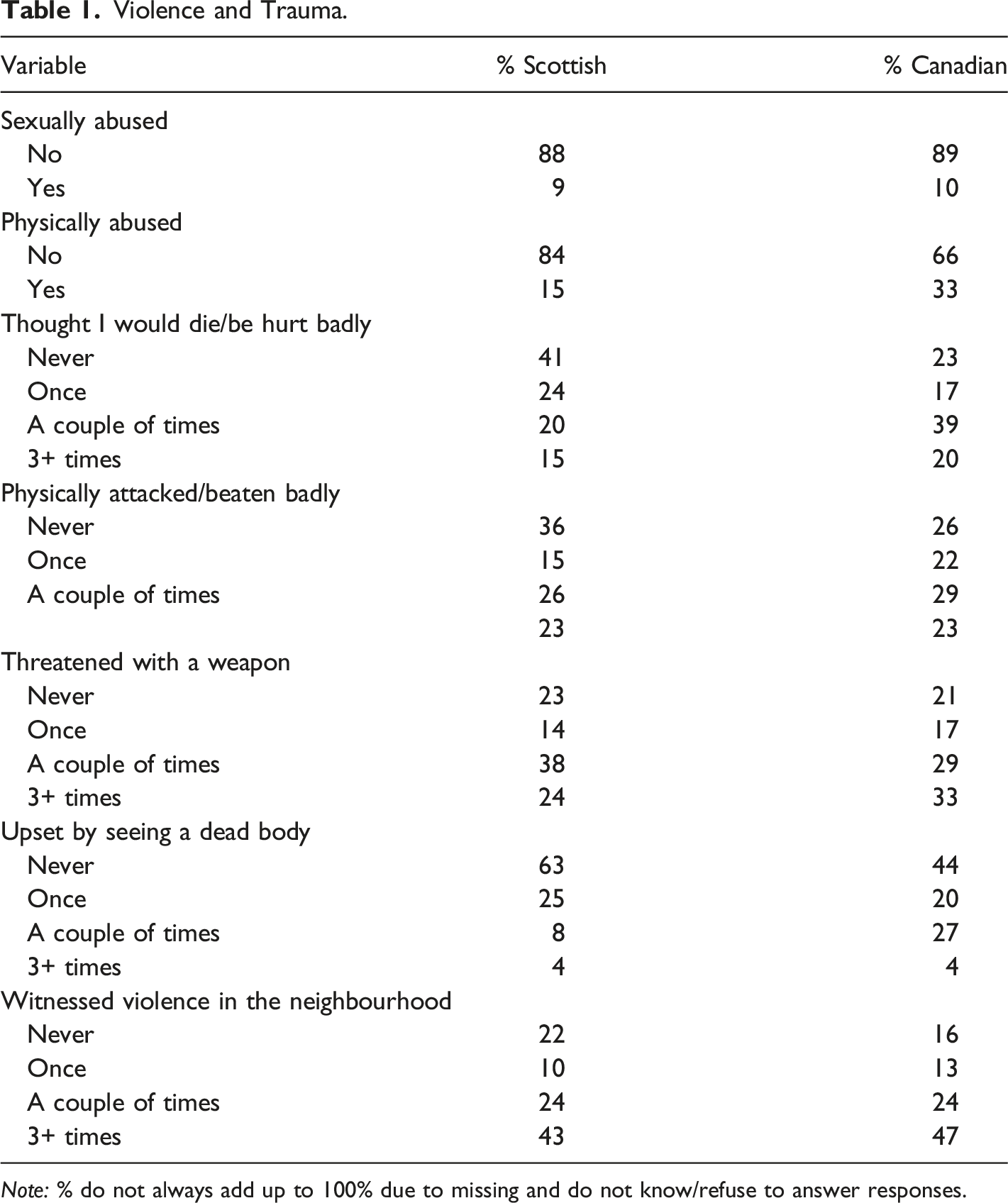
Note: % do not always add up to 100% due to missing and do not know/refuse to answer responses.
Childhood trauma is a defining feature of the lives of many women offenders (Pasko 2008). Women are more likely to experience traumatic events (sexual and physical violence) in private settings such as the home, often by someone who is known to them and on whom they may be dependent (Carrington 2006; Chesney-Lind and Paramore 2001; Komarovskaya et al. 2011; Schwartz 2013). Women’s most common pathways to crime are based on survival of abuse, poverty, and addictions (Belknap 2001; Bloom, Owen, and Covington 2003).
Men’s exposure to violence is more likely to occur in public or community settings (Carrington 2006; Chesney-Lind and Paramore 2001; Schwartz 2013). Trauma research suggests that men are more likely than women to witness another person being killed or badly injured, being threatened with a weapon, or physically attacked (Fraser and Kelly 2012). Certainly, young men in the sample came from violent and traumatic environments. In their communities, 77% of Scottish participants and 84% of Canadian participants reported witnessing violence (43% of Scottish and 47% of Canadian young men reported three or more times) (see table 1). This included fighting with or without weapons, killing, attempts at killing, and gang violence. In their homes, they were party to domestic violence between their parents (35% of Scottish and 46% of Canadian participants), some of which became physical (26% and 23%, respectively). Participants reported the fear of, or actual incidents of, physical violence including being threatened by a weapon (77% of Scottish and 79% Canadian participants), fearing they may be hurt or die (58% and 77%, respectively) and being physically assaulted (64% and 74% respectively) (see table 1). These findings support previous research which suggests that incarcerated young people in secure settings often have histories of complex trauma (exposure to traumatic stressors including multiple victimizations, life threatening accidents or disasters, and interpersonal losses (Ford, Chapman, Connor, and Cruise 2012). When probing participants about their incidents of trauma, participants tended to talk about their history of trauma in a matter of fact, succinct and emotionless manner. This is significant and in keeping with the work of Stein (2000) which suggests that dissociation is an adaptive response to childhood trauma. Stein (2000) argues that a myriad of traumatic events sensitizes individuals to danger; the traumatized self therefore must become disembodied to stay alive. Schwab et al. (2016) describe the conflict that happens for some men who wish to share emotional responses to difficult events: they qualify an event to continue to adhere to masculine ideals of resilience or stoicism, they share stories of vulnerability but then reassert their ability to handle the situation de-emphasizing the severity of their emotional difficulties.
Performances of Masculinity and the Need to be Tough in Prison
Our original main research study was not designed to probe participants about their traumatic incidents in a qualitative manner or ask participants to make the connection between prison masculinities, trauma, and help-seeking. Instead, our questions on trauma were intended to be part of a sub-set of questions regarding life before incarceration and, as noted previously, were part of an attempt to study prison adjustment. Our open-ended questions on masculinity were exploratory and were included to understand prison masculinities as it was understood by young adult cis men (as opposed to adolescents or adults). As we began to review the extent of the trauma amongst both our Scottish and Canadian samples, we were struck by the juxtapositions of ideals regarding prison masculinities. Unfortunately, we had not intended that the two areas of inquiry regarding trauma and masculinity be directly related (though that has now become the focus of the authors’ future research). However, we felt the trauma findings provided context and, perhaps, a deeper understanding of our findings on prison masculinities given what the trauma (and masculinities) research (together or separately) seems to suggest.
A recurring theme throughout our interviews was the idea that, because it was prison, it was essential to give the impression of being tough, not to show weakness, not to back down, or else you run the risk of being victimized. As one respondent told us, “It’s survival of the fittest” (Respondent 302 CND). Half of both samples of young men indicated that it was more important to be tough in prison than on the outside (57% of Scottish and 54% of Canadian respondents).
Respondent 122 CND noted that weakness would be preyed upon, while strength garnered respect. Because if you show weakness people prey on weakness, and if you show you can handle yourself…It goes both ways. Most people respect someone who can take care of themselves.
Another respondent noted, not showing weakness and being tough was sometimes a difficult line to walk because you did not necessarily want the staff to think badly of you. Cause you can’t show weakness in jail of else you are fucked you walk that line and need to show the staff who you are and show them you aren’t a dick. But you have to accept that you can’t show weakness to the boys. I’m not a dick, but it’s prison. (Respondent 238 SCOT)
It was clear that “showing” strength was important—but so was the necessity of being able to back up that show of strength. Gotta show you can go for it and not back down, maybe that you’re the strongest boy, you’ve got to show them you won’t back down. So if worst comes to worst and you have to back yourself up, they’re not going to think ‘he’s an easy pick, you can’t bully him do this or that’ gotta show strength. (Respondent 154 SCOT)
Clearly being a cis man in prison, meant not being a woman (or a feminized male) as references to ‘not being a bitch' were multiple, as in the following: If you handle yourself like a bitch in here, you’ll be treated like a bitch—depends on how you carry yourself. If you are not going to act like a man, there’s no place for you. (Respondent 142 CND)
In related sentiments in the data, it was evident that it was important for young cis men not to be seen as homosexual. like there is a guy who came in XXXX he is polite as fuck…I thought he was a nice guy—just because he was polite people thought he was gay. (Respondent 208 SCOT)
As young cis men, it was clear that being a man came with certain expectations, “have to be a man, have to defend yourself in everything” (Respondent 119 CND) and that being a man meant ascertaining your position in the hierarchy of men, an “alpha male type of thing” (Respondent 150 CND) where if you weren’t tough “people pick on you if you don’t; it’s a pecking order thing in here.”
Being Big
Research on masculinity suggests that, in many cultures, men’s bodies are an important tool in signifying traditional masculinity (Vaccaro 2011). Connell (2005) argues that gender is a social practice that constantly refers to bodies, though it is not a social practice which simply reduces gender to the body. Bodies of a certain size, strength, and muscularity are consistent themes within research that consider bodies (Connell 2005; Foucault 1979). This manifests itself within settings such as prison, where gyms are particularly important in the lives of many male prisoners (Maycock 2018, 2022; MacLean et al. 2022; Sabo 1994). When respondents were asked about who the most popular young men were, an overwhelming number of respondents spoke about ‘being big,' ‘muscular,' and ‘really strong'. As Maycock (2018) suggests, being a certain size was equated with a kind of embodied capital within the prison and was equated with being popular and masculine. Bigger, more masculine, in good shape, feared maybe if you’re the biggest, most jacked guy nobody wants to bother you, they want to be your friend, and get on your good side. (Respondent 327 CND)
Maycock (2018) notes that, given the assumed violent and oppressive nature of the prison context, being strong, conditioned, fit not weak, has a range of advantages, particularly in relation to being left alone or being seen as someone with whom you should not get into conflict. Physical appearance, but also the way they walk and talk...so you can have massive big boys, but they will tell you themselves, they would avoid a fight. (Respondent 214 SCOT)
In this sense, bodies become a form of masculinized capital within prison settings, something that the young cis men in our study could control and shape within prison gym facilities. The participant below reflects on what he was focusing on during his time in prison: …get to know everyone and go to the gym so that you are bigger. (Respondent 228 SCOT)
Interestingly, gyms were discussed within the Scottish data far more than the Canadian data, although being big and having muscly bodies were discussed in both jurisdictions. Our data resonates with De Visser et al.’s (2009) research that analyzed the ways in which masculine competencies (or capital) are traded. Size and muscularity emerge as critical in these trades and for performances of masculinity more widely among or participants: So the biggest guy on hall won't be as cheeky as pass man—they are the guys who go to the gym, they look a bit bigger, its more that they can get things—you don't get cheeky with them they don't seem to let jail get to them or display weakness. (Respondent 238 SCOT)
Here, we also see links between this section and the previous one, in so far as for some of these young men, being big was also associated with not showing weakness.
Occupying the Hegemonic Position: Respect and Being “Top Dog”
As in Evan and Wallace’s (2008) study of male prisoners, most of the respondents in our sample interpreted being male in the classic way that: male power was embodied in physical size, strength, and violence. When asked how a young man would earn respect and/or become a ‘top dog' in a unit, an overwhelming number of participants talked about fighting and violence. Being the ‘top dog' as described by our participants is what Connell would consider the hegemonic position within these prisons: ‘Hegemonic masculinity' is not a fixed character type, always and everywhere the same. Rather, it is the masculinity that occupies the hegemonic position in a given pattern of gender relations, a position always contestable. (Connell 2005, 76)
Some young men coming into prison were importing with them a status, a reputation and gang associations that immediately provided them hegemonic positions within the prison: …guys that were gang leaders out there come in they are already ‘top dog.' (Respondent 308 CND )
Reputation from the street, and from your crime was critical to earning respect inside: Heavy out there equal heavy in here. (Respondent 300 CND) I would say it’s the reputation that gets them that (status), so it’s not what they do here it’s what they come in with. (Respondent 200 SCOT)
Within prison, status was attributed to other markers such as access to goods or money on the inside (Bandyopadhyay 2009). Having the nicest possessions, but more importantly having access to drugs or goods was seen as a clear way to earn respect and be a ‘top dog'. As these respondents noted: (If you) have drugs cause a lot of people here like them so if you have them you really get on…depends on what area they are from and who they know in prison (too). (Respondent 219 SCOT) Fighting and bringing in drugs is how you become everyone’s best pal, and everyone likes you. (Respondent 143 SCOT)
Being respectful to get respect, and adhering to the ‘prison code' was essential to earning others’ respect, including doing your own time and playing by the rules: Put in work, if someone deserves a slap you do it, you take misconducts, you show that you can be responsible and mature, and in the morning if the range is getting loud, you speak up. Call people out who break the rules, like you do your own time, …don’t get in other people’s business, don’t touch what is not yours. (Respondent 323 CND) Try to run the range by being tough but proper way to run the range you have to make sure everyone is taken care of, filter out the rats and the sex offenders, and make sure all beefs are taken care of and take care of your own shit too. (Respondent 147 CND)
These three sections have explored aspects of the performance of masculinity within our data that resonate with what can be seen as the prevailing academic and societal view of prisons in relation to the performance of gender: [prisons are] a hegemonically defined hypermasculine and heteronormative environment with an abundance of alpha males, sexism, and violence. (Jenness and Fenstermaker 2013, 13)
However, as stated previously, several studies have illuminated other performances of masculinity that are, in some sense, softer, warmer, reflecting frequent camaraderie among prisoners (Maycock 2022). Theoretically, this resonates with Anderson’s (2009)broader claims in the inclusive masculinity theory. The following section attempts to provide fuller insight into accounts of masculinity in our data.
Inclusive and Other Masculinities
Inclusive masculinity theory has had a growing influence in the field of men and masculinities, although this has tended to relate to research undertaken in sport and educational settings in the UK and US (Anderson and McCormack 2018). According to Anderson and McCormack, inclusive masculinity theory can be defined along the following lines in a context where homophobia is assumed to be less formative for performances of masculinity: …in the absence of homophobia, men’s gender came to be founded upon emotional openness, increased peer tactility, softening gender codes, and close friendship based on emotional disclosure. (2018, 548)
Relatively little research has explored the existence or possibilities of inclusive masculinity in settings such as prisons, although this is beginning to change in some jurisdictions (Maycock, 2018, 2022). In the present study, the extent to which the changes that Anderson and McCormack identify above resonate in our data is critically considered. Many of the young men who were interviewed were able to voice their frustration at how they had to ‘put on a front.' As one young man told us he was used to being friendly and kind with his friends on the outside but “…In here people take your kindness for weakness” (Respondent 103 CND). Many young men noted that having a ‘good' personality, for example, getting along with people, making other young men laugh was critical not only for getting along in prison, but also for being respected. …You can’t be the nice guy here, even if are a real nice person, you can’t be here. ..(but) if you can carry a conversation, ..can talk to everybody and keep people laughing a funny person is a likable person. (Respondent 304 SCOT) Sharing, being kind in general, having a laugh, not taking everything so seriously, (Respondent 102B SCOT)
Though a common theme, as noted, was the performance of toughness, strength, and lack of fear, themes regarding ‘being oneself' resonated throughout the interviews as well. Many young men acknowledged that they could not be themselves or how they were as young men before going to prison. This suggests that these young men performed aspects of inclusive masculinity while in the community, although within prison this behavior was constrained. As one respondent noted: I feel like I lost my heart in here, I can’t be me in here. (Respondent 133 CND)
Crewe et al. (2014) argue that prison masculinities are a complex series of impression management which include the masking (or suppression) of emotion. They suggest that the process of emotional control in prison involves more conscious forms of management than others (Crewe et al. 2014).
It is important to note that within the narratives of participants, there was a very strong counter theme of young men who felt the best way to do time and be respected, was to be yourself and not put up a false front and be more emotionally open in the ways that resonate with inclusive masculinity theory: Just be yourself, you don’t need to show off for anyone, no point in acting different from who you are, don’t need to act different than you are on the inside. (Respondent 121B SCOT) (The) circumstance is not important, if you know yourself you don’t need to show anything to anybody. (Respondent 143 CND)
We were struck by themes of care and support that arose as follows: I’m kind of small in my hall, so other guys just look out for me so I just mind my own business. If someone came over to me, I wouldn’t even have to ask others they would just come over and deal with it for me. (Respondent 133B SCOT) …Take care of guys…canteen throw them a few things (Respondent 124 CND) You need to talk to people and be able to defuse (situations) and act on them and also a lot or people come to you for advice, and you need to act, it’s a lot of work. (Respondent 225 CND) You could be (a top dog) if you stick out for guys and help them out. (Respondent 126B SCOT) (Be) humble, respectful to everyone, help people out. (Respondent 325 CND)?
In the quotes above, emotional openness, softening gender codes, and close friendships are clear in ways that are relatively unconcealed. This final part of the masculinities section illustrates the complexity and sometimes contradictory nature of the performance of masculinity evident within the data. This points to the challenges for young men within prison settings to adapt to what emerges in our study as a diverse range of possible performances of masculinity.
Discussion
This article has discussed the presence of trauma alongside prison masculinities in young men and narratives which hint at how prison masculinities may hinder or preclude trauma recovery. In fact, the performance of prison masculinities may not only be an adaptive response to prison but may be an extended response for a young cis man who has been traumatized that now finds themselves in prison. More work needs to be done which directly explores how young men define and understand their trauma and begin to explore the complex interaction between trauma, masculinity, and prison, including how masculinities in prison may conflict with help-seeking for their trauma. A qualitative and fine-grained process is required to understand the lived experience of incarcerated young men and to explore the nuances in their lives in prison.
While trauma may be ever-present in prison, the prison environment makes it an unlikely site of trauma recovery, especially for young men who tend to be the most vulnerable and victimized while in prison and become less ‘safe' while incarcerated (Miller and Najavits 2012). Incarceration itself may exacerbate the symptoms of untreated trauma (Honorato, Caltabiano, and Clough 2016; Pettus-Davis et al. 2019) as well as re-traumatize and inflict new traumas. Crewe et al. (2014) suggest that prison emphasizes the restraint of negative emotions and the suppression and regulation of positive emotions. Openness and vulnerability are discouraged in prison by fellow prisoners and serve as barriers to addressing past traumas (Morse and Wright 2019). Research on masculinities suggests that men often talk positively about vulnerability, but also about not being able to be vulnerable for fear of being judged (Deflin and Leach 2022). Receiving support in the form of correctional programming or therapeutic interventions may be off-limits to cis men serving time because it is perceived as not overtly masculine (Morse and Wright 2019). Part of the work of deconstructing hegemonic masculinity may be working with incarcerated young men to not fight against the feelings that are associated with their trauma and developing self-acceptance of feelings and actions (Deflin and Leach 2022).
The literature on women and trauma explores gender-sensitive approaches to trauma that may be relevant to men’s experiences and responses to trauma (Fox and Pease 2012). Trauma-informed care and its emphasis on the restoration of safety, power, and choice is often at odds with the fundamental purpose of prison and poses challenges for aligning therapeutic models with prison culture and priorities (Vaswani and Paul 2019). The translation of trauma-informed practice principles into the prison environment is not so straightforward. Trauma-informed care in prison must seek to understand and work with the prevailing organizational culture and masculine ideals that exist and are sustained within, and by, the institution, as well as support the development of positive and alternate masculine identities. Delivering services in an environment that is known to be predatory, harsh, and violent will require sensitivity to privacy, confidentiality, and safety (Wolff et al. 2014). At least one study suggests that help-seeking may be embraced by cis men if it is perceived to preserve or restore another more valued enactment of masculinity (O’Brien et al. 2005).
Our data suggests a degree of resonance with aspects of inclusive masculinity theory, which is certainly an area for further analysis within prison settings. The extent to which performances of inclusive masculinity might provide new opportunities for help-seeking and engagement with therapeutic services is an area for further analysis. There is hope in the evidence of the presence of more inclusive and diverse masculinities that exist alongside more hegemonic forms within the testimonies of young men. This softer side of masculinity can be cultivated. What it means to be a man and have strength can be redefined.
Footnotes
Acknowledgements
The authors would like to thank James Carnie, Head of Research and Evaluation, Scottish Prison Service and Sarah Khan Office of the Solicitor General (Ontario) for facilitating and supporting this research study.
Declaration of Conflicting Interests
The author(s) declared no potential conflicts of interest with respect to the research, authorship, and/or publication of this article.
Funding
The author(s) disclosed receipt of the following financial support for the research, authorship, and/or publication of this article: This study is supported by Social Sciences and Humanities Research Council of Canada (435-2015-1335).