




Abstract
This article examines a concern that some programs engaging men in the prevention of violence against women use overly homogenized conceptions of violence. In response, the authors draw on their experience teaching men's violence prevention in North America and the UK and their background in peace studies to bring Johan Galtung’s influential peace and conflict frameworks into the men’s violence prevention context. It is argued a feminist-informed Galtungian approach can support existing men’s violence prevention by 1) incorporating heterogeneous conceptions of men’s direct, cultural, and structural violences; 2) introducing conceptions of positive and negative peaces; and 3) outlining different programmatic strategies through peacekeeping, peacemaking, and peacebuilding approaches. This article outlines how Galtung’s framework can help improve men’s violence prevention by providing an accessible, contextually adaptable, and analytically useful framework to support men in understanding violence, peace, and the interdependent relationships between violences, peaces, and peace-work in addressing violence against women.
Introduction
As the field of engaging men in the prevention of violence against women (VAW), or men’s violence prevention (MVP), continues to grow, it has faced increased calls for reflexivity and reform (Flood 2015; Macomber 2015; Pease 2019). Inspired by such calls and informed by our own research and practice, this paper addresses one key concern: overly simplified or homogenized conceptions of violence in work with men. We have worked in MVP programs in North America and the UK where curriculums disproportionately focused on isolated acts of men’s physical or sexual VAW. They failed to clearly connect men’s direct violence to patriarchal cultural and structural violences, as well as wider social inequalities. Flood (2014) echoes this observation when he notes, “Efforts to engage men and boys in ending violence tend also to treat violence itself as homogenous” (3). Burrell’s (2018) research interviewing pro-feminist activists in the UK found similar frustrations. This is problematic because it ignores a foundational point: the complexity and multiplicity of men’s violences (Hearn 1998). Feminists and pro-feminists have long noted the necessity of analysis which includes but also goes beyond isolated physical acts (Cockburn 2014; Hearn et al. 2020; Kelly 1996; Stark 2007). Conceptions of violence are at the heart of MVP work, and underdeveloped notions of men’s violence lead to underdeveloped approaches to prevent it (Cockburn 2004).
This article aims to address homogenized understandings of violence in MVP by offering a framework drawn from peace studies. Peace studies is a transdisciplinary field which examines how to transform conflicts and promote sustainable peace. Peace studies and MVP are highly complementary but often siloed fields. This is particularly notable in the lack of engagement with the concept of peace in MVP work (Hearn et al. 2021). To address this underexplored lens, we apply one of peace studies’ most widely cited approaches, Johan Galtung’s theory of conflict, to MVP. After engaging with important feminist critiques of Galtung’s work (Confortini 2006), we argue that an adapted version can enrich MVP in three ways: first, by incorporating heterogeneous concepts of men’s direct, structural, and cultural violences; second, by introducing positive and negative peaces to address the peace conceptual vacuum in MVP; and third, by outlining different context-adaptable strategies through peacekeeping, peacemaking, and peacebuilding approaches. While complex notions of violence are not new, nor unique to peace studies, Galtung’s work can resonate with feminist scholarship and offer an accessible framework for practitioners that is analytically and practically useful in MVP. We have found it is particularly helpful in the ways in which it introduces men’s violences to those who may be less familiar with the subject and highlights the interdependent relationships amongst violences, peaces, and peace-work strategies in addressing violence against women.
The goal of this article is not to provide a universal template for using Galtung’s work in MVP, nor to argue that its application is always the best fit. Our focus here is on responding to our own experiences working with men, engaging with similar critiques found in the literature, and offering a framework that we have found helpful. We acknowledge that our focus is grounded in our own practice working in school and community settings with young men in North America and the UK and is therefore limited by this scope. However, the application and adaptation of Galtung’s theories to settings around the world for over 50 years in peace studies (Galtung and Fischer 2013) gives us hope that the approach discussed in this paper could also be adapted to support MVP programs in different contexts. This article will be split into three sections. First, we briefly outline the field of MVP and the problem of homogenous conceptions of violence. Secondly, we summarize Galtung’s theory of conflict and engage relevant criticisms of his work. Finally, we draw on our own practices to discuss possible applications of Galtung’s work to MVP.
Men’s Violence Prevention
This section is divided into four parts. First, we introduce MVP and discuss the rationale for engaging men by exploring the links between men, masculinities, and violence. Second, we explore some core ideas drawn from feminist theorizations of masculinities which guide MVP work. Third, we review what MVP work looks like in practice. And fourth, we highlight the problem of homogenized conceptions of violence in MVP.
Engaging Men
Research from the World Health Organization (2021) indicates one in three women experience intimate partner violence or non-partner sexual violence in their lifetime. Men’s violence against women is a pervasive problem requiring multiple interventions—including supporting survivors, holding perpetrators accountable, addressing structural inequalities, and centering women’s work and activism against violence. An increasingly popular complementary approach has been to work directly with boys and men in feminist-informed violence prevention efforts (Casey et al. 2013; Messner, Greenberg, and Peretz 2015; Ricardo 2015). Flood (2011) notes the rationale for such efforts are strong for three reasons. First, most violence against women is committed by men (Messerschmidt 2018; Tjaden and Thoennes 2000; Westmarland 2015)—meaning it is men who need to change. Second, harmful norms associated with masculinities, particularly those espousing control over women, rigid gender roles, and sexist and violence-supportive attitudes and behaviors, play a pivotal role in driving VAW (Casey et al. 2016; Herrero et al. 2017). Heilman and Barker’s (2018) review of the literature in this area concludes that such harmful masculine norms are “undeniably linked with violence” (8).
Expanding on these first two rationales, it is important to note men’s VAW is driven by a multitude of unequal practices, norms, and structures (Flood 2019). While Connell’s (2005) theory of hegemonic masculinity is the most influential theory in this field, diverse strands of radical, socialist, intersectional, and queer feminist scholarship have explored the many connections between men, masculinities, and violence (Berggren et al., 2021). There are a few points of emphasis to note here that often inform MVP work. First, several key feminist theories point towards men’s violence not only as discrete and visible acts, but also as patterns of coercive control (Stark 2007) and cast men’s violence as a continuum from the everyday to the extreme (Kelly 1996). Second, individual accounts of men’s violence are insufficient by themselves; a structural analysis of patriarchy is essential as well (Connell 2005). hooks (2004) situates men’s violences within a wider interlocking structural analysis of what she calls “imperialist white-supremacist capitalist patriarchy” to show how VAW is inseparable from a broader systemic analysis of inequalities (17). For hooks (2003), and many feminist theories in this area, men’s violences against women is grounded in unequal structural and relational arrangements of power which confer men dominance over women - and some men dominance over other men. As Hearn et al. (2021) writes, “Violence is structure, practice, process and outcome of domination” (35). Fully unpacking the various feminist theories on men’s violence is beyond the scope of our work here, and it is important to state that there is not a singular feminism (Delap 2020), a singular feminist theory of men’s violences (Berggren, Gottzén, and Bornä 2021), or a sole feminist approach to MVP (Burrell and Flood 2019). Rather, there are complex constellations of different feminist theories in applied in diverse contexts. However, returning to the rationale for MVP, a common thread across many feminist theories reveals the multitude of men’s violences and notes that it is men’s practices, masculine norms, and patriarchal structures which must be examined and transformed to prevent VAW.
Lastly, Flood’s (2011) third rationale for engaging men notes that men can and should play a proactive role in the vital efforts to end VAW. Historically, men as a group have been absent and unaccountable in efforts to prevent men’s violence (Katz 2006; Kaufman 2019). MVP works to disrupt the status quo of men’s silence and complicity, encouraging men to support women’s work and activism. 1 Importantly, this three-part rationale for MVP points away from biological arguments that men are inherently violent and towards work grounded in a feminist social constructionist approach which sees the possibilities for, and necessity of, men and masculinities changing.
Masculinities
Men’s violence prevention is often built upon a social constructionist approach which examines the culturally, historically, and politically constructed dimensions of gender and unveils an understanding of masculinities as plural and changing (Connell 2005; Connell and Pearse 2014). This multiple masculinities understanding suggests there is no one right or inevitable way to be a man. As Pascoe and Bridges (2016) write, masculinities are not “transhistorical or universal'' and the differences among men may be as essential as the differences between men and people of other genders (4). Thus, it is essential to engage the complex ways that men’s experiences with masculinities and violence are impacted by their race, sexuality, and class identities (among others) and the ways that men can simultaneously experience both privilege and oppression (Hurtado and Sinha 2008; Peretz 2017). This approach also makes clear that masculinities can and do change—something foundational to the rationale for MVP work. However, it is less clear if the rise of more inclusive or gender equal masculinities (e.g., Anderson 2009) that adopt less traditional masculine norms associated with VAW signals a meaningful move towards dismantling patriarchy (Barber 2016; Messerschmidt 2016). Bridges and Pascoe (2014) contend a majority of research in this area remains skeptical, and that such “hybrid” masculinities represent “shifts in—rather than challenges to—systems of power and inequality” (256). Thus, while MVP is often grounded in the social constructive idea that masculinities are both plural and changing, it is necessary to be critical and cautious about what such changes means in terms of addressing the multiplicity of men’s violences.
Men’s Violence Preventionin Practice
With a rationale that connects men and masculinities to violence, and a belief in the capacity for men to resist and challenge these connections, MVP aims to educate, organize, and mobilize men to address men’s violences (Funk 2018). Trends in feminist scholarship, and more recently public health, point towards the importance of engaging all men, not just those identified as perpetrators, through primary prevention efforts (Flood 2019). This approach seeks to stop violence before it happens by raising men’s awareness about VAW, teaching bystander intervention skills, promoting healthy and equitable relationships, and challenging what Berkowitz (2004) calls, “the root causes of men and boys’ violence, including social and structural ones” (2). Thus, MVP requires a range of different interventions (Casey et al. 2013) and context-sensitive approaches, with the most common programmatic format being group education programs (Flood 2019). However, this work is not limited to classrooms. The popular use of frameworks like the prevention spectrum and social ecological theories of change show how MVP must be part of a “multi-systems, multi-layered approach to organizing change strategies” (Carlson et al. 2015, 3) which engage men in a variety of different contexts. Connecting back to theories of men and masculinities, the work must also be responsive to the diversity amongst men (Alcalde 2014; White and Peretz 2010) and counter reductionist understandings of men, masculinities, and MVP as a white, cis-gender, and heteronormative praxis (Peretz 2017). Scholars have also noted the importance of decolonial perspectives in examining the study of masculinities broadly (Connell 2022), and in the situated linkages between patriarchies, masculinities, and men’s perpetration of and complicity in violences (Van Nierkerk 2021). Boonzaier, Huysamen, and Van Niekerk (2021) argue there is a need to shift MVP work from “Eurocentric framings and Northern models… towards the development of local knowledge projects of gender and violence” (84). Van Nierkerk (2021) adds that work in this area should be “theorised in the south for people in the south” (262). Thus, while programs can learn from one another and share practices and approaches, there is no one-size-fits-all solution.
Meta-evaluations of men’s violence prevention programs show that well-designed efforts can foster positive changes in men’s violence-supportive attitudes and behaviors (Barker, Ricardo, and Nascimento 2007; Dworkin et al. 2013; Jewkes et al. 2015; Ricardo, Eads, and Barker 2011). However, as Flood (2019) notes, these studies also show many programs are not well-designed or properly evaluated, and that some programs have limited or even negative outcomes. In addition to these mixed outcomes, MVP is not without criticism, particularly as it relates to men’s accountability (COFEM 2017; Macomber 2015). Flood (2014, 2015) has drawn attention to a range of issues within the field including the use of overly simplified notions of men, masculinities, and violence within programs and the risks of overly centering men in this work. While all these issues are worthy of exploration, this article focuses on one critique: the use of homogenous notions of violence in MVP.
Addressing Violence
We use the phrase homogenous violence to describe MVP approaches which disproportionately or exclusively focus on individual, often physical, acts of violence. Such work masks the complexity of men’s violences (Hearn 1998). Flood (2014) argues MVP programs “treat violence itself as homogenous.” (3) Edstrom et al. (2015) also note the preponderance of programming focused on individual men’s attitudes and lack of attention to structural violence (see also Flood 2015; Pease and Flood 2008). Since feminist scholarship has led the way in spotlighting the linkages between men, masculinities, and a plurality of violences, clearly homogeneous accounts of men’s violence are inadequate in MVP. Burrell’s (2018) research on activists working with men in the UK presents more evidence of this problem. His interviews revealed a frustration that some MVP efforts—specifically university programs—limited their focus to certain types of violence (e.g., only sexual violence). Further, noting the lack of attention to structural violence, Burrell’s (2018) research reveals, “work with men is too often on changing individual attitudes, leaving patriarchal structures that provide the foundations for men’s violence largely untouched” (459). In response, Burrell proposes a ‘triadic approach’ to working with men that addresses men (individually), masculinities (culturally), and patriarchy (structurally). He argues such an approach can help men “make sense of the micro, meso and macro dynamics through which violence against women is perpetuated, and how they relate to their own lives, personally and politically” (Burrell 2018, 456).
In our experience working in MVP, homogenized notions of violence are easier to teach and learn because they rely on simple messages and often binary framing of good guys (who don’t hit women) and bad guys (who do). While stopping direct acts of violence is vital, this approach obfuscates men’s complicity within structures and cultures of privilege, power, and inequality. As peace studies scholars and educationalists, we believe this problem is ripe for interdisciplinary reflection. Specifically, we believe feminist work on the multiplicity of violences combined with insights from Burrell’s (2018) triadic approach resonates with foundational peace scholarship from Galtung (1969).
Galtung’s Theory of Conflict
Galtung’s theory of conflict (Galtung 1969) illustrates the complexity and correlations amongst violences and violences and can provide practical and accessible pedagogical frameworks for MVP work. First, we will briefly introduce his theory of conflict through three separate yet interlocked frameworks: the violence triangle, the violences framework, and the peace-work triangle. Next, we address important feminist critiques and bring a gendered focus to Galtung’s work, before turning these theoretical insights towards MVP.
Framework 1: The Violence Triangle
Galtung defines violence broadly as the gaps between our actual and potential somatic and mental realizations resulting in harm to the body, mind, or spirit (Galtung 1969). To address the large scope of his definition, Galtung developed a taxonomy of violences to demonstrate their multidimensional and interdependent nature (Galtung 1996). First, he divided violence into two categories: direct and indirect. Direct violence consists of physical, material, or psychological acts of harm. These are discrete acts of violence manifested by discernable actors. In contrast, indirect violence is a latent form of violence. Indirect violence causes harm to people, but it is not a punch thrown or a bullet fired; it is harm resulting from social and cultural arrangements.
Galtung delineates indirect violence into two further categories: structural and cultural. Structural violence is the harm caused by social structures and institutions. This is the “non-intended slow, massive suffering caused by economic and political structures in the form of massive exploitation and repression” (Galtung and Fischer 2013, loc 4105). For example, gender inequality is a form of structural violence that causes harm to individuals in societies. However, there is not necessarily a single isolatable act of violence that we can call gender inequality. Instead, it is a series of structural arrangements within societies that produce an outcome that causes harm. Galtung notes this violence is fueled by the second category of indirect violence: cultural violence. Cultural violence is defined as cultural norms that cause harm. These cultural ideas “can be used to justify, legitimize direct or structural violence” (Galtung and Fischer 2013, loc 1086), and once accepted as norms, show how some forms of direct and structural violence become “rendered acceptable in society” (Galtung and Fischer 2013, loc 1034). Galtung conceptualizes direct, structural, and cultural violence as three interconnected points of a conflict triangle (Galtung 1969). Crucially, these three points compound one another; Galtung notes, “[t]here are linkages and causal flows in all directions” of the triangle and the connections within the triangle show us that “violence breeds violence” (Galtung and Fischer 2013, loc 2019). See figure 1. Galtung’s violence triangle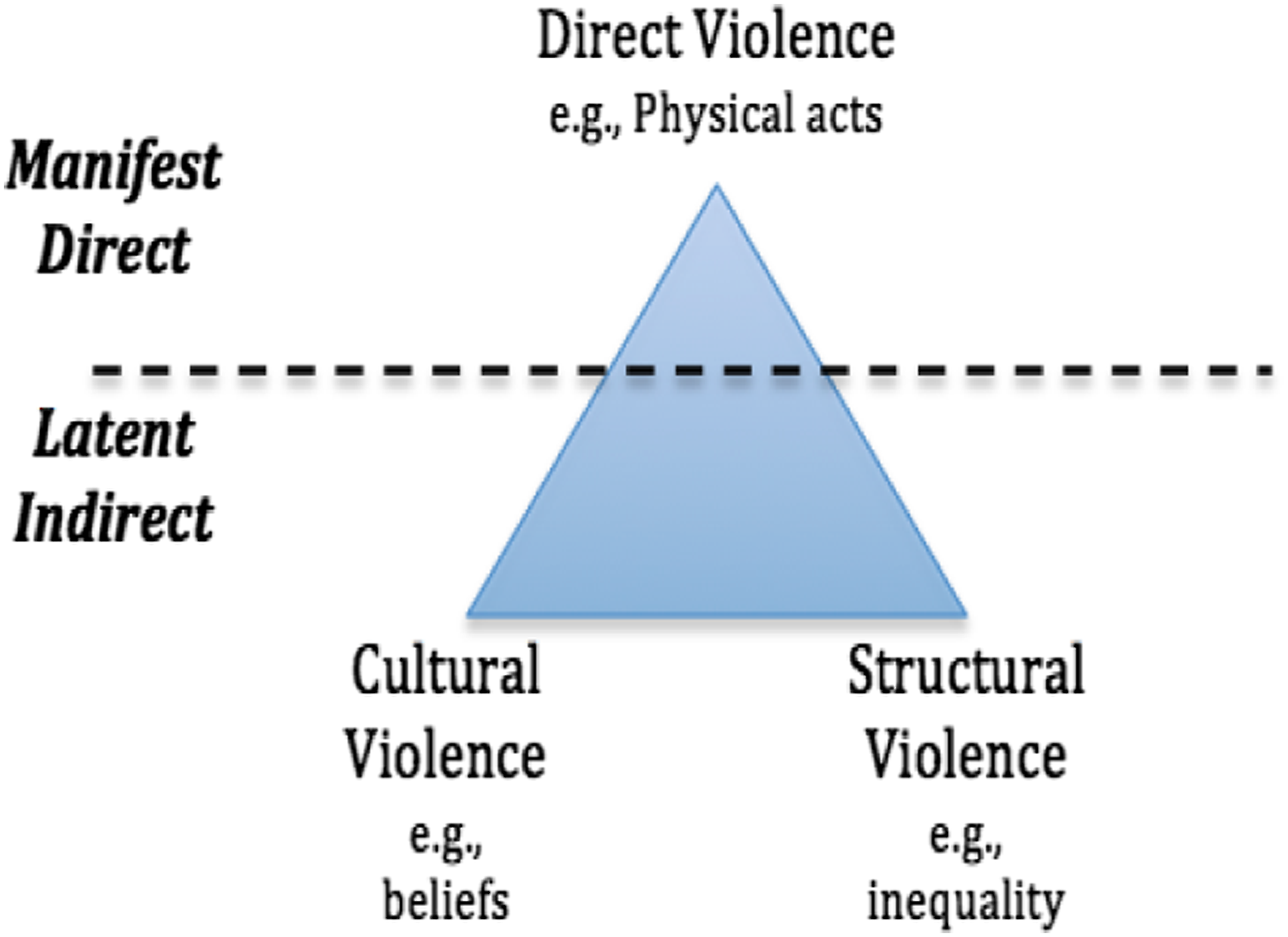
Framework 2: Positive and Negative Peaces Framework
Second, Galtung turns to the concept of peace (Galtung 1969). While acknowledging subjectivities and complexities of peace, Galtung delineates two foundational types of peaces—positive and negative—to help analyze the many realizations of peace within given contexts. Negative peace is the absence of direct violence or the fear of violence. However, negative peace is insufficient by itself. Positive peace is the absence of direct and indirect violence through the promotion of harmony, cooperation, and justice (Galtung 1996). Positive peace is created through collective work to address the attitudes, institutions, and structures that create and sustain peaceful societies and remove the likelihood of violence reemerging (IEP 2020).
Framework 3: The Peace-work Triangle
Lastly, Galtung introduces a framework of interventions to move from violences to peaces. We refer to this framework as the peace-work triangle. Galtung’s peace-work is broken down into three forms: peacekeeping, peacemaking, and peacebuilding. Peacekeeping involves actions focusing on the cessation of and protection against direct forms of violence. Galtung (1976) calls this a dissociative approach where “the antagonists are kept away from each other under mutual threat of considerable punishment” (282). Peacemaking involves approaches aimed at resolving the conflict with the belief that by removing “the source of tension, the underlying conflict, and the rest will take care of itself” (Galtung 1976, 290). However, Galtung acknowledges that conflict resolution mechanisms do not necessarily mean the end of violence. Finally, peacebuilding is what Galtung (1976) calls the associative approach where “structures must be found that remove causes of war and offer alternatives to war in situations where wars might occur” (298). Peacebuilding seeks to address the resurgence of violence by building institutions based upon equality, equity, and positive peace. Such definitions therefore relate to the previously mentioned conflict triangle and types of peace. Peacekeeping, for example, mostly focuses on direct violence and leads to negative peace, while peacemaking and peacebuilding aim at cultivating positive peace through the transformation of cultural and structural arrangements that reproduce violence. See figure 2. The peace-work triangle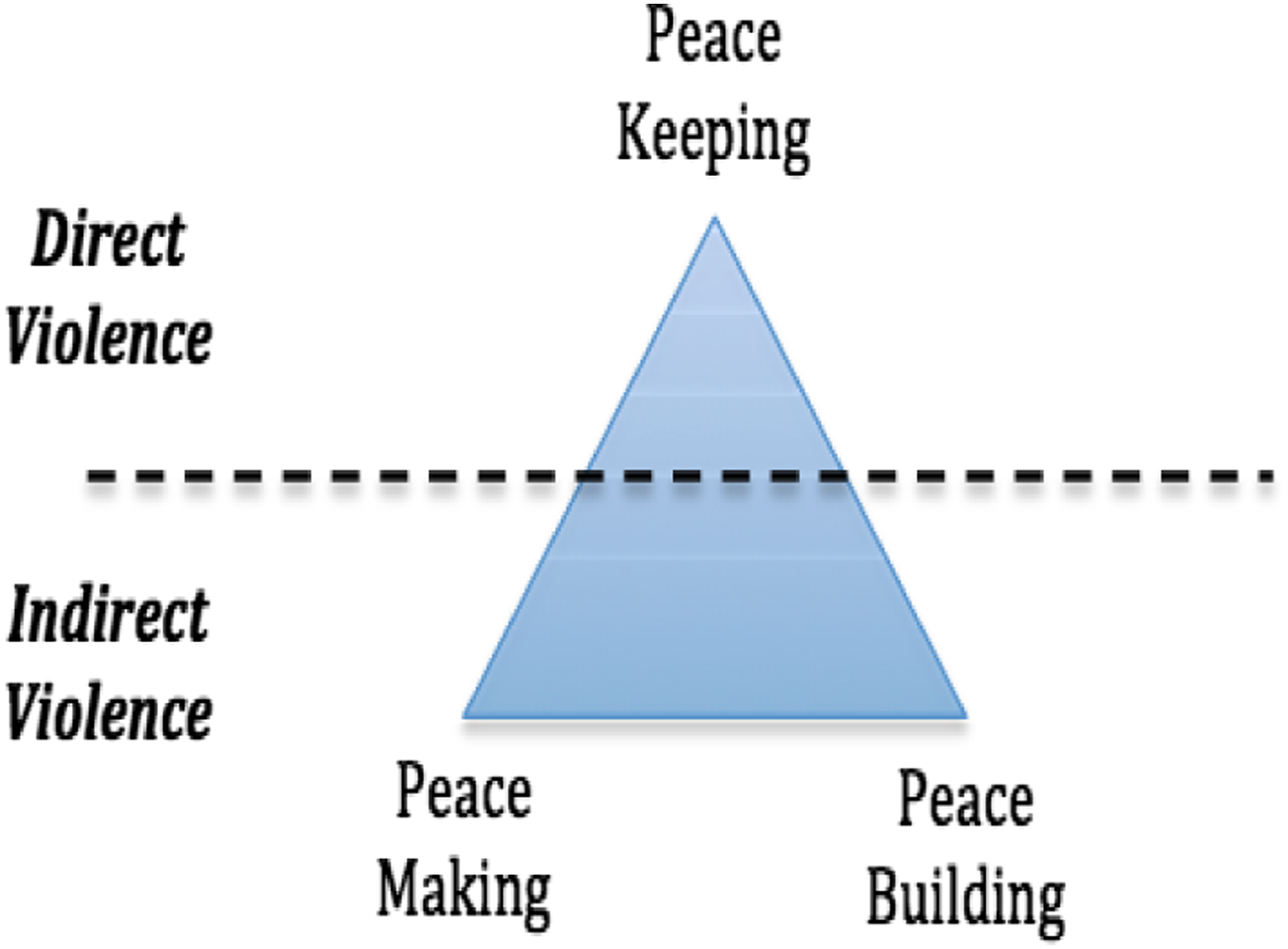
Galtung’s theory of conflict uses the violences triangle, negative and positive peaces, and the peace-work triangle frameworks to present an accessible and holistic way of understanding violence, promoting peace, and working towards transformation on both individual and systemic levels. This framework is not meant to explain the complex drivers of all kinds of violence. Rather, it is a starting point of analysis that can be adapted and specified to understand the interdependent relationships amongst violences, peaces, and peace-work. See figure 3. Galtung’s theory of conflict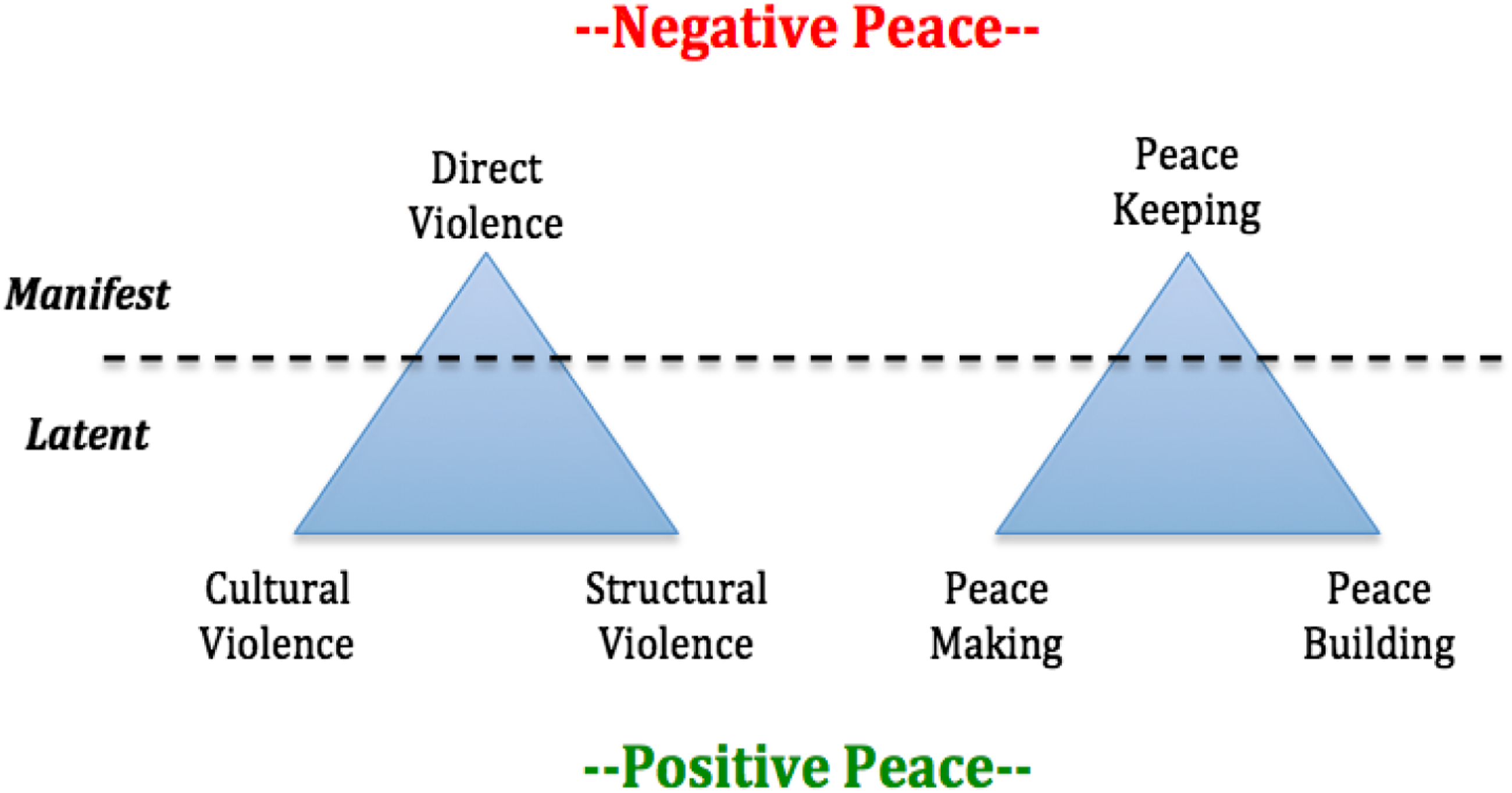
Critiquing and Gendering Galtung
While Galtung is considered one of the most influential scholars in peace studies, his work is not without challenge (e.g., Coady 2008; Hansen 2016; Hajir and Kester 2020). Before Galtung’s theories can be applied to MVP, we must first engage with feminist critiques of his work. This is essential because as scholars like Pease (2019) and Wu (2018) have noted, there is a risk of diluting feminist analysis within MVP work by incorporating other approaches. While we believe the field benefits from a transdisciplinary perspective, we agree that retaining the centrality of feminist analysis of men’s VAW is core to MVP work. To bring Galtung’s work into MVP, it is therefore helpful to understand how his theories account for gender and violence.
Confortini (2006) notes that Galtung engages the relationship between gender and violence by examining the structural, cultural, and direct violence of patriarchy and by looking at gender as a conflict analysis variable. While Galtung approaches gender as one variable in the complex equation of violence, feminist perspectives from within peace studies argue the relationship between violence, peace, and gender is significantly more consequential (Brock-Utne 2009; Finley 2018; McLeod and O’Reilly 2019; Reardon 1985). Scholars like Confortini (2006), Alexander (2019), and Hewitt and True (2021) argue that Galtung’s work on conflict needs to engage gender more fully as a socially constructed dynamic practice embodied within power relations. As Cockburn (2004) makes clear, a comprehensive gender perspective on violence is not just an extra or an aside; it is a necessity as gender links a continuum of forms of violence, temporal states of violence, and of realms of violence in society. This is not to say that gender is the sole or most important lens, but rather to note that all aspects of violence have a gendered dimension to them; thus, violence itself is gendered.
Cockburn (2004) cites the value of Galtung’s structural violence concept in helping to understand men’s VAW, and notes that although “this was not Galtung’s main point, the notion prompts us to look again at male-dominant gender relations” (30). Thus, there is resonance in Galtung’s frameworks and Cockburn’s continuum of violence, but there is a clear need for an added focus on gender in his work. A feminist analysis of men’s violence is particularly important when discussing violence against women, a practice, culture, and structure of violence deeply driven by gendered dynamics. Speaking about men’s violence, Cockburn (2004) notes “the power imbalance of gender relations in most (if not all) societies generates cultures of masculinities prone to violence. These gender relations are like a linking thread, a kind of fuse, along which violence runs.” (44). Cockburn concludes that if violence is so fundamentally gendered then our violence reduction efforts must be gendered too. Applied to our context here, if men’s VAW is gendered, then the frameworks for MVP must be too. Using Galtung’s theories in MVP thus requires an intentional focus on gender and feminist analysis.
Applying Galtung’s Theories to MVP
Our experiences as educators working with young men in violence prevention has suggested that a Galtungian approach with a feminist-informed gender focus provides a useful framework for thinking about violence and peace in MVP work. We believe it adds accessible pedagogical and curricular applications for educators and participants. To be clear, we are not suggesting this as a panacea to men’s violences or that it is a one-size-fits-all solution. One of the strengths of this approach is that it emphasizes the relationships amongst men’s violences, peaces, and programmatic possibilities for change rather than prescribed specifics for what each of these variables may look like in a given context. Thus, we believe this work must always be culturally and contextually adapted in its implementation. Below we highlight three key ways this approach could support existing MVP. Each section will also present a table that provides examples of how we have incorporated these insights into our own thinking and teaching. These examples are not exhaustive or definitive but instead act as ways to suggest questions and possibilities.
Identifying Heterogeneous Conceptions of Violence in MVP
First, Galtung’s violence triangle (Framework 1) engages Flood (2015) and Burrell’s (2018) call for more heterogeneous conceptions of violence and complements existing feminist and MVP literature by offering a framework for men’s violences. A Galtungian approach challenges the false binary between individualized and systemic violence and highlights the interdependencies between men’s violent acts, cultural gender norms, and patriarchal structures and resonates with Flood’s (2019) comments that men’s violence must be simultaneously understood as “coercive, structural, and complex” (30). Further, despite her valid criticism of his work, Confortini (2006) notes that Galtung’s theory offers a practical framework “within which violence against women can be seen in the larger context of societal violence” (356). Thus, by highlighting the connections amongst violences, the framework allows for an examination of the linkages between men’s violences and the wider inequalities within what hooks (2004) calls the imperialist white supremacist capitalist patriarchy.
Applying Galtung’s Violence Triangle to MVP
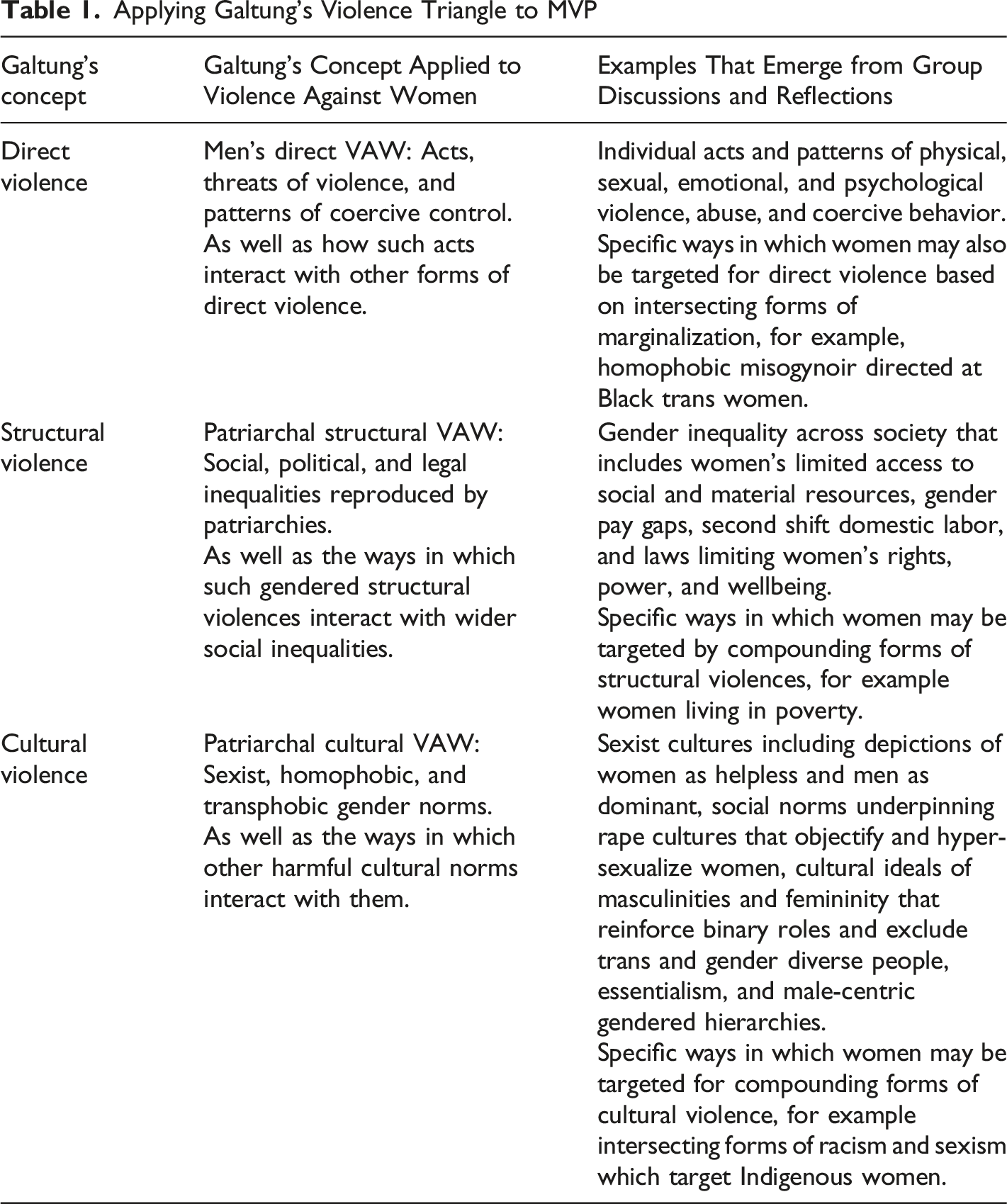
Galtung’s approach highlights the need to simultaneously address all three violences and their linkages. Applied to MVP, this analysis aligns with Burrell’s (2018) tridactic approach and could include explorations of men as individual actors, masculinities as gender norms constructed and embedded in culture, and patriarchy as a structural arrangement. This analysis also complements an intersectional lens to examine how they are situated within a wider context of violence. We have found that this framework provides an accessible entry point to discuss how to categorize and think about the many forms of men’s violences against women, how to understand the ways different forms of men’s violences fuel and sustain one another, and how we can consider addressing them both separately and collectively. While Galtung’s framework for violence is not the only perspective needed, we have found it to be an effective entry point, a helpful catalyst for deeper conversation, and a holistic account of the many forms of violence MVP programs seek to address.
Identifying Positive and Negative Peaces in MVP
Second, Galtung’s peaces approach (Framework 2) addresses the lack of conceptualizations of peace in MVP, which we call the field’s peace theoretical vacuum, by providing a framework for positive and negative peaces. As Hearn et al. (2021) note, “Compared to work on violence and masculinities, there is still less work on peace and masculinities relatively” (540). A theorization of peace in MVP is vital because peace can help conceptualize and promote more feminist-informed alternatives to men’s violences in MVP programs. As Flood (2019) and hooks (2004) note, there is a strategic value in not only naming the problem but also exploring the alternatives. Thus, MVP work is often rooted in a “men-changing” approach (Berkowitz 2004), which believes men can and should play a more proactive and positive role in preventing VAW (Katz 2006). Galtung’s work can help address this gap by providing a foundation framework for positive and negative peace.
Negative theories of peace highlight the need to stop and prevent direct acts of men’s violence. Further, positive peace refocuses the lens in MVP towards an understanding that the absence of direct violence alone is inadequate to change patriarchal systems. This point connects back to the skepticism scholars have noted about hybrid masculinities that address some individuals’ beliefs and practices without engaging the wider patriarchal base of inequality (Bridges and Pascoe 2014). Positive peace seeks to cultivate not only the absence of violence committed by men against women, but also equitable and inclusive cultures and structures. Ratele’s (2012) examination of militarized masculinities through Galtung’s work provides an insightful example of how the concept of positive peace can be used to highlight the complexity of peace and illuminate the inadequacies of negative peace from men’s violence. Ratele argues the continuum of direct and indirect manifestations of men’s violence “troubles the making of durable peace” and makes “the ‘post’ in post-conflict never past and unproblematic” (2012, 4). While Ratele is discussing specific conflict-affected contexts, we believe such insights about the complexity of peace can extend to other MVP settings as well.
Applying Galtung’s Peace Framework to Men’s Violence Prevention
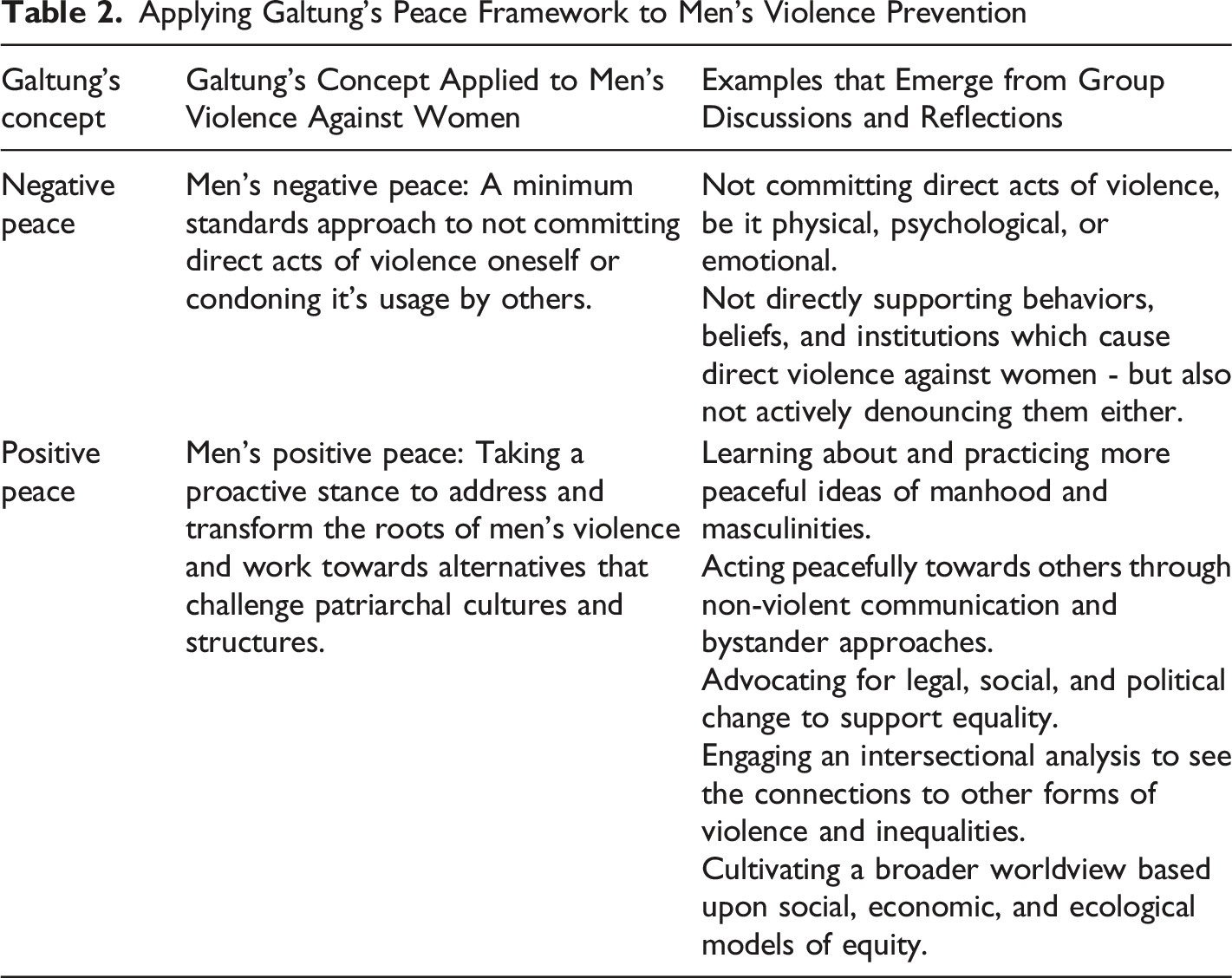
Similar to the violences triangle discussed in the previous section, the peaces approach could address practical questions and support MVP curriculum by providing a simultaneously accessible and layered account of the concept of peace in learning contexts. As hooks (2004) notes, “men cannot change if there are no blueprints for change. Men cannot love if they are not taught the art of loving” (xvii). By shifting the argument to how a better world could be envisioned by men in the session, participants can be engaged in co-creating futures that are relevant and therefore more likely to be ventured for the good of all. In our experiences, addressing the peace conceptual vacuum in MVP by naming peace and unpacking its possibilities with this framework has inspired important conversations both about necessity and limitations of negative peace approaches as well as the challenges and importance of positive peace ones.
Approaches for Addressing Violence and Promoting Peace in MVP
Third, a spectrum of interventions aimed at responding to VAW can be crafted using Galtung’s peace-work triangle: peacekeeping, peacemaking, and peacebuilding. This framework puts the heterogeneous conceptualizations of violences and the theorization of positive and negative peaces into practical applications for program designers, facilitators, and participants. A Galtungian framework could assist men in a violence prevention program in thinking about how peacekeeping strategies can work to interrupt VAW, how peacemaking strategies can work to address the way men understand, engage, and resolve conflicts, and how peacebuilding strategies can work to address the underlying causes and contexts that make men’s violences a direct, structural, and cultural reality. Such a framework aligns with Burrell’s (2018) tridactic insights and could be useful to discuss and compare societal needs from a peacekeeping (criminal justice), peacemaking (partner and interpersonal relations), and peacebuilding (social, economic, and ecological equities) perspective. At the same time, such a framework could also be useful to assist participants to look within and examine their own needs for peacekeeping (safety), peacemaking (alternative dispute resolution and communication), and peacebuilding (social justice, resource access, well-being, etc.) towards the realization of the elimination of violence. This could allow for MVP programs to both analyze suitable and sustainable solutions to men’s violence, while also providing practical steps that are relevant for the men participating.
Applying Galtung’s Peace-work Triangle to Men’s Violence Prevention
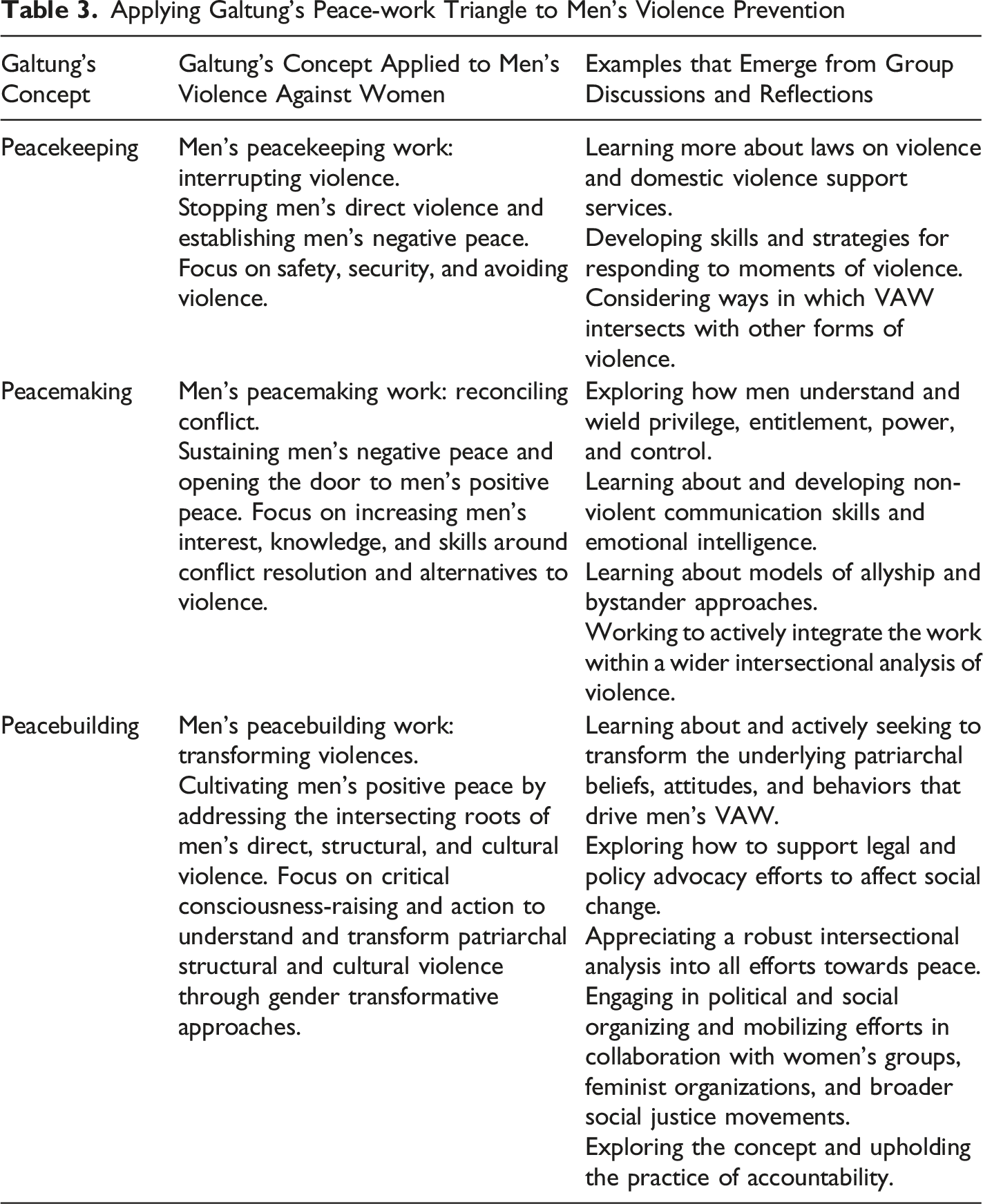
Galtung’s peace-work approach could provide a foundation for MVP practitioners to engage participants in the learning and action necessary to move from men’s violences to men’s peaces. For example, Galtung’s work could help practitioners develop and organize programming efforts based on the differing needs of participants and communities (Casey et al. 2013). This work could complement existing efforts like Funk’s (2018) “continuum of male engagement” which encourages an alignment of tactics and strategies to meet men where they are in terms of “readiness to be engaged” (4). Some MVP efforts will require a peacekeeping program that works with perpetrators or those at risk of perpetration and focuses on identifying and interrupting patterns of violence. Other programs may work with general populations of men and apply a broader peacebuilding program to address the underlying social and political issues that men can help transform. Hence, the peace-work framework may serve as a blueprint for thinking about such transformational change on both direct personal levels as well as indirect structural and cultural levels.
Conclusion
Our experience in MVP classrooms, background in peace scholarship and practice, and engagement with feminist and pro-feminist literature leads us to believe that, while needing contextual tailoring, a Galtungian framework could provide nuanced and practical ways of thinking and teaching about both violence and peace in MVP. However, we are cautious of oversimplifying complex theories of men’s violences and diluting feminist analysis for the sake of engaging men. Waling (2019) has noted similar concerns around the simplistic use of “toxic” and “healthy” masculinities in public discourses and urged to be careful about “what is lost in the process” (371). Thus, we emphasize here that we have found Galtung’s framework to be a helpful starting point for talking about men’s violences in MVP and that it can and should be complexified over time in work with men.
Overall, this paper has argued that Galtung’s framework aligns with Burrell’s (2018) tridactic approach for engaging men and presents heterogeneous and interconnected conceptions that could help men identify, understand, and work to prevent direct, structural, and cultural violences. Further, Galtung’s theory could support men in complexifying the solutions to violence with negative and positive peaces, and crafting specific actions through a range of peacekeeping, peacemaking, and peacebuilding practices. With our caution noted above in mind, we believe a Galtungian approach can learn from and resonate with a feminist analysis of violence, respond to problems with homogenous violence in MVP that Flood (2015) and Burrell (2018) have noted, and open the door to new and innovative possibilities for making MVP more effective at both challenging violence and promoting more peaceful paths forward.
Footnotes
Declaration of Conflicting Interests
The author(s) declared no potential conflicts of interest with respect to the research, authorship, and/or publication of this article.
Funding
The author(s) disclosed receipt of the following financial support for the research, authorship, and/or publication of this article: This work was supported by the Gates Cambridge Trust (Gates Cambridge Scholarship (Author 1)).