




Abstract
Research on the hedonic and eudaimonic wellbeing benefits of virtual tourism is experiencing exponential growth. However, few studies have considered its potential as a positive psychological intervention to enhance wellbeing. Through the lens of the recently conceptualised DREAMA model of tourist wellbeing, this conceptual paper critically examines the nuanced role of virtual tourism in enabling wellbeing. This research contends that microdosing, an innovative concept which initially emerged in psychotherapy, can be applied through virtual tourism as a non-pharmacological intervention to foster the DREAMA dimensions of wellbeing. This paper is amongst the first to apply the concept of microdosing to tourist wellbeing in virtual travel. The paper proposes a conceptual model designed to articulate how regular engagement with short, immersive virtual tourism experiences can integrate the therapeutic benefits of travel into everyday life. The manuscript introduces microdosing as a low-barrier, low-risk way to engage with virtual tourism experiences and potentially mitigate issues such as cybersickness.
Keywords
Highlight
The article critically assesses the potential of virtual tourism to foster wellbeing.
Our study applies the concept of microdosing from psychotherapy.
We conceptualise virtual tourism as a non-pharmacological wellbeing intervention.
We propose the “Virtual Tourism Micro-Macro Dosing Model for Tourist Wellbeing.”
We articulate the implications of microdosing virtual tourism for practitioners.
Introduction
Tourism scholarship traditionally relies on theories imported from different disciplines (McKercher & Moyle, 2025). In response to calls for more homegrown theorising in tourism and hospitality research (Miao et al., 2022), this conceptual paper integrates the recently conceptualised Detachment-Recovery, Engagement, Affiliation, Meaning, Achievement (DREAMA) model (Filep et al., 2024) with contemporary microdosing practices from health to propose the concept of virtual tourism microdosing, advancing discourse by developing a Virtual Tourism Micro-Macro Dosing Model for Tourist Wellbeing. Conceptual research in tourism is crucial because the approach enables creativity and may bring novel approaches to existing problems without being restricted by the limitations related to data (Yadav, 2010). In contrast, empirical research focuses on measuring and testing hypotheses, potentially overlooks the potential of conceptual innovation (Xin et al., 2013).
Extended realities and the metaverse are on the rise, with sales of Virtual Reality (VR)/Augmented Reality (AR) headsets forecasted to reach US$7.4 billion in 2027 (Euromonitor International, 2024). Recently, the application of such immersive technologies in the tourism field is undergoing rapid expansion (Calisto & Sarkar, 2024), with virtual tourism often being investigated for its marketing potential (Shin & Jeong, 2022) and heritage preservation (Bec et al., 2021), and discourse is shifting towards its potential as a therapeutic tool to improve wellbeing (Guo et al., 2025). Recent studies have attempted to develop models to understand the unique characteristics of virtual tourism experiences (Wei et al., 2023) and their transformative and restorative potential (Wong et al., 2023). While embryonic evidence suggests that virtual tourism experiences improve restoration and subjective wellbeing, few studies have theorised how virtual tourism fosters wellbeing (Rahmani et al., 2024), especially when implemented in home or workplace environments.
Building on existing knowledge and drawing on the DREAMA model of tourist wellbeing (Filep et al., 2024), this paper seeks to propose a new concept of virtual tourism microdosing. While microdosing is a common practice in health, few studies in the tourism field have connected with the medical fraternity to determine how to attain benefits of this practice in virtual tourism. This paper is interdisciplinary, connecting tourism, positive psychology, and wellbeing with public health and technology. The core contribution of the piece is a conceptual model of how virtual tourism microdosing can foster wellbeing. This manuscript is timely and innovative as it extends existing models of virtual tourism engagement, through the integration of microdosing as a mechanism to enhance wellbeing outcomes, which is critically unresearched.
Studies on the contribution of travel to wellbeing are critical, timely and topical in the tourism field (Filep et al., 2024). However, despite momentum on the potential of tourism as a non-pharmacological intervention (Filep, 2014; Wen et al., 2022), few studies have considered how virtual tourism experiences can harness the restorative potential of virtual environments as a positive psychological intervention to foster wellbeing (Guo et al., 2025; Zhang & Xiao, 2025). Virtual tourism, empowered by immersive technologies, such as VR, offers users the ability to temporarily detach from their physical environment and experience a sense of transportation into an alternative virtual world (Yung & Khoo-Lattimore, 2019). This shift is particularly significant, as it facilitates cognitive and emotional restoration, fosters positive psychological states, and provides an accessible means for individuals to experience the psychological benefits of travel without the logistical and financial barriers of physical tourism (Zhang & Xiao, 2024). By focusing on psychological restoration, social connection, and cognitive engagement, virtual tourism can extend beyond its conventional role as a marketing tool to become a legitimate intervention for mental health and stress management (McLean et al., 2023). The aim of this paper is to stimulate a constructive conversation among practitioners, policymakers and tourism managers that microdosing virtual tourism experiences is a viable management option to enhance wellbeing for various populations, such as the workforce.
The Potential of Virtual Tourism Experiences
Recent advancements in cutting-edge technologies have infused opportunities to engage in virtual tourism experiences into our everyday lives. Virtual tourism refers to the use of fully immersive VR to engage with tourism experiences in the virtual world, completely isolating users from the physical world (Beck et al., 2019). VR technologies have been investigated in various tourism sectors, such as events (Yung et al., 2022) and heritage management (Jia et al., 2025), amongst others. The technology allows users to engage and interact with virtual destinations and with empirical research demonstrating high levels of presence, ultimately providing people with a sense of “being there” in the virtual environment, feeling as if they are actually travelling to such destinations (Fan et al., 2022). Through the lens of the stimuli-organism-response model, Wei et al. (2023) present a conceptual model of the unique characteristics of virtual tourism, highlighting how virtual servicescapes foster connections and induce positive responses. Empirical studies also suggest that virtual travel can be transformative, addressing hedonic and eudaimonic wellbeing needs (Wong et al., 2023).
du Plessis and Jordaan (2024) purport that the immersive nature of VR technology is effective as a complementary treatment to reduce symptoms of anxiety and psychological disorders and enhance a positive mental state. Studies have noted that VR experiences can improve relaxation, suggesting that VR can be a therapeutic intervention (Frost et al., 2022). Consequently, microdosing virtual tourism may be suitable as a positive non-pharmacological intervention for wellbeing. The convenience and accessibility of virtual tourism allows users to virtually travel any time for a short period, for example, during their break at work. The technical aspects of virtual tourism allow for administering short, immersive tourism experiences regularly to enhance wellbeing, which aligns with existing microdosing practices.
The Concept of Virtual Tourism Microdosing
Microdosing is a concept which initially emerged in health research referring to a practice of ingesting a very small amount of substance (Rosenbaum et al., 2020). While the precise volume of microdosing remains unclear and lacks accepted criteria, studies typically employ 5% to 10% of the standard dose, with a common frequency of 2 to 4 times weekly, repeated regularly over a period (Polito & Liknaitzky, 2022; Rosenbaum et al., 2020). This contrasts with macrodosing, which refers to intaking an amount that delivers an immediate, significant, and long-lasting impact after only a single dose (Kaypak & Raz, 2022). Typically, microdosing is applied in disciplines conceptually related to health to assess the pharmacokinetic properties of a drug under development as a basis for therapeutic prescription (Lappin et al., 2013). There is an established body of work focused on the implications of microdosing for wellbeing, which examines how ingesting small doses of a specific substance can deliver mental health benefits (Bornemann, 2020; Polito & Liknaitzky, 2022). Empirical research suggests that administering microdoses of certain substances can reduce depression and anxiety (Bright et al., 2021), improve mood and stimulate creativity (Bornemann, 2020), address mental health issues, and inspire positive cognitive and social changes (Petranker et al., 2022; Ryan et al., 2023). While a body of work is emerging on the potential benefits of microdosing, limited discourse explicitly examines the potential benefits of microdosing travel (Bec et al., 2021), especially virtually.
When conceptualising virtual tourism microdosing, this manuscript integrates complex interdisciplinary bodies of literature on microdosing practice, drawing from other treatments such as athlete training and phobia treatment using VR technology. In sport and exercise science, microdosing has been applied to leverage the benefits of small, frequent training for athletes (Cuthbert et al., 2024). For example, G. Liu, Wang and Xu (2024) applied microdosing as the minimum effective dose, by splitting the two weekly original training sessions into four weekly sessions across 8 weeks. Afonso et al. (2022) question the use of a dose threshold and suggest that professionals employ a small fraction of the full dose because the efficacy is dependent on individual physiological responses. Recent studies applying virtual reality in fields such as phobia and anxiety treatment also reflect the practice of microdosing as participants were exposed to a small amount of stimuli over time, rather than a large full dose. For example, Reeves et al. (2021) found that VR exposure therapy interventions, where participants speak for 4 to 15 minutes while immersing in VR videos of four different levels of number of audience, can reduce public speaking anxiety, social anxiety, and anxiety about negative judgement, which subsequently assists in improving wellbeing.
This conceptual paper introduces microdosing, an innovative concept originating in psychotherapy, as a novel approach to leveraging virtual tourism for wellbeing. In this context, virtual tourism microdosing refers to the regular engagement with short, fully immersive virtual tourism experiences, intentionally designed to promote wellbeing (Walters et al., 2024). In contrast, virtual tourism macrodosing refers to engagement with virtual tourism experiences for an extended duration. In virtual tourism literature, the typical duration of each VR experience ranges from 3 to 10 minutes (e.g., Walters et al., 2024), while in some studies this can be longer, such as 15 to 30 minutes (Li & Jiang, 2025; Mandal et al., 2025). Studies have reported that users receive wellbeing benefits from virtual tourism experience that last for 5 to 10 minutes, while longer VR exposure (e.g., 30 minutes) may make people feel uncomfortable. Despite limited consensus on the optimal frequency, Guo et al. (2025) note that 3 times a week is accepted by virtual tourists, while Mandal et al. (2025) found that daily exposure to virtual tours enhances wellbeing with no adverse effect. Consequently, this paper proposes that short, immersive virtual tourism experiences from 5 to 10 minutes with a frequency from daily to once a week can be considered as microdosing.
Microdosing virtual tourism represents a scalable, accessible, and scientifically grounded approach to enhancing well-being through short, immersive travel experiences, warranting further exploration within interdisciplinary research frameworks. Grounded in the recently conceptualised DREAMA model of tourist wellbeing (Filep et al., 2024), this conceptual paper critically examines the nuanced role of virtual tourism in fostering psychological and emotional restoration. This paper proposes and critically examines the potential of microdosing virtual tourism experiences, evaluating their capacity to foster sustained wellbeing and contribute to broader discussions on digital interventions for mental health. By bridging insights from tourism, psychology, and digital health, this conceptual work highlights the transformative potential of virtual tourism in redefining wellbeing-oriented travel experiences.
Methodology
Drawing on insights from Jaakkola (2020) and B. Liu et al. (2025), this conceptual paper adopts a critical and reflective approach to introduce and develop the novel concept of virtual tourism microdosing. By synthesising existing literature from the domains of virtual tourism, wellbeing, and psychotherapy, the paper proposes a conceptual model that extends current theoretical frameworks. This model is intended to serve as a foundation for future scholarly dialogue on the potential therapeutic benefits of virtual tourism microdosing. In line with Jaakkola’s (2020) methodological guidance, the paper follows a three-stage process, as outlined below.
Stage 1: Articulation and Theorisation
Building on the framework proposed by Wen et al. (2022), the authors propose the concept of virtual tourism microdosing based on the symbiosis of possible relationships between virtual tourism experiences and microdosing practices to enhance wellbeing. Following Lemon and Verhoef (2016), the paper first seeks to define virtual tourism microdosing by reviewing the microdosing practices in health, and the potential of virtual tourism experiences to foster wellbeing. In this stage, the authors adapt a conceptual method initially proposed by Weaver et al. (2022), starting with historical analysis of the concept. The literature on microdosing and macrodosing practices in psychotherapy and other disciplines such as exercise science was examined in Stage 1, to understand how microdosing has been applied in health and related disciplines to enhance wellbeing (Polito & Liknaitzky, 2022). Following this, the authors critically evaluate the positioning of the concept of microdosing, and the subsequently related macrodosing. Through this comparison of the concept, the authors assessed the frequency and amount, and clarified the boundaries between microdosing and macrodosing.
Stage 2: Translating the Concept to Tourism and New Concept Proposal
In Stage 2, the focus is on translating the concept of microdosing into virtual tourism contexts. The authors initially examined the literature on the potential therapeutic impacts of virtual tourism experiences, particularly recent studies that administer virtual tourism experiences as short, repeated interventions to improve wellbeing. The frequency and duration of exposure to virtual tourism experiences are corroborated with the frequent “dose” of microdosing from other disciplines. The authors also examined the implications of virtual tourism macrodosing and its potential drawbacks of extended or intensive exposure to VR experiences that can diminish the wellbeing effect. Drawing from these insights, the authors then propose a new concept, which arises from the conceptual link between virtual tourism and microdosing, which is called virtual tourism microdosing. Virtual tourism microdosing is defined as regularly engaging with short, immersive virtual tourism experiences with the proposed duration of 5 to 10 minutes, with a frequency from daily to once a week to enhance wellbeing.
The recently conceptualised DREAMA model (Filep et al., 2024) was adapted to explore the potential of virtual tourism microdosing to foster wellbeing. In this stage, the authors examined how virtual tourism microdosing enhances each dimension of the DREAMA model. The authors acknowledge that there are few existing studies that directly support the model or how each of the DREAMA dimensions can be enhanced by virtual tourism microdosing (Mandal et al., 2025). The model is grounded in existing literature on how virtual tourism and related virtual leisure experiences enhance each DREAMA dimension, and the frequency and duration of VR experiences in these studies (Guo et al., 2025). Through an analysis of the therapeutic benefits of virtual tourism microdosing, and the potential negative impacts of extended exposure, the manuscript presents a conceptual model that positions microdosing and macrodosing virtual tourism at two opposite ends of a continuum, demonstrating how virtual tourism microdosing fosters each of the DREAMA dimensions. Through the conceptualisation process, the authors propose a conceptual model which suggests that repeatedly engaging with virtual tourism experiences in a similar way to microdosing practice, can enhance wellbeing.
Stage 3: Expert Review
The proposed conceptual model was subsequently reviewed through an internal expert evaluation process (Davey et al., 2021), involving scholars with expertise in tourism, virtual reality, wellbeing, and positive psychology. These experts were invited to critically review the model and provide feedback during a series of consultation meetings. For instance, one expert recommended integrating positive psychology theories to strengthen the model’s interdisciplinary foundation. Based on the constructive feedback received, the conceptual model was revised and finalised to better align with theoretical and practical considerations.
Virtual Tourism Micro- and Macro-Dosing for Tourist Wellbeing
The manuscript adopts Filep and colleagues’ (2024) DREAMA framework to examine the potential of virtual tourism to foster wellbeing, articulating potential implications for microdosing virtual tourism as a novel well-being intervention. The DREAMA model provides a conceptually holistic perspective on tourist wellbeing, synthesising key dimensions from existing frameworks such as Positive emotions, Engagement, Relationships, Meaning, Achievement (PERMA) and Detachment-Recovery, Autonomy, Mastery, Meaning, Affiliation (DRAMMA) (Chang et al., 2024). In addition, counterparts such as PERMA or DREAMA are not suitable for virtual tourism contexts, as DREAMA is a tourist experience model (Filep et al., 2024), whereas PERMA is a generic lifestyle model, and DRAMMA was developed explicitly for a leisure-based context (Laing & Frost, 2017). One of DREAMA’s key advantages is that the model highlights the role of connection to the natural environment, which is a critical element in therapeutic virtual tourism experiences (Filep et al., 2024).
While multidimensional hedonic and eudaimonic models exist, DREAMA has been applied in non-physical tourism settings like webcam travel (Lee et al., 2022), which parallels the virtual tourism contexts. Despite the growing interest, few studies have critically examined the nuanced role of virtual tourism fostering wellbeing through the lens of the DREAMA framework (B. Liu, Moyle, et al., 2024). This conceptual paper contends that microdosing, an innovative concept which initially emerged in psychotherapy, can be applied through virtual tourism to foster the DREAMA dimensions of wellbeing. Drawing on each DREAMA dimension, the next section will articulate a theoretically grounded rationale for why and how virtual tourism experiences can enhance wellbeing, offering new insights into the intersection of digital engagement, psychological wellbeing, and meaningful travel experiences.
Detachment-Recovery
Virtual tourism has the potential to become a restorative intervention with prior scholarship focused on virtual aquatic experiences demonstrating potential to enhance mental restoration (Walters et al., 2024). The Detachment-Recovery dimension highlights disconnection from stressors and pressures from work and life, which has been recognised as a psychological need by previous studies (Newman et al., 2014; Sonnentag & Fritz, 2016). The sense of presence, which refers to “being there” or being deeply immersed in the virtual tourism experiences (Fan et al., 2022), allows users to detach from daily life, to unwind and relax (McLean et al., 2023). The immersive nature of VR allows for rich multisensory stimulation (Hadi et al., 2023), facilitating detachment from real-life stressors. Guo et al. (2025) highlight that frequent exposure to virtual tourism experiences can reduce mental fatigue and create a sense of escapism from daily hustle. This embryonic knowledge suggests that virtual tourism can be used as short, immersive breaks from daily work or life schedules to help people relax and improve mood and emotions, thereby enhancing wellbeing.
Engagement
The immersive nature of VR and its ability to stimulate human senses allow for a deep sense of engagement that has been widely established in the field of user experience design (Flavian et al., 2021). The immersion and deep engagement with virtual experience facilitate entering the state of flow (Fan et al., 2022). When engaging with virtual tourism, the characteristics of VR enable users to be absorbed in the experience, with enhanced neurological outcomes such as an increase in theta brain wave activities, which create a state of flow, critical for broader wellbeing outcomes (Zhang & Xiao, 2024). When entering flow state, users experience enjoyment and heightened focus on the virtual tourism experience, and detrimental thoughts are diminished, leading to wellbeing (Huang et al., 2020).
Affiliation
The innovation of the DREAMA model highlights the role of both social relationships and connection with nature in enhancing wellbeing (Filep et al., 2024). Virtual tourism offers an opportunity to socialise and reinforce meaningful connections through sharing experiences with family and friends (Trunfio & Campana, 2020), which enhances social bonding (Chang et al., 2024). While virtual tourism may not establish social connections like real travel experiences, it can strengthen relationships as it evokes nostalgia and helps recall memories about social experiences with other people (Shin & Jeong, 2022). Beyond social affiliation, virtual tourism can cultivate a connection to nature, for example, through a virtual snorkelling experience at the Great Barrier Reef, tourists felt connected to the reef (Hofman et al., 2021). Repeated virtual tourism sessions have been found to help users frequently connect with and enjoy the therapeutic effect of nature, despite not being truly real, with subsequent implications for wellbeing, which is particularly helpful for people with travel constraints or limited mobility (Mandal et al., 2025).
Meaning
Virtual tourism experiences might foster a sense of meaning through aspects such as life enrichment (C. F. Lin et al., 2021), freedom, and escapism from social class (L. Z. Lin & Yeh, 2022) which have been demonstrated in scientific research to contribute to the sense of meaning in life. Frequently engaging with short tourism experiences is demonstrated in empirical work to enhance relaxation and curiosity, leading to a sense of competence and building character strength and capacity, subsequently enhancing zest for life (Zhong et al., 2025). Virtual tourism imitates and integrates real world elements into the virtual world, which potentially creates a new type of surreal experience that has sensory appeal and can potentially enable activities that would be impossible in the physical settings (Yang & Wang, 2025). These abilities facilitate virtual tourism to fulfil travel inspirations, especially for people with limited mobility, enhancing the sense of meaning in life, which heightens a sense of meaning and life satisfaction (Zhang & Xiao, 2024).
Achievement
In virtual tourism settings, a sense of achievement emerges from mastery of knowledge and skills (Lee et al., 2022). Frequently engaging with virtual tourism experiences enables users not only to navigate historical sites and learn about culture and history; it also enables them the freedom to choose and control (Zhong et al., 2025). The immersive nature of virtual tourism creates a sense of embodiment and enhances users’ perceptual skills and capacities, which potentially fosters a sense of achievement through knowledge and resource development when engaging with virtual experiences (Flavián et al., 2019; C. F. Lin et al., 2021). In Zhang and Xiao's (2024) study, users even noted that virtual tourism offers a sense of transcendence and personal awakening, as it helps them to move beyond normal perceived boundaries, which facilitates aspects critical for wellbeing, such as self-growth. These features may create a sense of empowerment, and provide users with the opportunity to achieve their own personal goals (Zhong et al., 2025). Consequently, virtual tourism microdosing could foster a sense of achievement through helping users to fulfil human needs, especially eudaimonic dimensions such as competence or mastery (Deci & Ryan, 2012).
Figure 1 presents the continuum of Virtual Tourism Micro-Macro Dosing Model for Tourist Wellbeing designed to stimulate constructive discourse and ongoing scholarly dialogue on the potential of virtual tourism to enhance wellbeing. The conceptual model innovates by demonstrating the wellbeing benefits of virtual tourism microdosing through each dimension of the DREAMA framework. While existing conceptual models have captured the transformative and restorative potential of virtual tourism experiences (Rahmani et al., 2024; Wong et al., 2023), few studies have connected with practices in health disciplines. This paper connects virtual tourism with microdosing practice from psychotherapy, contributing to the rapidly growing discourse on virtual tourism for health and wellbeing. Drawing on the DREAMA model (Filep et al., 2024), the conceptual model presented in this manuscript illustrates the nexus between microdosing virtual tourism and the building blocks that underpin psychological wellbeing. The model frames the boundaries of microdosing and macrodosing virtual tourism experiences, and positions each along a continuum. In doing so, this article extends the application of the DREAMA framework to virtual tourism contexts and proposes that microdosing virtual tourism could be a viable management solution to enhance wellbeing while mitigating the potential negative impacts of virtual reality, which are empirically documented to be enhanced by extended exposure (Martirosov et al., 2022).
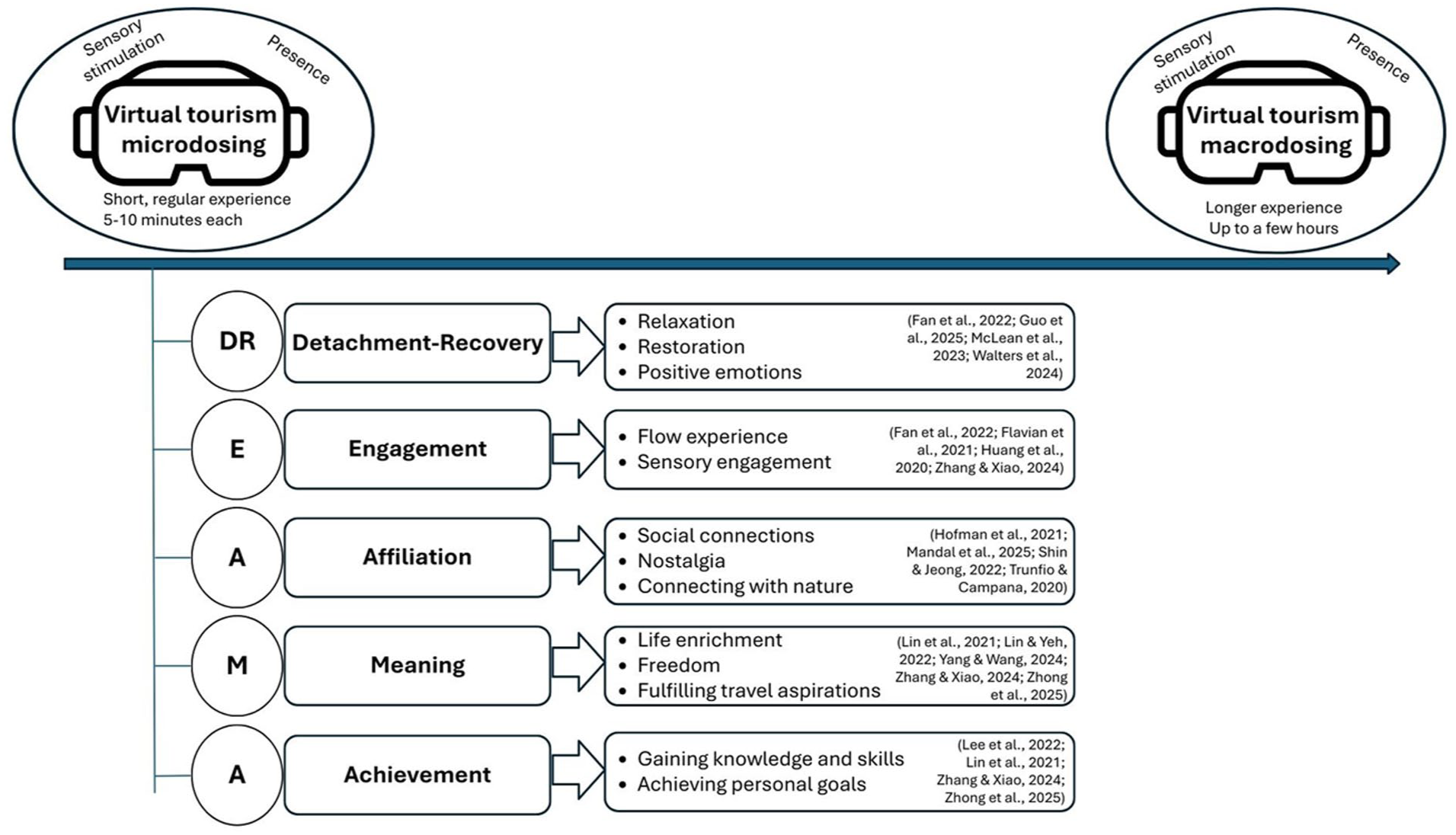
Virtual Tourism Micro-Macro Dosing Model for Tourist Wellbeing.
This paper contends that when administered in a similar way to microdosing with small exposures over time, virtual tourism can serve as an approach to foster wellbeing. On the other hand, macrodosing virtual tourism sessions may create the capacity for negative implications. One of the risks of VR is cybersickness, which is more likely to occur during long VR sessions (Martirosov et al., 2022). However, this potential negative implication can be mitigated via the innovative concept of microdosing, allowing users to adapt to the virtual environment (Nichols & Patel, 2002). Previous studies have noted that extended exposure to VR experiences may cause addiction (He et al., 2025). Merkx and Nawijn (2021) also observe the sense of isolation among virtual tourists when engaging with VR. The forthcoming section proposes a pathway forward, articulating a research agenda to guide future empirical studies which seek to explore the phenomenon of virtual tourism and wellbeing, with an emphasis on the innovative and novel concept of microdosing virtual tourism experiences.
Microdosing Virtual Tourism for Wellbeing: A Pathway Forward
This paper proposes the novel concept of virtual tourism microdosing, which has the potential to expand beyond health and pharmacology to other aspects of life, including travel experience and wellness. This paper serves as a stepping stone to initiate an ongoing constructive scholarly conversation on the restorative potential of virtual tourism microdosing. Drawing on contemporary work in positive psychology, this manuscript articulates the potential implications of virtual tourism microdosing as an intervention to improve wellbeing. However, only embryonic studies (e.g., Walters et al., 2024) have considered virtual tourism as an intervention for wellbeing, highlighting the need for deeper exploratory conceptual engagement prior to the initiation of an empirical program on the benefits of virtual tourism on wellbeing. Future research is recommended to consider the virtual tourism microdosing construct in conceptual and empirical studies, and to develop specific actionable guidelines for practitioners, health service providers, and policy makers. Three pillars of future research are proposed below.
Adopting Interdisciplinary Perspectives and Methodology
Interdisciplinary studies are recommended to explore the potential of virtual tourism microdosing for wellbeing. Virtual tourism studies should draw on new and established theories in positive psychology, such as broaden and build theory (Fredrickson, 2001) or self-determination theory (Deci & Ryan, 2012), to explain the mechanisms through which wellbeing emerges. Theories, such as broaden and build theory, could provide further explanation into how virtual tourism experiences can be designed to satisfy psychological needs, enhancing positive emotions and building lasting resources, and can contribute to life satisfaction and wellbeing. For example, virtual tourism can evoke positive emotions, such as enjoyment (Flavian et al., 2021), which may prompt creative thinking or a sense of freedom (L. Z. Lin & Yeh, 2022). By repeatedly engaging with virtual tourism, users may develop new skills and personal growth (Zhang & Xiao, 2024). As conceptualised in theories embedded in positive psychology, such as broaden and build theory, the repeated process of virtual tourism microdosing might also create a positive upward spiral, which further strengthens positive emotions, capacities, and skills (Martin & Donaldson, 2024).
Future studies could also adopt research designs from clinical fields, using experimental designs such as randomised control trials to provide robust evidence for the efficacy of virtual tourism microdosing as a wellbeing intervention. Future studies should adopt longitudinal designs to provide evidence on the wellbeing benefits of microdosing virtual tourism experiences as a positive psychological intervention. Studies employing physiological measurement techniques may yield interesting findings into the underpinning mechanisms of the human body that regulate the sense of wellbeing. For example, future research may apply galvanic skin response and eye-tracking techniques to measure emotional responses and real-time visual attention and mental imagery process that underpin the emotions (Nhan et al., 2025). In addition, electrocardiogram can help future researchers determine users’ heart rate variability (HRV) when engaging with virtual tourism experiences (Coghlan et al., 2025). HRV is physiologically related to the parasympathetic nervous system, which improves emotional regulation capacity when activated (Duarte & Pinto-Gouveia, 2017). Furthermore, future research should explicitly consider differences in users’ background, physical and psychological characteristics, demographics, and identities, as well as specific scenarios or conditions that may influence perceived wellbeing from microdosing virtual tourism experiences.
Virtual Tourism as a Positive Non-Pharmacological Approach for Workforce Wellbeing
Virtual tourism microdosing offers a ground-breaking opportunity for research and practice to enhance wellbeing across various sample populations, such as the workforce. Embryonic evidence in gaming literature denotes that short exposures to VR gaming can enhance wellbeing through enhancing positive emotions and improving social connections (Hosseini et al., 2024). While not explicitly termed microdosing, this would provide anecdotal evidence of the potential efficacy of short, immersive virtual leisure experiences to enhance wellbeing. While Walters et al. (2024) demonstrate that virtual tourism enhances restoration, empirical evidence of the efficacy of microdosing in interdisciplinary contexts suggests that application of this innovative approach may provide further opportunities for the workforce to detach and recover from workplace stress during demanding work schedules. Research could examine the potential of frequent, short tourism breaks during the workday to facilitate the positive contributors of employee wellbeing documented in the positive organisational scholarship literature, such as life satisfaction, health, and job performance (Donaldson & Ko, 2010).
Consider Mitigating Negative Impacts of Virtual Tourism
Future research should also consider strategies to mitigate potential negative effects of virtual tourism. Merkx and Nawijn (2021) note that virtual tourism might cause a sense of social isolation, as users cannot connect or interact with others in an authentic and desired way. In some instances, VR gameplay can trigger intense emotions which make users feel stressed and subsequently create negative thoughts (Lavoie et al., 2020). Future research could consider mitigating the risk of addiction to VR and virtual tourism. While addiction is well-researched in fields such as gaming, it remains a relatively new topic in virtual tourism literature (Merkx & Nawijn, 2021). Studies note that the risk of VR addiction increases when users engage with the experiences more frequently and for longer periods of time (He et al., 2025).
Another issue that future research in virtual tourism can focus on is how to navigate the problem of cybersickness. A strategy documented in other fields to mitigate cybersickness is reducing the level of physical movements (Ng et al., 2025). In addition to limiting physical movements, microdosing virtual tourism could be a possible strategy to mitigate cybersickness, as short VR experiences of 5 to 10 minutes are less likely to cause issues such as dizziness, nausea, fatigue, and motion sickness compared to extended time in virtual environments (Martirosov et al., 2022). Subsequently, it is paramount that future research considers the healthy level of exposure to virtual tourism experiences, including the optimal frequency and duration to achieve wellbeing benefits.
Future scholarship can also consider the effects of novelty loss with repeated exposure. Novelty is how much an experience is different from expectations, which typically associates with pleasure and delight through a sense of flow, creativity, and mindfulness (Skavronskaya et al., 2020). Consequently, if users have to repeat the same experience, the positive effects may diminish, and users may feel bored or fatigued. To counter the effects of novelty loss, researchers and practitioners can use different VR stimuli for each microdose session. Alternatively, dynamic, interactive VR stimuli can be applied, so each interaction is different when virtual tourism environments are engaged with repeatedly, which may help maintain novelty.
Xin et al. (2013) note that when transplanting concepts from conceptually related fields or cognate disciplines into tourism, it is incredibly important to engage in rich, deep conceptual debate before transitioning to measurement. Subsequently, this conceptual piece lacks empirical data to verify the proposed model. The goal of this paper, however, is to theorise a conceptual model to bring the practice of microdosing to virtual tourism in order to foster wellbeing, rather than to empirically measure and verify the model. Research is recommended into empirical measures to verify the model, potentially following additional, engaging, and rich conceptual debate, which is explicitly designed to examine the wellbeing potential of microdosing virtual tourism experiences on different populations. Doing so will enhance the understanding of the potential of virtual tourism microdosing in fostering wellbeing, as well as facilitate the development of practical, actionable guidelines for tourism practitioners and managers.
Microdosing virtual tourism has implications for tourism practitioners, wellness providers, and policymakers, particularly in the context of enhancing wellbeing through brief engagement with immersive digital experiences. Microdosing offers an accessible and low-risk way to apply virtual tourism to foster wellbeing and potentially mitigate side effects of extended VR sessions, such as cybersickness. Tourism practitioners can harness microdosing virtual tourism to enhance pre-trip engagement and post-trip nostalgia, and to support wellness tourism offerings. Unlike full-length VR travel experiences, microdosing delivers short, high-impact virtual tourism encounters that can fit into daily routines, offering a viable management option to enhance wellbeing for different populations, such as the workforce. For individual workers, frequent engagement with short, immersive tourism breaks enhances positive emotions and restoration, which may subsequently enhance motivations at work and lead to improvement in workplace wellbeing (van Zyl et al., 2023). Tourism businesses can develop wellbeing-oriented marketing strategies by positioning virtual tourism as a tool for mental rejuvenation, stress relief, and emotional connection. Furthermore, partnerships with the wellness industry could facilitate the integration of microdosing virtual tourism into corporate wellbeing programs, digital detox retreats, and teletherapy interventions. Policymakers and destination managers play a critical role in regulating, funding, and promoting virtual tourism as part of national wellness strategies and sustainable tourism initiatives. The accessibility of microdosing virtual tourism fosters travel inclusivity, particularly for marginalised populations, including individuals with disabilities, elderly populations, and those facing financial or geopolitical constraints.
This conceptual paper presents a contribution to knowledge and practice by redefining virtual tourism as a non-pharmacological intervention to improve wellbeing. Grounded in positive psychology, ongoing constructive discourse is required on how to integrate virtual tourism experiences to complement existing mental health strategies and programs to improve wellbeing and human flourishing. Scholarly attention will advance Sustainable Development Goal #3 by articulating how virtual tourism microdosing can contribute to psychological wellbeing and to ensuring healthy lives across all populations.
Footnotes
Acknowledgements
We acknowledge the support received through the Australian Government Research Training Program Scholarship awarded by Griffith University to conduct this research.
Declaration of Conflicting Interests
The authors declared no potential conflicts of interest with respect to the research, authorship, and/or publication of this article.
Funding
The authors received no financial support for the research, authorship, and/or publication of this article.
