




Abstract
Gig workers are growing in number and becoming increasingly important in the hospitality industry; however, the employment styles, work experiences, and employer–worker relationships differ from those of traditional employees. Additionally, there are various types of hospitality gig workers, differing in positions, work styles, skill levels, and incomes. Therefore, it is critical to understand their unique and different motivations through a person-centered approach utilizing latent profile analysis to reveal the nuanced motivation types within individual hospitality gig workers. Four unique profiles of motivation were found with a sample of hospitality gig workers: income boosters, floaters, gig lovers, and all-in. Several antecedents and significant differences in attitude, performance, and gig worker well-being-related outcomes were measured among the four profiles. The results reveal new theoretical and practical insights into hospitality gig workers and their motivations, suggesting that gig workers have various combinations of work motivation, leading to different work-related outcomes.
Highlights
The Research unveils four gig worker motivation profiles in hospitality.
The study identifies key antecedents of each motivation profile.
The study links gig worker motivations to key outcomes and operational impacts.
The study offers practical strategies for tailored hospitality gig work management.
Introduction
The global hospitality industry is undergoing a transformative phase, shaped by technological advances, generational shifts, and recent global events. As a result, the gig economy has surged in the industry, underscoring the need to understand the motivations of gig workers, given that the nature of their work differs from traditional employer–worker relationships where most workforce motivation studies reside. The hospitality gig economy encompasses a diverse array of workers, from high-income event directors to tip-dependent food delivery personnel. While extant literature provides valuable insights into certain aspects of gig work (Davidson et al., 2023; Watson et al., 2021), there are significant variations in work-related factors, like income levels, knowledge, skills, and working formats, providing an opportunity to explore unique motivational profiles within a diverse landscape of gig workers (Jin & Liu-Lastres, 2024). As gig workers become central to the success of collaborative consumption, there is lack of research exploring hospitality gig workers’ motivation despite previous research emphasizing the need to understand gig workers’ unique perceptions (Davidson et al., 2023). This gap highlights the need for further investigation into how varying roles and responsibilities of gig work influence hospitality gig workers’ motivations.
Gig work differs from traditional employment arrangements in three significant respects: flexibility, autonomy, and entrepreneurship. Traditional employees hold fixed, full-time positions with steady pay, predictable career paths, and benefits like health insurance and paid leave. However, gig workers determine when they work and who they work with, and thus experience high levels of flexibility and autonomy. (El Hajal & Rowson, 2021; Myhill et al., 2021). They also manage varying job demands and cultivate their own networks and resources as independent entrepreneurs (Watson et al., 2021). Additionally, gig workers may face challenges with positive public perception and professional recognition, unlike traditional employees who are affiliated with an organization (Healy et al., 2020).
While research focuses on traditional workforce motivations in contrast to gig work, this study seeks to understand gig worker motivations, beyond the appeal of flexibility and autonomy. Most studies utilize variable-centered strategies, which examine relationships between variables across a population. However, this approach may not fully capture how workers may combine or draw on multiple motivations. In contrast, person-centered analyses classify individuals into subgroups based on shared response patterns, providing a more nuanced understanding of how characteristics interact within groups (Schmiege et al., 2018). Therefore, this study adopts a person-centered approach to explore gig worker subpopulations defined by their combination of motivations (Zhang et al., 2024). By examining distinct gig worker profiles based on how similar and different subgroups are from each other, the results provide a more holistic understanding of gig worker motivations, extending extant literature that suggests gig workers have distinct profiles based on their motivations and performance outcomes (Davidson et al., 2023). Identifying distinct worker profiles, the research offers a holistic understanding of motivations, contributing to literature on gig workers and their performance outcomes to inform engagement strategies for maintaining a productive workforce. Specifically, the research questions informing the study are:
Research Question 1: How do hospitality gig worker profiles vary based on work motivations?
Research Question 2: Do age, gender, whether the gig work is their primary source of income or not, whether participants chose to become a gig worker voluntarily or not, and skill complexity predict membership in profiles of hospitality gig workers’ motivation?
Research Question 3: Across which key motivations and work values do hospitality gig workers significantly differ, and how do these differences impact outcomes?
Research Question 4: Based on RQ 1 and RQ 2, what implications do these variations in motivation levels have for hospitality gig worker recruitment and retention?
Literature Review
Gig Work: A New Paradigm
Gig work has redefined employment paradigms by offering greater flexibility than traditional employment. Unlike traditional positions, gig workers can manage multiple roles, projects, and assignments, allowing them to customize their schedules in terms of who they work with and when. Lin et al. (2020) examined the significant flexibility that gig work offers, but highlighted the associated challenges of fluctuating demands and pay. Additionally, while traditional employees receive standard benefits, gig workers lack these but gain entrepreneurship opportunities and increased autonomy (El Hajal & Rowson, 2021).
A key difference between traditional employment and gig work lies in work conditions, specifically job demands and resources. Traditional employees encounter regularly expected job demands with predictable organizational resources being provided, like training or mentorship, leading to stable work conditions and environments (Pereira et al., 2022; Watson et al., 2021). However, gig workers often manage varying demands and resources independently, with each project or short-term assignment requiring different resources and levels of autonomy or flexibility (Watson et al., 2021). Additionally, while traditional employees receive job security, predictable career paths, and benefits, gig work is inherently temporary with short-term assignments leading to fluctuations in job security, financial stability, and employment benefits like health insurance, paid leave, and retirement plans (El Hajal & Rowson, 2021; Myhill et al., 2021). Moreover, gig workers must develop entrepreneurship skills like innovation, talent, resourcefulness, self-discipline, and time management, to navigate the dynamic gig economy (Muskat et al., 2019). As the gig economy continues to reshape the landscape of the hospitality industry’s workforce, understanding the distinct characteristics and motivations of gig workers is crucial for hospitality practitioners to strategize and support both worker satisfaction and service quality.
Drivers of Gig Work
The intrinsic distinctions between gig work and traditional employment suggest that the underlying drivers for engaging in each are inherently different. These include whether gig work is pursued for primary or supplementary income, voluntary or involuntary pursuits, skill levels, and demographics (e.g., age and gender). Research suggests that gig workers relying on gig earnings for primary expenses often experience lower job satisfaction and working conditions than supplemental gig workers, such that supplemental gig workers report higher satisfaction and earnings (Schor et al., 2020). Whether it is volitional or out of necessity, the literature suggests that these factors can operate as intrinsic motivators when it comes to seeking out gig work (Cropanzano et al., 2023).
In terms of skill levels, although gig work is perceived to typically involve low-skilled tasks, it can also include highly skilled and technical roles like independent consulting (Cropanzano et al., 2023). Such gigs motivate individuals to create ideal work arrangements and schedules that maximize the convenience, flexibility, and autonomy of gig work (Rockmann & Ballinger, 2017; Spreitzer et al., 2017), leading to more job and life satisfaction among gig workers with higher skill levels (Keith et al., 2019; Spreitzer et al., 2017).
Lastly, demographic factors influence the motivation to engage in gig work. Gender plays a crucial role as gig work attracts women seeking flexible schedule benefits to support conventional caregiver roles, while also monetizing traditionally unpaid domestic labor like grocery shopping (Kasliwal, 2020; Milkman et al., 2021). There are also generational differences in terms of work preferences and motivations where younger generations seek flexibility, autonomy, work–life balance, and short-term financial goals, whereas older generations tend to rely on gig work as supplementary income for future financial planning or a career transition and temporary employment as they approach retirement (Tay & Mohamad, 2022).
Hospitality Gig Workers
The characteristics of hospitality work often support the nuances of gig work. Temporary workers have been a critical component of the hospitality industry since the 1980s (Jin & Liu-Lastres, 2024; Li et al., 2023). Since then, gig work in the hospitality industry has grown significantly, especially in food delivery and ride-share services as a result of the COVID-19 pandemic (El Hajal & Rowson, 2021; Khan, 2020; Lin et al., 2020). The hospitality industry expands and contracts with seasonality aligning well with the flexibility of gig work, allowing workers to hold multiple positions due to seasonality and variable demand (El Hajal & Rowson, 2021). Additionally, as hospitality encompasses a wide range of tasks with relatively low barriers to entry, such as catering, room service, event coordination, cleaning, transportation (e.g., ride sharing), and front-desk operations (Jin & Liu-Lastres, 2024), a broad spectrum of workers can participate in the gig economy (Lin et al., 2020). As such, gigs can be characterized by fluctuating levels of knowledge and skills required as well as differences in working conditions and incomes (e.g., Jin & Liu-Lastres, 2024).
From the business perspective, gig work helps to reduce labor costs and is also a tool to address high turnover rates, especially post-pandemic (Jin & Liu-Lastres, 2024). With gig workers, hospitality businesses can scale their workforce up and down without having to maintain a large full-time staff, reducing overhead costs and providing flexibility to address high turnover rates. Given the heterogeneity of hospitality gig work combined with its utility as a hospitality workforce management strategy, further investigation into what motivates hospitality gig workers is warranted.
Organismic Integration Theory
Self-determination theory (SDT) is arguably one of the most researched and practiced theories to examine motivational profiles of workers (Howard et al., 2016). SDT situates motivation on a continuum from intrinsic motivation (individuals enacting in behaviors for inherent enjoyment in the act itself) to extrinsic motivation (individuals enacting in behaviors for instrumental reasons; Deci & Ryan, 2013). Amotivation is also included in this continuum as an absence of motivation where individuals do not feel any good reason for acting in certain ways or have no interest in the behaviors themselves (Ryan, 2023). SDT views motivation as dynamic, with individuals internalizing motivations through their self-determination (Deci & Ryan, 2013), supporting a person-centered approach in understanding hospitality gig workers.
While SDT has been used in hospitality research, examining why individuals engage in gig work and their motivational profiles is lacking (Dong et al., 2023; Jolly & Lee, 2021). Furthermore, although previous studies include general extrinsic motivation to understand workers’ motivation, they lack explanation of different extrinsic motivation types (Hagger & Chatzisarantis, 2009), limiting our understanding of how different types of extrinsic motivation influence behavior in diverse, real-life situations (Ryan & Deci, 2000). In response to this, the framework of organismic integration theory (OIT) offers an individualistic, person-centered perspective to traditional theoretical frameworks used in worker motivation research. OIT focuses on categorizing internalization levels of extrinsic motivation and does not perceive extrinsic motivation as always negative (e.g., instrumental pursuits), but suggests that when one’s reasons behind behaviors are more autonomous and internalized (i.e., self-accepted), higher qualities of motivation can be determined (Pelletier and Rocchi, 2023). OIT, derived from SDT, offers a nuanced, person-centric perspective on extrinsic motivation, and categorizes its levels of internalization as external regulation, introjection, identification, and integration (Gilal et al., 2019; Ryan et al., 2022) on the self-motivation continuum (Deci & Ryan, 2013). As gig workers are reshaping the hospitality workforce, OIT and its subtypes of extrinsic motivation can inform distinct motivation profiles of hospitality gig workers, enabling a better understanding of hospitality gig workers’ driving forces.
Method
Participants
The target population for this study was individuals who identify themselves as hospitality gig workers. Data were collected through Prolific, a widely used online data collection panel. A screening survey was developed and distributed to 3,000 Prolific participants asking if they were hospitality gig workers, based on Cropanzano et al. (2023). Individuals who selected “Yes” for both screening questions (a) are you currently working as a gig worker and (b) are you currently working in the hospitality industry, participated. A total of 416 participants identified as hospitality gig workers were contacted 3 days later to complete the main survey which resulted in 308 participants. Six participants failed to pass the attention check questions, resulting in a final sample size of 302. Demographic information is provided in Appendix A.
Measures
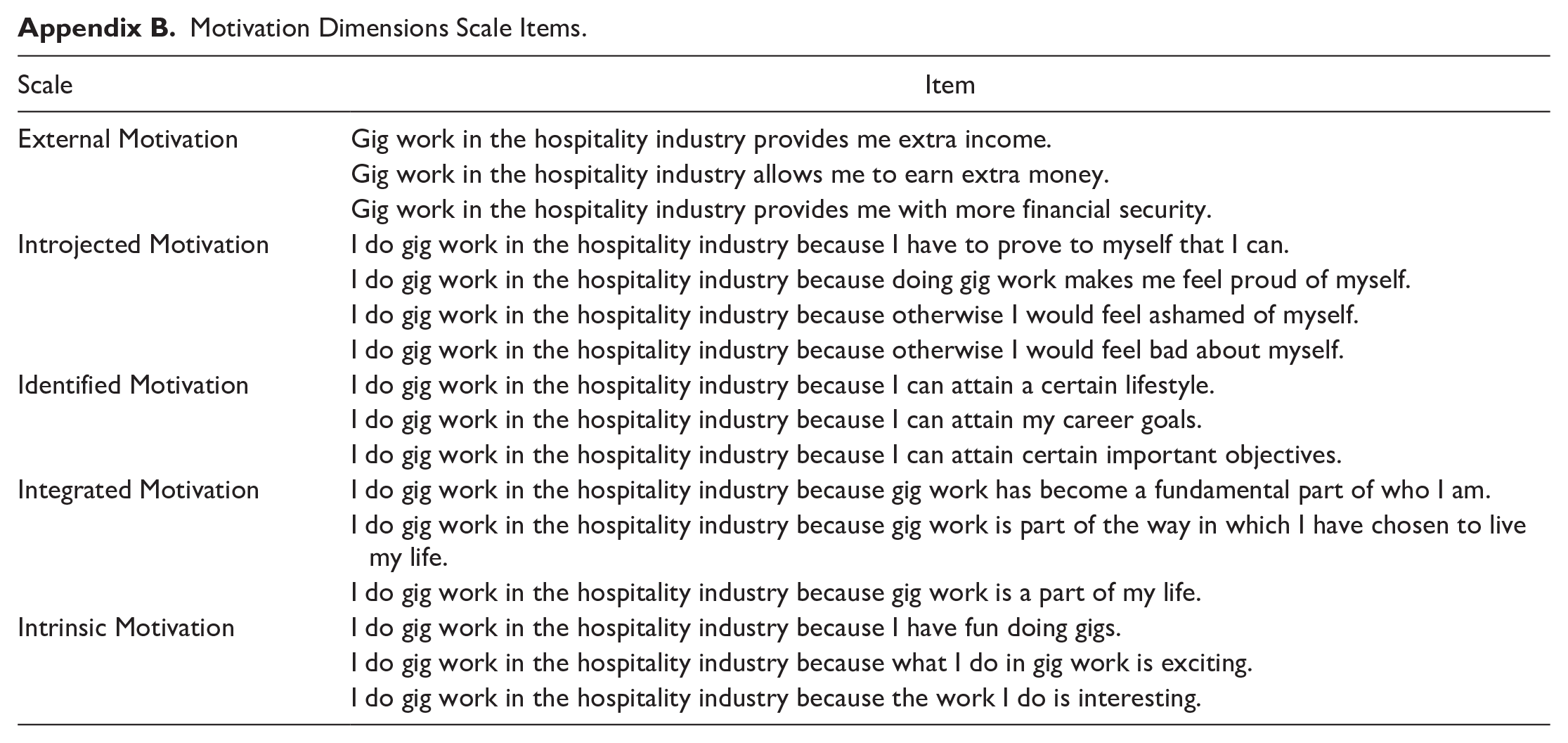
Each item was measured on a 7-point Likert scale ranging from 1 = strongly disagree to 7 = strongly agree, unless otherwise noted. Gig workers’ motivations include 16 items from Gagné et al. (2015) assessing five distinct motivation types (See Appendix B). External motivation (α = 0.80) was measured by three items (e.g., “Gig work in the hospitality industry provides me with extra income”). Introjected motivation (α = 0.76) was measured by four items (e.g., “Doing gig work makes me feel proud of myself”). Identified motivation (α = 0.85) was measured by three items (e.g., “I’m doing gig work in the hospitality industry because I can attain my career goals”). Integrated motivation (α = 0.83) was measured by three items (e.g., “I’m doing gig work in the hospitality industry because gig work is a part of my life”). Lastly, intrinsic motivation (α = 0.90) was measured by three items (e.g., “I’m doing gig work in the hospitality industry because I have fun doing gigs”).
Five antecedents were included based on Howard et al. (2016): age, gender, primary or supplementary source of income, voluntarily or involuntary participation, and self-reported skill complexity for the gig work they do (Cropanzano et al., 2023; Watson et al., 2021). Source of income was measured by a single item, “Is gig work your primary or supplementary source of income?” A single item measured voluntarily or involuntary participation: Did you actively choose to do gig work, or did you not have other employment options at that time?” Skill complexity was measured by a single item “Please describe the complexity of the skills required by your gig work” (1 = simple, 7 = complex).
Six outcome variables were also included in the survey. Work engagement (α = 0.93) was measured by six items from Schaufeli et al. (2006), for example, “In my gig work, I feel strong and vigorous.” Job satisfaction (α = 0.93) was measured by three items adapted from Lawler et al. (1979), for example, “All in all, I am satisfied with my job.” Organizational citizenship behavior (α = 0.83) was measured by six items adapted from Dalal et al. (2009), for example, “I volunteer to do something that is not required.” In-role behavior (α = 0.87) was measured by six items adapted from Burney et al. (2009), for example, “Fulfill responsibilities specified in job description.” Emotional exhaustion (α = 0.93) was measured by six items adapted from Maslach and Jackson (1981), for example, “I feel burned out from gig work.” Turnover intention (α = 0.88) was measured by three items from Mowday et al. (1982), for example, “I think a lot about leaving this gig.”
Analytical Approach
A person-centered approach, latent profile analysis (LPA), was conducted following Woo and colleagues’ (2018) guidelines. A confirmatory factor analysis (CFA) was performed to assess the construct validity of the model. The LPA started with a single-profile solution. An additional profile was added to the solution until the model fit no longer improved and/or the model extracted theoretically redundant profiles (Howard et al., 2016). Based on Woo and colleagues’ (2018) guidelines, seven model fit statistics were included to evaluate the model: log-likelihood, Akaike’s Information criterion (AIC), Bayesian information criterion (BIC), sample-size-adjusted BIC (SABIC), Lo-Mendell-Ruben likelihood ratio test (LMR), bootstrap likelihood ratio test (BLRT), and entropy. There are no cutoff scores for LPA absolute fit statistics, including log-likelihood, AIC, BIC, and SABIC. Rather, the best model should have lower log-likelihood, AIC, BIC, and SABIC compared to other profile solutions (Howard et al., 2016). In addition, LMR and BLRT should be statistically significant (p < .05). Lastly, the solution should show a higher entropy value. Woo et al. (2018) suggested that the entropy value should be higher than 0.70 to retain an acceptable solution.
Additionally, the automatic three-step approach was adopted to model auxiliary variables (i.e., antecedents and outcomes; Asparouhov & Muthén, 2014). First, the LPA was conducted to determine the number of profiles fitting the data. Second, the most likely profile membership was obtained based on the posterior distribution from Step 1 to examine the antecedents of the profile membership. Lastly, the differences in outcomes among profiles were assessed using BCH auxiliary analysis (Asparouhov & Muthén, 2014). The BCH analysis is a weighted multiple-group analysis, which accounts for the classification error when examining the connection of profiles and outcomes Asparouhov & Muthén, 2014).
LPA Results
Descriptive Analysis and Construct Validity
Table 1 displays the descriptives and correlations of the profiles’ multidimensional motivations, antecedents and outcomes. A CFA was conducted to assess the construct validity of the multidimensional motivations before performing LPA. The five-factor model shows an acceptable model fit (χ2 = 134.03, df = 66, p < .01, CFI = 0.975, TLI = 0.965, RMSEA = 0.058, SRMR = 0.052; Kline, 2023). The average variance extracted (AVE) scores for each latent variable were above 0.5, suggesting an acceptable level of convergence validity (Kline, 2023). In addition, the AVE of each latent variable is above its squared correlation coefficients with other variables, indicating good discriminant validity.
Means, Standard Deviations, and Intercorrelations of Variables.
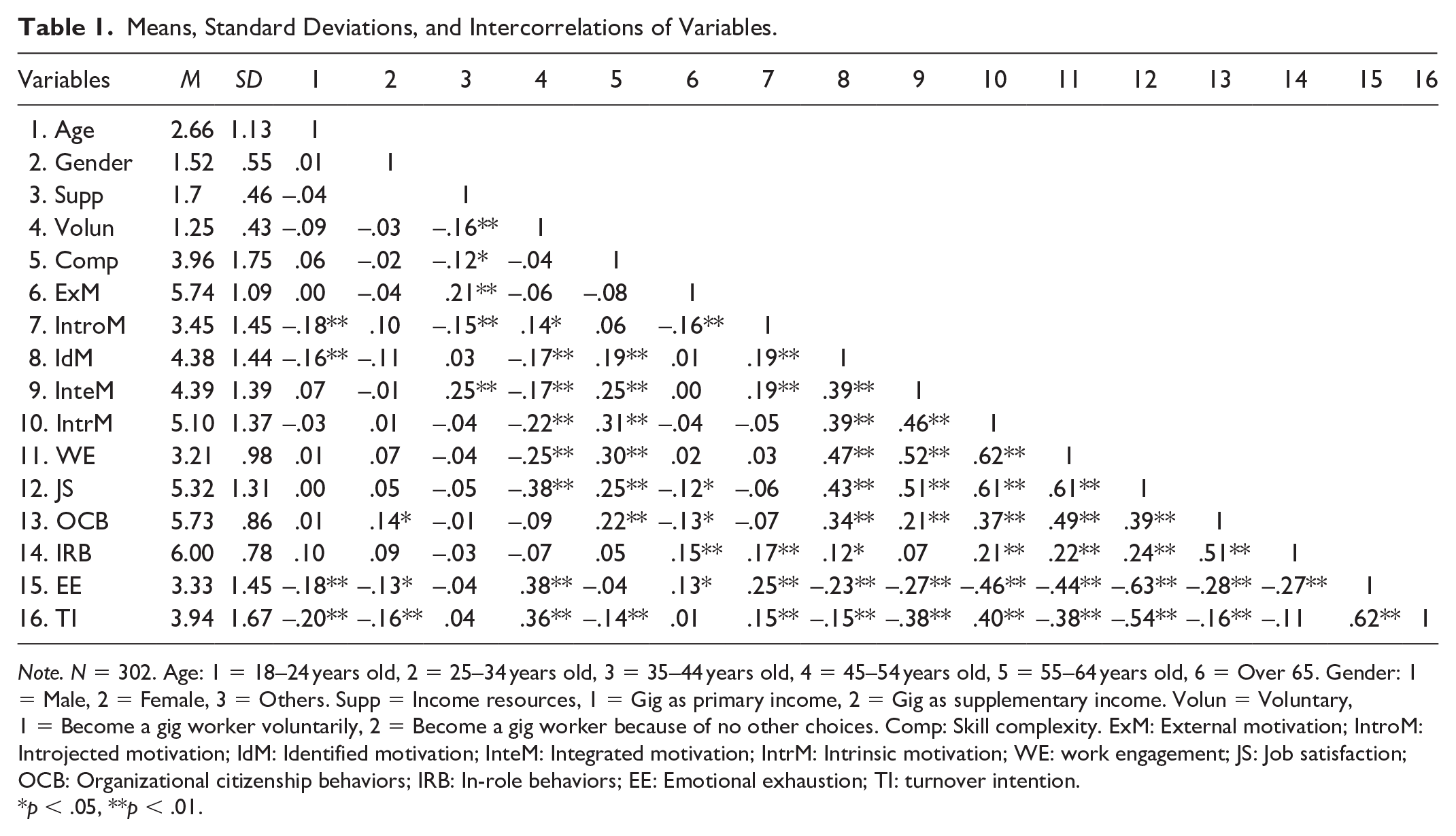
Note. N = 302. Age: 1 = 18–24 years old, 2 = 25–34 years old, 3 = 35–44 years old, 4 = 45–54 years old, 5 = 55–64 years old, 6 = Over 65. Gender: 1 = Male, 2 = Female, 3 = Others. Supp = Income resources, 1 = Gig as primary income, 2 = Gig as supplementary income. Volun = Voluntary, 1 = Become a gig worker voluntarily, 2 = Become a gig worker because of no other choices. Comp: Skill complexity. ExM: External motivation; IntroM: Introjected motivation; IdM: Identified motivation; InteM: Integrated motivation; IntrM: Intrinsic motivation; WE: work engagement; JS: Job satisfaction; OCB: Organizational citizenship behaviors; IRB: In-role behaviors; EE: Emotional exhaustion; TI: turnover intention.
p < .05, **p < .01.
LPA Results
Table 2 provides the fit statistics for possible profile solutions. A four-profile solution was chosen because it showed lower log-likelihood, AIC, BIC, and SABIC, as well as significant LMR and BLRT at a 0.01 level. Although the five-profile solution exhibited a slightly lower log-likelihood, AIC, BIC, and SABIC, the LMR and BLRT were not statistically significant at the 0.01 level, and the entropy value was the same as that of the four-profile solution. Therefore, the four-profile solution was retained in the LPA.
LPA Model Fit.
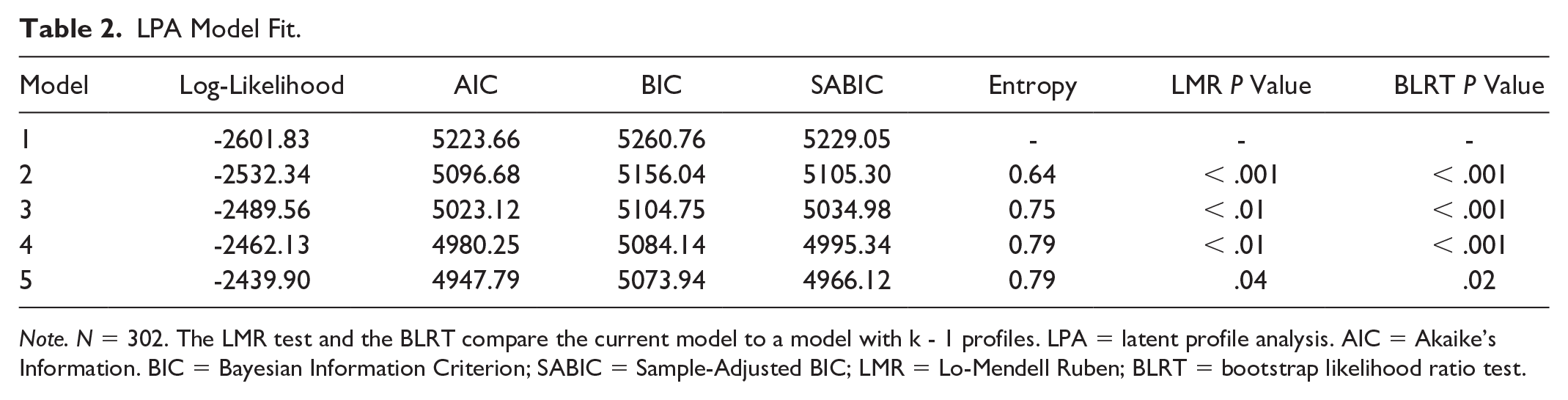
Note. N = 302. The LMR test and the BLRT compare the current model to a model with k - 1 profiles. LPA = latent profile analysis. AIC = Akaike’s Information. BIC = Bayesian Information Criterion; SABIC = Sample-Adjusted BIC; LMR = Lo-Mendell Ruben; BLRT = bootstrap likelihood ratio test.
Table 3 and Figure 1 display the estimated means and standard deviations for the motivation indicators in each profile. The most common profile was labeled income boosters (N = 96, 31.79%), given that these gig workers reported the highest levels of external motivation (M = 5.96) and lowest levels of other motivations. Those gig workers with the next most common profile (N = 88, 29.14%) were labeled floaters because these gig workers reported relatively low levels of motivation across all dimensions. The third profile (N = 82, 27.15%) was labeled gig lovers, given that these gig workers reported the highest level of intrinsic motivation (M = 5.78), with relatively lower motivation in the controlled dimensions, such as external and introjected motivation. Lastly, the fourth profile (N = 36, 11.92%) was labeled all-in because these individuals reported the highest levels of introjected (M = 5.42), identified (M = 5.32), and integrated motivation (M = 5.56), with moderately high levels of external and intrinsic motivation.
Four-Profile Model Results.
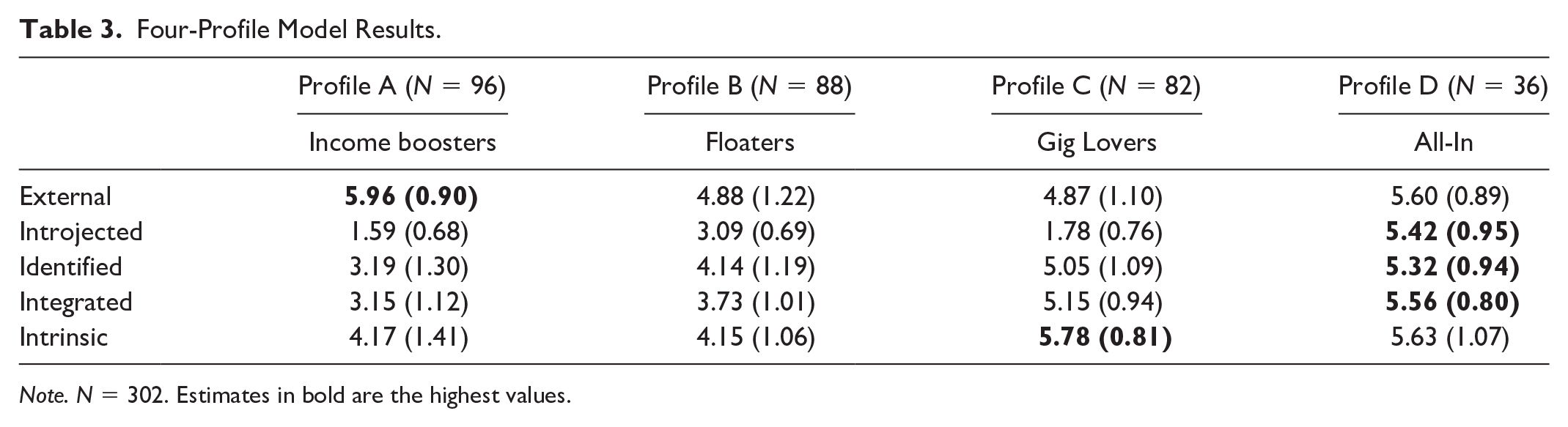
Note. N = 302. Estimates in bold are the highest values.
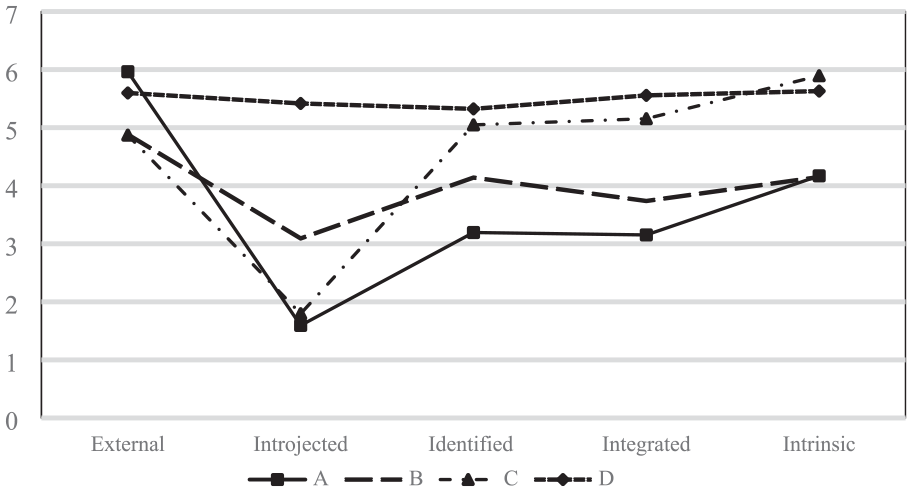
Latent Profiles for Different Motivators.
The four-profile configuration was developed based on Howard and colleagues’ (2016) work on traditional employees’ motivation profile. Howard et al. (2016) found a four-profile solution: amotivated employees, moderately motivated employees, highly autonomous employees, and balanced employees. The floater profile is like amotivated employees, in which employees reported low levels of motivation across all dimensions. The gig lover profile is consistent with highly autonomous employees as these workers reported the highest levels of intrinsic motivation. The all-in profile is consistent with the balanced profile in Howard et al. (2016), where employees reported moderately high levels of motivation. However, the unique profile in the current study was the income booster profile. This may be because a significant number of gig workers do gigs to “make extra money” (Cropanzano et al., 2023). In sum, these results suggest four different profiles and different motivators exist in the hospitality gig industry.
Factors Predicting Motivation Profiles
The R3STEP logistic regression analyses were performed to examine the antecedents of each profile. Based on the recommendations of previous multidimensional motivation studies (Howard et al., 2016), five predictors were included in the logistic regression, including age, gender, whether the gig work is their primary source of income or not, whether participants chose to become a gig worker voluntarily or not, and their self-reported skill complexity (Cropanzano et al., 2023; Watson et al., 2021). The fourth profile, all-in, was selected as the reference group and coefficients indicate whether the predictors will increase/decrease the likelihood of a hospitality gig worker’s membership in a certain profile relative to high motivators.
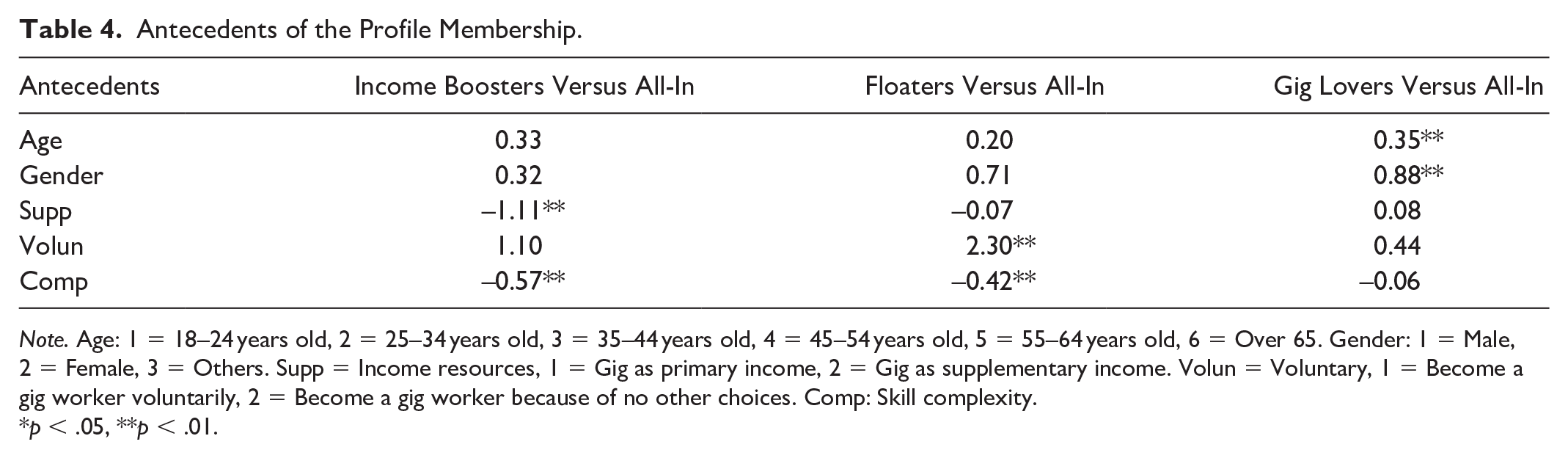
As shown in Table 4, the results showed that hospitality gig workers are more likely to be income boosters with gigs as supplementary income (B = -1.11, p < .01) and with basic skill levels (B = -0.57, p < .01), whereas age, gender, and whether the individuals become gig workers voluntarily did not predict hospitality gig workers’ membership as income boosters. Additionally, those choosing gigs because of no other options (B = 2.30, p < .01) with minimal skill complexity (B = -0.42, p < .01) are more likely to be floaters compared to those who actively chose gigs and have higher-level skills, while age, gender, and whether gigs are the primary income source did not predict hospitality gig workers’ membership as floaters. As such, low skill complexity seems to prevent gig workers from engaging in high levels of internal motivation. Lastly, only gender (B = 0.35, p < .01) and age (B = 0.88, p < .01) are significant predictors of gig lovers membership compared to the all-in profile, with female and older hospitality gig workers more likely to be gig lovers compared to male and younger hospitality gig workers. As such, intrinsic motivation plays a more important role in female and older individuals becoming hospitality gig workers.
Antecedents of the Profile Membership.
Note. Age: 1 = 18–24 years old, 2 = 25–34 years old, 3 = 35–44 years old, 4 = 45–54 years old, 5 = 55–64 years old, 6 = Over 65. Gender: 1 = Male, 2 = Female, 3 = Others. Supp = Income resources, 1 = Gig as primary income, 2 = Gig as supplementary income. Volun = Voluntary, 1 = Become a gig worker voluntarily, 2 = Become a gig worker because of no other choices. Comp: Skill complexity.
p < .05, **p < .01.
Motivation Profiles Diverge on Outcomes
Hypothesis Development
Previous literature identifies three key outcome categories for work motivation: (1) attitude, (2) performance behaviors, and (3) well-being (Howard et al., 2016). Gig workers differ in commitment levels due to the flexibility of gig work, which impacts their job-related attitudes and engagement, such as job satisfaction and work engagement (Cropanzano et al., 2023). Since gig workers often perform project-based work, both in-role and extra-role behaviors vary (e.g., organizational citizenship behaviors [OCB]; Moorman et al., 2024). Furthermore, since gig workers experience unique challenges, such as significant pay volatility, lack of benefits, social isolation, and occupational stigmatization (Cropanzano et al., 2023), gig workers’ emotional exhaustion and subsequent withdrawal were also included as outcomes in the current study.
From the OIT perspective, amotivation correlates with poor outcomes in attitude, performance, and well-being areas (Ryan et al., 2022). Among all types of motivation, high autonomous motivation leads to more positive consequences than controlled motivation (Ryan et al., 2022; Van Den Broeck et al., 2021). Intrinsic motivation, driven by internal values, leads to long-term engagement and involvement (Jolly & Lee, 2021). External motivation, however, often depends on external rewards, and thus can result in bare minimum performance, impacting work attitude and quality (Van Den Broeck et al., 2021). Intrinsic motivation is shown to be positively related to workers’ well-being (Van Den Broeck et al., 2021), job satisfaction and lower levels of exhaustion, due to a sense of autonomy and control over the job (Fishbach & Woolley, 2022; Raza et al., 2015). In contrast, external motivation can result in feelings of being controlled and even a sense of manipulation because workers feel the pressure to meet specific standards to obtain rewards (Van Den Broeck et al., 2021), leading to stress and burnout over time and even turnover and withdrawal behaviors (Yu et al., 2021).
In the context of hospitality gig work, it is expected that gig worker profiles characterized by high levels of autonomous motivation (e.g., gig lovers and all-in) yield more positive work attitude, greater performance, and better well-being outcomes than profiles characterized by high levels of controlled motivation or low levels of motivation (e.g., income boosters and floaters; Howard et al., 2016). Thus, we hypothesize:
H1: Gig lovers and all-in will have higher (a) work engagement, (b) job satisfaction, (c) in-role behaviors, (d) OCB, and lower (e) emotional exhaustion, and (f) turnover intention compared to income boosters and floaters.
Within the low intrinsic motivation gig worker groups, income boosters are expected to show higher in-role behaviors than floaters. External rewards, such as work pressure and financial incentives, often drive higher in-role behaviors, including meeting basic job requirements and fulfilling formal duties (Van den Broeck et al., 2021). These external incentives provide tangible motivation for completing necessary tasks and maintaining productivity. However, income boosters are unlikely to exhibit more organizational citizenship behavior (OCB) than floaters, as OCB are discretionary actions, not directly tied to external rewards (Organ, 1988). Employees with high external motivation, like income boosters, may exert the minimum effort to obtain rewards, limiting their engagement in OCB and not doing anything beyond the formal job requirements (Van Den Broeck et al., 2021). Thus, we hypothesize:
H2: Income boosters will have higher in-role behaviors compared to floaters, but there will be no differences in terms of OCB.
Gig lovers and all-in profiles were included in the group of high intrinsic motivation gig workers. While both groups report high autonomous motivation, the all-in group also experiences higher levels of controlled motivation, driven by external rewards such as performance incentives, bonuses, or meeting specific targets (Ryan & Deci, 2000). While autonomous motivation tends to lead to long-term engagement and positive outcomes, the controlled motivation seen in the all-in profile introduces stress, as it is more focused on meeting externally imposed standards or deadlines (Yu et al., 2021). In addition, the inconsistent nature of the gig industry may make external rewards inconsistent and unpredictable (Sayre, 2023), leading to anxiety and uncertainty. Therefore, we hypothesize:
H3: Gig lovers will have lower emotional exhaustion and turnover intention compared to all-in.
Results
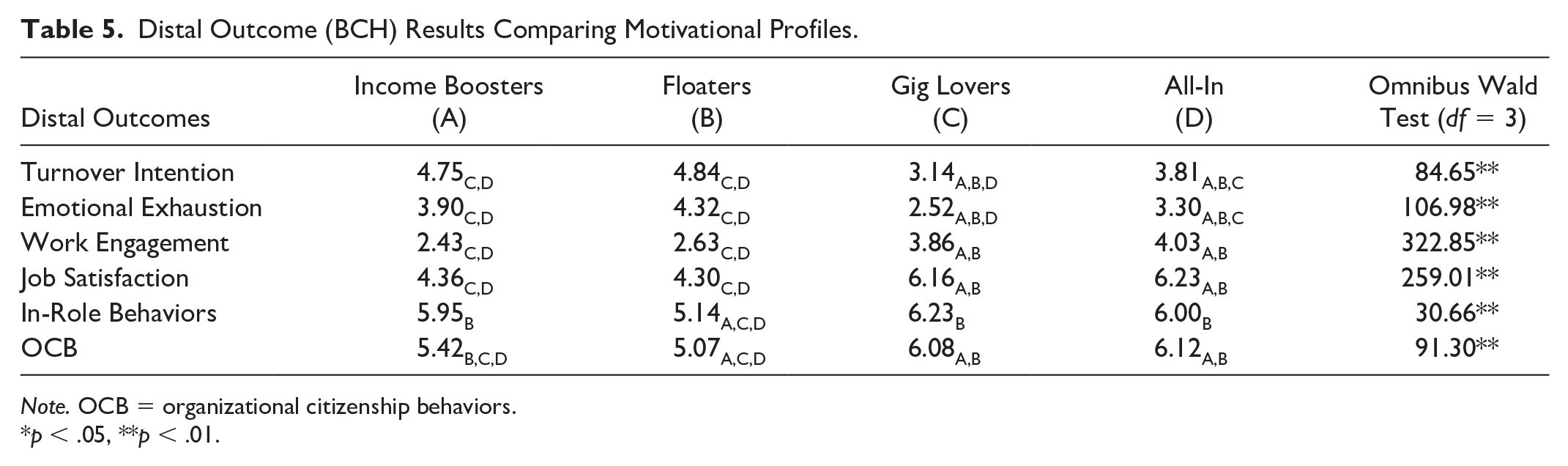
The results of motivational profiles diverging on outcomes were examined by BCH auxiliary analysis (Asparouhov & Muthén, 2014). The results are shown in Table 5 and Figure 2. The omnibus Wald test suggested significant differences in all the outcomes, including work engagement, job satisfaction, OCB, in-role behaviors, emotional exhaustion, and turnover intention among the four profiles. The difference between each group was examined by BCH post hoc analysis. The results showed that gig lovers and all-in reported higher levels of work engagement (Mhospitality = 3.86, Mall-in = 4.03), job satisfaction (Mhospitality = 6.16, Mall-in = 6.23), OCB (Mhospitality = 6.08, Mall-in = 6.12), and in-role behaviors (Mhospitality = 6.23, Mall-in = 6.00), significantly higher than income boosters and floaters in terms of work engagement (Mincome boosters = 2.43, Mfloaters = 2.63, p < .01), job satisfaction (Mincome boosters = 4.36, Mfloaters = 4.30, p < .01), OCB (Mincome boosters = 5.42, Mfloater = 5.07, p < .01), and in-role behaviors (Mincome boosters = 5.95, Mfloater = 5.14, p < .01). In addition, gig lovers and all-in had lower levels of emotional exhaustion (Mhospitality = 2.52, Mall-in = 3.30) and turnover intention (Mhospitality = 3.14, Mall-in = 3.81) than income boosters and floaters in terms of emotional exhaustion (Mincome boosters = 3.90, Mfloaters = 4.32, p < .01) and turnover intention (Mincome boosters = 4.75, Mfloaters = 4.84, p < .01). In sum, the results supported Hypothesis 1.
Distal Outcome (BCH) Results Comparing Motivational Profiles.
Note. OCB = organizational citizenship behaviors.
p < .05, **p < .01.
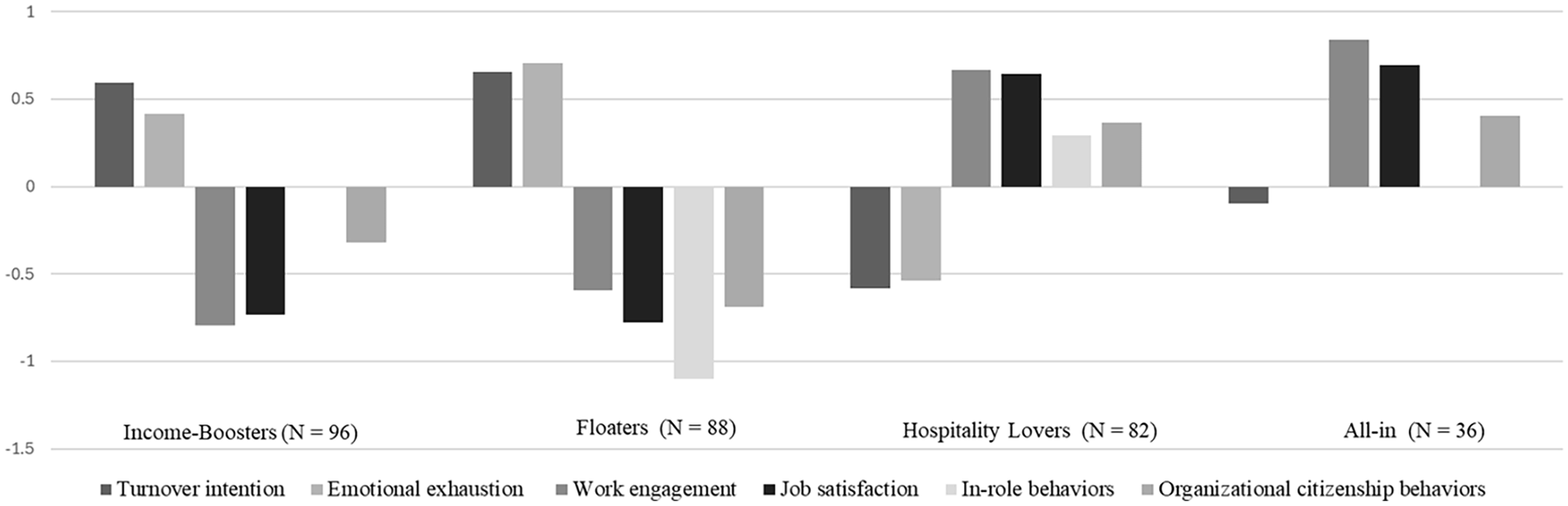
Centered Distal Outcomes by Latent Profiles.
Within the income boosters and floaters group, the results showed that income boosters reported significantly higher levels of in-role behaviors than floaters (Mincome boosters = 5.95, Mfloaters = 5.14, p < .01). However, different from our expectations, there was also a significant difference in OCB between income boosters and floaters profiles (Mincome boosters = 5.42, Mfloaters = 5.07, p < .05), thereby partially supporting Hypothesis 2. In terms of the comparison between gig lovers and all-in profiles, the post hoc analysis results showed that gig lovers reported significantly lower emotional exhaustion (Mhospitality = 2.52, Mall-in = 3.30, p < .01) and turnover intention (Mhospitality = 3.14, Mall-in = 3.81, p < .01) than all-in, thereby supporting Hypothesis 3.
Discussion and Conclusion
Using a person-centered approach (Woo et al., 2018) and OIT (Ryan et al., 2022), this study investigated hospitality gig workers’ work-related motivations. Four gig worker profiles emerged: income boosters, floaters, gig lovers, and all-in (RQ1). Instead of capturing how certain types of motivation link to outcomes (i.e., variable-centered approach), LPA demonstrates different patterns of motivation within the hospitality gig worker population. Gig lovers and all-in profiles exhibited higher intrinsic motivations while income boosters and floaters were more extrinsically motivated. Factors including age, gender, income source, voluntarily or involuntarily participation, and skill complexity were significant in predicting profile membership (RQ2). More specifically, income boosters and floaters tend to have less complex skills and rely on gig work for primary income, while gig lovers were typically older and female.
The study also found differences in work attitude, performance, and well-being outcomes (RQ3) by examining work engagement, job satisfaction, OCB, and in-role behaviors. Income boosters and floaters showed lower levels of these positive outcomes but higher levels of emotional exhaustion and turnover intention. The findings demonstrate complex motivation configurations of hospitality gig workers, informing and shaping the theoretical and practical landscape of hospitality gig workers’ motivation (RQ3).
Theoretical Implications
This study fills a gap by proposing new motivation profiles based on OIT to understand hospitality gig workers. Since conventional variable-centered studies of gig worker motivations may not capture a holistic understanding of motivations, by applying a person-centered approach of OIT, this research provides a holistic understanding of how different motivations may combine or interact in practice (Zhang et al., 2024). The findings indicate that hospitality gig work motivation is not binary, but that a harmony of motivation levels intermingle within an individual. For instance, income boosters, primarily extrinsically motivated, differ from traditional workers who balance intrinsic and extrinsic motivation, indicating that hospitality gig work is often driven by financial needs.
This study also contributes to the OIT literature by comprehensively understanding the impact gig workers’ motivation levels have on personal outcomes and well-being. While Davidson and colleagues’ (2023) study found four profiles with similar predictor patterns based on intrinsic motivations, this study includes extrinsic motivations, demonstrating high versus low intrinsic motivations among gig worker profiles. This suggests large variances in extrinsic and intrinsic motivations among the four profiles analyzed, providing a more holistic understanding of hospitality gig workers’ motivation.
Additionally, when comparing the gig worker motivation profiles with the traditional worker motivation profiles (Howard et al., 2016), the income booster profile is unique in hospitality gig workers, being characterized by high extrinsic and low intrinsic motivation. This suggests that extrinsic and intrinsic motivation are relatively balanced among traditional workers since they work in a stable environment and have less control over their jobs compared to gig workers. However, for many gig workers, income is supplementary (e.g., Watson et al., 2021) and not a long-term career (Shroff et al., 2022). Therefore, the income booster profile is unique to the gig workers in the hospitality industry.
The antecedents of gig worker profiles—demographics, skill complexity, income source, and reasons for joining—show the diversity within the hospitality gig economy, ranging from high-income event directors to tip-dependent food delivery personnel (Jin & Liu-Lastres, 2024). Compared to previous studies (e.g., Davidson et al., 2023; Morgeson et al., 2005) gig workers with more complex skills tend to be more intrinsically motivated due to greater personal fulfillment and meaning from their work, while those relying on gig work as their primary income are more extrinsically motivated. Voluntary participation correlates with intrinsic motivation, with older workers and women more likely to be gig lovers, in line with research on age-related and gendered motivational differences like motivation to provide care for others and mastery goal-orientation (Inceoglu et al., 2012).
Furthermore, findings also support Pelletier and Rocchi’s (2023) shift in how extrinsic motivation is viewed, revealing that external motivation, when internalized, can drive work performance. The findings suggest that the in-role behavior of those high in external motivators (income boosters) scored higher than that of low motivators (floaters) and was similar to that of other profiles. Therefore, although external motivators—like flexibility—lead to higher in-role behaviors, gig workers’ well-being—particularly emotional exhaustion—must be monitored to ensure long-term organizational success (Cropanzano et al., 2023), highlighting the benefits of employing a person-centric OIT when studying gig worker motivation levels.
Practical Implications
Gig workers are presented as a homogenous group, motivated by autonomy and flexibility but the findings of this study suggest a one-size-fits-all approach is ineffective. While the increased adoption of gig work in hospitality and service-related industries reflects both operational realities and a subtle shift in workforce priorities, organizations must adapt by understanding the various motivations of gig workers to achieve desired outcomes while maintaining service quality.
For example, income boosters and floaters, typically part-time gig workers (e.g., work less than 20 hours per week) performing low-skill tasks like food delivery, are often motivated by external factors like financial need, consistent with previous findings (e.g., Davidson et al., 2023). These workers exhibit higher emotional exhaustion and turnover intentions, making them effective for addressing short-term labor shortages but less ideal for maintaining long-term service quality. As such, hospitality organizations should limit their reliance on such profiles and assign them to roles with minimum impact on the guest experience. Given the focus on extrinsic motivators, implementing performance-based incentives tied to clear goals and structured tasks, and offering low-cost training and engagement strategies, could help transition them to more intrinsically motivated profiles like gig lovers and all-ins (Cropanzano et al., 2023).
In contrast, all-in and gig lover gig workers, highly educated and experienced professionals like event management directors, are motivated by intrinsic factors such as job satisfaction and personal fulfillment. These gig workers should be viewed as valuable talent, offering high-level skills while maintaining the flexibility that benefits the organization during low-demand periods. For these gig workers, hospitality organizations should shift focus from transactional relationships to empowering them with job crafting and autonomy, highlighting the meaningful aspects of their work (Xu & Wang, 2020).
Furthermore, demographic factors, like gender and age, also influence gig workers’ motivations. Female and older hospitality gig workers are more likely to be gig lovers compared to male and younger individuals. These demographic profiles may be a consequence of life stage, with female and older gig workers seeking more flexibility due to family or personal commitments. Hospitality organizations should leverage this insight by positioning gig work as a deliberate employment strategy, in order to keep great talent who may otherwise leave the industry for more accommodating work options. Addressing the gender bias in senior leadership positions and retaining talent in leadership roles could combat the ongoing “brain drain” within the industry.
Lastly, the findings emphasize that gig work can provide more than just a short-term staffing solution. By understanding the different motivational profiles of gig workers, hospitality organizations can enhance workforce engagement, job satisfaction, and service quality. Depending on the size of one’s gig workforce, practitioners are encouraged to understand their workers’ motivations, developing unique systems and procedures to engage each profile in a manner that motivates them to do their best work for the hospitality enterprise.
Limitations and Future Research
This study has several limitations. First, all data were self-reported, which may introduce common method bias, despite the theoretical appropriateness of self-reporting for motivation (Howard et al., 2016). Future studies can collect data from different sources, such as supervisors, customers, and even objective performance assessments. Additionally, while LPA provides valuable insights, it is sensitive to sample characteristics and investigators’ interpretations (Woo et al., 2018). Future research should use multiple samples to confirm the present profiles and assess whether the solution is stable across all hospitality gig workers.
Moreover, the use of Prolific for participant recruitment, while useful for targeting hospitality gig workers, may not fully represent the broad spectrum of this workforce. For example, the majority of the Prolific participants are Caucasian and have a relatively high socioeconomic status (Douglas et al., 2023), limiting the generalizability of the results.
Finally, the study did not examine changes in motivation over time. Motivation is a dynamic process that may vary over time (Olafsen et al., 2018). Future research could explore within-person variation in gig workers’ motivation using longitudinal person-centered techniques, such as latent transition analysis (Vaziri et al., 2020).
Footnotes
Appendix
Motivation Dimensions Scale Items.
| Scale | Item |
|---|---|
| External Motivation | Gig work in the hospitality industry provides me extra income. |
| Gig work in the hospitality industry allows me to earn extra money. | |
| Gig work in the hospitality industry provides me with more financial security. | |
| Introjected Motivation | I do gig work in the hospitality industry because I have to prove to myself that I can. |
| I do gig work in the hospitality industry because doing gig work makes me feel proud of myself. | |
| I do gig work in the hospitality industry because otherwise I would feel ashamed of myself. | |
| I do gig work in the hospitality industry because otherwise I would feel bad about myself. | |
| Identified Motivation | I do gig work in the hospitality industry because I can attain a certain lifestyle. |
| I do gig work in the hospitality industry because I can attain my career goals. | |
| I do gig work in the hospitality industry because I can attain certain important objectives. | |
| Integrated Motivation | I do gig work in the hospitality industry because gig work has become a fundamental part of who I am. |
| I do gig work in the hospitality industry because gig work is part of the way in which I have chosen to live my life. | |
| I do gig work in the hospitality industry because gig work is a part of my life. | |
| Intrinsic Motivation | I do gig work in the hospitality industry because I have fun doing gigs. |
| I do gig work in the hospitality industry because what I do in gig work is exciting. | |
| I do gig work in the hospitality industry because the work I do is interesting. |
Declaration of Conflicting Interests
The authors declared no potential conflicts of interest with respect to the research, authorship, and/or publication of this article.
Funding
The authors received no financial support for the research, authorship, and/or publication of this article.
