




Abstract
The lack of transparency in AI-related technology poses challenges in identifying elements that influence conversation fluency with chatbot. Drawing from media richness, task-technology fit, and flow theories, we propose an integrated framework to investigate how chatbots’ humanoid characteristics affect users’ process fluency. Furthermore, we explore boundary conditions of dialogue characteristics, including conversation types (topic-related vs. task-related) and interaction mechanisms (free-text vs. button-based) that amplify or disrupt such flow-like experience in conversation. Two separate scenario-based experimental studies were conducted to explore two chatbot humanoid characteristics, human-like cues (Study 1) and tailored responses (Study 2). Results suggest that a match between chatbot’s humanoid and dialogue characteristics can increase fluency in comprehending the message, enhancing customer satisfaction and usage intention. Specifically, chatbots with humanoid conversational cues promote more flow-like messages in topic-related conversation or free-text interaction. The results highlight the significance of process fluency leading to more favorable outcomes in human–chatbot interactions.
Highlights
The interaction of chatbots’ humanoid conversational cues and dialogue characteristics enhance process fluency.
Process fluency mediates the relationship between humanoid cues, and customer satisfaction and usage intention.
Tailored responses enhance process fluency, while human-like cues are not always effective.
Chatbots with human-like cues and tailored responses promote more flow-like messages in either topic-related conversation or free-text interaction.
Introduction
Recent developments in artificial intelligence (AI) and natural language processing have led to a widespread adoption of chatbots, which fundamentally alter how customers interact with organizations at every stage of customer experience (M. H. Huang & Rust, 2018). Text-based chatbots in particular are becoming more prevalent in the hospitality industry as customer service assistants, since they offer an easy-to-implement, cost-efficient solution, with low barriers to entry (Dogru et al., 2023; Shevat, 2017). According to Fokina (2024), approximately 88% of U.S. customers have interacted with chatbots in different settings, and the hospitality industry (i.e., hotels, restaurants) is the second most prominent industry that heavily employs chatbots to interact with customers. When customers engage with chatbots, they expect a smooth and seamless service experience facilitated by the technology. However, there appears to be a gap between user expectations and chatbot capabilities, leading to chatbot aversion and high failure rates (Araujo, 2018; H. Kim et al., 2024). Therefore, scholars and managers need to devote attention to comprehending the intricacies of chatbot design to achieve more favorable outcomes.
Successful customer service requires resolving users’ problems or requests efficiently and emotionally (Haugeland et al., 2022). To create an experience with a chatbot that is emotionally engaging while also being efficient and functional, heightened attention was paid to incorporate a sense of “humanoid” in a digital interface which is designed to mimic human qualities and interactions (Go & Sundar, 2019). Due to the importance of interpersonal interactions, and the inherently people-oriented nature of hospitality services, humanoid characteristics play a significant role in customer service (Cao & Yang, 2023; X. S. Liu et al., 2022). From this perspective, scholars have suggested two humanoid characteristics in Human-Computer interaction (HCI), namely hedonic and pragmatic attributes. According to Hassenzahl’s (2003) framework, hedonic attributes are related to emotional aspects focusing on interactivity, while pragmatic attributes are related to efficiency, which emphasizes usability and accuracy. Both dimensions contribute significantly to the overall quality of the user experience. The most common way to convey humanoid attributes in chatbots is by incorporating verbal and non-verbal conversational cues (Y. Huang et al., 2021). Previous research identified two humanoid conversational cues that influence users’ experiences: human-like cues and tailored responses (Go & Sundar, 2019; Jiang et al., 2023). Human-like cues involve imbuing non-human objects with human features and attributes (Go & Sundar, 2019) to create a warmer service experience for users. On the other hand, tailored responses demonstrate an understanding of the conversation by using specific language relevant to users’ characteristics and to the context of the discussion, as a way to provide smart service (Schuetzler et al., 2020). While those two humanoid conversational cues are distinct constructs (Jiang et al., 2023), previous studies integrated them together and treated as a unidimensional factor (e.g., Waytz et al., 2014), leading to overlapping concepts. Hence, this study expands the literature by examining these humanoid cues as two separate constructs, with one emphasizing the emotional aspect of the interaction while the other highlights the functional aspect, and their distinctive effects on customer experiences.
In addition, while the majority of previous studies have predominantly assessed the impact of chatbot’s conversational cues on perception-related outcomes such as social presence, trust, perceived warmth, and competence (Y. Huang et al., 2021; Jiang et al., 2023), fewer studies examine the importance of a flow-like conversation in facilitating seamless interactions (see Appendix A in the online supplemental material). In communication, a key component of optimal user interaction is flow (Csikszentmihalyi, 1975). One dimension of flow is process fluency, which refers to the smoothness and ease of processing information (Alter & Oppenheimer, 2009), enabling users to effortlessly engage with chatbots. While process fluency is a key objective of successful bilateral communication (Mohr & Birner, 1991), it has not received the same level of scrutiny in HCI literature. Furthermore, it remains uncertain whether humanoid conversational cues of text-based chatbots could complement limited functions inherent in a chatbot (e.g., intangible actions, no facial and emotional expression, and physically disembodied) to enhance customers’ perceptions of service interactions. Thus, there is a need for studies to explore the provision of unique humanoid conversational cues which can either enhance or diminish the cognitive effort exerted by users, aiming to facilitate seamless interaction (Saydam et al., 2022). This research gap highlights the need for investigating the role of humanoid conversational cues in shaping the process fluency of human–chatbot interactions.
Although chatbots with humanoid characteristics have gained popularity, it is essential to recognize that these humanoid conversational cues may lead to unintended consequences, and that their true value might not be realized in certain circumstances. Saydam et al. (2022) underscore the necessity for a comprehensive investigation of humanoid conversational cues affecting users’ acceptance and adoption for successfully utilizing AI technologies, particularly within the hospitality industry. Indeed, there have been contradicting results on the effectiveness of humanoid conversational cues on customer evaluation. While some studies have indicated positive interaction effects (Araujo, 2018), others have found negative interaction effects (S. Kim et al., 2016). Conflicting findings in prior literature on using humanoid conversational cues suggest that the impact of these factors on customers’ flow experience is context-dependent (Zierau et al., 2023). In other words, the user’s information processing is contingent upon what and how chatbot communicates (Pogacar et al., 2018). Although previous studies explored the boundary conditions—such as appearance-related factors (De Cicco et al., 2020), user characteristics (Jiang et al., 2023), and task-related factors (Cheng et al., 2021)—limited research has investigated the dialogue design characteristics, such as the contents of conversation and how the message is structured. Given that the unique dialogue design characteristics and their potential implications for behavioral outcomes have not been adequately investigated (Zierau et al., 2023), this study examines the moderating role of dialogue characteristics in information processing that affects the impact of humanoid characteristics.
In summary, the objectives of this study are to examine (1) the effects of two humanoid conversational cues of chatbots, namely human-like cues and tailored responses, on process fluency; (2) the boundary conditions of dialogue characteristics, including conversation types and interaction mechanisms; and (3) the underlying mechanism that explains the link between chatbots’ humanoid conversational cues and customer satisfaction and usage intention, by examining the mediating role of process fluency. To the best of the authors’ knowledge, this is the first study enriching the existing knowledge on explaining the underlying mechanisms of process fluency behind the effects of chatbot’s humanoid conversational cues and dialogue characteristics in AI literature within the hospitality industry. This study builds upon previous research on multiformat communication (Moffett et al., 2021) and three streams of theories (media richness, task-technology fit, and flow theories) to uncover how the unique affordances of text-based chatbots enhance or disrupt flow-like user experience, and shape customer evaluations.
Theoretical Background
Chatbots’ Humanoid Characteristics
Successful customer service aims to achieve both practical objectives and positive emotional experiences (Haugeland et al., 2022). To create an interactive chatbot experience that is emotionally engaging while also being efficient and functional, special focus was devoted to incorporating a sense of “humanoid” in chatbots. The humanoid approach aims to replicate human qualities and interactions, thereby creating a sense of familiarity and relatability within the chatbot’s functionality (Go & Sundar, 2019). From this perspective, researchers identified hedonic and pragmatic attributes as two aspects of humanoid communication in HCI. Hedonic attributes refer to emotional aspects of an interactive system that focus on interactivity, anthropomorphism, and novelty (Hassenzahl, 2003). These attributes are based on human-like cues of AI by adding different language styles, empathy, sympathy, and behaviors during conversation (Go & Sundar, 2019; Jiang et al., 2023). On the other hand, pragmatic attributes refer to usability and accuracy, which show understanding of a conversation (Schuetzler et al., 2020) in an interactive system built upon a dynamic program model. Previous researchers proposed that interactive systems should contain both hedonic and pragmatic characteristics to improve user experience (Hassenzahl, 2003). Therefore, in this study, the term “humanoid characteristics” refers to chatbot’s hedonic and pragmatic attributes that are similar to those of a human conversation partner.
Moffett et al. (2021) introduced a comprehensive framework of bilateral multiformat communication in digital interactions. Multiformat communication represents customized, bilateral, simultaneous interaction across multiple channels, which is essential for relationship marketing efforts. As marketing research evolves, there is a growing need to manage customer relationships through diverse communication formats, presenting a complex and timely challenge (M. H. Huang & Rust, 2018). In the context of multiformat communication, Moffett et al. (2021) decompose communication formats into “cue characteristics” and “channel characteristics,” distinguishing between real cues (e.g., human interactions) and simulated cues (e.g., chatbots and AI). The concept of multiformat communication emphasizes the need to identify format characteristics that enhance mutual understanding and reduce cognitive load and confusion (Moffett et al., 2021). This includes investigating the optimal combination of characteristics for effective communication. Building on Moffett and colleagues’ (2021) framework of multiformat communication, our study focuses on the unique aspects of text-mediated communication. Since simulated cues are becoming integral to multiformat communication strategies in online interactions, we aim to identify the optimal combination of “cue characteristics” in textual speech across different formats to create hedonic and pragmatic quality in human services, thereby enhancing effective bilateral communication and improving user experiences.
Humanoid conversational cues: Human-like cues and tailored responses
Among different humanoid capacities, conversational cues are the most prevalent cues conveying characteristics of face-to-face interaction in chatbots (Y. Huang et al., 2021). Building upon the hedonic and pragmatic attributes of an interactive system, previous studies have identified two key humanoid conversational cues that influence users’ experiences: human-like cues and tailored response cues (Go & Sundar, 2019; Jiang et al., 2023). Human-like cues (as hedonic attributes) involve imbuing non-human objects with human features and attributes, achieved through language style, behavior, and signals (Go & Sundar, 2019). The goal is to create a warmer and more emotional service experience for users. On the other hand, tailored response cues (as pragmatic attributes) are dynamically generated based on the ongoing dialogue, demonstrating an understanding of the conversation by using specific language relevant to the context of the discussion (Schuetzler et al., 2020). The goal is to create a functional experience for users.
The majority of previous studies integrated these conversational cues together and treated them as a unidimensional factor, resulting in a potential perception of overlapping (e.g., Waytz et al., 2014). However, some studies (Jiang et al., 2023; Moussawi et al., 2021) have emphasized the importance of treating each cue as a separate construct and testing their own distinct pathways to user experience. For example, Waytz et al. (2014) treated humanness as a unidimensional factor by combining cognitive and emotional characteristics as a single dimension to non-human agents. They manipulated the AI agents using human-like cues (name, gender, voice, language) and tailored responses (contextually appropriate responses and feedback relevant to the ongoing task), creating a general sense of “humanoid.” However, they did not distinctly separate human-like cues from tailored responses. This unidimensional approach might have overlooked specific areas for improvement in conversational agents.
We argue that human-like cues and tailored responses, as proposed in this study, are two distinct and independent concepts. For instance, Netflix uses artificial intelligence to suggest personalized movies to users based not only on their viewing history but also on contextual data such as the current date, device, and location. This can result in highly customized responses that are not necessarily human-like. Conversely, a humanoid doll designed to precisely mimic human appearance and pre-programmed to perform human-like movements and sounds, but unable to communicate or understand, would score high on human-like characteristics, but lack intelligence. In the context of chatbots, both human-like characteristics and personalized responses can coexist to varying degrees in the same instance. For example, a chatbot might exhibit high levels of human-like behavior—such as introducing itself with a real name and offering warm greetings—but still fail to learn from previous interactions and provide meaningful responses. Thus, it becomes interesting when these two different characteristics are embedded in chatbots and appear together in dialogue. The degree to which these conversational cues are integrated, especially across different tasks and dialogues, creates diverse manifestations and pathways.
Additionally, companies may apply them separately or with varying degree, considering their brand positioning strategies (Jiang & Lu Wang, 2006). For instance, brands selling emotional products should adopt human-like cues, while those offering practical products or services should prefer a functional communication style. Given the dual-purpose nature of services within the hospitality industry, which provides both hedonic and utilitarian services (X. S. Liu et al., 2022), there is a need to examine the roles of human-like cues and tailored responses separately and to treat them as two distinct notions of humanoid conversational cues. This approach addresses this limitation by clearly differentiating human-like cues from tailored responses, and underscores the importance of a multifaceted understanding of communication formats in marketing research. Recognizing these as separate yet complementary factors can lead to more sophisticated and user-friendly AI systems, improving user experience.
Humanoid Conversational Cues and Process Fluency
How do humanoid conversational cues induce a smooth customer experience? A primary reason for using humanoid conversational cues in a chatbot is to ensure an effortless engagement with customers. Such immersive user experience can be explained by the concept of process fluency, which is a key component of optimal user experience (Csikszentmihalyi, 1975). Flow theory defines the state of flow which is met when individuals are fully involved in an activity with high immersion and concentration (Csikszentmihalyi, 1975). One dimension of flow is process fluency which pertains to the subjective perception of customers regarding the ease or difficulty they encounter while mentally processing information (Schwarz et al., 2021). According to Schwarz et al. (2021), an individual’s evaluation based on a given stimulus is frequently influenced by how quickly and easily the stimulus is processed than by the stimulus itself. Thus, providing humanoid conversational cues can contribute to a sense of fluency by enabling customers to swiftly respond, thereby improving the overall ease of continuing the ongoing interaction.
According to Media Richness Theory (MRT), communication effectiveness depends on information richness, which is determined by whether the information can improve user comprehension (Daft & Lengel, 1986). Communication channels vary in their ability to convey information, and the richness of a medium depends on its capacity to handle multiple cues simultaneously and provide immediate and personalized feedback. Richer media improves mutual understanding by facilitating the transmission of verbal and nonverbal cues (Lei et al., 2021). Previous research has indicated that the presence of conversational cues enables individuals to engage more instinctively, resulting in a heightened sensory experience (Daft & Lengel, 1986). Accordingly, chatbots with humanoid conversational cues become a richer medium than non-humanoid ones, increasing task participation (Moffett et al., 2021). Furthermore, even the media characteristics itself can contribute to a flow-like and seamless user experience (Zierau et al., 2023). Given that humanoid chatbots possess a wide range of sensory-rich symbols and a comprehensive set of expressions, these unique cues may have a comparable impact on the perceived process fluency as contrasted to non-humanoid ones. Furthermore, since humanoid characteristics enable immediate interactions compared to non-humanoid (Jiang et al., 2023), we assume that the increased variety of verbal and nonverbal cues with humanoid chatbots would improve customers’ perceptions of interface flow—the level of fluency that users experience during communication.
In the context of chatbots, human-like cues such as emoticons, natural language responses, and personalized greetings can promote a more socially interactive interaction (Jiang et al., 2023). Such cues can reduce the cognitive effort required for users to interpret responses (Schwarz et al., 2021), thus positively impacting process fluency. As Daft and Lengel (1986) suggest, communication richness can aid in conveying equivocal information more effectively. This aligns with the concept of process fluency, where users experience a smoother interaction flow due to the increased clarity and ease of understanding. Furthermore, communication mediums that allow for personalized feedback contribute to effective communication (Daft & Lengel, 1986). Tailored responses from chatbots cater specifically to the user’s needs, thereby enhancing the richness of the interaction. By addressing the user’s specific inquiries and providing relevant information promptly, tailored responses can contribute to improved process fluency as users can achieve their objectives more effectively.
H1: Human-like cues of chatbots positively affect process fluency.
H2: Tailored responses of chatbots positively affect process fluency.
Moderating Effects of Dialogue Characteristics
While applying humanoid conversational cues to chatbots has certain merits, it could also backfire into negative customer experience. There have been mixed results on the effectiveness of humanoid conversational cues of chatbots on user’s evaluation. While some studies indicated positive interaction effects (Araujo, 2018), others found negative interaction effects (S. Kim et al., 2016). For instance, Araujo (2018) indicated that incorporation of human-like features such as language style and name enhances company emotional connection through heightened social presence. On the other hand, AI agents with human-like features can occasionally have a detrimental impact on users’ enjoyment as they may undermine a user’s autonomy (S. Kim et al., 2016). Thus, adopting a “one-size-fits-all” approach by applying humanoid conversational cues in all dialogues may disrupt message fluency. Therefore, under what conditions could humanoid conversational cues enhance efficiency by increasing process fluency?
Conflicting findings in prior literature on humanoid conversational cues suggest that user information processing is context-dependent (Zierau et al., 2023), and the impact of these factors on customer perceptions may be affected by other dialogue specific characteristics of chatbot. In other words, the user’s information processing is contingent upon what and how the chatbot communicates (Pogacar et al., 2018). Therefore, examining the conditions under which the effect of humanoid conversational cues would be more effective in increasing a user’s experience is essential. To fill this knowledge void, this study examines two dialogue characteristics as boundary conditions: (1) conversation types, which answer what task or topic is performed, and (2) interaction mechanisms, which answer how the message itself is structured.
Furthermore, the mixed effects of using humanoid conversational cues on customer perception can be explained through the concept of “fit.” Task-technology fit (TTF) is widely recognized as a key theory in assessing the effectiveness of technology on user behavior in information systems. TTF posits that a user’s attitude is predicted by the fit between task requirements and technology characteristics (Goodhue & Thompson,1995). TTF measures the interaction between various aspects of the task and technology as perceived by users. By applying the notion of “fit,” we hypothesize that humanoid conversational cues are more suitable for certain dialogues, thereby positively shaping customer perceptions. Thus, we employ TTF to explore the interaction effects between chatbot characteristics and dialogue characteristics on process fluency.
Moreover, although AI agents can be humanized using specific format characteristics, they may not be as effective as human agents in all customer-firm interactions (M. H. Huang & Rust, 2018). Considering multiformat communication strategies, interactions across formats with simulated cues can be less effective but potentially more experiential compared to real cues (Moffett et al., 2021). Different simulated cues in multiformat communication enhance mutual understanding to varying degrees, depending on the dialogue or message (Moffett et al., 2021). This distinction underscores the importance of understanding how different message formats affect user experience outcomes. Therefore, it is essential to identify the cue characteristics that match the dialogue or message to achieve effective bilateral communication when designing successful multiformat strategies.
Chatbot conversation types
Chatbots are used to conduct various types of conversation with users, ranging from casual social exchanges to accomplishing specific tasks. Conversation types refer to the styles and objectives of the conversation (Haugeland et al., 2022). Shevat (2017) introduced two conversation types—task-related and topic-related conversations—to distinguish dialogues with chatbots. Task-related conversation is targeted and goal-oriented. Assisting the user with booking a hotel room or completing a specific task related to their stay are examples of task-related conversations. On the other hand, topic-related conversation denotes conversations exploring or detailing a topic of interest, characterized by greater complexity and a demand for creativity (Shevat, 2017). Seeking recommendations and information about the amenities or features of a hotel that can help users make an informed decision are examples of topic-related conversations.
Drawing on MRT, the choice of conversation type can significantly influence users’ perceptions of the chatbot’s humanoid qualities (Haugeland et al., 2022) as it affects the richness of the information exchanged. While rich media is more suitable for ambiguous and non-routine tasks, lean media is more suitable for non-ambiguous and routine tasks (Daft & Lengel, 1986). Furthermore, drawing on TTF, enhancing performance is achievable only when technology is aligned with the specific needs and preferences of the user (Goodhue & Thompson, 1995). Due to a high creativity and complexity of topic-related conversations (Shevat, 2017), the advantages of humanoid interactions should be more pronounced if the dialogue presents a topic that is not goal-oriented. In other words, customers believe chatbots are more capable of addressing problems or completing tasks if their actions closely mimic those of a human (Jiang et al., 2023). This is because complex and creative tasks demand divergent thinking and personality, aligning with human cognitive process (Bogert et al., 2020). Thus, for topic-related conversations, where information exchange and interpretation might be more complex, the use of humanoid conversational cues can enhance the richness of the communication, which then leads to enhanced process fluency. Furthermore, topic-related conversations—as highly creative and ambiguous tasks—demand expansive thinking combined with previous knowledge (Jiang et al., 2023). Thus, it is crucial to use rich communication with personalized feedback, including comprehending contextual information and customized responses.
On the other hand, in task-related conversations, users seek efficiency of the answer. Since task-related conversations involve more straightforward and routine interactions, adding humanoid cues might introduce unnecessary complexity, requiring greater cognitive processing and reducing absorption of the message. Users might prefer clear and concise responses that directly address their task-related inquiries, aligning with the principles of lean communication media (Daft & Lengel, 1986). Accordingly, the effect of humanoid conversational cues on process fluency for task-related conversation could be attenuated as they might add cognitive effort without providing significant benefits.
H3: The effect of human-like cues on process fluency is stronger for topic-related (vs. task-related) conversation.
H4: The effect of tailored responses on process fluency is stronger for topic-related (vs. task-related) conversation.
Chatbot interaction mechanisms
Chatbots offer users a range of interaction mechanisms. Chatbots are programmed in a way that allows users to either enter their requests in free text or utilize buttons and quick reply functions to streamline the conversation (Shevat, 2017). Opting for free text interaction could provide users with a greater sense of flexibility and engagement in the conversation compared to button interaction (Haugeland et al., 2022). On the other hand, the structured button-based interfaces of chatbots increase message simplicity and decrease users’ cognitive efforts (Jain et al., 2018). However, chatbots exclusively relying on button-based interaction or free-text can be frustrating for users depending on the situation. Therefore, the choice of free-text and button-based interaction has implications for the chatbot’s humanoid qualities (Haugeland et al., 2022).
In line with MRT and TTF, the advantages of humanoid interactions should be more pronounced if the dialogue presents free text compared to a button-based mechanism. Free-text interactions—as highly creative and ambiguous dialogues—require expansive thinking combined with previous knowledge (Jiang et al., 2023). Thus, it is crucial to use rich communication with personalized feedback, including comprehending contextual information and customized responses. On the other hand, in button-based interaction, users seek clear-cut and efficient answers (Jain et al., 2018). For button-based interactions that involve more straightforward and easy interactions, the provision of humanoid cues might introduce unnecessary complexity, requiring greater cognitive processing and a feeling of disjointedness. Users might prefer clear and concise responses that align with the principles of lean communication media (Daft & Lengel, 1986). In this case, the effect of humanoid conversational cues on process fluency could be decreased as they might add cognitive effort. Users might find these cues less relevant or effective in button-based interactions, where the conversation is more straightforward. Furthermore, consistent with the concept of “fit” in the TTF, dialogues that require actions resembling human cognitive processes may introduce uncertainty and unfamiliarity when non-humanoid cues are incorporated, thereby increasing cognitive efforts for users. Conversely, in dialogues with clear-cut and straightforward answers, aligning more with AI requirements, the inclusion of humanoid cues may elicit uncertainty and cognitive efforts.
H5: The effect of human-like cues on process fluency is stronger for free-text (vs. button-based) interaction.
H6: The effect of tailored responses on process fluency is stronger for free-text (vs. button-based) interaction.
Mediating Effect of Process Fluency on Customer Satisfaction and Usage Intention
With the growing popularity of chatbots, companies must explore factors that keep customers satisfied and engage them in continuing the conversation. Prior literature linked humanoid conversational cues to different customer perception outcomes toward chatbots (Go & Sundar, 2019; Y. Huang et al., 2021). Customer satisfaction and usage intention have received considerable attention among different customer evaluations since they play a crucial role in customer retention and loyalty (Arici et al., 2024). Therefore, this study focuses on whether a flow-like experience with humanoid chatbots can enhance customer satisfaction and usage intention as two important service evaluations.
Drawing upon MRT, we predicted that richer humanoid conversational cues lead to a more flow-like experience. Previous studies indicated that fluency is an inherently enjoyable and positively valenced state, which can even make tasks more enjoyable (Gao et al., 2017; B. Kim et al., 2020). Graf et al. (2018) emphasized that process fluency positively influences customer evaluations and behaviors, as easily processed stimuli are perceived more positively by customers. This positive feeling contributes to a more accurate assessment of information and a sense of ease in evaluating situations, enhancing the general liking of information received in the communication (Schwarz et al., 2021). Moreover, smooth and fluent information processing can add to a sense of familiarity for users and lead to positive behavioral outcomes (Schwarz et al., 2021).
H7: Process fluency mediates the effect of human-like cues on customer satisfaction (H7a) and usage intention (H7b)
H8: Process fluency mediates the effect of tailored responses on customer satisfaction (H8a) and usage intention (H8b)
Studies (e.g., Alter & Oppenheimer, 2009) have demonstrated that process fluency often emerges from matching effects, like “when a product is presented in a predictive context or when it is influenced by a related concept” (Graf et al., 2018, p. 395). Thus, fluent stimuli or experiences induce feelings of metacognitive comfort that may be ascribed to the target that is being assessed and foster evaluations (Schwarz et al., 2021). As hypothesized previously, the match between humanoid conversational cues and topic-related conversations, or with free-text interactions, enhances process fluency. This joint effect reduces cognitive effort in processing information. Thus, we predict that the matched joint effect between humanoid cues and dialogue characteristics enables customers to generate more favorable evaluations and liking for the information received (customer satisfaction), and to continue their interaction with chatbots (usage intention).
H9: Process fluency mediates the interaction effect of human-like cues and topic-related conversations on customer satisfaction (H9a) and usage intention (H9b).
H10: Process fluency mediates the interaction effect of tailored responses and topic-related conversations on customer satisfaction (H10a) and usage intention (H10b).
H11: Process fluency mediates the interaction effect of human-like cues and free-text interactions on customer satisfaction (H11a) and usage intention (H11b).
H12: Process fluency mediates the interaction effect of tailored responses and free-text interactions on customer satisfaction (H12a) and usage intention (H12b).
Methodology
This study employed two scenario-based experiments to test our research model (Figure 1). Study 1 examined the effects of human-like cues on process fluency (H1), the moderating effect of conversation types (H3) and interaction mechanisms (H5), and the mediating effect of process fluency on customer satisfaction and usage intention (H7, H9, H11). Study 2 investigated the effects of tailored responses on process fluency (H2), the moderating effect of conversation types (H4) and interaction mechanisms (H6), and the mediating effect of process fluency on customer satisfaction and usage intention (H8, H10, H12). Both experimental scenarios featured online interaction between a user and a text-based customer service chatbots in a fictional hotel. Two pretests were conducted to assess the effectiveness of the content and the strength of manipulation stimuli. Results from pretests confirmed the effectiveness of all manipulations of experimental stimuli.
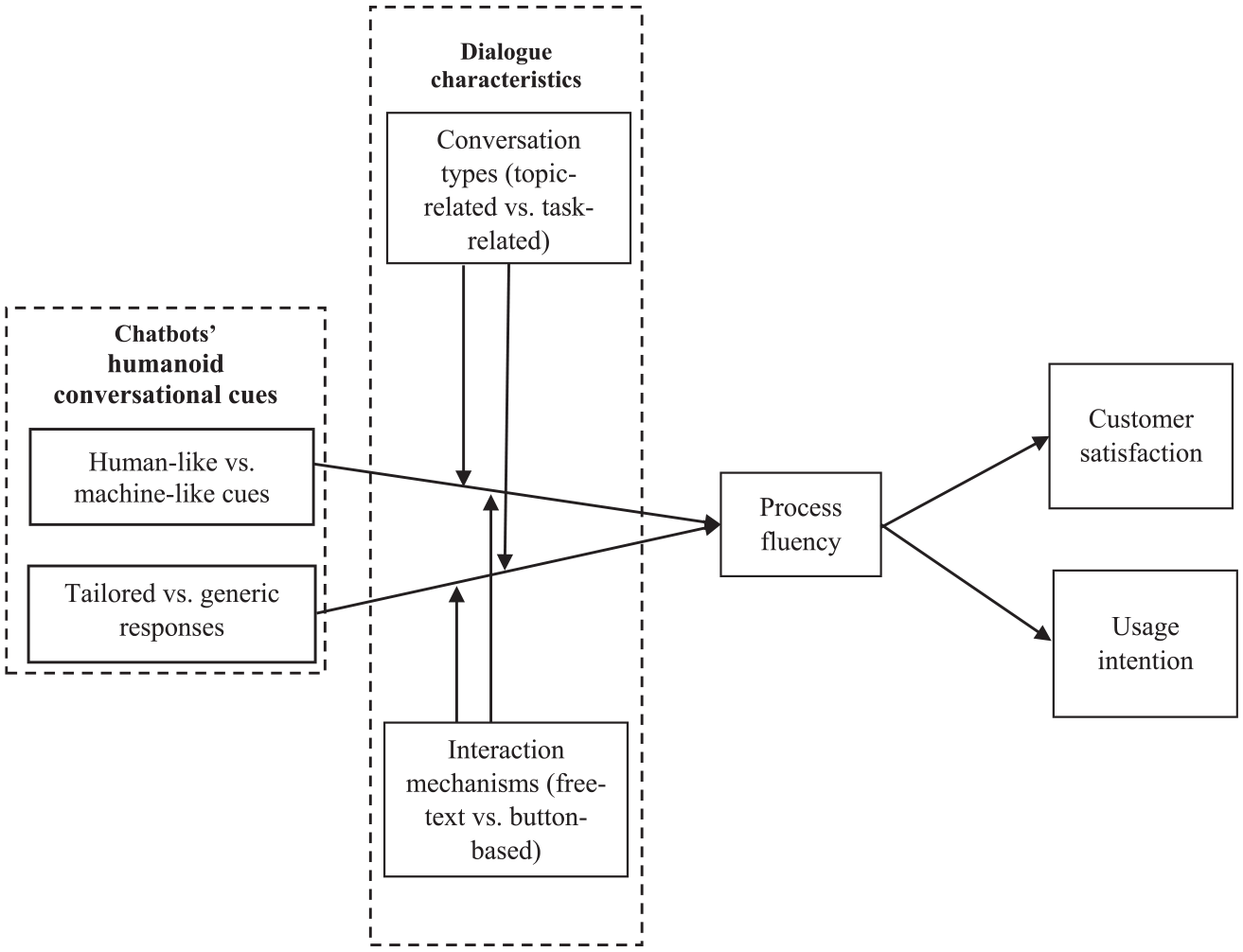
Theoretical Framework.
Study 1
Study design, sample, and procedure
A 2 (conversational cues: human-like vs. machine-like) × 2 (conversation types: topic-related vs. task-related) × 2 (interaction mechanisms: free-text vs. button-based) between-subjects design was used. Participants were randomly assigned to one of the eight experimental conditions by using the Qualtrics built-in randomization features. The data was collected in May 2023. A total of 268 respondents were recruited from Prolific, a data panel that provides quality data suitable for recruiting subjects for social science experiments. A screening question (i.e., whether the respondent has used chatbots in the past 2 years) and validation check questions were added to the survey items to identify valid responses that demonstrate proper qualification for the current study. The final analysis included 253 samples after eliminating invalid responses (50.6 % male; 44.7% with a college degree; Mage = 34.97) (see Appendix D in the online supplemental material).
Stimuli and measurements
The stimuli presented a hypothetical scenario where participants start a conversation with a hotel’s customer service chatbot agent. The scenario-based instructional page asked participants to imagine that they were booking a hotel room (i.e., task-related) or seeking information about nearby tourist attractions (i.e., topic-related) and asked them read through the chatbot-generated messages in the simulated conversation. Participants viewed the screenshots of written dialogue showing the interaction sequence of the conversations between a customer and the chatbot. We generated an authentic text-based chatbot message by modifying and adapting conversational dialogues from industry-leading chatbot examples. The development of the script drew inspiration from exemplary practices and ready-made responses found on widely used platforms offering live chat and best chatbot examples (e.g., livechat.com, satisfilabs.com, and wordstream.com). We adjusted the collected dialogues to fit the context of our study.
The conversational cues were manipulated at two levels: human-like and machine-like. Human-like cues had a human avatar image, a gender-neutral human-like name (Taylor), used informal language (e.g., using capital letters, contractions, spoken language, GIF, and emojis), and communication cues similar to humans (e.g., greetings at the beginning and end of the conversation, and using modal words), while machine-like cues used formal/computer-like language and presented themselves with non-human names (automated chatbot; Jiang et al., 2023; Liebrecht et al., 2021). Regarding conversation types, in the task-related condition, the chatbot interactions were structured around accomplishing a specific task, with the conversation focused on providing relevant information and guidance. In contrast, the topic-related condition involved the chatbot engaging participants in a dialogue about a general topic of interest aimed at maintaining a natural and engaging conversation. Previous studies suggested that booking a hotel room and seeking information are the most common topics in chatbot conversations in hospitality (Jin & Youn, 2023). Accordingly, in topic-related conversations, participants used a chatbot for advice and recommendations for tourist attractions while, in task-related conversations, participants used a chatbot for reserving a room—a highly goal-oriented process (Haugeland et al., 2022). Collectively, we used two different stimuli to manipulate conversation types in our scenarios. For the manipulation of interaction mechanisms, in free-text interaction, all requests and inputs were provided in free text. In button-based interactions, the requests and inputs were carried out by choosing from buttons with pre-defined response options (Haugeland et al., 2022; see Appendix B in the online supplemental materials).
Items were measured on 7-point Likert-type scales. For manipulation checks, human-like cues were measured using four items (α = .93) from Jiang et al. (2023). Conversation types (α = .87) and interaction mechanisms (α = .84) were measured with four items (Han et al., 2022; Haugeland et al., 2022). A five-item scale measuring process fluency (α = .94) was adopted from Graf et al. (2018). Furthermore, customer satisfaction (α = .97) and usage intention (α = .97) were measured on scales adapted from Chung et al. (2020) and Fishbein and Ajzen (1975), respectively (see Appendix C for measurement items). Finally, we controlled for demographic variables, frequency of using chatbots, and technical competence.
Manipulation checks
A series of independent-sample t-tests were conducted to check if the manipulation worked as we intended. Manipulation of human-like cues was successful, as significant differences were found between human-like and machine-like conditions, Mhuman-like = 5.85 vs. Mmachine-like = 2.82; t(251) = 25.10, p < .001. Moreover, participants perceived the conversation to explore a topic of interest rather than achieving a specific goal in topic-related (vs. task-related) condition, Mtopic-related = 6.14 vs. Mtask-related = 2.43; t(251) = −36.68, p < .001. Participants in the free-text (vs. button-based) interaction condition perceived a higher level of flexibility rather than structured options to choose (Mfree-text = 5.99 vs. Mbutton-based = 2.13; t(251) = 30.26, p < .001). Taken together, this indicates successful manipulations of experimental stimuli.
Hypothesis testing
A three-way analysis of covariance (ANCOVA) controlling for age, frequency of using chatbot, and technical competence, showed that the main effect of conversational cues: F(1, 251) = 15.704, p < .001, on process fluency was significant; however, the results indicate that using machine-like (M = 4.80) compared to human-like cues (M = 4.11) increases process fluency, which failed to support H1. Furthermore, there was a significant two-way interaction effect of human-like cues and conversation types on process fluency: F(1, 251) = 27.350, p < .001, supporting H3. Simple main effects showed that participants felt more flow-like experience when the chatbot was using human-like cues combined with topic-related conversation (M = 4.80) than with task-related conversation (M = 3.42), F(1, 241) = 30.89, p < .001. However, while using machine-like cues, there was no significant difference between topic-related and task related conversation, F(1, 241) = 3.44, p > .05 (Figure 2).
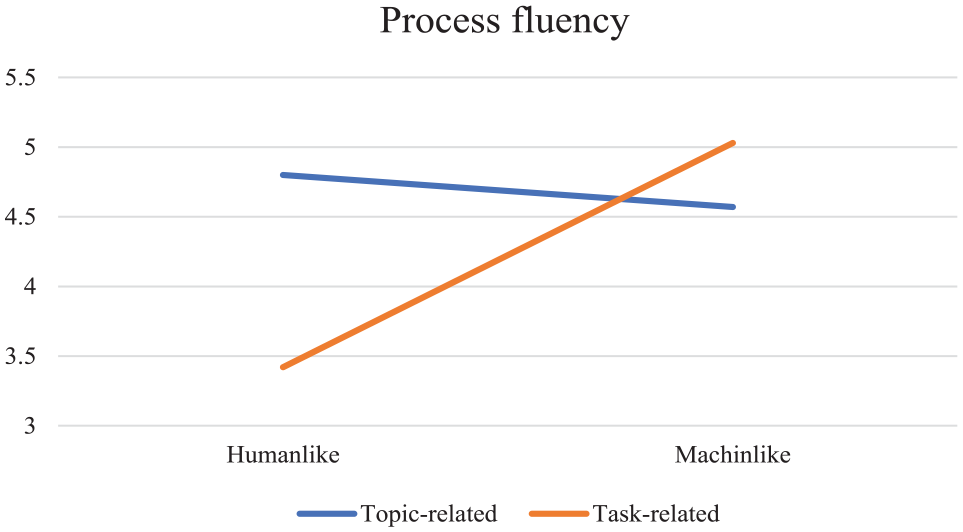
Interaction Effect of Human-Like Cues and Conversation Types on Process Fluency.
Furthermore, there was a significant two-way interaction effect between human-like cues and interaction mechanisms on process fluency, F(1, 251) = 19.998, p < .001, supporting H5 (Figure 3). Simple main effects showed that when the chatbot is using human-like cues, process fluency was significantly higher in the free-text condition (M = 4.77) than in the button-based condition (M = 3.44), F(1, 241) = 28.946, p < .001. The results indicate that using human-like cues was more effective in enhancing process fluency when it is accompanied by free-text interaction (vs. button-based). However, when using machine-like cues, there was no significant interaction effect between the two types of interaction mechanisms, F(1, 241) = 0.947, p > .05 (Figure 3).
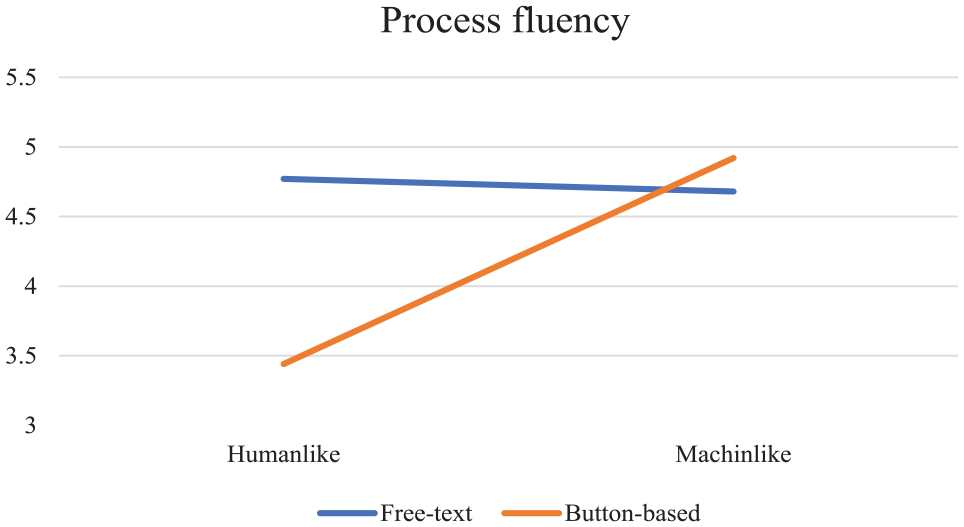
Interaction Effect of Human-Like Cues and Interaction Mechanisms on Process Fluency.
Mediating effect of process fluency
To examine the mediating effect of process fluency, PROCESS macro (Models 4 and 7; Hayes, 2017) with 5,000 bootstrapping resamples (95% CI) was used. There was a significant indirect effect of human-like cues on customer satisfaction through process fluency (95% CI [.345, 1.159]), supporting H7a. The indirect effect on usage intention was also significant (95% CI [.363, 1.234]), supporting H7b. Given that the indirect effect was significant without a significant direct effect, our results highlight a full mediation of process fluency between human-like cues and customer satisfaction and usage intention. Thus, the process fluency mediated the relationship between human-like cues and customer satisfaction, as well as the relationship between human-like cues and usage intention.
In addition, bootstrap test of moderated mediation showed that process fluency indirectly mediated chatbots’ conversational cues × conversation types interaction on customer satisfaction (Index = 1.865, 95% CI [1.103, 2.645]) and usage intention (Index = 1.984, 95% CI [1.145, 2.829]), respectively, supporting H9a and H9b. The results showed that interacting with chatbots using human-like cues with topic-related conversation increased customer satisfaction and usage intention through heightened perception of process fluency. In addition, bootstrap test of moderated mediation showed that process fluency indirectly did mediate chatbots’ conversational cues × interaction mechanisms on customer satisfaction (Index = 1.618, 95% CI [.829, 2.397]) and usage intention (Index = 1.721, 95% CI [.888, 2.571]), respectively, supporting H11a and H11b. The findings posit that interacting with chatbots using human-like cues with free-text interaction increased customer satisfaction and usage intention by enhancing the perception of process fluency.
Study 2
Study design, sample, and procedure
A 2 (conversational cues: tailored vs. generic) × 2 (conversation types: topic-related vs. task-related) × 2 (interaction mechanisms: free-text vs. button-based) between-subjects design was used. A total of 238 respondents were recruited from the Prolific Survey Panel. After screening, the final analysis included 226 samples (53.1% women; 37.6% with college degree; Mage = 35.65) (see Appendix D in the online supplemental material). The procedure of Study 2 was similar to Study 1, except for using conversational cues manipulation. The tailored chatbot responses were manipulated by being contingent, showing an understanding of the previous conversations with the user, and providing personalized feedback and responses based on previous responses (Jiang et al., 2023; Schuetzler et al., 2020). However, the generic chatbot did not convey understanding of the conversations, exhibiting limited signs of the variety found in human–human interactions, and did not offer personalized responses.
Measurements
To test the effect of the experimental manipulation of tailored responses, a 4-item scale adopted from Jiang et al. (2023) was used (see Appendix C in the online supplemental materials). Other measures were the same as in Study 1.
Manipulation checks
Manipulation of tailored responses was successful, as significant differences were found between tailored and generic chatbots, Mtailored = 6.31 vs. Mgeneric = 4.21; t(224) = 16.41, p < .001. Moreover, participants perceived the conversation to explore a topic of interest rather than achieving a specific goal in the topic-related (vs. task-related) condition, Mtopic-related = 6.25 versus Mtask-related = 2.53; t(224) = −28.20, p < .001. Participants in the free-text (vs. button-based) interaction condition perceived a higher level of flexibility rather than structured options to choose: Mfree-text = 5.78 versus Mbutton-based = 2.57; t(224) = 22.83, p < .001.
Hypothesis testing
The result of ANCOVA showed that the main effect of tailored responses, F(1, 224) = 27.876, p < .001, on process fluency was significant, supporting H2. This indicates that using tailored responses (M = 5.28), compared to a generic response (M = 4.18) enhances process fluency. Furthermore, there was a significant two-way interaction effect of tailored responses and conversation types on process fluency, F(1, 224) = 12.193, p < .001, supporting H5. Simple main effects showed that, for generic responses, participants felt more flow-like experience when exposed to task-related conversation (M = 4.63) than to topic-related conversation (M = 3.73), F(1, 215) = 9.384, p < .01. However, for participants interacting with tailored responses chatbots, there was no significant difference between the two types of conversation, F(1, 215) = 3.586, p > .05 (see Figure 4).
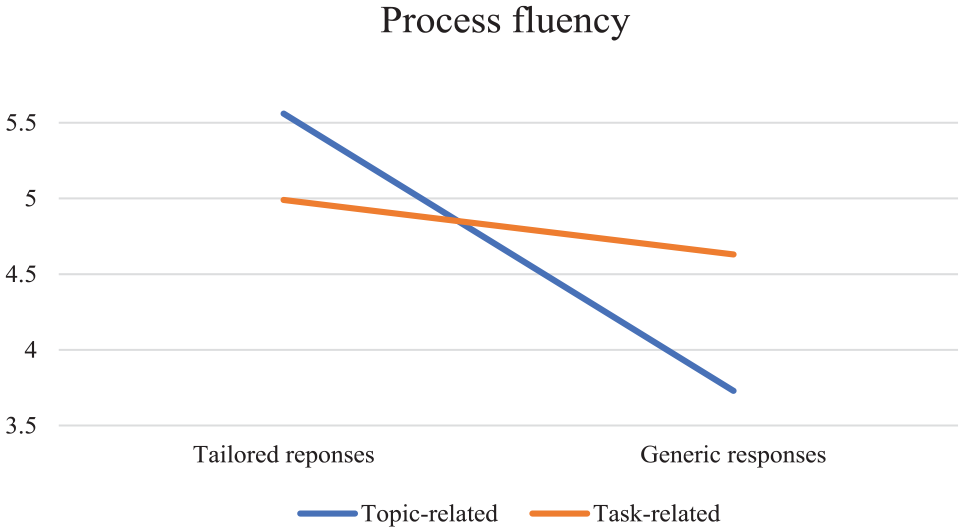
Interaction Effect of Tailored Responses and Conversation Types on Process Fluency.
Furthermore, there was a significant two-way interaction effect between tailored responses and interaction mechanisms on process fluency, F(1, 224) = 7.856, p < .01, supporting H7 (Figure 5). Simple main effects showed that, for generic responses, participants felt higher process fluency when exposed to a button-based condition (M = 4.54) than to a free-text condition (M = 3.82), F(1, 215) = 5.952, p < .01. However, for participants interacting with tailored responses chatbots, there was no significant difference between the two types of interaction mechanisms, F(1, 215) = 2.293, p > .05.
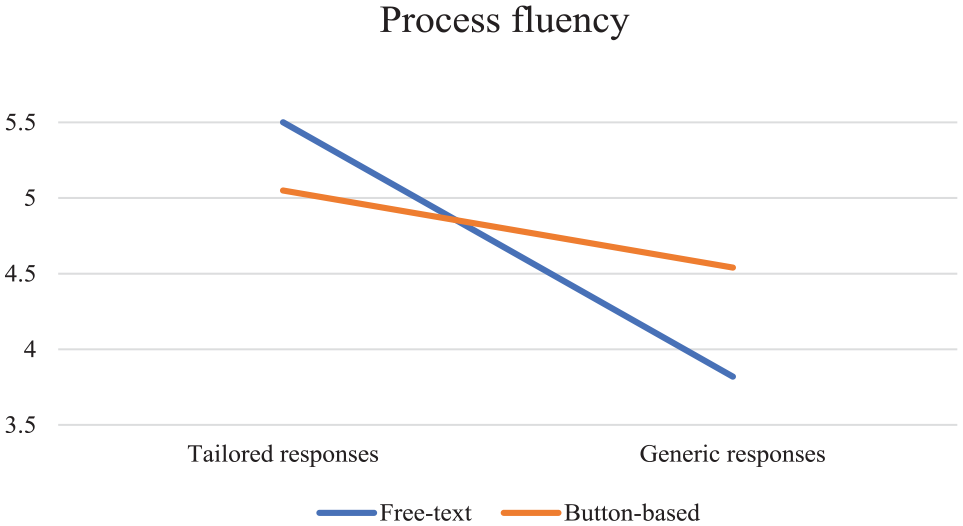
Interaction Effect of Tailored Responses and Interaction Mechanisms on Process Fluency.
Mediating effect of process fluency
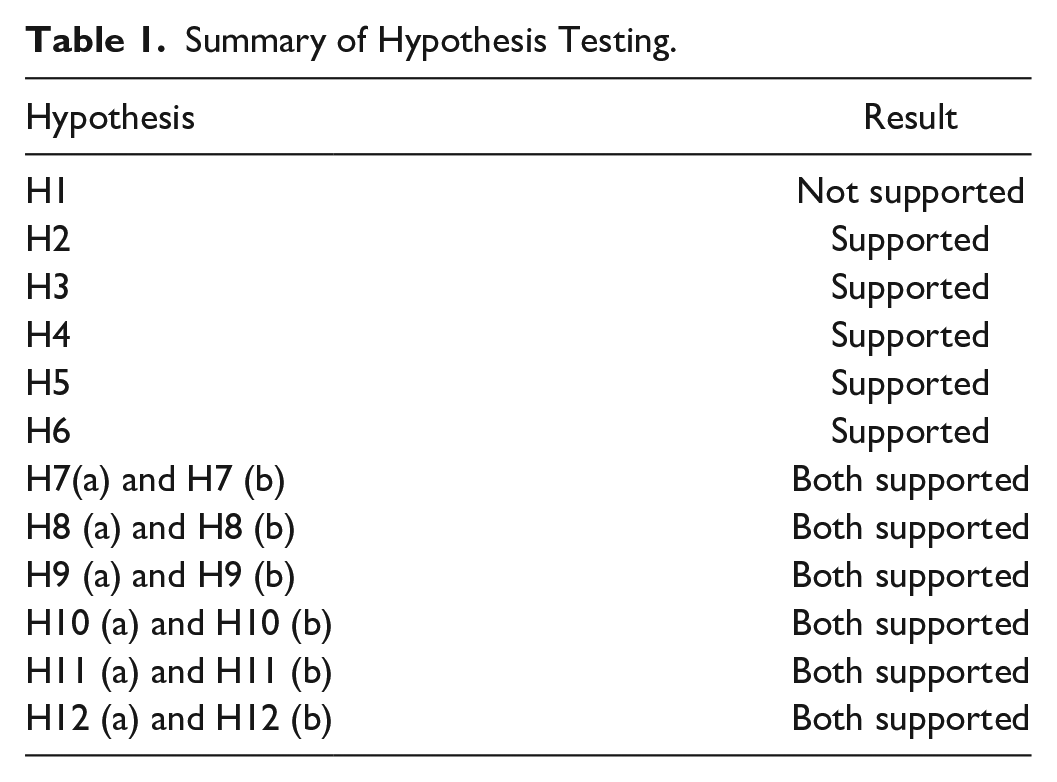
Using PROCESS macro (Model 4), there was a significant indirect effect of tailored responses on customer satisfaction (95% CI [−1.508, −.658]) and usage intention (95% CI [−1.519, −.665]) through process fluency, respectively, supporting H8a and H8b. Thus, process fluency mediated the relationship between tailored responses and customer satisfaction, as well as the relationship between tailored responses and usage intention. In addition, the bootstrap test of moderated mediation (PROCESS macro, Model 7) showed that process fluency indirectly mediated chatbots’ conversational cues × conversation types interaction on customer satisfaction (Index = 1.233, 95% CI [.401, 2.051]) and usage intention (Index = 1.234, 95% CI [.360, 2.047]), respectively, supporting H10a and H10b. The results showed that interacting with chatbots using tailored responses and topic-related conversation increased customer satisfaction and usage intention through a heightened perception of process fluency. Moreover, the bootstrap test of moderated mediation showed that process fluency indirectly did mediate chatbots’ conversational cues × interaction mechanisms on customer satisfaction (Index = −1.251, 95% CI [−2.051, −.434]) and usage intention (Index = −1.252, 95% CI [−2.079, −.424]), respectively, supporting H12a and H12b. The findings posit that interacting with chatbots using tailored responses with free-text interaction increased customer satisfaction and usage intention by enhancing the perception of process fluency. Table 1 provides a summary of the hypotheses testing results.
Summary of Hypothesis Testing.
General Discussion
Chatbots as a form of AI are commonly used in the hospitality industry for various activities, yet knowledge of their performance for smooth and seamless service experience is still lacking (Zierau et al., 2023). The literature on human–chatbot interactions is flooded with different combination cue formats and terminologies concerning humanoid conversational cues and their effects on user experience. However, we differentiate humanoid conversational cues based on the hedonic and pragmatic attributes of human behaviors and treat them separately as isolated factors to address the importance of a multifaceted understanding of communication formats in marketing research. Thus, we answer the calls for finding the optimal combination of cue characteristics in online bilateral communication (Moffett et al., 2021) and reaching the state of flow as optimal user experience (Zierau et al., 2023).
Several key findings emerged from our study. First, this research advances our understanding of how using humanoid conversational cues affects process fluency in the context of text-based chatbots. We focused on two humanoid conversational cues, namely human-like cues and tailored responses, which are commonly used in chatbots. The findings suggest that using tailored responses triggers a higher perception of process fluency. Contrary to augmented reality (AR) literature, which has found that full engagement with cognitive/ tailored cues leads individuals to evaluate all aspects rationally, thereby disrupting their experience or flow (Fan et al., 2020), our findings indicate that tailored responses enhance process fluency in text-based interfaces. The results underscore the importance of carefully considering communication cues when designing different digital environments.
Contrary to our expectations, and to earlier research that has emphasized the positive effects of human-like cues on user experience (e.g., Jiang et al., 2023), using human-like cues did not increase process fluency. It is possible that excessive use of emojis, GIFs, and informal language may increase cognitive load for users, and participants might have experienced difficulties contextualizing these cues, leading to increased cognitive effort rather than a smoother processing experience. Cognitive psychology research has demonstrated that emotional stimuli can capture attention and potentially divert it from the primary task, thus reducing overall cognitive fluency (Dolcos et al., 2011). In addition, “uncanny valley” may appear as a side effect when chatbots become increasingly human-like, making users feel uncomfortable as a result of the technology’s personification (Troshani et al., 2021). The result that tailored responses enhance process fluency, but human-like cues do not, will bring a new perspective to flow theory (Csikszentmihalyi, 1975), as the literature mostly treats these two conversational cues as unidimensional factors. By proposing tailored responses and human-like cues as isolated and distinct factors, this study adds further insight to the existing literature on AI and text-based interfaces.
Second, drawing on MRT and TTF, we propose two boundary conditions for when humanoid conversational cues are more effective on process fluency by examining the role of dialogue characteristics. We introduced the concept of dialogue characteristics from multiformat communication (Moffett et al., 2021) to examine this effect. Our study verifies that implementing humanoid conversational cues increases process fluency when the user executes either a topic-related conversation or free-text interaction mechanism. On the other hand, we argue that implementing humanoid conversational cues becomes counterproductive when the user executes task-related conversation or when the chatbots implement button-based interaction mechanism, as it disrupts process fluency. This may happen because the value of providing humanoid conversational cues to facilitate fluency may not be apparent or fully realized in tasks with goal-directed conversation and a button-based interaction mechanism.
Finally, we found that process fluency mediates the effects of humanoid conversational cues on customer satisfaction and usage intention. The results verify that an increase in process fluency enhances customer satisfaction and usage intention in text-based interfaces. While earlier research focused on psychological and emotional factors as underlying mechanisms such as social presence, trust, perceived warmth and competence (Y. Huang et al., 2021; Jiang et al., 2023), we introduced the novel underlying mechanism of process fluency from a communication perspective to achieve optimal user experience in AI literature.
Theoretical Implications
The present research contributes significantly to AI literature in the hospitality discipline by providing a comprehensive understanding of human-chatbot interactions. This study integrates insights from multiformat communication research (Moffett et al., 2021) and extends three key theoretical streams: media richness (MRT), task-technology fit (TTF), and flow theories. It enhances the initial TTF model by examining how the match between two conversational cues with customers’ dialogue execution enhances customer satisfaction and usage intention. Furthermore, by incorporating internal variables drawn from MRT, we categorize humanoid and non-humanoid conversational cues as richer and leaner media, respectively. Moreover, considering the notion of flow in bilateral communication (Mohr & Bitner, 1991), we modify MRT and TTF by incorporating the construct of “process fluency” as a novel underlying mechanism for optimal experience.
First, we introduced a pathway of process fluency derived from flow theory into AI literature. While communication fluency plays an important role in enhancing customer experience with chatbots, it has been overlooked in earlier studies (Zierau et al., 2023). This study builds upon the gaps by examining the intricacies of chatbot design to achieve flow-like messages and more favorable outcomes. We demonstrate that a sensory-rich experience of humanoid conversational cues enhances process fluency and contributes to a seamless interaction with less cognitive effort. The results also extend the theoretical boundaries of media richness theory beyond traditional face-to-face and audiovisual contexts. Our findings are consistent with a recent study on flow (Zierau et al., 2023) that examined how a richness of voice-based interface based on its communication format contributes to higher flow-like experiences and behavioral service outcomes.
Second, our study advances MRT and TTF by introducing two potential boundary conditions related to dialogue characteristics: conversation types and interaction mechanisms. We highlight that while humanoid chatbots can foster close and intimate social interactions, they may disrupt communication flow with certain dialogue structures and designs. Building on insights from MRT and TTF, our study revealed that using matched communication in a message is pivotal in enhancing process fluency. Specifically, we assert that using richer media, such as human-like cues and tailored responses, can be strategically matched with topic-related conversations and free-text interactions. Given that topic-related conversation and free-text interactions pertain to the quality of human customer service representatives (Haugeland et al., 2022; Jiang et al., 2023), using human-like cues and tailored responses can be matched to have seamless communication and greater process fluency, which, in turn, increase customer satisfaction and usage intention in text-based chatbots. Additionally, we reveal that process fluency decreases when humanoid conversational cues are applied in either task-related conversations or button-based interactions, leading to a feeling of disjointedness. Our findings suggest that the provision of humanoid conversational cues—especially human-like cues—in goal-oriented conversations introduces unnecessary complexity, requiring greater cognitive processing and creating a feeling of disjointedness for the users. By highlighting the boundary condition, our findings emphasize the critical role of “dialogue design” in text-based interfaces, particularly when incorporating humanoid conversational cues, to enhance user experiences.
Finally, by introducing process fluency as a mediator, our research offers important theoretical underpinnings to explain the mechanism behind the effects of humanoid conversational cues on customer satisfaction and usage intention. This mechanism highlights that applying humanoid conversational cues, especially in conjunction with either topic-related conversations or free-text interactions, enhances customer satisfaction and usage intention through an absorptive and seamless flow experience. This aligns with previous studies indicating that customers who experience flow and high immersion in an activity are more likely to repeat the experience (Csikszentmihalyi, 1975). Process fluency serves as an indicator of a high-quality experience, reinforcing the importance of our findings.
Managerial Implications
This study provides managerial implications to chatbot designers and practitioners in the hospitality industry. First, as many hospitality firms appreciate a touch of human-like interaction to have a warm and friendly conversation with users, they try to incorporate humanoid cues in designing their AI-based technologies. Major hotel chains implemented AI-based humanoid service robots as part of their strategy to improve customer service and user experience. For example, the Mandarin Oriental Hotel in Las Vegas has introduced a conversational humanoid service robot, “Pepper,” to interact with customers in various ways, including greeting guests, addressing their requests, providing directions, and facilitating payments (W. Liu et al., 2024). Furthermore, the Cosmopolitan Hotel in Las Vegas introduced a chatbot called “Rose,” which was programmed with language, attitude, and behavioral nuances that mimic a human-like charming personality (Lin, 2023). However, our study found that while tailored responses increase process fluency, human-like cues did not help to provide flow-like conversation to the users. Thus, hospitality firms should be cautious in incorporating human-like cues with excessive use of emojis, GIFs, and informal language. The use of human-like cues should be limited to specific conditions, as their implementation with task-related conversation and button-based interaction decreases process fluency.
Second, we suggest that a “one-size-fits-all” strategy employing humanoid conversational cues for every dialogue is not appropriate. Our findings suggests that practitioners should consider dialogue structures and designs when deciding on applying humanoid conversational cues to their chatbots. Companies implementing text-based customer service chatbots need to consider customizing conversational cues based on the conversation types and interaction mechanisms. Chatbot designers in hospitality should carefully add humanoid conversational cues in conjunction with topic-related conversations and free-text interactions, in a way that customers feel that communication with the system is understood and comprehended in a smooth and natural way. Organizations should develop chatbot experiences that augment process fluency and minimize a user’s cognitive load—especially in either task-related conversations or button-based interactions, where excessive humanoid conversational cues, particularly using human-like cues, may disrupt the flow of communication. This highlights the importance of a strategic approach to chatbot design that considers the specific context in which the chatbot will operate.
Third, we recommend that when designing chatbots aimed at non-routine and ambiguous tasks (e.g., topic-related conversations and/or free-text interactions) that need more creativity in interaction—for example, tourist attraction recommendations, dining advice, and cuisine suggestions—the chatbot should incorporate humanoid conversational cues, either human-like cues or tailored responses. On the other hand, in simple and unambiguous dialogues (e.g., task-related conversations and/or button-based interactions) such as check-in service and making reservations, non-humanoid conversational cues (machine-like cues and generic responses) can lessen users’ cognitive efforts and enhance processing of information. We propose that hospitality information system developers equip chatbots with the capability to adapt the level of technology intensity dynamically, depending on the dialogue structure and design.
Limitations and Future Research
This study has some limitations and suggestions for future research. First, while the current research attempts to examine text-based chatbots, further research should explicitly account for broader types of interfaces, such as voice-based and multimodal interfaces. In addition, due to the nature of humanoid conversational cues in different contexts, future work could consider other potential boundary conditions, such as the role of utilitarian and hedonic brands. Third, while this study considered a successful service situation managed by chatbots, further investigation is encouraged to determine how implementing these humanoid conversational cues affects process fluency in service failure situations. Moreover, the present study empirically examined two humanoid conversational cues: human-like cues and tailored responses. Further analysis is suggested to conduct a comparative study between chatbots using human-like cues and those using tailored responses, in order to determine which types of humanoid cues are more effective in process fluency, and so address the question of whether or not we should make chatbots smarter or warmer. Finally, the participants in this study were presented with a hypothetical scenario depicting screenshots of chatbot conversations but did not engage in direct interaction with a functioning chatbot. While this approach allowed for standardized presentation of stimuli and controlled manipulation of experimental conditions, it may not fully capture the nuances and complexities of real-time chatbot interactions. Future research could overcome this limitation by incorporating live chatbot interactions.
Supplemental Material
sj-docx-1-jht-10.1177_10963480241280991 – Supplemental material for Chatbots on the Frontline: The Imperative Shift From a “One-Size-Fits-All” Strategy Through Conversational Cues and Dialogue Designs
Supplemental material, sj-docx-1-jht-10.1177_10963480241280991 for Chatbots on the Frontline: The Imperative Shift From a “One-Size-Fits-All” Strategy Through Conversational Cues and Dialogue Designs by Ghazal Shams and Kawon Kim in Journal of Hospitality & Tourism Research
Footnotes
Declaration of Conflicting Interests
The authors declared no potential conflicts of interest with respect to the research, authorship, and/or publication of this article.
Funding
The authors received no financial support for the research, authorship, and/or publication of this article.

Supplemental material
Supplemental material for this article is available online.
Author Biographies
References
Supplementary Material
Please find the following supplemental material available below.
For Open Access articles published under a Creative Commons License, all supplemental material carries the same license as the article it is associated with.
For non-Open Access articles published, all supplemental material carries a non-exclusive license, and permission requests for re-use of supplemental material or any part of supplemental material shall be sent directly to the copyright owner as specified in the copyright notice associated with the article.
