




Abstract
As storytelling influences consumer attitudes and opinions, conditioning the tourist experience by appealing to the imagination, this paper reviews the literature covering the analysis of 66 papers that focus on the storytelling of the visitor/tourist as the main subject. The article is divided into four main themes: (a) storytelling as a tool to attract tourists; (b) the role of the storyteller; (c) the tourist as a storyteller; and (d) what makes a good story. The Hoshin Kanri Matrix was used to showcase each of the main themes. Although storytelling has been widely used to attract tourists, it is crucial that tourist-based storytelling can be a credible substitute for destination-based storytelling, as empathy, authenticity and the emotional attachment of tourists as storytellers play an important role as “good stories,” transforming and co-creating their experiences that emerge from the interaction of tourists, residents, and intermediaries.
Keywords
Highlights
Storytelling needs to shift from a destination-based strategy to a tourist-based one.
Storytelling needs to make the tourist experience the real destination identity.
A “good story” needs to use tourists as active players as co-creators of emotions.
Tourists should be active advocates transforming positive experiences in vivid stories
Introduction
Storytelling, known as the art of telling a story, is an ancient means of sharing knowledge, experience, and tradition through narratives, integrating cognitive and emotional elements (Bassano et al., 2019; Stokowski, 2002). Psychologists and consumer behavior researchers advocate that human consciousness is based on stories, through which individuals index, store, and retrieve information (S. H. Kim et al., 2020; Pachucki et al., 2022).
When discussing storytelling, it becomes imperative to inquire what principles make a good story. A good story follows an argument formula based on Aristotle’s model from 2,300 years ago. It normally depicts how the main character deals with opposing forces, makes difficult decisions, takes risks, and experiences new things (Woodside & Megehee, 2010). This is followed by progress towards stability or some other kind of resolution. This screenplay structure is commonly found in most Hollywood movies, and the formula is generally referred to as the hero’s journey, which is considered a good story because the emotional experience it provides appeals to a global audience (Chronis, 2012; Hay et al., 2022; Lund & Kimbu, 2020; Stokowski, 2002).
Stories are not just entertainment, as they help storylisteners to see and think what others see and think (Woodside & Megehee, 2010). As a result, storylisteners feel connected to ideas and to others, supporting the generation of thoughts, motivations, emotions, sensations, and actions (Bassano et al., 2019; Fusté-Forné, 2020). Thus, storytelling requires the involvement of both parties—the storyteller and the listener—as it is a two-way communication in which the listeners’ reaction plays an active role and, in some cases, the listener also becomes a storyteller (Howison et al., 2017). Storytelling is about sharing and combining knowledge and experiences that allow the combination of narrative to communicate concepts and ideas that help to build connections and associations (Bassano et al., 2019). It normally involves the essence of the story to be told, a compelling story and the physical and ambient factors (servicescape) of what is to be told (Ryu et al., 2018).
By telling stories where brands and products play central roles, storytelling is used to capture consumers’ attention and interest, constituting a differentiating element, in highly competitive markets (Bassano et al., 2019; Montargot et al., 2021). Some studies confirm that storytelling significantly influences consumers’ attitudes, opinions, perceptions, intentions, and satisfaction (Koll et al., 2010; Merchant et al., 2010).
Storytelling is of paramount importance in tourism, contributing to the transformation of something seemingly unremarkable and insignificant into a compelling tourist destination (Ben Youssef et al., 2019; Hartman et al., 2019; Pera, 2017). It appeals to the visitors’ imagination and influences visitors’ expectations and attitudes, providing them with an added-value experience (Mossberg, 2008). The tourism industry is very peculiar as several stakeholders, such as marketers, the tourism staff, the local residents, visitors, and tourists, can assume the role of storytellers and each may contribute significantly to storytemolling (Moscardo, 2020a).
Several types of elements embed storytelling narratives, such as discourse, character, storyteller, specificity, or affectivity (Mei et al., 2020; Pachucki et al., 2022), which supports the heterogeneity and multifaceted perspective of storytelling. Furthermore, compared to other important concepts that enable the understanding of the tourism experience, storytelling has not been deeply reviewed in tourism studies. In particular, the role of storytellers has been largely addressed qualitatively (Frost et al., 2020; Lund & Kimbu, 2020; Mahn et al., 2020), and the relevance of quantitative work and its impact on the tourism industry is still unclear. Furthermore, qualitative findings highlighting the significance of storytelling in tourism offer few useful implications for practitioners, such as what makes these stories effective (Black & Kelley, 2009). Given the multifaceted nature of storytelling in tourism, S. H. Kim et al. (2020) point out that identifying the various attributes that contribute to “good” storytelling in the tourism context is important. However, it is not clear what a good story is. Moreover, while storytelling can aim to inspire or entertain audiences, explore cultural traditions or historical perspectives, seek to build empathy, provide enjoyability or authenticity, or simply strive to increase market/audiences, it is crucial to comprehend the main roles and identify the storytellers. Another aspect that deserves a better understanding is how tourists absorb the story told and reproduce it to others, playing the role of storytellers.
Analyzing storytelling is a complex task (e.g., Ben Youssef et al., 2019; Engeset & Elvekrok, 2015; Hartman et al., 2019; Ryu et al., 2018). First, it is very broad and it is sometimes viewed as a mere narrative and marketing tool for visitors/tourists, rather than an active tool used by tourists themselves. Second, it is usually considered a supply-side tool and the important role of tourists as active storytellers is frequently overlooked. Third, it is difficult to isolate the storyteller’s role and identify the key characteristics of the narrative that underlie storytelling. Fourth, while there are studies that examine storytelling (Mathisen, 2019; Moin et al., 2020; Woodside & Megehee, 2010), it is difficult to discern the boundaries of storytelling phenomena in the tourism industry. Therefore, it is important to clarify the main themes and the sub-themes of storytelling in tourism.
Given (a) the wide range of subjects that can be incorporated into tourism storytelling (e.g., historical periods, emotions, conflicts, moral dilemmas, mysteries, comedies, destination characteristics and traits, etc.; Mei et al., 2020; Pachucki et al., 2022; Ryu et al., 2018); (b) the numerous topics that can be analyzed (narratives, experiences, tools, target groups, type of storytellers, among others; Moin et al., 2020; Ben Youssef et al., 2019); and (c) the absence of global analysis/reviews of storytelling in the tourism industry, the main objective of this paper is to implement a systematic literature review (SLR) to determine: (a) how storytelling attracts tourists; (b) what the main roles of storytellers are; and (c) how important the narratives of tourists as storytellers are. Moreover, taking into account the multifaceted perspectives of the tourism industry, the themes, the messages, the moments and emotions, the varied audiences, and the fit between the places and the tourists, the following objective was also included: (d) what makes a good story?
This paper is organized as follows: after this introduction, Section 2 discusses the research methodology followed; Section 3 analyses the results of the analysis carried out, using Hoshin Kanri’s X-matrices; Section 4 addresses the main discussions; and Section 5 presents the conclusions and implications.
Methodology
In this study, we chose to conduct an SLR, which consists of the identification, selection, analysis, and synthesis of existing research on storytelling, also exposing possible gaps in the knowledge of storytelling in tourism (Denyer & Tranfield, 2009). For that, this paper follows the SLR protocol proposed by Tranfield et al. (2003) following the fundamental principles of an SLR (Mallett et al., 2012; Okoli, 2015): rigor, transparency, and replicability. In this case, the research topic is specifically storytelling in tourism.
To carry out the SLR, we searched the two best-known scientific databases—Web of Science (WoS) and Scopus—considering only articles published until the end of 2022 on storytelling in tourism. The search protocol was: TITLE-ABS-KEY (“touris*” AND “storytel*”), as it includes tourism, tourists, storytelling, storytellers, and other derived words. The same search words were used in the WoS database, including the selection of two specific types of editions: “Social Sciences Citation Index” (SSCI) and “Science Citation Index Expanded” (SCIE). In this first search, we obtained a total of 428 results in the Scopus and 181 in the WoS databases.
Trying to narrow the scope of the search, we kept the search protocol but applied the following additional filters: (a) limit to Social Sciences and Business, Management, and Accounting in the Subject area in the Scopus database and Hospitality, Leisure, Sports Tourism, Management, Business, and Social Sciences (interdisciplinary), in the WoS database; (b) limit to Article and Review in Document type; and (c) limit to English in Language. This search revealed a total of 201 and 104 results, respectively, for the Scopus and WoS databases. The selection criteria are tuned to the recommendations of David and Han (2004) and Podsakoff et al. (2005), using only journal articles and reviews published in peer-reviewed academic journals, as they are considered validated knowledge. After eliminating 79 repeated articles, the remaining 226 articles selected were evaluated individually by three researchers based on their titles and abstracts, selecting only those articles that: (a) had storytelling as the main focus; and (b) were focused on the visitor/tourist and not on the local population. As such, the articles that mentioned storytelling tangentially were discarded, and only 83 articles remained for further analysis. These exclusion criteria were used in previous SLRs (Jones et al., 2011) and were meant to keep the focus of the article in storytelling on storytelling-centric and visitor/tourist-centric perspectives. To increase the reliability of the selection, the 83 articles selected were fully and individually evaluated by each researcher. Several articles were rejected as they analyzed, for example, authenticity or experiential tourism, but storytelling was marginally covered. Other articles were also rejected when analyzing, for example, narratives of heritage, leaving the core of the article off the storytelling or tourists/visitors. All doubts and disagreements were discussed until a consensus was reached by the three authors. After a thorough analysis, 66 articles were obtained and included in the present research, on which an in-depth analysis was undertaken.
Characteristics of the Articles Selected
This SLR documents a growing interest and development of studies in recent years, as articles were published between 2005 and 2022. Most of the studies are very recent, as 30 (45% of the 66) papers were published between 2020 and 2022, with 50 articles (75% of the total) published after 2017.
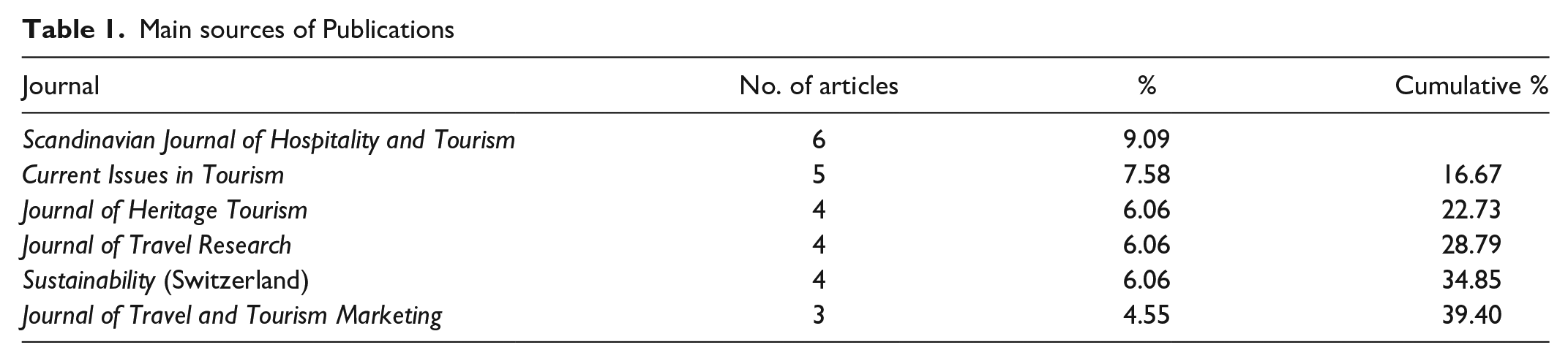
The manuscripts were published in 38 different outlets, which is an indicator of the diversity of the indicators/dimensions under study. Table 1 summarizes the journals that published three or more articles: 26 articles (39.4% of the publications) used 6 outlets.
Main sources of Publications
Definition of the Main Themes and Sub-Themes Under Analysis
As proposed by Jones et al. (2011), the 66 articles were analyzed inductively to identify the main themes covered by each paper, based on the objectives set out for this research. After reading the papers, a descriptive analysis was conducted for each paper, taking into account the concepts and the focus of the paper. After reading the first 15 papers, an initial thematic analysis was put down to define the main themes covered. After discussion, it was possible to inductively generate four main themes, based on the articles’ main core ideas and arguments: storytelling as a tool to attract tourists; the role of the storyteller; the tourist as a storyteller; and what makes a good story. The four thematic groups were based on the similarity of the themes covered by the papers and were reviewed for redundancy by each researcher for ontological validation. Once the main thematic group was defined, the content of the papers was taken into account to generate the sub-thematic groups covered. This process involved an inductive-deducting approach in which, initially, the subthemes were also interpretatively generated, and then deductively confirmed by the researchers following a pattern-matching perspective within each main theme and sub-theme. Those sub-thematic groups, shown in Table 2, were validated for internal consistency, coherence, and distinctiveness, within and across the main themes. Those sub-themes are relatively homogeneous within the main theme, and heterogeneous across them. Moreover, the main topics covered in each article were presented in all the sub-themes analyzed.
Main Themes and Sub-Themes Covered in the Studies Analyzed
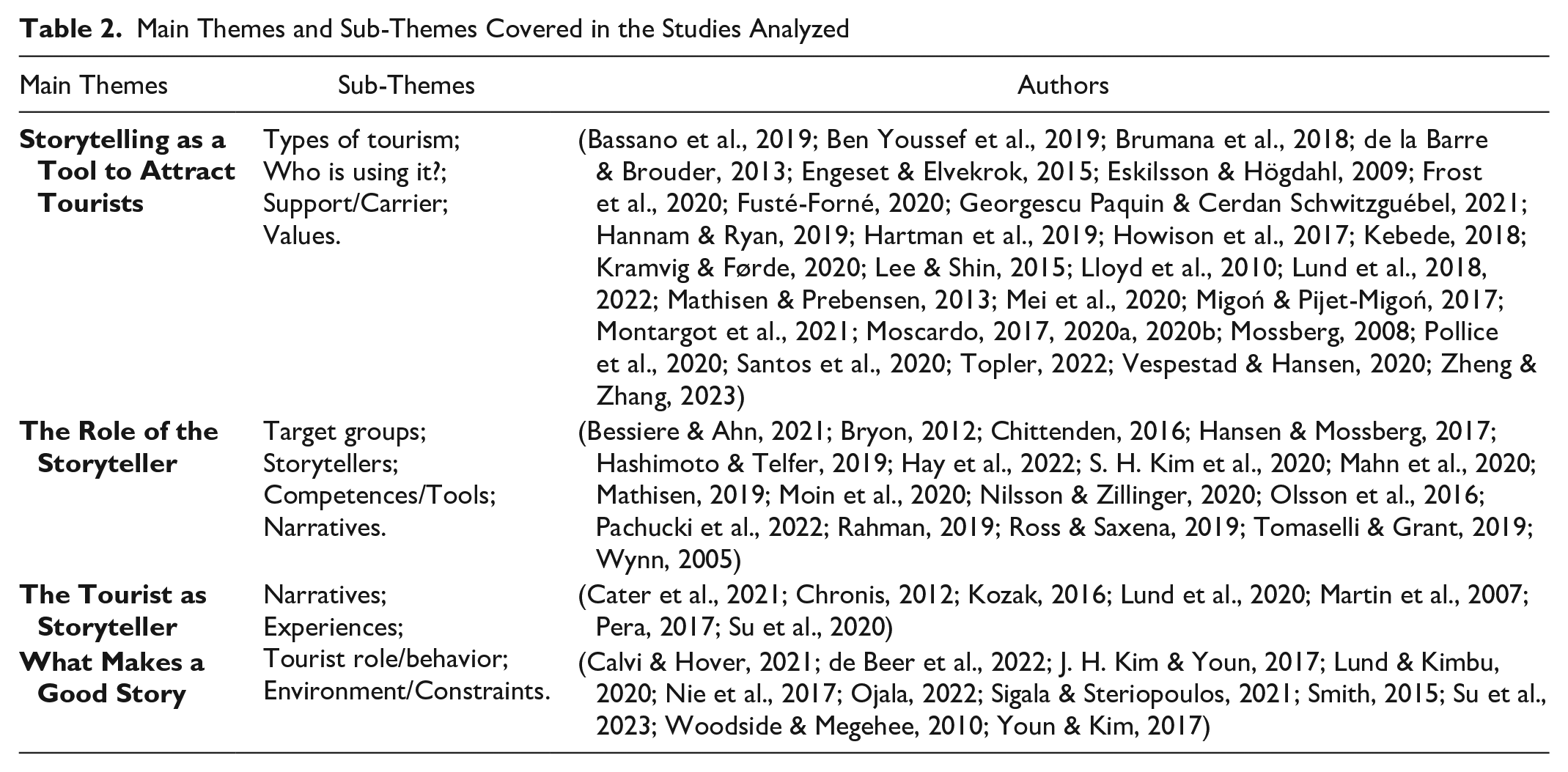
The theme “storytelling as a tool to attract tourists” addresses the different messages that are put across to attract tourists to places. The theme “role of the storyteller” seeks to analyze how the storyteller captivates and engages the tourists or the places they visit when experiencing the visit or the place. The theme “the tourist as storyteller” reports how tourists connect with the audience communicating first-hand ideas, emotions, and experiences. This theme complements the traditional perspective of supply-side storytelling with the vivid experience told by the tourist. Finally, “what makes a good story” is a theme that seeks to address the connection with the audience, for shaping beliefs, creating empathy, and sharing knowledge.
Analysis and Synthesis
After selecting the most relevant articles and determining the themes and sub-themes for analysis, a subsequent analysis and synthesis was conducted, following Denyer and Tranfield (2009).
Hoshin Kanri’s X-matrix is a strategic planning tool extensively used for coordinating operations and establishing relationships between targets and actions or topics and variables used to represent the outcomes analyzed (Patrício et al., 2018; Silveira et al., 2018). Although it is traditionally used to align organizational goals, objectives, and action plans, to prioritize objectives, generate continuous improvements, and foster cross-functional collaborations (Silveira et al., 2018), in this paper, the X-matrices were used to show the relationships between the sub-themes analyzed. It consists of four sections that can be tailored to the user’s needs, interrelating the main building blocks that constitute the X-matrix, which facilitates the assessment of the sub-themes and highlights different characteristics throughout the building blocks (Patrício et al., 2018), providing structure, transparency, reliability, and enabling cross-comparison of various studies in a structured and coherent way.
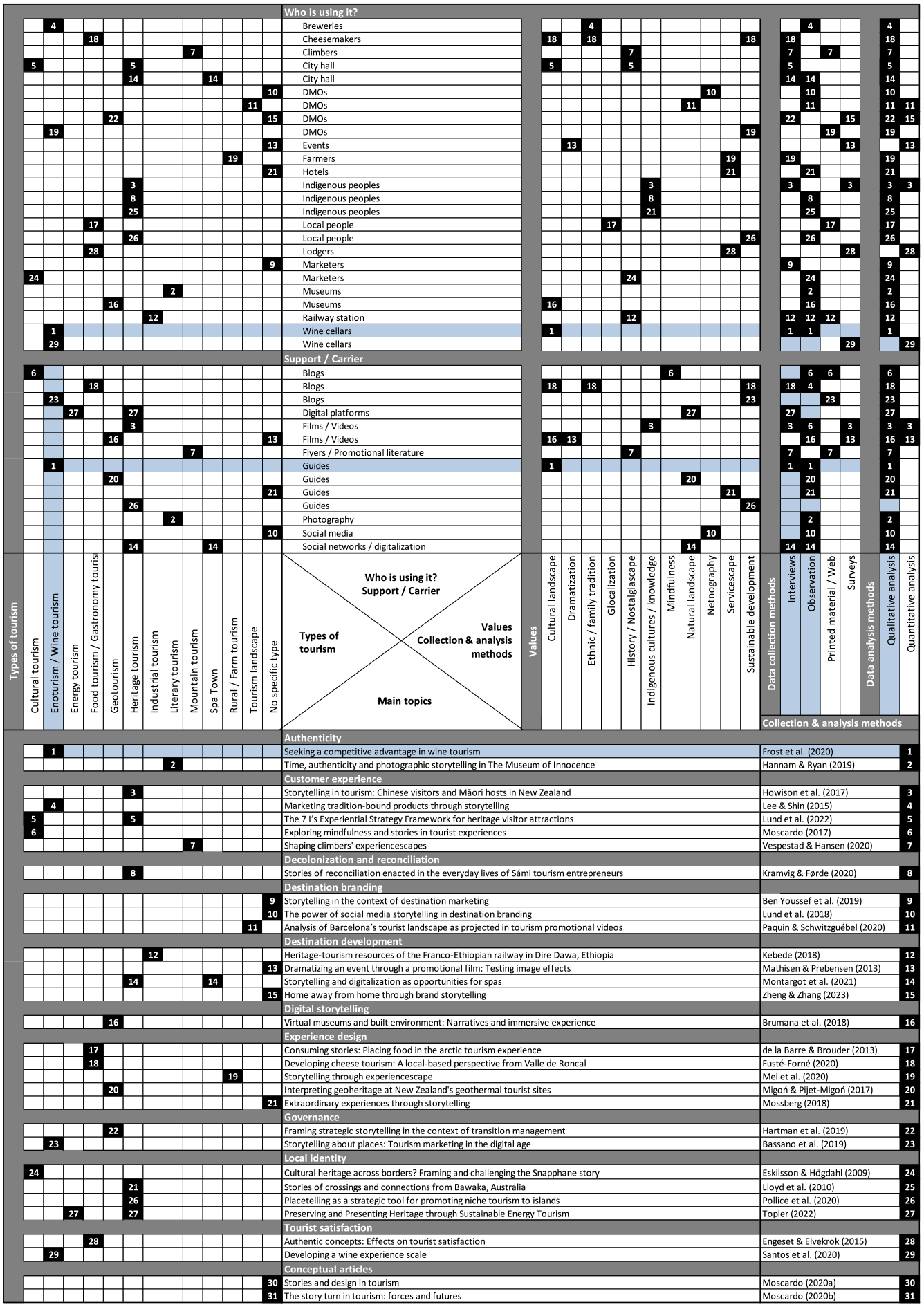
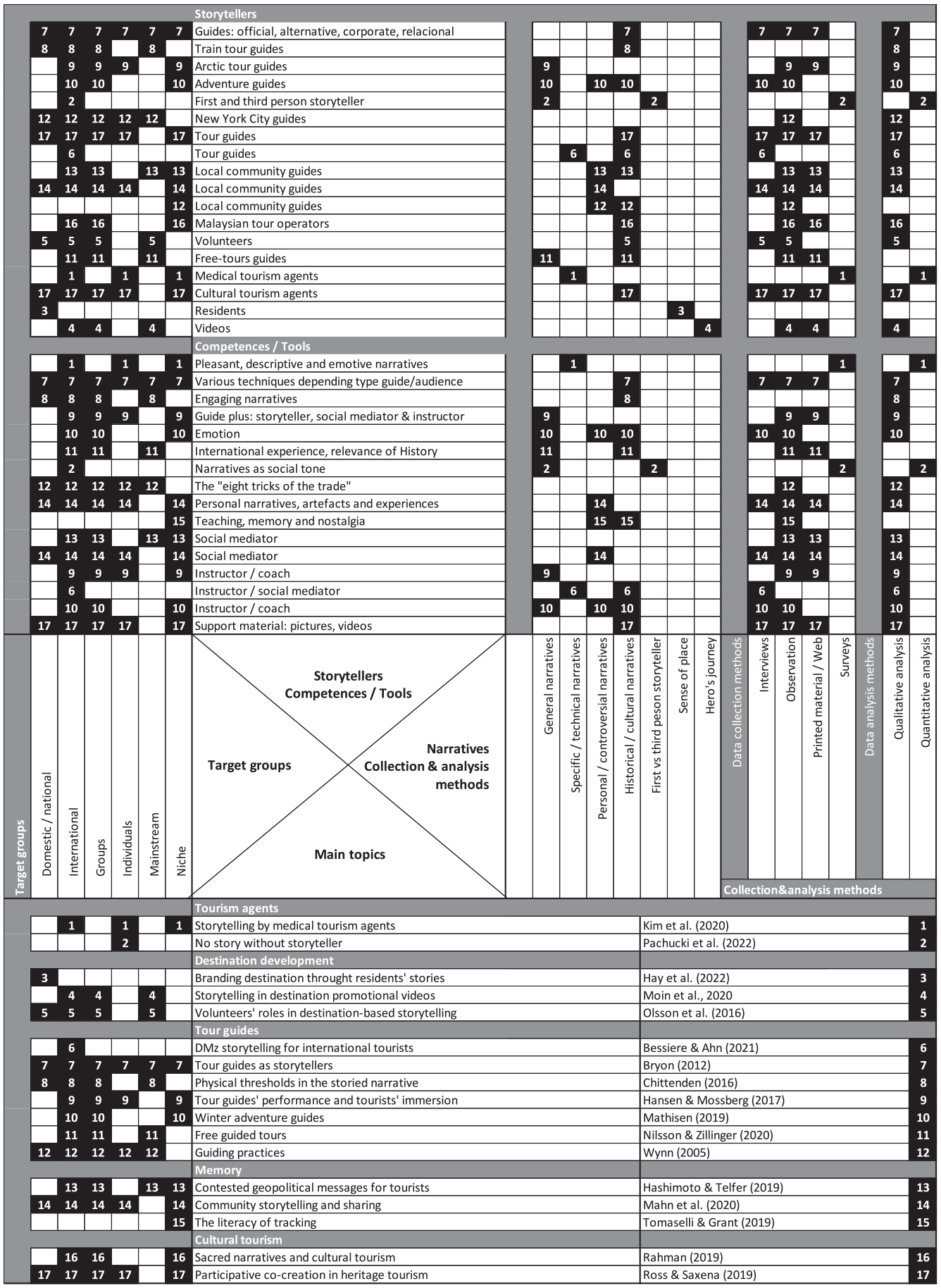
For each main theme, an X-matrix was prepared showing the main sub-themes under analysis sorted alphabetically by the authors of the papers included in each of the themes analyzed, as shown in Figures 1 to 4. Moreover, for each article, each X-matrix also presented the main topics covered and data collection and data analysis, complementing the sub-themes showcased.
Characterization of the Theme of Storytelling as a Tool to Attract Tourists.
Characterization of the Role of the Storyteller as Main Theme.
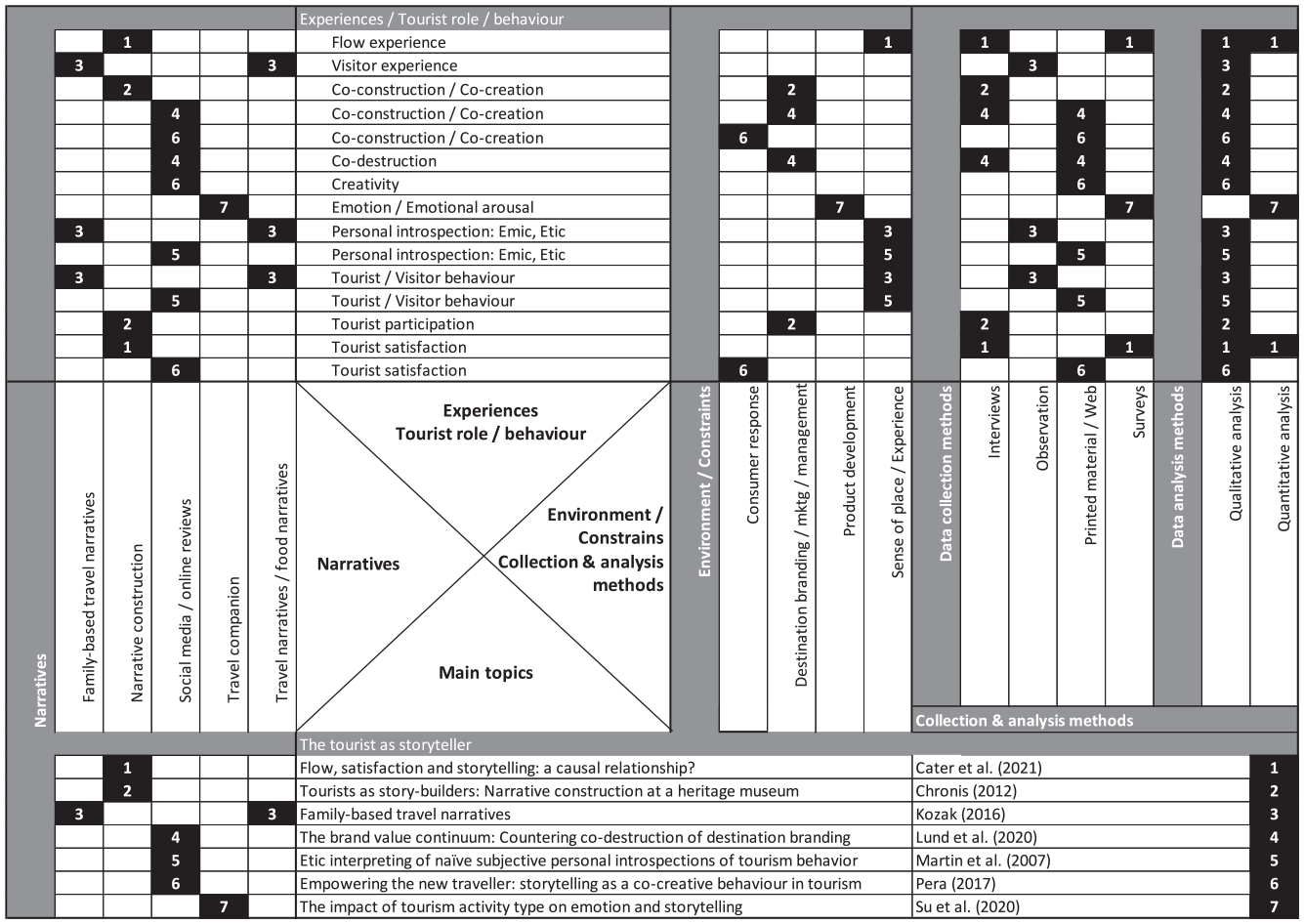
Characterization of the Main Theme the Tourist as Storyteller.
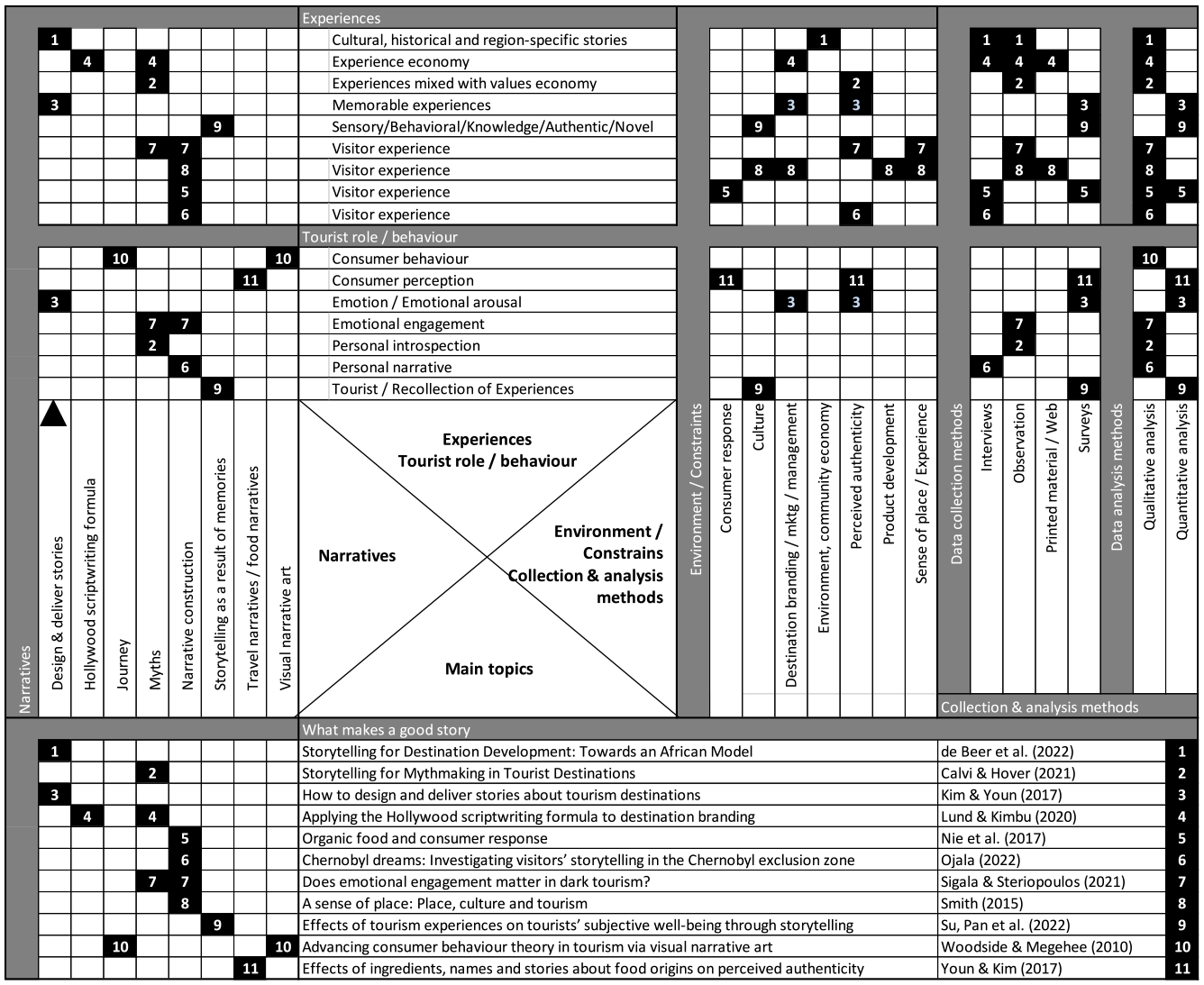
Characterization of the Main Theme What Makes a Good Story.
Results
Storytelling as a Tool to Attract Tourists
The set of 31 articles to address this theme is shown in Figure 1. To characterize this theme, four main sub-themes (types of tourism; who is using storytelling?; support/carrier; and values) were analyzed.
It is possible to observe that, among the main topics covered (Figure 1), articles focus on experience design (de la Barre & Brouder, 2013; Fusté-Forné, 2020; Mei et al., 2020; Migoń & Pijet-Migoń, 2017; Mossberg, 2008), customer experience (Howison et al., 2017; Lee & Shin, 2015; Moscardo, 2017; Vespestad & Hansen, 2020), local identity (Eskilsson & Högdahl, 2009; Lloyd et al., 2010; Pollice et al., 2020; Topler, 2022), and destination development (Kebede, 2018; Mathisen & Prebensen, 2013; Montargot et al., 2021; Zheng & Zhang, 2023).
Wine tourism (Bassano et al., 2019; Frost et al., 2020; Lee & Shin, 2015; Santos et al., 2020), heritage tourism (Howison et al., 2017; Kramvig & Førde, 2020; Lloyd et al., 2010; Lund et al., 2022; Montargot et al., 2021; Pollice et al., 2020; Topler, 2022), food tourism/gastronomy tourism (de la Barre & Brouder, 2013; Engeset & Elvekrok, 2015; Fusté-Forné, 2020), and geotourism (Brumana et al., 2018; Hartman et al., 2019; Migoń & Pijet-Migoń, 2017) emerge as the main outcomes of types of tourism.
Wine tourism is an area in which storytelling can be particularly effective, as it strengthens and differentiates brands from the competition. Emphasizing tradition, production methods, heritage, family, and ethnic legacy have been used by both Australian (Frost et al., 2020) and Portuguese (Santos et al., 2020) wine companies, and by traditional sake distilleries (Lee & Shin, 2015), to engage tourists and visitors, winning their loyalty as consumers.
As a component of authenticity that helps increase tourist satisfaction, the close relationship between gastronomy and storytelling is demonstrated in geographies as distinct as the Yukon (Canada) and Lapland (Sweden; de la Barre & Brouder, 2013), Norway (Engeset & Elvekrok, 2015), and in the Roncal Valley in Navarre (Spain). The same occurs in the context of artisanal cheese production and its relationship with tourism in low-density territories (Fusté-Forné, 2020).
In this set of articles, there are two that, being conceptual studies, do not fit entirely into the type of analysis presented in the X-Matrix. One analyses how stories are used in the design of tourism experiences and destination promotion (Moscardo, 2020a) and the other focuses on the growth of stories in tourism, identifying three reasons that are currently driving it: experiential tourism, the growth of mobile digital technologies, and the Asian wave in tourism (Moscardo, 2020b).
Storytelling is particularly used by destination marketing organizations (DMOs) to attract tourists (Georgescu Paquin & Cerdan Schwitzguébel, 2021; Hartman et al., 2019; Lund et al., 2018; Mei et al. 2020; Zheng & Zhang, 2023), and by indigenous peoples (Howison et al., 2017; Kramvig & Førde, 2020; Lloyd et al., 2010), with the use of guides (Frost et al., 2020; Migoń & Pijet-Migoń, 2017; Mossberg, 2008; Pollice et al., 2020), blogs (Bassano et al., 2019; Fusté-Forné, 2020; Moscardo, 2017), films, and videos (Brumana et al., 2018; Howison et al., 2017; Mathisen & Prebensen, 2013). As storytelling is part of many indigenous cultures, it plays an important role in promoting and publicizing their cultures to visitors, for example, the Maoris of New Zealand (Howison et al., 2017), the Sámi of Norway (Kramvig & Førde, 2020), and the Aborigines of Australia (Lloyd et al., 2010). In all cases, to enhance the effectiveness of the stories told, it is necessary to translate them into the tourists’ languages and complement the oral narratives with images, videos, animations, social media, and printed material. While attracting tourists, storytelling helps strengthen the sense of identity and belonging in members of the host community (Pollice et al., 2020). To address the interests of diverse audiences and enhance their experiences, appealing storytelling can be an important tool in diversifying offerings, whether in New Zealand’s natural heritage, (Migoń & Pijet-Migoń, 2017), Ethiopia’s railway heritage (Kebede, 2018), or Norway’s rural tourism (Mei et al., 2020).
In the analysis of the sub-theme values, cultural landscape (Brumana et al., 2018; Frost et al., 2020; Fusté-Forné, 2020), history and nostalgiascape (Kebede, 2018; Vespestad & Hansen, 2020), indigenous cultures/knowledges (Howison et al., 2017; Kramvig & Førde, 2020; Moin et al., 2020), servicescape (Mossberg, 2008), natural landscape (Migoń & Pijet-Migoń, 2017; Montargot et al., 2021; Topler, 2022), and sustainable development (Bassano et al., 2019; Fusté-Forné, 2020; Pollice et al., 2020) were the main values used by the articles analyzed. History and cultural heritage can imprint a stamp of authenticity, to the point where tourists consider certain places as more traditional and genuine, a nostalgiascape (Vespestad & Hansen, 2020).
Finally, some organizations are built around stories. However, an extraordinary experience requires a hedonic framework and a servicescape that allows the consumer an escape from everyday reality (Mossberg, 2008). It is possible to conclude that most articles use observation and interviews as data collection methods, with qualitative data analysis being the most important one (Figure 1).
The Role of the Storyteller
A second set of articles directly addresses the storyteller’s role. From a marketing communication perspective, it is essential to incorporate the telling attributes—emotion, clarity, and entertainment—into the story’s information and authenticity attributes (S. H. Kim et al., 2020). As in the previous main theme, the X-Matrix was used to display the 17 articles in this theme (Figure 2) and four sub-themes (target groups; storytellers; skills/tools; and narratives), complemented with the main topics covered and data collection and analysis methods.
Analyzing Figure 2, it is possible to conclude that most articles focus on tour guides as the main topic (e.g. Bessiere & Ahn, 2021; Chittenden, 2016; Hansen & Mossberg, 2017; Nilsson & Zillinger, 2020; Wynn, 2005). In the analysis of target groups, the preference for international groups is overwhelming (e.g. Bessiere & Ahn, 2021; Bryon, 2012; Hansen & Mossberg, 2017; S. H. Kim et al., 2020; Mahn et al., 2020; Mathisen, 2019; Olsson et al., 2016; Rahman, 2019; Ross & Saxena, 2019; Wynn, 2005).
In the sub-theme storytellers, the dominant choice of articles was for local community guides (Hashimoto & Telfer, 2019; Mahn et al., 2020; Wynn, 2005), and tour guides (Bessiere & Ahn, 2021; Ross & Saxena, 2019), while the most valued competences/tools were instructor/coach (Hansen & Mossberg, 2017; Mathisen, 2019).
There are several types of storytellers: official guides, alternative guides, business guides, and relational guides (Bessiere & Ahn, 2021; Bryon, 2012). However, the “guide plus” is the one who adds the skills of a social mediator and trainer to those of a storyteller. This type of effective tour guide can increase tourist engagement, turning a regular experience into an extraordinary one (Hansen & Mossberg, 2017). Free-tour guides (Nilsson & Zillinger, 2020) and volunteers (Olsson et al., 2016) can also be important stakeholders of destinations. Tour guides make use of various storytelling tools to convey the history, culture, and lifestyle of a destination (Chittenden, 2016; Wynn, 2005). In a dark tourism scenario, storytelling allows local communities to mobilize personal reflections and traumatic memories, expressed in the stories told to tourists, particularly in contexts of former armed conflicts (Hashimoto & Telfer, 2019) or natural disasters (Mahn et al., 2020).
The storyteller can take on critical importance, for example, when the physical traces of the past have been destroyed (Bessiere & Ahn, 2021). In this case, the intangible story can only be experienced through the creative narrative of the storyteller, using secondary elements (illustrations, stories, etc.) as mediators, so that tourists can get a rough idea of the places that no longer exist (Ross & Saxena, 2019). In South Africa and Botswana, despite having already abandoned hunting practices, certain communities teach tourists to follow tracks for the sake of preserving memory and nostalgia (Tomaselli & Grant, 2019). Stories can also be told through promotional videos of destinations, and should incorporate the principles of storytelling, using the hero’s journey (Moin et al., 2020).
The impact of the storyteller as a narrative element on story persuasiveness was analyzed by Pachucki et al. (2022), who compared third-person to first-person perspectives and their effect on tourist response. They conclude that first-person storytellers significantly increase engagement on social media, enhance destination brand image, and boost tourist visit intentions compared to third-person storytellers.
Regarding the sub-theme narratives, it is possible to conclude that most of the articles analyzed favored historical/cultural narratives (e.g. Bryon, 2012; Chittenden, 2016; Hashimoto & Telfer, 2019; Nilsson & Zillinger, 2020; Olsson et al., 2016; Rahman, 2019; Tomaselli & Grant, 2019; Wynn, 2005). Sacred narratives provide a set of guidelines, rules, and prohibitions to be observed in everyday life. Today, sacred narratives have enormous potential in promoting cultural tourism, particularly in certain parts of Indonesia and Malaysia (Rahman, 2019). As data collection methods, almost all of the articles used observation, based on qualitative data analysis.
The Tourist as Storyteller
A third group of articles centers around the tourist as a storyteller. By examining Figure 3, the contents of seven articles were reviewed, and patterns about the tourist as a storyteller can be identified. In the analysis of the narratives as sub-theme, we found that articles preferably address the aspects of social media/online reviews (Lund et al., 2020; Martin et al., 2007; Pera, 2017), and narrative construction (Cater et al., 2021; Chronis, 2012).
Co-construction/co-creation (Chronis, 2012; Lund et al., 2020; Pera, 2017), personal introspection (Kozak, 2016; Martin et al., 2007), tourist/visitor behavior (Kozak, 2016; Martin et al., 2007), and tourist satisfaction (Cater et al., 2021; Pera, 2017) are the most important aspects analyzed within the sub-theme experiences. The inclination to share positive experiences occurs in a context fostered by a feeling of satisfaction and engagement (Cater et al, 2021). From a marketing standpoint, storytelling is the fundamental tool in co-creation in tourism, in an atmosphere that embraces customer delight (Pera, 2017).
In the analysis of the sub-theme environment/constraints, most articles address aspects related to a sense of place/experience (Cater et al., 2021; Kozak, 2016; Martin et al., 2007) and destination branding/marketing/management (Chronis, 2012; Lund et al., 2020). Most articles used printed material/web analysis as data collection methods (Lund et al., 2020; Martin et al., 2007; Pera, 2017), with qualitative data analysis being largely preponderant.
What Makes a good Story
The fourth group of 11 articles, as shown in Figure 4, centers around the main theme: What makes a good story? Upon analyzing the main topics, a broad spectrum of aspects was observed, with a primary focus on the significance of storytelling for destinations (Calvi & Hover, 2021; de Beer et al., 2022; J. H. Kim & Youn, 2017; Lund & Kimbu, 2020). In the analysis of the narratives of the sub-themes, we found that articles preferably address the aspects of narrative construction (Nie et al., 2017; Ojala, 2022; Sigala & Steriopoulos, 2021; Smith, 2015) and myths (Calvi & Hover, 2021; Lund & Kimbu, 2020; Sigala & Steriopoulos, 2021).
Experiences, as a sub-theme, highlights visitor experience (Nie et al., 2017; Ojala, 2022; Sigala & Steriopoulos, 2021; Smith, 2015), and the sub-theme tourist role/behavior covers a wide range of aspects, including consumer behavior (Woodside & Megehee, 2010), consumer perception (Youn & Kim, 2017), emotional engagement (Sigala & Steriopoulos, 2021), and emotional arousal (J. H. Kim & Youn, 2017).
In the analysis of the sub-theme environment/constraints, most articles address aspects related to perceived authenticity (Calvi & Hover, 2021; J. H. Kim & Youn, 2017; Ojala, 2022; Youn & Kim, 2017), and destination branding/marketing/management (J. H. Kim & Youn, 2017; Lund & Kimbu, 2020; Smith, 2015).
In the context of storytelling in tourist destinations, a good story should value elements such as authenticity, positive emotions, and audio-visual aids. This results in better memorability and higher tourist visit intention (J. H. Kim & Youn, 2017). However, given the proper context and setting, tourists can imagine additional details and insert themselves into the very story told by the storyteller (Lund et al., 2020), becoming a story builder based on the selection and integration of the various sources available (Chronis, 2012).
Stories have the gift of establishing an emotional connection to the place visited and building a sense of belonging to the host community, capable of overcoming cultural and other differences. Building on the synergy created between cultural tourism and place-based activity, stories prove to be an integral part of a destination’s brand and enrich the experience of visitors who, more than being entertained, wish to fully experience a place (Smith, 2015).
Regarding data collection methods, most articles used observation (e.g. de Beer et al., 2022; Lund & Kimbu, 2020; Smith, 2015), surveys (J. H. Kim & Youn, 2017; Nie et al., 2017; Su et al., 2023; Youn & Kim, 2017), and interviews (e.g. Lund & Kimbu, 2020; Nie et al., 2017; Ojala, 2022).
Discussion and Implications
Storytelling as a Tool for Attracting Tourists
From this main theme 31 articles emerged. It is possible to highlight wine tourism, heritage tourism, and gastronomic tourism. Cultural landscape, history, indigenous cultures, and sustainable development were the main values used by the cases covered in the articles analyzed, based mainly on qualitative data analyses.
The stories focussed on the authenticity and tradition of places (Frost et al., 2020; Hannam & Ryan, 2019) creating immersive tourism experiences for visitors. This helps to promote and spread the local cultures, generating interest and loyalty towards the destination for tourism promotion purposes (Vespestad & Hansen, 2020). Storytelling has been traditionally used by DMOs to attract tourists through the use of guidebooks, blogs, films, and videos, which enhance destination marketing promotion and communication, and strengthen the sense of identity and belonging of the residents and tourists (Bassano et al., 2019; Hay et al., 2022; Lund et al., 2022; Mei et al., 2020; Mossberg, 2008).
It is possible to claim that within this thematic category a traditional mode of storytelling was present: (a) storytellers aimed at attracting tourists promoting experiences and uniqueness through disruptive messages seeking to generate thoughts, emotions, and sensations centered on the benefits and uniqueness of the tourist destination or DMOs (Frost et al., 2020; Fusté-Forné, 2020); (b) the core of the message is on the destination. The messages are centered on promoting and spreading the characteristics of the destination: the benefits or the uniqueness they provide visitors with were the main topics used to connect with the audience based on the story to be told (Lund et al., 2022; Vespestad & Hansen, 2020; finally: (c) the hero of the story revolves around the destination (Georgescu Paquin & Cerdan Schwitzguébel, 2021; Topler, 2022).
Tourists are captivated by the uniqueness of a destination’s heritage, history, culture, gastronomy, and values, which are used to immerse visitors in engaging with the destinations they are visiting (e.g., Brumana et al., 2018; Frost et al., 2020; Howison et al., 2017; Kramvig and Førde, 2020; Lloyd et al., 2010). As a result, a sense of identity and brand destination is in place to strengthen the visitor-destination bond. This enables storylisteners to build an identity they can connect with through the emotions and sensations created (e.g., Fusté-Forné, 2020; Pollice et al., 2020). As such, this main theme can be classified as resting on the typical traditional use of storytelling, in which the strategic values (such authenticity, tradition and uniqueness) of the destination are used to influence tourists’ decision-making through storytelling strategies (e.g., Bassano et al., 2019; Ben Youssef et al., 2019; Frost et al., 2020). This underscores the importance of authenticity and traditions in destination marketing strategies, highlighting the importance of traditional narratives and emotional appeal in tourism promotion and tourism destinations.
Different Roles of the Storytellers
This main thematic area includes 17 articles, in which storytellers play several important roles, including, among others, preserving cultural traditions and educating their audiences about specific themes through empathy and kindness, while entertaining with their tales, humor, and emotions. This helps to inspire their audiences and connect people, highlighting and sharing stories that help evoke strong positive emotions.
Although the role of storyteller can be played by several stakeholders, guides—in their various formats—play a primary role in storytelling. However, to be fully effective, the storyteller’s skills need to incorporate those of a social mediator and trainer to be able to increase the involvement of the tourists, turning their experiences into extraordinary and memorable ones (e.g., Bryon, 2012; Hansen & Mossberg, 2017; Hashimoto & Telfer, 2019; Mahn et al., 2020; Mathisen, 2019).
Stories can establish an emotional connection to the place visited and generate a sense of belonging to the host community, blurring cultural, historical, and other differences. Storytelling plays a key role in the emotional involvement of tourists, not only to the tourist destination but also to the unique experience that allows the generation of positive emotions that create umbilical relationships where tourists feel part of the story told and part of the place. This relationship enhances place attachment (e.g., Mathisen, 2019; Rahman, 2019; Ross & Saxena, 2019).
Tourists are inclined to share their positive experiences as they incorporate additional details that enrich the stories told by the storyteller, assuming themselves as co-creators of the narrative (Pachucki et al., 2022). Thus, storytelling becomes a fundamental tool for co-creation in tourism, fostering an atmosphere of consumer enchantment (Ross & Saxena, 2019). The role of the storyteller can be multifaceted, with both supply players (linked to DMOs) and demand players (tourists) playing crucial roles as experience designers and as co-creators of travel emotions, experiences, identities, and place attachment. This complements the traditional role of storytelling that seeks to explore the core concept of the brand/place and creates a story based on the intrinsic characteristics of the context, signs, symbols, and artifacts (Ryu et al., 2018). These factors are crucial in designing effective destination brand stories that promote narratives and social presence.
This second thematic area complements the previous one as the stakeholders mediate between the supply—the destination—and the demand—the tourist/visitor. In this case, the disruptive message that generates thoughts, emotions, and sensations is conveyed by stakeholders who interact and establish a connection with the visitor and help co-create and enhance place attachment. As co-creators, storytellers give the audience not only a sense of belonging, but also the emotional creation that leads to the sense of identity enhanced by the visitor–storyteller relationship (e.g., Hansen & Mossberg, 2017; Hashimoto & Telfer, 2019; Mahn et al., 2020; Mathisen, 2019).
In this second thematic category, storytellers play a crucial role in putting the core message of destination storytelling into action and giving tourists a lively, authentic place attachment. Unlike the previous main thematic area, the hero of the story shifts from the destination, emphasizing the multifaceted role of storytellers in shaping the narratives and fostering emotional connectedness with the destination.
The Tourist as a Storyteller
Of the seven articles grouped into this main theme, we conclude that most of the studies address aspects related to the construction of narratives by tourists, that is, the tourist plays an important role as a storyteller generating new social networks and reviews. As such, this thematic area emphasizes the visitors’ experiences and the tourists’ roles as co-creators of stories.
In this third thematic area the demand—more properly, the tourist/visitor—plays the key role (e.g., Chronis, 2012; Lund et al., 2020; Pachucki et al., 2022; Pera, 2017): (a) as the visitor/tourist is the co-creator of experiences, emotions, and sensations that result from positive lived experiences; (b) as the core message is not the destination but the unique experience lived and the attachment the tourist creates with other tourists as a result of the heritage, historical, cultural, or gastronomical experience; and (c) the sense of identity and trustworthiness that is generated by the tourist as a storyteller. It is possible to argue that, in this situation, the role of the tourist shifts from the traditional role of storylistener to that of a storyteller. In this case, the tourist plays the role of the hero of the story, as it is the tourist as a storyteller and not the destination, that captivates the unique emotions, sensations, and experiences that are generated as a result of the sense of belonging and authentic lived experience (Chronis, 2012; Pera, 2017). In this role, tourists as storytellers captivate the audience, giving their own meaning, experiences, social context, perspectives, and authenticity to the narrative, giving tourists more credible, unique information that increases visit intentions (Pachucki et al., 2022). As such, it is possible to argue that tourists as storytellers open new windows of opportunity in destination/tourist marketing research, not only influencing travel decisions, but also shifting the focus from a destination-centric storytelling to a participatory, tourist-based approach with tourists as major narrative creators.
What Makes a Good Story?
Several aspects stand out in the analysis of the 11 articles (J. H. Kim & Youn, 2017; Sigala & Steriopoulos, 2021; Woodside & Megehee, 2010): the experiences; the emotional arousal; the perceived authenticity; and the engagement with the destination.
While attracting tourists, storytelling is an important marketing tool that helps strengthen the sense of identity and belonging, transforming what would be a regular/normal experience into an extraordinary one (Calvi & Hover, 2021; Youn & Kim, 2017). The “winning formula” for creating a “good story” is ancient. In the West, it has been following the traditional Aristotelian model that has been successfully used by the Hollywood film industry and is generally identified as the hero’s journey. In the context of tourist destinations, a good story should enhance, for example, positive emotions and authenticity (Lund & Kimbu, 2020; Su et al., 2023). To this end, history and cultural heritage are key elements, giving tourists the perception that certain places are truly traditional and genuine.
Storytelling has proven to be particularly effective in wine tourism and gastronomy, where telling stories of traditions, production methods, family, and ethnic legacy are essential tools. In contrast, in a scenario of dark tourism, storytelling allows local communities to mobilize their reflections and traumatic memories, which are expressed in the stories told to tourists, particularly in contexts of former armed conflicts or natural disasters (Ojala, 2022). This theme emphasizes the emotional resonance, authenticity, and engagement as the main compelling attributes that contribute to an appealing storytelling in reaching the interests of diverse audiences and enhancing their experiences.
Confronting Destination-Based Versus Tourist-Based Storytelling
Based on the four main themes that emerged from the literature review, it is possible to argue that the role of the storyteller should be given a closer look. For that MacInnis and colleagues’ (2020) boundary-breaking perspective is going to be applied to the storytelling perspective as two different perspectives emerge: while destination-based storytelling aims to provide clear, authentic, and destination-based content that caters to a specific target audience, tourist-based storytelling is made up of the unique experiences of tourists who seek to actively engage with the authentic identity of the destination (Mei et al., 2020; Moin et al., 2020; Pachucki et al., 2022; Ryu et al., 2018).
In the case of destination-based storytelling, storytellers are typically based on the supply side and aim to showcase key attributes associated with the image or brand that needs to be created. On the other hand, in tourist-based storytelling, tourists play an important role in complementing the destinations’ identity, authenticity, and unique experiences by expressing their feelings, emotions, and experiences to other tourists, thereby adding more authenticity and trustworthiness to the message conveyed (Ojala, 2022; Pachucki et al., 2022). As such, while there are distinct roles for storytellers and storylisteners in traditional destination-based storytelling, in tourist-based storytelling, tourists assume an active role as storytellers complementing the supply side of storytelling. This has consequences and effects in both cases: The classical supply-to-demand communication based on awareness, interest, attention, and visibility (Mossberg, 2008; Ryu et al., 2018; Woodside & Megehee, 2010)—in which oral, written or visual varieties of stories are prepared to reach the audience from the supply to the demand—gives way to a communication underpinned by empathy, arousal, trustworthiness, involvement, and advocacy—in which tourists (demand) physically, conceptually, and emotionally enact their experiences reaching out the demand (Ojala, 2022; Pachucki et al., 2022).
Finally, the role of the hero is also played differently in tourist-based storytelling. The emotions and sensations that emerge from the tourist’s interaction with the different stakeholders of the tourist destination are given a true storytelling experiential identity by the tourists as storytellers (e.g. Chronis, 2012; Martin et al., 2007; Ojala, 2022). This is quite different from the role of the hero in destination-based storytelling, which is built based on the uniqueness, heritage, and cultural values of the destination (e.g. Moin et al., 2020; Ryu et al., 2018).
There are two antagonistic positions in both situations, given the different roles of storytellers. In both destination-based and tourist-based storytelling, the story must be interesting and the tourist destination must be the centre of attention, with the benefits and characteristics of the tourist destination magnified. However, the traditional role of storylisteners shifts to that of storytellers, where they take advantage of their experiences, emotions and sensations to give credibility, empathy, authenticity, trustworthiness, and advocacy to the story. In tourist-based storytelling, the tourist plays an active role as a communicator and can potentially become an active storyteller (e.g. Chronis, 2012; Martin et al., 2007; Ojala, 2022; Pachucki et al., 2022).
The differences between destination-based and tourist-based storytelling are shown in Table 3.
Destination-Based Versus Tourist-Based Storytelling.
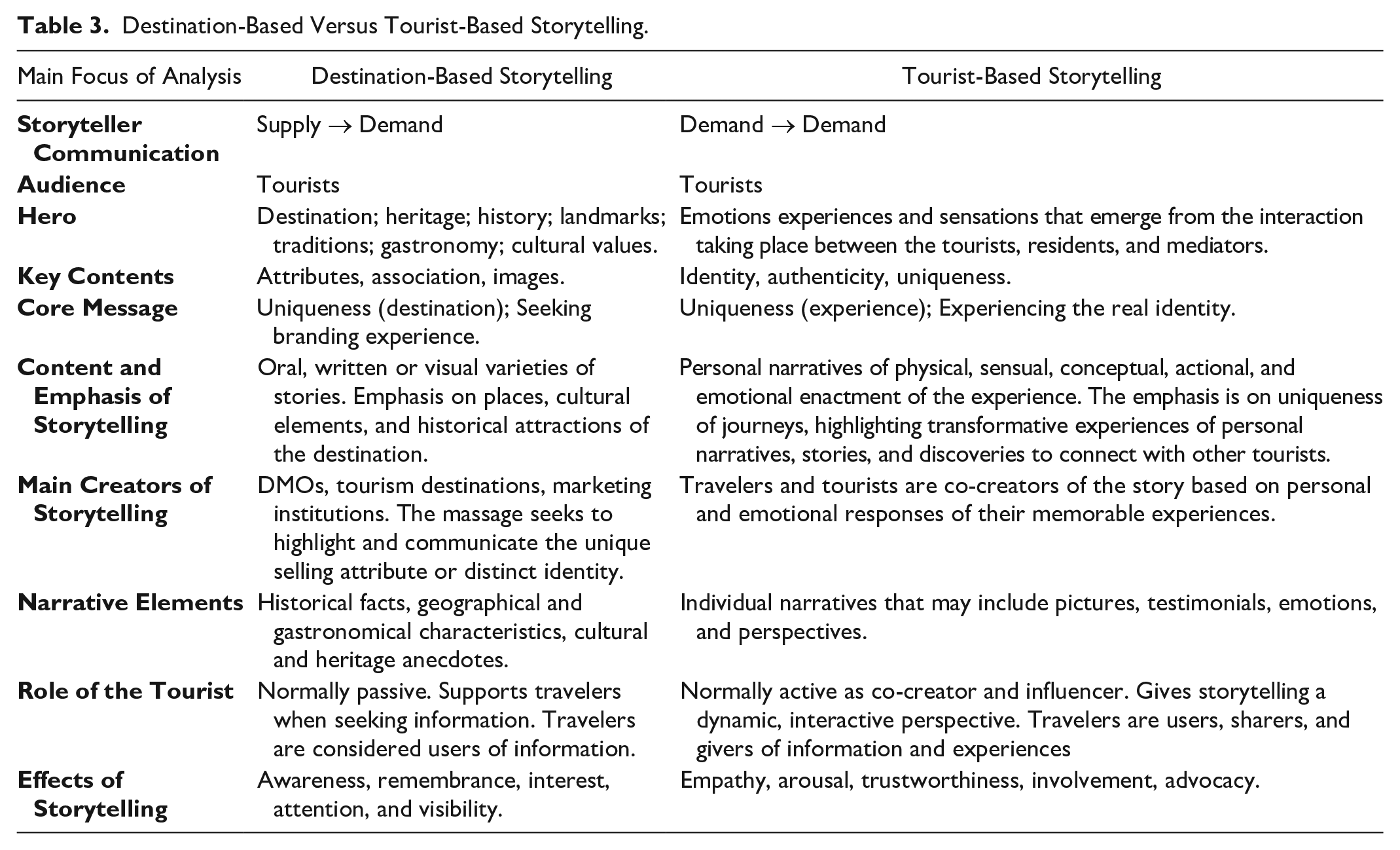
A good story has traditionally been based on how to reach tourists by highlighting the attributes and unique characteristics of the destination, to create high stakes seeking branding of the destinations to foster memorability, interest, attention, awareness, and visibility (e.g. Chronis, 2012; Ojala, 2022; Pachucki et al., 2022; Su et al., 2020). However, is this enough? When considering the role of tourists as storytellers, rather than mere storylisteners, it becomes clear that the physical, sensual, conceptual, actional, and emotional experiences they have had in their interactions with the tourism destination, its residents, intermediaries, and other stakeholders may play a major role creating empathy, arousal, and involvement. This gives tourists a deeper and more trustworthy experience, enabling them to become storytellers and advocates for places and destinations, thus making tourists major storytellers who complement the traditional role played by tourism destinations when seeking more interest, attention, and visibility (e.g. Calvi & Hover, 2021; Ojala, 2022; Pachucki et al., 2022), as they have the power of generating content and narratives that may enhance or jeopardize a destination. This expands the concept of storytelling, highlighting the rise of tourist-based storytelling where tourists become active co-creators and influencers underpinning a major shift towards a broader understanding of storytelling that encompasses both destination-driven and tourist-driven perspectives (e.g., Pachucki et al., 2022).
One of the theoretical contributions is that a good story goes beyond highlighting destination attributes. It needs to comprise an engaging characteristic that captures audience’s interest and empathy, a compelling storyline that provides meaning or involvement, authenticity and emotional resonance, rooted in genuine attributes, and a clear message that engages tourists with the destination’s heritage or traditions. This necessitates a clear understanding of tourist motivations, expectations, and emotional responses when crafting compelling narratives and being ready to empower tourists to share positive experiences and become active storytellers, enhancing destination image and visit intentions. Moreover, as active co-creators, or co-destroyers, the tourist becomes the hero in their own narrative, sharing their unique journey and destination experience. This highlights the subjective and individualistic nature of tourist-based stories (e.g., Moin et al., 2020; Pachucki et al., 2022; Ryu et al., 2018).
The main elements of a good story differ between tourist-based and destination-based storytelling. Tourist-based narratives focus on the personal experiences, perspectives, and emotions of travelers, leading to subjective and individualistic stories. In contrast, destination-based storytelling emphasizes unique destination characteristics tailored to a broad audience showcasing landmarks and attractions, inviting travelers to explore and discover such unique places. A broader picture of the main themes addressed in this chapter is presented in Figure 5.
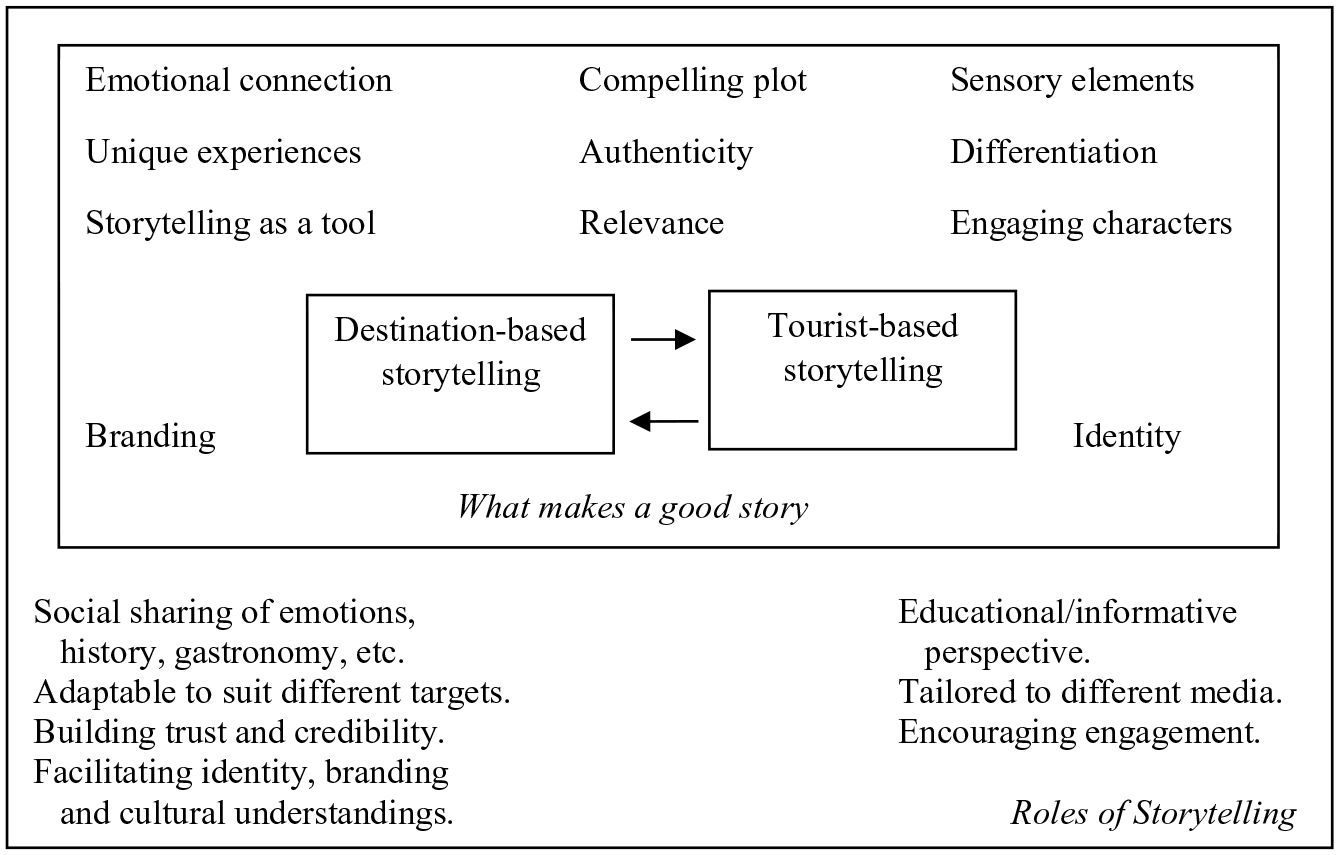
Aggregated Perspective of Storytelling.
Although tourist-based and destination-based storytelling share common storytelling principles, the former is more individualistic and dynamic, emphasizing personal experiences, while the latter is more encompassing and appeals to a broader destination. This has implications for destination marketing due to the importance of the power of tourist-generated content and narratives in influencing destination image and attracting visitors. As such, if destination marketing strategies are to encourage and empower tourists to share their stories, it is mandatory to complement user-generated content through platforms with interactive campaigns (e.g., Chronis, 2012; Li et al, 2024).
Finally, an important theoretical contribution emerges from this paper: a more nuanced understanding of storytelling in tourism can be gained by acknowledging the evolving roles of storytellers, the rise of tourist-based narratives and the importance of emotional connection in creating compelling stories.
Practical Implications
This SLR raises some questions with implications for management. To create a “good story,” it is not enough to consider only nice tourist places and involvement from DMOs, the support of public policies, and other traditional tourism organizations. As such, it is advisable to integrate marketers into promotional film creative teams, but also screenwriters and film directors who have a better understanding of capturing the audience’s attention and imagination. As destinations sell dreams, creativity and artistic skills are as important as a marketing background. Complementarily, it is important to consider tourists as active players as co-creators of sensual, actional, and emotional stories, providing other tourists with their unique experiences that are full of identity and authenticity. As such, marketing strategies should include tourists as active storytellers capable of transforming their positive experiences and sensations into actions full of authenticity that advocate in favor of the storytelling strategy. The complementarity between supply and demand is essential and should be analyzed at the academic level and implemented at the business level. The challenge for DMOs and tourism stakeholders is to enhance visitor experiences and build destination branding, empowering tourists as storytellers of more authentic and engaging narratives, contributing to destination marketing and tourist satisfaction.
Limitations and Future Research
Despite the numerous studies on storytelling, it remains unclear which narratives and media are more effective in targeting the segments of tourists, for example, nationality, age, and cultural background. Understanding these factors can lead to greater customization of storytelling strategies. It is also important to study how storytelling influences tourists’ decision-making processes, including their initial choices when presented with known and unknown destinations, and the reliability of tourists as storytellers.
Future studies should explore quantitative strategies to assess the impact of storytellers and storytelling on place attachment, place passion, authenticity, emotional bonds, place intimacy, and other related factors. Further research should explore the dynamic complementarities between destination-based and tourist-based storytelling. While both share the same principles, they differ as the former encompasses a broader appeal to the location with a static message, whereas the latter is dependent on personal, dynamic, and sometimes volatile experiences. Exploring how emotions, experiences, and the sensory elements vary across cultures and destinations, as well as the role of emerging technologies such as augmented or virtual reality in enhancing engagement and destination branding, could be fruitful for future research avenues. For businesses, strategic tailoring of storytelling narratives to target specific audiences, along with training programs to empower cultural, historical, and sustainability storytelling initiatives, could provide added value. Finally, it is crucial to understand the role of storytelling in fostering emotional bonds between visitors and the places they visit, and identifying which narrative elements trigger emotional connections that lead to a sense of belonging to the host community.
Future studies regarding the role of the storyteller could address the effectiveness of various types of storytellers—such as official guides, alternative guides, business guides, and relational guides—in influencing tourist engagement and satisfaction across various communication channels. Collaboration between local communities, storytellers, and businesses could be analyzed to ensure the preservation and transmission of intangible stories. DMOs face the challenge of aligning digital storytelling strategies with target audiences and measuring the impact of storytellers, especially in the context of social media.
Future studies need to understand how tourists use digital platforms, vlogs, and travel blogs to share their travel experiences. For that it is important to understand how self-reflection influences the narratives tourists choose to share, their experiences, delight, frustration, or satisfaction, and relate them to the place, the brand, or the sense of satisfaction. Moreover, it would be of added value to assess how the narratives created by tourists contribute to the overall image of the destination. For businesses it would be advisable to integrate tourist narratives into destination management practices. For that, DMOs need to develop strategies to encourage tourists to share positive experiences through the implementation of campaigns, incentives, or digital platforms that facilitate and amplify the sharing of positive travel narratives.
Investigating the accuracy of tourists in reproducing stories originally told by the storyteller can provide insights into building more memorable stories. The impact of negative and hostile posts on destination reputation, especially in the era of social media, remains poorly understood and demands further research. Additionally, assessing how skeptical, adversarial, or negative storytellers can influence the image or brand destination is important.
To address the main challenges of what makes a good story, it would be of added value to investigate how authenticity, positive emotions, engagement, and audio-visual elements impact tourist engagement, satisfaction and visit intention. Understanding tourists as co-creators of narratives and identifying triggers for co-destructive interventions is essential. Finally, it is commendable to assess the long-term impact of the emotional storytelling on destination branding.
Footnotes
Declaration of Conflicting Interests
The authors declared no potential conflicts of interest with respect to the research, authorship, and/or publication of this article.
Funding
The authors disclosed receipt of the following financial support for the research, authorship, and/or publication of this article: This work was financially supported by the research unit on Governance, Competitiveness and Public Policies (UIDB/04058/2020), funded by national funds through FCT – Fundação para a Ciência e a Tecnologia.
