




Abstract
When considering how hotels can facilitate aesthetics that offer restorative benefits to business and leisure travelers, extant research suggests natural environments serve as a refuge and that time spent in nature promotes well-being. Based on the tenets of Stress Recovery Theory (SRT), combined with the theoretical perspective of prospect-refuge, we examine, through a series of conjoint analyses, how combinations of biophilic design elements differ in the extent to which they are perceived to enhance guests’ restoration, including relaxation, energy, and mind clarity. We further explore how these perceptions change based on higher and lower levels of individuals’ longer-term states of anxiety and stress. Findings can be translated into practical applications, ensuring that the biophilic elements more closely aligned with restoration and psychological needs are prioritized in urban hotel building and interior design.
Highlights
Studies have yet to investigate specifically how biophilic hotel environments influence factors of restoration including relaxation, energy, and mind clarity
Stress Reduction Theory (SRT) with an extended parallel perspective of prospect-refuge explains the influence of biophilic design on stressed and anxious guests.
Indoor plants, trees, green walls, large windows with natural light and views of nature, green colored, and nature-themed décor elements, enhance perceived guest relaxation, re-energization, and mind clearing, and should be advocated more strongly to incorporate into the design of hotel public and private spaces.
Living wall and denser indoor landscaping were perceived to have the highest utility among other biophilic attributes in terms of enhancing guests— restoration in urban hotels
Introduction
Stress and anxiety are common occurrences in modern life. Daily stressors include constant commuting, an endless flow of emails and text messages, as well as the complexities of managing family life, school, and work. All of these factors contribute to people feeling stressed, anxious, and, ultimately, mentally unwell. Particularly, traffic, noise, pollution, and crowding in major cities have been shown to increase neural social stress processing (Florian et al., 2011; Hartig & Kahn, 2016) and exacerbate anxiety (Peen et al., 2010). While the sources of stress and anxiety may change over time, the notion that stress and anxiety—whether acute or long-term—are inherent to almost every aspect of life, remains constant (Monroe & Slavich, 2016). In addition to the stressors encountered in everyday life, traveling can be a particularly stressful and anxiety-inducing activity, full of complicated itineraries, missed connections, and unfamiliar surroundings. Achor (2014) reported to Harvard Business Review that they found that stress experienced during travel can lower happiness even long after returning from travel. Anxiety and stress are commonly experienced during leisure travel, harming the psychological health of those who are vacationing (Zhu et al., 2020). Business travelers, too, experience anxiety and stress, as they not only need to cope with the logistics of traveling, but they must also be working remotely at the same time (DeFrank et al., 2000). A study of business travelers by Booking.com (2016) found that although 39% of respondents felt positive about business travel, about 93% experienced stress during their travel. Anxious and stressed travelers conclude their day at a hotel, and the majority assume that the function of the hotel is to provide a place of restoration. However, many hotels are not designed to be conducive to providing an escape where a guest can relax, re-energize, and clear their mind (Zhu et al., 2020).
When considering how hotels can facilitate aesthetics that are more restorative to business and leisure travelers, extant research suggests that natural environments serve as a refuge, and that time spent outdoors in nature relieves stress and promotes well-being (Bratman et al., 2012; Dzhambov et al., 2021; Hartig et al., 2014; Honold et al., 2016; Maddock, Suess, Bratman, Smock, Kellstedt, Gustat, et al., 2022; Maddock, Suess, Bratman, Smock, Kellstedt, Layton, et al., 2022; Memari et al., 2021; Van den Berg et al., 2015). As highlighted by Suess (2023), Guzzo et al. (2022) and Michels et al. (2022), interior environments can mirror the restorative benefits of the outdoors via biophilic design, which includes plants and trees, water features, and other nature-inspired elements (Bringslimark et al., 2009). In this vein, designers of hotel spaces that are intended to be restorative for stressed and anxious guests, particularly those in urban settings with limited outdoor access to nature, have begun to incorporate biophilic design into their portfolio, where guests can relax, clear their mind, and rejuvenate (Guzzo et al., 2022; Nanu & Rahman, 2023; Song et al., 2022).
The concept of restoration aligns with the prospect-refuge associated with Stress Recovery Theory (SRT), positing that exposure to nature can improve parasympathetic nervous system responses and increase physiological and psychological stress recovery (Ulrich, 1984; Ulrich et al., 1991). However, in the hospitality and tourism literature, research investigating guests’ psychological status applying SRT is scant and has mainly been applied to examinations of hospitality employees (e.g., Leung & Huang, 2023). Consequently, there exists a gap concerning the mechanisms through which biophilic experiencescapes impact guests’ restoration, and how personal levels of stress and anxiety interact with this relationship.
Although biophilic experiencescape attributes encompass a wide range of physical design and atmospheric factors, methodological execution in previous studies has been limited to examining differences among one or two biophilic elements (e.g., experimental research). This is particularly problematic as it is unknown how many different biophilic attributes, individually and together, could compete or create synergies that influence guests’ restoration. Thus, a more holistic environmental and multiple-indicator understanding of biophilic experiencescapes is necessary (Guzzo et al., 2022; Shin et al., 2023). To bridge these gaps, this study attempts to answer the following questions:
R1: To what extent are biophilic element combinations in an urban hotel perceived to contribute to a guest’s acute restoration in terms of their relaxation, energy, and mental clarity?
R2: To what extent do biophilic element combinations differ in their perceived contribution to guests’ restoration in guests with higher versus lower levels of longer-term stress and anxiety?
Using the theoretical framework associated with SRT (Sonnentag & Fritz, 2007), combined with a theoretical perspective of prospect-refuge, we examine how combinations of biophilic design elements differ in the extent to which indicators of restoration are perceived by hotel guests to be enhanced, including relaxation, energy, and mind clarity. We further explore how these perceptions change based on higher or lower levels of guests’ existing levels of anxiety and stress.
Literature Review
Stress Recovery Theory
Stress Recovery Theory (SRT) underlies the present study, which examines how individuals recover from stress and restore their wellbeing (Sonnentag & Fritz, 2007). SRT suggests that recovery from stress is crucial for maintaining individual health and performance. The theory emphasizes the importance of engaging in specific activities and strategies that facilitate psychological detachment, relaxation, mastery experiences, and personal resource replenishment, particularly in an urban environment (Hartig & Kahn, 2016).
According to SRT, humans must mentally disengage in extraneous activities in order to realize a sense of stress relief. By disengaging in activities related to large groups of people, crowding, community noise, air pollution, and traffic, individuals can process stress recovery (Cohen et al., 1986). Examples include mindfulness exercises, practicing deep breathing techniques, or participating in activities that bring joy and calmness. Relaxation is another key aspect of SRT. In addition to a detachment response to stressful environmental factors, relaxation after stress involves low-arousal positive changes in psychological states (Ulrich, 1983; Ulrich et al., 1991). Further, physical relaxation allows individuals to unwind and replenish their energy resources, facilitating stress recovery. Relatedly, replenishment of energy resources pertains to stress-recovery processes that involve physiological and mental recharging from restful and low-arousal environments.
SRT is particularly useful as a framework to explore the relaxing, re-energizing, and mind clearing properties of biophilic experiencescapes, with restoration entailing broader psychoevolutionary concept and an integrated biophilic hypothesis—that is, when stress recovery is facilitated by the immersion in nature (Kellert & Wilson, 1995). The biophilic hypothesis suggests that humans have a natural affinity for and react favorably to natural environments because of their evolutionary links to safety and survival associated with nature and refuge (Kellert & Wilson, 1995; Stamps, 2008; Ulrich, 1983). According to Prospect-Refuge Theory (Stamps, 2008), nature is significant, relative to a human’s ability to see and anticipate threats and identify defense options; dense ground vegetation, trees, and other natural enclosures are associated with hiding places from predators (Kellert et al., 2011). Through SRT, exposure to biophilic environments in a building interior can serve as a refuge mechanism to reduce or buffer stress and anxiety (Gaekwad et al., 2022, 2023). In this vein, designers of hotel spaces that are intended to reduce the stress and anxiety of travelers have begun to incorporate biophilic design into their portfolios (Nanu & Rahman, 2023).
SRT, as it relates to hotel design, has been the subject of some prior research. For example, guests suffering from post-COVID stress indicated a preference for hotels with biophilic elements in order to alleviate this stress. As highlighted by Guzzo et al. (2022), interior biophilic environments at hotels provide restorative benefits to employees, mainly via large windows with views of nature and interior trees and plants. Relatedely, Yu et al. (2020) also suggested SRT framework to examine how biophilic design reduces stress and burnout in hotel employees, with findings indicating longer-term quality of life outcomes (Yu et al., 2020). Additionally, in a study on the incorporation of biophilic design elements in biophilic hotel lobbies by Nanu and Rahman (2023), hotel guests reported lower arousal and higher pleasure levels.
Biophilic Design
The term “biophilia” was first coined by Fromm (1964), a psychoanalyst and humanist thinker, who characterized it as a “love for life” (p. 39). Later, biologist Wilson (1993) expanded on this concept and proposed that humans have an intrinsic emotional bond with other living organisms, which he called “biophilia” (p. 31). Wilson (1986) hypothesized that human mental health is linked to immersion in a healthy ecological environment due to evolutionary processes. In recent years, researchers, including those in architecture and design, adapted the idea to intentionally designed spaces and found evidence that natural settings in the built environment can improve human well-being by tapping into humans’ innate psychological predisposition towards nature (Kellert, 1993; Ulrich, 1993)
In recent years, biophilic design has garnered more attention, and been explored across various disciplines including environmental psychology, marketing, and health (Brengman et al., 2012; Bringslimark et al., 2009; Kellert, 2018; Kellert & Calabrese, 2015; Lee et al., 2023; Rosenbaum et al., 2018; Tifferet & Vilnai-Yavetz, 2017). Nonetheless, the intricate relationship with nature is frequently constrained by today’s urbanized settings (Gillis & Gatersleben, 2015). Through the integration of natural elements into architectural designs, biophilic design addresses this innate human longing in the absence of natural environments (Kellert et al., 2011). There are numerous benefits linked to incorporating biophilic design in interior settings in urban environments.
Biophilic servicescapes can also result in improved attention recovery levels and positive affective responses compared to non-biophilic designs (Purani & Kumar, 2018). Studies have shown that adding natural light and windows to buildings can improve people’s moods (Küller & Lindsten, 1992; Zadeh et al., 2014), and placing potted plants in an indoor environment has also been found to reduce stress (Bringslimark et al., 2009; Suess, 2023). Views of nature from the window reduce stress, enhance both mental and physical health, and foster positive attitudes and actions (Grinde & Patil, 2009; Hartig et al., 2011; Honold et al., 2016; Van den Berg et al., 2003; Van den Berg et al., 2016; Vujcic et al., 2017). Additionally, several studies have provided evidence of healing benefits to patients from an immersion in plants and indoor gardens (Marcus, 2007; Marcus & Sachs, 2013; Park & Mattson, 2008; Pretty, 2004; Raanaas et al., 2010). Likewise interior water features, and natural light stimulate neural activities associated with relaxation and decreased stress (Rosenbaum et al., 2018).
Biophilic Design in Hotels
From a revenue perspective, biophilic elements can have positive financial outcomes impacts for hotels. For example, 35% more guests have been reported to choose to spend time in hotel spaces that have biophilic elements than non-biophilic spaces (www.ambius.com). Likewise, biophilic lobbies have been indicated in studies to be 10% more likely to facilitate social gatherings or work activities compared to standard hotel lobbies (Hall, 2022). Guest preferences for natural elements in the window view of hotel rooms is evident in room rates, as well. For example, ocean view rooms command 18% more in room rate than non-ocean view rooms (www.ambius.com). Additionally, customers are more likely to perceive quality and have favorable attitudes towards a physical environment that makes them happy and excited (Ha & Jang, 2013; Mclaughlin, 2017; Rosenbaum et al., 2016; Worsfold et al., 2016). This is particularly important in hotel services, where both social atmosphere and physical ambience play a crucial role in shaping guests’ intentions to return and their perception of value (Worsfold et al., 2016). Current research suggests that hotels which integrate natural elements, such as plants, into the interior design see a higher frequency of guest interactions in these areas which, subsequently, leads to return intentions (Mclaughlin, 2017). The inclusion of green design elements, like plants, water structures, and natural light, augments the trust factor among consumers, regardless of their travel purpose (Gupta et al., 2019).
In addition to the economic benefits, such designs have been found to have a number of wellness effects on both employees and guests. Biophilic lobby design, for example, has been shown to produce high levels of pleasure and lower levels of arousal among hotel guests (Nanu & Rahman, 2023). In a study of prospective hotel employees, Guzzo et al. (2022) demonstrated that green biophilic elements in hotel décor led to higher levels of perceived restoration among prospective employees if they were to work in such an environment. Biophilic design also contributes to better aesthetic perceptions, a sense of escapism, and positive attitudes toward a hotel (Lee et al., 2023).
Restoration
The concept of psychological restoration stems from the understanding of the intensities that urban environments can place on individuals and put a strain on myriad cognitive and emotional capacities, depleting finite resources (Ulrich et al., 1991). Crowding, traffic, noise, pollution, construction, particularly, amplify this drain (Hartig et al., 1991, 2003; Kaplan & Berman, 2010). SRT posits that by engaging with natural settings, which are less taxing on both cognitive and emotional faculties, people can experience mental clarity, relaxation, and revitalized energy (Staats et al., 2016; Ulrich, 1983). In this study, we employ prospect-refuge theory developed by Appleton (1975) for explaining preferences for certain landscapes, where feelings of safety and pleasure from inhabiting environments can result in stress reduction, suggesting that a truly restorative experience is amplified by nature through its ability to provide refuge and immediate sources of aesthetic satisfaction.
Mental clarity
Mental clarity refers to a mental state that is marked by a feeling of serenity, a centered perspective, and heightened mental awareness, along with the capacity to think in a clear, rational, and imaginative manner (Hassard, 2022). When individuals experience mental clarity, their thoughts are organized, coherent, and free from distractions. They can effectively analyze complex situations, assess the available options, and make well-informed decisions. Mental clarity also enhances problem-solving abilities by facilitating creative and innovative thinking (Turan et al., 2019). In a state of mental clarity, people can filter out irrelevant information and maintain a high level of cognitive control, enabling them to stay fully present and engaged in their activities. Mental clarity allows individuals to allocate their cognitive resources optimally (Csikszentmihalyi & Csikszentmihalyi, 1990), performing better at life tasks.
Prior research has demonstrated the positive effect nature has on mental clarity and cognitive functioning. For example, Berto (2005) and Maddock et al. (2022) found that walking in natural environments resulted in enhanced attention and cognitive function. Additionally, spending time in natural settings, such as parks or gardens, was found to facilitate attention restoration and improve cognitive performance (Lee et al., 2015), particularly on focused and working memory tasks. Even having a window with a view of nature has been associated with higher levels of mental clarity and reduced cognitive fatigue (Hartig et al., 1991; Suess, 2023). These studies collectively demonstrate that exposure to nature promotes mental clarity, attention, and cognitive wellbeing, emphasizing the restorative potential of biopihilic indoor natural environments (Berman et al., 2008; Berto, 2005; Hartig et al., 1991).
Relaxation
Relaxation is characterized by feelings of psychological calmness and tranquility (Benson, 1974). When individuals are relaxed, they are better able to let go of distractions, worries, and anxieties that can hinder their performance. By achieving a state of relaxation, individuals can enter a calm and centered mental state, which allows them to fully devote their attention and energy to the task at hand. Relaxation also helps to reduce anxiety and stress, both physically and mentally. It promotes a sense of well-being and enables individuals to approach tasks with a clear and focused mind. When individuals are relaxed, they are less likely to experience cognitive overload or mental fatigue, which can negatively impact performance. Instead, they can tap into their skills, knowledge, and creativity more effectively (Csikszentmihalyi & Csikszentmihalyi, 1992).
Relaxation serves as a valuable tool for restoration by allowing individuals to rest, recharge, and rejuvenate. It helps in reducing mental and physical fatigue, promoting restful sleep, and enhancing overall well-being. Prior research suggests that exposure to natural surroundings, including viewing natural elements like vegetation or water, can activate positive emotional responses and sustained relaxation (Suess, 2023; Ulrich, 1979, 1983, 2023; Ulrich et al., 1991).
Re-energization
Re-energization refers to the process of restoring and replenishing one’s energy levels to achieve peak performance. Optimal Performance Theory (Csikszentmihalyi & Csikszentmihalyi, 1992) suggests that individuals need to strike a balance between relaxation and arousal to maintain an optimal level of energy for daily functioning.
Re-energizing involves activities or strategies that help individuals recover from mental and physical fatigue, renew their motivation, and restore their cognitive resources. It is during periods of rest and relaxation that the body and mind can recharge and regain vitality. Re-energizing also entails self-care practices, such as securing enough rest, adhering to a nutritious diet, and partaking in consistent physical activity. These activities help replenish physical energy and promote overall well-being. Nature often provides opportunities for physical activity, such as walking, hiking, or outdoor sports. Engaging in physical exercise in natural settings combines the benefits of exercise with the restorative effects of nature, leading to increased energy, improved mood, and reduced stress (Pretty et al., 2005).
Nature and Restoration
Numerous studies have shown that nature has restorative properties (McNeel, 2021; Shosha, 2021; Van den Bosch & Sang, 2017), and that green spaces are particularly effective for restoration (Nukarinen et al., 2022). Wyles et al. (2019) note that being immersed in nature enhances psychological restoration. Natural settings can help hospital patients recover quickly and experience positive moods while reducing stress, thus benefiting their healing and recovery outcomes (Suess, 2023). Stress Recovery Theory (SRT) according to Ulrich (1984, 1999) emphasizes the ability of nature to reduce stress and aid in restoration. Exposure to natural landscapes can improve mood, increase concentration, and decrease stress levels (Fitch et al., 2020; Guo et al., 2020; Ottosson and Grahn, 2005). Nature in residential surroundings helps to fulfill individuals’ innate psychological needs and people prefer natural landscapes over man-made ones (Van den Berg et al., 2007).
Studies have shown that walking in nature is more restorative than walking in urban areas (Hartig et al., 2003). Hartig et al. (1991) discovered that individuals who walked in natural settings experienced greater rejuvenation of their mental well-being compared to those who walked in urban areas or participated in various other recreational activities. Other research has shown that activities conducted in nature can reduce anxiety and stress (Asztalos et al., 2009; Ho et al., 2003; Wijndaele et al., 2007).
Anxiety
Anxiety is a subjective and negative emotion that arises from experiencing a sense of uncertainty (Arkin & Ruck, 2007). It can be driven by fear of not having control over unfamiliar situations, new environments, or future events (Shepperd et al., 2005). The prevailing view is that anxiety is a result of perceiving risks (e.g., Reisinger & Mavondo, 2005) and anticipating potential losses (Sadock & Sadock, 2003).
Scholarly research on travel anxiety has unveiled it as a multifaceted psychological phenomenon, with concerns that can include anxiety about unfamiliar environments, fear of cultural differences, concerns about personal safety (Çakar, 2021), and worry about health-related issues (Song et al., 2021; Suess et al., 2020; Yousaf, 2022). A study by Chen et al. (2013) determined that uncertainty and lack of control are significant contributing factors to travel anxiety. Their research demonstrated that unfamiliarity with the destination, concern over the unforeseeable, and the overall feeling of losing control during travel, can trigger anxiety responses. When individuals perceive an increased level of risk, it is likely to heighten their anxiety and decrease their desire to travel. Heightened anxiety can also diminish individuals’ perceptions of safety and their willingness to travel (Reisinger & Mavondo, 2005).
Stress
Stress refers to the psychological, physiological, and behavioral responses that individuals exhibit when they encounter a situation that poses a challenge or threat to their well-being (Baum, 1990). The psychological component involves how individuals mentally evaluate the situation, and experience emotions like fear, anger, or sadness, and employ coping strategies (Ulrich et al., 1991). On the physiological level, various bodily systems, such as the cardiovascular, skeletal-muscular, and neuroendocrine systems, activate to prepare the individual for dealing with or managing the situation (i.e., fight or flight). This mobilization of resources and energy can lead to fatigue if it persists over time. The behavioral aspect encompasses a wide range of observable behaviors, including avoidance, substance use (such as alcohol or cigarettes), and a decline in cognitive performance on tasks like proofreading (Cohen et al., 1986). Moreover, even after the stressor has ceased, individuals may exhibit after-effects such as reduced frustration tolerance and lower performance on tasks (Glass & Singer, 1972).
Zehrer and Crotts (2012) and Petrick et al. (2021) discovered that travelers experience multiple sources of stress, including stressors before the trip, during the actual travel to the destination, and during their stay at the destination. Travelers face challenges such as trip planning (Cohen & Gössling, 2015), long hours, and stress from delays to their return (Westman et al., 2008). Despite the abundance of research on the restorative properties of urban green spaces on acute levels of stress, there is limited information on how longer term anxiety and stress affect the relationship between biophilic interior spaces and restoration. In the present study, we examine how anxiety and stress moderate this relationship. As a parallel process, we employ Refuge Prospect Theory (Stamps, 2008) to further contextualize stress reduction, suggesting that a truly restorative experience is amplified by nature through its ability to provide refuge
Methods
Conjoint Analysis
We designed a conjoint choice experiment, presenting respondents with a survey including hypothetical biophilic hotel scenarios incorporating different levels of nature-inspired architectural and interior design attributes. Respondents rated the restorative potential of each hotel scenario as the extent to which they perceived the hotel would foster a sense of feeling relaxed and energized, and would help them to clear their mind. After the rating of each scenario, conjoint analyses were conducted. A conjoint analysis assessed the extent to which individual and combined attributes of the biophilic experiencescape affected assessments of relaxation, energy, and clear-mindedness in relation to the restoration capacity of urban hotel spaces. In research, (Millar & Baloglu, 2011) conjoint analysis has been applied to understand consumers’ preferences in complex choice models, namely, when several attributes are at play. It enables identification of the most optimal combination of product features that influence a given outcome. Additionally, conjoint analysis is an ideal method to understand how consumers make trade-offs of different attributes, and the results can be used to formulate efficient strategies in product development and advertising (Bodog & Florian, 2012; Suess & Mody, 2017). While other survey and multivariate analysis methods studies can provide insights to variable independent and dependent relationships, a conjoint analysis can measure preferences between different variables included in the design of product or service.
Related to product development, conjoint analysis has been applied to understand strength of preferences for certain attributes over others in the design of environments in the consumer behavior literature, with validation by previous literature. In the specific context of designing hotels, Wind and colleagues’ (1989) use of conjoint analysis informed designers about which elements to include in the interior design of Courtyard by Marriott prototypes. Millar and Baloglu’s (2011) conjoint choice modeling approach determined guests’ preferences for green design and service attributes in hotel rooms. Suess and Mody (2017) measured the extent to which design features and amenities in a hotel-like hospital room were preferred by patients in various states of health and recovery scenarios. According to Bitner’s (1992) servicescape framework, environmental elements stimulate affective and cognitive responses; thus, preference for a particular biophilic environment is based on their evaluation of the outcome. From a stress-reduction theory perspective, human beings prefer environments that improve well-being (Kaplan, 1995; Kaplan & Kaplan, 1989; Ulrich, 1983) and clear the mind (Suess, 2023; Basu & Kaplan, 2019). In the present study, preference was translated to the respondents’ perception of the extent to which each biophilic environment would support restoration through providing a sense relaxation, the ability to clear the mind, and reenergize.
Selection of attributes
To safeguard the validity of a conjoint profile through maintaining high realism, we reviewed previous literature along with existing hotel designs, and corporate social responsibility reports. Similar to the studies by Suess and Mody (2017), Guzzo et al. (2022) and Millar and Baloglu (2011), we selected an additive-model conjoint approach, with specification of a total of seven biophilic experiencescape attributes with two levels each. In general, the specification of biophilic attributes in the hotel experiencescape was intended to include those that would be common to an upscale urban hotel, where immersion in a biophilic setting could be a salient intervention to provide occupants relief from stressful urban conditions—particularly travelers to major cities. Previous studies have shown that urban environments affect neural social stress processing (Florian et al., 2011; Tost et al., 2015) and lead to anxiety (Peen et al., 2010). We identified attributes from an initial review of the academic literature on biophilic design (i.e., Al-Dmour, 2023; Gupta et al., 2019; Hartig, 2021; Klotz et al., 2020; Kumar et al., 2020; Lee, 2019; Lee et al., 2023; Masoudinejad & Hartig, 2020; Nanu et al., 2020; Park, 2006; Park & Mattson, 2008, 2009; Raanaas et al., 2011; Rosenbaum et al., 2019; Sadick & Kamardeen, 2019; Song et al, 2022; Ulrich, 1984, 2023; Van den Berg, Joye, & Koole, 2016; Yassein & Ebrahiem, 2018; Yin et al., 2020 Yu et al., 2020; Zhong et al., 2022). The list was narrowed to seven attributes by a group of senior research and architecture professors in schools of Architecture at University of Texas at Austin and Texas A&M University and The Center for Health and Nature at Texas A&M University. Based on their feedback and further consideration of attribute selection, including a review of common design elements employed at major hotel brands, and cost-viability about the scope of biophilic design in 4–5-star urban hotels, guest experience, attributes including furniture, fixtures, finishes, live vertical greenery, and indoor landscaping, water fountain, windows allowing natural lighting, and outdoor terraces, were specified.
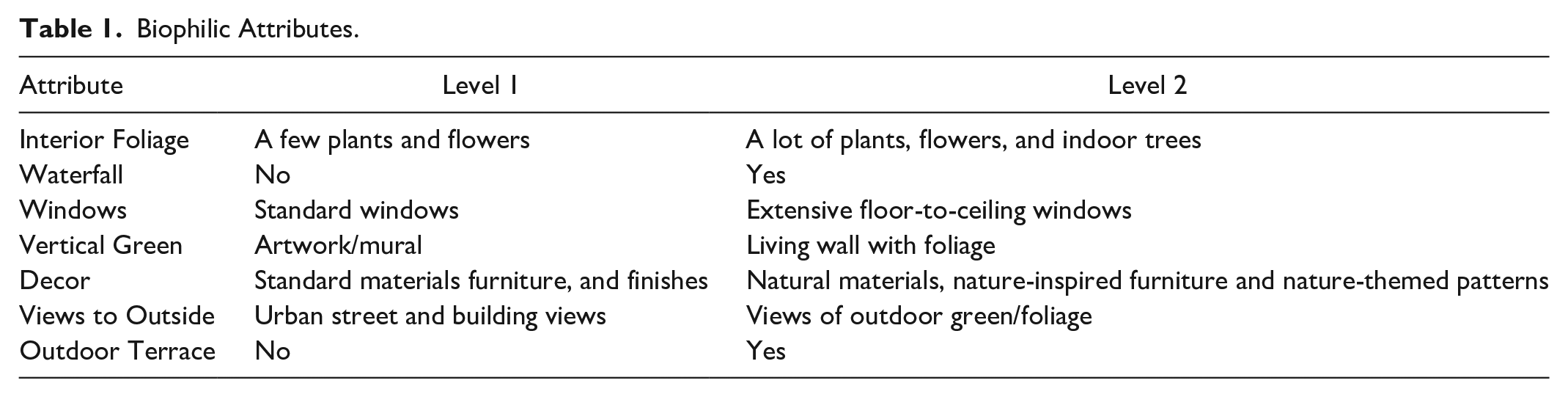
The first attribute—indoor landscaping—included a first level of “a few plants and flowers” and a second level with “a lot of plants, flowers, and indoor trees.” The second attribute—water feature in the lobby—included levels of “no water feature” and “water feature.” The third attribute—natural light—included a first level with “standard-sized windows” and another level of “extensive floor-to-ceiling windows.” Vertical greenery was the fourth attribute, including “artwork and murals” on the walls as the first level and “living wall with foliage” as the second level. The fifth attribute was the overall interior design with the first level representing “standard hotel material finishes and furniture,” and the second level including “natural materials, nature-inspired furniture and nature-themed patterns.” Outdoor green views was the sixth attribute with a “view of outdoor green and foliage through the windows” as the first level, and a typical “urban street and building view through the windows” as the second level. Finally, either an “outdoor space” for guests to spend time for meetings, work, and/or rest or “no outdoor terrace space” was the seventh attribute. The seven attributes and two levels thereof are summarized in Table 1.
Biophilic Attributes.
Scenarios
To determine the collective effects of a hotel environment comprised of biopihlic attributes on restoration, and the magnitude of their individual utility, we used a conjoint method to perform the analyses. Conjoint analysis has been used in prior studies in the hospitality and consumer behavior literature to determine choice by measuring importance scores associated with product attributes, both individually and in combination with other attributes (Millar & Baloglu, 2011). Notably, studies by Suess and Mody (2017) and Guzzo et al., (2022) adapted the full-profile conjoint method to 3D renderings with visualizations of attributes including architectural and interior design features, products, and services. Following these studies, we specified seven attributes with two levels each for the development of 12 scenarios of simulated hotel public spaces and rooms in the form of 3D renderings, incorporating a combination of one or the other level of the seven attributes. We produced a fractional factorial design using JMP software, following the procedure recommended by (Moriguchi, 1958, as cited in Yamakawa, 1965), which reduced 128 combinations of the attributes in a full factorial design to 12, distributing each level of the seven attributes to ensure it appeared in an equal number of instances across profiles. Twelve profiles were determined based on the number of parameters needed to derive stable part-worth estimates, using the formula: n (k - 1) + 1 where n = the number of attributes, and k = the number of levels for each attribute. For seven attributes with two levels each, there were eight parameters: 7(2 - 1) + 1 = 8, and thus 12 profiles. Further, we ensured that the number of profiles was at least 1.5 times the number of parameters, following Xu and Yuan’s (2001) recommendation. In this respect, 12 scenarios exceeded the multiplied parameters (12 > 7 × 1.5 = 10.5) and was deemed robust enough to produce part-worth estimates in conjoint analysis, following Hair et al. (2010). Next, 3D renderings of multiple hotel spaces were developed based on the attribute levels specified in the 12 profiles using photographs of an urban biophilic hotel, 3D renderings, and photo-collages. The base hotel spaces—before the scenarios were manipulated with one or the other levels of the attribute—were modeled to emulate existing biophilic hotels, including 1 Hotel in Brooklyn, New York, and Austin Proper Hotel. Various studies in servicescape and environmental psychology have validated the use of manipulated photographs in quasi-experimental research (Bagot et al., 2015; Bateson & Hui, 1992; Harper, 2002; Herzog et al., 2003; Van Oel & van den Berkhof, 2013; Godey et al., 2009; Griffiths & Gilly, 2012; Guzzo et al., 2022; Suess 2023; Suess & Mody, 2017). Photographs of an actual biophilic hotel with renderings and collaged manipulation enhance representation and enable more effective visualization for the respondent (Hair et al., 2010). Five hotel spaces, including a hotel lobby, restaurant, meeting and conference room area, outdoor terrace, and guestroom, were developed from a view perspective of a hotel guest’s standing eye-level. Attributes on images were further manipulated using Adobe PhotoshopCS to super-impose attributes based on the 12 scenarios produced by the fractional factorial design.
Survey measurement
All 12 scenarios with the manipulated attributes, including the hotel guestroom, lobby, meeting area, and restaurant, were presented to respondents within a self-administered survey. Since we sought to examine the evaluation of biophilic attributes across more and less anxious and stressed hotel guest groups, and as the conjoint model studies require a high cognitive load to complete the survey, we used a single-item measure for outcome variables: relaxation, energization, and mind clarity. This approach is commonly used in the public health and nursing fields, where study participants have underlying mental distress, and studies have shown the effectiveness and high validity of single-item measures such as pain rating (see Glanz et al., 2015; Kim & Jung, 2020). We piloted and pre-tested the survey to check measures for validity, reliability, and sensitivity. Upon completion of this process, and prior to evaluating the scenarios, respondents were informed they would be rating the restorative properties of specifically biophilic urban hotel spaces. A definition of biophilic (i.e., nature-inspired interior design) was included. In addition, each scenario included labels indicating to the respondents which biophilic attributes depicted within the spaces had been altered from the last scenario (i.e., green/living wall, plants and trees, nature-inspired materials and wall finishes, large windows with natural light, etc.). Although the attributes altered in every scenario, effectively creating hotels that were more or less saturated with biophilic features, all scenarios were considered biophilic to some extent.
After viewing each profile, respondents indicated their responses on a scale measuring the extent to which they perceived that each scenario would contribute to feeling relaxed and energized, and having more clarity of mind. Scales included 11 points: 0 (not at all) to 10 (very much). Relaxed was measured by the statement “How relaxed would you feel in this hotel?”; energized was measured by the statement “To what extent would this hotel energize you?”; and, mind clarity was measured by the statement “To what extent would this hotel help you clear your mind?”. To reduce the chance of order bias, the profiles were randomly presented to each respondent. In addition to rating the extent to which the biophilic experiencescape would contribute to levels of feeling relaxed and energized and would help clear the mind, respondents indicated their longer term mental-health situational factors, including anxiety and stress, which were measured by responses to statements “I am an anxious person” and “I have been feeling stressed-out lately” on a 5-point Likert scale (1 = strongly disagree to 5 = strongly agree). Responses to demographic questions including age, gender, race, education, and income, were also included.
Sample
We collected data from respondents through the online panel-data company, Prolific (Prolific.com). Respondents were at least 18 years of age, fluent in English, and residing in the United States. Attention checks were included throughout the survey to ensure quality of the data. Data were collected from February 27 to February 28, 2023. A total of 581 usable responses were retained for further analyses.
Demographic profile
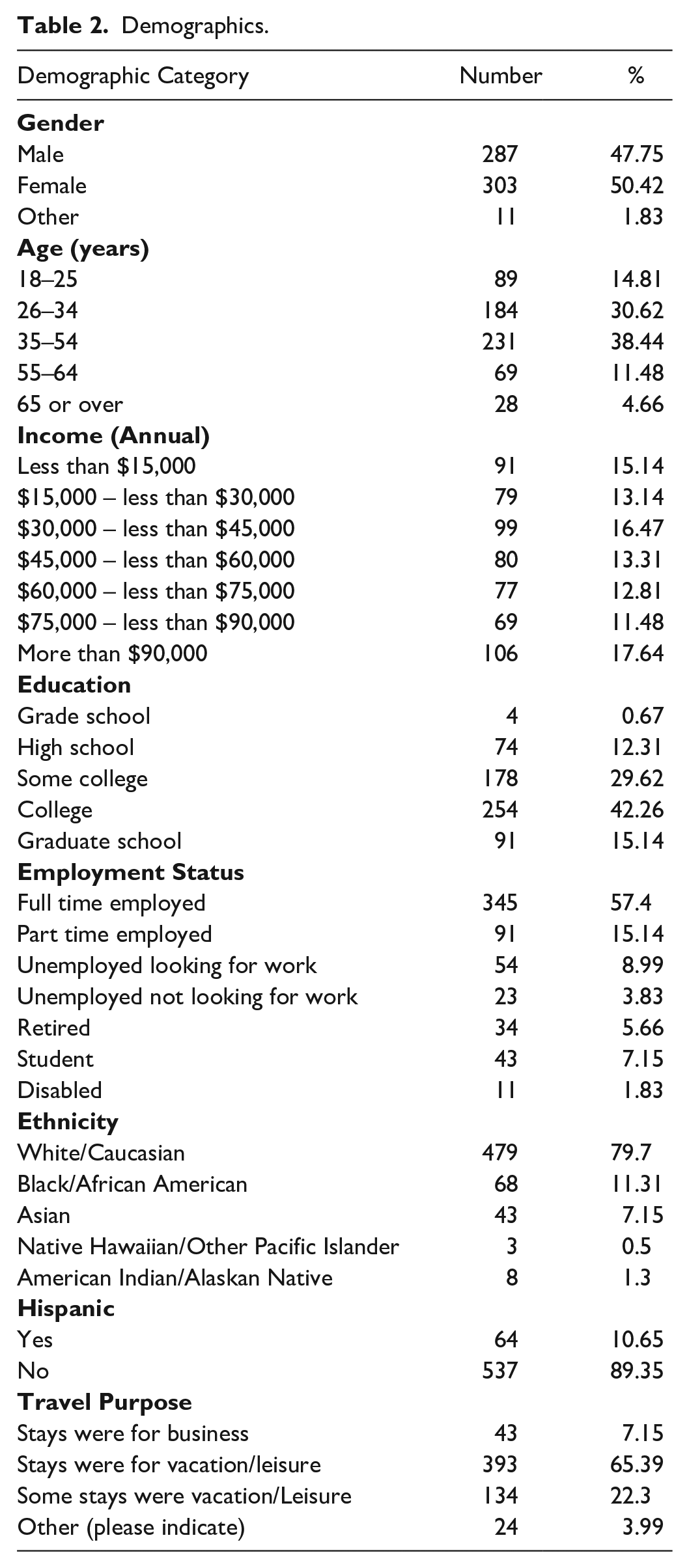
Of the 581 valid responses received, 303, or 50.42%, were females. Regarding age distribution, 45.43% were aged between 18 and 34. Income-wise, 44.75% earned below $45,000 annually, while 37.60% had earnings ranging from $45,000 to $90,000. A minority of 17.64% reported incomes exceeding $90,000. In terms of educational background, 12.98% had completed high school or lower, 29.62% had some college exposure, 42.26% possessed a college degree, and 15.14% had attended graduate school. A significant majority, 72.54%, held at least part-time jobs. Ethnically, 79.7% identified as White/Caucasian, 11.31% as Black/African American, 7.15% as Asian, and 0.5% as American Indian/Alaskan Native. Approximately 65.39% of respondents reported that their stays in urban hotels in the past 5 years were mostly for leisure, while 7.15% indicated that their stays were mostly for business. In all, 22.3% of respondents reported a mixture of business and leisure stays.
Perceived biophilic hotel experiencescape effects on feeling relaxed, energized and able to clear the mind
To evaluate the conjoint model’s goodness of fit, we computed both the Pearson’s R and Kendall’s tau. The statistics for relaxed, energized, and clarity of mind indicated good fits for the conjoint models ranging from .727 and .936, respectively, and all significant (p < .001). Table 2 presents the utility values for seven attributes and their two levels. A positive and higher score relates to a greater effect of one attribute compared to the attribute of the other level (Millar & Baloglu, 2011; Suess & Mody, 2017).
Demographics.
Results of the overall conjoint analyses on the indicators of restoration, including feeling relaxed, energized and having clarity of mind, showed a higher contribution from vertical greenery in the hotel lobby, including a living wall with foliage as opposed to artwork and murals (Relaxed part-worth score = 441; Energized part-worth score = 445; Mind Clarity part-worth score = .464). In addition to live greenery on the vertical surfaces, a lot of plants, flowers, and trees throughout the hotel’s lobby, restaurant, guestrooms, and meeting spaces were evaluated to have a more substantial effect on restoration, compared to a few plants and flowers (Relaxed part-worth score = .204; Energized part-worth score = .258; Mind Clarity part-worth score = .252). Scores also indicated that a greater sense of feeling relaxed would result from extensive natural light systems in the lobby, restaurant, and guestrooms, including floor to ceiling windows, compared to standard-sized windows (Relaxed part-worth score = .189; Energized part-worth score = .180; Mind Clarity part-worth score = .159). The presence of an indoor elaborate vertical waterfall option in the hotel lobby was indicated as contributing strongly to restoration, more than the absence of a water feature (Relaxed part-worth score = .148; Energized part-worth score = .194; Mind Clarity part-worth score = .191). Respondents indicated that an outdoor space at the hotel would have an impact on restoration over not having an outdoor space (Relaxed part-worth score = .139; Energized part-worth score = .129; Mind Clarity part-worth score = .161). The natural materials and nature-themed patterns on surfaces and furniture throughout the hotel’s lobby, guestrooms, restaurant, and meeting spaces, were indicated as contributing more to restoration than the standard interior design features (Relaxed part-worth score = .035; Energized part-worth score = .057; Mind Clarity part-worth score = .023). Finally, views of outdoor green/foliage from the hotel lobby, restaurant, guestroom, and meeting space windows, were thought to contribute to restoration slightly more than urban views (Relaxed part-worth score = .024; Energized part-worth score = .071; Mind Clarity part-worth score = .072). Scores are shown in Table 3.
Part-Worth Scores.
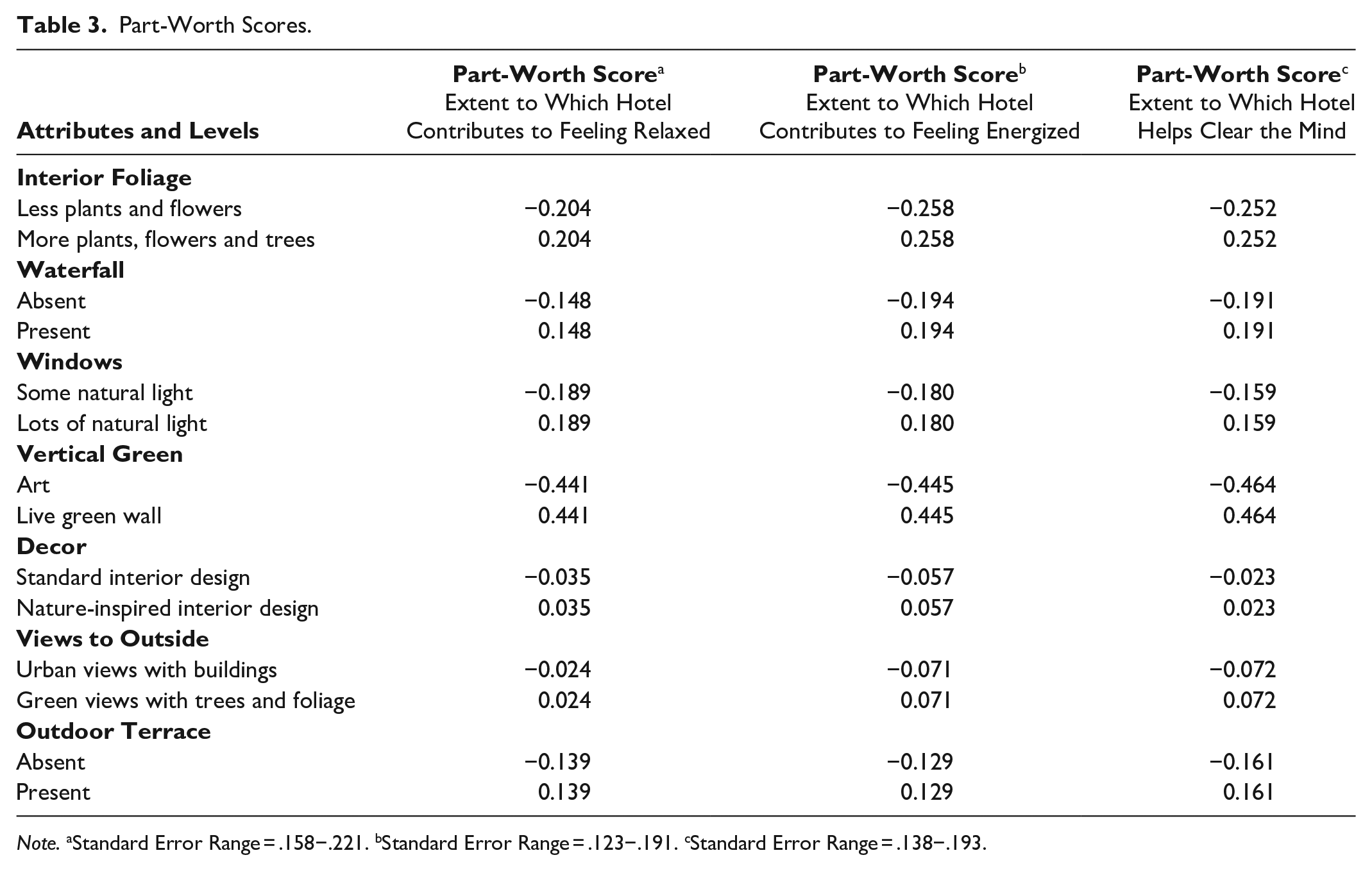
Note. aStandard Error Range = .158−.221. bStandard Error Range = .123−.191. cStandard Error Range = .138−.193.
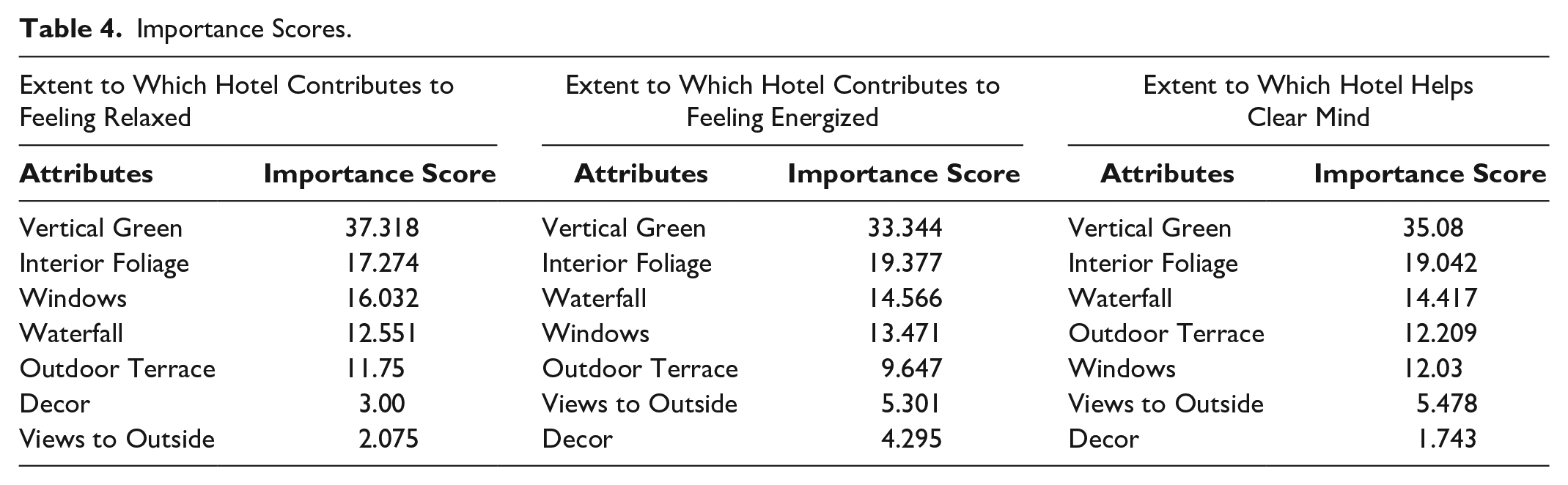
In addition to utility scores, conjoint analyses also produced importance values, ranking the relative magnitude of importance of the overall attributes to feeling relaxed, energized, and helping clear the mind, as indicated in Table 4. Similar to the part-worth scores in Table 3, respondents derived the most restoration specifically from attributes of vertical greenery and indoor landscaping.
Importance Scores.
Moderating effect of situational factors: Stressed and anxious
The overall sample was split into two separate samples on the basis of situational factors, including the extent to which respondents felt stressed in their daily lives and considered themselves an anxious person. The first sample comprised 284 respondents who indicated they were more stressed in their daily lives compared to 242 respondents who indicated they were less stressed. The second sample comprised of 237 respondents who indicated they were more anxious compared to 270 who were less anxious. The means for the sample groups are presented in Table 5.
Sample Split and Group Means.
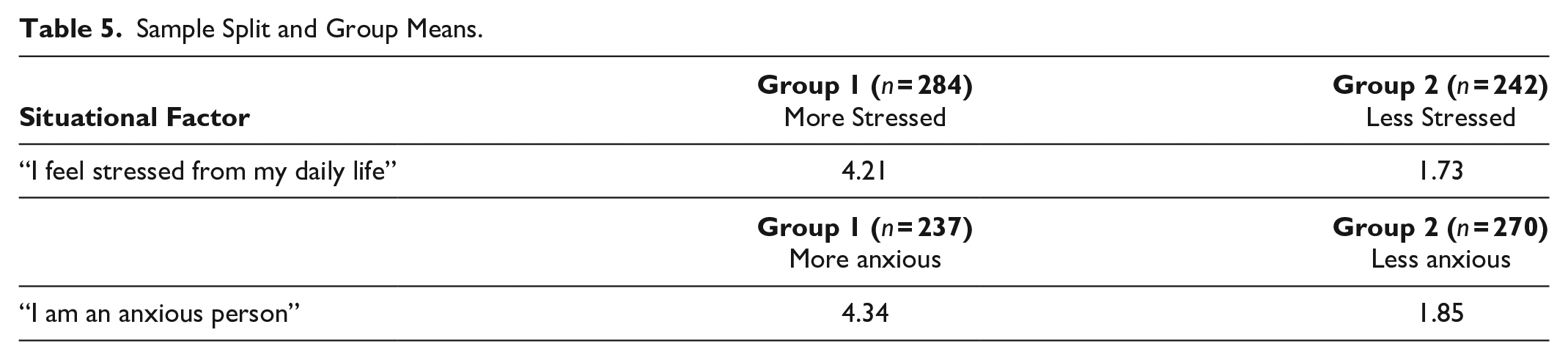
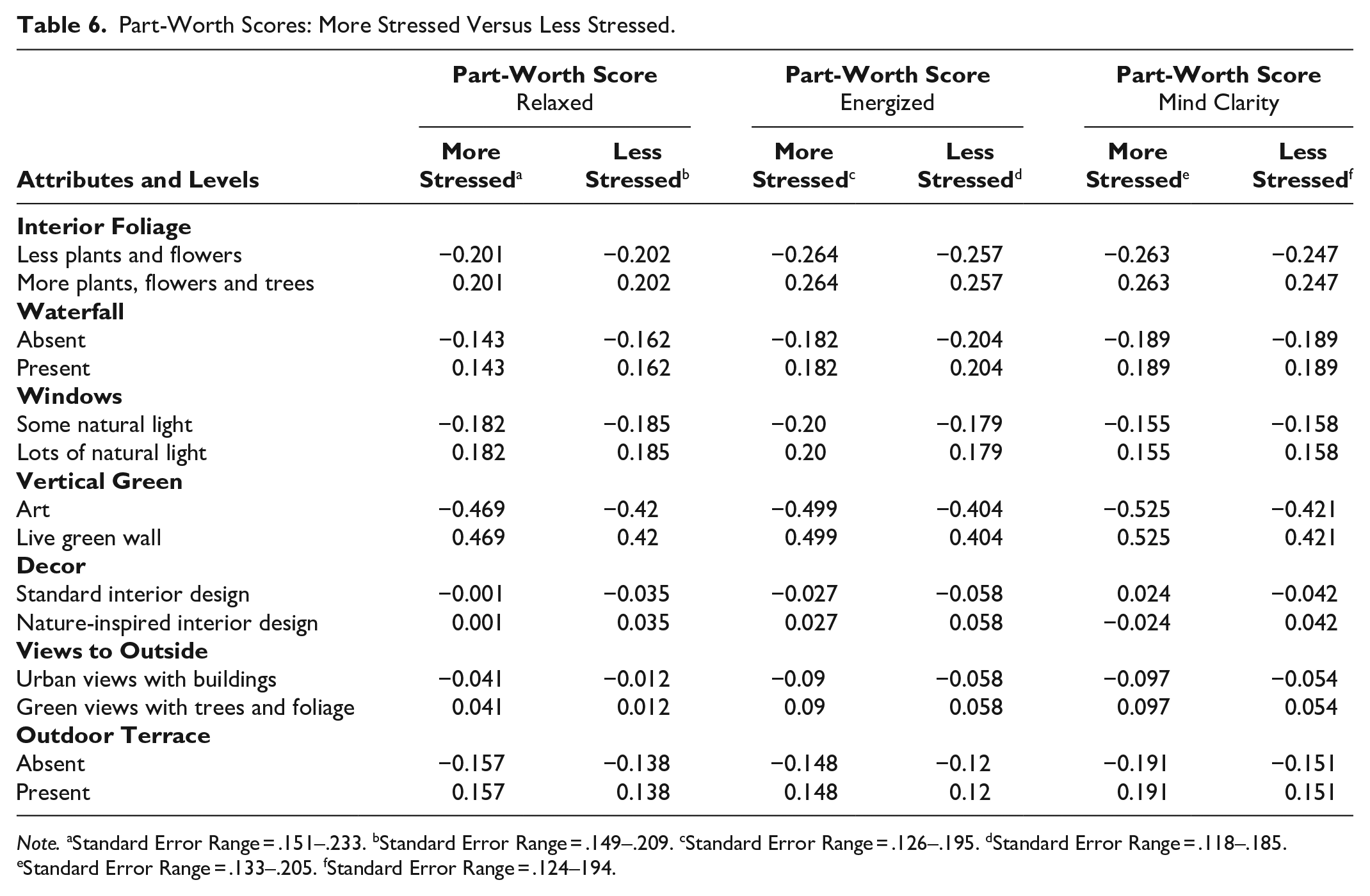
A separate conjoint analysis was conducted on each group. The values for the Pearson’s R and Kendall’s tau statistics indicated that the conjoint models demonstrated good fit and consistently predicted restorative evaluations of the attributes in both samples’ groups (Verma & Chandra, 2018). “More stressed” were .667 and .900 and “Less stressed” were .912 and .818, respectively, and were significant (p < .001). “More anxious” were .907 and .667 and “Less anxious” were .906 and .758, respectively, and were significant (p < .001). All fit statistics exceeded the level of 0.60 or higher as recommended by Moskowitz et al. (2002). Table 6 includes the part-worth scores for the two levels for each of the seven attributes.
Part-Worth Scores: More Stressed Versus Less Stressed.
Note. aStandard Error Range = .151–.233. bStandard Error Range = .149–.209. cStandard Error Range = .126–.195. dStandard Error Range = .118–.185. eStandard Error Range = .133–.205. fStandard Error Range = .124–194.
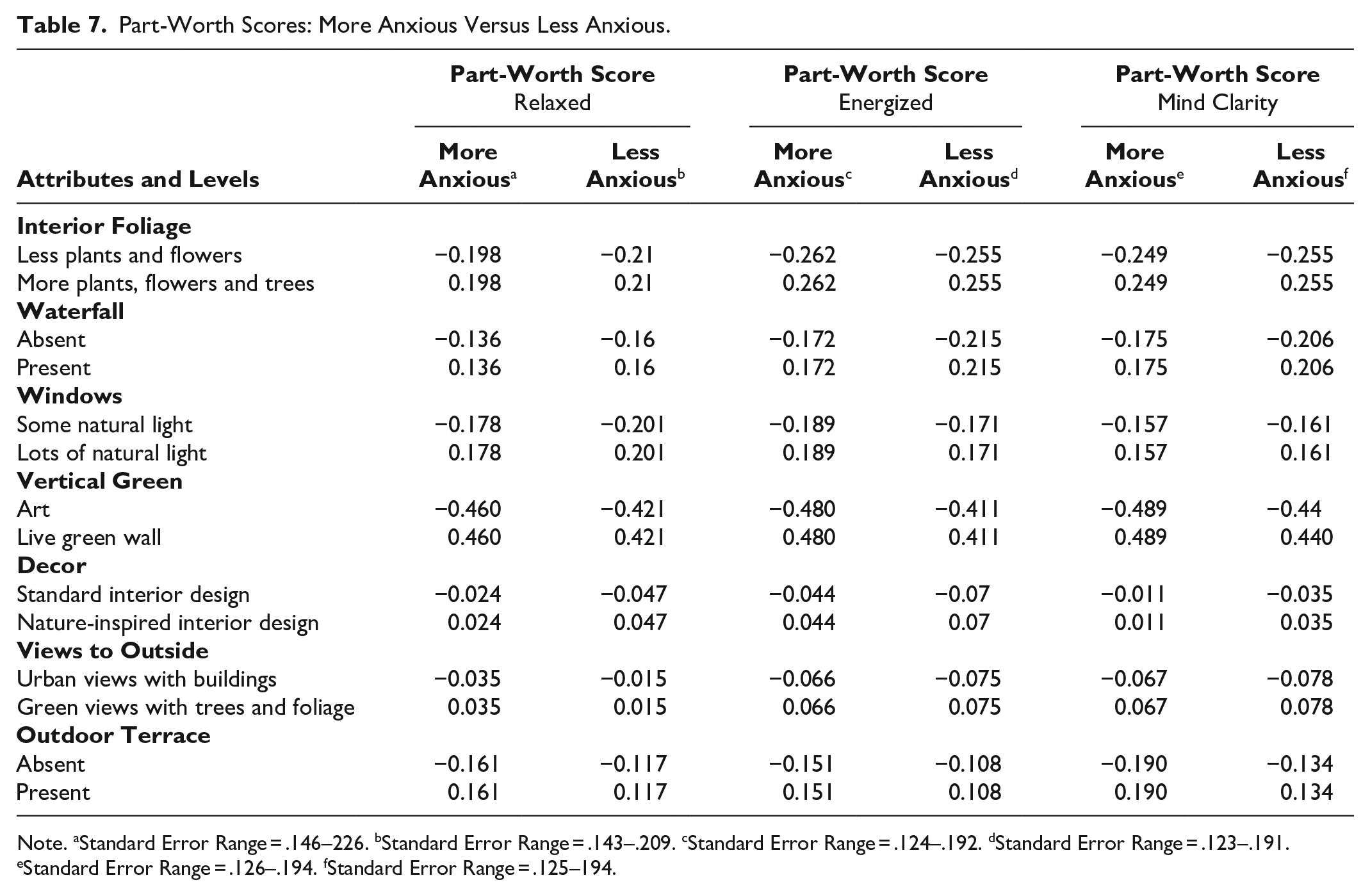
The part-worth scores associated with each attribute, as shown in Tables 6 and 7, indicate a positive part-worth score and a negative part worth score. The positive score is the one that was most preferred by respondents relative to the extent to which a hotel’s biophilic environment would be relaxing, energizing, and help clear their mind. All of the biophilic levels of the attributes (i.e., a lot of plants, flowers and trees; extensive floor-to-ceiling windows; water feature; living wall/green foliage; natural materials; nature-inspired furniture and nature-themed patterns; views of outdoor greenery/foliage; and outdoor space) had positive part-worth scores across the groups, except for respondents who were less stressed and indicated that standard materials, furniture, and finishes would be preferred to help clear the mind. Other than interior design, there were no differences in part-worth scores across the groups and, thus, it can be implied that biophilic levels of the attributes influence the overall effect of restoration (relaxed, energized and mind clarity) in a hotel experiencescape, upholding the biophilic hypotheses associated with Stress Recovery Theory and built environment. As can be inferred, attributes with the highest relative part-worth scores are the most influential on the overall restorative effect of the biophilic experiencescape. In this sense, living wall/green foliage, and lot of plants, flowers, and trees were the most influential on relaxed, energized, and mind clarity indicators of restorativeness.
Part-Worth Scores: More Anxious Versus Less Anxious.
Note. aStandard Error Range = .146–226. bStandard Error Range = .143–.209. cStandard Error Range = .124–.192. dStandard Error Range = .123–.191. eStandard Error Range = .126–.194. fStandard Error Range = .125–194.
Importance scores in the conjoint analysis indicated the extent to which each of the attributes contributed to evaluation of the biophilic hotel by respondents in the context of the restoration. Higher importance scores indicate that an attribute is more influential to feeling relaxed, energized, and having mind clarity in a biophilic hotel environment. Table 8 shows the relative importance of each attribute compared to others among groups of more stressed and less stressed individuals.
Importance Scores: More Stressed Versus Less Stressed.
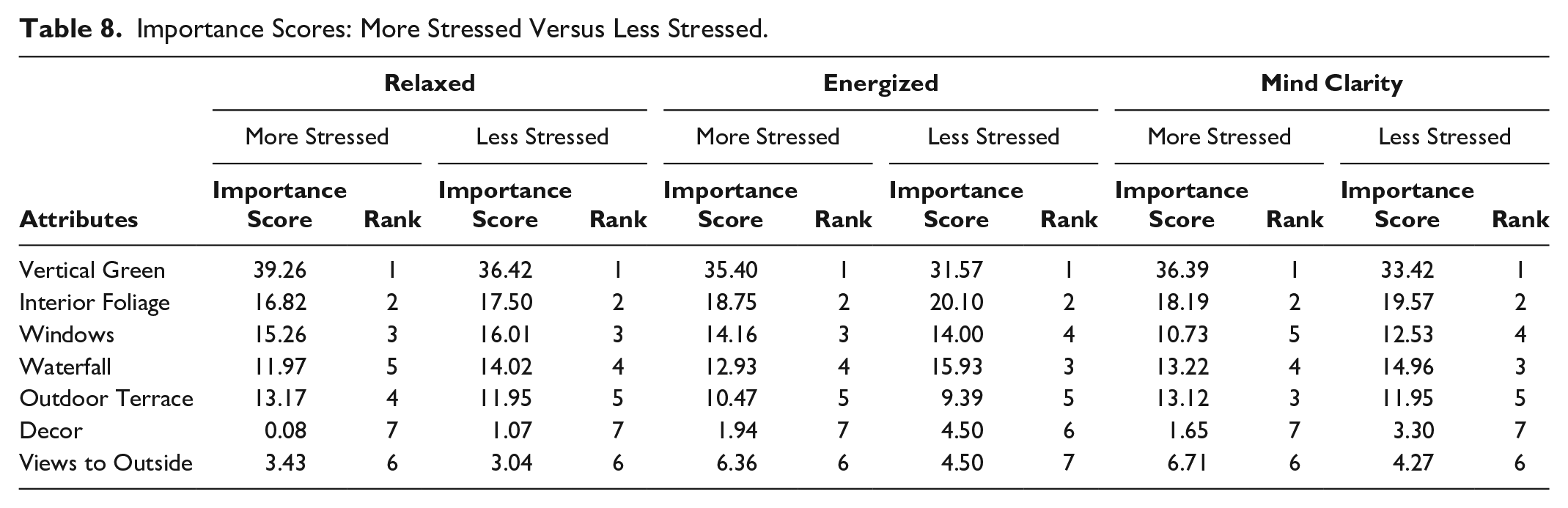
For both more stressed and less stressed individuals, Vertical Green was the most important attribute across relaxed, energized, and mind clarity categories. Interior Foliage was the second most important attribute for both groups and across all categories, reflecting a significant but lesser importance than vertical greenery. This suggests that features related to vertical greenery are the most valued when considering relaxation, energy, and mental clarity. Table 9 shows the relative importance of each biophilic hotel attribute compared to others among groups of more anxious and less anxious individuals.
Importance Scores: More Anxious Versus Less Anxious.
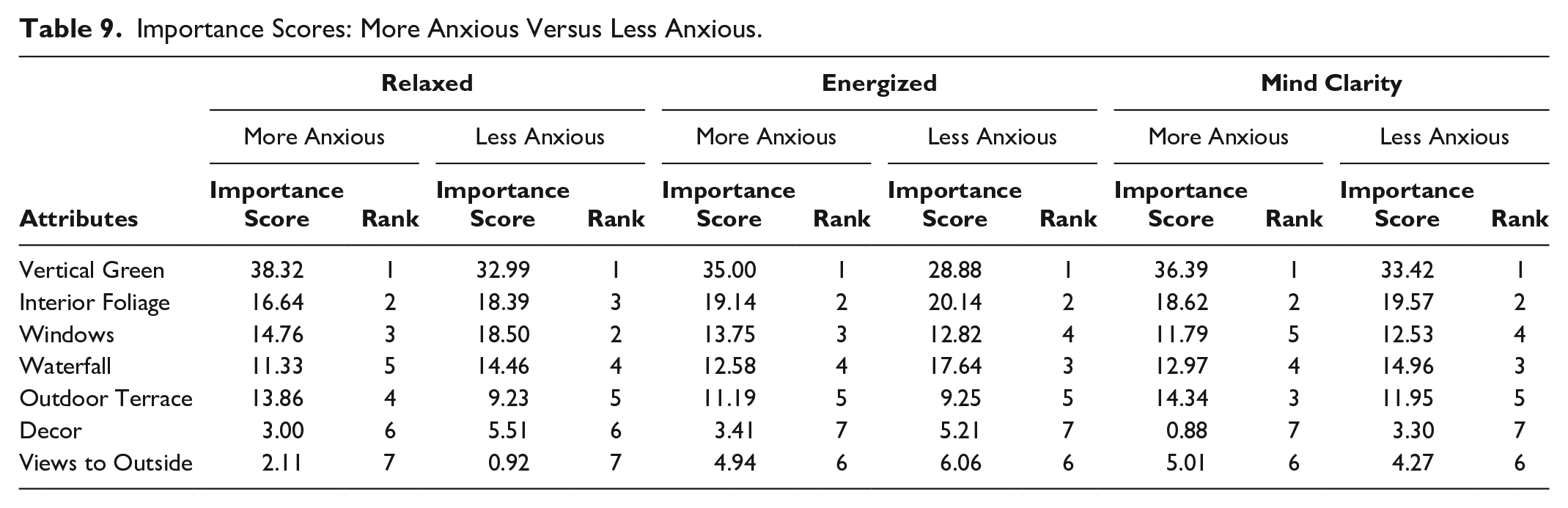
Vertical Green remained the most important attribute for both more anxious and less anxious individuals across relaxed, energized, and mind clarity categories. Interior Foliage and Windows again followed in importance, with Interior Foliage slightly more important for energized and mind clarity conditions and Windows more important for feeling relaxed, particularly among the less anxious individuals. The Waterfall feature showed a mid-level importance, with a notable increase for the less anxious individuals in terms of contributing to feeling energized.
Discussion and Conclusion
Discussion
Although it is assumed that hotels are places of refuge that offer stress reduction, the empirical evidence on whether biophilic hotels, especially urban hotels, are perceived to offer guests’ much needed restoration, was unclear in the previous literature. The motivation for conducting this study was due to the lack of empirical evidence on how specific biophilic design attributes can be leveraged in enhancing hotel restorative qualities; our findings contribute to the overall service experiencescape and SRT literature in that restoration is a function of relaxation, energy, and mental clarity.
Across three analyses, living walls and indoor landscaping were perceived as contributing the most, in general, to hotel guests’ restoration. Consistent with the previous literature in environmental psychology (Van den Berg et al., 2017) and urban planning (Reeve et al., 2017), our findings confirm the theoretical tenets of SRT in that green and foliage-based nature elements could enhance the restorative functions of an urban hotel. It is important to consider that the strength of the part-worth scores observed in our study among biophilic elements enhancing restorative experiences might be influenced by the color of attributes we examined. These include the moss and plant foliage depicted on the vertical walls and the indoor landscaping with potted leafy plants, flowers, and trees, mostly characterized by rich green hues. The prevalence of green color in these indoor landscape design elements could be a significant factor contributing to their effectiveness in creating a holistic restorative experience, as prior studies have evidenced strong preferences for specifically green colored natural environments and interior design in other psychological and physiological stress reduction contexts (Gao et al., 2023; Sengke & Atmodiwirjo, 2017; Suess, 2023). Prospect-refuge Theory underlies the perceived contribution of green color and density of plants and trees to restoration, in that green symbolizes the aesthetics associated with a natural environment in which humans evolved and natural enclosures provided from trees and plants represent adaptive survival responses (Joye & Van den Berg, 2011).
Consistently across the outcome variables (relaxation, energy, and mind clarity), views of nature from the windows were not perceived to have the highest restoration utility among the biophilic attributes tested. This finding is somewhat surprising given that myriad studies have found window views of nature to be highly influential in reducing stress (Bringslimark et al., 2009; Grahn & Stigsdotter, 2010; Grinde & Patil, 2009; Guzzo et al., 2022; Raanaas et al., 2016; Suess 2023; Ulrich et al., 1991; Van den Berg et al., 2016) This could be due to the relative density of interior landscaping and vertical greenery attributes in the immediate environment effectively minimizing the importance of the views of outdoor nature through windows, to some extent. Specifically, our study represented views that would be typical of urban hotels where outdoor landscaping might be sparse (i.e., limited to urban parks, a few planters with trees and outdoor landscaping, green roofs, and terrace gardens), and possibly were visually eclipsed by denser indoor biophilic foliage. Previous studies have suggested that design interventions integrating large windows may be evaluated for their effect of increased natural light on mental health and mood improvement, and may not reflect direct or indirect effects of visible nature from the windows (Guzzo, et al. 2022; Suess, 2023).
Catering for the individual psychological status of guests who are particularly stressed or anxious and who might have increased needs for a restorative experiencescape, this study used grouping variables of higher and lower levels of anxiety and stress to examine the variation of the perceived contribution of biophilic attributes to restoration. The findings from our group comparison conjoint analysis reveal a nuanced understanding of how certain biophilic design elements contribute differently to the restorative experiences of individuals, particularly in relation to their longer-term stress and anxiety levels. Notably, living walls, indoor landscaping, and the presence of large windows that allow natural light were elements that consistently received higher rankings for their restorative utility among participants who reported higher levels of stress and anxiety. This suggests that these specific features have a universal appeal in mitigating stress and enhancing well-being, possibly due to their direct connection to nature and the ability to bring natural elements indoors, which is known to have calming effects.
On the other hand, the restorative potential of other biophilic attributes, such as outdoor spaces and water features, showed more variability in their effectiveness. This variance could be attributed to personal preferences, the context of the environment, or the individual’s current psychological state. For some, the openness of outdoor garden terrace spaces or the sound and sight of water might be immensely calming and restorative. For others, especially those with high anxiety levels, these elements might not provide the same level of comfort or might even be overwhelming, depending on their design and implementation. Outdoor terrace gardens in an urban environment, specifically, may still expose guests to stressors such as noise from traffic and building construction, pollution, birds, insects, dust, wind and inclement weather.
Our study’s findings highlight the complexity of designing restorative environments, especially in urban settings that exacerbate stress and anxiety levels in travelers and underscore the importance of incorporating the biophilic elements that target segments of guests with specific psychological needs. Understanding the specific attributes that universally appeal to those experiencing higher levels of stress and anxiety can guide more effective and biohilic design interventions, aimed at fostering refuges for guests traveling in stressful urban environments.
Theoretical Implications
In the provision of experiencescape, as pointed out by Mody et al. (2020), connecting individuals’ mental health conditions in terms of interior design has been scant. The findings of the present study contribute to the hospitality and travel evidence-based design literature in the context of restorative hotel spaces. As hotels increasingly adopt biophilic environmental design approaches with a guest well-being focus, there remains a need to holistically test the combined effects of biophilia and experience of indoor nature on guests’ restoration.
While studies on the effect of nature on well-being (e.g. Hartig, 2021; Masoudinejad & Hartig, 2020; Park, 2006; Park & Mattson, 2008, 2009; Raanaas et al., 2011; Van den Berg, Joye, & Koole, 2016) provided the basis of the selection of various attributes with restorative qualities for biophilic hotels, including plants and trees, water features, window views of green nature, outdoor terraces, nature-themed materials, and interior design, the present study is likely the first to empirically recognize how potential guests perceive multiple hotel spaces, and to what extent elements would contribute to a more relaxing, energized, and mind clearing experience through a multi-profile conjoint analysis.
The integration of attributes from Stress Reduction Theory (SRT) literature (Kaplan, 1992, 1995; Kaplan & Kaplan, 1989; Plutchik, 1980; Ulrich, 1983) offers another perhaps-notable contribution of the present study. Restoration, in the biophilic and SRT context, implies that the process of regaining physical and mental capacitates from nature in the surrounding environment is a result of evolution (Grinde & Patil, 2009; Ulrich et al., 1991). SRT posits that the stimuli from the natural environment are important for stress reduction and survival mechanisms, and several studies have demonstrated the nature-refuge effect on ameliorating stress compared to other physical elements in interior environments (Ulrich, 1999; Ulrich et al., 1991; Van den Berg et al., 2016). Plants and trees were critical to human survival throughout evolutionary history; they provided a resource for food, medicine, hiding from predators, and wayfinding, and signified weather patterns and season changes (Ulrich et al., 1991). As such, the early humans were particularly adapted to live, most safely, in green and densely vegetated landscapes (Grinde & Patil, 2009). Even in arid regional areas, historians and archeologists have uncovered evidence that plants were put into ancient humans’ residential and public spaces.
However, while psychoevolutionary, prospect-refuge, and SRT integrated theories support biophilic propositions for hotel guest restoration, connections between the biopihlic urban hotel and travelers experiencing stress and anxiety are largely outmoded, as urban hotel brands have mostly placed a greater emphasis on driving consumer behavioral outcomes (i.e., satisfaction, loyalty intentions, willingness to pay more, etc.), with less of a focus on resources that support well-being. Although, studies have begun to emerge highlighting the connection between nature and environmental design and restoration in hotels, it is important to consider it further in future research. To the extent that the evidence in the research has been significant, plants, trees, green walls, large windows with natural light and views of nature, green color, and nature-themed décor elements, can aid guest relaxation, re-energization, and mind clearing, and should be advocated more strongly into the design of hotel public and private spaces. Restoration among guests with predispositions of stress and anxiety further underlies the psychological benefits of biophilic design in hotels; physically and mentally fatiguing tasks associated with daily life and stressful factors causing anxiety may lead to depletion of cognitive and coping resources, especially during travel in urban areas. Hotel environments that provide opportunities to be immersed in nature—that is, for guests to seek refuge among plants, trees, and other elements—can facilitate relaxation, re-energization, and clearing of the mind.
Practical Implications
Through this study, we offer important practical implications for urban hotels. In fact, the majority of urban hotels are located within established real estate and high-rise buildings (Guzzo et al., 2022); thus, consideration must be given to the significant financial investment required to optimize the biophilic experiencescape in existing structures, and the need for elements that can be efficiently implemented into urban hotel facilities.
Hotels can weigh the cost viability of the combination of biophilic attributes specifically for adaptive re-use and existing hotel renovations opting for either or both “soft-goods redo” and “hard-renovation.” While all of the attributes tested in the present study, to some extent, demonstrated their effect on perceived restoration, some attributes would require a more substantial architectural intervention to implement in a hotel (i.e., floor-to-ceiling windows, extensive vertical greenery, outdoor gardens and terraces, water features, etc.), compared to other attributes which would merely entail interior decoration and landscaping (i.e., potted plants, flowers, and trees, nature-inspired furniture, etc.). Thus, it is recommended that cost-benefit analyses on how biophilic design attributes enhance the service environment, and generate return, be conducted prior to implementation (see Terrapin, 2014).
Overall, living walls and indoor landscaping are the two most important attributes that guests perceive would enhance their restorative experience in urban hotels. Urban hotels could prioritize designing their lobbies with a large wall with live foliage. However, such elements require maintenance from 3rd-party indoor landscaping companies which might present a potential barrier to hotels integrating vertical greenery. If living walls are too costly, urban hotels could have an option to adopt moss and succulent walls, or artificial plants that do not require as much maintenance but visually represent the vertical foliage of biophilic experiencescapes that provide benefits to guests’ well-being. In some settings, synthetic plants have been able to mirror the effect of a natural plant (Fulton, 2014). As hotel guests’ main areas of resting are in their rooms, hotels can implement either small sized living or synthetic moss of succulent walls in each room, or place potted plants around the room, in addition to the corridor and elevator areas and bathrooms. Several exemplary hotel properties that have incorporated living walls and indoor landscaping are Orchard Road Hotel - Four Seasons Hotel Singapore, 1 Hotel Toronto, Hotel Indigo Vienna Austria, and Fairmont Century Plaza: Los Angeles, California, and Austin Proper Hotel.
Second, we found that window views of green nature and nature-inspired finishes and furniture in the interior designs were not perceived as being major contributing attributes in terms of relaxing, re-energizing, and mind clearing experiencscapes. The interpretation of this result requires context, because it is likely not a common aim for urban leisure/business hotels to enhance guests’ psychological and physical well-being with major densities of live foliage, specifically in the view of windows. However, as society becomes more conscious of the negative effects stress has on health, urban hotels can aim to improve the restorative functions of the hotel due to customer demands, and, in this case, it is recommended that urban hotels prioritize the integration of indoor landscaping and ample natural light, followed by ensuring views to the outdoors contain greenery and interiors boast nature-inspired finishes and furniture from natural materials. Given the high real-estate value and high population density locations with lack of greenspace, urban hotels have an opportunity to leverage interior biophilic design to create immersion experiences in natural environments. In this respect it may not be practical or even possible for urban hotel window views to be oriented toward nature; thus, rather than trying to secure outdoor green views, window box planters or rooftops and terraces with gardens could help an urban hotel with strategic development decisions. Urban hotels that have geo-political or zoning issues might incorporate an abundance of plants and flowers and trees only in the interior.
Third, through group comparison conjoint results, we found that urban hotel guests’ mental status could also influence the value they place on individual attributes among elements included in the biophilic design of urban hotels. Urban hotels that are amidst environmental stressors (e.g., noise, traffic, crowds) in an urban destination and have clientele that are particularly highly stressed and anxious in their daily lives (e.g., professionals) could consider prioritizing living walls and indoor landscaping, complementing them with ample natural light, outdoor spaces within the hotel, and water features to improve the restorative experiencescape. For example, water features can be incorporated with outdoor space attributes to create visual and auditory biophilic experiences that could contribute to restorative, energizing, and mind-clearing service experiences (e.g., Design well, 2021). While our findings provide biophilic-related design recommendations for hotel designers and developers, we also point to broader implications pertaining to the role of services and marketing of biophilic stimuli incorporated into urban hotels. Hotels can strategically plan biophilic designs to communicate the hotel’s well-being approach to prospective guest segments. Consistent with Ulrich’s body of research on stress reduction facilitated by nature in the interior environment, a biophilic hotel can be used to market enhanced guest restoration to travelers in major cities.
Limitations and Future Research
Although conjoint results demonstrated the utility biophilic attributes would have for improving restoration at hotels, given the study scope, we did not control for service elements at the hotel. As explained in Sengupta et al. (2015), customers experience high levels of stress when a service failure occurs. Future researchers can examine the interaction of service elements (e.g., quality of service delivery) and biophilic elements on customer stress reduction at urban hotels. Examining the human elements with situational attributes could yield more vigorous study outcomes, as this approach will improve the ecological validity of the study. Another area to consider is related to how to enact biophilic design. The design of this study is mainly based on the visual stimuli of biophilic design attributes. However, environmental psychology literature, as well as mental imagery and transportation literature, explains that auditory transportation experiences also could exist in a service environment (Elder & Krishna, 2022; Ratcliffe et al., 2013) and produce related effects via scopes of SRT. Thus, we propose an interdisciplinary approach that leverages virtual reality technology to advance multi-sensory biophilic experiences and immersion. Atmospheric features in biophilic spaces, including soundtracks and music of bird sounds, wind, water, and animals sounds, and digital/technology nature experiences, could be considered in further experimental designs on the effects of nature-based sensory stimuli (Dalke et al., 2006; Davis et al., 2005; Pati et al., 2016; Ratcliffe et al., 2013). Relatedly, future research would benefit from testing visual and auditory stimuli on guests in actual hotel spatial contexts, and under stress induced conditions.
Perhaps the most limiting factor of our study is inherent to the conjoint technique and the selection of only seven attributes encompassing the indoor plants, flowers, and trees, living walls, window view of nature, nature themed materials, outdoor terraces, and furniture décor attributes to represent biophilic hotel design. Because study respondents could realistically evaluate no more than 20 conjoint profiles before becoming fatigued, the number of attributes in the present study was limited to seven attributes and two levels, within the recommendations to produce the number of scenarios by Hair et al. (2010) for a traditional full-profile conjoint analysis. Although the most pertinent indoor landscaping attributes were selected to capture the elements hotels are already incorporating into their designs to characterize themselves as biophilic, the attributes were by no means exhaustive. The potential remains to test for other combinations of “hard” renovation features, including outdoor and indoor nature-inspired material textures, including woods, natural masonry, specific nature-themed wallpaper patterns and linen, natural wood and stone interior finishes, more extensive water features, elaborate indoor gardens, color in landscaping including flowers, large roofs spaces or terraces with planters, more extensive vertical foliage/green walls and ceilings, and nature visible from windows, such as adjacent urban parks and vertical outdoor gardens.
Footnotes
Declaration of Conflicting Interests
The authors declared no potential conflicts of interest with respect to the research, authorship, and/or publication of this article.
Funding
The authors disclosed receipt of the following financial support for the research, authorship, and/or publication of this article: Texas A & M University Department of Recreation, Park & Tourism Science
