




Abstract
Responsible tourism studies have neglected divergent tourism actors’ contribution to sustainable tourism development via their behavior, as well as the impact of recent crises on research. Thus, a bibliometric and thematic analysis was conducted, involving an examination of 154 recent studies that were clustered around four research streams: (1) tourists’ responsible behavior; (2) residents’ responsible tourism accounts; (3) tourism businesses’ responsible actions; and (4) destination management’s role in responsible tourism, showing that responsible tourism research is predominantly focused on tourists’ responsibility. Tourism businesses and residents are less frequently investigated. Similarly, the role of destination management is only recently emerging, while governments’ contribution to responsible tourism has been neglected in research. Environmental responsibility studies dominate on the tourist and resident level, while corporate social responsibility (CSR) studies prevail on the business level. This literature review identifies research priorities in order to derive an agenda for future research.
Keywords
Highlights
Responsible tourist behavior studies dominate responsible tourism research.
Residents’ responsible actions involve their support for tourism development.
The emerging role of destination management in responsible tourism is emphasized.
Responsible tourism research has not yet investigated government actions.
Introduction
Sustainable development in tourism is omnipresent in various approaches and is discussed alongside the popular concepts of sustainable tourism and responsible tourism, and other concepts, including regenerative tourism, ecotourism, low-carbon tourism, or ethical tourism. According to Sharpley (2013), distinguishing between sustainable and responsible tourism is challenging; although contextual differences are ubiquitous, both concepts aim to contribute to sustainable tourism development (Bramwell et al., 2008). Responsible tourism is about “responsible tourism behavior,” defined as behavior that enhances sustainable development, while sustainable tourism manifests in regulatory structures (Mihalic, 2016; Mihalic et al., 2021; Saarinen, 2021). Mathew and Sreejesh (2017) define sustainable tourism in this regard as a strategy around which responsible tourism is constructed. According to Mihalic (2016), sustainable tourism represents the concept, while responsible tourism emphasizes responsible behavior (involving responsible tourism actions) as practice. Research widely acknowledges that all actors involved in tourism with tourists, residents, tourism businesses, investors, tour agents, destination management organizations (DMOs), and governments (Eichelberger et al., 2021) must take responsibility for implementing sustainable tourism. “Tourism actors’ responsible behavior” is thus defined as responsible behavior which contributes to the implementation of sustainable tourism (Mathew & Sreejesh, 2017; Mihalic, 2016; Mihalic et al., 2021), differentiating from the more general approach of “responsible tourism behavior” by focusing on individuals and their individual or personal behavior (Saarinen, 2021).
While earlier studies on responsible tourism emphasized responsible decisions by tourists resulting from concerns about the consequences of tourism actions (Miller, 2003), more recent studies explore the role of communities (Chan et al., 2021; Gong et al., 2019; Um & Yoon, 2021) and tourism businesses (Eger et al., 2019; Moreno-Mendoza et al., 2019; Musavengane, 2019). Given the importance of responsible tourism in research since its introduction 40 years ago (Krippendorf, 1982), literature reviews have been conducted to provide an overview of the state of the art of research (Mihalic et al., 2021; Mondal & Samaddar, 2021). These reviews focus, for example, on exploring the relationship between responsible and sustainable tourism (Mihalic et al., 2021). However, Mihalic and colleagues (2021) show that research has not moved towards a singular “responsustainable” discourse, but that the mainstream paradigms prevail. Mondal and Samaddar (2021, p. 231) analyzed responsible tourism research focusing on the Asia-Pacific region (by also involving the region in their keyword research), and critically highlighted the need to understand the impact and antecedents of the phenomenon holistically. Moyle and colleagues (2021, p. 111) showed that previous literature reviews largely neglected the “scope of issues researchers are exploring, methodological approaches being adopted, theoretical contributions being made, and practical outcomes and applications.” To date, no literature review has focused on explicitly studying responsible tourism behavior research (Mihalic, 2016). Following Mihalic and colleagues (2021) on the evolution of the trend of research on responsible and sustainable tourism in 2015 and building on the literature review by Mondal and Samaddar (2021), who examined the progress of research on responsible tourism for the observation period 2002 to the beginning of 2020, a literature review is missing that summarizes, in particular, the most recent studies on responsible tourism. As tourism is regarded as being particularly confronted by crises in the past 2 years (including the COVID-19 pandemic, climate change crises, and the global financial crises) which has intensified research on sustainable tourism development (Weaver et al., 2022), an exploration of studies published from 2020 to 2022 allows to address the impact of crises in particular. In this sense, this literature review aims to map existing responsible tourism studies following a systematic literature analysis approach (David & Han, 2004; Newbert, 2007). The focus on studies after 2016 ensures not only the timeliness of the studies but also addresses the distinct definition of responsible tourism as responsible behavior in 2016 (Goodwin, 2016; Mihalic, 2016). Further, this allows an exploration of responsible tourism research that has been affected by recent crises (Weaver et al., 2022). This review offers a systematic, replicable, and transparent analysis of current research to (a) demonstrate which accounts have been explored in responsible tourism research, (b) illustrate which areas of responsibility have been studied as thematic clusters, and (c) derive an agenda for future research by identifying research gaps.
Research Design and Approach
Systematic Literature Review Procedure
This study constitutes a systematic literature review analysis (David & Han, 2004; Newbert, 2007), following the CAD framework of Bichler and colleagues (2022). Systematic literature reviews aim to summarize, challenge, and categorize existing knowledge, by assuring replicability and transparency (David & Han, 2004). In order to analyze the progress of the respective research field comprehensibly, this study furthermore applies a bibliographic mapping approach (Linnenluecke et al., 2020). According to Moyle and colleagues (2021) bibliometric analyses help to discover the development and progress of a specific field of research. This systematic literature review thus provides an up-to-date, in-depth, and detailed exploration of responsible tourism research while ensuring sampling quality, reliability, and transparency (Newbert, 2007). By building on the CAD framework (Bichler et al., 2022), this review is based on the three main steps “C - data collection,” “A - data analysis,” and “D - discussion of data" (see Figure 1), involving several steps to select relevant studies.
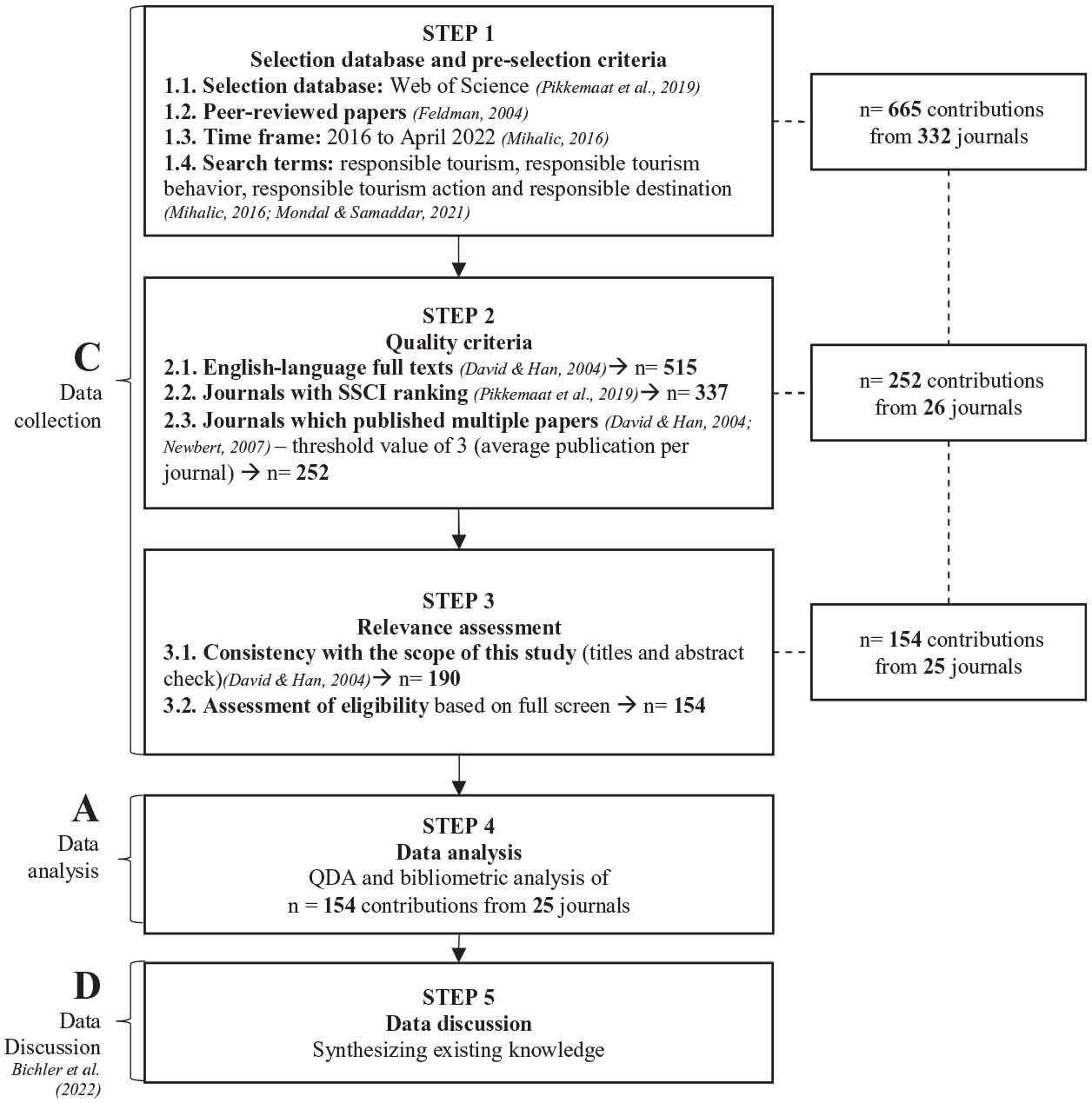
Procedure of the Systematic Literature Review.
Data Collection
Step 1: Selection database and pre-selection criteria
After defining the specific aim of this systematic literature review, that is, providing an overview of studies on responsible tourism behavior, the following pre-selection criteria were defined (Bichler et al., 2022): To enhance the quality of the systematic literature review, only peer-reviewed, published papers were considered (Feldman, 2004). In this regard, the Web of Science database was chosen, as it covers, according to Pikkemaat and colleagues (2019, p. 185), “the most relevant journals for tourism research.” Focusing on the progress of responsible tourism research—given the definition of responsible tourism as an action of sustainable tourism development—this literature review includes studies from January 1, 2016 to April 30, 2022. Mihalic (2016) and Goodwin (2016) defined responsible tourism as an action or tool for more sustainable tourism development. Building on previous studies, the search terms “responsible tourism” (Mondal & Samaddar, 2021), “responsible tourism behavior,” “responsible tourism action,” and “responsible destination” were included (Mihalic, 2016; TS = responsible tourism AND behavio* OR action OR destination) in order to fully cover the subject studied. The terms were included in the Web of Science option “topic,” which includes searches in the title, abstract, author keywords, and keywords plus. The initial search resulted in the identification of 665 contributions from 332 journals.
Step 2: Determination of quality criteria
For quality thresholds, language requirements (focusing on English language full texts) were determined (David & Han, 2004; Newbert, 2007), and conference papers and book chapters that were not peer-reviewed were excluded. Further, only SSCI-ranked journals were considered, as recommended by Bichler and colleagues (2022) and Pikkemaat and colleagues (2019) as journal quality criteria, which resulted in a reduction to 337 full papers from 99 journals. Moreover, as determined by David and Han (2004) and Newbert (2007) only journals that published multiple papers on a subject studied were relevant: journals which published at least three publications were included. The threshold of three was determined by the average publication per journal (3.4). Thus, the respective threshold reduced the number of papers included in the analysis to 252 from 26 journals.
Step 3: Relevance assessment
In order to determine the relevance of the identified articles, titles and abstracts were checked to see whether the articles matched the scope of this research (David & Han, 2004), leading to an exclusion of 62 articles. Following that, the remaining 190 articles were fully screened by the author (Bichler et al., 2022) to reassess the respective fit, which led to a final sample of 154 articles from 25 journals.
Data Analysis
Step 4: Qualitative data analysis (QDA) and bibliometric analysis
As a first step of the data analysis, a bibliometric analysis was conducted, where a co-occurrence map based on the text data of titles and abstracts of the articles was developed with VOSviewer (Version 1.6.17). Binary counting was used with a minimum number of occurrences and an exclusion of “general words” like paper or article, while “total” was kept as it usually relates to the empirical character of the studies, as well as “need” was included as it illustrates the need to study responsible tourism. The bibliometric analysis allowed to develop research streams, see Figure 2 (van Eck & Waltman, 2014). Following that, a thematic analysis of the full papers, analyzing each article’s context, was carried out. Thus, the 154 articles were imported into the QDA-Software MAXQDA (Bichler et al., 2022), with the research streams developed with VOSviewer serving as the initial template. These research streams (Figure 2) were thus used as initial template categories, approached as deductive categories, which were developed from the thematic analysis process, refined and supplemented with inductive categories following the template analysis of Brooks and King (2014). Thus, the full paper content analysis allowed to define categories with subsequent subcategories.
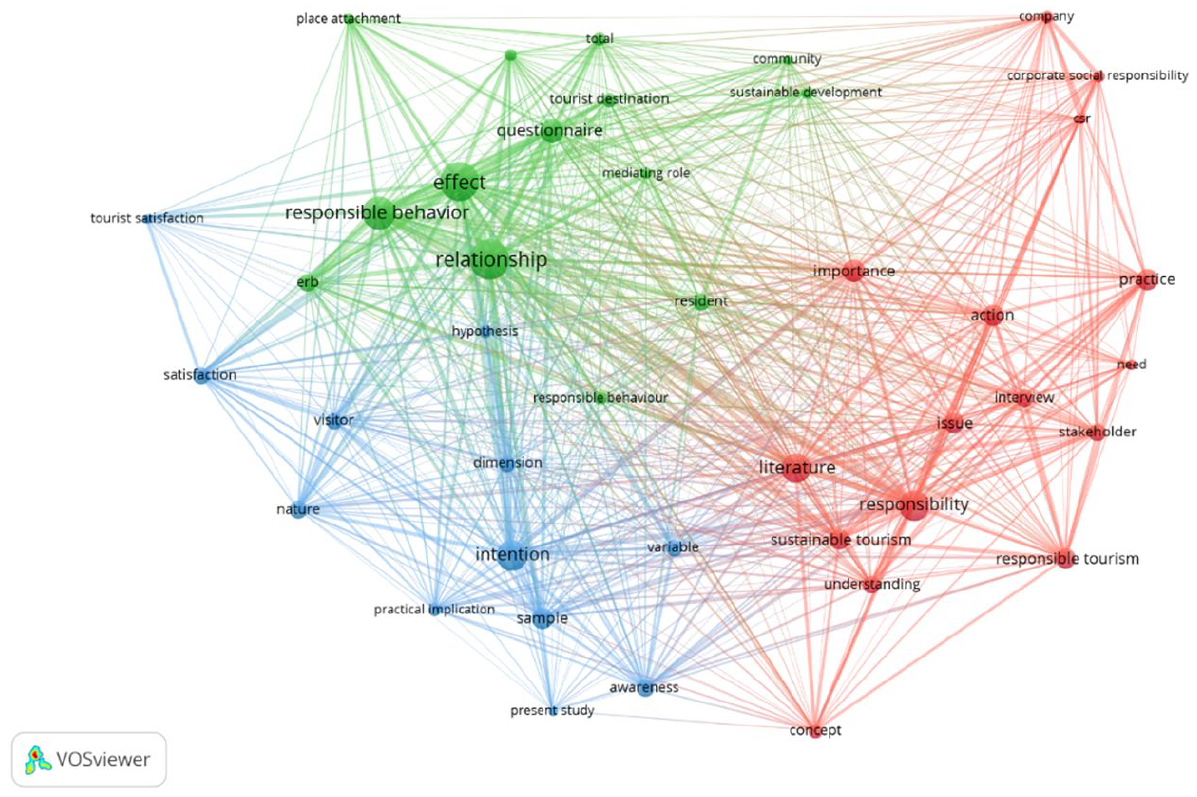
VOSviewer Research Streams Based on Keyword Co-Occurrences.
Data Discussion
Step 5: Data discussion
After categorizing the 154 studies (see final template in Figure 3), in aspects relevant to answering the posed research question, the studies are discussed, focusing on connecting the gathered knowledge. Thus, the discussion involves (i) describing research streams in the field of responsible tourism; (ii) highlighting contradictions in the studies; and (iii) synthesizing the findings (Bichler et al., 2022). In the process of data discussion, research gaps were spotted—which are presented as future research suggestions—and recommendations for tourism practice were identified.
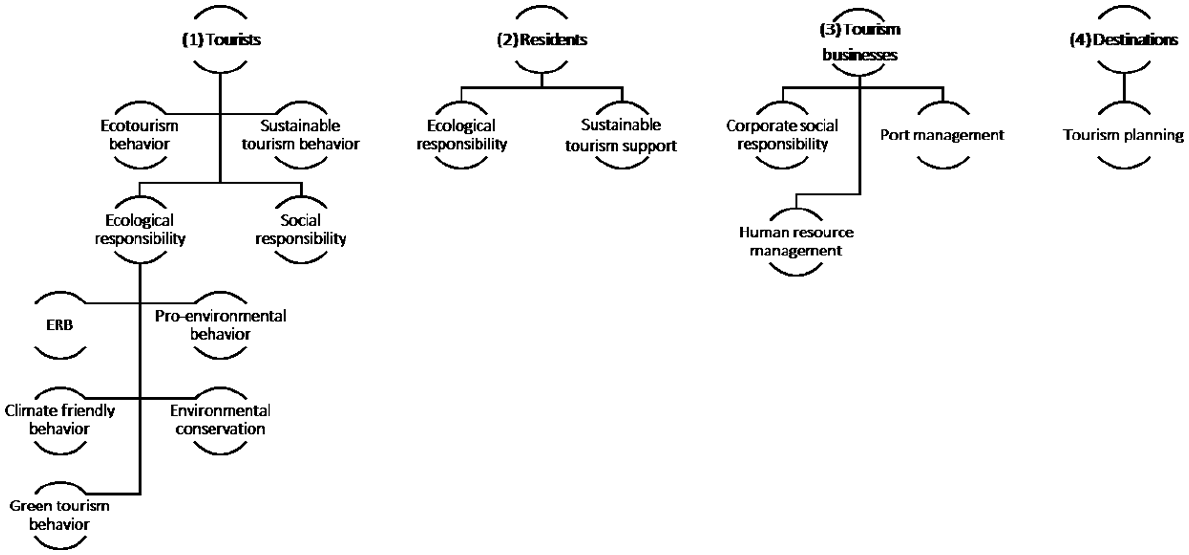
Responsible Tourism Accounts: Research Streams.
Results
Descriptive Findings
Table 1 illustrates the most influential journals for the observation period, and points out the research methods of the 154 studies in 25 journals. The journal Sustainability published most of the identified papers (33.1%) and the Journal of Sustainable Tourism contributed 24 studies (15.6%). In total, nine journals not exclusively related to tourism research were identified, including the Journal of Cleaner Production and Land. The most widely used research method in the analyzed studies was quantitative (66.9%), with most studies conducting surveys, followed by qualitative studies (15.6%), in a majority of which interviews were conducted, and mixed-method studies (11%), which used both qualitative and quantitative methods (see Table 1). Research ranged from studies conducted from the perspective of tourists, using surveys or experiments to measure the concrete responsible behavior of tourists (e.g., Dias et al., 2021; Hu & Sung, 2022), to studies on other tourism stakeholders using predominantly qualitative approaches (e.g., Musavengane, 2019). More than 60% of the studies analyzed were conducted in Asia, followed by contributions conducted in Europe (13.6%; see Table 2). Studies on responsible tourism increased in the past years with the emerging crises tourism has been confronted with, resulting in a maximum contribution of 31 studies in 2021.
Distribution of Studies by Journal.
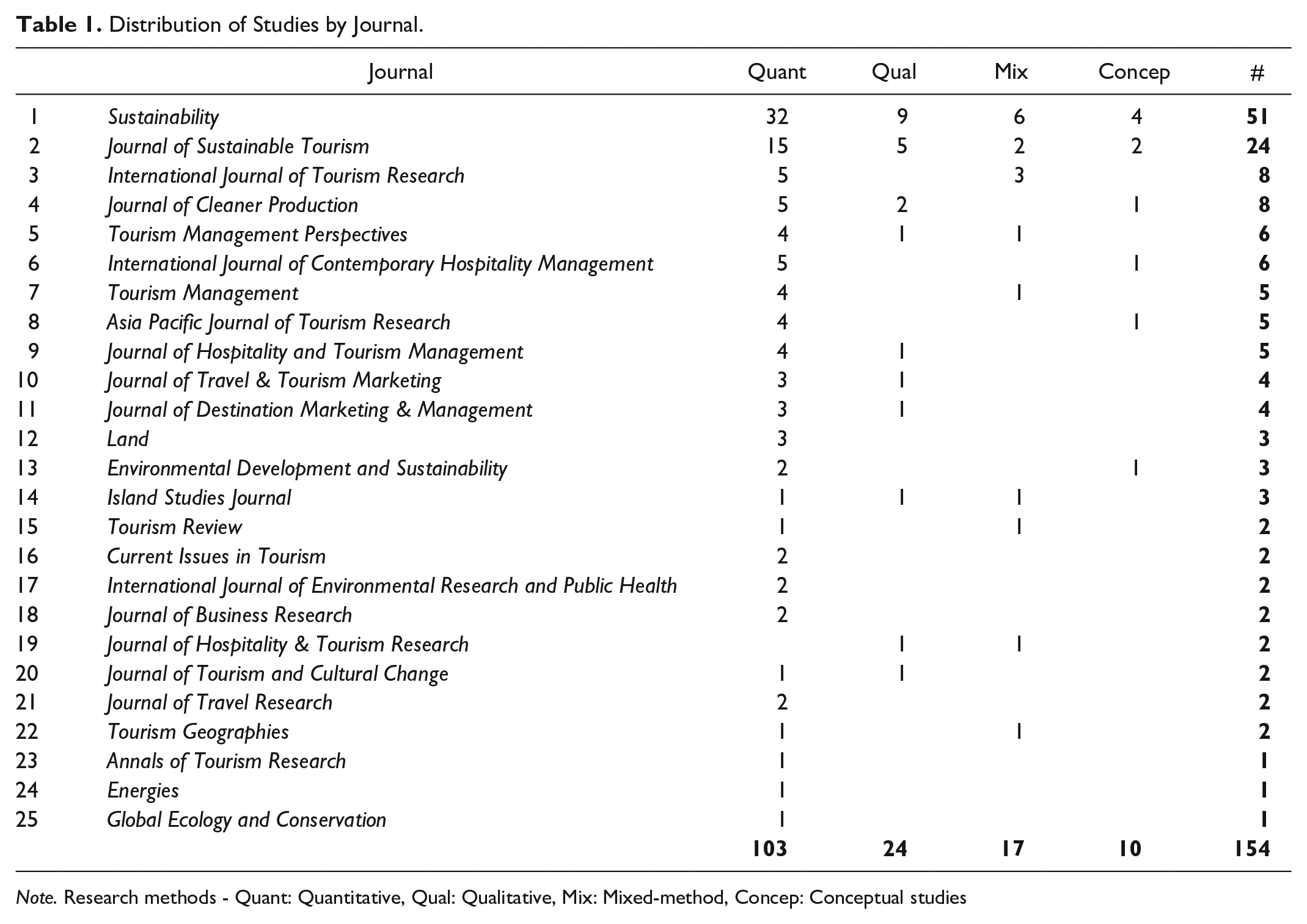
Note. Research methods - Quant: Quantitative, Qual: Qualitative, Mix: Mixed-method, Concep: Conceptual studies
Studies’ Characteristics.
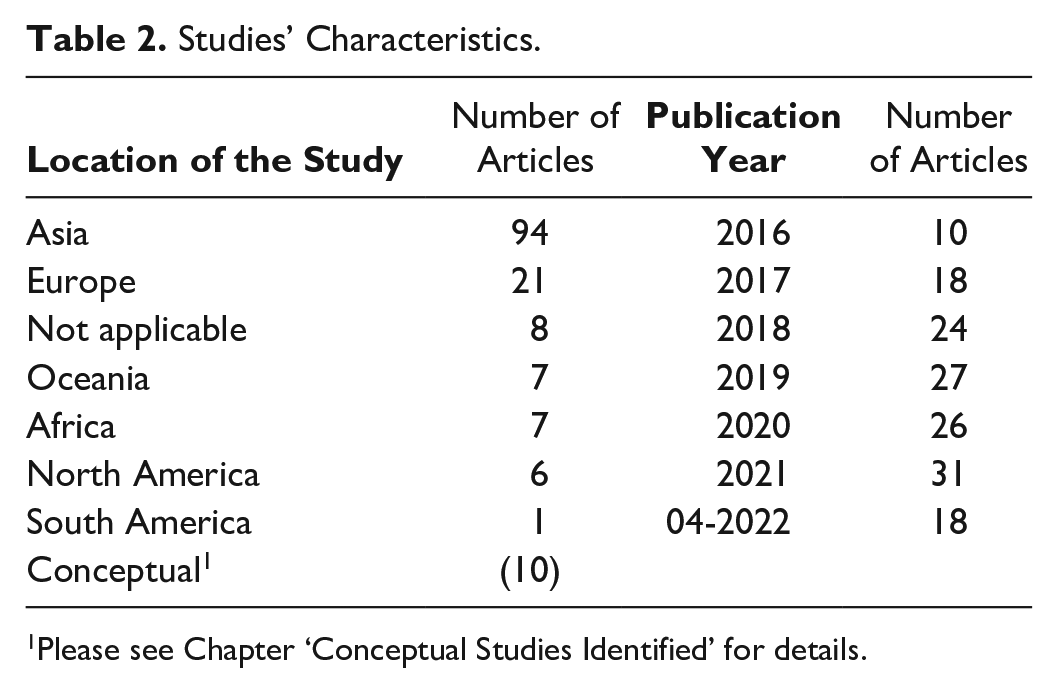
Please see Chapter ‘Conceptual Studies Identified’ for details.
Based on the keyword co-occurrence map developed in this study (van Eck & Waltman, 2014) three research clusters were identified (see Figure 2), which can be roughly divided in terms of the perspectives of the studies. The research stream “tourists” in blue refers to tourists’ intentions, the research stream “residents” in green discusses the responsible behavior of the community, and the red research stream highlights “stakeholders,” focusing on tourism practice, with companies and CSR.
Research Stream Descriptions
With the template analysis applied (Brooks and King, 2014), the following categories and respective subcategories were identified: (1) tourists’ responsible behavior, (2) residents’ responsible tourism accounts, (3) tourism businesses’ responsible actions, and (4) destination management’s role in responsible tourism (see Figure 3 and online Supplement for the entire list of studies). In the following section, the derived categories are presented and their contribution is discussed, while the identified conceptual studies are addressed in the next chapter (see chapter ‘Conceptual Studies Identified’).
Tourists’ responsible behavior
Since 2016 responsible tourism research has been dominated by studies on tourists’ role in responsible tourism (please see the online Supplemental Material for an overview of all studies identified; e.g., Hu & Sung, 2022; Lee et al., 2017). In particular, studies focusing on tourists taking responsibility for environmental impacts prevail (i.e. Han et al., 2016; Wang & Lyu, 2019), with “environmentally responsible behavior - ERB,” "climate-friendly behavior,” “green tourism behavior,” “pro-environmental behavior,” and “environmental conservation.” These studies, even if they approach divergent conceptions, all concentrate on tourists’ environmentally responsible behavior. In comparing these studies, divergent research contributions highlight the positive impacts of place attachment on tourists’ environmental responsibility (i.e. Lin & Lee, 2020). Furthermore, environmental knowledge has been found by multiple studies to positively affect tourists’ behavioral intentions (i.e. Cheng et al., 2018; King-Chan et al., 2021).
The tourists’ ERB research stream largely originates from approaching the theory of planned behavior in attempting to understand the responsibility of the demand side (i.e. Wang et al., 2018). All of the identified 37 ERB studies are quantitative in nature, except for King-Chan and colleagues (2021) who used a mixed methods research design, suggesting that valid scales for tourists’ ERB exist. Recently, tourists’ ERB studies have been influenced by the COVID-19 pandemic, in particular, the focus is placed on studying the impact of the pandemic on tourists’ intentions (i.e. He et al., 2022).
The pro-environmental behavior studies highlight environmental knowledge (i.e. Kim et al., 2018), as well as tourists’ cultural backgrounds (i.e. Filimonau et al., 2018) as pro-environmental action determinants, while climate-friendly behavior focuses, according to Qiao and Gao (2017), on tourists’ mitigation behavior regarding climate change. In this regard, Jamal and Smith (2017) emphasize social-political actions, finding that tourists demand strong pedagogic roles from providers. Cheng and colleagues (2018) examined the impact of tourists’ perception, self-efficacy, and attitudes on green tourism behavior, as well as for environmental conservation, research particularly focused on exploring the ingredients of tourists’ environmental responsibility, with waste reduction intention, water conservation behavior (i.e. Rodriguez–Sanchez et al., 2020), and low-carbon experience (i.e. Lee & Jan, 2019b).
Focusing on all three sustainability pillars, studies have looked at tourists’ responsible behavior studies. The studies range from exploring tourists’ behavioral intentions (i.e. Lee et al., 2017), to concrete quantitative studies measuring responsible tourism behavior by conducting surveys or experiments (e.g., Dias et al., 2021; Hu & Sung, 2022). Recently, responsible tourist behavior is acknowledged to have been triggered by the COVID-19 pandemic (Eichelberger et al., 2021). In this regard, sustainable tourist behavior studies have been framed as responsible behavior being attempted to enhance all three sustainability pillars (i.e. Chandran et al., 2021).
Focusing on tourists’ social and environmental responsibility, ecotourism studies have also been conducted (i.e. Lee & Jan, 2018a). Here, mostly quantitative studies concentrate on concrete behavior (i.e. Lee & Jan, 2018a) or intention (i.e. Pham & Khanh, 2020). These studies show that tourists’ behavioral control, their environmental attitude, and subjective norms have positive impacts on ecotourism intentions (Lee & Jan, 2018b). These studies differentiate in particular from other tourist responsibility studies by neglecting the economic dimension of sustainable development.
Moreover, tourist responsibility studies on solely “social responsibility” are identified (i.e. Kim & Yoon, 2020), which highlight the impact of CSR on tourists’ perceptions (i.e. Ahn, 2019), as well as introduce the concept of destination social responsibility (DSR; e.g., Kim & Yoon, 2020). Within DSR studies, the loyalty of tourists is found to be positively influenced by the socially responsible behavior of destinations (Yu & Hwang, 2019), and DSR is highlighted to moderate the effect of tourists’ crowding perceptions on tourists’ emotions (Kim & Yoon, 2020). Ahn (2019) highlights the impact of CSR on customers’ positive evaluations and their identification with a brand. However, these studies did not focus on the actual social responsibility behavior of tourists, but only on tourists’ perception of CSR or DSR.
The theoretical perspectives covered by studies on tourists’ responsible behavior mostly relate to the theory of planned behavior (i.e. King-Chan et al., 2021; Tkaczynski et al., 2020; Wang et al., 2018), value-belief-norm theory (i.e. Han et al., 2016), and norm-action theory (i.e. Qiao & Gao, 2017). The theory of planned behavior is based on the assumption that actual behavior is driven by behavioral intentions, and behavioral intentions are affected by the perception of social pressure for behavioral implementation and an overall evaluation of the implementation (Ajzen, 1985). Value-belief-norm theory is developed based on norm-action-theory, which assumes that moral obligation for the harm prevention of valued objects represents the origin of altruistic behavior, with personal norms being activated when individual responsibilities are present for actions (Schwartz, 1977). Following that, the value-belief-norm theory posits environmental cognition as causal chains which underline the likelihood of engaging in pro-environmental behavior (i.e. Han et al., 2016).
Residents’ responsible tourism accounts
Research at the community level in responsible tourism has accumulated recently, and is predominantly focused on environmental stewardship, similarly to the tourist responsibility research stream (as illustrated in the overall list of studies, which can be seen in the online Supplemental Material; i.e. Confente & Scarpi, 2021; Liu et al., 2021). Thus, ERB studies, borrowing from tourists’ ERB studies, were conducted (i.e. Cheng et al., 2019; Confente & Scarpi, 2021; Liu et al., 2021; Safshekan et al., 2020; Xu & Hu, 2021). The studies focus, in contrast to the tourist ERB studies, on community aspects with community attachment, community engagement, or resident participation (i.e. Safshekan et al., 2020; Cheng et al., 2019). In addition, residents’ perceptions of tourism impacts appear to play a greater role compared to tourists’ responsible behavior. As Xu and Hu (2021) highlight, residents’ perceptions of negative environmental tourism impacts restrain their ERB.
There is little focus on all three sustainability pillars in the studies on the community level, thus research highlighting residents’ responsible tourism behavior is scarce. However, studies are identified which did not directly examine residents’ responsible behavior or actions, but their perceptions: Gong and colleagues (2019) explored residents’ perceptions of tourists’ responsible behavior and Mathew and Sreejesh (2017) concentrated on residents’ perceptions of responsible tourism in relation to tourism impacts, similar to Um and Yoon (2021), who highlight the perception of tourism gentrification for responsible tourism intention. Only one recent study by Chan and colleagues (2021) enhances the knowledge level on communities’ responsible tourism practices by illustrating the importance of local community participation in decision-making processes as part of their responsible behavior.
Residents’ support for sustainable tourism is further identified as responsible action (i.e. Phuc & Nguyen, 2023). Chamarro and colleagues (2023) compared residents’ and tourists’ attitudes toward sustainable tourism and highlight community participation as the main difference, which is consistent with the above findings, focusing on community aspects. Phuc and Nguyen (2023) examined the impact of residents’ perceptions of collaboration and emotional solidarity, and found that residents’ perceptions of value, collaboration, and emotional solidarity with the community determined their support for sustainable tourism.
Residents’ responsible behavior studies largely focus on the social exchange theory (Xu & Hu, 2021) and the attitude-behavior theory (Safshekan et al., 2020), which have also been approached for tourists’ responsible behavior studies (Lin & Lee, 2020). Social exchange theory assumes that attitudes and behaviors are based on the perception of the costs and benefits of exchanges (Ap, 1992), suggesting that residents intend to maximize tourism benefits and minimize tourism’s negative impacts (Xu & Hu, 2021). Attitude-behavior theory corresponds to the theory of planned behavior, by assuming that attitude predicts behaviors and individuals act in a particular way due to their particular attitude towards the intended action (Ajzen & Fishbein, 1977).
Tourism businesses’ responsible action
Responsible tourism is also explored from a tourism business perspective (see the online Supplemental Materials for an overview of the studies). Studies are identified that discuss the responsible tourism practices of hotels (Musavengane, 2019), restaurants (Băltescu et al., 2022), tour operators, national park management (Eger et al., 2019; Tay et al., 2016), tourism businesses (Baird et al., 2018; Carasuk et al., 2016; Koens & Thomas, 2016), and touristic facilities (Choi et al., 2017; Moreno-Mendoza et al., 2019). Except for Baird and colleagues (2018), all of these identified studies follow a qualitative research method, mostly using interviews to develop an understanding of responsible tourism among industry practitioners. While some studies identify barriers to responsible tourism practices, such as power imbalances between small tourism businesses and intermediaries (Koens & Thomas, 2016), others focus on motivational aspects for tourism to adopt responsible practices (Musavengane, 2019). More recently, the impact of the COVID-19 pandemic on tourism businesses’ responsibility practices has been explored (Băltescu et al., 2022).
Musavengane (2019) acknowledges normative and behavioral beliefs as determinants of hoteliers’ perceptions and behaviors, while Carasuk and colleagues (2016) identify altruistic values as motivators for businesses to implement long-term responsible tourism measures. Concerning businesses’ environmental responsibility, only two studies are identified which, moreover, did not focus on business’ responsible actions, but emphasized the role of tourists in tourism businesses, that is, by examining the influence of businesses on green tourist behavior (Wang et al., 2018). According to Tay and colleagues (2016), tour operators and national park management committees construct their perceived responsibility around the sustainability principle, with Eger and colleagues (2019) illustrating that tour operators’ commitment is best placed in a shared articulation of responsibility. The practical implementation of responsible tourism lies, according to Moreno-Mendoza and colleagues (2019), in the stakeholders’ interest, while their role in planning and promoting responsible tourism is of major importance (Choi et al., 2017). Even though these studies have not yet developed quantitative scales, they demonstrate that businesses attribute responsibility for sustainable tourism to themselves (Eger et al., 2019). The theory of planned behavior has thus been applied to study the contribution of businesses to sustainable development (Carasuk et al., 2016; Lin et al., 2018; Musavengane, 2019; Yeh et al., 2016).
Furthermore, research has focused on the role of ports in responsible tourism, highlighting the waste management of ports (i.e. Svaetichin & Inkinen, 2017), as well as the role of ports in destination socioeconomic sustainability (Santos et al., 2019). Only one study highlights the role of employees in responsible tourism, by emphasizing socially responsible human resource management, and thus connects the concepts of responsible tourism and human resource management (He et al., 2021).
Another research stream, developed at the beginning of the introduction of responsible tourism as responsible behavior, focuses on CSR and suggests that CSR represents a tourism business’s contribution to responsible tourism. CSR (i.e. Chi et al., 2019; Ferraz & Gallardo-Vázquez, 2016), socioeconomic sustainability (Santos et al., 2019), corporate social environmental sustainability (Lin et al., 2018), community social responsibility (Wang et al., 2018), and social entrepreneurship (Yeh et al., 2016) are thus acknowledged. CSR studies concentrate, in particular, on examining its determinants, with Chi and colleagues (2019) demonstrating that tourism managers’ place attachment, their perceptions of positive tourism impacts, and their value identification all influence their CSR attitude. Further, measures for CSR are provided for businesses’ performance and training practices (i.e. Ferraz & Gallardo-Vázquez, 2016). Studies on corporate social environmental sustainability’s attempts to reduce greenhouse gas emissions, focusing on societal benefits and company interests (Lin et al., 2018) and socioeconomic sustainability, emphasize destination competitiveness (Santos et al., 2019), suggesting that CSR is not only about social responsibility but also about environmental responsibility.
Destination management’s role in responsible tourism
The fourth research stream on destinations’ responsibility has only recently emerged. In particular, destination management’s implementation of sustainability has been studied using qualitative research approaches (i.e. Haid et al., 2021; Herath et al., 2020; Olszewski-Strzyżowski, 2022), which underlines the novelty of this research path.
Haid and colleagues (2021) illustrate, in this regard, that sustainability implementation processes at destinations are non-synchronous, non-linear, and highly unpredictable, making it difficult to implement tourism strategies and plans adequately. However, the dominant role of destination management in implementing sustainability is also highlighted, and their communication strategies, involvement and collaboration with stakeholders is emphasized (Haid et al., 2021). Herath and colleagues’ (2020) study corresponds to these findings, by showing that national tourism organizations (NTOs) take on a key role in sustainable tourism by developing national tourism policies. In particular, promotional attempts of NTOs to support sustainable projects are highlighted (Herath et al., 2020). Similarly, Olszewski-Strzyżowski (2022) emphasizes supporting facilities and stakeholder empowerment as essential in responsible tourism.
Also, tourism planning studies have been conducted (i.e. Candia & Pirlone, 2022; Choi et al., 2017), which explore the role of public authorities in responsible tourism, by highlighting the essential role of environmental tourism impacts (Candia & Pirlone, 2022), as well as by exploring ecotourism planning processes (Choi et al., 2017).
Conceptual Studies Identified
Corresponding to the acknowledged confusion about responsible and sustainable tourism in research, a high proportion of conceptual studies was carried out in an attempt to define and distinguish the two conceptions (i.e. Gao et al., 2021; Mihalic, 2016; Mihalic et al., 2021; Mohamadi et al., 2022; Saarinen, 2021; Volgger & Huang, 2019). The conceptual studies identified in this literature review focus in particular on the development of a sustainable-responsible tourism model (Mihalic, 2016; Mihalic et al., 2021), and highlight critical differences between sustainable and responsible tourism (Saarinen, 2021). Other identified conceptual studies concentrate on social responsibility, and an examination of CSR in hospitality and tourism research was conducted (Volgger & Huang, 2019). Recently, Mohamadi and colleagues (2022) explored sustainable-responsible tourism indicators and Gao and colleagues (2021) concentrated on studying the factors which affect environmental behavior.
Discussion
Research Recommendations
The exploration of responsible tourism research allows several promising future research pathways to be identified. The results illustrate numerous contributions dealing with tourists’ environmental responsibility, with quantitative ERB studies standing out in particular. While Mondal & Samaddar (2021) also highlight tourists as the most important stakeholder group in their literature review, the high proportion of studies focusing on environmental responsibility was not stressed. Even though research concentrates more strongly on tourists’ environmental responsibility (i.e. Han et al., 2016; Wang & Lyu, 2019) than on involving all three sustainability dimensions, some studies focus on tourists’ responsible behavior (i.e. Dias et al., 2021; Hu & Sung, 2022). In future research, the measure of tourism responsibility by Dias and colleagues (2021) is thus recommended to be further validated to develop a standard measurement. Furthermore, although some studies already focus on residents’ environmental responsibility (i.e. Cheng et al., 2019; Confente & Scarpi, 2021; Liu et al., 2021; Safshekan et al., 2020; Xu & Hu, 2021), it is recommended that an in-depth comparison of these studies with tourists’ responsible behavior studies be developed (e.g., Wang et al., 2018) when attempting to develop similar measurements on tourists’ and residents’ responsible behavior, and also to be able to compare their behavioral attempts in the future. Studies can build on the widespread theory of planned behavior among tourists’ ERB studies (i.e. King-Chan et al., 2021; Tkaczynski et al., 2020; Wang et al., 2018), and combine it with attitude-behavior theory (Ajzen & Fishbein, 1997).
In addition to the high proportion of tourists’ ERB studies, the contribution of businesses’ ERB has not been recognized. The business responsibility research stream focuses, instead, on CSR (i.e. Chi et al., 2019; Ferraz & Gallardo-Vázquez, 2016), and on exploring responsible tourism from a more general perspective (i.e. Choi et al., 2017; Moreno-Mendoza et al., 2019). This corresponds to the literature review findings of Mondal and Samaddar (2021). These mostly qualitative studies focus on identifying the business perceptions of responsible tourism (i.e. Koens & Thomas, 2016), with a limited focus placed on the specific behavior of tourism businesses. Although these studies developed thick descriptions of responsible tourism from a business perspective, further quantitative research on tourism businesses is needed to validate these findings and develop systematic measures of responsible business practices. In particular, future studies on businesses’ responsible behavior can draw on CSR studies (Chi et al., 2019) and extend them to include the environmental and economic components of responsible tourism (Musavengane, 2019), by building on tourists’ ERB studies. This corresponds to the assumption that the theory of planned behavior, which is mostly used to explain tourists’ ERB, also has relevance for tourism businesses (Musavengane, 2019). In particular, studies examining determinants of tourists’ ERB (i.e. King-Chan et al., 2021) can be crucial for future research to develop an understanding of businesses’ responsible actions and behavior.
Residents’ support for sustainable tourism is considered a responsible action (i.e. Chamarro et al., 2023). Within this research stream, studies illustrate the relevance of community participation (Chamarro et al., 2023) and community collaboration (Phuc & Nguyen, 2023) within destination development (Lee & Jan, 2019a) as major predictors of residents’ support. However, focusing on the business perspective, no studies on tourism businesses’ support for sustainable tourism were found. Approaching the research stream “destination management’s role in responsible tourism,” cooperation between all stakeholders (Haid et al., 2021) is highlighted as a requirement for responsible tourism. However, business support is not explicitly considered a responsible action and thus could be the subject of future research.
In addition to the literature review findings of Mondal and Samaddar (2021), this review illustrates that tourists’ ERB studies (e.g. He et al., 2022), as well as businesses’ accounts of responsible tourism (Băltescu et al., 2022), are influenced by the COVID-19 pandemic in that tourists’ responsible behavior can be triggered by the pandemic (Eichelberger et al., 2021). However, past research has so far not focused on studying the impact of crises (Weaver et al., 2022) on residents’ responsible behavior.
Although responsible tourism is defined as the assumption of responsibility by all stakeholders (Mihalic, 2016), this systematic literature review allowed the identification of studies solely on the responsible behavior of (1) tourists, (2) residents, (3) tourism businesses, and (4) DMOs. The role of destination management emerged only recently, with studies highlighting the importance of destination management in sustainability implementation (Haid et al., 2021), via communication attempts and their support for sustainability-based projects (i.e. Haid et al., 2021; Herath et al., 2020). However, also due to the novelty of this research stream, there is a lack of comprehensive treatment of possible responsible actions by DMOs, covering all three sustainability pillars. Although the literature review by Mondal and Samaddar (2021) also highlights the stakeholder groups of tourists, host communities, service providers, and policy makers/governments/DMOs as groups under study, the last group, in particular, lacks reference to responsible behavior, with the results of this literature review showing that no explicit study has been conducted that focuses on governments’ responsible actions. Although research demonstrates the importance of sustainable tourism policies (Herath et al., 2020), suggesting that governments with tourism officials and policymakers are rather involved in the development of sustainable tourism strategies (Mathew & Sreejesh, 2017), they are less considered in responsible tourism research. Regarding this, future research can focus on studying the role of governments in responsible tourism and, accordingly, their contribution to sustainable tourism in detail.
Even though some studies tried to combine divergent actor perspectives (for example Chamarro et al. [2023] concentrated on comparing tourists’ and residents’ attitudes towards sustainable tourism), research on mutual influence is scarce. There are single studies on the role of businesses and their influence on tourists’ responsible behavior (Wang et al., 2018), but it can be assumed that, for example, tourists and residents might influence each other in terms of being role models.
Practical Implications
This literature review allows the identification of implications for tourism practice. First, the potential of tourists to contribute to sustainable tourism is evident from the high proportion of studies focusing on tourists’ role in responsible tourism (i.e. Hu & Sung, 2022; Lee et al., 2017). Corresponding to tourists demanding pedagogic roles by tourism providers (Jamal & Smith, 2017), tourism practice is recommended to provide information in particular about the environment, to enhance tourists’ ERB (King-Chan et al., 2021). Second, tourism practice can build on market segmentation based on developed sustainability criteria (i.e. Lee & Jan, 2019c; Tkaczynski et al., 2020) and exploit the market potential for enhancing responsibility practices. Third, corresponding to the argument of Chan and colleagues (2021)—that residents’ participation in decision-making processes represents a responsible action—tourism practice is recommended to involve residents in destination development attempts to enhance their contribution to responsible tourism. Fourth, similarly, it can be assumed that sustainable tourism requires the support of businesses, and this support can be enhanced through collaboration (Phuc & Nguyen, 2023). This suggests that the development of a sustainable strategy on which responsible behavior is based (Mathew & Sreejesh, 2017) needs to involve different stakeholders. Fifth, this systematic literature review suggests that the development of sustainable projects might catch the attention and support of tourism policy and thus enhance sustainable development (Candia & Pirlone, 2022; Choi et al., 2017; Herath et al., 2020).
Conclusion
Contribution
This literature review provides in-depth insights into the state of the art of recent responsible tourism research, by illustrating that responsible tourism represents a heavily studied field of research. In particular, the focus on very recent studies allowed a focus on the impact of emerging crises on responsible tourism research (Weaver et al., 2022), which differentiates this study from previous literature reviews (i.e. Mondal & Samaddar, 2021). Besides conceptual studies focusing on the relationship between the concepts of sustainable and responsible tourism (i.e. Mihalic et al., 2021), this review focuses on tourism actors’ responsible behavior (Goodwin, 2016; Mihalic, 2016). Overall 154 studies published from 2016 to April 2022 were identified. This work contributes to responsible tourism literature by stimulating further research and by informing practitioners, thereby motivating them to adopt responsible actions.
This study demonstrates how responsible tourism research has developed since its differentiation from sustainable tourism in 2016 (Goodwin, 2016; Mihalic, 2016). Corresponding to the assumption that all tourism actors need to take responsibility for the implementation of sustainable tourism via responsible actions and behavior (i.e. Mathew & Sreejesh, 2017; Mihalic, 2016; Mihalic et al., 2021), this study demonstrates that research covers (i) tourists (i.e. Dias et al., 2021; Hu & Sung, 2022), (ii) the community level (i.e. Chan et al., 2021; Gong et al., 2019; Um & Yoon, 2021), (iii) tourism businesses (i.e. Eger et al., 2019; Moreno-Mendoza et al., 2019; Musavengane, 2019) and, more recently, (iv) the destination (i.e. Haid et al., 2021). This implies that although these levels represent divergent stakeholder groups and thus different roles in tourism systems (Eichelberger et al., 2021), responsible tourism needs to be approached holistically on all levels to contribute to sustainable tourism development.
Limitations
The findings of this systematic literature review face several limitations. First, even though the literature review approach is supposed to be characterized by transparency (David & Han, 2004), the highly structured process can pose difficulties, allowing less flexibility in data analysis. Second, although the Web of Science database contains most of the relevant journals for tourism research (Pikkemaat et al., 2009), the use of only one database represents a limitation. Third, despite building on previous studies (Mondal & Samaddar, 2021; Mihalic, 2016), the subjective selection of search terms might influenced the results. Moreover, although this study concentrates on analyzing the progress of recent responsible tourism research, as introduced by Mihalic (2016) and Goodwin (2016), the focus on studies from 2016 to April 2022 might lead to bias as earlier studies on responsible action or behavior were excluded (i.e. on sustainable awareness). Further, the inclusion of contributions only written in English, as well as the concentration on solely SSCI-ranked journal publications, represent limitations of this study. In addition to the focus on solely SSCI-ranked journal publications, which was used as a quality criterion based on the study by Pikkemaat and colleagues (2019) and Bichler and colleagues (2022)—which pointed out the importance of the SSCI ranking as journal quality criteria—other rankings and indexes (i.e. ABDC ranking) could have been used and might have led to different results. Those restrictions (David & Han, 2004; Newbert, 2007; Pikkemaat et al., 2019) were employed on the one hand to enhance the quality of this systematic literature review, and on the other hand to keep the analysis of this study manageable. Additionally, the thematic analysis of the studies is vulnerable to possible subjective interpretations by the researcher.
Supplemental Material
sj-pdf-1-jht-10.1177_10963480231171330 – Supplemental material for Tourism Actors’ Responsible Behavior: A Systematic Literature Review
Supplemental material, sj-pdf-1-jht-10.1177_10963480231171330 for Tourism Actors’ Responsible Behavior: A Systematic Literature Review by Sarah Schönherr in Journal of Hospitality & Tourism Research
Footnotes
Declaration of Conflicting Interests
The author declared no potential conflicts of interest with respect to the research, authorship, and/or publication of this article.
Funding
The author received no financial support for the research, authorship, and/or publication of this article.

Supplemental Material
Supplemental material for this article is available online.
Author Biography
References
Supplementary Material
Please find the following supplemental material available below.
For Open Access articles published under a Creative Commons License, all supplemental material carries the same license as the article it is associated with.
For non-Open Access articles published, all supplemental material carries a non-exclusive license, and permission requests for re-use of supplemental material or any part of supplemental material shall be sent directly to the copyright owner as specified in the copyright notice associated with the article.
