




Abstract
Using social information processing theory, this study aims to examine the relationships among an abusive work environment, mindfulness, employee well-being, and turnover intentions. This study was conducted based on a quantitative survey of employees working in the lodging industry in the United States. The findings reveal the joint impacts of abusive supervision, abusive coworker treatment, and mindfulness on employee well-being and turnover intention. Specifically, the results show that mindfulness exacerbates the relation between abusive behaviors and employee well-being, providing evidence of a moderated mediation effect in the relationship between abusive supervision/coworker treatment and turnover intentions through employee well-being. This research contributes to the literature and theory by demonstrating the potential dark side of employees’ mindfulness.
Keywords
Highlights
Abusive behavior is detrimental to well-being and leads to turnover intentions.
Mindfulness exacerbates the relationship between abusive behavior and well-being.
Mindfulness is a double-edged sword in the context of a negative work environment.
Introduction
Enhancing employee well-being and reducing employee turnover are significant and constant challenges faced by human resources professionals in the hospitality industry (Wen et al., 2020). These challenges have been further intensified during the COVID-19 pandemic, as increased job insecurity, anxiety, and career uncertainty have had negative effects on employee well-being and turnover in the hospitality industry (Bajrami et al., 2021). Identifying the antecedents of employee well-being and turnover intentions, as well as possible solutions, is an ongoing research agenda in hospitality academia. Likewise, hotel managers are constantly seeking ways to help employees thrive and improve their satisfaction levels (P. C. Lee et al., 2021), as employee retention will be especially important when hotel demand returns to expected levels.
It has been a long-held belief that the nature of the work, low compensation, and limited opportunities for development make hospitality jobs relatively undesirable, leading to a high turnover rate (E. A. Brown et al., 2015). An emerging topic in research on hospitality employees’ well-being and turnover intentions is abusive behaviors in the workplace (e.g., Tepper, 2000; Tews et al., 2019). Giving the silent treatment, being rude, undermining employees, and explosive outbursts are examples of abusive behaviors. In this study, we investigated two forms of abusive behaviors, including abusive supervision and abusive coworker treatment. Abusive supervision, which is the conceptual opposite of ethical leadership (Palanski et al., 2014), potentially manifests seriously in the hospitality industry; for example, the hierarchical human resource structure and complex cultural diversity make abusive supervision more likely to manifest (Yu et al., 2020). Investigating the impact of workplace abusive behaviors on employee well-being is essential because employee well-being has a positive relationship with organizational loyalty and commitment (Wright & Cropanzano, 2000) and can predict turnover intentions (Brunetto et al., 2012).
Facing the previously discussed challenges, hotel organizations are becoming more responsible today. They help employees survive workplace difficulties by providing them with support, training, flexible work arrangements, and career advancement opportunities (Calinaud et al., 2021; Fox, 2020). Among these strategies, strengthening employees’ mindfulness via training is perceived as a popular tool that can help employees cope with work-related challenges (e.g., Karjalainen et al., 2021; King, 2019). Mindfulness is defined as “an open or receptive attention to and awareness of ongoing events and experience” (K. W. Brown & Ryan, 2004, p. 245). Mindfulness protocols have been adapted for work settings and implemented widely, and the effects of mindfulness interventions on employee health and well-being have substantial implications for organizations (Jamieson & Tuckey, 2017). Being mindful at work tends to enhance employees’ productivity as well as improve their ability to regulate emotions and display empathy for others; consequently, mindfulness has the potential to create a more positive work environment (Arnold, 2019).
While being mindful is, in general, believed as a positive way to handle challenges in the workplace, mindfulness can be a double-edged sword that may result in unfavorable consequences (Wihler et al., 2022). According to the social information processing theory (Salancik & Pfeffer, 1978), conscious information processing may lead to unwanted effects, such as lowering task performance quantity and undermining well-being when they encounter unpleasant situations (Britton, 2019; Cebolla et al., 2017; Wihler et al., 2022). As a result, the influence of mindfulness may not always be helpful in the workplace.
To investigate the downside of mindfulness, we propose a conceptual framework that accounts for the moderating role of mindfulness in the relationship between abusive supervision/coworker treatment and turnover intentions. We propose that mindfulness moderates the relationship between abusive supervision/coworker treatment and employee well-being so that the negative effect of abusive supervision/coworker treatment on employee well-being will be more salient for employees with high levels of mindfulness. Specifically, we examine (a) the influence of abusive supervision/coworker treatment on employee well-being and turnover intentions and (b) the moderating role of mindfulness on the relationship between abusive supervision/coworker treatment and employee well-being. Even though the potential downside of mindfulness has been explored in the clinical psychology literature, to our knowledge, we are among the first to investigate potential adverse outcomes of mindfulness in the workplace in the hospitality literature. The results from this research will contribute to the abusive work environment, ethical leadership, and mindfulness literature in hospitality management, as well as advancing the understanding of the social information processing theory. In addition, this study will help practitioners retain invaluable talents in hospitality and provide implications for responsible management to establish dignity and justice in the hospitality work environment.
Literature Review and Hypotheses Development
Abusive Behavior and Workplace Well-Being
Abusive supervision is defined as subordinates perceiving that their supervisors “engage in the sustained display of hostile verbal and nonverbal behaviors, excluding physical contact” (Tepper, 2000, p. 178). Similarly, Tews et al. (2019) defined abusive coworker treatment as nonphysical hostility perpetrated by coworkers. Examples of these abusive behaviors include giving subordinates or coworkers the silent treatment, belittling them, being rude, and putting them down in front of others. Scholars have suggested that abusive supervision is related to a number of negative consequences for employees, including diminished person–organization fit, counterproductive workplace behaviors, job burnout, and lower job satisfaction and loyalty, as well as increased psychological distress (Tepper et al., 2017). Findings also show that abusive coworker treatment is related to employee turnover, especially among newcomers (Tews et al., 2019).
Social information processing theory argues that an individual’s attitudes, perceptions, and behaviors are shaped by information prompts, including job requirements and expectations from the social environment, beyond one’s personal disposition and characteristics (Salancik & Pfeffer, 1978). Understanding expectations and the information communicated by supervisors and coworkers enables employees to readily adjust to work situations. However, if information from a key individual is perceived as negative or abusive, employee well-being may decrease, as abusive supervision and abusive coworker treatment convey information about poor work relationships (Ramdeo & Singh, 2019).
Abusive supervision and abusive coworker treatment can be a negative source of information, impairing employee well-being, which encompasses work satisfaction and work-related affect (Zheng et al., 2015). Abusive supervisors and coworkers may provide negative information to employees in a variety of ways. For example, belittling or putting a colleague down in front of other colleagues conveys negative information regarding their level of value and respect in the workplace. Abusive supervisors may make subordinates feel socially unsupported in the organization and exacerbate their perceptions of injustice (Hoobler & Hu, 2013; Xu et al., 2018). Similar things could also result from abusive coworkers. Tews et al. (2019) found that abusive coworker treatment leads to employee turnover; this effect is especially salient among entry-level hospitality employees. When supervisors and coworkers behave abusively, individuals may avoid direct interaction with them and act within more narrowly defined parameters; individuals may believe that they do not have the necessary skills to do their jobs when they are ridiculed by their supervisors and coworkers (Hershcovis & Barling, 2010). These findings illustrate that abusive behaviors from supervisors and coworkers convey a negative message to employees that gives rise to perceptions of isolation and unfairness in the workplace. This in turn leads to negative consequences such as job burnout or lower job satisfaction (X. Li et al., 2016). Therefore, abusive behaviors convey negative information to employees that may detrimentally impact their workplace well-being. Thus, we hypothesize that abusive supervision and abusive coworker treatment undermine employee well-being.
The Moderating Role of Mindfulness
We have proposed that abusive supervision and abusive coworker treatment are detrimental to employee well-being. However, does this relationship hold true for all individuals? We argue that an important boundary condition is the way individuals process social information. Social information processing theory argues that social interactions shape employees’ beliefs and behaviors and how they adjust to their work environments (Lu et al., 2019). This perspective implies that individuals are attuned to cues from salient sources in the workplace, such as how employees with influence and power behave (Walsh & Arnold, 2020).
However, the information communicated through supervisors’ or coworkers’ behaviors is not always processed identically by every employee. Employees may pay attention to and consciously process information to different extents (Kudesia, 2019). This variation in social information processing, in turn, may influence how strongly a supervisor’s or coworker’s behavior influences employee well-being. Babalola et al. (2019) suggested that mindfulness is an individual characteristic that may impact an employee’s level of sensitivity to information conveyed by colleagues’ behaviors. Mindfulness is defined as “open or receptive attention to and awareness of ongoing events and experience” (K. W. Brown & Ryan, 2004, p. 245).
A focus in the current literature is the quality of awareness and attention associated with mindfulness and how information is processed (Kudesia, 2019). Mindfulness enables individuals to process external information consciously and deeply (Mesmer-Magnus et al., 2017). For instance, individuals with a higher level of mindfulness possess more intricate information-processing networks in the brain (Tang et al., 2015). In comparison, individuals with a lower level of mindfulness tend to be preoccupied with their past experiences and future plans (Mesmer-Magnus et al., 2017), suggesting that they may not be able to process information in the current environment as consciously and carefully as those with a higher level of mindfulness (Ruedy & Schweitzer, 2010; Walsh & Arnold, 2020). Mindfulness normally predicts positive consequences; however, the literature suggests that conscious information processing may lead to unwanted effects when individuals encounter unpleasant situations and events (Cebolla et al., 2017). Overall, the literature suggests that mindfulness enables individuals to process information intensely and fully, which may predict subsequent changes in attitudes and behaviors.
The consequences of mindfulness in the workplace context are generally positive; thus, many organizations have trained employees to engage in mindfulness practices (Walsh & Arnold, 2020). However, mindfulness has been criticized by some as a “commercialized fad,” and scholars have called for research investigating potential adverse effects. For example, in a systematic evaluation of the mindfulness and meditation literature, Van Dam et al. (2018) highlighted meditation-related adverse effects in clinical studies. Others have found that mindfulness training interventions may elevate anxiety, panic, and distress (Roemer & Orsillo, 2003). A review of mindfulness-related processes (Britton, 2019) also suggests that the effects of meditation follow an inverted U-shaped trajectory in which the typical positive effect could turn negative, including lower sleep duration and depth, pain, anxiety, and negative attention bias. These findings surface important questions regarding the benefits and side effects of mindfulness in the workplace.
Although empirical evidence demonstrates the benefits of mindfulness in terms of building psychological well-being (e.g., Bajaj & Pande, 2016; Diachenko et al., 2021), thoroughly and consciously processing social information may not be beneficial in all situations, such as those involving abusive behaviors in the workplace. We argue that being attuned to negative information sent from an abusive supervisor or coworker could exacerbate the negative relation between abusive supervision/coworker treatment and workplace well-being for highly mindful employees. As the social information processing theory implies, mindful individuals are especially in tune with their supervisors’ or colleagues’ social cues and tend to devote more energy to processing this kind of information than less mindful employees. Furthermore, according to Baumeister et al.’s (2001) argument on positive–negative asymmetry and negative bias—“bad is stronger than good”—employees tend to recognize and elaborate on negative information more quickly in various situations. For example, even slightly negative information can create a faster brain response than positive information (Ito et al., 1998). A general bias toward negative information combined with a heightened awareness of the present moment through mindfulness may increase the already negative effect of abusive behaviors on employees’ well-being. Therefore, employees’ mindfulness could make them more sensitive and attentive to cues associated with abusive behaviors. Taken together, we hypothesize that mindfulness exacerbates the relationship between abusive workplace behaviors and employee well-being due to intensified social information processing.
Job satisfaction and work-related affect constitute employee well-being (Zheng et al., 2015). Employee well-being is a major concern for both research and practice, and there is broad consensus that psychologically healthy and happy employees tend to be more productive and committed to their organizations and less likely to leave their jobs (Wang, Xu et al., 2021). In addition, low employee well-being has often been cited as a key reason for turnover intentions in the hospitality industry and has been researched frequently along with negative emotions, stress, and burnout (Gordon et al., 2019). According to the social information processing theory (Salancik & Pfeffer, 1978), high levels of employee well-being may convey the impression that coworkers have good mental and psychological health; however, low levels of employee well-being are likely to weaken this impression and, by extension, employees’ organizational attachment. If hospitality practitioners work hard to meet the needs of the staff members, the workplace is more likely to be perceived as a desirable environment to work for. In this sense, it is likely that individuals who are happy with the organization and perceive good well-being will be more committed to the workplace and have lower intentions to leave the organization (Kara et al., 2013). Thus, we hypothesize the following:
Research on abusive work environments and employee well-being suggests that together, these factors influence turnover intentions in the hospitality industry (e.g., Gordon et al., 2019; Xu et al., 2018; Yu et al., 2020). For example, Ahmad and Kaleem (2019) found that employee bullying triggers turnover intention through the negative impact on well-being in a cross-cultural context. In the meantime, mindfulness could exacerbate the relationship between abusive behaviors and employee well-being based on the aforementioned discussion according to the social information processing theory (Salancik & Pfeffer, 1978) and Baumeister et al.’s (2001) argument on positive-negative asymmetry and negative bias. Individuals high in mindfulness could be more sensitive and attentive to cues associated with abusive behaviors, impacting their well-being and turnover intentions eventually.
In line with our arguments and hypotheses, we expect a moderated mediation effect whereby mindfulness moderates the indirect relation between abusive supervision/coworker treatment and turnover intentions through employee well-being. More specifically, we expect employee mindfulness to strengthen this relationship by exacerbating the influence of abusive supervision/coworker treatment on turnover intentions via employee well-being such that the indirect relation is stronger when mindfulness is higher. Therefore, through the lens of the social information processing theory, the subsequent hypotheses are proposed:
Our conceptual model is depicted in Figure 1.
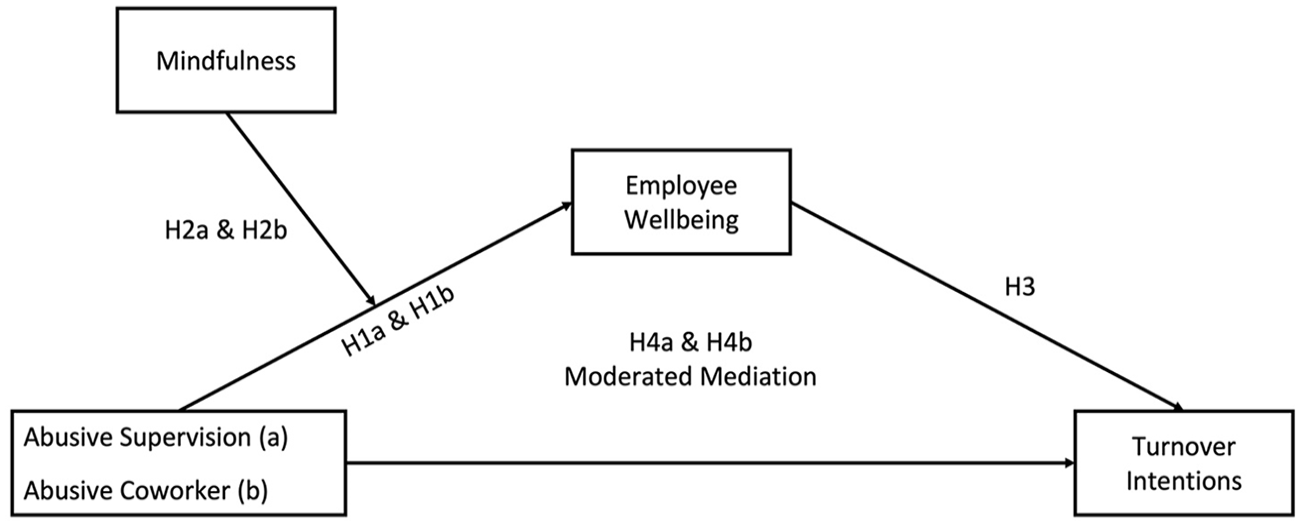
Theoretical model.
Research Method
Research Design
A survey questionnaire was designed to examine the proposed model. The questionnaire started with screening questions to make sure that all respondents had been working in the lodging industry in the United States for more than 6 months with active full-time employee status at the time of data collection (e.g., “I currently have active full-time employment status in a hotel company”; “I have been working in the hotel industry for at least 6 months”). Respondents used 7-point Likert-type scales to respond to measurement items for key variables, including abusive supervision, abusive coworker treatment, employee well-being, mindfulness, and turnover intention. In addition, the participants were asked to imply their general perception regarding how the pandemic influenced their work lives (i.e., “To what extent do you feel the COVID-19 pandemic has changed your work life in the hotel industry?”). We collected basic demographic information such as age, gender, education, and annual household income at the end of the survey.
Using Qualtrics, a leading online survey company, we collected 220 valid responses from hotel employees during August 2021. Since this study includes several questions about abusive supervision and abusive co-worker behaviors, Qualtrics is considered a good platform for data collection because of its ability to keep the identity of the respondent anonymous. Our respondents were 43 years old on average. They had been working at their current companies for about 6.14 years. About 50.9% of respondents were from midscale full-service hotels, 25.4% were from limited-services hotels, and 23.6% were from luxury hotels. Respondents worked in various departments in a hotel such as the front office (29.3%), housekeeping (15.5%), food and beverage (11.4%), sales and marketing (6.8%), and human resources (4.5%). About half of the respondents held supervisory or managerial positions (55.9%), followed by entry-level positions (36.4%) and executive positions (7.7%).
Among all participants, 69.5% were female. Regarding ethnicity, 75.5% were Caucasian, followed by African American (11.8%) and Hispanic/Latino (6.4%). Approximately 25.9% of participants reported their annual household income between $40,000 and $59,999, and 40.5% informed their annual household income of $60,000 or higher. In addition, the majority of our respondents had an associate’s degree (17.7%) or higher (bachelor’s degree: 27.7%; master’s degree and above: 10.5%).
Measurements
All the measurement items for major constructs were adopted from prior literature with 7-point Likert scales ranging from 1 (strongly disagree) to 7 (strongly agree). We adopted six items from Harris et al. (2011) to measure abusive supervision (e.g., “My supervisor puts me down in front of others”; Cronbach’s alpha = 0.952) and six items from Tews et al. (2019) to measure abusive coworker treatment (e.g., “My coworkers make negative comments about me to others”; Cronbach’s alpha = 0.943). Employee well-being was captured using six items from Zheng et al. (2015; e.g., “Work is a meaningful experience for me”; Cronbach’s alpha = 0.926). Mindfulness was captured using five items from Petchsawang and McLean (2017; e.g., “I find myself working without paying attention”; Cronbach’s alpha = 0.874). Since all mindfulness items were negatively worded, they were reverse coded during the data analysis process. Turnover intentions were measured with three items from McGinley and Mattila (2020), and a sample item is “I think a lot about leaving my current hotel,” with a Cronbach’s alpha = 0.933. Please refer to the Appendix for the full list of measurement items.
Results
Basic statistics for the major variables are presented in Table 1. To examine the common method bias, we first ran a Harman’s single-factor test. The results show that a single factor explains 38.63% of the variance, which is below the 50% cutoff point (Podsakoff et al., 2003). Next, we employed the common latent factor method to compare the standardized regression weights of all items between models with and without a common latent factor. The differences were smaller than 0.2. Taken together, the common method bias is not a major concern to the current study (Gaskin, 2017).
Descriptive Statistics of Major Variables.
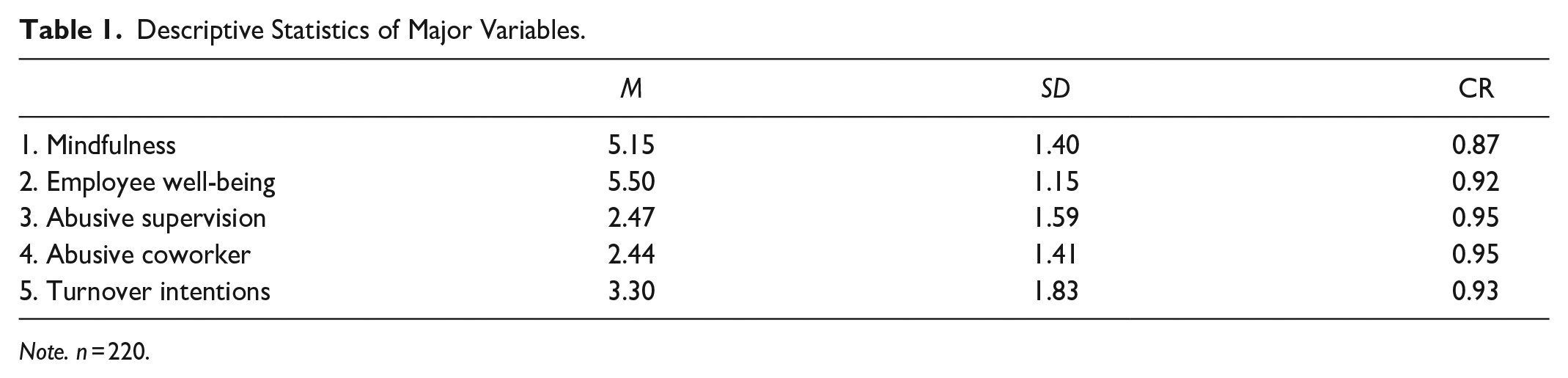
Note. n = 220.
We first used Hayes’s (2013) PROCESS Model 4 procedure with the recommended bias-corrected bootstrapping technique to test our mediation model (H1a, H1b, and H3). Since our conceptual model has two independent variables, two PROCESS models were performed: one with abusive supervision as an independent variable and the other with abusive coworker treatment as an independent variable. Employee well-being is entered as a mediator, and turnover intention is included as the dependent variable. Participants’ gender, age, and tenure with the current hotel were also included as control variables because those factors are shown to be related to employees’ turnover intentions (Hochwarter et al., 2001). In addition, the impact of the COVID-19 pandemic on the hotel industry was controlled for (Jung et al., 2020). All the continuous variables were mean-centered to avoid multicollinearity.
The results suggest a significant negative relation between abusive supervision and employee well-being (b = −0.28, p < 0.001); thus, H1a is supported. Consistent with H1b, the relationship between abusive coworkers and employee well-being is also negative and significant (b = −0.19, p = 0.001). The PROCESS model results further reveal that employee well-being has a significant negative impact on turnover intentions (b = −0.68, p < 0.001), supporting H3.
To test our moderated mediation model (H2a, H2b, H4a, and H4b), we employed Hayes’s (2013) PROCESS Model 7 procedure with the recommended bias-corrected bootstrapping technique. All independent variables, mediators, dependent variables, and control variables stay the same as the earlier PROCESS model 4. Mindfulness was added to the model as a moderator. The findings from the PROCESS model with abusive supervision as the independent variable reveal a significant interaction effect between abusive supervision and mindfulness on employee well-being (b = −0.10, p < 0.001). A spotlight analysis further reveals that the impact of abusive supervision is stronger for employees with higher levels of mindfulness (1 SD above the mean) (b = −0.48, p < 0.001) than those with lower levels of mindfulness (1 SD below the mean) (b = −0.18, p < 0.001), thus supporting H2a. See Table 2. The interaction effect is plotted in Figure 2.
Moderated Mediation Results With Abusive Supervision as Independent Variable.
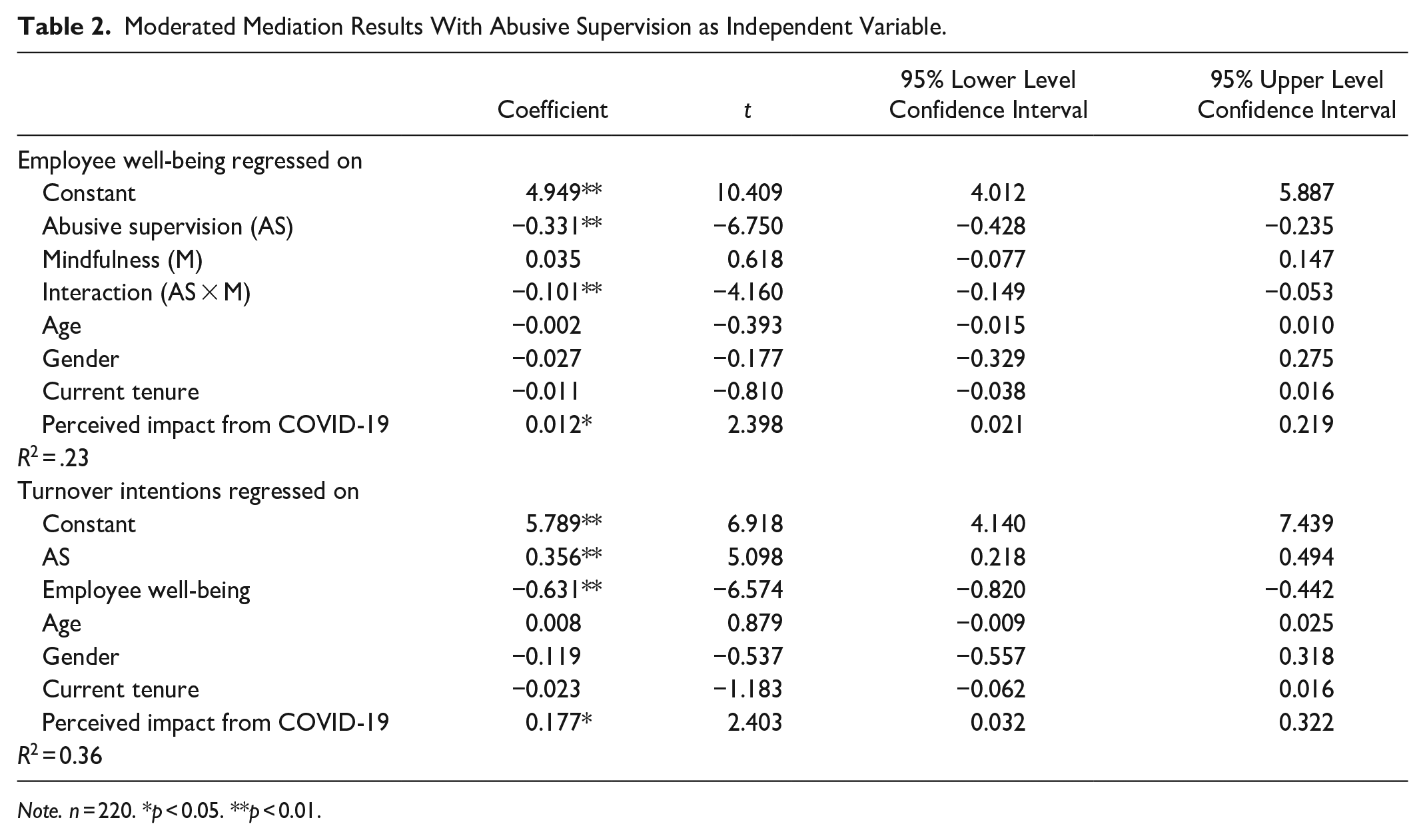
Note. n = 220. *p < 0.05. **p < 0.01.
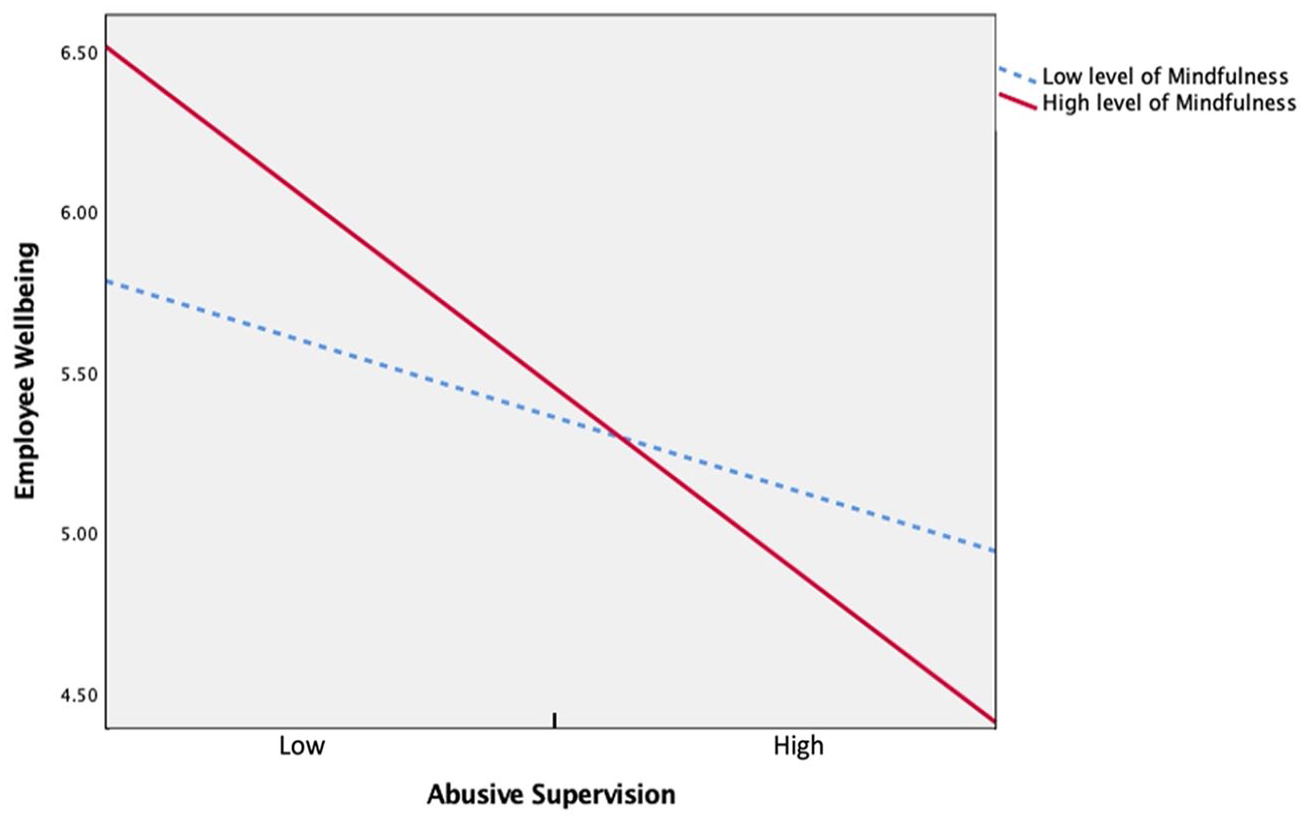
The interaction effect between mindfulness and abusive supervision on employee well-being.
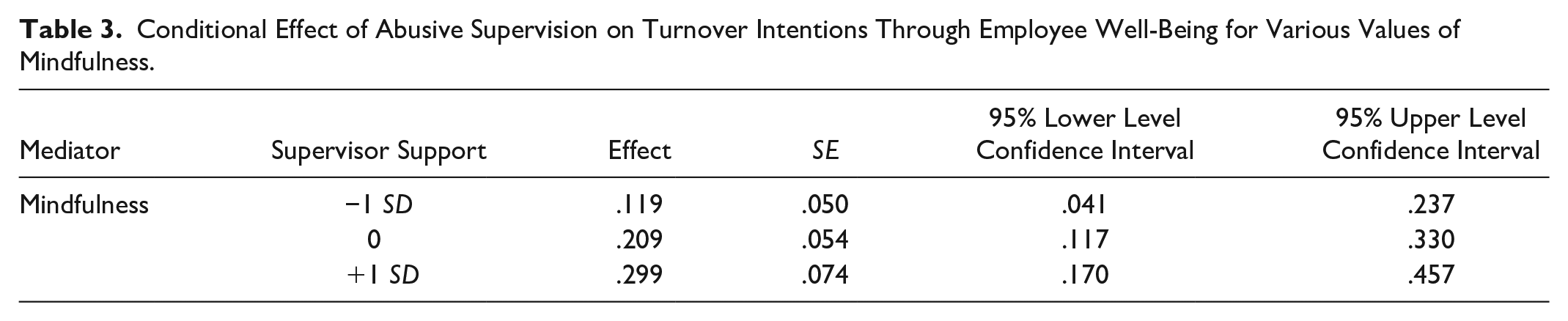
Hypothesis 4a proposes a moderated mediation effect whereby mindfulness moderates the indirect relationship between abusive supervision and turnover intention through employee well-being. Using Hayes’s (2013) index of moderated mediation, the results in Table 3 suggest a significant index number (moderated mediation index = 0.064; SE = .023; 95% CI [0.016, 0.108]). More specifically, the indirect effect of abusive supervision is significant and stronger for individuals with high levels of mindfulness (b = 0.299; 95% CI [0.179, 0.457]) than for those with low levels of mindfulness (b = 0.119; 95% CI [0.041, 0.237]). Therefore, H4a is supported.
Conditional Effect of Abusive Supervision on Turnover Intentions Through Employee Well-Being for Various Values of Mindfulness.
The results from the other PROCESS model with abusive coworker treatment as the independent variable also reveal a significant interaction effect between abusive coworker treatment and mindfulness on employee well-being (b = −0.10, p < 0.001). A spotlight analysis further demonstrates that the effect of abusive coworker treatment is stronger for employees with high levels of mindfulness (1 SD above the mean; b = −0.38, p < 0.001) than for those with low levels of mindfulness (1 SD below the mean; b = −0.10, p = 0.108). Therefore, H2b is supported, indicating that mindfulness moderates the relationship between abusive coworker treatment and employee well-being. See Table 4. The moderation effect is depicted graphically in Figure 3.
Moderated Mediation Results With Abusive Coworker as Independent Variable.
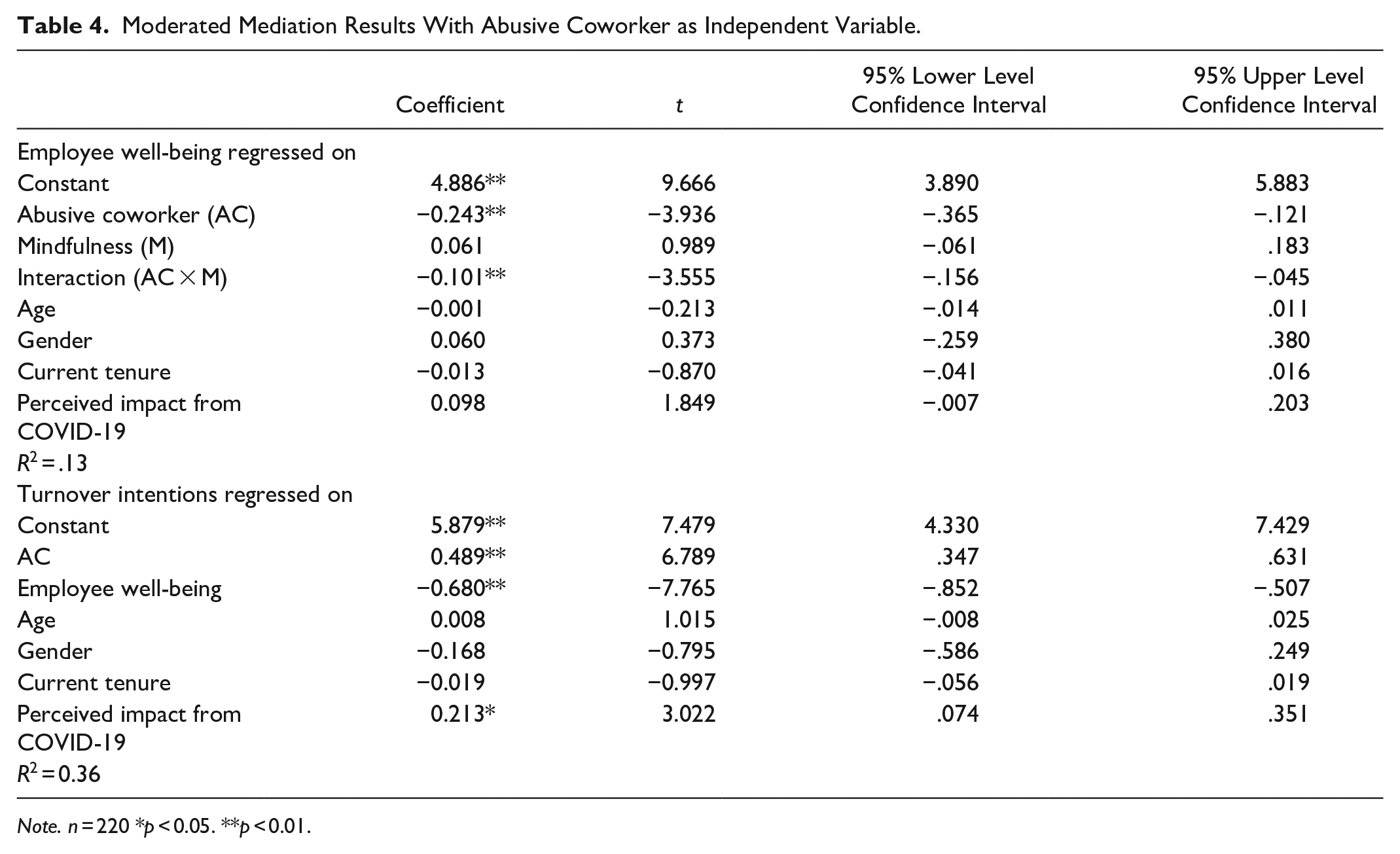
Note. n = 220 *p < 0.05. **p < 0.01.
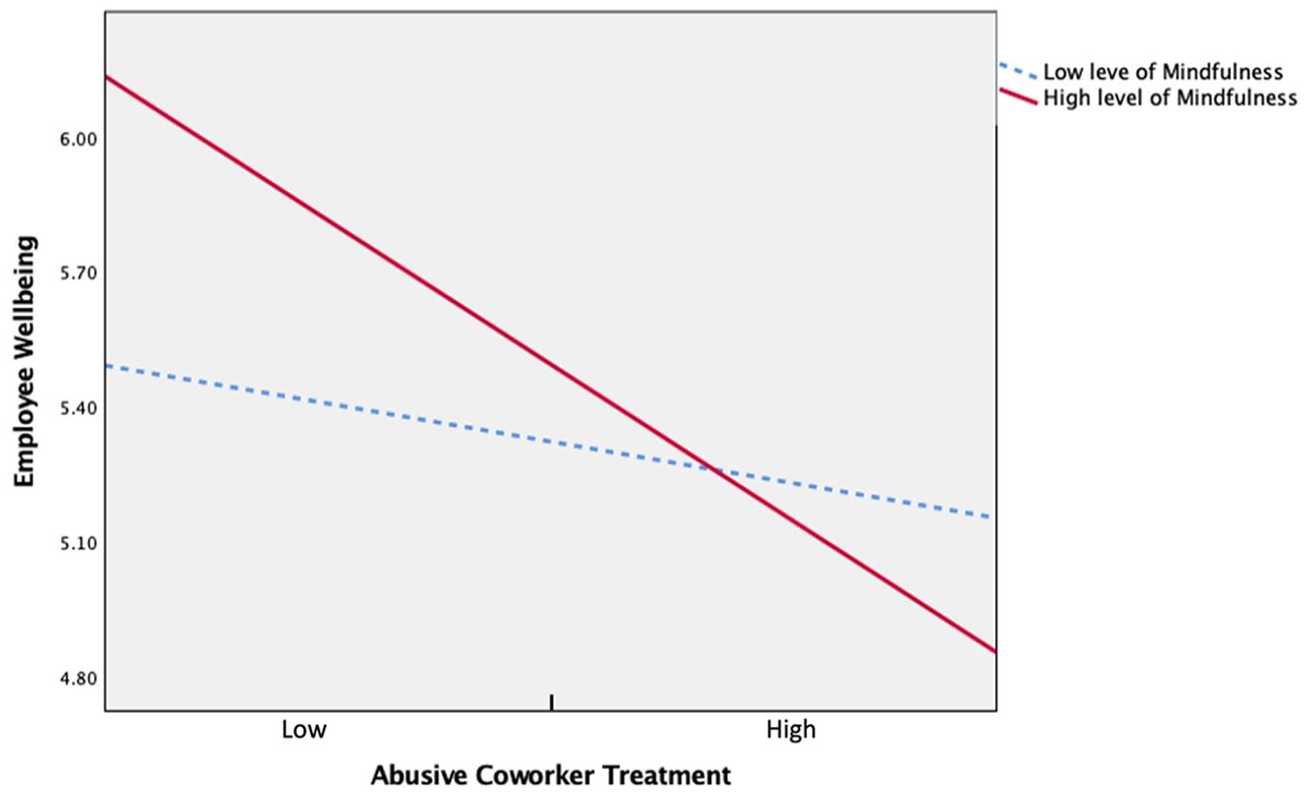
The interaction effect between mindfulness and abusive coworker on employee well-being.
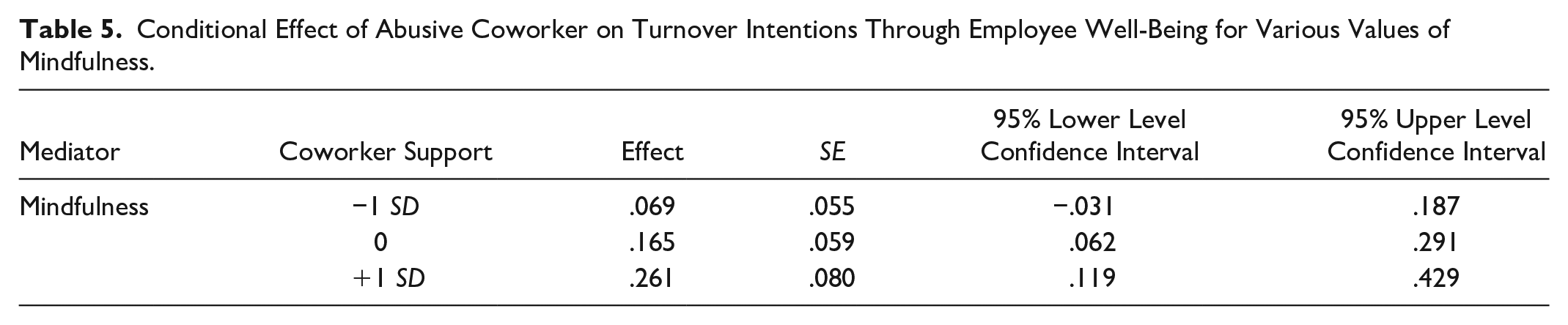
Hypothesis 4b proposes a moderated mediation effect whereby mindfulness would moderate the indirect relationship between abusive coworker treatment and turnover intentions through employee well-being. The results (see Table 5) indicate that the indirect effect of abusive coworker treatment is positive and significant when mindfulness is high (b = 0.26; 95% CI [0.119, 0.429]); however, it becomes nonsignificant when mindfulness is low (b = 0.069; 95% CI [−0.031, 0.187]). The moderated mediation index is also significant (moderated mediation index = 0.068; SE = 0.025; 95% CI [0.016, 0.116]), which supports H4b.
Conditional Effect of Abusive Coworker on Turnover Intentions Through Employee Well-Being for Various Values of Mindfulness.
Discussion
Abusive behavior, such as abusive supervision, is detrimental to the well-being of employees and leads to absenteeism, poor performance, and turnover (Mackey et al., 2017). To avoid losing talent in the industry, hotel managers can train their employees to be mindful. However, mindfulness can be a double-edged sword in the context of a negative work environment. Empirical evidence from this study supports a moderated mediation effect of mindfulness in the relationship between abusive supervision/coworker treatment and turnover intentions through employee well-being. The results from this research provide key theoretical and practical implications as explained in the following sections.
Theoretical Contributions
This study enriches the literature and theories in several ways. First, this study contributes to the body of research on mindfulness in the workplace. Many studies on mindfulness have been conducted in the clinical psychology field, and the interest in the topic is rapidly growing in hospitality management with a primary focus on potential benefits (e.g., J. J. Li et al., 2017; Wang, Wen et al., 2021). The current study contributes to the literature and social information processing theory by revealing the dark side of employees’ mindfulness. Although the potential downside of mindfulness has been explored in the field of clinical psychology, to our knowledge, we are among the first to uncover evidence of negative outcomes of mindfulness in the workplace in the hospitality literature. The results reveal that being mindful can heighten the negative effect of abusive treatment from supervisors or colleagues on employee well-being. This is important, given that mindfulness typically is considered a tool for strengthening positive resources in the workplace (Krick et al., 2021; Roche et al., 2014). Our study demonstrates that although mindfulness often leads to positive outcomes, in certain situations it may also lead to negative rumination that can be difficult to overcome.
Second, the findings from this study provide nuanced perspectives on how abusive supervision and abusive coworker treatment affect employees’ work experiences and attitudes. Notably, the influence of abusive coworker treatment on workplace well-being and turnover has rarely been investigated (Tews et al., 2019). We make a critical contribution and advancement to the social information processing theory (Salancik & Pfeffer, 1978) by integrating the dark side of relationships with leaders and colleagues into our theoretical model. This theoretical lens helps explain why abusive supervision and abusive coworker treatment could negatively affect employee well-being, which, in turn, leads to turnover intentions.
Finally, this study contributes to the growing literature on boundary conditions of employee well-being related to the work environment (Hauff et al., 2022; Yragui et al., 2017). We have demonstrated that employees’ mindfulness is a significant individual characteristic to consider when examining the relationship between abusive behaviors and employee well-being. While most extant studies have evidenced the wide-ranging benefits of mindfulness (e.g., Britton, 2019), our findings reveal that mindfulness could potentially amplify the relationship between abusive behaviors and employee well-being and strengthen the indirect relation between abusive supervision and turnover intentions through employee well-being. These results advance the social information processing theory by contributing to the social information processing perspective of mindfulness and research on the work environment (leaders’ and colleagues’ behaviors) and employee well-being. We have demonstrated that employees with a higher level of mindfulness tend to be more sensitive to information from others’ behaviors and tend to devote more energy to processing such information than employees with a lower level of mindfulness. Consequently, when individuals experience abusive workplace behaviors, the heightened information processing associated with mindfulness exacerbates the negative effects of such treatment, adding new knowledge to advance the social information processing theory.
Practical Contributions
The results also provide valuable implications that can help practitioners to identify opportunities to enhance employee well-being while reducing turnover intentions in the hospitality industry. First, our study demonstrates the negative impact of abusive supervision and coworker treatment on employee well-being. In other words, the quality of hospitality employees’ relationships with supervisors and coworkers impacts their work experiences. Therefore, minimizing or avoiding abusive supervision and/or abusive coworker treatment is essential. Perceptions of organizational support in the form of fair and equitable policies and practices to cultivate a friendly organizational climate also can be helpful. Fostering highly ethical leadership is critically important: Even mere instances of abusive behaviors can overshadow a high, sustained level of ethical conduct (Palanski et al., 2014). Therefore, leaders and managers need to be “on their game” continuously to set good examples for employees, such as committing to building an ethical climate that emphasizes trust and open communication so that individuals can openly express their thoughts and ideas in an honest, transparent, and reliable manner in the workplace (Mo & Shi, 2017). Adopting an ethical code of conduct with a proper disciplinary process and emphasizing it during new-hire orientation or supervisory training programs could help prevent abusive workplace behaviors (Lopes et al., 2019; Mo & Shi, 2017). Such a top-down approach sends a clear and strong message to everyone, including supervisors, that harmful and hostile behaviors cannot be tolerated.
Second, increasing mindfulness can strengthen resourcefulness in the workplace (Roche et al., 2014) and can help employees better regulate their emotions (Arnold, 2019). Although our findings reveal that mindfulness can make the negative impact of abusive supervision/coworker treatment more salient, this does not mean that mindfulness practices should be abandoned. Rather, hotels should promote both mindfulness and a positive work environment simultaneously to improve employee well-being. In addition, quick tips on mindfulness techniques (e.g., counted breathing exercises and lengthened exhales) can be posted on employee notice boards or sent via email. That said, we do offer a word of caution: Organizations should not blindly implement mindfulness training as an employee intervention, and mindfulness interventions should not be obligatory as the mindfulness concept is rooted in Buddhism and employees may hold different religious beliefs (Jang et al., 2020). Practitioners may also ask their employees to take surveys on mindfulness periodically. Checking the level of mindfulness regularly can provide organizations with opportunities to assess the practice in their daily life. In addition, as suggested by Kucera (2020), we should not solely rely on mindfulness to solve problems in the workplace that could be addressed in other ways. Removing the sources of stressors or distractions (such as the abusive work environment) is the first step to consider. Mindfulness can be used as part of a holistic approach to work and life, but practitioners cannot rely on it when using it as a standalone tool.
Apart from avoiding abusive supervision and coworker treatment in order to build a better work environment, our findings indicate that strengthening employee well-being can be considered a way to minimize turnover intentions. Employee well-being scales, such as the one developed by Zheng et al. (2015), can be used as diagnostic tools to monitor employee well-being. Department heads should perform periodic assessments, and human resources should use information from evaluation reports to perform needs analyses and take relevant postassessment actions. Moreover, leaders should exhibit humility to develop a healthy culture in the workplace and promote employee well-being (Zhong et al., 2020). Thus, we recommend offering humility training to leaders or supervisors. Human resources also can promote employee well-being through initiatives such as ensuring equitable and reasonable workloads, implementing healthy eating programs in the staff cafeteria and staff exercise day, and offering fun activities to recharge employees (Grobelna, 2021; Michel et al., 2019; Quintiliani et al., 2010).
Limitations and Directions for Future Research
This study has several limitations that could provide opportunities for areas for future research. First, we collected data at a single point in time, which could raise questions about the direction of causality. Although all hypotheses were proposed based on well-articulated theories and extant literature, longitudinal data collection or an experimental design may help provide a more rigorous test of causal relationships. Researchers could explore the results longitudinally to see whether the benefits or downsides of mindfulness endure or change over time. Single-point data collection may also bring in common method bias. Kock et al. (2021) suggest that common method bias is still an under-addressed issue in the field of hospitality and tourism research. Future studies could collect independent variables and dependent variables from different sources (e.g., capturing employee job performance from their supervisors) or employ some procedural controls, such as collecting self-reported data from the same sources but at different points in time (Kock et al., 2021).
Second, experience sampling methodology could be especially useful to fully understand the within-person process underlying the results (Yu et al., 2020). For instance, it could be interesting to investigate how mindful employees’ daily interactions with supervisors/colleagues differ from those of less mindful employees and whether these differences explain the subsequent relationship between stress levels and workplace well-being. Third, we measured mindfulness level as an individual trait rather than capturing whether employees actively practice mindfulness at work. It will be fruitful for future scholars to examine the impact of actual engagement of mindfulness practice in the workplace. Fourth, there could be other variables that could influence the effect of mindfulness on employee well-being and turnover intentions such as an individual’s stress level at work and resilience capability (Anasori et al., 2020; J. H. Lee et al., 2020). Future research could control those factors or design experimental studies to provide further evidence on the topic of mindfulness being a double-edged sword.
Finally, as an initial attempt to investigate the dark side of mindfulness in the workplace, we focused on the hotel industry in general without examining particular segments or worker profiles (e.g., hotel service level, hotel size, and respondent’s position). In future studies, researchers could incorporate those factors and extend our research to other hospitality sectors (e.g., restaurants, airlines, theme parks) to further examine the relationships among abusive supervision/coworker treatment, mindfulness, and employee well-being.
Footnotes
Appendix – Measurement Items
Declaration of Conflicting Interests
The author(s) declared no potential conflicts of interest with respect to the research, authorship, and/or publication of this article.
Funding
The author(s) received no financial support for the research, authorship, and/or publication of this article.
