



Abstract
Although restaurants employ a high number of employees across the United Kingdom, accounting for 4.5% of total U.K. employment, this figure masks the relatively high degree of employee turnover. There is limited information about work engagement and turnover among waitering staff (servers). This study analyzed which antecedents (e.g., employer brand, extraversion, and stereotype) impact servers’ occupational identity, and how this relationship affects work engagement and employee turnover within a theoretically informed conceptual framework. A sample of servers in London based Michelin-starred restaurants was used (N = 398). Although extraversion and stereotype reactance were not found to be relevant to occupational identity, employer brand was. The notion that the construction of occupational identity has consequences for work engagement and employee turnover was supported, as positive relationships were found. This research has practical implications for restaurant management strategy, and informs further investigations within the field.
Introduction
High levels of turnover are seen among servers and the U.K. Restaurant Industry Forecast 2020 emphasizes the need for employers to focus on retaining their employees, so as to enhance productivity (Girdhari, 2019). To date, researchers have largely concentrated on the purely operational aspects of restaurant staff’s jobs; for example, employee performance or training. In contrast, less attention has been paid to their sense of self or their occupational identity(ies). Furthermore, studies have not investigated this among waitering staff (servers) specifically: this is of interest since high levels of turnover are seen among servers in particular (Cooper et al., 2017; Dahl, 2017; Petrovic & Markovic, 2012), but little is known about the factors that drive this high level of turnover and how they might be addressed. Some research studies have focused on job satisfaction among restaurant employees in general and how this influences employee turnover (Byington et al., 2019; Muchinsky & Morrow, 1980; Turkoglu & Dalgic, 2019). However, even in relation to turnover intention across all restaurant staff, there has been insufficient research into the effects and influence of occupational identity; and given that studies into occupational identity within the hospitality sector have not considered waitering as a subsector worthy of attention in its own right (Self & Gordon, 2019; Shigihara, 2014), information regarding the potential influence of occupational identity on turnover specifically among servers is lacking. Wildes (2005) argues that occupational identity is of vital significance for work satisfaction, work engagement and employee turnover among servers’. However, the study by Wildes (2005) did not explicitly analyze these relationships, highlighting the need for empirical work which seeks to investigate these among waitering staff in particular.
Occupational identity can be defined as “a composite sense of who one is and wishes to become as an occupational being generated from one’s history of occupational participation” (Kielhofner, 2002, p. 119). Based on evidence from the broader existing literature (e.g., Hirschi, 2012), occupational identity is thought to be an important factor in influencing employee turnover. However, the factors which affect formation of occupational identity have not been sufficiently analyzed and this is particularly so within the waitering profession. Given the current lack of effective solutions to reduce turnover, it is of importance to identify the factors that influence occupational identity formation in servers as this could inform strategies to reduce turnover within this group. It is this gap in the literature that this study aims to address, by developing an understanding of occupational identity, its antecedents, and its consequences on work engagement and turnover, specifically in servers. By thoroughly examining these, the current study represents an important contribution to the literature and provides insight into how turnover might be minimised within the waitering profession. Servers working in Michelin-starred restaurants in London were the focus for this research. This group was chosen to avoid restaurant settings that may be suffering from quality-related issues that in themselves may influence work identity and turnover. This focus thus reduced the potentially confounding effects of quality-related organizational factors that might be present in other restaurant settings. Michelin-starred restaurants constitute professionally superior settings in which servers represent the elite or “la crème de la crème” of their occupation. Although this narrow focus limits generalizability, it increases the internal validity of the research since organizational factors clearly influence work identity and turnover as we will describe in the forthcoming sections.
This work starts with a broader discussion of occupational identity and then develops a conceptual framework informed by the literature. The framework proposes the key occupational identity antecedents, and the consequences of such relationships in the workplace. Hypotheses are formulated based on this framework, which were then tested empirically. The research methods for the current study are then justified and described, followed by a discussion of the research findings and the theoretical implications regarding occupational identity formation in servers. We also discuss its consequences and implications for restaurants seeking to improve server retention. Finally, we summarize the conclusions, limitations, and suggest future directions for research.
Literature Review
Occupational identity, work engagement and employee turnover are research topics which have recently attracted much attention from researchers (e.g., Guzeller & Celiker, 2020; Kahn et al., 2018), “Work” as a life domain is fundamental to identity construction, and occupational identity (defined by Hirschi [2012] as the “clear perception of occupational interests, abilities, goals, and values, and the structure of the meaning that links these self-perceptions to career roles” p. 482), is affected by modifications in the world of work (e.g., Ashforth & Schinoff, 2016; Hirschi, 2012). Occupational identity is an important component of how workers present, create, and sustain individual identities that are aligned with, and supportive of, their sense of self (Snow & Anderson, 1987).
Previous research (e.g., Bauman, 2004) into occupational identity points to job roles and work accomplishment as important factors influencing employees’ sense of occupational identity, and how their occupational identity is perceived by others. Occupational identity construction is a complex procedure that that involves the interaction of various processes: these include reviewing and maintaining preexisting identities, while also developing and adjusting them dynamically (Rubin & Babbie, 2016; Snow & Anderson, 1987). Therefore, identity construction is not simply adopting a position with regard to one’s work (Gonzalez et al., 2018; Pratt et al., 2006). Individuals are involved in a continual process of refinement and adjustment in response to work-related experiences and external stimuli. They are active agents in this process, selecting features which they regard as most important for their self-concept, constructing an occupational identity which at the same time is consistent with social norms. Pratt et al. (2006) also note that a key motivation behind this process is the desire to feel integrated within one’s workplace; however, some work environments and job roles are more amenable to this possibility than others, and if constructing an intelligible occupational identity is prevented, there are negative consequences (Costas & Fleming, 2009). For example, when starting a new job, it is common for staff to feel that they do not identify with their work role, and are faced with the challenge of adapting and reformulating their existing identity so as to achieve integration (Corlett et al., 2017). In some cases and scenarios this challenge proves too difficult; and is likely an important factor contributing to turnover.
Despite recent research interest into occupational identity as a topic, empirical research on the topic is limited, particularly within the hospitality industry (Bosmans et al., 2016; Burgoyne, 1979). By studying occupational identity, research can advise restaurant managers on how to help increase work engagement and reduce employee turnover among servers.
Studies (e.g., Durkin, 2007) have demonstrated that a high level of work engagement helps improve work performance in terms of positive emotions, greater self-efficacy and staff retention. Authors (e.g., Christian et al., 2011) define work engagement as being highly emotionally charged: it is an optimistic and incentivational attitude indiciating a genuine desire to make an effort in one’s work. However, employees perform a dynamic role in relation to how they engage in organizational performance, and frequently do so selectively, depending on what knowledge they think is most interesting; what their career progression needs are; and how much they want to invest (Renkema, 2006). However, there is insufficient research into work engagement within the restaurant industry, particularly with respect to employee turnover (Rabad & Wafaa, 2017). Turnover intention is the main rational antecedent of turnover behavior with significant explicatory influence (Michaels & Spector, 1982). Turnover intention is influenced by external aspects (such as: different job opportunities, local levels of employment) as well as internal personal aspects. Diverse influences on turnover intention have been identified (Lo et al., 2018). In this study, we focused particularly on the role of workplace engagement. In addition, we explore factors that affects occupational identity construction, and the relationship between occupational identity and workplace engagement. Previous literature and evidence regarding possible factors underlying occupational identity construction are discussed below and used to construct a testable, conceptual model. Hypotheses arising are specified, which were then tested quantitatively among servers’ working in Michelin-starred restaurants.
Conceptual Framework Overview
Theoretical Framework
Relevant academic literature was surveyed, to construct a theoretical model that defines the constructs or antecedents that influence occupational identity (employer brand, extraversion, and stereotype) and its consequences in terms of work engagement and employee turnover. The aim of the current study and proposed model is to explore these relationships among waitering staff, as few previous studies have investigated these relationships within the waitering profession. Thus, in the literature review, we draw on relevant studies in other professional settings and make inferences from these to inform the theoretical model. Specific hypotheses arise from the model, which are then tested quantitively by collecting data from waitering staff.
As we will illustrate below, previous research suggests that occupational identity is fluid, improving employees’ performances in the workplace, and leading to reduced employee turnover. We reviewed the literature to identify possible factors that influence how servers come to acquire the structures and concepts that develop their occupational identity(ies). We identified three key factors (Employer Brand, Extraversion, and Stereotype reactance) and we discuss these in detail below within the context of a proposed theoretical framework.
Regarding theoretical perspectives in the literature, dramaturgy theory (Goffman, 1959) is a key theoretical framework that can support the comprehension of an individual’s occupational identity development (Cooper et al., 2017). Goffman (1959) described the individual’s role in the construction of identity through a dramaturgical lexicon that explains the influence of the environment (the audience) on performance interaction, and as used by employees (the actors) to demonstrate particular impressions to others. There is some similarity between a theatre and a restaurant, where staff perform as individual actors in their roles, with varying levels of abilities and commitment to their work. Previous studies (e.g., Madon et al., 2001; Palmer et al., 2010) have applied dramaturgy theory, to explore and gain a deeper understanding of how employees develop their occupational identity; dramaturgy theory concentrates on how individuals develop their occupational identity, through building a sequence of social interfaces with social groups (existing inside or outside the workplace) that guide them to familiarize themselves with the individual role qualities which then become their own (Madon et al., 2001).
Considering this theoretical framework, Goffman’s (1959) metaphorical appraisal of the concept of the demonstration of self can be applied to the following components: (1) backstage, (2) occupational identity (focus construct), and (3) frontstage (De Certeau, 1985). Backstage, or antecedents, encompasses the private concerns and behaviors that can influence the construction of people’s occupational identity (Williams, 2015). Occupational identity itself is focused on different elements that link self-perceptions to career roles (Hirschi, 2012). Frontstage, or consequences, refers to an employee’s behavior and performance while “on stage” in the workplace (Lewin & Reeves, 2011).
An employee is contextualized by the formation of occupational identities across the back and front stage boundaries, as a single, yet complex, performative sphere. Furthermore, later scholars, such as De Certeau (1985) and Sennett (1997), have highlighted the fluidity of these spheres, and have demonstrated that they may be continuously constructed, amended and dismantled by actors and audiences. The general import of this research, that occupational identity is not fixed, but highly malleable, allows for the exploration of antecedents influencing servers’ occupational identity(ies), which would then point to practical ways for waitering groups and their employers to improve occupational identity among waitering professionals. In terms of consequences, we will discuss evidence that occupational identity impacts work engagement, which in turn is related to employee turnover intention. This highlights the importance of fully understanding these factors and relationships, which is the aim of the current work.
Antecedents to Occupational Identity
The antecedents to occupational identity are those factors that weaken, foster or predict perceived occupational identity during work performance. Analysis of the literature pointed to three key influences that contribute to the construction of a positive occupational identity. These factors are discussed below.
Employer Brand and Occupational Identity
The concept of “employer brand” describes the perception of company’s corporate image among its employees, or potential employees (Wallace et al., 2014). The employer brand could encourage employees to link their own workplace identity with the organization’s corporate image, suggesting a possible relationship with the occupational identity of the employee. Aaker (1997) proposed a framework to describe and measure the “personality” of a brand along five core dimensions, emphasizing that consumers make use of a brand’s personality so as to express their own selves, or idealized versions of their selves. Thus, brands can have important figurative relations which people may use to describe their “Who am I?” enquiry to others. This applies to employees as well as consumers. Traditionally, “employer brand” is defined as a “package of functional, economic and psychological benefits by the employment” (Ambler & Barrow, 1996, p. 187). However, Ashcraft (2007) suggests that the concept of employer brand goes beyond this: it enforces either a nonfavorable or favorable attitude toward the employer and is an important influence on the construction of occupational identity by employees. According to Ashcraft (2007), employees’ occupational identity(ies) is created with reference to the employer brand. The employer branding determines the perceived identity of the organization as an employer and an employees’ occupational identity is constructed in relation to this: organizations set the context within which employees construct their workplace identities. Ashcroft proposes that when an employee joins a company, a certain amount of sense breaking (the breaking down of identity) takes place initially, which then renders individuals more receptive to organizational cues. Construction of workplace identity is then influenced by sense giving: occupational identity construction is influenced by information derived from the perception of the organization’s brand identity, in particular its values, beliefs and expectations. This process (and thus the influence of employer brand on identity construction) is more likely to occur when organizations have a strong and distinctive employer brand. Field experiments (e.g., Cable et al., 2013) support this view, and demonstrate the importance that employees place on constructing workplace identities within the social identity of their employer. Furthermore, the perceived identity of the organization is a factor in staff retention (Ambler & Barrow, 1996; Ashcraft, 2007; Wallace et al., 2014). In their literature review, Swann et al. (2009) report that an occupational identity that is aligned with the perceived values represented by employer brand fosters integration and commitment to the organization; but when not aligned, this undermines job satisfaction and increases turnover intention: thus, a successfully constructed situated work identity is associated with performance, commitment to the organization, and lower turnover.
Some organization theorists propose that an organization with a negative brand image could place employees in embarrassing and stressful situations (Highhouse et al., 2007). Therefore, a negative reputation situation could impact on employee turnover intention within an organization, as well as affecting their recruitment activities. This could likely be solved through improvement of the organization’s corporate reputation. Research has attempted to comprehend and define how companies, or the individuals behind the brands can promote a positive corporate image in terms of how the employer is perceived by staff (Miscenko & Day, 2016). Fomburn et al. (2007) contend that employees desire to be linked with a positive brand reputation, in order to achieve positive consideration from others. This line of thinking indicates that, with a positive external employer brand, personnel are motivated to construct an identity aligned with the organization’s values. Thus overall, evidence from various sources suggests that organizational identity is a fundamental factor in the formation of employees’ occupational identity. Therefore, the following null and alternative hypotheses are suggested:
Extraversion and Occupational Identity
This research identified another significant factor that could serve as an important antecedent of occupational identity: the occupational social experience. Interpersonal relationships with colleagues and customers have been shown to be a key contributor to how occupational identity is shaped (Nargunde, 2013). Particularly within the context of a highly “social” professions, personality trait variables affect these workplace interpersonal relationships. Holland’s person–environment fit theory describes occupational selection by an individual: it proposes that people tend toward work environments that are aligned with their individual personality traits. This theory also proposes reciprocal effects, in that, for example, work environments that require high levels of social activity prompt the employee to “acquire or are reinforced for traits such as ambition, energy, assertiveness, sociability, etc.” (Holland, 1997, p. 47). These “secondary effects,” representing processes of occupational socialization, thus influence how occupational identity is constructed by the employee. The social aspects of the work role, the work environment and interpersonal relationships within it, create demands which encourage the employee to behave in a role-congruent manner, and over time come the individual comes to see himself or herself as embodying the characteristics demanded by the social aspects of the job. These shifts may occur unconsciously and are influenced by the characteristics of others within the workplace: being around extraverted colleagues can have a contagion effect (Holland, 1997). Experimental tests of this model (which consider the Big Five personality variables of: Openness to experience, Conscientiousness, Extraversion, Agreeableness, and Neuroticism) have highlighted the importance of Extraversion (which is defined as being outgoing/energetic vs. solitary/reserved) as a personality characteristic which draws individuals to work within highly “social” professions such as waitering (De Fruyt & Mervielde, 1999). Follow-up work has confirmed the reciprocal aspects of Holland’s model demonstrating that occupational identity is shaped by the social demands of, and experiences within, the job role (De Fruyt & Mervielde, 2014). Other longitudinal studies have further confirmed that shifts in occupational identity occur in response to the social demands of a job role, among novice professionals (Denissen et al., 2014). Thus experimental evidence supports the theoretical notion that extraversion could play an important role in the construction of occupational identity within highly social occupations such as waitering (Ellingson et al., 2016). Hence, this research proposes that the personality trait of extraversion will exert a positive effect on occupational identity among waitering professionals. Therefore, the following null and alternative hypotheses are suggested:
Stereotype Reactance and Occupational Identity
Evidence suggests stereotype reactance as one of the antecedents of occupational identity. Stereotyping is the simplified conception of a person or group, this requires the downplaying of individual differences while simultaneously exaggerating commonalities (Horton et al., 2014; Nadler & Clark, 2011). In response, the person or group being stereotyped can demonstrate “stereotype reactance”; a tendency to act in a way that is in direct opposition to the perceived stereotype (Bargh et al., 1996; Logel et al., 2009). Stereotyping of an employee role by society can have a negative impact on the individual, leading to increased turnover intention and a search for alternative careers (Sackett, 2003). Conversely, stereotype reactance can serve as an important contributor to the construction of occupational identity, as highlighted by previous studies (e.g., Logel et al., 2009). Stereotype reactance can influence formation of an employee’s occupational identity, for example, when it prompts an individual to form an identity which distinguishes them from the stereotype. Supporting this theory, a study by Hoyt et al. (2010) confirms that people develop their occupational identity when a stereotype reactance threat is deliberately provoked, with employees actively attempting to form an identity in opposition to the stereotype. There is widespread societal stigma attached to food service work (Shigihara, 2018); restaurant servers who report feeling stigmatized due to the nature of the work have been shown to have significantly higher turnover intention (Wildes, 2005). However, there are various possible responses to stereotype threat: while some individuals might be discouraged by the stereotype, others are resilient to it (Block et al., 2011). Studies suggest that servers are aware of how society has stereotyped their career role as being a “stop-gap” job that is most appropriately performed by young and low-skilled individuals; stereotyping of the job role means that older servers are perceived by customers as lacking abilities and motivation (Luoh & Tsaur, 2011). However, research shows that stereotype reactance can elicit positive reactions in the workplace (Kray et. al, 2004). In terms of occupational identity, this could trigger a desire to demonstrate pride and self-importance in the job role, in opposition to (and in reaction to) the common perception and stereotyping of the servers’ job role as being temporary and low skilled. On this basis, we postulate a positive relationship between stereotype reactance and occupational identity. Therefore, the following null and alternative hypotheses are suggested:
Consequences of Occupational Identity
Studies shows that work engagement is closely related to, and potentially a consequence of, occupational identity. As previous research (Zeijen et al., 2018) indicates, both occupational identity and work engagement are complex multidimensional phenomena, which have been related to concepts such as job involvement. If, as argued above, occupational identity is described as the well-defined understanding of occupational values, interests, goals and abilities, and the structure of the meanings that relate this self-understanding to career roles (Ibarra & Barbulescu, 2010), then this definition could be extended into workplace behaviors, manifesting as work engagement. Work engagement is an optimistic and motivated disposition toward one’s work, typified by dedication, vigor and concentration that is positive and fulfilling. It is characterised by absorption (being fully concentrated on one’s work), as well as enthusiasm for work (Bakker & Demerouti 2008). When engaged in work, individuals feel personally responsible for and committed to their job performance and feel that job performance “matters” to them (Schaufeli & Bakker, 2004). Occupational identity and work engagement are closely interconnected: strong positive correlations between occupational identity and work engagement have been shown by Bothma and Roodt (2013). It is likely a bidirectional relationship and evidence suggests that occupational identity and work engagement are both underpinned by shared subconstructs including job involvement and commitment (Bothma & Roodt, 2013). However, evidence suggests that occupational identity directly influences work engagement levels. Occupational identity gives meaning and direction to a job role, it also increases resilience to stress and job challenges (Skorikov & Vondracek, 2011). When an individual’s occupational identity reflects their personal strengths and interests, empirical research has demonstrated a range of positive personal and organizational outcomes, and these include enhanced levels of work engagement (Ashforth et al., 2008; Luyckx et al., 2010). On this basis, the evidence suggests that level of work engagement is closely related occupational identity and thus the following null and alternative hypotheses are suggested:
Bothma and Roodt (2013) showed that work engagement influences turnover intention, and this was further explored in the current study, to gain a more comprehensive understanding of their interrelationship. Employee turnover intention remains a priority topic of study among management researchers (e.g., Zeijen et al., 2018). Employee turnover is the movement, attrition, mobility, exits, migration, or succession of employees between jobs, firms, and occupations within the labor market, as well as the rotation between states of unemployment and employment (Abassi & Hollman, 2000; Hom & Griffeth, 1995; Ivancevich & Glueck, 1989). High levels of turnover are problematic for restaurants, undermining financial viability; thus research into strategies to retain employees are of vital importance (Girdhari, 2019). According to Frank (2004), “employee retention and employee engagement are joined at the hip” (p. 11) and empirical findings have demonstrated that a higher level of work engagement decreases employee turnover intention (Saks, 2006). Towers-Perrin (2003) focused on employee engagement and employee turnover intention and found that 66% of highly engaged individuals stated that they had no intention of quitting, in comparison with 36% of averagely engaged employees, and 12% of disengaged individuals. Additionally, only 2% of highly engaged individuals stated that they were hunting for another job, in comparison with 8% of averagely engaged, and 23% of disengaged, employees. Supporting this outcome, Gubman (2004) also found that disengaged individuals are more likely to be actively hunting for another job. Work engagement is positively related to determination to continue to work with one’s firm (Schaufeli & Bakker, 2004). De Lange et al. (2008) confirmed a relationship between work engagement and actual turnover across time: they observed that low work engagement anticipates an actual job move. Research has indicated that engagement acts alongside organizational factors (e.g., perceptions of a strong organizational identity, organizational identification, and organizational commitment) in influencing turnover intentions (Cole & Bruch, 2006). Founded on the above evidence, the following null and alternative hypotheses are suggested
Method
Sample and Participants
Servers were recruited from 231 Michelin-starred restaurants in London, the United Kingdom, between September 2019 and January 2020. 535 questionnaires were distributed and a total of 398 usable datasets were collected. To obtain this sample size, restaurants were first clustered geographically based on their postcodes (from the Michelin-starred restaurant guide in London). Stratified random sampling was then applied, to obtain a balanced representation of servers across the postcode districts (Hair et al., 2018). The questionnaires were completed in paper form, at the restaurant venues, and in the presence of the researchers.
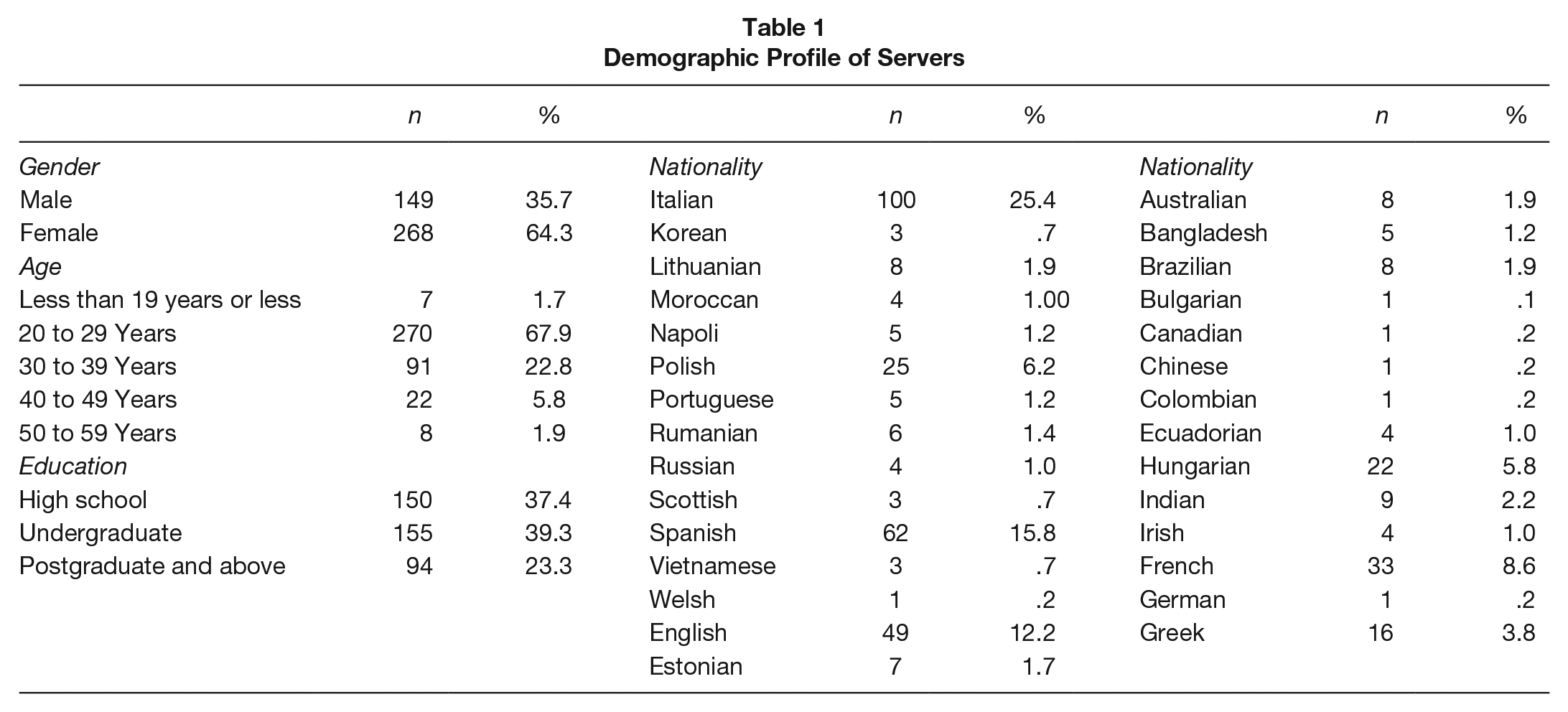
The participants were informed that their participation was voluntary, that all information gathered would be anonymous, and the data would be stored in an aggregated form without any identifying details included. The questionnaire took approximately 10 minutes to complete with all item responses given using a Likert-type scale (see further details below). Of the 398 who took part, 64.3% were female; 74% were from the European Union (25.4 % Italian, followed by 15.8% Spanish). The majority of respondents were between the ages of 20 to 29 (53.3%) and 62.6% held undergraduate degrees or above (Table 1). Regarding tenure with their current employer, 20% of participants reported working in their current restaurant 2 years or more, while 15% were trainees with less than 6 months of experience at work in the same restaurant.
Demographic Profile of Servers
Measures
A self-administered questionnaire was used, to measure each of the constructs under study. We identified the most appropriate, reliable, and valid scales to measure employer brand, extraversion, stereotype, occupational identity, work engagement and turnover, and modified these to suit the current study aims and population under study. Also, the questionnaire asked Respondents to specify characteristics (age, gender, ethnicity, education level, and income level) to obtain the demographic profile of the Respondents.
In order to test the content and face validity, the questionnaire was presented to a group of 11 professionals and academics within the hospitality and higher education sectors, who confirmed the suitability of the items. No additional items were proposed to be incorporated. All survey questions used a 7-point Likert-type scale anchored by 0 (strongly disagree) to 7 (strongly agree), as designed by Churchill and Peter (1984), to increase construct variance and decrease measurement error variance. Table 2 illustrates the reliabilities of all scales and subscales, means, and standard deviations. For the current study, the Cronbach α coefficient was between .85 and .87, indicating high internal consistency reliability.
Factor Loading
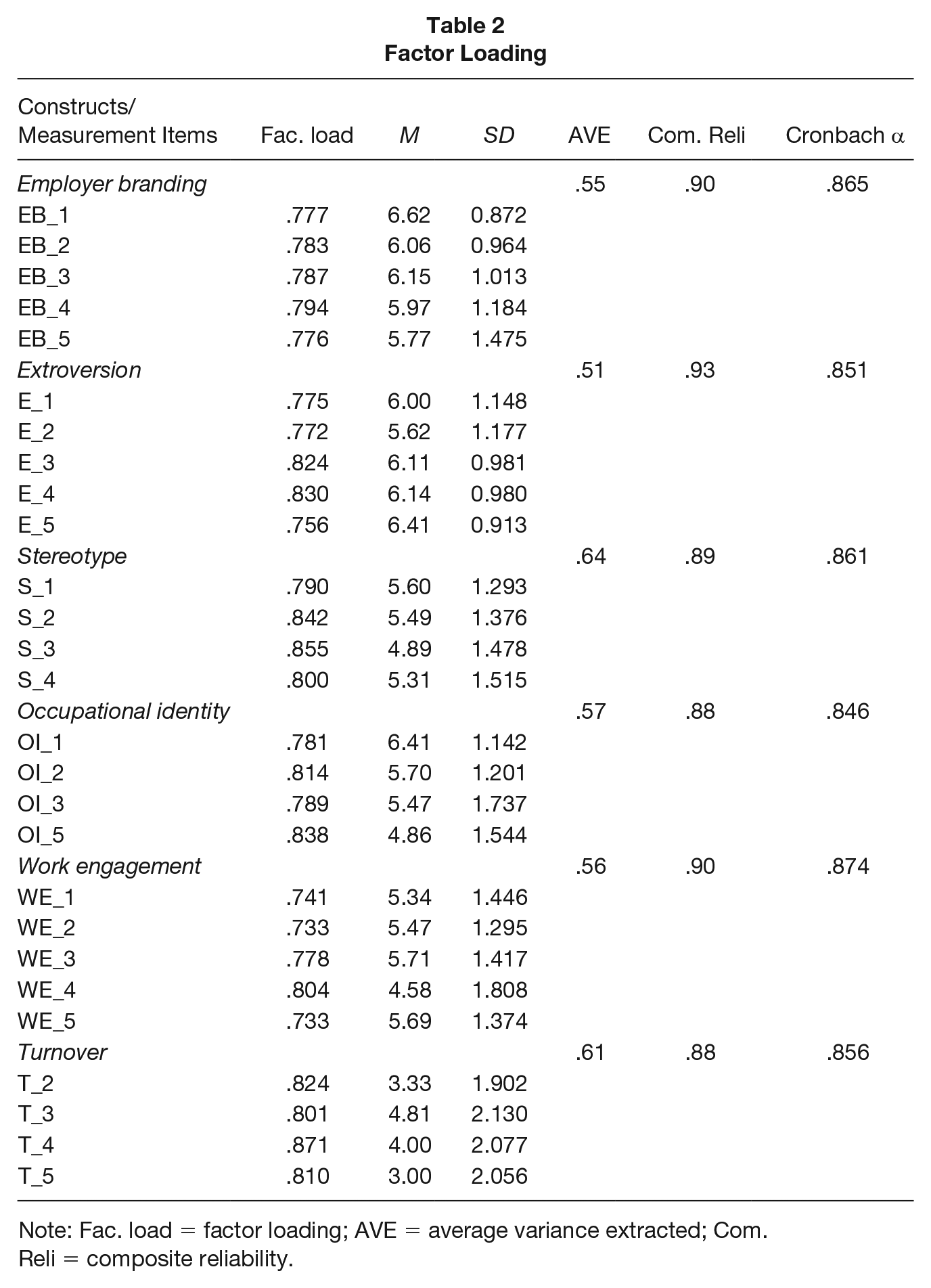
Note: Fac. load = factor loading; AVE = average variance extracted; Com. Reli = composite reliability.
Occupational identity scale (OIS) for servers (OI-5): The employees’ occupational interests and the link with their career roles were assessed by five items (e.g., “Your occupation [server] has to fit with your expectation”) of the short version of Melgosa’s (1987) classification of OIS, adapted to the current context. Supporting the scale’s concurrent validity, the author of the scale (Melgosa, 1987) reported a scale reliability of α = .80. Furthermore, the OIS has been validated with various populations, including in the Portuguese context (Taveira & Campos, 1987); students and adolescents (Golden & Veiga, 2005).
Employer brand scale (EB-5): To assess the organizational attractiveness as perceived by the employees, the Meyer et al. (1990) classification model of Affective Commitment measurement scale was deemed a good fit for this requirement. We selected five appropriate items (e.g., “I engage with the mission of this organization (restaurant)”). The authors of the scale (Meyer et al., 1990) reported a scale reliability of α = .80 and the model has been validated in different studies, including the higher education context (Bendaraviciene et al., 2014); graduate and undergraduate students from Australia (Berthon et al., 2005).
Extraversion scale (E-5): This five-item scale developed by Lucas and Fujita (2000) is designed to measure individuals’ levels of extraversion as a broad personality trait that encompasses sociability, assertiveness, high activity level, and impulsivity (e.g., “What is keeping me in this job is the interaction with others”). The validity and reliability of the Lucas and Fujita (2000) scale has been established (Costa & McCrae, 1992; Watson & Clark, 1997).
Stereotype scale (S-7): This scale was developed from different studies of stereotypes (Fiske et al., 2002; Lin et al., 2005). The essence of a group’s overall perception of a person or group, by downplaying individual differences, is assessed (e.g., “As viewed by society, how competent are members of this group?”). Supporting this scale’s validity, the authors of the scale (Fiske et al., 2002) reported a reliability of .82.
Turnover Intention Scale (TIS-5): Turnover intention (the intention of an employee to leave or stay in their current job) is assessed by this scale, authored by Bothma and Roodt (2013). Examples of items included in the TIS-5 are: “I want to leave my job for better restaurants” and “I want to leave for the next step in my career progression.” For the original scale (Bothma & Roodt, 2013), a Cronbach α reliability coefficient of .91 has been stated.
Work engagement (WE-5): A shorter form of the Utrecht Work Engagement Scale (Cox et al., 2015; Schaufeli & Bakker, 2004) was used in the assessment of work engagement (a fulfilling and positive work-related state of mind). The original scale had nine items in total (e.g., “At my job, I feel strong and vigorous”). We selected five items relevant to restaurant servers. Original scale reliability is established with Cronbach’s α ranging between .81 and .92 in other samples (Schaufeli & Bakker, 2004).
Analyses and Results
The data were screened for suitability and applicability before performing the structural equation modelling (SEM). A sample size of at least 300 respondents was targeted, in line with the requirements of SEM, which is the main data analysis technique used in this study (Hair et al., 2018). The initial sample size was composed of 430 participants, however, participant cases with missing data and extreme responses were removed, leaving 398 usable. Tabachnick and Fidell (2007) suggested imputing missing item scores with means; however, this method was not selected, as 32 participants had not completed two thirds of the questionnaire. The data were analyzed for nonresponse bias, outliners, normality, linear, homoscedasticity, and multicollinearity. In addition, multiple regression analyses were examined. Based on the results of these, there were no concerns.
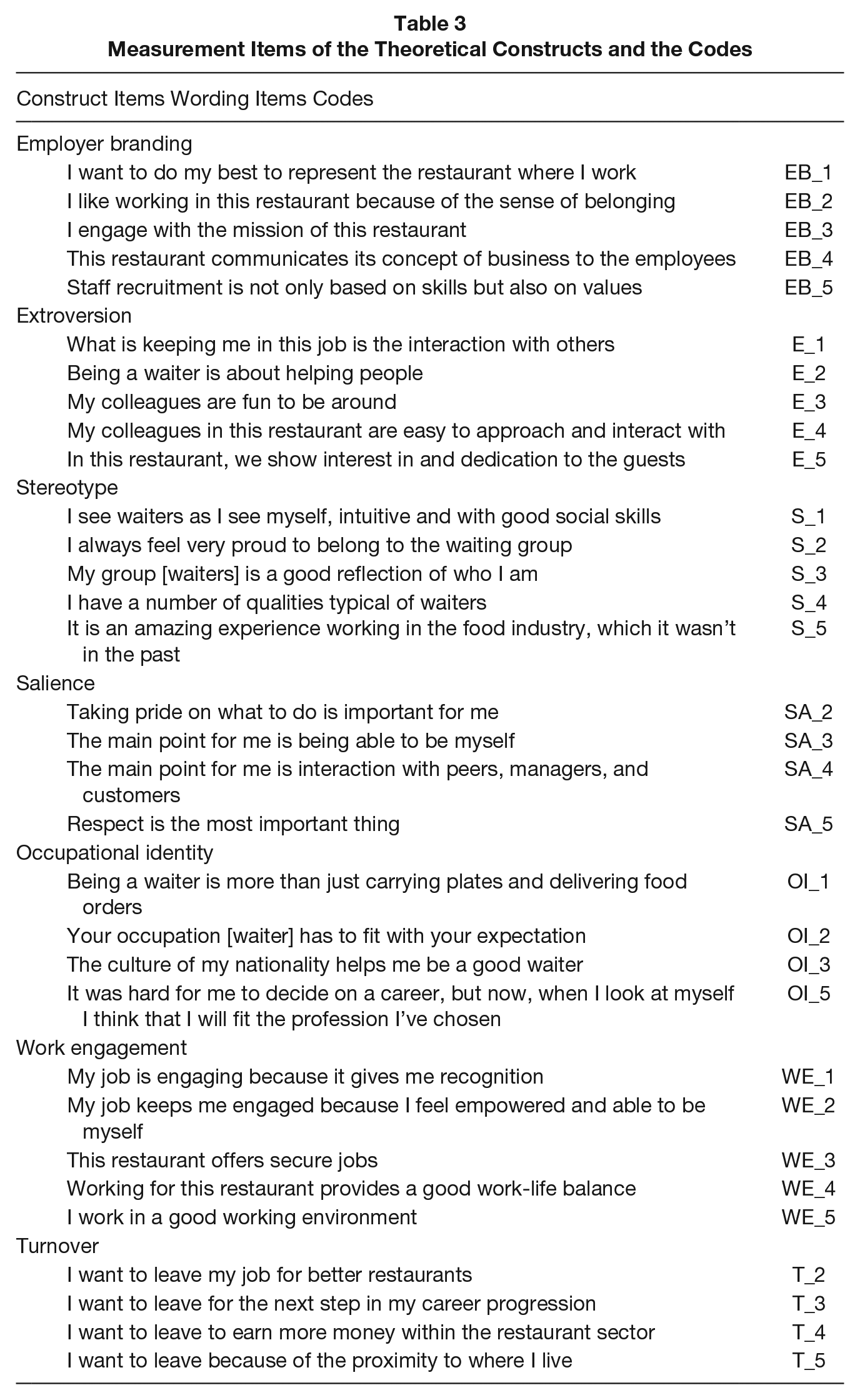
This study employed a two-stage approach in SEM (Gerbing & Anderson, 1988). First, the items were refined and psychometric properties examined by performing confirmatory factor analysis (CFA), to test the measurement properties of the existing scales’ validity (Hair et al., 2018). To test whether the measured variables accurately represented the constructs, CFA was performed (Hair et al., 2018). Good internal consistency was seen, and CFA confirmed fit between the variables and the constructs in the model (Gerbing & Anderson, 1988). In addition, Cronbach’s α was above the criteria value (.846 through .874 >.70) and satisfied the requirements of the psychometric reliability (Hair et al., 2018). Regarding discriminant validity, the predicted associations between the constructs were statistically significant (p < .05; Hair et al., 2018). The homogeneity of the variance was assessed by convergent validity, which was tested based on construct reliabilities (Tabachnick & Fidell, 2007). Each variable displayed AVE (average variance extracted) values of more than .5, demonstrating ample convergence and discriminant validity for the dimensions (Tables 2 and 3). Table 4 illustrates the descriptive statistics and correlation matrix for the constructs.
Measurement Items of the Theoretical Constructs and the Codes
Descriptive Statistics and Correlation Matrix for the Constructs
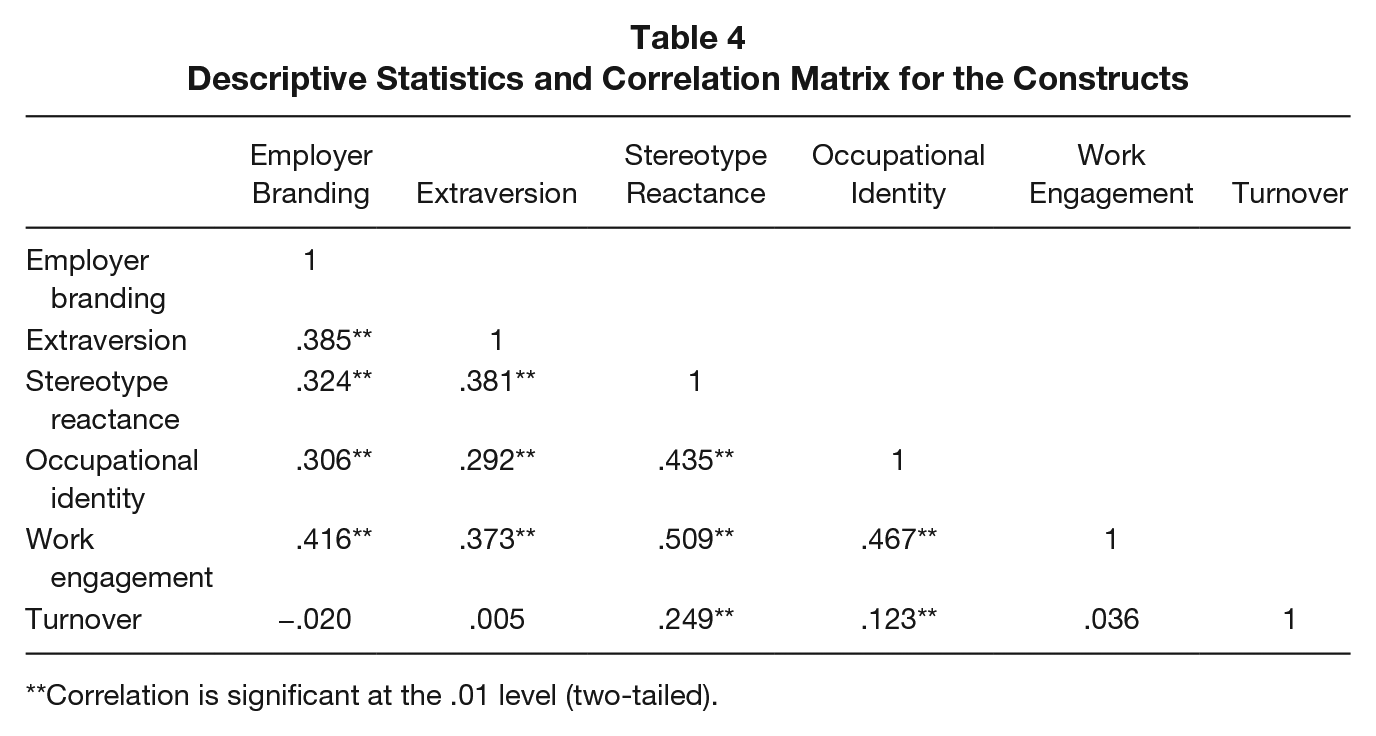
Correlation is significant at the .01 level (two-tailed).
Next, the structural model fit was tested (Hair et al., 2018). The comparative fit index denoted a good fit (.930). Furthermore, the incremental fit index, and the Tucker–Lewis index were .932 and .912, individually. All were above the recommended threshold of .90 (Hair et al., 2018), and each index thus indicated that the proposed measurement model’s fit was adequate.
Subsequently, the hypotheses were tested. The results in Table 5 show that five hypotheses were examined, and the consequences of these outcomes are as follows: There was enough evidence to support the rejection of the null hypotheses Hypothesis 10, Hypothesis 40, and Hypothesis 50, leading therefore to support for accepting the alternative Hypothesis 1a (There is a positive relationship between employer brand and occupational identity), Hypothesis 4a (There is a positive relationship between occupational identity and work engagement) and Hypothesis 5a (There is a positive relationship between work engagement and turnover) with statistically significant values of γ = .211, t = 4.824; γ = .707, t = 3.337, and γ = .318, t = 2.180, respectively. In contrast, there was insufficient evidence to support the rejection of Hypothesis 20 (There is no relationship between extraversion and occupational identity) and Hypothesis 30 (There is no relationship between stereotype reactance and occupational identity) with the regression paths not showing statistically significant relationships for these: γ = −.001, t = −.135; γ = −.060, t = .027, respectively.
Results of Direct Hypotheses Testing
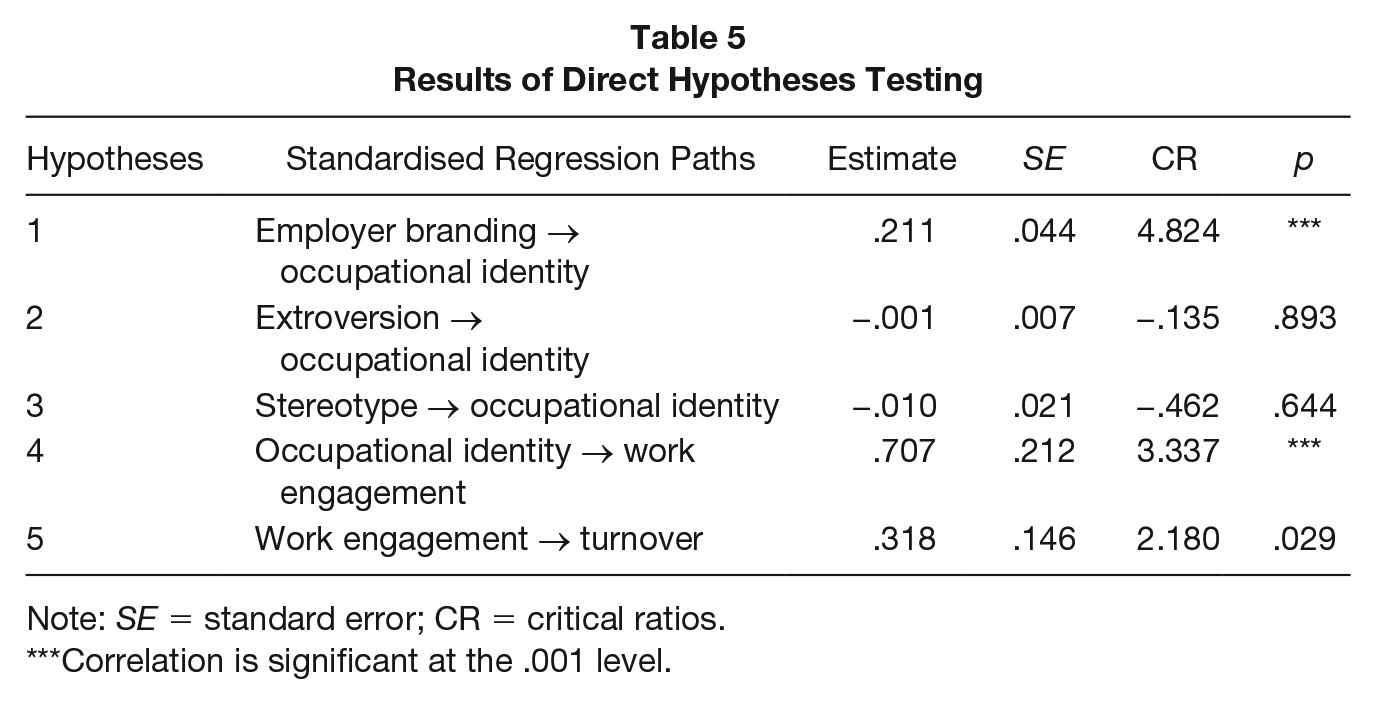
Note: SE = standard error; CR = critical ratios.
Correlation is significant at the .001 level.
In addition, given that Hypothesis 4a and Hypothesis 4b were supported, we investigated whether work engagement mediated the relationship between identity and turnover, as a supplementary follow-up analysis. We found no evidence of such a mediation: the results showed that work engagement did not mediate the effect of occupational identity on employee turnover (p = .564). Furthermore, to explore the robustness of the findings described above, the reverse paths (occupational identity predicting: employer brand, extraversion, and stereotype reactance) were tested. These analyses indicated that occupational identity did not significantly predict extraversion, but it did predict employer brand (p < .001). Also, interestingly, occupational identity predicted stereotype reactance (p < .001). For full results of these additional analyses, please see Table 6.
Results of Testing the Reverse Paths
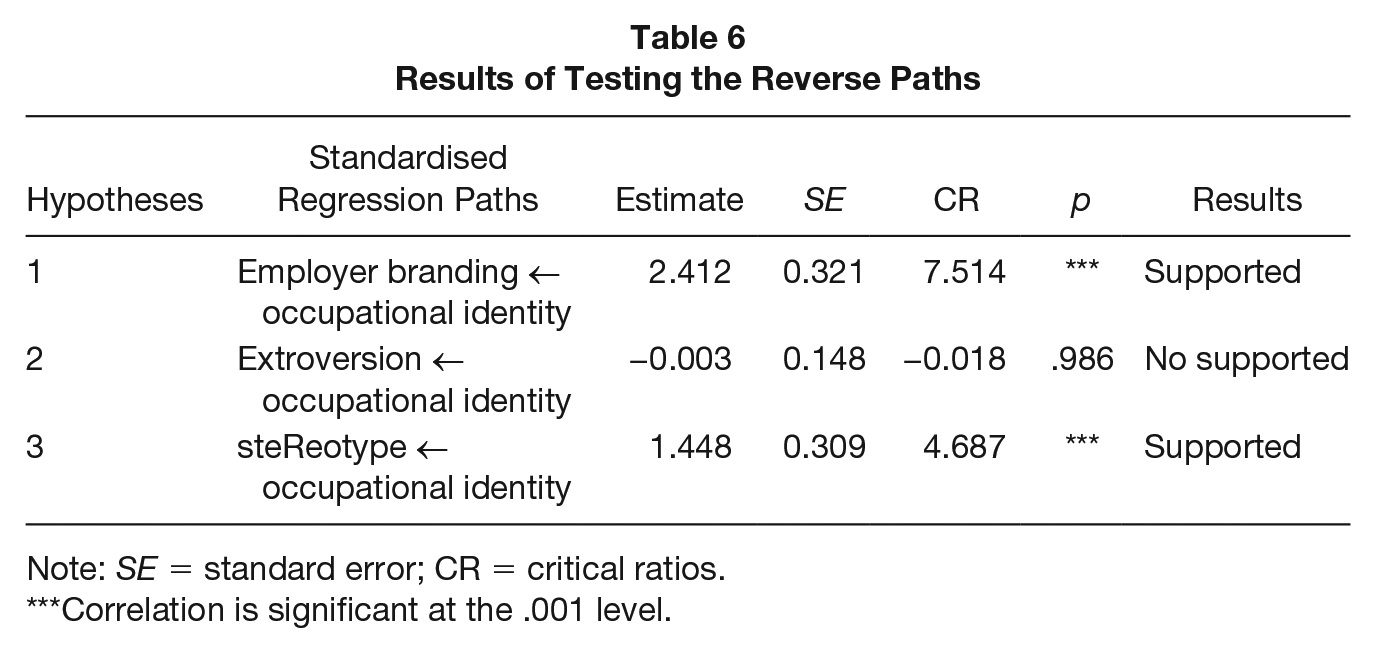
Note: SE = standard error; CR = critical ratios.
Correlation is significant at the .001 level.
Discussion and Contribution
This study aimed to further understanding of occupational identity, its antecedents and its consequences for work engagement and turnover, among servers’. Turnover is a major issue for productivity in the restaurant industry but factors influencing occupational identity and turnover intention among servers are not well understood. Thus, this study has practical implications. Based on a thorough literature review, we first proposed a structural model describing the relationship between key antecedents of occupational identity suggested by prior work (employer brand, extraversion, and stereotype). The literature review also suggested the notion that occupational identity impacts work engagement, and that work engagement is a key influence on employee turnover. The model was based on theoretical considerations and previous findings and generated specific hypotheses. These were then tested empirically by collecting questionnaire data (constructed based on modified forms of well-established and validated scales, to test the constructs under study) from servers’ working in high-end restaurants.
Analysis of these data supported some but not all of the hypotheses proposed by the model. The assertion that employer brand is a significant antecedent to occupational identity was supported. However, data did not support the other assertions of the model regarding antecedents: extraversion and stereotype reactance were not found to be significant contributors to occupational identity. With regard to consequences of occupational identity, the model proposed a positive relationship between occupational identity and work engagement. This postulated relationship was supported by the data. This concurs with previous studies in other industries; these previous studies highlight the importance of occupational identity as a major contributing factor to engagement in the workplace (Ashforth et al., 2008; Bothma & Roodt, 2013; Luyckx et al., 2010) and suggest that occupational identity can foster resilience to job stress and help the individual respond to challenges in the workplace (Skorikov & Vondracek, 2011). Finally, our data supports the model’s assertion that work engagement among servers’ can be an important factor in whether an individual intends to leave their job role. We found evidence for a relationship between engagement and employee turnover, this again accords with prior literature (Bothma & Roodt, 2012).
The results have practical and theoretical implications. We identified a positive relationship between employer brand and occupational identity. This supports empirically previous suggestions (e.g., Ashcraft, 2007) that employees’ occupational identity(ies) are created in relation to the employer brand, with this brand identity forming the context within which employees construct their occupational identities. This has been suggested to take place through initial sense breaking (the breaking down of identity), followed by sense giving based on organizational cues and brand identity (Ashcraft, 2007). Thus, perceived organizational values as represented by the employer brand, come to influence identity construction, and effects are stronger when the employer brand is strong and distinctive (Cable et al., 2013). The current findings support this assertion. Furthermore, this significant relationship supports the notion that occupational identity is fluid, in that it can be influenced and revised according to factors relating to the current employer. This is in line with the suggestions of De Certeau (1985) and Sennett (1997) in relation to dramaturgy theory (Goffman, 1959). Also, the follow-up analyses indicated that the relationship between identity and employer brand was bidirectional, since the effects of occupational identity on participants’ perception of employer brand was also significant. This again points to the fluidity, and interactive nature, of the relationship between these two variables.
Contrary to expectations, extraversion and stereotype were not seen to be significant contributors to occupational identity in the data collected. In the literature review, we found evidence to suggest extraversion could be an important personality factor that contributes to the construction of employees’ occupational identity. Holland’s person–environment fit model proposes firstly that people gravitate toward work roles aligned with their individual personality traits, and further that work environments which involve high levels of social activity prompt occupational socialization through experience, causing the employee to construct an ‘extraverted’ occupational identity. Thus, over time, the individual comes to embody the personality characteristics shaped by the social aspects of the role. The characteristics of colleagues is also influential, through contagion effects (Holland, 1997). In line with this, studies support extraversion as the critical personality trait within highly ‘social’ professions such as waitering (De Fruyt & Mervielde, 1999). However, the current findings did not find support for the existence of a relationship between extraversion and occupational identity. We suggest that this is because the population under study were, in general, relatively new to the role. Holland’s model implies that occupational socialization takes place through experience in the workplace and thus takes time to occur. The present sample were relatively young and inexperienced in the profession (comprising mostly adults under 30 who had been in their current post for less than 2 years). Thus, follow-up work should focus on older, more experienced servers, to test whether extraversion is a significant factor among these employees, and explicitly test the role of experience in this relationship.
The literature review identified evidence that stereotype reactance could influence the construction of occupational identity. For example, it has been shown that workers in stigmatized occupations (i.e., those with “low occupational prestige”) adopt coping strategies that can contribute to them developing a more positive occupational identity: these strategies include confronting or countering society’s perceptions of the job role (Bosmans et al., 2016). However, this process likely takes time to evolve: the employee needs to stay for long enough in the job role for society’s stereotypical view of the job role to be fully recognised by the employee; only then can stereotype reactance manifest. The data do not support the hypothesis that stereotype reactance influences occupational identity; as with extraversion, it is possible that the present sample had simply not had enough time in the role to allow stereotype reactance effects on their occupational identity to develop. Also, it is possible that the stereotype of waitering as being a low-skilled and stop-gap role is not so applicable within the specific type of restaurant (high-end, Michelin-starred) under study here. While there is widespread societal stigma attached to food service work (Shigihara, 2018), professionals in high-end establishments might experience and perceive stigmatization to a much lesser degree, thus not provoking stereotype reactance among these individuals. For future research, it would be therefore be beneficial to investigate the possible antecedent role of stereotype reactance among restaurant settings that aren’t considered “high-end.” Furthermore, the supplementary analyses which tested the reverse paths in the model indicated that occupational identity acted as a significant predictor of stereotype reactance. This finding suggests that those with a stronger occupational identity are more likely to react to stereotyping in the workplace (i.e., They are more sensitive to stereotyping). The reasons and factors underlying this relationship deserves further study.
Data did show occupational identity to contribute to work engagement, which in turn was related to reduced employee turnover. As noted above, prior literature suggests occupational identity can promote resilience to job stress and promote work engagement (Skorikov & Vondracek, 2011), with work engagement also influencing employee turnover (Bothma & Roodt, 2013). Furthermore, recent work has shown that job stress is directly related to intention to leave a job (Lo et al., 2018). Although that study was conducted among nurses in a hospital setting, it is informative with regard to the relationships identified here. Occupational identify could affect work engagement and turnover intention by reducing job stress and promoting resilience. Although beyond the scope of the current work, future studies should incorporate stress measures in their data collection and models, to test this assertion. Nevertheless, the current findings have important practical implications. They highlight the role occupational identity plays in promoting engagement in the workplace. Based on the outcomes of this study, employers would be advised to take seriously the contribution of occupational identity to work engagement among waitering professionals. This has wider implications for organizational performance, due to the observed links between work engagement and employee turnover. Thus, strategies to promote occupational identity among employees will likely pay dividends in terms of productivity. This study presents a thorough investigation into the antecedents and consequences of occupational identity among server’, a topic which is understudied; findings should aid restaurant managers who want to support occupational identity construction so as to enhance engagement and reduce turnover of servers. While other studies on this topic focused on the purely operational aspects of chefs’ and servers’ jobs—for example, employee performance or training (e.g., Dahl, 2017)—a different approach suggested by this study might be to directly enhance servers’ sense of occupational identity(ies), in order to increase their work engagement and reduce employee turnover. More specifically, the results showed that employer brand is one of the key drivers of occupational identity for enhancing servers’ occupational identity(ies). The findings confirm the theoretical link between employer brand and occupational identity (Alshathry et al., 2017) and future studies are encouraged, to further explore employer brand as an antecedent role of occupational identity and generate further practical suggestions to support servers’ occupational identity construction.
Future Research and Limitations
There are various limitations to mention, in relation to interpreting the outcomes of this study. First, this research only interrogated the employee experience of Michelin-starred servers in London—which is considerably diverse, when compared with other locations. Therefore, it would be useful to study the generalizability of the model, and whether the results could be replicated in other types of restaurants, beyond the “high-end.” We focused on Michelin-starred restaurants to reduce the potentially confounding effects of quality-related organizational factors that might be present in other restaurants: while increasing the internal validity of the research it does limit generalizability, and thus further work is needed. Second, occupational identity and the consequences on reduction of employee turnover has been specifically focused on the topic of server identity, from the perceptions of the servers themselves. Conversely, the exploration of servers’ experiences could also be studied from the company perspective. Consequently, further studies should concentrate on the organizational angle, to discover more about employer perspectives. Third, the structural model of this current study may be useful to other sectors, rather than just restaurants. This could be explored, to validate the model in other industries and to test generalizability of findings. Considering that, the measures applied in the present research would likely need to be modified so as to measure the constructs of importance in another setting. Moreover, as noted above, some of the predictions of the model were unsupported, for example, the direct effects of extraversion on occupational identity were not found to be significant. Consequently, future studies could research these issues further.
Further validation of all the measurement scales in this research should be attempted in the future. Some of the concepts in this study have been extensively employed (e.g., work engagement and turnover) in the current research; however, the measurement scales could be further tested and improved. Also, this research, being cross-sectional, cannot speak to causal inferences; thus, further longitudinal studies would enable academics to examine the dynamics and causal relations within the relationships identified here. Last, this research was founded on servers living in London, as the participants. Consequently, the research cannot be generalized to the whole population of servers, neither in the United Kingdom nor in other countries. Future research should include participants from other cultures and nationalities, to corroborate whether or not the model still holds across a wider population.
Summary
In summary, there are limited previous studies into the links between servers’ occupational identity work engagement and employee turnover. Therefore, we put forward and tested a structural model based on theoretical considerations and previous findings, regarding the relationship between possible antecedents (employer brand, extraversion, and stereotype) of servers’ occupational identity, and consequences for work engagement and employee turnover. The model was then tested empirically by collecting data from servers’ working in high-end restaurants. Analysis of questionnaire data suggested that employer brand (but not extraversion or stereotype reactance) contribute to occupational identity. Data also suggested that occupational identity has consequences for work engagement which in turn influences turnover intention. From a practical aspect, the research offers meaningful and specific suggestions for restaurant managers to enhance productivity and employee retention, by promoting servers’ occupational identity construction.
