




Abstract
Minimal research has been carried out regarding the host community’s perceptions of and reactions to film tourism impacts, utilizing a mainstream tourism destination such as Bali. This article aims to identify and explain residents’ perceptions of and attitudes toward the social impacts of film tourism, proposing an integrated theoretical model of social exchange theory, social representations theory and place change theory. Results indicate that the integrated model is particularly robust in explaining what caused a condition or event to be perceived as negative, positive or neutral place change, and why such changes are interpreted and evaluated in the social and cultural contexts. It also suggests that the locals do not perceive or necessarily respond to tourism impacts uniformly. As such, it contributes to a more wholesome understanding of the underlying dynamics and complexities involved in identifying and explaining the perceived impacts of tourism on the residents of a community in a theoretically rigorous, nuanced manner.
Keywords
Introduction
Film tourism phenomena and residents’ perceptions of tourism impacts have each been widely researched. The evolution, transformation, and trajectory of the impacts of film tourism have been acknowledged by international cases, albeit predominantly from a tourist perspective (Beeton, 2016; Connell, 2012; S. Kim & Reijnders, 2018). Additionally, a proliferation of (a)theoretical and empirical approaches confirms that the latter is one of the most researched areas of tourism (Deery et al., 2012; Easterling, 2004; Garcia et al., 2015; Nunkoo et al., 2013; Sharpley, 2014).
Despite these contributions, the literature exhibits a paucity of academic attention on the combined subject areas, that is, resident’s responses to or perceptions of film tourism impacts (Beeton, 2016; Connell, 2012; Croy & Heitmann, 2011; Yoon et al., 2015). This is paradoxical, since locals act as key hosts to tourists and their involvement and collaboration are fundamental to the likelihood of successful (film) tourism development (Beeton, 2008; Heitmann, 2010; Mordue, 2009; Nunkoo et al., 2013). In most cases concerning film tourism impacts (Thelen et al., 2020), it is documented that residents hold little or no control over how their residential areas are represented and/or reproduced during media production (Beeton, 2016; Yoon et al., 2015), often incurring social, cultural and/or spatial conflicts between the film tourist’s quest for media representations as the imagined social construction of reality (Frost & Laing, 2014; Mordue, 2009) and the resident’s preservation of social representations as a metaphor for everyday reality (Beeton, 2016; Mordue, 2009).
Furthermore, the way the combined research areas have been approached to date has revealed some critical gaps. Among these, three are of most concern. First, there is a need for a more theoretically informed approach, given that what exists is sporadic and atheoretical, focusing predominantly on quantitative approaches such as survey questionnaires (McKercher et al., 2015; Nunkoo et al., 2013; Sharpley, 2014; Yoon et al., 2015). Second, and related to the above, is the disputed contribution of adopting theoretical frameworks such as social exchange theory (SET) to explain and/or understand residents’ perceptions of tourism impacts (Sharpley, 2014). This is largely due to the fact that the existing body of research has not satisfactorily answered “what causes impacts to be perceived as positive or negative?” (McKercher et al., 2015, p. 53). Third, residents’ perceptions and attitudes of the impacts of film tourism development occurring within mainstream tourism regions and destinations has received little research attention (Beeton, 2016; S. S. Kim et al., 2015; S. Kim et al., 2017; Thelen et al., 2020). Instead, the research focus has been on the perceptions of such impacts on rural, remote, or peripheral communities (Moscardo, 2011; Nunkoo & Gursoy, 2012; Sharpley, 2014).
To address these critical gaps, the current study aims to identify and explain residents’ perceptions of the social impacts of film tourism through the extension and integration of place change theory (PCT; McKercher et al., 2015) with the SET (Ap, 1992) and social representations theory (SRT; Moscovici, 1981) as an overarching theoretical and analytical framework. Such a theoretical triangulation is particularly useful to overcome the inherent limitations of each respected theory as subsequently discussed and to tackle the “why” and “how” questions related to residents’ perceptions of tourism impacts in a more nuanced manner. It also adopts an inductive qualitative approach, using a mainstream tourism destination in which a variety of market segments and tourism products are already revealed, in this case, Bali in Indonesia.
In doing so, this study is expected to enhance the theoretical and contextual limitations of the subject areas in the current literature, so-called film tourism impacts from the local perspective. This will enable more rigorous theoretical foundations to develop in future studies, providing a more wholesome analysis of residents’ perceptions of tourism impacts forming part of the broader research context of special interest tourism in which film tourism is included.
Literature Review
Film Tourism Impacts and Resident’s Perspective
Film tourism refers to a social and cultural phenomenon of “people travelling to locations or sites because of their association with movie or TV series” (S. Kim & Reijnders, 2018, p. 1). The current predominant discourse on film tourism impacts postulates a quasi-causal relationship between media production and tourism consequences, ruthlessly replying on some exceptionally successful international cases such as the Lord of the Rings in New Zealand (Beeton, 2016), the Game of Thrones in Croatia (Li et al., 2020; Tkalec et al., 2017), and contemporary and historical Korean TV series (e.g., the Daejanggeum) in South Korea (S. Kim, 2012; Kim et al., 2009; Yoon et al., 2015).
While the myth of the fortuitous economic impact of film tourism continues to perpetuate globally, it is worth noting that not every film or TV program generates visible economic impacts through its spin-off effect on tourism and related areas such as hospitality and the creative industries (Beeton, 2016; Croy et al., 2018; Croy & Heitmann, 2011; S. Kim et al., 2017; S. S. Kim et al., 2015). Rather, it has resulted in unexpected sets of adverse or negative social and/or cultural impacts on local stakeholders including residents as local communities (Beeton, 2016; Connell, 2005; S. S. Kim et al., 2015; Mordue, 2009; Thelen et al., 2020; Yoon et al., 2015).
These negative impacts include but are not limited to loss of privacy (Beeton, 2016; Mordue, 2009), ethical and moral practices (Thelen et al., 2020), commodification of culture and its impacts on authenticity (Li et al., 2020; Park, 2018), traffic congestion and overcrowding (Beeton, 2016; Yoon et al., 2015), and displacement of existing tourism market segments (Connell, 2005). Also, it is pertinent to note that only a handful of prior studies attempted to examine the impacts of film tourism on host communities through the lens of local or regional residents. A common criticism and shortfall lies in the loose application of SET as a theoretical framework, with no or little attention to multiple stakeholder’s perspective (Thelen et al., 2020).
Applications and Limitations of Social Exchange Theory
While the significant volume and increasing scope of research on tourism impacts has been noticeable, no single consensus exists on the theoretical approach to the impacts of tourism on host communities. This is due to the complex nature and structure of the interactions between tourists and members of host communities (Sharpley, 2014). Previous studies have predominantly used SET or traditional triple bottom line assessments of tourism impacts (i.e., sociocultural, environmental, and economic aspect) to examine and itemize the costs and benefits of tourism development and activities from a resident’s perspective (Andereck et al., 2005; Chuang, 2010; Easterling, 2004; Garcia et al., 2015; Latkova & Vogt, 2012; Nunkoo & Ramkissoon, 2012; Nunkoo et al., 2013; Vargas-Sánchez et al., 2014; Ward & Brno, 2011; Woosnam, 2012).
SET is a social psychology concept “concerned with understanding the exchange of resources between an individual and groups in an interaction situation” (Ap, 1992, p. 668). It is rooted in economic theory and focuses on the relative costs and benefits of an interaction or relationship as a rational process (Ward & Brno, 2011). A loose application of SET to various geographical locations of residents’ perceptions of tourism impacts has been extensively undertaken, in particular, in the context of gambling and casino development (Harrill et al., 2011; Lee et al., 2010); hosting mega-events (Li et al., 2015; Weaver & Lawton, 2013); and sustainable development of rural communities (Wang & Pfister, 2008; Woosnam & Norman, 2010).
Such studies have collectively suggested that equity scores generated by perceived costs and benefits shows a positive correlation with an overall support of tourism development, though only a naïve positivist would believe that the findings are the genuine reflections of residents’ actual perceptions. The SET approach, thus, necessitates a superficial reading of the issues so that symbolic social and cultural norms, values and meanings behind overall community support and adaptation of tourism development are paid much less attention. In short, the importance of sociocultural contexts within which social exchanges occur is largely neglected (Sharpley, 2014). As such, an elaboration of the value domain that highlights the importance of noneconomic needs for residents remains limited (Wang & Pfister, 2008). Social and/or cultural impacts of film tourism remain the scarcest in this context (Thelen et al., 2020).
Social Representations Theory and Its Potential
In the hope of overcoming the theoretical simplicity of SET and its limitations (such as linearity, assumptions of local community homogeneity and negligence of sociocultural context), SRT has been proposed an alternative framework to explain resident’s perceptions of tourism (Andriotis & Vaughan, 2003; Fredline & Faulkner, 2000; Pearce et al., 1996). Coined in Moscovici’s (1981) work, social representations are the mechanisms through which members of a community in a society make sense of a social object or a socially significant phenomenon such as tourism. Social representations are embedded in the concrete reality of our social life; by the fact that members of a society communicate and interact between themselves by virtue of a shared system of meanings and values (Howarth, 2006; Moscovici, 2000).
Social representations can therefore be defined as a set of ideas, values, myths, images, and knowledges that influence our actions (Pearce et al., 1996), particularly concerning how one may explain one’s actions or the actions of others in the context of tourism. As a consequence, members in a society tend to believe, support, and accept certain attitudes and behaviors as appropriate, even if that may be seen as inadequate and/or irrational from the perspective of other societies.
One assumption of SRT is the heterogeneous nature of a community, and thus this approach is particularly useful in explaining residents’ perceptions of tourism impacts by clustering residents’ segments within the community (Andriotis & Vaughan, 2003; Fredline & Faulkner, 2000), as SET dismisses the potential for different segments of resident populations to express varying attitudes toward and perceptions of tourism impacts. However, a major drawback of SRT is the difficulty in explaining why the members of each cluster in a community collectively ascribe to a particular perception of tourism, when the community is finely fragmented into multiple clusters.
Principles and Applications of Place Change Theory
Reflecting Tuan’s (1975) seminal work on “place” from a human geography perspective, social interactions between individuals and social groups not only influence people’s daily practices in around a place but also constitute and determine the functions and meanings of that place. To a greater extent, social interactions thus explain what and how people think and behave in their day-to-day lives, which is socially constructed with a set of accepted thoughts and behaviors (Crang, 2004; Tuan, 1977). Place is dynamic and fluid, as are the social interactions and social representations also. From a place change perspective, slow or sudden change in the initially accepted meanings and functions of a place reflects changes in the social interactions in that place, through constant compromises and negotiations (McKercher et al., 2015).
In tourism, three types of place, namely “tourism place,” “shared place,” and “nontourism place” generally exist in equilibrium (McKercher et al., 2015). When the immediate surroundings of physical and social environment are threatened by tourism and a community’s everyday lifestyle is consequently impacted, changes in composition and/or proportion of the three types of place are inevitable. This suggests that tourism is recognized as an agent of change in a destination, and perceived impacts on residents of that destination is a function of place change.
Tourism places are socially accepted locations where tourists are welcome to interact and consume tourism resources and tourism products such as support services and attractions. In shared places, both tourists and locals coexist and share material and/or symbolic resources, for example, local supermarkets, pharmacies, and transportation hubs. Nontourism places are supposed to be exclusively for local residents in terms of the exchange of both material and symbolic resources such as (spi)ritual practices.
Similarly, the three places are understood in conjunction with MacCannell’s (1973) “staged authenticity” which explains the social space of a destination as a continuum starting at the front stage (i.e., tourism place and/or shared place) ending at the backstage (i.e., nontourism place). In a boarder context of tourism, a “front” stage is mainly occupied by locals as actors (e.g., tourism providers) and tourists as audiences in which purposely constructed and performed touristic experiences are presented to tourists. In comparison, a “back” stage is considered a hidden or private place where locals can be exclusively “themselves” (MacCannell, 1973, 1999). Figure 1 illustrates the relevance of the tourists’ perception of authentic experience to the possible three toured places of a destination.
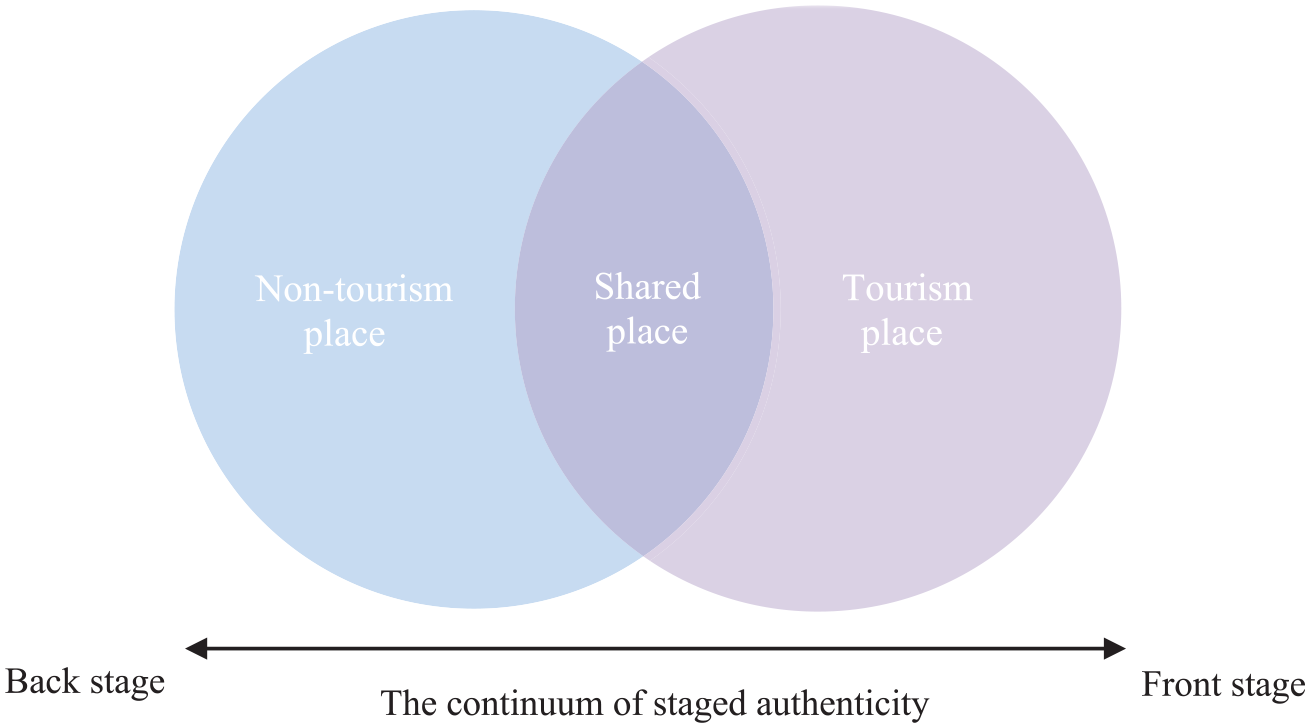
Places of Destination and Tourists’ Perceived Authenticity of the Toured Place
Unlike the SET and SRT, the concept of place change has its own limits on the applicability to empirical tests since its introduction (McKercher et al., 2015). However, place change also has strengths as an alternative framework with two underlying merits to examine and understand residents’ perceptions of tourism impacts. These are closely related to the sociopsychological process of response to place change with a particular interest in place disruption (Christiaanse & Haartsen, 2020; Clarke et al., 2018; Devine-Wright, 2009).
First, place is a central concept in tourism as the place-based social and cultural phenomenon (Pizam & Milman, 1986; Smith, 2015). Second, the focus of place change is on place in general and social interactions between people (i.e., tourists and residents as hosts) and place in particular to satisfy the needs of the individual, where changes, disruptions, conflicts, and/or resilience occur (Devine-Wright, 2009; Mihaylov & Perkins, 2014). Tourism as a negotiation of (re)production of space (Gyimóthy et al., 2015) transforms sense of place. For community, it is a change of place attachment, but for tourists it is regarded as a change of characteristics of the destination, which is viewed from the consumption-oriented nature of the tourist experience. The impact felt by residents is therefore the nature of the contested identity of themselves.
Integrated Theoretical Framework
The three theories discussed so far have been used as an underlying theory of the tourism affect studies, but each individual theory fails to address why residents perceive tourism impacts in a certain way, negatively, positively, or neutrally. Since residents and tourists (as temporary residents of a destination) reside in the complex social, cultural contexts of place, no single theory can explain the complexities of human–place relationships. Meanwhile, this study finds its relevance in the aforementioned three theories in that the limitations of SET (such as lack in understanding of the depth of social context and meanings behind perceived tourism impacts within community), are compensated by SRT. In addition, what the residents mean by the perceived impacts of tourism is explained by PCT focusing on the resident–place relationships through the lens of place change (McKercher et al., 2015). An integrated theoretical framework is thus proposed in Figure 2, and this study empirically examines the integrated model for a more holistic understanding of residents’ perceived impacts of film tourism.
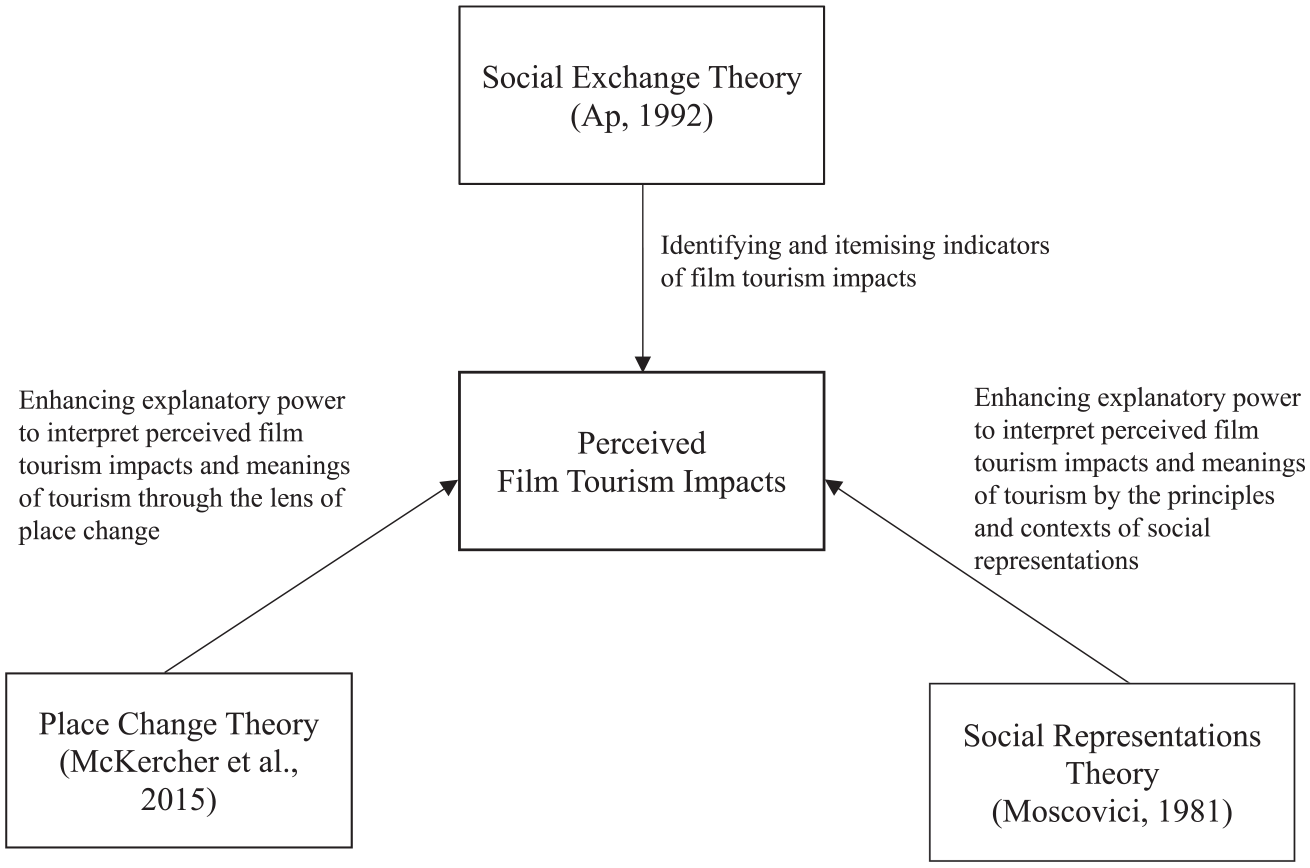
Theoretical Framework of a Holistic Understanding of the Perceived Film Tourism Impacts
Method
Research Context and Geographical Location
This research used Ubud as the focus of geographical location, situated in the Gianyar Regency in Bali in the Indonesian archipelago. The Regency consists of six traditional villages, including the Ubud District, and is located about 20 km northeast of Denpasar, the capital city of Bali Province. As the center of Balinese culture, Ubud has long been a popular cultural tourism destination.
The Hollywood film adaption Eat Pray Love (2010; hereafter EPL) was inspired by Elisabeth Gilbert’s memoir of the same name, published in 2006. While the film tourism phenomenon remains scarce in Indonesia, limited research does exist documenting the influx of international tourists in Bali affected by the EPL film production (O’Connor & Kim, 2014; Park, 2018; Williams, 2014). The direct and indirect impacts of the EPL film include the surge in inbound tourism in Bali immediately after the film release in 2010 (O’Connor & Kim, 2014). Notably, the distinctive transformation of preexisting cultural tourism market segments to recognizably EPL-themed tourism patterns and products occurred, particularly in Ubud, where EPL was mainly filmed (Park, 2018). Williams (2014) highlighted two trajectories of the EPL-related tourism experiences, that is, the authentic replication of Gilbert’s journey for oneself and the performative consumption of romanticized landscape and local culture and people.
Data Collection and Analysis
Five main villages in Ubud including Padang Tegal and Ubud Central village, where the EPL film was mostly set and filmed, were chosen as data collection points. Adopting an inductive qualitative approach, in-depth interviews were conducted using purposive sampling in conjunction with snowball sampling method. Potential participants were randomly approached on the main streets of the five villages during June and July 2014. A couple of screening questions (i.e., place of residence and awareness of EPL film and its impacts) were initially in place to ensure all potential participants were able to sufficiently express their opinions on the perceived impacts of EPL film tourism during its filming and postrelease. Approximately 100 local residents satisfied the eligibility, and of these 12 consented to take part in this project. Following this, snowball sampling based on personal recommendations by those 12 participants, resulted in an additional 10 interviews leading to a total pool of 22 respondents. The snowball sampling method was deemed most appropriate for a collective society like Ubud where it was important that a certain degree of trust and harmony was established (Devine-Wright, 2009).
The interviews were all conducted in the respondents’ preferred places such as their homes or workplaces. Each interview lasted between 30 and 50 minutes. During the last few interviews similar feedback was obtained, and it became evident that saturation of the data had been achieved (Denzin & Lincoln, 2017). A list of questions was prepared in advance to guarantee the comparability and focus of the data collection (Denzin & Lincoln, 2017). That includes the following: (1) what kind of impacts of EPL film and its induced tourism in Ubud had they perceived? (2) what major (or minor) changes did they experience during its filming and post-release? and (3) why did they perceive and/or experience them in such a way? The first two questions were loosely rooted in the application of SET, whereas the last was mainly associated with the social representation theory and PCT. The major or minor changes included any problems, issues, matters, and/or concerns caused by the EPL film and its tourism impact as perceived or experienced by each participant.
The second question was purposely designed to examine film tourism impacts in two phases, so-called “during the production” and “postproduction,” which is uniquely applied to the film tourism context (Croy, 2011; Croy & Heitmann, 2011). “During the production” refers to immediate film tourism impacts that are recognized as the result of film production activities such as film crews, public crowd, and enthusiastic fans, whereas “postproduction effects (hereafter PPEFs)” are attributed to film-related activities after the film is released (Croy & Heitmann, 2011). Using this guidance, participants were invited to freely share their experiences and/or opinions in any particular order, referring to these two phases of film tourism impacts, namely “during the production” and “PPEFs.”
The analysis of the interviews was inductive and data driven. Following verbatim transcription of the interviews, thematic analysis was performed, categorizing and grouping the data to identify the key themes (Ayres, 2008). Meaningful statements were highlighted, and codes were generated to align with the research questions. At the next stage of thematic development, the codes or categories were reread and considered to interpret broader patterns of meanings which addressed the resident’s perceived impacts of the EPL-related tourism and which focused on social, cultural aspects of their lives. After the preliminary analysis, the themes were aggregated and further refined into key emergent themes. The names of the respondents were replaced by the assigned codes such as LR1 to preserve their anonymity.
Profiles of the Research Participants
As demonstrated in Table 1, around 70% of respondents are residents who have lived their lives entirely in Ubud. The vast majority completed a high school education. With 32 years of average length of residency, the participants’ residency in Ubud ranged from 16 to 46 years. About 70% of participants had experienced regular interaction with tourists either being exclusively in tourism related occupations such as travel agent, money exchange agent or being partially exposed to the tourism sector due to the nature of their jobs such as photographer, food vendor, and doctor.
Profile of Respondents (N = 22)

Note: LR = local resident; F = female; M = male.
The remaining 30% had no or little tangible interaction with tourists because in most cases they were farmers or government officers. Yet, they were indirectly exposed to tourism, as they have a family member who works either part-time or full-time in tourism in the region. Due to the male dominated culture and society, this study experienced extreme difficulties in securing a gender balance of sample size to ensure a balanced voice on the perceived impacts of film tourism on the community. The gender of the participants, thus, constitutes 6 females and 18 males.
Results
This study finds nine indicators of perceived film tourism impacts that were manifested during two phases with four patterns of place change. As Table 2 summarizes, the nine indicators of perceived film tourism impacts are categorized as being positive, negative, in-between or neutral, while Table 3 demonstrates the four patterns of place change that include the following: (1) nontourism places to shared places; (2) nontourism places to tourism places; (3) shared places to more populated, intensified shared places; and (4) no place change.
Indicators of Perceived Film Tourism Impacts at Two Phases Identified by the SET

Note: *The identified indicator occurred in both phases. SET = social exchange theory; EPL = Eat Pray Love.
Place Change Patterns and Tourism Impacts of EPL Tourism

Note: EPL = Eat Pray Love.
Arguably, the indicators of perceived film tourism impacts, for example, “sense of gratitude for the importance of spirituality” as a positive benefit at the during production phase, were identified on the ground of SET. Social representations, thereafter, contextualized the change of place and its process, underpinning the meanings of tourism impacts as perceived by the residents, which is guided by both SRT and PCT. When nontourism place changed to shared place, the residents presented positive perceptions on film tourism impacts regardless of the tourism growth stage, but negative perceptions were predominantly associated with a radical change of nontourism place to tourism place and of shared place to more intensified already existing shared place at the phase of PPEFs, although perceived impacts did not correspond to resident’s attitudes toward tourism.
Nontourism Places to Shared Places
First, the local’s deep sense of gratitude and appreciation of outsider’s respect for their culture was collectively shared and expressed during the film production phase. The residents highlighted their positive sentiment of being able to introduce to the film crew and potential tourists the significance and importance of spirituality and religiosity that is rooted in the Hindu culture of Ubud and is deeply embedded into their everyday practice. The spirituality and religiosity are expressed as the core values of local and cultural identities, and the locals were inclined to open their space to the outsiders and share their identities with potential visitors motivated by the film, as stated below: . . . it was just amazing for us to host film crews and famous Hollywood movie stars who seriously followed all the ritual practices and traditional ceremonies before the film was shot . . . in my view it is certainly a fantastic way to share our local culture and tradition [with outsiders]. . . . (LR2) . . . for tourism, this film surely helped to promote Bali, especially Ubud, as a cultural destination as it depicted our daily lives in detail. People can see clearly more about who we are . . . our local way of life through Ubud markets, rituals, our traditional medicine, our spiritual ceremony, and more. . . . (LR4)
At the postproduction stage, thanks to the influx of the EPL film tourists who sought cultural experiences of spirituality and religiosity, the earlier collective appreciation had positively developed into a strong willingness to preserve and sustain the social, cultural, religious, and/or spiritual traditions and customs of the community at both the individual and community levels.
This not only reaffirmed and reassured the residents regarding the values and meanings of their daily practices in the society but also resulted in taking preservation actions seriously for future generations for both the local community and incoming tourist’s benefit. Consequently, the residents perceived tourism positively and as a platform to showcase their societal and cultural values to the rest of the world reflecting their social representations; readily opening their usual nontourism social spaces as shared places and demonstrating mutual respect of the boundaries between locals and tourists, as demonstrated below: EPL film phenomenon has more or less helped to create our attention and willingness to preserve Ubud culture in many ways . . . money from the film shooting goes to the village and helps them to pay for the maintenance of their privately owned temples . . . the expatriates also donate a lot of money to preserve our culture in Ubud afterwards. . . . (LR17) Many people come here to enjoy walks or biking in the paddy fields . . . enjoy feeding monkeys in the monkey forest . . . we have many things to offer but we should protect that for our community’s benefits and our next generation and future tourists. . . . (LR15)
Nontourism Places to Tourism Places
Related to the above, the most often cited words or figures were regarding Ketut Liyer as a medicine man and Wayan as a healer who both importantly featured in the EPL film and became celebrities in Ubud almost overnight. The most predominant discourse on these important figures in this study was not so much about the economic gains per se their related families and residents from an economic stance. The concern and criticism however, lay mainly in the unprecedented but less desirable transformation of their daily social spaces as “nontourism places” to tourism purposeful spaces as “tourism places.” Such a radical change resulted in local anxiety about the fear of losing those sacred social spaces and practices where medicine men and healers have played an important and significant role in their entire life.
According to McKercher et al. (2015), such mundane social spaces are indeed meant to function as nontourism places where spiritual, religious, and/or (para)medical practices and treatments are held exclusively or at least predominantly for the residents of the community. A particular concern was collectively expressed about the roles played by the medicine man Ketut Liyer and the healer Wayan in the EPL film, given that some residents (e.g., LR6, LR17, and LR22) strongly suggested that the primary responsibility of them both is to provide spiritual healing and facilitate necessary treatments to community as communal services.
Furthermore, the local residents expressed their intrinsic concerns for the potential for detrimental effects to occur regarding the original meanings and functions of these social and cultural practices around the sacred spirituality and religiosity imbued in the named social spaces. They feared the debasing and commercialization of their religious, cultural identities, roots, values, and meanings, contrary to Hindu beliefs and philosophies, as explained by the principles of SRT. Particularly, the majority highlighted that the mission of the medicine man is indeed to communicate with the ancestors and to aid the present generation. The film participation of Ketut Liyer and his family members during the film production stage and resulting commercialization of sacred spiritual practices afterwards through the influx of EPL film tourists, was subsequently criticized. LR22 eloquently described this aspect as follows: I have to tell a medicine man is a gifted man who has innate power. They are existent to help people. In our culture, when you see a medicine man, you just give them what you have, for example food or money. It just depends on your affordability. It is a shame that Ketut and many people [around him] commoditize him for the sake of economic benefits by asking money . . .
Some even articulated strong resentment against the inappropriate process of commodification, ignited by the capitalistic and commercially oriented unethical practices of Ketut Liyer and Wayan. This was a consequence of the radical place change without an acceptable level of transition through a buffer zone. For example, shared places through the lens of place change provides an alternative conceptual framework to explain why the residents perceived it as a negative impact of (film) tourism. To a large extent it is related to place disruption from the loss of traditional lifestyles, rapid cultural changes, moral decay, and turning locals into attractions resulting in psychological responses like anxiety and sense of threat as evidenced in other studies of place changes (e.g., Devine-Wright, 2009; McKercher et al., 2015). LR6 and LR19 precisely postulated this concern, respectively: Look! They [Ketut and Wayan] now accept and service foreign tourists only who are willing to pay whatever’s being asked. That’s a ridiculous rip-off. They are losing what they are meant to be in terms of duty of care . . . not for tourists but for the community above all. That’s why I start worrying about losing my current medicine man who is located more than 10 miles away from Ubud because of this kind of unacceptable immoral influence [of Ketut and Wayan] on the whole community and beyond. . . .(LR6) . . . unless you are mad, who on earth who is going to pay that much money to see them [Ketut and his family] for less than 10 minutes among the members of our community? They’ve completely lost their social responsibilities as to who they are meant to be. . . . (LR19)
It is interesting to note that although tourism is recognized as an agent of change (Deery et al., 2012), the local’s response to such radical transformation of nontourism places to tourism places and the adverse impacts on social and cultural norms and identities, was not against the influx of film tourists in this study. With no meaningful antitourist experiences or events, the residents perceived it was caused more by the inner conflict and crisis between the local community as a whole and the aforementioned figures, which could cause a total collapse of lifelong practices around the social and cultural spaces relating to the medicine men and healers. This is exactly one of the points where the existing equilibrium is damaged by a sudden unfavorable change (McKercher et al., 2015). Similar to the chicken or the egg causality dilemma, it is still unclear from a resident perspective, what caused what. What is clear, however, is the fact that the residents criticized the insiders only, while they were still supportive of tourism. The SET alone would find it impossible to interpret this in a more nuanced manner, given equity scores generated by perceived costs and benefits are deemed to be an appropriate rational process behind one’s overall support of tourism, which has not proven to be the case at all for this study.
Shared Places to More Populated, Intensified Shared Places
Ubud is infamous for a relatively poor road system compared with Denpasar and Nusa Dua in Bali. Traffic congestion and overcrowding in places intensively shared by tourists and the local people were commonly observed. Such a rapid change and subsequent transformation of so-called “shared places” such as Ubud central market to “more intensified shared places,” had subsequently required an immediate need for extra facilities and amenities such as parking space as well as improved road system in the Ubud Central area in particular.
The local residents criticized that no appropriate short or long-term implementation tourism plans were proposed by regional and local authorities during or even after the peak of the EPL film tourism boom. This implies that initially positive attitudes toward the EPL film tourism impacts may deteriorate over time as place changes, until residents adjust and create a new equilibrium (McKercher et al., 2015). Below is a direct quote demonstrating the collective criticism and resentment felt by local people over time: It is the traffic congestion I perceived as the most frustrating thing caused by the EPL tourism boom. It is mostly caused by big buses and private taxis carrying tourists . . . there is no doubt [that] it is getting worse. In my opinion, the number of vehicles entering this area must be limited by the authorities. . . . (LR11)
Again, it is interesting to note that the local’s criticism generated by their perceived impacts of tourism is not necessarily on tourism or tourists per se, but more associated with their frustration caused by the ongoing anger, annoyance, and disappointment with the government’s poor management. Despite the negative interpretation of place change, the locals do not necessarily evaluate the outcome of change negatively, nor do they show provocative behavioral resistance. Rather, the more tourism impacts are perceived, the higher the expectation of the government authorities’ appropriate action plans is expressed.
From the perspective of social representation theory, this form of resident’s coping with place change can be understood in the light of the social context of Indonesia which tends to be a society with a low level of self or collective political efficacy, and thus, individuals do not believe in their power to control or influence the perceived place change (Devine-Wright, 2009). Thus, unless the government proactively resolves this kind of perceived negative impact with a short and long-term implementation plan, this perception will persist.
No Place Changes
The locals witnessed and thus perceived that the two famous local figures in the EPL film, namely Ketut Liyer as a medicine man and Wayan as a healer, had experienced the greatest direct economic benefits during the peak and beyond of the EPL film tourism impacts, that is, between early 2011 and late 2013. In contrast, an approximate 30% of the respondents (e.g., LR1, LR4, LR5, LR9, and LR15) noted that they gained no single personal economic benefits from the film and subsequent film tourism influx. Those in the tourism-related jobs such as yoga studios, local travel agents, and car-hire freelancers (e.g., LR3, LR6, LR12, and LR16) claimed that they were perhaps the only other groups of residents who had benefitted from the EPL film tourism boom.
It is worthwhile noting that some of the local’s monetary benefits indirectly or directly resulted from the fame and celebrity status of those two local figures, given that the tour programs of Ketut Liyer and Wayan became a popular must-do activity for the enthusiastic EPL film tourists. Below is a series of relevant illustrations by local residents: If we talk about economic impacts, Ketut Liyer is the one who felt that, not the Ubud local community . . . I think the film surely benefited Ketut Liyer to give him a free promotion . . . and for tourism in general, I think it’s really good too. . . . (LR4) . . . as far as I’m concerned, I don’t see any particularly negative things from the EPL film phenomenon in Ubud. . . . (LR10)
As such, a series of tour packages to Wayan’s shop and Ketut Liyer’s house such as “Ketut Liyer Journeys” was developed to satisfy the increased tourist demand, and they were collectively considered as the socioeconomic benefits of the EPL film tourism in Ubud, as also briefly mentioned in a previous study (O’Connor & Kim, 2014). Nevertheless, none of the respondents criticized or complained about the uneven socioeconomic benefits between the vast majority of the community and the named groups of residents. Instead, they continued to support tourism in Ubud with generally positive or neutral attitudes regarding the consequences of the EPL film tourism impacts. To be more precise, it seems that the residents were somewhat passive and reluctant to share their own thoughts and opinions on the impacts of EPL film tourism, albeit some actual negative costs were perceived by them, as discussed earlier. From the perspective of social representation theory, this underlines the importance that the hierarchical nature of the community and the strong community bond and harmony played in influencing their attitudes and behaviors, as commented below: . . . it has been discussed with the villagers and agreed by our heads of the village and Ubud Palace. Also, the government has given its recommendation . . . though something negative happens, it’s okay because the most important thing is that it has been discussed and agreed by “Banjar” (Village). . . . (LR1)
Ironically, at the same time, some residents who were considered in-between the tourism and nontourism sectors critiqued the ongoing fundamental structural inequality of the tourism system in Bali where tourism has been increasingly orchestrated by outsiders (Bell, 2015), as below: Recently many foreigners stayed in Ubud and own businesses after the EPL film tourism boom . . . it influenced local business and income . . . most of the locals only got the jobs with low salaries while the higher positions with good earnings are occupied by foreigners. It is still the same. . . . (LR18)
Discussion and Implications
The findings support the synergistic effects from an integrated model encompassing the tourism impacts on host communities which mitigates the underlying limitations of each respected theory as a sole theoretical framework. The integrated model is particularly powerful in explaining what caused a factual condition or event to be perceived as negative, positive or neutral place change, and how and why such changes are interpreted and evaluated in the social and cultural contexts.
The perceived film tourism impacts were manifested in the nine indicators at the two phases (i.e., during production and PPEFs) that include the following: sense of gratitude for the importance of spirituality; embracing tourists to daily religious practices in the community; limited and uneven socioeconomic benefits; rapid growth of EPL tourists and tourism income for cultural conservation and preservation; loss of local’s sacred social spaces and practices through inappropriate inner process of commodification; congestion and crowded spaces; incompetent (regional and local) government; hierarchical collectivism community; and unchanging structure of tourism system and operation. Of these, some impacts, such as identity crisis and commodification, support, and confirm previous film tourism affect studies (Beeton, 2016; Connell, 2005; S. S. Kim et al., 2015; Mordue, 2009; Park, 2018; Thelen et al., 2020; Yoon et al., 2015).
Interestingly, this study reveals that the locals do not necessarily respond to tourism impacts in the same way as they perceive the costs and benefits of tourism impacts, which engendered four different types of place change. The key findings are further discussed below. First, except their view on Ketut Liyer and Wayan, few negative perceptions of film tourism impacts were witnessed. Despite some identified costs of EPL-induced film tourism impacts, the local’s attitudes toward tourism were still positive and supportive. A different viewpoint on the perceived impacts and the subsequent responses (e.g., support and/or more concern about the negative impacts) between those in the tourism industry and the remainder (i.e., little interaction with tourists) was yet evident, especially in respect to the socioeconomic benefits. The SET can explain this difference, as supported by previous studies (Easterling, 2004; Gu & Ryan, 2008; Lee et al., 2010; Sharpley, 2014). A tourism related job such as local travel agents and car-hire freelancers in this study is a determinant of more positive perceptions of tourism impacts for this subgroup with immediate direct or indirect socioeconomic benefits. The higher level of awareness of changes in tourism market segments and new products associated with the EPL film tourism influenced the attitudes and perceptions of this subgroup of residents.
However, the SET tends to lose its validity in explaining why and how the residents with little involvement in the tourism sector and thus no or little perceived socioeconomic benefits, still expressed a strong support for tourism. This is contradictory to the crux of SET, that residents withdraw their support for tourism when they perceive the costs of tourism outweigh the benefits (Ap, 1992). Some would argue that this is due to generally expected positive benefits of tourism based on prior experiences at a community level, especially in destinations such as Bali being as a mainstream tourism destination, that have a high dependence on tourism as a means for economic development (Chuang, 2010; Croes, 2006; Moyle et al., 2010). An example of this was found in a study by Chuang (2010), of community perceptions in two villages, Nanjuang and Tongsiao, in Northern Taiwan, which suggested that locals from both villages had positive perceptions and were supportive of tourism development in their area, although they also acknowledged the many negative impacts which tourism brought to their community.
Second, previous studies suggested that perceived sociocultural impacts are positively correlated with socioeconomic benefits which make the host communities more attractive and better places to live in terms of overall economic conditions (Lee et al., 2003). The findings of this study are inconsistent with the above, as residents’ perceptions of sociocultural impacts in the context of the EPL film tourism in Ubud are not the consequence of perceived economic gains. This implies that they are interrelated but not interdependent. Therefore, this finding will be particularly useful for future studies where a quantitative approach is adopted to examine a more robust path analysis of relevant dependent and independent variables around (film) tourism impacts.
Instead, the residents in Ubud put more emphasis on the sociocultural impacts as a function of place change, at the expense of perceived socioeconomic benefits. In this context, SRT (Moscovici, 2000) and PCT (McKercher et al., 2015) are more appropriate as alternative theoretical frameworks through which a more holistic understanding of residents’ perceptions of the EPL film tourism impacts can be interpreted in the relevant social and cultural contexts.
Third, and related to above, from the perspective of SRT, the underlying hierarchical nature of the community and the strong community bond and harmony characterizing the prolonged collectivism-driven social and cultural orientation in Ubud, can be interpreted as two equally important factors or reasons influencing the perceptions and attitudes of residents in their day-to-day lives. It is because the societal system of shared meanings and values comprises social and cultural items that derive from traditions and customs and long-term historical processes (Moscovici, 2000). This is in line with the work of Reisinger and Turner (2003), suggesting that the prolonged social and cultural orientation toward individualism or collectivism might be one of the most important cultural distinctions that differentiate cultural groups and is primarily determined by value systems that affect individual’s beliefs, values, perceptions and communications. Thus, social representations not only influence people’s daily practices, including tourism, but constitute these practices and the meanings embedded in them (Moscovici, 1988), as confirmed in this study.
The usefulness and validity of SRT was further evident and provided insight in explaining the collectively perceived high level of discomfort and resentment against the commodification process of the community’s spiritual and religious practices exercised by the two important figures (i.e., Ketut Liyer and Wayan). They were perceived by residents as demoralizing the values and meanings of medicine men and healers at a community level. The residents further developed a psychological fear of losing the social spaces associated with the medicine men and healers, as if a domino effect may occur in the broader community. Through the lens of place change, the continuity feature of place identity is of paramount importance for psychological well-being of residents. This refers to Twigger-Ross and Uzzell’s (1996) work on place identity which explains continuity as a reflection of one’s desire to preserve some form of connection over time. This justifies why they responded to this change more sensitively and resentfully by highlighting “we” rather than “I.”
As Halewood and Hannam (2001) suggested, at a community level, commodification is an inevitable process especially in destinations with significant economic dependence on tourism like Bali, given tourism may be one of the ways Balinese people can achieve a sustainable livelihood (Bell, 2015). Thus, it should also be seen as a process which may be both resisted and embraced to develop local values despite the unstoppable nature of development and changes in human culture. Yet, when change occurs faster than people can adjust to, during periods of rapid, intensive growth such as the EPL film tourism influx, the residents experienced a sense of alienation and loss (McKercher et al., 2015). Similar impacts caused by social and spatial conflicts between film tourists and residents were also observed in the county of Yorkshire, England as the film location for an English TV series Heartbeat (Mordue, 2009).
Fourth, it is noteworthy that locals’ resentment to the undesirable impacts of the EPL film tourism was mostly less related to the influx of film tourists. Principally, it was more about the injustice of the aforementioned local figures, which is judged by the religious and moral justification for what is right or wrong from their own social reality and its accepted system. It is particularly useful from the lens of SRT, given that it is a valuable means of understanding and explaining social conflict or reactions to salient issues within the community (Pearce et al., 1996), as is the case in this study. In other words, the local residents attempted to defend and therefore sustain their existing construct of reality and to resist another version of reality that was unfortunately attempted by some important members in the local society (Moscovici, 1984). This is almost impossible to explain through the economic rationality of the SET or similar (Sharpley, 2014).
In this regard, the PCT (place change theory) also adds an invaluable layer of useful theoretical interpretation for the above. The residents in Ubud generally hold positive attitudes toward and perceptions of tourism impacts, even prior to and after the EPL film tourism presence. They are more resilient to adverse or negative impacts of tourism, if any are perceived such as crowdedness, but less tolerant to experiencing the radical transformation of their sacred social spaces as nontourism places to tourism places. The residents admitted that it was the extreme, undesirable place change as a manifestation of a social and cultural identity crisis of the community which led to negative perceptions of film tourism impacts, creating a detrimental domino effect within the community and beyond. In the study of McKercher et al. (2015), this kind of adverse impact helped to explain how and why antipathy occurred when nontourism places were transformed into shared or tourism places or where shared places became more intensified shared places or even exclusive tourism places.
Conclusions
The aim of this study is not to develop a universally adoptable theoretical model to understand residents’ perceptions of tourism impacts, but to inform a more appropriate, integrated theoretical framework which garners a more wholesome and holistic analysis of tourism impacts on host communities, using a film tourism phenomenon as the research context. This is a timely response to call for more theoretically grounded research (Deery et al., 2012; Nunkoo et al., 2013; Sharpley, 2014), especially echoing what Deery et al. (2012) recommended to overcome the underlying drawbacks of SET by taking into consideration the following: (1) residents’ values and behavioral norms from a social representations perspective (Pearce et al., 1996); and (2) social impacts as a function of place change (McKercher et al., 2015).
In doing so, the study extended the PCT integrating with the SET and SRT to explain why socially accepted norms and values in a society not only influence perceived impacts of (film) tourism among members of that society but also affect their responses to tourism affects within a more nuanced reality or totality of residents’ social lives. Cultural and social distinctions of a society always exist, and thus it is irrational to neglect the sociocultural contexts within which social exchanges in tourism occur. At the same time, it is unreasonable to ignore the extrinsic influences on that process, that is, social representations as an accepted set of ideas, values, and knowledges that influence and constitute a societal reality (Moscovici, 1998; Pearce et al., 1996). It was proposed, examined, and confirmed that to a greater extent the integrated theories in this study counteract the identified limitations of each respected theory. This in turn contributes to rigorous theoretical foundations on “what causes impacts to be perceived in certain ways among host communities?”
While future applications of the integrated model have a high likelihood, the current study also makes several significant contributions to the research context with some notable limitations for improvement. As Nunkoo and Gursoy (2012) observed, the vast majority of the research on the subject is restricted to case studies of the developed world, North America in particular, in the context of rural tourism and in the vicinity of recreation areas, with lack of attention to mainstream tourism destinations. In a similar vein, studies on the impact of film tourism mostly took place in rural settings where there was little tourism prior to the sudden influx of film tourists (Beeton, 2016; S. Kim et al., 2017; Mordue, 2009; Roesch, 2009; Thelen et al., 2020). In this regard, the current study makes a timely and valid contribution to examine residents’ perceptions of tourism impacts in general, and film tourism impacts in particular, given that the location of Ubud is unique as a research area and it was already a mainstream tourist destination in Bali prior to the EPL film phenomenon.
With few exceptions, the vast majority of the research into host perceptions of tourism impacts have adopted quantitative methods based on attitudinal scale questionnaires to identify and describe what residents perceive (Sharpley, 2014). Employing an exploratory qualitative approach, the current study was devoted to answering “why” and “how” questions in terms of residents’ perceptions of (film) tourism impacts. As such, this made substantial theoretical contributions to a more nuanced and holistic approach to the subject area.
Limitations and Recommendations for Future Studies
A few limitations are noted for future studies. One of the limitations lies in a one-off cross-sectional approach, though the current study attempted to reflect the residents’ perceptions of film tourism impacts over a longer time frame, namely between during the production and PPEFs stages. Thus, future longitudinal approaches are welcome to provide a more wholesome understanding of (film) tourism impacts, especially in terms of the extent to which and how the residents’ perceptions of and attitudes or behaviors toward the identified impacts remain or change. Second, due to the relatively small sample size and observed homogeneous characteristics of the studied community, the current study was inappropriate to undertake a systematic cluster analysis on the residents’ perceptions of film tourism impacts. Thus, future studies will be especially welcome to increase research sample size and undertake a more systematic cluster analysis in particular; comparing those who have little or no direct contact with tourists on a regular basis versus those who exclusively depend on tourism for living or something in-between, as suggested by Fredline and Faulkner (2000) and Andriotis and Vaughan (2003).
Third, three types of place (as the core of place change concept) lie on a continuum that oversimplifies the complex and variable nature of composition and proportion of tourism, nontourism and shared place in a destination. McKercher et al. (2015) commented that the proportion can be defined by the volume of tourists, the configuration of the destination and the stage of development of the tourism industry. In most cases, it is complicated due to internal and external factors and thus not easy to answer, and this is an immediate shortcoming of place change as identified in the current study. This is the first attempt to empirically test place change integrated with the SET and SRT, using a primary research data. Thus, future empirical studies are certainly needed to refine the concept of place change and improve its wider application.
Last, one major criticism of SRT is the relationship between social representations and social practices and power (Howarth, 2006). Power theory places emphasis on personal power (based on property, money, skills, knowledge, and competence) that may affect one’s ability to exploit exchanges, not merely measuring equity scores generated by perceived cost and benefits from tourism (Kayat, 2002). Thus, to understand the role of power in the process and practice of social representations becomes a necessary step to answering questions such as “do some people have more power to impose their representations onto others?” For that reason, similar to Nunkoo and Ramkissoon’s (2012) work, the inclusion of power in the conceptual framework will be beneficial. Another consideration is the subtleties afforded by generational differences in terms of perceived impacts of tourism, given that social representations have to be seen as alive, dynamic, and fluid (Howarth, 2006).
Footnotes
Acknowledgements
The authors would like to express thanks to Mr. Greg Suri at the Tourism Department of Belu Regency in East Nusa Tenggara, Indonesia, for his sincere support during the data collection at the site.
