



Abstract
Brand-to-brand (Br2Br) engagement on social media, where official brand accounts interact using various dialogue strategies, is a growing trend in interactive marketing. This article investigates the nature, nuances, and impact of Br2Br engagement on both participating brands and observing consumers, drawing from language expectancy theory. To do this, the authors employ a mixed-methods approach, combining field data, qualitative and automated text analyses, and an experimental causal-chain mediation survey. In Study 1, the authors compare the effects of brand-to-consumer (B2C) versus Br2Br posts on consumer engagement, revealing that Br2Br posts generate higher engagement. Next, in Study 2, using typological theory building, they develop a framework of four overarching Br2Br engagement strategies—PR hijacking, praising, teasing, and spotlighting—differentiated by emotional tone and motivation. In Study 3, a causal-chain mediation analysis demonstrates that teasing, as a violating strategy, leads to negative consumer responses, while praising, PR hijacking, and spotlighting align with consumer expectations and result in favorable brand outcomes. These findings enhance the understanding of B2C and Br2Br communications on social media and provide actionable insights for digital marketers to optimize Br2Br engagement content.
Keywords
Should brands converse with other brands on social media and, if so, how?
Research to date largely suggests that brands should refrain from mentioning competitor brands since this could lead to consumer schadenfreude, incite brand community conflict, or create perceptions of brand insincerity (Ewing, Wagstaff, and Powell 2013; Phillips-Melancon and Dalakas 2014; Thomas and Fowler 2021). Yet, nowadays, it is becoming increasingly common for brands to reshare, comment on, or endorse the content of other brands publicly in order to engage with new audiences on digital channels (Zhou, Du, and Cutright 2022). For example, Figure 1 showcases two supermarket retail brands engaging in an interaction on X (formerly known as Twitter). In the excerpt, responding to Sainsbury's featuring a Black family in a Christmas ad, which received significant criticism from customers (Skopeliti 2020), M&S concurs with its direct competitor and takes the opportunity to compliment Sainsbury's products.
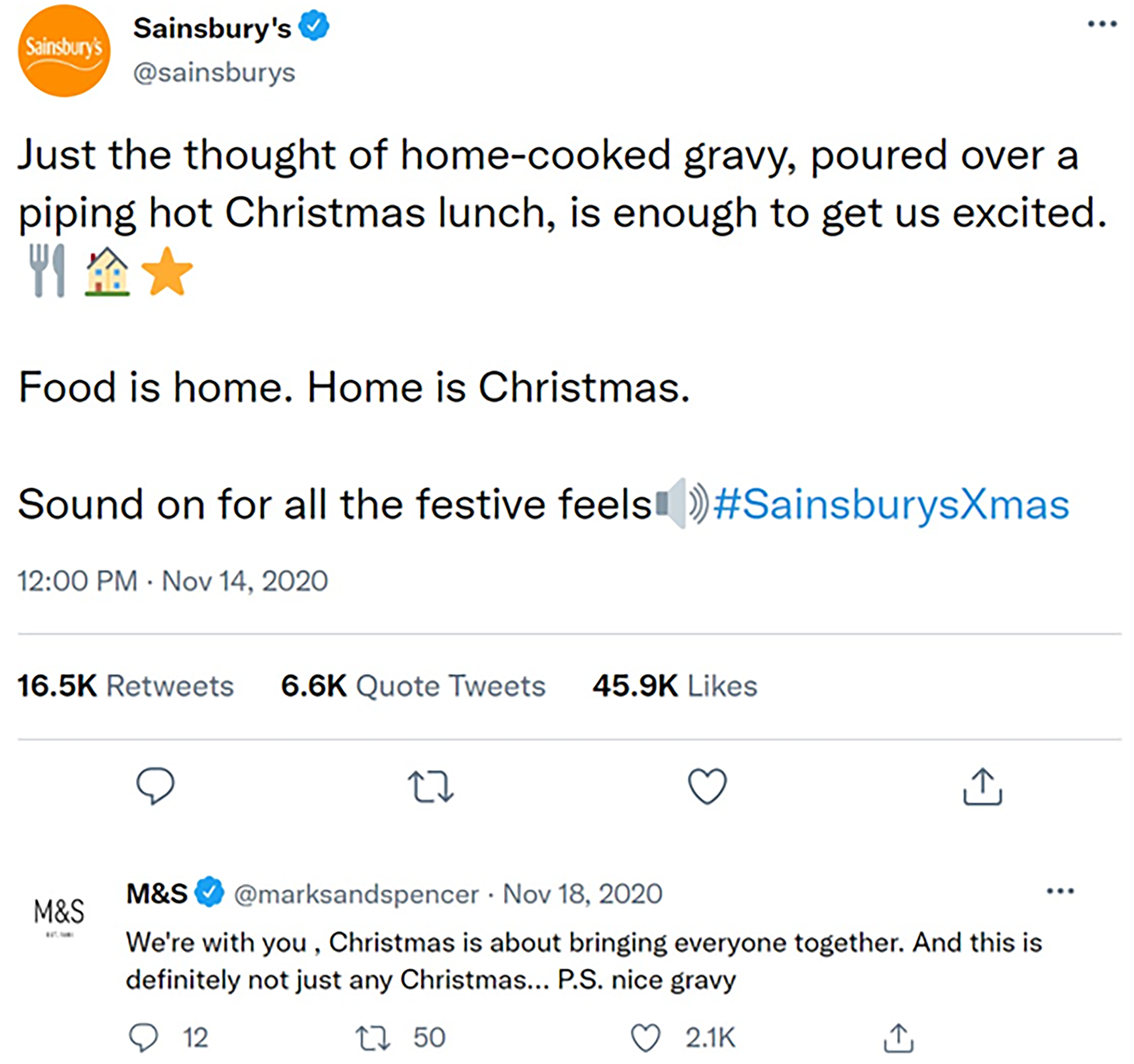
Br2Br Engagement Example.
We define this social media phenomenon, whereby official brand accounts engage in explicit interactions with other official brand accounts, as brand-to-brand (Br2Br) engagement. Br2Br engagement represents an emerging social media marketing strategy that brands adopt to improve their online presence in a saturated digital marketplace (Alves, Fernandes, and Raposo 2016; Tyrväinen, Karjaluoto, and Ukpabi 2023; Voorveld 2019). We argue that two factors have significantly contributed to the proliferation of this phenomenon: hyperconnectivity and changing consumer preferences. The advancement of Web 2.0 and the rise of social media networks have created a hyperconnected environment, compelling brands to rethink their digital marketing strategies (Mangold and Faulds 2009; Swaminathan et al. 2020). In this landscape, where consumers and even competitor brands interact directly, brands are increasingly moving toward value cocreation (e.g., customer engagement, brand awareness) to achieve their goals (Swaminathan et al. 2022). Simultaneously, market research indicates that consumers are becoming more apathetic or skeptical toward conventional social media content marketing (Edelman 2021; Watson 2019), driving the need for new communication strategies to effectively connect with these evolving audiences and reach new consumer segments.
Nonetheless, Br2Br engagement remains an obscure phenomenon, and its nature and consequences are poorly understood by scholars and practitioners alike. When brands employ Br2Br engagement strategies on social media, their underpinning motives are increasingly scrutinized and can either go viral or backfire, generating a range of consumer responses (Thomas and Fowler 2021). With three exceptions focusing on positively framed Br2Br engagement (Ross 2024; Zhang and Zhang 2024; Zhou, Du, and Cutright 2022), research to date has primarily focused on studying competitive interactive behaviors and aggressive communication tactics such as brand parodies (Singh and Sonnenburg 2012), brandjacking (Jean 2011; Thota 2021), rivalry (Berendt et al. 2024; Ewing, Wagstaff, and Powell 2013), and teasing (Béal, Lécuyer, and Guitart 2024; Saavedra Torres et al. 2024). Still, knowledge about emerging Br2Br engagement practices remains limited, as the existing research is fragmented, while a holistic understanding of this complex interactive marketing phenomenon remains urgently needed.
Consequently, this article sets out to provide a comprehensive conceptualization of Br2Br engagement strategies on social media, drawing from language expectancy theory (LET) (Burgoon 1993), which posits that people have expectations regarding the appropriateness of communication behaviors in specific contexts that can be either violated or confirmed. LET helps explain how unanticipated forms of Br2Br engagement on social media can significantly influence audience reactions differently by challenging or confirming linguistic expectations (Afifi and Metts 1998), especially compared with expected brand-to-consumer (B2C) communications (Deng et al. 2021). In turn, we base our work on the following three research questions (RQs):
To address these RQs, this article employs a mixed-methods research approach, combining insights from field data, qualitative and automated text analysis, and an experimental causal-chain mediation study. By examining the nature, nuances, and implications of various Br2Br engagement strategies, our research not only contributes to the broader B2C engagement literature (e.g., Dhaoui and Webster 2021; Labrecque 2014; Liadeli, Sotgiu, and Verlegh 2023) but also considerably advances the extant Br2Br engagement scholarly work (Thomas and Fowler 2021; Zhou, Du, and Cutright 2022) through offering a new holistic and empirically informed perspective on this phenomenon. Drawing from real-life brand practice, for social media marketing and brand managers, we offer guidance on the different Br2Br engagement strategies they can employ and their respective consequences when electing to converse with other (competitor or noncompetitor) brands on social media.
Literature Review
B2C Communication Strategies on Social Media
Since their inception, social media platforms have transformed interactive marketing communications by enabling brands to actively engage audiences through enhanced connectivity and person-to-person dissemination, leading to unprecedented levels of virality and challenging traditional mass media norms (Eigenraam et al. 2018; Kaplan and Haenlein 2011). Therefore, it is not surprising that a significant body of literature has emerged aimed at understanding the most effective message strategies and executional factors for engaging online customer audiences (Deng et al. 2021; Quesenberry and Coolsen 2019).
In academic discourse, B2C engagement strategies on social media exhibit a diverse array of manifestations, largely categorized into soft, hard, and contextual engagement (De Vries, Gensler, and Leeflang 2012; Sabate et al. 2014; Shahbaznezhad, Dolan, and Rashidirad 2021), as summarized in Web Appendix Table W1, with scarce Br2Br engagement research partly falling into the latter. Soft B2C communication strategies focus on the semantic and pragmatic nature of brand messages, emphasizing content orientations, rhetoric, and stylistic elements (Sabate et al. 2014). Effective engagement can target rational needs with factual information (Liadeli, Sotgiu, and Verlegh 2023; Tellis et al. 2019), emotional characteristics through entertaining content (Ashley and Tuten 2015), and interactional needs via questions and calls to action (De Vries, Gensler, and Leeflang 2012; Quesenberry and Coolsen 2019). Stylistically, simpler language and visual content, along with expressions of certainty, enhance engagement and perceived brand power (Deng et al. 2021; Pezzuti, Leonhardt, and Warren 2021). Conversely, hard attributes like media richness and strategic post scheduling are embedded within social media platforms’ technical affordances, influencing engagement through sensory stimulation, timing, and posting frequency (Moran, Muzellec, and Johnson 2020; Pletikosa Cvijikj and Michahelles 2013; Shahbaznezhad, Dolan, and Rashidirad 2021). Last, recent research highlights the importance of contextual factors in B2C engagement. At the platform level, brand communication's impact varies across social media types (Shahbaznezhad, Dolan, and Rashidirad 2021). At the brand level, its effectiveness depends on the follower base size and brand equity (Lee, Hosanagar, and Nair 2018). At the industry or product level, factors such as sector, B2C versus business-to-business (B2B) dynamics, and the distinction between mass and luxury products significantly influence engagement (De Vries, Gensler, and Leeflang 2012; Swani and Milne 2017).
Despite the well-established knowledge in the domain of brand communication on social media, brands continuously devise novel and unconventional engagement initiatives to overcome the decline in organic reach performance on social media platforms (Lee, Hosanagar, and Nair 2018; Quesenberry and Coolsen 2019). In turn, current research that is primarily concerned with B2C engagement (e.g., Deng et al. 2021) is not adept to fully capture the complexities of Br2Br interactions. For instance, hard attributes like media richness and post scheduling, essential for consumer engagement (Pletikosa Cvijikj and Michahelles 2013), may be less relevant in Br2Br contexts, where strategic alliances or casual tactical interactions are a priority. Soft attributes, focusing on emotional and rhetorical elements (Sabate et al. 2014), may not suit or suffice in understanding more formal or competitive Br2Br communication contexts. Additionally, while contextual factors such as industry or product play an important role in distinguishing B2C from Br2Br communication, they are often considered only at a surface level. The specific ways in which these factors influence Br2Br communication in particular are not well understood.
Extant Brand-to-Brand Communication Literature
Referring to explicit brand interactions and dialogues with other official brand accounts (Thomas and Fowler 2021), we distinguish Br2Br engagement 1 on social media from more conventional Br2Br behaviors based on three characteristics: reciprocity, instantaneity, and low involvement. First, unlike traditional unidirectional Br2Br communications (e.g., a brand calls out another brand on its misconduct; Thota 2021), Br2Br engagement involves a mutual exchange in which one or more brands consciously choose to reciprocate another brand's social media posts, thereby fostering a real-time dialogue, typically inherent to B2C communications. Relatedly, the instant nature of social media further underpins the Br2Br exchange phenomenon since engagement happens in real time, whereas in conventional Br2Br communications, for example, an antibrand ad created by another brand (e.g., opposing ads by Burger King and McDonald's; Fleming 2018) takes longer to create and/or respond to. Third, whereas traditional Br2Br advertising communications may be more expensive and time consuming (Ramadan 2019), Br2Br engagement represents a cost-effective, low-involvement strategy to generate awareness and engagement organically through exposure to rival brands’ audiences (Berendt et al. 2024).
To date, extant Br2Br engagement research fits on a continuum with more competitive strategies on one extreme and more cooperative strategies on the other. Web Appendix Table W2 summarizes key studies investigating the effectiveness of Br2Br engagement strategies on brand and consumer-related outcomes.
Competitive Br2Br engagement behaviors entail negatively framed communication strategies between brands, with brandjacking, use of aggression, and “roasting” being prominent examples of these. Grounded in the brand parodying literature (Singh and Sonnenburg 2012), Thota (2021) examines the phenomenon she terms “brandjacking,” which involves a brand creating an anticommercial parody of another brand's ad that sabotages and reappropriates its message. Unlike parodying, brandjacking is deliberately intended to damage the reputation of the target brand, often adversely impacting brand attitudes.
Focusing on dark humor and sarcasm in Br2Br communications, a growing number of scholars have examined the role of humor and aggression in Br2Br engagement. First, Thomas and Fowler (2021) study the use of aggression and humor when brands interact with each other on social media, which they term “brand-to-brand dialogue.” These authors find that when aggression (low or high) is contained in humorous Br2Br dialogue, it generates perceptions of manipulative intent and is thus discouraged. Ning et al. (2022) further confirm that humor-based Br2Br strategies that contain low aggression (compared with high aggression) are more effective in generating consumer behavioral intentions. Studying “roasting” on social media, Saavedra Torres et al. (2024) reveal that the presence of dark humor in Br2Br communications impacts consumers’ perceptions of brand coolness and sincerity, and its effectiveness is dependent on the recipients’ age and personality: Young and extroverted customers were more likely to rate “roasting” Br2Br messages as favorable. Most recently, Béal, Lécuyer, and Guitart (2024) explore how brands’ humorous responses on social media are perceived, finding that affiliative humor is generally more effective and less suspicious than aggressive humor, which can still work well against competitors and for top dog brands by generating more engagement without harming purchase intentions.
As brands have identified the need to find better ways to connect with and attract consumers (De Oliveira Santini et al. 2020), there has been a shift in how they engage with one another on social media platforms, particularly in connection to specific societal issues (Zhang and Zhang 2024). Rather than being solely preoccupied with self-motivated goals or competitive interactive behaviors, some brands are embracing a more cooperative, other-driven approach to yield positive brand and consumer outcomes (Brandenburger and Nalebuff 2021). Such behaviors have been well captured in mature research fields and include “complementary competition,” a concept whereby brands collaborate on certain mutually beneficial issues such as producing complementary products (Yalcin et al. 2013), and cobranding alliances, whereby two or more brands are presented together as one product that adds value for the consumer that is greater than that of the individual brands (Paydas Turan 2021).
These conventional behaviors have more recently been extended to social media platforms, whereby brands can promote their product and/or service partnership collaborations effectively and in real time (Kupfer et al. 2018) with the intention of fostering engagement for all of the involved brands. Examples of cooperative Br2Br behaviors that transcend the conventional competitive paradigm include praising and helping (Ross 2024; Zhang and Zhang 2024; Zhou, Du, and Cutright 2022), providing positive competitor reviews (Perez, Stockheim, and Baratz 2022), and boosting the perceived distinctiveness of archrival brands (Berendt, Uhrich, and Thompson 2018). For instance, Zhou, Du, and Cutright (2022) focus on a positive Br2Br communication phenomenon that they term “brand-to-brand praise.” Br2Br praise is the act of one commercial brand praising the products of another commercial brand on social media. Across several studies, Zhou, Du, and Cutright find that Br2Br praise is received favorably by consumers because of perceptions of brand warmth, which in turn results in enhanced brand evaluations and behavioral intentions (i.e., social media and advertising engagement, brand choice, and purchase behavior). Likewise, Zhang and Zhang (2024) find that helping another brand on social media, compared with conventional self-promoting communications, conveys signals of high communion and agency. Similarly, examining online reviews in which brands or entities (e.g., influencers) provide complimentary reviews for competitor brands, Perez, Stockheim, and Baratz (2022) find that these increase consumers’ purchase intentions due to perceptions of credibility. Last, Ross (2024) finds that self-oriented Br2Br interactions positively influence consumer–brand evaluations for both brands involved, with a particularly strong effect for well-known brands, and suggests further research to clarify the dynamics of Br2Br relationships.
While these studies have provided a cumulative body of research on the nature of Br2Br engagement strategies, our review identified two central limitations of this extant research. First, existing research has focused on isolated instances of Br2Br engagement that emphasize a single framing aspect (e.g., positive; negative; aggression vs. humor). Due to the evolving nature of social media networks and emerging brand engagement practices, a more holistic typification of the Br2Br engagement phenomenon and appraisal of its consequences is needed (Eigenraam et al. 2018). Second, most studies neglect the examination of the motivations for Br2Br engagement, specifically the brands’ orientation (self-interest vs. other-interest). Existing research has predominantly focused on competitive motivations, particularly in rivalries and top versus underdog brand dynamics (Béal, Lécuyer, and Guitart 2024; Berendt et al. 2024). However, this emphasis overlooks other potential motivations within more collaborative brand relationships, such as those between noncompetitors or indirect competitors. This leaves a gap in understanding the full spectrum of Br2Br engagement motivations.
Language Expectancy Theory
LET is a message-centered theory of persuasion, which proposes that language operates within socially constructed norms, known as “expectancies,” and these guide interpersonal interactions and information processing (Burgoon 1993; Burgoon, Denning, and Roberts 2002). These expectations are not arbitrary but serve as the normative framework by which individuals interpret communication. During an interactional exchange, recipients assess messages based on these normative expectations, categorizing them as either “confirming” or “violating.” Recipients engage in a two-step process when receiving a message: First, they focus on the message content, such as a brand's engagement strategy. Then, if a violation occurs, they evaluate it and adjust their behavior accordingly (Afifi and Metts 1998). Violations can be positive, exceeding/confirming expectations and enhancing credibility and persuasion, or negative, falling short of expectations and undermining credibility (Jensen et al. 2013; Kronrod, Grinstein, and Wathieu 2012). Furthermore, LET posits that when an individual's expectations are violated, the reaction depends on three key factors: violation expectedness (i.e., how predictable or surprising the behavior is), importance (i.e., the significance of the expected behavior in the given context), and valence (i.e., the positive or negative nature of the violation) (Afifi and Metts 1998).
Initially developed for interpersonal communication, LET's dimensions offer valuable insights when applied to understand Br2Br engagement on social media. This is because social media users develop distinct linguistic expectations regarding how brands should interact with them through various communication efforts on these platforms (Mangiò et al. 2023), and confirmations or violations of these expectations would produce divergent brand and consumer outcomes. In particular, consumers expect brands to resort to social media to communicate messages for commercial purposes via various content strategies (Kim, Spiller, and Hettche 2015; Mangiò et al. 2023) that entail different degrees of violation expectedness, importance, and valence.
First, in the context of social media, consumers generally expect brands to engage with them directly, as such interactions are viewed as standard customer service and marketing practices aimed at fostering relationships and addressing consumer needs (Deng et al. 2021; Quesenberry and Coolsen 2019). This expectation makes B2C interactions less violating and more predictable. Conversely, Br2Br interactions are less common and may appear as attempts at competitive banter or strategic alliances (Béal, Lécuyer, and Guitart 2024), which can deviate from the normative expectations consumers hold, thereby making these interactions seem more unusual or unexpected. This disparity in expectations, we argue, explains why consumers may find B2C interactions more acceptable and anticipated, whereas Br2Br engagements, by contrast, are seen as more violating and thus elicit stronger reactions from social media users.
Moreover, the higher the unexpectedness of the communicative behavior, the more significance the consumers may place on the violation. In terms of Br2Br engagement, this means that consumers will not only perceive Br2Br engagement as more violating than B2C engagement but also evaluate the extent of violation/expectedness of different Br2Br engagement strategies differently based on their motivation (Béal, Lécuyer, and Guitart 2024). For example, as shown in past research, some brands engage in competitive behaviors such as “brandjacking” (Thota 2021), which may violate social norms of cooperation and reciprocity (Swaminathan et al. 2022), instead focusing on self-promotion and competitive advantage, and in turn may be seen as violating. Conversely, a few scholars have demonstrated that Br2Br interactions can be noncompetitive and prosocial and thus align better with societal expectations of mutual support and positive engagement (Ross 2024; Zhou, Du, and Cutright 2022), thereby being seen as expected and nonviolating.
Finally, the valence of a violation in Br2Br engagement—whether it is perceived positively or negatively—depends on the nature and severity of the deviation from consumers’ expectations of Br2Br communicative behaviors (Afifi and Metts 1998). Br2Br engagement strategies that focus on self-promotion and competitive behavior may be seen as highly negative and inappropriate if they violate norms of collaboration and mutual respect (Béal, Lécuyer, and Guitart 2024). Conversely, Br2Br interactions characterized by support and cooperation are more likely to meet or exceed consumer expectations (Ross 2024; Zhang and Zhang 2024), thus being evaluated more positively.
An Overview of the Studies
Relying on field data, we were able to (1) identify, explore, and delineate between the characteristics and dynamics of an emergent and underexplored phenomenon to develop an understanding of its differentiated and nuanced nature, and, (2) drawing from LET, test its effect on consumer and brand variables. Specifically, we conducted three studies to build and test our Br2Br engagement typology. First, in a preliminary field data study, we compare the effects of B2C versus Br2Br communication strategies on customer engagement variables, thereby elucidating the necessity for typology development. In our second study, via a hybrid content analysis, which relies on an abductive approach (Shannon-Baker 2016) to qualitatively and quantitatively analyze the content of an exploratory Br2Br engagement dataset, we build our Br2Br engagement typology. To do this, we followed two criteria outlined by Doty and Glick (1994): (1) holistic configurations of multiple unidimensional constructs, and (2) internal consistency among first-order constructs. In other words, we focused on developing overarching multidimensional constructs (i.e., Br2Br engagement strategies) with internally homogeneous (within-strategy) and externally heterogeneous (between-strategy) configurations of Br2Br engagement.
Finally, as per Doty and Glick's (1994) third criterion of typology building, we tested the falsifiability of the constructs in our final Br2Br engagement typology via an experimental causal-chain mediation approach. In Study 3a, we tested the perceived expectedness (violating vs. nonviolating) of the Br2Br engagement constructs generated in Study 2. Then, in Study 3b, we manipulated perceived expectedness of the Br2Br dialogue strategies to show its effect on brand and consumer outcomes. A causal-chain mediation design is more robust to experimental demands compared with purely statistical mediation analyses in certain contexts (Spencer, Zanna, and Fong 2005), which we deemed necessary for our research. Specifically, LET posits a two-stage process in which recipients first assess whether a message meets or violates their communicative expectations. If a normative violation occurs, recipients then evaluate the breach and react accordingly (Averbeck and Miller 2014). This rapid attentional deployment triggered by the violation renders traditional measurement-of-mediation approaches using self-report measures unsuitable, given that (1) they prevent assurance that violations are accurately perceived prior to assessing their effects (Berg, Kitayama, and Kross 2021), and (2) they often rely on scales that assume the existence of baseline psychological states that may not actually be present (Spencer, Zanna, and Fong 2005). In contrast, our approach of experimentally manipulating the mediator (LET), informed by the findings of a preexisting experiment that pinpointed where violations occur, ensures the creation of the necessary psychological state of normative expectancy violation or confirmation, which might not naturally arise in the context of brands that are unknown to the respondents (Liao et al. 2024). Moreover, the experimental causal-chain mediation design minimizes the influence of confounding variables by allowing the random assignment of manipulated levels of the mediator. This method ensures that any differences in outcomes are not attributable to preexisting biases (Lee and Feeley 2018). By employing this sequential process, our causal-chain mediation approach delineates cause-and-effect relationships more clearly, while reducing the potential for confounding variables.
Study 1: B2C Versus Br2Br Engagement Field Study
To assess the expectedness of violations (Afifi and Metts 1998) in B2C versus Br2Br dialogue in response to RQ1, we compared the effects of Br2Br engagement with B2C engagement strategies on consumer engagement indicators: likes, retweets, and “engagement” 2 (i.e., the sum of likes and retweets for each brand message; Pezzuti and Leonhardt 2023).
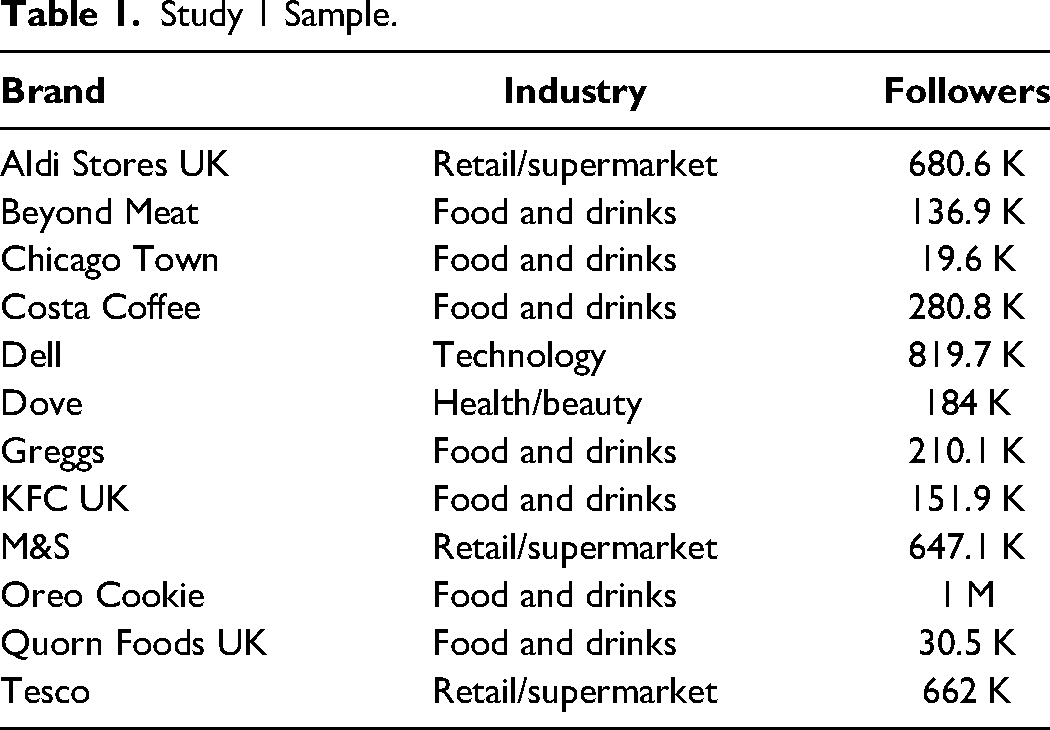
To do this, we first conducted a content analysis in a manner similar to that of Labrecque et al. (2022). This entailed the systematic collection of online textual data encompassing interactions between official social media brand accounts on X (i.e., Br2Br engagement). A research assistant was trained to identify, capture, and collect data regarding the novel phenomenon and unique characteristics of Br2Br engagement (i.e., reciprocity, instantaneity, and low involvement). Following nonprobability sampling (Langer 2018) and prior to data collection, our research assistant spent a month exploring the official X and Facebook accounts of 123 brands from a range of industries and countries of origin. This stage enabled the researchers to gain an understanding of (1) the broader types of interactive behaviors occurring within these pages, and (2) which brands regularly interact with other brands. Twelve official brand accounts on X were selected for inclusion in our final sample because of the presence of Br2Br engagement. To enhance the external validity of our study (Harwood and Garry 2003), we chose brands from a range of key industries, which market research shows are among the top most active on social media (Statista 2022), and with a diverse base of followers, ranging from micro to mega accounts (see Table 1). Our content analysis suggests that the brands typically participating in Br2Br dialogue come from consumer-facing industries that employ diverse content marketing strategies to engage their target audiences (He et al. 2021). These brands typically produce shareable, low-involvement content that resonates strongly with demographics characterized by active social media engagement, such as millennials and Gen Z.
Study 1 Sample.
The data were collected between February and July 2022 until saturation was reached and no new insights emerged. Three hundred seven excerpts (out of approximately 2,200 total brand posts observed) containing an element of Br2Br engagement, ranging from a passive retweet of another brand's post to active and often repeated written posts and comments on other brand accounts, were manually downloaded from X. From these, 74% qualified as Br2Br engagement, consistent with our conceptualization: official social media brand accounts that engage in explicit interactions with other official brand accounts. The final dataset consisted of 226 X excerpts showcasing Br2Br interactions and corresponding engagement metrics (likes and retweets) for each Br2Br engagement excerpt. As a control group, we also collected 194 general B2C posts. To ensure consistency, the selection of B2C posts adhered to the following criteria: (1) posts were exclusively chosen from the brands listed in Table 2, (2) an equal number of posts per brand were randomly selected over a six-month period to ensure balanced representation, and (3) each B2C post was thoroughly examined to verify the absence of any Br2Br engagement, thereby maintaining a strict focus on brand interactions with consumers.
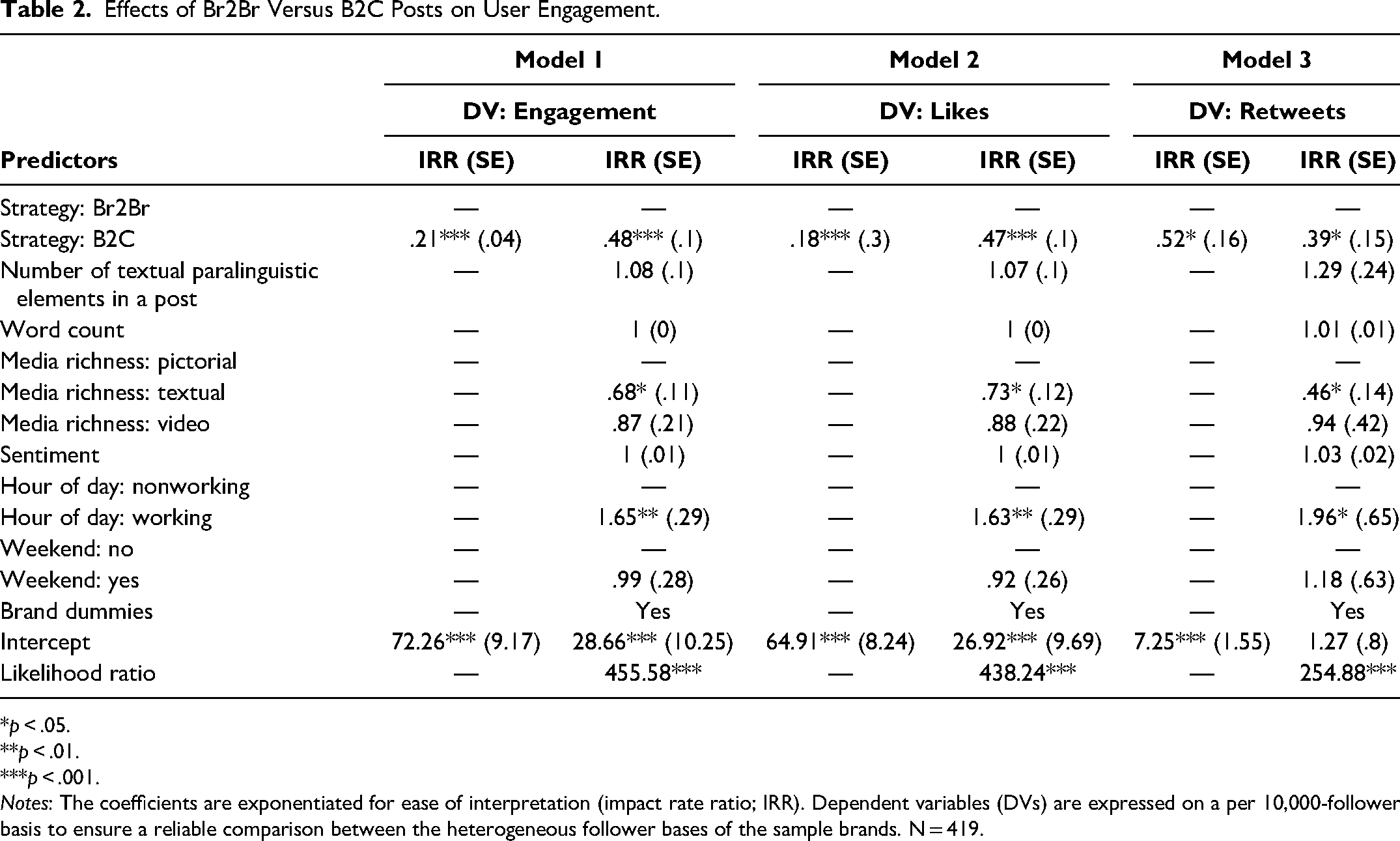
Effects of Br2Br Versus B2C Posts on User Engagement.
*p < .05.
**p < .01.
***p < .001.
Notes: The coefficients are exponentiated for ease of interpretation (impact rate ratio; IRR). Dependent variables (DVs) are expressed on a per 10,000-follower basis to ensure a reliable comparison between the heterogeneous follower bases of the sample brands. N = 419.
We then ran three negative binomial regressions to account for the overdispersion of the dependent variables. The dummy variable “strategy,” indicating whether a brand-generated post includes a Br2Br or a B2C engagement strategy on X, served as the predictor variable in each model. Several control variables suggested by the relevant literature (see Web Appendix Table W4 for the correlations and descriptive statistics of all variables, and Web Appendix Table W5 for definitions and source) were included, namely the number of textual paralinguistic elements in a post (Luangrath, Xu, and Wang 2023), the post's length (word count; Lee, Hosanagar, and Nair 2018), media richness (Shahbaznezhad, Dolan, and Rashidirad 2021), sentiment (Pezzuti and Leonhardt 2023), whether it was posted during working hours or during the weekend (Moran, Muzellec, and Johnson 2020), and, last, the brand publishing the post (Pezzuti and Leonhardt 2023).
As illustrated in Table 2, the models achieved good fit. Results of Model 1 show that that posts using a B2C engagement strategy generated significantly less engagement (impact rate ratio [IRR] = .48; p < .001) compared with those employing a Br2Br strategy, which serves as the reference category. Among the controls, brand-generated posts published during working hours generated more engagement (IRR = 1.65; p = .00), whereas those characterized by a low extent of media richness (text-only posts) generated less engagement than those containing pictures (IRR = .68; p = .02). In addition, the brand posting the message was associated with different levels of engagement (Wald χ2(27) = 25.56; p < .001), whereas the relationships between the number of textual paralinguistic elements in a post (p = .40), word count (p = .71), sentiment (p = .94), weekend (p = .97), and engagement were not significant. Models 2 and 3 also show that posts containing a B2C engagement strategy are on average associated with a lower number of likes (IRR = .47; p = .00) and retweets (IRR = .39; p = .02) than those containing a Br2Br engagement strategy, providing further support for our expectations.
In sum, we posited that B2C communications are more closely aligned with consumer expectations, making them more normative. In comparison, Br2Br communications often deviate from these norms, making them appear more unexpected. Our findings support this notion, showing that in terms of real-life behavioral response, B2C interactions tend to receive lower engagement from users than Br2Br communications.
Study 2: Typology Building
Method
Study 2 further addresses RQ1 as well as RQ2 and builds a typology of Br2Br engagement that specifies (1) its “ideal types,” that is, the theoretical multidimensional abstractions (i.e., the Br2Br engagement strategies) resulting in different levels of the dependent variable; (2) its classificatory dimensions, that is, the unidimensional constructs (i.e., emotional tone and motivation) used to categorize a phenomenon; and (3) the relationship between the “ideal types” and classificatory dimensions (Doty and Glick 1994).
We followed a hybrid approach to thematic analysis whereby the Br2Br engagement dataset collected as part of our qualitative content analysis (Study 1) was inductively analyzed by generating codes based on unique features in the data at both the semantic (surface) and latent (underlying) levels of the data (Braun and Clarke 2006). We then deductively analyzed the dataset by applying theory-driven codes derived from the broader B2C and extant Br2Br engagement literature streams to further substantiate our analysis. Via the process of abduction, the data- and theory-driven codes were then combined to derive our multidimensional abstractions: Br2Br engagement strategies (see Web Appendix Table W6 for the coding sheet). As part of this process, two of the authors independently coded the data and, after resolving any disagreements (first round: Ir = .90), reached a satisfactory intercoder reliability index (second round: Ir = .98). This was calculated using the method of proportional agreement: the proportion of total pairwise agreements between the two coders (Rust and Cooil 1994). The final dataset comprised four first-order Br2Br engagement strategies and eight corresponding second-order dimensions.
Then, drawing from the Br2Br dialogue literature (Web Appendix Table W2) and LET (Afifi and Metts 1998), to frame our typology we applied two relevant classificatory dimensions derived from LIWC. LIWC's dictionaries contain comprehensive lists of words that have been internally and externally validated in reliably assessing the prevalence of psychological constructs in text communications (Pennebaker et al. 2015; Tausczik and Pennebaker 2010) and are widely used to automatically analyze the content of social media textual data (e.g., Kim, Jun, and Kim 2018; Pezzuti, Leonhardt, and Warren 2021; Wakefield and Wakefield 2018). Figure 2 showcases the research procedure for Study 2.
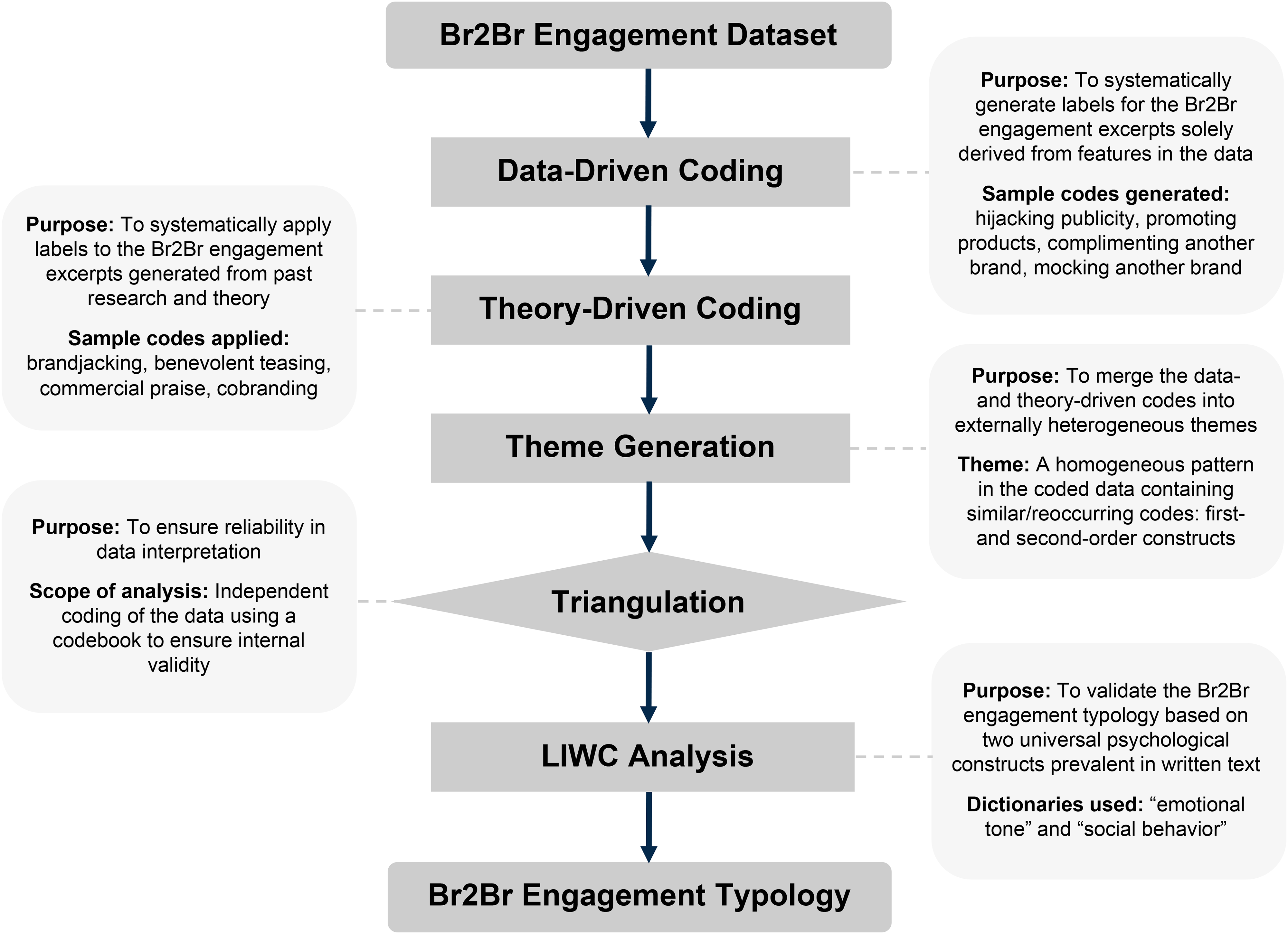
Study 2 Research Procedure.
As the first classificatory dimension, emotional tone was selected because (1) Br2Br engagement initiatives have been found to employ language that ranges from very positive (e.g., the use of humor) to very negative (e.g., the use of aggressiveness; Ning et al. 2022; Saavedra Torres et al. 2024; Thomas and Fowler 2021), and (2) research posits that communication framed by affective and emotional intensity can breach recipients’ language expectancies (Afifi and Metts 1998; Jensen et al. 2013). To measure the emotional tone of Br2Br engagement strategies, the 2,999-word dictionary for “emotional tone,” which represents a composite measure for both positive tone and negative tone dimensions in text, was applied to the data. By employing the “emotional tone” dictionary alongside our qualitative delineation of Br2Br engagement strategies, we further enhanced the granularity of our typology via quantifiable metrics, leveraging universally recognized language indicators of positive versus negative emotional tones (Boyd et al. 2022). Moreover, B2C engagement research has shown that emotional tone is a key driver for subsequent customer behaviors (Aleti et al. 2019; Deng et al. 2021; Kübler, Colicev, and Pauwels 2020). Examples of the most frequently used words in this dictionary include “good,” “love,” “happy,” “hope,” “bad,” “wrong,” “too much,” and “hate.” The higher the number calculated using LIWC, the more positive the tone of the Br2Br engagement strategy (Cohn, Mehl, and Pennebaker 2004).
As the second classificatory dimension, motivation was selected for two reasons. The first is the fundamental principle of reciprocity inherent in Br2Br engagement. Central to this notion is discerning whether the impetus behind initiating or reciprocating dialogue with another brand is predominantly other-oriented, aimed at fostering engagement for all involved brands, or primarily self-oriented, intended to bolster engagement solely for oneself. Second, research confirms that not only the polarity but also the self- versus other-orientation of communication exchanges can breach language expectancies (Barasch et al. 2014; Mangiò et al. 2023). For instance, B2C advertising research has shown that comparable altruistic versus egoistic brand advertising messages influence consumer intentions differently (Baek and Yoon 2022). To measure the motivation underpinning the brand-generated posts, we used the 1,632-word “social behavior” dictionary provided by the LIWC software, which seeks to reflect referents in text ranging from “prosocial” to “conflict” (Penner et al. 2005). “Care,” “say,” “fight,” “attack,” and “thank” are common examples in this dictionary. The higher the value from the LIWC output, the more other-orientated interactive behavior is exhibited in the analyzed text.
Results
From the content analysis, four Br2Br engagement strategies, each containing two subdimensions, were constructed: public relations (PR) hijacking (inviting, topical), praising (product-based, values-based), teasing (dog-eat-dog, benevolent), and spotlighting (unilateral, symbiotic). As illustrated in Table 3 with examples provided, each strategy consists of two dimensions that reflect their nuanced nature and further emphasize their distinguishing features.
Qualitative Content Analysis Findings.
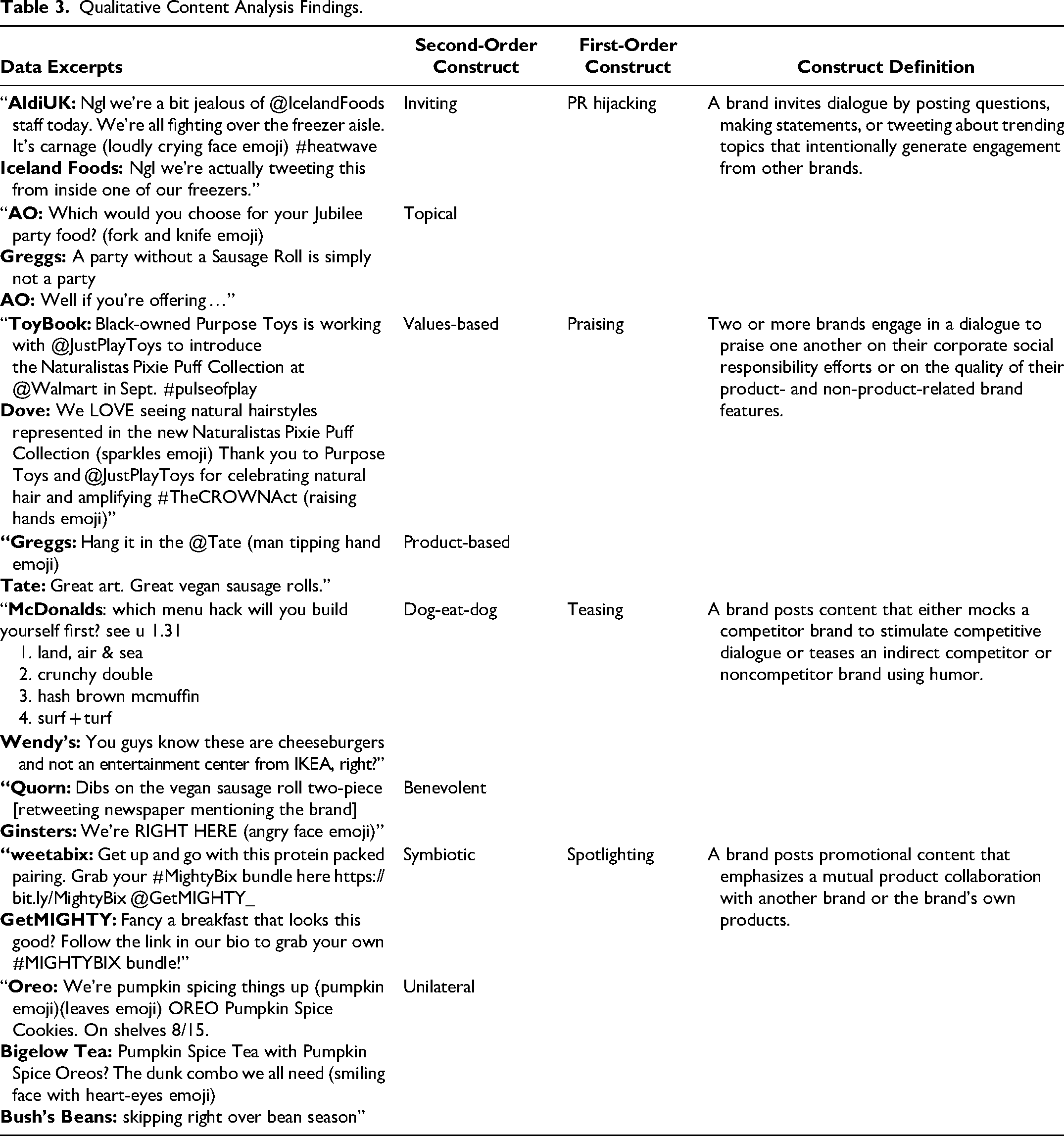
PR hijacking is a strategy whereby a brand posts content that encourages other brands to “hijack” its content and post replies. Other brands can be “invited” to participate by a brand posting explicit questions directed at its customers and/or specific brands or, more implicitly, whereby the brand posts a controversial statement that generates dialogue. PR hijacking can also be “topical,” whereby the brand creates a tweet about a trending topic in the media (e.g., via repurposing Love Island memes), which in turn stimulates Br2Br engagement. The goal of the PR hijacking strategy is to generate buzz or virality by capitalizing on other brands hijacking one's content, often posted in relation to a trending theme or topic. This strategy leverages the collective attention and engagement generated by multiple brands, thereby amplifying the reach and impact of the original content.
Praising is a different Br2Br engagement strategy in which two or more brands interact to compliment a specific brand or each other. This Br2Br engagement strategy can be differentiated based on whether the act of praising is in relation to a brand's corporate social responsibility (CSR) and citizenship values (“values-based”) or in relation to its product-related (e.g., quality) and non-product-related (e.g., reputation) brand features (“product-based”). Praising represents a distinct Br2Br engagement strategy characterized by reciprocal compliments exchanged between two or more brands. This approach fosters genuine interactions in which brands appear to authentically acknowledge and commend each other's products or values, without any underlying personal gain or contractual obligations, thereby emphasizing the sincerity and goodwill behind the engagement.
Teasing involves the mocking of other brands in more aggressive (“dog-eat-dog”) or nonhostile and humorous (“benevolent”) ways. The former entails a brand posting content that makes fun of another brand to stimulate competitive dialogue. In our findings, dog-eat-dog teasing is exclusive to archrival brands such as Aldi and Tesco. The latter is not limited to rival brands and occurs when two or more (indirect or noncompetitor) brands interact to make harmless fun of each other. This strategy capitalizes on audience engagement by fostering further interactions through defending or attacking behaviors, thereby shaping brand perceptions and enhancing visibility in the competitive landscape.
Last, spotlighting is a more conventional and promotion-oriented Br2Br engagement strategy that involves brands commenting on each other's products or CSR posts to increase awareness of these. Spotlighting can be done jointly, whereby the brands interact with one another to promote a mutual collaboration (“symbiotic”), or unilaterally, whereby the brand promotes its own products and other brands engage in a dialogue to acknowledge these. In the context of social media engagement, the spotlighting strategy involves a brand posting promotional content that either highlights a collaborative product effort with another brand or solely focuses on its own products. Unlike the praising strategy, which primarily involves positive compliments toward other brands, spotlighting represents a contractual form of engagement aimed at stimulating consumers’ purchase intentions, particularly through the promotion of a sole or mutual product offering.
To validate our Br2Br engagement typology, we created dummy variables based on the two LIWC dictionary outputs: emotional tone and social behavior. Two Welch's analysis of variance (ANOVA) tests were then performed to compare how emotional tone and social behavior differ across the four Br2Br engagement strategies uncovered in the content analysis (see Figure 3 for illustration of the results).
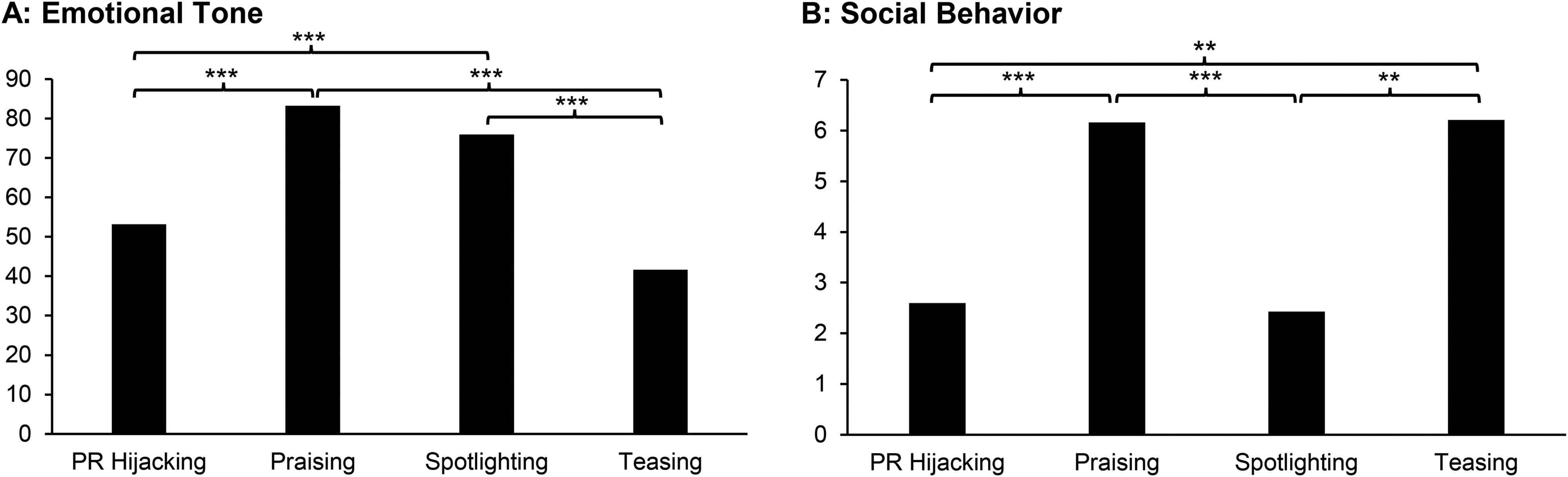
Visual Representation of Significant Differences Across the Four Br2Br Engagement Groups for Emotional Tone and Social Behavior.
The first analysis revealed a significant difference in the emotional tone scores across the Br2Br engagement strategies (Welch's F(3, 54.26) = 13.67, p < .001, ω2 = .05). Tukey's honestly significant difference (HSD) pairwise comparisons indicated that both PR hijacking (M = 53.18, SD = 36.32) and teasing (M = 41.65, SD = 34.01) had significantly different emotional tones compared with praising (M = 83.22, SD = 32.02) and spotlighting (M = 75.96, SD = 25.83; ps < .001). However, no significant differences were found between PR hijacking and teasing, or between praising and spotlighting (ps > .05). These results, combined with the higher mean values of praising and spotlighting and the lower means of teasing and PR hijacking, enable us to categorize praising and spotlighting as positive in tone, while teasing and PR hijacking are categorized as negative.
The second analysis, with social behavior as the dependent variable, also showed significant results (Welch's F(3, 50.32) = 9.92, p < .001, ω2 = .06). Tukey's HSD post hoc tests revealed that PR hijacking (M = 2.60, SD = 3.24) and spotlighting (M = 2.43, SD = 3.02) were significantly different from teasing (M = 6.21, SD = 4.50) and praising (M = 6.16, SD = 4.64; ps < .00). There were no significant differences between PR hijacking and spotlighting, nor between teasing and praising (ps > .05). These results indicate that PR hijacking and spotlighting are more self-oriented in their motivation (i.e., intended to bolster engagement solely for oneself), while praising and teasing are other-oriented (i.e., aimed at fostering engagement for all involved brands, which can be negatively or positively valenced). Figure 4 illustrates our final Br2Br engagement typology based on these results.
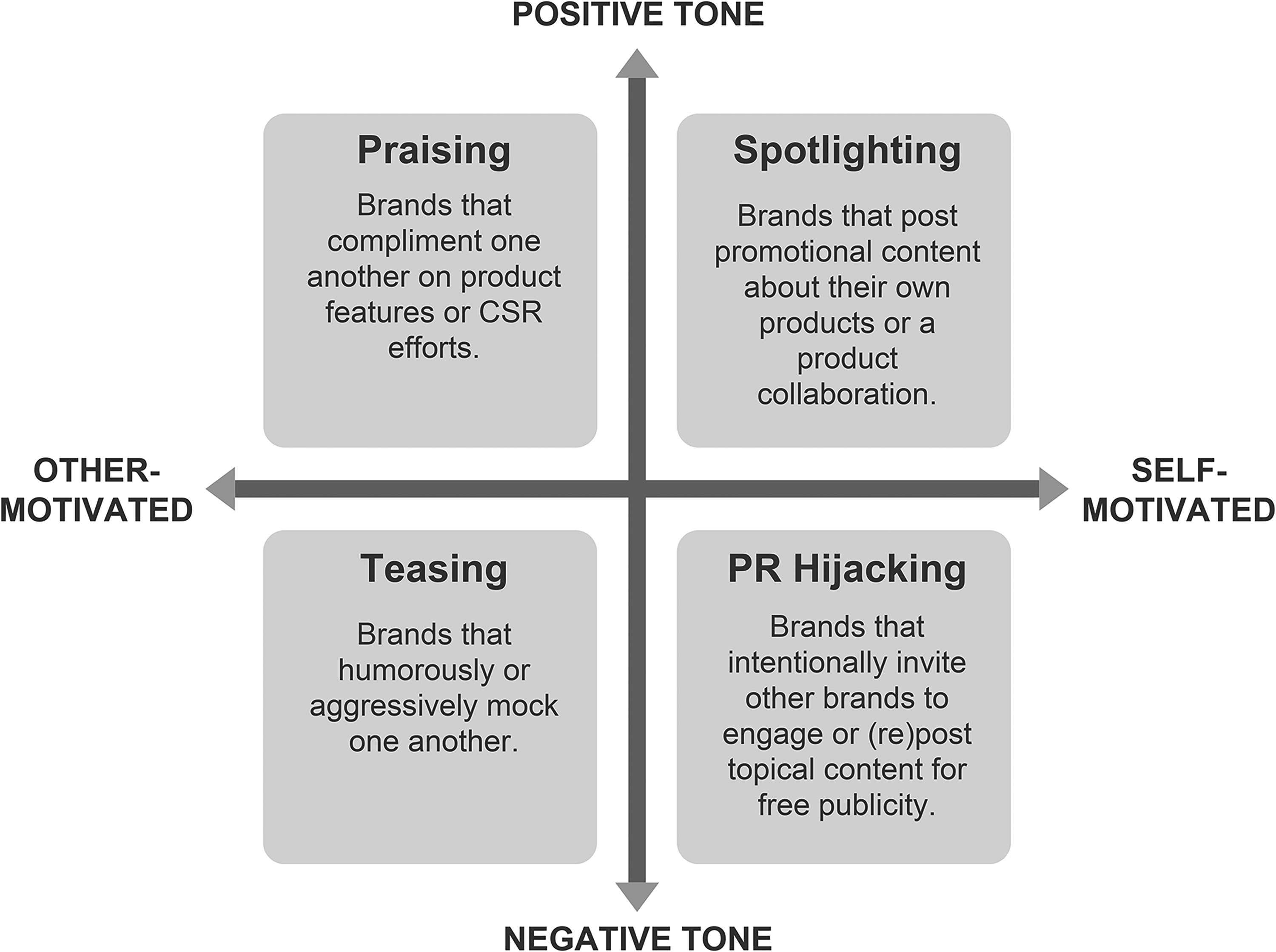
Br2Br Engagement Typology.
Discussion
Our research is the first to provide a holistic typology of nuanced Br2Br engagement strategies that goes beyond B2C engagement and fragmented Br2Br dialogue behaviors on social media. As such, we contribute to the current knowledge on several fronts.
First, our typology shows a general shift away from competitive Br2Br behaviors on social media. With few exceptions (Zhang and Zhang 2024; Zhou, Du, and Cutright 2022), this is contradictory to mainstream research, which has predominantly studied negatively framed Br2Br interactive behaviors online (e.g., brandjacking; Thota 2021; brand rivalry; Ewing, Wagstaff, and Powell 2013). Thus, our findings add to the scarce research on positive Br2Br engagement, showcasing less aggressive strategies including PR hijacking, praising, and spotlighting, some of which are particularly positively framed and/or collaborative. Specifically, we demonstrate a bright side to brandjacking (Thota 2021), which we termed “PR hijacking”: a self-oriented and opportunistic strategy whereby brands engage in dialogue with other brands in response to trending topics in the media. PR hijacking can be further linked to the well-established concept of viral marketing since both reside in a motivation to spread popular content (Kaplan and Haenlein 2011). Where PR hijacking diverges from viral marketing and extends the literature is in its reactivity (brands jump on the bandwagon of sharing/responding to “trending” content), whereas viral marketing relies on proactive (push) techniques, and in its timeliness: PR hijacking spreads instantaneously due to the real-time interactive nature of social media networks, whereas viral marketing often requires time to become widespread (Allagui and Breslow 2016).
Second, with our praising strategy, which entails brands interacting with other brands online more casually to compliment one another, we advance the extant Br2Br praising literature (Zhou, Du, and Cutright 2022). Our findings demonstrate that this phenomenon can occur beyond commercial settings (i.e., praising other brands’ products/services). In our findings, we confirmed that Br2Br praise can also be noncommercial as well, whereby brands engage in a dialogue relating to common social issues to showcase mutual support for these.
Next, we uncovered spotlighting, which is a strategy that showcases brand collaborations on products and can also be linked to past research on traditional cobranding alliances and promotional strategies (e.g., Pinello, Picone, and Mocciaro Li Destri 2022). Our findings on spotlighting extend this stream of research in the context of online communications where brands use their social media accounts to promote collaborative initiatives to generate awareness and engage with one another's audiences in real time, instead of relying on more conventional marketing channels such as TV ads.
Fourth, with our teasing strategy, we advance two scholarly fronts. On the one hand, we extend the brand hijacking literature (Thota 2021), which has predominantly examined the negative Br2Br hijacking behavior that aims to damage the reputation of a target brand. In this study, we show that teasing behaviors can be differentiated on the basis of their intensity: dog-eat-dog versus benevolent, where the former is used to undermine a competitor brand, while the latter is benign and humor-based, thereby complementing existing research into benevolent and malevolent teasing (Béal, Lécuyer, and Guitart 2024). On the other hand, we contribute to the brand rivalry literature and an ongoing debate regarding the competitive behaviors between brands whose products are perceived to be archrivals (Berendt, Uhrich, and Thompson 2018; Ewing, Wagstaff, and Powell 2013). Our results show that such teasing Br2Br interactive behaviors are not limited to archrival brands (except for “dog-eat-dog” teasing) and can occur between indirect competitors and noncompetitors, disguised in humor.
Study 3: Typology Testing
Typologies should exhibit internal consistency within organizations associated with a given phenomenon, and they should also generate distinct outcomes for the target dependent variable(s) that are not predictable during the typology development process (Doty and Glick 1994). Thus, in the final step of our typology development, we investigate how the four overarching Br2Br engagement strategies may differently impact various measures of communication effectiveness. Due to the novelty of our typology, the development of specific hypotheses was not feasible. Therefore, we rely on our supporting theory, LET, whose principles, while not fully explaining the performance of our typology constructs, provide a foundation for developing theoretical expectations (Bajde et al. 2021; Doty and Glick 1994). Our predictions regarding the effectiveness of Br2Br engagement strategies, which we test in the following studies, are as follows.
We expect the Br2Br engagement strategies that are framed by self-interest—spotlighting and PR hijacking—to align with consumers’ expectations because they transparently focus on brand visibility and promotion, which consumers often anticipate from businesses (Kim, Spiller, and Hettche 2015; Mangiò et al. 2023). As a result, these strategies would lead to positive consumer responses since they meet rather than challenge or disrupt what consumers expect from Br2Br interactions. Conversely, Br2Br engagement strategies framed by other-oriented motivations—the teasing and praising strategies—would be more in violation of observing consumers’ expectancies and generate stronger responses compared with nonviolating strategies. More specifically, teasing would be a norm-violating behavior due to its competitive goal-fulfilling nature, compared with other other-oriented brand communications on social media that are typically more cooperative (Guha and Korschun 2024; Mangiò et al. 2023), and thus teasing would negatively violate consumers’ expectancies. Consequently, this strategy would inhibit desired consumer behaviors while triggering undesired ones. In contrast, praising would be a positive violation since Br2Br communication unmotivated by commercial self-interest goals and designed to fulfill noncontractual collaboration is evaluated more positively compared with more conventional B2C communication (Mangiò et al. 2023). This would then generate desired consumer and brand behaviors while inhibiting undesired ones.
Study 3a
Participants
A U.K. sample (n = 145) 3 was purchased from Prolific (Mage = 38 years, range 18–78 years; 51% female, 46.9% male, 2.1% nonbinary; 75.2% White, 10.3% Asian, 9.7% Black, 4.8% mixed/other race). The participants had to meet the following eligibility criteria to take part: general use of social media sites, regular posting activity on X, following/liking brand accounts on social media and naming three, and frequency of visiting these brands’ accounts (i.e., ranging from minimum once a month to daily).
Design and procedure
In this study, we used a one-factor between-subjects design in which the respondents were assigned to one of four scenarios: PR hijacking (n = 37), praising (n = 36), teasing (n = 36), or spotlighting (n = 36), where fictitious brands (Big Fresh, RiseUP Nosh, and Nourish Nook) tweeted replies to each other's posts (see Web Appendix Figure W1 for stimuli). The stimuli were based on our findings from Study 2 and pretested across three industries with 150 social media users to verify that the stimuli were understood as intended. In the PR hijacking condition, respondents viewed a brand posting about a trending topic, “World Food Day,” and other brands replying to this post using a trending hashtag. In the praising condition, a brand tweeted about its charitable cause, while two other brands complimented the cause and the brand's products. In the teasing condition, a brand posted a tweet that was met by comments from other brands making fun of the brand's customer service and products. The spotlighting condition contained the three brands promoting a mutual product collaboration.
Fictious brands created using an AI-powered brand name generator (Looka; https://looka.com/) were chosen for the stimuli to avoid respondents’ existing preconceptions or experiences as far as brand familiarity is concerned (e.g., Ghosh, Sreejesh, and Dwivedi 2021). After viewing the stimuli, the participants answered a manipulation check to assess the realism of the scenario (M = 4.79, SD = .92), and as an attention check we asked participants whether the scenario was about brand or user accounts interacting with one another, following which 21 respondents were removed. LET was then assessed using an adapted scale from Burgoon and Walther (1990) (see Table 4), and the survey ended with demographic questions.
Study 3 Measures: Reliability and Descriptive Statistics.
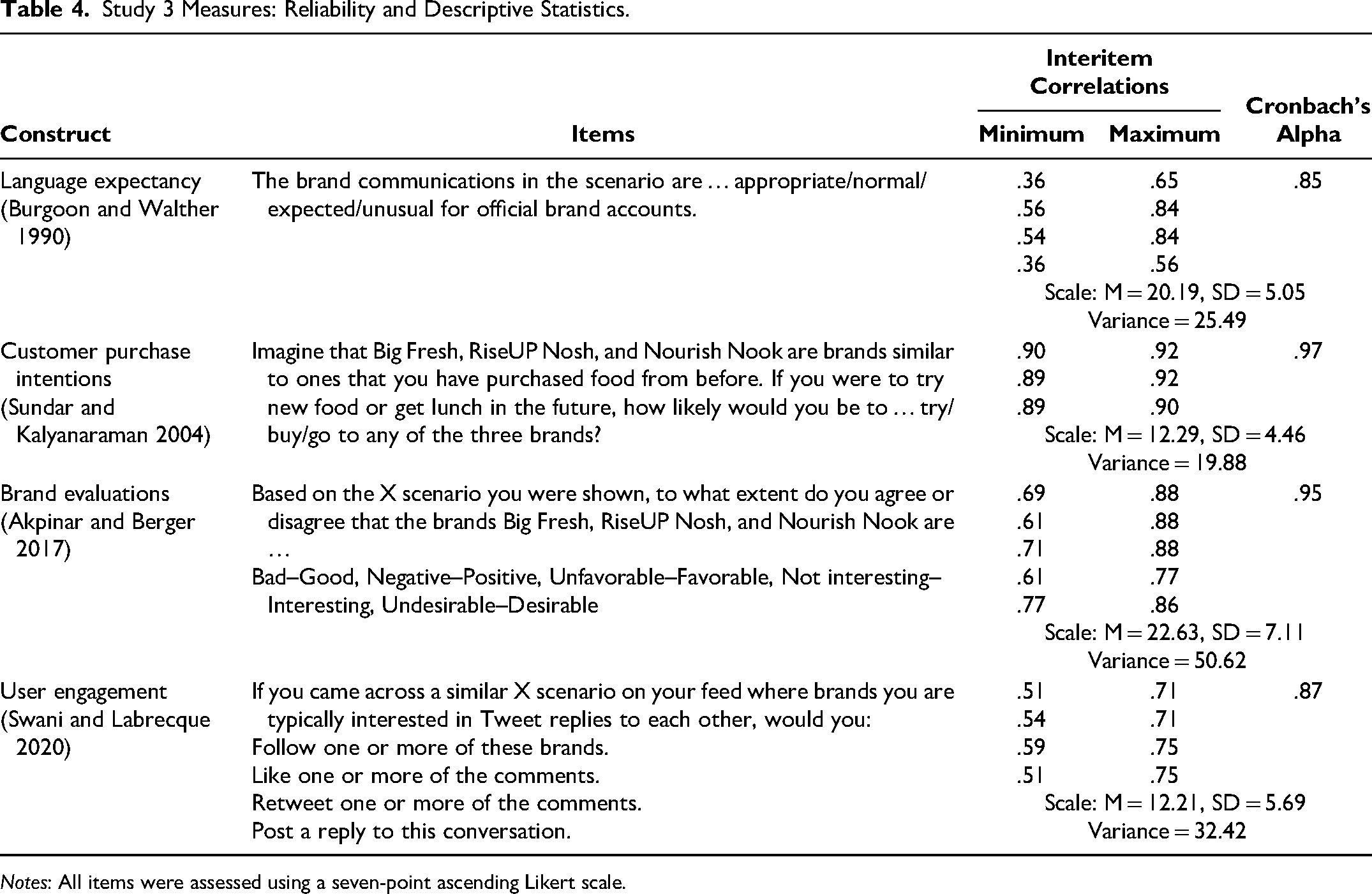
Notes: All items were assessed using a seven-point ascending Likert scale.
Results
A one-way ANOVA was conducted to assess the perceived expectedness of the four Br2Br engagement strategies (see Figure 5). The results were significant (F(3, 141) = 28.45, p < .001). Teasing (M = 3.72, SD = 1.12) was rated as significantly more violating/less expected than the remaining Br2Br engagement strategies: PR hijacking (M = 5.30, SD = 1.17), praising (M = 5.48, SD = .96), and spotlighting (M = 5.67, SD = .70). There were no further significant differences between the remaining strategies (ps > .05).
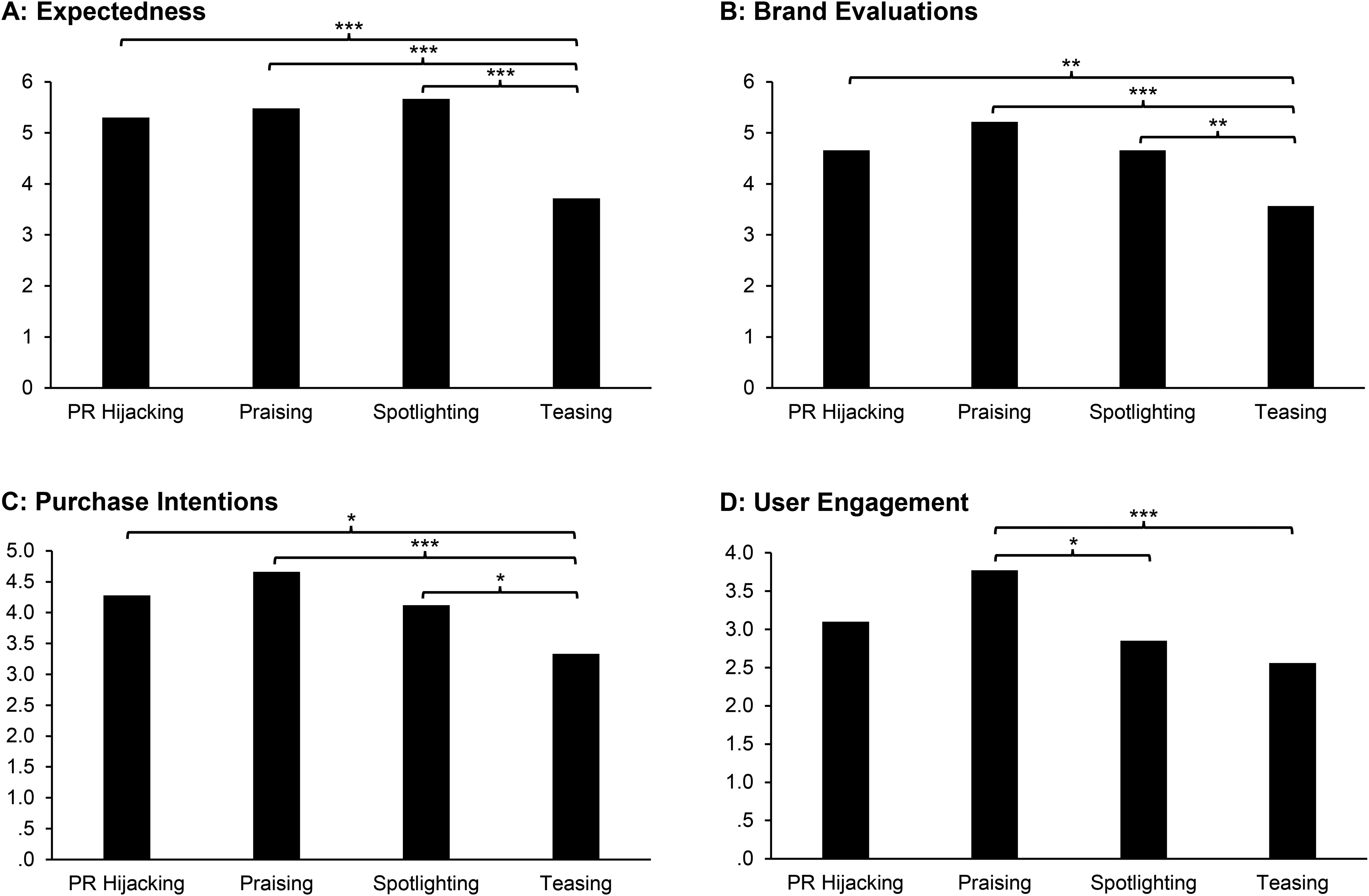
Visual Representation of Significant Differences Across the Four Br2Br Engagement Groups for Perceived Expectedness, Brand Evaluations, Purchase Intentions, and User Engagement.
Study 3b
Participants
A U.K. sample (n = 160) was purchased from Prolific (Mage = 40 years, range 22–72 years; 50.6% female, 49.4% male; 83.1% White, 6.3% Asian, 6.3% Black, 5% mixed/other race, 2% prefer not to say). The same eligibility criteria as in Study 3a were used to recruit participants.
Design and procedure
Akin to Study 3a, the study adopted a one-factor between-subjects experimental design. The participants were given the instruction to imagine that they logged into their X account and on their news feed they saw a very typical/a very unusual scenario, where the typical scenarios were PR hijacking (n = 39), praising (n = 40), and spotlighting (n = 41), while the unusual scenario was teasing (n = 40), as per the findings from Study 3a. The participants then answered a manipulation check to assess the manipulation of perceived expectedness on a seven-point semantic differential scale (1 = “unexpected,” and 7 = “expected”). A one-way ANOVA (F(3, 156) = 5.47, p = .001) indicated that the respondents correctly categorized teasing as mostly unexpected (M = 3.55, SD = 1.89), compared with praising (M = 4.45, SD = 1.58), PR hijacking (M = 4.79, SD = 1.72), and spotlighting (M = 4.95, SD = 1.58), which were classed as mostly expected.
Next, measures assessing brand evaluations (Akpinar and Berger 2017), purchase intentions (Sundar and Kalyanaraman 2004), and user engagement (follow, like, retweet, reply) (Swani and Labrecque 2020) were administered (see Table 4). We were interested in user engagement intentions, given that the primary premise of Br2Br engagement suggests that brands engaging with one another on social media platforms do so to expose themselves to each other's audiences (Zhou, Du, and Cutright 2022). This exposure can elicit diverse reactions from consumers, ranging from a desire to follow the new brands to engaging in commenting behaviors (e.g., Saavedra Torres et al. 2024). Beyond generating awareness and engagement among other brands’ audiences, brands engaging in Br2Br dialogue seek to create favorable brand perceptions and ultimately purchase intentions (Swaminathan et al. 2022), which are two further variables we assess in this study to test our novel Br2Br engagement typology. The survey ended with demographic questions.
Results
We conducted three univariate ANOVAs to assess the effect of the four Br2Br engagement strategies on our three dependent variables: brand evaluations, purchase intentions, and user engagement (see Figure 5). The results of the first analysis assessing the impact of Br2Br engagement on brand evaluations indicated that the model was significant (F(3, 156) = 11.34, p < .001, = .18). Follow-up Tukey's HSD tests revealed that teasing (M = 3.57, SD = 1.54) generated less favorable brand evaluations than praising (M = 5.22, SD = 1.31; p < .001), PR hijacking (M = 4.66, SD = 1.10; p = .00), and spotlighting (M = 4.66, SD = 1.21; p = .00). Our second analysis, with purchase intentions as a dependent variable, was also significant (F(3, 156) = 6.27, p < .001,
Study 3 Discussion
Combined, the findings from Studies 3a and 3b demonstrate that teasing is a Br2Br engagement strategy that is perceived as most unexpected/violating by social media users and generates the least favorable outcomes for the involved brands. Grounded in research on more competitive and aggressive brand tactics, which have been shown to produce diminished effectiveness (Ning et al. 2022; Thomas and Fowler 2021), we offer novel insights via our findings that the teasing Br2Br engagement strategy produces negative brand evaluations and fails to generate purchase or engagement intentions among observing consumers. We argue that this is because consumers expect brands to work together toward common goals (Vredenburg et al. 2020), which, in the context of Br2Br engagement, requires more collaborative and positively framed communication strategies. Moreover, while recent research offers preliminary insight into the favorable use of humor in teasing Br2Br behaviors among competing versus noncompeting brands (Béal, Lécuyer, and Guitart 2024), we show that such behavior remains a violation of consumers’ expectancies regarding how brands should communicate and is undesirable.
In contrast, the Br2Br dialogue strategies of praising, PR hijacking, and spotlighting are effective in generating purchase intentions and fostering positive brand evaluations. These findings align with LET, which posits that positive violations (i.e., exceeding consumer expectations), as well as the fulfillment of consumer expectations (i.e., nonviolations), lead to favorable outcomes (Burgoon, Denning, and Roberts 2002). Additionally, when considering user engagement, praising emerges as particularly effective, especially when compared with spotlighting. This is consistent with LET's prediction that strategies involving expectancy violations produce more pronounced effects than those that merely meet expectations (Averbeck and Miller 2014).
General Discussion
Theoretical Implications
This study develops and tests a novel typology of Br2Br engagement strategies on social media. Thus, we extend prior research on B2C engagement on social media (Dhaoui and Webster 2021; Labrecque 2014; Tyrväinen, Karjaluoto, and Ukpabi 2023) by providing a first inquiry into the diverse Br2Br interactive behaviors occurring on social media and presenting empirical evidence on how these strategies influence participating brands and observing consumers. Specifically, we highlight the shift of brands’ social media communication strategies for consumer engagement from mainstream B2C communications to more focused Br2Br communications. Interestingly, we find that Br2Br engagement strategies tend to elicit higher levels of consumer engagement than B2C posts. These findings highlight the importance of studying multiactor echo systems (i.e., “echoverse”; Hewett et al. 2016) to better grasp the interactional dynamics between different social media actors that shape consumer perceptions and attitudes, which we provide preliminary insights into. More granularly, we contribute to the extant Br2Br engagement literature in three ways.
First, by examining the nature and nuances of various forms of Br2Br engagement, our research advances the theory of Br2Br engagement strategies on social media by providing a holistic typology that considers the interplay between emotional tone and motivation, which collectively have been overlooked in research to date. Prior studies have broadly focused on binary Br2Br communications (e.g., humor vs. aggression; Thomas and Fowler 2021; benign vs. malign humor; Béal, Lécuyer, and Guitart 2024), brand relationships (e.g., competition vs. cooperation; Ramadan 2019; rivalry effect; Berendt et al. 2024), and consumers’ attributes in evaluating the effectiveness of Br2Br dialogue (Saavedra Torres et al. 2024). Here, we advance this research and show that the four overarching Br2Br engagement strategies not only can be multidimensional but also can be distinguished based on their positive versus negative tone and self- versus other-orientation when reciprocating Br2Br engagement.
Second, we demonstrate that praising, PR hijacking, and spotlighting are strategies that consumers expect to be nonviolating or that are nonviolating, while teasing violates consumers’ expectations negatively. Our findings show that praising, PR hijacking, and spotlighting are beneficial for brands, and we speculate that this is because these strategies signal to consumers that brands are not always competitively driven (Zhang and Zhang 2024). In particular, our findings complement conventional and emerging research into Br2Br interactive behaviors (e.g., Allagui and Breslow 2016; Pinello, Picone, and Mocciaro Li Destri 2022; Zhou, Du, and Cutright 2022) and show that these strategies generate purchase intentions and positive favorable brand evaluations. Surprisingly, however, when it comes to user engagement intentions, only praising influences these, while spotlighting is ineffective. We argue that spotlighting fails to generate user engagement because consumers today are increasingly indifferent to traditional ways of brand communication and content marketing (Edelman 2021).
Third, teasing is a negative violation of how consumers expect brands to engage with other brands on social media and, in turn, leads to unfavorable brand valuations and behavioral intentions. We argue that this is because consumers can discern when such Br2Br interactions lack authenticity and fail to convey meaningful interactions (Guèvremont and Grohmann 2016). This is a significant finding as it extends the work of Ning et al. (2022), Saavedra Torres et al. (2024), and Thomas and Fowler (2021) by showing how brands engaging in teasing interactive behaviors can cause harm.
Finally, we contribute to the broader and evolving academic debate on interfirm brand engagement, namely, rivalry and coopetition (Berendt, Uhrich, and Thompson 2018; Brandenburger and Nalebuff 2021). These studies consider how brands and their rivals could involuntarily achieve or not achieve desirable goals such as brand distinctiveness, and we propose to advance this field via the Br2Br engagement strategies studied here, the majority of which we show lead to a win-win situation for all brands involved. We further add to a growing discussion in the nonmarket strategy domain, specifically where brands post public statements on a sociopolitical issue (e.g., Black Lives Matter, LGBTQIA+ rights) on social media platforms (Guha and Korschun 2024; Vredenburg et al. 2020). We advance this debate by demonstrating that brands can engage in more subtle forms of activism by supporting other brands on social issues via the use of value-based praising, which fosters engagement among consumers and favorable brand evaluations. In essence, our findings signify a shift away from traditional competitive Br2Br engagement, offering brands novel ways to connect with their consumers and build relationships in a multistakeholder and interactive digital age.
Managerial Implications
Our research findings highlight important implications for brand managers, marketers, and practitioners in the social media space, which are summarized in Table 5. In the domain of Br2Br engagement, we demonstrate that one size does not fit all and that the mechanisms for effective engagement with other brands on social media are more casual and nuanced than conventional knowledge. Thus, our typology enables marketers to examine the state of Br2Br engagement on social media platforms and advance their practice in accordance. At the core of our typology is the idea that in amplifying a company's online presence, Br2Br interactions are just as important as more conventional and consumer-expected brand promotional messages and communications on social media. This is because our results confirm that casual dialogue between brands in real time can produce beneficial outcomes, such as engagement with the brand's content, purchase intentions, and positive brand evaluations.
Br2Br Engagement Implications for Marketers.
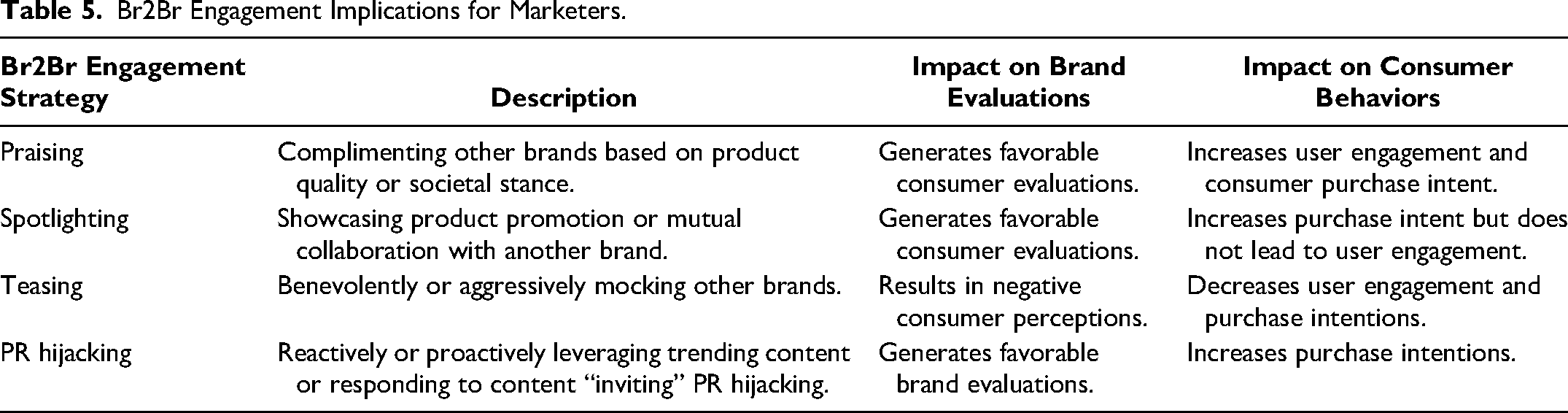
Based on our findings, brands can tailor their Br2Br engagement strategies to meet their communication goals by choosing between positive (praising, spotlighting) and negative (teasing, PR hijacking) tones. The choice depends on whether the focus is on the brand itself or on its competitors. In relation we offer several approaches that brands can use to further refine their social media engagement strategies with a particular focus on conversing with other brands. PR hijacking can be reactive, responding to existing trends, or proactive, by initiating content related to trending topics. Praising can be product-based, highlighting another brand's product quality, or values-based, acknowledging its stance on societal issues. Spotlighting can be unilateral, promoting a brand's own product, or symbiotic, showcasing a collaborative effort. Teasing involves either benign or more confrontational mockery, with the latter often used by competing brands.
Importantly, any of these Br2Br engagement strategies should be adopted with caution because not all generate favorable consumer evaluations of brands or behavioral intentions. Overall, praising, PR hijacking, and spotlighting align with consumer expectations and foster positive brand perceptions and purchase intentions. Spotlighting can reduce customer engagement with Br2Br communications, so it should be used judiciously. Teasing, in contrast, is generally inadvisable as it clashes with consumer expectations and can adversely affect brand perception, purchase intent, and user engagement.
Finally, we recommend that marketers embrace the strategy of engaging in constructive dialogue with other brands on social media, rather than focusing solely on consumer interactions. Currently, Br2Br posts account for 14% of all brand posts on social media, indicating their growing significance and potential for enhancing consumer engagement compared with traditional B2C posts. Although engaging with competitors may seem risky due to the possibility of unintended publicity, our research suggests that it can lead to positive outcomes.
In an era where misinformation is prevalent (Visentin, Pizzi, and Pichierri 2019), our findings support the value of interacting with other brands on social media to increase brand exposure and foster meaningful discussions on both commercial and noncommercial topics. However, brand managers should exercise caution, particularly with playful teasing of competitors, to avoid potential risks to brand reputation and consumer perceptions. A balanced and strategic approach to Br2Br engagement is essential for maximizing benefits while minimizing potential drawbacks.
Conclusion
Our research explores the underresearched phenomenon of Br2Br engagement and, thus, has some limitations that provide opportunities for future research. We provide a novel typology of Br2Br engagement based on field data and measure its impact on consumer evaluations. In doing so, we assessed the effect of the overall typology represented by its four distinct Br2Br engagement strategies, while omitting their underpinning subdimensions. We recommend that future studies investigate each of our Br2Br engagement strategies (PR hijacking, praising, teasing, and spotlighting) independently and their subdimensions to further establish their influence on consumer choice when considering their distinguishing nuances. Moreover, our research assessed customer evaluations for all brands involved in Br2Br interactions. Past research has studied the differential effect of Br2Br dialogue on the initiating versus the receiving brand (Thomas and Fowler 2021; Zhou, Du, and Cutright 2022), and we suggest that future studies further explore how communication dynamics and corresponding outcomes shift when the spotlight is on the initiator versus the recipient in adopting the Br2Br engagement strategies identified here.
The role of the brand in Br2Br engagement is a further promising area of future research. In our research, we deliberately employed fictitious brands to avoid existing consumer preconceptions (Ghosh, Sreejesh, and Dwivedi 2021). However, we posit that investigating Br2Br engagement employed by real brands is a viable research direction because mediating factors such as the brand's personality and consumers’ self–brand connection may further impact the effectiveness of the strategies identified here. Using real brands in future research to test our typology is especially important in clarifying how the boundary conditions—such as direct, indirect, and noncompetitor contexts—impact consumer outcomes in brand interactions. Relatedly, across our two studies, we focused on brands that are representative of the food and drinks category, and we recommend future studies to explore other higher-involvement industries (e.g., fashion, technology) to further validate and generalize the findings from our research.
Additionally, with the exception of one Br2Br engagement strategy (dog-eat-dog), our data came from interactions between indirect competitors and noncompetitor brands. Future studies should establish the effects of the identified Br2Br engagement strategies when archrival brands are concerned. For example, Berendt, Uhrich, and Thompson (2018) find that Br2Br behaviors that entail rivalry may, in fact, generate brand distinctiveness. However, in our study, we find such an approach to be negatively evaluated by observing consumers. Relatedly, researchers should explore the antecedents as well as other mechanisms that drive Br2Br engagement from the brand's perspective by conducting interviews with social media content managers. This approach will help validate our typology and provide deeper insights into the motivations behind the use of various Br2Br engagement tactics.
Finally, in our study, we employed a Western (U.K.) sample to assess the effectiveness of Br2Br engagement on participating brands and observing consumers. We recommend that future studies include a cross-cultural comparison or focus on an Eastern sample because brand communication expectations will likely diverge in different cultures’ assessments of Br2Br engagement content (e.g., Pezzuti, Leonhardt, and Warren 2021).
Supplemental Material
sj-pdf-1-jnm-10.1177_10949968241312173 - Supplemental material for Brand-to-Brand Engagement on Social Media: Typology and Implications
Supplemental material, sj-pdf-1-jnm-10.1177_10949968241312173 for Brand-to-Brand Engagement on Social Media: Typology and Implications by Denitsa Dineva, Zoe Lee, and Federico MangiMangiò in Journal of Interactive Marketing
Footnotes
Acknowledgments
The authors are very thankful to Lauren Green for her resourceful support during the early stages of this project.
Editor
Sonja Gensler
Associate Editor
Steven Bellman
Declaration of Conflicting Interests
The author(s) declared no potential conflicts of interest with respect to the research, authorship, and/or publication of this article.
Funding
The author(s) acknowledge financial support from the Hodge Foundation Public Value fund for the research assistant in Study 1 and seed corn funding from Cardiff Business School, Cardiff University, for participant payments in Study 3 via Prolific.

Notes
References
Supplementary Material
Please find the following supplemental material available below.
For Open Access articles published under a Creative Commons License, all supplemental material carries the same license as the article it is associated with.
For non-Open Access articles published, all supplemental material carries a non-exclusive license, and permission requests for re-use of supplemental material or any part of supplemental material shall be sent directly to the copyright owner as specified in the copyright notice associated with the article.
