




Abstract
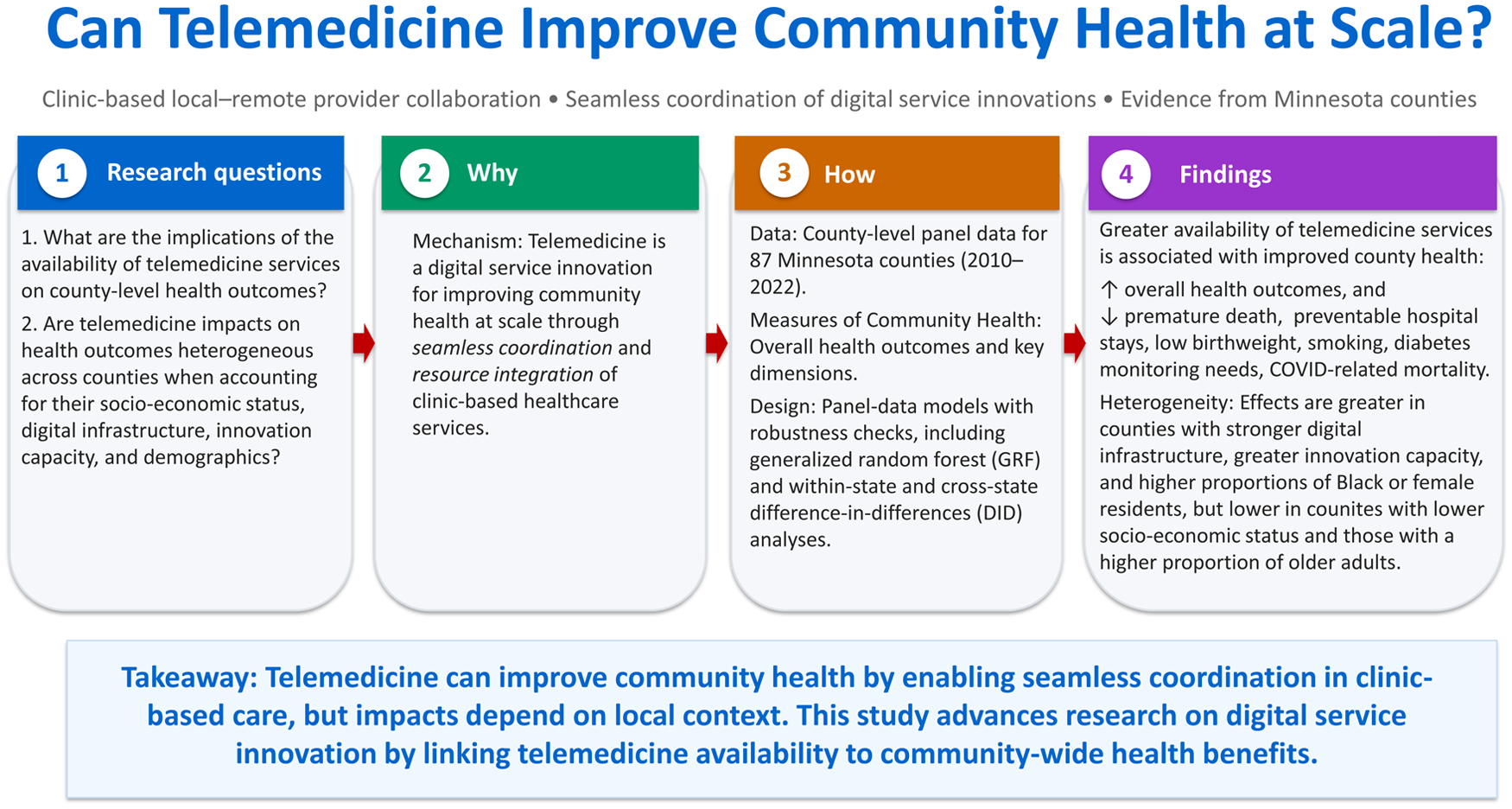
Telemedicine services leverage information and communication technologies toward innovating and enabling the delivery of healthcare. We propose and empirically analyze a framework for understanding the impact of telemedicine services on health outcomes at scale across communities in the United States. Our analysis of county-level panel data reveals that increased availability of telemedicine services improves community health that is central to the well-being of a community. We evaluate the benefits of telemedicine services in aggregate—that is, overall health outcomes—and along specific dimensions of reductions in premature death rate, low birthweight rate, preventable hospital stays, smoking rate, and the need for diabetes monitoring. In addition, we find that greater availability of telemedicine services is associated with decreased COVID-19-related mortality. Heterogeneity analyses further show that lower socioeconomic status reduces the effectiveness of telemedicine services while superior digital infrastructure and greater innovation capacity enhance its effectiveness. Demographics by way of higher proportions of Black and female community members enhance the effectiveness of telemedicine services, whereas a higher proportion of older adults reduces its effectiveness. Taken together, the proposed framework and the findings underscore the potential of telemedicine services to improve community health while recognizing the moderating effects of contextual factors. This study makes a significant contribution toward advancing the literature on seamless coordination of digital service innovations to drive community-wide health benefits.
Keywords
Get full access to this article
View all access options for this article.