




Abstract
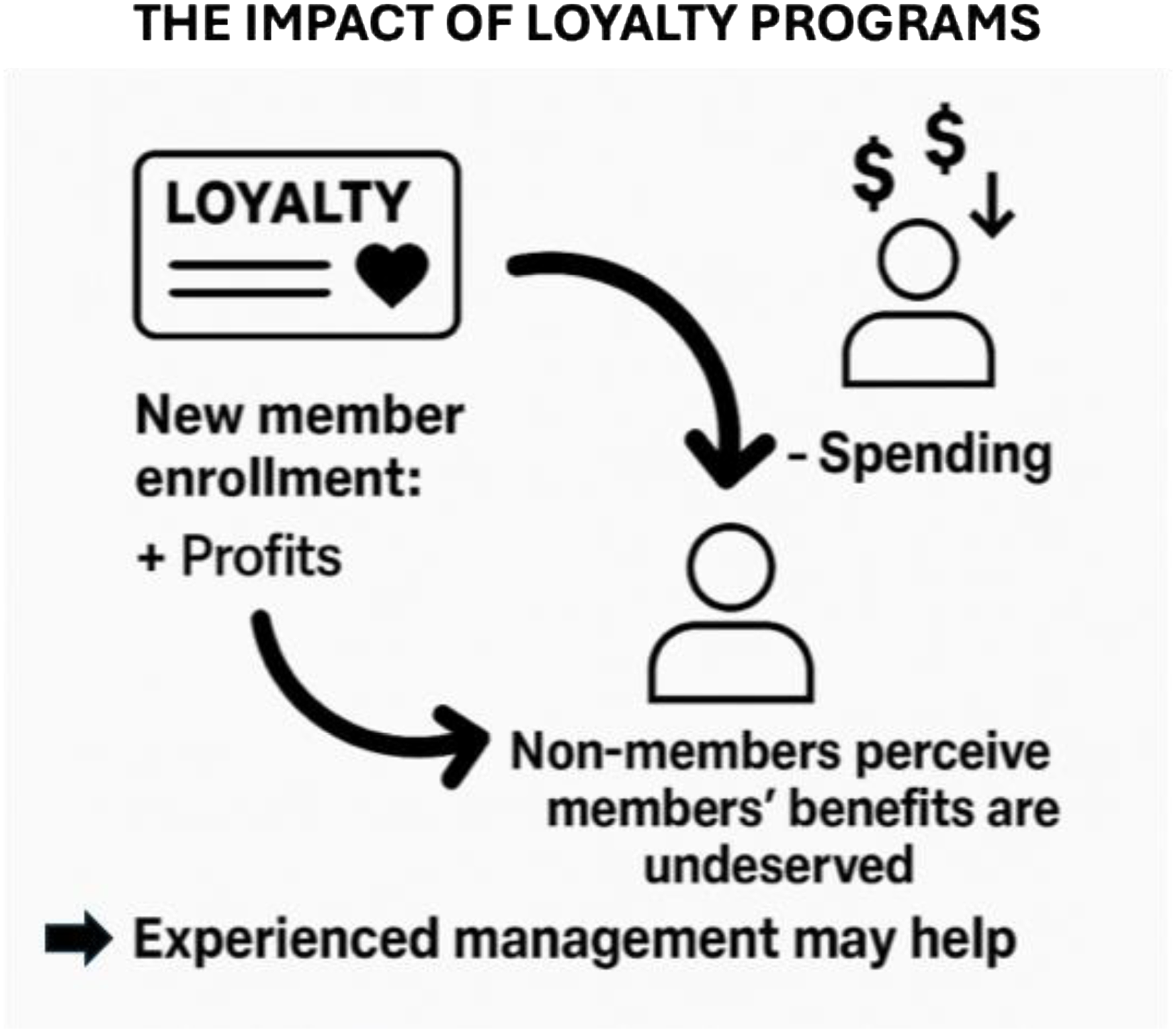
Loyalty programs remain a cornerstone in the relationships between customers and service providers. While most previous research focuses on comparing the effectiveness of loyalty programs by comparing the consumption behaviors of members and non-members, few papers have investigated whether new enrollees are profitable and how such enrollments affect non-members. Results across data from two different firms demonstrate that enrolling new members in a loyalty program can increase profits. However, additional studies provide evidence that increased new member enrollment is associated with decreased non-member spending, with new members seeking more discounts than other customers. We show that non-members may feel that member benefits are undeserved, thus decreasing their own spending. Adopting a service management approach, we argue that non-members should not be neglected as they also form an important asset class. Also, we find that experienced managers and greater clarity about loyalty program rules may mitigate some of the negative effects of higher enrollments. The results suggest that managers of loyalty programs may need to more actively assess the return on investment of established reward members, new enrollees, and even non-members.
Get full access to this article
View all access options for this article.
References
Supplementary Material
Please find the following supplemental material available below.
For Open Access articles published under a Creative Commons License, all supplemental material carries the same license as the article it is associated with.
For non-Open Access articles published, all supplemental material carries a non-exclusive license, and permission requests for re-use of supplemental material or any part of supplemental material shall be sent directly to the copyright owner as specified in the copyright notice associated with the article.
