




Abstract
This research offers insights into the efficacy of gamification in a failure-recovery context, that is, providing recovery through a gamified experience. Using one field study and three online experiments across different contexts (i.e., retail, restaurant, gym, and hotel), we show that a gamified recovery (i.e., compensation offered through a spin-the-wheel game) can have a positive effect on recovery satisfaction. This effect is mediated by the perceived enjoyment of the game and is moderated by customer choice, failure severity, compensation level, and time pressure. Specifically, we find that gamification has a positive recovery effect when customers are offered a choice, when the failure is mild, when customers receive full compensation or overcompensation (i.e., when they experience a sense of winning), and when they do not face time pressure. However, gamification can backfire and have a negative effect when a failure is severe, when customers receive only partial compensation (i.e., when they experience a sense of loss), and when they face time pressure. Finally, a single-paper meta-analysis provides aggregated evidence of these effects. For managers, our findings provide initial evidence of the usefulness of this recovery strategy and explain how it should be implemented.
This is a visual representation of the abstract.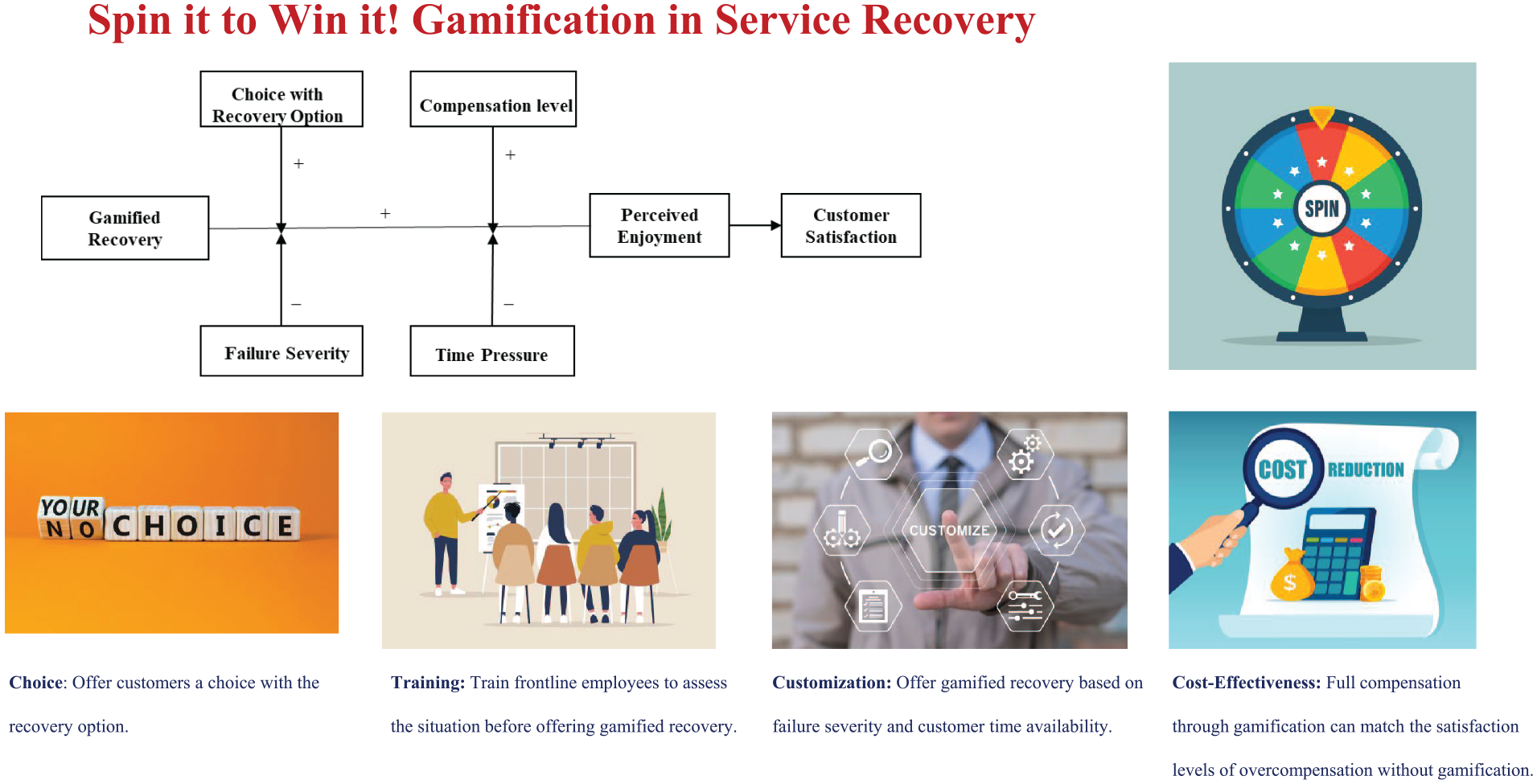
Service failure and recovery (SFR) remains a strategic priority for firms. Customer problems entail an estimated annual risk of $494 billion for U.S. businesses (Ali, El-Manstrly, Ali Abbasi 2023). While effective recovery positively impacts firms’ bottom line in the context of customer performance (Knox and Van Oest 2014), ineffectual recoveries can be detrimental and, for example, lead to hostile complainer actions (Grégoire et al. 2018) and viral failure episodes (Herhausen et al. 2019). As failures and their recovery are central to customers’ experience at large, scholars have searched for novel ways to advance service recovery strategies. One line of thought integrates joyful elements into recovery efforts by leveraging humor (Béal and Grégoire 2022) and precomplaint promotional game settings (Xu and Liu 2024). In addition, scholars have argued in support of innovative technologies (Choi, Mattila, Bolton 2021; Nazifi et al. 2021), particularly gamification which is in line with the notion of integrating joyful elements into the recovery experience.
The market for gamification has been thriving, increasing from $4.9 billion in 2016 to $11.9 billion in 2021 worldwide (Ciuchita et al. 2023). The idea of gamification involves making unpleasant tasks more enjoyable by using mechanisms found in games (Hammedi, Leclercq, and Steils 2024). We refer to a gamified recovery as a game-based firm response that conveys the recovery to complainers. A gamified recovery needs to be delineated from customer participation in recovery. Customer participation in recovery presents a recovery-as-coproduction approach in which complainers bring about recovery by changing the process (e.g., evaluating alternatives), its outcome (e.g., choosing a recovery), or both (Van Vaerenbergh, Hazée, and Costers 2018). A gamified recovery instead presents a recovery-as-cocreation approach, such that it requires solely the engagement of both parties for the recovery (Vargo and Lusch 2008). Cocreation entails favorable gamification effects (e.g., McDonald’s Monopoly game-type promotion increased sales by 5.6%; Chou 2023). However, codestruction often occurs parallel to cocreation, especially in the context of emerging technologies, and can lead to negative customer outcomes (Lumivalo, Tuunanen, and Salo 2023), suggesting adverse gamification effects.
Although gamification has attracted wide scholarly interest, particularly in the service domain (Bauer et al. 2020; Hammedi et al. 2021), it has not yet been studied in SFR settings (Ciuchita et al. 2023). Therefore, we analyze the effects of gamified recovery using the prototypical gamification method of spinning the wheel. Specifically, we examine when a gamified recovery works and when it backfires. For this purpose, we draw on the peak-end rule and investigate the moderating role of recovery (i.e., compensation amount and customer choice; Gelbrich, Gäthke, and Gregoire 2015; Nazifi et al. 2021), situational (i.e., time pressure; Collier, Breazeale, White 2017), and failure characteristics (i.e., failure severity; Grewal, Roggeveen, and Tsiros 2008), which can mitigate or exacerbate a failure incident. We also examine why gamification may or may not work. Building on prior notions of joyful recovery elements, we analyze complainers’ perceived enjoyment of gamification as an explanatory mechanism. Finally, we synthesize the results through a single-paper meta-analysis. This research makes three contributions to the literature.
First, our results show that a gamified (vs. nongamified) recovery has a positive recovery effect when complainers are offered a choice with recovery options, receive full compensation or overcompensation, do not face time pressure, and experience mild failures. However, a gamified approach may backfire when complainers receive partial compensation, face time pressure, and experience severe failures. Gamification can thus enhance recovery efforts under appropriate conditions (Gelbrich, Gäthke, and Gregoire 2015). Our results also provide insight into gamification’s effectiveness for service recovery (Ciuchita et al. 2023; Van Vaerenbergh et al. 2019) and contribute to the nascent literature on innovative recovery approaches (Nazifi et al. 2021) by shifting the focus from outcomes and processes aimed at improving efficiency (with the complainer as a coproducer) to processes aimed at enhancing the customer experience (with the complainer as a cocreator).
Second, our results demonstrate that enjoyment explains when gamified recovery has a positive effect on recovery satisfaction and when it has no effect. This finding, which draws on the positive trend and the recency effect as two key principles of the peak-end rule (Verhoef, Antonides, and De Hoog 2004), supports the claim that gamification shifts complainers’ attention from the negative effects of failure (the peak moment) to other positive elements of the encounter by adding gamified compensation as the final (or a more recent) moment of the experience, thus resulting in enhanced enjoyment and subsequent satisfaction. This finding also indicates the explanatory power of positive processors, contrary to the dominance of negatively valenced process variables in the SFR literature (Khamitov, Grégoire, and Suri 2020). However, a downside of our findings is that enjoyment does not explain why gamification has negative effects under unfavorable conditions. Tests of alternative mediators (e.g., justice, reactance, and customer control) did not explain the moderated mediation effects of enjoyment and thus did not reveal competing mechanisms.
Third, the present study extends the gamification literature. Specifically, prior studies have focused on positive or neutral settings (Ciuchita et al. 2023). We examine gamification effects in a negative setting. The results show that gamification can have desirable effects in such settings as long as the conditions are not excessively negative (i.e., when customers have a choice of recovery, receive full compensation, do not face time pressure, or experience mild failures). Our research also provides a fresh perspective on gamification effects based on the peak-end rule embedded in the customer journey perspective.
Theoretical Background
Service Recovery and Gamification
SFR research provides a broad range of organizational recovery approaches to ensure a fair outcome (e.g., restoring the loss), interaction (e.g., showing empathy), and process (e.g., feedback to the complainer of changes made; Van Vaerenbergh et al. 2019). Recently, research has moved beyond these strategies and examined more innovative approaches, which include unconventional compensation formats (e.g., cryptocurrencies; Nazifi et al. 2021), strategies that alter the human touch, making the recovery more (e.g., handwritten notes; Roschk and Gelbrich 2017) or less personal (e.g., through artificial intelligence; Garvey, Kim, and Duhachek 2023), and complainer-managed recoveries in the context of self-service technologies (Zhu et al. 2013) that address the outcome, interaction, and process of the recovery, respectively, albeit with some degree of overlap. Gamification is distinct from other technology-related recoveries. It presents a procedural approach aimed at enhancing the process (with the complainer as a cocreator). In contrast, self-managed recoveries through technologies represent an externalization of firm activities to the complainer (as a coproducer), which places efficiency gains at the center of attention.
Gamification refers to the use of game mechanisms in nongame contexts to engage customers in activity by providing enjoyable interactions that they typically experience when playing games (Hammedi, Leclercq, and Steils 2024). Scholars have examined the opportunities offered by these strategies in various contexts, such as employee management (Mitchell, Schuster, and Jin 2020) and education (Sailer and Homner 2020). While this literature has asserted that the properties of games generate enjoyment (Bauer et al. 2020), recent studies have highlighted the neutral effects or even drawbacks of gamification. For instance, Hammedi et al. (2021) show that imposing gamification can lead to reactance, making participants either ignore the gamified activity or engage in cheating and sabotage. Similarly, Bauer et al. (2020) suggest that a gamified task that offers significant rewards and weak challenges may prevent customers from enjoying the experience, leading to reduced engagement. The findings also indicate that winning a reward may not add value to the customer’s experience, and losing in the activity (as a result of its inherently risky nature) may have counterproductive effects on the customer experience (Leclercq et al. 2020b).
While prior studies have examined the effects of gamification in contexts associated with positive emotions, such as shopping, sports, or ideation, few studies have investigated the implementation of this strategy in undesirable contexts. As such, whereas gamification may increase the fun associated with already enjoyable activities, the results may differ when consumers face an undesirable situation (Hammedi, Leclerq, and Van Riel 2017). The development of a model to examine the effects of gamification in undesirable contexts, particularly that of service failure, can offer further insights into its contextual dependencies and explanatory mechanisms. It also enables scholars and practitioners to appropriately implement gamification in these contexts. Thus, we examine gamification in service failure settings (see Figure 1, which illustrates our conceptual framework) and draw on the peak-end rule to explain how gamification may positively influence failure events.
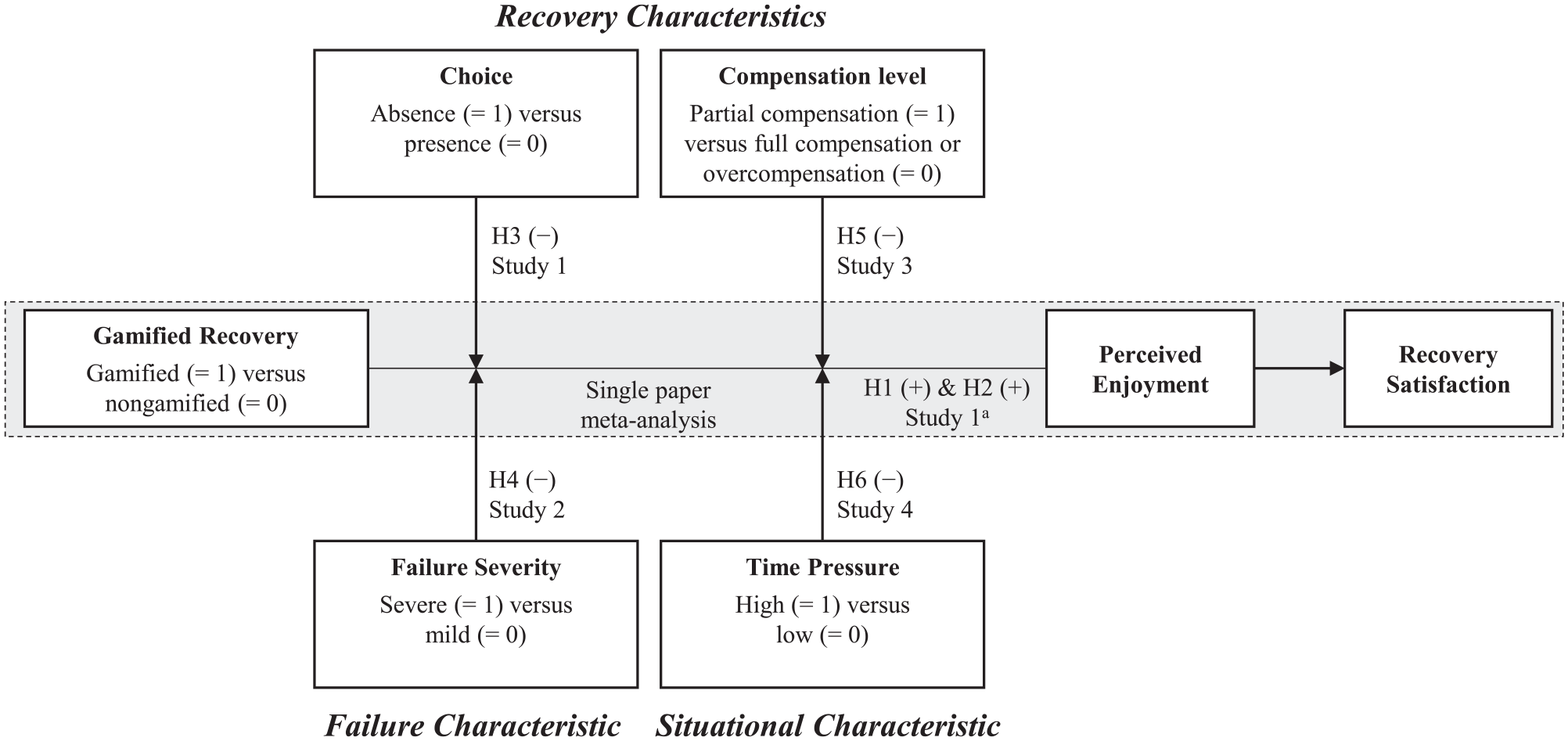
Conceptual model.
Gamified Recovery from the Perspective of the Peak-End Rule and Enjoyment
A service encounter typically entails a series of interconnected positive or negative events that occur at different points in time, and these events can cause satisfaction or distress (Verhoef, Antonides, and De Hoog 2004). Research shows that the utility provided within an encounter can be best captured by the utility of the most extreme event and the final event rather than the average of all events (Ashtar et al. 2024). This is known as the peak-end rule. Based on this principle, people prefer the separation of positive and negative outcomes in a service encounter, and they also value a positive trend or a happy ending. This suggests that the disutility of a negative event can be minimized when followed by an additional positive (or less negative) episode (Loewenstein and Prelec 1993). Namely, an earlier negative experience establishes a more favorable contrast (Ashtar et al. 2024). This is in line with the well-established recency effect showing that the last (or most recent) episode is the most salient and accessible in memory and carries more weight relative to earlier events in shaping people’s satisfaction (Andreassen 2000). The peak-end effect has been shown to apply to a wide range of contexts, such as gambling (Cowley et al. 2015) and medical procedures (Redelmeier, Katz, and Kahneman 2003). It is also particularly appropriate for understanding the potential effect of service recovery strategies (Ashtar et al. 2024). Research suggests that, in an uncomfortable context, such as that of a service failure, adding a period of enjoyment or at least decreased discomfort at a later stage or the end renders the experience in question globally less aversive (Verhoef, Antonides, and De Hoog 2004).
The Effect of Gamification on Recovery Satisfaction
Research from the SFR literature demonstrates that a service failure can lead to negative emotional, attitudinal, and behavioral reactions and that monetary compensation can play a pivotal role in the process of reducing these negative customer reactions (Gelbrich, Gäthke, and Grégoire 2015; Nazifi et al. 2022). In particular, compensation is a key driver of customer satisfaction following service failures (Roschk and Gelbrich 2014). Drawing on the peak-end rule (Loewenstein and Prelec 1993), a service failure is considered a negative peak moment in the encounter that can be improved with a later positive episode through compensation. Prior research shows that gamifying a task can lead to positive customer outcomes, including enhanced engagement and improved satisfaction (Hammedi, Leclercq, and Steils 2024). Accordingly, we expect gamified compensation to generate a higher level of satisfaction than nongamified compensation. We therefore propose the following hypothesis:
The Mediating Effect of Enjoyment
Gamification has been identified as a powerful strategy for generating enjoyment through mechanisms that are commonly associated with games such as point or badge systems and competition (Charry et al. 2024). In contrast to incentive or compensation systems, the effectiveness of gamification relies on the uncertainty associated with obtaining a reward as a result of lotteries, contests, or challenges (Leclercq, Poncin, and Hammedi 2020a). This uncertainty triggers intrinsic motivations that generate enjoyment (Shen, Hsee, and Talloen 2019). Drawing on the peak-end rule (Ashtar et al. 2024), after a service failure (as the peak moment), offering a gamified recovery to customers may position enjoyment as the final (or most recent) moment of the experience. Thus, the overall positive trend and the “recency” effect of gamified recovery ultimately create a sense of a happy ending and enhanced enjoyment, which consequently reduces the detrimental impact of service failure on customer satisfaction. We propose the following hypothesis:
The Moderating Effect of Customer Choice
Several studies have suggested that gamification may backfire in certain contexts, thereby demotivating customers and harming their experience (Hammedi, Leclerq, and Van Riel 2017; Leclercq, Hammedi, and Poncin 2018). One factor that limits the effect of gamification is the violation of the leading property of the game, namely, the freedom to participate (Caillois and Barash 2001). If firms do not seek explicit consent from customers for their participation, they risk situations in which customers perceive gamification as external regulations of their performance, which may lead to stress and reactance (Deci and Ryan 2002). Based on the peak-end rule, the effectiveness of gamified recovery (i.e., the final or more recent moment) with regard to creating an enjoyable experience after a service failure (i.e., the negative peak moment) depends on customers’ sense of voluntary participation. Namely, the imposition of this approach on individuals who are unreceptive to gamification may amplify the disutility of the negative episode as the peak moment, thus exacerbating the negative emotions and dissatisfaction associated with the recovery (Joireman et al. 2013). However, for individuals who are receptive to gamification, this approach can reduce the disutility of the negative episode (i.e., the failure) and thus increase the enjoyment associated with the encounter and enhance the individual’s satisfaction with the recovery. In support of the important role of choice, prior research indicates that choice has a positive effect on recovery satisfaction, especially when customers may not be open to recovery (e.g., compensation in the form of cryptocurrencies; Nazifi et al. 2021). In the context of gamified recovery, which can be viewed as an innovative solution that is unfamiliar to customers, we propose the following hypothesis:
The Moderating Effect of Failure Severity
One key contextual factor that has been extensively studied in the SFR literature is failure severity. Various studies have shown that failure severity weakens the effectiveness of service recovery (Grewal, Roggeveen, and Tsiros 2008; Hess, Ganesan, and Klein 2003) and can increase the negative motives inferred by customers as well as their anger and retaliatory behavior (Joireman et al. 2013). Similarly, the literature on gamification highlights that using gamification may be counterproductive depending on the context. For instance, Hammedi, Leclerq, and Van Riel (2017) show that gamifying healthcare among patients suffering from severe disease may be viewed as a poor approach by the service provider. Drawing on the peak-end rule, the application of gamified recovery after a severe failure may lead to lower benefits than a mild failure because the disutility of a severe failure may be perceived as indicating a more pronounced negative episode (the peak moment) than that of a mild failure; as such, the positive influence of a gamified recovery (the final or more recent moment) would be weakened after a severe failure. Furthermore, severe failures may reduce the perceived enjoyment associated with gamification since this approach may be viewed as inappropriate when the failure is severe because its hedonic element (Ciuchita et al. 2023) may not be suitable for the gravity of the situation, and the corresponding uncertainty of the outcome (Hammedi, Leclercq, and Steils 2024) may reduce the perceived enjoyment and subsequent satisfaction associated with the encounter or even further aggravate customers. We propose the following hypothesis:
The Moderating Effect of Compensation Level
Prior research highlights that the amount of compensation should match the magnitude of the failure (Nazifi, El-Manstrly, and Gelbrich 2020), a notion rooted in the well-established resource exchange principles governing failure-recovery situations (Roschk and Gelbrich 2017). Following service failures, customers develop expectations based on the type and severity of the failure (Nazifi et al. 2022) and use this expectation as a baseline to compare the amount of compensation to determine whether this has been met with full compensation, exceeded through overcompensation (thus creating a sense of winning), or fell short with partial compensation (thus creating a sense of losing). As a result, if the compensation exhibits a mismatch with the severity of the service failure, it will not lead to a successful recovery (Nazifi, El-Manstrly, and Gelbrich 2020). Similarly, the offered reward has also been identified as a pivotal lever in gamified services (Hammedi, Leclercq, and Steils 2024), in which context gamification creates uncertainty regarding obtaining rewards and thus instills a sense of winning or losing.
In the case of partial compensation through a gamified recovery, a combination of the initial uncertainty associated with the game-like activity and the sense of loss that represents the final moment of the experience may damage the customer’s overall enjoyment of the process and subsequent satisfaction. In that case, gamifying the recovery process becomes counterproductive because the final or more recent moment (gamified recovery) does not compensate for the negative impact of the peak moment (service failure) due to the emergence of a sense of loss. Based on the peak-end rule, partial compensation, as a subpar outcome, does not constitute a happy ending, thus resulting in reduced enjoyment and subsequent satisfaction. Conversely, in cases of full compensation or overcompensation, the combination of the uncertainty introduced by gamified recovery and the creation of a sense of winning is in line with a positive trend or a happy ending according to the peak-end rule, thus enhancing the customer’s perceived enjoyment and subsequent satisfaction (i.e., the final moment; Shen et al. 2019). We propose the following hypothesis:
The Moderating Effect of Time Pressure
The extant marketing literature has revealed that time pressure can play a key role in influencing human judgments and decision-making (Dhar and Nowlis 1999). According to the type of information that customers consider in urgent contexts, time pressure may have adverse effects (Thomas, Esper, and Stank 2010). Research suggests that time pressure causes customers to overestimate negative events more strongly (a phenomenon known as negativity bias) because it facilitates biases that cause negative events to be outweighed (Yang and Unnava 2016). Accordingly, whereas under normal circumstances, the disutility of a service failure (i.e., the peak moment) can be reduced through a gamified recovery (i.e., the final or more recent moment), thus leading to enhanced enjoyment and increased satisfaction with regard to the encounter, under conditions of time pressure, customers tend to overestimate the adversity of the service failure, which may disrupt the enjoyment generated by the gamified recovery. Thus, in individuals’ minds, the negative peak moment becomes more pronounced, and the positive final moment may become less pronounced. We propose the following hypothesis:
Overview of Studies
In this research, we examine the effect of gamified (vs. nongamified) recovery in service failure contexts and investigate various factors that can enhance or mitigate its effectiveness. To test our hypotheses, we conducted four studies using a combination of field and online experiments. In all these studies, we operationalized gamification through a lottery mechanism based on spinning a wheel. While a wide range of gamification mechanisms have been developed, recent research highlights that gamification’s effectiveness is rooted in its ability to generate uncertainty (Leclercq, Poncin, and Hammedi 2020a). All operationalizations of gamification, such as contests, badge systems, and leaderboards, entail uncertainty. However, most of these operationalizations are also related to performance tracking and control, which are not directly linked to gamification but are frequently used as a lever for behaviors. In contrast, lotteries exclusively rely on uncertainty. Accordingly, across our studies, we operationalize gamification through one type of lottery and choose the spin-the-wheel approach because it maximizes the sense of uncertainty. Using this gamification mechanism also allows us to control any effects induced by the (perceived) likelihood of winning, as documented in prior studies (Hammedi, Leclercq, and Steils 2024).
In Study 1, we conducted a field experiment to provide evidence for the effect of gamified recovery (H1) through increased enjoyment in a real setting (H2) and to examine whether the absence (vs. presence) of a choice in this context weakens the corresponding recovery effect (H3). Studies 2, 3, and 4 examine the moderating effects of failure severity (H4), compensation level (H5), and time pressure (H6), respectively. All studies were conducted in different contexts, including retail (Study 1), restaurant (Study 2), gym (Study 3), and hotel (Study 4), to increase the generalizability of our results. We finally report a meta-analysis that provides aggregated evidence across individual studies.
Study 1: Choice
Methods
Design
This study examined the effectiveness of gamified compensation in a real-life setting in which customers experience a service failure. We also considered whether the gamified compensation was optional or imposed. Therefore, we employed a 2 (compensation type: nongamified vs. gamified) by 2 (choice: present vs. absent) between-subjects design. The field setting focused on a French fast-moving consumer goods (FMCG) retailer. Retailing represents a relatively underresearched consumption setting in the failure-recovery context and thus demands further research (Khamitov, Grégoire, and Suri 2020).
The customers in a queue at the after-sale service desk were approached by research assistants. We presented this interaction as an attempt to reduce the time spent in the queue by treating their service failure alternatively. Before inviting respondents to participate in our study, we ensured that they were facing a failure by asking them to indicate why they were in the queue. The reported failures ranged from the pricing of items to the delivery of expired products. In the absence of a choice, respondents were assigned to one compensation type (nongamified vs. gamified). In the presence of a choice, they could choose between these two compensation types, and customers were allocated to the compensation type based on their choice, which exhibited an approximately even split (nongamified: 52.0%, gamified: 48.0%). In the gamified condition, customers were invited to spin a wheel on a tablet. They were told that they could win a 20 Euro coupon, a 5 Euro coupon, or no coupon to spend on their next visit. The coupons were randomly distributed, and the wheel was programmed to yield an average compensation of 5 Euros (see Figure 2 for a sample of the wheels).
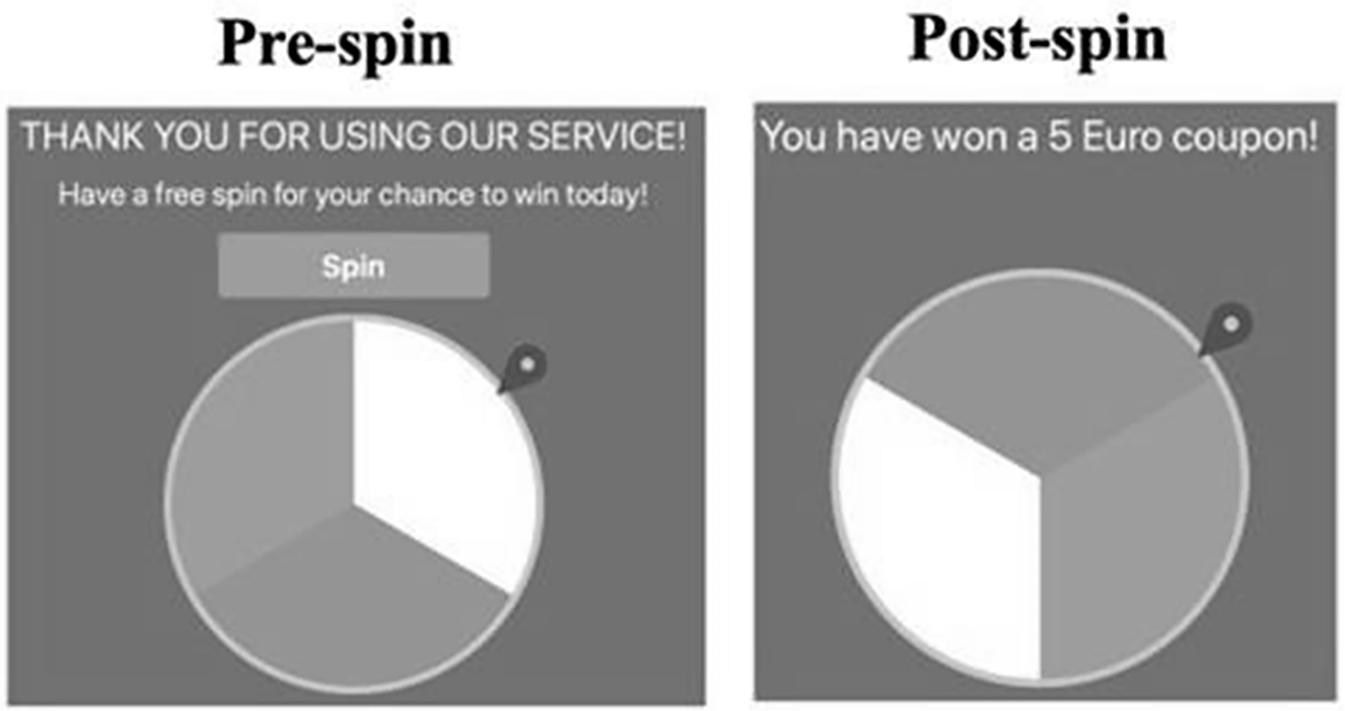
Sample wheels.
In the nongamified condition, participants received a fixed coupon for 5 Euros to spend on their next visit. This amount was defined to ensure equivalent compensation across the conditions. Neither the customers were informed of the compensation they would receive before completing the questionnaire nor what other customers had received.
Data Collection
Customers at the FMCG retailer were recruited in the winter of 2022. An attention check was included by asking the respondents to select the retailer brand that they were currently visiting. Six respondents who failed the attention check were excluded from the analysis. The sample size was determined through a power analysis conducted through G*Power (α = .05, power = .80). We expected an effect size of f = 0.20 for the interaction between gamification and choice on playfulness, which lies between the small (f = 0.10) and medium (f = 0.25) conventions (Cohen 1988). The power analysis indicated a minimum required sample of 199. Supplemental Appendix Table A6 provides the full details regarding the sample size calculations for this study and subsequent studies. Our final sample consisted of 227 valid questionnaires (MAge = 41.15, SD = 14.34; Female = 61%). Customers accessed the survey before receiving the rewards to avoid any resulting biases.
Measures
The questionnaire included measures of satisfaction, playfulness as a dimension of perceived enjoyment, blame attributions, service failure severity, and procedural justice. Unless otherwise specified, all constructs were captured using established scales that were scored on 7-point Likert-type scales ranging from 1 (“strongly disagree”) to 7 (“strongly agree”). The participants responded to three items pertaining to satisfaction (e.g., I was satisfied with the handling of my complaint; α = .97) adapted from Roschk and Gelbrich (2017). The respondents further reported the playfulness of the resolution through four items (e.g., The way the company provided compensation was playful; α = .96) amended from Hwang and Choi (2020). Playfulness has been identified as an important dimension of the enjoyment generated by gamified settings (Leclercq, Poncin, and Hammedi 2020a) and thus is used as a proxy for perceived enjoyment in the field study. Blame attribution and failure severity were measured as control variables because they have been shown to influence recovery satisfaction (Gelbrich, Gäthke, and Grégoire 2016). Blame attribution was reported based on one item (i.e., the service failure that I encountered was entirely the service provider’s fault) from Gelbrich, Gäthke, and Grégoire (2015). Failure severity was assessed using a single bipolar item, which was scored on a seven-point scale ranging from 1 (minor problem) to 7 (major problem) from Maxham III and Netemeyer (2002). A measure of procedural justice was included because of the experimental setting. Indeed, participants recruited in the waiting queue were aware that they would experience alternative treatment for their service failure compared to other clients. Procedural justice was measured via a two-item scale (e.g., I believe the store has fair guidelines to handle problems) adapted from Roschk and Gelbrich (2017). Finally, we collected the respondents’ sociodemographic information. Supplemental Appendix provides a list of all measurement items (Supplemental Appendix Table A1) and correlational matrices for the tested variables (Supplemental Appendix Table A2) across the studies.
Results
Propensity Score Matching
We used the propensity score matching procedure (Fröberg, Kolesova, and Rosengren 2024) to alleviate the potential self-selection bias induced by respondents’ choice of the gamified or nongamified recovery. This procedure aims to create groups revealing similar characteristics regarding the covariates across conditions. Therefore, we performed a 1:1 nearest neighbor propensity score matching without replacement with a propensity score estimated using logistic regression of the gamification treatment on the covariates—perceived service severity, blame, and procedural justice. The function caliper was activated at the level of 0.20 of the standard deviation of the propensity score. After matching, all standardized mean differences for the covariates were less than 0.10, thus indicating adequate balance. A total of 166 responses showed a match across conditions and were used for hypothesis testing. Although the sample size was below our target, it should provide reasonable power at p < .10 and was thus used for hypothesis testing.
Main and Interaction Effects
Two analyses of covariance (ANCOVAs) featuring compensation type (gamified vs. nongamified recovery) and choice (choice vs. no choice) as the independent variables and satisfaction and playfulness as the dependent variables were conducted; these analyses included failure severity, blame attribution, and procedural justice as control variables. Regarding satisfaction, the results indicated a marginally significant main effect of choice (MChoice/NoChoice = 3.94/3.71, SE = 0.08/0.09, F(1, 159) = 3.50, p = .063, d = 0.15) and a nonsignificant effect of compensation type (MGamified/Nongamified = 3.82/3.83, SE = 0.08/0.08, F(1, 159) = 0.25, p = .874, d = −0.01). Importantly, we observed a marginally significant choice × compensation type interaction (F[1, 159] = 3.38, p = .068, d = 0.15), although, pairwise comparisons revealed no significant difference in satisfaction between compensation types in the condition in which it was imposed (MGamified/Nongamified = 3.59/3.82, SE = 0.17/0.17, p = .14, d = −0.16) and the condition in which it was not (MGamified/Nongamified = 4.04/3.85, SE = 0.15/0.15, p = .22, d = 0.13). The interaction is illustrated in Figure 3 (Panel A).
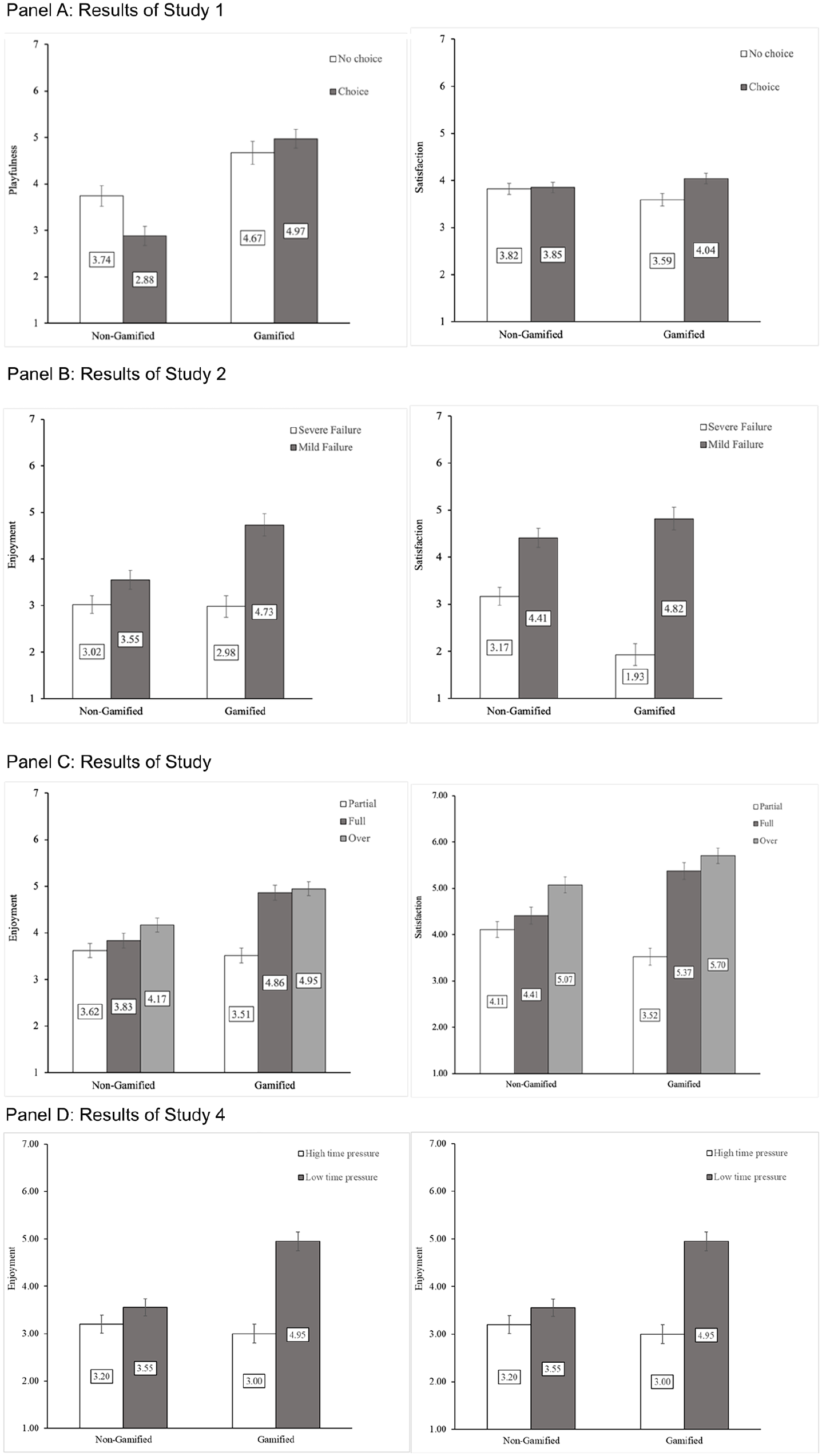
Study results.
With regard to playfulness, the type of compensation had a significant main effect (MGamified/Nongamified = 4.82/3.31, SE = 0.15/0.15, F(1, 159) = 46.13, p < .001, d = 0.54), while the choice did not (MChoice/NoChoice = 3.93/4.21, SE = 0.17/0.15, F(1, 159) = 1.30, p = .26, d = 0.11). We found a significant interaction between these factors (F[1, 159] = 7.49, p = .007, d = 0.22). 1 Pairwise comparisons showed that in the choice condition, greater playfulness was felt with gamified compensation than with nongamified compensation (MGamified/Nongamified = 4.97/2.88, SE = 0.21/0.20, p < .001, d = 1.31) and to a lesser degree in the no-choice condition (MGamified/Nongamified = 4.67/3.74, SE = 0.25/0.22, p = .047, d = 0.66). 2
Mediated Effect
We first tested the indirect effect of gamification on satisfaction. The mediation analysis was conducted using Hayes and Preacher (2014) Model 4. Compensation type (gamified vs. nongamified recovery) was integrated as the independent variable, playfulness as the mediator, satisfaction as the dependent variable and blame, failure severity, procedural justice, and choice as covariates. The results revealed a significant positive indirect effect (b = .16, SE = 0.06, 95% CI [0.04, 0.29]) and no significant direct effect, suggesting that gamified recovery leads to greater satisfaction by increasing enjoyment.
Moderated Mediation Effects
We tested the effects of gamified compensation (as the independent variable) on satisfaction (as the dependent variable) contingent on choice (as the moderator), which was explained through playfulness (as the mediator). Therefore, we conducted moderated mediation analyses using PROCESS Model 8 at the 95% confidence level and 5,000 bootstraps. Blame, failure severity, and procedural justice were included as control variables. A significant index of moderated mediation was also found (b = .10, SE = 0.06, 95% CI [0.01, 0.25]). The conditional indirect effects indicated that offering customers a choice regarding service recovery increased the effect of gamified compensation on satisfaction through playfulness (b = .19, SE = 0.08, 95% CI [0.02, 0.35]) compared to when no choice was offered (b = .08, SE = 0.05, 95% CI [0.01, 0.18]). No significant direct effect of gamified recovery on satisfaction was found at any level of the moderator (bno_choice = −0.31, SE = 0.18, 95% CI [−0.65, −0.04]; bchoice = −0.00, SE = 0.17, 95% CI [−0.34, 0.34]). Supplemental Appendix Table A3(a) shows the results of moderated mediation analyses.
Discussion
The study showed that gamified recovery represents a promising method for increasing satisfaction after a failure in a field setting. Specifically, the findings reveal that while gamified (vs. nongamified) recovery does not directly affect satisfaction (i.e., H1 was not supported), it does increase satisfaction indirectly via the playfulness of the recovery, which is consistent with H2 and in line with the results of prior research (Hwang and Choi 2020). Moreover, the results highlight the importance of offering customers a choice of compensation type since such a choice has positive effects on gamified recovery by increasing the playfulness of the recovery, consistent with H3. These findings indicate that imposing gamification may reduce its benefits to participants, as suggested by Hammedi et al. (2021), in the context of employee management.
This study provides initial insights into the efficiency of gamified recovery based on the identification of playfulness, a dimension of enjoyment, as the mediator. While this dimension directly refers to the act of playing, gamification may trigger other dimensions of enjoyment. Additionally, the failures exhibited mild severity (M = 4.29) in the context we explored. To address these limitations, in the following study, we examine failure severity as a boundary condition and use enjoyment as a more holistic measure than playfulness as a mediator. We also test rival mechanisms, including justice, exhilaration, reassurance, reactance, blame, and customer control. Perceived justice, customer control, and blame are shown to influence customers’ affective and behavioral reactions to SFR (Gelbrich, Gäthke, and Grégoire 2016; Guo et al. 2016). The exhilaration was measured because games are known to be exhilarating, especially when value is obtained by winning (Kim and Werbach 2016). Reassurance was recorded because customers might perceive gamification as a lack of consideration by the firm. Finally, reactance was included because imposing gamification may generate reactance and lead to negative outcomes (Hammedi et al. 2021).
Study 2: Failure Severity
Methods
Design
This study examined the effects of gamified compensation on satisfaction (H1) and the mediating effects of enjoyment (H2) when service failures are perceived to be more severe (H4). A 2 (compensation type: gamified vs. nongamified) by 2 (failure severity: mild vs. severe) between-subjects design was employed. We used a restaurant setting to ensure that we could observe the effects of gamification in a setting with which most customers are familiar (Roschk and Gelbrich 2017). Gamified compensation was operationalized using the spin-the-wheel game, as in Study 1.
Participants were presented with a scenario adapted from Grégoire et al. (2018), imagining dining at a French restaurant (see Supplemental Appendix Table A4 for the detailed scenarios of all studies). Under mild failure conditions, the couple was greeted by a waiter and ordered drinks. A mistake was made regarding the drinks, which were quickly rectified. There was a 30-minute wait for the food. Although it was not of high quality, they were hungry and decided to eat. In severe failure conditions, the couple waited 15 minutes to be greeted by a waiter, and the mistake with the drink order took 15 minutes to rectify. The wait for the food was nearly 60 minutes. When the food arrived, it was cold, overcooked, and overly salty, but since they were hungry, they decided to eat. Before paying, participants in the gamified condition received an apology and an opportunity to “spin the wheel” to receive some discount. Here, an animated wheel was spun, resulting in 20% being taken off their bill. The wheel was blank to avoid any anchoring effects (see Supplemental Appendix A5 for details).
In the nongamified conditions, respondents received an apology and a 20% discount. The scenario depicted a situation in which the diners ultimately accepted a service failure. Failures are commonly accepted, a phenomenon that is associated with increased uncertainty in terms of the compensation amount since the service has been (partly) consumed (Gelbrich, Gäthke, and Grégoire 2015). This circumstance is suitable for gamified compensation because no strong recovery expectations are involved.
Data Collection
A sample of 239 adults residing in the United States were recruited in the winter of 2023 via Prolific, a panel platform that is commonly used in service research (Béal and Grégoire 2022; Hammedi, Leclercq, and Steils 2024). An attention check (“How much compensation were you offered?”) was included to ensure that the respondents actually spun the wheel. Additionally, two instruction checks (i.e., “Please click on ‘disagree’ for this question” and “Please click on ‘Always’ for this question”) were included. Respondents who did not pass these checks were excluded from the survey (n = 40). Our final sample included 199 participants (MAge = 42.26, SD = 14.98; Female = 49.7%).
Measures
All items were measured on 7-point Likert-type scales ranging from 1 (“strongly disagree”) to 7 (“strongly agree”), unless otherwise specified. Following the scenario, participants responded to the same satisfaction scale that was used in Study 1. The respondents reported their enjoyment of the resolution through five items (e.g., Playing the game was fun; α = .99) amended from Eppmann, Bekk, and Klein (2018). We further included six mediators to account for alternative explanations. We measured perceived justice (e.g., the outcome I received was fair; α = .93) based on Roschk and Gelbrich (2017) and exhilaration (e.g., I feel invigorated, α = .94) adapted from Steptoe and Bolton (1988) by three items for each construct. Reassurance was assessed using two items (e.g., I feel reassured that the company considered my concern, r = .92) from Tung, Chen, and Schuckert (2017), and reactance was assessed with three items (e.g., The company’s way of handling my complaint is intrusive, α = .94) from Gelbrich, Voigt, and Nazifi (2023). Blame was measured as per Study 1. Customer control was assessed using three items (e.g., The likelihood of receiving the compensation was in my hands, α = .81) amended from Leclercq (2022). 3 Service importance and technology aversion were included as controls because they influence customers’ recovery expectations and outcomes (Hess, Ganesan, and Klein 2003). Service importance was reported with a single item (i.e., overall, restaurants are a very important service for me) from Hess, Ganesan, and Klein (2003). Technology aversion was reported with four items (e.g., I feel apprehensive about using technology, α = .91) adapted from Lin and Hsieh (2012). The questionnaire ended with manipulation and realism checks and demographic questions. Supplemental Appendix (Table A1) provides all the measurement items.
Results
Manipulation and Realism Checks
The gamified (vs. nongamified) compensation manipulation was tested using three items (e.g., The activity seemed similar to a game, α = .89) in this study and all subsequent studies. The failure severity manipulation was assessed using the same severity item as used in Study 1. Two analyses of variance (ANOVAs) with the two manipulation check scales as dependent variables supported the manipulations of the independent variables of failure severity (MSevere/Mild = 6.01/3.84, SE = 0.13/0.14, F(1, 195) = 126.36, p < .001, d = 1.25) and compensation type (MGamified/Nongamified = 4.92/2.36, SE = 0.15/0.13, F(1, 195) = 171.17, p < .001, d = 1.38). No cross-effect of compensation type on failure severity was found (p = .12); however, a very small difference in perceived gamification was seen across severity conditions (MSevere/Mild = 3.70/3.58, SE = 0.14/0.13, F(1, 195) = 126.36, p = .03, d = 0.07). Participants perceived the scenarios as realistic (M = 5.57), and the ratings were significantly above the scale midpoint (ps < .001) across all conditions.
Main and Interaction Effects
Two ANCOVAs featuring compensation type and failure severity as the independent variables and satisfaction and enjoyment as the dependent variables were conducted; these analyses included all the control variables listed above. Regarding satisfaction, the results indicated a significant main effect of failure severity (MSevere/Mild = 2.55/4.62, SE = 0.15/0.15, F(1, 191) = 89.86, p < .001, d = −1.07) and a marginally significant effect of compensation type (MGamified/Nongamified = 3.37/3.79, SE = 0.16/0.13, F(1, 191) = 3.70, p = .06, d = −0.22). Importantly, we observed a significant failure severity × compensation type interaction (F[1, 191] = 15.53, p < .001, d = 0.26), as illustrated in Figure 3 (Panel B). Pairwise comparisons revealed no significant difference in satisfaction between compensation types in the mild failure condition (MGamified/Nongamified = 4.82/4.41, SE = 0.24/0.20, p = .18, d = 0.25). However, in the severe failure condition, gamified compensation led to significantly lower satisfaction than nongamified compensation (MGamified/Nongamified = 1.93/3.17, SE = 0.23/0.19, p < .001, d = −0.82).
Regarding enjoyment, while failure severity (p = .31) and compensation type (p = .52) did not have a significant main effect, we found a significant interaction between these factors (F[1, 191] = 7.96, p = .005, d = 0.19), as illustrated in Figure 3 (Panel B). Pairwise comparisons showed that in the mild failure condition, greater enjoyment was felt with gamified compensation than with nongamified compensation (MGamified/Nongamified = 4.73/3.55, SE = 0.24/0.20, p < .001, d = 0.75). However, no such significant difference was observed in the severe failure condition (MGamified/Nongamified = 2.98/3.02, SE = 0.19/0.23, p = .90, d = −0.03).
Mediated Effect
We first tested the indirect effect of gamification on satisfaction to replicate the results of Study 1 while including enjoyment as a mediator. The mediation analysis was conducted using PROCESS Model 4. Compensation type was selected as the independent variable, enjoyment as the mediator, satisfaction as the dependent variable, and the same controls as above with the addition of failure severity. The results revealed a significant positive indirect effect (b = 0.25, SE = 0.12, 95% CI [0.04, 0.51]), thus indicating that gamified compensation leads to greater satisfaction by increasing enjoyment.
Moderated Mediation Effects
Moderated mediation analyses were conducted based on Process Model 8. The model was specified in a manner similar to the mediation model discussed above, albeit with the addition of severity as the moderator. The full mediation results are provided in Supplemental Appendix Table A3(b). The data revealed a significant index of moderated mediation (b = −0.52, SE = 0.21, 95% CI [−0.98, −0.14]). Specifically, a significant indirect effect of gamified (vs. nongamified) compensation on satisfaction through enjoyment was observed when failure severity was mild (b = 0.51, SE = 0.16, 95% CI [0.22, 0.86]), whereas this indirect path was not significant when the failure was severe (b = −0.02, SE = 0.14, 95% CI [−0.29, 0.27]).
To assess alternative mediators, we used Hayes’ Model 8 to investigate justice, reassurance, exhilaration, reactance, customer control, and blame individually while including the same control variables as previously employed. Supplemental Appendix A5 lists the results. None of the mediators exhibited a significant moderated mediation index, which would suggest that they were rival explanations for enjoyment. However, when the indirect paths were examined under mild and severe conditions, isolated effects were observed. The collective results indicated that the rival mediators did not compete with enjoyment, and their role in the effects of gamification thus remained inconclusive, pending further research.
Discussion
This study revealed that the positive effect of gamification on recovery satisfaction is fully mediated by perceived enjoyment, thereby providing support for H2 but not H1. This finding is in line with the results of Study 1, in which playfulness was included as a dimension of enjoyment and thus provides a stronger test of H2. The absence of a main effect on satisfaction likely reflects the conditional nature of the effectiveness of gamification. Furthermore, our results show that compared with nongamified compensation, gamified compensation has a positive (indirect) recovery effect on satisfaction when the failure is mild, whereas it has a negative recovery effect when the failure is severe.
Enjoyment explains why gamification increases satisfaction for mild failures and becomes ineffective for severe failures, thus supporting H4. Interestingly, enjoyment does not explain why gamification has a negative effect on satisfaction for severe failures. It seems that gamifying an activity based on spinning a wheel may be perceived as counterproductive in severe failure. This conclusion is in line with Hammedi, Leclerq, and Van Riel (2017)’s findings in the healthcare context, which suggest that the severity of the disease was a key factor regarding disengagement from medical treatment in contexts featuring gamification.
Finally, we rule out rival mechanisms, including justice, reassurance, exhilaration, reactance, blame, and customer control, to the extent that these factors do not represent competing explanations for enjoyment. In the following study, we examine the important role of compensation level as a proxy for customers’ sense of winning (with full compensation or overcompensation) or losing (with partial compensation) in a gamified recovery context.
Study 3: Compensation Level
Methods
Design
This study examined the effectiveness of gamified compensation across different levels of compensation. A 2 (Compensation type: gamified vs. nongamified) by 3 (Compensation level: partial vs. full vs. overcompensation) between-subjects design was employed. In this study, we used a different hedonic setting, specifically a gym, since fitness settings are relatively underresearched (Khamitov, Grégoire, and Suri 2020).
As in Study 2, a vignette was used to frame the scenario. Participants imagined that they were members of a gym that costs $100 a month. After a few months, the gym informed them that it would be closing for 1 month for renovations and upgrades. During this time, the gym was not accessible, which was inconvenient for people who usually visited the gym 2–3 times per week. They complain about the issue. In the nongamified compensation condition, the complainers were offered either partial compensation ($80), full compensation ($100), or overcompensation ($100 + $20 off the following month’s membership). In the gamified compensation condition, they were offered the opportunity to spin the wheel to receive a certain amount of compensation. Participants spun the wheel (as per Study 2), randomly receiving one of the three compensation amounts listed above.
Data Collection
The sample criteria and recruitment procedure mirrored those used in Study 2. We included two attention checks (“What was the monthly cost of the gym?” and “How much compensation were you offered?”) and two instruction checks (“Please click on ‘agree’ for this question” and “Please click on ‘Maybe’ for this question”). An initial sample of 604 U.S. adults was recruited via Prolific in the winter of 2023, but respondents who did not pass these checks were excluded from the survey (n = 53). The final sample included 551 participants (MAge = 41.95, SD = 14.47; Female = 49.0%).
Measures
The same measures for model constructs and controls, as well as manipulation and realism checks were used as per Study 2 (see Supplemental Appendix Table A1).
Results
Manipulation and Realism Checks
We confirmed the appropriate compensation amount for the three levels based on a pretest with 82 participants (MAge = 38.23, SD = 14.10; Female = 61.0%) who were recruited in the same way as the participants in the main study. The respondents read the study vignette and indicated the amounts of money that would (1) “put them on a par with a failure-free situation” (full compensation), (2) “make them truly delighted about the situation” (overcompensation) and (3) “make them feel at a loss regarding the situation” (partial compensation). The median amounts with 95% confidence intervals were calculated as $100 (CI: 100, 100) for full compensation, $120 (CI: 100, 125) for overcompensation, and $77.5 (CI: 70, 85) for partial compensation. Accordingly, we assigned figures of $100, $120, and $80 (round numbers) to the full compensation, overcompensation, and partial compensation conditions, respectively. The gamification of compensation was verified as in Study 2, and the results confirmed the manipulation (MGamified/Nongamified = 5.21/2.75, SE = 0.08/0.09, F(1, 549) = 439.15, p < .001, d = 1.33). Participants perceived the scenarios as realistic (M = 5.40), exhibiting scores that were significantly above the scale midpoint (ps < .001) across all conditions.
Main and Interaction Effects
Two ANCOVAs featuring compensation type and compensation level as the independent variables and satisfaction and enjoyment as the dependent variables were conducted. The control variables were the same as those used in Study 2 with the addition of failure severity. The results revealed significant main effects of both compensation type (MGamified/Nongamified = 4.86/4.53, SE = 0.10/0.10, F(1, 540) = 4.79, p = .029, d = 0.18) and compensation level (MPartial/Full/Over = 3.81/4.89/5.39, SE = 0.12/0.13/0.12, F(1, 540) = 44.61, p < .001, d = 0.41) on satisfaction.
Importantly, the interaction effect between compensation type and level was significant (F[2, 540] = 11.36, p < .001, d = 0.20), as shown in Figure 3 (Panel C). Pairwise comparisons indicated that gamified compensation led to greater satisfaction than nongamified compensation in both the full compensation (MGamified/Nongamified = 5.37/4.41, SE = 0.18/0.18, p < .001, d = 0.55) and overcompensation conditions (MGamified/Nongamified = 5.70/5.07, SE = 0.17/0.17, p = .009, d = 0.43). However, at the partial compensation level, gamification led to decreased satisfaction among complainers (MGamified/Nongamified = 3.52/4.11, SE = 0.18/0.17, p = .020, d = −0.32). Interestingly, the results indicated no significant difference in satisfaction between the gamified full compensation condition and the nongamified overcompensation condition (MGamified-Full/Nongamified-Over = 5.37/5.07, SE = 0.12/0.12, p = .23, d = 0.16), thus indicating that gamification is an alternative strategy to overcompensation.
Regarding enjoyment, significant main effects of both compensation type (MGamified/Nongamified = 4.44/3.87, SE = 0.09/0.09, F(1, 540) = 17.18, p < .001, d = 0.34) and level (MPartial/Full/Over = 3.57/4.34/4.56, SE = 0.11/0.11/0.10, F(1, 540) = 23.67, p < .001, d = 0.30) were observed, as was a significant interaction (F[2, 540] = 7.71, p < .001, d = 0.17), which is illustrated in Figure 3 (Panel C). Pairwise comparisons indicated that gamified compensation led to increased enjoyment in both the full compensation (MGamified/Nongamified = 4.86/3.83, SE = 0.16/0.16, p < .001, d = 0.70) and overcompensation conditions (MGamified/Nongamified = 4.95/4.17, SE = 0.15/0.15, p < .001, d = 0.52). Regarding partial compensation, we found no significant differences in enjoyment across compensation types (MGamified/Nongamified = 3.51/3.62, SE = 0.16/0.15, p = .62, d = −0.07). Furthermore, the gamified full compensation condition resulted in greater enjoyment than the nongamified overcompensation condition (MGamified-Full/Nongamified-Over = 4.86/4.17, SE = 0.16/0.15, p = .002, d = 0.32).
Moderated Mediation Effects
Moderated mediation analyses were performed using PROCESS Model 8. Compensation type was included as the independent variable, enjoyment as the mediator, compensation level as a multicategorical moderator (reference category: partial compensation), satisfaction as the dependent variable, and the same control variables as discussed above. Full mediation results are provided in the table within Supplemental Appendix Table A3(c). The findings revealed a significant index of moderated mediation for both full compensation versus partial compensation (b = 0.39, SE = 0.12, 95% CI [0.16, 0.65]) and overcompensation versus partial compensation (b = 0.30, SE = 0.12, 95% CI [0.09, 0.55]). Specifically, a significant indirect effect of gamified (vs. nongamified) compensation on satisfaction through enjoyment was observed for full compensation (b = 0.35, SE = 0.09, 95% CI [0.19, 0.53]) or overcompensation (b = 0.27, SE = 0.08, 95% CI [0.12, 0.43]), while no such significant indirect effect was observed for partial compensation (b = −0.04, SE = 0.08, 95% CI [−0.21, 0.12]).
Discussion
The findings of this study reveal that gamified (vs. nongamified) recovery increases satisfaction in both full compensation and overcompensation conditions (which are associated with a sense of winning), thus suggesting that instilling a sense of winning can enhance people’s perceived enjoyment as well as their recovery satisfaction. Interestingly, the results show that the gamified full compensation condition is associated with recovery satisfaction levels on par with those attained in the nongamified overcompensation condition, which can result in cost savings for companies. In addition to its positive effects, the results also show that gamification decreases satisfaction when partial compensation is provided (which is associated with a sense of loss), thus indicating that gamified recovery can backfire if customers perceive a loss as a result of the game. Enjoyment explains why gamification has a positive effect when full compensation or overcompensation is provided and is ineffective otherwise, thus supporting H5. The negative effect of gamification when customers receive only partial compensation remains unexplained. It can be speculated that dissonance or regret regarding a loss may account for the negative effect of gamification in this context. In the final study, we examine the moderating effect of time pressure on satisfaction via enjoyment.
Study 4: Time Pressure
Methods
Design
This study examined the effectiveness of gamified compensation when customers are pressed for time when seeking a resolution. We employed a 2 (compensation type: nongamified vs. gamified) by 2 (time pressure: low vs. high) between-subjects design in a hotel setting. This context has been extensively used in prior studies because participants are highly familiar with such a context (Gelbrich, Gäthke, and Grégoire 2016).
A vignette encouraged respondents to imagine that they had booked a hotel for an extended weekend break. On the first day, they ask the receptionist to make a reservation for a theatre performance the following evening. The receptionist informed them that this reservation would be made by the service department and that the tickets would be available at 4 p.m. the following day. The following day, they try to pick up the tickets at 4 p.m. to be ready for their dinner reservation before the show. However, it took nearly 1 hour to find the tickets. They then complained that they had waited too long. In the low-time pressure condition, participants were told they still had 3 hours until their dinner reservation, which ensured that they had plenty of time to reach their destination. In the high-time pressure condition, respondents were told they were already late for their dinner reservation. Following the complaint, those in the nongamified compensation condition received an apology and were offered complimentary access to the spa as compensation. However, in the gamified compensation condition, they received an apology and were offered a chance to spin the wheel to win a reward, which resulted in complimentary spa access.
Data Collection
The sample criteria and recruitment procedure mirrored those used in Study 2. An attention check (“Based on the scenario, what were the lost ticket reservations for?”) and two instruction checks (i.e., “Please click on ‘agree’ for this question,” and “Out of the following answers, please click ‘Never’ for this question”) were included in the questionnaire. An initial sample of 264 U.S. adults was recruited via the Prolific platform in the winter of 2023, but respondents who did not pass these checks were excluded from the survey (n = 22). The final sample included 242 participants (MAge = 39.68, SD = 14.14; Female = 53.3%).
Measures
The same measures of model constructs, controls, gamification of compensation manipulation, attention checks, and realism checks employed in Study 2 were used in this study (see Supplemental Appendix Table A1).
Results
Manipulation and Realism Checks
To check the time pressure manipulation, participants responded to a single item, i.e., “How much time pressure did you feel for making dinner reservations on time?”, on a seven-point scale (1 = not at all to 7 = very much). The gamification of compensation was checked similar to Study 2. Two ANOVAs including compensation type and time pressure as independent variables and their respective manipulation check scales as dependent variables were conducted. The results indicated that both the manipulation of compensation type (MGamified//Nongamified = 5.54/2.35, SE = 0.10/0.09, F(1, 238) = 551.05, p < .001, d = 1.67) and time pressure were successful (MHighTP/Low TP = 6.20/2.59, SE = 0.11/0.11, F(1, 238) = 547.11, p < .001, d = 1.67). No cross-effects of the time pressure manipulation on perceived gamification (p = .93) or of compensation type on perceived time pressure (p = .96) were observed. The scenarios were perceived as realistic (M = 5.53), with scores above the scale midpoint (ps < .001) across all conditions.
Main and Interaction Effects
Two ANCOVAs featuring compensation type and time pressure as the independent variables predicting the dependent variables (satisfaction and enjoyment) were conducted. The same controls used in Study 3 were included. Regarding satisfaction, the results indicated a significant main effect of time pressure (MHigh TP/Low TP = 3.64/4.90, SE = 0.15/0.15, F(1, 233) = 35.79, p < .001, d = −0.69) but no significant main effect of compensation type (p = .78); time pressure and compensation type interacted with one another (F[1, 233] = 18.54, p < .001, d = 0.28), as depicted in Figure 3 (Panel D). Pairwise comparisons revealed that compared with nongamified compensation, gamified compensation led to increased satisfaction when time pressure was low (MGamified/Nongamified = 5.36/4.43, SE = 0.22/0.19, p = .001, d = 0.59) and decreased satisfaction when it was high (MGamified/Nongamified = 3.23/4.05, SE = 0.22/0.20, p = .007, d = −0.43).
Regarding enjoyment, significant main effects of both compensation type (MGamified/Nongamified = 3.97/3.37, SE = 0.14/0.13, F(1, 233) = 9.18, p = 0.003, d = 0.36) and time pressure (MHigh TP/Low TP = 3.10/4.25, SE = 0.14/0.14, F(1, 233) = 34.29, p < .001, d = −0.68) were observed, as was a significant interaction (F[1, 233] = 17.76, p < .001, d = 0.28), which is illustrated in Figure 3 (Panel D). Pairwise comparisons indicated that gamified compensation led to greater enjoyment when time pressure was low (MGamified/Nongamified = 4.95/3.55, SE = 0.20/0.18, p < .001, d = 0.85) but resulted in no difference in enjoyment when time pressure was high (MGamified/Nongamified = 3.0/3.20, SE = 0.20/0.19, p = .47, d = 0.01).
Moderated Mediation Effects
PROCESS Model 8 was specified with compensation type as the independent variable, satisfaction as the dependent variable, and enjoyment as the mediator. Time pressure was included as the moderator, and the same control variables used in Study 3 were employed. Supplemental Appendix Table A3(d) provides the full mediation results. The results indicated a significant index of moderated mediation (b = −0.56, SE = 0.18, 95% CI [−0.96, −0.24]). A significant positive indirect effect of gamified compensation (vs. nongamified compensation) on satisfaction through enjoyment was observed when time pressure was low (b = 0.49, SE = 0.15, 95% CI [0.24, 0.80]), but no significant indirect effect was observed when time pressure was high (b = −0.07, SE = 0.11, 95% CI [−0.29, 0.14]).
Discussion
This study corroborates the effectiveness of gamified recovery, and time pressure is identified as another boundary condition. Specifically, the results highlight the positive effects of gamification on recovery satisfaction when customers are not pressed for time to play a game after a failure. However, our results also indicate that when customers face time pressure, gamified compensation can decrease recovery satisfaction. Enjoyment explains why gamification is effective under conditions of low time pressure but becomes ineffective under high time pressure, thus supporting H6. However, an explanation for the negative effect of gamification when time pressure is high remains elusive. This finding may be explained by the negativity bias that causes customers to overestimate the negative event and view gamification as inappropriate for the situation. In the following section, we test the robustness of the effects of gamified compensation in a single-paper meta-analysis.
Single-Paper Meta-Analysis
As the studies revealed differing effects of a gamified recovery, we provide an effect calibration by performing a single-paper meta-analysis (Mcshane and Böckenholt 2017), using the standardized mean difference (i.e., Cohen’s d) as the effect size metric. Meta-analyses should ensure a meaningful interpretation of the average effect (Osburn and Callender 1992). The effect of gamified (vs. nongamified) recovery on enjoyment and satisfaction varied as a function of the manipulated favorable/unfavorable conditions (Study 1: choice/no choice, Study 2: mild/severe failure, Study 3: full and overcompensation/partial compensation, Study 4: low/high time pressure). Hence, we averaged the effects of gamified recovery separately across the favorable (five effect sizes) and unfavorable conditions (four effect sizes) for enjoyment and satisfaction (i.e., subgroup meta-analysis), including a total of 18 effect sizes and 1,158 respondents.
We specified random-effects models, which pool the effect sizes weighted by their inverse sampling variance (i.e., based on the respective group sizes). Model estimations used a restricted maximum likelihood estimator with a t-test and were carried out with the rma.uni function of the metafor package for R (Viechtbauer 2010). The pooled effect of gamified (vs. nongamified) compensation on enjoyment across the favorable conditions was 0.80 (N = 675, SE = 0.12, 95% CI [0.55, 1.04], z = 6.39, p < .001, I2 = 58.4%), and across the unfavorable conditions, this effect was 0.07 (N = 483, SE = 0.16, 95% CI [−0.24, 0.39], z = 0.45, p = .651, I2 = 66.7%). The pooled effect of gamified (vs. nongamified) compensation on satisfaction across the favorable conditions was 0.42 (N = 675, SE = 0.08, 95% CI [0.27, 0.57], z = 5.55, p < .001, I2 = 10.0%), and across the unfavorable conditions, this effect was −0.43 (N = 483, SE = 0.13, 95% CI [−0.68, −0.19], z = −3.46, p < .001, I2 = 47.8%).
For enjoyment, the effect size was large in the favorable conditions and approximately zero in the unfavorable conditions, reflecting that enjoyment can explain when gamification works and when it does not. For satisfaction, the effect size was small to medium in the favorable conditions, reflecting that gamification enhances recovery efforts; however, the effect size in the unfavorable conditions, although similar in size, revealed a substantial backfiring effect. These findings provide robust evidence indicating that gamified (vs. nongamified) recovery produces greater enjoyment and satisfaction in favorable conditions and lower satisfaction in unfavorable conditions. The high degree of variation in the effect sizes (I²) is likely due to differences in experimental procedures (i.e., different contexts, moderators, and subjects).
General Discussion
Service recovery strategies have long been a focal point for both academics and practitioners. Researchers have proposed that gamification, which has become increasingly popular in the service domain, should be extended to the SFR context (Ciuchita et al. 2023). Similarly, scholars have emphasized the potential value of innovative strategies, such as artificial intelligence (Choi et al. 2021), cryptocurrency (Nazifi et al. 2021), and self-service technologies (Zhu et al. 2013), relative to traditional strategies, such as typical compensation and apology (Roschk and Gelbrich 2017). While these innovative recovery strategies focus on the outcome, interaction, or improving the efficiency of the process (with the complainer as a coproducer), a gamified recovery will focus on enhancing the process in terms of customer experience (with the complainer as a cocreator). Accordingly, we examine gamification as a recovery strategy, which, despite its widespread practical usage in different settings, has not received attention in SFR contexts. By examining when and how gamification impacts recovery, we make three contributions to the literature.
Theoretical Implications
As a first contribution, we provide novel insights into the efficacy of gamification as a recovery strategy. Our results revealed that gamified recovery (i.e., compensation based on spinning the wheel) has a positive recovery effect under favorable conditions. Specifically, this form of gamified recovery leads (indirectly via enjoyment) to a greater level of satisfaction compared with a nongamified recovery when customers have a choice, when the failure is mild, when full compensation or overcompensation is offered (eliciting a sense of winning) or when consumers face no time pressure. However, a gamified approach may backfire and lead to decreased satisfaction when complainers experience severe failures, receive only partial compensation, and face time pressure. The integrated effect sizes across the studies are small-to-medium for both the positive and negative effects. The effects are substantial, given that gamification represents a supplemental procedural element in recovery. Overall, the findings support using game-like activities to reshape complainers’ focus and enhance their recovery satisfaction beyond the level permitted by their nongamified counterparts. Therefore, our results provide insights into the effectiveness of gamification in the SFR context (Ciuchita et al. 2023; Van Vaerenbergh et al. 2019) and contribute to the nascent literature that extends its focus beyond the level of traditional recovery by studying an alternative to existing technologically innovative approaches to recovery (Choi et al. 2021; Nazifi et al. 2021), in which the focus is shifted from the complainer as a coproducer to a cocreator. Our findings provide robust insights, given that they are based on both field and experimental data as well as different industries (Grégoire and Mattila 2021).
As a second contribution, we provide an explanation for why gamification works or is ineffective in a recovery context. This finding supports the theoretical notion that the uncertainty associated with gamification generates intrinsic motivations that lead to enjoyment (Shen, Hsee, and Talloen 2019). Therefore, based on the peak-end rule, the negative effects of failure (the peak moment) can be reduced by adding gamified compensation as the final (or a more recent) moment of the experience. Accordingly, the positive trend and the recency of the positive final moment create a sense of a happy ending (Verhoef, Antonides, and De Hoog 2004), which enhances customer enjoyment and subsequent satisfaction. Furthermore, in contrast to prior research that has examined negatively valenced processes (e.g., blame, negative motives, or anger), enjoyment presents a positive process variable that can be added to this research stream; an area in the SFR field that has remained underresearched (Khamitov, Grégoire, and Suri 2020). Finally, we ruled out justice, exhilaration, reassurance, reactance, customer control, and blame as competing mediators of enjoyment. While some of these variables may explain the indirect effects of gamified recovery on satisfaction, none of them explain the moderated mediation effects.
As a third contribution, we extend the gamification literature by examining its relevance and efficacy in transforming stressful situations such as service failures into more positive experiences. In negative/stressful settings and when the idea of fairness is prevalent, research has revealed positive and negative gamification effects (Leclercq et al. 2020b). Our results illustrate a mixed picture. While gamification can be effective in situations featuring SFR—a context typically characterized by fairness considerations (Roschk and Gelbrich 2017)—it appears to be effective in conditions in which justice perceptions might not necessarily play a role. Furthermore, our findings indicate that gamification can be effective only as long as the specific conditions surrounding the failure are not excessively negative (i.e., in favorable moderator conditions); otherwise, gamification may backfire. Against the backdrop of calls for alternative frameworks for the effects of gamification in undesirable and stressful contexts (Ciuchita et al. 2023), we draw on the two key principles of the peak-end rule (i.e., the positive trend and the recency effect) to show that enjoyment can operate as an explanatory mechanism regarding the positive effects of gamification. However, under certain unfavorable conditions, other heuristics such as negativity bias may outweigh the positive effects expected based on the peak-end rule and thus lead to negative outcomes.
Practical Implications
Gamification is an increasingly popular marketing tool used by managers to improve customer experience (Ciuchita et al. 2023). The topic of gamification in the context of service recovery has remained unexplored, and research-based insights that can offer managers guidance regarding its effectiveness and boundary conditions are needed. We find that gamified recovery in which compensation is delivered through a game, such as by spinning the wheel, can lead to increased enjoyment and satisfaction under favorable conditions. Specifically, gamified recovery leads to positive recovery outcomes when complainers have a choice to opt for gamified compensation, which is associated with a greater recovery effect than that observed when they have no such choice. Providing customers with a choice ensures that complainers feel that they have control over the recovery process (Nazifi et al. 2021). In fact, in the field study, nearly half of the respondents chose gamified recovery, thus highlighting the appeal of gamified recovery.
In addition, gamified recovery can lead to positive satisfaction via enjoyment following a mild failure. In contrast, following high-severity failures, this approach can have a negative effect, as it may give the impression that the company does not take the problem seriously. Therefore, we encourage managers to implement gamification solutions guided by assessments of the severity of the problem determined by frontline employees.
Another important consideration for managers is to assess whether customers are facing time pressure. Our findings suggest that gamified recovery can be an effective tool when customers are not in a rush; however, this positive effect can backfire when customers face time pressure. Frontline employees can play a key role by assessing the situation using verbal or visual cues and deciding whether to offer gamified recovery to a customer.
Furthermore, the amount of compensation can impact the efficacy of gamified recovery. Offering full compensation or overcompensation can elicit feelings of winning among customers while offering partial compensation can backfire by instilling feelings of loss in customers. Interestingly, offering full compensation through gamified recovery can generate a level of recovery satisfaction that is equal to that elicited by overcompensation through nongamified recovery. This situation could result in cost savings for companies and prevent customers’ expectations from increasing due to overcompensation.
Finally, our results also offer guidance regarding opportunities for the broader application of gamification. Gamification leads to enhanced satisfaction through customers’ enjoyment of the recovery process. As consumer value, enjoyment is relevant in hedonic settings where fun plays an important role in the overall customer experience. Interestingly, our results also hold in the FMCG industry, which can be identified as a mixed setting that includes both hedonic and utilitarian elements. Thus, we conclude that gamification appears to be valuable in situations in which enjoyment is at least partly relevant, but in utilitarian settings (e.g., in the context of car repair), gamification may require feasibility testing.
Limitations and Further Research
This research has several limitations that highlight opportunities for future research into how a gamified recovery strategy works, when it should be used, and how it should be designed. The present research relies on three scenario-based experiments and includes only one field study with gamification being implemented in a real-life service setting. The rationale of this methodological choice is owed to the difficulties associated with collecting field data, which especially in a service failure context can become extremely difficult and costly (Bitner 1990). Furthermore, experiments have the benefits of avoiding ethical problems due to imposing failures, offering sufficient ecological validity (Bateson and Hui 1992), and providing a comparably larger internal validity compared to field experiments. In particular, the focus on internal validity to identify an effect can be considered a first step for subsequent causal generalization that is concerned with identifying treatment features and settings in which an effect occurs and importantly does not occur (Shadish, Cook, and Campbell 2002). Against this backdrop, we urge further field studies to replicate and qualify our results for which we provide some inspiration. For instance, field studies may explore the conditions under which customers may opt for gamified recovery when they have the possibility to opt for a regular recovery. Furthermore, field studies may explore the extent to which the sense of vulnerability generated by a service failure may affect the results of gamified recovery. We further offer other factors that may shape the efficacy of gamified recovery for future research. These factors are categorized as gamification-specific factors, general service recovery factors, and process-related factors.
Gamification-Specific Factors
First, we only used a spin-the-wheel game, which is a common luck game. While this operationalization tends to capture the essence of gamification mechanisms, a broader set of game types could help enhance the generalizability of gamification in recovery situations. Gamified recovery using quizzes, or contests, might generate nuanced results because they relate to the participants’ performances or abilities, instead of pure luck. Thus, subsequent research should investigate the efficacy of quiz gamified recovery using a field study, for instance, in an airline context where passengers are waiting for a delayed flight at the airport. In addition, various designs of gamified recovery should be compared. For example, to avoid any bias, the potential rewards were not displayed on our wheels. Thus, future research should investigate whether reward visibility could influence recovery outcomes as it may trigger comparisons with other customers. This can be examined with a field experiment in a physical retail context where customers are queuing at a customer service desk. Furthermore, the level of difficulty associated with the gamified activity should be further explored to calibrate the offered rewards. As such, future research can investigate the difficulty of a quiz game to determine the compensation level following a service failure. Finally, further research may explore the reasons for consumers’ willingness to engage in a gamified recovery using a qualitative approach. Here, consumers’ inner emotional states and the prospect of a potential loss may be promising areas to pursue.
General Service Recovery Factors
Despite our efforts to examine different situational factors and service settings, a more diverse assessment of the failure context (e.g., utilitarian vs. hedonic setting) may enrich our understanding of this topic by considering the appropriateness of gamification according to the context. Additionally, in all our studies, customers accepted the failures. However, it would be interesting to examine how customers respond to gamified recovery when they reject a service (Gelbrich, Gäthke, and Grégoire 2015). Future research may examine how gamified recovery changes if it is offered proactively rather than reactively. Finally, in our field experiment, we manipulated whether customers could choose between gamified or regular recovery. This “choice/no choice” manipulation may have introduced self-selection bias. Although the propensity score matching procedure we applied limits this bias, future research should examine factors such as participants’ openness to gaming and their emotional state.
Process-Related Factors
Our findings show that perceived enjoyment explains the positive effects of gamification but does not account for its negative effects. Future research should examine the conditions under which a given process exhibits superior predictive ability (Khamitov, Grégoire, and Suri 2020). Thus, future research may clarify the roles of justice, reassurance, and perceived control, the results of which are inconclusive. In particular, gamification may trigger a sense of control through performance-based activities (e.g., contests and quizzes, Leclercq et al., 2020b). This feeling may compensate for the lack of control perceived by customers when they experience service failures. Indeed, while regular service recovery offers compensation, gamified recovery conditions compensation to win a game-like activity, inducing uncertainty, which may be negatively perceived. Future research may examine complementary explanations, such as personal connection, which constitutes another rapport component in addition to enjoyment. This approach would greatly improve our overall understanding of gamification strategies in light of the exchange-based nature of failure-recovery interactions (Roschk and Gelbrich 2017).
Supplemental Material
sj-docx-1-jsr-10.1177_10946705241307681 – Supplemental material for Spinning the Wheel: The Effectiveness of Gamification in Service Recovery
Supplemental material, sj-docx-1-jsr-10.1177_10946705241307681 for Spinning the Wheel: The Effectiveness of Gamification in Service Recovery by Amin Nazifi, Holger Roschk, Ben Marder and Thomas Leclercq in Journal of Service Research
Supplemental Material
sj-docx-2-jsr-10.1177_10946705241307681 – Supplemental material for Spinning the Wheel: The Effectiveness of Gamification in Service Recovery
Supplemental material, sj-docx-2-jsr-10.1177_10946705241307681 for Spinning the Wheel: The Effectiveness of Gamification in Service Recovery by Amin Nazifi, Holger Roschk, Ben Marder and Thomas Leclercq in Journal of Service Research
Footnotes
Acknowledgements
The authors would like to sincerely thank the editor, the special issue guest editors, and three anonymous reviewers for their helpful and constructive comments on this article.

Declaration of Conflicting Interests
The author(s) declared no potential conflicts of interest with respect to the research, authorship, and/or publication of this article.
Funding
The author(s) disclosed receipt of the following financial support for the research, authorship, and/or publication of this article. This research was funded by the UK Academy of Marketing Research Funding [AMRC2019-7].
Ethical Considerations
This study was approved by the Research Ethics Committee of the Department of Marketing at Strathclyde Business School.
Consent to Participate
Written informed consent to participate in the study was received from participants.
Consent for Publication
Not applicable.
Supplemental Material
Supplemental material for this article is available online.
Notes
Author Biographies
References
Supplementary Material
Please find the following supplemental material available below.
For Open Access articles published under a Creative Commons License, all supplemental material carries the same license as the article it is associated with.
For non-Open Access articles published, all supplemental material carries a non-exclusive license, and permission requests for re-use of supplemental material or any part of supplemental material shall be sent directly to the copyright owner as specified in the copyright notice associated with the article.
