




Abstract
In the last decade, customer engagement has become a key concept in service research. While the customer engagement literature has gained significant traction and is maturing, studies have predominantly focused on hedonic consumption contexts, such as social media platforms or brand communities. We argue that hedonic and utilitarian service services are fundamentally different. Therefore, existing research knowledge on customer engagement does not necessarily hold in more utilitarian contexts, such as healthcare or financial services, where greater customer engagement could increase societal and individual well-being. By synthesizing insights from the customer engagement literature and the literature on hedonic versus utilitarian consumption, we identify assumptions in customer engagement research that need revising. We extract five fundamental features that differ between hedonic and utilitarian services (affectivity, motivational focus, perception of necessity, role of risk, and relational focus). Based on these features, we derive propositions that describe the role of context for the drivers and outcomes of customer engagement, as well as their interrelationships, and provide guidelines for future research to augment the scope of customer engagement research. As its main contribution, this article problematizes the current premises of customer engagement research and demonstrates that assumptions held about customer engagement are not necessarily generalizable across contexts.
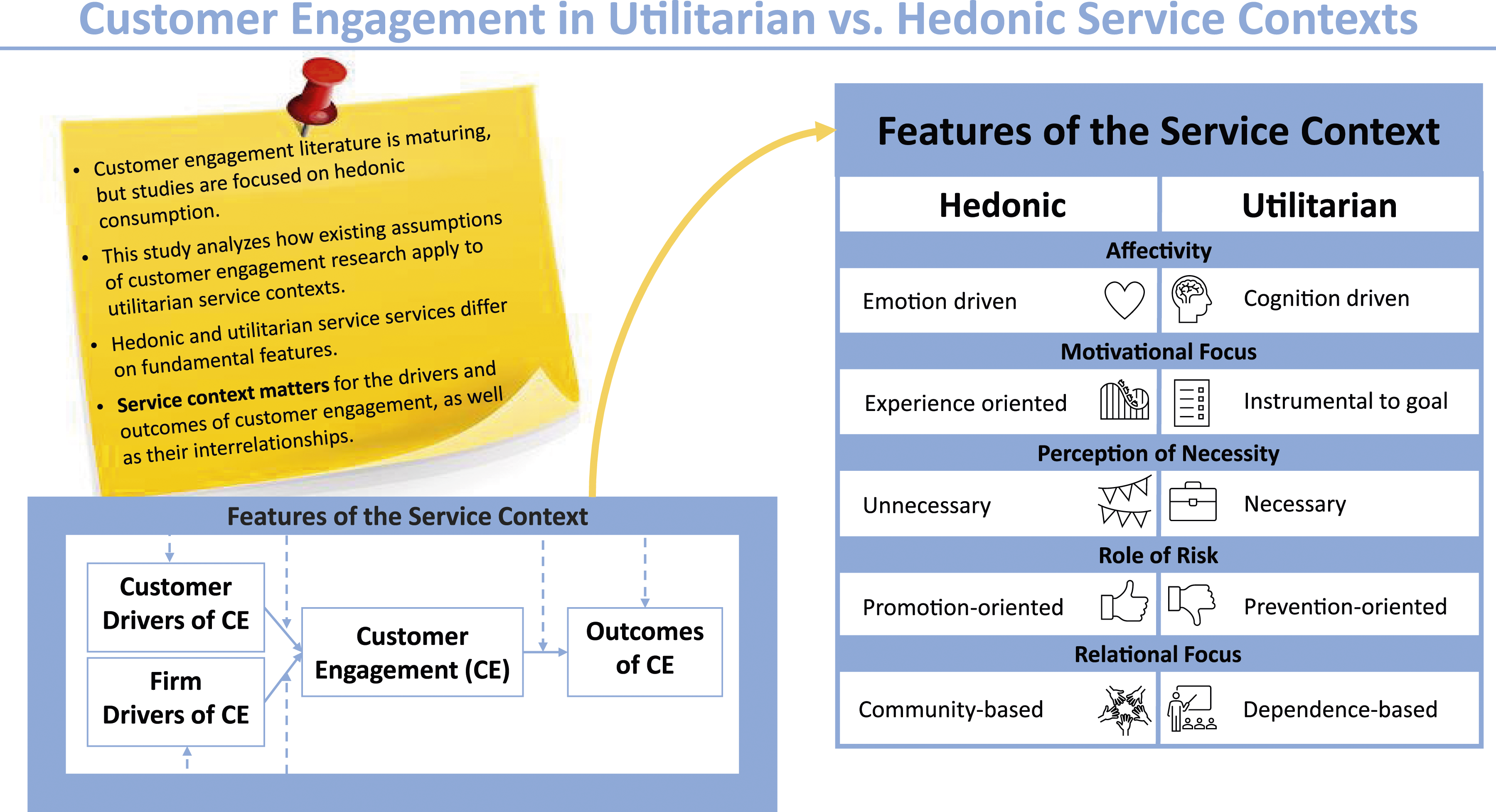
Introduction
Customer engagement (CE) has become a key concept in service research as it can explain customer relationships in modern markets and is associated with positive business outcomes, such as improved customer-brand relationships, customer satisfaction, loyalty, and profitability (e.g., Brodie et al. 2011; Jaakkola and Alexander 2014; Kumar et al. 2010; Kumar and Pansari 2016). Academic interest in CE has increased over time, with the number of publications with “customer engagement” as a topic increasing from 73 in 2012 to 1041 in 2022, with a total of 135,007 citations (Web of Science 2023). Recent literature reviews on CE show that knowledge of the concept has matured, and the existing literature offers rich insights into the drivers and outcomes of CE (e.g., Hollebeek et al. 2021; Ng et al. 2020).
However, an aspect that has received less attention in existing research is the role that the service context plays in CE, although the situation- and context-specific nature of engagement is well noted in literature (e.g., Brodie et al., 2011; Hollebeek 2013; Kumar et al. 2019). Service context entails the tangible and intangible features that form the setting in which a service takes place. Most CE research pertains to experiential, interactive, and thus hedonic contexts, including but not limited to hospitality, fashion, social media, and brand communities (e.g., Alvarez-Milán et al., 2018; Breidbach et al., 2014; Groeger et al., 2016; Hollebeek et al., 2014), whereas utilitarian services have received comparatively little attention (Fehrer et al. 2018). Most of our knowledge on CE thus revolves around the notion that customers engage with brands or services they enjoy and with which they have a positive emotional connection (e.g., Alvarez-Milán et al., 2018; Hollebeek et al., 2014). In contrast, utilitarian services, such as car washes, utility services, or financial services, are functional and their consumption is primarily outcome—rather than process—oriented (Collier et al. 2014; Dhar and Wertenbroch 2000). Thus, the assumptions derived by studying CE in hedonic contexts do not necessarily hold in more utilitarian contexts.
While the role of service context has seldom been problematized in CE research, and few studies have elaborated on its contextual contingencies, some studies have shown that context indeed matters for CE. Fehrer et al. (2018) found that utilitarian service features have a bearing on the way CE processes unfold, and an exploratory study by Hollebeek (2013) suggested that the effect of CE on customer value differs according to the consumption context. Notably, in their meta-analysis, De Oliveira Santini et al. (2020) find that CE displays an almost three times stronger effect on firm performance for hedonic rather than utilitarian consumption contexts.
These studies provide important insights into the relevance of context for some aspects of CE. However, CE research is still missing a comprehensive analysis on how the hedonic versus utilitarian features of the service context may affect the drivers and outcomes of CE more broadly. This insight is needed for reaching the full potency and impact of the CE concept across service contexts, and for supporting firms and public organizations’ efforts in stimulating CE for positive customer, company, and societal outcomes.
Against this backdrop, the objective of this study is to analyze how existing assumptions of CE research apply to utilitarian service contexts. This is achieved by first identifying the key assumptions of CE research, and then contrasting these with the fundamental features that distinguish between hedonic and utilitarian service contexts. The article thus augments the existing theory on CE with the perspective of service context features, thus proposing a novel perspective on an extant conceptualization (Jaakkola 2020; MacInnis 2011). Specifically, our study offers three contributions: First, we highlight and problematize the current premises of CE research. Second, our analysis comprehensively delineates the role of service context for CE, showing that the current assumptions regarding CE are not necessarily generalizable across service contexts. Third, this study facilitates the expansion of the applicability domain of CE research by outlining critical context-related issues to be investigated in future research. As a practical implication, our study offers insights that can increase CE, especially in utilitarian service contexts, such as financial services and healthcare.
This article is structured as follows: First, we review CE research to identify its key assumptions and foci. Second, we analyze studies on utilitarian versus hedonic consumption to extract key defining features that distinguish these service contexts. Next, we integrate these insights to derive propositions describing the role of context for the drivers and outcomes of CE, as well as their interrelationships. We enrich our analysis with theoretical insights and illustrative examples from utilitarian services. Finally, we provide guidelines for future research that is needed to augment the scope of CE research.
Extant View of Customer Engagement
The main body of CE research resides in the marketing and service research domains. Our literature analysis reveals that while no single definition of CE exists, most studies draw from Brodie et al. (2011, 258), who describe CE as “a psychological state that occurs by virtue of interactive, co-creative customer experiences with a focal agent/object (e.g., a brand) in focal service relationships.” Widely established and accepted among most scholars, CE is commonly viewed as a multi-dimensional concept comprising cognitive, affective, and behavioral dimensions that reflect an individual’s willingness to invest in focal interactions with engagement objects (Brodie et al., 2019; Harmeling et al., 2017; Hollebeek et al., 2019). Some authors have broadened this tripartite model of CE to include elements such as spiritual engagement (Karpen and Conduit 2020).
Many studies specifically assess the behavioral dimension of CE (e.g., Harmeling et al. 2017; Jaakkola and Alexander 2014; van Doorn et al. 2010). CE behaviors represent the contributions of resources (e.g., knowledge, money, skills, time, and effort) directed toward the service provider or other customers (Jaakkola and Alexander 2014; Kumar et al. 2019; van Doorn et al. 2010). For example, customers can support service development by offering their ideas and can influence and mobilize other customers by extending their recommendations and preferences (Harmeling et al. 2017; Jaakkola and Alexander 2014).
Systematic Literature Search on Drivers and Outcomes of Customer Engagement
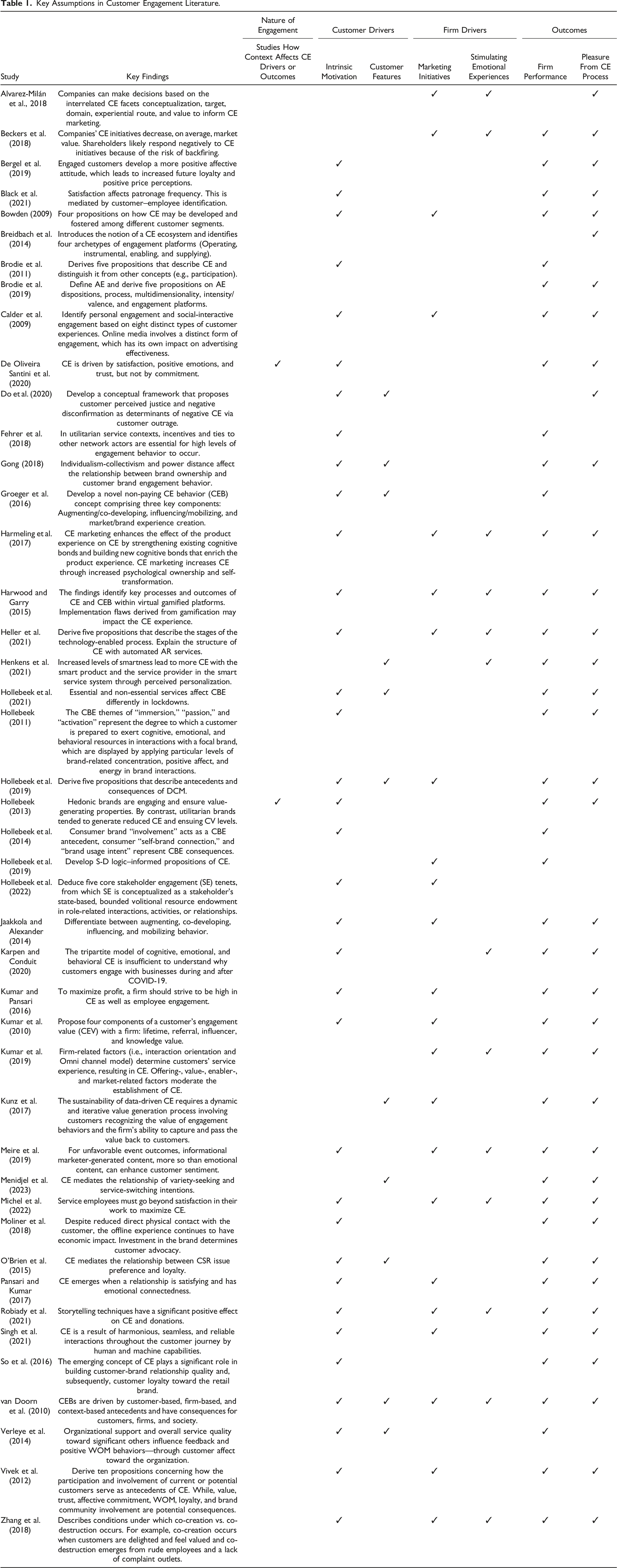
To identify the key assumptions held about the drivers and outcomes of CE, we conducted a review of the state-of-the-art CE research (see Web Appendix A and B). Our literature review is based on a systematic search following Torraco (2016) and Ciuchita et al. (2023), conducted in the leading service and marketing journals 1 for the term “customer engagement” in the title. The systematic search strategy and inclusion process are detailed in Web Appendix A. The systematic search process combined with backward snowballing of articles resulted in a corpus of 44 papers.
Key Assumptions in Customer Engagement Literature.
Customer Drivers of Engagement
By customer drivers of CE, we refer to those factors contributing to the likelihood of a customer’s attitudinal, cognitive, and/or behavioral CE that are not under the control of the firm. These drivers include intrinsic motivations such as affective commitment and enjoyment seeking as well as customer’s individual features.
Our overview of the CE literature points to a variety of factors that make it more or less likely that individuals engage. Studies often imply that customers engage with a brand for its inherent pleasure: existing research highlights fun and enjoyment (Hollebeek & Macky, 2019), and satisfaction (Black, Jeseo, and Vincent 2021) as important drivers of CE. Furthermore, customers’ emotional and affectional attachment with the brand or the firm has been found drive CE (Groeger, Maroko, and Hollebeek 2016; Pansari and Kumar 2017; So et al. 2016; van Doorn et al. 2010; Verleye, Gemmel, and Rangarajan 2014). These drivers of CE imply a customer’s intrinsic motivation to engage.
Next to intrinsic motivations, customer’s individual features play a role in driving CE. Beyond social and psychological motivators, each customer brings their own unique set of individual characteristics that can influence their level of CE. For instance, Hollebeek et al. (2021) propose that individuals who are promotion-focused rather than prevention-focused are more likely to be engaged across platforms in times of service lockdowns. Furthermore, Menidjel et al. (2023) found that individuals who are less inclined toward seeking variety exhibit higher rates of CE, which in turn reduces churn. The lack of variety-seeking in this context acts as a stabilizing factor, anchoring the customer to a specific brand or service, thereby contributing to long-term loyalty and CE. Other individual differences that are discussed in the literature include a customer’s attachment style (Kunz et al., 2017), need for personalization (Henkens, Verleye, and Larivière 2021), and role-readiness (Verleye, Gemmel, and Rangarajan 2014).
Combining these key customer drivers of CE, we conclude that CE research assumes that CE is driven by customers’ intrinsic motivation and customer’s individual features.
Firm Drivers of Engagement
Firm drivers of CE refer to firm-controlled factors to trigger CE (Alvarez-Milán et al., 2018; Fehrer et al., 2018; Harmeling et al., 2017). Two key approaches are discussed in existing research: incentivizing CE and triggering it through experiential marketing activities. The literature on CE often describes firm actions that directly trigger behavior in exchange for a reward. For example, the firm may invite the customer to leave a review in exchange for a discount on a future visit, which in turn leads to CE. In the literature, incentive-based firm drivers of CE typically relate to referral programs in which customers receive rewards in exchange for positive word-of-mouth (WOM) and references (Harmeling et al. 2017; Kumar et al. 2010).
Experiential marketing approaches focus on encouraging customer interactions and emotional bonds with the firm (Harmeling et al. 2017) and capturing the customers' interest by offering entertaining and fun content (Hollebeek & Macky, 2019). For example, Harwood and Garry (2015) demonstrate how gamification on an online brand platform can trigger positive CE. Robiady, Windasari, and Nita (2021) describe how storytelling techniques can increase donations on an online crowdsourcing platform. These experiential marketing approaches can take place online or offline. Meire et al. (2019) find that social media postings by firms can enhance customer sentiment and Singh et al. (2021) show how a consistent use of voice across platforms can trigger CE. Furthermore, the performance of service employee workers can drive CE if employees surpass customer expectations (Michel et al. 2022).
In sum, the existing CE research assumes that firms can trigger CE by facilitating engagement behavior through incentives, or by stimulating customers’ emotional experiences with the brand through experiential marketing initiatives.
Outcomes of Engagement
Outcomes of CE refer to the results or consequences of CE for both the customer and the company. Outcomes can be immediate, such as a sales, or long-term, such as sustained loyalty and brand advocacy. CE research typically highlights relational outcomes of CE. CE is assumed to have a central role in building and sustaining customer-brand relationship quality (So et al. 2016). For example, CE has been found to result in loyalty (O'Brien, Jarvis, and Soutar 2015; Gong 2018), customer involvement with the firm (Fehrer et al. 2018), trust (Vivek, Beatty, and Morgan 2012), and self-brand connections (Hollebeek, Glynn, and Brodie 2014).
Whereas the relational outcomes of CE indirectly drive firm profit through repeat purchase behavior and brand loyalty, other studies have investigated the direct effect of CE on competitive advantage and subsequent firm performance (Kumar et al. 2019; Kumar and Pansari 2016). A meta-analysis by De Oliveira Santini et al. (2020) shows that across almost 100 studies, the effect of CE in social media on firm performance is substantial. However, Beckers, van Doorn, and Verhoef (2018) provide empirical evidence that firm-initiated CE activities, such as user-generated content competitions, can also backfire, by reducing market value. Therefore, the connection between CE and firm financial performance remains ambivalent.
When reviewing the literature on CE outcomes, it becomes evident that most literature positions the firm as the beneficiary of CE and investigates CE outcomes relevant to the firm. While the research exploring CE and value co-creation takes the customer into account when discussing outcomes of CE, only a few studies focus on customers as beneficiaries of their own CE activities (Hollebeek 2013; Jaakkola and Alexander 2014) or place customers’ well-being at the center (Henkens, Verleye, and Larivière 2021). The studies that address customers as the beneficiaries of CE emphasize the pleasurable experience of CE in the moment of CE, rather than the long-term outcomes of CE. Most CE research thus assumes that the CE benefits occur for the customer during the service process (e.g., Brodie et al. 2011; Harmeling et al. 2017; Jaakkola and Alexander 2014; Kumar et al. 2010; Kumar and Pansari 2016).
In sum, the predominant insights to be drawn from existing research is that CE leads to relational outcomes where the customer and firm maintain a fulfilling, and loyal relationship; it facilitates firm performance, and creates benefits for the customers as pleasurable experiences during the process of engagement.
The Role of Service Context in Customer Engagement
The context-specificity of engagement is well noted in core engagement articles. For example, Brodie et al. (2011) define CE as “a multidimensional concept subject to a context- and/or stakeholder-specific expression of relevant cognitive, emotional, and behavioral dimensions” (p. 260, emphasis added). Nevertheless, the CE literature is predominantly set in hedonic service contexts, such as tourism (Bergel, Frank, and Brock 2019), brands (Bowden 2009), and social media (Hollebeek, Glynn, and Brodie 2014), with considerably fewer studies examining utilitarian contexts, such as banking (Moliner, Monferrer-Tirado, and Estrada-Guillén 2018), public transport (Jaakkola and Alexander 2014), or healthcare (Verleye, Gemmel, and Rangarajan 2014). Some studies address both service contexts, such as Calder, Malthouse, and Schaedel (2009), who study advertising effectiveness on an online news website, which can be used for utilitarian or hedonic motives. While these studies demonstrate the significance of engagement across various contexts, there have been limited focused efforts to analyze how CE may differ between hedonic and utilitarian service contexts.
Overall, the CE literature does not assess how the drivers or outcomes of CE differ depending on whether the service context is predominantly utilitarian or hedonic. Exceptions can be found in the work by Hollebeek (2013), who used interviews and focus groups to study how CE drives customer value for hedonic and utilitarian brands, and the work by De Oliveira Santini et al. (2020) who compare the return to CE for products with utilitarian versus hedonic value in a meta-analysis. Whereas these studies provide initial insights into how the effect of CE on customer value may differ for hedonic or utilitarian consumption, they do not provide insights into how the hedonic or utilitarian features of the service context affect the drivers and outcomes of CE more broadly. Based on our literature review, we argue that the extant research on CE can be meaningfully expanded by explicitly considering the features of the service context. Therefore, we propose including the service context as a factor in our understanding of the drivers and outcomes of CE. To qualify our distinction between hedonic and utilitarian services, we derive and describe the features of hedonic and utilitarian services in the next section.
Features of Hedonic Vs. Utilitarian Service Contexts
Hedonic services reflect customers’ need for pleasure and fun, and customers select them to look for pleasurable experiences (Dhar and Wertenbroch 2000). The perceived value of the service experience and the CE process are important for hedonic services, while utilitarian services are outcome-oriented (Blinda et al. 2019). These services are mainly instrumental or functional in nature (Batra and Ahtola 1991) and are characterized by low affective and emotional content and a short duration (Jang and Namkung 2009). Research has shown that hedonic and utilitarian services differ in service participation outcomes (Blinda et al. 2019), illicit various affective responses (Calvo-Porral and Otero-Prada 2021), and emphasize the importance of emotions to different degrees (Wang and Jiang 2019). Therefore, managers and service providers need to understand how to trigger CE with utilitarian services and potentially design, incentivize, or promote hedonic and utilitarian services differently to maximize CE.
Complementing the general distinction between utilitarian vs. hedonic service contexts, which refers to the extent to which a service is generally deemed utilitarian or hedonic, we distinguish the predominant features associated with hedonic and utilitarian service contexts. The literature acknowledges that hedonism and utilitarianism are not mutually exclusive, as services can be high in both hedonic and utilitarian features (Huber, Eisele, and Meyer 2018), and customer perceptions may depend on their consumption goals (Ding and Keh 2016). However, there are predominant features associated with services and products that are generally deemed hedonic or utilitarian.
Features of Utilitarian vs. Hedonic Service Contexts.
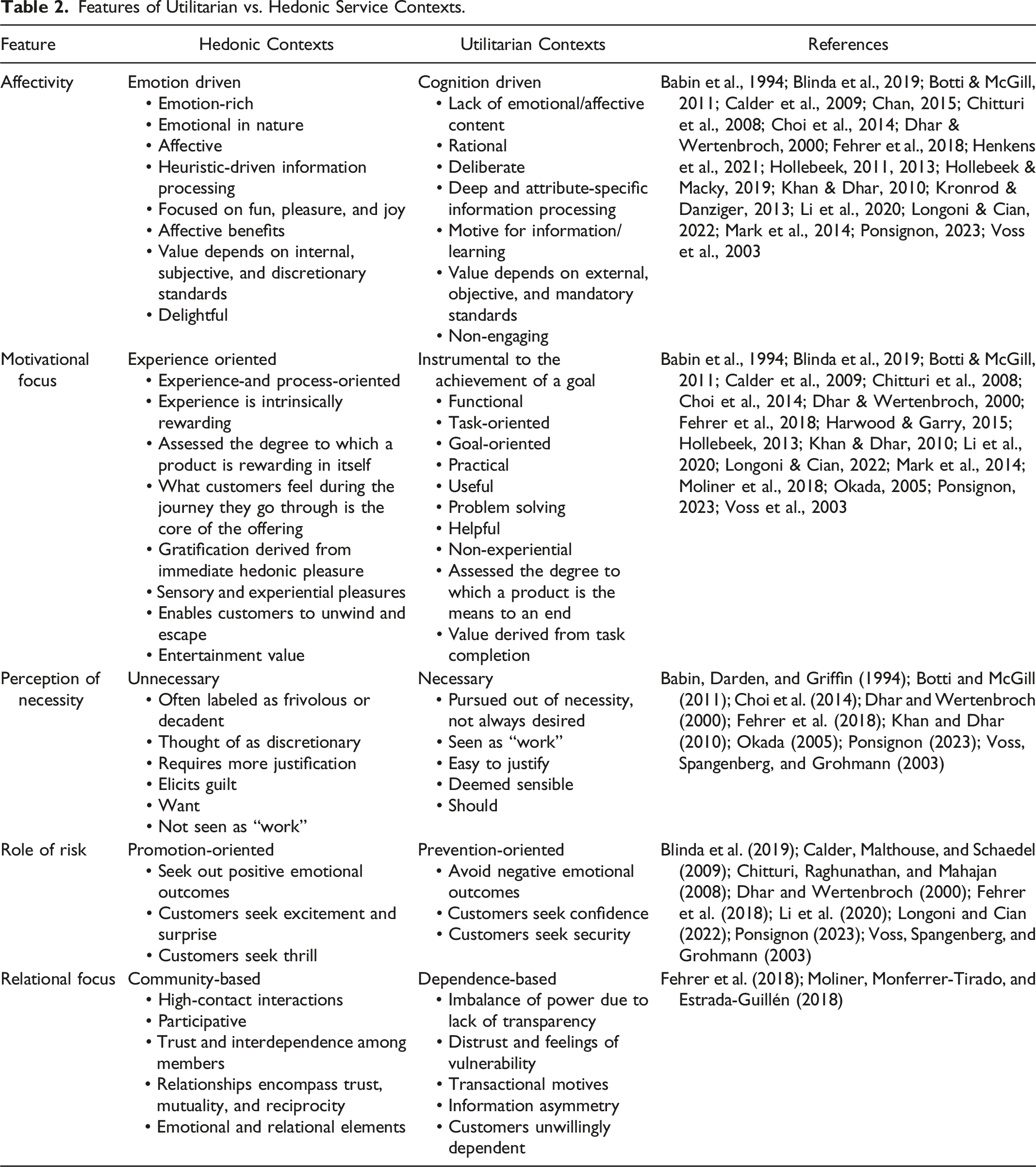
Second, utilitarian and hedonic service contexts can be distinguished by their motivational focus. Utilitarian service contexts are characterized by instrumentality, whereby the service is deemed useful to the achievement of a goal. In utilitarian services, value is derived from task completion (Fehrer et al. 2018) rather than from the service experience, which is characteristic of hedonic service contexts.
The third distinguishing feature is the perception of necessity. Hedonic services are often considered frivolous, decadent, and unnecessary (Botti and McGill 2011; Choi et al. 2014; Khan and Dhar 2010; Okada 2005). In contrast, utilitarian services are pursued out of necessity rather than desire (Choi et al. 2014; Fehrer et al. 2018). The perception of necessity makes CE with utilitarian services easy to justify (Botti and McGill 2011), but it also makes it seen as work (Babin, Darden, and Griffin 1994).
Fourth, utilitarian and hedonic service contexts differ in terms of the role of risk. In utilitarian service contexts, customers are generally more prevention-oriented, as they engage seeking to avoid negative emotional outcomes (Higgins 1998; Ponsignon 2023). In contrast, in hedonic service contexts, customers are promotion-oriented, as they seek out positive, exciting, and thrilling emotional outcomes (Higgins 1998; Longoni and Cian 2022; Ponsignon 2023).
Finally, the relational focus is a defining feature of a service context. Utilitarian service contexts are associated with a more dependence-based relational focus characterized by information asymmetry and power imbalance (Fehrer et al. 2018). This sense of dependence can be associated with distrust and feelings of vulnerability (Fehrer et al. 2018). In hedonic service contexts, the relational focus is characterized by sharing, interactivity, mutuality, and reciprocity (Fehrer et al. 2018; Moliner, Monferrer-Tirado, and Estrada-Guillén 2018).
We thus conceptualize the hedonic-utilitarian context as a continuum, and argue that service contexts vary along these five distinguishing features. In the next section, we combine insights from the CE literature with the derived service context features to develop propositions concerning how the service context may affect the drivers and outcomes of CE. We derive propositions for each element of our conceptual framework and complement these with illustrative examples that highlight the various features of hedonic and utilitarian service contexts and their possible effects on CE.
Understanding the Role of Service Context for Augmenting Engagement Research
Our analyses of the literature on CE and hedonic and utilitarian services lead to a range of observations. On the one hand, service and marketing research offers a picture of the relevant customer and firm drivers and the outcomes of CE (see Table 1). On the other hand, the service and marketing literature describes how hedonic and utilitarian services can be defined and how they fundamentally differ on a range of features (see Table 2). There is currently no understanding of how the features of a service context, such as their affectivity, motive, perception of necessity, risk, and relational focus, affect how CE unfolds.
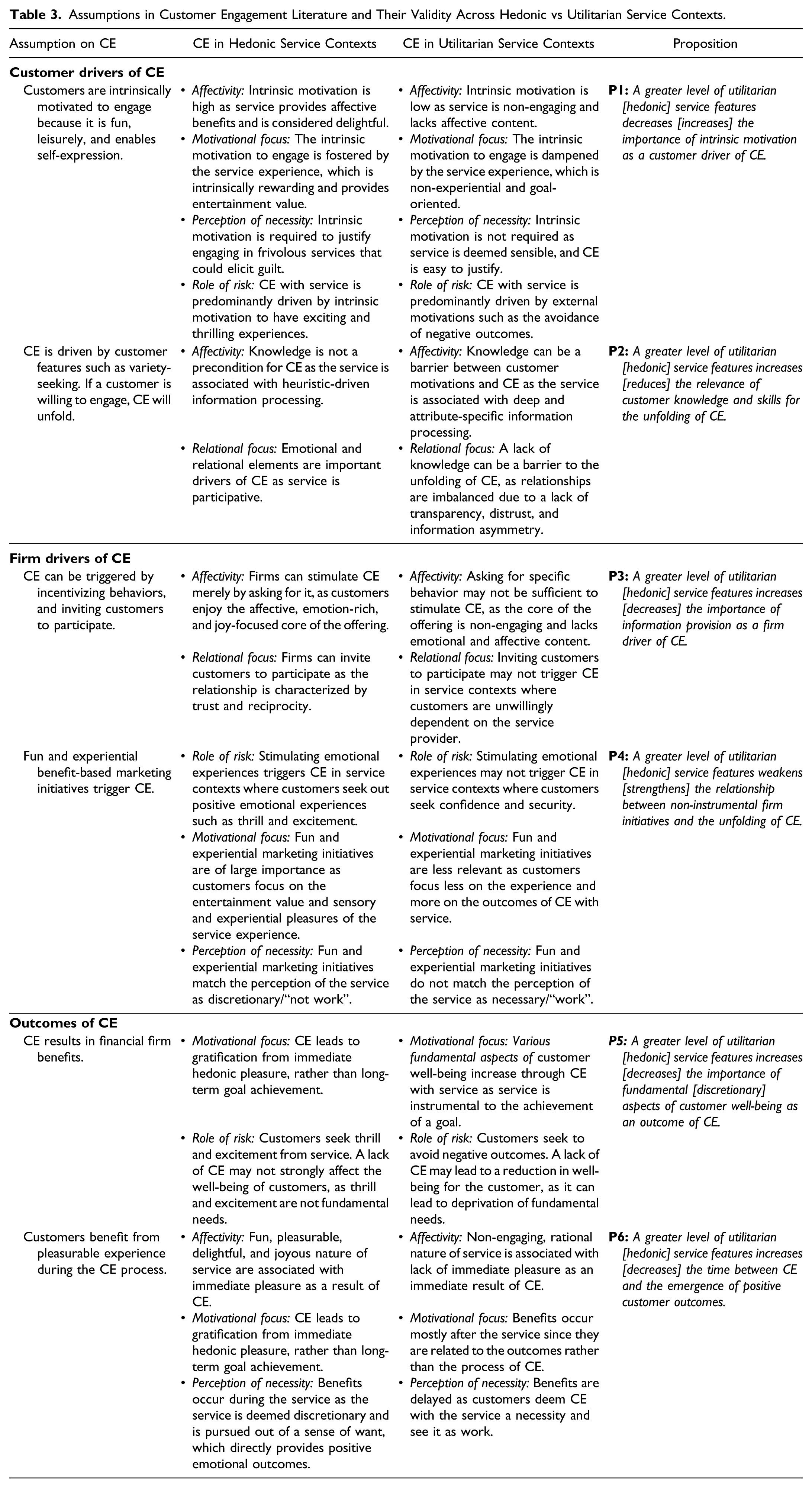
Assumptions in Customer Engagement Literature and Their Validity Across Hedonic vs Utilitarian Service Contexts.
Customer Drivers of CE
Intrinsic motivation and extrinsic motivation can be distinguished as two key reasons that drive us to action (Deci and Ryan 1985). Intrinsic motivation can be defined as doing something due to its inherent enjoyable or interesting nature, whereas extrinsic motivation can be defined as doing something as it leads to a separable outcome (Ryan and Deci 2000). In marketing and service research, it is assumed that customers have an intrinsic motivation to engage because it is fun, leisurely, and enables self-expression (e.g., Brodie et al., 2011; Hollebeek & Macky, 2019; Vivek et al., 2012). However, the relevance of the customer drivers of CE may differ across service contexts. In utilitarian service contexts, the motivation to engage may be more strongly driven by perceptions of the necessity of the service than by intrinsic motivation as customers have a weaker tendency to naturally develop relationships with utilitarian offerings (Barari et al., 2021). Furthermore, as customers in utilitarian service contexts are more prevention—than promotion—orientated, their CE is predominantly driven by external motivations such as the avoidance of negative outcomes, rather than the intrinsic motivation to have exciting service experiences (Ponsignon 2023). The lack of affective content and non-experiential and goal-oriented features of the service context may further dampen the internal motivation to engage (Hollebeek 2013).
The reduced importance of intrinsic motivation as a driver of CE in service settings with utilitarian features is supported by self-determination theory, which is often applied in the student engagement context. The theory posits that in the presence of external regulation, the personal value of behavior is low (Reeve 2012). The implication for CE is that when a service is deemed necessary, this perception may crowd out the internal motivation to engage. Thus, external events, rather than intrinsic motivation may drive CE. Consider, for example, life events such as divorce or inheritance that may spur a strong interest in financial services and thus become relevant drivers of CE (Blakstad, Brüggen, and Post 2017). In sum, we propose:
We further argue that the relationship between customer-related drivers of CE and the unfolding of CE is affected by the features of the service context. The CE literature implicitly assumes that if there is a willingness to engage, CE will unfold (e.g., Brodie et al., 2011; Hollebeek et al., 2021; Hollebeek & Macky, 2019; Menidjel et al., 2023; Vivek et al., 2012). However, the relationship between customer drivers and CE may be amplified or weakened in cognition-driven utilitarian service contexts that require knowledge and skills (cf. Hollebeek & Macky, 2019). Utilitarian service contexts often require deep and specific information processing (Li et al. 2020). Furthermore, the relationship with the service provider is characterized by a lack of transparency and information asymmetry (Fehrer et al. 2018). These features contribute to the importance of knowledge and skills as a barrier to CE. For example, customers may be motivated to engage with a financial service provider, such as an investment broker, when they see advertisements that highlight the benefits of investing. However, the mere presence of an internal motivation to engage may not lead to actual CE if the customer has insufficient skills or knowledge to do so. CE in utilitarian service contexts may be more a matter of controlled motivation in which cognitive factors (i.e., financial knowledge or skill such as identifying relevant information or suitable help and advice) are important (Eberhardt et al., 2022; Eberhardt et al., 2021). According to social exchange theory, relationships are established and continued if the benefits of the relationship outweigh the costs (Blau 1964). The level of knowledge and skill that is required for CE in service contexts with utilitarian features increases the costs of engaging. Indeed, research in financial services has shown that individual differences in knowledge and skills may be barriers to CE with service providers (Lim et al., 2014; Lusardi & Mitchell, 2014; Eberhardt et al., 2021). If individuals do not believe that they have the knowledge and skills to manage their finances and accomplish their financial goals, they are less likely to engage with investment and savings products (Farrell et al., 2016). Thus, we propose:
Firm Drivers of Engagement
The CE literature assumes that firms can trigger CE by inviting customers to participate and incentivizing behaviors, such as WOM. The strategies for increasing CE discussed in the CE literature assume a relationship between the firm and the customer and some baseline willingness to engage (Brodie et al., 2019; Harmeling et al., 2017; Hollebeek et al., 2019). However, in more utilitarian service contexts, customers may lack any pre-existing relational attachment or interest toward the firm, affecting the relevance of specific firm initiatives to trigger CE (Fehrer et al. 2018). In hedonic service contexts, triggering CE by inviting customers to participate or perform specific actions is assumed feasible (Harmeling et al. 2017; Kumar et al. 2010), but in utilitarian service contexts this may not be sufficient as the core offering is often (or generally) non-engaging. Instead, in utilitarian service contexts, the motive for information and learning is more relevant (Hollebeek & Macky, 2019). The relevance of specific firm-initiated drivers of CE may thus depend on the presence of utilitarian features in a service context.
For instance, the relational focus of a service context may affect the nature of initiatives that are relevant triggers of CE. Consider primary healthcare, where a customer is a patient treated by a medical professional. In this dependence-based service context characterized by information and power asymmetry, asking for referrals or WOM in exchange for incentives may seem ill-fitting and may reduce the patient’s engagement. According to basic psychological needs theory, individuals require a sense of autonomy to engage (Reeve 2012), thus inviting customers to participate may not trigger CE in service contexts where customers are unwillingly dependent on the service provider.
Rather, the provision of practical information may drive CE (Verleye, Gemmel, and Rangarajan 2014). Indeed, research on retirement planning—a service context characterized by a dependence-based relationship and low affectivity—shows that education is a relevant approach to trigger CE. This research has shown that the provision of information (Clark et al. 2019), the level of detail in income projections (Goda Gopi et al., 2014), information fairs (Duflo and Saez 2003), and online education courses (Collins and Urban 2016) can be used to trigger CE. This leads us to propose:
Furthermore, existing CE research tends to assume that fun and experiential benefits-based marketing initiatives trigger CE (e.g., Alvarez-Milán et al., 2018; Hollebeek, 2013; Hollebeek et al., 2014). However, we argue that in utilitarian service contexts, such experiential marketing initiatives may be less effective as customers focus less on the experience and more on the outcomes of CE (Hollebeek 2013). In these service contexts, customers seek out confidence and security rather than thrill and excitement (Chitturi, Raghunathan, and Mahajan 2008; Voss, Spangenberg, and Grohmann 2003). Furthermore, fun, and experiential marketing initiatives do not match the perception of the service as a necessity (Voss, Spangenberg, and Grohmann 2003). For example, visiting the dentist is generally deemed a necessity rather than an enjoyable service interaction. It is possible that the mismatch between the features of the utilitarian service context and hedonic marketing campaigns may have positive effects on CE. If firms provide emotional, fun stimuli to trigger CE in such a context, this may impact CE more than in hedonic service contexts where customers already expect it. However, when a customer engages with a service to achieve a specific task or goal, as is typical in utilitarian service contexts (Blinda et al. 2019; Dhar and Wertenbroch 2000), non-instrumental firm initiatives for CE that do not directly aid the customer in achieving their goals may also lead to negative sentiment. The literature on goal setting shows that individuals who have an active goal, have a stronger liking for those that can aid them in the achievement of this goal (Fitzsimons and Shah 2008). Extending this to the service context, we expect positive sentiment as a reaction to firm initiatives that aid in goal achievement and negative sentiment as a reaction to initiatives that are not directly aiding in the achievement of a goal. A campaign that is fun as well as useful, such as the inclusion of gamification elements to simplify tax returns, may positively affect CE. In contrast, fun-based CE initiatives that are not directly instrumental to the achievement of customer goals may be ineffective. For example, if a service provider, such as a pension fund, develops an extensive social media campaign, this may create negative sentiment if customers become frustrated that the service provider is spending means on marketing activities rather than on the customer goal of having sufficient retirement income. Therefore, we argue the following:
Outcomes of Engagement
CE research primarily investigates how companies benefit from CE, revealing that CE drives firm performance (e.g., Heller et al. 2021; Kumar et al. 2010; van Doorn et al. 2010). According to existing literature, this happens though the positive impact that CE with hedonic services has on firm-customer relationships, indicated by outcomes such as customers’ affective commitment, loyalty, self-brand connections, and WOM intentions (e.g., Calder, Malthouse, and Schaedel 2009; Vivek, Beatty, and Morgan 2012). However, such indicators may not sufficiently capture the outcomes of CE in utilitarian contexts. For example, a customer’s increased and prolonged contact with the customer support personnel of a public service, such as the tax registration office or public health center, may be costly for the service provider but may simultaneously increase customer well-being. This sentiment is supported by the findings of a meta-analysis conducted by De Oliveira Santini et al. (2020), which indicates that the impact of CE on firm commercial performance is nearly three times stronger for hedonic compared to utilitarian products. However, we argue that in utilitarian contexts, CE is likely to support service providers’ performance indirectly, in measures focused on customer well-being such as the speed of patient recovery or accuracy of tax reports.
While hedonic consumption contributes to customer well-being through creating happiness (e.g., Zhong and Mitchell 2010), an important dimension of well-being, utilitarian services often fulfill fundamental physical and economic needs, which are key predictors of various well-being outcomes (see Ryan and Deci 2001). Therefore, engagement with utilitarian services is likely to enhance more fundamental aspects of wellbeing. For instance, CE with a financial planning services can improve financial well-being that is a significant predictor of overall well-being (Netemeyer et al. 2018). Conversely, a lack of CE may reduce one's capacity to fulfill financial needs. According to the prospect theory (Tversky & Kahneman, 1992), losses loom larger than gains. As utilitarian services are prevention-oriented in nature, in this context the negative impact of losses related to fundamental needs is probably more significant than the positive impact on well-being from experiencing pleasure.
Furthermore, in utilitarian service contexts, customers have a goal-oriented motivational focus. The achievement of goals increases psychological well-being according to the basic psychological needs theory (Reeve 2012). Whereas CE with hedonic services can increase customer well-being through positive experiences, the thrill and excitement that are associated with these service contexts tend to serve discretionary rather than fundamental needs. In contrast, CE with utilitarian services such as healthcare or financial services has a more instrumental role in the achievement of fundamental needs such as health and financial resources. This leads us to propose:
Our analysis of the literature further reveals that in CE research, it is generally assumed that CE benefits occur during the service process as customers enjoy pleasurable experiences with the firm or the brand (e.g., Brodie et al. 2011; Harmeling et al. 2017; Jaakkola and Alexander 2014; Kumar et al. 2010; Kumar and Pansari 2016). The generalizability of this assumption can be challenged by applying it to service contexts with utilitarian features, such as retirement planning, preventive healthcare, and fitness. In such outcome-oriented service contexts, the benefits from CE may be less immediate and may require engagement over longer time span. For example, engagement with exercise and healthy food over prolonged periods of time is needed to reduce the risk of illness in the future. The benefits of CE in utilitarian service contexts thus often occur after the service since they are related to the outcomes rather than the process of CE (Choi et al. 2014). Cognitive evaluation theory explains that rewards are an important driver of motivation and positive affect (Reeve 2012). In service contexts characterized by instrumentality, customers may not derive immediate rewards from engaging, but the benefits play out over a longer time interval. In contrast to hedonic service contexts, that are inherently enjoyable and bring immediate reward, the occurrence of affect-inducing reward is postponed in utilitarian service contexts. In sum, we propose:
Conclusions and Implications
This study provides a synthesis of extant assumptions on the drivers and outcomes of CE and contrasts them against the hedonic and utilitarian consumption literature. Our analysis reveals that certain taken-for-granted assumptions in the CE literature do not necessarily hold across service contexts. Specifically, we identify key differences in the customer and firm drivers, and outcomes of CE, concluding that the CE literature can benefit from critically reviewing the implicit assumptions underlying the existing literature.
In line with theory adaptation (Jaakkola 2020), we inform the existing CE theory by contrasting it with research on utilitarian and hedonic consumption, which provides new insights into the features on which utilitarian and hedonic service contexts differ. This approach allows us to critically examine the scope of CE theory without compromising the existing knowledge and definitions in this field. This paper’s primary contribution and pursued impact consists of a roadmap for expanding the scope of CE research.
Agenda for Future Research
Based on our analyses, we develop a research agenda intended to inspire future CE research across service contexts. The exemplary research questions in Figure 1 highlight issues that should be addressed to develop a broader and more holistic view of CE. To increase CE, the core features that characterize a specific service context should be identified; they may require a different research strategy as well as a different firm strategy regarding CE. The outlined research questions provide initial guidance for the explicit consideration of service context in studying CE. Exemplary research questions for augmenting customer engagement research.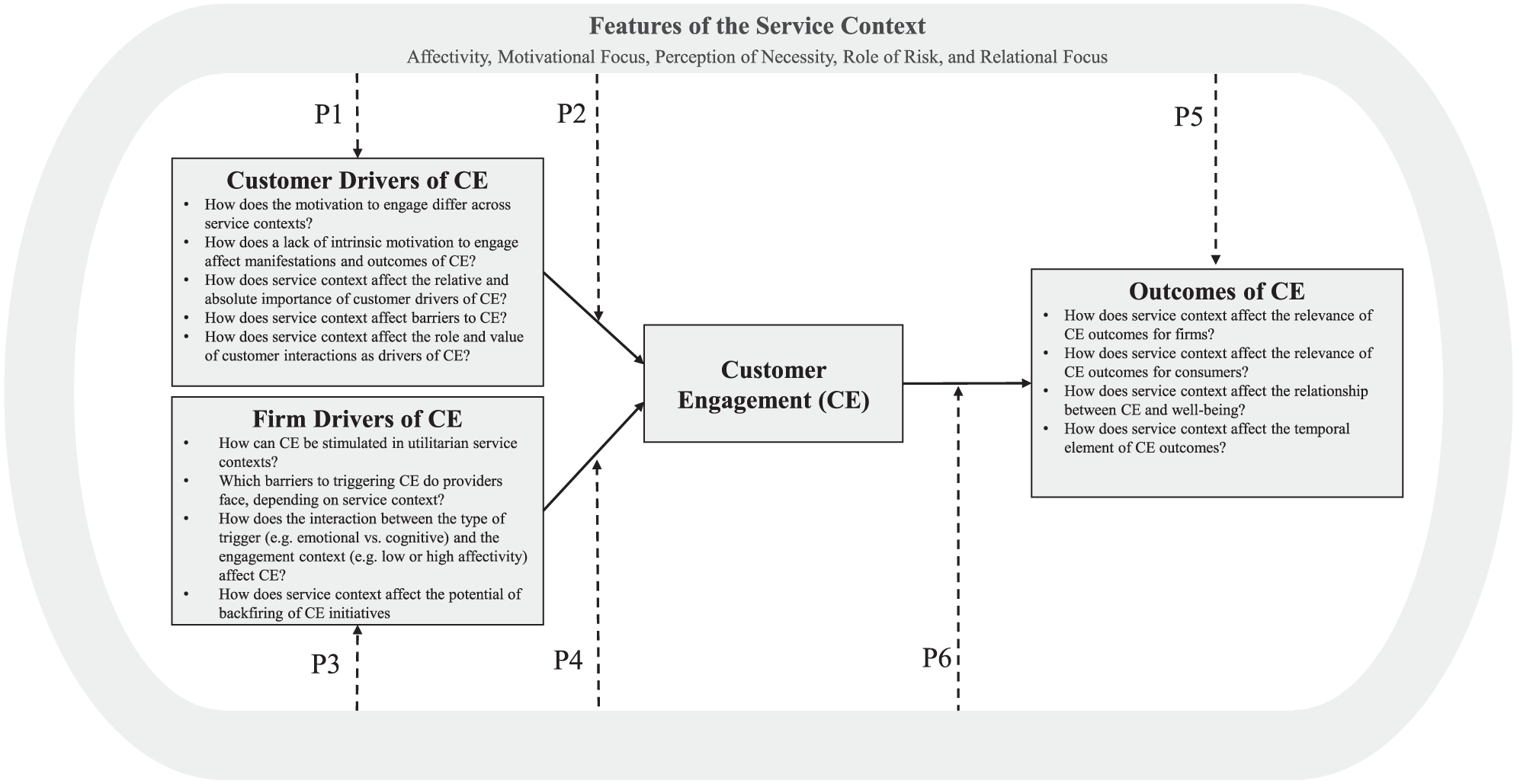
The features of hedonic and utilitarian service contexts that we describe are a fruitful starting point for future research. For example, studying the impact of the motivational and relational focus of a specific service context in more depth allows us to further nuance the impact of the features of a service context on CE. Studying which features of a service context explain variance in baseline levels of CE is another worthwhile avenue for future research. Research could address whether combinations of specific service context features can amplify or attenuate the effect of each feature on CE. In addition, empirical investigations into barriers to CE would be of great relevance for better understanding the extent to which firms can leverage CE initiatives, depending on the features of a service context. For instance, it is possible that in cognition-driven service contexts, the effectiveness of CE initiatives is contingent on customer skills and knowledge. Furthermore, the complexity of the network of stakeholders in a service context may be a barrier to CE. In some service contexts, multiple stakeholders may be involved in stimulating CE, which may diffuse the sense of responsibility that each individual stakeholder feels. Future research could thus take a network-based approach to better understand how the interplay of stakeholders in CE differs across service contexts.
The features of a service context may also affect the effectiveness of firm initiatives to trigger CE if these features impact the relationship between hedonic CE triggers and positive CE outcomes. Future research could address whether the firm's returns on additional CE activities are diminishing or may even backfire at a certain point in more instrumental service contexts. Studying how features of the service context affect and how and when CE initiatives may result in customer rage or revenge, may provide valuable guidance in the design of effective CE campaigns. Finally, the role of customer well-being can be explicitly considered in future research. We encourage research to address the potential harm of CE for customers CE dispositions, for example by comparing the harm for non-engaged customers to over-engaged customers across service contexts.
Theoretical Contributions
First, this article makes the current premises of CE research visible and problematizes some of these extant assumptions. While many studies have analyzed the evolution and state-of-the-art of CE research, few if any, previous studies have condensed or challenged its predominant assumptions. Through this analysis, the study not only takes stock of but also revises existing knowledge by “reconfiguring or taking a novel perspective on something that has already been identified” (MacInnis 2011, 143). This is an important step in advancing research on CE. This study thus opens up a new area of study for CE, aided by a future research agenda that highlights questions that need to be addressed to expand the boundaries of CE research.
Second, this study highlights the importance of context in affecting the nomological network of CE, demonstrating that the current assumptions regarding CE may not be generalizable across contexts. Our study considers a rich set of service context features commonly associated with utilitarian and hedonic services, thus providing a nuanced view of how context affects CE. Our analysis allowed us to pinpoint differences in the nomological network of the CE concept within hedonic versus utilitarian contexts, condensed into six propositions that should inspire future empirical studies. This contributes to CE research that has seldom addressed the issue of context, although more research addressing the contextual contingencies of engagement has been called for (Brodie et al. 2011).
Third, we shift the applicability domain of CE research by arguing how the concept of CE can be studied and applied more broadly. In utilitarian service contexts, a lack of CE can have detrimental consequences on customer well-being (Mackenbach, Meerding, and Kunst 2011; Munnell, Hou, and Webb 2015). Whereas the CE literature has predominantly focused on how CE creates firm value and other firm-focused outcomes, we illuminate how customers can benefit from CE in service contexts with utilitarian features. Importantly, our research indicates that the current understanding of firms’ means of fostering CE may not hold true in utilitarian contexts. New research is needed to adapt current CE frameworks to enable contributions to customer well-being by fostering CE in utilitarian contexts. The expansion of CE literature to utilitarian contexts would also build bridges toward transformative service research (Anderson and Ostrom 2015; Boenigk et al. 2021), where customer well-being is a key interest.
Practical Implications
While further research is needed to fully understand the firm drivers and outcomes of CE, our analysis already provides directly applicable insights for service providers in both utilitarian and hedonic service contexts. Utilitarian service providers, such as healthcare providers, utility providers, and financial institutes aiming to improve CE should not simply accept the guidance of current CE studies and managerial books. Utilitarian service providers should critically consider whether the empirically tested strategies for increasing CE in hedonic contexts can be generalized to their specific service contexts. This critical examination does not mean that utilitarian service providers cannot learn and take inspiration from CE research. Instead, utilitarian service providers may consider whether, in their specific service contexts, there are strategies that could make their customers enjoy the process of CE rather than only the outcomes. Yet, it remains essential to carefully consider the context in which CE is facilitated, and knowledge should be generated about whether and how firm drivers of CE from hedonic contexts work in utilitarian contexts.
Hedonic service providers can also derive new insights from our analyses. Our literature analysis shows that in hedonic service research, there is a focus on firm outcomes rather than customer outcomes. If hedonic service providers pay additional attention to customer outcomes, they may gain a competitive advantage. For example, firms may want to explore how their services increase customer well-being. Regarding customer drivers of CE, it may be worthwhile to consider how customer skills affect CE with hedonic services. In utilitarian service contexts, it is often clear that customers need specific skills (e.g., numeracy) to engage with a service, and firms target this lack of skill to increase CE (e.g., through information provision or education). In hedonic service contexts, the skills needed to engage may be less salient. However, it may be worthwhile to explore how a lack of ability, knowledge, or efficacy in skills, such as using mobile applications, acts as a barrier to CE. Hedonic service providers may take inspiration from research on CE with utilitarian services to understand how to reach unengaged customers. It is possible that approaches to trigger CE commonly used in utilitarian contexts, such as providing information, may be more appropriate for engaging specific customer segments that have remained unresponsive to hedonic appeals.
We show that the context in which CE takes place is important and should be studied more broadly. Moving beyond the dichotomy between utilitarian and hedonic service contexts, practitioners should map customer perceptions of affectivity, motivational focus, perceptions of necessity, the role of risk, and relational focus. This nuanced approach enables practitioners to identify barriers and opportunities to foster CE in their service context.
Limitations
To challenge the existing assumptions in CE research, we differentiate between utilitarian and hedonic service contexts. However, in practice, this distinction may not be mutually exclusive and may be more nuanced. For example, a hedonic service context, such as going to a theme park, may still have utilitarian elements, such as finding a parking spot. In addition, individual dispositions may affect whether individuals perceive a specific context as utilitarian or hedonic. Some individuals may derive joy from retirement planning, while others may perceive a day at a theme park as a utilitarian activity.
In our analyses, we derive five features of service contexts that enable us to gain a more nuanced insight into which features of a service context may affect CE. Although these features enable us to qualify differences between service contexts, they do not provide an exhaustive list of all possible features that define service contexts. Additional features would include, for example, the extent to which the service is offered online vs. offline, consists of single vs. repeated interactions, or is private vs. professional. However, because the role of service context for CE has not been systematically considered thus far, we believe the theoretical framework of hedonic and utilitarian consumption provides a promising starting point to map the key features of a service context. Future research could expand our knowledge of the defining features of service contexts by complementing this list with additional features.
Finally, we provide a theoretical comparison of the literature to derive and criticize the extant assumptions in the CE literature. However, future research should generate empirical evidence to solidify our claims that the drivers and outcomes of CE differ between service contexts.
Supplemental Material
Supplemental Material - Customer Engagement in Utilitarian vs. Hedonic Service Contexts
Supplemental Material for Customer Engagement in Utilitarian vs. Hedonic Service Contexts by Jenna Adriana Maeve Barrett, Elina Jaakkola, Jonas Heller, and Elisabeth Christine Brüggen in Journal of Service Research
Supplemental Material
Supplemental Material - Customer Engagement in Utilitarian vs. Hedonic Service Contexts
Supplemental Material for Customer Engagement in Utilitarian vs. Hedonic Service Contexts by Jenna Adriana Maeve Barrett, Elina Jaakkola, Jonas Heller, and Elisabeth Christine Brüggen in Journal of Service Research
Footnotes
Acknowledgements
We would like to thank the attendants of the Frontiers in Services conference in Boston (2022) and the SERVSIG conference in Glasgow (2022) for their feedback on our manuscript. We would also like to thank Daniele Ripani for his assistance with article search. This work is based on the dissertation of the first author at the Department of Marketing & Supply Chain Management at the University of Maastricht.
Declaration of Conflicting Interests
The author(s) declared no potential conflicts of interest with respect to the research, authorship, and/or publication of this article.
Funding
The author(s) received no financial support for the research, authorship, and/or publication of this article.

Supplemental Material
Supplemental material for this article is available online.
Notes
Author Biographies
References
Supplementary Material
Please find the following supplemental material available below.
For Open Access articles published under a Creative Commons License, all supplemental material carries the same license as the article it is associated with.
For non-Open Access articles published, all supplemental material carries a non-exclusive license, and permission requests for re-use of supplemental material or any part of supplemental material shall be sent directly to the copyright owner as specified in the copyright notice associated with the article.
